A Daily History of Holes, Dots, Lines, Science, History, Math, Physics, Art, the Unintentional Absurd, Architecture, Maps, Data Visualization, Blank and Missing Things, and so on. |1.6 million words, 7500 images, 4.9 million hits| Press & appearances in The Times, Le Figaro, Mensa, The Economist, The Guardian, Discovery News, Slate, Le Monde, Sci American Blogs, Le Pont, and many other places… 5000+ total posts since 2008.

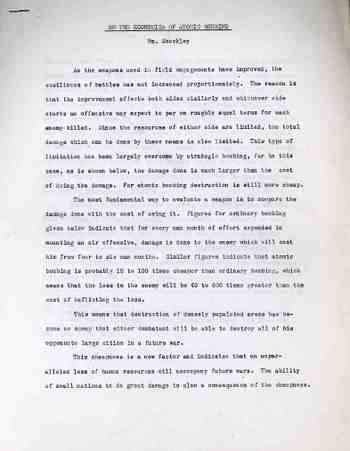
  • “Atomic Bomb Art” Economics by WIlliam Shockley, 1945–Hiroshima +65

    JF Ptak Science Books  

    This is a reposting of   from 5 August 2008, one of a continuing series on the development, use and control of
    atomic and nuclear weapons
    . 

    • Background Documents on the Control and Proliferation Issues of the Atomic Bomb
    • Vannevar Bush Group, October 1945-January 1946
    • Paper 1:  William Shockley

    Blogaug_6shockley_1361 (Click image to enlarge; the other four pages are located in the “Continue Reading” section, below.)

    This paper is one a small archive of background and draft papers and
    proposals by the Vannevar Bush group working on the question of the
    control of atomic weapons and the formalization of the American
    position regarding the use and control of atomic weapons, October
    1945-February 1946. This archive consists of 38 documents relating to
    the development of U.S. atomic policy, with  contributions by President
    Harry Truman, Secretary of State James Byrnes, Dr. Vannevar Bush, (future AEC director) Carroll Wilson, Alger Hiss, I.I. Rabi, William Shockley, Frederick Dunn, Joseph E. Johnson, Leo Pasvolsky, Philip Morrison, Col. Nichols, William McRae, Admiral W.H.P. Blandy, George L. Harrison, and others.

    CONTINUE READING

    ·Posted by :

    ·in:

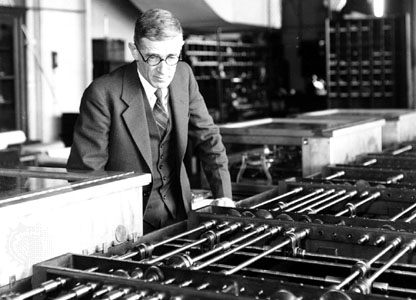
  • Vannevar Bush, Robert Oppenheimer, and Belief

    JF Ptak Science Books   Post 1107

    Bush I’ve written a number of times about Vannevar Bush in this blog.  He was a brilliant, practical, deep-sighted Yankee of an old school, capable of selecting the correct course of action and getting to it, his quiet resolve apparent to everyone.  He also had a large part in the winning of WWII, being in charge of scientific and technical development for military and war-related affairs,  deciding  how to spend time and effort and money for the best possible result to win the war (That would be the OSRD, the Office of Scientific Research and Development, which he headed, and created–actually he outlined the whole thing on one sheet of paper and had the mammoth idea approved by President Roosevelt in a quick 10-minute session in 1942.)
                   
    He had a brilliance to him in choosing the important stuff that was necessary and the important stuff that could wait.  For example, he told Norbert Wiener that the war needed to be won before investing in the challenge to develop the digital computer–it just wouldn’t be developed quickly enough, he felt, to do the jobs necessary to substantiate its time and effort before war was won.

    He also could say “no” to Einstein, a man who he admired and respected, but also a man who he thought he could not trust with the development and construction of the atomic bomb.  As much as he wanted to share the project with Einstein, he couldn’t, and wouldn’t, and didn’t.  And he had a point. 

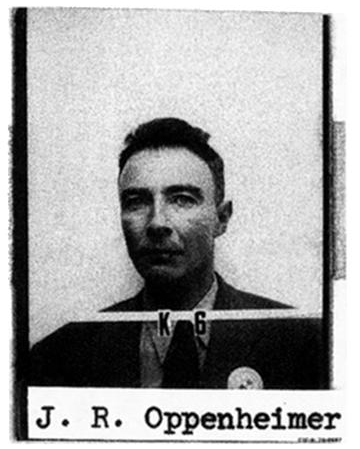
    He stood on tall ground in regards to Oppenheimer when the witches went to gather Oppenheimer’s soul.  At a time when major forces decided that Oppenheimer must go, that he should be excluded from Q clearance and from being involved with the development of the thermonuclear bomb–and that he must go because he was seen as a security risk because of a series of minor incidents (like light associations with the Communist Party in the 1930’s), Bush would have none of it.  Mostly, Oppenheimer represented a threat to political desires for the development of new weapons, not so much, really, as a possible Soviet agent.  Bush supported Oppenheimer, and questioned the entire legitimacy of the hearings themselves. 
     
    “Here is a man who is being pilloried because he had strong opinions, and had the temerity to express them”, Bush said, ending his testimony with this forceful statement:

    “I think this board or no board should ever sit on a question in this country of whether a man should serve his country  or not because he expressed strong opinions.  If you want to try that case, try me…”

    Many of course stood by Oppenheimer; Bush’s support seems to me to be among the strongest. Perhaps even more pissed than Bush was I.I. Rabi, who in disgust of the proceedings said: “”He is a consultant, and if you don’t want to consult the guy, you don’t consult him period…We have an A-bomb…and what more do you want, mermaids?” 
    Oppenheimer_Los_Alamos_mugshot

    There was also John Lonsdale, chief of security for the Manhattan Project and who investigated Oppenheimer thoroughly, as he said during the hearings:  “We kept him under surveillance whenever he left the project. We opened his mail. We did all sorts of nasty things”.  Lonsdale firmly believed in Oppenheimer, thought him innocent in this ‘non-trial”,  and defended the man throughout the rest of his long life (dying at age 95 in 2003).

    Others of high importance questioned Oppenheimer’s integrity, patriotism and trustworthiness:

    ·Posted by :

    ·in:

  • Lost in Translation Dept: Uneasy Moments in the History of Underwear Ads

    JF Ptak Science Books  Post 1108

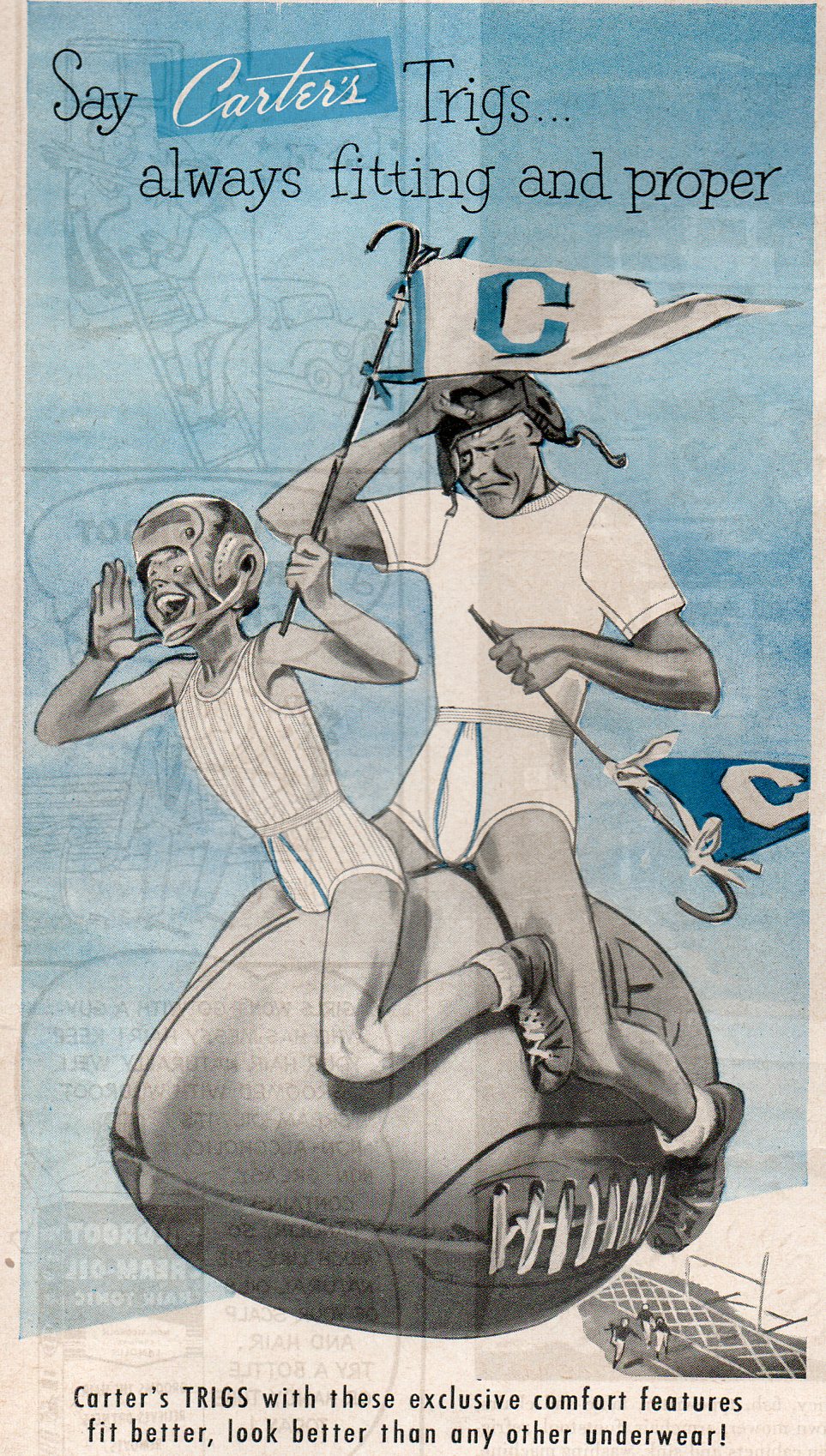
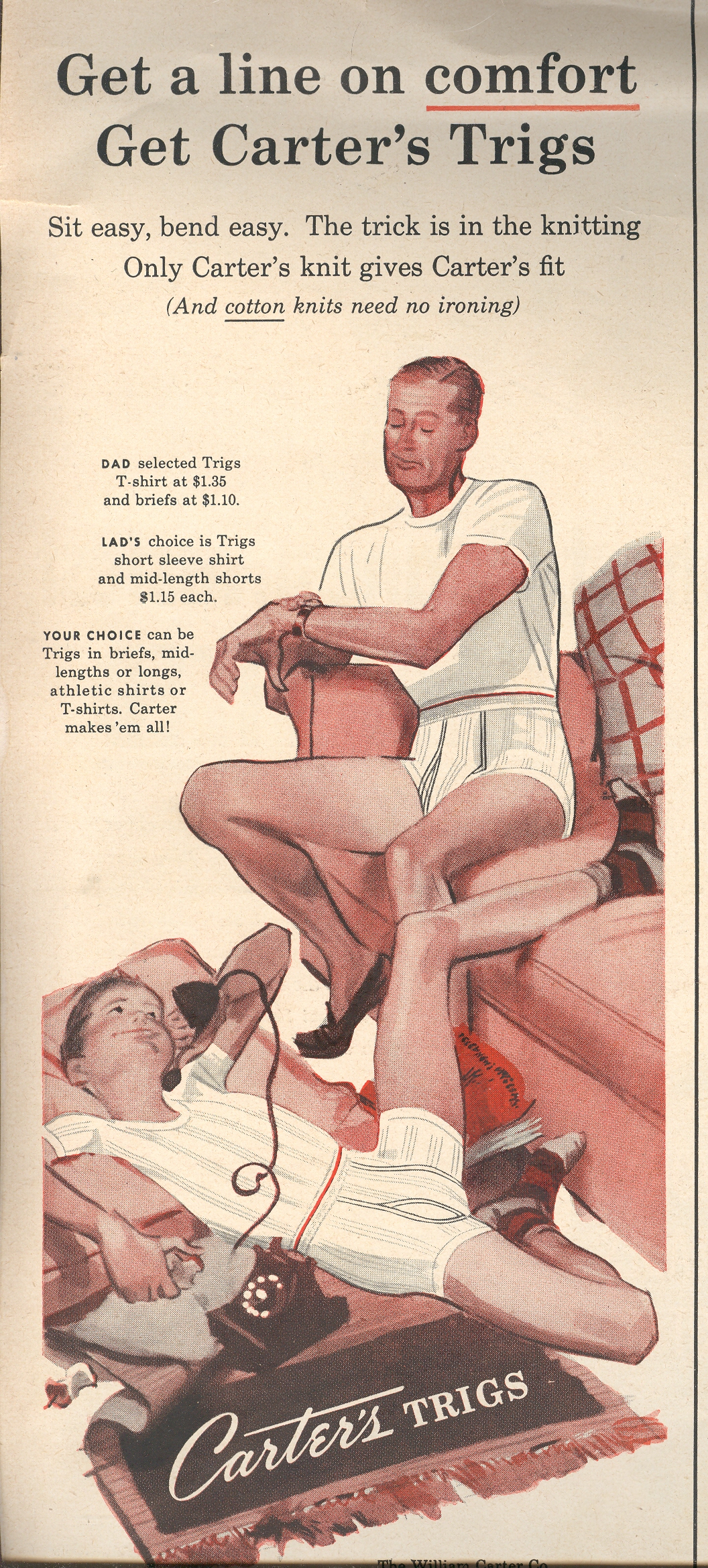
    Underwear--carter NAMBLA252 There’s really not much to say, I think, about these two ads.  The first is one I stumbled on just this morning, one in what seems now to be a long series of advertisements whose initial appeal has not only been lost to time but which now seem to wear very thin in the socially-acceptable category.  The ad is from Life magazine for July 1955, and features Carter underwear for men and boys–and for some reason, it features the happy boy/cranky man too-close combo riding a football out of a stadium.  I don’t know what any of that has to do with underwear–especially the unhappy older man.

    There are a number of these ads by Carter’s, I recall, and many of them have this deep, pit-of-your-stomach sense of wrongness about them, a high, first-order branding of their original meaning completely lost in translation, the sense of their time now completely gone. 

    + boy 

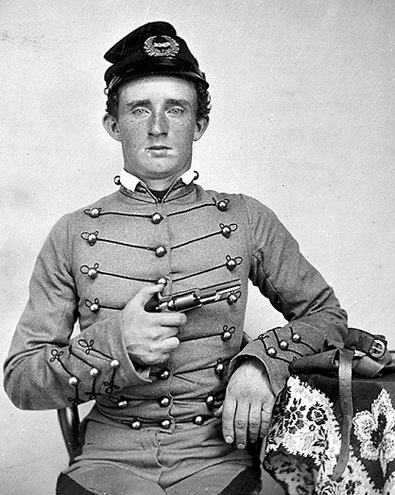
  • Custer and the Extermination of…Southerners

    JF Ptak Science Books  Post 1109       

    Here’s a bit of Custer legend that is true and seldom heard—if
    left to his own devices in a Custer-filled world,  the general would have “exterminated” everyone
    in the South, every one (“men, women or children”) , “with an ounce of rebel
    blood”, hanged dead.  At that point the South
    would be free, and would be repopulated with the “loyal and patriotic”.

    Custer This was part of  a
    long letter (transcript below) to U.S. Senator Jacob Howard, written on 19th January 1864, in the
    field.  Custer was feeling on the ropes
    at the time, needing to defend his loyalty to Lincoln and his policies,
    and needing to distance himself from Lincoln’s
    election contender and inferior general, George McClellan. (Richard Slotkin, in
    his fabulous The Fatal Environment, the Myth of the Frontier in the Age of
    Industrialization, 1800-1890
    notes that Custer needed “to justify himself…(and)
    disabled his previous affiliations and the nature of his relationship with
    McClellan…’)

    Custer’s relationship–real and imagined–with McClellan was putting him in a stench void, creating the possibility of distance between himself and the powers that be–particularly with Senators like Howard and Zachariah Chandler, “who controlled army promotions” (Slotkin, page 384), which meant distancing himself from the higher rank he thought he was destined for. Custer had been on McClellan’s staff, and had aligned himself with his
    war policies, though not necessarily so his presidential ambitions. 
    Howard, a Republican from Michigan and member of the Military Affairs Committee, believed that Custer was a “McClellan Man” and set against Lincoln, and for that was set to block
    his promotion to brigadier general.  Custer’s  salvaging letter1 to Howard left no doubt about his supposed non-political feelings and where he stood on Lincoln, the Emancipation, and the treatment of the Confederates:

    “If  I could decide
    the questions, I would offer no compromise except that which is offense at the
    front of a bayonet, and rather than that we should accept peace, except on our
    own terms, I would, and do, favor a war of extermination. I would hang every
    human being who possesses a drop of rebel blood in their veins whether they be
    men, women or children. Then after having freed the country from the presence
    of every rebel, I would settle the whole Southern country with a population
    loyal and patriotic who would not soon forget their obligations to their
    country and to themselves.”

    Slotkin points out that the letter to Howard  was so well received that he wrote an update letter to the public-at-large, finding itself published in he Detroit Free Press in May 1865 (“and which was widely reprinted” (Slotkin, 384)) It read in part: “Extermination is the only true policy we can adopt towards the political leaders of the rebellion…Then, and not till then, may the avenging angel sheathe his sword, and our country will emerge from the struggle regenerated”.  

    Custer left out the women and children part of his Southern bloodbath, but left the “extermination” part in.

    Custer was a man of short bursts with little imagination or capacity for extended action or thought–a difficult character, a limited man with no limits.  This would come up again and again, more horribly so at Washita massacre2, and then, finally, the strength to endure his impulsive recklessness gone, at the Little Big Horn.

    The entire letter (and notes)  are  included below:

  • Soldier’s Graves for Nurses Killed in Action, 1918

    JF Ptak Science Books   Post 1100

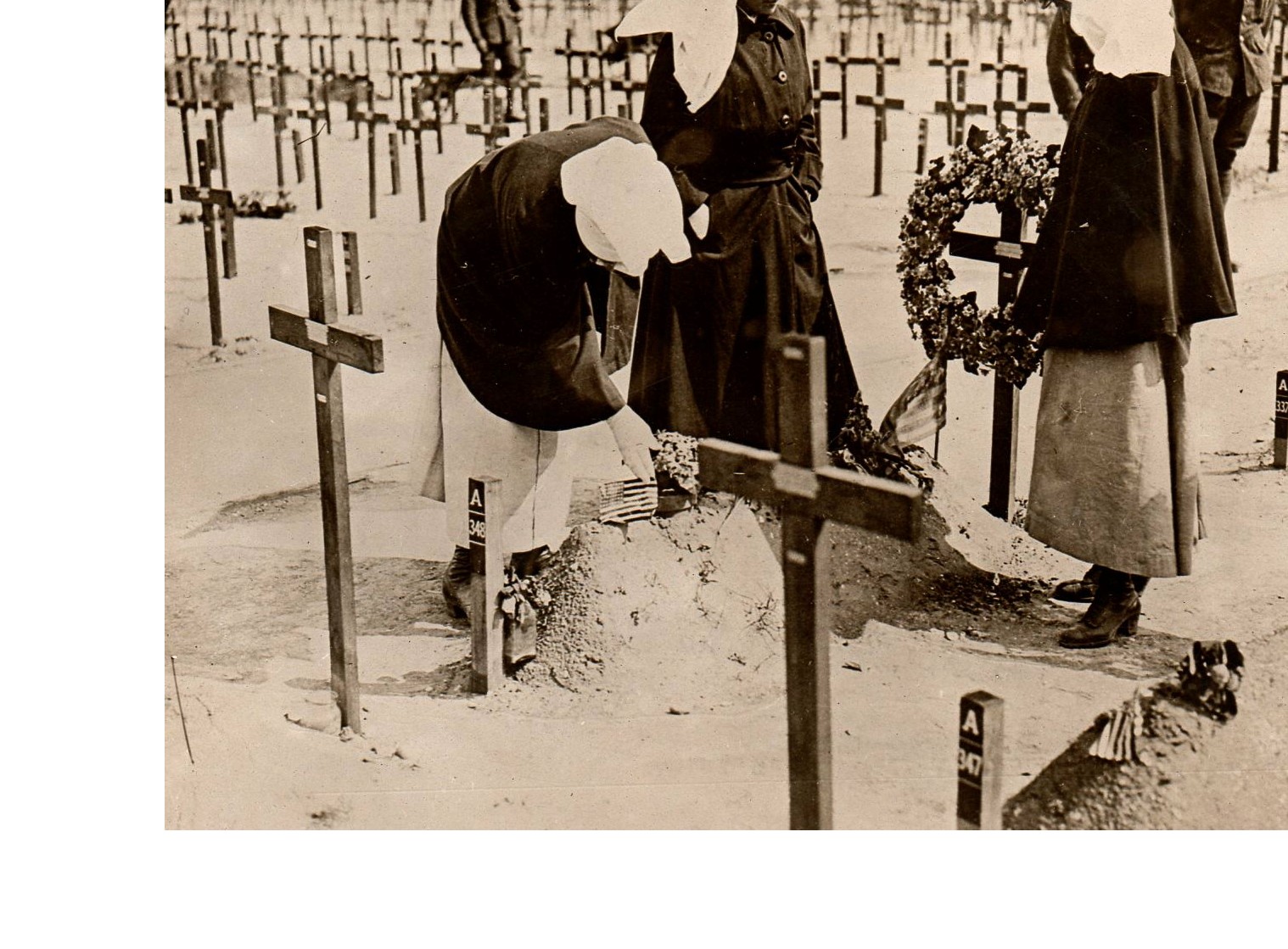
    I was very taken by this image, a photograph made of three Sisters on their way back from attending a funeral service for their compatriot, Sister Lowe, a fellow Canadian nurse killed by a German bomb dropped from an airplane in 1918.  It is from my collection of photo news service images, this one owned and distributed by Underwood & Underwood.  More often than not the photographs were accompanied by a sheet of brief text describing the image.  This photo text was dated 8 July 1918 and reads:


    Women--WWI sister 2259

    Women--WWI sister 4261
    “Another German victory manifested itself several weeks ago when Boche air flyers bombed a defenceless Canadian general hospital in France.  This Canadian Official picture shows Canadian Sisters preparing to return to their hospital after attending the funeral of Sister Lowe who died of wounds received during the raid. Note the grave of an American nurse who was killed during a previous air raid.”

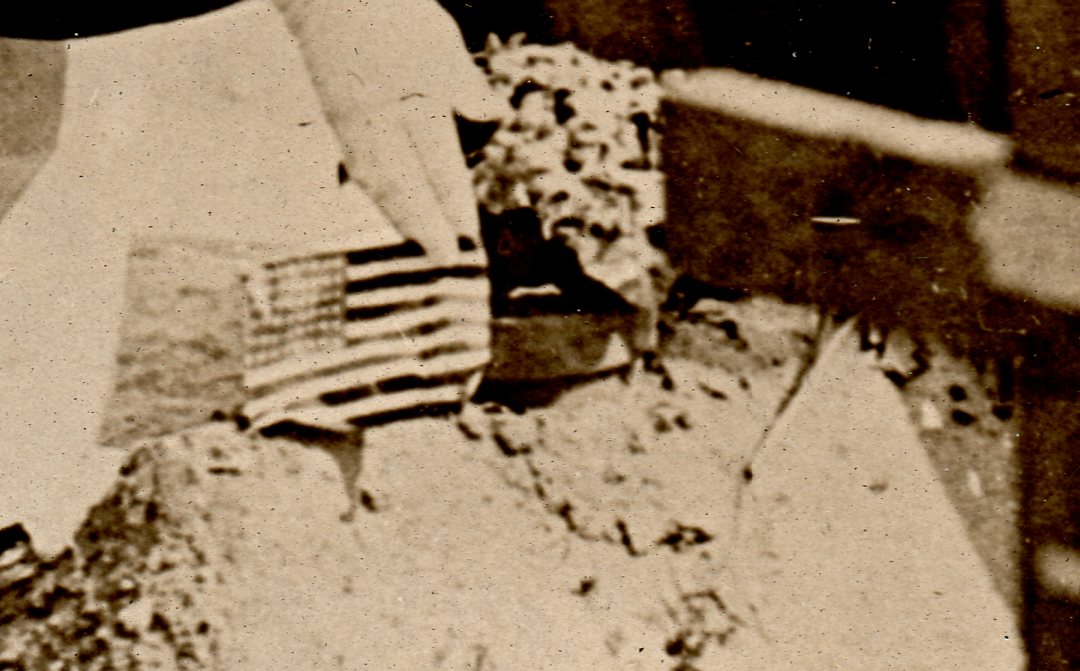
    They evidently stopped to pay their respects.  Its the tiny flags that got to me–I think they’re homemade.

  • Nagasaki + 65 Years

    JF Ptak Science Books 

    On this anniversary of the second atomic weapon to be detonated in Japan I just would like to point out a long (perhaps 75 posts) series that I’ve made in this blog on the history of atomic and nuclear weapons. 

    The most recent–on the clouds of Nagasaki and the fate of Kokoura–was made on 6 August.

    ·Posted by :

    ·in:

  • History of Goodbye Series: the Latrine Sarcophagus and the Slave Hangman

    JF Ptak Science Books   Post 1101

    Hangman-games I’m not so sure that it was the cold that kept Mathieu Leveille  in hospital for all of those years–as bad as hospitals would’ve been in Quebec in 1730–but I would rather have been there than at his work.       

    Leveille (1709-1743) was a slave bought for 800 pounds by the French ministers in New France (Canada), brought to the cold north from Martinique to do the job that they could find no man to do.  Or no competent man.  The history of executioners in New France–nearly from the very beginning of hanging people there beginning in the very early 17th century1–reads like a bad Italian farce sounds, filled with nothing but drunkards and incompetents, brawlers, muggers, crooks and thieves.  And the condemned–there are several accounts of men awaiting execution who were spared because the executioner had died (some from drunkenness), and there was no one there to kill them.  And so to fill the gap, the authorities offered the condemned the chance to live if they lived so as executioners.  I haven’t read any accounts of anyone turning down the offer, but I wouldn’t be surprised if that were so.

    The executioner in that society for the 1600-1750 period or thereabouts was not happily assimilated into society.  They found themselves–and their families–pariahs, living on the outskirts, or beyond the literal confines, of the city.  They were the last step in their judicial system, the great threat, the punishment with hellfire link to fearful retribution, that no one wanted to live next door to. 

    In the decades preceding Leveille’s arrival, there was a succession of horrorshow stories of executioners of drunk and low orders, two  selected from the list of the condemned, including incompetent sons of incompetent and drunken hangman fathers, as well as periods ion which the office simply could not be filled.  One of the executioners in this long list of doomed men was a Halifax hangman named “Tomahawk”, whose own body, after death, was stolen, paraded, and then dumped into the latrine of the old blockhouse where he once worked.  According to Howard Engel, in his Lord High Executioner, an Unashamed Look at Hangman, Headsman, and their Kind (1996), Tomahawk’s “bones could be seen by curious townsfolk for the next seventy years”.  At least the latrine at that time had been abandoned.

    Leveille was the beyond-pre-Dickensian solution to the judicial managerial problems in Quebec, the bright idea in a feathered cap of Jean-Frédéric Phélypeaux, comte de Maurepas (1701 – 1781), an ascendant French statesman recovering from disgrace.  On the heals of their latest bungle–a drunk imported from France to replace a drunken dead hangman and who maintained his drunkenness and sent back to France drunk–the judicial establishment listened to de Maurepas’ suggestion, and bought and then imported a black slave from Martinique to do the job.

    And that’s when Leveille’s story–no matter how bad it was for him in Martinique–gets worse.  He arrived in Quebec in 1733, and was almost immediately sent to the Hotel-Dieu.  (As it turns out, this is the first hospital in North America north of Mexico). I don’t know if he was told what was in store for him, or what he knew of the job, or what he did in Martinique.  It is established though that Leveille was sick on and off for the next ten years, finally dying there in the hospital in 1743.  Engel correctly assumes (I assume) that Leveille probably performed his job adequately for the powers that be to have spent so much attention on him, trying to have him finally recover. They even purchased a bride for Leveille, but he died just as she arrived. 

    I could imagine wanting, or needing, to spend as much ill- and off-time as possible, even in the grips of an ancient hospital.  The memory of sea spray  hitting Leveille’s face on the trip north from the Caribbean must’ve seemed like needles.

    The slave bride to the dead hangman was renamed Angélique-Denise and sold on the heels of Leveille’s death in 1743.

    Notes:

    1.  There was evidently an earlier semi-recorded hanging of a 16 year old girl, convicted of petty theft and punished.

  • On the End of WWII, 14 August 1945

    JF Ptak Science Books  Post 1102

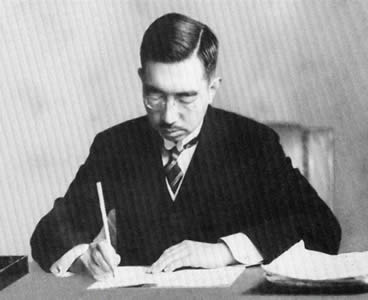
    One thing that 14 August means is that millions of people weren’t killed in any extension of WWII in 1946.  That’s probably what the Devil’s bill would’ve been had operations Olympic and Coronet (the Allied invasion plans for the outer Japanese islands and then the main island of Honshu) been carried out.  The 14th of August was just a few months after the horrendous battles at Okinawa (where the inevitable Japanese loss resulted in the surrender of only 7,000 of the 77,000 Japanese troops there) and Iwo Jima (a part of the Japanese home islands, 65 0 miles from Tokyo, where only 218 of 18,000 soldiers were taken prisoner). It was two months out from the no-holds-barred firebombing of Tokyo and just a week after Hiroshima, which managed to still not secure a surrender message from the Japanese government.  It still took a few days after the Nagasaki bombing for the Emperor to step in and finally insist on the unthinkable, and surrender. 
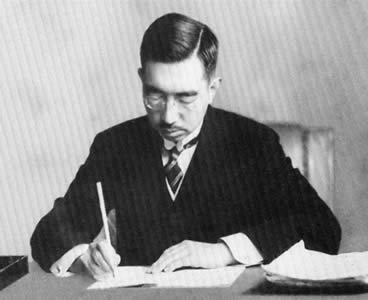
    Hirohito
    Defeating your enemy doesn’t mean that they’ve stopped fighting, or surrendered. On 10 August there were still 2 million soldiers stationed in Japan, plus another 4 million “reservists”, as well as a general population which was being told how to resist to the last.  

    14 August 1945 was the end of the war in the Pacific and the end of World War II, and not just another day in the beginning of a potentially long and very deadly endgame to conclude a won war. 

    Notes:
                                   
    The Emperor’s Statement of Surrender

    (I’m still not sure what he meant when equating the surrender of Japan with saving humanity:
    Moreover, the enemy has begun to employ a new and most cruel bomb, the power of which to damage is indeed incalculable, taking the toll of many innocent lives. Should We continue to fight, it would not only result in an ultimate collapse and obliteration of the Japanese nation, but also it would lead to the total extinction of human civilization.)

    “To Our good and loyal subjects: After pondering deeply the general trends of the world and the actual conditions obtaining to Our Empire today, We have decided to effect a settlement of the present situation by resorting to an extraordinary measure.

    “We have ordered Our Government to communicate to the Governments of the United States, Great Britain, China and the Soviet Union that Our Empire accepts the provisions of their Joint Declaration.

    “To strive for the common prosperity and happiness of all nations as well as the security and well-being of Our Subjects is the solemn obligation which has been handed down by Our Imperial Ancestors, and which we lay close to heart. Indeed, We declared war on America and Britain out of Our sincere desire to ensure Japan’s self-preservation and the stabilization of East Asia, it being far from Our thought either to infringe upon the sovereignty of other nations or to embark upon territorial aggrandisement. But now the war has lasted for nearly four years. Despite the best that has been done by everyone — the gallant fighting of the military and naval forces, the diligence and assiduity of Our servants of the State and the devoted service of Our one hundred million people, the war situation has developed not necessarily to Japan’s advantage, while the general trends of the world have all turned against her interest. Moreover, the enemy has begun to employ a new and most cruel bomb, the power of which to damage is indeed incalculable, taking the toll of many innocent lives. Should We continue to fight, it would not only result in an ultimate collapse and obliteration of the Japanese nation, but also it would lead to the total extinction of human civilization. Such being the case, how are We to save the millions of Our subjects; or to atone Ourselves before the hallowed spirits of Our Imperial Ancestors? This is the reason why We have ordered the Acceptance of the provisions of the Joint Declaration of the Powers.

    “We cannot but express the deepest sense of regret to our Allied nations of East Asia, who have consistently co-operated with the Empire towards the emancipation of East Asia. The thought of those officers and men as well as others who have fallen in the fields of battle, those who died at their posts of duty, or those who met with untimely death and all their bereaved families, pains Our heart day and night. The welfare of the wounded and the war sufferers, and of those who have lost their homes and livelihood, are the objects of Our profound solicitude. The hardships and sufferings to which Our nation is to be subjected hereafter will certainly be great. We are keenly aware of the inmost feelings of all ye, Our subjects. However, it is according to the dictate of time and fate that We have resolved to pave the way for a grand peace for all the generations to come by enduring the unendurable and suffering what is insufferable.

    “Having been able to safeguard and maintain the structure of the Imperial State, We are always with ye, Our good and loyal subjects, relying upon your sincerity and integrity. Beware most strictly of any outbursts of emotion which may engender needless complications, or any fraternal contention and strife which may create confusion, lead ye astray and cause ye to lose the confidence of the world. Let the entire nation continue as one family from generation to generation, ever firm in its faith of the imperishableness of its divine land, and mindful of its heavy responsibilities, and the long road before it. Unite your total strength to be devoted to the construction for the future. Cultivate the ways of rectitude; foster nobility of spirit; and work with resolution so as ye may enhance the innate glory of the Imperial State and keep pace with the progress of the world.”
    ·Posted by :

    ·in:

  • Occupational Alphabet, ca. 1850

    JF Ptak  Science Books   Post 1103

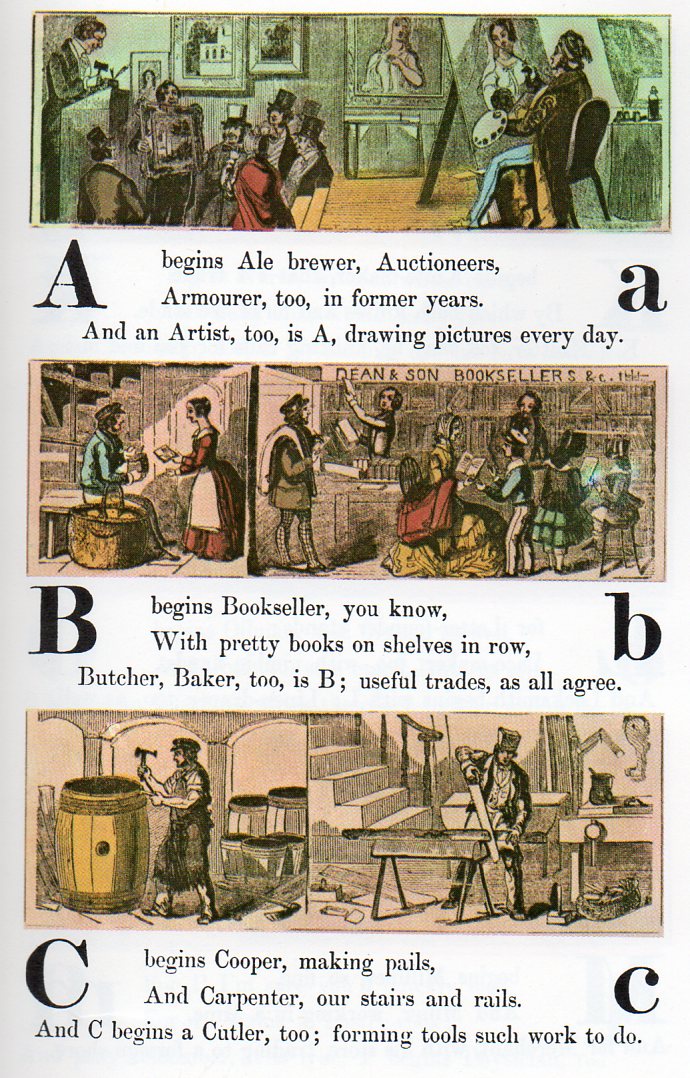
    Its interesting to see what jobs have survived over the years, and what jobs haven’t–particularly those jobs that would have been so widespread and popular that they would be instantly recognized by a child–so much part of the common culture that the initial letter of the job’s name could be used to help children learn the alphabet.

    Alphabet jobs a-c267

    In this version of commonplace employment found in a child’s alphabetical primer of ca. 1850, lists the following professions, most of which are still available for hire: ale brewer (especially here in Asheville, Beer City USA);auctioneer, armourer, artist, bookseller, butcher, baker, cooper, carpenter, cutler, dyer, dairyman, engraver, engineer, fishmonger, fiddle(r), florist, grocer, glazier, hatter, hawker, horse dealer, ironmonger, jeweller, knife-maker, knitter, letter-founder, lace-maker, locksmith, milliner, miner, merchant, nurse, newsman, oilman, optician, omnibus, pastry-cook, physician, rope-maker, rider, shoemaker, shipwright, scavenger, slater, surgeon, sawyer, saddler, tailor, turner, tanner, tinker, upholsterer, vintner, wharfinger, wax-chandler, yeoman, youth, zoologist.

    continued below with FULL ALPHABET:

  • Occupational Alphabet 2, ca. 1844

    JF Ptak Science Books   Post 1104

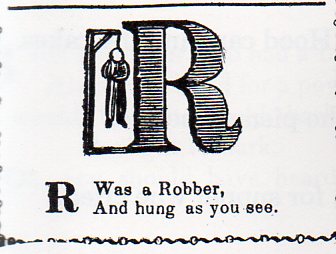
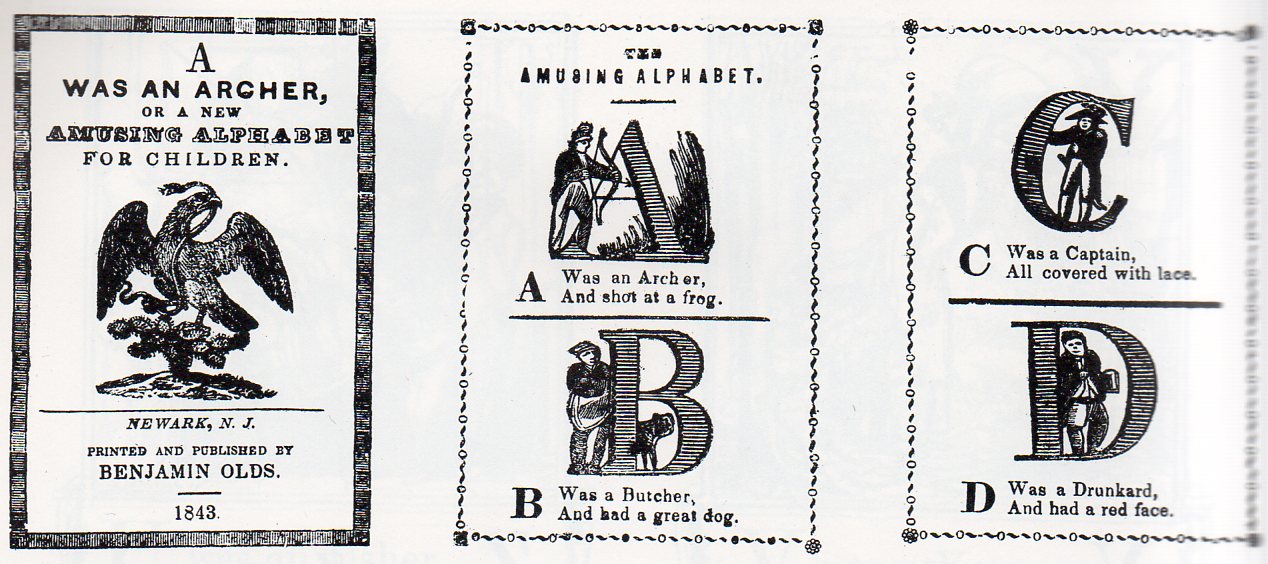
    Alphabet 2-robber280 Following yesterday’s “Occupational Alphabet” post comes A was an Archer, or a New Amusing Alphabet for Children, published in beautiful Newark, New Jersey, in 1844.  10 centimeters tall, this little 16-page pamphlet introduced children to associative memories of alphabets and occupations, accompanied by a rhyming couplet displaying a low quality of half the joined occupation. Thus, “Q” is for “Queen” but “of the lowest degree”. 

    And so:

    The Archer shot at a frog; the Captain was covered with lace, the Esquire had an insolent brow, the Gamester had ill luck, and so on.  It is interesting to note that the Robber was hanged for theft.

    Alphabet 2--a-c275

  • Action Alphabet and a Touch of Evil, 1879

    JF Ptak Science Books  Post 1105

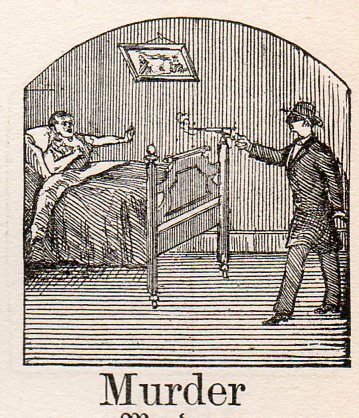
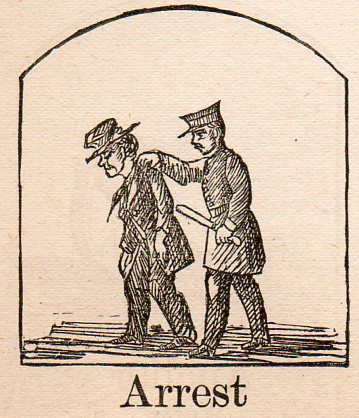
    Alphabet germ--murder298 Following yesterday’s two posts on Occupational Alphabets comes this “created” action-alphabet of late 19th century.  The source is Kantner’s Illustrated Book of Objects and Self-Educator in German and English, a self-teaching book for German vocabulary, published in Pennsylvania in 1879.  The woodcut images used to illustrate each word are fantastic, and occasionally stunning, sometimes unexpected illustrations of forgotten objects and actions.  All I’ve done is select some of the words for use as an Action Alphabet. (I failed though to provide a full alphabet, missing the letters i, u, v, x, y and z.) 

    The woodcuts appear here larger-than-life than their humble inch-square origins, and may take away a little from their mystery…or add to it.  They have an odd noir-ish, Wellesian feel to me, somehow, their tiny frames exciting a funny hankering for Kane or Macbeth or Touch of Evil, something I can’t quite understand.  Maybe it is just a happy confusion, looking too hard at too many small images, like discarded film clips on a cutting room floor, and imaging trademark deep focus bits from a famous filmmaker.  In any event, they do have their own style–perhaps tomorrow I’ll cull out the Dadaist Alphabet from their brethern.

    Alphabet germ--arrest297

Recent Posts

Archives

Categories