A Daily History of Holes, Dots, Lines, Science, History, Math, Physics, Art, the Unintentional Absurd, Architecture, Maps, Data Visualization, Blank and Missing Things, and so on. |1.6 million words, 7500 images, 4.9 million hits| Press & appearances in The Times, Le Figaro, Mensa, The Economist, The Guardian, Discovery News, Slate, Le Monde, Sci American Blogs, Le Pont, and many other places… 5000+ total posts since 2008.

  • The Obviousness of Oblivion

    JF Ptak Science Books LLC  [Post 1002 expanded from April 2010]                   

      [Another in a long series of post on atomic and nuclear weapons.]

    Perhaps nothing is obvious unless it is established or labeled so; perhaps the obviousness must be stated at least once before it can be officially, recognizably, the case.  And perhaps the greater the obviousness is, the more the need to make it officially so.  Perhaps nothing is so incredibly obvious that it can be studied and dissected and established.

    This seems to be more the case in more recent history than in time more further removed: that millions of dollars can be spent “proving” that children do not like to be separated from their mothers, or that cars will go faster downhill than up, or that people will respond to proper medication better than not, and so on, so on into the night, just seem not to need a vastly-funded proof.

    And so the case with nuclear warfare, people, and cities.

    In this RAND report from 1956, the great issue seems to be laid to rest, once and for all: the problem with nuclear weapons being exploded in/over cities is that since cities are filled with people, people will be killed.  And if those people in the cities are there because of professions that depend on city-settings, then more of those people will be killed than not.  
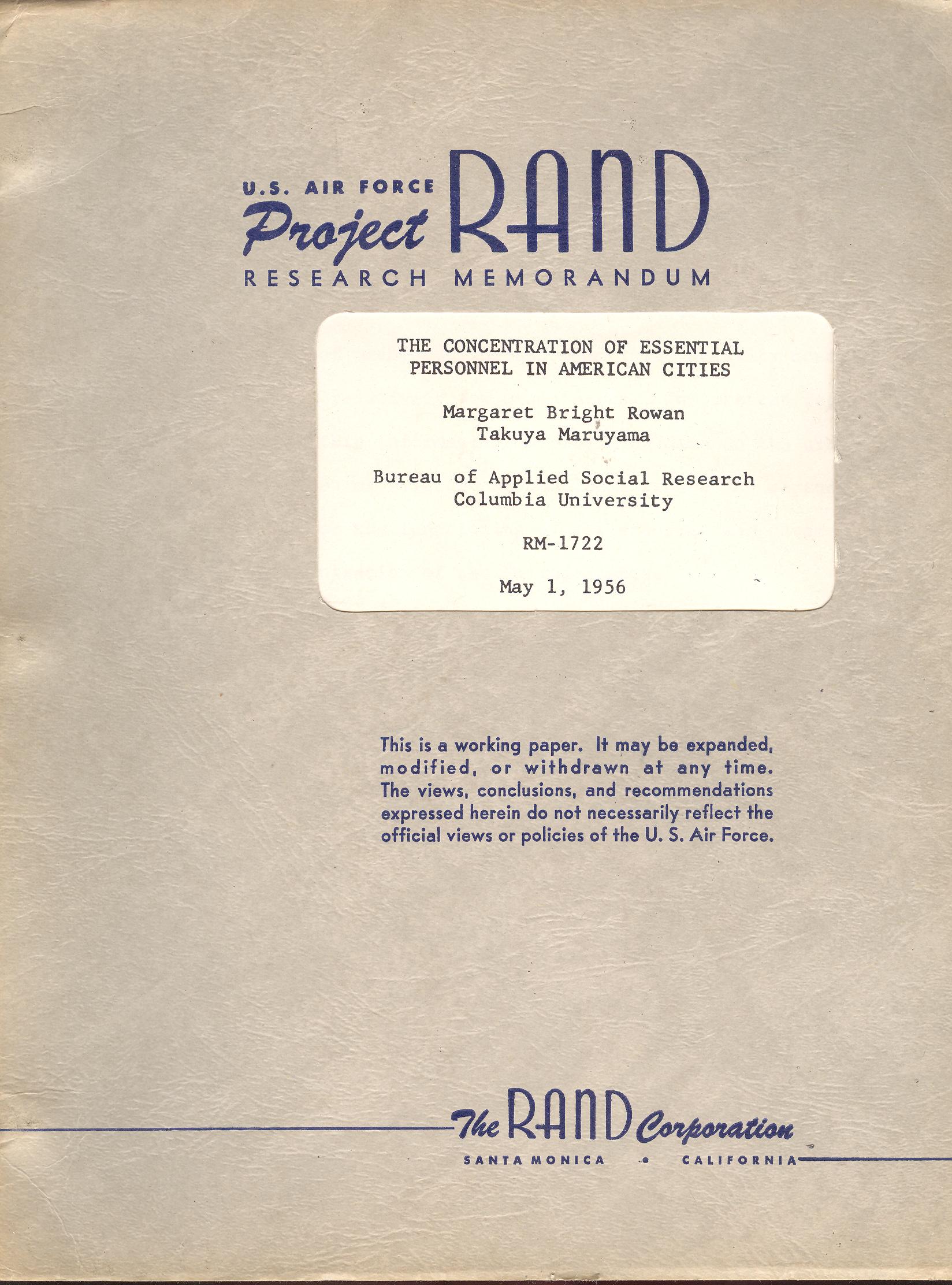
    Rand report

    But what this report was really about was the unfortunate aspect of the impact if nuclear warfare on leadership and working positions in significant and strategic industrial/business/government professions.  And what the report finds is this: since the vast majority of these positions are located in cities (defined as 100,000 population and above), and since cities will be the major targets in a nuclear “exchange”, the overwhelming majority of these people will be killed, thus leading to strategic human resource vacancies post-war. 

    It seems that 95% of aeronautical engineers in the U.S. would be killed in a nuclear war, which I guess would mean that it would be difficult to design new aircraft and such in the post apocalypse world.  Of course these people would be killed because it was their industrial base that was being targeted and they were collateral damage, so there wouldn’t be any industrial base to produce the components necessary to build, say, a B-52.  That part of the equation is not addressed here, though.  Nor is there any sort of recommendation presented to fix the problem.

    The RAND document just painfully points out the obvious, once and for all; no one really knew what to do with the information now that it was there, in black and white. Certain people could be evacuated, saved from the maelstrom; but saved for what?  There were other evacuation plans that were completely doomed from the beginning, sheltering plans, Dr. Strangelove arrangements, but all of that would come into their pitiful being later on.

    First, though, the bitter reality of what everyone already knew–one of the greatest of all obviousnesses–had to be make its appearance in print.  And so it did.
    ·Posted by :

    ·in:

  • History of Holes series: Holes in Airships (1919 and 1937)

    JF Ptak Science Books   Post 1736 [History of Holes series.]

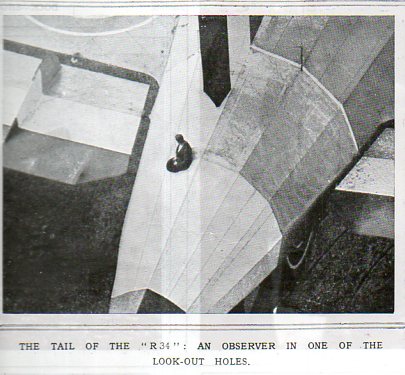
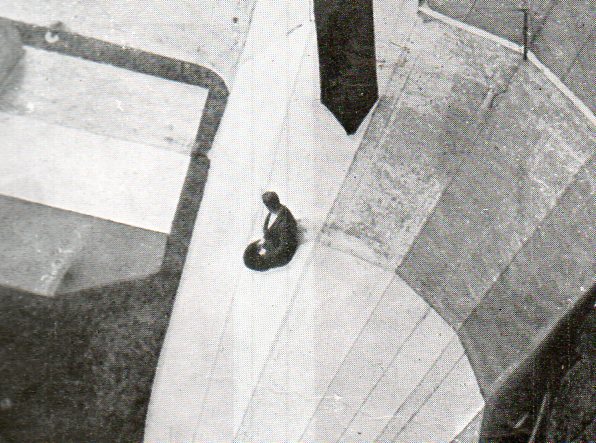
    Holes are of course everywhere–it just depends on how hard you look.  This image, though, struck me very quickly as an unexpected hole (though of course once you allow yourself a moment to think about ti the whole thing makes sense).  It is a very plain “observer’s perch” in the tail of the great British airship, the “R 34”, and appeared in the Illustrated London News in April, 1919, just before its first flight.  The aircraft was massive–643 feet long1–and on one superficial level its hard to imagine holes in its structure of any sort, let alone an unprotected observation post.  But there it is.
    Airship 297

    And this

    Airship 296

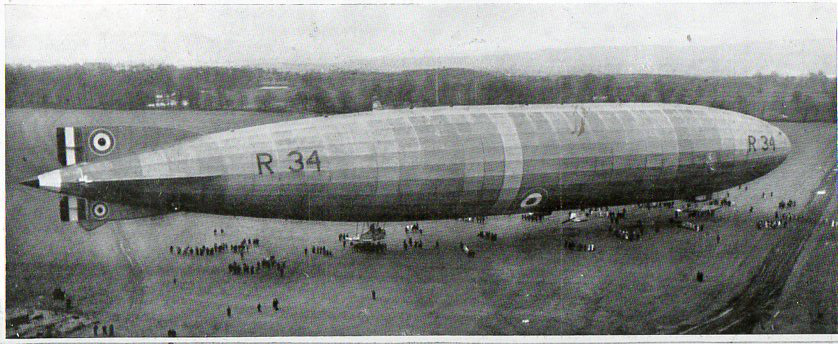
    Here’s a full view of the “R34”, successor to the “R33”:

    Airship 295
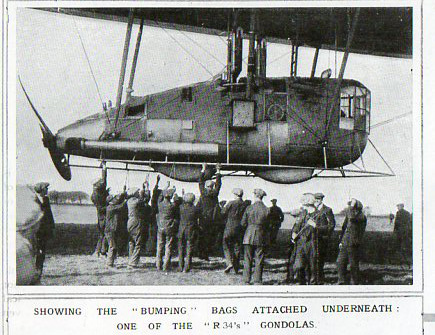
    This is an image of the (forward?) gondola of the airship, looking like it has come in for a landing, or touchdown, or whatever–there is something so very primal about this relatively small group of men reaching up for the railing on the gondola…a railing placed there specifically for that reason.  Its hard to imagine that such a seemingly small effort would be enough to control any part of the airship’s motion, though perhaps it was. 

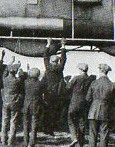
    Airship 293And the detail, showing the man in the middle clearly off the ground–clearly he must be weighing his options:

    Airship 293_edited-1At least he seems to be wearing one glove, anyway

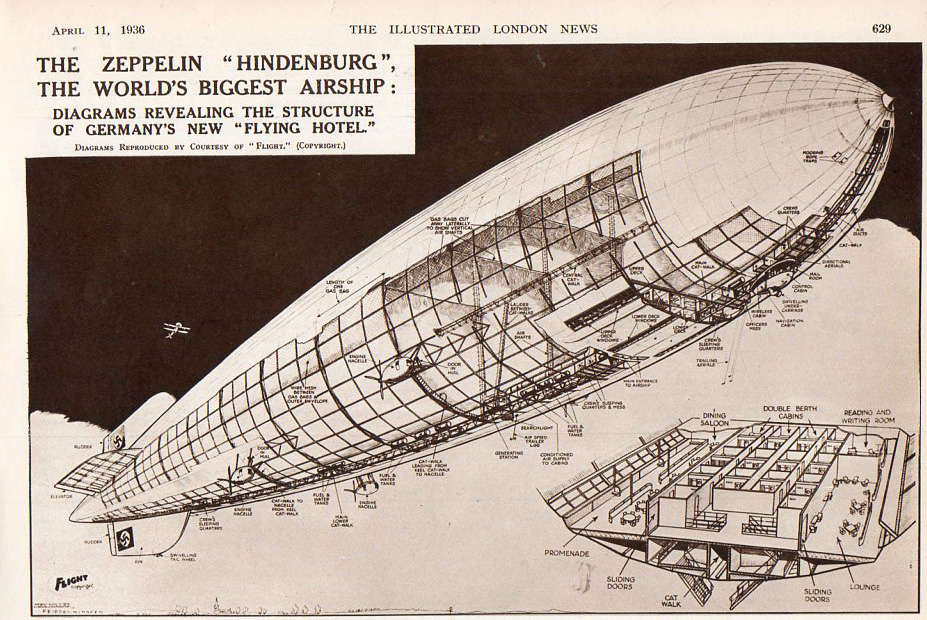
    Then there’s the image of the “bad” hole, the iconic image (photographic and motion picture) of the conflagration and crash of the Hindenburg, a result of a very quickly-spreading “hole” in the skin of the aircraft as it was coming in for a landing/mooring in Lakehurst, New Jersey, 1937.

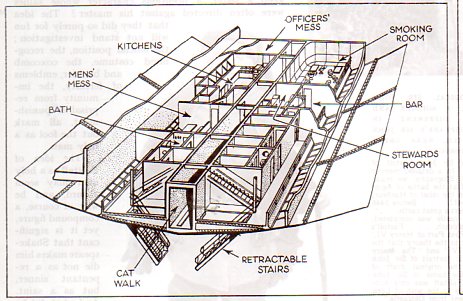
    Here’s a cross-section of the Hindenburg as it appeared in the Illustrated London News in 1936:

    Airship 289

    Airship 292

    Notes:

    Specs on the “R34”:

    • Length: 643 ft 0 in (196 m)
    • Diameter: 79 ft 0 in (24 m)
    • Volume: 1,950,000 ft3 (55,000 m3)
    • Useful lift: 58,240 lb (26,470 kg)
    • Powerplant: 5 × Sunbeam Maori, 275 hp (205 kW) each

    The Hindenburg was quite a bit larger than the R34–in fact, it was the largest thing ever to fly, at 803 feet long and 135 feet in diameter…and 200,000 m3, almost 200% larger than the mammoth R34.


  • The Gift that Keeps on Giving: Radium, in Powder or Suppository

    JF Ptak Science Books  Quick Post

    Radium.  It was for some short period of time a magnificent and harmless thing, soemthing with a life of its own, sort of, in the way that people used to think of electricity. 

    Adium299

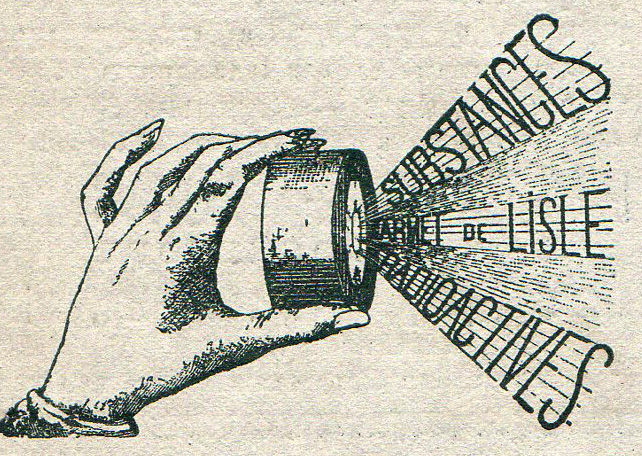
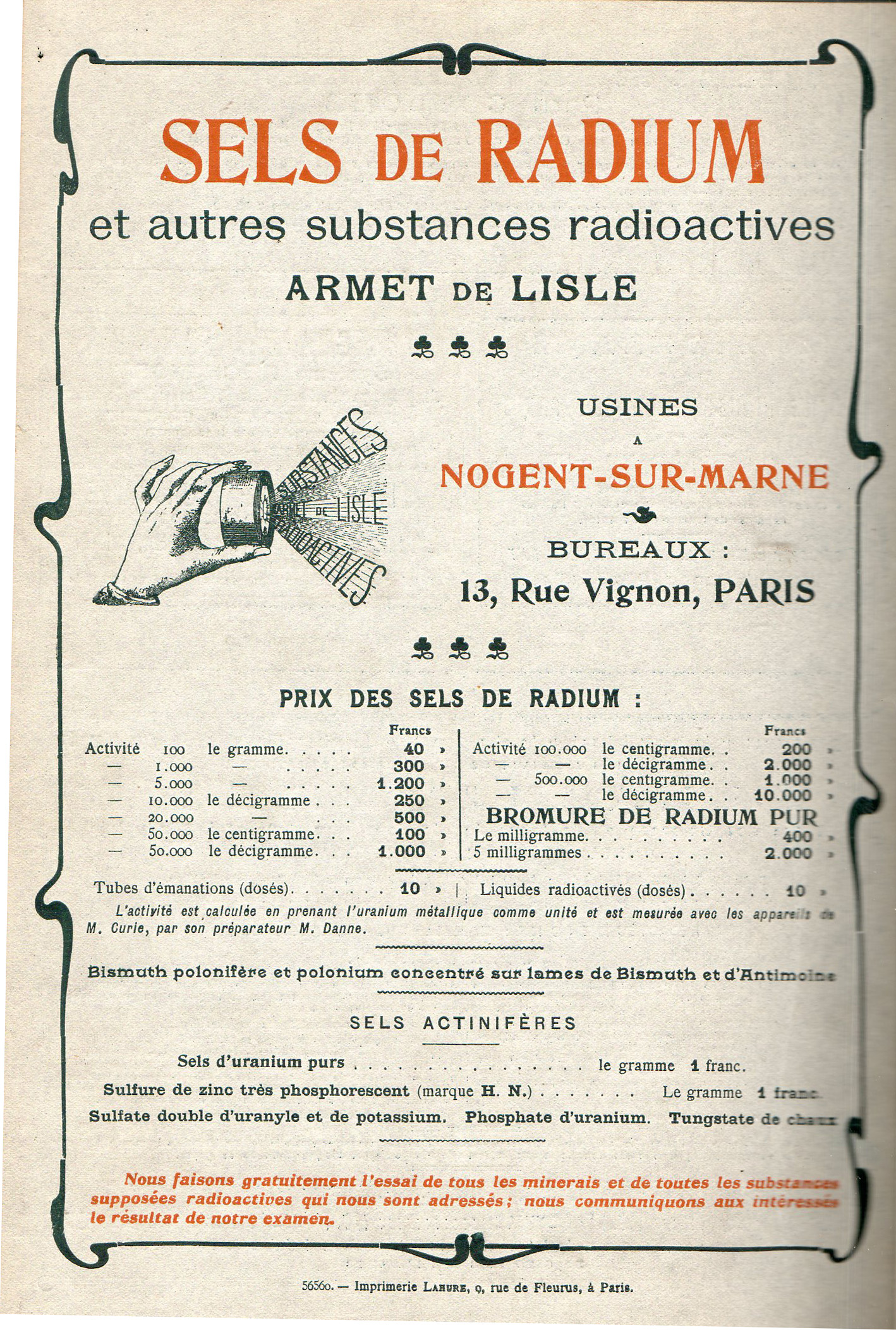
    This is a detail for an advertisement for radium salts, found in the December, 1903 issue of Le Radium.  At this point, just five years after the Curies discovered it and quick-published (in five days) their results in the Comptes Rendus…, the massive biochemical effects of human/radium interaction was not understood. And so the ads for firms like Armet de Lisle, which  was loudly selling Sels de Radium (and other radioactive substances like uranium salt  and uranium phosphate) without any real knowledge of the adverse health effects of its products.  (The Curies and Becquerel had noticed ulcertating reactions to their skin when it was left in contact to radium, and “radium dementia” had been reported beginning about 1900, but it would take quite some time for this radioactive material to be understood as lethal products.)

    Adium298Radium was used (in very small dosages) for the illuminating of instrument panels and dials (in, say, aircraft) and wrist watch faces into the 1960, though the major health factors ground themselves out in the worker who would come into contact with the radium itself. 

    Of course there were other uses for radium as a cure-all, which would have been a completely different story:

    In the early 1900s, real men used radium suppositories

    [which I wrote about here in “Radium Dance”]

  • The Movie as Morgue: the Imperialism of Technology over Memory?

    JF Ptak Science Books   Quick Post

    I was just thinking about the period of 1876-1900 or so and a few of the advancements in technology–telephone, motion picture–and how they changed the landscape of how people saw things in the present, and how they altered the very way in which memory worked. I’ve come up with a couple of questions:

    Man with Cane, plate 49

    1.  When was the first time that a person was able to see a dead person–personally known to them–appear “alive” in a motion picture?  How disorienting could that be, say, to see Uncle Henry or Mother walk past a camera at the Columbian Exposition in 1893, have Uncle or Mother die in 1894, and then see them, again, strolling, in 1899? 

    1.1  Would the dead-preserving daguerreotype have prepared people for the experience of the next step of seeing the dead people, this time in motion? 

    1.12  Daguerre’s and later photographic processes would have allowed people to clearly see the faces of the Departed even decades after death.  Certainly this was a triumph of technology and a change ways a hundred centuries old of remembering what dead people looked like.  What did this mean to the people in the first generation of humans who were able to experience this?

    1.2.  I wonder if it would have been possible to operate a business–say, in 1895–that specialized in making simple one-reel motion pictures of family members and then contracting to save the movie for decades. 

    1.2.1  The movie house would become a Morgue.  Family members or whomever could come and see these motion pictures with dead people in them.  It would be like a moving, visual cemetery.

    2. What did the invention of the telephone mean to people who now could with utmost ease communicate via voice without being face-to-face with the other person?  

    2.1  The telephone was also a great democratizer–it meant that anyone with access to a telephone could talk to anyone at the number that was dialed.  In the age of introduction and more-visible class warfare, this was a novel idea.

    3.  What was it like for the first time people were able to experience interrupted motion?  That is, for people in a cinema, or seeing a motion picture somewhere, that they could be among the first humans in the history of humans to be able to slow or stop human action as filmed in  a motion picture, to see motion frame-by-frame, or (perhaps, if not too explosive) to see that action stopped, and started, at will?


    3.1.  And what did people think when they could see such things as interrupted and suspended motion, that they could see it all backwards? And over and over again? It had to have been an overwhelming sensation of newness and the unexpected.

    3.2  It certainly meant a lot scientifically, with Marey instituting a study of locomotion; and also for the arts, as there is really no telling what impact these sorts of images would have had on people who were read/studied by those like M. Duchamp and his Nude Descending, or to the creation of alternative narratives in literature.

    How did these inventions alter the way in which we remembered things, and how we remembered them?

    If we fast forward (!) to the present, what might it mean to the way our memory works if we can commit so much of what we come into contact with to the cloudy intertubes? Obviously we today come into contact with x-orders of magnitude more data/information than ever experienced in the course of human history (and perhaps we experience more data input than the “average” person would have experienced over a period of a collective century or centuries or _________), and so I wonder about how the brain discriminates between necessary and allocated memory?

    Again, just some thinking-out-loud notes…


    ·Posted by :

    ·in:

  • Fantastic Cover Art: a Picture of the Future of Television

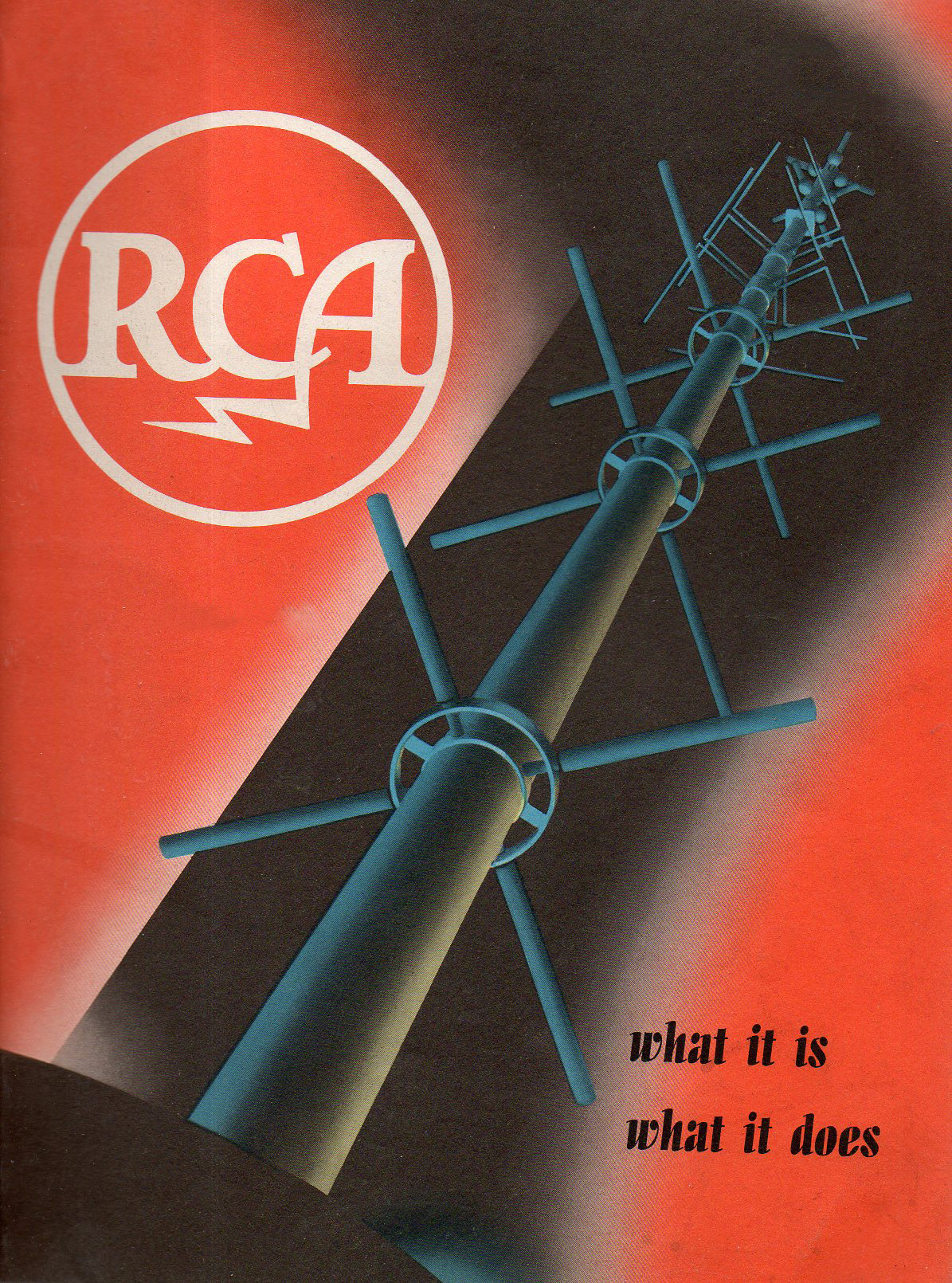
    JF Ptak Science Books   Quick PostRca300

    This image is that of the television antenna of station WNBT and for many years it sat on top of the Empire State Building.  WNBT was the flagship station of NBC, which was owned by RCA (Radio Corporation of America, 1919-1986) which (according to its name) was really the first national broadcasting radio network in the United States, and which (as experimental station W2XBS) became the first to broadcast a television picture (of a papier mache Felix the Cat) in 1928.  This fantastic cover art for a 1947 promotional for the company pictured the famous antenna,  the great visual of the company’s external hardware, right there on top of the world’s tallest building. 

    This was really a picture of the future, and in 1947 the future of mass communications and entertainment (and in making money in the two) was seen in television, much more so than the formerly gargantuan radio. 

    I just really like the design of this pamphlet’s cover…A small poster-size reproduction is being sold (along with the original pamphlet) at our blog bookstore, here.

    ·Posted by :

    ·in:

  • On Antique Waves and Dropping Your Hat in Them

    JF Ptak Science Books   Post 1737  (Expanding post #850, On Dropping Your Hat in the Punic Wars)

    ++ Nov 24 dropped

    There is a particular class of illustration in which, among the secondary figures of the image, there is a small happening, an everyday trifle, that has been captured by the artist and included in the overall communication for no necessary reason. (for example, see here and below1). I’ve written about this a little before on this blog in posts about finding images-within-images: the unecessaries among the unnecessaries, the bits and pieces of everyday human existence that in and of itself is not worth commentary but which nearly everyone experiences.  Small bits, they are, of a tremendous human nature, the things that are done in private, or are so universal but inconsequential that they are shocking to see when illustrated in print.

    Titus Livius (59 BCE-17 ACE), better known to the English-speaking world as Livy, was a superior among superiors of Roman historians, writing on the history of his city and country.  His work, Romische Historie…, published in Mainz by Johann Schoeffler 1450 years later in 1514, was one of the most beautifully illustrated books ever produced in that city.  This is a considerable statement, as Mainz was the birthplace/hotbed of moveable type printing, being home to Johann Gutenberg and a number of other early presses. 

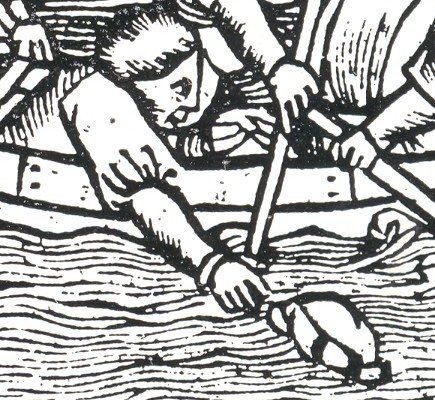
    And in looking at this fantastic work by Livy, I am a little embarrassed to find this spectacular bit of human tendency displayed in this woodcut depicting a naval engagement during the Punic Wars.  It is a beautiful thing, this scene of warfare depicted on tranquil seas and ribbony waves, determination in every face.  But what I noticed in the small boat at bottom right is a man reaching out into the water—not for a dropped oar, or to help a man overboard, or to catch his falling sword. 

    ++ Nov 24 dropped det
     He was reaching for his dropped hat. 

    I have reason to doubt that during the Punic Wars there may have been an unwritten chapter, “On the History of Dropped Hats During Warfare”.  Surely soldiers dropped their hats during the history of roman conquest, but I’d say that retrieving the headgear was more important at the Battle of the Bulge in protecting your noggin from badly splintering trees traveling at you at 180 mph and other such places than a wool cap dropped from a ship in pitched battle two hundred meters from shore. 

    I like this so because it is probably the first reaction that most of us would have—just a habit, battle raging or not—and just utterly human.  Just a little piece of back-history that doesn’t go anywhere and is lost to experience.  I’m sure that Herr Gutenberg dropped his hat at odd times, as did the unknown artist of this print.  Just an odd bit, like the first things printed on Gutenberg’s press being religious indulgences for people paying their way past Purgatory (and worse).  The fact that the indulgences preceded the great bible by several years doesn’t really matter, and neither does retrieving a dropped hat in a sea battle—but they do make interesting stories.   

    The only thing that I’d rather have the artist improve in this print were the waves–the ones on exhibit here weren’t very saucy.  Admittedly, waves were a large problem so far as depicting them goes, what with the whole vast subject of fluid dynamics so little known at the time.  THe person who would know this phenomenon best at this point–Leonardo–was thinking and working but wasn’t sharing. His “Studies of water Formations” (c. 1507-09)? and the later, magnificent “Deluge” (1513, nearly the year of publication of the above) would stay hidden for centuries, the big step forward in the West having to wait for another 120 and 140 years (respectively) for the works of Benedetto Castelli, and Evangelista Torricelli, 

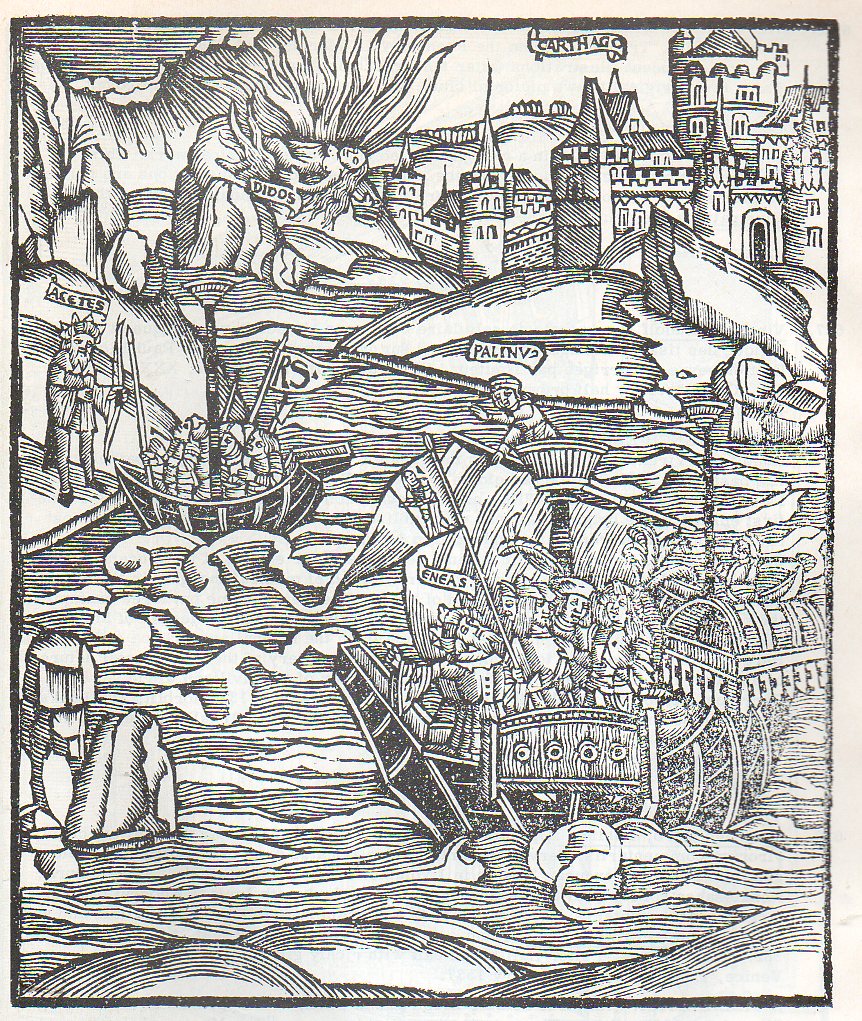
    This aside, I think that I’d rather see heavier lines in my Renaissance waves, more in line with we find in Publius Virgilius Maro Oper accuratissime castigata…, a richly illustrated (104 large woodcuts) work published in 1537, even though the artwork (evidently) appeared in an earlier edition of 1502.  No matter, “The Master of Grueninger’s Workshop” created some beautiful waves:

    Wave301
    There’s nothing “wrong” of course with the Livy waves; the Virgil though has sharper, darker, blacker and stronger contrasts in the water. Of course, the Livy has that incredibly human act of the man reaching for his fallen hat int he heat of battle, and that’s something that rarely seems to happen in prints of the Renaissance. 

    Notes:

    1.  Some other Found Images posts:

    Found Images: Penny Lane and the Inexpensive Treat, London, 1896

    Found Images of the Great Wheel, 1895

    Finding Hidden Images in Antique Prints: 18th Century Forensic Social X-Rays of Florence by Guiseppe Zocchi
     

  • History of Lines: Perspective with Lances

    JF Ptak Science Books  Quick Post  [Part of the History of Lines series]

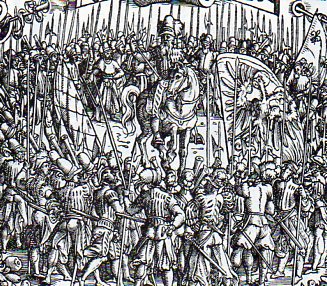
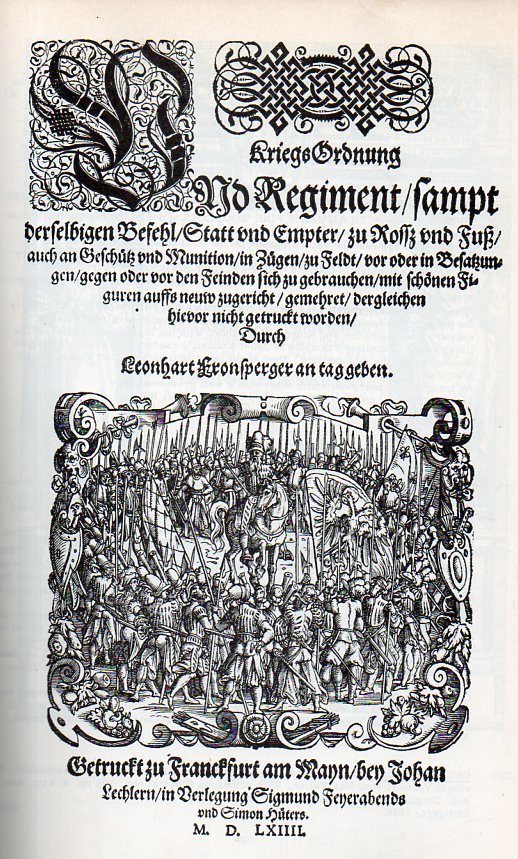
    I was quickly struck by the use of lances to establish a depth and perspective in this small woodcut on the title page of Leonhart Fronsperger’s Kriegsordung und Regiment…(1564), and how I have seen this device used many times over he years.  The artist here is the great Jobst Amman, and the book happens to be one of the most important works in military science published in the 16th century, addressing topics from troop movement to military economics to administration. (It is also one of the earliest books to address the subjects of pyrotechnics and rocketry, the later in the second chapter, “Vom Gescuetz und Feuerwerk”.) 

    Lance312
    The above is a detail from the title page:

    Lance311All that said, I’m fixed on the lances, and how they remind me somewhat of Paolo Uccello (1397-1475)–who is one of the founders of perspective–and his triptych The Battle of San Romano, with the third part of the trio in particular..  The painting was intended to be viewed together, depicting the battle (more-or-less) at morning/noon/night, the parts of which are shown below in that order.  The lances (especially in the “Counterattack”) are meant to heighten the sense of perspective–and the effect of the lances having basically no detail and being in brilliant color enhances that effect.  (In the first part of the triptych Uccello uses the alignment of dead soldiers and dropped lances to the same effect–particularly the ones beneath the hooves and in the vicinity of Niccolo de Tolentino’s spectacularly white and “solid” horse. (The business of the lack of detail in Uccello has been famously addressed in William Gaddis’ The Recognitions. I’ve written about Uccello frequently here, particularly in this note.)

    The left panel

    • Niccolò Mauruzi da Tolentino unseats Bernardino della Ciarda at the Battle of San Romano (dating uncertain, about 1435 to 1455), tempera on wood, 182 × 320 cm, Galleria degli Uffizi, Florence

    The center panel

    ·Posted by :

    ·in:

    —
  • Travel Time in the Young Republic, 1800-1857

    JF Ptak Science Books   Post 1738    [Part of a series on the Display of Quantitative Information]

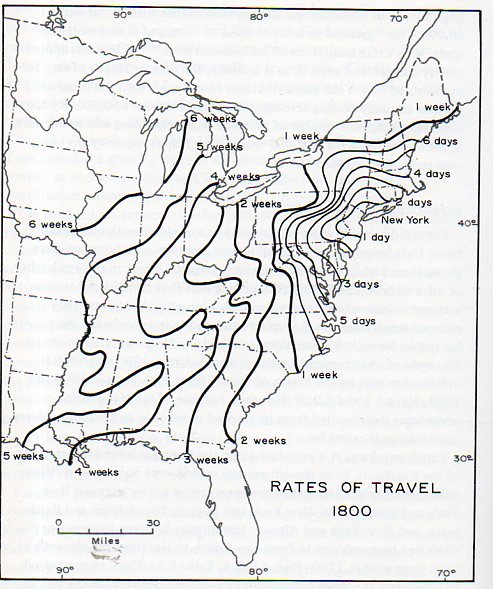
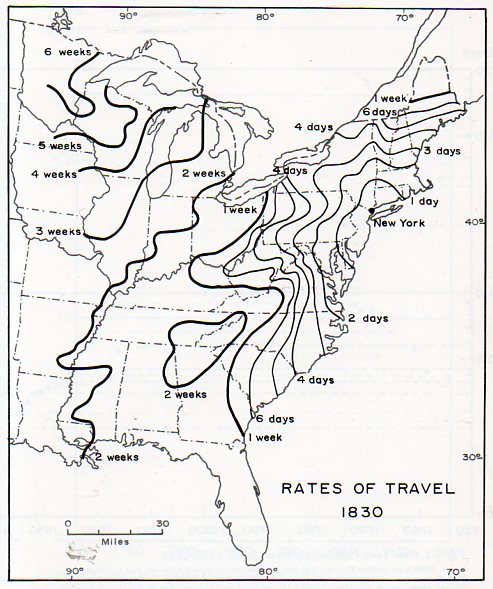
    I wanted to pass along these very interesting maps that appear in Allan R. Pred Urban Growth and the Circulation of Information, 1790-1840 (Harvard, 1973) because they give a quick and elegant view of how long it took to get to various parts of the country in the first part of the 19th century. 

    First, Rates of Travel, 1800:

    Travel time 1317
    and its complement, Rates of Travel 1830:

    Travel time 2316[Note:  all travel time based on starting  point in New York City.]

    Its interesting to see with just improvements in travel excluding the introduction of railroads and (for the most part) canals that travel time was basically cut in half in about thirty years’ time.  For example, in 1800 it would take roughly four weeks to get to New Orleans, and then six weeks to arrive in Iowa and the Upper Peninsula.  By 1830, that time was two weeks to NO, and three for the other two locations.  In 1800, it was a five day trip to the northern Outer Banks in North Carolina; that would be cut to two days by 1830.  The trip in 1800 to the vicinity of Savannah and the northern part of Florida was a two week ordeal; by 1830, that time had fallen to 6/7 days.  The Mississippi was reachable in five weeks in 1800; in 1830, that time was cut to two weeks.  This as I said would all change drastically over the next three decades, once the railroad system became slightly mature.

    And here, expanded to 1857:

    By 1857 one day’s travel time has been blasted to a ring encompassing the southern half of Maine, partially into Ohio and south into the northern part of North Carolina.  Two days of travel will get the traveller deep into Michigan and parts of Wisconsin, and half-way through North Carolina and South Carolina (excluding the mountain region in Western NC).  Three days will now get us to northern Florida, halfway through Georgia and Tennessee, and into the Midwest, past the Mississippi River. Beyond the basic reach of the railroad at this point is the rest of the country, and harder going, though one week of travel will get you deep into the central part of the country, where with some difficulty you would be able to find your way to southern California in three weeks, and the Pacific regions of Washington Territory in six weeks–basically, an entirely new world of travel and the spread of goods, service and information, not the least of which was aided by the spread of the railroads, which increased from 3,000 miles of track in 1840 to more than 30,000 in 1860.

    Again, I really just wanted to share this display of information because I have found them to be useful in the past, and the info doesn’t seem to be all that wide-spread. 

     My source for the maps has been varied from web sources, but the original work seems to have been published in Charles O. Paullin and John Wright, Atlas of the Historical Geography of the U.S., published by the Carnegie Institute of Washington, D.C. (1932), pages 138a, 138b, 138c, 138d.


  • Placing London in Venice, 1892.

    JF Ptak Science Books  Quick Post

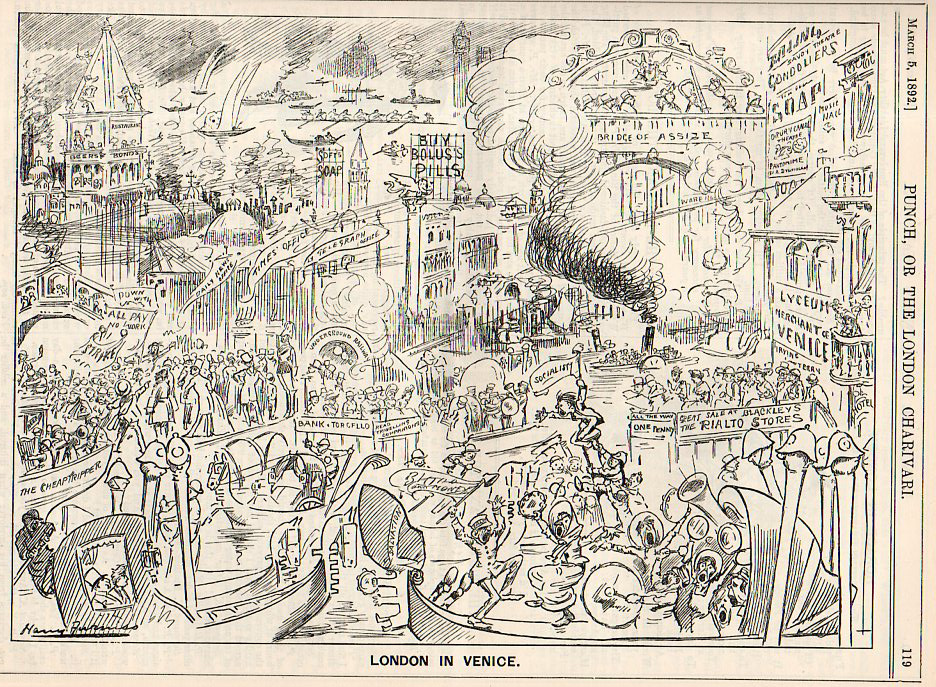
    This is a funny, unexpected and semi-absurd image, especially I think for 1893.  It occurs in the 5 March 1892 issue of Punch, or the London Charivari and seems quite literally to place bits and pieces of London on top of Venice, as if to show what that city would look like it it had some sort of urban renewal involving the removal of another city entirely to that place.  Its quite a neat idea, really, to put one city’s buildings on the topography of another city–it would be an interesting exercise, say, to place Manhattan in Savannah or Rome in Cape Town.  Perhaps it would be revealing in some way, if for no other reason than to visualize buildings in another scale.

    London in venice328

    I’ve seen images of a building or two of great note from one city placed out-of-context in another city or different situation, and of course city plans of one city laid on top of another is very common; but I cannot think offhand of another situation quite like the one above, cartoon or otherwise. 

  • On the Souls of Toys–1892. The Memories of Toys.

    JF Ptak Science Books   Post 1738   [Part of the series on the History of Memory.]

    Fact:  toys have souls.  Or, if we can establish that in this case a “fact” can be so identified, then a “fact” this must be.

    Toys 6 det325
    I’ve stumbled onto a remarkable short story in Punch’s Almanack for 1892 (as part of Punch, or the London Charivari) called “The Evolution of a Toy Soul, or Nursery Karma”.  This piece establishes that toys have souls, that they have an inner, thinking, emotional existence which is capable of Karma and reincarnation, a life of their own–lives of their own. Cognizant, penetrative, analytical.  And a toy.

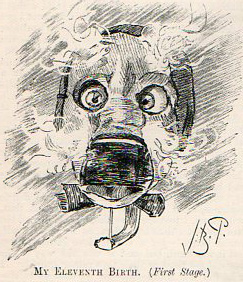
    The story is told partially in the first person, in the voice of a toy who recounts its long series of births and rebirths–eleven (so far) in all–and its (his or her’s) long experiences.  And this all more than a hundred years before Toy Story.  I don’t know this literature very well, not really, but so far I have not found other “toys have souls” stories, nor have I been able to find out anything about this particular toy story, with searches done in JSTOR and Google and a host of other repositories turning up nothing at all.  Its a puzzling thing, really, because it is a wonderful story.

    In a brief summary, our toy soul starts out it life (“my first birth”) as a rubber ball (“the body in which I first became conscious of my existence”).  The toy soul figures too that it must be its first body, because there is no lower entry point in toydom, except, as is noted, for a brick, which happens to be not-really-a-toy. 

    “My Second Birth” find the toy soul returned to the nursery as a Ninepin, a Ninepin King, who lives part of its life in the hands of a (“quite mad”) human child who dresses the Ninepin in dolls clothes and fabric.

    “My Third Birth”:  “the law of Karma has mysteries which are hid even from the initiated, and I am still at a loss to explain how it came about that I was next incorporated in an Organ Top”, which was basically a spinning top that produced a melody of some sort.

    “My Fourth Birth”:  “I was advanced at a bound” in Karmic hierarchy by being held in the form of a fur monkey with bead teeth and glass eyes.  Here our toy soul has a recollection of its earlier self as a musical top, as it leaves with the monkey a “chronic melancholy”, who takes care (as it were) of a sick girl for a long period of time, and then in the end is given over to a careless boy, and ends up burning in a fireplace.

    ·Posted by :

    ·in:

  • Flying Mountains of the Diseased Dead: Offensive Weapons and the Black Death

    JF Ptak Science Books   Post 1740

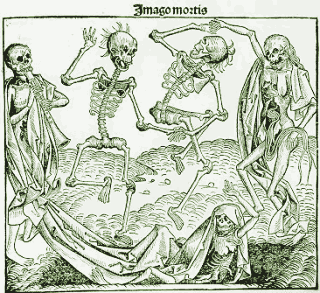
    It is generally conceded that the introduction of the Plague1 into Europe in 1348 had its very terroristic beginning in the Genoese trade and port city of Caffa, the result of a series of various sieges and bad blood between them and their Mongol hosts.

    Holbein-death


    The background to this confrontation is pretty extensive, with sieges laid to Caffa several times over a hundred year period.  The Genoese established themselves at Caffa (which today is the city of Feodosija, Ukraine) via and agreement with the Kahn of the Golden Horde (the remnants of the Mongol Empire of Genghis Khan), which was a seaside link that reached across Russia and into the Far East.  The city was besieged in 1308 due to diplomatic/trade/ethnic etc. unpleasantnesses, and the Genoese wound up firing and evacuating the city, only to be invited back again in 1312 with the acceptance f a new Khan.  A major city developed which by 1343 consisted of two concentric rings of fortress protecting a diverse population of 20,000.  But it was in this year that the second siege began, lasting four years, with the Genoese (having access to the sea and supplies and new military input) finding themselves with a string of victories against the Mongols.
     

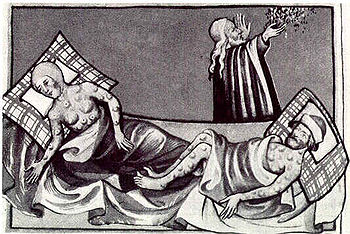
    The Mongols at this time were also laid low with what turned out to be the Black Plague. Anxious to share this disaster with the Genoese, they catapulted their fallen, diseased soldiers over the siege walls and into the Caffa, with devastating effect. The scene was recorded by the contemporary Gabrielem de Mussis  (the account found in Mark Wheelis’(U  Cal Davis) CDC article “Biological Warfare at the 1346 Siege of Caffa”), which begins “In the name of God, Amen. Here begins an account of the disease or mortality which occurred in 1348, put together by Gabrielem de Mussis of Piacenza” and continues: Black death

    “The dying Tartars, stunned and stupefied by the immensity of the disaster brought about by the disease, and realizing that they had no hope of escape, lost interest in the siege. But they ordered corpses to be placed in catapults and lobbed into the city in the hope that the intolerable stench would kill everyone inside. What seemed like mountains of dead were thrown into the city, and the Christians could not hide or flee or escape from them, although they dumped as many of the bodies as they could in the sea. And soon the rotting corpses tainted the air and poisoned the water supply, and the stench was so overwhelming that hardly one in several thousand was in a position to flee the remains of the Tartar army. Moreover one infected man could carry the poison to others, and infect people and places with the disease by look alone. No one knew, or could discover, a means of defense.

    “Thus almost everyone who had been in the East, or in the regions to the south and north, fell victim to sudden death after contracting this pestilential disease, as if struck by a lethal arrow which raised a tumor on their bodies. The scale of the mortality and the form which it took persuaded those who lived, weeping and lamenting, through the bitter events of 1346 to 1348—the Chinese, Indians, Persians, Medes, Kurds, Armenians, Cilicians, Georgians, Mesopotamians, Nubians, Ethiopians, Turks, Egyptians, Arabs, Saracens and Greeks (for almost all the East has been affected)—that the last judgment had come.

    “…As it happened, among those who escaped from Caffa by boat were a few sailors who had been infected with the poisonous disease. Some boats were bound for Genoa, others went to Venice and to other Christian areas. When the sailors reached these places and mixed with the people there, it was as if they had brought evil spirits with them: every city, every settlement, every place was poisoned by the contagious pestilence, and their inhabitants, both men and women, died suddenly. And when one person had contracted the illness, he poisoned his whole family even as he fell and died, so that those preparing to bury his body were seized by death in the same way. Thus death entered through the windows, and as cities and towns were depopulated their inhabitants mourned their dead neighbours.”

    The end result of the mountains of dead flying plague-ridden corpses was the retreat of the Genoese, who also brought back the disease to (at the very least) southern Europe, with spectacularly bad results, killing millions and millions of people. 

    Black plage map

    1) “The catastrophic pandemic has, generally been considered to have been plague, a zoonotic disease caused by the gram-negative bacterium Yersinia pestis, the principal reservoir for which is wild rodent.”–Wheelis

    Fuller quote, below, in continued reading:


Recent Posts

Archives

Categories