A Daily History of Holes, Dots, Lines, Science, History, Math, Physics, Art, the Unintentional Absurd, Architecture, Maps, Data Visualization, Blank and Missing Things, and so on. |1.6 million words, 7500 images, 4.9 million hits| Press & appearances in The Times, Le Figaro, Mensa, The Economist, The Guardian, Discovery News, Slate, Le Monde, Sci American Blogs, Le Pont, and many other places… 5000+ total posts since 2008.

  • Henry James’ Beautiful Nothingness on Charles Dickens, 1865

    JF Ptak Science Books   Post 2081
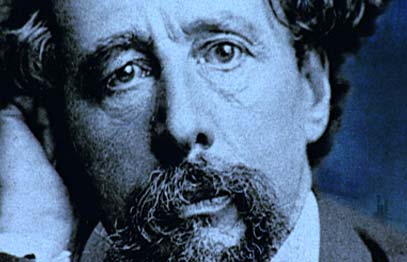
    Dickens[Picture source: PBS.org.]

    At the tender age of 21 Henry James was deeply in love with words.  Sometimes he may have been in love with them for the sake of their sound and placement rather than their meaning, at least so when he was a young man…as he grew older, James became one of those few people who never wrote a bad sentence (according to Mr. McMurtry).  However, in 1865, he wrote some lovely-sounding sentences that were mechanically semi-pure if not accurate in what they were saying, but certainly sounded pretty in their pettiness.

    It was in The Nation on 21 December 1865 that James wrote what is a very good example of this beautiful nothingness when he brought out his pen and stabbed Charles Dickens in the heart.

    He was reviewing Our Mutual Friend, but he managed at the very beginning to say that it was not simply that this novel was not good, but that everything Dickens had written in the previous ten years–back to when James was 11–was “poor with the poverty not of momentary embarrassment, but of permanent exhaustion”.  It is true that Dickens at this point was slowing down a bit–at least compared to himself, as he had previously written twenty novels in 18 years–and he had only another five years to live, but the novels of exhaustion of those ten years that James was referring to included  Little Dorrit,  A Tale of Two Cities,  Great Expectations, and Our Mutual Friend.  Four novels, ten years, three great classics. 

    James writes that “…the word humanity strikes us as strangely discordant in the midst of these pages, for, let us boldly declare it, there is no humanity here…”  This is a very strange thing to say, given that Dickens semi-discovered a majority of London life that really never quite made it into public display in newspapers and novels except for their crimes, giving a face of grace and courage to the poor and middle classes.  And for all of that, Henry James tells us that Dickens may be a great humorist, but “he is nothing of a philosopher”. 

    Then there are these two low sentences:  “But when he
    introduces men and women whose interest is preconceived to lie not in
    the poverty, the weakness, the drollery of their natures, but in their
    complete and unconscious subjection to ordinary and healthy human
    emotions, all his humor, all his fancy, will avail him nothing, if, out
    of the fulness of his sympathy, he is unable to prosecute those
    generalizations in which alone consists the real greatness of a work of
    art. This may sound like very subtle talk about a very simple matter;
    it is rather very simple talk about a very subtle matter.” 

    James continues, as he begins to wind up is review, with some very sniffy and long-nosed observations (bolding mine):

    “Such scenes as this are useful in fixing the limits of Mr Dickens’s
    insight. Insight is, perhaps, too strong a word; for we are convinced
    that it is one of the chief conditions of his genius not to see beneath
    the surface of things. If we might hazard a definition of his literary
    character, we should, accordingly, call him the greatest of superficial
    novelists
    . We are aware that this definition confines him to an inferior
    rank in the department of letters which he adorns; but we accept this
    consequence of our proposition. It were, in our opinion, an offence
    against humanity to place Mr Dickens among the greatest novelists
    . For,
    to repeat what we have already intimated, he has created nothing but
    figure. He has added nothing to our understanding of human character. He
    is master of but two alternatives: he reconciles us to what is
    commonplace, and he reconciles us to what is odd.”

    I really am not sure what was driving Mr. James to the place he drove for, but it certainly seems very weird to me–perhaps he needed to sharpen his young quill on the bones of a popular and legendary older writer. In any event, James seemed to be trying to rush a certain patina of aged reasonableness here, and all he managed was to shine an ugly brass.

    The full review, here.

    And just for the record, here’s a list of Dickens’ books, all written somehow by one man:

  • Richmond’s Libby Prison in Chicago

    JF Ptak Science Books   Post 2082
     
    Follow Me on Pinterest

    Confectionary connections to interesting bumps in history wind their ways along many unusual paths.  One such story is that of physician/scientist/collector Hans Sloane (1660-1753) and his introduction of chocolate into England (as a result of a field expedition he took to Jamaica)–his involvement with chocolate was minor compared to everything else he did in his life, but the introduction of chocolate to coffee houses in London was not.  In any event it was his massive and superior collection of natural history samples, archaeological artifacts, and much else, that became the basis for the British Museum–the collections purchased from his estate for 20,000 pounds at the time of his death. 

    Another example of a weirder candyland adventure is that of Charles Gunther (1837-1920), who was the driving force of moving the infamous Confederate Libby Prison to Chicago in 1893 to house his own collections of Civil War memorabilia and other interesting and Mondo Bizarro things. (He claimed to have–on exhibition–the original skin of the serpent from the Garden of Eden, complete in some sort of original frame decked out in Egyptian gibberishglyphics.) Here’s an ad that appeared in the Confederate Veteran‘s first year of publication in 1893:

    Libby436

    I wouldn’t use the term “great” here–and I’m pretty sure that the word is being misused here in 1893 as well.

    The prison was actually a converted tobacco factory, the buildings of which were constructed from 1845-1852, and located in central Richmond at Main and 25th Streets. Poor Luther Libby–a Mainer–came into possessions of the buildings for his business, which was subsequently seized by the Confederate government at the beginning of the war and converted into a hospital/officer’s prison before it became the symbol of mistreatment and deprivation and harshness.  (Mr. Libby had nothing to do with the prison per se–he was just the last person with his name on the buildings.  He outlived the prison-with-his-name-on-it by 15 years–12 years if you count the use of the building to house Confederate leadership after the end of the war.)

    Gunther collected big stuff, the biggest being the prison. He purchased it and had it dismantled, shipped up to Chicago, and then reassembled (with the help and advice of the prestigious architecture/design firm of Burnham and Root) where it operated as a museum from 1889-1895. Sensing a brighter future for the property, Gunther dismantled the building selling off chunks of it as souvenirs, and built a convention center on the site, filling the need for meeting space from the burning of the Chicago Coliseum in 1897.

    This post could have gone another way very easily, winding up in the Things Out of Place Department–Libby in Chicago, the Statue of Liberty in Paris, London Bridge in Arizona, a duplicate Earth in the sky above the Earth,and so on–perhaps this on another day. 

    On the Libby Prison relics from Chicagohistory.org 

  • A Tiny Worm, 1839

    JF Ptak Science Books   Daily Dose from Dr. Odd 

     
    Follow Me on Pinterest

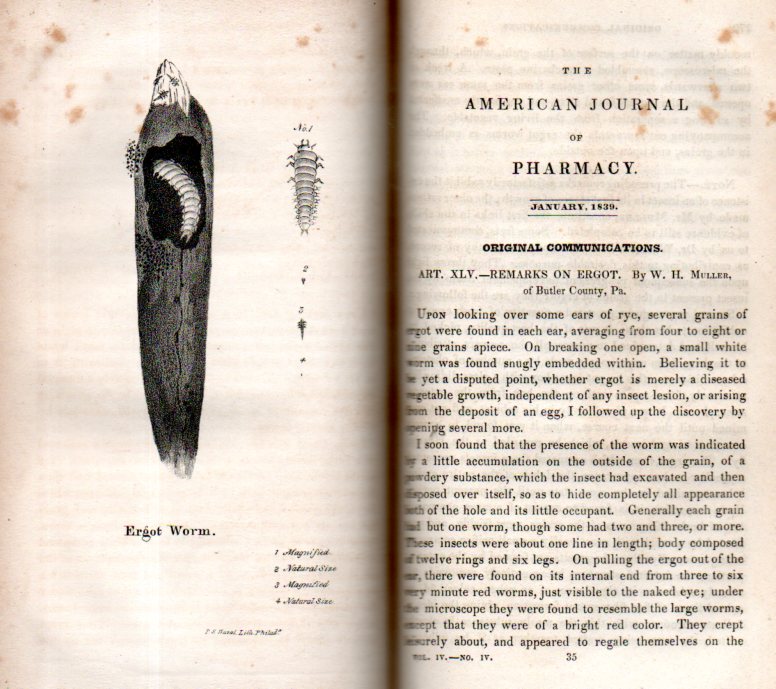
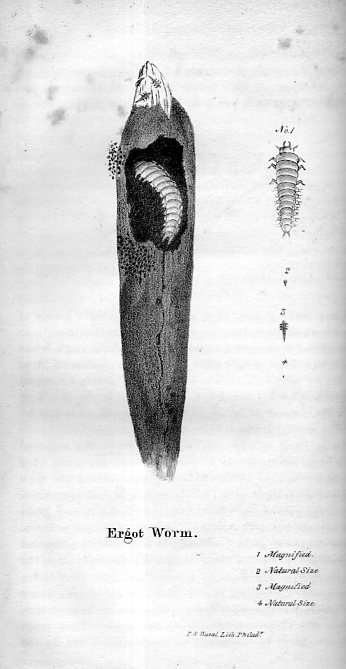
    I’m just passing this engraving along–the last dot in the right-hand column in the engraving below (shown in more detail just below that) exhibits the life-size dimensions of the guilty worm.  The way in which the worm is presented is just very well done and beautiful in its own way. 

    Ergot435

    [Source:  The American Journal of Pharmacy, January 1839, volume 10, “Remarks on Ergot”, by W.H. Miller. 

    “They crept leisurly about, and seemed to regale themselves on the mouldy matter on the surface of the grain, which, through the microscope, resemed a saccharine paste…”

    And the detail:

    Ergot432

    ·Posted by :

    ·in:

  • Robot Man, 1915

    JF Ptak Science Books      Quick Post   
     
    Follow Me on Pinterest

    Robot man437

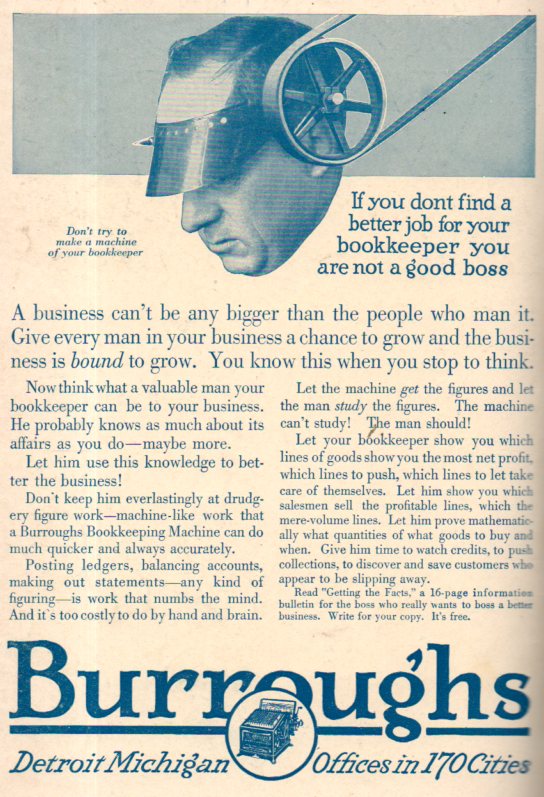
    The Burroughs Adding Machine company did about as much as anyone to objectify the worker in America during the 1880-1915 period, making the worker a part of a machine within the machine. In a way it was like creating the Ford assembly line for people sitting down. 

    The company was founded on the work of William S. Burroughs’ grandfather, William Seward Burroughs (1857-1898 and native son of Rochester, NY), who created a mechanical calculator to help him add long columns of numbers in his job as a bank clerk. American Arithmometer Company was founded by him and others in 1886, later evolving into Burroughs Adding Machine Company (1904), Burroughs Corporation (1953), and then into Unisys (combining with Sperry Univac in 1986) before sliding away.

    In any event the adding machine connected millions of people to a mechanizing process of what had previously been a mental operation–the flywheel in the side of the head of the clerk/accountant in this add for Technical World (More Fascinating than Fiction) for August 1915 wasn’t too terribly far from the truth. Interesting that on the other side of the head of this fellow, behind the other ear, is a pencil. 

    Robot man438

  • A Beautiful Manuscript of Square Roots, 1830’s

    JF Ptak Science Books   Post 2082

     309

    (Note: we’ll deal with square root of  3 at another time…)

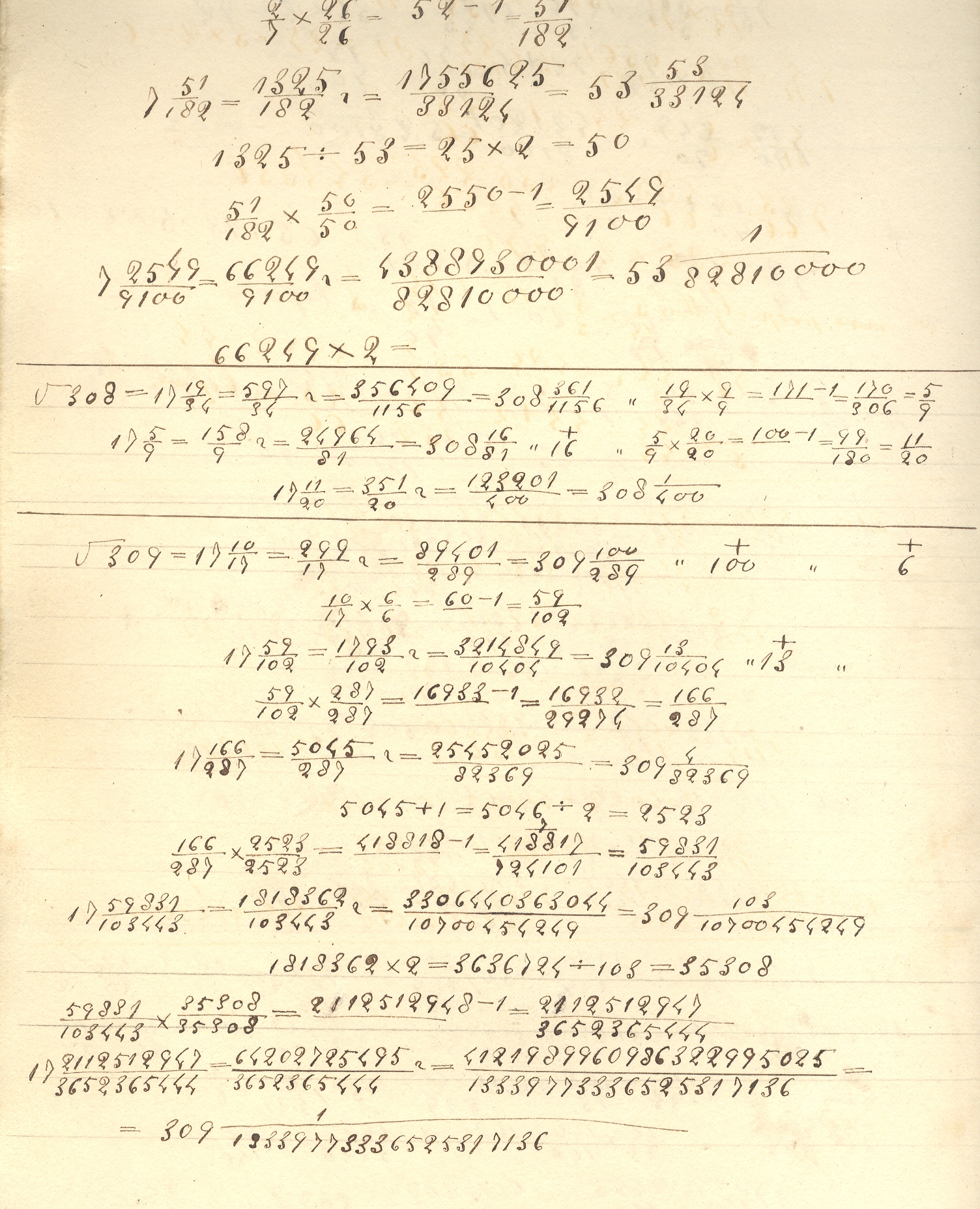
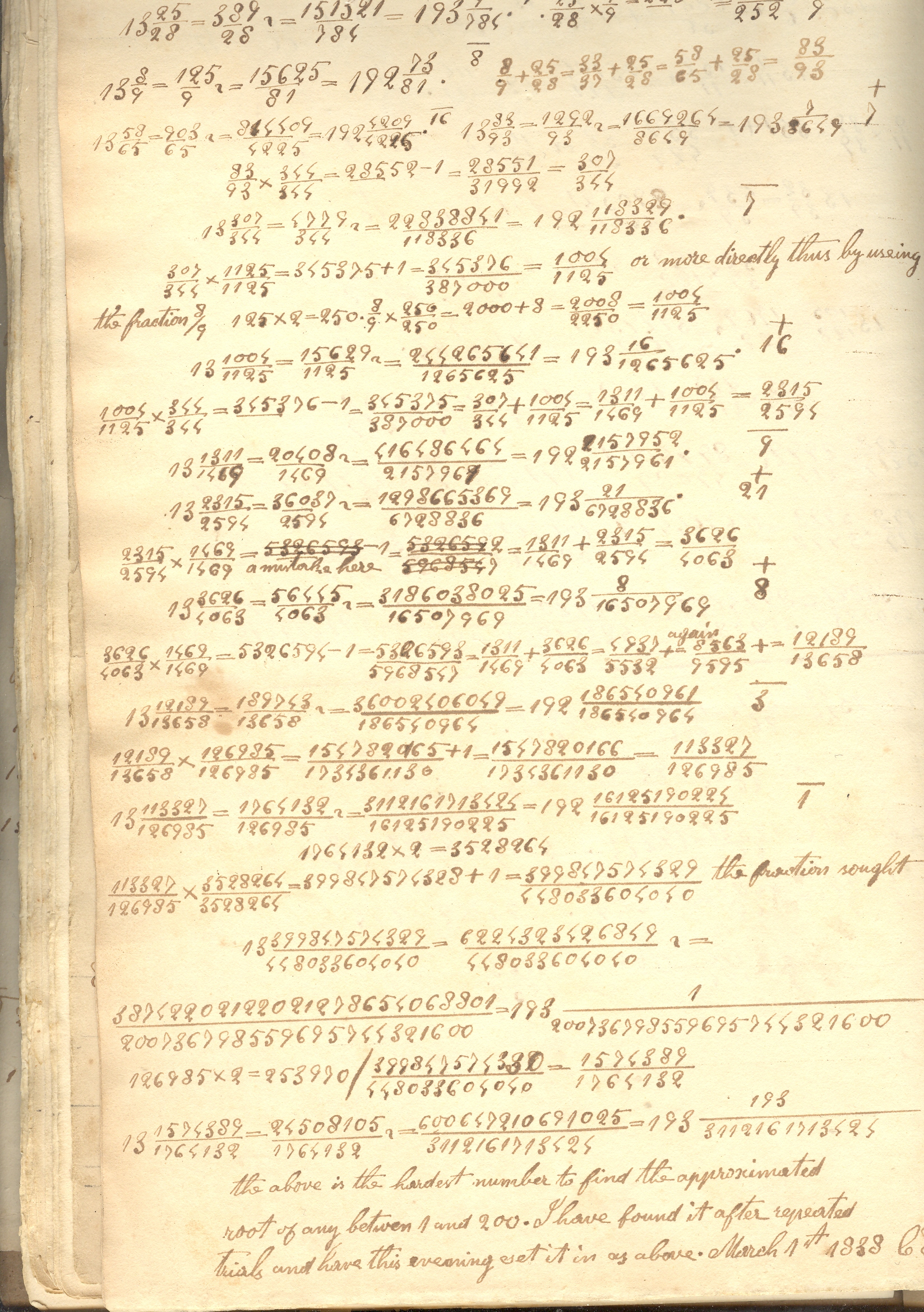
    The author of this manuscript, Charles Fisher, took a solitary pleasure in calculating the square roots of numbers from 2  to 589, not bothering to write down the 24 perfect squares to 576.  (The sqrt being r2 = x for every non-negative real number x.) From the few bits that I have checked the man seems to have done a good job back there in the 1830’s. 

    I cannot determine where this book was written or who Mr. Fisher was, though it is possible that he was a (Baptist) Minister from the few short textual notes that pop up here and there. 

    [This 140pp manuscript is being offered for sale at our blog bookstore, here.]


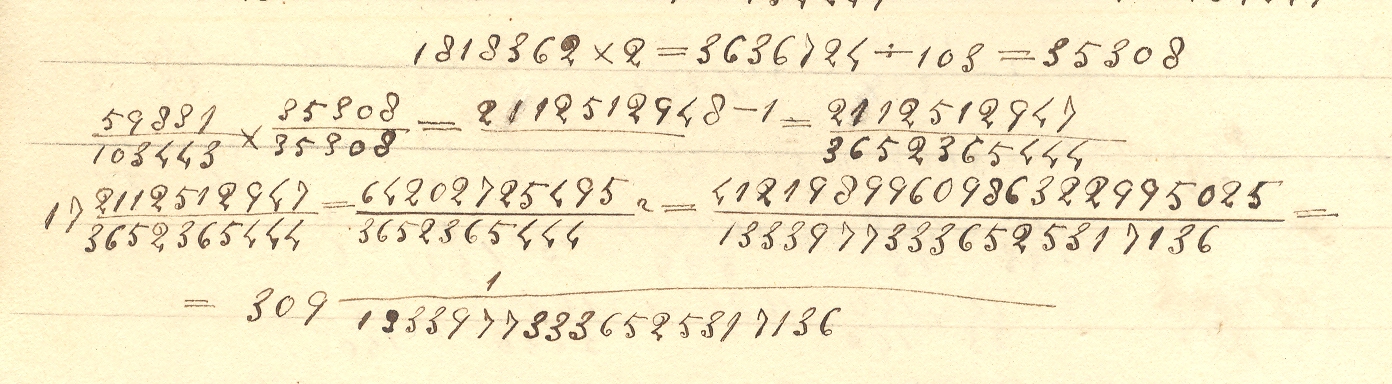
    His work is pretty elegant.  Take for example his solution (and proof) for the square root (hereafter sqrt(x)) 309,

    309 det

    which the calculator living under this page says is 17.578395831246947    Mr. Fisher’s answer is 17 10/17 = 799/17=89401/989=309 100/989, and after some more involved arithmetic comes t the lovely proof number of   

    4121989960986322995025 /13339773336525317136 or

    309.00000000000000000007496379247

    Which is getting pretty close. 

    309 193

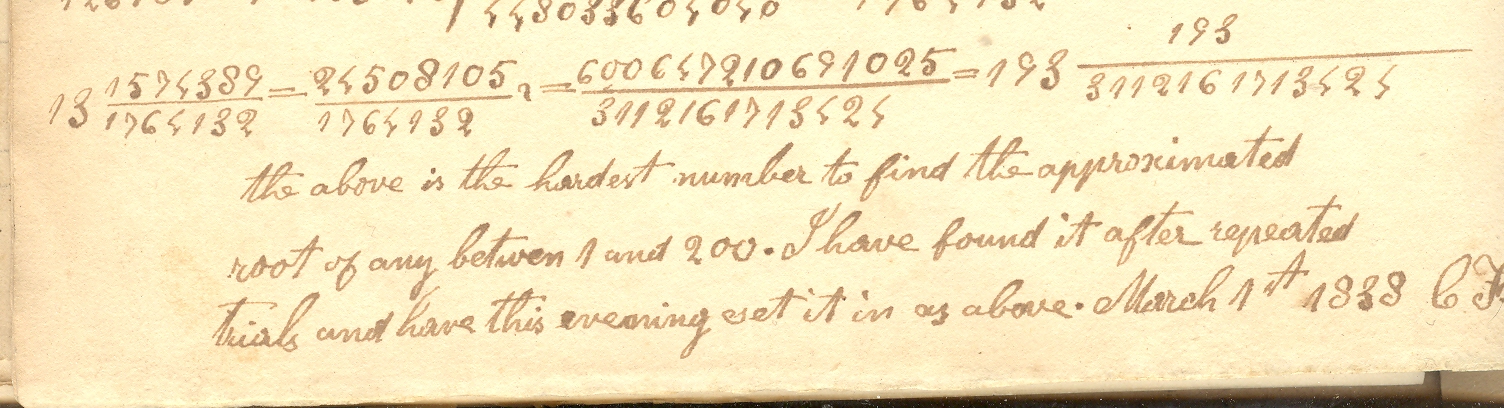
    The only note that Mr. Fisher makes on his calculations is for the sqrt(193), which he notes as “the hardest number to find the approximate root of any between 1 and 200. I have found it after repeated trials and have this evening wrote it in as above. March 1st, 1833. CF.”

    309 193 det

    ·Posted by :

    ·in:

    —
  • Warhol, Paint-by-Numbers, and Nothing

    JF Ptak Science Books    Blog Bookstore

    I wonder if Mr. Billy Collins has ever approached the
    ineffable connection between paint-by-number art and Andy Warhol?  It seems that paint-by-number (PBN) came from
    nearly nowhere, a near state of being nowhere and nothing, just after WWII, to
    the point of selling millions of sets by 1952. 

    Paint by number 1

    It was an astonishing thing, really, how the PBN craze took over America.  And it just so happens that 1952 was the
    first one-man show for Andy Warhol, and was also the beginnings of the Pop Art
    movement, which seems to me a rush to the most common denominator trough the commoditization
    of consumerism and popular culture, creating art out of visible
    nothingness.   Warhol in particular
    trained his sites on images that were already twisted around people’s neurons
    and living in their memories.  Art was
    made from images injected into the heads of consumer buying units, a delightful
    confusion of imagination and the already imagined, a reaction to a familiar sub
    rosa
    advertised image.

    Perhaps Warhol’s art was part of a larger whole, an
    illustrator to a bigger point, a performance unintended to stand alone.  But that is what happened, the art separated
    from the wider message, and soared to great acclaim. 

    Paint by number 2

     Warhol seems more like a paint-by-number color memorist,
    filling in the blanks of an already-mostly-formed memory burned into the long
    term memory via years of advertising and severe repetition.  Nearly the entire broadcast industry was
    created to support this memory-making process: 
    Seinfeld, Spongebob, The Office, Your Show of Shows, and all the rest,
    created not necessarily for your pleasure but as a series of  interchangeable 11-minute-long placeholders
    to hold the viewer/listener to the point where they would be exposed to 180
    seconds of product identification.  It is
    the repetitious memory formation that the folks depended upon so that when you
    go down the supermarket aisle looking for an 89-cent can of tomato squeezings
    called “soup” that the 799 exposures to the Campbell Soup Company’s product
    line will direct you their way, a primitive bit of biological programming.  And for all of the trimmings and
    philosophical-critical digressions, Warhol capitalized on creating art on vast
    shared memories, coloring in a shared image, reaching into the minds of
    millions for something that everyone could see and understand—and not have to
    think about, not lose one neuron in interpretation, and enjoy it like an comfy
    old slipper. 


    Paint by number 3

    Where Warhol succeeds and PBN fails is at the art/appreciation
    point—few people took the PBN seriously as an art form, mainly because it wasn’t
    presented as such, except for those who somehow took the thing too seriously.
    Warhol took his creations seriously from the very beginning—and perhaps there
    was really nothing more than the defense of his art that was the art
    itself.  It just seems to me that, in the
    history of art, it tool 1500 years or so for linear perspective to be
    rediscovered, another 500-odd years beyond that to bend and mystify nature in
    the form of Impressionism, and another 30 years to lose all recognizable
    natural forms all together.  And then after
    Braque and Duchamp and Kandinsky and the Blaue Reiter, and the Fauvism,
    Suprematism, Vorticism, Dadaism, Deco, De Stijl, Surrelaism, Concrete art,
    Abstract Impressionism, and on and on, that after all of this since Nude
    Descending, that we are lead to Pop Art and silkscreens of soup cans.  It just seems to me to be more about the
    packaging than the package, which might just well be a wrapped bit of
    nothing. 

    ·Posted by :

    ·in:

  • Timeline of the Discovery of the Elements

    JF Ptak Science Books 
    Timeline of the Discovery of the Elements
    I found this very useful timeline presented in a not very friendly way at the about.com site. I couldn’t help but to coyp it and clean it up a little to make it a little more accessible.  Caveat: none of this is my own work–all of the credit for putting this list together goes to Anne Marie Helmenstine, Ph.D.   The original site for the list is About.com. 
    “Here’s a helpful table chronicling the discovery of the elements. The date is listed for when the element was first isolated. In many cases, the presence of a new element was suspected years or even thousands of years before it could be purified. Click on an element’s name to see its entry in the Periodic Table and get facts for the element.”
  • A First and a Fifth of Firsts, And So On, in the History of Cinematography

    JF Ptak Science Books  Post 2031

    The story of the history of the story of firsts, of the first time something was noticed or acknowledged or invented or composed, is a problematic one.  It isn’t so easy as it might seem to establish priorities–and once the major first of a particular field or interest is established, there may be a long line of minor firsts following the major one. 

    Meiles329
    This is definitely true in photography and cinematography–even the first photograph is an item for discussion depending on how you define “photograph”.  Absent this, there is a long line of other firsts that come into play–the first photograph of a human, the first portrait, the first night-time photograph, and so on, and the same sort of issue is applicable in the history of the cinema–and they fall into a long list of Wittgenstein/Tractatus1 enumeration. 

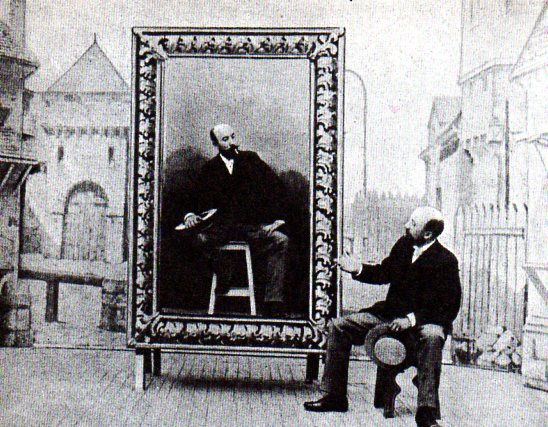
    The subject of this post is an interesting “first” in the history of the cinema is this very interesting still of (the great) Georges Melies (1861-1938), who in 1888 opened his cinema in the Theatre Robert Houdin.  He was extraordinary, and highly gifted, a man of vast creativity (see for example his early A Trip to the Moon, 1902, here) and energy.  And it was here that in the long line of his own firsts that he produced the first cinematic experience of an a person appearing in a moving picture with themselves.  There had been inventive photography that accomplished this minor miracle decades earlier, but this was indeed the first instance of this magic being worked in film. This must have been an enormous moment for the viewer, being able to see a person having a conversation with their duplicate–my guess is that it would have seemed other-worldy, brought to earth by (according to Louis Lumiere) a great cinematician. 


  • Subjugation, Surrender, Food, and the North American Indian

    JF Ptak Science Books  

    Follow Me on Pinterest


    Blogindian_ration194

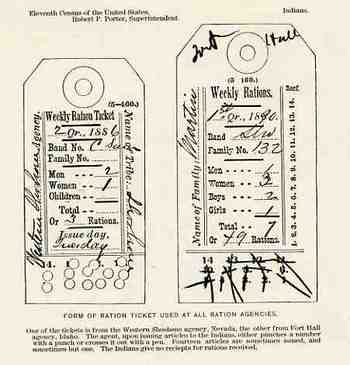
    These images of the Indian ration card and the Indian Police button were found opposite page 76 in the monumental Report on Indians Taxed and Indians Not Taxed in the United States (except Alaska) at the Eleventh Census 1890 (published in Washington DC in 1891, and perhaps the best single-volume statement on the conditions of the Indian tribes in the U.S. in the 19th century). 

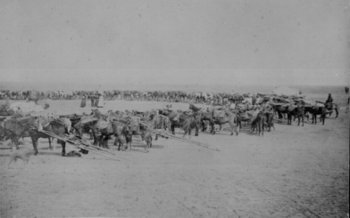
    Generally tribe members would wear the white ration card on a string and attached to a button.  When you see old photographs of the Indians queued up to receive their food and provisions, the little white cards stand in sharp contrast to everything else, when they are in focus,.  When not (as the lens weren’t necessarily fast enough to capture things in motion) they look semi-invisible, like a puff of smoke on the chests of so many people.  I can imagine then these people standing in line, waiting for food, having entered reservation life with enforced “sale” of their lands, still except for the fluttering of their ration cards, small white flags of surrender that they would fly for generations.  Certainly no other element of our society would be forced to surrender so often for the need of food.  And considering too the number of Indians who would die of starvation over decades’ time at the hands of this system and in the care of the federal government, it was a surrender that didn’t necessarily entitle them to the sort of treatment that a POW would receive.  (The following photo is of a queue for ration distribution at camp Supply, Oklahoma Territory, 1871.)
    Rationscamp_supply

    The amount of the ration was mysteriously worded, at least to me; I couldn’t really tell how much food people were allowed.  The explanation reads as follows:  “the table of quantity allowed to 100 rations is:  bacon, 10 pounds; beans, 3 pounds; beef (net) 150 pounds; baking powder, 1 pound; coffee, 4 pounds; ham, 50 pounds; salt, 2 pounds; soap, 2 pounds; sugar, 7 pounds; tobacco, ½ pound.”  (The salt part is curious; salt was very important, and ion relation to everything else, 2 pounds wasn’t really very much salt at all.  I am reminded of the very last part of the negotiations between John Ross, who was the principal chief representing the Cherokees, and the flatulent Gen.Winfield Scott, the head liaison between the Cherokees and the U.S. government, in the terrible last phases of the preparation for the Cherokee removal.  Ross pleaded, and in effect offered to buy, more provisions of salt for the walking winter journey for his 12,000 charges (children included).  That this was a point of negotiation is cruel and sickening.  Scott “gave in” and allowed the extra salt…his other practices in this enforced emigration though resulted in the deaths of about a third of the Cherokee people.  And Scott was about the best, most “Indian-friendly” general that the government had to offer.)

    It continues, badly written:  “Still, it frequently happens that issue same day finds the agency short of supplies and frequently rations are issued, and of limited quantity. 

    And closes:  “The Indian, however, arrives promptly on the appointed day, no matter whether he receives or not”. 

    Blogindian_ration_button195

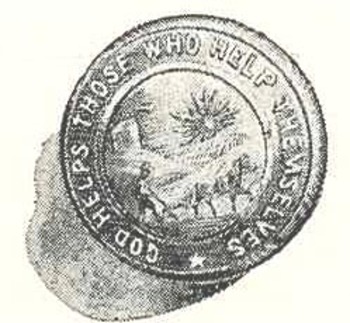
    The button pictured here belonged to the uniform of the Indian Police. 
    It shows an Indian guiding a plow, with the legend written around the figure that reads:  “God helpeth those who help themselves”.  Or not. 

  • R.P. Feynman Publications, 1938-1999

    FEYNMAN PORTRAIT
    Many thanks to Dr. Hagen Kleinert (University of Berlin) for creating this bibliography.  The original can be found on his website here. 

    1938
    [1] With M.S. Vallarta. Scattering of cosmic rays by the stars of a galaxy. Phys Rev 55: 340-343.

    1939
    [2] Forces in molecules, Phys. Rev. 56: 340-34

    ·Posted by :

    ·in:

    —
  • A Shining Singularity of 1896–the Glory of Lost Hardware Stores

    JF Ptak Science Books   Post 2032  

    Follow Me on Pinterest


    When I was a kid I liked to go to Reiman’s hardware store on Victory Blvd., Staten Island, New York, where there was everything and everything was in its place, though not every place was in its place.  There was a certain untidiness to the store that made it seem as though everything was a jumble, except it wasn’t.  The order was controlled by a collection of hardware men who seemed to know everything and absolutely knew where everything was.  I would walk in, go to the back, hold up the widget that I needed to the Old Man, and then he’d go to a half-wall filled with tiny boxes filled with tiny things, and find what I needed–or something better. The store was biggish, but very quiet, given all of the surface area of all of those thousands of tiny cardboard boxes.  It was all enveloped with the hardware store equivalent of the old bookstore aroma. 

    These were the thoughts that sprang to mind when I saw a post at the SecretPlans.org site displaying that robot-like figure riding the hardware bike. It is found in what must be the bible of 19th century books on the keeping of a hardware store, appropriately titled The American Hardware Store, written by R.R. Williams in 1896. It is remarkable for its organization and for its lovely presentation.  And of course for its very prominent  display of memory of what was necessary in building and maintenance from a hundred years ago.  There are instructions to the store owner on what and how to exhibit, with images of displays of axe heads, hurricane lamp glass,scythes, plumbs, hatchets, horseshoes, scale beams, belts, pumps, oil cloths, and much more of the stuff that is mostly gone.

    Thanks to this manual I think that when you go back in time and into that hardware store of 1896 you’ll be ready.


Recent Posts

Archives

Categories