A Daily History of Holes, Dots, Lines, Science, History, Math, Physics, Art, the Unintentional Absurd, Architecture, Maps, Data Visualization, Blank and Missing Things, and so on. |1.6 million words, 7500 images, 4.9 million hits| Press & appearances in The Times, Le Figaro, Mensa, The Economist, The Guardian, Discovery News, Slate, Le Monde, Sci American Blogs, Le Pont, and many other places… 5000+ total posts since 2008.

  • The History of Holes: Empty Holes in an Early “PC”

    JF Ptak Science Books   Post 2074   History of Holes series  Follow Me on Pinterest

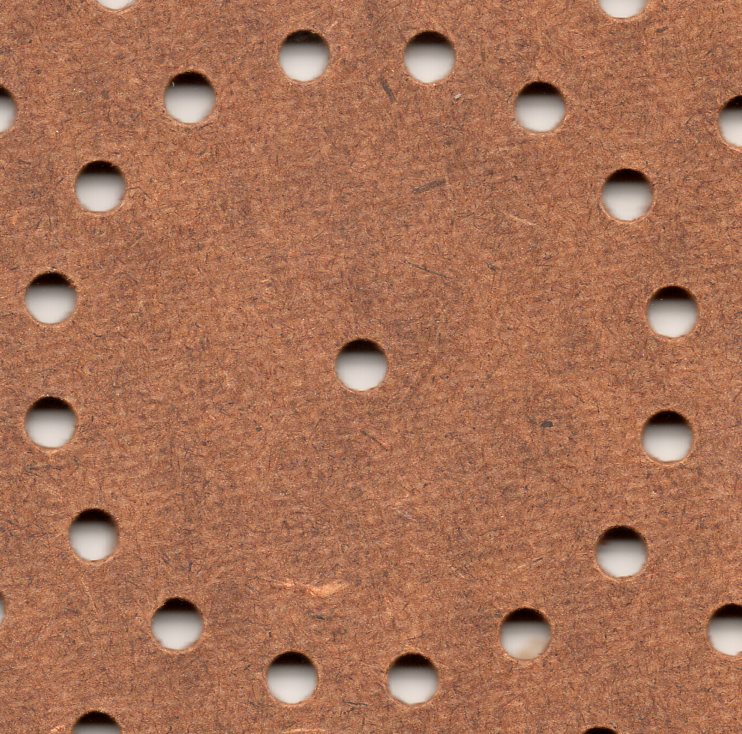
    These are some of the earliest holes in one of the very first personal computers–they were made for ease of wiring and other applications in the Geniac, a 1955 DYI kit from the indomitable Ed Berkeley, a machine well in advance but much of course the inferior of the Mark 8 (1974) and the Altair 8800 (1975), the later of the two seen as being about the very first modern “personal computer”. There weren’t too many empty holes in those two machines.

    Geniac415
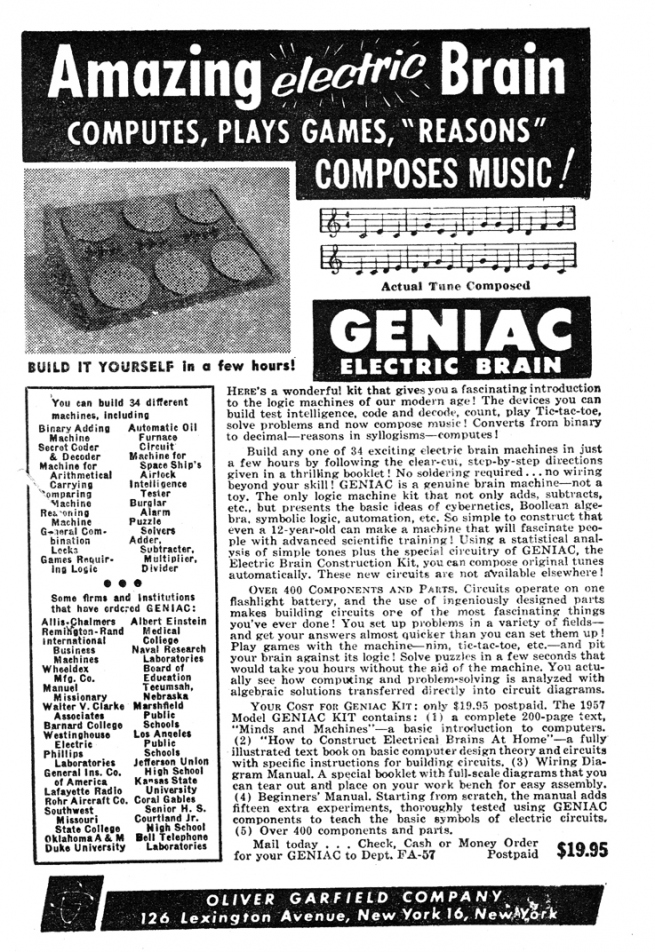
    What had no relays, or transistors, or tubes, and was manually self-sequencing and human bit state switching, the name ending in “-iac”, and made in 1955? The “Geniac”, made and manufactured by the smart and enterprising Edmund Berkeley and Oliver Garfield–the “Genius Almostt Automatic Computer”. It was I think the first in a line of early non-computer-computer-that-really-was-a-computer-according-to-Alan-Turing computers that a person could own and own at home, and it was followed pretty close on heals by the Tinyac, the Weenyac, and the Brainiac. 
    Geniac[Source: Dr. Gangrene, here.]

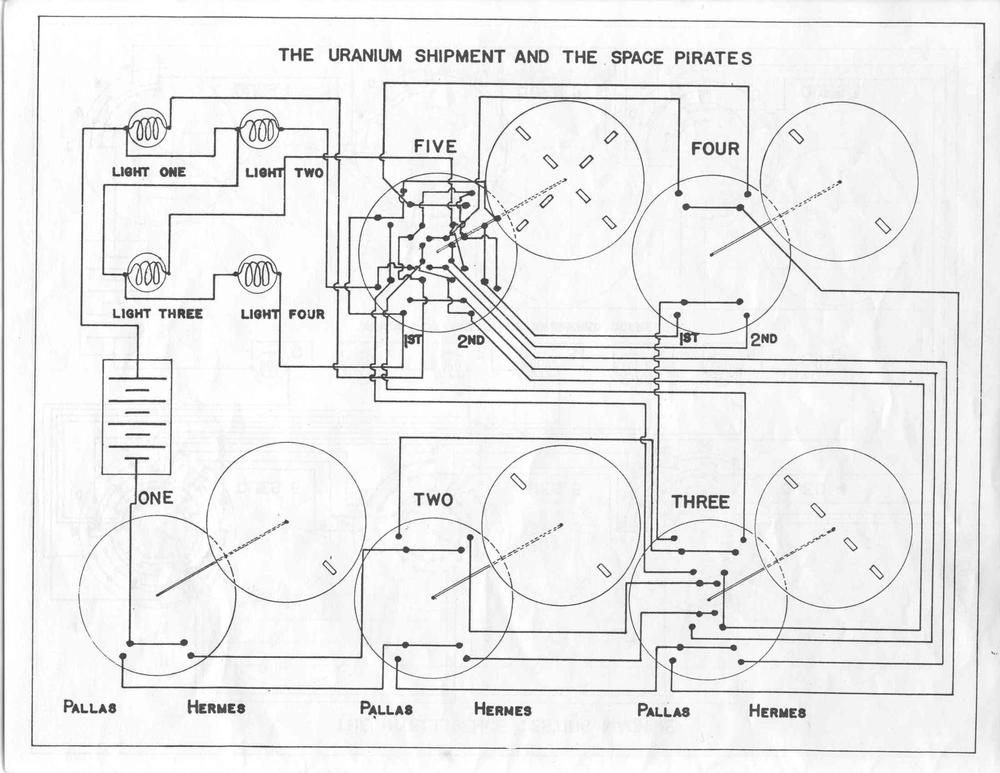
    The Geniac was/is a pretty neat tool–I hesitate to call it a “toy” as others have, mainly because it takes itself pretty seriously and still have fun, and includes diagrams and drawings for interesting sets of problems and tasks, from playing tic-tac-toe, to “testing” I.Q., to determining the male/female-ness of the respondent, to playing a very very mildly interactive game of uranium prospecting and alien hunting.  It was a fine construction, and  introduced the user to Boolean equations and the concepts of a working computer, all with hands-on education and a dry cell power course.  And that’s pretty good. 
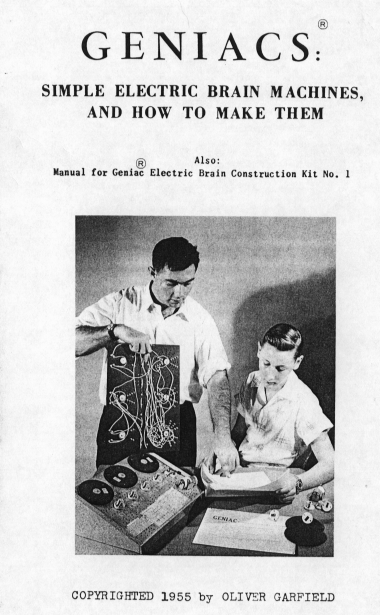
    Geniac cover[Source:  Blinkenlights, here.]

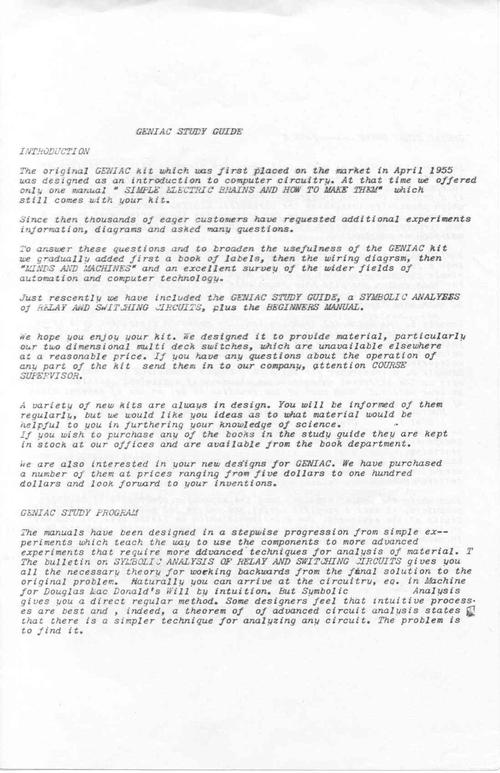
    Geniac Study Guide, via Computercollector.com (for the rest of the document):
    GEniac study guide
    Wiring diagran for the Uranium Shipment and Space Pirate game, again, via the computercollector.com
    Geniac  uranium
    See also the GENIAC entry at the Old Computer Museum, here.


  • History of Holes: Holes in the Quickening of Telegraphy, 1859

    JF Ptak Science Books   Post 2075   History of Holes series  Follow Me on Pinterest


    While grazing through the 1859 volumes of the Comptes Rendus1, looking around for anything having anything to do with Mr. Darwin and his Big Book published later in this year (on 24 November), I got a little lost as usual, and was digging around the early months, and came upon the drawing above.  Mostly I was attracted to it for the holes, as there is a longish thread/series on this blog devoted to the History of Holes, and though at first blush that it might actually be a Runic something, or Islander counting stick.  When I actually started to read the article it was none other than the recording strip for telegraphy, devised by Charles Wheatstone (1802-1875), famous for his Wheatstone bridge and for his experimental determination of the speed of electricity2).  Now the recorder part of this was not on the receiving end, but rather on the sending–Wheatstone devised a way of recording the strokes of a telegrapher’s key and translating them into two rows of holes; the message was recorded on the strip of paper and then fed into a machine that would do the keywork, using the punched paper tape to control the transmitter–it turns out to have been a significantly faster method than by simply having messages struck by human operators, which was  abig deal at the time because of the expense of sending telegraphic messages, reaching speeds of 130 wpm early on (and then 300-400 wpm later on a good circuit)3. 

  • Massive Six-Person Tandem Airplane, 1910

    JF Ptak Science Books   Quick Post 
    Follow Me on Pinterest 

    Aeroplane for six416
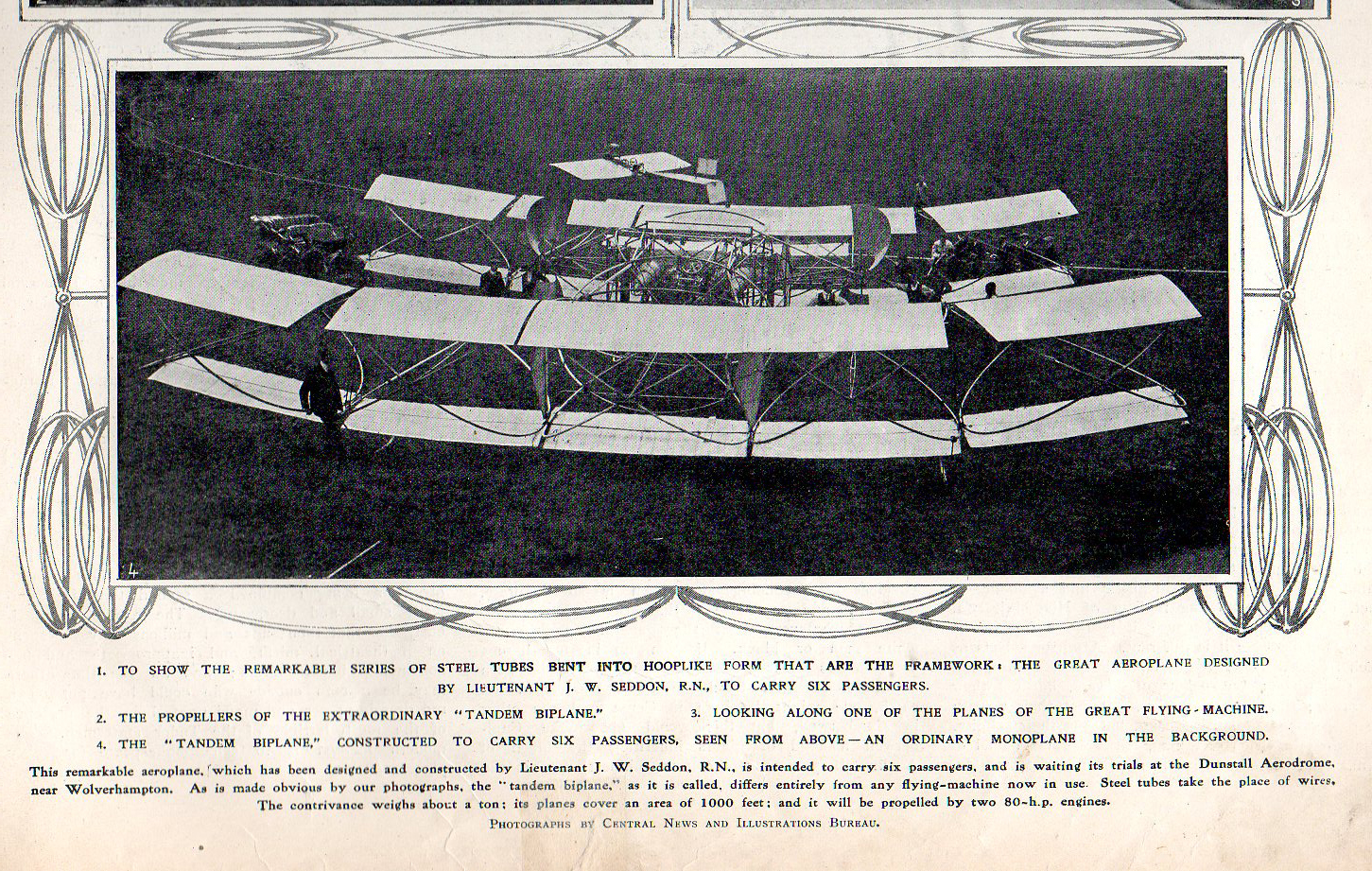
    Lt. J.W. Seddon (R.N.) designed this incredible two-aeroplane aeroplane in 1910, composed of molded steel tubes in the place of wires for its framework.  As the caption states, there wasn’t another plane like it in existence–it was massive for the time,weighed 2000 pounds, had 1000 sqft of wing, and was powered by two 80 hp engines.  And in a number of ways it was a picture of the future. [Source: The Illustrated London News, 10 September 1910.]

  • Found Literary and Visual art in Telegraphy

    JF Ptak Science Books    Daily Dose from Dr. Odd   Follow Me on Pinterest

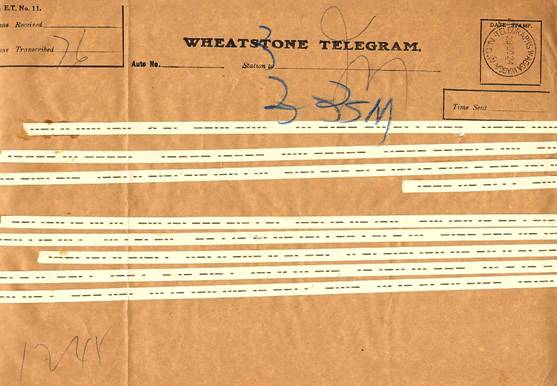
    Wheatstone telegram
    Source:  Cyber Heroes of the Past, here.

    Just yesterday I wrote a quick post on the history of holes and the development of telegraphy–actually, of Charles Wheatstone’s inventions, which relates to the item above. The telegram has a look of great found techno-nerd beauty, and the text is wonderful in a disjointed semi-unintentionally-absurd kind of way.

    The text reads (according to this wonderful site on the history of communication), identifies the telegram being sent from Wagga Wagga, NSW, Australia in 1924, with the Morse Code transliterated as follows:

    “Black pickles contractors Junee X Glass broken Paul Blamey Please send measurements your price fixing including cartige we take risk also state value of salvage
    X Sandy”

    Generally, much of the traffic in telegraphy was generated by business, and this is, I am pretty sure, one of those, with a few cipher words thrown in to save space/time/money for transmital–but when it stands separately, it is a phrase of some wonder. 

    ·Posted by :

    ·in:

  • Minimalist Steampunk Cathedral, 1872

    JF Ptak Science Books   Quick Post

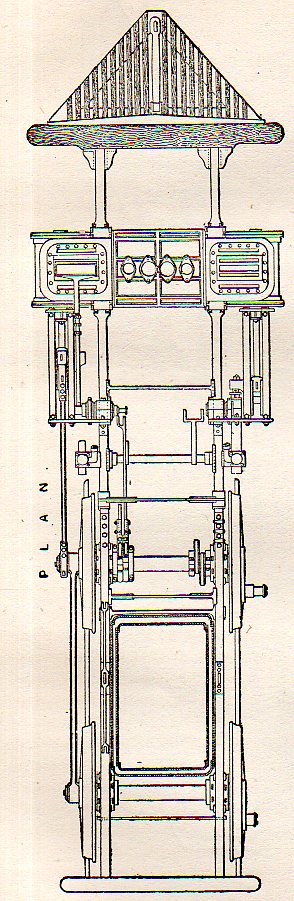
    There is an undeniable element of techno-elegance in design and engineering the Big Heavies the last third of so of the 19th century.  Sometimes the elements of holy technology comes int he form of a beautiful, nearly-overly designed chromatic steam whistle, constructed almost as a gesture to the inexorable march of metal intellect, an enriched piece of engineering as a topping to an even higher achievement.  Sometimes it is in the design of the superstructure for some major piece of machinery, as in the Nasmyth hammer, a device as big as a house and heavier, decorated around its perimeter with lovely flourishes.  And sometimes we are reminded of the search and discovery of the creative spirit in the reproduction of a schematic, presented in a slightly different way, to remind us of the fantastic belief in the developing technology of the Second Industrial Revolution.

    Locmotive plan420

    ·Posted by :

    ·in:

  • Enormous Title of Visionary Work Utterly Defeats Library Cataloguer

    JF Ptak Science Books  Post 2076   Outsider Logic  Daily Dose from Dr. Odd


    Follow Me on Pinterest

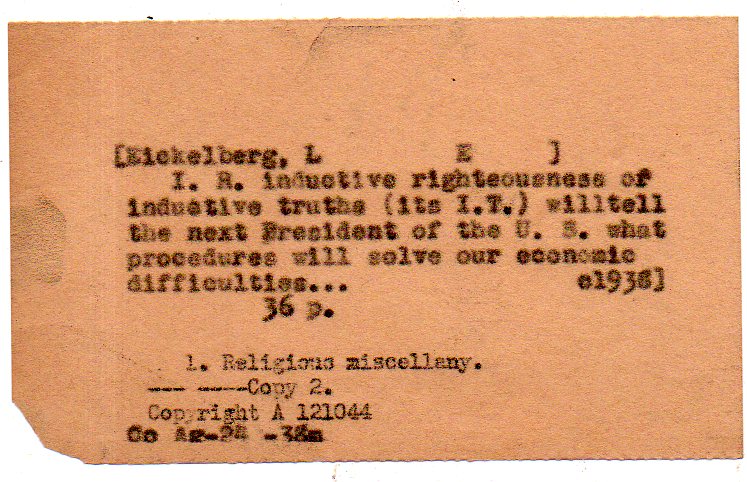
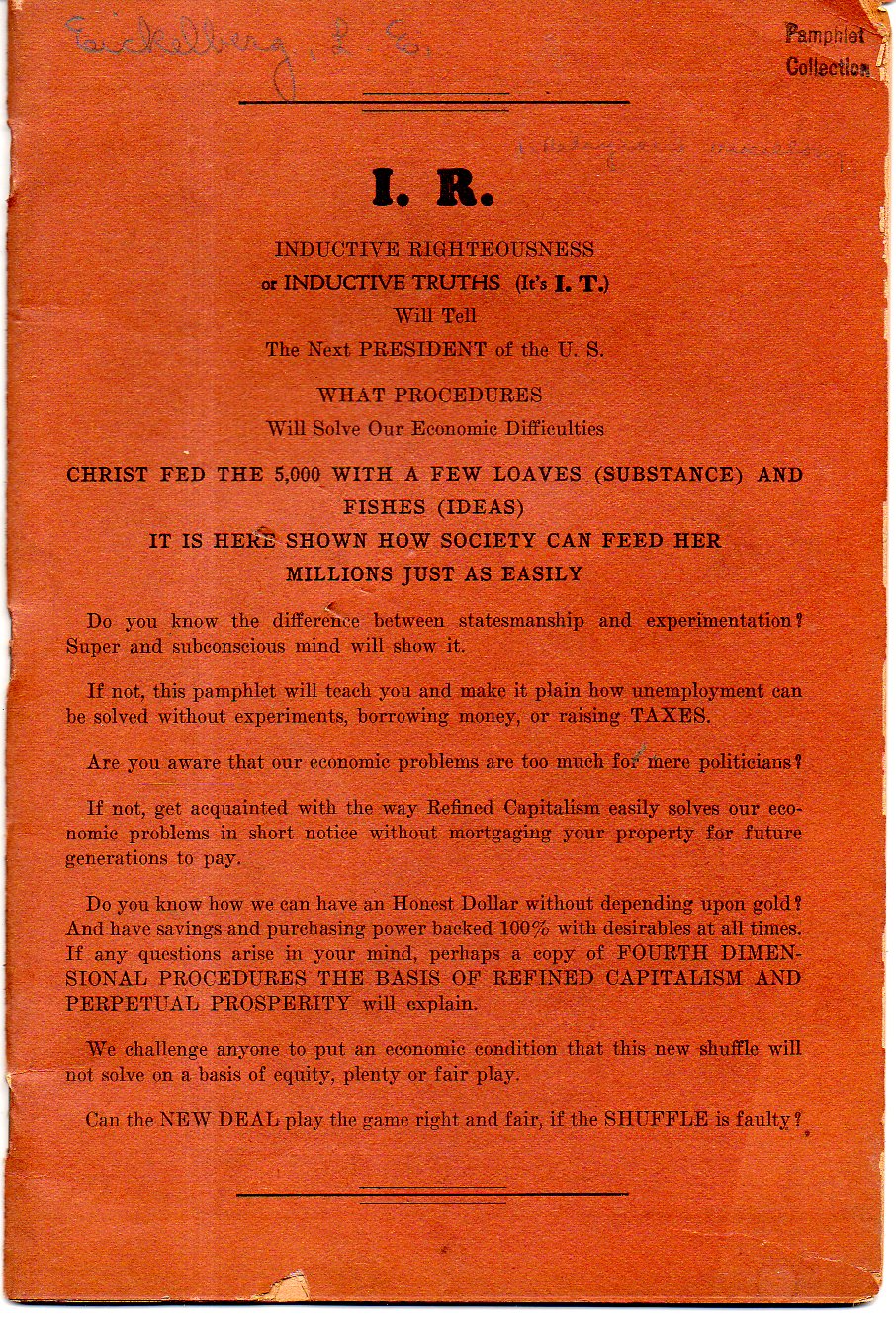
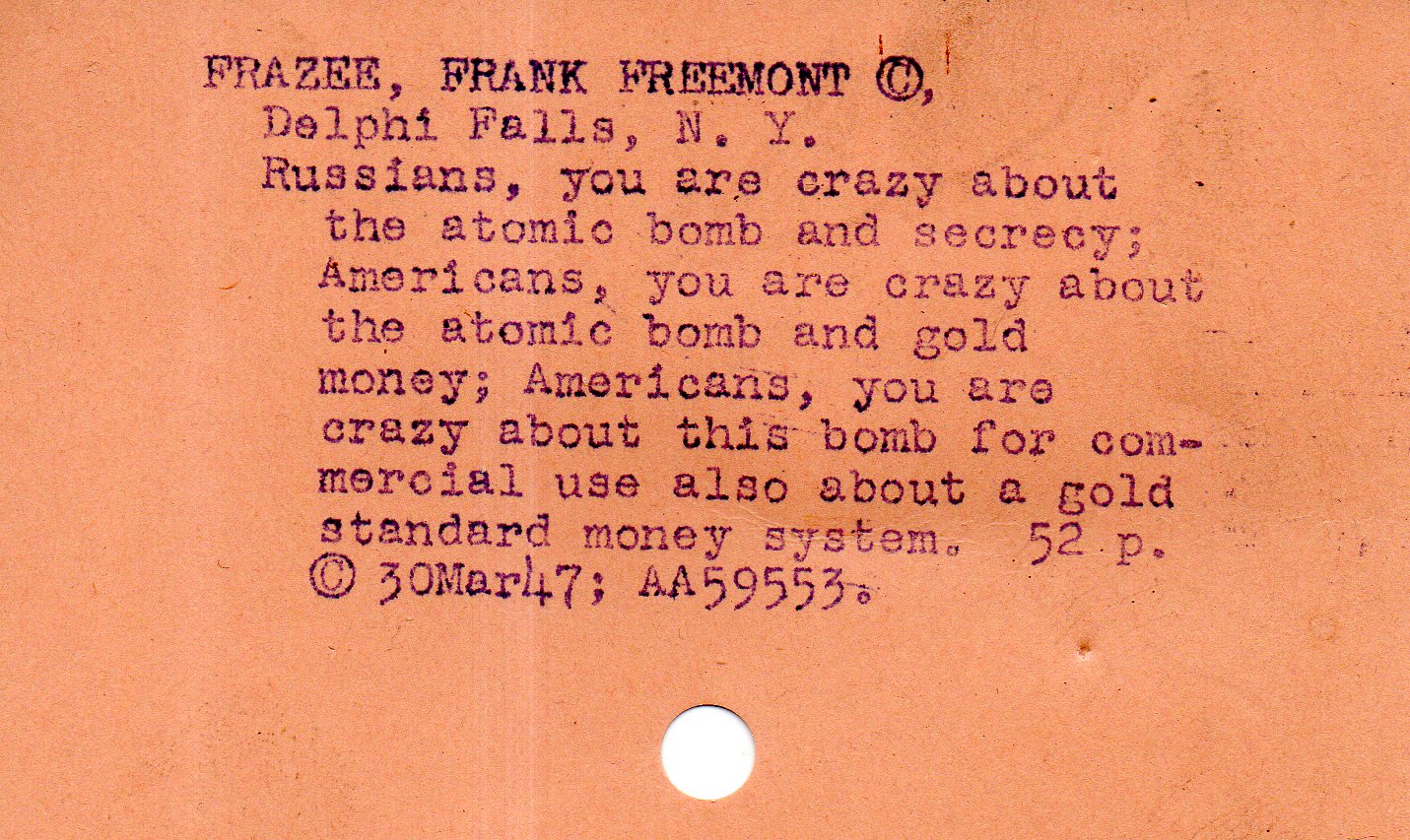
     There appeared on this blog last week a post regarding a library cataloguer who was not threatened or defeated by a work with an enormous and meandering title. The good librarian got right to it, recorded the deed, and moved on. Today’s installment of card catalog magic presents a Library of Congress librarian who decided that enough-was-enough, and that there was simply too-much-title to record, and so simply left the rest of it to dots and to the imagination.

    Title--gigantic424
    Now for the pamphlet itself and the rest of the title:

    Title--gigantic423
    The author of this 1938 pamphlet simply started to write on the cover and continued through the rest of the work, and ended on the back cover.  There was no title page, no chapter headings, just a collection of ideas with lots of lists and seemingly nowhere to go.  For a short work (36 pages) the author could’ve dedicated another quire to some blank space, which really doesn’t exist in the pamphlet but which is surprisingly helpful even if the message you are trying to deliver is somewhat, well, outre.  There is a lot of very compressed talk about multi-dimensional spirit and conscience and bank deposits and replacing the dollar and tax collection with “circulation of values”, and so on, deep into itself and a closed system of interpretation of the existence of the universe, harmony of spirit, and economic interpretations of “radio bulbs” and the (often misspelled) fourtth [sic] dimension.  The writing is exhausting and enumerated, and even though by its colossal subject matter and the complex brevity it should be a reliably porous document, it is fairly rigid and brittle. It is a visionary work that somehow worked its way into print, and I’m happy for that, and even it is impossible to keep up with its runaway logic it is still a good ride.

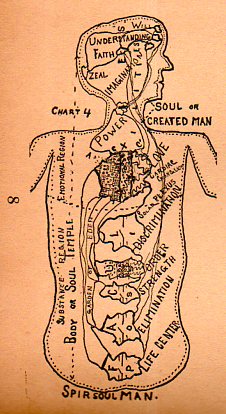
    The author’s representation of a semi-vitruvian spiritual anatomy of humans, called Spirisoulman:

    Title--gigantic426
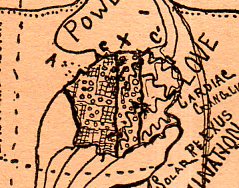
    A detail of the fabulously-decorated heart region:

    Title--gigantic427
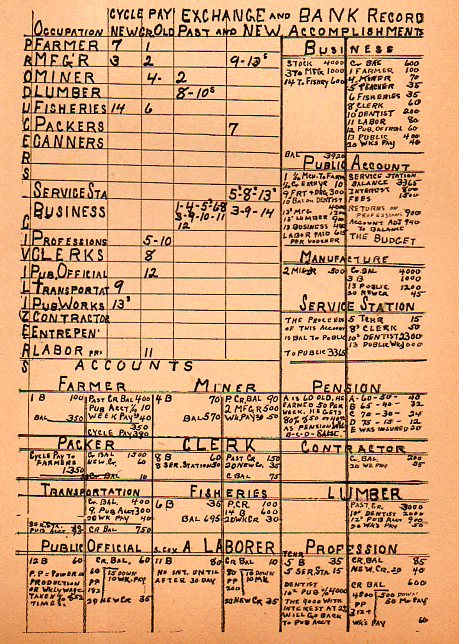
    And of course part of the plan for universal economics which somehow wraps up the theory of in I.R., or the Inductive Rightousness of Inductive Truths:

    Title--gigantic428
    Early on in the history of printed books there was a practice of extended title pages, where there would be the title, and then “support literature” further explaining the title to sometimes some great detail, occasionally winging its way into a title 200 words long.  But that was pretty much before the 18th century and mostly before the 17th and mostly a not-common practice.  The gigantic title in the 20th century seems to be mostly relegated to the less-traveled-road variety of public thinking.

    And the card catalog for the undefeated librarian mentioned above:


    Card catalog409 

  • Motion Bones

    JF Ptak Science Books  Post 2077  

    Follow Me on Pinterest


    Dance comptes422

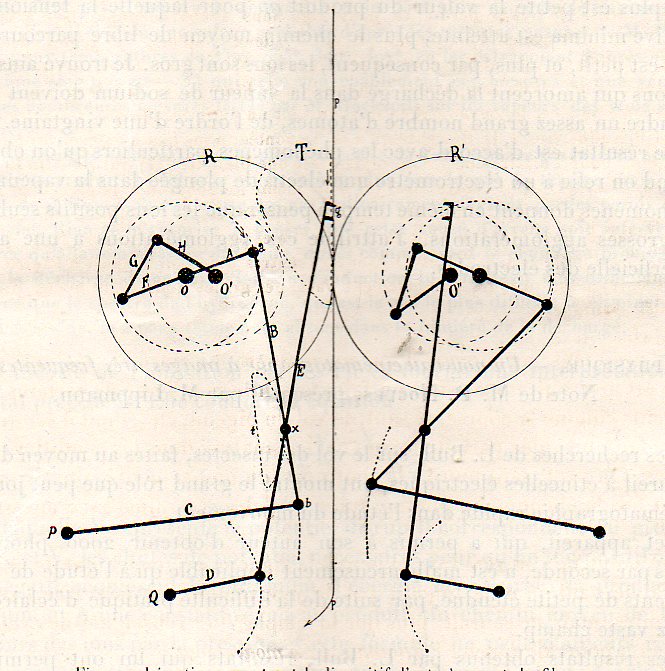
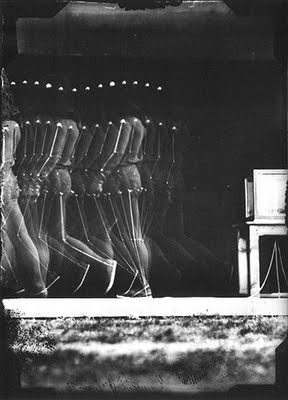
    While looking through an issue of the Comptes Rendus for the announcement of the funeral of the great mathematician and all-around genius Henri Poincare1, I found in the weekly issue (a fraction of an inch comprising the three-inch-thick half-yearly volume of papers published by the French Academy) this wonderful illustration.  It looks a bit like the superstructure to a Cubist dance, and bears a good strong attraction to many of the still images produced by Etienne Marey, maybe even a little like a mirrored representation of a stick figure skeleton of Duchamp’s Nude Descending, which interestingly was finished in this same year. 

    Marey-_Man_walking,_1890–91[Etienne Marey, ca. 1880/1]

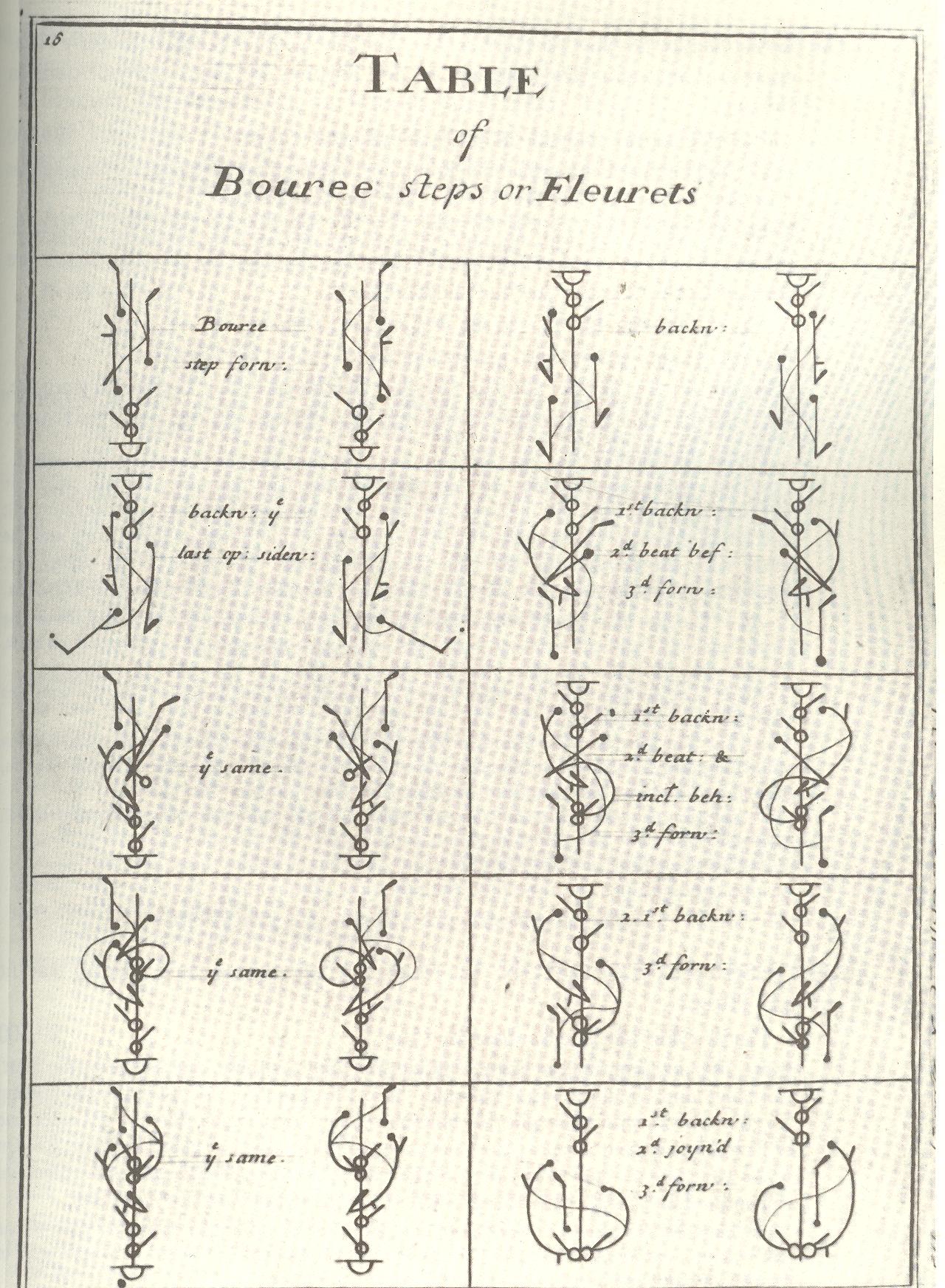
    There’s also a bit of early dance notation that the image reminds me of, particularly Raoul Feuillet’s publication of Pierre Beauchamp’s Orchesography4 ,
    a work published first in 1700  (and then in English in 1706) and
    dedicated to instructing people on the movements of the dance:

    Blog--apr 7 dance

    The image is an illustration for the article “Un nouveau cinematographie a images, tres frequentes”, by P(ierre) Nogues, and was a technical rendering of a device that ran film through a projector at a very high speed.  Nogues (1878-1971) was an assistant and collaborator to Etienne Marey, who was one of the earliest and perhaps the greatest figures in early cinematography and who–like Eadweard Muybridge–successful managed to create articulate optical machines that could capture and record minute and fast motion in people, animals, blood, and so on.  Nogues and his contemporaries lie Georges Demeny, Francois-Franck and Lucian Bull were among the founding encyclopedists of motion.  The drawing above was an outline for a sprocket device that feed flexible film through a camera at very high speed (ultimately reaching some 380 frames per second).  It is a beautiful thing. 

    [M. Duchamp, Nude Descending a Staircase, No. 2 (Nu descendant un escalier n° 2, 1912.  It is interesting to note in passing that this painting was supposedly rejected in the Salon des Indépendants show of 1912 and then caused a massive set-to in the NYC Armory Show of 1913. The infighting and family strife in the Salon in the 1900-1912 period is so big and complex it would make a fine if drippy daytime television romance drama.]

    Notes:

    1. Poincare died 17 July 1912, aged 58; the announcement of the funeral for one of the intellectual kings of the 19th century appeared on page 263 in this issue for 22 July 1912. 

  • Cigarette Bombs as Munitions of Peace, 1916

    JF Ptak Science Books  Post 2078  

     
    Follow Me on Pinterest


    2013-07-24 10.00.29
    Superweapons have been used against cities for quite some time in the
    new world of speculative fiction, and there had been real-life aerial
    bombings from hot-air balloons, but the first time that a bomb was
    dropped from a heavier-than-air airplane on anything happened just
    months earlier, on 1 November 1911, when Lt. Giulio Cavotti dropped a
    hand grenade from his Etrich Taube
    on the oasis of Tagiura, in North Africa during the Italo-Turkish War. 
    He dropped four parcels of hand grenades on the
    not-necessarily-military population at the oasis, injuring no one.  The
    attack was one of attempted vengeance, a payback by the Italians against
    the Arabs of Tripoli, in general, for having joined forces with the
    Turks to fight against them.

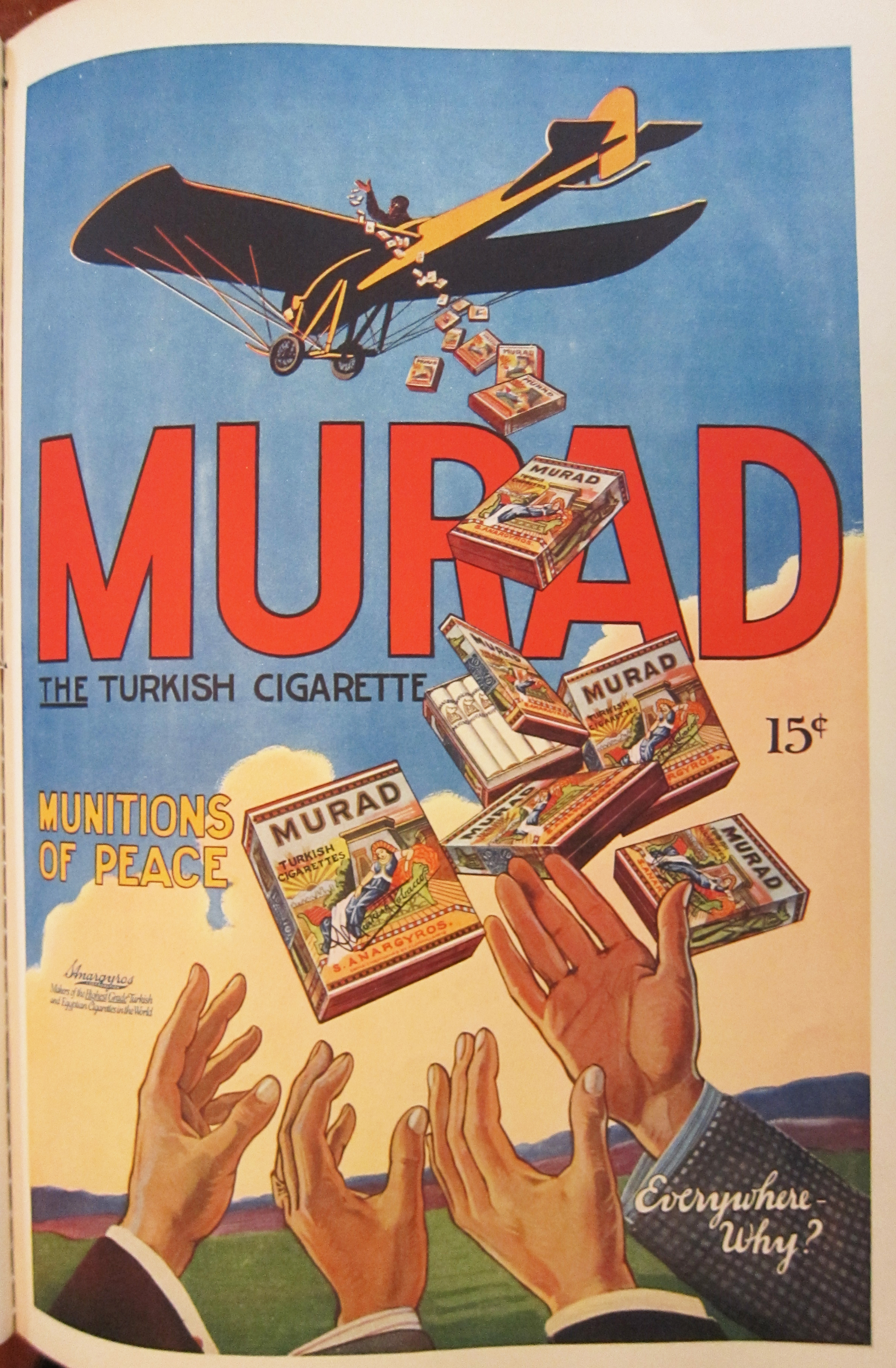
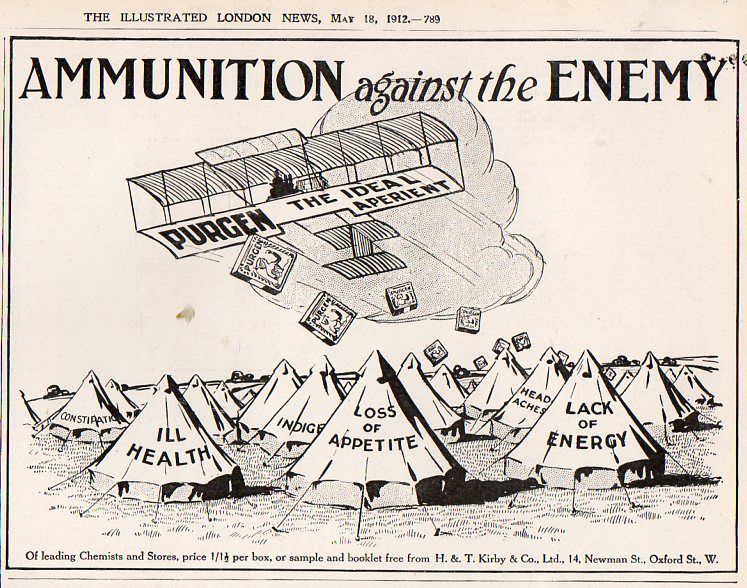
    Five years later (including two years of World War) advertisers were feeling quite enough at home with the idea of aerial bombing to use it on a growing basis to sell stuff to people.  The idea of bombing people with cigarettes–“munitions of peace”–was another in a developing series of dropping-what-you-want-to-sell-to-people-from-aeroplanes.  Murad is striking, but it is far from the first ad to employ airplane bombing–a good candidate for that occured four years earlier and only a year after the practice of dropping real bombs from planes was established. That would be in this 12 May 1912 ad for Purgen,
    “the Ideal Aperient” dropped on military-style tents  of “Ill Health”, “Loss of
    Appetite”, Lack of Energy”, and so on, all within the possibility of
    cure by this Purgen product. 

    Purgen was a laxative; Murad was cigarette bombs. 

    Bomb554

    ·Posted by :

    ·in:

    —
  • Definitions of Columns and Shapes: d’Aviler & Vignola, 1710

    JF Ptak Science Books  Quick Post

    [Both of the following engravings are available for purchase via our blog store]

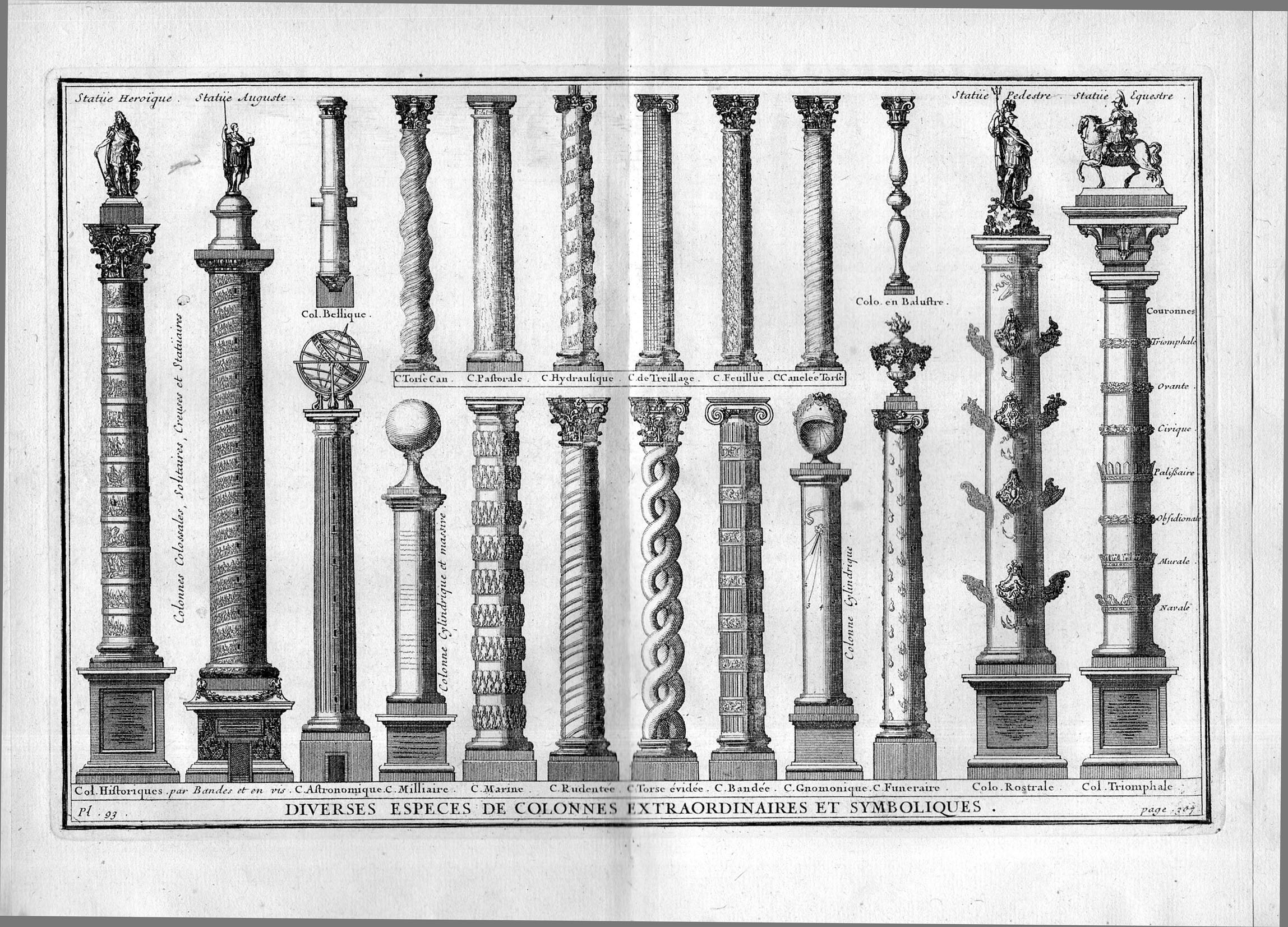
    Over the years I’ve seen many architectural prints, and I’ve come to determine that I most enjoy the comparative views.  It is uncommon to see a single-sheet engraving dedicated to different forms of columns, as we see here in plate 93 (page 307)  of volume one of A.C. Daviler’s Cours d’Architecture qui comprend les Ordres de Vignole…published in Paris in 1710. Daviler (1653-1701),was an architect and a student of Jean-François Blondel (1683-1756) who worked very extensively on the architectural theory of Giacomo Barozzi or Jacopo Barozzi da Vignola (1507-1573). Here he identifies and classifies 20 different types of columns, just to make sure that everyone was on the same page.   

    Architecture--vignole--columns429

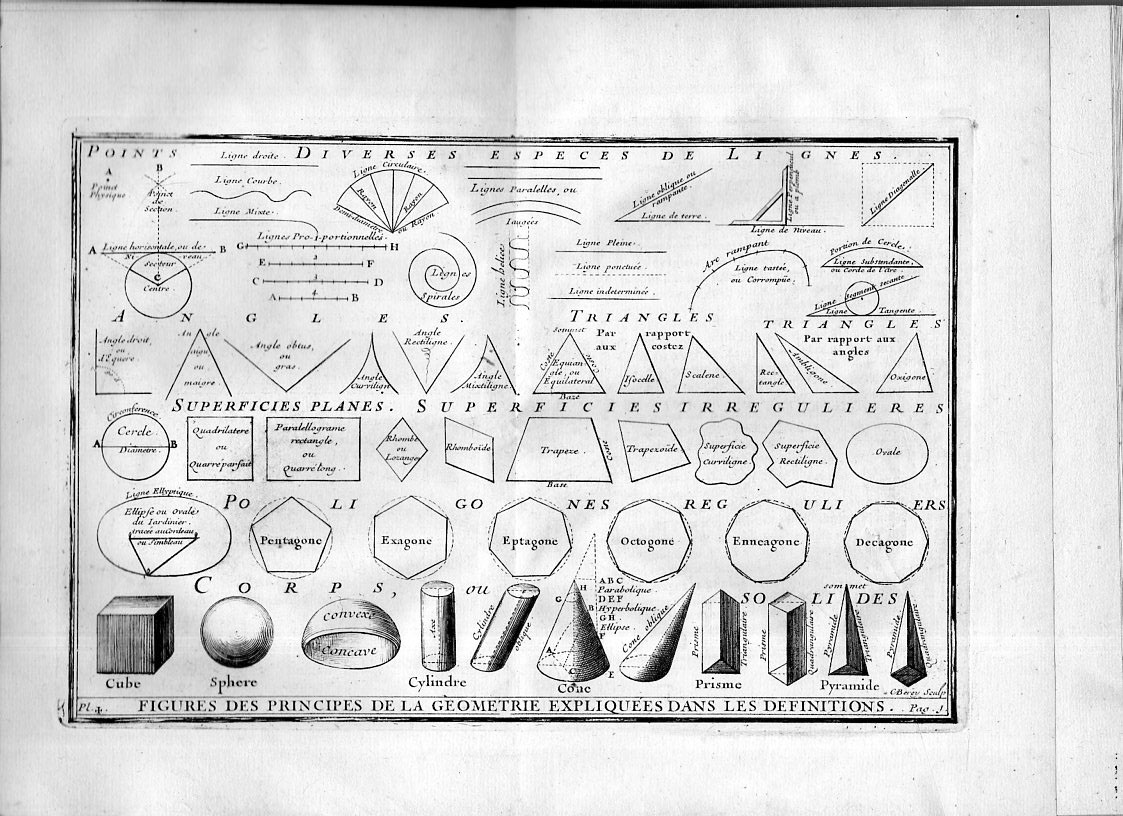
    Actually, the very first engraving in the work is dedicated to a definition of terms, establishing the basis for the forms that would be discussed over the following thousand pages.  It is an excellent way to start a book, making sure that everyone has a common identification for what standard words would mean. It is a standard and veery good idea but not often illustrated. 

    Architecture--vignole-shapes430


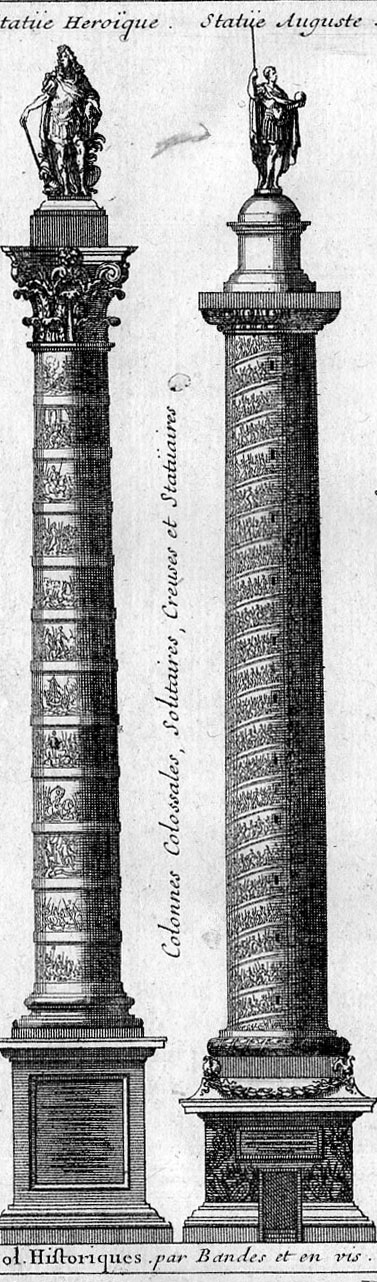
    And the detail:

    Architecture--vignole--columns429_edited-1

    ·Posted by :

    ·in:

  • Big Time Big Bombs–Great Infographic, 1917

    JF Ptak Science Books   Quick Post 
     
    Follow Me on Pinterest

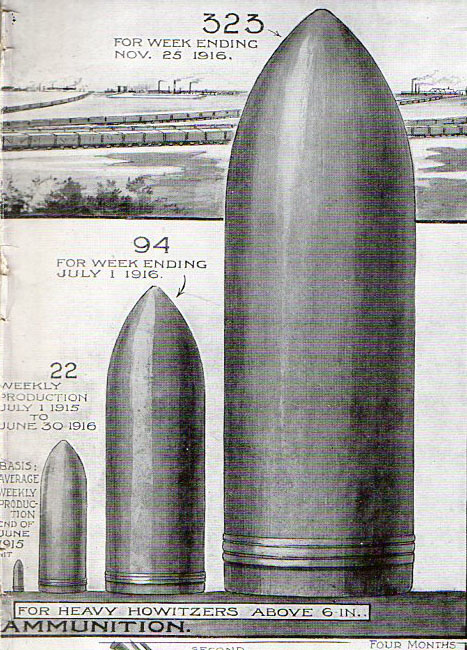
    I don’t often see graphical displays of quantitative data utilizing quite so many images of shells, even when the image is comparing ammunition production.  This striking example is found in The Illustrated London News for July 15, 1917. 


    Bombs994

  • Thomas Jefferson’s Reading List for the Common reader

    JF Ptak Science Books  Post 2080

    In 1771 Thomas Jefferson replied to a letter written to him by Robert Skipwith, the brother-in-law of Martha Wayles Skelton (who Jefferson would marry in the next year) outlining what he thought to be essential reading for the generally-cultured reader.  Skipwith wrote for a list of books “suited to the capacity
    of a common reader who understands but little of the classicks and who
    has not  leisure for any intricate or tedious study. Let them be
    improving as well as amusing and among the rest let there be Hume’s
    history of England, the new edition of Shakespear, the short Roman history you mentioned and all Sterne’s works.”

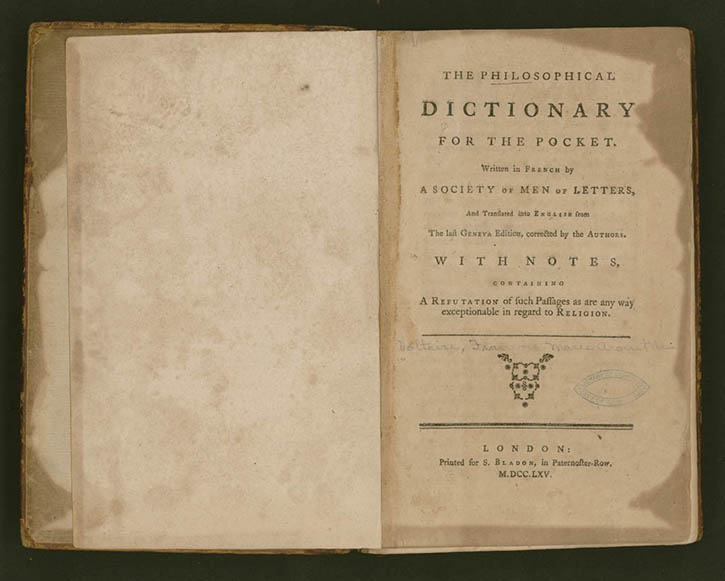
    Jefferson voltaire[Jefferson’s copy of Volataire’s Philosophical Dictionary–a thinker much in his mind.]

    Jefferson responded with the following list, published at the very useful Monticello.org site (The same site offers an interesting reading list for Jefferson and his world, arranged by category, here.) It was a time of both big change and settling-in for Jefferson–aged 28, a newish lawyer, just coming into practice in 1767, just inheriting his father’s estate in 1764, just moving into newly-built Monticello in 1770, and marrying in the next year–and he gave the question a good strong thinking.  His list is of course very interesting: the books are loosely arranged under a few broad categories, and are listed mostly by author and a bit of the title, followed usually by the size of the book (“8vo” is, basically, what we would think of as a standard-sized book; “12mo” is about the size of a paperback; “4to” is a taller, wider book; “fol” is a folio, sort of in the atlas-size), an occasional price, and also some occasional publishing data. The leading category of book by far is the “fine arts”, which occupies well more than half of the entire list.

    It is interesting to note that Jefferson has only eight titles in the politics/trade/economics section, and has seven in the “criticism of the fine arts” area, which includes Hogarth’s book on the analysis of beauty (strange and compelling to the non-artist like myself), and the newish Johnson’s dictionary (published first in 1755), the big two-volume work purchased by Jefferson for 3 pounds. 
    It might also be interesting to have a look at the Library of Congress exhibition of Thomas Jefferson’s library (from 2008), here.

    ·Posted by :

    ·in:

Recent Posts

Archives

Categories