A Daily History of Holes, Dots, Lines, Science, History, Math, Physics, Art, the Unintentional Absurd, Architecture, Maps, Data Visualization, Blank and Missing Things, and so on. |1.6 million words, 7500 images, 4.9 million hits| Press & appearances in The Times, Le Figaro, Mensa, The Economist, The Guardian, Discovery News, Slate, Le Monde, Sci American Blogs, Le Pont, and many other places… 5000+ total posts since 2008.

  • Great Babies: Baby Einstein, Baby Feynman, Baby Schroedinger, and More

    JF Ptak Science Books   Post 2425

    Here’s an interesting set of delightful photographs (and one painting) of some great scientists as babies and kids.  Many of them are obvious, I think, and you can see their developed and mature faces in themselves from very early on.  For example in the first photo is Niels Bohr, his arched eyebrows and halfways-kinda-grin already there at age 4 or 5.  Paul Dirac is gorgeous as a kid and he keeps those eyes throughout his life. The Einstein is an uncommon images, plucking him from a class photo–I guess you can see him in there, somewhere, though it isn’t as Einstein-y as some of the other early photos of him where his eyes are just unmistakable.  Feynman looks like Feynman, sly and smart-as-hell; and the impish and sparkling Turing seems as he would be decades on.  On the other hand the fabulous Kurt Goedel baby could be almost anyone–though I have to say it isn’t often you see photos with the baby’s arm raised.  

    Four of these came from a very nice post on exactly this topic at Kuriositas: (http://www.kuriositas.com/2011/10/famous-scientists-as-children.html) though even at the outset there are more science babies and kids together here than I can find elsewhere.  

    Scientist childhood pics bohr

    Niels Bohr, 1890, age about 5. Source: http://www.nbi.ku.dk/english/www/niels/bohr/barndom/


    ·Posted by :

    ·in:

  • Squares and Squares within Squares in Book Design

    JF Ptak Science Books  Quick Post

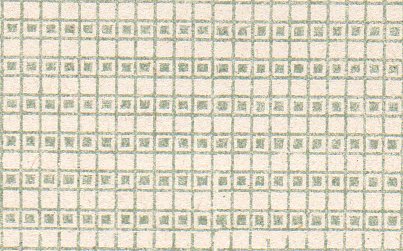
    I picked up  Bayard Tuckerman’s History of English Prose Fiction (printed in New York City in 1886) part of my Borgesian-Eccoian anti-Library, and found this fantastic design on the free endpaper and pastedown:

    Book design endpapers833

     And a close-up, which is about one square inch:

    Book design endpapers834

    There are about 5000 of these on a 10×6″ space, some 15,000 lines.  That’s a lot of work in a small space, about 289 squares per square inch.  Tiny.  Impressive.  

    Q:  Oh: how many squares and rectangles are there here?  A: a lot.

    ·Posted by :

    ·in:

  • Build Your Own Chemical Slide Rule!

    JF Ptak Science Books    Post 2425

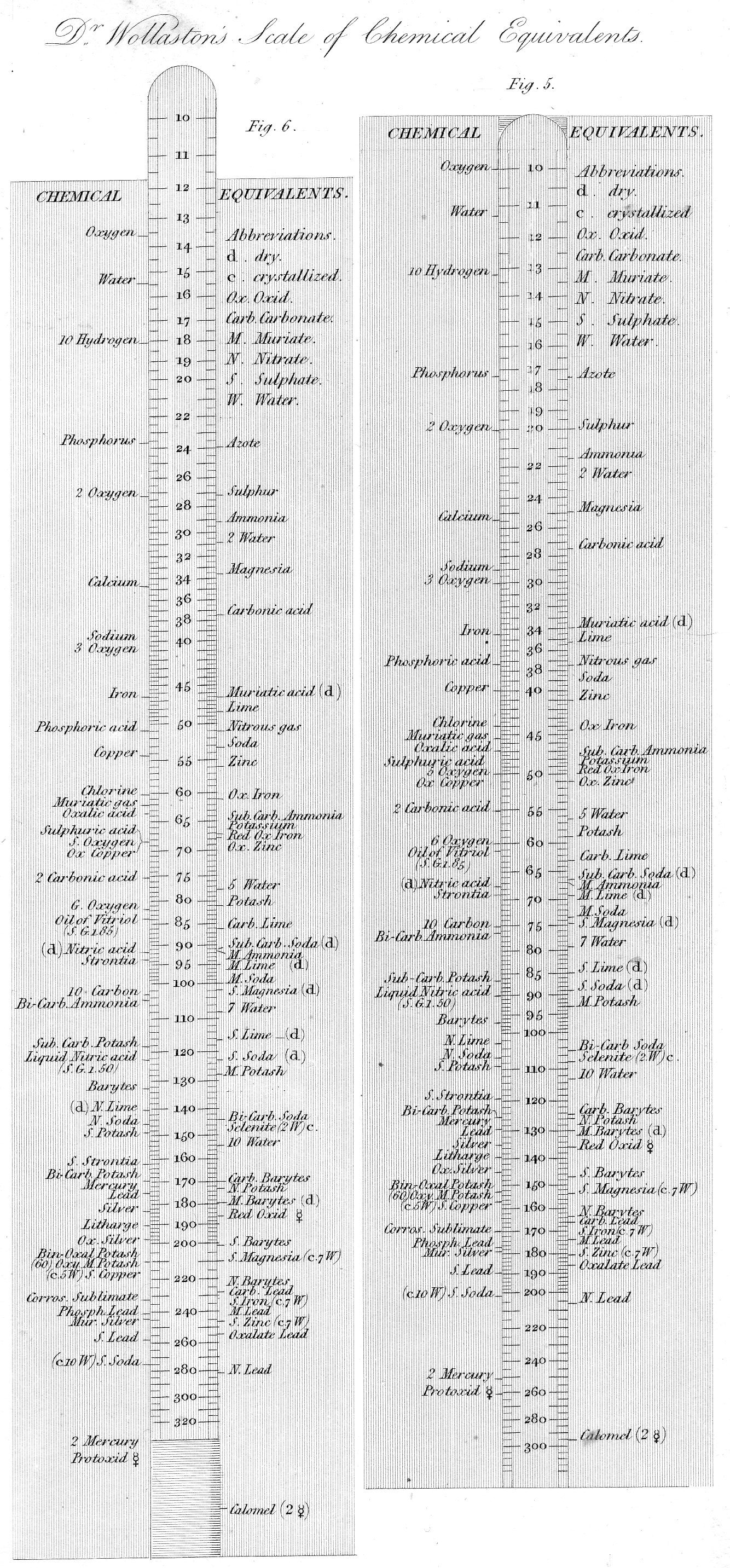
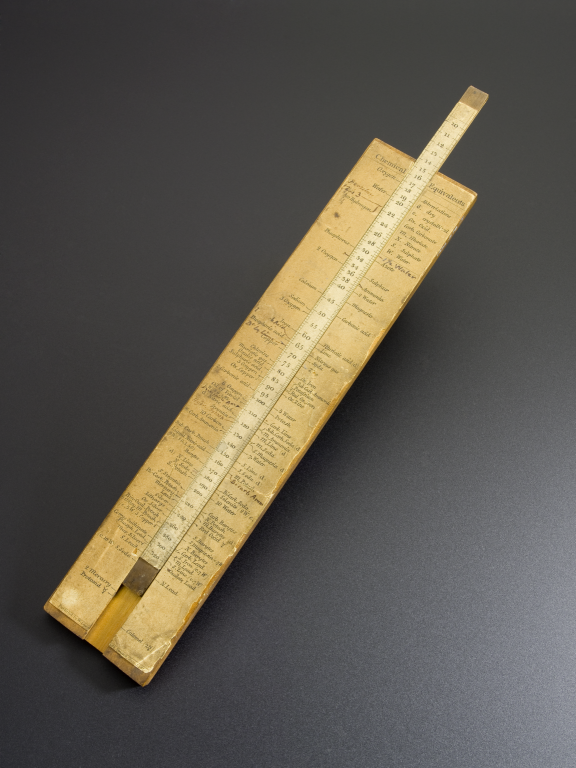
    Well, not a chemical-chemical slide rule/computer, not a biological thing, “just” a push-pull homemade bit cut-out from an article on chemical equivalents from 1814. But very neat, and  a major bit of thinking and articulation for the early 19th century. The original occurs in 1814 in a paper published by the Royal Society in the Philosophical Transaction by the eminent chemist William Wollaston, and a good description of the effort appears on Carmen Giunta’s excellent Chemistry Classics site (http://web.lemoyne.edu/giunta/):

    “In late 1813 he read a paper [published in 1814] that included an extensive compilation of “equivalent weights” or combining masses (closely related to molar masses) and a sort of chemical slide rule on which the weights were arranged. Wollaston’s paper included not only a table of equivalent weights but a summary of data from which he compiled the table, mainly analyses published by other chemists…”

    The copy of the slide rule that I’m using here is found in the great encyclopedia by Abraham Rees and which was published a few years later (1818)–its just a sharper copy with different design details than found in the original.

    Wollaston835

    And a photograph of an antiquarian version from the Science Museum (U.K.): 
    Wollaston[Source, #2, below)

    Notes:

    1. Full text of the 1814 paper:  William Hyde Wollaston, “A Synoptic Scale of Chemical Equivalents,” Philosophical Transactions of the Royal Society 104, 1-22 (1814).

    Another good article from the Chemical Heritage Foundation (“The Golden Rule”) :http://www.chemheritage.org/discover/media/magazine/articles/29-3-the-golden-rule.aspx

    2. And another from the Science Museum (UK) http://www.sciencemuseum.org.uk/online_science/explore_our_collections/objects/index/smxg-12515

  • Selling Radium–a LOT of Radium (1925)

    JF Ptak Science Books   Quick Post

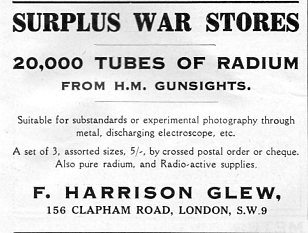
    Welcome to this  piece of historical advertisement!  Of all of the many ads I’ve seen in Nature (spending a fair amount of time in the journal years from 1869-1945) this one (for December 12, 1925) is among the top-percenters causing real pause.  Beginning a few years after its discovery in 1898 (by Marie and Pierre Curie), radium had taken on a life of its own in the public sphere, as being a possible cure for diseases, problematic sexual potential, dull fingernails, luminous watch faces, and such. It entered popular culture and stayed there for decades, right up to being shoveled into firey furnaces that power ant-gravity something-or-there engines in a floating city in a Flash Gordon movie1, and suffered  itself into the public conscience as a redeemer and restorer of youth2.

     [I’ve written before on radium-lust–here, for example: “Radioactive Suppository Sex Aids & Radium Toothpaste: Shining Lethal Nonsense” in 2010 .]  I hadn’t seen an ad however for purchasing the raw material before–let alone 20,000 “tubes” (of undetermined size) of it.  It does make one wonder about storage, and handling.

    Radium836

    Evidently the source of the radium was for gunsights of rifles, to illuminate the sight (or scope?) at night, or in the dark. 

    “How far that little candle throws his beams! So shines a good deed in a weary world.” –Shakespeare, The Merchant of Venice

    Notes

    1. This is from one of the Flash Gordon serials, appearing in 1936.  See here for a good summation and description. 

    2. This was a portable pack of a device called “Saratoga Springs” that utilized water and god-knows-what and radium salts into water that the purchaser would consume. This appeared in Popular Science Monthly for June 1929. 

    ·Posted by :

    ·in:

  • A Simple Map of Possible Intention (1943/3)

    JF Ptak Science Books   Quick Post

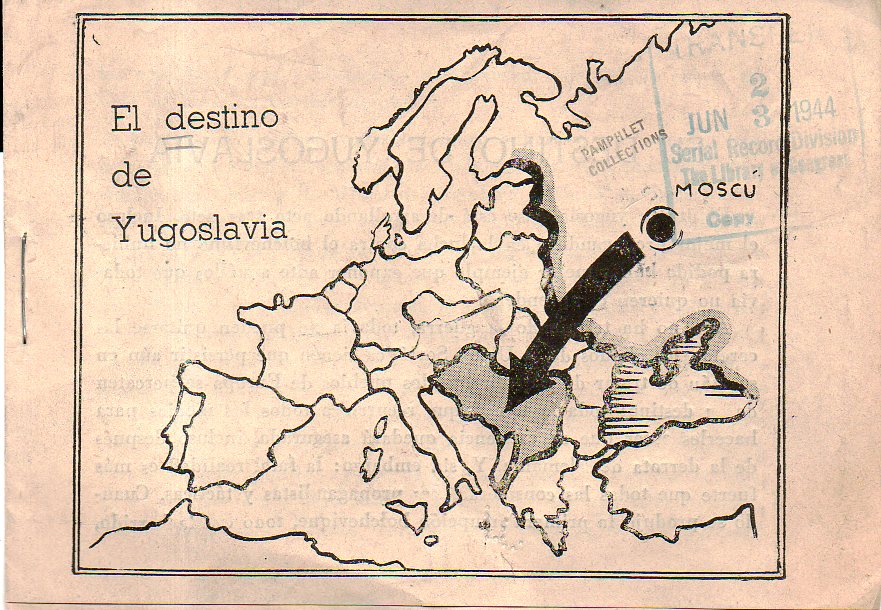
    Yugoslavia map841


    Given my non-existent Spanish skills, the closest I can come to interpreting this tiny pamphlet (published in 1943 and received by the Library of Congress three days before D-Day in 1944 and me in 1998)  is that it was a word of caution.  The warning is obvious–that Yugoslavia was of interest to the Soviet Union–but in 1943 given the state of the war and Yugoslavia being occupied by several Axis forces the concerns of being overtaken by Moscow seem to be way down the to-do list.  The Soviets did provide limited assistance, and they did leave Yugoslavia at teh end of the war, and there was a Communist government established there in 1946–but by 1948 there was a break in relations between it and the USSR, and Yugoslavia attempted to remain non-aligned.  

    The map is simplified and very direct, which makes it pretty effective.  Why it was printed in Spanish, I don’t know.  

  • Graphs of Astronomical Discovery

    JF Ptak Science Books   Quick Post        Reference Series    

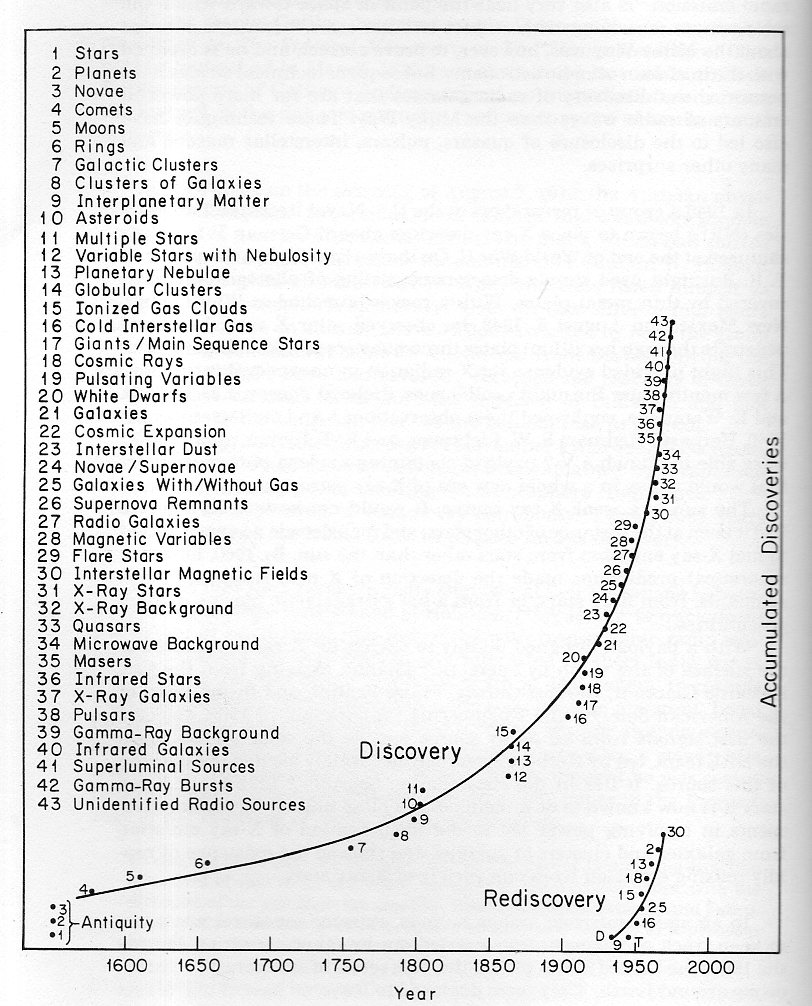
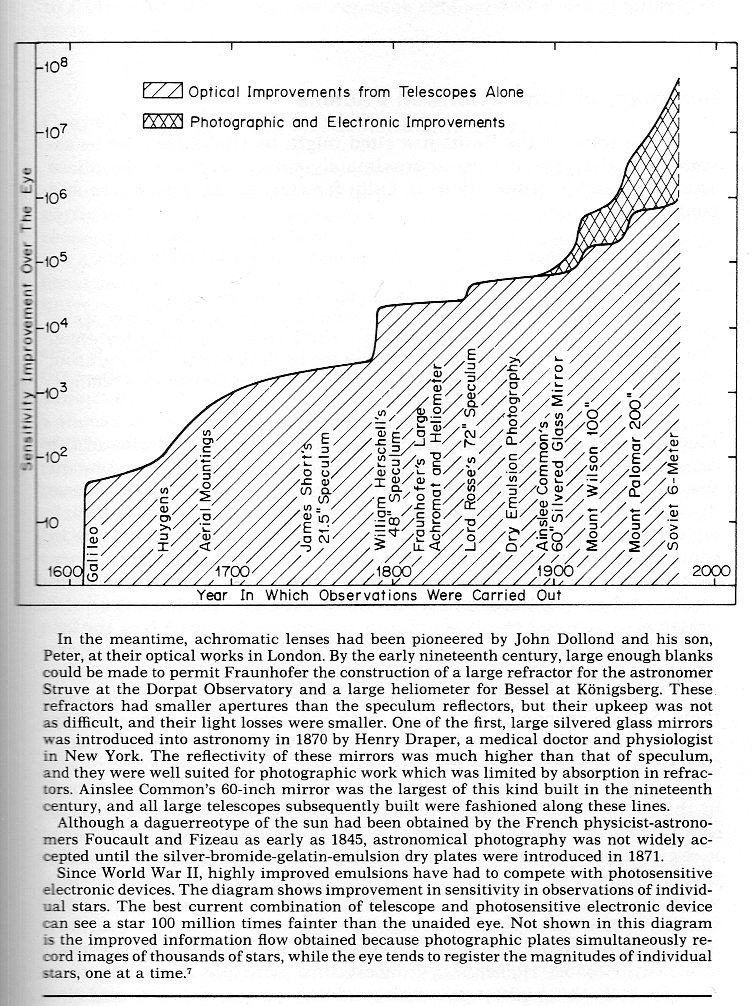
    This interesting graph of cosmic discovery (and re-discovery) is found in the open pages of Martin Harwitt’s Cosmic Discovery, the Search, Scope, and Heritage of Astronomy, Basic Books, 1981 (page 14).  It is an interesting advanced-introductory book which has a number of surprises, including this astro-discovery graph (below). There’s another unusual display of historical data in an optical power of telescopes graph,  which plots “Sensitivity improvement over the eye” of telescopes with astronomers and observatories over time, from Galileo to 1980 (and which is found on page 175). They’re handy and useful and tell in a quickish glance some parts of the history of astronomy.  

    Atronomical discovery timeline842

    Atronomical discovery timeline843

  • The First Image of a Child’s Art in a Painting? (1515)

    JF Ptak Science Books   Post 2426  

    Part of the Children’s Art series
    Caroto

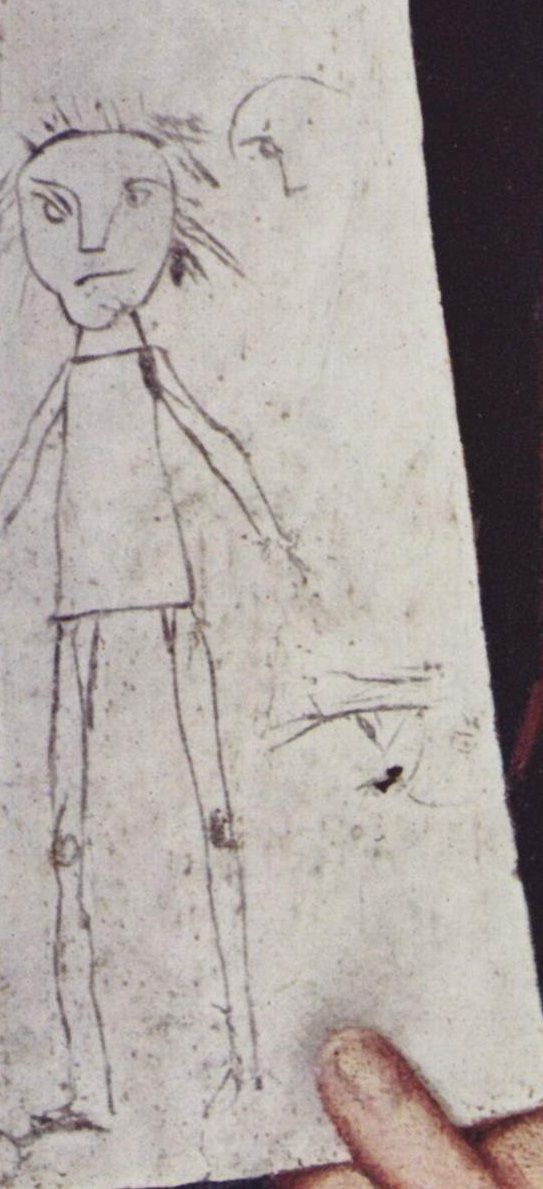
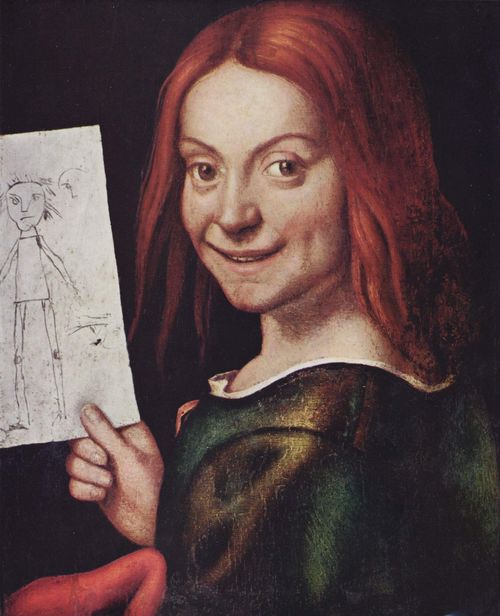
    I’ve written a number of times on this blog on art created by children–actualyl antiquarian children’s art, art made by kids from, say, before 1900.  That, and the depiction of kids’ art in work by painters through the centuries but before the last one. The second seems to be much more uncommon than the uncommon first category. For many good reasons, artwork made before (an arbitrary) 1900 seems to be fairly scarce, and when you to to <1850, scarcer yet, particularly when you remove the work of the privileged classes.  For the majority of people unused paper was not a common thing, certainly nothing as it is today when you can get a ream of paper for virtually nothing; in the 1850s, a child with access to paper and the means to express themselves on it would certainly have been a restricted minority.  

    As a “collector”of sorts of antique art by children most of what I have as doodles and artwork drawn on the blank pages of books, or their covers, or in ledgers,  really more like  kidlife marginalia, expressions of creativity on whatever paper was available.  It seems to me that the majority of kids would not have had much access to these means of production, especially if their major outlet for writing in school was slate and chalk.  Add to this difficulty the fact that the artwork would have to have survived the whims and taste and etc. of four or five and more generations of moves and house cleaning and so on, and the chances of childhood art’s survival become thinner and thinner. 

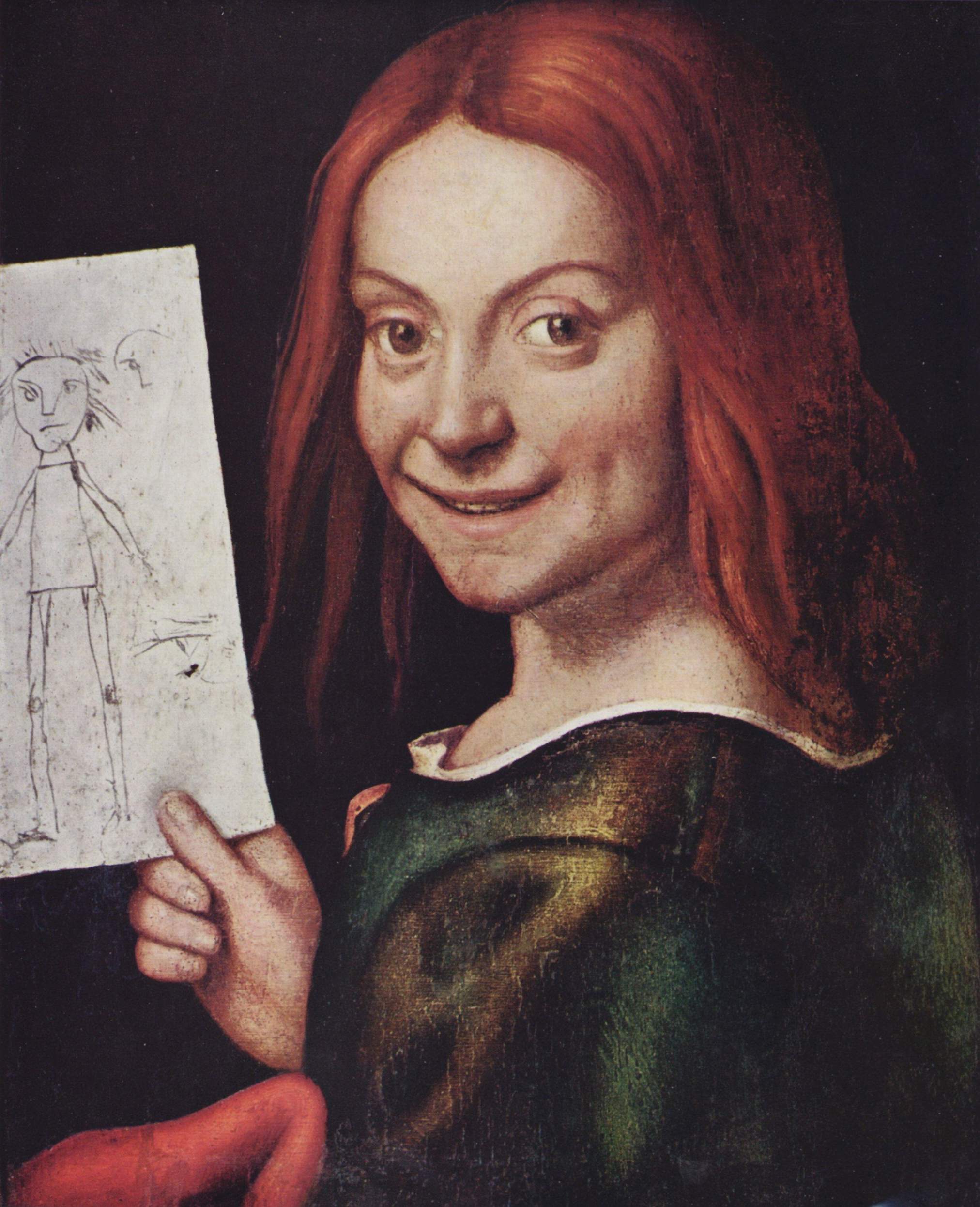
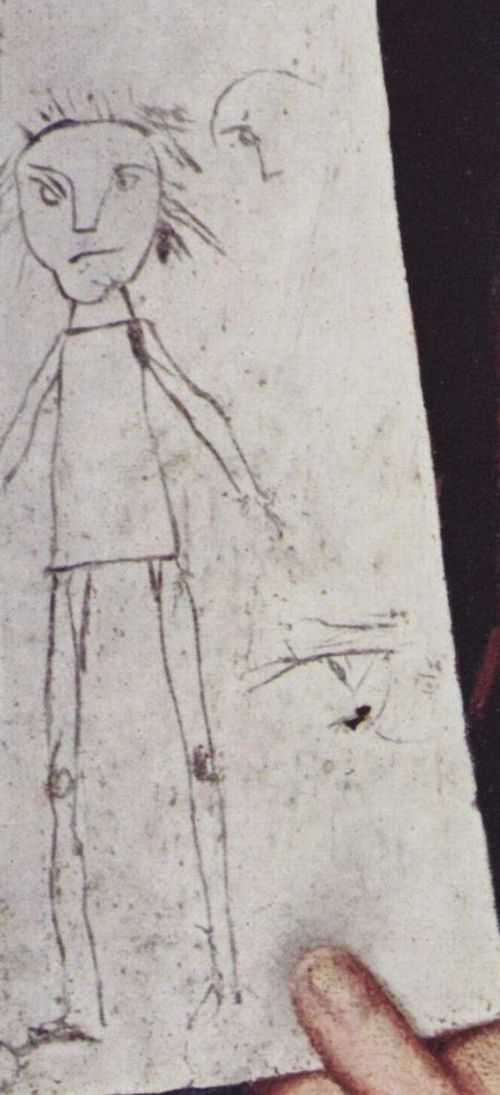
    This all comes up again because today for the first time I have seen this fantastic painting by Giovanni Francesco Caroto “Portrait of a Young Boy holding a Child’s Drawing” (Ritratto di Fanciullo con Disegno,), painted around 1515. I’m certain that I’ve never seen any artwork earlier than this and in an article that I saw in The Independent the author claims that this is the first artwork to depict a child’s artwork. It is a remarkable thing, seeing this drawing so proudly displayed by the child. Also it is not common to see someone in portraiture at this early stage with such a big toothy smile!  

    It is also incredible how in nearly all cases in recovering art by children that they basically look pretty much the same, for thousands of years. Perhaps with the vast majority of children performing artworks they all have about the same facility to reproduce what they were feeling or seeing, and so the continuing historical sameness.  

    This is no less than a great classic in the history of art by children.


    Notes


    I’ve researched this painting a little and don’t care too much for what I’ve found in some cases, in the interpretation of the painting–just a little unsettling with an uncomfortable fit. In one instance Harry Angelman, the identifier/discoverer of Angelman’s Syndrome1, saw this painting while in Italy and was much taken with it and associated the child with the children ad the disorders that he was studying.  In other cases there are associations drawn between this painting and Jean Dubuffet’s Art Brut, which is another direction that I really don’t care for too much.  

    1. Angelman Syndrome:  “is a neuro-genetic disorder characterized by severe intellectual and developmental disability, sleep disturbance, seizures, jerky movements (especially hand-flapping), frequent laughter or smiling, and usually a happy demeanor.”
    Caroto detail

    For some interesting reading in the history of childhood:   

    The classic by Philippe Ariès, Centuries of Childhood: A Social History of Family Life (London: Jonathan Cape, 1962)

    Lawrence Stone, The Family, Sex and Marriage in England 1500-1800 (London: Weidenfeld and Nicolson, 1977)

    Linda Pollock, Forgotten Children: Parent-Child Relations from 1500-1900 (Cambridge: Cambridge Univ. Press, 1983)
     

    ·Posted by :

    ·in:

    —
  • Einstein, Frisch, Cockcroft: Atomic Physics Film, 1948

    JF Ptak Science Books   Quick Post

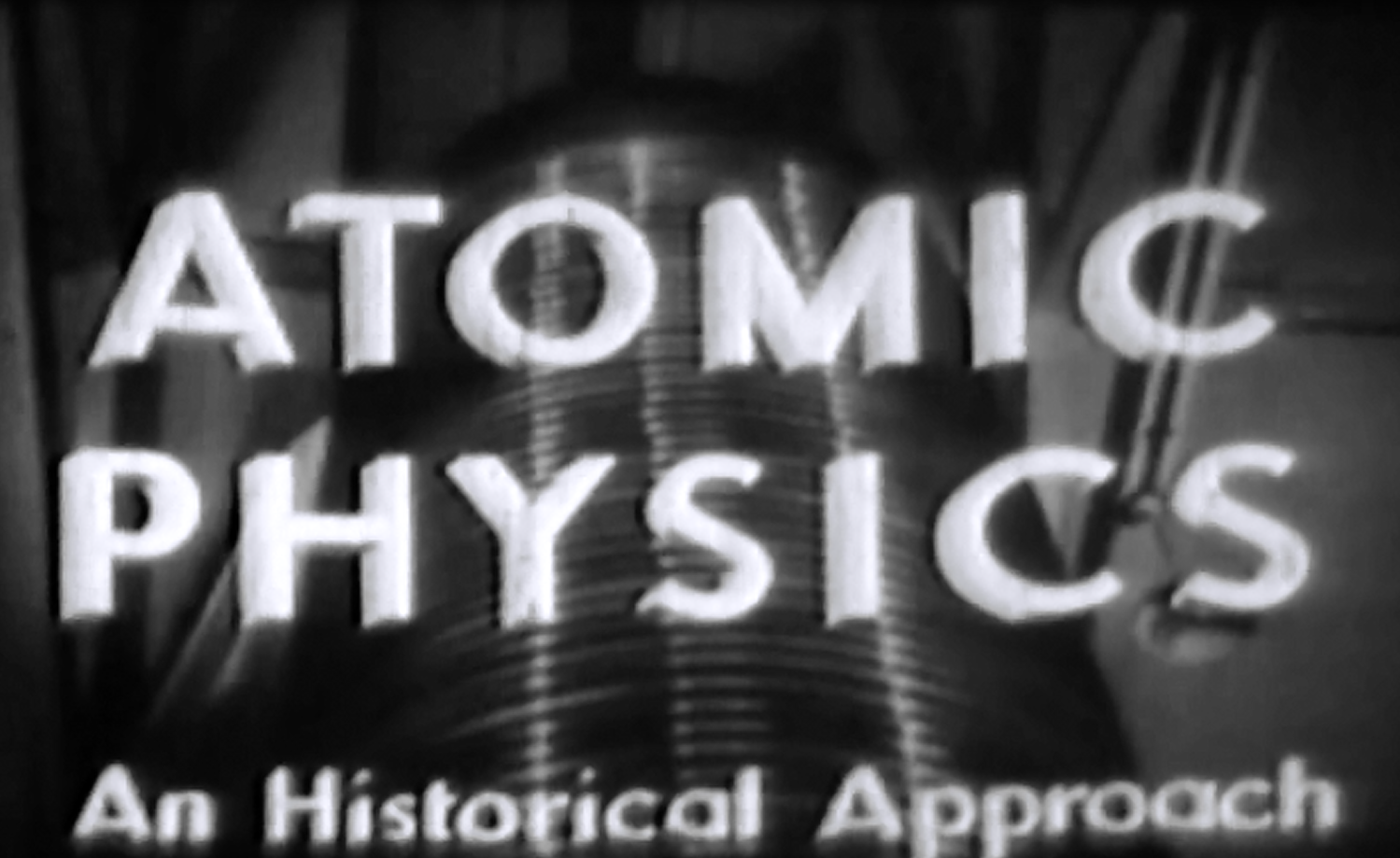
    Archives Atomic Physics film

    I had never seen this video/film before last night–it is pretty solid, and interesting, and I’m a little surprised because for a general-public sort of production it makes some good-sized presumptions of its audience in relation to any physics background. Most of all though there are appearances of Albert Einstein (at 52:15 and 1:01:14), Otto Frisch (1:03:00) and J.D. Cockcroft (1:17:50).

    Source: U.S. National Archives  http://research.archives.gov/description/88106

    ·Posted by :

    ·in:

    —
  • Albert Einstein: Part Time Civil Servant.

    JF Ptak Science Books   Quick Post   The History of Blank and Empty Things series

    Archives--Einstein payroll detail

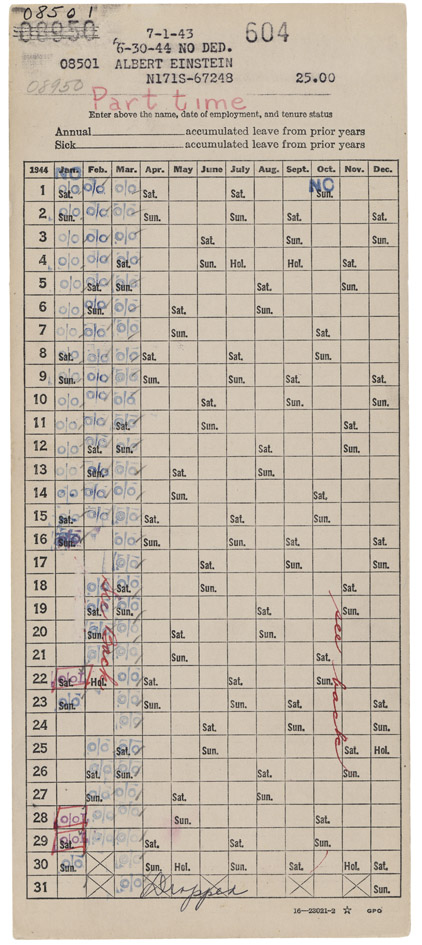
    “Albert Einstein, Part Time Civil Servant.”

    I can almost see this title as a eggshell-white comic strip in a Sunday Featureette with everything else in color– it just sounds so, well, wrong, and colorless.  Fact is though that at this time Einstein was working on weapons projects for the U.S. Navy, and evidently he needed to account for his work time just like everyone else.  

    The “part time” was what interested in this. What was he doing not being part time? 

    It was actually a little more than that, the “part time” part.  Because until he was hired by the Navy on 2 May 1943, Einstein worked “no time” on the war effort.  Not full time, not part time: no time.  The FBI thought him not trustworthy, and he was rejected by Army G2 in July 1940 as not clearable..  Einstein was out–in spite of the fact that he wanted desperately to work on something to help defeat the Nazis, and he would have made a pretty good go-to guy.  In May ’43 though he was cleared by the Office of Naval Intelligence and he went to work–at $25/day– on sub warfare and HE projects, much to his high happiness.

    Einstein did so without the Navy haircut, as he liked to tell.

    I have this post in my Blank, Empty and Missing Things series for the missing/absence/emptiness of trust and judgment extended to Einstein in wartime.  

    Archives--Einstein payroll

    In addition to this there are three other images, all hiosted  by the U.S. National Archives, here: http://research.archives.gov/description/597840

  • This is the Future, 1940-Style via Walter Dorwin Teague

    JF Ptak Science Books  Quick Post  History of the Future

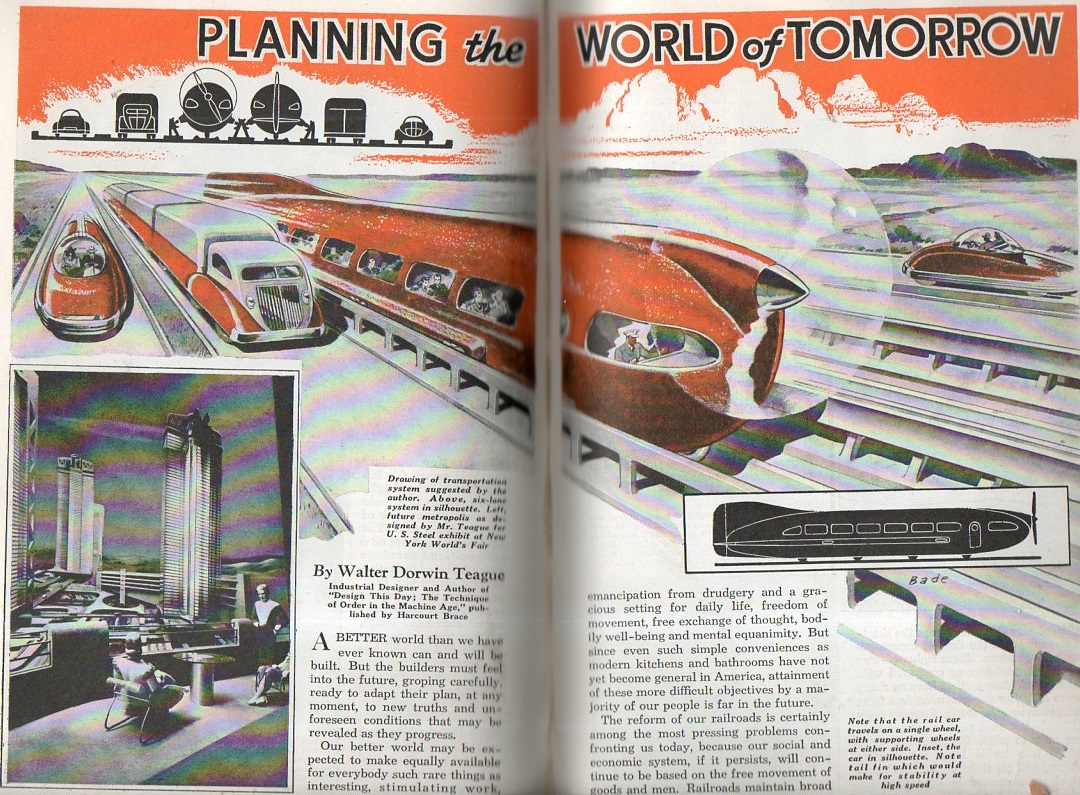
    There were several articles over three different issues of Popular Mechanics Magazine that looked at different aspects of future transportation, and one of the interesting side bits is that the cover illustration for two of the issues incorporated designs that appeared elsewhere that year.  In any event the overriding issue is that in the unspecified future that railroads will have to be improved to handle everything that will come to be, while aviation may have to wait for the invention of anti-gravity-something.  

    The first image is a small detail in the article by Walter Dorwin Teague  (an industrial design pioneer in league with Norman Bel Geddes, and Raymond Loewy) in his “Plannig the World of Tomorrow”, and is actually an elevation of the larger central view:

    Future roads846detail

    Here highways are transformed to accommodate two central lanes for 200 mph engineerless trains, while the lanes next to them are to handle freight, and with an outer lane for commuter/pleasure traffic. Interestingly the small car detail appears on the cover of a Popular Mechanics issue, looking pretty much to form, and very vibrantly red placed against a very non-descript and featureless background.  The trains that appear in the Teague article also appear on the cover the subsequent issue, where it is presented in a luxurious and speedy red-orange.  

    Future roads c847


    ·Posted by :

    ·in:

  • Beautiful Lines: Depicting Voyages of Discovery, 850-1850

    JF Ptak Science Books   Quick Post

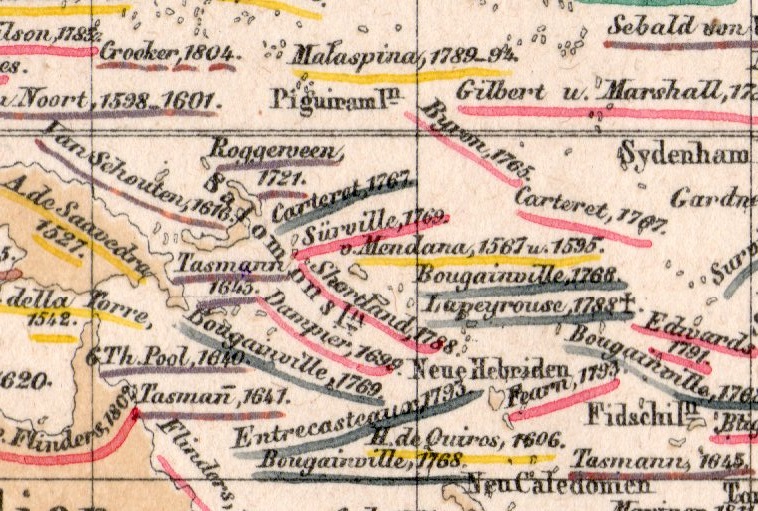
     This small detail (measuring about 1/3″ square) is from a fine, detailed, and oddly beautiful map (itself only about 12×9″) which was published in the atlas volume1 to accompany the best-selling encyclopedic presentation of the natural history knowledge of the world to that time, Baron Alexander von Humboldt’s Kosmos, which was published over a period of several from 1845-1862.  

    Map visualization ocean currents657

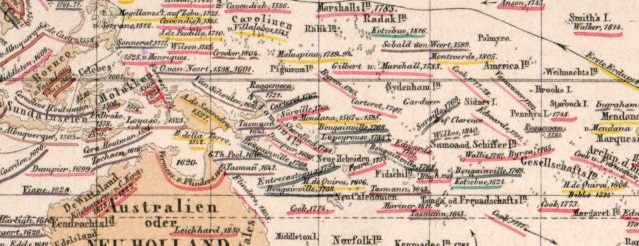
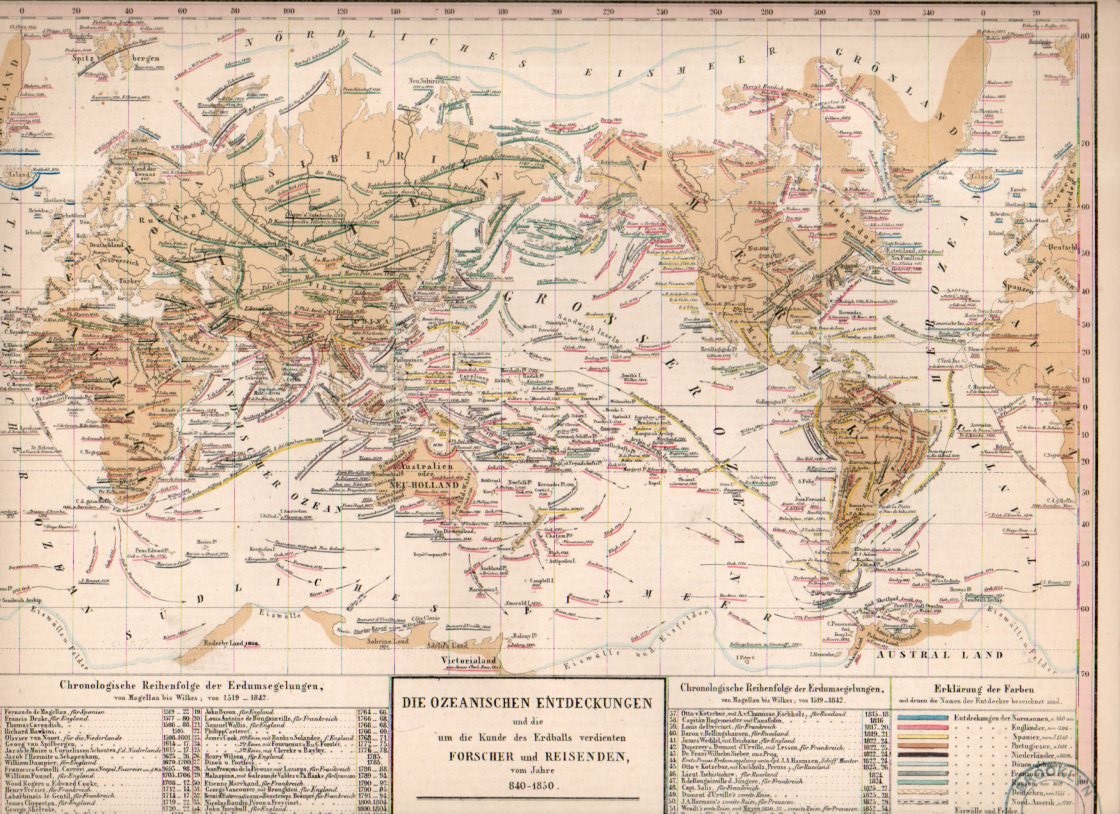
    The map is titled Die Ozeanischen Entdeckungen und die  um die Kunde des erdballs verdienten  Forscher  und Reisenden vom Jahre 840-1850, and depicts voyages of discovery for a milennium, 850-1850. It is a terrifically-detailed map, even among highly-detailed maps. (This detail is taken froma 1×2″ section seen here:)

    Map visualization ocean currents656


    And the full map:

    Map visualization ocean currents655

    Notes:

    1.  The atlas was by T. Bromme, Atlas zu Alex. V. Humboldt’s Kosmos in zweiundvierzig Tafeln mit erlauterndem Texte. Herausgegeben von Traugott Bromme. Stuttgart. Verlag von Krais & Hoffman. (with second title page) Atlas zur Physik der Welt in … Bromme, 1851. 

Recent Posts

Archives

Categories