JF Ptak Science Books Post 2425
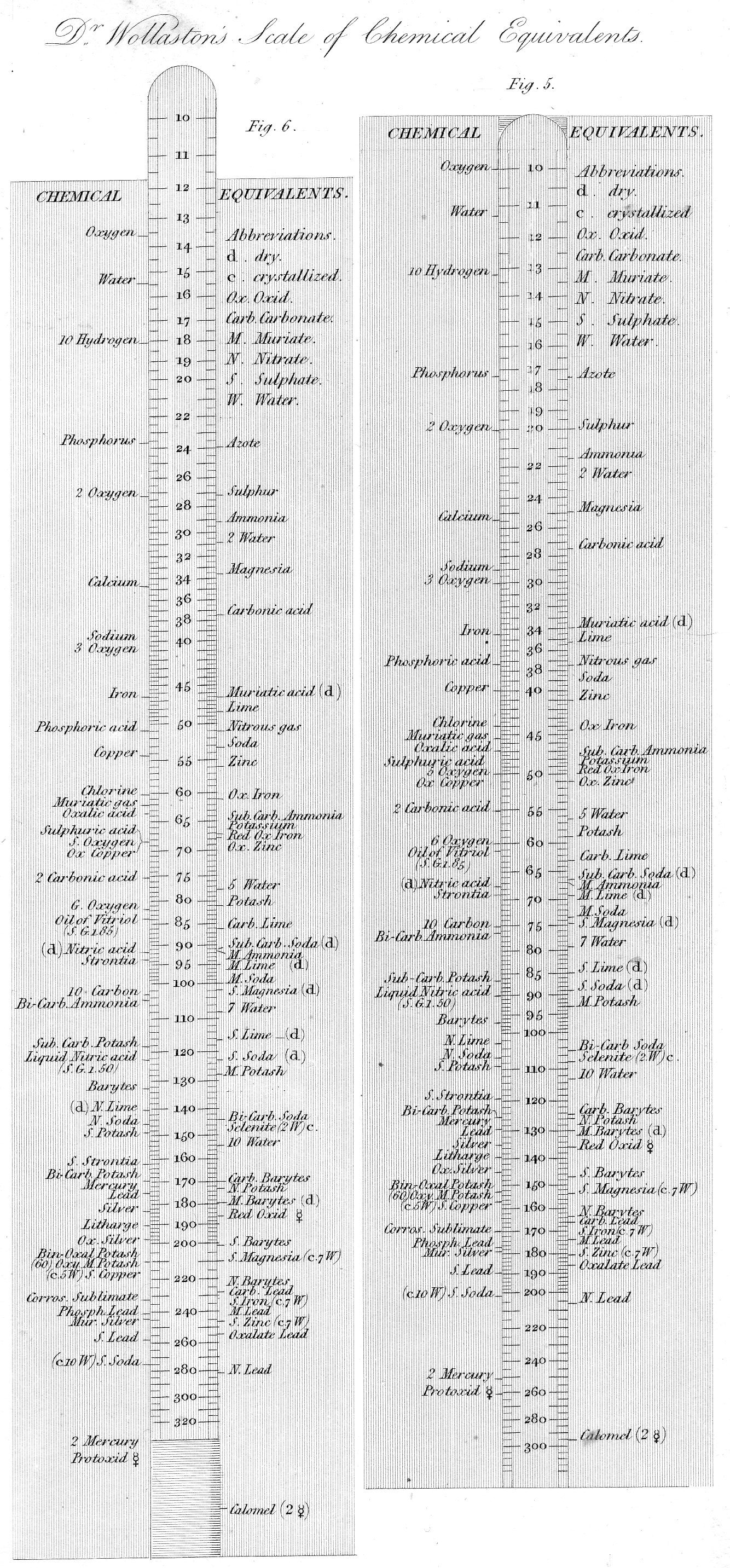
Well, not a chemical-chemical slide rule/computer, not a biological thing, “just” a push-pull homemade bit cut-out from an article on chemical equivalents from 1814. But very neat, and a major bit of thinking and articulation for the early 19th century. The original occurs in 1814 in a paper published by the Royal Society in the Philosophical Transaction by the eminent chemist William Wollaston, and a good description of the effort appears on Carmen Giunta’s excellent Chemistry Classics site (http://web.lemoyne.edu/giunta/):
“In late 1813 he read a paper [published in 1814] that included an extensive compilation of “equivalent weights” or combining masses (closely related to molar masses) and a sort of chemical slide rule on which the weights were arranged. Wollaston’s paper included not only a table of equivalent weights but a summary of data from which he compiled the table, mainly analyses published by other chemists…”
The copy of the slide rule that I’m using here is found in the great encyclopedia by Abraham Rees and which was published a few years later (1818)–its just a sharper copy with different design details than found in the original.
And a photograph of an antiquarian version from the Science Museum (U.K.):
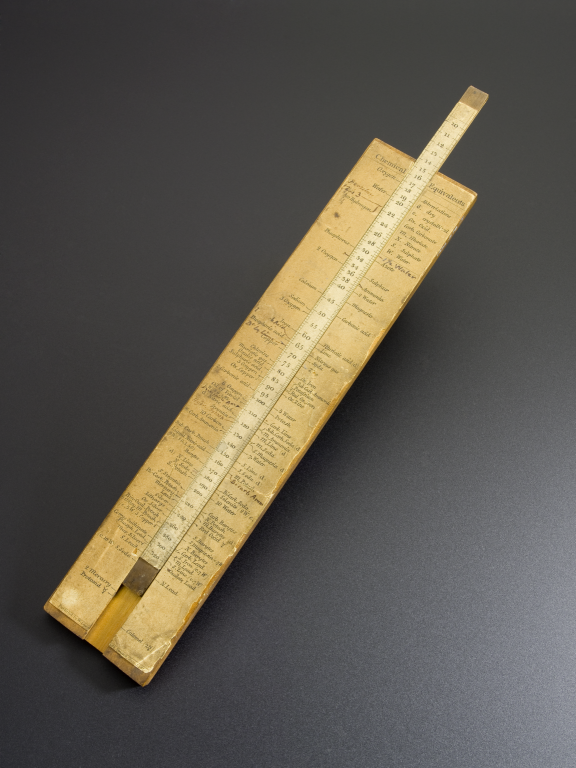 [Source, #2, below)
Notes:
1. Full text of the 1814 paper: William Hyde Wollaston, “A Synoptic Scale of Chemical Equivalents,” Philosophical Transactions of the Royal Society 104, 1-22 (1814).
Another good article from the Chemical Heritage Foundation (“The Golden Rule”) :http://www.chemheritage.org/discover/media/magazine/articles/29-3-the-golden-rule.aspx
2. And another from the Science Museum (UK) http://www.sciencemuseum.org.uk/online_science/explore_our_collections/objects/index/smxg-12515