A Daily History of Holes, Dots, Lines, Science, History, Math, Physics, Art, the Unintentional Absurd, Architecture, Maps, Data Visualization, Blank and Missing Things, and so on. |1.6 million words, 7500 images, 4.9 million hits| Press & appearances in The Times, Le Figaro, Mensa, The Economist, The Guardian, Discovery News, Slate, Le Monde, Sci American Blogs, Le Pont, and many other places… 5000+ total posts since 2008.

  • A Fine and Interesting Map of Air Routes, 1956

    JF Ptak Science Books  Quick Post

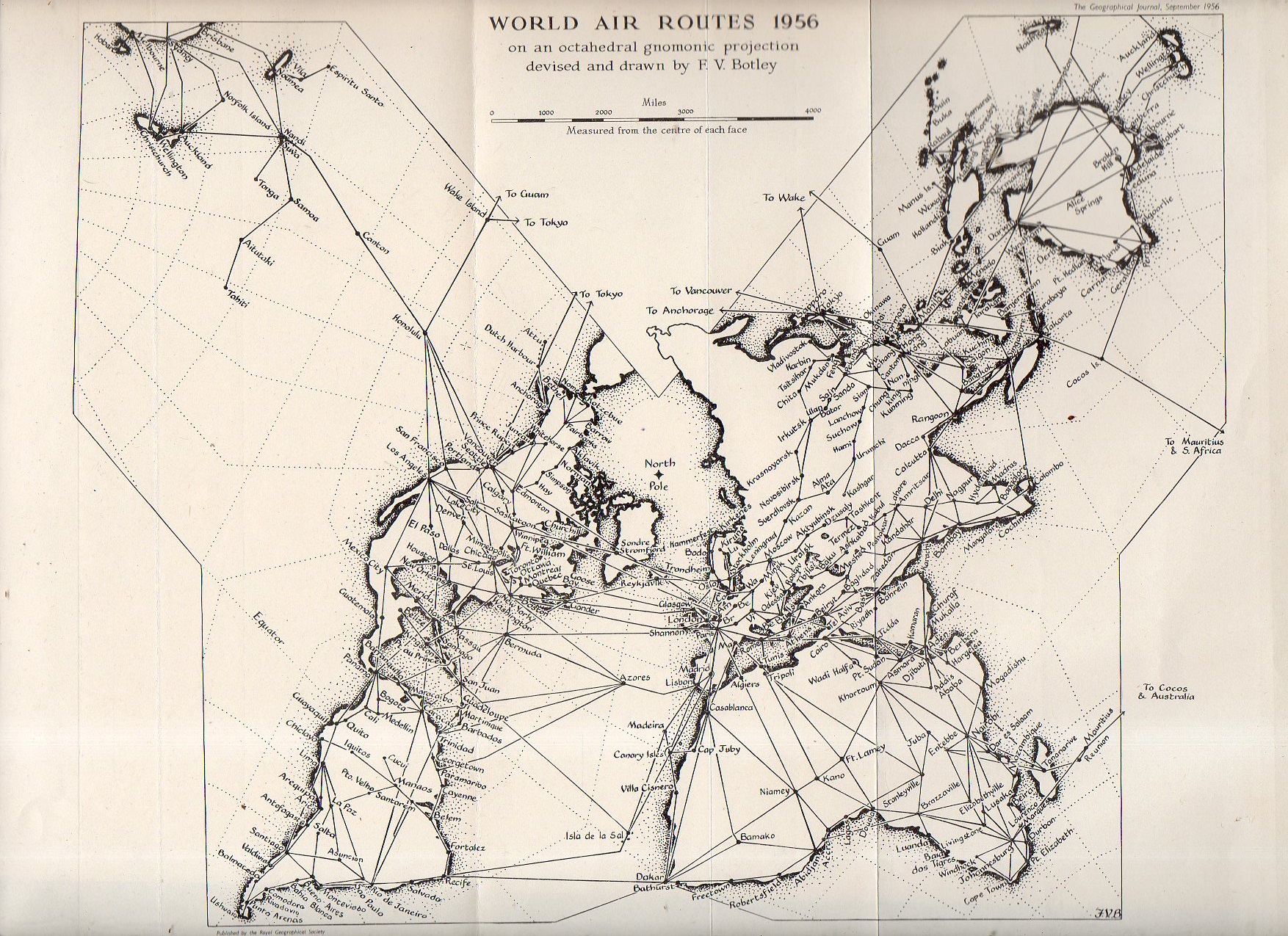
    Map, air routes806

    F.V. Botley’s map of international airline routes–interesting the author points out that the routes have stayed “substantially unchanged for the last two decades”. The (above) is based on a regular octahedron, which opens to a star-shaped design (in figure 2, below) and which is not truly related in the larger map–it is “an oblique gnomonic projection designed on this principle”, making it an easier read.  [Source: Journal of Geography, 1956, pg 397.]

  • Einstein in Paris, 1922

    JF Ptak Science Books   Quick Post 

    Einstein Gallica crowd

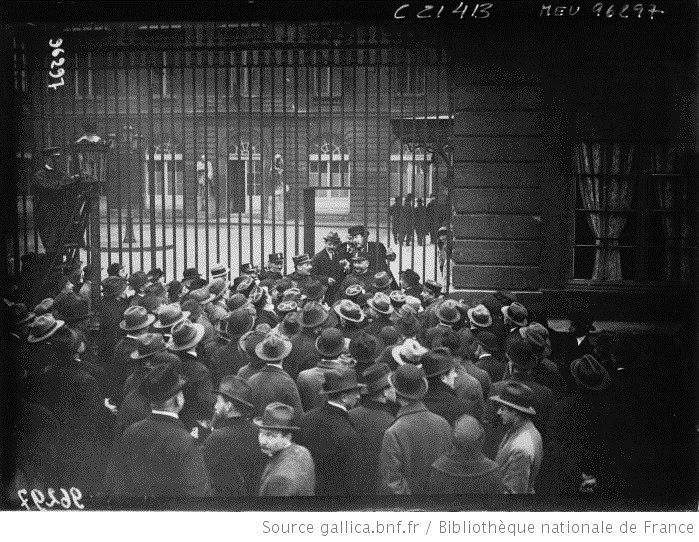
    [Caption: “M. Painlevé fait lui-même la police afin d’empêcher l’entrée d’un public trop nombreux venu pour écouter M. Einstein : [photographie de presse] / Agence Meurisse” Source: http://gallica.bnf.fr/ark:/12148/btv1b90546608.r=einstein.langEN]

    Here’s a photo regarding Einstein that I’ve never seen before: an image showing a crowd evidently being turned away from the over-capacity lectures by Einstein in Paris. The photo is undated but it must be from when Einstein was invited to Paris by the College de France (under the guidance and leadership of physicist Paul Langevin (1872-1946)) to give lectures and talks beginning March 31, 1922. Einstein was at the Sorbonne just a week later, on the 6th of April, where he also lectured. The photograph mentions “M. Painleve” (1863-1933), who was Prime Minister of France very briefly on two occasions and also a professor at the Sorbonne, so I assume that it is at the Sorbonne where this picture was probably made. I know for certain that attendance at the lectures at the College de France was by ticket only and which were scarce and did not meet demand, and I assume that the same was possible at the Sorbonne. (Since I have no familiarity with the Sorbonne looks like I assume that anyone who did would be able to tell me exactly where this entrance is…) 

    The trip wasn’t just roses for Einstein or the French or the Germans (in general)–this was just four years after the war and there were certain “patriotic” factions within France that did not want Einstein (the German) there; conversely there were also some elements in Germany who did not want Einstein to go to France. Einstein certainly had a lot on his mind for this trip, not the least of which was lecturing in French–though in that regard I remember reading that he said that “equations helped’ or something along those lines.  

    In any event, it is a great photograph.

    ·Posted by :

    ·in:

  • U.S. Air Service Map: is Part of the Country Raised, or the Rest Lowered?

    JF Ptak Science Books   Post 2422

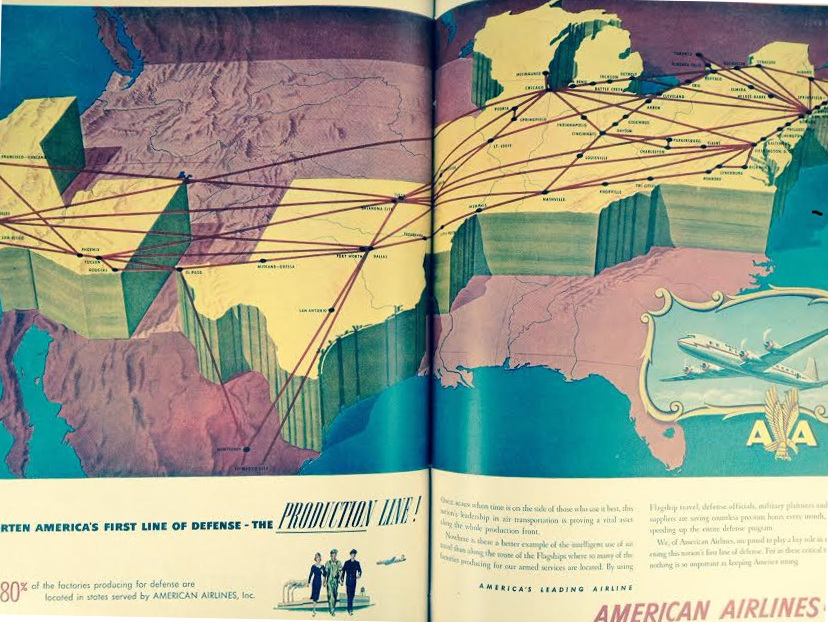
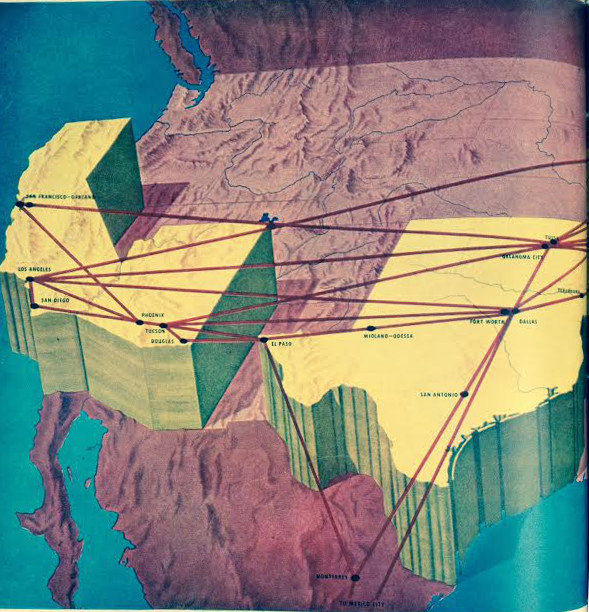
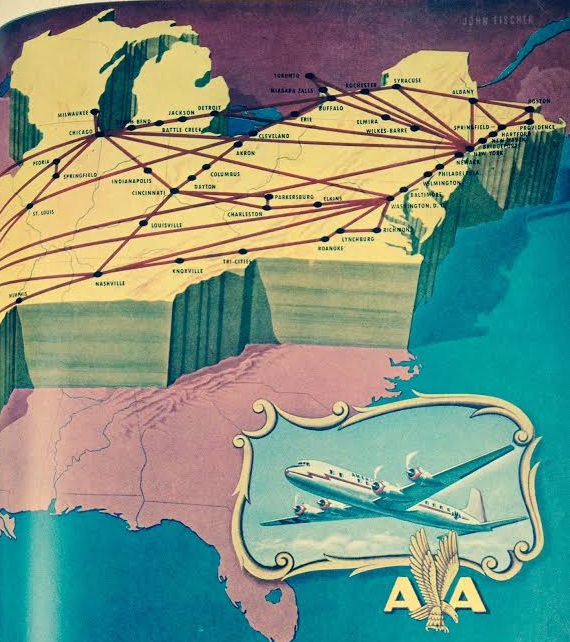
    Yesterday I posted a lovely octahedron map showing intercontiental air routes in 1956 (here). Today, looking in LIFE magazine for some images and a story about U.S. GI’s being exposed to nuclear blast tests I bumped into this unusual two-and-a-half dimension map showing domestic air routes of American Airlines (November, 1951).  The national service areas are chunked-up, given some enormous height, not making things very comfortable-looking for the Pacific W and northern Mid-West, and almost the entire South.  I guess the question would be, were the service areas heightened, or the rest of the world lowered?  

    Map--air route, LIFE mag


    The first transcontinental flight competition called for crossing the country in 30 days (for a $50k prize) and was accomplished in 1911. By 1933 the fist transcontinental through-flight (a one-day, not-overnight flight) occurred just 22 years later in 1933; only 5 years before this map was made was the first 1-stop service (1946), which is one reason why there are so many intermittent stops; it would be another two years (1953) for there to be non-stop service.  The of course the not-slow explosion of competing airlines and flights. 

    It is interesting to recall that the first transcontinental railroad for the U.S. was in 1869, and the first European transcontinental railroad was 14 years before that (in 1855), thus getting people across the country and continent 80 and then nearly 100 years ago.  On the other hand ,the first trans-Australian RR was completed in 1917–that was east-west. North-south is a different issue for Australia, which has been an historically very highly difficult crossing., In any event that line was not completed until 2004.  All things considered, I think, this transcontinental air business was extremely successful and fast, coming less than 50 years after the first Wright powered flight.  

    Map--air route, LIFE2 mag

    Map--air route, LIFE4mag

  • Babbage Obituary and Other Babbage Bits

    JF Ptak Science Books    Quick Post

    BBabbage portrait detail

    [Image source: Giants of Science]

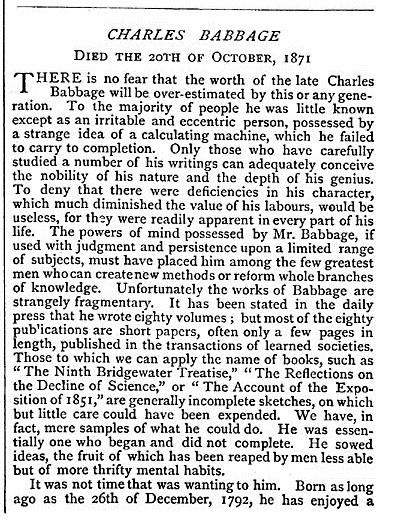
    Here’s a fine piece of work on Charles Babbage from a very early period (volume 5) of Nature–succinct and tight and only two pages.  (It was buried in the middle of the issue, which surprised me, as I thought he’d be placed up front rather than tucked into the middle. So it goes.)

    Some other bits on Babbage on this blog:

    • Poe, Babbage, and Thinking Machines, 1836 (here) 
    • The Broken Windows of Uncle Chuckles–Charles Babbage Figures Stuff Out, 1857 (here)


    NATURE Babbage obit

    ·Posted by :

    ·in:

    —
  • Nazi Propaganda Map of Communist Threat and Expansion, 1933

    JF Ptak Science Books   Quick Post

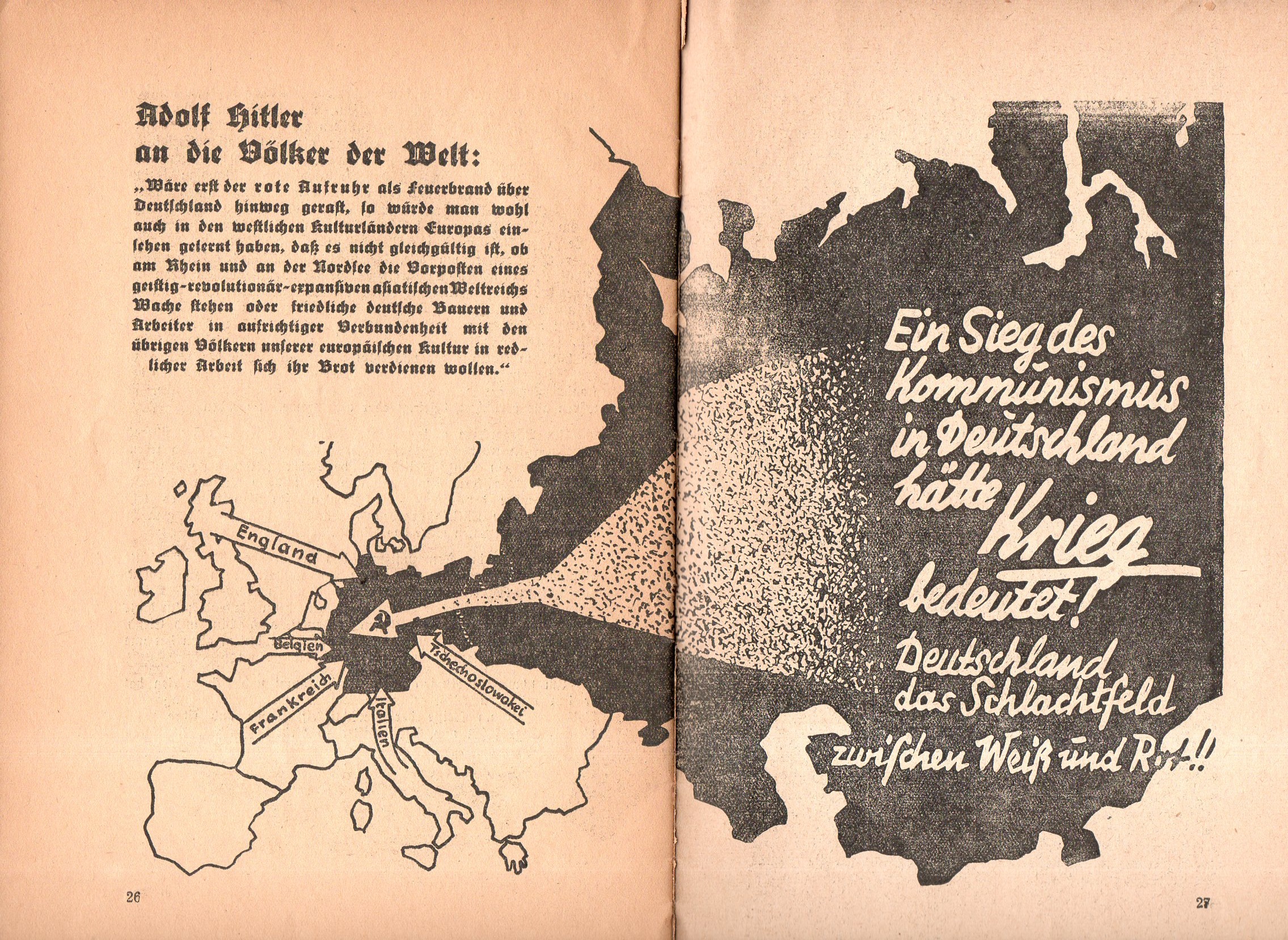
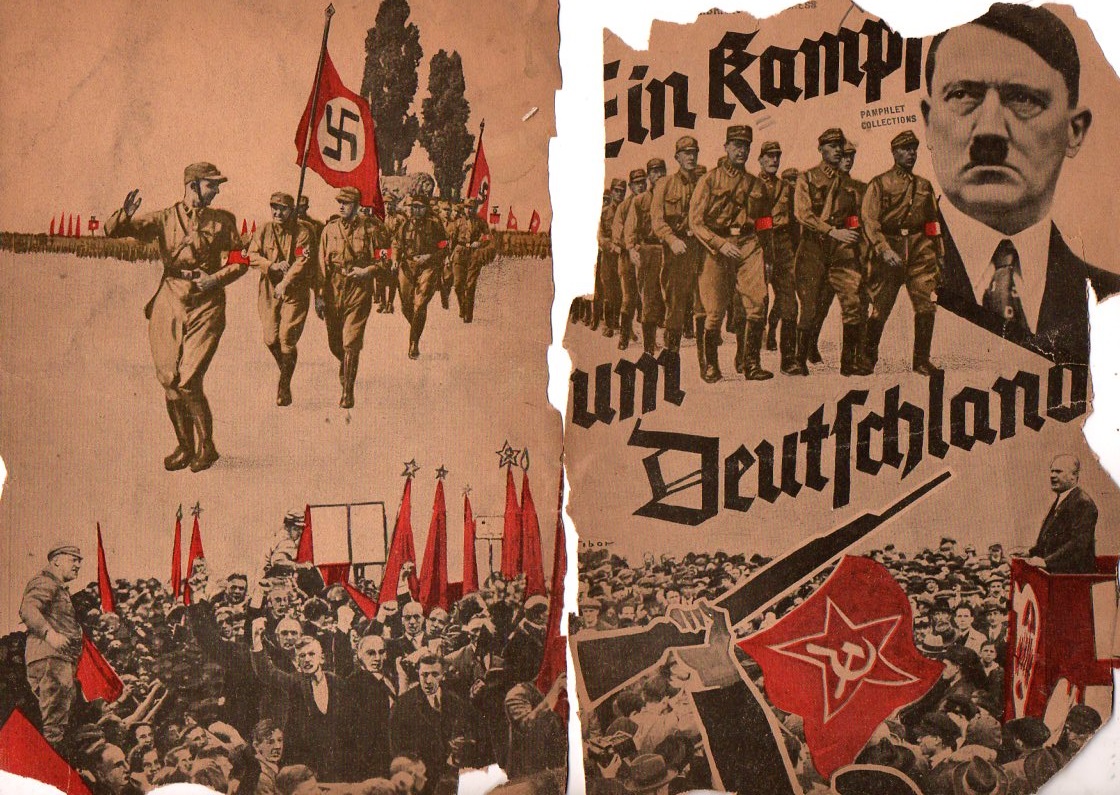
    Not long after Hitler’s election in 1933 this curious pamphlet appeared: Ein Kampf um Deutschland (1933), short and thin, is a  work filled with anti-Communist photos and images portraying them in as harsh a bad light as you could muster in 32 pages.One of the images is this map showing in no uncertain terms threats to Germany from the west, but most importantly a gigantic threat coming from the Communist east, the arrow striking right through the heart of Germany, with the hammer and sickle (the symbol only about 16 years old at the time) coming to rest just about on top of Berlin.  

    Nazi map communiast762

    For all of this Hitler would sign a Non-Aggression Pact with the Soviet Union six years later (22 August 1939) with the plan of dividing some Eastern conquests with the Russians.  Less than two years later came Operation Barbarossa, with Hitler launching a massive surprise invasion of the Soviet Union on 22 June 1941. Dozens of millions of lives later, it would all be over in four years.  

    And the opened cover for the pamphlet, or what is left of it:

    Nazi map communiast763

  • Reading the Floor: Wittgenstein, Vonnegut, Breton

    JF Ptak Science Books  Post 2423

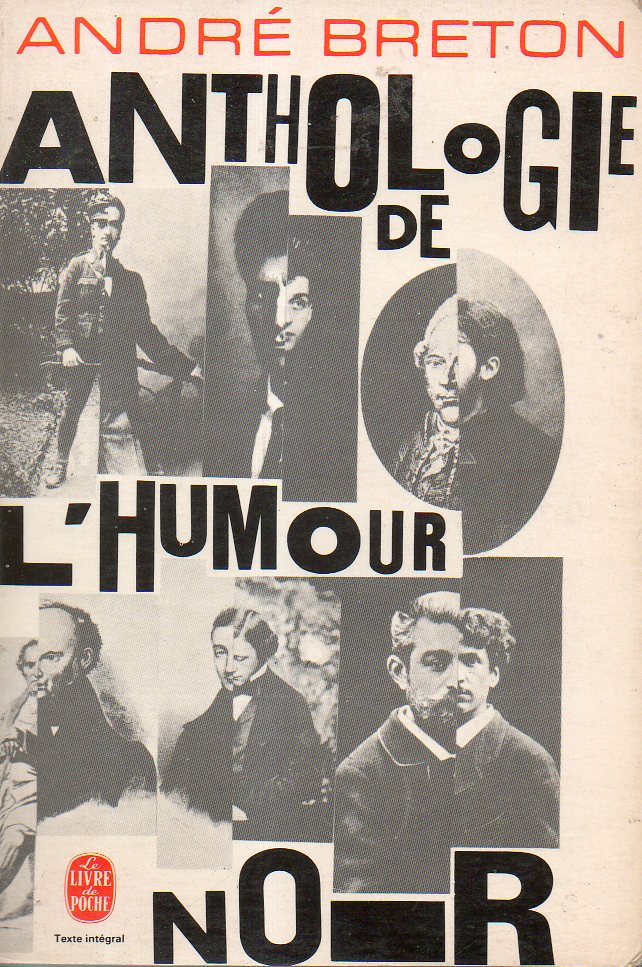
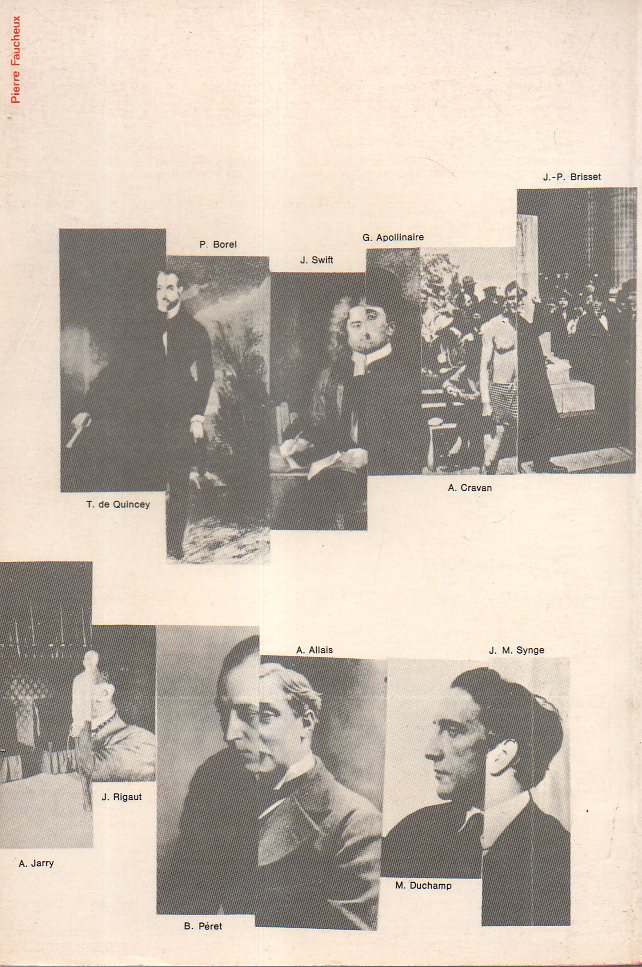
    Never pass the opportunity to pick up a dropped book.  Picking books up from the floor (in bookstores, libraries) has proven to be a definite education for me. It is where I first learned of the name of Ludwig Wittgenstein when I was (picking up the skinny Tractatus… which was not only on the floor but open and upside down, in D.C. in 1974), and the first exposure I had to Kurt Vonnegut (in the old Brentanos in Manhattan in 1969, finding Player Piano), just to name a few.  I know it would be interesting to make a list of all of the good and bad that I’ve found on the floor, but the lost books are lost to uncaring and neglect of memory.  One that came up just today is Andre Breton’s selection of Black Humor–found on the floor of a bookstore I can’t remember the name of but was on Rue Milton in Montreal in 1978. This was interesting because even though it was upside down it had an interesting rear cover design–flipped over it became a must-buy.  I’m pretty sure I had heard of Breton at that point but had never read him–and there he was, in an unusual-looking little paperback, waiting for me to buy it for two dollars. I bumped into this old friend this morning, moving a box to get to a pile of the journal Comptes Rendus…, and then losing sight of the Angelo Secchi papers on spectroscopy from 1866 I was supposed to find in favor of looking through the in-the-way box.  And in the bottom of the box was the Breton.
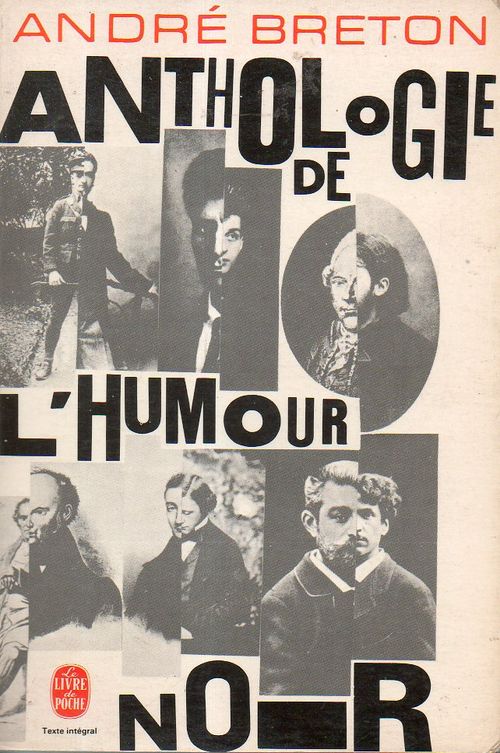
    Breton809[I like the “i” in “noir” most of all.]

    It was a collection of people who wrote wincingly and oddly and funny-bitterly, exposing things with uncomfortable not-sustained laughter.  Breton includes selections form the work of 45 writers, many of which I admit to having never heard of before, and a number of others whose names were under years of braindust, and most of which I cannot read now with my mostly-failed French.  

    The book was published in 1940 and was immediately banned by the Petain French State government of occupied and controlled France, the government that was known more familiarly known by the name of the town in which the government’s center was in, at Vichy. Breton (1896-1966) escaped France and spent the war in the U.S. and Canada and the Caribbean, but returned to Paris in ’46 and saw his anthology (one of his many books) back into print in 1947.  It was re-issued in 1966 (my copy) as the “definitive edition”, though I am not sure that it is any different from the two earlier printings.  That’s okay, because it was Breton who moved out of Dada to found Surrealism, so he can say what he wants to say while saying it and not saying it.  
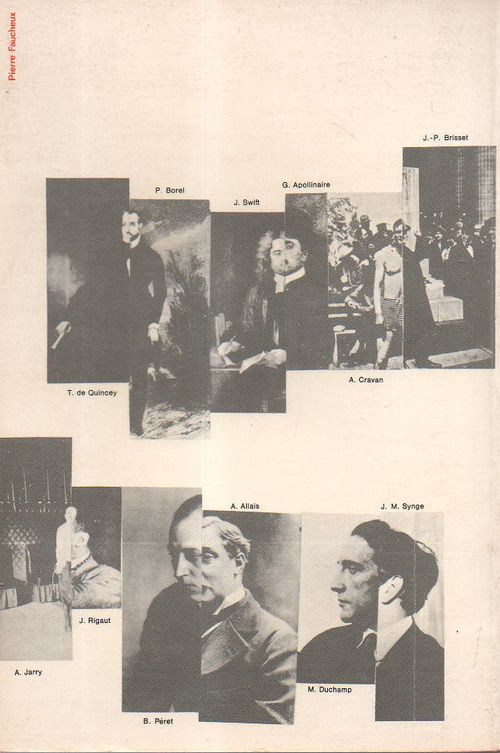
    Breton810

    Good French or bad, the references are still very useful–so far as I can recall, all of these writers were worth pursuing.  (I left Picasso off the list even though he is represented in the collection because, well, I just don’t like or need him.)

    I’m certain that Breton would approve of this floor-reading education.  

    ________

    And by the way some give the term “black humor” to Breton.  It is much older than that in the history of medicine, as a bilous, disease-causing agency. (For example, it is found in Shakespeare Love’s Labour’s Lost i. i. 228   “Besedged with sable coloured melancholie, I did commende the blacke oppressing humour to the most holsome phisicke of thy health-geuing ayre”.) It may well be: the OED finds an obscure 1916 reference using the term as it is intended today (“C. V. Stanford & C. Forsyth Hist. Mus. x. 212   They [sc. Russian songs] give utterance to a ‘yearning without hope’… Humour there is. But it is the black humour of the drunken headsman”) and then another for 1951.  No mention of anything in the mid-ground.  Perhaps it is the first common usage of the phrase…

    The contributors:
  • A Picture of the Near-Future: Czechoslovakia, 1938

    JF Ptak Science Books   Quick Post

    Czechoslovakia 1938813

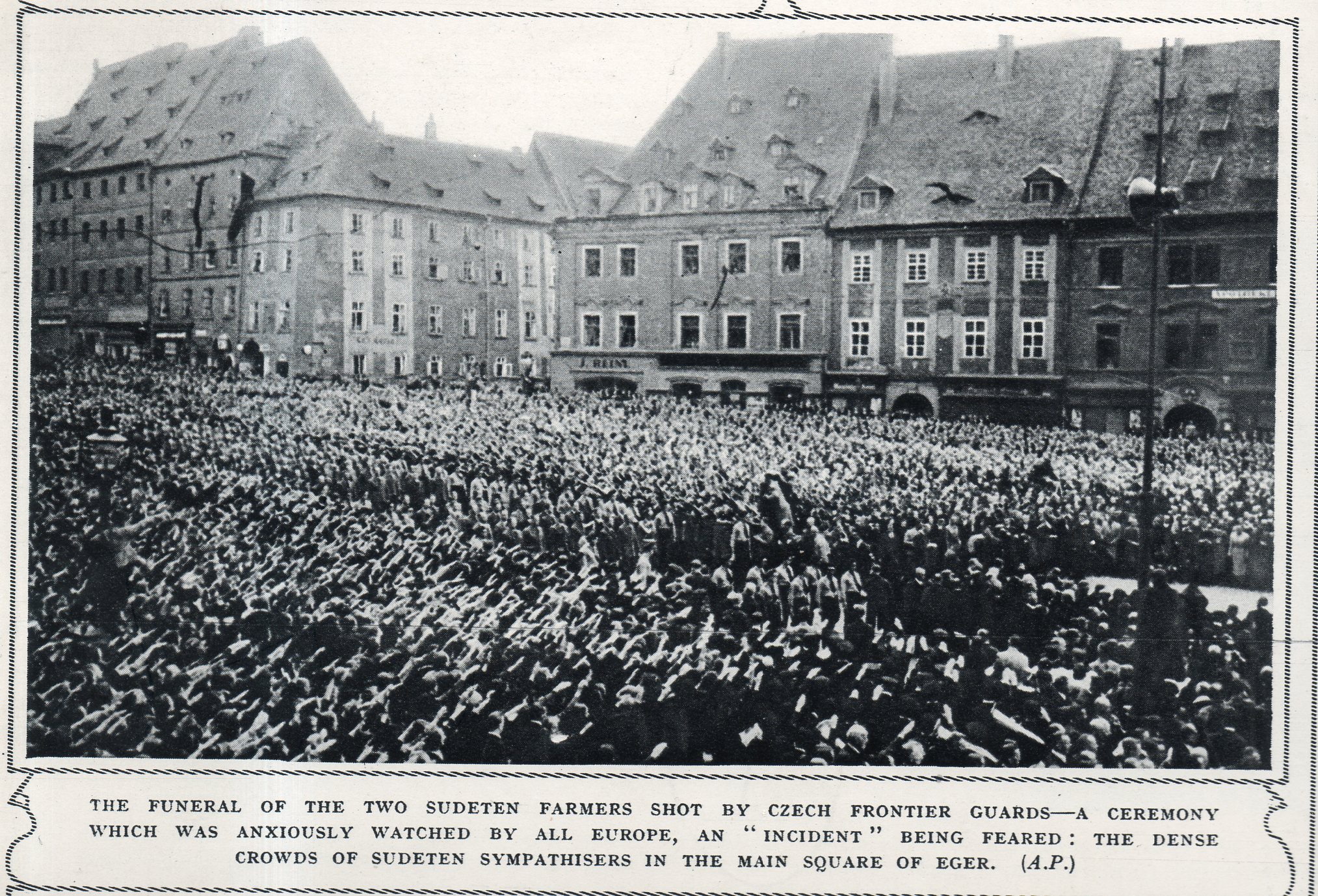
    This is a picture of the future–the main square, Eger, Czechoslovakia in June 1938, from the page of the Illustrated London News.  It depicts the massive outpouring for two slain Sudeten farmers, supposedly murdered by Czech border guards. If you look a little closely, you’ll see that everyone is giving the Nazi salute.  This comes just a few months after the Nazi seizure of Austria in the Anschluss (March 11-13, 1938), and a few months before the Sudetenland was handed away to Hitler in the Munich Agreement (September 29, 1938). Then it would all be over.  

    It is a picture of the future–the very near future.  Hitler would be in that same square in a few months, on a “goodwill tour”; the next year he would return as the conqueror. Six years later, the war would be over, and the great figurative majority of the people in this photo would be gone. 

    It is a big picture of a big group of people making a big mistake.  

    Czechoslovakia 1938811

  • The Incidental Absurdity of Near-Nothingness

    JF Ptak Science Books  Quick Post     Part of the Unintentional/Incidental Absurdist series

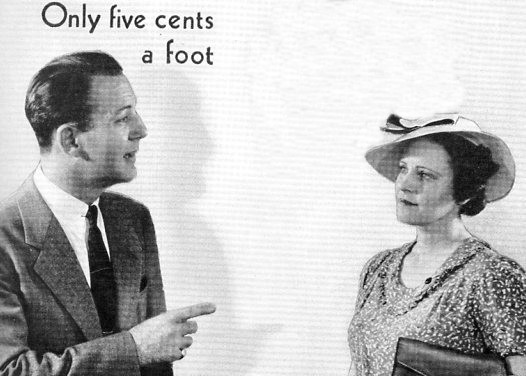
    Sometimes there’s nothing better in finding the absurdity in quiet mundane than actually finding it, rather than creating it. This is the case with the following images, all of which have a certain flat, blatant, absurd quality to them–for their conversation (or lack of it), poses, stares, direction of vision, and so on.  All of them come from “Maintaining Good Relationships” a chapter in the provocatively-named Tested Selling Methods (1939).  None of the following conversations say very much, and on the face of them (presented without their captions) most are about nothing, or seem to be.  

    Women of course are approached differently from the men, almost like children, though mostly salesmen were warned to place women in the position of making decisions for the household.

    Seems like good postcard material to me.  

    Sales822

  • My Two-Cent Opinion on the Penny and the Diminution of the Number 9

    JF Ptak Science Books  Quick Post

    Commie pamphlet decomposition476

    My friend Jeff Donlan  (who writes a fine and insightful blog, At the Library) cent (ha!) me this  article on the false tyranny of the penny–rather it is about getting rid of the penny, which the author claims has run its course of usefulness, swallowed by the history of economic need for it. Maybe it takes more money to deal with the one-cent piece than it is worth, I don’t know–the author of the article goes through that along with a short history of other currencies dumping their minuscule and antiquarian denominations.  

    What I wonder about is what happens to the number “9”?

    My made-up statistical reference notes that about half of all prices on all the stuff in the U.S. use at least one nine; many use two.  What happens to people excitedly advertising “,..and all your’s for only three small payments of $19.99!!!  And what about gasoline prices which are $2.89 and 9/10?  Assuming that we keep the nickel, prices will have to re-adjust to accommodate the five-cent piece, dropping the “9” in millions of prices.  No doubt tens of millions of people will think that prices have been raised across-the-board.  

    And what will we do with this enormous surplus of 9s? 

    Seriously though why not just get rid of the whole lot of less-than-a-dollar currency?  I know that would be very problematic, but no doubt it there will be less time between the introduction of the penny to its demise than there will be from now to the elimination of all coin-and-paper currency,  After all, in for a penny, in for a pound.  

    ·Posted by :

    ·in:

  • A Review of Dirac’s Quantum Mechanics (2nd Ed)

    JF Ptak Science Books   Quick Post

    Years ago when I still had a big, open bookstore specializing in books in used/rare physics/maths I had several bookcases dedicated to quantum mechanics. In general I had the standard works and great classics, and few were more “standard” and “classic” at the same time than P.A.M. Dirac’s  Principles of Quantum Mechanics.  

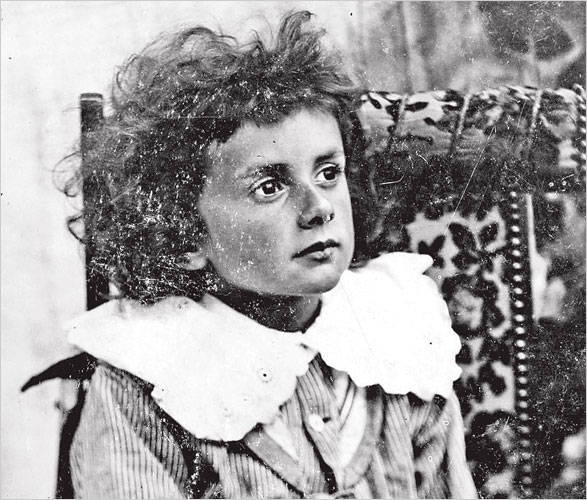
    Dirac in 1907

    [Paul Dirac (1902-1984), in 1907, Image source]

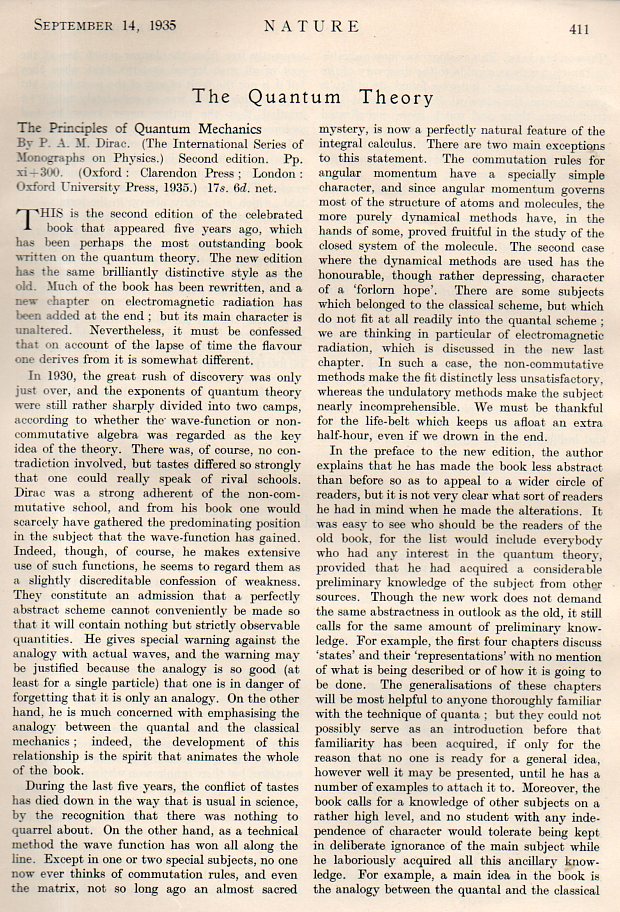
    On rare occasions I would have all four editions (the first of 1930 is very scarce and valuable nowadays) but usually there would be editions 2, 3, and 4. In order to respond intelligently to the differences between the editions I went to the library and photocopied reviews of each (this in the pre-intertubeweb days).  Today I managed to bump into the most interesting of the reviews (for the second edition of 1935 and published in the September 14, 1935 issue of Nature) which I reproduce below.  

    Direac qt 830

    ·Posted by :

    ·in:

  • Einstein and Fermi Immigration Papers, National Archives

    JF Ptak Science Books   Quick Post

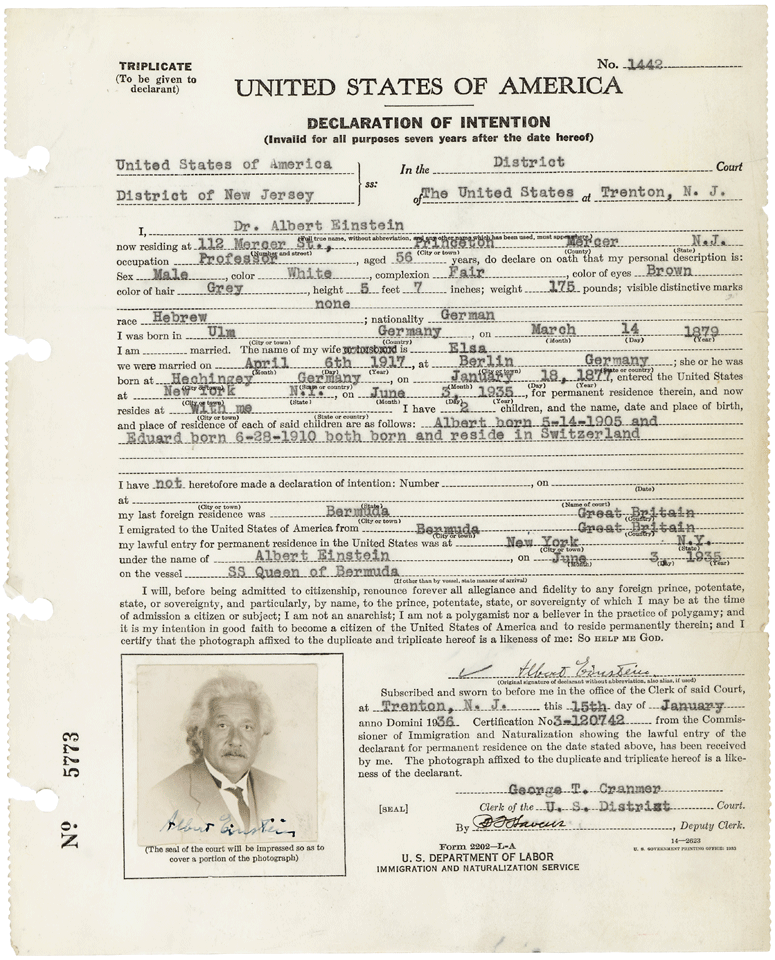
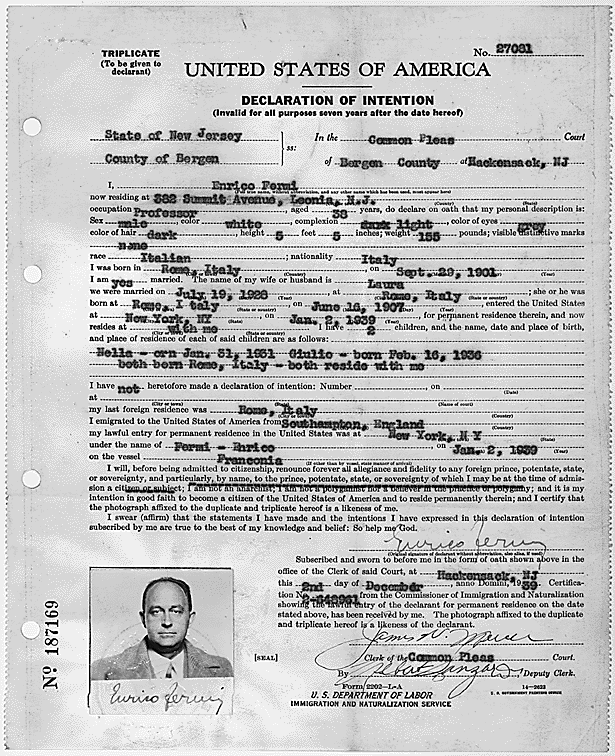
    Below are two immigration reports for Albert Einstein and Enrico Fermi–interesting how the Einstein is simply torn away from the loose leaf binder.  

    Immigration Einstein

    Albert Einstein, Declaration of Intention for Immigration

    Source: National Archives: http://research.archives.gov/description/596270

    Immigration--Fermi

    Enrico Fermi

    Source: National Archives: http://research.archives.gov/description/281852

    ·Posted by :

    ·in:

    —

Recent Posts

Archives

Categories