A Daily History of Holes, Dots, Lines, Science, History, Math, Physics, Art, the Unintentional Absurd, Architecture, Maps, Data Visualization, Blank and Missing Things, and so on. |1.6 million words, 7500 images, 4.9 million hits| Press & appearances in The Times, Le Figaro, Mensa, The Economist, The Guardian, Discovery News, Slate, Le Monde, Sci American Blogs, Le Pont, and many other places… 5000+ total posts since 2008.

  • The Found Poetry of Gustav Eiffel’s Labor Relations (1888)

    JF Ptak Science Books                                   

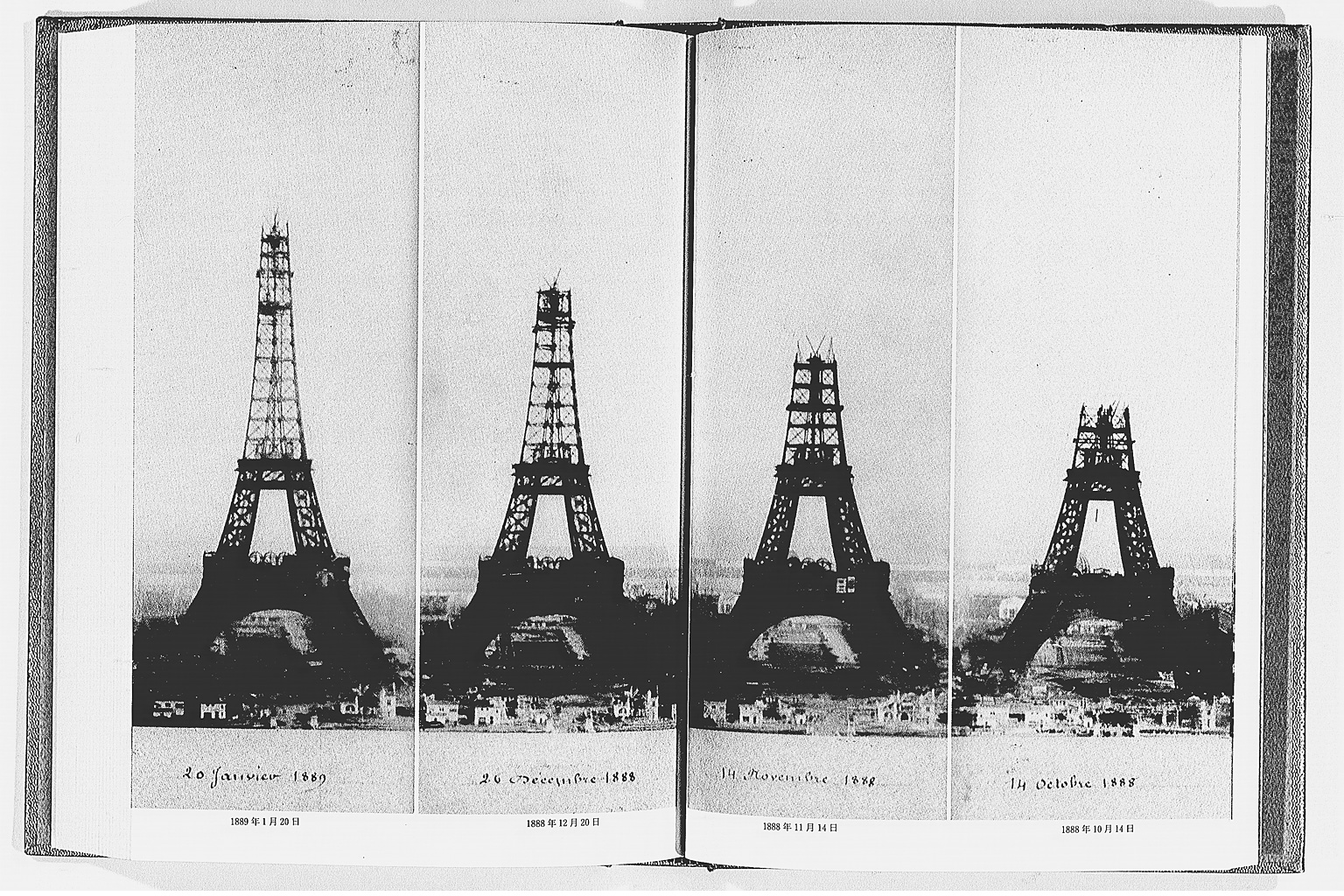
    Eiffel tower under construction sequence[Source; http://www.ndl.go.jp/exposition/e/data/L/158-002l.html]

    This is another in an uncertain series on Found Poetry (a cousin to the Found Book Art series), with this fragment found in the history of technology/labor relations category.  IT seems that in the early and problematic history of the remarkable Eiffel Tower, M. Gustave Eiffel had a few problems with his workers constructing the tower.  Soon after a three-day negotiating session ending the strike of September 19, 1888 (in which workers asked for a four-cent per hour pay increase and where Eiffel slowly met their demands but parsing the raise out one center per month for four months) there was another attempt at a strike, just before Christmas of the same year.  One of the demands floated by Eiffel et Cie was that the workers engaged in the construction at greater heights should receive a higher pay, what with the rain and wind and the possibility of a fatal trip-and-fall.  Eiffel responded with the following efficient answer, set here to some sort of metre:

    The professional risks remained

    the same

    whether a man fell from 40 meters

    or from 300 meters,

    the results were the same–

    certain death.1

    This was a winning argument, and kept his workers working without compensation for working at a higher height,  and the tower’s completion on schedule. 

    Notes:

    1.  Eiffel’s Tower, by Jill Jones, Penguin, 2009, pg 49.

    ·Posted by :

    ·in:

  • Wood, Metal, Cubes, and Words: a Few Story-Machines since Gulliver’s Travels

    JF Ptak Science Books   Post 2579

    Over time I’ve encountered a number of ventures into the future of the future in which writing has become an automated or semi-automated activity, in their antiquarian constructions being made of wood and metal rather than nanobots and biological bits. A famous example is viewed by Jonathan Swift’s  Lemuel Gulliver in Laputa, where he finds a conversation machine, a vast assembly of word cubes set in a 400 square foot frame manipulated by 40 cranks and 40 handles and run by 40 philosophical operators.  There was also the thinking machine of Raymond Lull (of many different spellings) that was so beautifully address by Jorges Borges (“‘Ramon Lull’s Thinking Machine’ in The total library: non-fiction 1922-1986, on pp 155-160), and numerous others, some becoming steam-driven by the time of the early 19th century, and them others computer-inspired as we get into the Asimov-age. 

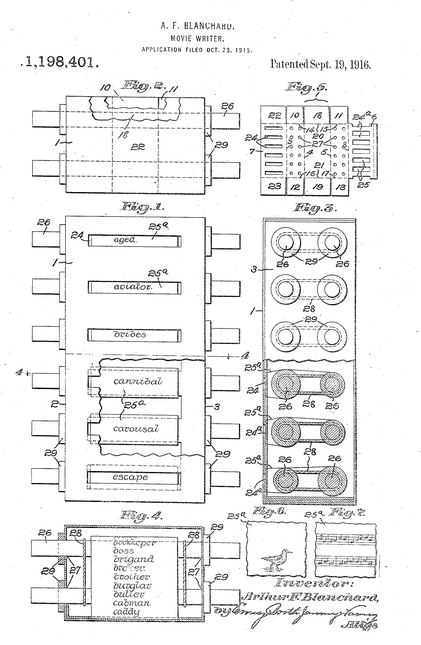
    I was moved to comment on this by a good reference made by Jennifer Ouellette (senior science editor at Gizmodo) to an article by a Gizmodo writer, Anna Green, on Arthur F. Blanchard’s (1865-1953) random story generator patent of 1916.  It is an interesting and lovely thing, lots of words of lots of rollers all working in combination to help formulate a struggling idea in the mind of a writer.  Well, actually, Blanchard writes in his patent description that it was an aid to movie writers, specifically, a kind of idea machine that would help folks with insight into creating a story for a 16-minute tale.  Of course the story might have been a little more interesting had Blanchard made the claim that his ideas for this machine were the product of a similar machine that was lashed together for the production of technical ideas. 

    In this same line of roller-and-paper idea generator I formulated a simple but distinctive device for creating the More Deconstructionist You in “Greasing the Turtle Stack: Derrida’s 10-Second Sentence-Generating Machine” (here)–this would be a fun little generator to make if the outcome wasn’t so useless and pointless, so best leave it as a two-beer bar stool idea.

    Blanchard’s idea seems to be one of the early appearances of word-generators on rollers/cards found in the collection of the U.S. Patent Office.  And so the “Movie Writer” of Albert Blanchard:
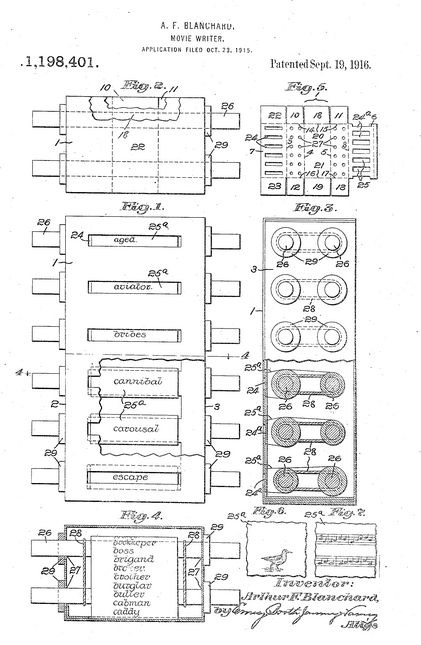
    Story machine _e_[Source:  U.S. patent US1198401, 23 October 1915, 19 Sep 1916, Arthur F Blanchard, Movie-writer at Google Patents ]

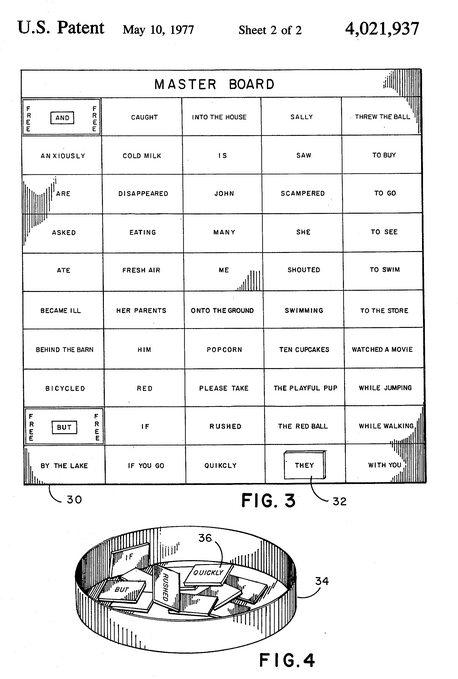
    Later on, the idea–still tried and true, or at least so on paper–came this for the “Educational Game Apparatus”, which was intended again as a spark for creative writing:
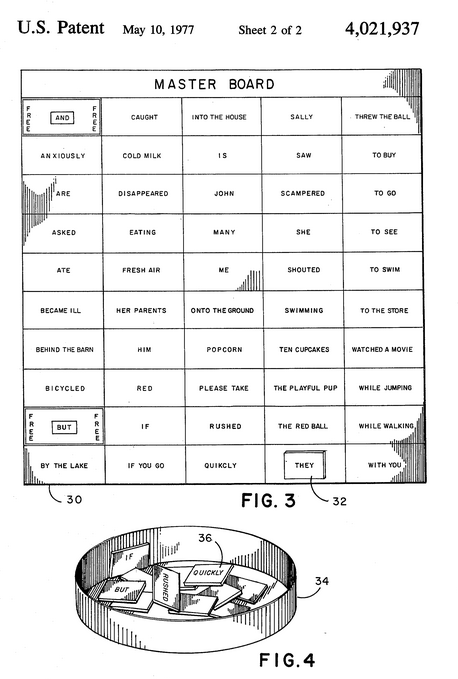
    Story machine patent _c_

    [Source: U.S. Patent US4021937, 2 Sep 1973, 10 May1977, Margery Dena Kravitz, “Educational game apparatus”]


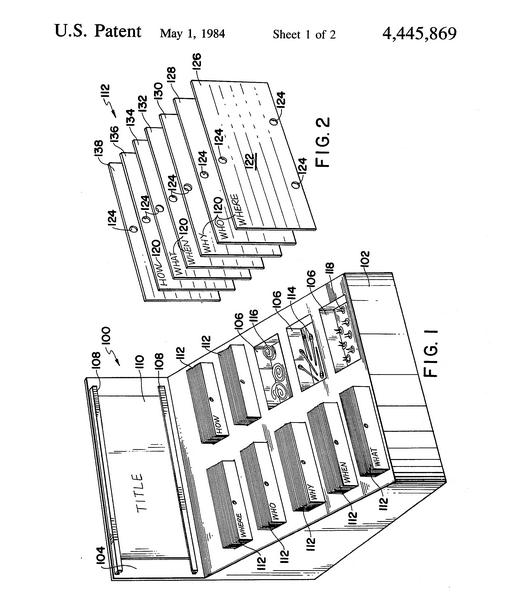
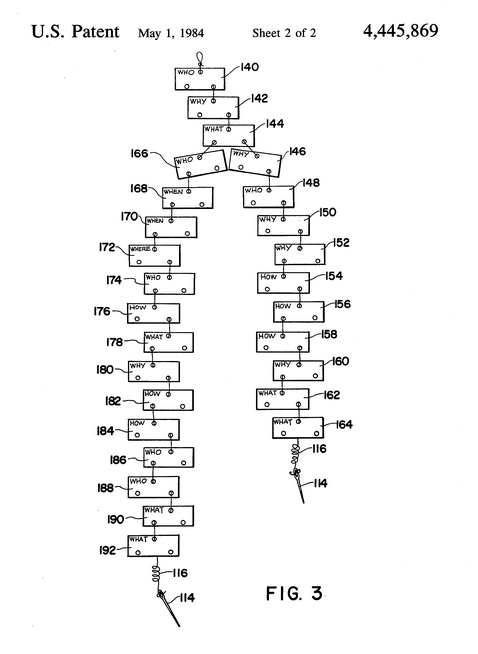
    Still later was this word-o-paper-arranger “Teaching method apparatus”,  a card-based bit that helps jostle ideas by presenting semi-random words to help the student create stories around them:
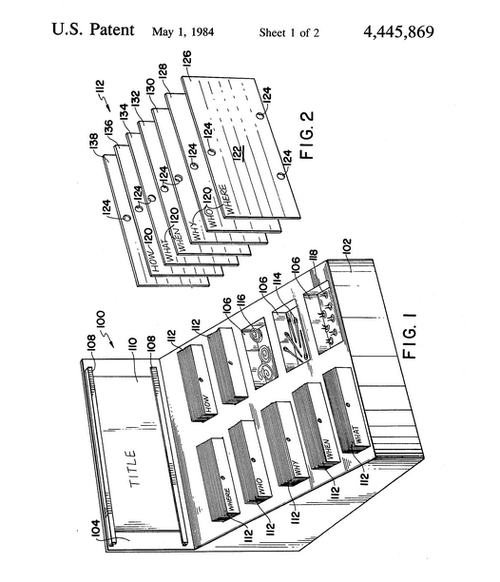
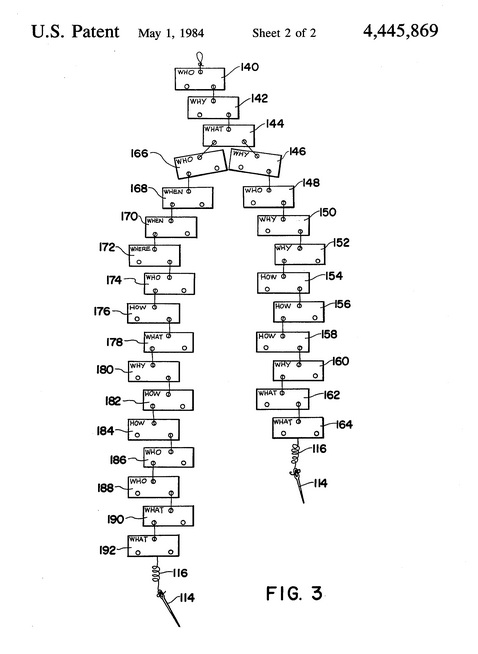
    Story machine patent _a_


    Story Machine patent_b_[ Source: U.S. patent US4445869     Nov 9, 1981    May 1, 1984, Wasserman Myrna D., “Teaching method and apparatus”.]

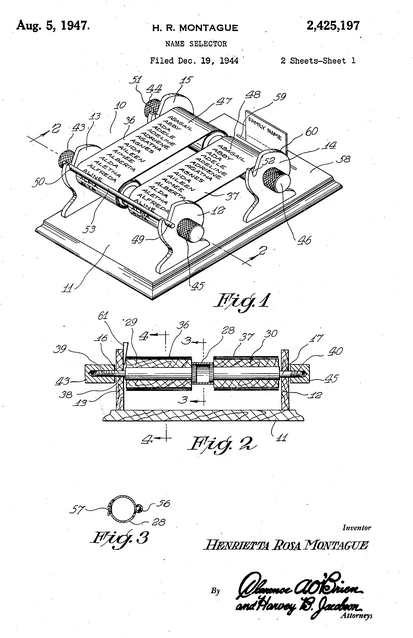
    The “Name Selector” is a simple version of some of what we see above:
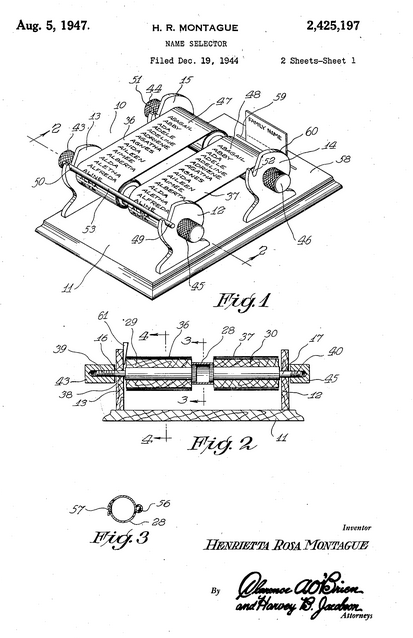
    Story machine _d_[Source: U.S. Patent, US2425197 A   Aug 5, 1947, Rosa Montague Henrietta,   Aug 5, 1947   Name selector]

    No doubt there are more of these patents using this idea of single-words-on-bit-of-paper, but this should do for now.. 
  • The Great Green Eye and l’Espirit Humaine (1938)

    JF Ptak Science Books  Quick Post

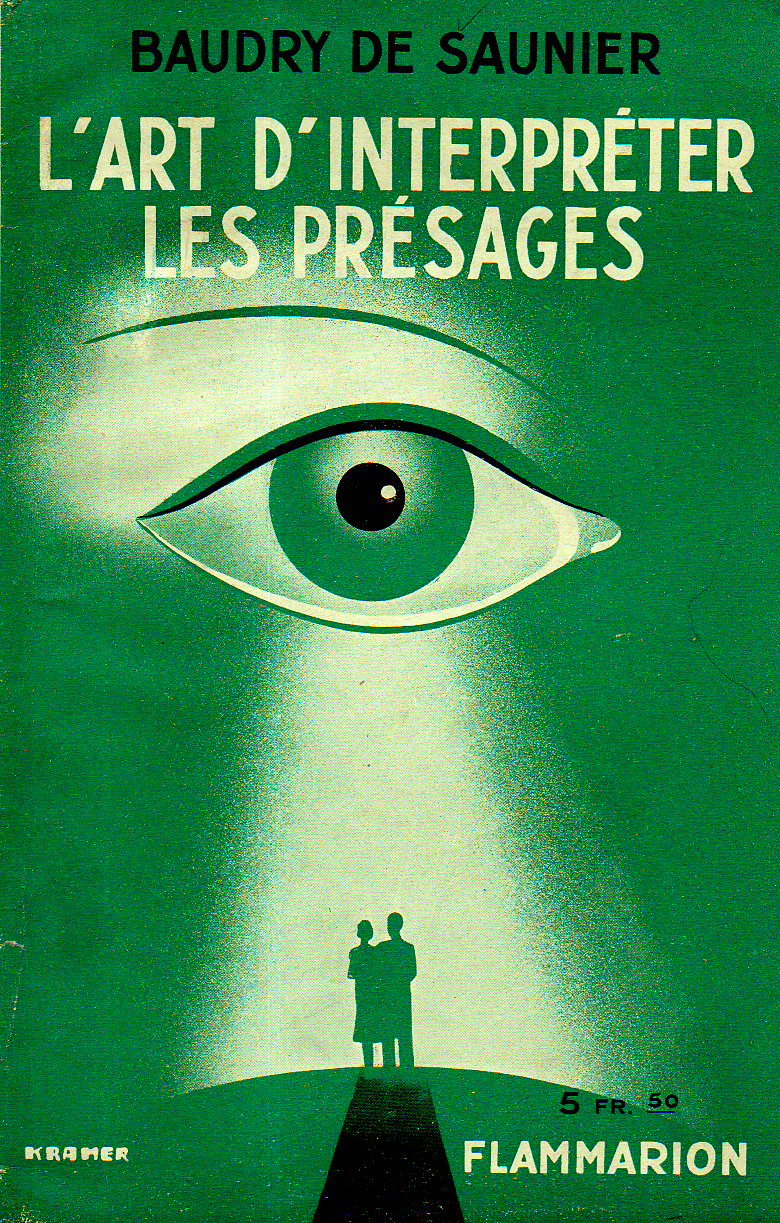
     The author of this attractive (looking) pamphlet seems an interesting man, and evidently was a busy and highly productive popularizer of science. I don’t know his work at all, but looking at some of his books tells me that he was on the scene early and often for several technological breakthroughs. For example, he has several works on the bicycle (Cyclisme théorique et pratique,1892, Les recettes et procédés vélocipédiques 1893,  Suivis de l’Art de la bicyclette, 1894); plus a very early book on the automobile, (L’Automobile théorique et pratique and Traité élémentaire de locomotion à moteur mécanique,1893,  followed by  L’Automobile théorique et pratique II, Voitures à pétrole, 1899); and then another early book on the aeroplane (Éléments de locomotion aérienne,‎ 1907).

    This nicely-designed pamphlet with the provocative cover (the work of “Kramer” in 1938) seems though to have strayed from the mark, resting for a while on the slim shoulders of popular interest in a person’s interpretation of symbols and what they revealed about the viewer, for the “formule de l’espirit humain”.  The book is arranged well, and has a dictionary of sorts of what people saw in Rorschach-like inkblots and what those interpreted images meant.  Ah, well, the cover is great, and one does not often see a big green eye on a tall French pamphlet, and so the cover design is good enough for me, soft&squishy contents or not. That said there are some interesting section headers, like “Do Not Confuse Messages and Beliefs” and “Good or bad, not everything is lost”. 

    Cover design big eye de saunier365

    ·Posted by :

    ·in:

  • On B-17s & Death–from the Other Side (Vichy France, 1943)

    JF Ptak Science Books   Post 2580

    The U.S. bombing raid on Schweinfurt–the location of a German ball bearings complex–on October 14, 1943, was the most devastating loss of life and aircraft suffered by the USAAF to that time.  In the week prior to the Schweinfurt raid there were already enormous losses, more than 90 B-27s lost in three missions.  Of the 351 B-17s that started the mission on the 14th only 228 actually made it to the target–some dropping out of formation and some being shot down–at the end of it all some 60 planes came down over Europe, 5 over England, and another 17 were damaged beyond repair. Bombs were delivered to the target, though without great success, the factory being up and running again after a few weeks. It was a disaster. 

    B-17 Schweinfurd _a_ 367 B-17 Schweinfurd _b_ 368

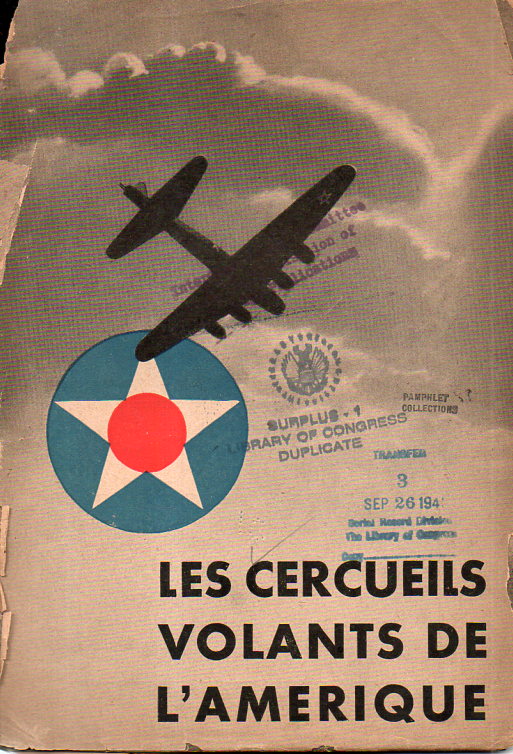
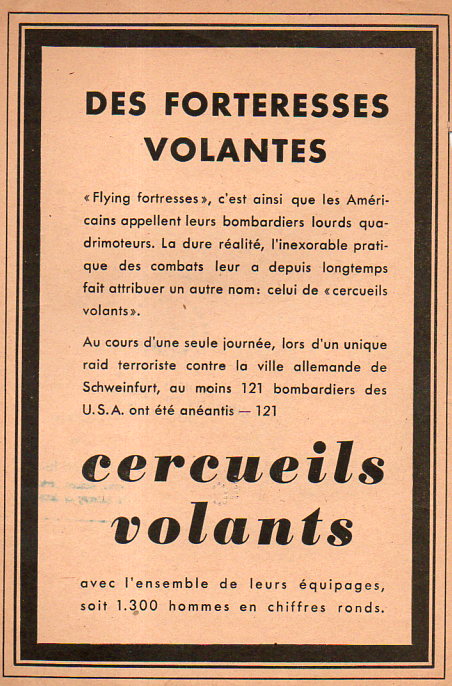
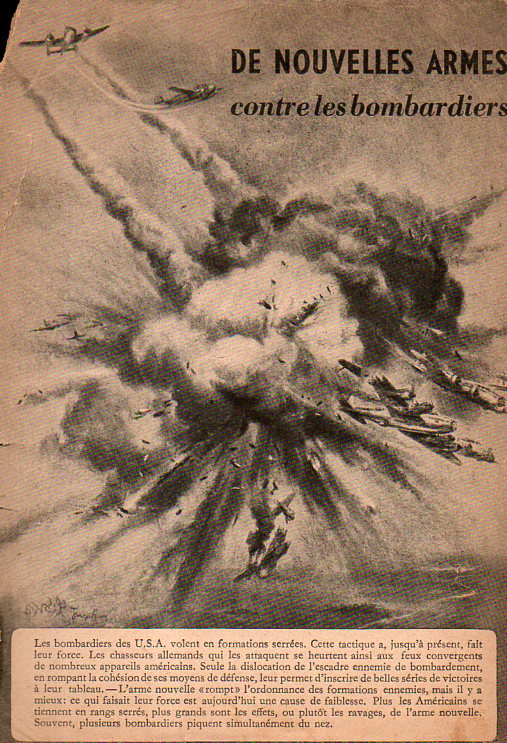
    The Nazis working no doubt through the Vichy regime in France produced a quick little pamphlet on the raid, Les Cercueils Volants de l’Amerique, a play on words, working the “Flying Fortress”  into the “Flying Coffins”.  In 1943 the Lutftwaffe was still formidable, though that would not last for much longer, the Allies gaining more-or-less uncontested control of the skies by Overlord, though with Schweinfurt (which translates to “Pig Crossing” or Pig Ford” or something along those lines) more than 300 were sent aloft.  In any event the Nazis sought to make good use of the disaster for their French readers.

    There are a number of pictures at the centerfold depicting dead and maimed U.S. fliers, and a lot of words about how much it will take to replace the aircraft, and the crews, and the bombs that were “wasted”, and so on.  And that the German resistance to Allied bombing raids were making inroads and will eventually save the day.  They were wrong of course, what with the astonishing industrial base in the U.S., and the state of the dying Nazi war machine.  (After everything was said and done, Schweinfurt was bombed 22 times during the war, receiving something like 590,000 bombs; there seems to have been no real effect on the important production of ball bearings, and for whatever reason the German military seems not to have been in desperate need of them at any point. The town of course was decimated, and a thousand or so civilians were killed, but ball bearing production seems to have not been affected, overly.)  It is a nasty little pamphlet. [Evidently this is a rare work–only one copy is located in WorldCat, at the Bibliotheque de Documentation Internationale Contemporaine Nanterre. I should probably reproduce the whole thing right here, but some of the images are pretty disturbing…maybe I’ll do it later.]  

    Also: the page at upper right claims different numbers of planes shot down (121) as well as aviators killed (1300) but that is the job of propaganda. That, or they just got it wrong.  The reports from the gunners on the B-17s recorded many times the number of Luftwaffe planes shot down than actually were–this could be due to several/many gunners shooting the same plane, and so on.


    B-17 Schweinfurd _c_ 369

     Notes:

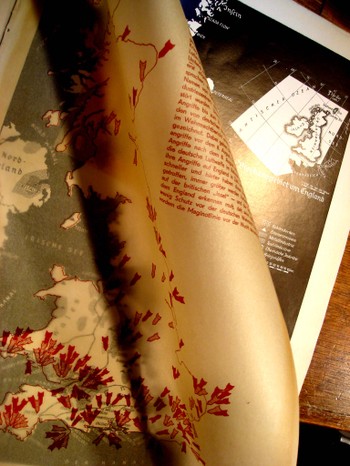
    Years ago on this blog I wrote a short piece on the bombing of Great Britain as reported in the Illustrirte Zeitung–it is worth a look. https://historyofideasblog.com/thesciencebookstore/2008/03/bombing-england.html

    Dsc04741


    ·Posted by :

    ·in:

    —
  • A World Map of Heavy (1922)

    JF Ptak Science Books  Quick Post    Part of the Maps/Diagrams of Imagination & Ideas series

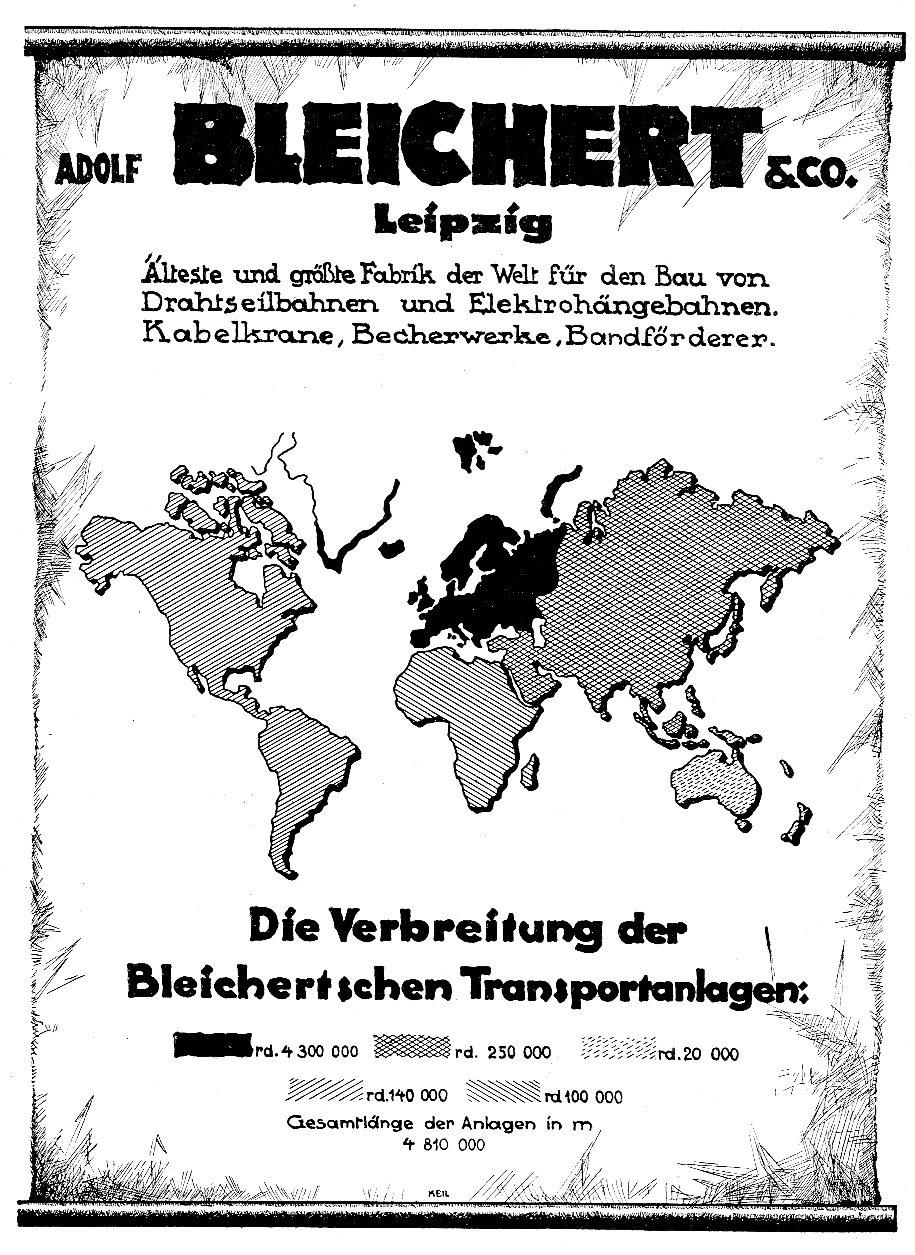
    There have been dozens of posts on this blog about odd/unusual maps, including a number in a sub-category of world maps used in advertisements. This one, for the Adolf Bleichert Company of Leipzig, showed the reach of the company’s distribution of some of their major products, like cable cars, cranes, tramways, elevators, and the components for them. The map, typeface, and general design have a heaviness to them corresponding to the very heavy metal that the company produced.  The ad appeared in the August 22, 1922 issue of Illustrirte Zeitung (Leipzig), and occupied the entire cover of the news-weekly. 

    Map of cable370

  • Balloons I Know But Do Not Love–Deaths from Above in Ads and Bombs (Revisited)

    JF Ptak Science Books   Post 1771 (b) (from 2012)

    In the early days of aviation aerial assault must have seemed incredible–and an abomination.  Hurling stones and other offensive weapons by trebuchet and catapult is one thing, and  launching balls and shot from cannons and mortars is quite another–but actually having your weapon flown over an enemy’s position and dropped, remotely or via cable, must have been ab excruciating achievement, militarily speaking.  To be able to direct an explosive charge over a position not reachable by an infantry (say in 1915) must’ve been a short-lived comfort on the offensive end, though the user of such a technology would also have to contend with the contrary, as the enemy would be able to do the same thing themselves. 

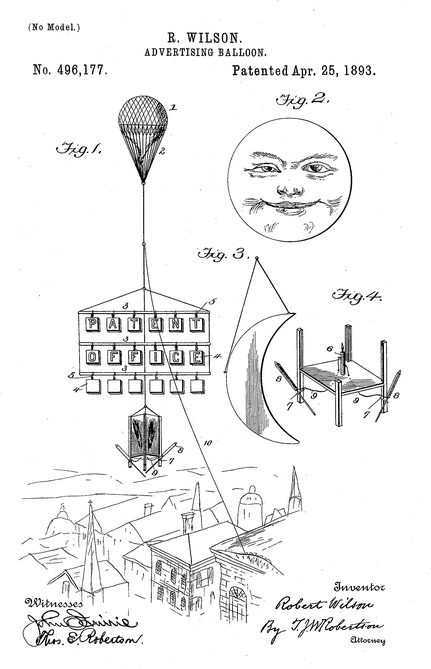
    This idea was not limited to just military purposes.  Companies could now wage an advertising war war against competitors  in a thee-sky’s-the-limit campaign, hoisting their ads on balloons anchored over a city, making it possible for the first time to have your message so universally read, a pre-intertubes version of smoke signals. 

    Patent balloon advertising 1893[Source:  Google patents, http://www.google.com/patents/US496177?dq=balloon]

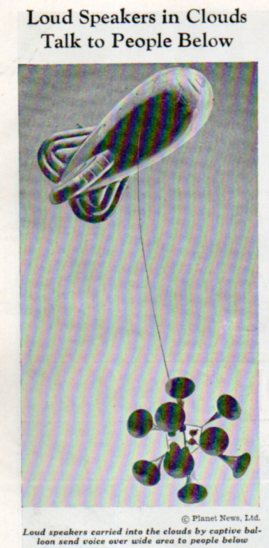
    Sky speakers413

    And this, seeming more on the Orwellian/1984 side, or perhaps more contemporary as an instrument of the Dear Leader in North Korea (left, from Popular Mechanics, July, 1939).


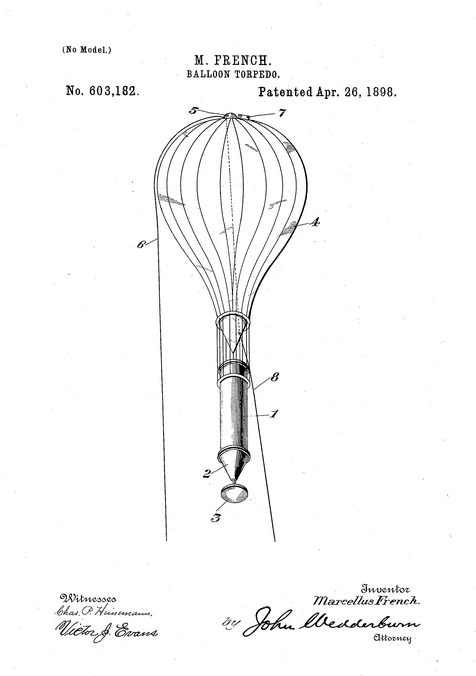
    Here’s an interesting, pre-airplane, airship-delivered explosive device: floated over an enemy’s position, the chord would be pulled at the desired time to create a tear in the balloon’s top, sending the craft down, with the bomb exploding on impact:

    Patent balloon torpedo[Source: Google patents, http://www.google.com/patents/US603182?dq=balloon]

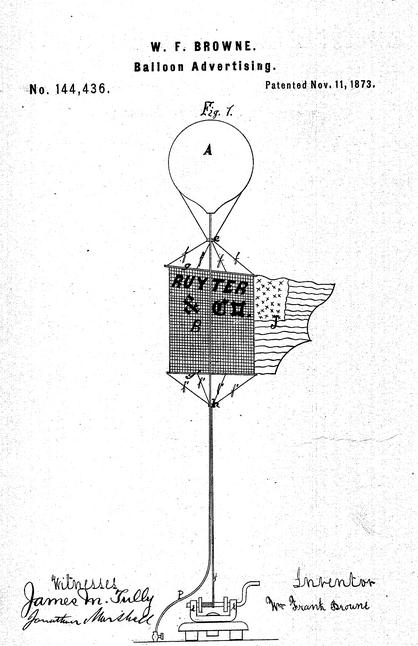
     Another sort of slow death from above advertising scheme:

    Patent balloon 1873

    [Google patent:  http://www.google.com/patents/US144436?dq=balloon]

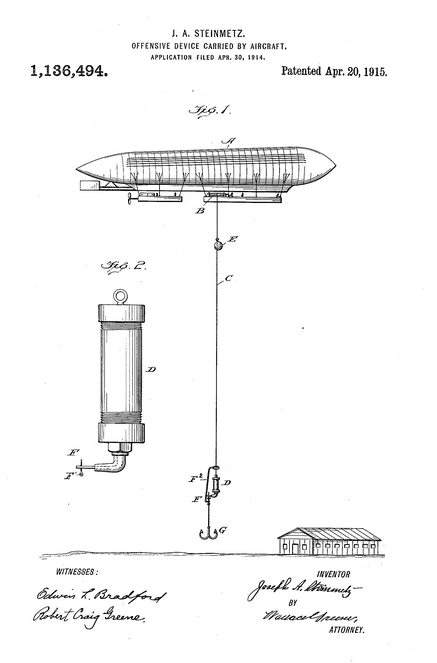
    In this device patented by Steinmetz the explosive device is still actually attached to the aircraft when exploded–not a very common way of delivering your weapon.  The airship would advance on the enemy, with the bomb  attached to a cable just above an anchor at bottom; the anchor would grapple the target, and the bomb detonated from the  gondola of the airship:

    Patent Balloon gondola


  • WWI Editorial Cartoons–More Editorials Than Cartoons (1918)

    JF Ptak Science Books  Post 2581

    Judge magazine (1881-1947) was a U.S. satirical weekly that for several decades published insightful/devastating political cartoons of the highest caliber. (Judge was a sort of knock-off of Puck magazine, started by writers and cartoonist/artists dissatisfied with that fine journal; Judge itself was done in in the same way after a fashion–Harold Ross, who served as editor of Judge for a few months in 1924 went off and started his own magazine, The New Yorker, which slowly and then rapidly cleaved away readership and talent from Judge until Judge was no more.)

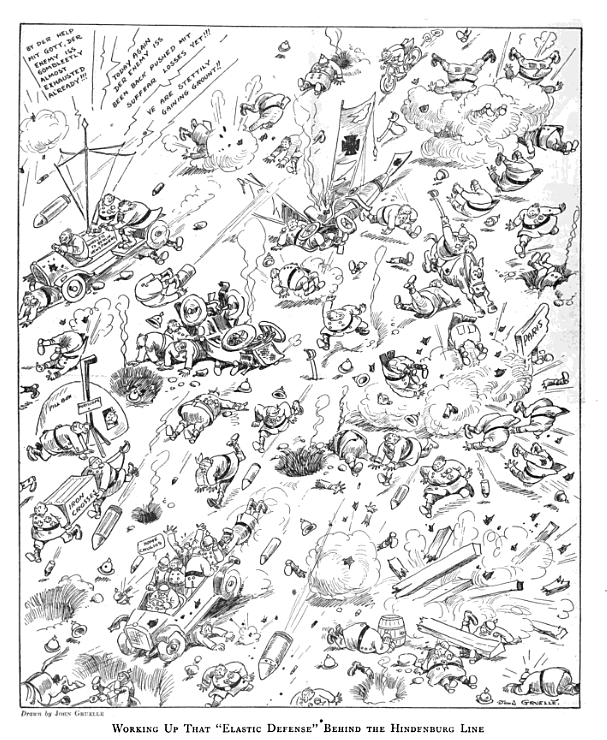
    It seems to me that when leafing through a volume for 1918 that Judge published more cartoons and sketches relating to World War I than cartoons for any war that I have seen in any magazine. I’m not that familiar with Judge relative to other magazines, and was very surprised to see that nearly every page has some sort of illustrated war content.  In the issue for October 12, 1918–just four weeks before the end of the war–I found this image:

    WWI cartoon 1918 GruelleIt is complex and at first looks to be very layered, but I think that it turns out to be not so, that it is flat, and uni-dimensional, and not very satirical–it is however very pointed, and barbed, and makes its case very quickly, in a sort of way that makes you begin to chuckle until you realize just what the content is.  The work is by artist/illustrator/designer John (Johnny) Gruelle, who in the same year introduced the world to his creation of Raggedy Ann (patenting the design a few years earlier, in 1915, https://www.google.com/patents/USD47789.)

    [The Judge was located at 225 5th Avenue, the Renaissance-style 13-story building converted into condos where the active selling price is about $2,670/sq foot1, or about 3.5 million/unit, somehow making this property worth a combined $600 million or so.]

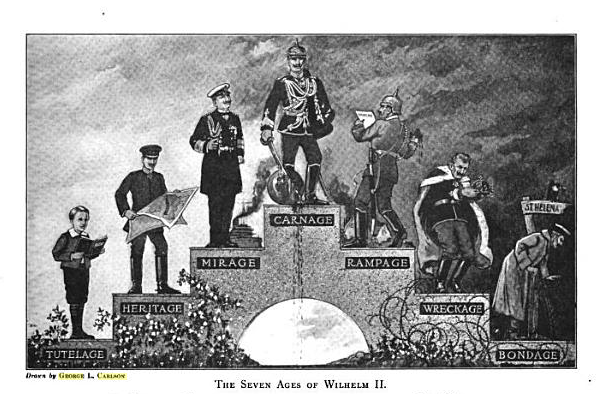
    The very next page comes this condemnation of the German leader Kaiser Wilhelm II, employing the very well worn “Ages of Man” scenario:

    WWI cartoon K Wilhelm

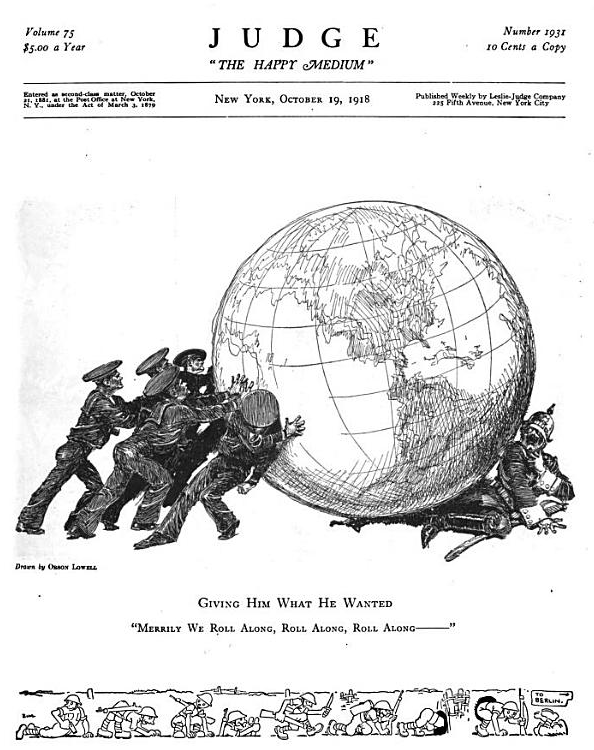
    And just a few pages later, another interesting image, this one being another entry in this blog’s collection of images of the world used in advertising/cartoons:

    WWI World Map

    There were many more war-related illustrations in these few dozen pages, with these three having the most appeal and greatest impact–pretty good stuff spread out over just two or so square yards of magazine pages.

    Notes:

    1. See http://streeteasy.com/building/the-grand-madison

  • Poemsuicdramauraliterature–Outsider Literary Work (1947)

    JF Ptak Science Books   Quick Post    Outsider Logic series

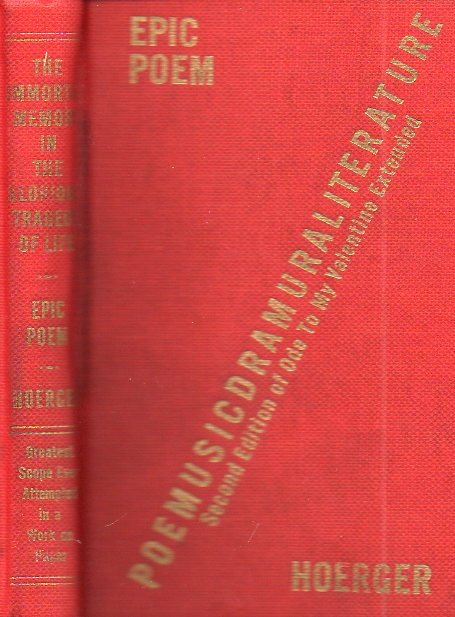
    Here’s another remarkable find for the sub-category of this blog’s thread on Outsider Logic/odd books:

    Odd book371

    It is self-published, and tiny, and bound in a red cloth that surprisingly has the title stamped on its spine. The title begs attention, and then the text begs comprehension–and that’s okay, as this is someone’s proud work, and it is entirely possible that I have missed the object of the experience. That said, the construction, illustration, literary undertaking, and poetical wanderings are occasionally extremely surprising–and if “surprise” and revealing an insight that you’d never have had on your own is the point of writing, then I’d have to say that this experiment was successful.

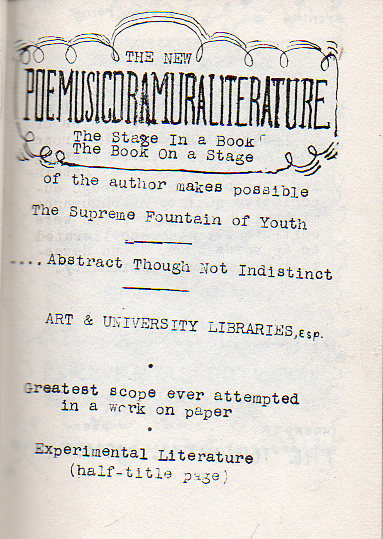
    I won’t go into the story line too much because it escapes me. As a sample though I will illustrate the title page, which is remarkable and small found-miracle even on its own, a shining element of shining elements in the history of odd title pages, and which will give some insight into the possibilities of what follows:

    Odd book372

    The author notes with no pomp and no modesty that his is the “greatest scope ever attempted in a work on paper”.  And what he meant was at least on little paper, because this book measures 3.5×2.5 inches, and one quarter of that is set aside for ample margins which flesh the work out to 88 pages.  The title and subtitle are mysterious, as with everything else–even the final parenthetic note at the bottom of what is actually the title page (“half-title page”) gets an eyebrow-raise. 

    But as the author says, this is “experimental literature”, and perhaps judgment of this work should be unresolved, as the experiment might still be underway. 

  • The Horizontal Section of the Deep Dark (1887)

    JF Ptak Science Books   Quick Post

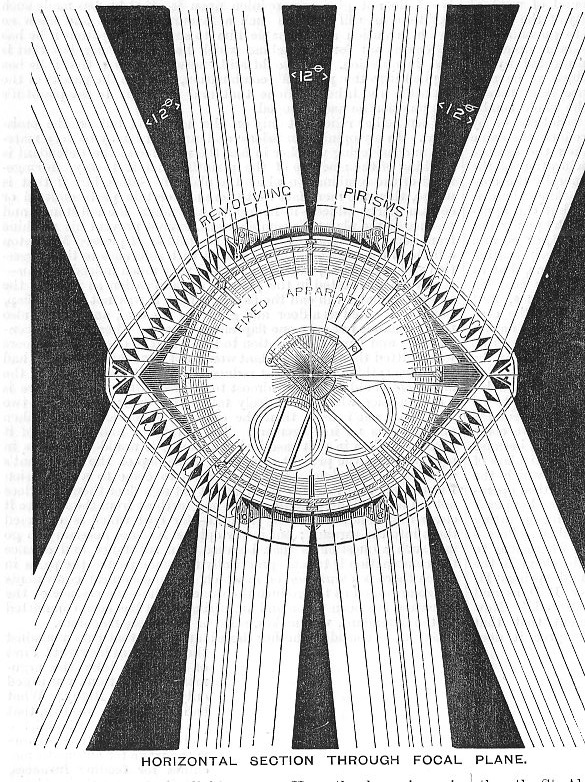
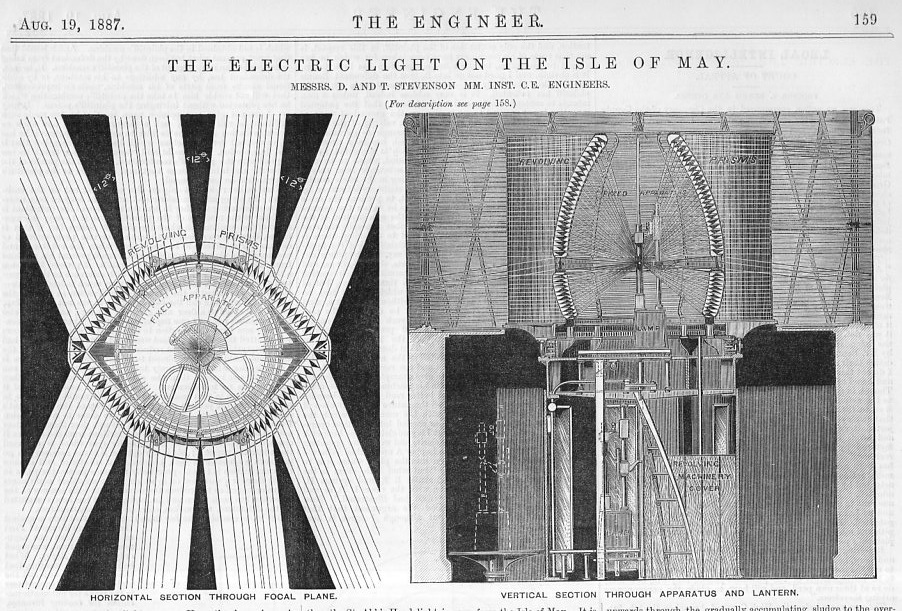
    Thomas Edison’s November 1879 patent on the incandescent light bulb is generally take as being the first great step into the modern age of electric lighting, this following decades of other groundbreaking research by a dozen others in the field.  And so electric was popularly brought to the popular world, though it existed elsewhere decades earlier–for example, in lighthouses, where the first electric arc lamp was used beginning in 1858.  By the time this image (below) appeared in The Engineer in 1887, there were nearly thirty years of improvements to the electric light house–and the cross section of the lamp at the Isle of May from this issue proves to be a particularly beautiful example of art-in-engineering.   The first lighthouse on this remote piece of land off the coast of Scotland appeared about 200 years earlier–a coal-fired light.  This one, built beginning in 1885, would be extraordinarily powerful, achieving as much as 6-million candlepower.

    Lighthouse cross section373

    And the full image, occupying the top third of the page:

    Lighthouse cross section374

  • The Coming Storm: a Map of the French “Drole de Guerre”, September, 1939

    JF Ptak Science Books   Post 2582

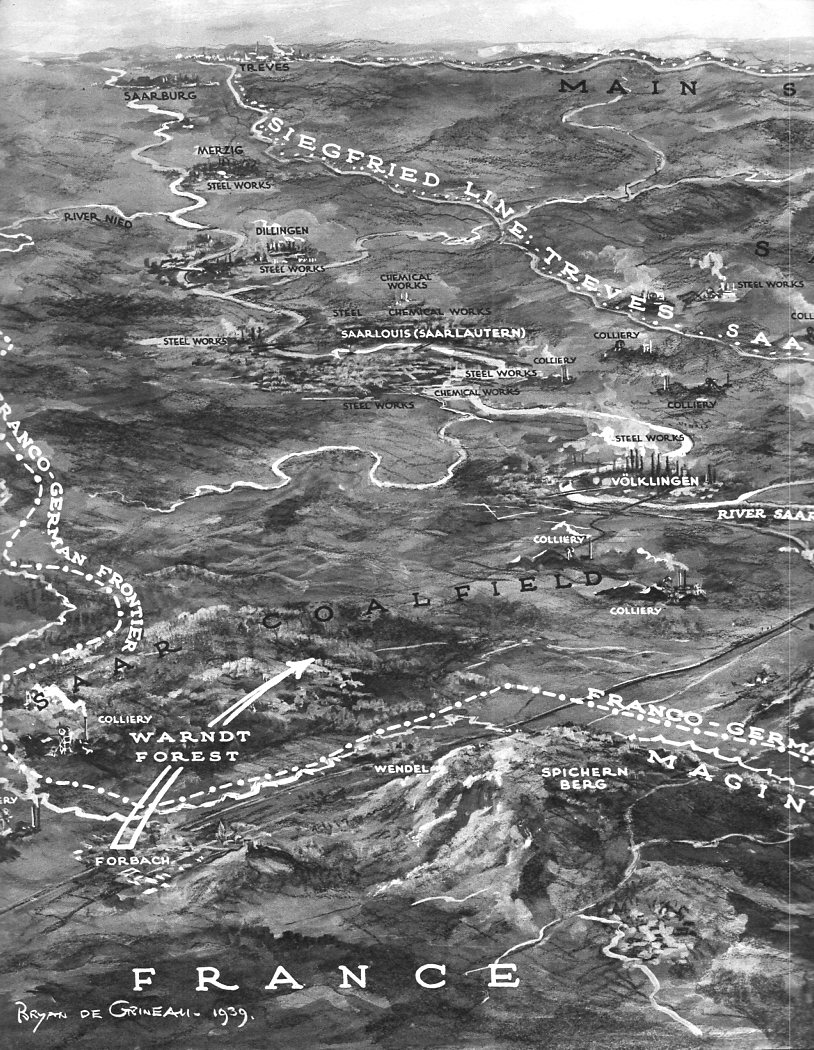
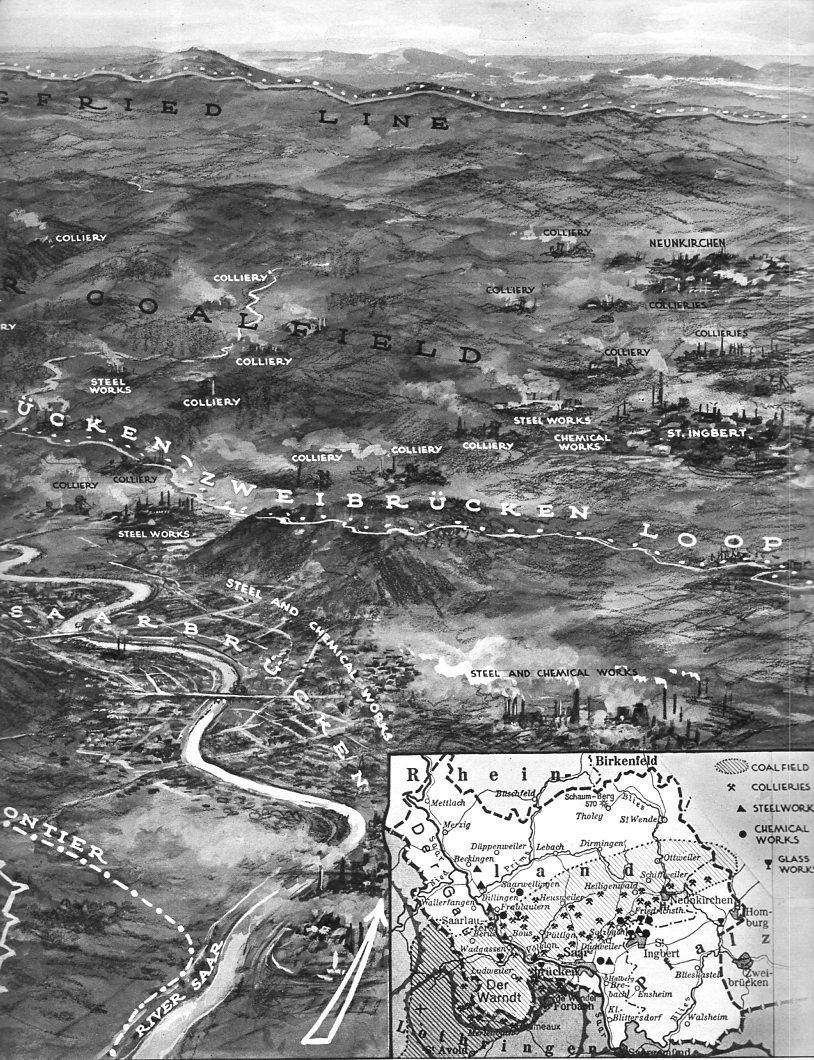
    This orderly and  semi-pastoral bird’s-eye view of the earliest part of the war in the west of WWII appeared in The Illustrated London News on September 30, 1939, three weeks or so after the Nazi attack on Poland.  The foreground shows about 40 km of the front from the river Nied to the Saar and south to Saarburgken, with the Siegfried Line in the distance.  The map shows the region into which 40 French divisions advanced from September 7-16, meeting little resistance from the outnumbered German troops who by and large fell back to more defensible positions. 

    Not much happened.

    This period of the war has often been referred to as the “Phony War” due to the lack of action, though it wouldn’t seem so “phony” if you were killed in the process, as thousands were.  Winston Churchill referred to it more as the “Twilight War”, which is far more appropriate–and this no doubt more meaningful to Churchill int he light of the HMS  aircraft carrier “Courageous” being sent to the bottom by Nazi torpedoes with the loss of more than 500 sailors…there was certainly not a bloody thing “phony” in that. 

    The French referred to this period as the “Drole de Guerre”, which they really shouldn’t’ve done–their Saar offensive of mid-September being stunted and odd, came to a halt, and the troops called back to the doomed Maginot in October. 

    The Twilight War continued until late April, and then in May, it was certainly all over, as the Nazis attacked Belgium, Luxembourg, and the Netherlands. And then of course came France.  In just about the same amount of time that the Saar Offensive occupied, the Germany advanced and forced France to surrender, the curtain coming down on June 22.   Calm before the storm, and all that–the rest of the war was more storm before the storm, until there was storm no more.


    Siegfried line _1_375 Siegfried line _2 _380


    And the text accompanying the maps:

    Siegfried line _1 text_376

    Siegfried line _2  text b_379

  • History of Lines: Lines in Public Baths

    JF Ptak Science Books Quick Post    The History of Lines series

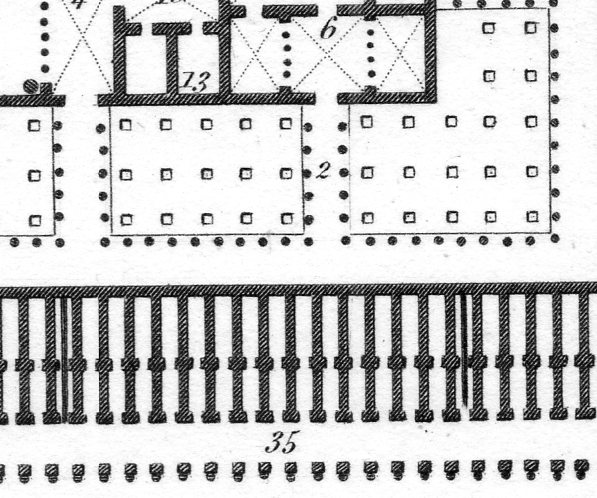
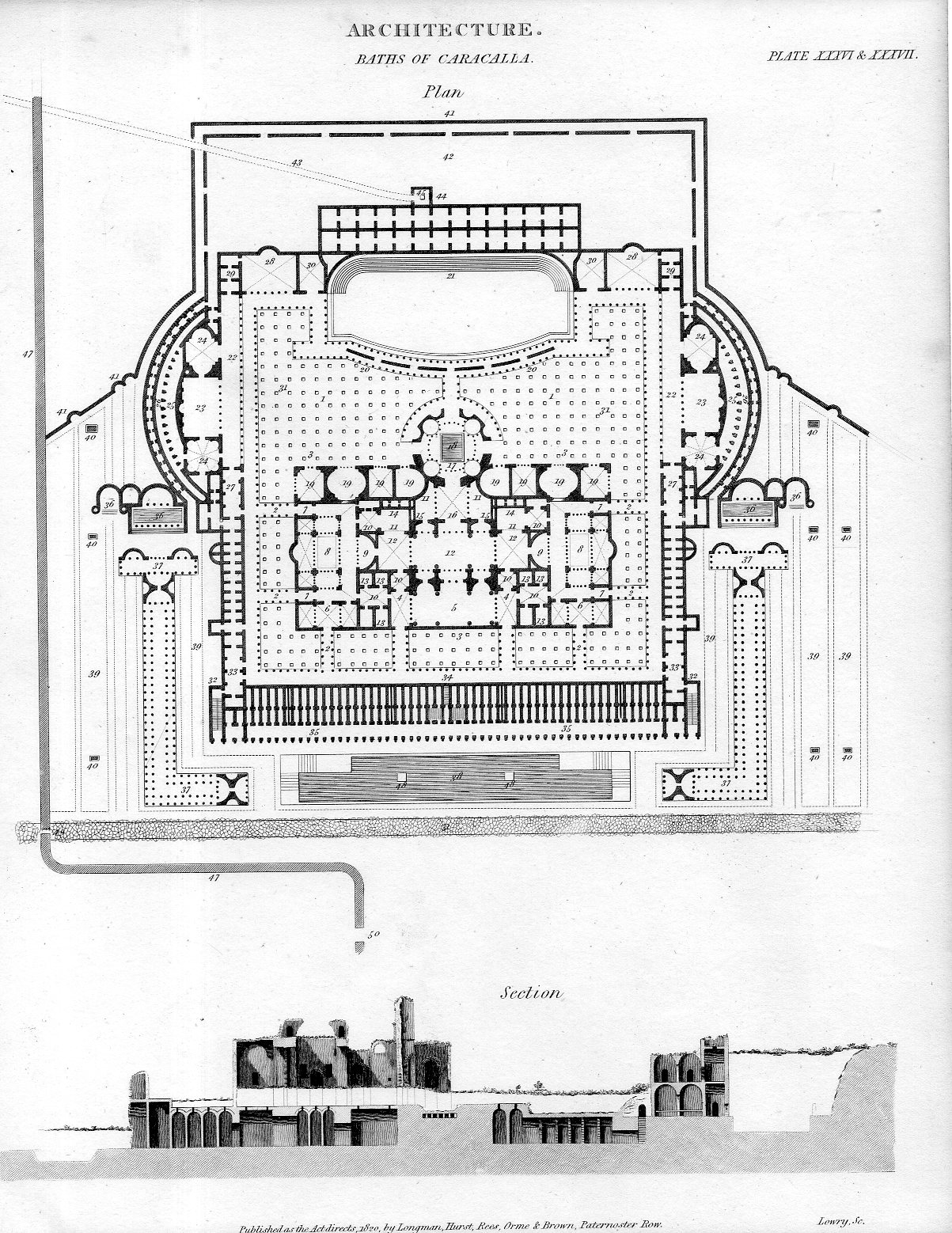
    The public baths of Caracalla served Romans for about 400 years–the complex was complex, and massive.  I’ve long liked this architectural plan of the place–it is necessarily neat and orderly, and fits a lot of data and detail on a 11×8″ sheet of paper while at the same time still having a lot of white breathable space on the page.  Here’s a sample of the detail, which in real life is less than one square inch: 

    Architecture caracalla383

    And the full engraved sheet (printed in 1820 for Rees’ Dictionary):

    Architecture caracalla382


    The following quote is from the great work by Rodolfo Lanciani, Ancient Rome in the Light of Recent Discoveries, Boston/New York, Houghton, Miflin & Company, 1898, pp 91-2, on the Caracalla baths (http://penelope.uchicago.edu/Thayer/E/Gazetteer/Places/Europe/Italy/Lazio/Roma/Rome/_Texts/Lanciani/LANARD/4*.html):

    “Next to forums I must speak of the baths as places of public resort. At the end of the third century after Christ, Rome numbered 11 large public thermae, and 926 smaller ones conducted under private enterprise. The baths of Caracalla alone could accommodate, at one time, 1,600 people; the baths of Diocletian, 3,600. Taking 1,500 as the average accommodation of each of the public thermae, and 50 as that of each of the private baths, we learn that in ancient Rome, at any minute, 62,800 citizens could restore their strength in baths of every nature and description; and this, without bringing into the calculation the Tiber, the Anio, the Lake of Agrippa, and the bathing accommodations with which every Roman house was abundantly furnished…”


Recent Posts

Archives

Categories