A Daily History of Holes, Dots, Lines, Science, History, Math, Physics, Art, the Unintentional Absurd, Architecture, Maps, Data Visualization, Blank and Missing Things, and so on. |1.6 million words, 7500 images, 4.9 million hits| Press & appearances in The Times, Le Figaro, Mensa, The Economist, The Guardian, Discovery News, Slate, Le Monde, Sci American Blogs, Le Pont, and many other places… 5000+ total posts since 2008.

  • Imagining Antiquarian Additive Urgency

    JF Ptak Science Books   Quick Post   Daily Dose from Dr. Odd series

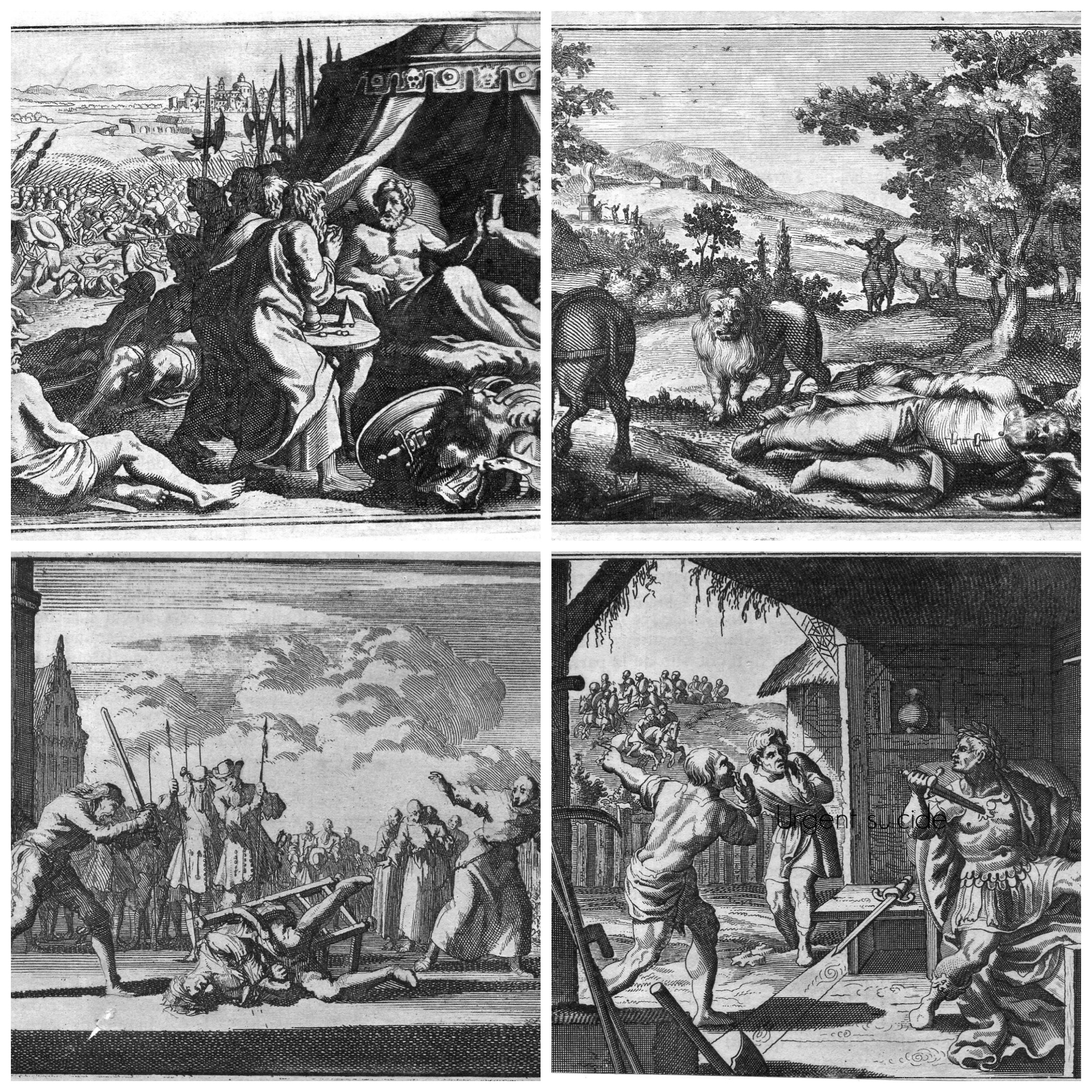
    Such is the nature of the small but desperate urgencies that they come at large and ultra-desperate times, actions required of impossible and uneven urgence, responses vaulted into the black hole of needless authority.  Or some such.  That is the way some of these images looked to me, removed from their context, taking away their stories and supplying one’s own. Urgently.

    This post is related in a way to this blog’s series on using a “paper microscope” to find semi-hidden human geographies in old prints–where there are scenes of low drama taking place in the tiny incidental detail of some architectural rendering of some sort.  In this case, though, the story is the main image, though the original story has simply been removed.  So, our urgencies (top to bottom): the expression of urgent staying-in-bed, despite entreaties and an advancing army; urgent sleeping to ward off an advancing lion, horse, and highwaymen; terrifically urgent sitting, even when being upended and beaten with sticks to make the sitting stop; and, finally, urgent suicide (with backup sword at the ready) to evade capture of an advancing army.  The end.

    • Image source: Theatre Historique (I believe), Amsterdam, ca. 1700-1710, published by Pieter van der Aa. 


    Urgent collage

    ·Posted by :

    ·in:

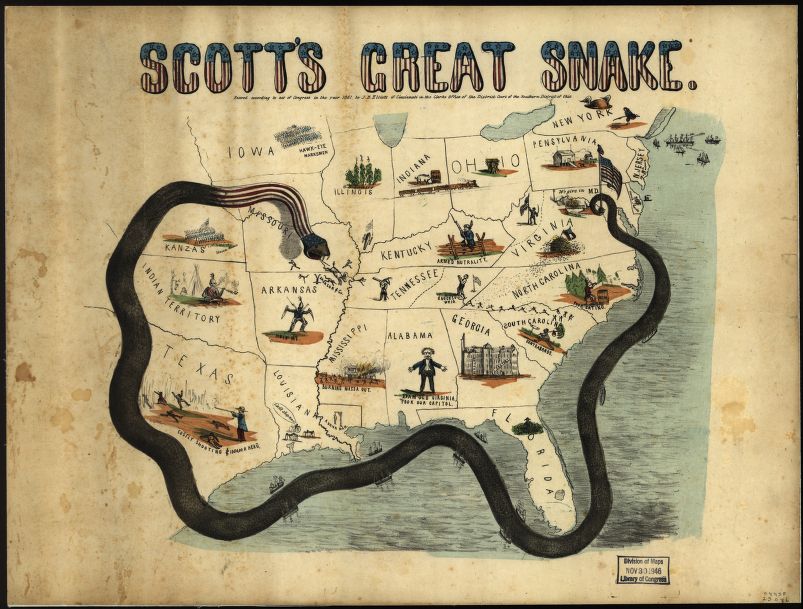
  • Map of the Confederacy-Crushing Anaconda Plan, 1861

    JF Ptak Science Books   Quick Post

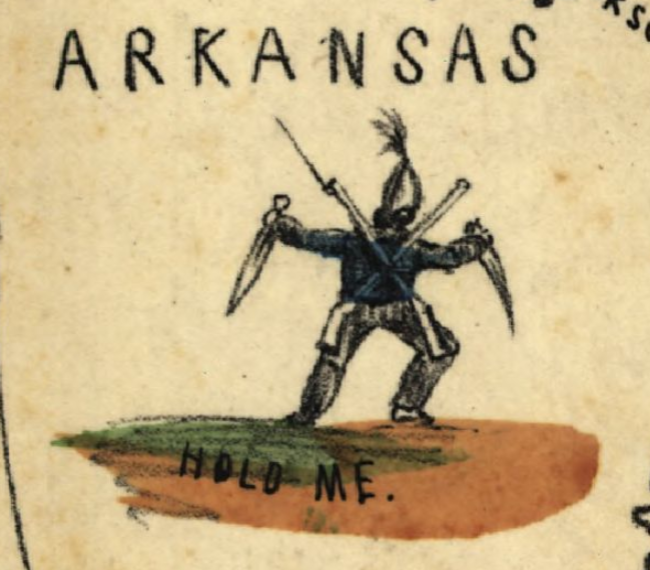
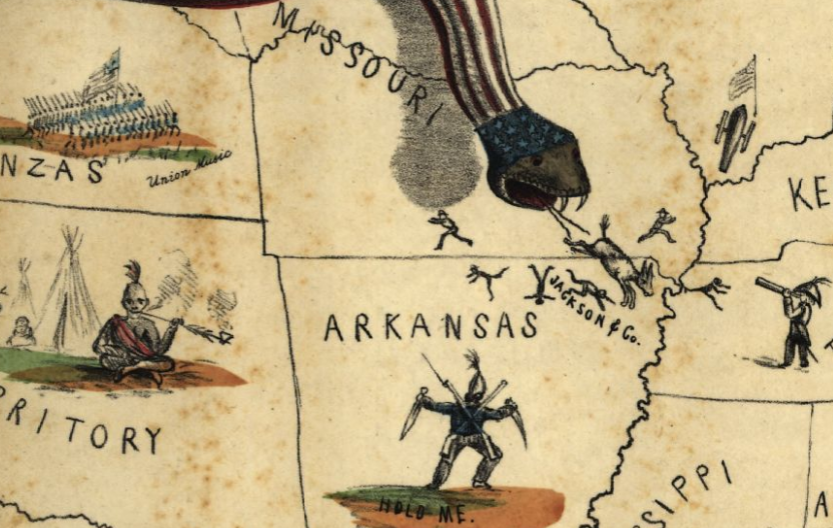
    This very graphic allegorical map was published at the beginning of the Civil War in 1861 and was intended to depict General Winfield Scott’s not-bad plan for the eventual destruction of the Confederacy. He called for isolating the Southern states by a naval blockade and by a push from the West and also an advance up the Mississippi River. The problem with the plan for most people was that Scott saw correctly that the new war was going to be long and costly–this at a time when most saw the conflict as a months-long affair. Part of the correctness of Scott’s recognition of a long war was that the Northern states had fewer than 20,000 troops, and that many more would be needed and that the army would need to be gathered, trained, and built, none of which would happen quickly. But the general faults with the plan do not diminish his important contribution that the Civil War would a total war, and that the conflict would not be over any time soon.

    • [For a good and concise article to get you started in understanding Scott’s’ plan, see B. Wolfe, “Anaconda Plan”, (2011, May 9), in Encyclopedia Virginia: http://www.EncyclopediaVirginia.org/Anaconda_Plan.]
    • (I bumped into the Anaconda Plan map on cnn.com or something like that, in a piece on 15 great maps or some such, but there was almost no backstory…)

    Maps Scotts great snake large

    [Source: the Library of Congress, http://www.loc.gov/item/99447020/]

    Maps Scotts great snake arkansas

    And:

    Maps Scotts great snake detail

  • Dreamy Typewriter Ads–Berlin, 1914

    JF Ptak Science Books  Quick Post

    This ad appeared at the top-quarter of a page in Illustrirte Zeitung for July 1914, a month before the beginning of the war–these creative and colorful stamps (each only about one inch tall) were made to attract readers of the weekly magazine to the fine typewriters produced by Groyen & Richtmann of Cologne and Berlin.

    Typewrriter ad Groyen920

    And the details (the first showing a Reuters reporter on a camel somewhere in the Sudan):

    Typewrriter ad Groyen922

    ·Posted by :

    ·in:

  • A Fine Locomotive Schematic, 1928

    JF Ptak Science Books  Quick Post


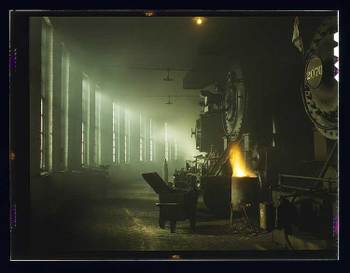
    Roundhouset1 

    I’ve admired this image for quite some time, finding it in the Library of Congress’ collection of the Historical Section of the Farm Security Administration (FSA) color photographs.  It is anonymous, unfortunately, but since there were really only 23 or so staff photographers for this gigantic undertaking (including Esther Bubley, Marjory Collins, Mary Post Wolcott, Arthur Rothstein, Walker Evans, Russell Lee, Jack Delano, Gordon Parks, Charlotte Brooks, John Vachon, Carl Mydans, Dorothea Lange, and Ben Shahn, ten of which are truly monumental names in the history of 20th century American photography) I think that we could guess that it was done by the hands of a master.  It seems as though less than 2% of the 163,000 or so photographs made by this section during its eight-year run (1937-1945) were made in color, and I’m glad that this was one of them. 

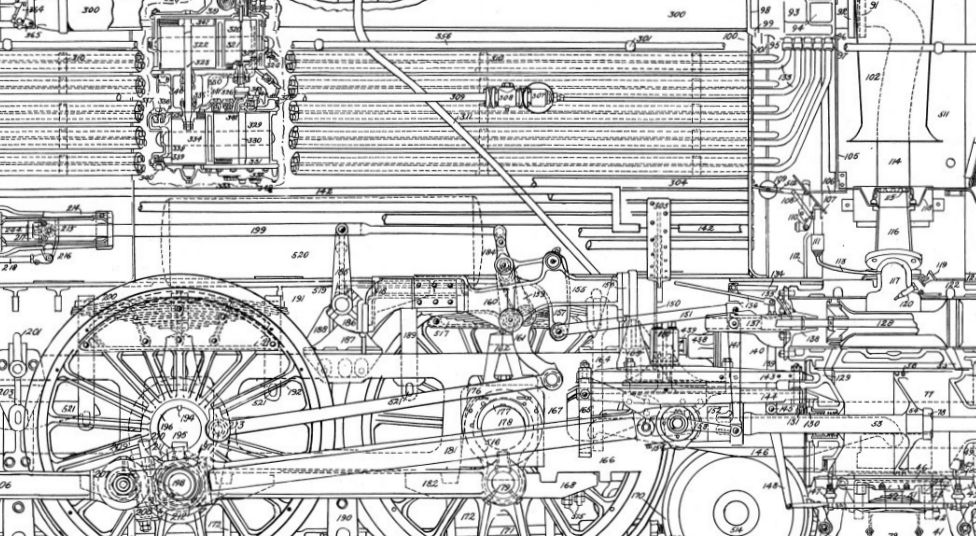
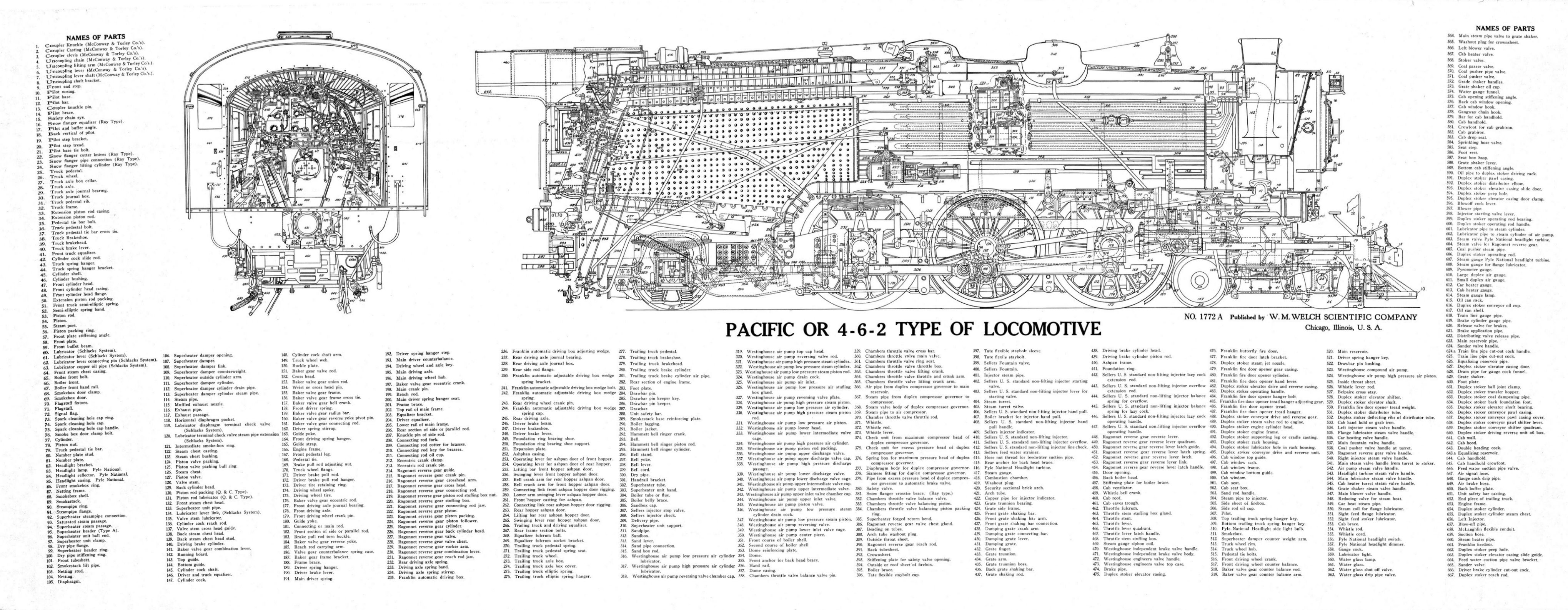
    This photo reminded me of a very detailed, three foot long locomotive schematic that I have in the studio.  It is a wonderful thing, and I’ve included some images of it below, all of which are clickable and very expandable (and clearer).  Here’s the first detail:


    Loco _2_detail

    [For info on the locomotive, see http://www.railarchive.net/alcopacifics/]

    Loco _2

    And the full locomotive, laterally, and large–I couldn’t straighten it out without loss of text, so apologies for the miscue:

  • Illustrating the Effect of Destructive Capacity: August, 1914

    JF Ptak Science Books  Quick Press

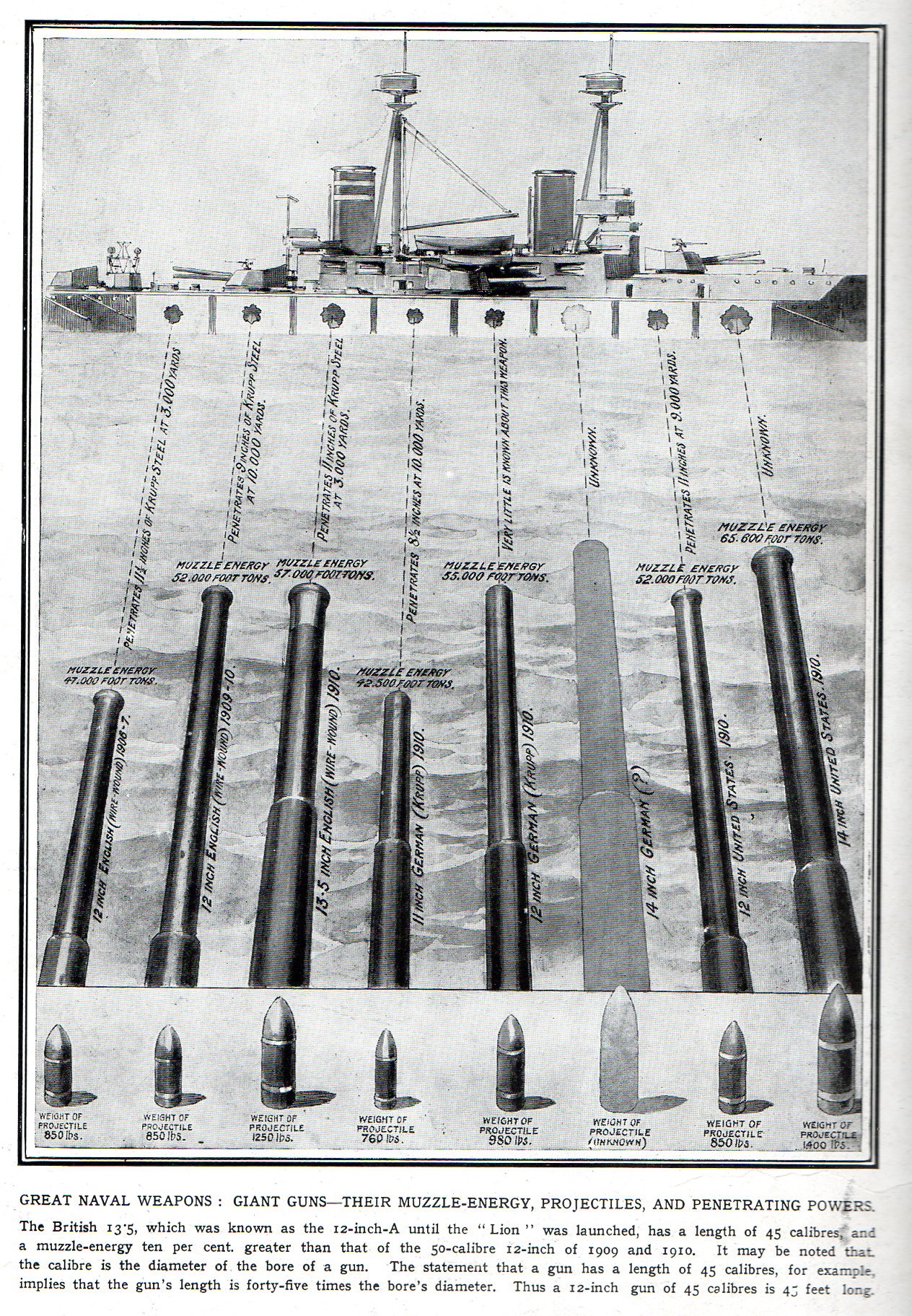
    I found this lovely infographic in the August 29, 1914 issue of The Illustrated London News, coming a little more than three weeks after the beginning of WWI.  It is one of the earliest issues almost fully dedicated to war coverage, and in its many articles covers the fall of Namur, the fight at Mons, the destruction of the HMS Amphion, and images of long lines of Belgian refugees, the fight at Haelen (and the dog-drawn heavy machine guns), and the first drawing of the BEF in action in France. The image below addresses what was seen early on as the war’s premier issue in military strength, which was seen in the power of navies, and hence the depiction of the relative “strengths” (projectile weight (760-1400 lbs), barrel length, “muzzle energy”, steel penetration) of the big shells:

    Schematics naval guns 416

    I think I’ve never seen a display quite like this one, before.

    And just for the fun of it, “caliber/calibre” from the Oxford English Dictionary:


    ·Posted by :

    ·in:

    —
  • Squares in Design, 1923

    JF Ptak Science Books  Quick Post    History of Lines series

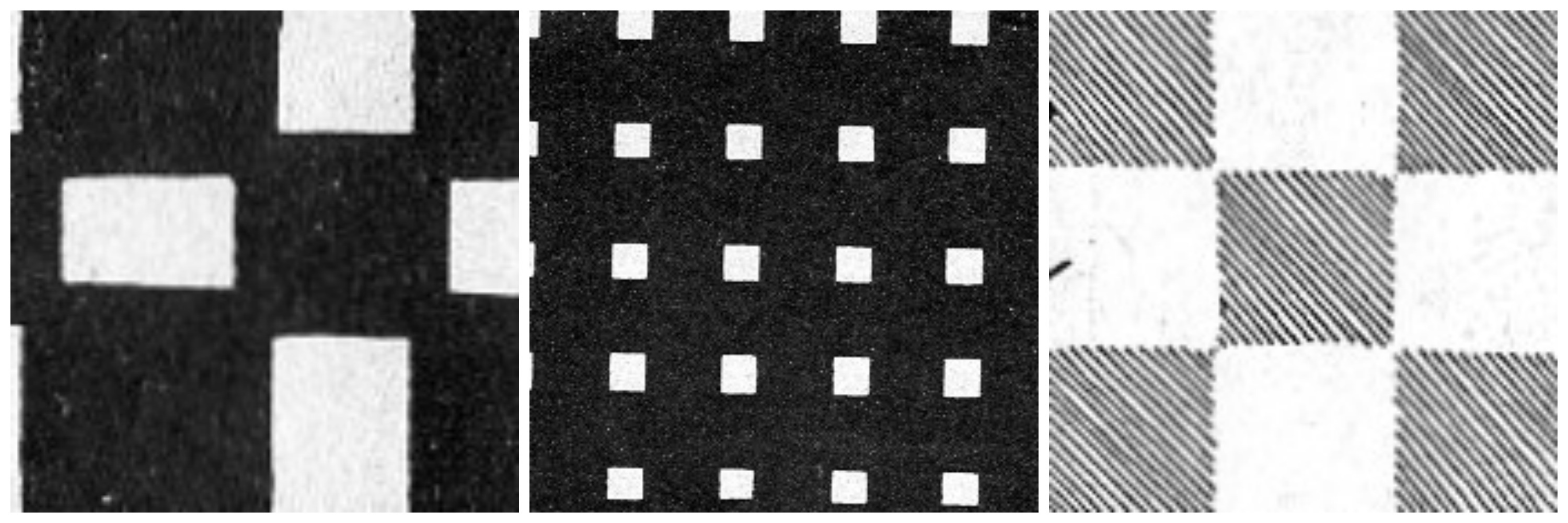
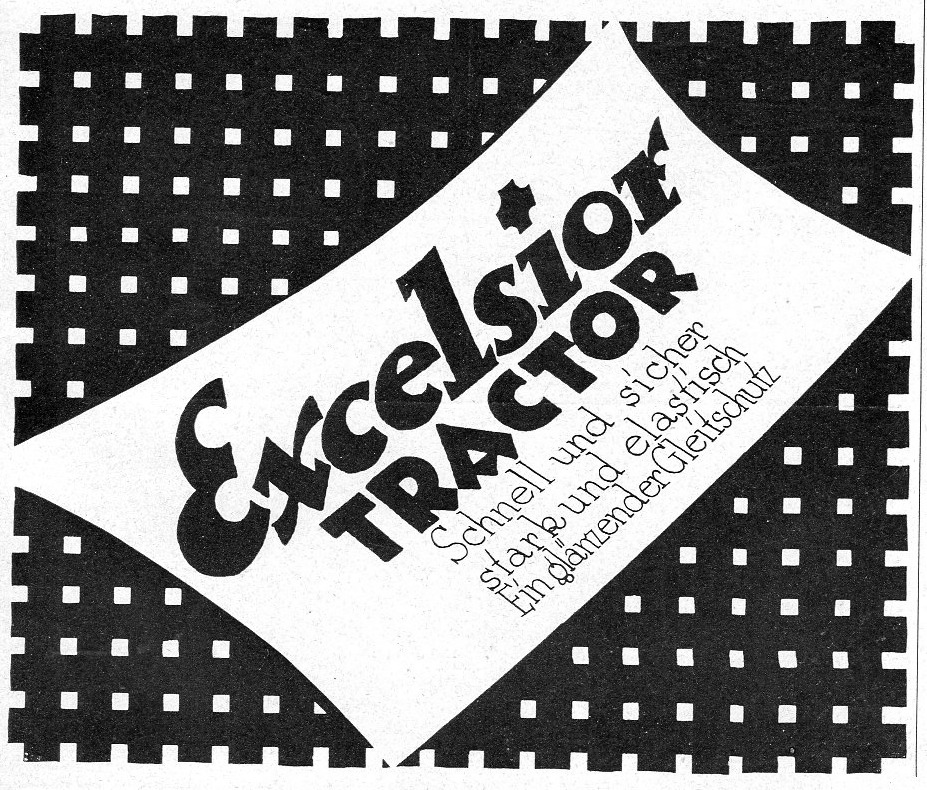
    It was an amusing to find these designs using square elements in the design of advertisements–interesting and odd, mainly because I hadn’t seen much like this, before.  And here were three examples ina single issue of Illustrirte Zeitung for June 1923.  It seemed as though the idea might be endemic–as it turned out, there were no other examples for the use of squares like these for any other advertisers for the rest of the year.  In any event, the square details are an attractive thing. 


    Square montage


    Square excelsior419

    ·Posted by :

    ·in:

  • Troncet’s Arithmographe, the “Instant Calculator” (1892)

    JF Ptak Science Books  Quick Post

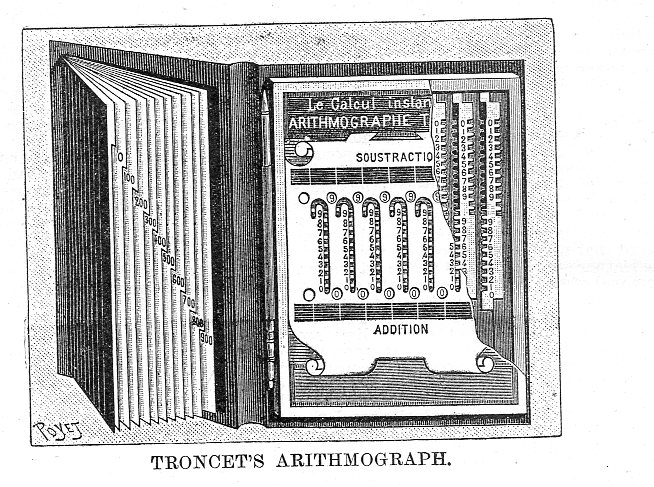
    I came upon a short notice in the Scientific American (January 30, 1892) for Louis-J. Troncet’s ingenious and very popular instant-calculator. It was a small and powerful machine  (10x6cm) that Troncet had patented in 1889, and was issued in a small book-like folding case, with the accordion folding bit containing multiplication tables. It was quick and easy to use, sold for a few dollars, and became a cheap arithmetic staple for decades. 

    Troncet arithmometer430(I’m pretty sure that the image that appeared in Scientific American, above,  was the one used in the article by G. Mareschal, “Calculateur mecanique instante,”  in La Nature,  in 1890 (pp. 307-308).

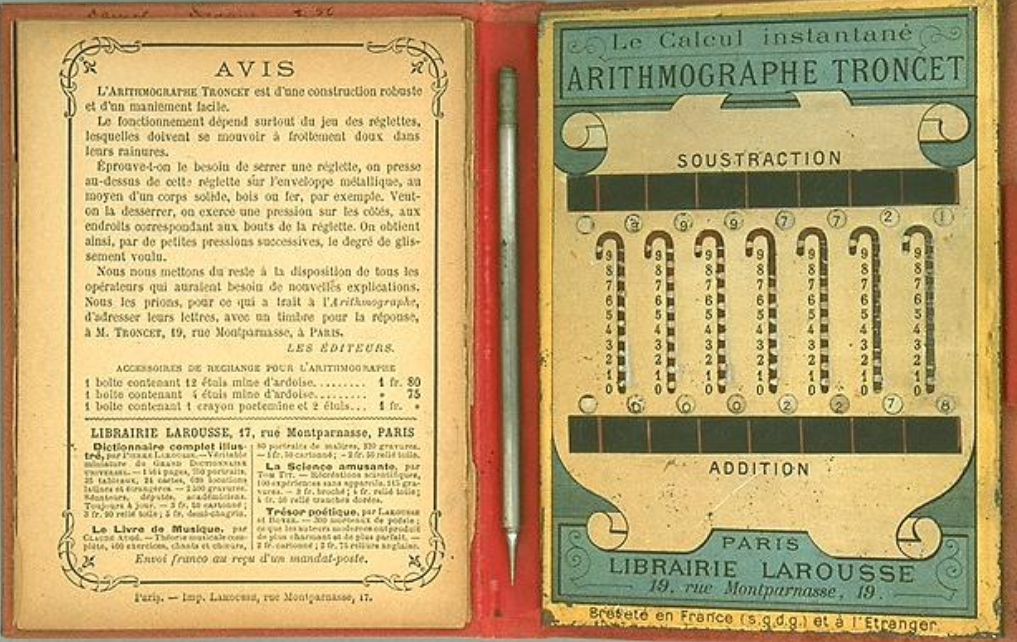
    Here’s a color image of the Troncet at the National Museum of American History:

    Troncet in color two

    [Source: http://americanhistory.si.edu/collections/search/object/nmah_690248  For another visit with the Troncet see the History of Computers site  http://history-computer.com/CalculatingTools/Gadgets/Troncet.html]


  • Tall Structures and Dropping, Stopping, and Sliding Stuff (1892)

    JF Ptak Science Books  Quick Post

    Earlier in this blog I wrote a bit called “Dreaming of the 10-Ton Eiffel Tower Bullet, 1891” which was about the massive free-fall bullet ride that was to be part of an Eiffel Tower entertainment package–the apparatus wasn’t built, which was probably a good thing, what with dropping 20 people in a steel bullet from 900′ feet not being such a brilliant idea1.   The Eiffel Tower had been built a few years before for the 1889 world’s fair in Paris to mixed reviews–actually there was a call for its deconstruction post-fair because so many people found it so confounding/unappealing.  The Columbian Expo’s greatest “response” to the Eiffel Tower and the not-building-another-one was probably the 264′ Ferris wheel–it was very popular, and after the fair it was dismantled and moved to another location in Chicago in 1895, and then disassembled again and moved for use in the St. Louis World’s Fair of 1904–after that it was ingloriously retired and sold for scrap (for $1800). 

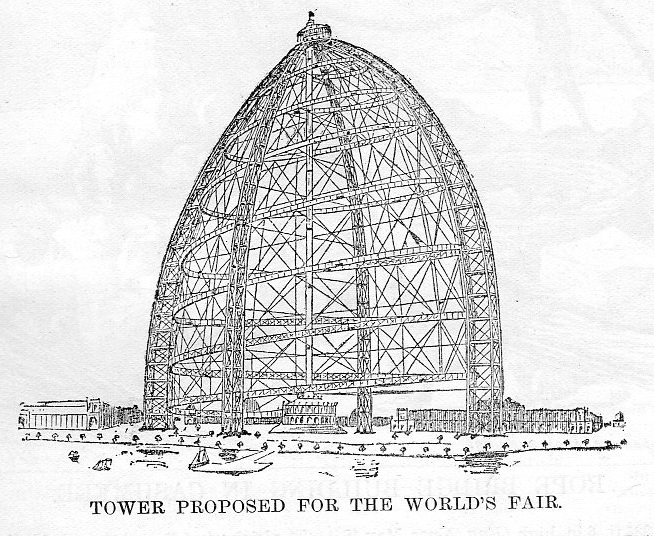
    This all came up just now because in browsing the 1892 volume of Scientific American I bumped into this drawing of a proposed exhibit/attraction for Chicago–an observation tower with a “slide”. Folks would be hauled up to the deck at the top, after which they would be loaded onto a car (descent controlled by air brakes) and sent back down on a 5o grade. There’s no help in the article or drawing to determine just how massive this structure was supposed to be, though it looks very substantial, hundreds of feet tall.  Given that the new form of building at this time was the skyscraper and that the only thing to make the skyscraper practicable was an elevator, this was probably a good advertisement/display/p.r. stunt for the machine–even more so for the brakes on the sledges and the elevator, because you really can’t have tall buildings without elevators, and you can’t have elevators without good brakes. 


    Columbian expo tower429

     Notes:

    1. (Check out this link for a fuller story on this bizarre and probably fatal idea https://historyofideasblog.com/thesciencebookstore/2011/11/dreaming-of-the-10-ton-eiffel-tower-luxury-bullett-addendum.html )


    ·Posted by :

    ·in:

  • A History of Dots, Periods & Points, Part I: Descartes and a Year-Ending Post

    JF Ptak Science Books 

    I’ve posted this bit on most December 31sts since 2008, and I’m doing it again. I don’t have any other year-enders, so this will have to do, on ending the year on the dot.

    0 blog dec 31 descartes330

    In closing out my first year of blogging, I’d like to take an incidental look at one of our language’s most important fragments.  Like Mr. Eliot’s observations of Baudelaire being a fragmentary Dante, and like the brilliantly arranged frammenti of Piranesi, the great bits of our communication processes owe a breathy thanks to the lowly period.  A dot.  A point.  It separates to provide analysis and coherent recognition of thought. 

    A simple dot (.). But dots are as little or as big as you need:  there’s “Little Dot” (the cartoon character of Harvey Comics, created 1947, who was fascinated bylines and dots and dashes), “Admiral Dot”, polka dots, Mama Dots.  Dots get considerably ratcheted up in quantum dots, and then expanded beyond that with the idea of the dot as an abbreviation for the multiplication sign, both of which increase things rather than bringing them to an end, a conclusion.  The dot used after a musical note delineates that there is an increase in time by half, which would be an interesting notation to adopt in literature, if we were somehow able to magnify and increase that which would normally have been ended by the same notation.

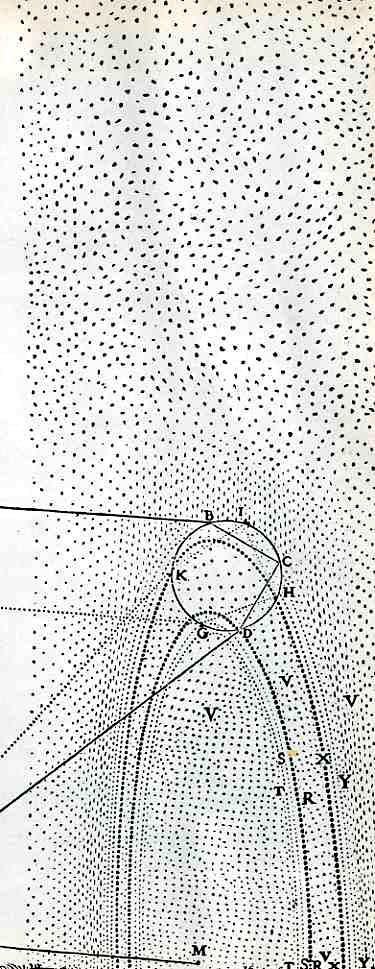
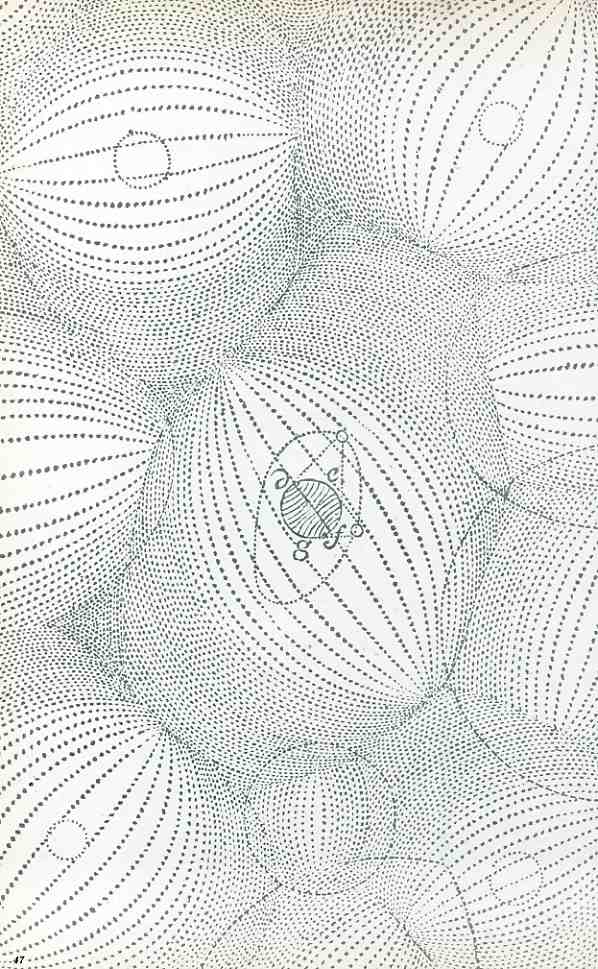
    Dots have formed the background to some of the most significant scientific illustrations of all time, like these two images, the first of which Descartes’ illustration of the decomposition of the rainbow, found in his Dioptrics, a fabulously important illustration. The second is from Descartes’ Principia Philosophiae (1684) which display his theory of vortices, accommodating an idea of physics eliminating atoms and vacuums and joining matter and space, matter being constantly deflected from moving in a straight line, moving in vortices.  Then of course there’s the fantastically appreciated advancement of Samuel Morse’s telegraphic instrument and his abbreviated transmitting alphabet (his “code”), which fascilitated the distribution of information in the 1840’s  in the same sort of way that the internet increased the flow and ease of data in the 1990’s. (Actually that’s only half correct for Morse, as his was a system of dots and dashes.)


    0 blog dec 31 descartes331

    Things get more interesting if we expand the idea of the “dot” to a “point”, as just about everything we have discussed in math for thousands of years has been based upon the idea of a “point in space”, forming the bits of the coat hanger on which the whole fabric of the heavens has been hung.  Going the other way, there’s the decimal point, which brings us to negative powers of ten, into smaller and smaller worlds, to the incomprehensibly small, showing that “nothing” probably doesn’t exist. (We’ll leave the idea of “spot” alone, tonight.)

    That’s quite a bit of expansion from a word that starts out life in Middle English as the definer of the head of a boil.

    But this year will end in about 50 minutes from now, and I wll be able to put the final keystroke to the final sentence to my final post of the year, and put it all to sleep.  And the year will end, at 11:59:59.  On the dot.


    ·Posted by :

    ·in:

  • The Robot Lunar Adam and the Cosmologonaut Jean Perdrizet

    JF Ptak Science Books    Post 2574

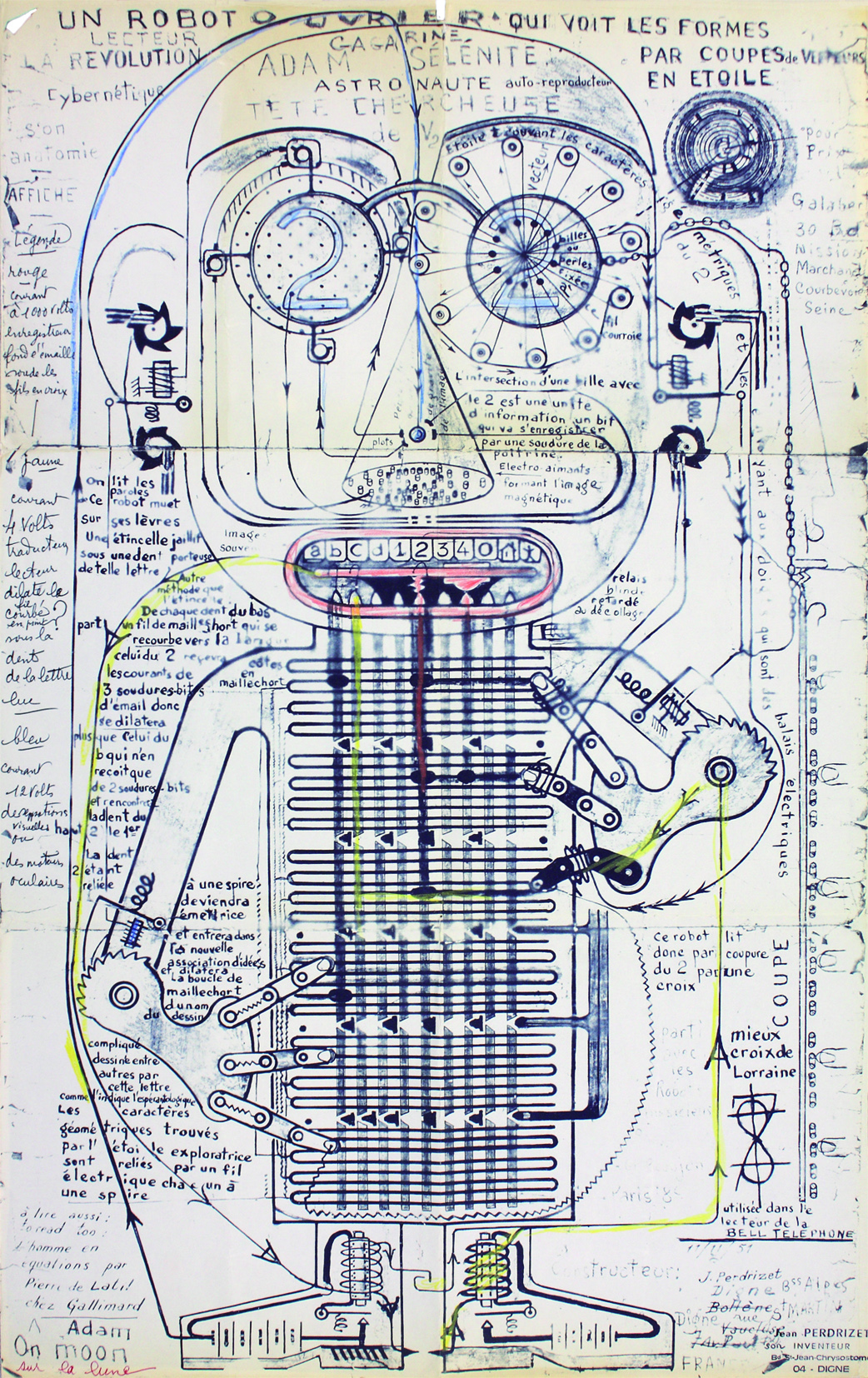
    “L’histoire de la science du XXe siècle n’a pas retenu le nom de Jean Perdrizet” is the lovely opening remark on a terrestrial-based sidereus nuncius/sidereal messenger post–that the name of the Art Brut/Out Brut inventor, Jean Perdrizet, has not been remembered as part of the history of science of the 20th century.  And of course there is really no scientific reason for the basis of this memory to be formed, as M. Perdrizet is thinking well outside the confines of the generative envelope, making drawings of interesting and fantastic things, like the forceful  Selenite Adam/Adam-of-the-Moon/Cosmologonaut.  

    I guess it is interesting to note that the first half of his name uses the word “perdre” and/or “perdu”, which translated is “lose/lost”, though I think this only has some extended application to his effect on the sciences rather than his art.  Perdrizet (1904-1975) did stay in contact with scientific agencies (like NASA) throughout his career, though they did not stay in contact with him.  His work is beautiful in its way and begs to be investigated closely–any time an artwork can accomplish that, then it has certainly succeeded.

    • Source of opening quote and image: http://www.officiel-galeries-musees.com/galerie/galerie-christian-berst/exposition/jean-perdrizet

    Adam on Moon

    There are of course scientific elements in the Perdrizet works that are correct–and it is tempting to use the word “but” here–though the artist decided to transcend the confines of the sciences in pursuit of something more, well, interesting.  Perdrizet’s educational and limited vocational background in civil engineering forms more of a springboard than a foundation for the flow of his ideas.  

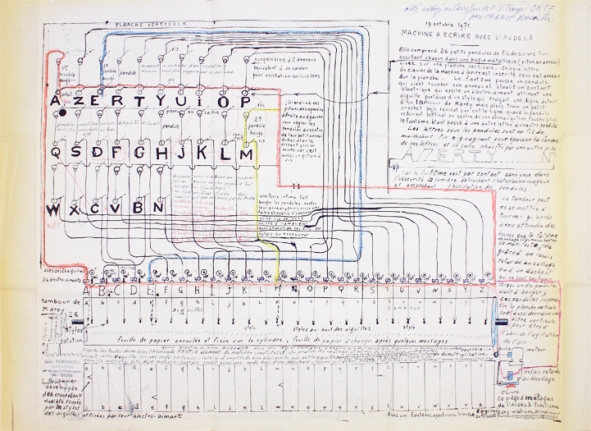
    Here’s another example of Perdrizet’s work (there’s a lot more all over the interwebs), a machine to “communicate with the beyond”, to “capture the invisible” as the writer of the  Savatier blog eloquently states:

    Perdrizet


    [Image source: Savatier blog, here: Savatier ]

    Apparently Perdrizet made blueprints for conducting communication with the spirit world–but so did Thomas Edison, or so he said. Edison’s statement on his ‘invention” was made in drollery and his own brand of ‘fun”; perhaps Perdrizet did so, too.  

    A good podcast by Susan Owensby on RFI on Perdrizet: http://www.english.rfi.fr/culture/20120212-jean-perdrizet-s-fantastic-machines

    And this interesting video:

    ·Posted by :

    ·in:

    —
  • Canary Girls & T.N.T.

    JF Ptak Science Books  Post 2565

    One of the odd, interesting things that might not occur to the casual reader about the scope of the massiveness of WWI is, well, its massive newness in being massive. A significant measure of this is simply the number of people who served, compared to the number of people who served King and country at other times. For example, in 1905, at a high point of empire, there were approximately 450,000 serving; for the length of WWI, something on the order of 7 million men were in uniform. In the  first few months of the beginning of the war in 1914, there was nearly this number who enlisted, and then another 300,000 in just another two months later. 

    Quickly put, this is a new and enormous army, and that means that with an army of millions there are hugely increased demands on keeping the army going–outfitted, fed, housed, equipped, moved, trained, and then, of course, led into battle.  

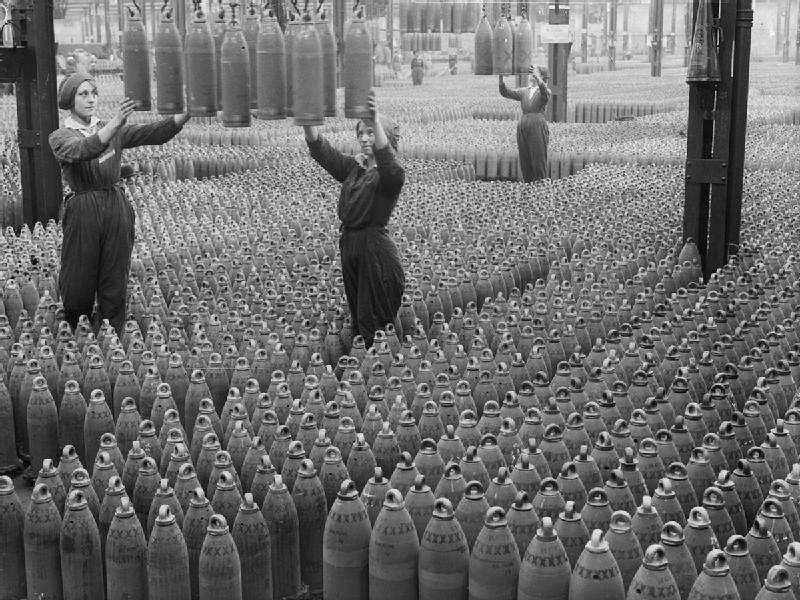
    The army needed an army, and in some cases, that army consisted of women, particularly in the munitions industry, where the increased need for a vastly articulated labor force was deeply felt, and which became much more apparent by the the middle of 1915, after the development of the shell shortage.  The involvement of women grew greatly after the introduction of military conscription in 1916, and by 1917 something on the order of 80% of all munitions workers in the U.K. were women (according to Christopher Addison, the Minister of Munitions)–there were some 212,000 women in munitions at the end of 1914, by the end of the war there were nearly a million.   

    That said, these were paying positions, and though the women were in the majority of the workers and therefore of great importance to the production of munitions, they were paid fractionally what the men were being paid.1 
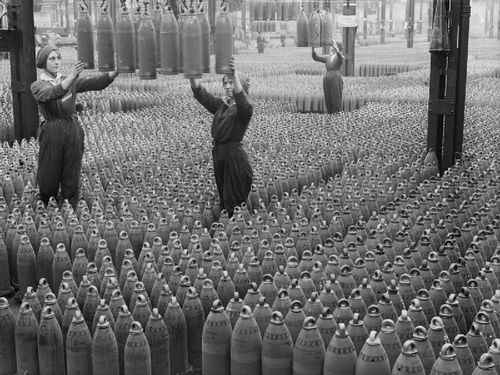
    WWI Project Canary Girls
    [Source: Horace Nicholls, British Official Photographer, Imperial War Museum IWMQ 30040, “Female munitions workers guide 6 inch howitzer shells being lowered to the floor at the Chilwell ammunition factory in Nottinghamshire, UK.”]

    The work was dangerous not only for the obvious reasons, but also for the toxic side effects of working with the chemicals to produce the explosives.  That’s where the “Canary2 girls” comes in. The name comes from the side effects of workers handling the component chemicals in T.N.T., that would affect the color of the worker’s hair, and skin, and eyes–turning them yellow–and then eventually leading to liver failure. It could also be transmitted to the worker’s babies (known as “canary babies”). It was an issue that was known, and addressed in medical journals during the war; some of the issues in the danger of the toxic elements in creating the munitions were addressed, but certainly not fully, and the work went necessarily on.  

    Notes:

    1. According to the website Spartacus Educational http://spartacus-educational.com/Wmunitions.html “…1918, whereas the average male wage in the munitions industry was £4 6s. 6d. for women it was only £2 2s. 4d” which is nowhere near equal pay.

    Here’s a couple of references, the very tip of the tip, of work that has been done on the women munition workers, the first dealing with toxic exposure of the workers to T.N.T. and the second on the munitionettes in general: 

    • ‘Toxic Jaundice in Munition Workers’, Matthew J. Stewart, M.B.; The Lancet, Volume 189, Issue 4874, 27 January 1917, Pages 153–155
    • Munitionettes, 1914-1918 (many links and references),  https://munitionettesww1svhlf.wordpress.com/shaping-voices-volunteer-researchers/cherine-maskill/
    • Another very good site for images of Munitionettes: Science and Society Picture,Library http://www.scienceandsociety.co.uk/results.asp?txtkeys1=Munitionettes
    • BBC News  “World War One: The risks for women on the home front”  http://www.bbc.com/news/uk-england-26225744

    “July 22nd 1916 Today I was shown over the factory as a great favour. First I saw cordite made into charges. Each charge consists of five or six little bagsful and a core. Each little bag is shaped like a lifebelt. The quantity of cordite it contains has to be weighed to a pin’s head. Even the silk it is sewn up with is weighed. Each bag contains a different weight and the five or six are then threaded on the core. The core is made of a bundle of cordite like a faggot. The whole charge is then packed in a box with a detonator. Then I was shown the lyddite works. This is a bright canary yellow powder (picric acid) and comes to the factory in wooden tubs. It is then sifted. The house (windows, doors, floor and walls) is bright yellow, and so are the faces & hands of all the workers. As soon as you go in the powder in the air makes you sneeze and splutter and gives you a horrid bitter taste at the back of the throat. After sifting, the acid is put in cans and stood in tanks where it is boiled until it melts into a clear fluid like vinegar. Then it is poured into the shell case. But a mould is put in before it has time to solidify. This mould when drawn out leaves a space down the middle of the shell. Before it is drawn out beeswax is poured in, & then several cardboard washers put in. Then the mould is replaced by a candle shaped exploder of TNT or some other very high explosive is put in. After this the freeze cap is screwed in and then two screws have to be put in to hold it firm. The holes for these screws must not be drilled straight into the detonator. If they do the thing explodes.” – See more at: http://alphahistory….h.7vwIX7ui.dpuf

    2.  The canary was as we all know a symbol of life and death in the mines, used to detect carbon monoxide–if the canary in the cage in the mine died, then the miners knew it was time to hustle away.  The idea was originated by the fabulously-mustached John Scott Haldane at the end of the 19th c–as it turns out Haldane was a very busy guy who in addition to much else pioneered the gas mask at the beginning of WWI
    ·Posted by :

    ·in:

    —

Recent Posts

Archives

Categories