JF Ptak Science Bools Quick Post
This post continues an earlier series on the artistic display of quantitative data–putting a face on big numbers. In particular it extends a collection of images of Second World War airplanes, “A Big Sea of Planes: Quantitative Display of World War II Bombers. The images below appear in the 17 October 1942 issue of the Illustrated London News in an article about the possibility of replacing seaborne troop and materiel transport across the Atlantic from America with the big Martin JRM Mars aircraft, getting the troops there faster and safer and releasing at least part of the naval force for wartime activities. The images are pretty compelling:
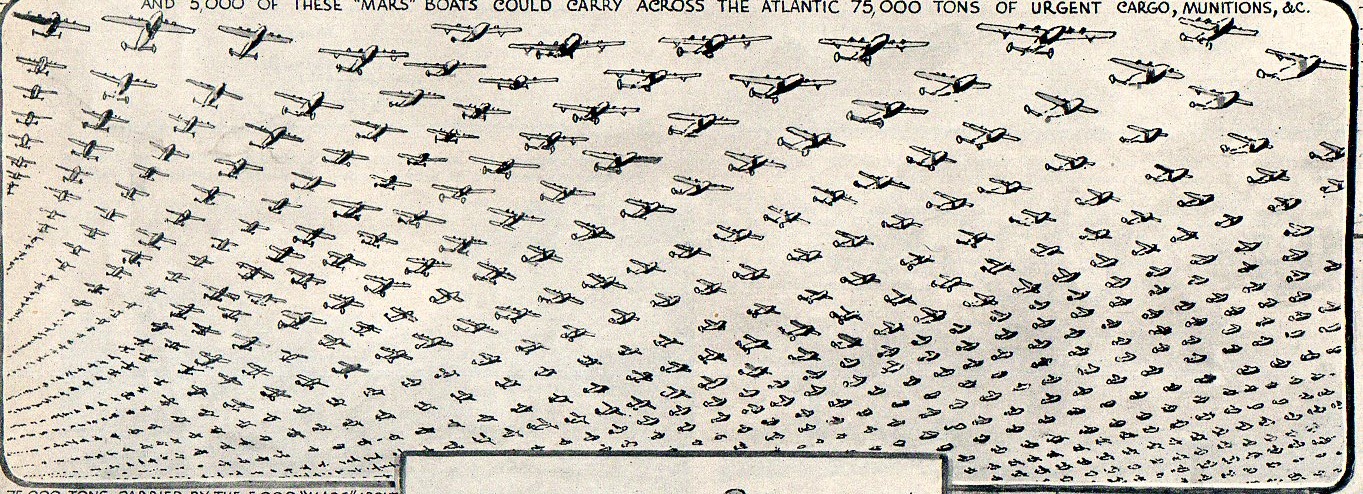
The caption states that 5000 Mars planes could get 500,000 soldiers to Europe.
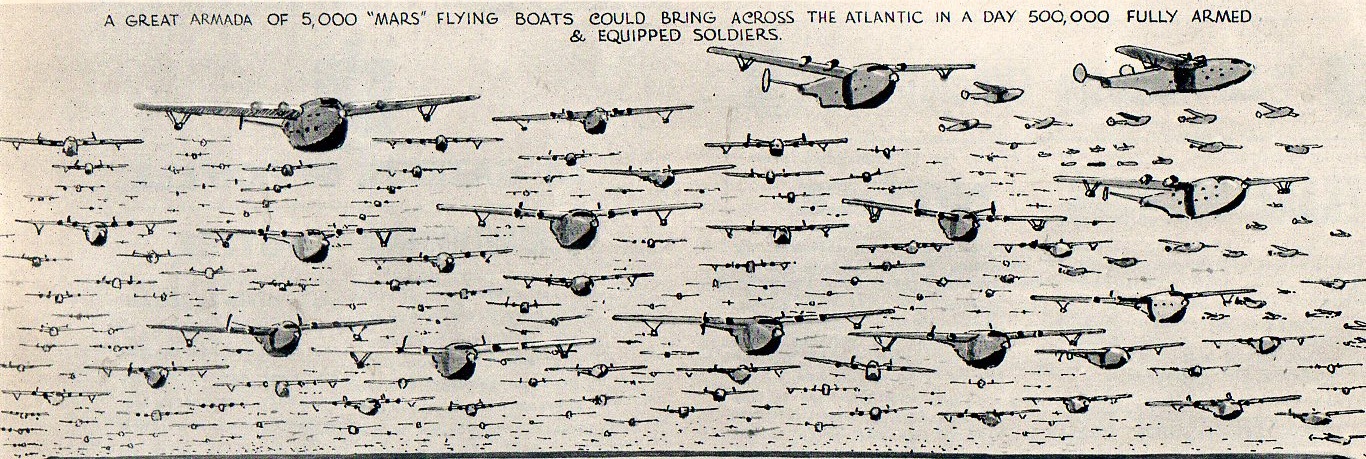
These were big planes1 (200′ wingspan, 117′ long, 38′ high, more below) and could haul 130+ troops. By the time though that the powers-that-be were figuring out who the main contractor would be for production (and those production numbers in early 1942 were about 500 per year, at that point, anyway) the Battle of the Atlantic was already–in 1943–fairly well decided. The U-Boot problem was solved enough for a continuous flow of soldiers and supplies, though not without a high cost in the first half of the Atlantic campaign. (Overall, from 1939 to 1945, some 3,500 Allied merchant ships and 175 Allied warships were sunk, costing the lives of 72,200 Allied sailors and merchant seamen. The Germans lost more than 780 submarines along with fully three-quarters of all sailors in the U-Boot fleet, making some 30,000 men.)
Below, a cutaway for the Mars:
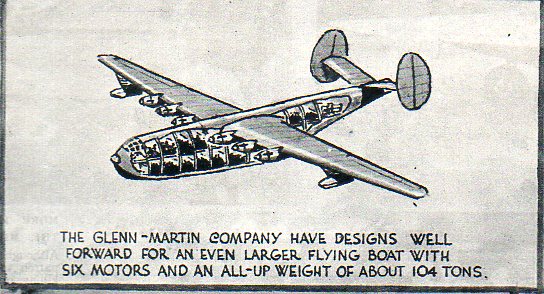
Stats and Technical data on the Glenn-Martin(from Jane’s Fighting Aircraft of World War II, (1945):