A Daily History of Holes, Dots, Lines, Science, History, Math, Physics, Art, the Unintentional Absurd, Architecture, Maps, Data Visualization, Blank and Missing Things, and so on. |1.6 million words, 7500 images, 4.9 million hits| Press & appearances in The Times, Le Figaro, Mensa, The Economist, The Guardian, Discovery News, Slate, Le Monde, Sci American Blogs, Le Pont, and many other places… 5000+ total posts since 2008.

  • Understating an Understatement: One Week Over Germany, March/April, 1945

    JF Ptak Science Books   Post 2622 Leafletone week of bombing469
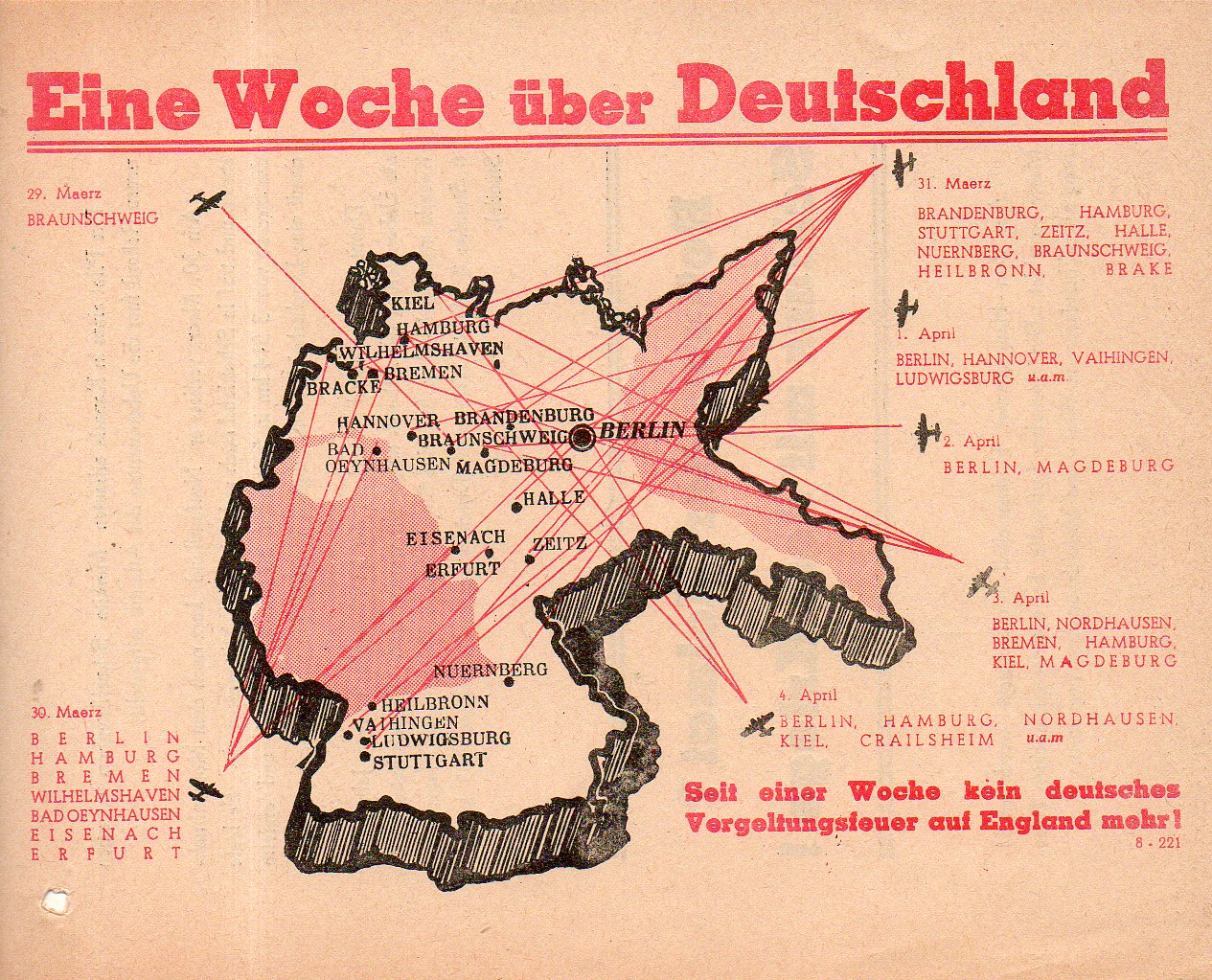
    Here’s a map the meaning of which was destined to be understood by even the most casual observer. It appeared on a propaganda leaflet distributed by the U.S. 8th Army and shows the Allied bombing campaign against Germany from 29 March to 4 April, 1945.  (Most of the action depicted here looks to be the U.S.A.A.F., though I haven’t gone through each and every bombing location.  I do know that in the last two weeks of the war that the Soviets used about as much bomb tonnage on Germany as was used by the Allies over the preceding two years.) The red lines show the destination of bombing raids, of which there are many for a seven day period, and for my reckoning this is not a complete listing.

    Perhaps this leaflet would have been even more provocative if it represented the number of planes on average that would participate in one of these missions, which would of course would be in general hundreds of aircraft. For example, for the raid on Hamburg on March 30 there were over 530 aircraft involved; and for the same location on the next day, another 469. Also there were another five raids on Hamburg over the week following this one depicted, including one on April 8/9 with 440 aircraft.  Also this week of raids takes place right after and before other series of massive raids, including a mission over Berlin on February 3 1945 involving 1000 B-17s and 575 Mustangs, followed 11 days later by the bombing of Dresden, which was followed three weeks later by incredible bombing of Tokyo. And later, on April 14, more than 2200 aircraft would take to the air.  As impressive and scary as this leaflet looks, it doesn’t really begin to approximate the amount of damage inflicted on Germany from the air. (One last example–the large raid on Crailsheim, where I happen to have been born, destroyed about 80% of the small city.)

    The title Eine Woch ueber Deutschland (“One Week Over Germany”) must have been disturbing for a soldier to read–particularly with the corollary at bottom, which stated that there was no German response so far as bombing England in retaliation was concerned.  By this point, the German soldier knew the situation was FUBAR, though I do not know if there is a good German translation for that.  
  • A High-Renaissance “Tank”, 1623

    JF Ptak Science Books   Post 2623

    A Possible-reality from the visionary Robert Fludd

    Fludd tank e

    [Source:  University of Utah, http://content.lib.utah.edu/cdm/compoundobject/collection/naturae/id/1587/show/1265/rec/1]


    Fludd
    Robert Fludd’s (1574-1637), title page for his  Utriusque Cosmi . . . Historia (1617) features this complicated astrological wheel with a Vitruvian-man-like image at the vortex of the imaged pulls and pushes of the cosmos.  In addition to everything else, real and imagined, Rosicrucianism and astrology and puffy-birds, Fludd, who was  an English physician, delved deeply into the real stuff of the world in this book in addition to all of the other make-believe–optics, the musical intervals, perspective drawing, hydraulic engineering, construction of lifting machines, military engineering and many other interesting, physical science topics.  But this drawing, right there on the title page, reveals Fludd’s real interests and shows what governs what he does.  Everything else, the math and and the physics, services this need.  Of course the image is beautiful, which is why it is here, but it is also a deeply personal, exploitative, cover-all for the things that Fludd wanted to find. 

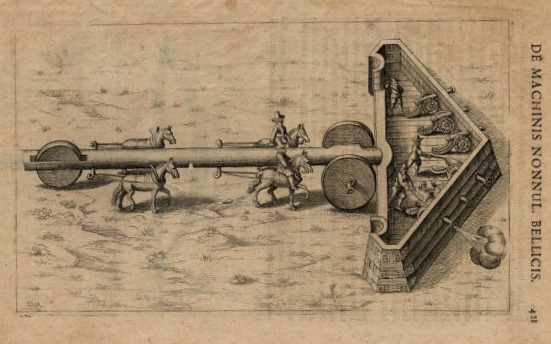
    But there is a lot of other interesting, and potentially-applicable, real-world stuff and proposals in the book as we can see in the exotic and wonder-full image of the high-Renaissance “tank” that leads this short post.  I’m not so sure that this thing would actually move–I assume that it has wheels or something in the front part to help it move along, otherwise that weapon would go nowhere.  Even if it was assumed to be mobile, I wonder about whether four horses is enough to move along something that size plus six canon and at least three men.  Even with 5’/6′ wheels, it seems not so likely that this would roll across a battlefield.  All that said, this did exist in the realm of possibility, and Fludd had much else.  Since I’ve been doing research on the first battlefield appearances of tanks, this one particular image caught my attention.  


  • The Dawn of the Robots

    JF Ptak Science Books   Quick Post 

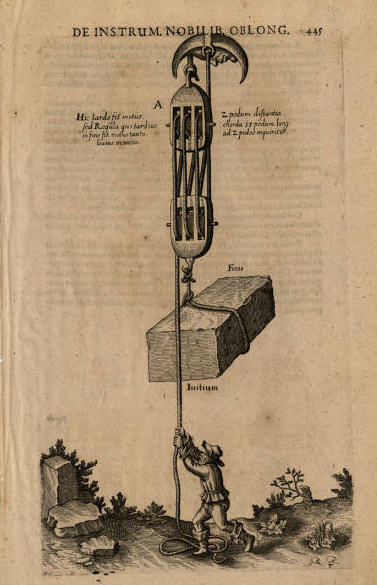
    Well, this is not anywhere near the first image of a pulley, not anywhere close–I don’t even know when that might have appeared in a manuscript in the 9th century or whatever–but it is certainly a very attractive gang of pulleys.  It occurs in Robert Fludd’s (1574-1637), Utriusque Cosmi . . . Historia (1617), and in it I see Hero/Heron of Alexandria (10-70 ACE), who I always associate with the pulley, and of course with his famous inventions, which in some respect are early forms of ‘robots”. In this image, the pulley-robot of some complex means is operating the “drive element” and producing (still) the necessary energy to produce change. And–this is a fine image.

    Fludd pulley

    [Source:  University of Utah,http://content.lib.utah.edu/cdm/compoundobject/collection/naturae/id/1587/show/1265/rec/1]

  • A Bad Place to Be in 1917

    JF Ptak Science Books  Quick Post

    “From my mother’s sleep I fell into the State,
    And I hunched in its belly till my wet fur froze.
    Six miles from earth, loosed from its dream of life,
    I woke to black flak and the nightmare fighters.
    When I died they washed me out of the turret with a hose.”–Randall Jarrell, formerly of the USAAF

    Jarrell explains the poem so: “A ball turret was a plexiglas sphere set into the belly of a B-17 or B-24 and inhabited by two .50 caliber machine guns and one man, a short small man. When this gunner tracked with his machine guns a fighter attacking his bomber from below, he revolved with the turret; hunched upside-down in his little sphere, he looked like the fetus in the womb. The fighters which attacked him were armed with cannon firing explosive shells. The hose was a steam hose.”–(Wiki)

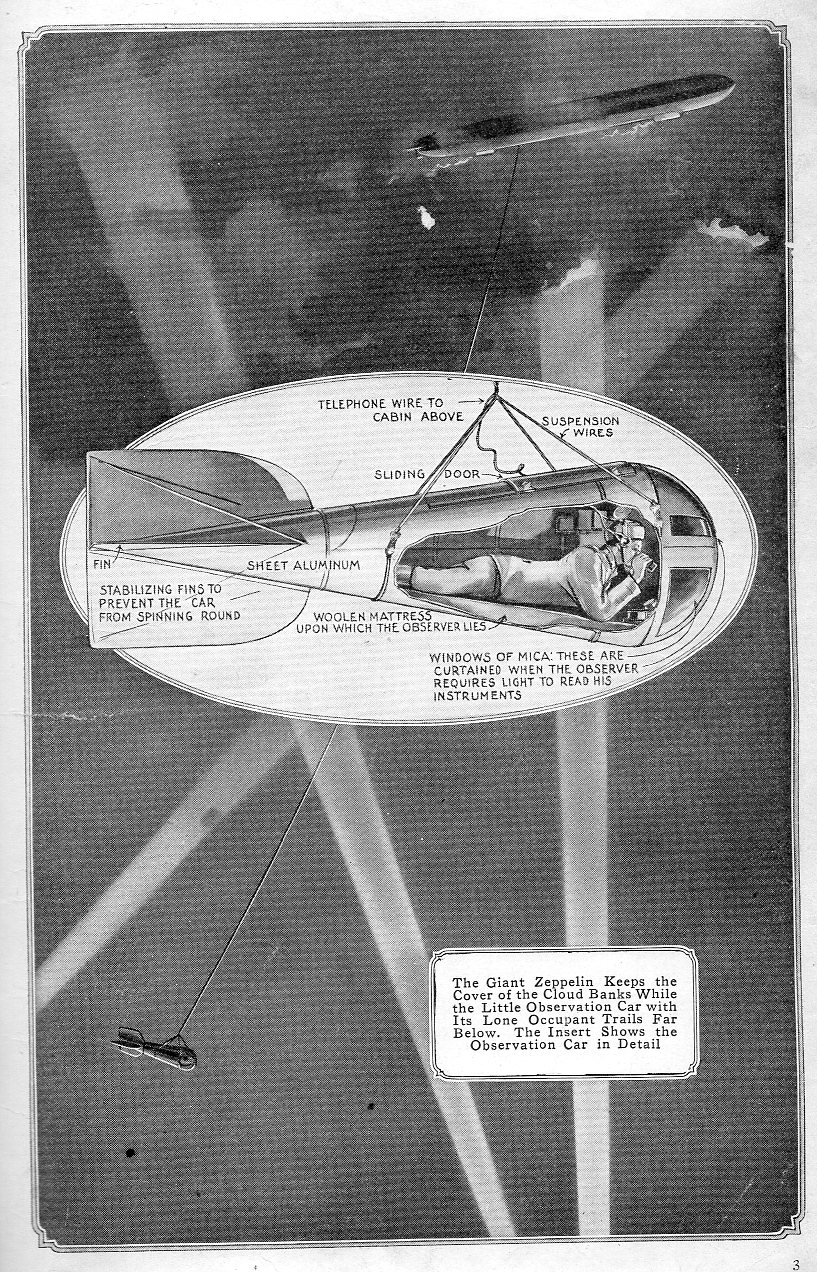
    I used to think that the belly gunner (in a ball turret) in a B-17 (or B-25, or PB4Y-1) was about the most dangerous/wrenching position to be in an aircraft–that is, until I saw this illustration in the January 1917 issue of Popular Mechanics:

    Aviation  zeppelin observation car472


    This was just a bad place to be, in a 14′-long bomb-like aluminum casing, hanging from a 3000′ 3/8″ cable suspended from a Zeppelin, trying to relay the positions of whatever you could find, and with people shooting at you. At least, though, the observer had a woolen mattress on which to lie (so says the caption).  

    ·Posted by :

    ·in:

    — —
  • Fighting Chlorine Gas With Cotton and Gauze, August 1915

    JF Ptak Science Books  Quick Post

    WWI Project gas protection b475


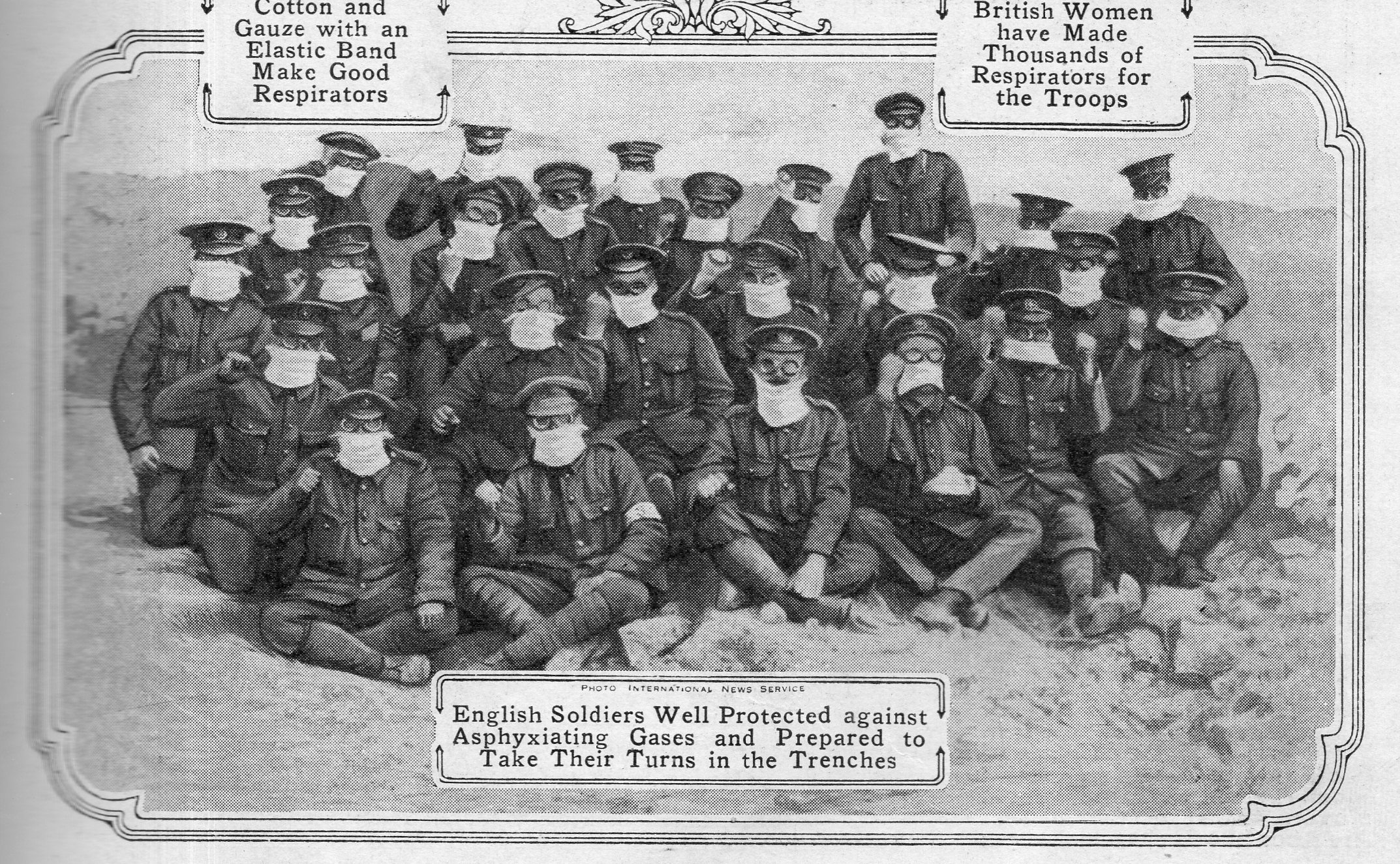
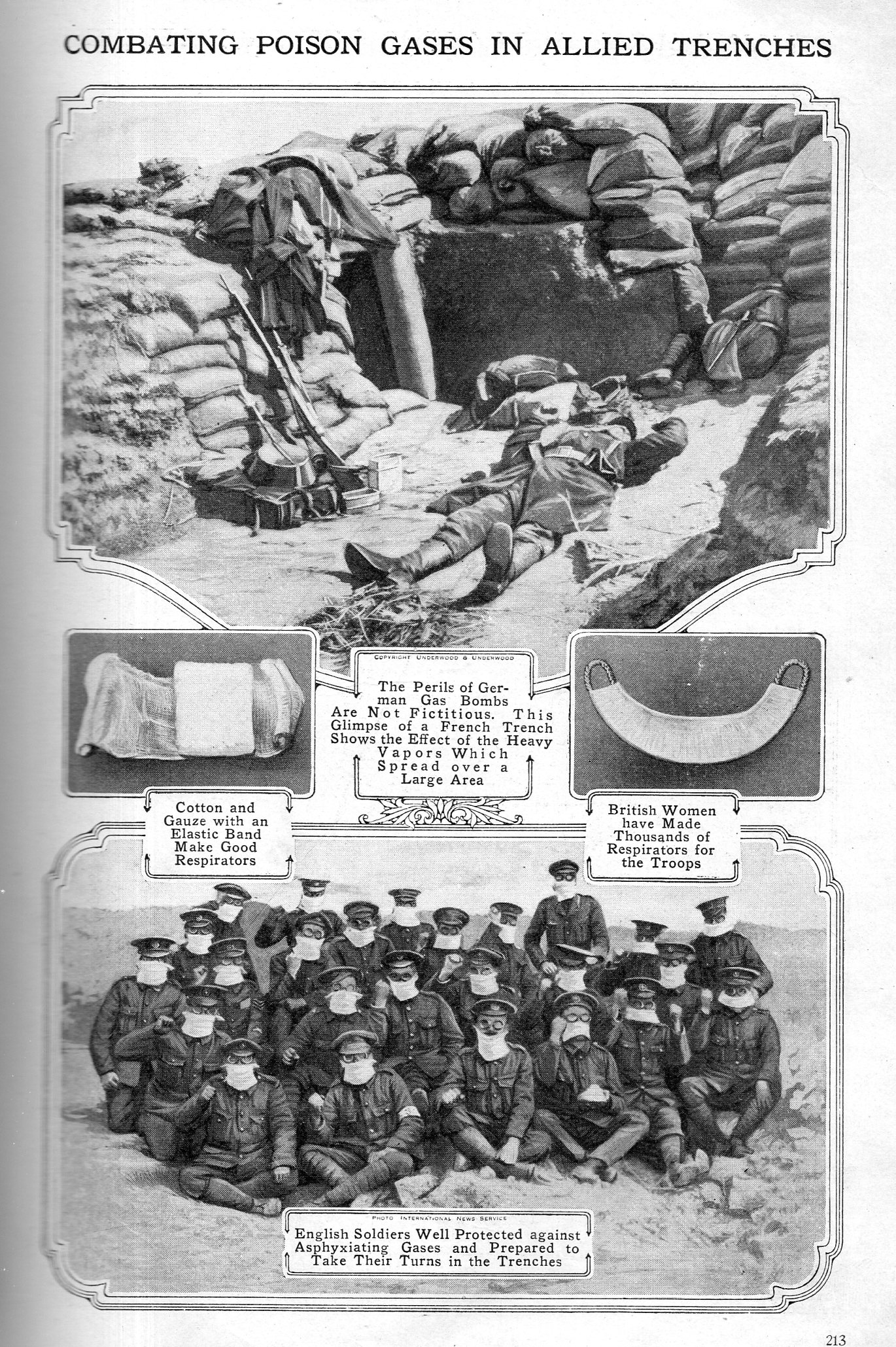
    This photo is so filled with dread and sadness, a squad of English soldiers posing with their volunteer-made cloth gas masks.  The image appeared in the August, 1915 issue of Popular Mechanics, and showed the state of gas protection for infantry as it existed in the earliest stages of gas warfare in WWI.  Popular Mechanics addressed the issue of poison gas in an earlier (monthly) issue, but it really wasn’t until this present issue where there was a series of articles/photos relating to poison gas protection. The first employment of poison (chlorine) gas occurred a few months earlier on 22 April 1915 against the French by the Germans at Ypres, in Belgium, and it turned out to have a ripping and widely disastrous effect on the French lines in what would be the first and only major offensive launched by the Germans that year. .  


    WWI Project gas protection474

    ·Posted by :

    ·in:

    —
  • Socialist Utopianopolis vs. Everyday Free Marketry Vision of Post-WWII Australia

    JF Ptak Science Books  Quick Post

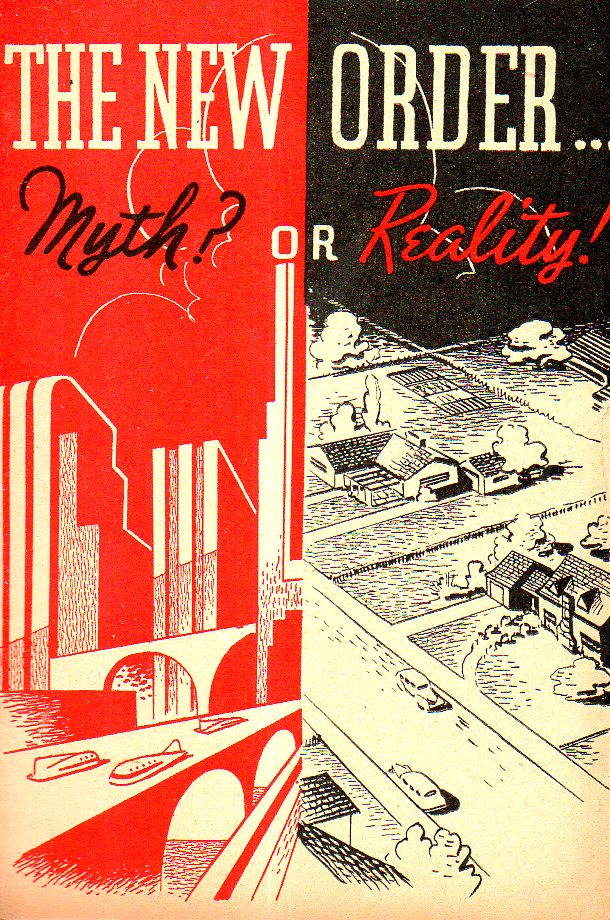
    This cover design decorates a pamphlet from the Australian Constitutional League of Sydney, written towards the end of WWII, and visualizes a post-war Australia in terms of free enterprise  vs. socialism.  Needless to say the pamphlet took a dim view of the prospects for a Socialist Australia.  From my brief read of the little pamphlet, the Utopianopolis on the “myth” side of the future belongs to what the Socialists could never deliver; on the right side, the “reality” part, as socialism “promises everything” but “fails in everything”.


    Books new world order477

  • Rare Eyewitness Holocaust Account, 1944–The Only Reproduction of the Full Document

    JF Ptak Science Books  Post 2608

    Witness from the netherlands detail g171

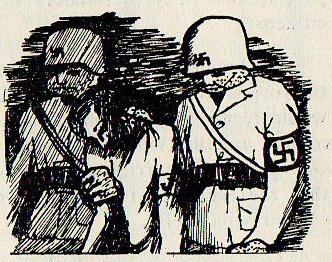
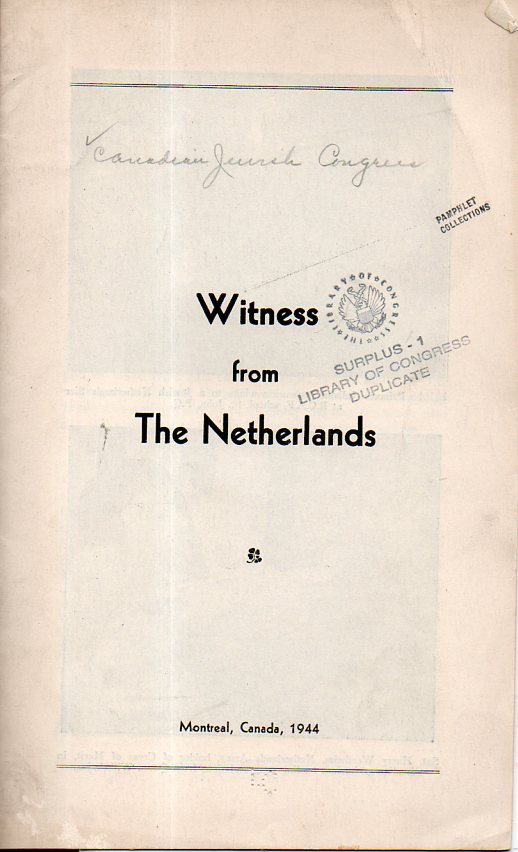
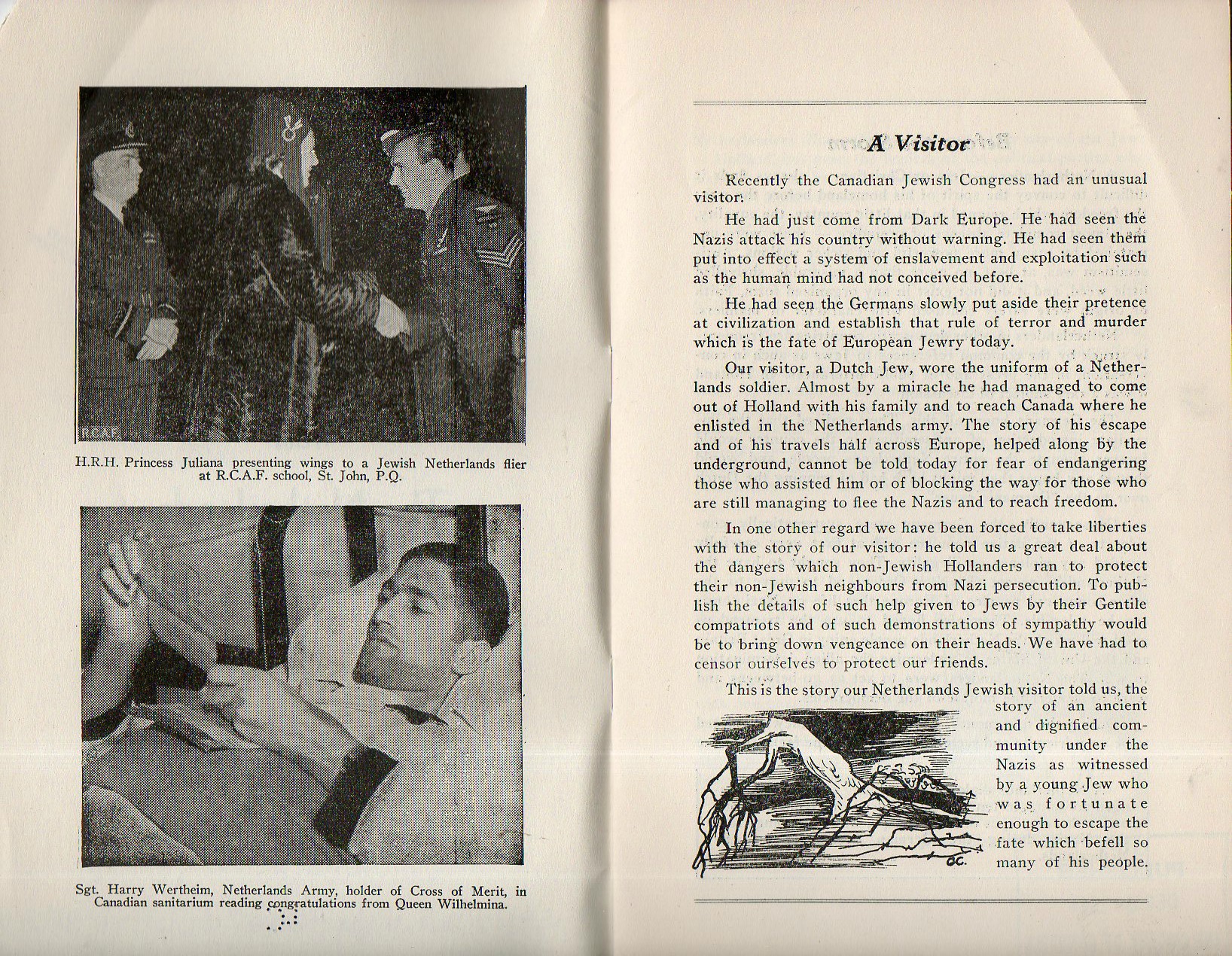
    Witness from the Netherlands is a frank and concise eyewitness account from a Dutch Jew escaped to Canada, his account being published by the Canadian Jewish Congress in Montreal in 1944. He tells of a calm period at the beginning of the occupation by the Nazis and their efforts to ingratiate themselves with the Dutch–one of those methods was to ostensibly form an emigration policy for the Jews and having them register with the “Central Committee for Jewish Emigration”. The facade did not last long, and the rest of the pamphlet is devoted to the violence after January 1941.  The rest of the story is left to the reader–the pamphlet is only about 4000 words, and it is a recommended read.

    The account necessarily leaves out his escape routes and the people who helped him to escape; the same is said for the “non-Jewish Hollanders” who protected him and others “from Nazi persecution”. 

    I’ve scanned the document and made it available below. There looks to be no copyright restriction on the 1944 original, and I won’t add one.  I could not find records of the pamphlet for sale, and an internet search reveals only seven hits (somehow) for the title phrase, with only two of those being for the actual pamphlet, and both of them being library records.  (I don’t have the time or resources to check textual references for the work in the standard histories of the Holocaust, unfortunately.)

    WorldCat/OCLC find 10 copies located in high pedigree, with only copy copy in the U.S. and only three in North America: British Library,  Royal Library (Copenhagen), Konniklijke Bibliotheek,  NIOD Institute for War, Genocide Studies (Amsterdam), Harvard, University of Ottawa, University of Toronto, Tel Aviv University, National Library of Israel, and the Danish National Library. 

    The original is for sale in the blog bookstore:  https://historyofideasblog.com/books/2016/05/rare.html

    Witness from the netherlands a166


    Witness from the netherlands b167

    ·Posted by :

    ·in:

    —
  • Office of War Information–Hitler’s Lies (1942, With Full Text)

    JF Ptak Science Books    Post 2609

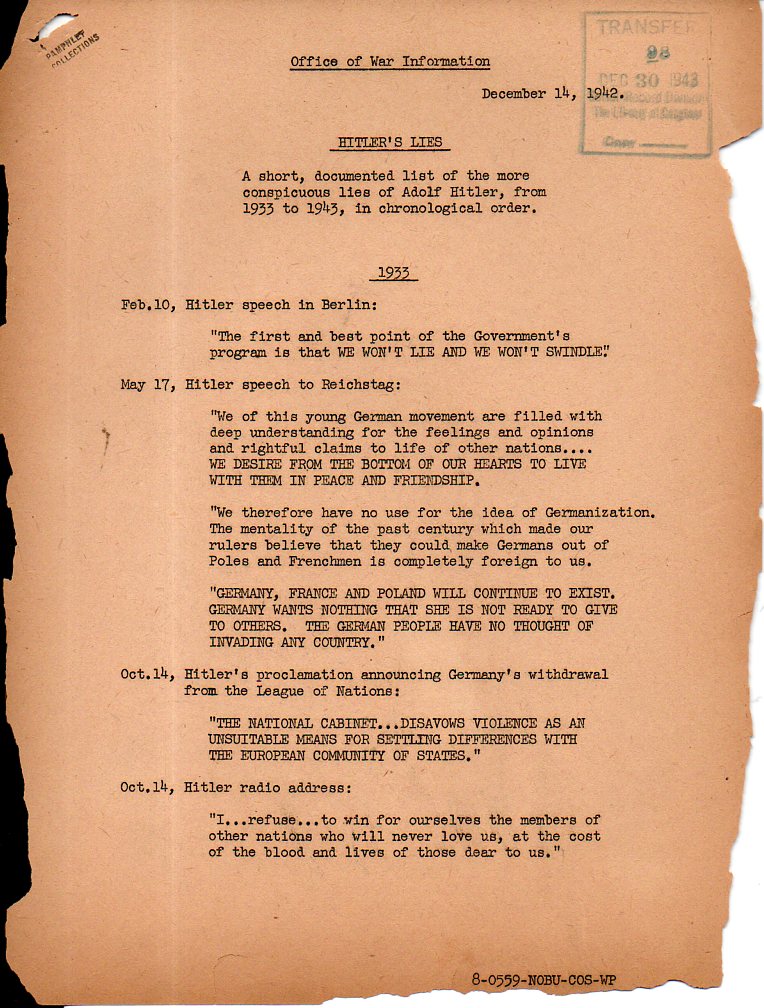
    Here we go–after Hitler had been in power for 11 years of many highly-veneers layers of lies great and small the U.S. Office of War Information produced a short and truncated scorecard of the most “conspicuous” of them.  The paper, Hitler’s Lies. A short, documented list of the more conspicuous lies of Adolf Hitler, from 1935 to 1942, in chronological order was an 11-page chronological abbreviation of some of Hitler’s most notorious lies. Oddly enough there seems to be hardly anything printed as a book or pamphlet in the 1933-1945 period with “Hitler” and “Lies” in the title (though there is Lies as Allies, or, Hitler at War, by Frederic Maugham, 1941)–there are a few more if you use “Nazi” and Lies” in the search, and o revealing Nazi Lies (1940), 1001 Nazi Lies (1940), and  Here Lies Goebbels (1940). In any event the OWI copy seems to not be around in libraries–there seem to be no copies of this edition located in the WorldCat/OCLC, though there is one other very similar version of this (in four pages, double columns) at the Denver Public Library. With this in mind I decided to share the entire document, which is now reprinted below. It is well worth readign to see how an official hearst/minds information arm of the U.S. government was dealing at a popular/informed level with Hitler.  

    (The following quotes come from a review by Martin Melosi of Allan M. Winkler,  The Politics of Propaganda: The Office of War Information, 1942-1945 , published by Yale in 1978):

    • The Office of War Information (OWI, created in 1942)  was “dominated by liberal interventionists, such as Archibald MacLeish and Robert Sherwood, the OWI sought to play an activist role in winning the war by affirming the value of democracy over any totalitarian threat”. “The leadership of OWI were sure that if they could simply repeat it loudly enough and often enough, it would win the hearts and minds of all who heard  (p. 150).”  “But alas, the grandiose dreams and high expectations of the major OWI figures were dashed by several forces, including a hesitant, almost indifferent president; a suspicious Congress and State Department with little faith in the plans of OWI; a variety of internal squabbles over attempts to define what American policy was and how best to present it; and, most significantly, the more pragmatic requirements of war.”
    • And so “the home front was short-lived; how Congress dismantled the domestic branch which had tried to the American people about the war effort” and the OWI shifted its interests and direction to the theaters of war, “intense efforts to support the military effort via psychological warfare against the enemy…The propaganda of war had finally come to represent the war being fought.”


    Hitler's lies 1153

    ·Posted by :

    ·in:

    —
  • Maps of the Progress of the Nazi Occupation, 1936-1943

    JF Ptak Science Books  Quick Post

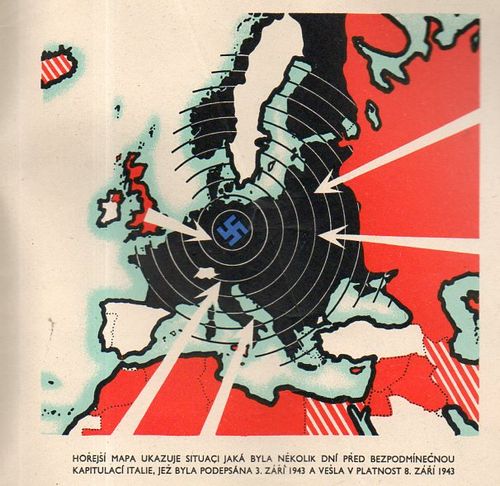
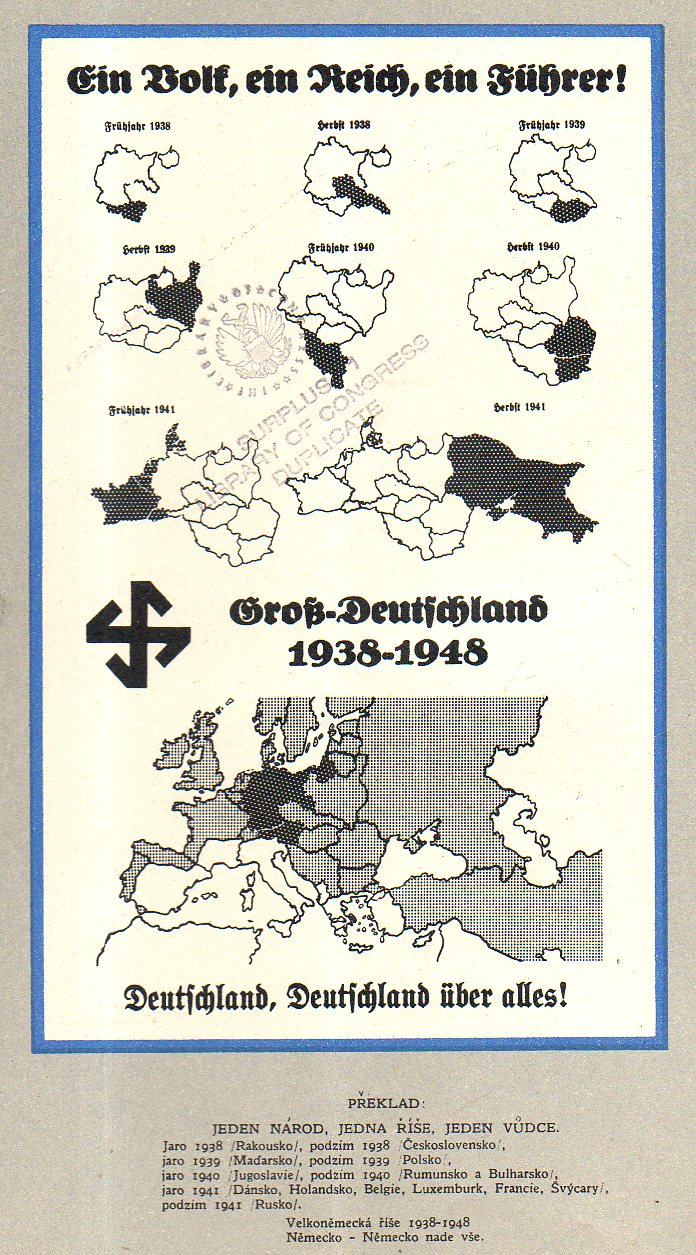
    Čtyři léta války v mapách (“Four Years of War…in Maps”), published in London, ca. 1943, is a Czech-exile publication showing the development of the war in a number of very striking maps. The maps end at the publication of the pamphlet–except of course, for the 1948 map. The culminating interest though shows the Nazis surrounded, and put to the final test–it is the first map I list, below, even though it was about the last map in the pamphlet.  It is a rare thing, this pamphlet, and it does not show up in the usual places. There are only seven copies located in the WorldCat/OCLC, all in top-notch libraries: NYPL, Yale, Harvard, Harvard Law, UC Berkeley, Oxford, and Nanterre. 

    Maps Germany 1942183


    An overall view of the progress of German war conquests:

    Maps Germany 1938-1948175

  • The Problematic and Unpretty May Day, 1940

    JF Ptak Science Books   Quick Post    

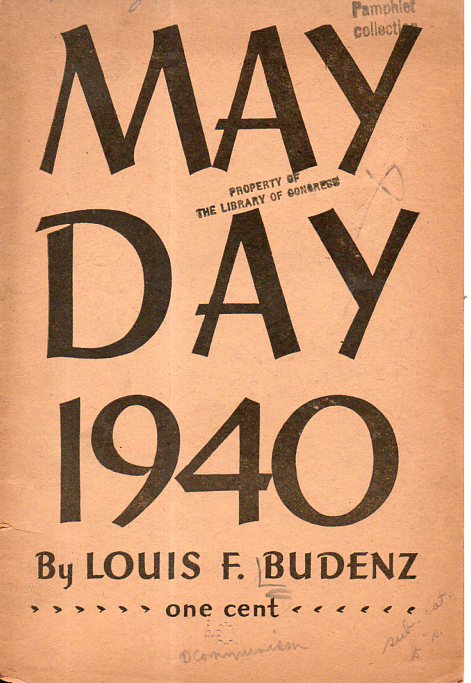
    May Day189I’m a day late for this post, but the pamphlet just surfaced this morning, and so I will go ahead with the May Day post on May Day Boxing Day.  The pamphlet was written by Louis Budenz, who at the time was a Communist and editor of the Daily Worker, as well as a useful agent for the U.S.S.R.  The pamphlet is liberal for the time (especially in regard to “Negro Freedom”, but goes quite a few steps further to denounce the FDR re-election in order to ensure an isolationist/neutral path for the U.S. This was also the case for John L. Lewis, who advocated a similar stance–he was at the time in 1940 the leader (and founder) of the CIO and had been a champion of Roosevelt’s from the mid 1930’s (the CIO being the largest single contributor to the FDR re-election in 1936). Things got very messy with the war and the labor unions peeled away from Roosevelt–this was particularly true for the CIO which received a lot of economic support from the far-left and Soviet sympathizers. Part of the issue in 1940 so far as the war goes is that the Soviet Union was allied with the Nazis, so supporting a war effort against Hitler would be working against the Soviet Union. Lewis was vehemently apposed to not only U.S. involvement, buy also loans and war industry help to Britain. He advised his CIO members to vote against FDR in 1940, except few listened–membership voted 85% for Roosevelt, at which point Lewis took his ball and went home, leaving the CIO but taking the United Mine Workers with him, cleaving them away from the CIO. Things changed once Hitler attack the U.S.S.R. in June 1941, though Lewis was still a pain in the ass, advocating strikes during wartime, which was a verbotten thing.  So far as Budenz goes, he too changed his tune once the Soviet Union was attacked, and after the war became a very vocal anti-Communist–a paid anti-Communist, collecting money from the F.B.I. for the stuff he knew about the CPA. He wound up testifying against a lot of people in the 1950’s, and was much admired by Sen. Joseph McCarthy. 

    So. May Day was a labor-rights thing years ago, much more so than it is today, where it seems to be an anarchy/anarchist something or other. May Day 1940 was not such a pretty thing. 

    ·Posted by :

    ·in:

  • “Swept Away”: Propaganda of the Beautiful Life of German Workers, 1942

    JF Ptak Science Books  Quick Post

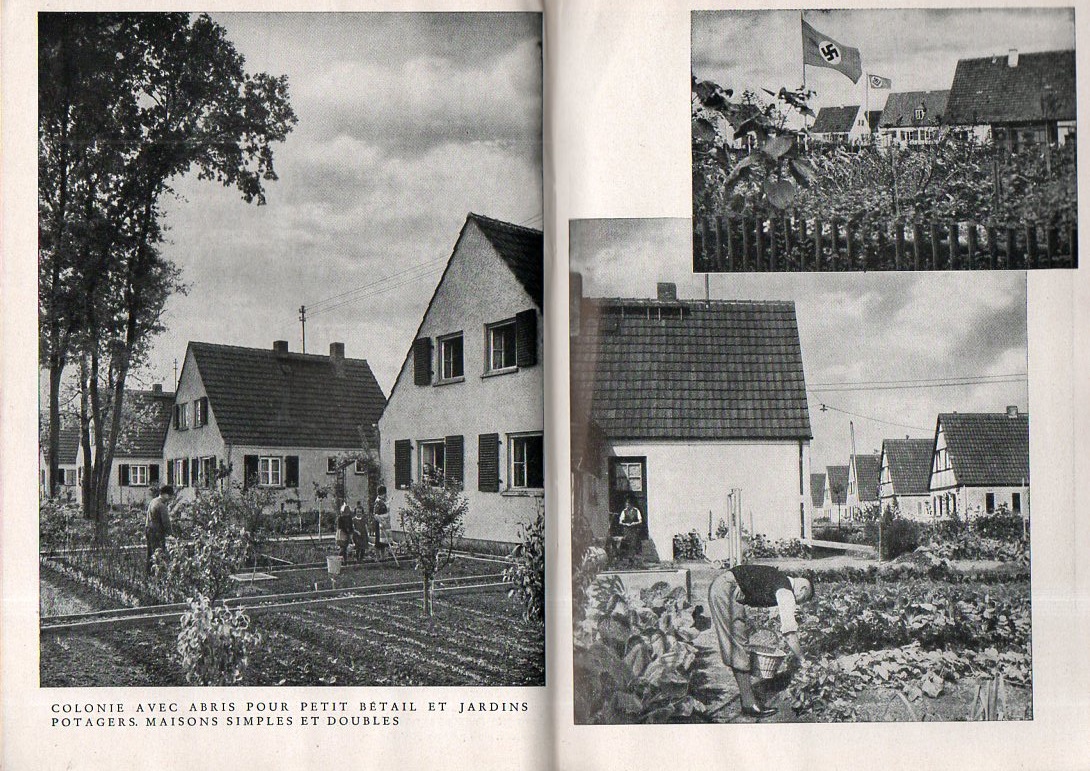
    La Vie en Allemagne, l’Habitation Allemande is a soft, no-edge piece of propaganda produced in Nazi Germany and meant for distribution in France.  (The pamphlet has no place or date of publication, though WorldCat guesses 1941/2, which I’m inclined to agree with–in any event it is appropriate for it to not have identifiers like that as it is, after all, all made up.)  I am pretty sure that pictures such as these printed during wartime for the population of an occupied country could not get any more vaseline-lens-coated or syrupy than these images. They are in the best tradition of a Lena Wertmueller movie, where the working class is perfect as are their homes and children. And if Ms. Wertmueller used for a background artist someone like Maxfield Parrish working in black & white, these images would no doubt seem familiar to him. That said, this is a propaganda vehicle showing the working and living condition of worker “colonists” in Germany and their supposed standard of  living, which as good National Socialists would have been far away above that of blue collar worker in France.  Anyway it was a dreadful piece of dangerous fluff to dangle in front of a captured population–no doubt this little publication found itself replacing paper conveniences in the toilet, and used as fire-starter, but no doubt some poor soul somewhere in France was confused by it, and wondered.

    La Vie Allemagne192

    WorldCat/OCLC locates only five copies (three in France and two in Germany), and no copies in the U.S.

    ·Posted by :

    ·in:

    —

Recent Posts

Archives

Categories