A Daily History of Holes, Dots, Lines, Science, History, Math, Physics, Art, the Unintentional Absurd, Architecture, Maps, Data Visualization, Blank and Missing Things, and so on. |1.6 million words, 7500 images, 4.9 million hits| Press & appearances in The Times, Le Figaro, Mensa, The Economist, The Guardian, Discovery News, Slate, Le Monde, Sci American Blogs, Le Pont, and many other places… 5000+ total posts since 2008.
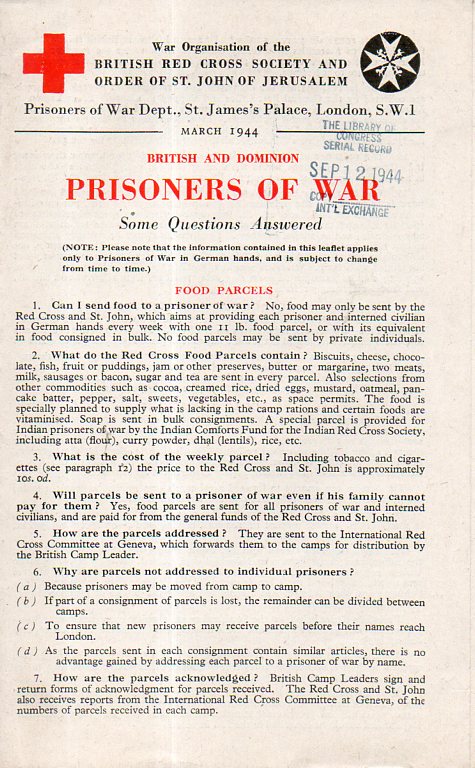
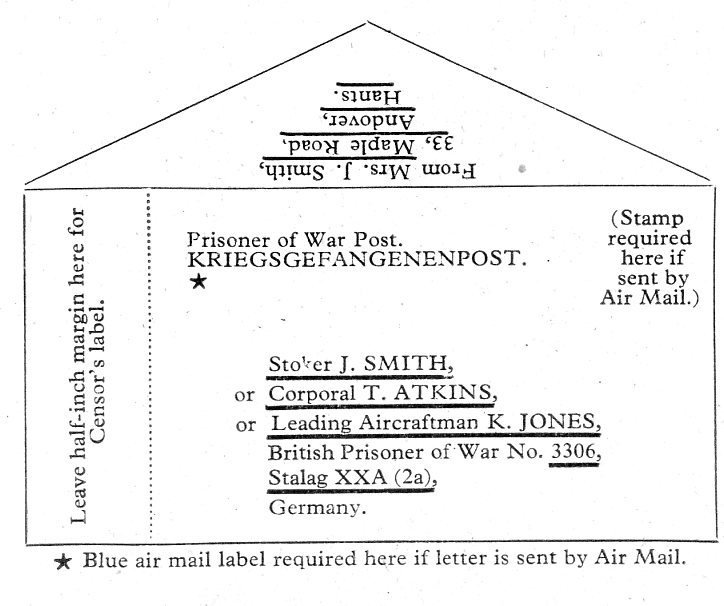
Even when this leaflet was issued in March 1944, so very deep in the war and so very close to the end of the war, there was an enlisted hope for humane treatment for Allied POWs–at least that is what the job of the Red Cross was at the time, to sustain that belief and enforce it wherever they could. (I’ve reproduced the entire pamphlet, below.)
The leaflet provided this hopeful template for addressing an envelope to your POW:
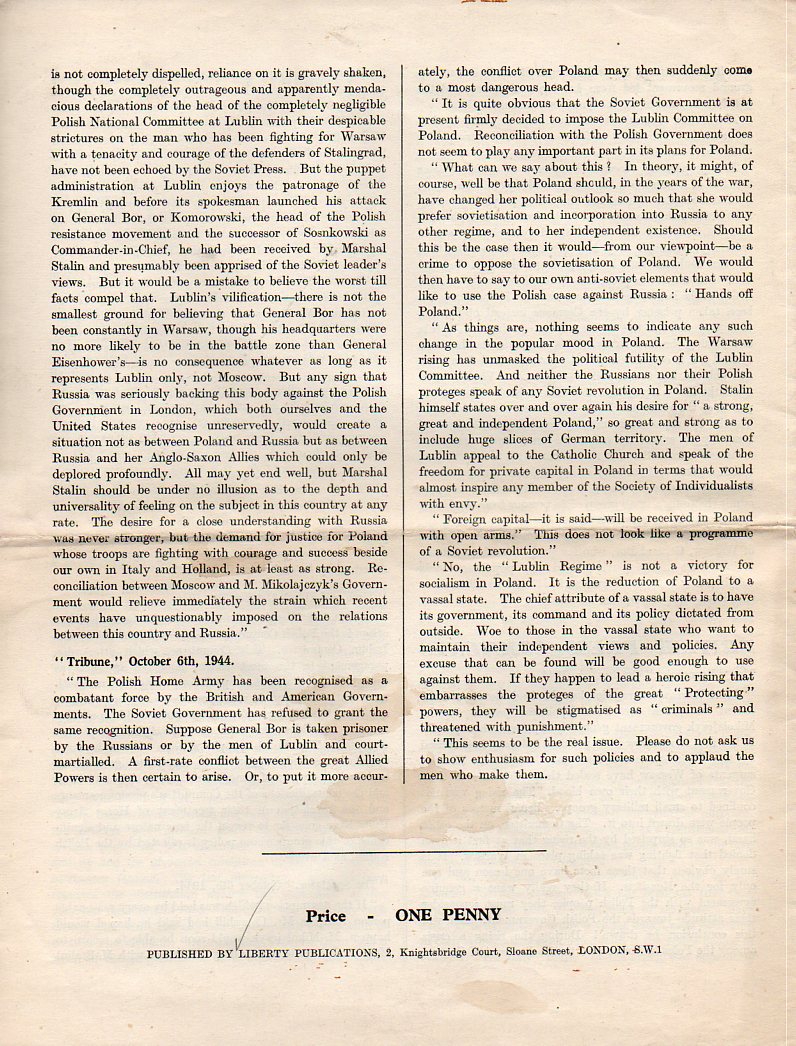
This is bound to be a great smoothing-out of a complex issue, but, well, that’s okay: I think that in spite of the simplification the result is the same. The bottom line of the Second Warsaw Uprising (August/September 1944) is that the Soviet Union allowed the Polish Home Army to fail, watching from its position across the Vistula as the Nazis and Poles slugged it out, both exhausting themselves, the Nazis ultimately defeating the Poles, eliminating most of the Soviet concern for the Polish military and government, allowing the Soviet Union to take the country over more completely when the time came a few months earlier. It was the Soviet’s choice to see two enemies annihilate themselves to have more control over Poland and immediately turn it into a vassal state when it rolled into Warsaw in January, with 85% of the city destroyed and 600,000 of the city’s population dead.
With this in mind, where was the Polish Home Army or the Americans or the Brits-or anyone–when the first Warsaw Uprising occurred? Absent.1 This battle–generally known as the Warsaw Ghetto Uprising–took place about three years after the Nazis established it as a means of control for the city’s 400,000 or so Jews. In the intermediary years hundreds of thousands of Jews had been “deported” (that is, sent to the concentration camps to be exterminated or worked to death), so that by the time of the Uprising only 60,000 people remained in the Ghetto. And by this time there was no doubt in anyone’s mind who lived there (and perhaps too in Warsaw as a whole) what the euphemism of “deportation” actually meant. The battle started off well for the home defence (the ZOB2) but, ultimately, with little access to resource and with nowhere to actually retreat or regroup in the few acres that remained of the original Ghetto, whoever was left in the Ghetto were either killed or captured by 16 May. The German commander, SS Brigadefuhrer Jurgen Stroop reported on that day that “the former Jewish quarter in Warsaw is no longer in existence”:
“Progress of large-scale operation on 16 May 1943, start 1000 hours. “ 180 Jews, bandits, and subhumans were destroyed. The former Jewish quarter of Warsaw is no longer in existence. The large-scale action was terminated at 2015 hours by blowing up the Warsaw Synagogue. Total number of Jews dealt with 56,065, including both Jews caught and Jews whose extermination can be proved. “
Stroop was arrested and hanged in Poland, in Warsaw, in 1952.
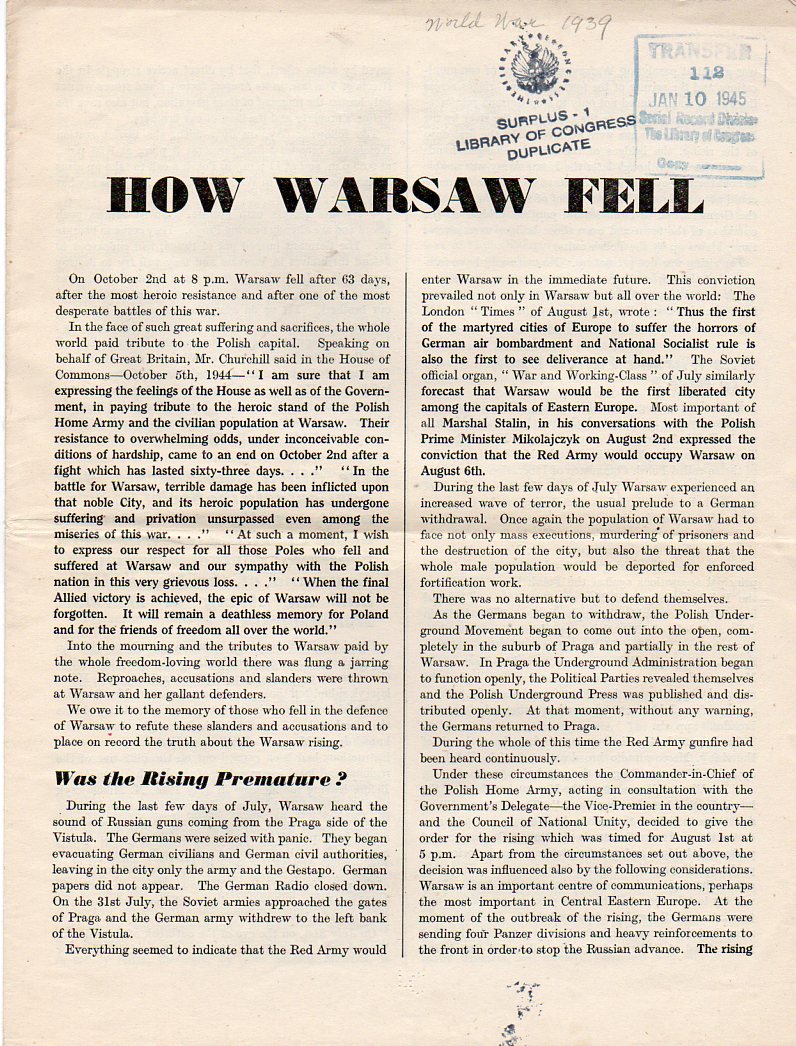
So, this 6-page pamphlet, published by Liberty Publications in London at the end of 1944 (and received by the Library of Congress on 10 January 1945), detailed the misery of the non-recognition of the second Warsaw Uprising and the reason(s) for it. It details the travesty, the disinterest, and the political accomplishment of the Soviet Union gained by its criminal inaction. There is of course no mention whatsoever of the first Warsaw Uprising. Selfish inaction breeds itself, consumes others and then–like yeast–consumes itself.
Notes
1. “WHEN THE revolt in the ghetto broke out in April 1943, all of Warsaw was aware of the fighting. The news of the revolt was transmitted to the Allied capitals by the Polish underground, but no help came for the Jewish fighters – not from the US or England, nor from the Soviet Union; not even a sign of recognition or an acknowledgement by the Allies of the battle raging in the ghetto. The Jewish fighters in the Warsaw Ghetto were unknown soldiers, isolated from the world. Only two years later, after the end of the war, did their valiant battle receive universal recognition.”–“Who Defended The Warsaw Ghetto?”, by Moshe Arens, in the Jerusalem Post, 29 April, 2003.
2. The ZOB was the Zydowska Organizacja Bojowa, led by Mordechai Anielewicz, and ZZW (Zidowski Zwiazek Woskowy) led by Pawel Frenkel.
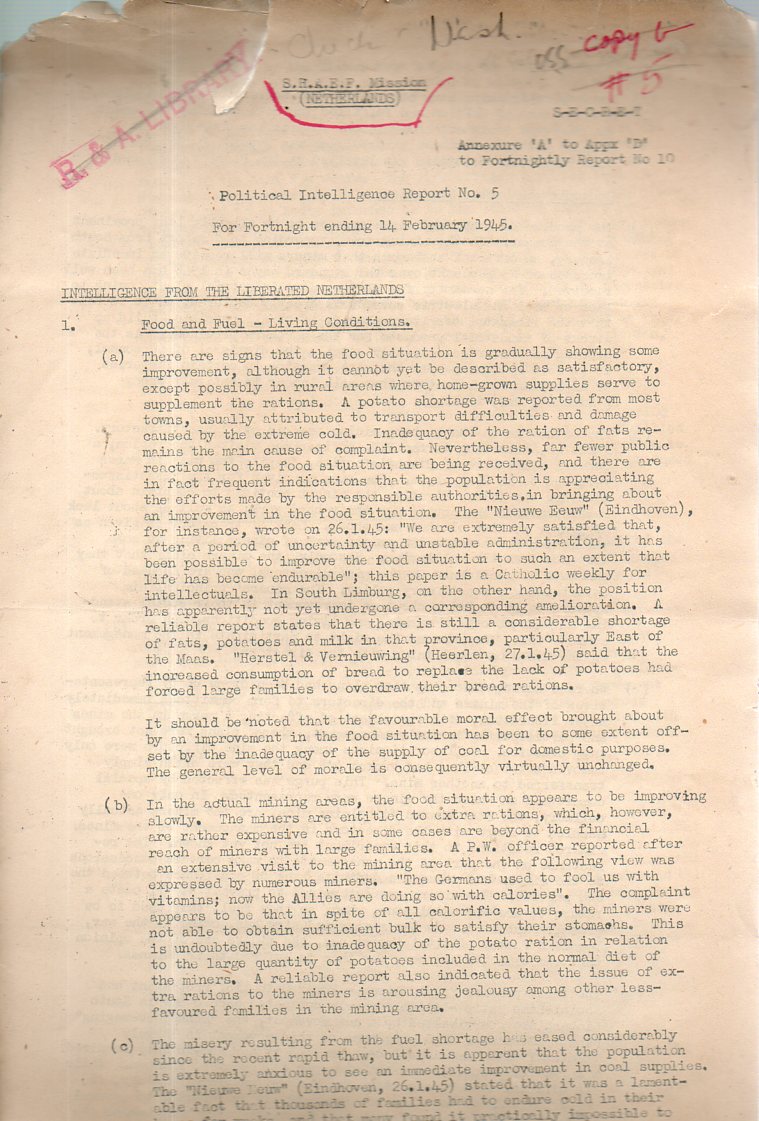
This is a detail of 10% or so of a document here, something that was printed regarding the socio-political temper of the liberated Netherlands in February 1945.
And so: “S.H.A.E.F. Mission (Netherlands) Political Intelligence Report No. 5. (For Fortnight ending 14 February 1945) Intelligence from the Liberated Netherlands” are the running headers. And of course there’s the “S-E-C-R-E-T” part of it, no doubt necessary then but hardly now. The paper includes a report on food and fuel and living conditions, labour and employment, attitude of the population to the Netherlands government, attitude of the population to Allied troops, and so on. What I found very interesting besides the report are the trails of where the document has been.
First, here’s the front page of the document in full:
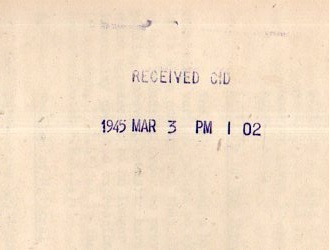
To interpret, SHAEF was “Supreme Headquarters Allied Expeditionary Forces”–the hand annotations and stamps do say where the document has been. First off, we’ll start with the stamp on the back, which may have been the first stamp overall:
The paper was received by the CID on 1945 Mar 3–now the CID could have been a number of things but when placed in context with the notes on the front, the CID becomes the “Central Information Division”, which was the O.S.S. (Office of Strategic Services, and the precursor to the C.I.A.) and the R & D (“Research and Analysis Branch”). Underneath the hand-written “O.S.S” is a most-erased name, a Lt. Col. ________. This is where the Found-Art comes in, because here I tried my trickery and foolery to pull out the name, but I failed, only being able to grab a couple of letters. The result though was interesting in itself, if not for who Lt. Col. ______ was. And so, there you have it, a little exercise that went off into the rabbit hole, producing something interesting but not useful. That happens a lot.
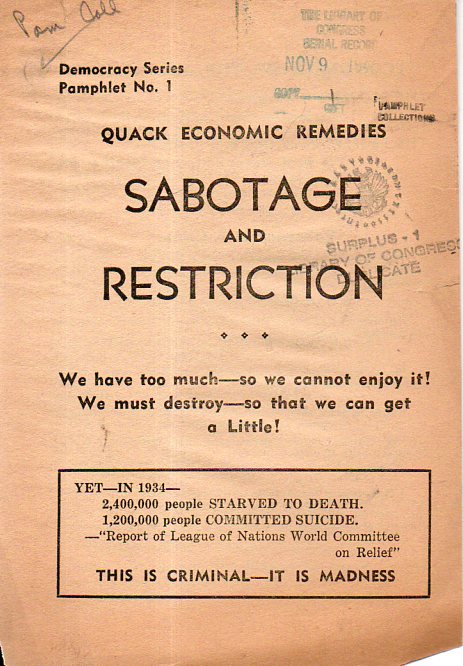
This is an interesting pamphlet (printed ca. 1933/4) that makes a lot of good points in what seems to be our current post-salient world, except that the author’s presentation makes it all look kooky, borderline, Outsider-y, and therefore dismissable. But the good points are there, and no doubt a lot of the numbers seem as though they can be true–it is just that the presentation is about as actionable as listening to some guy sitting in a shopping cart under the overpass and wearing cardboard box signs while delivering his message in bolts of screams–the medium really can be the message, or the mess. And this is just a mess, true or not, which was too bad.
(This is another one of those pamphlety works that seem as though they were very popular–and perhaps so, except that its popularity did not translate into any sort of existing longevity–there is only one copy of this work located in WorldCat/OCLC, and the only two online references to the pamphlet are for the listings for in the the library found by WorldCat. So, popularly, this work is no longer “around”. It is interesting to note that for the few dozen Google hits on “Quack Economic Remedies” there are several referring to presidential programs, with those including a wide range of politics, and include Obama, Nixon, and Wilson.)
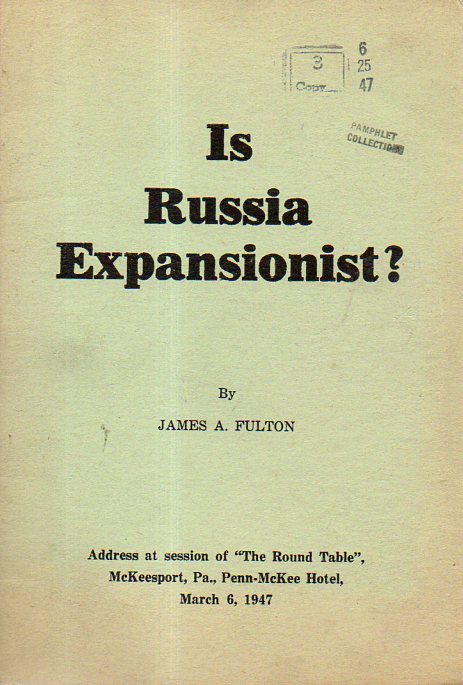
James A. Fulton (b. 1874) asks Is Russia Expansionist? Address at session [sic] of “the Round Table”, McKeesport, Pa and his answer is very much to his own liking: NO! No doubt self-published and then printed in 1947 Mr. Fulton asks his long-sentenced question in the first few pages and then answers it in the remaining text–his evidence is that Russia and its territories have “ups and downs” over the centuries, citing gains/losses in Turkey, Finland (somehow!), Poland (ditto!), Ukraine, and such. It is a difficult argument to read–not doubt Mr. Fulton had his sympathizers, though in 1947 I doubt that he had many. (The pamphlet is not “around”, and given everything going on in 1947 I don’t doubt its unpopularity–WorldCat/OCLC locates 3 copies.)
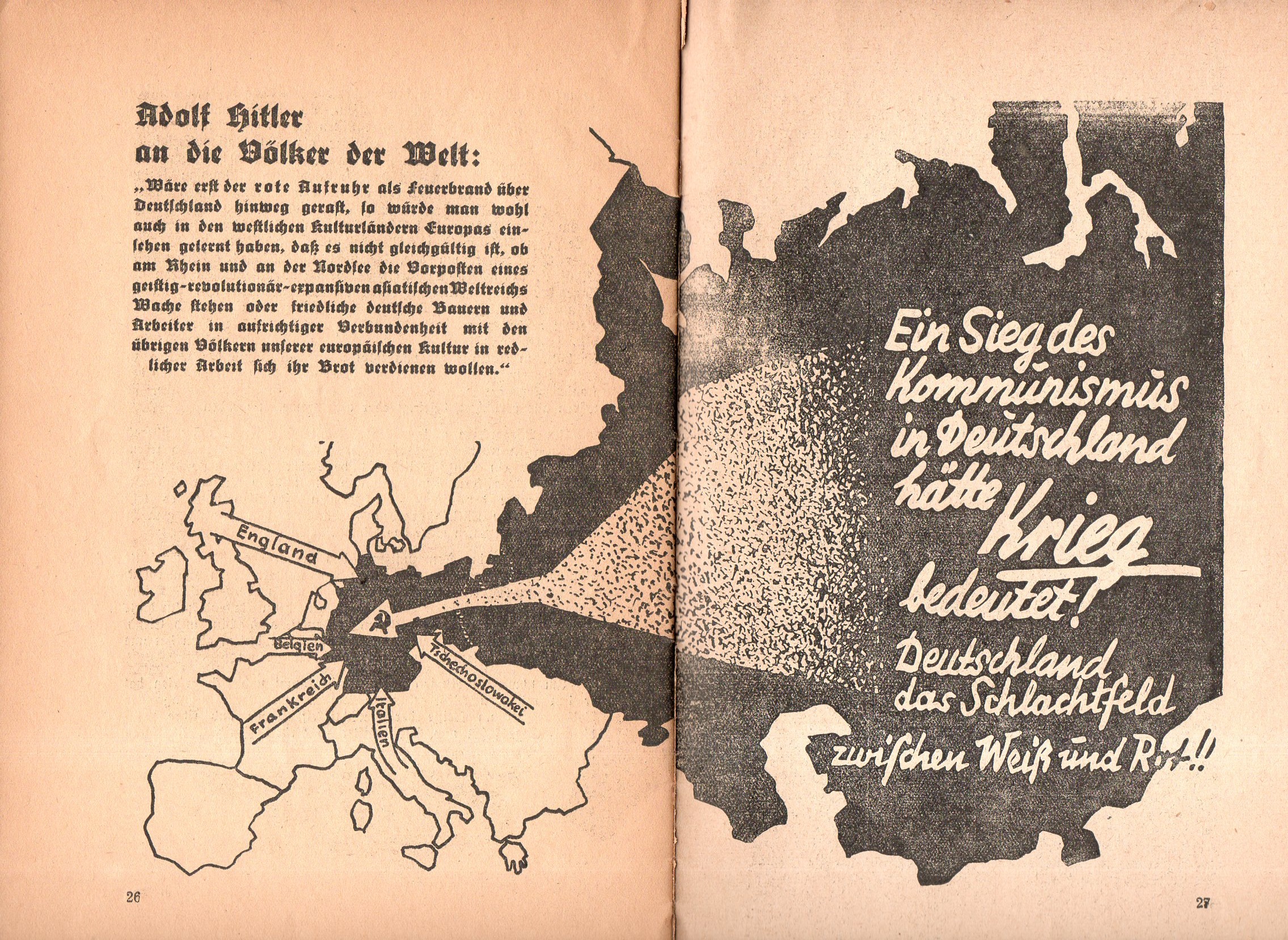
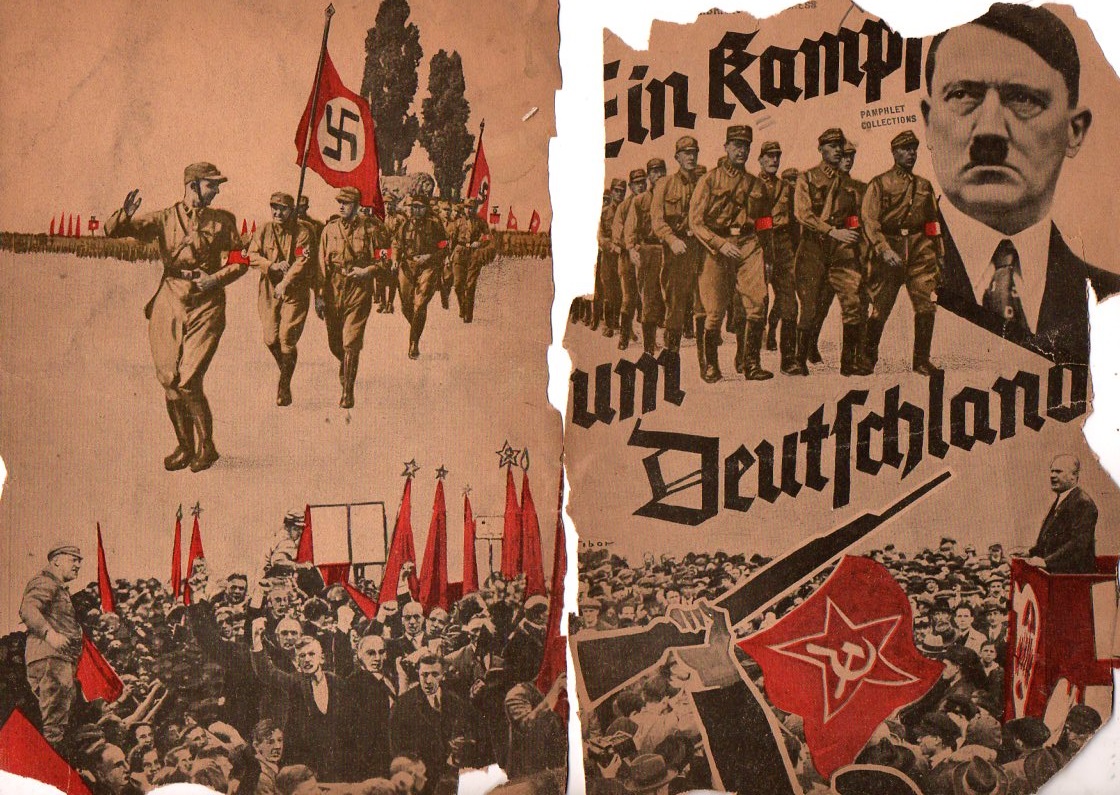
Not long after Hitler’s election in 1933 this curious pamphlet appeared: Ein Kampf um Deutschland (1933), short and thin, is a work filled with anti-Communist photos and images portraying them in as harsh a bad light as you could muster in 32 pages.One of the images is this map showing in no uncertain terms threats to Germany from the west, but most importantly a gigantic threat coming from the Communist east, the arrow striking right through the heart of Germany, with the hammer and sickle (the symbol only about 16 years old at the time) coming to rest just about on top of Berlin.
For all of this Hitler would sign a Non-Aggression Pact with the Soviet Union six years later (22 August 1939) with the plan of dividing some Eastern conquests with the Russians. Less than two years later came Operation Barbarossa, with Hitler launching a massive surprise invasion of the Soviet Union on 22 June 1941. Dozens of millions of lives later, it would all be over in four years.
And the opened cover for the pamphlet, or what is left of it:
When I typed “compose” for this post it meant something slightly different, especially since I was going to sub-head it with a quote about John Cage:
“HPSCHD, a piece for 7 harpsichords playing randomly-processed music by Mozart and other composers, 51 tapes of computer-generated sounds, approximately 5,000 slides of abstract designs and space exploration, and several films1.”
Really? How could anything possibly go wrong here? Seriously though, I like John Cage and he gets a “pass” for all of the work that I don’t get or understand. He came up when I was working on the remnants of a box that contained further remnants of an early educational electric toy/computer called the “GENIAC”. This was a creation by the very versatile Edmund Berkeley and appeared first in 1955, about a decade or so after the appearance of the first “-IAC” computer, the ENIAC, a revolutionary machine begun in 1943 at the Moore School of Electrical Engineering at the University of Pennsylvania. The GENIAC (and later, the BRAINIAC) were DIYs for kids in the 1950’s and 1960’s, and in addition to the 100+ electrical circuits you could make there was also the possibility of making music, which puts it way out front in the history of DIY electronic sound.
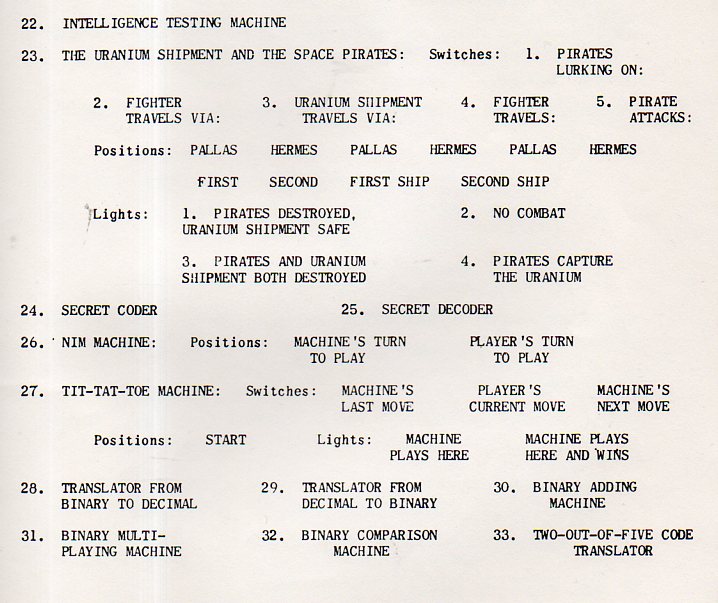
But what I was going for here in the labels sheets for the GENIAC was to scrounge out some found-poetry–there really isn’t any, except perhaps for the silent John Cage type, or a repetitive/cascading Steve Reich/”Come Out”2 variety found here:
“George Calling Tom, George Calling Dick, Tom Calling George, Tom Calling Dick, Dick Calling George, Dick Calling Tom.”
Overall there may be some found-poetry, just in the variations of classifications of the labels that your were supposed to cut out. On page one we have labels for “the hall light”, “the porch light”, “the burglar alarm”, “the automatic oil furnace”.
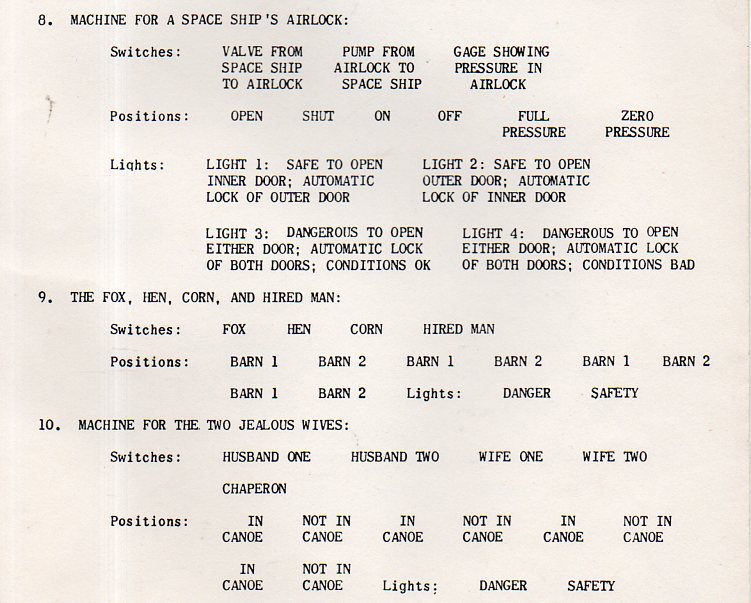
Things get more interesting on the back of the first page, as we move from the mundane to the not-so:
“Private signalling channels”, “machine for a space ship’s airlock”, “the fox, hen, corn, and the hired man, and then “machine for two jealous wives”.
That was certainly different from the obverse.
Things get more interesting still on page three:
At the end of the day, I think there is only scant poetry, and that is found in the structure of the label sheet–that said, I think the whole thing taken together is a Visual Thing itself, because the four page booklet (11×8.5″/page) is actually (anopithsographically (!)) printed on one sheet on paper and on one side only, so the effect is seeing this on a 11×34″ sheet of paper with all of these seemingly-disparate bits on it, which is pretty cool.
Notes:
1.”Computer-Based Algorithmic Composition”, Michael Edwards , Communications of the ACM, Vol. 54 No. 7, Pages 58-67 http://cacm.acm.org/magazines/2011/7/109891-algorithmic-composition/fulltext
2. If you don’t want to hear the whole thing (few will) but want to hear the effect, start at the beginning for 15 seconds, then advance a minute, then another, and so on.
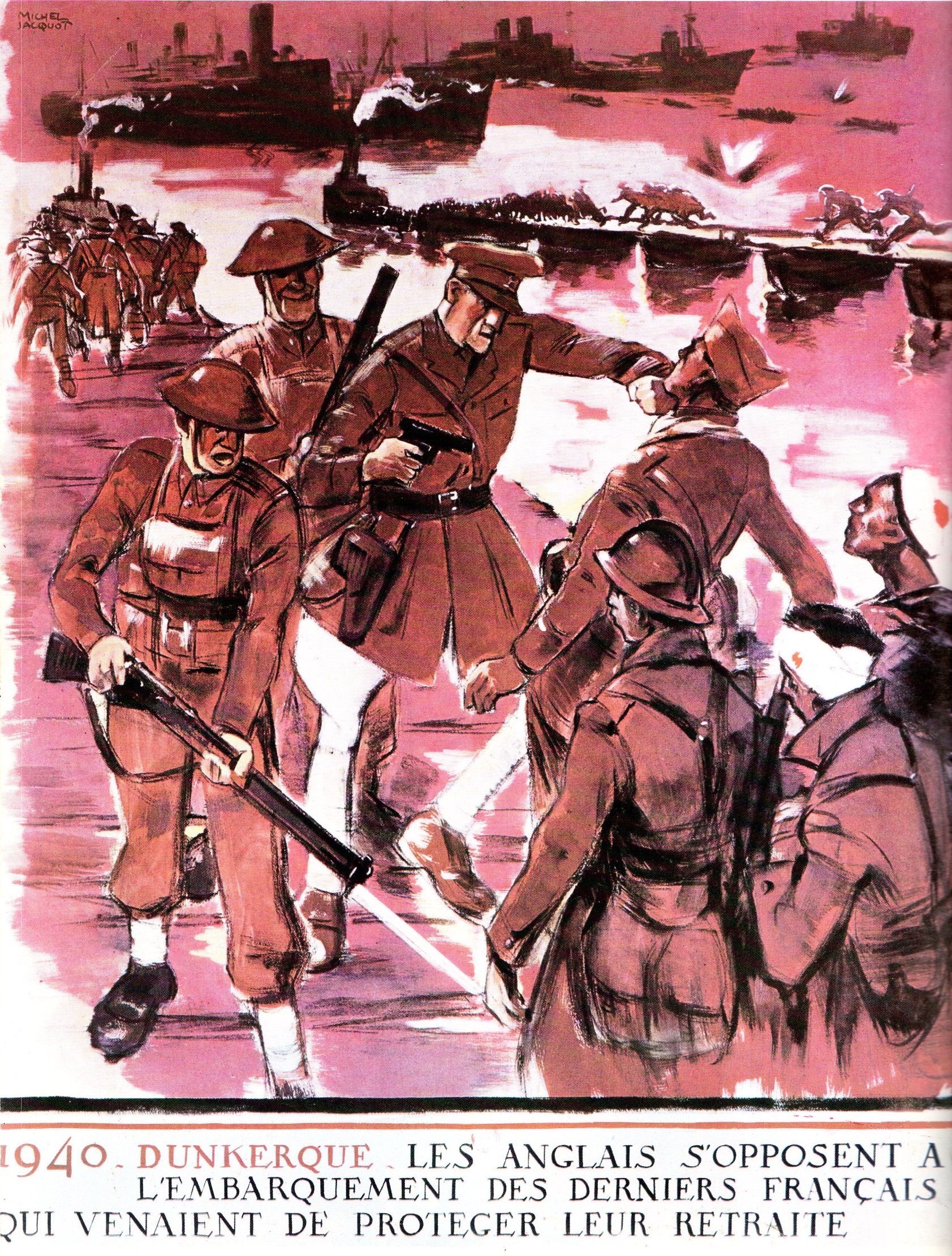
Michel Jacquot seems to have been a relatively busy graphic designer/artist and collaborator with the Nazis during WWII (and before). One very striking and damning poster that he created was this scene of Brits forcing French soldiers away from evacuation vessels at Dunkirk forcing them to satay behind and guard the rear and (2) get eaten alive by the approaching Nazis. All told, there were 338,226 soldiers evacuated from Dunkirk; the grim part of the miracle there was that 68,000 BEF were captured or killed and 40,000 French troops were captured–none of that happened because French troops were marauded by the Brits. Jacquot tried a hearts-and-minds with this one, though it is unknown what effect it had in creating a hatred-thread among the French.
[Source: illustration in Z. Zeman, Selling the war, Orbis Press, 1978.] “1940 Dunkerque. Les anglais s’opposent à l’embarquement des derniers français qui venaient de protéger leur retraite”, by Michel Jacquot.
Jacquot also cooked this one up, a grim anti-Communist poster in support of the extreme Nationalist/National Socialist Parti Populaire Francais (the PPF) in 1943. The leader of the PPF was a former outted Communist named Jacues Doriot (1898-1945) who was a National Socialist, a Nazi supporter, a collaborator, a traitor to his country who broadcast for the Nazis on Radio Paris, and a person who co-founded the Legion des Volontaires Francaise (LVF), which was a unit of French soldiers who fought with the Wehrmacht. There are some other posters, too, including some vile anti-Semitic ones, but you get a good-enough taste for where Jacquot was headed during the 1935-1945 period.
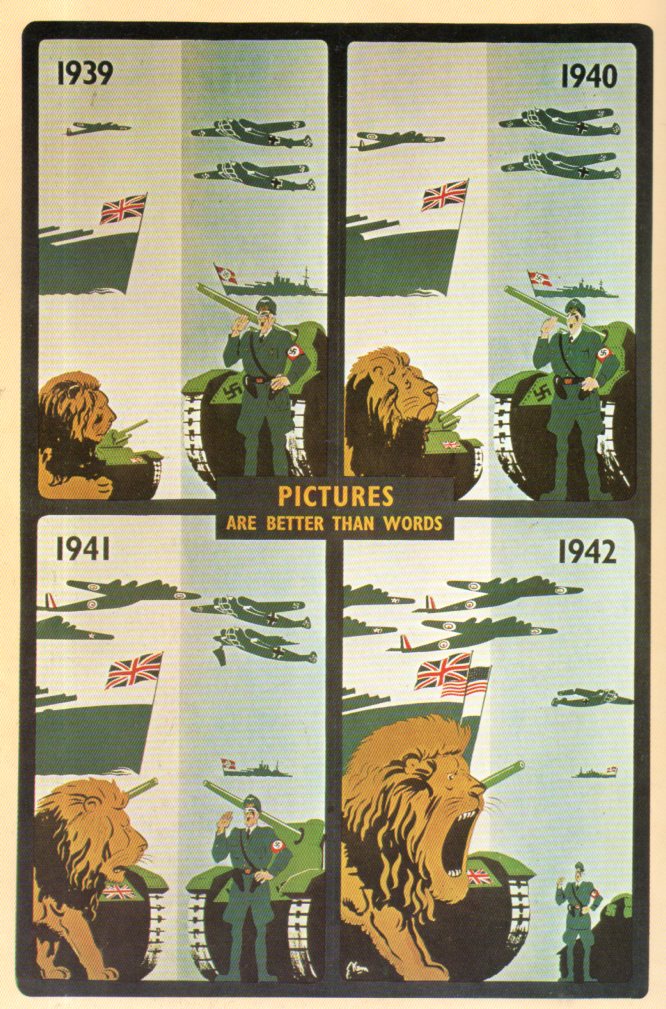
Here’s a wonderful British-stiff-upper-lip poster, a play on the Alec Guinness The Mouse that Roared, replacing the “mouse ” part, and winding up with The Lion That Roared.The poster comes from 1942 and for all intents and purposes is correct, except that the lion was roaring at least since 1940–the difference is that the lion got bigger and roar-ier. The British navy was always far and away more powerful than Germany’s, and although out-numbered in aircraft for the first year and a half or so of the war, Germany was pretty much hopelessly behind by late 1941 and certainly 1942. In any event the poster tells a good and fairly accurate story to the passersby in London in 1942.
[Source: Z. Zeman, Selling the War, Art and Propaganda in World War II (1978).]
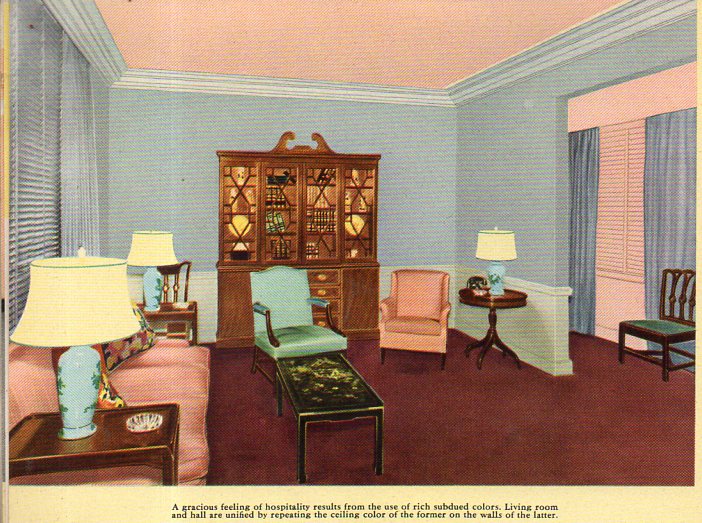
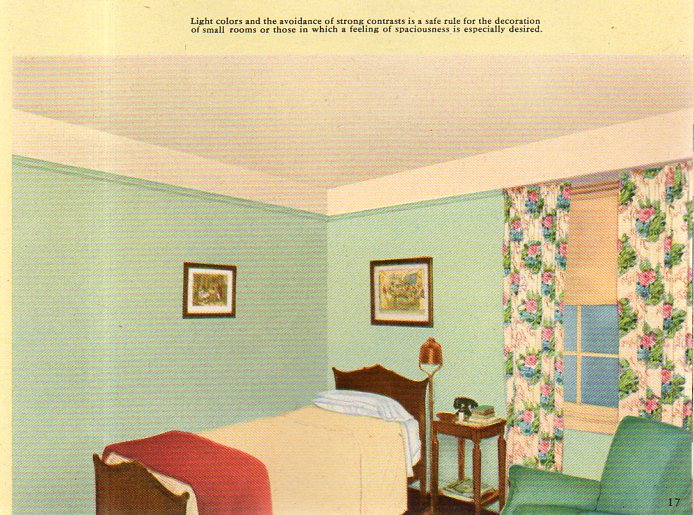
There’s just something very simple and calming in the arrangement of the colors in these photos–and of course something very different from what one comes to expect in interior design. This is so much so that I think it would be possible to take an entire two-day vacation in a house that is decorated in just this fashion. Your brain would be relieved of the expected and introduced to the soft exceptional with a color palette equivalent of an all-white-food carbo breakfast that one could slide under a bathroom door. I think you would take a seat with a good book, and then fall immediately to sleep–not from boredom, but from the unexpected luxury of color-unusualness and perhaps a little whiff of the grandparent’s house, the colors surrounding you having the optical qualities of the heat from a good fire. If we were seeing movies of folks gathered around the radio and listening to the end-of-the-war stories in 1945 in a set like the images below, we wouldn’t picture the black-and-whiteness to purge itself into this allotment of soft color.
The images come from an innocent-sounding pamphlet published by Pittsburgh Paints: Pittsburgh Color Dynamics for Offices, Hotels and Restaurants and published in Pug in 1945. The cover gives it all away, and then once inside you are immediately invited to the design equivalent of a happy version of Nemo in Slumberland. For example, a living room, begging for someone to sit in and enjoy a cup of coffee while wondering when Joe DiMaggio would be back in pinstripes, and where the smokes were, and what happened to all of the missing artwork:
Of course if you spilled coffee on the rug (the color of Ronald Reagan’s shoes) no one would ever notice.
You could retire for the night after waking up from your color overdose/withdrawal here, a bedroom whdreams are dreamt and things are thunk, and sleep is the biggest thing made:
[The image cropping is at is appears in the original.]
This all just seems so terribly suave, so above distinction and yet below it. The “rediscovered” blue (“cascade blue”) that I forced into the title is found here, in one of the pages of color swatches:
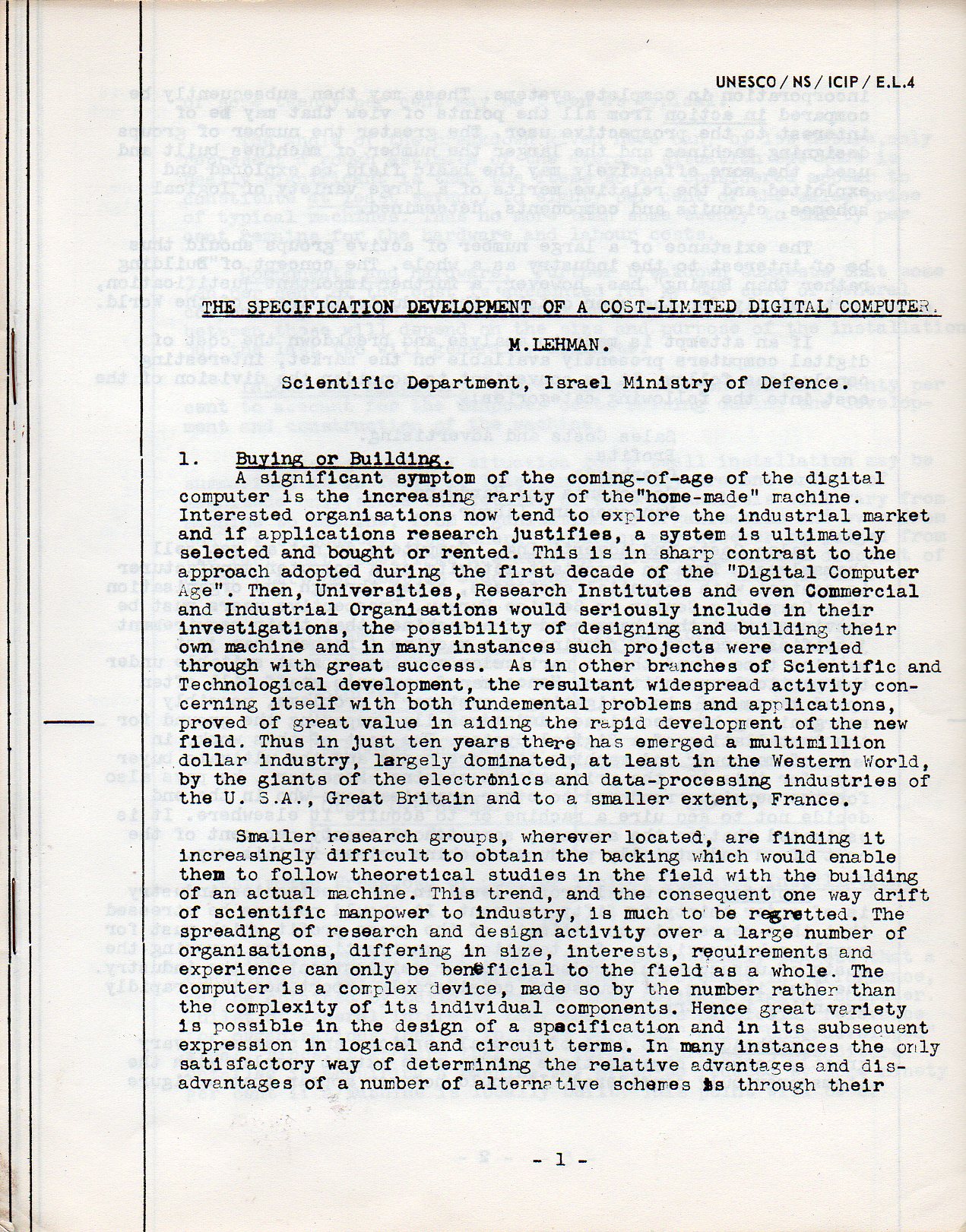
“Computers do not as yet sell themselves.”–Lehman, 1959
Question: what had 1000 transistors, 5000 diodes, 2000 resistors and 1000 capacitors, a team of ten and took 18 months to build?
Answer: an inexpensive, $12,000 digital computer in 1959.
Mind you this is legions better than what was happening in the mid-1940’s, with teams of hundreds and costs in the many millions, and much better than in the early 1950’s, when these numbers were of an order of magnitude greater.
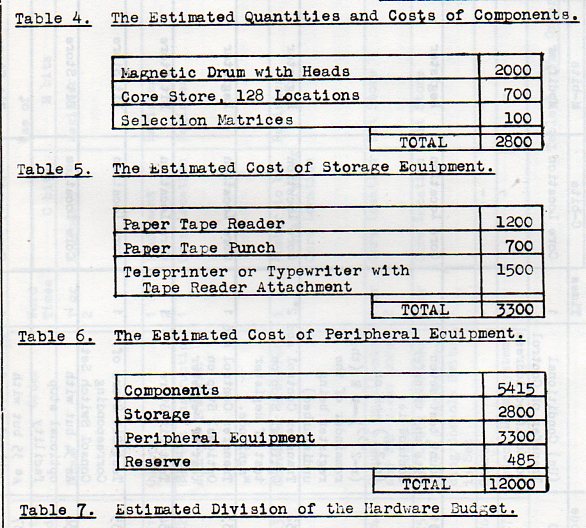
It seems to me that this short 1959 paper is at the upper end of a beginning concern–costing-out the price of a digital computer for second-tier interests. “The Specification Development of a Cost-Limited Digital Computer” (by M. Lehman of the Israeli Ministry of Defense) was written for those businesses and schools with a definite low-end budget, the upper range of which was set by Lehman at $12,000 for “peripherals, hardware and programming (or about $125,000 in 2016 dollars, sort of). This figure was also exclusive of maintenance outside of the cost (at 15-20% of the construction costs overall) of designing and building the machine.
This was some new thinking on providing lower-cost digital computers to a new market: “in just ten years there has emerged a multimillion dollar industry largely dominated….by the giants of the electronics and data-processing industries…”. Lehman was saying that there was a new opportunity for business to supply computers to “smaller research groups” who were “finding it increasingly difficult to obtain the backing which would enable them…to build an actual machine”. There were other ways of doing it, and Lehman laid out the basic understanding of that procedure.
Lehman’s leading quote for this post was accurate–computers needed to be “sold”, as in salesmen and businesses actively engaged in contacting clients who would (“might”) benefit from having computeriaed part of their business. The computer manufacturer’s “staff will often spend many months investigating customer’s problems, possibly reorganizing his techniques and generally preparing teh ground for the installation of a Digital System…”
(The figures in the right column are dollars.)
Lehman was doing some groundbreaking work here at the end of the ’50’s, still far ahead of the time–and probably a full generation–where computers didn’t necessarily have to be shown as being ‘needed” let alone “necessary”. The computer would be “selling itself” on the low-end of the market soon enough, but really not until the Reagan years when it was beyond question that the computer could be used by virtually any person or business–at affordable rates.
 “Progress of large-scale operation on 16 May 1943, start 1000 hours.