A Daily History of Holes, Dots, Lines, Science, History, Math, Physics, Art, the Unintentional Absurd, Architecture, Maps, Data Visualization, Blank and Missing Things, and so on. |1.6 million words, 7500 images, 4.9 million hits| Press & appearances in The Times, Le Figaro, Mensa, The Economist, The Guardian, Discovery News, Slate, Le Monde, Sci American Blogs, Le Pont, and many other places… 5000+ total posts since 2008.

  • History of Piles: To the Victor, the (Pointy) Spoils (1919)

    JF Ptak Science Books   Quick Post 

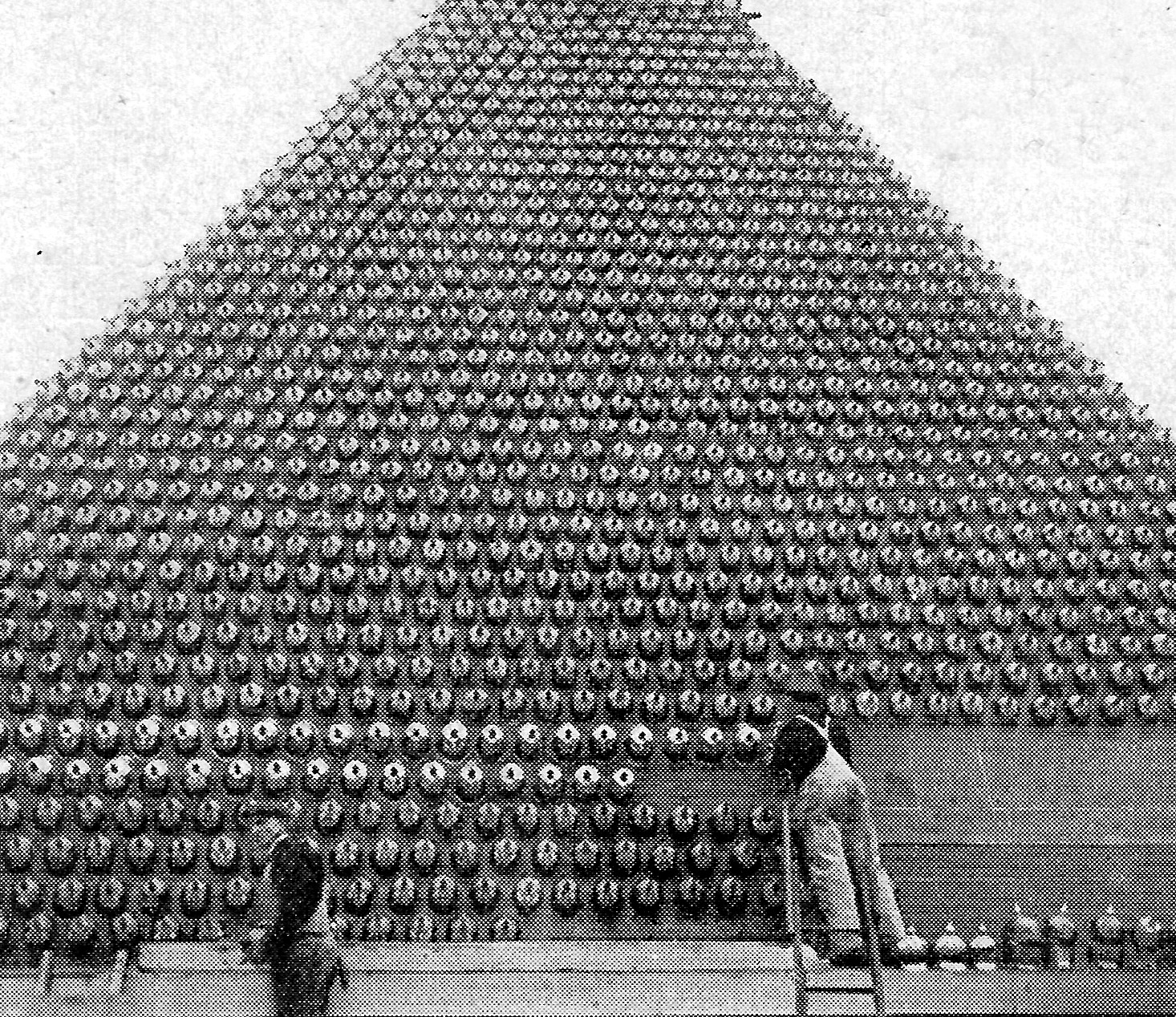
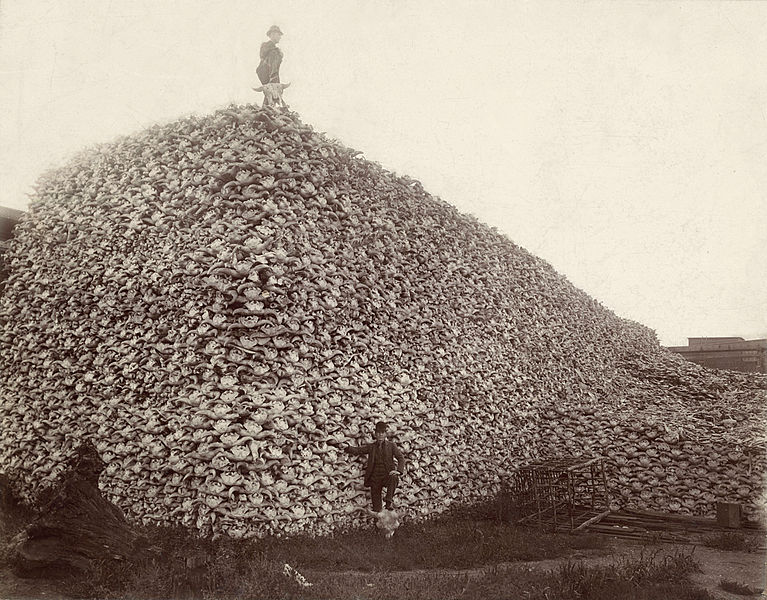
    “To the victor, the (pointy) spoils” was found in  Illustrated World in their June 1919 issue. (As it runs out, the word “pointy” is a lot older than I thought, the OED finding it in   K. Digby Two Treat. i. xv. 130, from  1644: I haue seen some very high, and pointy spire steeples do the like.)  It seems as though the captured “Hun” helmets with spikes were collected and pyramided for a war relief benefit/fund-raiser. I guesstimate that it took around 2,000 helmets to complete this display–it also reminds me quite a bit of a famous photo of buffalo skulls piled 20 feet high, waiting to be loaded onto a train car in about 1870 to be hauled away for processing into fertilizer. There’s nothing in common between the two besides the composition and the pointy parts, as the buffalo were slaughtered for many reasons all of which are terrible and none of which had to do with war, where the German helmets came from. 


    WWI Project Hun Helmet 1919 detail


    Buffalo skulls

    [Source: Wiki Commons]


    ·Posted by :

    ·in:

    —
  • (Unpublished?) Manuscript on the Reconstruction of Manila Harbor, August 1945

    JF Ptak Science Books  Post 2678
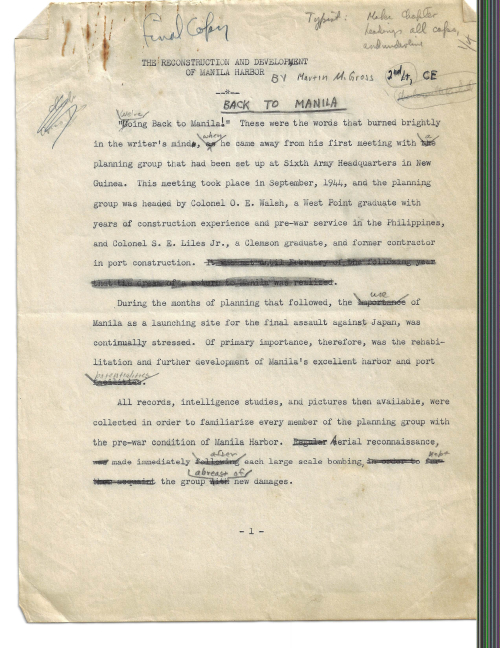
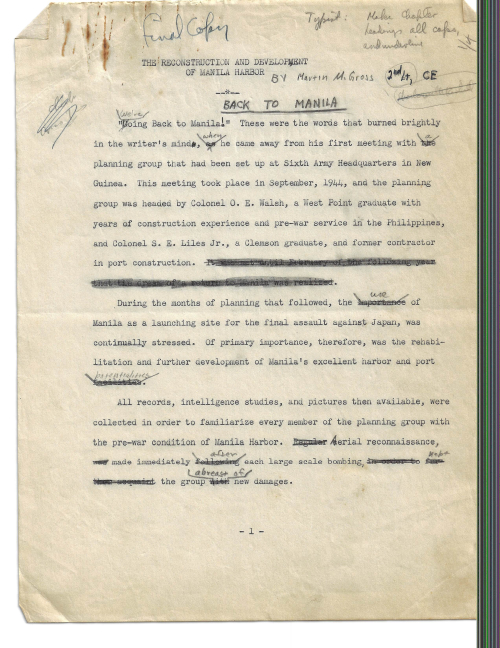
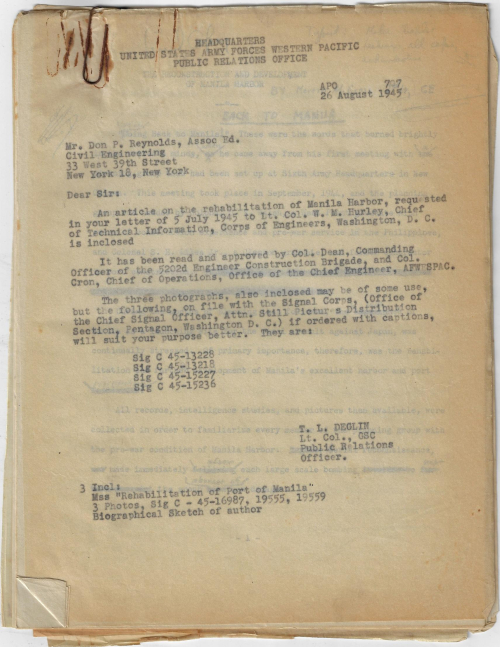
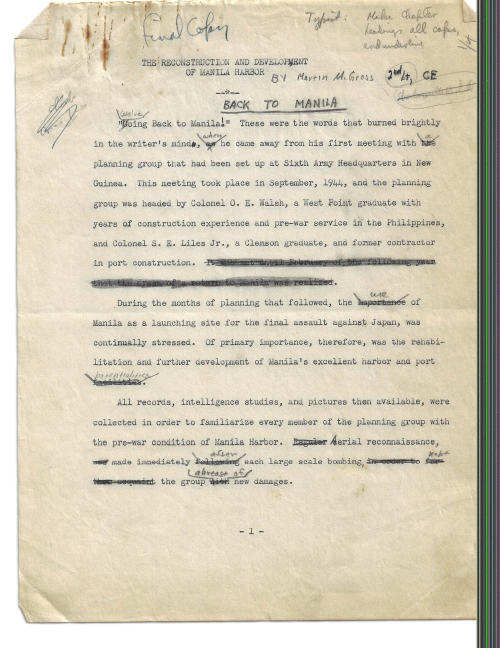
    Manila harbor 2This is a compact, concise, and detailed evaluation and history of the reconstruction of the harbor following the tremendous destruction and decimation of the population following the Battle of Manila (February 3-March 3 1945). According to the cover letter a request was sent by Civil Engineering for an article on the harbor on 5 July 1945 and Lt. Gross produced the response about five weeks later. 

    I can’t speak at all to the accuracy of the article, but it seems to me to have the bones and muscle of a good report.  Also, I cannot determine if this article was published (checking about 15 sources) though I am not finding any paper trail. I’m reproducing it here as it may be of some interest to a few people.  

    “Reconstruction and Development of Manila Harbor”, by 2nd Lt. Martin M. Gross, Corps of Engineers. The manuscript cover is dated 26 August 1945, and sent from the “Headquarters, United States Army Forces Western Pacific, Public Relations Office” and was sent to the associate editor Don P. Reynold (ASCE, 1915-2002) of the journal Civil Engineering.  This is an original typescript with manuscript corrections throughout the document: 11×8.5″, 19 leaves, cover letter, plus one original spec drawing, one original map of Manila harbor (in pencil), and a photograph of the rendered version of the map. The cover letter calls for three photographs, though just the one is present (that said there is no mention of the other two drawings…)   Provenance:  David Katcher (1913-2002), editor at the Naval Ordnance Laboratory before World War II and later executive secretary of a theoretical physics division of the Institute for Defense Analysis, founding editor (in 1947) of the journal Physics Today,  and a senior policy analyst in the White House Office of Science and Technology policy during the Carter administration. During WWII David Katcher was Lt. Katcher, serving as a correspondent/writer in the public relations office of the U.S. Army Headquarters of the Western Pacific (GHQ USAFPAC),  and served as Public Relations Assistant to High Commissioner Paul McNutt in Manila.

    There is of course legions of background material on the (second major) battle for Manila, so I don’t need to go into it here. One good, quick source on the  reconstruction in the harbor facilities there is:  “Engineers of the Southwest Pacific, 1941-1945, Volume 6: Reports of Airfield and Base Development …,1951, pp 350-360.
     

    Manilla harbor _1_

    Manika2


    ·Posted by :

    ·in:

  • A Scarce Piece on New Mexico History and a Forward-Looking View of Housing-for-All (1937)

    JF Ptak Science Books   Post 2679


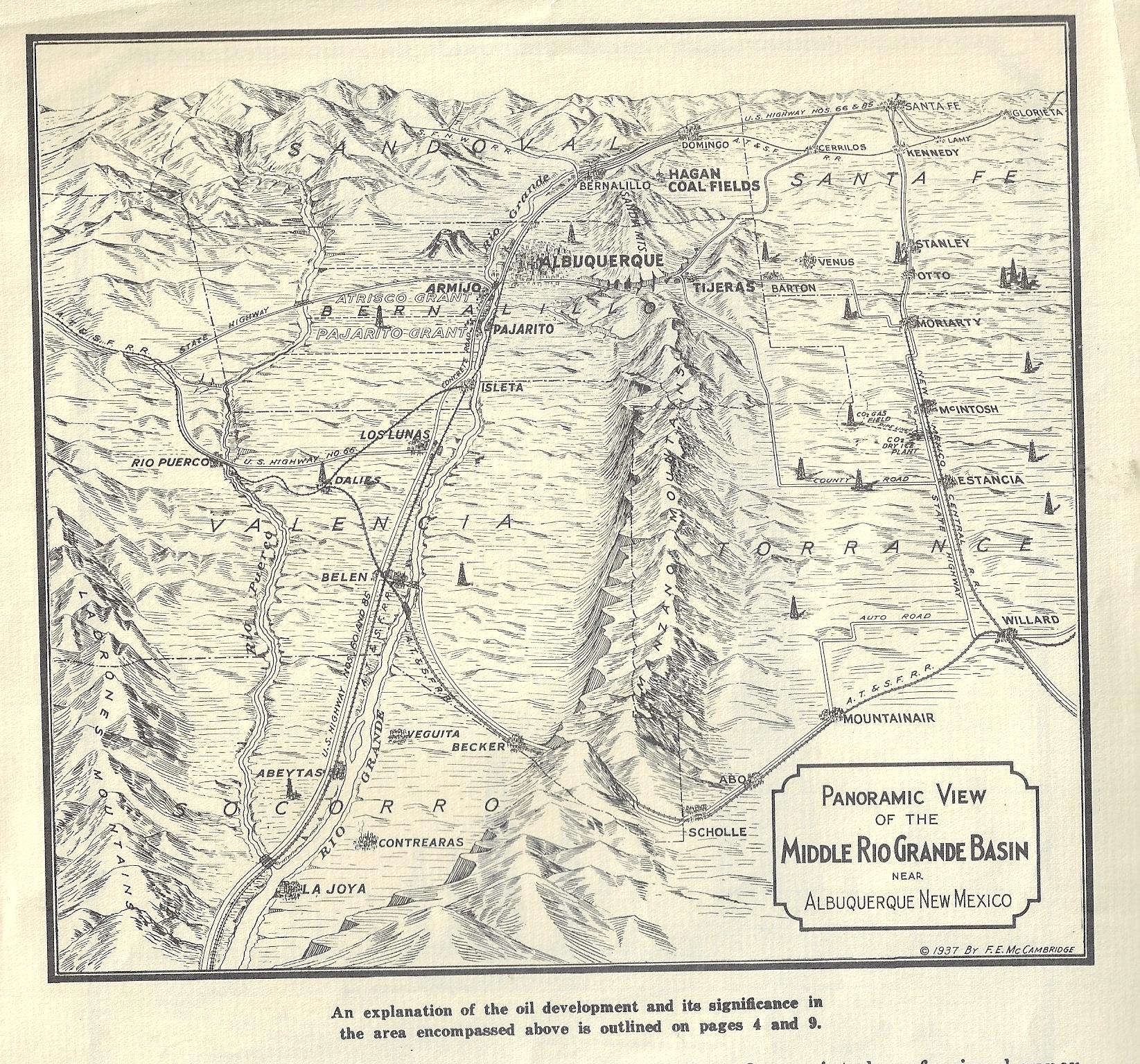
    I was working on this pamphlet for my bookstore (F.E. McCambridge.  [Oil and Gas Investment Property Prospectus] 
    Majestic Homes Realty Co., Denver,
    Colorado, 1937), an interesting-enough thing if for nothing but the maps.
    The brochure is really more about selling the possibility of becoming an energy maven selling property and its oil
    and gas rights in what could have been an oil/gas-right territory in Pajarito Spanish Grant, in New Mexico. The
    area of the grant seems in general to be about 15 miles or so southwest of Albuquerque, though the map in the
    pamphlet depicts a much wider area in the Middle Rio Grande Valley, around Albuquerque and south to La Joya.
    I can't find anything offhand about the success or failure of this venture, though not much seems to have
    happened. Evidently people seem to have moved into this area to get away from it all back in the 1970's--
    there is no running water or paved roads to speak of, and has pretty much nothing except for a great big
    sky and very inexpensive ground. (See http://www.sfreporter.com/santafe/article-7409-mexico-usa.html for
    the interesting story.)

    Then I came across something unexpected and even a little captivating. After checking WorldCat/OCLC for
    listings for the pamphlet (there were none) or other works by the author (ditto) I did find that the author
    came down on the right side of history in his opinions on the post-war housing crisis.


    Majestic Realty Birds eye


    Mr. McCambridge's venture seems to have struck dirt, though he comes up golden in his
    very forward-thinking appraisal of town/city planning. I found this in an obscure publication about the
    housing shortage at the end
    of WWII. While other builders were concentrating on mid- and upper-level
    housing in the
    coming building boom, McCambridge thought small and very inexpensive, homes enough
    for all budgets, "and homes for Negro occupancy should rank high in every postwar plan to house America":
    "As noted earlier, the same survey revealed that private builders expect to build 67 per cent of their houses to sell
    at prices between $5,000 and 510,000. Experience shows that the saturation point for that market is quickly
    reached and that the nation will never be well housed until ways can be found of building for families in the
    lower-income brackets." "One intelligent western builder remarked, in commenting on this survey, that the
    "determination of builders to concen- trate their efforts on higher-cost housing" seemed to be a "tragic truth":
    "It is exceedingly unfortunate that so many of the builders of the nation, seeking to escape from the
    war-required restriction and limitation orders, wish to employ their talent in other than the basic responsibilities
    of the industry they have so capably represented in the war job they are now completing Surely no program to
    rehouse America should be pro- mulgated other than one providing for all the people in proportion to their
    ability to purchase. Only by such a program can the re-employment of our returning veterans and displaced
    war workers be attained. Decent housing should be made available to every segment of our population, every
    in- come bracket; and homes for Negro occupancy should rank high in every postwar plan to house America1."

    I'm glad to have gone down this path for a little bit to find McCambridge's post-WWII story.
    1. Quoting F. E. McCambridge, in Tomorrow's Town (New York: National Committee on Housing, Inc., 
    June, 1945) in Robert Lasch, Breaking the Blockade, 1946, p 141.
  • Women In The Sub-Kingdom Of Pants 1918

    JF Ptak Science Books   Quick Post

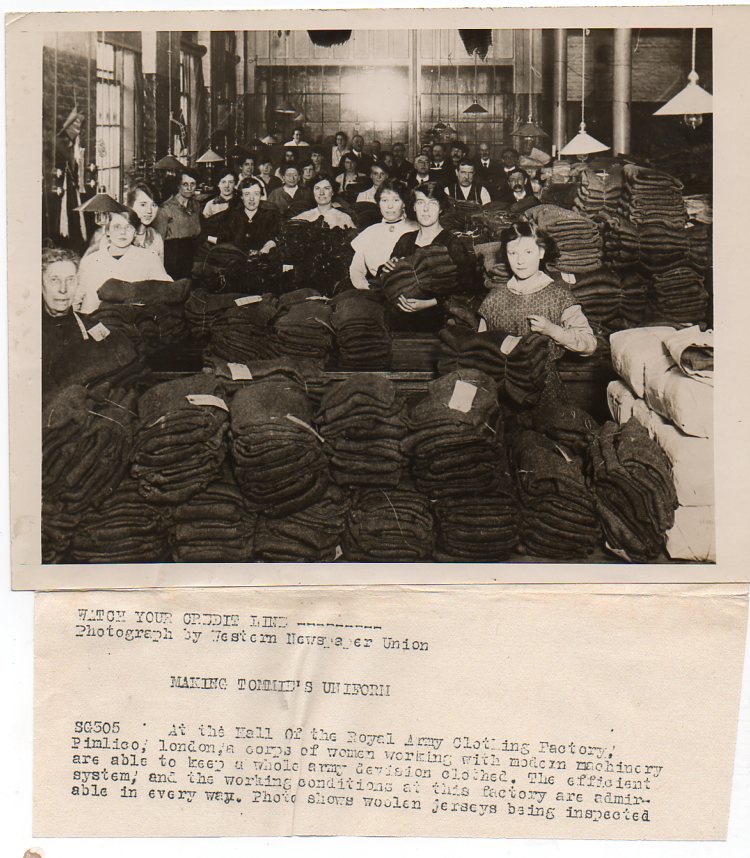
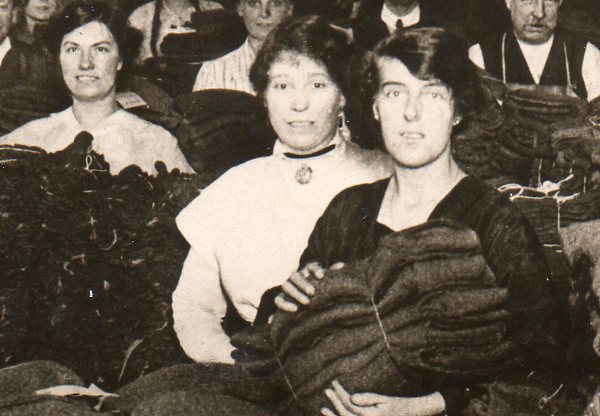
     This is a photo of a tiny piece of the army behind the army–in this case women preparing clothing for the British Expeditionary Force in 1918.  The trousers that they are handling in this image represent–in an offhand calculation–about one one hundred thousandth of one percent of the trousers that just the BEF would have worn. .00001, or some such number. When the photograph was made in late 1918, the U.K. had about four million men in uniform, which was not the total of all those who served; in the end, nearly 2.6 million U.K. soldiers were killed or wounded from 1914-1918. It took millions of people in a vast coordinated effort to support a n army of this size, and so far away. 

    WWI--e--women pants683

    Source:  part of the 500+ image collection of news photo service photographs, many of which would have the paper description attached to the image for inclusion as a caption to the image when it was published in a magazine or newspaper.

    WWI--e--women pants det682

    ·Posted by :

    ·in:

    — —
  • An Exceptional Not-Very-Exceptional Map (1876)

    JF Ptak Science Books   Quick Post

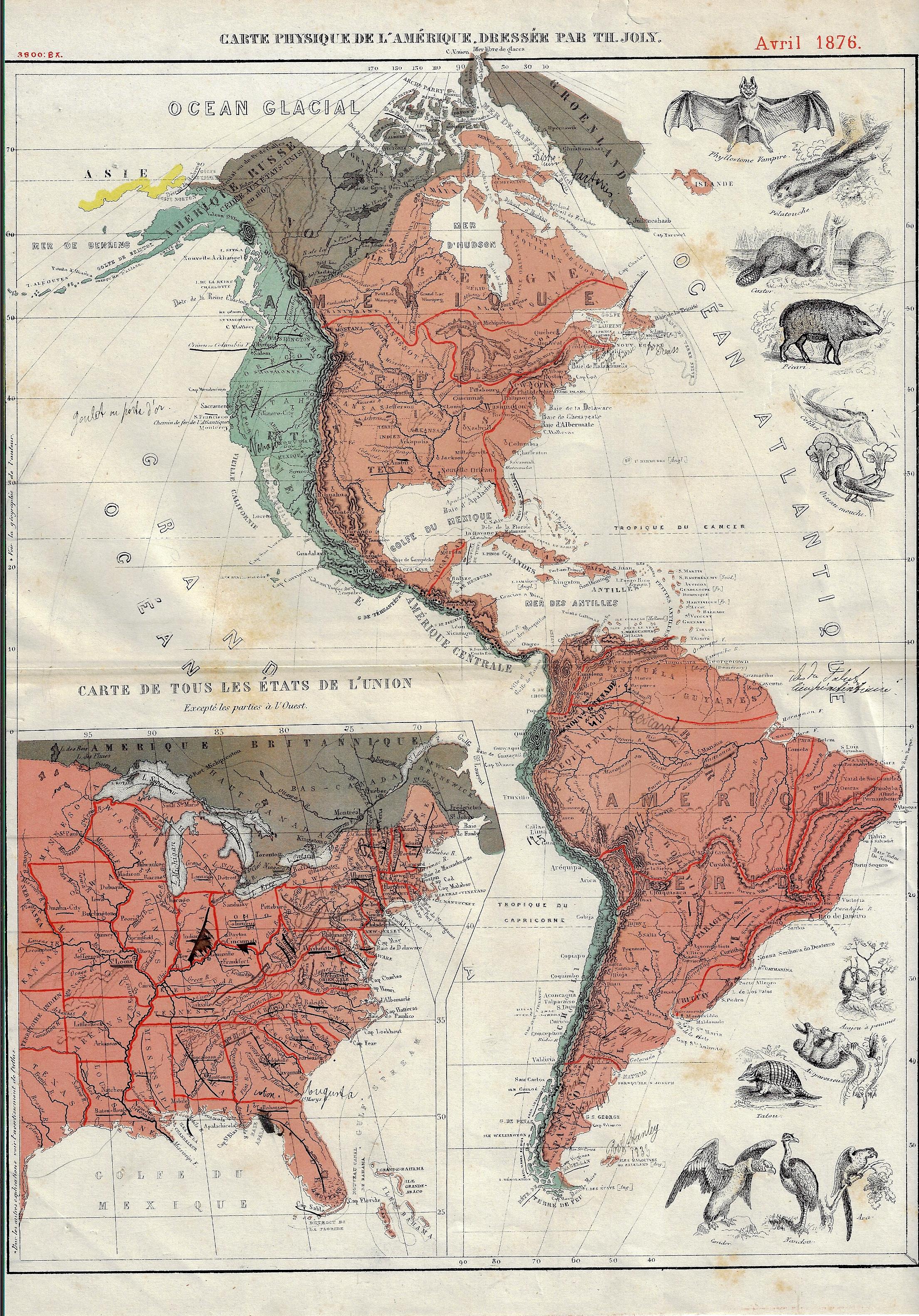
    I’m not sure what it is, exactly, that gives this map it unique flavor(s)–to my experience, it has an undeniable “difference”.  The map (“Carte Physique de l’Amerique…1” with a smaller inset map of the United States) was published in the U.S. Centennial year of 1876, and aside from the obvious imagery of the animals, there is also the exceptionally small typeface in the detail, the somewhat unusual color combinations (of rose, aqua, and brown), and the great amount of detailing done in red, all of which taken together is unusual to my experience.  That said, there is really not a lot of physical geography detail in the map outside of a good representation of rivers and some brief entries for mountains–and the ten animals.  


    US Map infographic animals

    Notes:

    1.  The full title: “Carte Physique de l’Amerique dressee par Th. Joly”, Avril 1876, and published in Grand atlas classique de Géographie Moderne, moyen-age et ancienne, contenant les figures des animaux et des plantes les plus remarquables de chaque pays, a l’usage de l’enseignement secondaire, printed in Bruxelles by A. Decq et J. Rozez, first published in 1871/2,  22,5 x 34,5cm.

  • On Two “Crazes” of 1879–Spider Tennis and Umbrella Wings

    JF Ptak Science Books  Quick Post

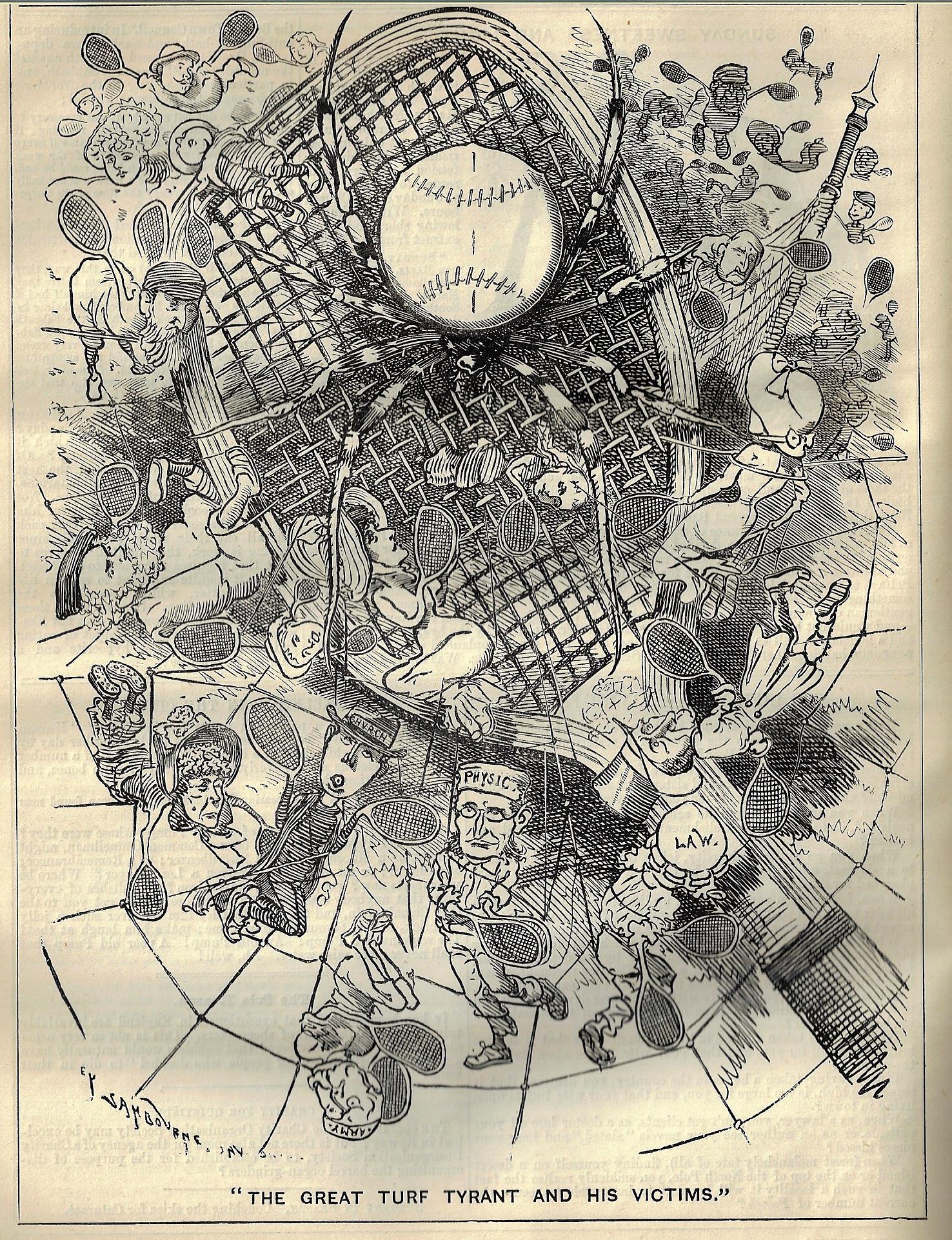
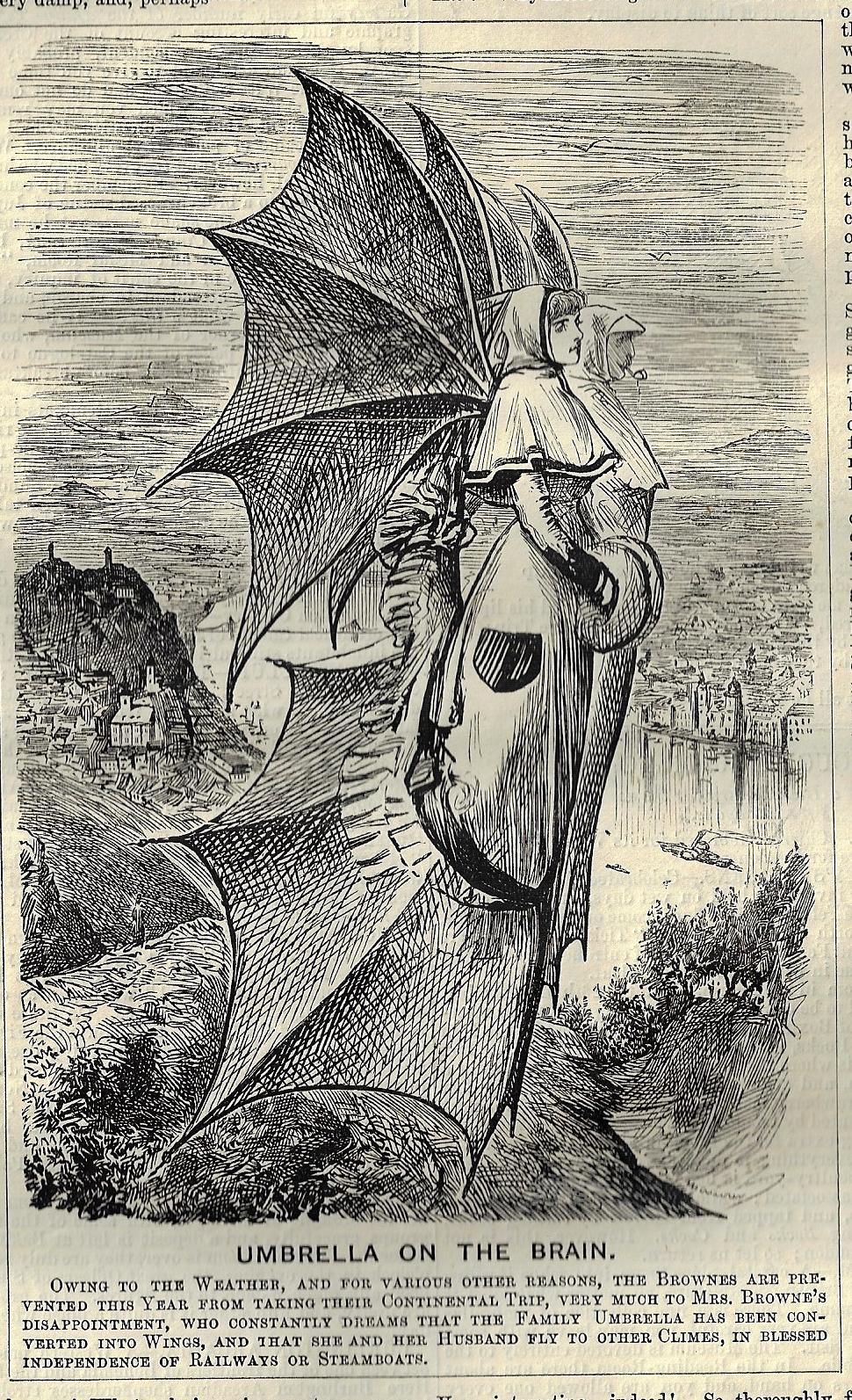
    There are of course many popular delusions and crazes that have swept through common cultures for centuries: tulipomania, the South Sea Bubble, miniature golf, Charlie Chaplin, and so on–ideas and bits that somehow became infused into the outer core of societal interest and dug in like a nasty virus, running itself high-octane silly until the gross comical interest ran itself out, leaving the craze to drop and deflate like a dropped-and-deflated craze.  Two such pursuits were found illustrated just now in the 1879 volume of Punch, or the London Charivari (printed in London in that year), with the illustrations created by Linley Sambourne, a graphic artist who started at teh satirical weekly in 1867 and stayed for another 43 years. 

    The first image–though it looked like a baseball and momentarily filled me with hope–regards the tennis craze that evidently was sweeping the country. I say this because there were numerous mentions and illustrations of the topsy-turvey tennis fascination in that 1879 volume, while tennis is virtually absent from succeeding volumes.  Anyway Sambourne effectively demonstrates the domination of the sport over, well, a lot of other things: 

    Punch tennis virus


    Ditto the umbrella–there was a lot of fuss about it in this volume, reaching a high point perhaps with this illustration of the thing reaching its highest state of perfection:  allowing people to fly: 

    Punch umbrella flight

    ·Posted by :

    ·in:

  • A Peep into Your Personal Future in the Grand Societal Scheme (1938)

    JF Ptak Science Books   Quick Post

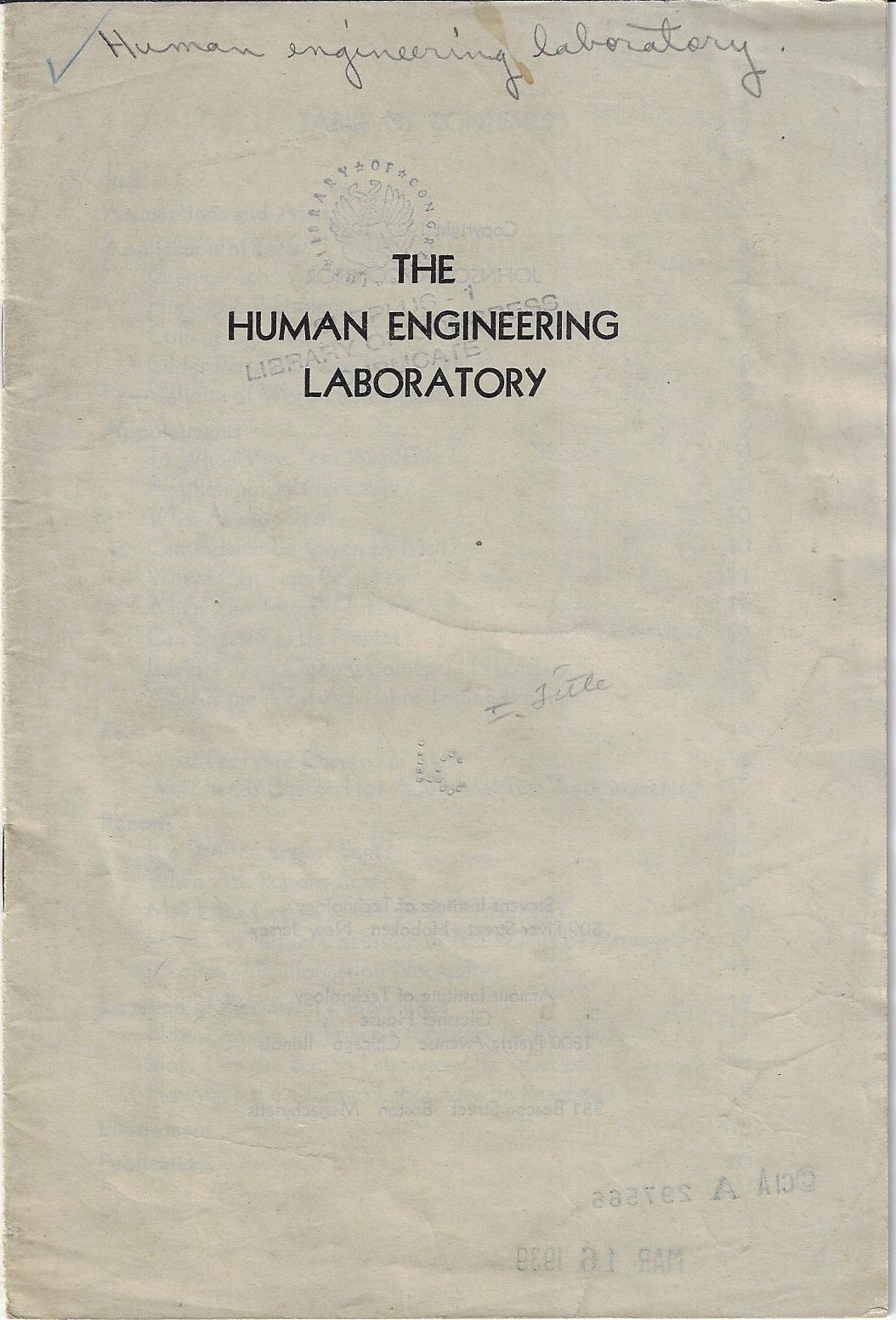
    Human engineering labWhen I saw the cover for this pamphlet I thought that the “Human Engineering Laboratory” was going to be some sort of Frederick Winslow Taylor thing. It is a little late for that wave of interest (printed in 1939) and then when I saw the imprint (Stevens Institute of Technology) I realized it was going to be something different.  And it was–instead of Fordian/Randian/Taylorist functioing of workers this pamphlet turned out to be about vocational aptitude tests.  I guess if one thought too hard about this it could fit into the category of the pre-history of robotics in the robots’ history of themselves, the test trying to assess where people will best fit into the giant machinery of society.  

    In the outline of services the pamphlet notes that each test-taker will be charged a $20 fee for the service, plus $10 if the test was taken a second or third time.  That was a stiff fee–according to the inflation calculator at the Bureau of Labor Statistics that 20 bucks has the buying power of $321 today–but I guess it may have been worth it to take a peek into the future to see what best thing you might be suited for.  Still, that was a lot of money at the end of the Depression to pay for someone to fit you into a grid.

    I’m posting this mostly because of the great title. 

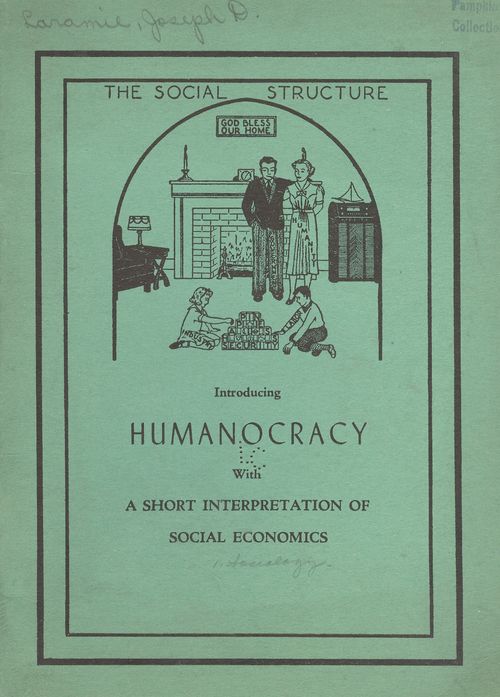
    It also reminds me of another title, though this one is Outsider-y:

    Humanocracy

  • A Landmark Study in the History of Integration (1953)

    JF Ptak Science Books   Post 2561

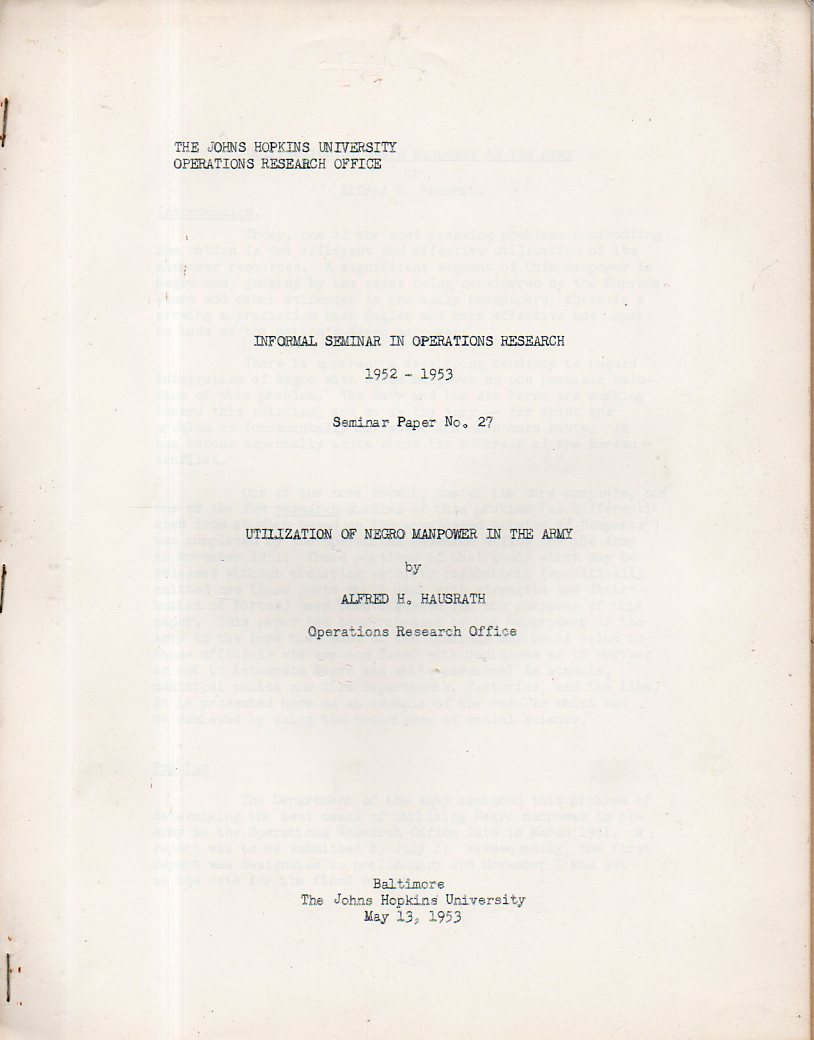
    The desegregation of the executive department and the U.S. Army began under Harry Truman in 1948, which for the military was formalized in the Army Reorganization Act of 1950, which called for the end of the need for segregated armed forces.  Following the disaster in the Korean War in late 1950 (the Chinese Counteroffensive causing the retreat of U.N. forces south of the Yalu River in November 1950), and finding it difficult to replace soldiers with nothing but white fighting men, the Army began to integrate fighting units by March 1951. The ORO instituted a study in 1951 by a team of five analysts headed by Dr. Alfred Hausrath (a war games researcher) to study the effects of integration, part of which was published in the report “Utilization of Negro Manpower in the Army”1,  with the full three-volume publication of the study coming slightly later in 1954.   (Two earlier interim reports were issued in July and December 1951.) Basically, after everything was said and done, the Hausrath and his team found that integrated units work much better than segregated units. 

    The report “provided policymakers in the Army with the objective arguments in favor of integrated units”, and the policy changes for full integration of the Army were issued jsut months after this report was rendered, in July 1951. This document was printed for the first time in a general format for OR folks in 1953.  (The term “landmark” was used to describe this paper in Saul Gass’ An Annotated Timeline of Operations Research, an Informal History, page 80.)

    • Abstract:  “In connection with a basic policy decision by the Army in 1951 on the utilization of Negro manpower, a partly quantitative operations research study was made. Factors affecting the decision to integrate Negroes into previously all-white. Army units included statistics of scores on the Army’s General Classification Test, Negro and white performance in combat, and interactions between Negro and white soldiers as determined from attitudes, opinions, critical incidents, and actual behavior. It is concluded that integrated (white and Negro) units can make more effective use of available manpower than segregated units, that resistance to integration is reduced as experience in integrated units is gained, and that levels of 20 per cent Negroes and more are acceptable. The time required to extend integration to the whole Army is discussed, and difficulties presented in such a manner that a sound program can be devised.” –Operations Research, Informs/Online

    Notes:

    1. HAUSRATH, Alfred H.  “Utilization of Negro Manpower in the Army.” Informal Seminar in Operations Research, 1952-1953, Seminar Paper No. 27.  The Johns Hopkins University Operations Research Office (ORO), Baltimore, May 13, 1953.  

    “Alfred Hausrath, the one-time director of military gaming for the Research Analysis Corporation (RAC), the successor civilian contractor for the Army, recounted the details of a little known simulation developed at the ORO in 1948.  (The simulation also served as a model for a Naval anti-aircraft guided missile system.)  Staff members of the Applied Physics Laboratory at the Johns Hopkins University worked in conjunction with the ORO in its design. What resulted was a computer game.  Hausrath asserted that its successor model, a study of the air defense of North America, which was inaugurated in 1953, was the first computer simulation in the history of operations research.  ORO also originated the first digital computer game, CARMONETTE I, (played from 1956-60.)”–this from the very interesting StrategyPage  https://www.strategypage.com/wargames/articles/wargame_articles_20049715.asp#_ftn43

    ·Posted by :

    ·in:

    —
  • Found-Surreal Art, Elevated (London, 1876)

    JF Ptak Science Books  Quick Post

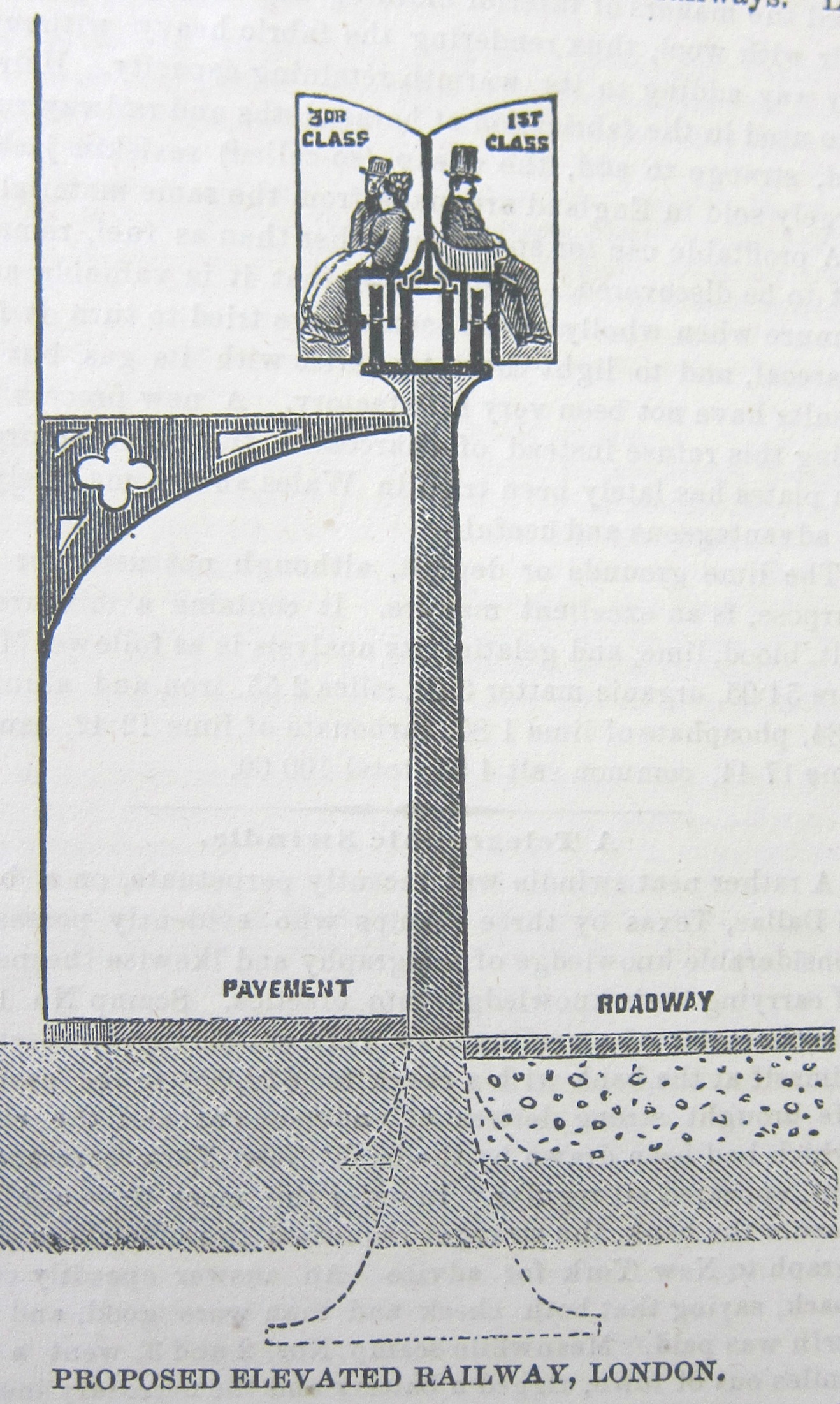
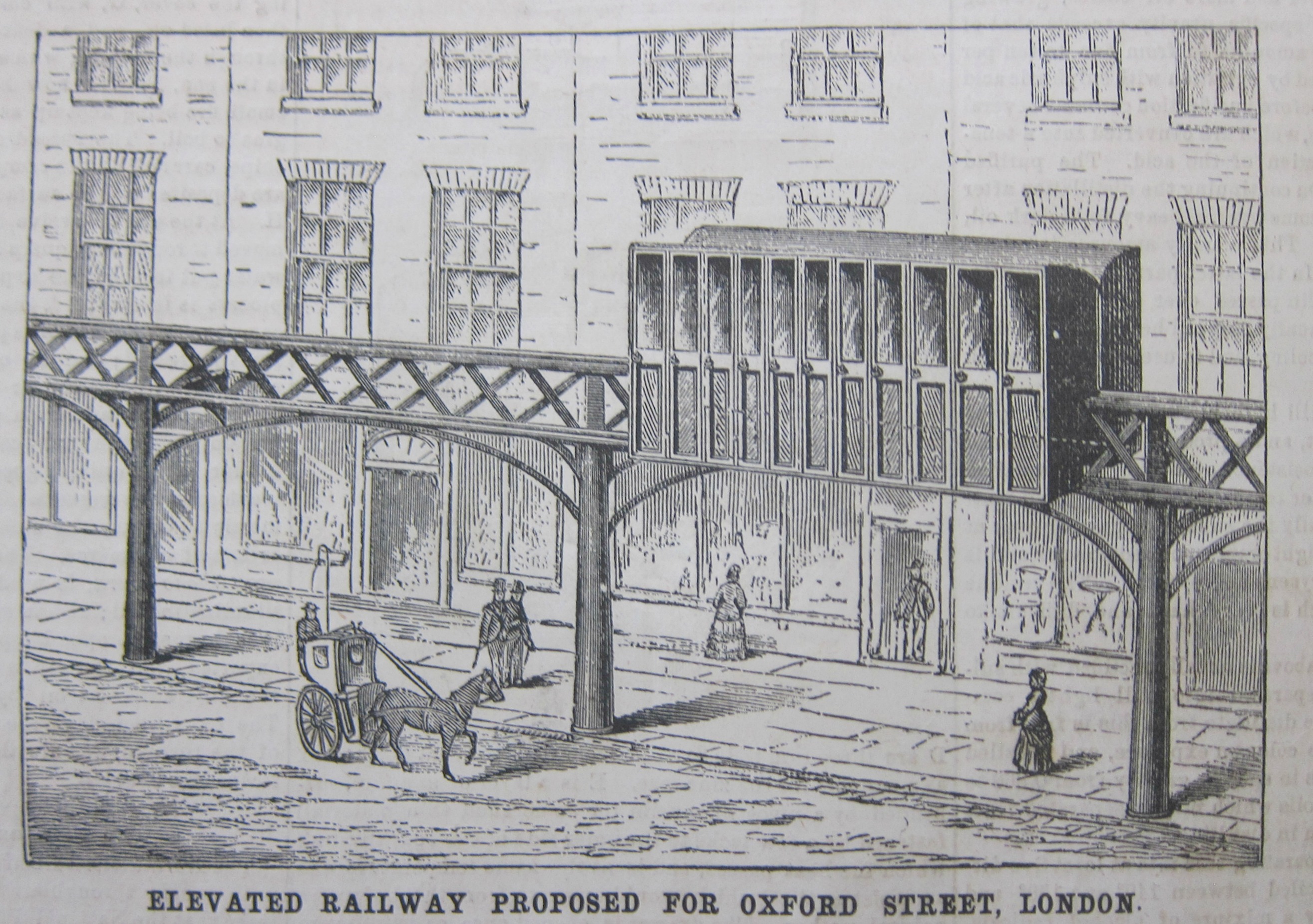
    The difference between first and third class in an elevated train seems to be (1) a chair with arms, (2) a taller hat, and (3) a big moustache.  Undoubtedly, there were actual creature comforts, though I suspect first class was meant to accommodate first-class people who would prefer not to be with not-first-class people, and enjoy the extension of that privilege in a comfortable seat.

    What attracts me to this image is the way it rubs up against the accoutrements of modernity, looking like a piece of surrealist art.  Since the image was printed in 1876 this would be “found-Surrealist art” as the existence of non-representational art was still 35 years away and the man who basically created the Surreal movement in NYC in 1924–Andre Breton–wouldn’t be born for another 20 years. In any event, this is what this looks like to me, a piece of unintentional, out-of-context art with no contemporary name.

    Sci Am 1876 elevated London

     [Source, above and below: Scientific American, February 8, 1876.  The image above is a cross section of the image below.]


      Sci Am 1876 elevated railway

  • Beautiful Screws and Nails, 1888

    JF Ptak Science Books   Quick Post

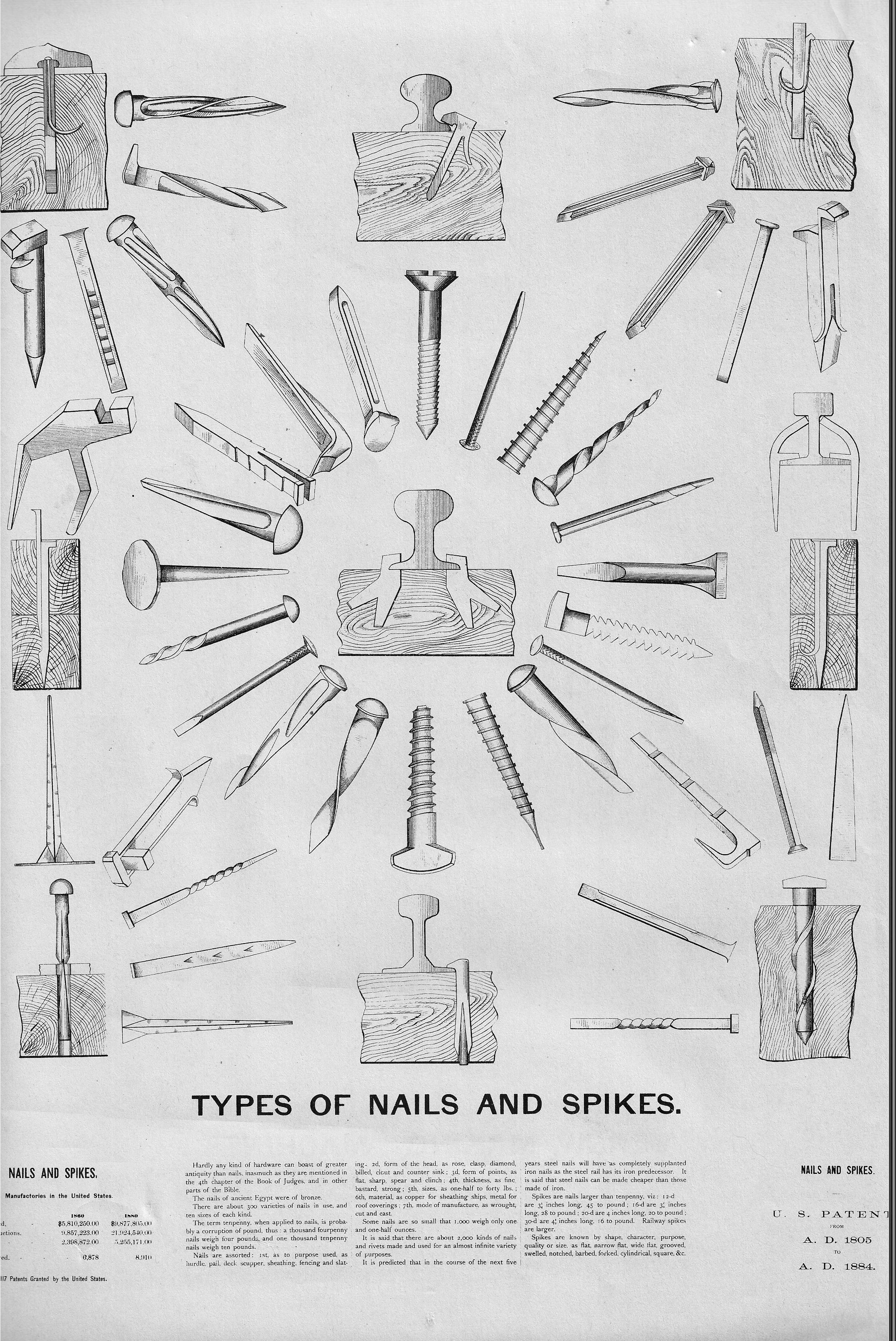
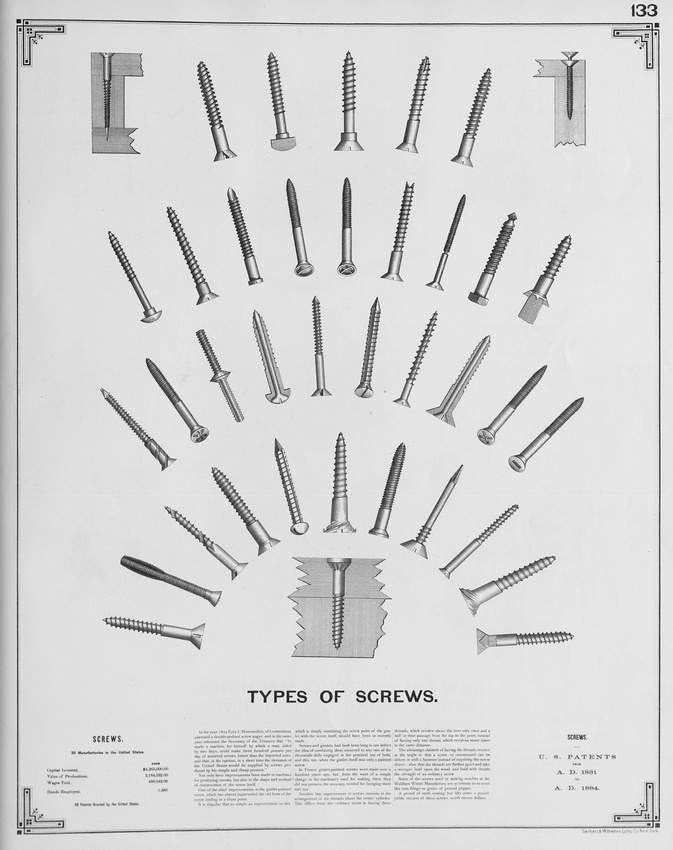
    This print is a part of The Growth of Industrial Art collection edited by Benjamin Butterworth (1837-1898)  in 1888 (with a second edition published shortly afterwards in the Columbian year 1892). Butterworth compiled the work in his capacity as the Commissioner of Patents (he was also a former three-term Congressman), and he produced an encyclopedic and charming review of American industry and displays it in a series of 200 very busy but well-design images wood engravings. The many industrial product s depicted in this book include harrows, lawnmower, horse rakes, plows, baskets, screws, nails,  telephones, gas engines, advertising implements, mining equipment,ice elevators, projectiles, bale tighteners, musical instruments, cigars, bicycles, egg carriers, and many others, with many of the industries now lost to modernity or cheaper overseas labor. My favorites in the collection, I think, are the nails and screws (shown below), mostly for their design and placement as well as their variety.  

     There is a very appealing display of the full text available at Smithsonian Institution, here: http://library.si.edu/digital-library/book/growthindustria00unit

    Hardware screws


    And of course:

    Hardware types of screws

  • Found Art in Tin, ca. 1865

    JF Ptak Science Books   Quick Post

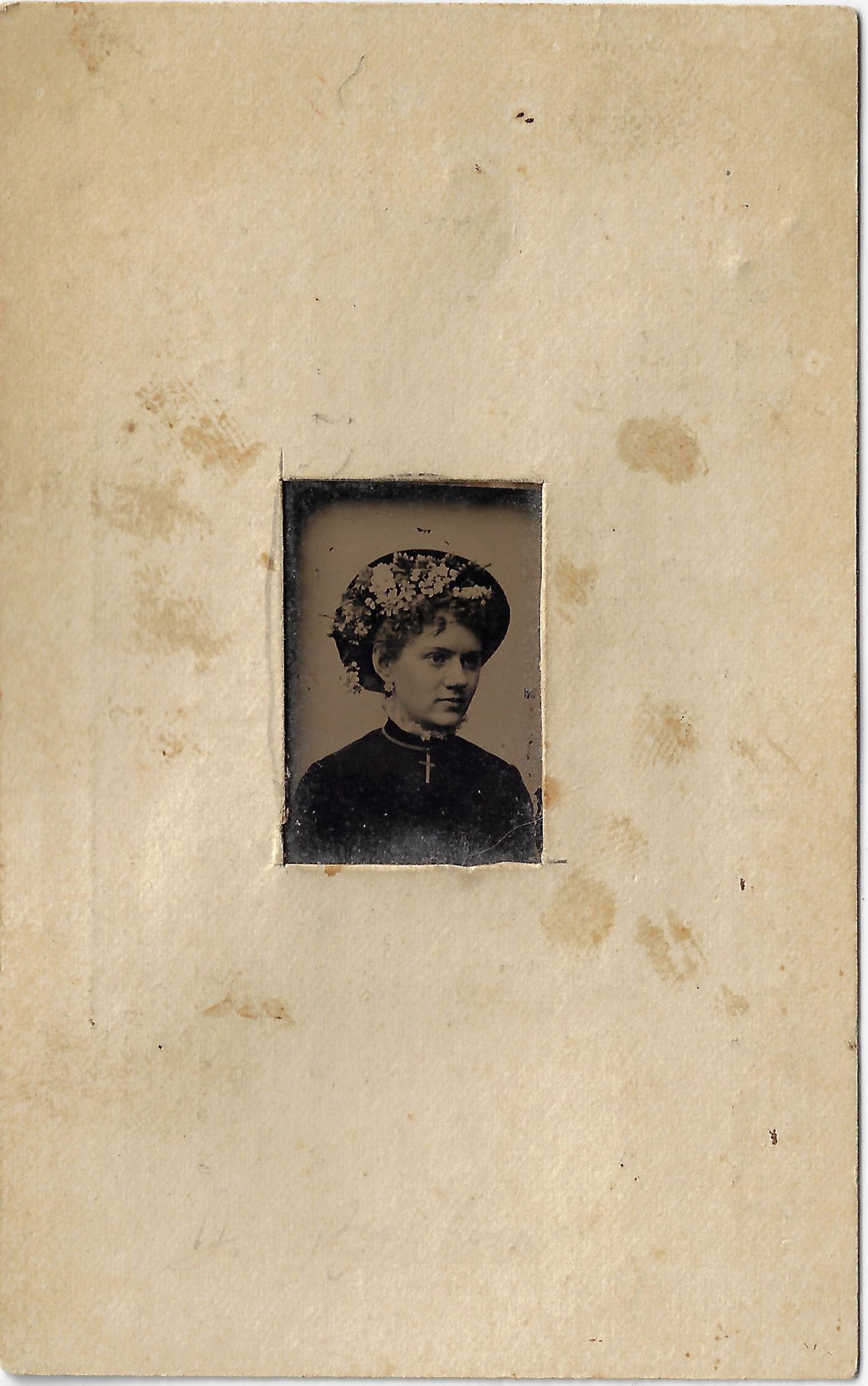
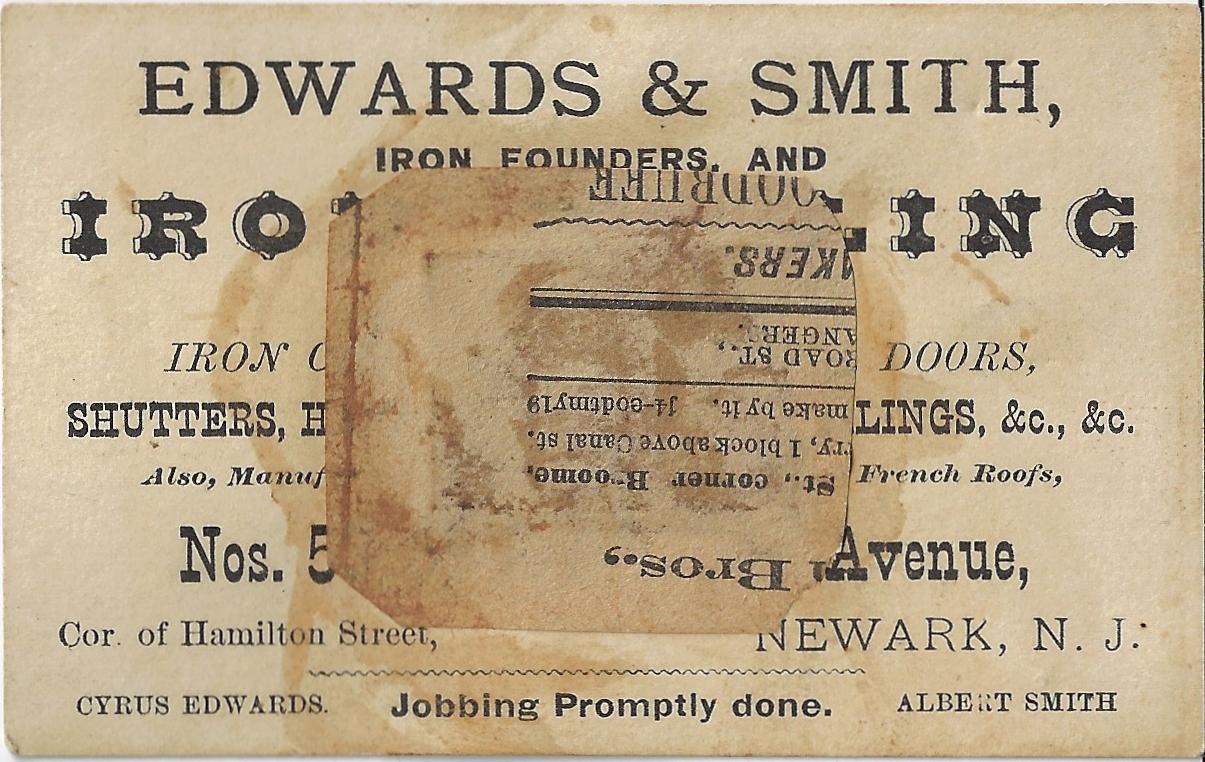
    I found this tiny photograph (nearly coverable by a U.S. quarter) quite some time ago, part of a collection of titles that I thought I would turn into an imaginary 19th century mug book, complete with biographies and crime chronologies. It hasn’t happened yet, though I do enjoy looking closely at this images, and their housing.  This photo is a tintype–a process invented in the early 1850’s beginning life called melainotype and then ferrotype before coming to be called tintype–which I think was made in 1865-1875, and has a home-made mat that measures 2.5 x 4″ and with the photographic image 1 x 3/4″. While the image of the woman with her hat is interesting in itself, there is a certain distraction of interest in the mat, with its slightly uneven opening cuts and the remnants of the penciled guidelines.  The photo is held in place against the mat by two pieces of advertisements–and truth be told I like that nearly as much as the photo on the other side.  The Mona Lisa is what it is, of course, but the back of the Mona Lisa’s frame and backing is fascinating in itself. 


    Photo tiny matted detail_0001


    Photo tiny matted back_0001


    ·Posted by :

    ·in:

Recent Posts

Archives

Categories