A Daily History of Holes, Dots, Lines, Science, History, Math, Physics, Art, the Unintentional Absurd, Architecture, Maps, Data Visualization, Blank and Missing Things, and so on. |1.6 million words, 7500 images, 4.9 million hits| Press & appearances in The Times, Le Figaro, Mensa, The Economist, The Guardian, Discovery News, Slate, Le Monde, Sci American Blogs, Le Pont, and many other places… 5000+ total posts since 2008.

  • Lubricating the Machine–a Map of Domestic Sewage (1892)

    JF Ptak Science Books   Quick Post

    You can’t have a Second Industrial Revolution without people living closely together, and you can’t have that without cities, and you have cities without water, and you can’t have any of that without a way of getting rid of the water and what all of those people were evacuating. And so the issue of “drainage” takes on a lot of powerful meaning–in getting rid of sewage, and rainwater, and a host of other things.  

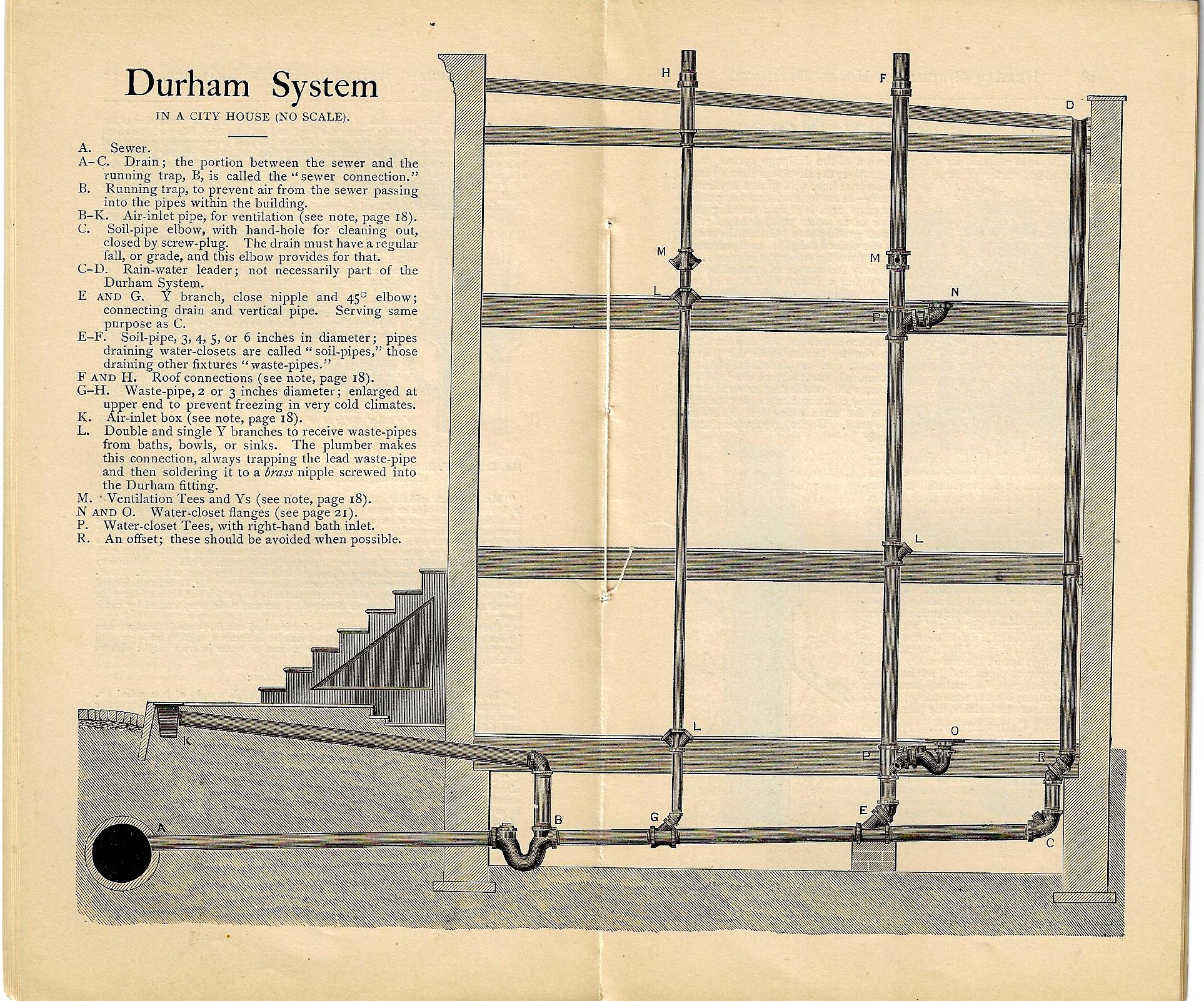
    Now 1892 is already decades past the Second Industrial Revolution (as was indoor plumbing) and of course cities continued to grow, and so did the needs for plumbing in delivering the byproducts of consumption and maintenance of the city. The Durham system–manufactured in NYC–was one of these responses, and the image below shows a cross section of a multi-story structure with a several toilets, basically a map showing the flow of the exuded lubricant of the great machinery of the city.  That prose was a little purpley, but it is sorta true. 

    The Durham Patent System of Screw-Joint Iron House Drainage addressed this issue, manufacturing the pipe and all of the other necessaries, ready for you to install:

    Durham drainage _1_


  • TubePunk–Electronics Returns from War (1946)

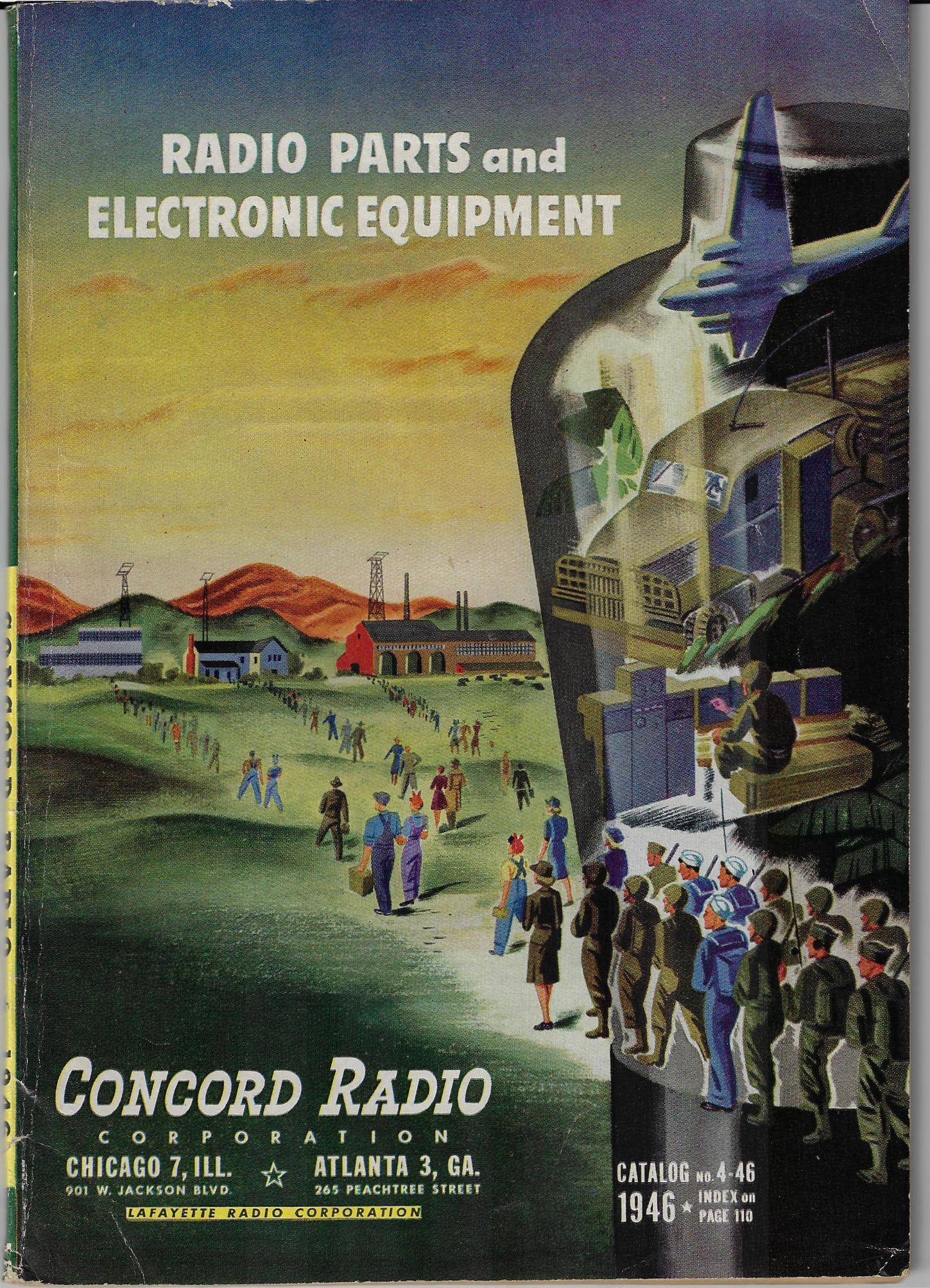
    Book covers electronics reutn from the war 1946JF Ptak Science Books  Quick Post

    Of the numerous things that “won the war” for the Allied forces–besides Churchill, and Roosevelt, and millions of Soviet soldiers, and Eisenhower, and V Bush, and cracking Enigma and MAGIC, and the enormous production capacity of the U.S., and so on–there was “also” the warm electrical/dusty scent of active vacuum tubes, which somehow always remind me of “precision”. The importance of RADAR I think cannot be overstated, plus SHORAN, and the Harvard Mark I, directional finders, and etc., all combined into a massive electronic war-winning effort that certainly helped define victory in WWII.  

    This is sorta what I was thinking about when I saw this lovely Concord Radio catalog for 1946–the enormous vacuum tube in which various military ops were happening, and then the troops marching out of it on the bottom, back into civilian life, carrying the promise of the new electronic world with them to home, industry, and business, and that electronics was here to stay.  Another “here to stay” thing here was the female worker–if you look closely at the crowds returning to their lives-left-behind there is no shortage of women, which I think was pretty progressive for 1946.  

  • Flat Out Wrong–Flat Earth, 1871

    JF Ptak Science Books  Quick Post

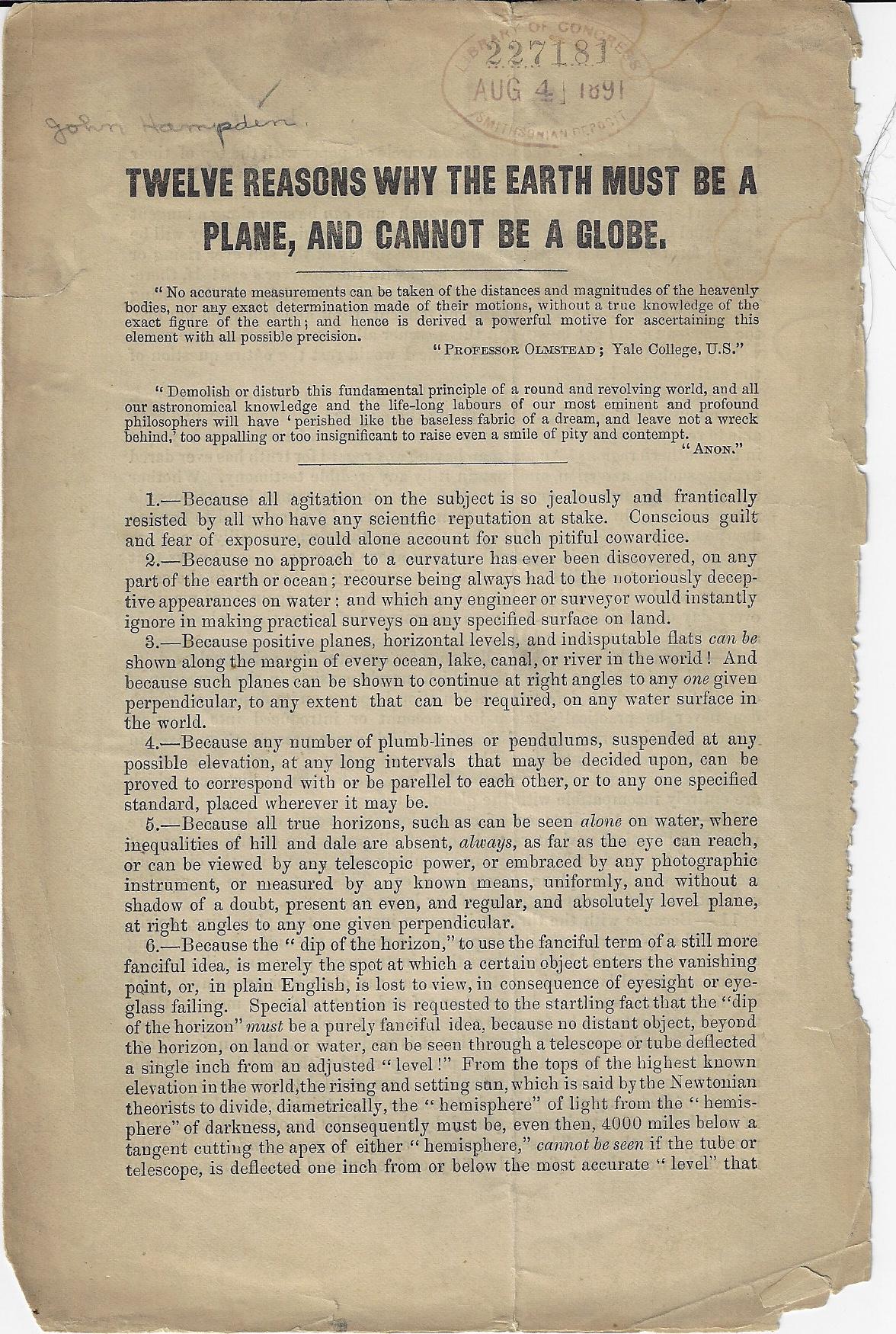
    John Hampden (d. 1891) was a fire-breathing Bible-literalist flat earther who rejected Newton & Co. at every opportunity and at all costs, doing as he was the work that the creator of the universe that he felt demanded of him. He famously feuded with the great Alfred Russell Wallace over a lost bet disproving the flat earth and pursued him via lawsuits and published vindictive. I don’t want to spend too much time with this, but I will reproduce below his leaflet missive advancing his theory, mainly because it looks as though it is pretty rare. It seems as though this was a separately-printed affair of his article that appeared in the rather bumpily named Weston-Super-Mare Gazette on November 11, 1871.  

    Flat earth _1_

    ·Posted by :

    ·in:

  • Propaganda Maps–a Play for Greater Germany, 1938

    JF Ptak Science Books   Quick Post

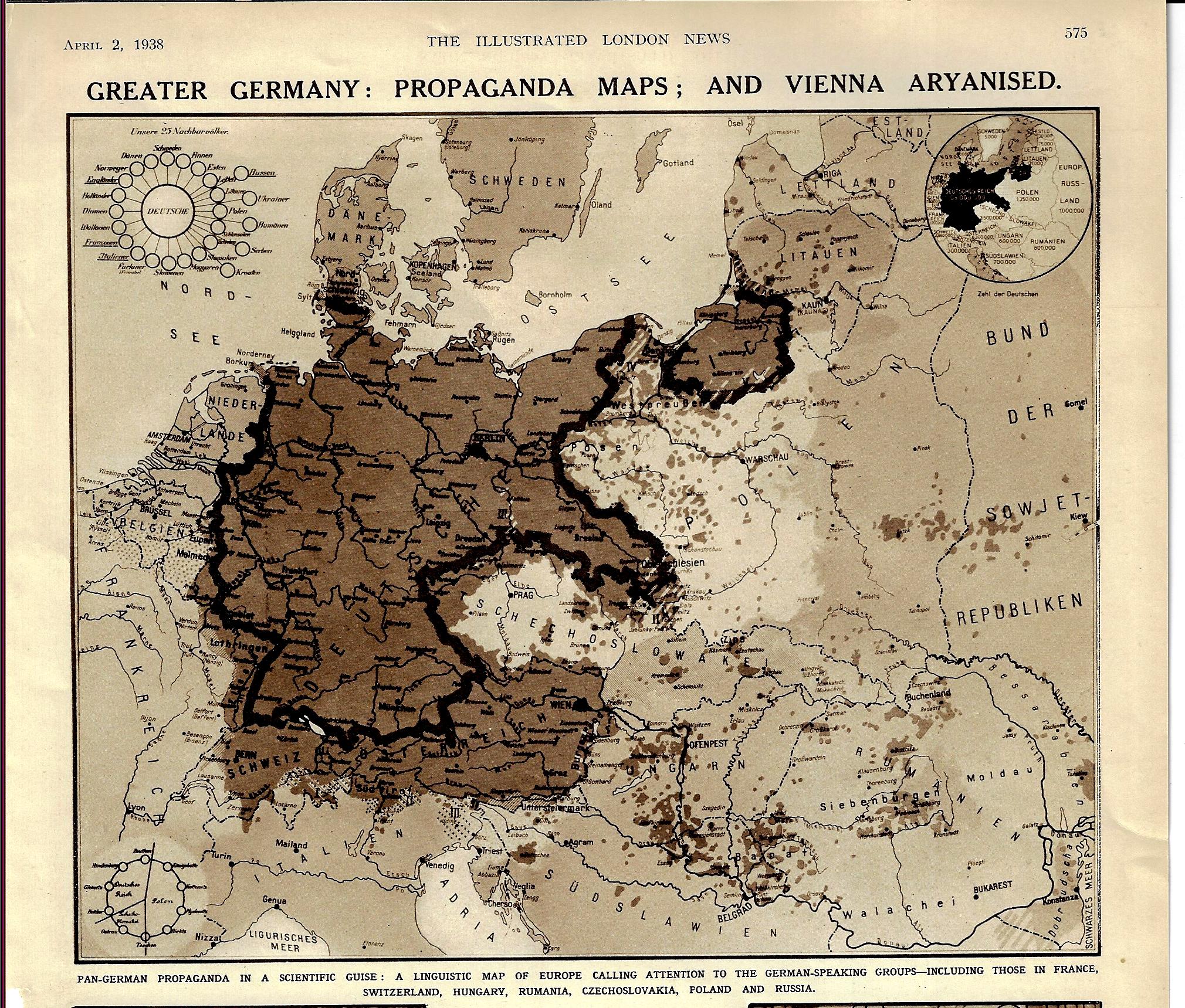
    Maps Propaganda German speaking 1938

    [Image: The Illustrated London News, p 575, April 2, 1938.]

    The title and the date of this map pretty much tells at least the partial story of the beginning of WWII. The “Aryanized” Vienna (Wien) shows up with the rest of Austria as German-speaking but also outside the boundaries of Germany, even though the Anschluss Österreichs occurred about three weeks earlier. “Pan Germany” was still figuratively so, in spite of the absorption of Austria.  Prague sits nearly surrounded by Germania irredentia, and of course Czechoslovakia was next, with Germany beginning the theft of the country that October, and then only about a year after the appearance of this article, Hitler was giving a speech at Prague Castle, also declaring Bohemia and Moravia to be the Protectorate of Bohemia and Moravia. This linguistic map certainly portrayed the gaping maw of the Nazi Kraken, Germany declaring that these actions was a natural right in the protection of Germans-outside-Germany. 


  • The Other Three German “B”s: Berlin, Barbed Wire, & Bayonets (1944/5)

    JF Ptak Science Books   Post 2700

    There is probably no doubt that a lot of book and pamphlet cover art printed during the war would feature plenty of Berlin/Germany/Barbed wire/Bayonets and other sharp and pointed things leading their dagger-y way to the hearty of the country. I really hadn’t recognized it as a motif despite its pretty obvious design implications until I had three examples from my own collection right in front of me.  I’ve written about the first two on the blog before for various reasons unrelated to the sake of its design. The third, Report from Berlin ” by a German Communist” is something I thought I had addressed earlier but hadn’t, and presents a strong case in itself, as with the others.

    Germany 3 Bs


    The overall tenor in the pamphlet shows the position of doomed Germany from the inside out,  and starts the whole thing noting that “June 22 [1941] was the most fateful day in Germany’s history”, stating that “at 6 a.m.” Hitler gave a speech announcing the invasion of the Soviet Union, which the writer in 1942 finds the beginning of the end for Germany, and in this was mostly correct.  The author goes on to describe the food shortages, working conditions, morale and teh consequences of bombing, the fear and loathing of the secret police, and so forth.

    The “author” end of this equation is not clear: outside of “German communist” the writer isn’t explicitly identified. There is an “introduction” signed by Hans Kahle, who was a very prominent figure as an anti-fascist in the history of modern Germany, an impressive force, and he may well be the author of the entire text.  WorldCat/OCLC–which finds about ten copies of this work in libraries worldwide, and those mostly overseas–lists Kahle as an author, and then in another listing also lists the illustrator of the cover, the great John Heartfield, as an author as well. (Heartfield is remembered as with Georg Grosz as elevating the use of art as a political weapon, exercising it in both wars as well as the rise of Hitler and the National Socialists, and as a photo-montagist and Dadist.) In any event, the pamphlet was published by this German Communist whilst in exile in London in 1942, and was a general screed on the doomed damnation of the Nazis.  

    ·Posted by :

    ·in:

    —
  • Octopusiana: the Failure of the Bank of the United States (the White House copy) 1931

    JF Ptak Science Books  Quick Post

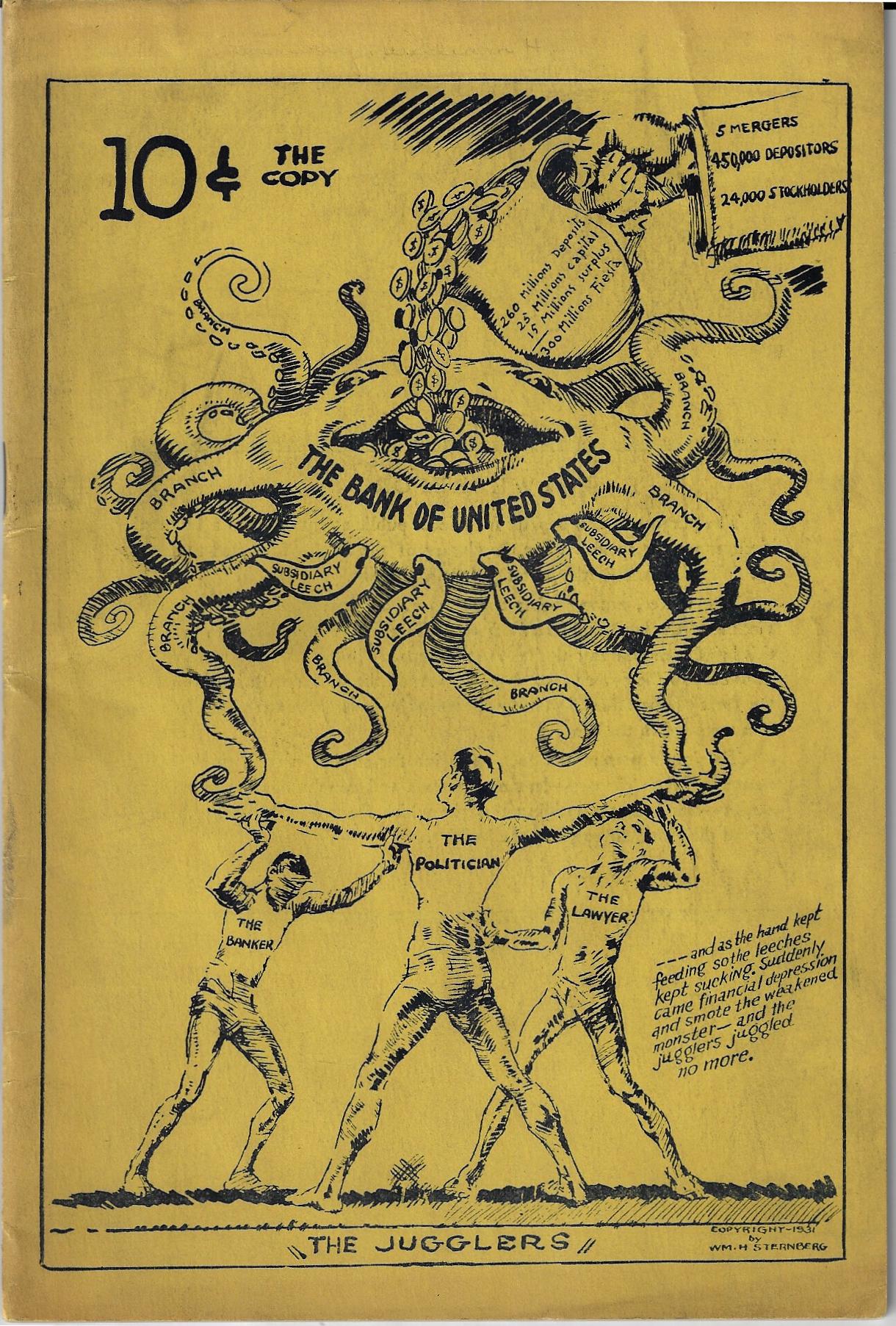
    Book cover octopus bankWilliam Sternberg.  Finis. The Bank of the United States, 1913-1930.  No publisher or place of publication listed, though copyrighted by William H. Sternberg, 1931, and “distributed ” by National Distributors. 23×15.5cm, 40pp. Highly decorated cover. Original wrappers.  Provenance:  the White House, and then the Library of Congress (stamped “by transfer/The White House, Jul 29 1931”. Very Good copy, with the LC surplus/duplicate stamp on rear cover, and a 6mm perforated “LC” stamp at the very bottom of the title page.  

    I was about to say that not many books have started their lives with the word “Finis” starting the title–a quick check in WorldCat has proved this wrong, as there at least hundreds of books with this word in the title. 

    The cover art–perhaps by Sternberg?–is very striking, and as with lots of political art, could be understood without having to read it, a glancing view being pretty much enough to tell the story.  The image features the Bank of the United States as a sort of 16-legged octopus, being fed money food from a merger/depositor pitcher, underneath which and perhaps keeping the whole thing afloat are a banker, lawyer, and politician. Sternberg evidently didn’t think much of the BOUS’ many acquisitions/mergers since it went into business in 1913, being particularly upset with the late 1920’s movements. Anyway this is a pretty screedy diatribe, though it also seems to be an informed one. 

    A Series of Unfortunate Events led to an infamous run on the BOUS’ Bronx branch, with 25,000 people showing up and wanting their deposits, all of which fed into the making of the Great Depression. The bank did not do well after the run.  

    ·Posted by :

    ·in:

    —
  • A Lovely Printer’s Device Honoring the Sciences (1724)

    JF Ptak Science Books  Quick Post

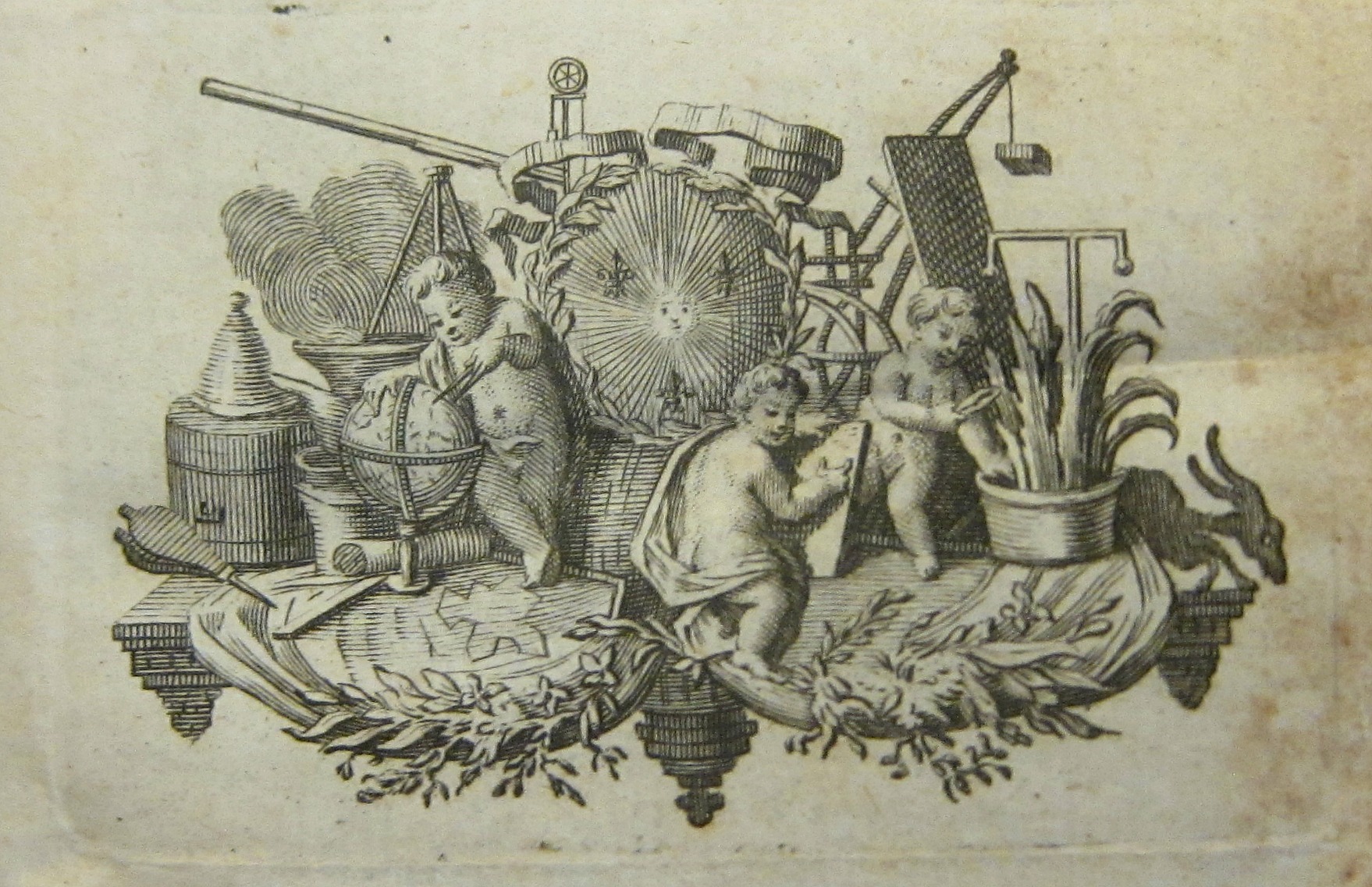
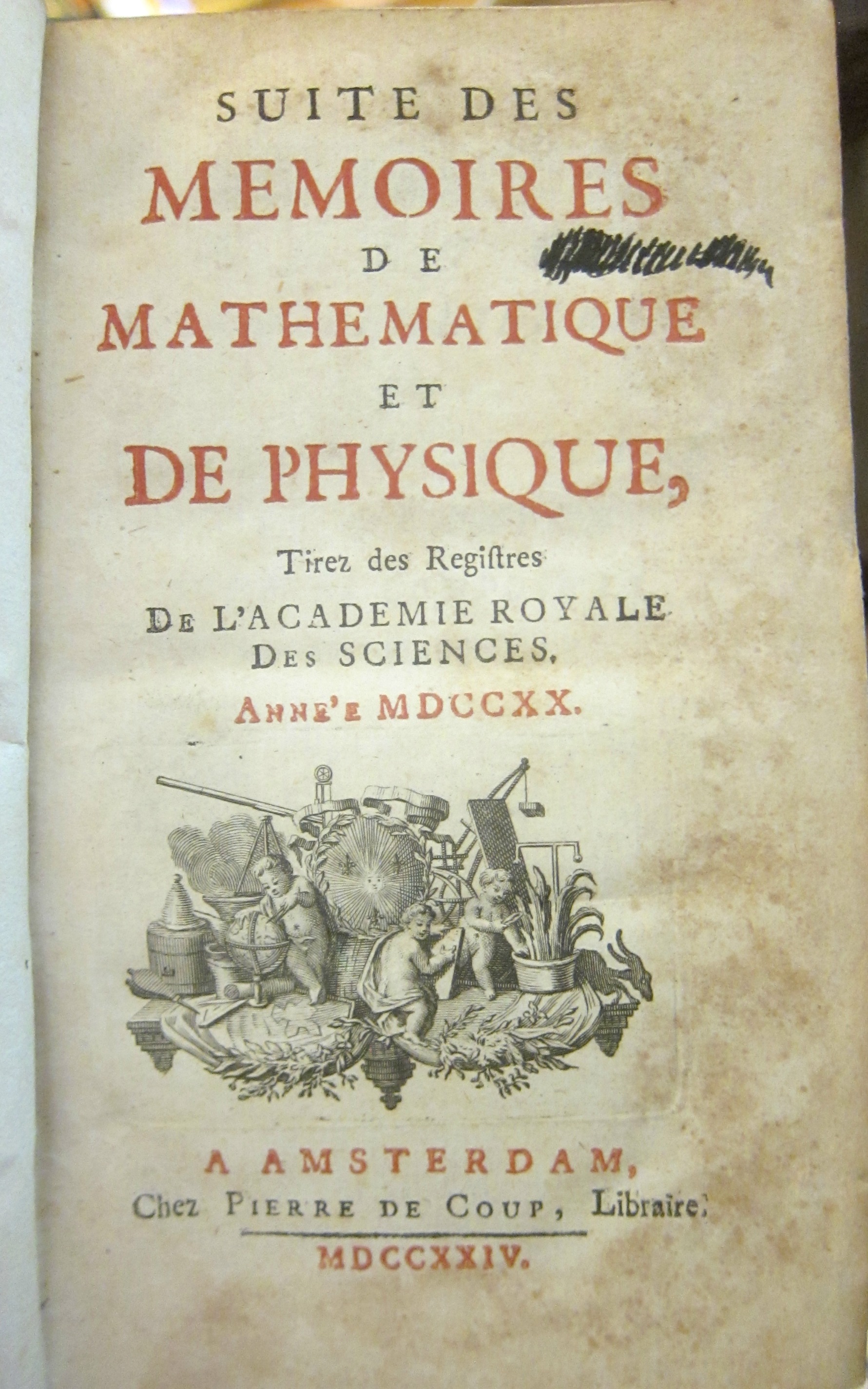
    Newly arrived here and new to my experience are some volumes of the journal Suite des Memoires de Mathematique et de Physique tirez des Registers d e l’Academie Royale des Sciences, a significant and beautifully-designed series of books which are small (only about 16cm) and very light, and their fine binding makes the book feel “correct” in your hands. I’ll be writing quite a bit about what I find in them over the next weeks and months, but the very first thing that stopped me was the scientific instrument-laden printer’s device on the title page–this the work of Pierre de Coup, of Amsterdam. The original is only about 3″ square (35x60mm), but it presents an abundant allegorical punch in a tiny space:

    Memoire de le Math


    And the full page:

     Memoire de le Math detail


    I can identify most of the instruments around the putti: right in the middle of it all is a crest with a blazing sun, no doubt indicating the reign of holy light on the impact of science and mathematics; to its rear and left is a telescope and to the right is a drawing table with a considerable balancing weight. One of the putti cuts a bit of the potted plant on the right, while another on the left works on a globe with a set of dividers (and may actually be standing on the plans of a fort).  The putto in the center (with an armillary sphere just behind him?) works on some sort of drawing, and looks down and away to the right. Additionally there are some bits an pieces: a right angle, a cauldron, perhaps an alembic, though I don’t know what that T-shaped instrument (on the right) is, or the clock-like-looking clock-like device at top-central…and I’m not sure why the bellows is figured so prominently (except for symbolic reasons). 

    For a full run of the journal see the Gallica site, here: http://gallica.bnf.fr/ark:/12148/cb32786820s/date

  • Name, Rank, and Serial Number (1945, with the Audio for the Radio Play)

    JF Ptak Science Books

    Name rank serial numberName, Rank, and Serial Number is a tough-love drama produced by Du Pont (“Better things for better living…through chemistry“) for the Cavalcade of America, sharing the critical importance of leaked and mistakenly volunteered information and the foul end that might come to. The play was based on a training film for the USAAF called “resisting Enemy Interrogation”, which was one of certainly hundreds of such films produced by the armed forces during the war to try and prepare members of the military for situations A to Z. Name, Rank, Serial Number was the public demonstration of one of these films, and this slim pamphlet contains the script. There is nothing quite like listening to the original, though, which can be found on the American University Digital Archive site, here: http://auislandora.wrlc.org/islandora/object/hickman%3A250

    This is the story of four captured U.S. airmen  in a German POW camp, and how they faced skillful and then brutal interrogators, and how even the smallest bit of misspoken or half-volunteered mistake can lead to terrible consequences. 


    ·Posted by :

    ·in:

    — —
  • The Highways of Tomorrow 1937 (and 1938)

    JF Ptak Science Books    Post 2701

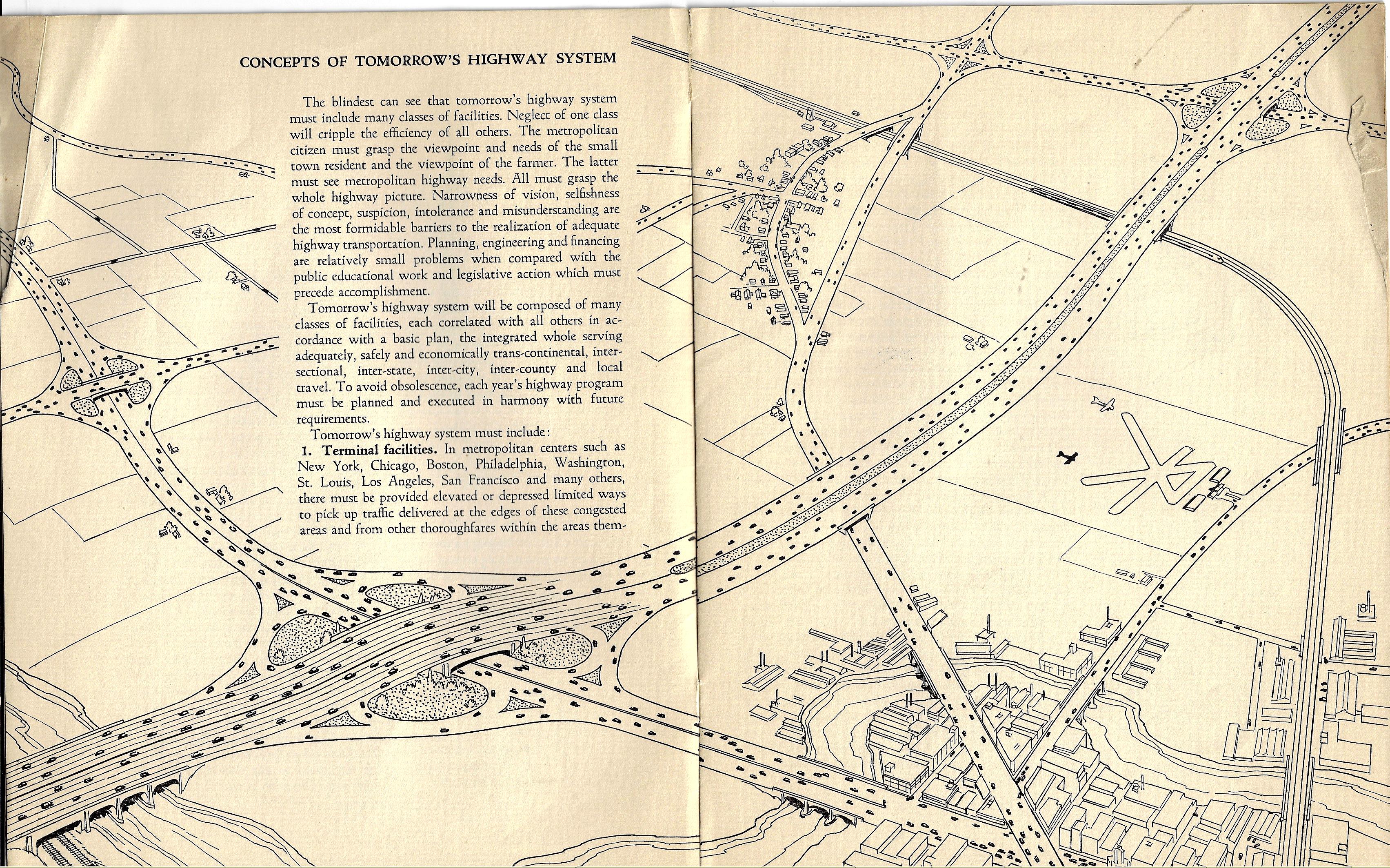
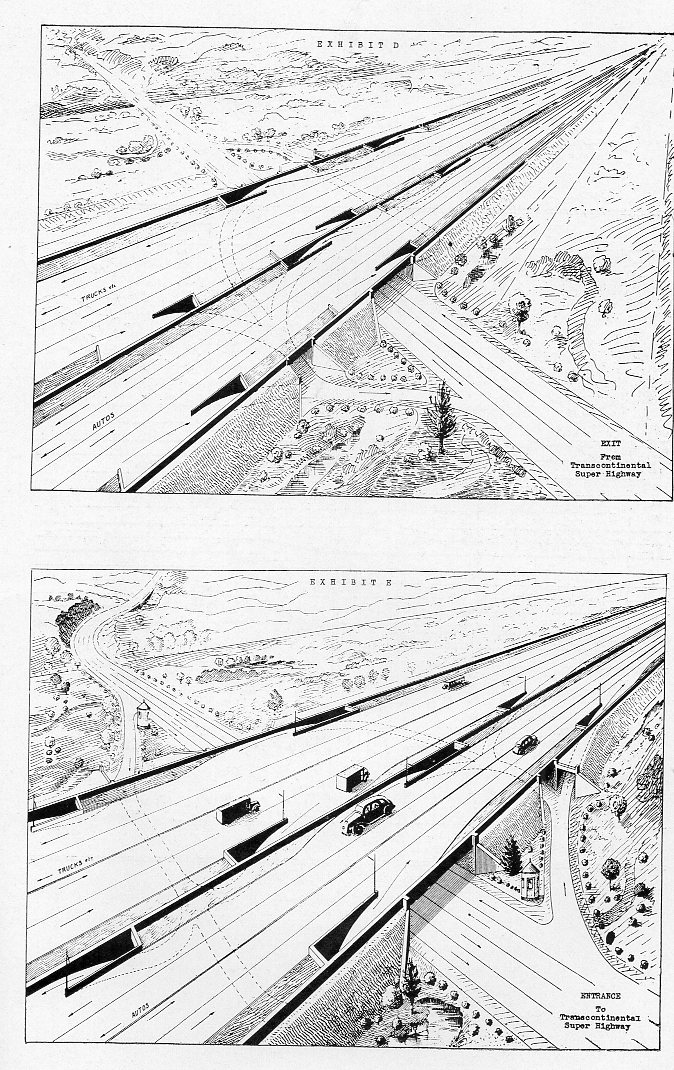
    The future–as presented in the following two pamphlets–was coming, and it was guided on a 100′-wide flat ribbon of cement, with a life-blood moving along it at 45 mph.  It is presented by Frank Sheets (president of the American Association of State Highway Officials), and the world looked like the cement that would be produced and purchased from the publisher of this pamphlet, the Portland Cement Company. And they’d be right, there would need to be something for the exploding auto market to get to and fro on the expanding horizon of city- and suburb-spread. To that end there exists in this work a proposal for 3 million miles of highways at a cost of $57,000,000,000, which was equal to about 75% of the entire budget of the U.S. government. It was a big plan–the proposal itself can’t be found in the pamphlet.
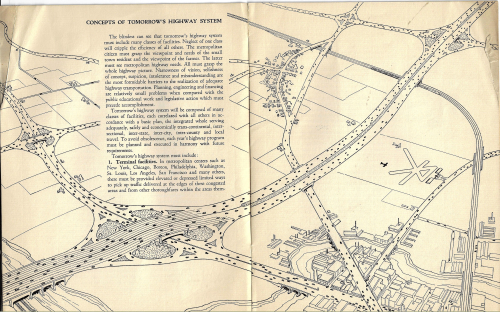
    Highway of the future

    [Source: Frank T. Sheets, The Highway of Tomorrow, Delivered at the Annual Meeting of the Greater New York Safety Council at Hotel Astor in New York City, April 14, 1937.] 

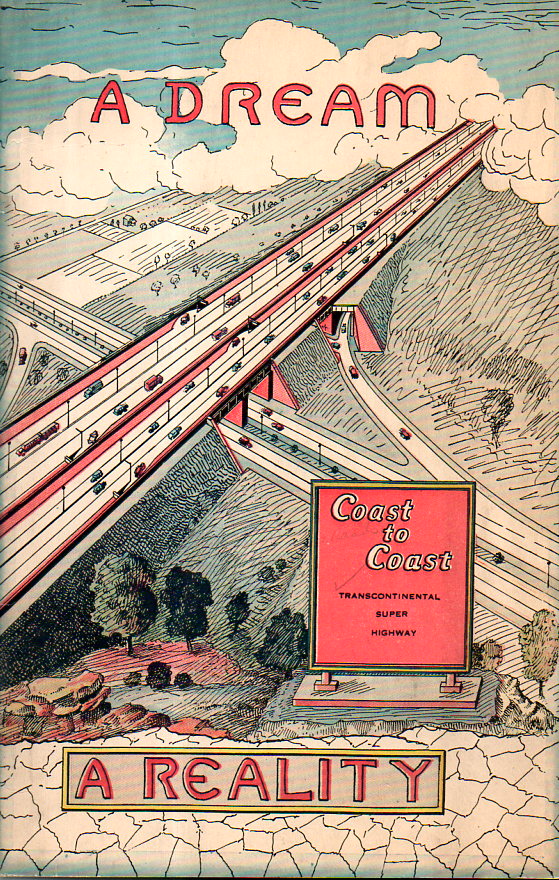
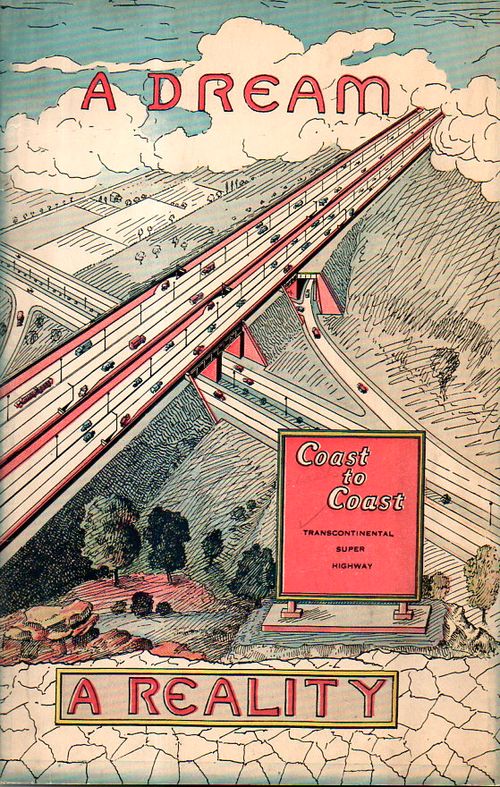
    Another vision of the future A Dream, a Reality” and/or “Coast to Coast Transcontinental Super Highway isn’t actually the title of this work even though they are on the cover; it is mostly a caption for an interior image though it somehow percolated topside.  The real title is The Highway of Tomorrow made Possible by the Ideal of Today, which gets to the subject of the work even though it is slightly unwieldy. It is difficult to say who wrote this though Mr. T.E. Steiner (“Sponsor”, of Wooster, Ohio) and which somehow found its way to a fourth edition in its two years of existence, published and promoted in undoubtedly small numbers by the “Transcontinental Stream-Lined Super Highway of the United States of America” in 1938.
    Highway visionary120

    This is all about super-highways, and mainly replacing the old roads with four new roads that are as straight as straight could be. A map of the proposals features one line of the highway is straight from San Francisco to Boston; another from Laredo, Texas (!) direct to International Falls, Minnesota (!);  a third not-straight shot from Boston-Allentown-near-Valdosta Ga-Miami; and another from near-Valdosta to Cleveland. A schematic of this map though drops near-Valdosta for Jacksonville, and has the Boston-Miami route further east to include NYC and D.C., which are omitted from the map.  Ah, well.

    I think that the author–an accomplished “business man” was was the head of a “manufacturing company” in Ohio and a coal company in West Virginia (and “employer of labor”) –was not much of an engineer, because the plan ignores topography and the highway design itself is pretty bad, especially the parts on exit/entrance (which the author takes particular care to note are separately copyrighted (?)) bits, which are killers. 
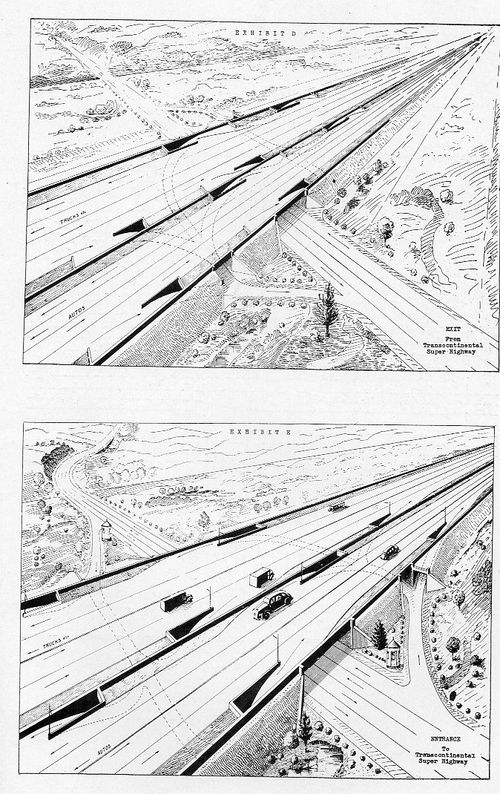
    Highway visionary121

    In any event, the super highway extending into the clouds on the cover is all I’m here for.  Mr. Steiner no doubt attracted some attention for the project because of the enormous pork and public works potential, what with the building of 6,000 miles or whatever of an 8-lane highway, which is billions of square feet of paving times some multiplier.  So a lot of money would be spent, which means, well, a lot of possible interest–after all, it did get so far as a hearing before the Committee on Roads, U.S. House of Representatives, on May 18, 1937.

    This no doubt was a “visionary”proposal of some sort, though the engineering aspects of it were more imaginary than anything else. 


  • On the Registration of All “Mental Defectives” (1931)

    JF Ptak Science Books   Post 2702

    Here’s a title that should stop you: 

    Mental defectives

    How very special.

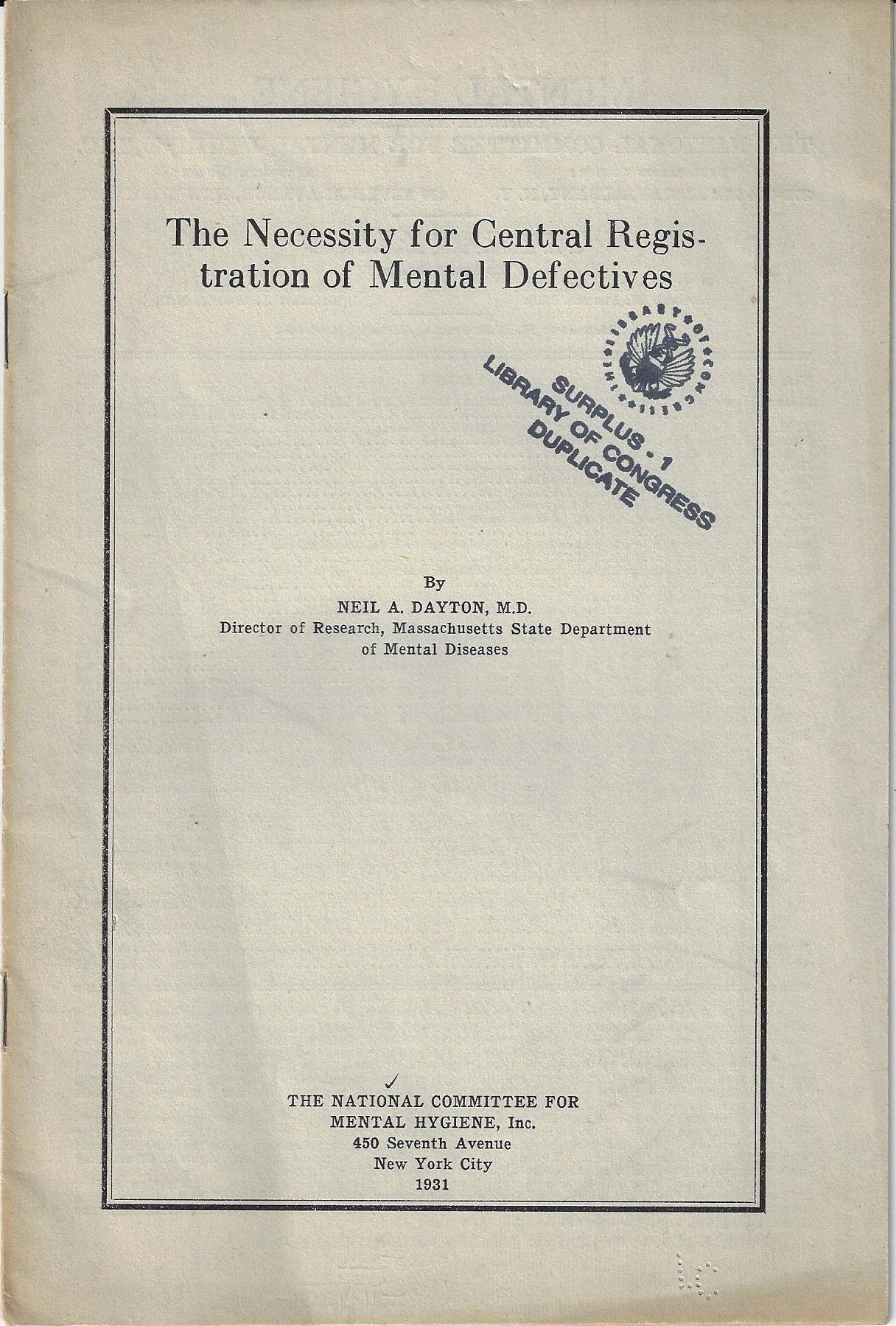
    Of course, it was 1931, and the Eugenicists were running free and easy, the stiff wind of their convictions running freely through their imaginary hair…and what would we all do with this gathering of information on mental defectives1 once that was done? And what was the definition of mental defective, anyway? thirdly of course–what do we do with the mental defectives once this energy of definition and collection had been done?  well, a new group would come to power in two years’ time from the publication of this article, and in their own right they did these things and then decided to kill many of the people that they cataloged. That’s one example. I’m not saying that the well-meaning people like the author of this paper would be anywhere near this horrible, not at all; I just don’t know why they would want to gather this information.  There wasn’t a discussion of collection of treatment of these people, just their registration in one large database. Every time I see in this pamphlet the statement on the need for such a registry, I expect to see why–but that never comes, only the repetition of a phrase like “that a central registry for mental defectives is desirable, and that it should be organized and operated by an established state department” and its variations.

    Finally, at the end of the short 14-page pamphlet, in the final paragraph, something appears close to explaining the “why” issue–but it winds up being a little tautological, stating that the need for gathering the names of all mental defectives is “to make available authorized agencies and individuals definite information on known mental defectives”

    Basically–at least so far as this pamphlet explains–the reason for gathering all of these names into a system of state-wide databases is to have the names in state-wide databases. 

    Notes:

    1. Mental defective seems to make its first appearance in English in 1899, according to the Oxford English Dictionary: 
  • On Brain Light, Clairvoyants, and the Uselessness of X-Ray Photographs

    JF Ptak Science Books  Post 2703

    • [The principles of light and color: including among other things the harmonic laws of the universe, the etherio-atomic philosophy of force, chromo chemistry, chromo therapeutics, and the general philosophy of the fine forces, together with numerous discoveries and practical applications, by Edwin Dwight Babbitt (1828-1905) chromopathologist and psychophysician, and published 1896.]

    Brain light detailI must admit to only knowing this book by two dart throws–one that landed on page 495 (with its remarkable image) and then the other on page 56-0, very nearly the end of the book–and sometimes that is all you need, especially in this case, where all you really need is the title.  The author of this mega-themed title and the book that wrapped around its axle seems to promise something having to do with color/light therapeutics, or something, and I was pulled in for perhaps some entertaining pre-non-representational artwork, but I never got that far, stabbing away as I did in the copy on the Internet Archives, finding myself with a light-filled neuroanatomy drawing, and it s explanation.  Whatever the creative light that was reputedly displayed in this image had its existence and purpose proved by clairvoyants, which I don’t often see too often in 19th century anatomies or physiologies.  Anyway, they were there, consulted (either near or far), and the case made, and thus the curtains drawn. I did like the drawing, though.

    When I went to see how the book closed out, I found an addendum on the “so-called Roentgen or X Rays”, which the author says he discovered and wrote about in the first edition of this work back in 1878. He makes some complimentary remarks about the work of Crookes and Edison in this field (the x-ray being discovered in 1895), but then goes on to fuss about the unnecessary use of photography with the x-ray, finding it gratuitous and wasteful. Using your eyes in real time and not a photo was his choice, and that was that, the author ending by saying “I am done with the photographic end of it, entirely”, which no doubt places him in a highly restricted group of people looking at the future of the x-ray.  

    [Image source: Full text: https://archive.org/details/principlesofligh00babb]

    The explanation of the image of brain light:

    ·Posted by :

    ·in:

    —

Recent Posts

Archives

Categories