JF Ptak Science Books Post 2702
Here’s a title that should stop you:
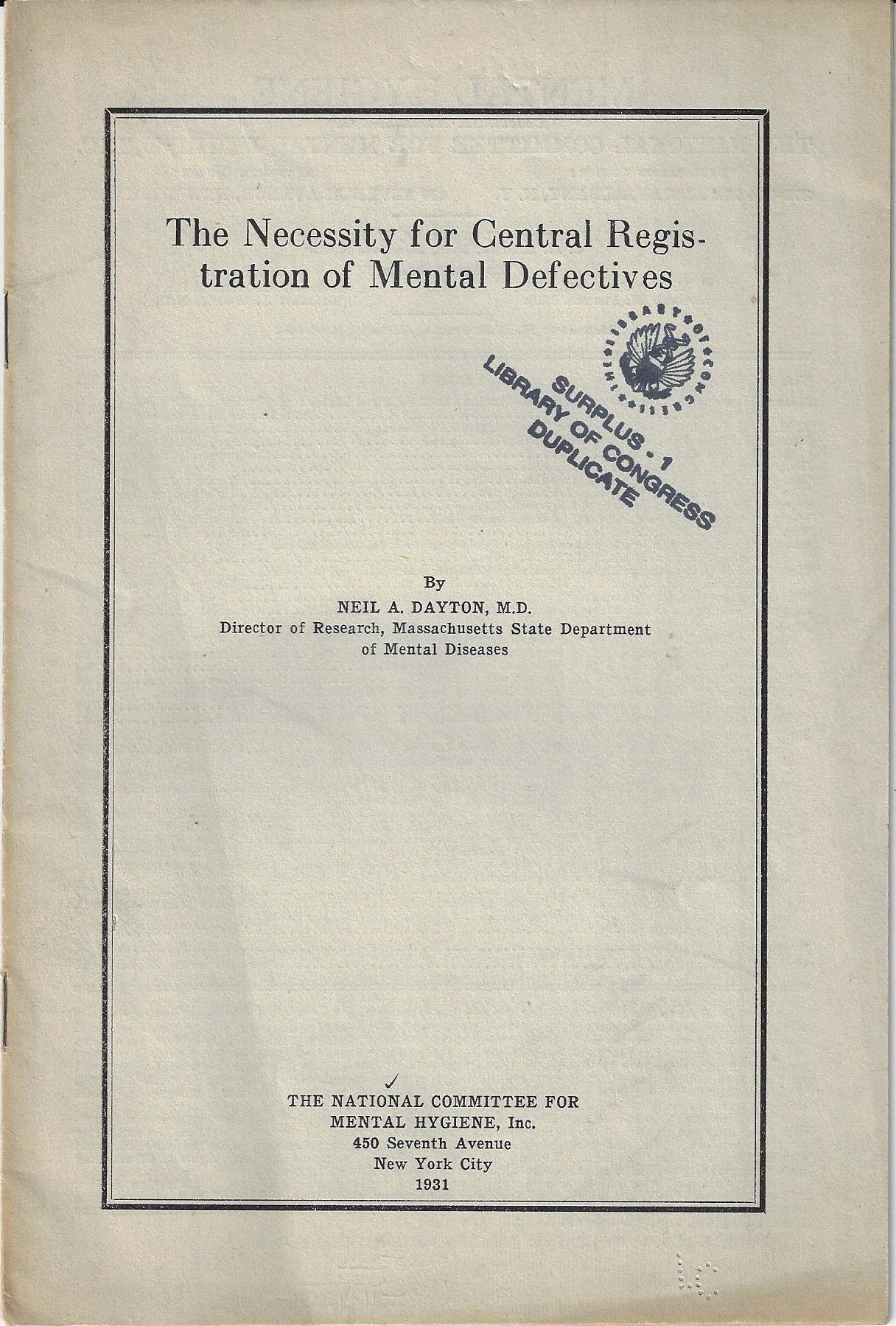
How very special.
Of course, it was 1931, and the Eugenicists were running free and easy, the stiff wind of their convictions running freely through their imaginary hair…and what would we all do with this gathering of information on mental defectives1 once that was done? And what was the definition of mental defective, anyway? thirdly of course–what do we do with the mental defectives once this energy of definition and collection had been done? well, a new group would come to power in two years’ time from the publication of this article, and in their own right they did these things and then decided to kill many of the people that they cataloged. That’s one example. I’m not saying that the well-meaning people like the author of this paper would be anywhere near this horrible, not at all; I just don’t know why they would want to gather this information. There wasn’t a discussion of collection of treatment of these people, just their registration in one large database. Every time I see in this pamphlet the statement on the need for such a registry, I expect to see why–but that never comes, only the repetition of a phrase like “that a central registry for mental defectives is desirable, and that it should be organized and operated by an established state department” and its variations.
Finally, at the end of the short 14-page pamphlet, in the final paragraph, something appears close to explaining the “why” issue–but it winds up being a little tautological, stating that the need for gathering the names of all mental defectives is “to make available authorized agencies and individuals definite information on known mental defectives”
Basically–at least so far as this pamphlet explains–the reason for gathering all of these names into a system of state-wide databases is to have the names in state-wide databases.
Notes:
- Mental defective seems to make its first appearance in English in 1899, according to the Oxford English Dictionary: