A Daily History of Holes, Dots, Lines, Science, History, Math, Physics, Art, the Unintentional Absurd, Architecture, Maps, Data Visualization, Blank and Missing Things, and so on. |1.6 million words, 7500 images, 4.9 million hits| Press & appearances in The Times, Le Figaro, Mensa, The Economist, The Guardian, Discovery News, Slate, Le Monde, Sci American Blogs, Le Pont, and many other places… 5000+ total posts since 2008.

  • Missing the Colors that Are Not There (1835)

    JF Ptak Science Books   Post 2704

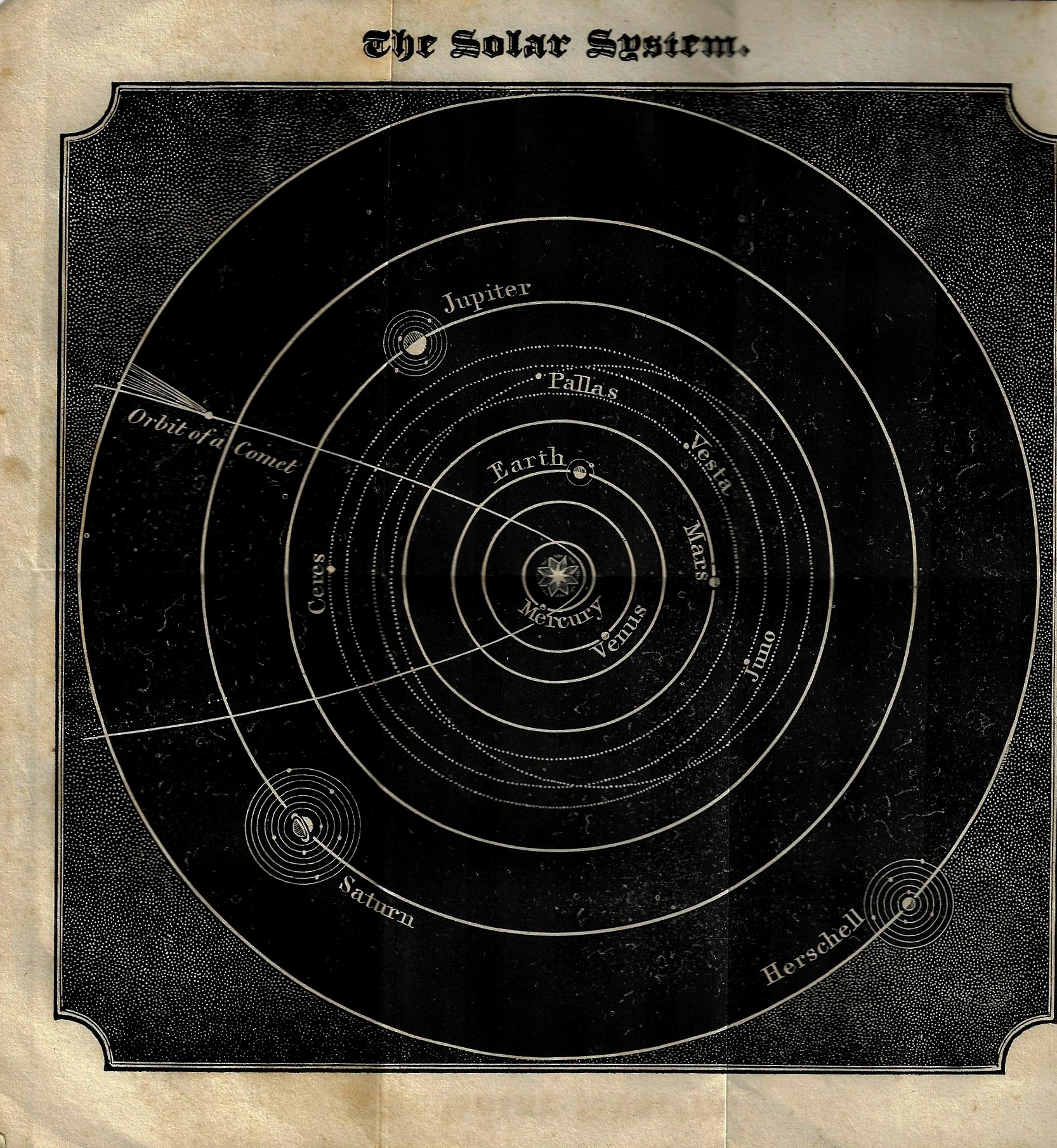
    I don’t know what there is in this engraving that speaks “color” to me when it should probably be just concerning itself with the blackness of its deep black (which for me is usually the case). Neither the blackness nor the dimensionality of the thing–it seems to give itself some height and depth at the same time–say anything louder than the representation of its missing colors, which we are clearly seeing nothing of in these wavelengths except that there really aren’t any colors here outside of the beautiful black & white.  The contrast is certainly there (“There are dark shadows on the earth, but its lights are stronger in the contrast.” Charles Dickens, The Pickwick Papers), especially in the corner bits, where on closer inspection the blackness is really more white than black. In any event, the print suggests “color” to me for no good reason, except perhaps that it looks very cold, and cold is suggestive of ice blue, and the good contrast for that is yellow. “The sound of colors is so definite that it would be hard to find anyone who would express bright yellow with base notes, or dark lake with the treble.” so wrote Mr. Kandinsky, who saw colors in his sound, and who in the midst of things wrote four experimental pieces of theater based upon this observation, the first and perhaps most prominent of which was called “Yellow” (1909).  And that is why this old engraving seems “yellow” to me (and this without any benefit of synesthesia).

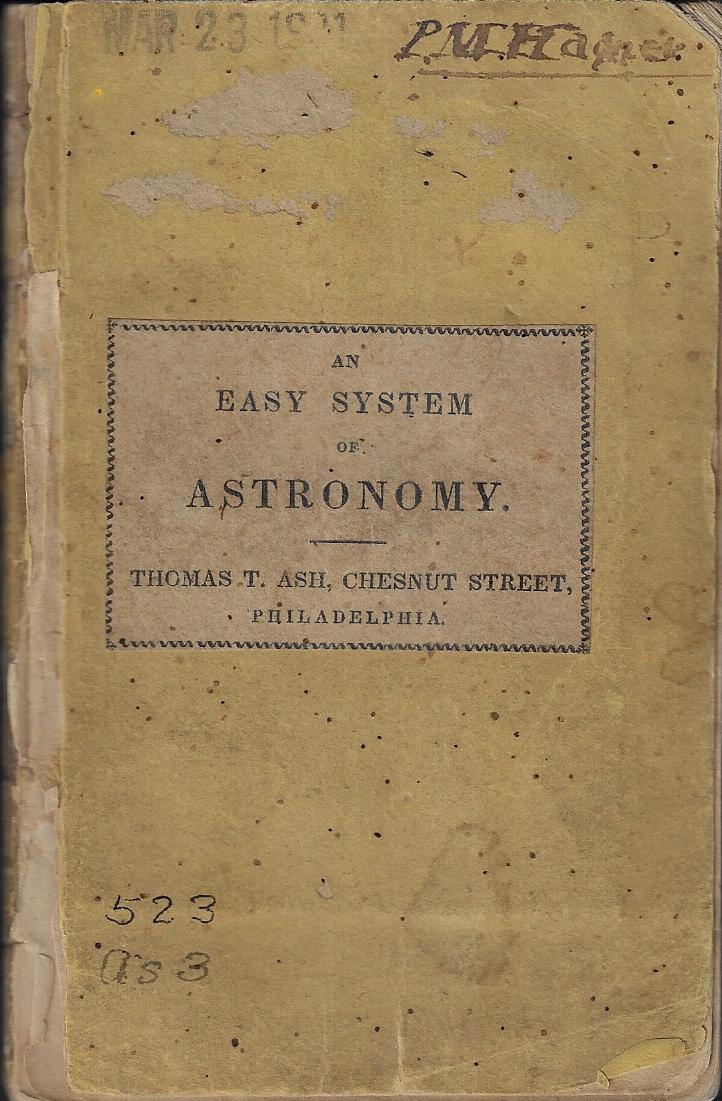
    The image in question, from An Easy System of Astronomy, containing an explanation of the Moveable Planisphere, together with a selection of problems, maps &c, intended to either accompany the planisphere or may be used separately in schools. This little guy (14cm) was published in Philadelphia in 1835 and unfortunately does not make mention of any detail of the “planisphere” other than that there was one that could be used. (This is evidently relatively rare, with only two copies located in WorldCat/OCLC–Columbia and the National Observatory.) 
    Astronomy easy system

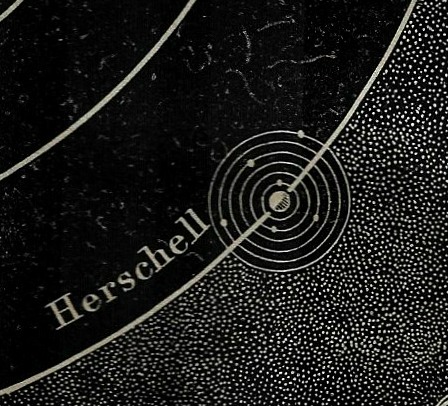
    If there was an equal weight assigned to white and black, the white in the corner sections may well outweigh the black, which also happens to show the planet “Herschell”. This was the first planet discovered since antiquity, and was done so by the Hannoverian Brit Friedrich Herschel, who found it in 1781 and who lived with its immediate fame for another 41 years until his death in 1822. Herschel, an enormous astronomical talent who also played and composed, proposed the planet be named  in fidelity “Georgium Sidus” after George III, though that name didn’t stay on the planet longer than a quick shadow. The French astronomer Lalande (who could probably not for genetic /national reasons use the name for George) suggested the planet be named for the discoverer, “Herschell1“, which really wasn’t that terribly popular though it did last for five or six decades, succumbing finally to Bode’s suggestion of “Uranus”. 
    Astronomy easy system detail

    This is a folding illustration for the following, which here appears much larger than the thing is in its real life, standing as it does only about 5″ (130mm) tall:
    Astronomy easy system cover


    Notes

    1.  From the entry “Uranus” from the Oxford English Dictionary:

    1783   New Rev. Apr. 325   Notwithstanding Mr. Herschel’s having named his planet the Georgium Sidus, Mr. Lalande persists in calling it the Herschel, Mr. Bode proposes Uranus, Mr. Sivry Cybele, and Mr. Prosperin, Neptune.

    1802   O. G. Gregory Treat. Astron. 128   By some astronomers it is called Herschel, in honour of the discoverer; though among almost all foreigners, it has acquired the name of uranius, which it is likely to retain.

    1830   Encycl. Metrop. III. 498/1   Both these appellations are, however, now nearly become extinct, that of Uranus being almost universally adopted

    1860   D. Olmsted Mech. Heavens 267   Uranus was the remotest known planet..until the discovery of..Neptune.

    1902   N. Amer. Rev. Aug. 225   Jupiter, Saturn, Uranus and Neptune are in too primal a state of fluidity and gaseousness to support life.
  • The Great Passaic Textile Strike of 1926–H.L. Mencken’s copy

     JF Ptak Science Books   Post 2705

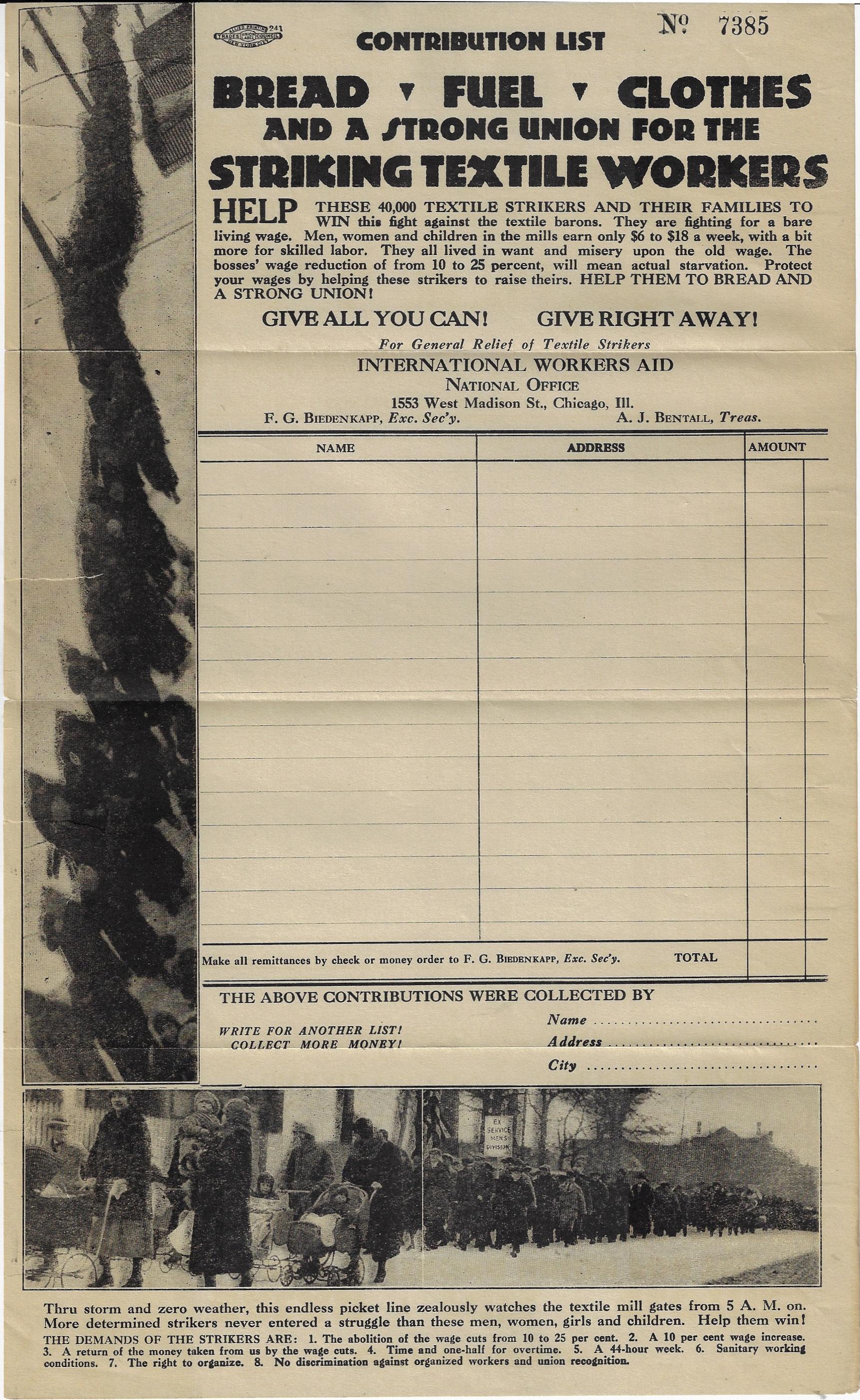
    This broadside was an appeal to like-minded people to contribute to a fund to help relieve thew dire conditions of textile worker strikers in Passaic, New Jersey, in 1926.  There were more than 16,000 people involved in this sometimes-brutal strike, people who were trying to stay even in their lives, looking for a little more money and a little better working conditions than what they had.  The Passiac (a working city just south of Patterson in an industrial triangle section of the state) strikers were moving against a number of textile (wool and silk) mills there, trying to force management to pay them something closer to the $1400 annual income for a family of four to survive. \

    Most workers there were making $1,000-$1,200 a year ($800-$1,000 if the worker was a woman, and about half of them were) for 50+ hours of labor per week.  The result was that the workers could not afford good housing and food, and those disadvantages paid off in high rates of tuberculosis, very high incidence of child mortality, and a low average life expectancy.  The strike began slowly in January 1926, with the mills responding with vicious attacks by paid thugs and by police. 

    Passaic Strike

    [Measures 8.5×14″]

    There’s quite  a bit written on this strike, and most seem to say that it was an important event in the history of “labor relations”, and that it was the first time that a Communist-led strike succeeded in the United States, (There is a complex legacy as to who the leadership was for this strike, but the end result is that, at the end, the Communists were in charge.)

    But what I wanted to say here about this broadside was the communal effort involved with keeping the strikers (and the strike) going.  The strikers needed money to live, as there was certainly no money coming in, and since there was obviously no union, there was no general fund from which any of these families could draw food money from). they needed money just to buy food and pay for housing.  SO the call for “Give all you can!” and “Give right away!” were as desperate as they sounded.  My guess is that there would be a representative of the International Workers Aid society national office going from factory to factory, or door-to-door, soliciting for money for the Passaic workers’ relief.  The strike was no doubt a very nasty business, with a victory only a victory once there was more food on the table, less illness, and far fewer babies dying from preventable causes. Probably this looked like a victory to others so far as the future of fair labor/pay was concerned, but not so much for the strikers who brought this about. 

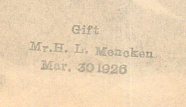
    It is also interesting to note that this copy was given at some point to H.L. Mencken, who gave it right away to the Library of Congress, where it wound up in a forgotten “Pamphlet Collection”, and then sold to me (years afterwards).

    Passaic strike279

  • A Visionary and Somewhat Contradictory Peace Plan for Humanity (1927)

    JF Ptak Science Books   Quick Post

    “All [people] dream, but not equally.”–T.E. Lawrence

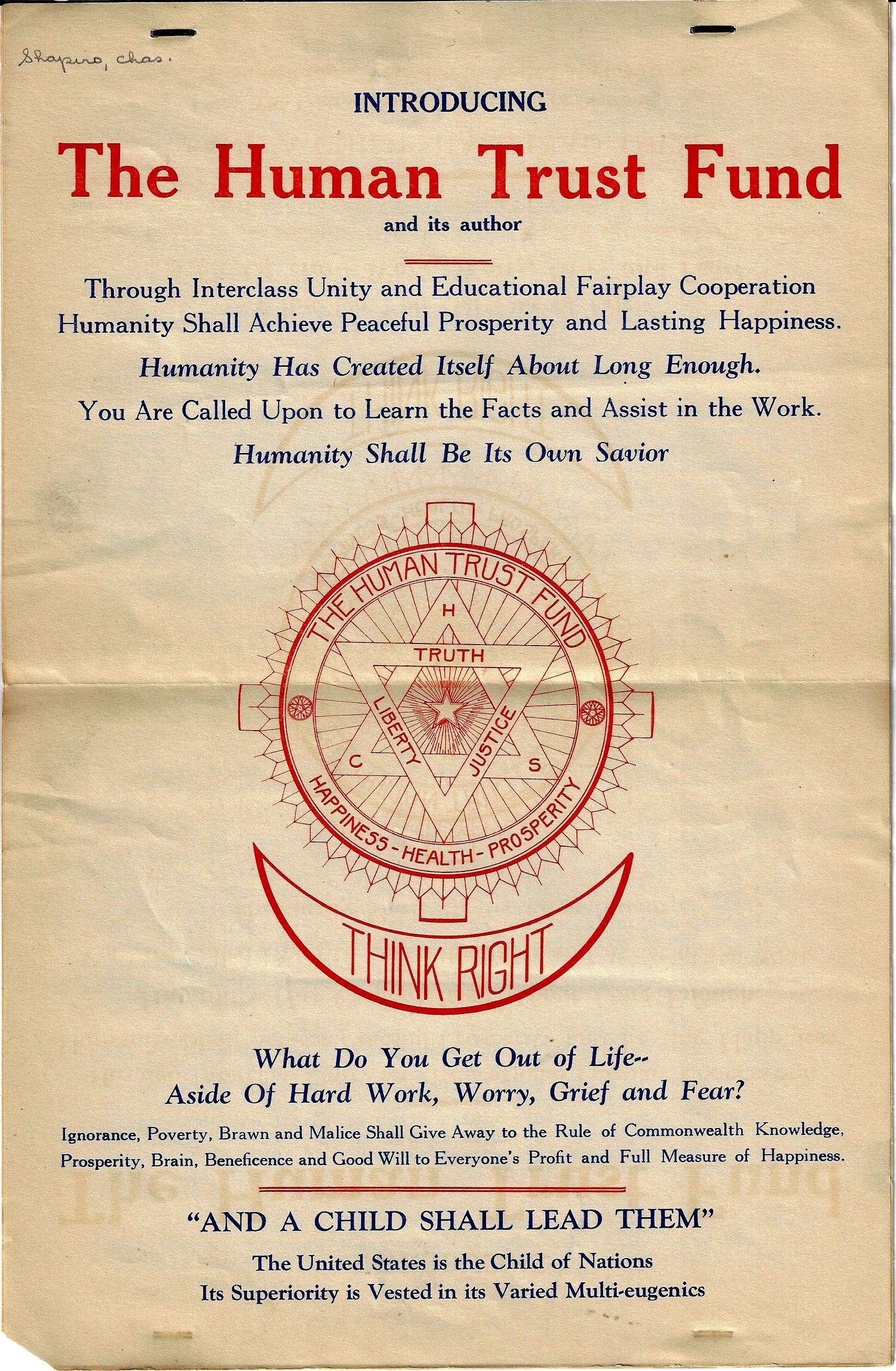
    Although this tall (13″)0 pamphlet is rather short, it is a potential toothache to read. To that end I am not reporting on the contents, just the cover, which tells its own story.  This was printed in 1927, and was once owned by H.L. Mencken.  

    Human Trust Fund

  • A Not-Very-Ornamental Notice for the First Lecture Given by the First Female Professor at the Sorbonne–Mme. Curie, 1906

    JF Ptak Science Books     Post 2705 (slightly expanded)

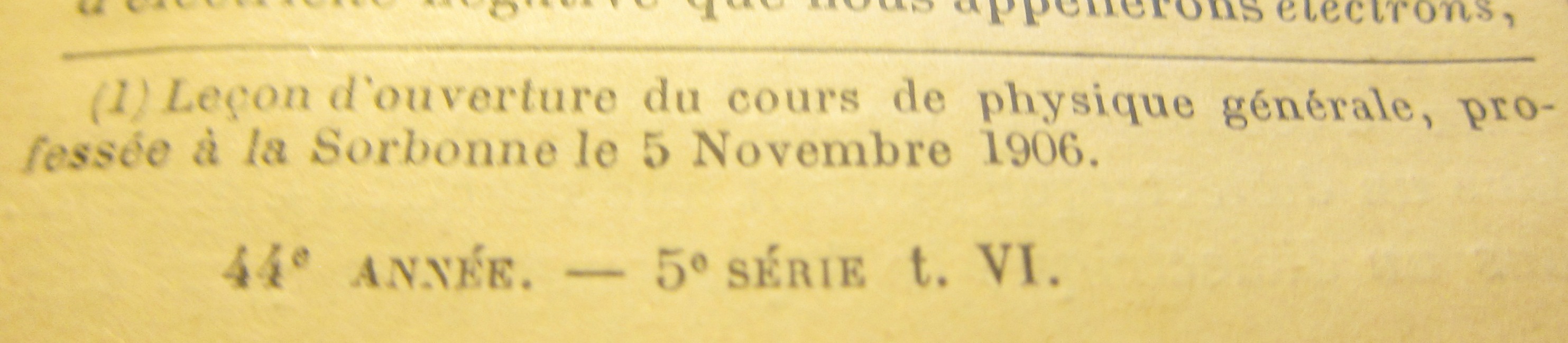
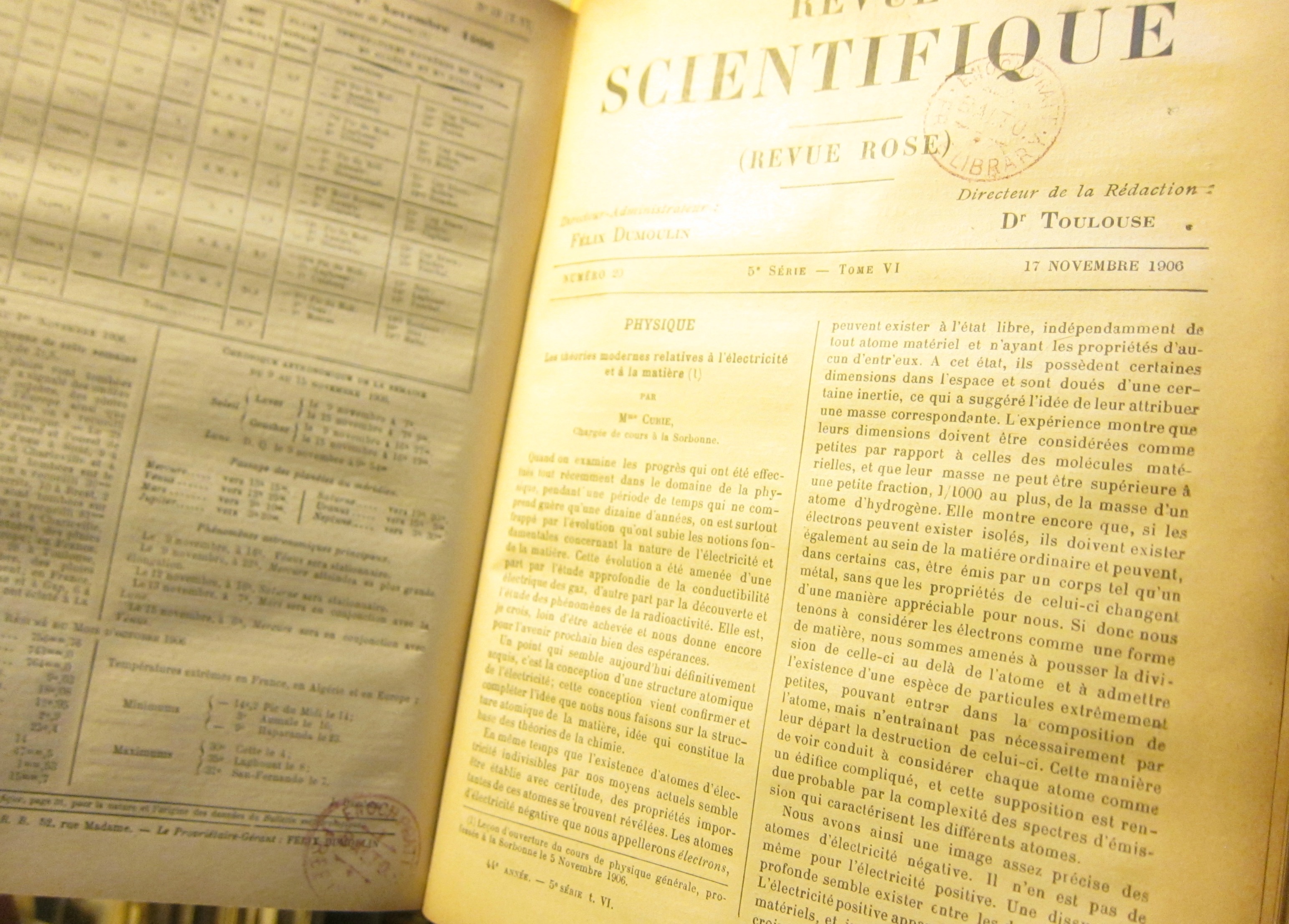
    The poetry and moment of the auspicious occasion of Marie Curie’s first lecture1 at the Sorbonne passed without notice in the page of the Revue Scientifique, which published the lecture a week later. Curie was the lead paper in the 15 November issue of the journal, though there was nothing to mark its historic nature–only a footnote at the bottom of the page referring to the Sorbonne lecture a week earlier. 

    Curie 1906

    This was the first lecture Curie delivered as the first woman to have a teaching position (the first lecturer and first professor) at the Sorbonne  She took the chair in May 1906, just a month after her husband Pierre was accidentally and tragically killed in a freak accident, being crushed by a street carriage. All of this came only a year after the Curies received their Nobel Prize (delayed due to their illnesses from the award year of 1903 to 1905, Curie being the first woman to receive the award).  The teaching chair Curie occupied was that of her late husband, who had only recently (and finally) been appointed to it. With such a history, Curie in her new position began the lecture with the final words that her husband used teaching in that same room.

    I’ve read that the impact may have been loosened somewhat given Curie’s methodical, removed, and monotonic delivery, which left many in the large crowd (attendance thrown open for the occasion) feeling underwhelmed. The Dictionary of Scientific Biography carries a contemporary description of the event so: “Mme. Curie compelled recognition from her first lecture (5 November 1906), despite her timidity, the emotion she was concealing, her weak voice, and her monotone delivery. She made no introductory remarks, took no notice of the sightseers mingling with the students, and began her lecture with the last sentence that Pierre had spoken in that very place. In every demonstration experiment she watched the result with as much interest as if she did not already know it…”2

    Curie 1906_2_

    And Dirac and many others wound up being not-engaged lecturers. So be it. But starting her lecture with the last words her dead husband spoke from the same spot is very powerful stuff, but evidently not powerful enough to move many people. 

    Notes:

    1. Curie, Marie. “Les Theories Modernes Relatives a l’electricite et a la matiere”, in Revue Scientifique (Revue Rose), 5th series, volume VI, #29, 17 November 1906, pp 606-612, and in the next issue, #21, 24 November 1906, pp 650-654. Offered in the full volume for the second half of 1906. Bound in a very stout red buckram with reinforced hinges. The volume contains 26 weekly issues, each title page having the former owner’s round rubber stamp

    2.  Dictionary of Scientific Biography, vol 3, p 501. 

    Also see Nobel Laureates in Chemistry, 1901-1992, by James K. Laylin, pg 92./

    Here’s a contemporary and congratulatory review of the event: 

    “MME. PIERRE CURIE THE FIRST WOMAN PROFESSOR IN THE SORBONNE. The academic year of the University of France may be said to have opened to day November 5 with the lecture by Madame Curie on electricity. The occasion was entirely unique in the history of the Sorbonne and was one of great interest. Never before has a woman had such an appointment at the Sorbonne and no other woman or man living has such a claim as Madame Curie to be heard on her special subject. The rector of the university and other prominent officials were present. The minister of public instruction M Briand who appointed Madame Curie to this professorship made vacant a few months ago by the accidental death of her husband had promised to be present but his presence was required at the opening of the parliament at the same hour. Madame Curie’s course of lectures is one of the so called open courses to which admission may be gained without fees or formal matriculation long before the lecture began the outer gates were closed against those seeking admission. Several hundred of those who filled the corridors were unable to get into the hall of physics in which the lecture was to be given. I almost despaired of getting in and was one of the last who succeeded I was well rewarded for my patience in waiting. Standing behind the last and highest tier of seats in the hall I looked down on three or four hundred people of both sexes and of all ages above twenty. Back of the long table at the opposite end of the room stood the modest self possessed woman who has made the civilized world her debtor by her discoveries…”–Journal of Education, December 6, 1906, p 611. 

  • A First Taxonomic Description of Coffee (1713)

    JF Ptak Science Books   Quick Post

    Academie science 1713 coffee

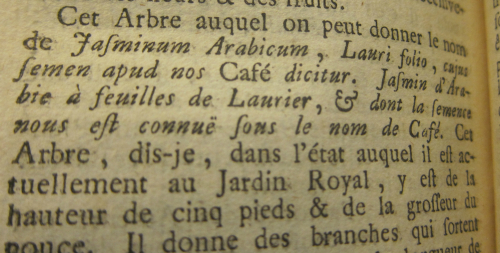
    The beneficial effects of “coffee” had been  known in Ethiopia, and Arabia, and Persia, and Syria, and Turkey, long before it was used and enjoyed in the West. where coffee didn’t make a strong appearance until the 17th century.  Evidently, though it took nearly another hundred years for the first taxonomic description to appear. That was the work of  Antoine de Jussieu (1686-1750) , and his effort appeared tucked away in a short article “Histoire du Cafe”in the scientific journal Memoires de l’Academie des Sciences in 1713. 

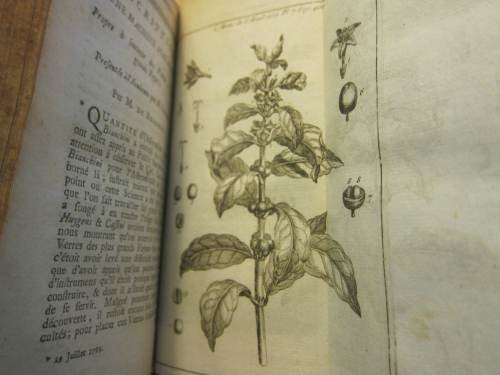
    The Jussieu is a coffee incunable in the Western world. It was described as “The first recorded taxonomic description of coffee…described a coffee plant from the botanical garden of Amsterdam as “Jasminum arabicanum, lauri folio, cujus femen apudnos coffee decir” in 1713 (“Arab jasmine, with laurel type leaves, the beans of which we can call coffee”)–(Wintgens, 2009, quoted by Caas Brazil, Coffee Taxonomy.) And although there isn’t an exact reference to the place of publication from what I can determine this must be the source–the article also uses a quote from the paper that is directly from this paper, which I reproduce above.  The Jussieu paper was also described as  “The first botanical description of a coffee tree, under the nam Jasminum arabicanum…made in 1713 by A. de Jussieu, who studied a single plant originating from the botanic garden of Amsterdam.” found in Charrier, A.; Berthaud, J.  “Botanical Classification of Coffee”, (1985), found in Clifford, M. H.; Wilson, K. C. Coffee: Botany, Biochemistry and Production of Beans and Beverage, AVI Publishing, p. 14. A wiki article on Jussieu references this paper but in a 1739 Paris edition of the 1713.  The 11-page article is also illustrated by an engraving of the coffee tree:

    Academie sciences 1713 coffee_2_

    Notes:

    ·Posted by :

    ·in:

  • The Greatest Traffic Machine Ever Built (to 1936)

    JF Ptak Science Books  Quick Post

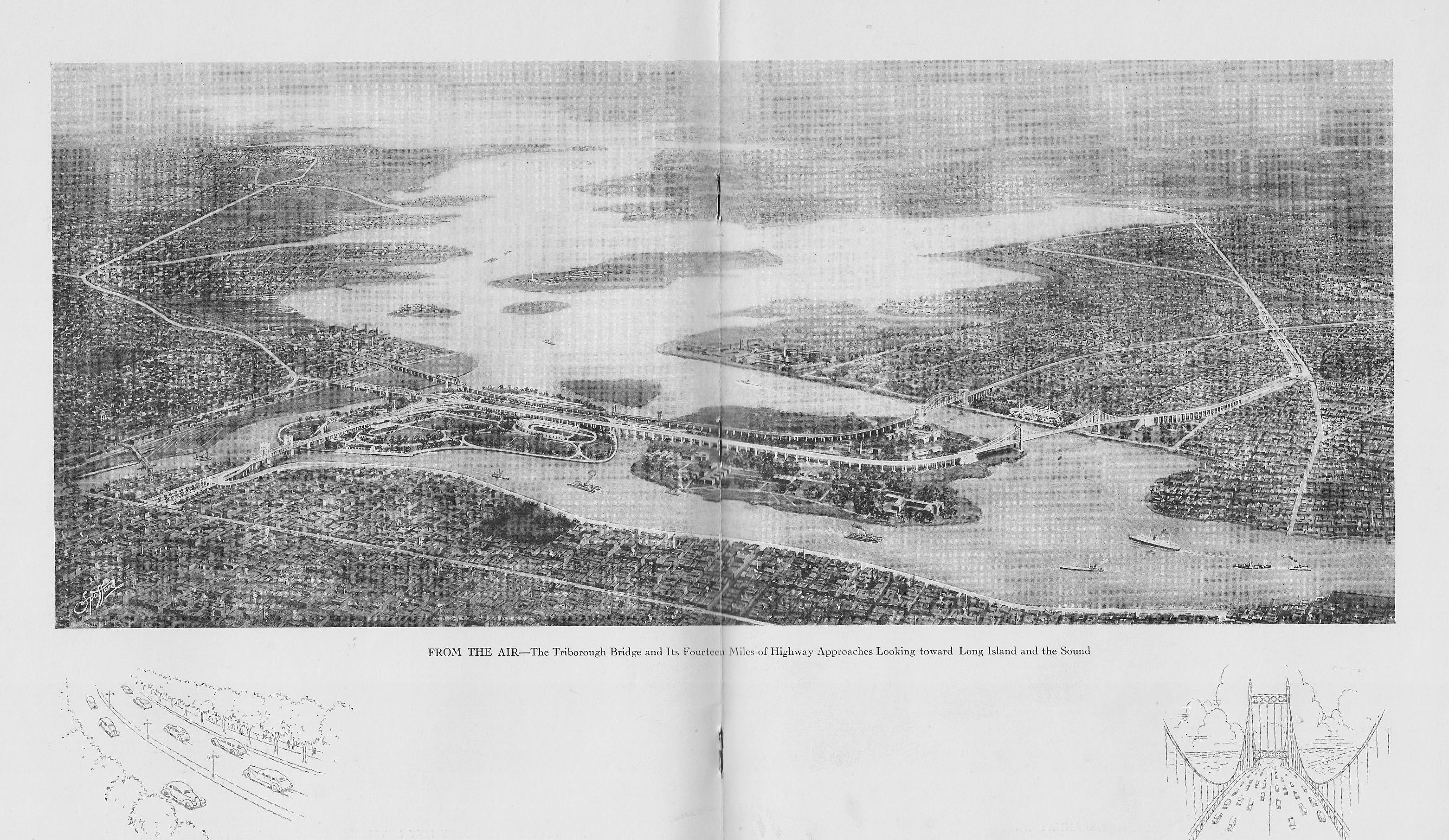
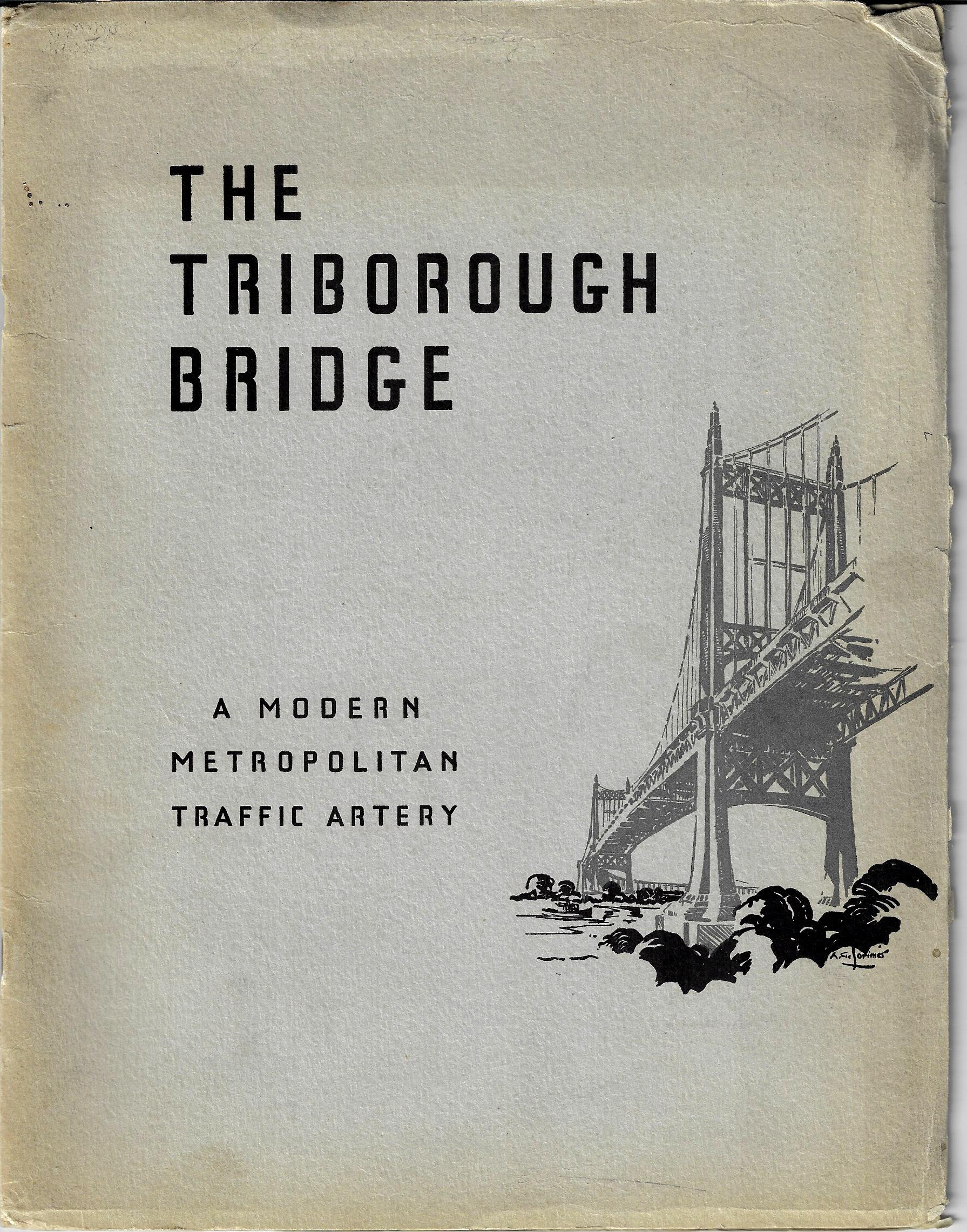
    This is a bird’s-eye view of part of NYC illustrating a pamphlet on the construction of the Triborough Bridge1, and published in the month of its opening in 1936. The view shows its 14 miles of approaches plus the bridges themselves, all stretching out to the southeast. The perspective here shows the Queens approach at the bottom right, the East River spreading out before us, with Flushing Bay at right; the middle island is Riker’s, and the two smaller island with the bridge and connections in the foreground are Randall’s and Ward’s, and the land receding into the distance is part of the Bronx and then on to Long Island. Overall, it is a pretty interesting map. 


    Triborough bridge

    .The Virginia Commonwealth University Social Library site quotes two paragraphs from Robert A. Caro’s The Power Broker which provides a good insight into the breadth and depth of the bridge project: 

    “Here was a project to kindle the imagination. In size, its proportions were heroic. For all Moses’ previous construction feats, it dwarfed any other single enterprise he had undertaken. Its approach ramps would be so huge that houses – not only single-family homes but also sizable apartment buildings – would have to be demolished by the hundreds to give them footing. Its approaches, the masses of concrete in which its cables would be embedded, would be as big as any pyramid built by an Egyptian Pharaoh, its roadways wider than the widest roadways built by the Caesars of Rome. To construct those anchorages and to pave those roadways (just the roadways of the bridge proper itself, not the approach roads) would require enough concrete to pave a four-lane highway from New York to Philadelphia, enough to reopen Depression-shuttered cement factories from Maine to the Mississippi. To make the girders on which that concrete would be laid, Depression-banked furnaces would have to be fired up at no fewer than fifty separate Pennsylvania steel mills. To provide enough lumber for the forms into which that concrete would be poured, an entire forest would have to crash on the Pacific Coast on the opposite side of the American continent.  Triborough was not really a bridge at all, but four bridges which, together with 13,500 feet of broad viaducts, would link together three boroughs and two islands.”

    “Triborough was not a bridge so much as a traffic machine, the largest ever built. The amount of human energy that would be expended in its construction gives some idea of its immensity: more than five thousand men would be working at the site, and these men would be putting into place the materials furnished by the labor of many times five thousand men; before the Triborough Bridge was completed, its construction would have generated more than 31,000,000 man-hours of work in 134 cities in twenty states. And the size of the bridge is also shown by the amount of money involved. With $5,400,000 already contributed by the city and $44,200,000 promised by the PWA (Public Works Administration), the amount promised for its construction was almost equal to the combined cost of all the projects Robert Moses had built on Long Island during the previous ten years.”  Quote source:  http://socialwelfare.library.vcu.edu/eras/great-depression/triborough-bridge-dedication-1936/

    Triborough bridge pamphlet

    Notes:

    1. “The Triborough Bridge, known officially as the Robert F. Kennedy Bridge since 2008…is a complex of three separate bridges in New York City. The bridges connect the boroughs of Manhattan, Queens, and the Bronx via Randalls and Wards Islands… The bridge complex … connects with the FDR Drive and the Harlem River Drive in Manhattan, the Bruckner Expressway and the Major Deegan Expressway in the Bronx, and the Grand Central Parkway and Astoria Boulevard in Queens…”–Wiki https://en.wikipedia.org/wiki/Triborough_Bridge


  • A Peek at the Future in Which Jobs Are Not Threatened by Machines (1940)

    JF Ptak Science Books  Quick Post

    Book covers world future architecture opportunity youth

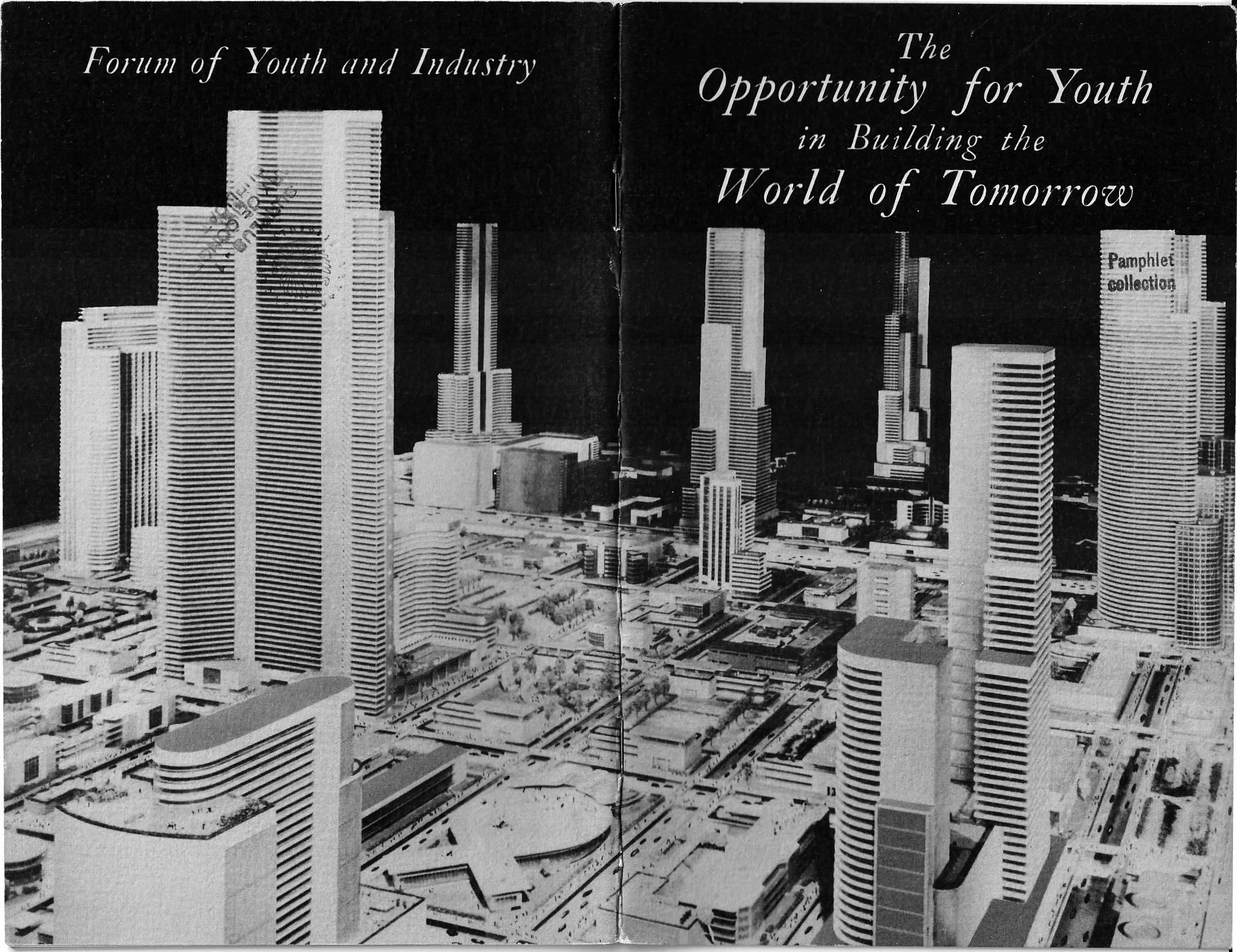
    This is the front and back cover of a little work directed at upper-aged kids in 1940 about how they might be employed and what life might be like in the future.  The Opportunity for Youth in Building the World of Tomorrow, published by General Motors in 1940, is a lot more sanguine and less interesting than its cover, sorry to say–but the cover is enough to reprint here, all on its own.  

    There is one odd thing, one missed peep into the future, and it is made by a great figure in the history of 20th century science, Karl T. Compton, who at the time was president of MIT. He responded to a question about the impact of mechanization in a short section labeled “Man vs. Machine”. Dr. Compton got a lot right in his life and saw a lot of things that other people didn’t or couldn’t, but in 1940, he couldn’t see very far into the future of the machine.  Of course there’s a particular irony with this vision and what would happen with humans v. robots at GM.  So it goes. 


  • A Flying Aircraft Carrier, 1942

    JF Ptak Science Books   Quick Post

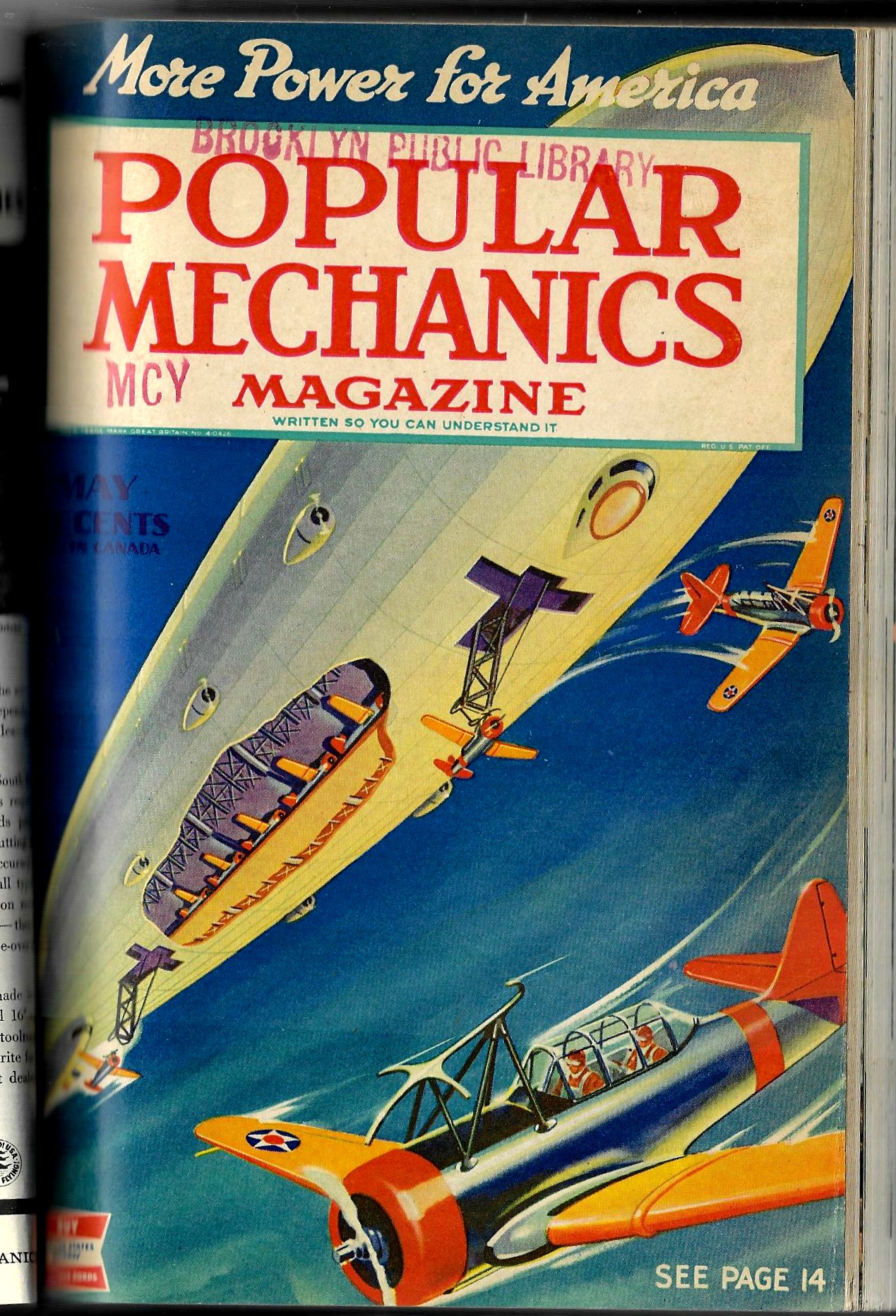
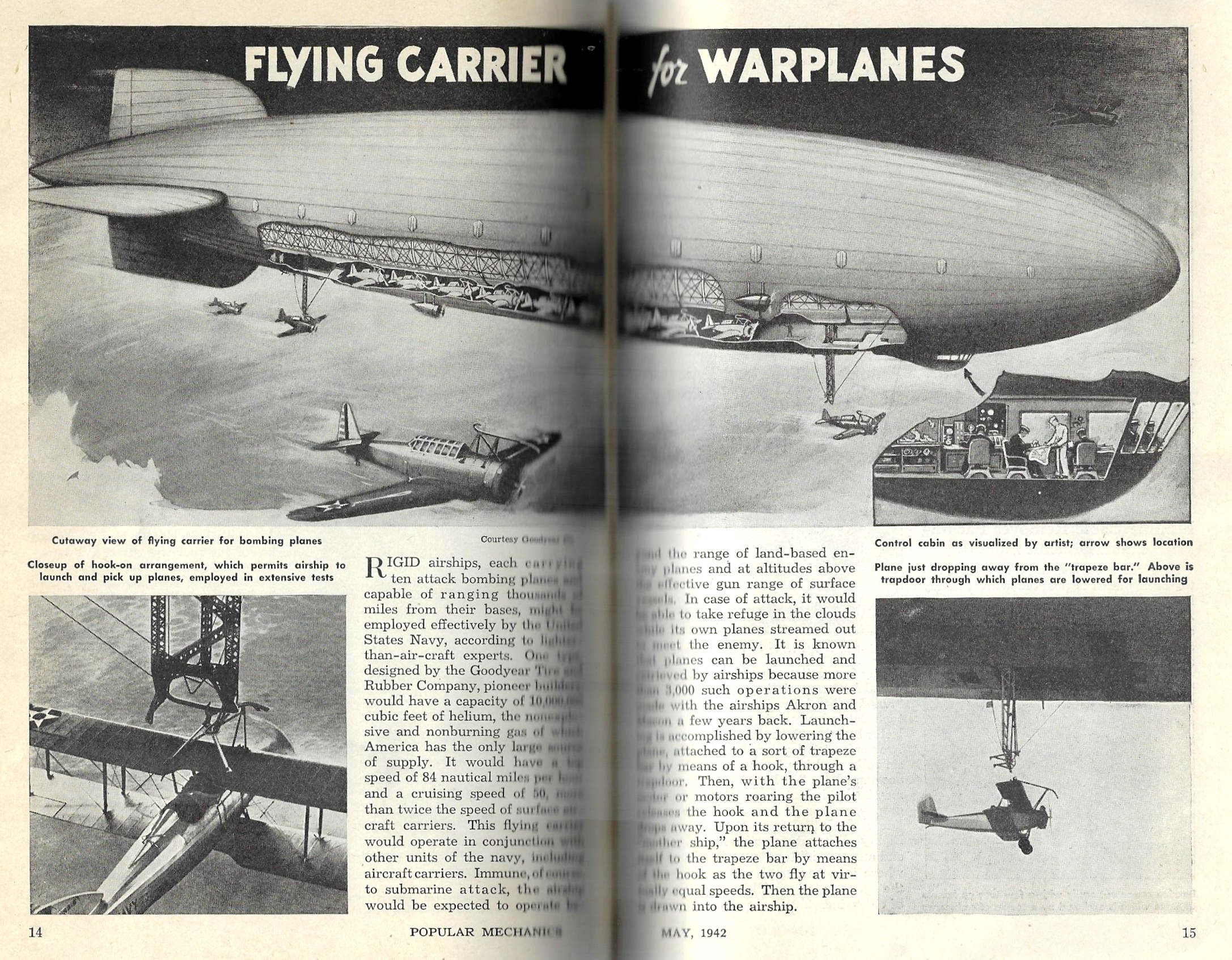
    Here’s an interesting idea: the flying, floating, helium-filled rigid-airship to serve as a flying aircraft carrier, and it appeared in the May 1942 issue of Popular Mechanics Magazine.  That places the idea in print six months after Pearl Harbor, when the U.S. was gearing up for its own direct involvement in WWII.  At the time of the attack at Pearl, the U.S. had 7 carriers; from this point out (from May 1942) to the end of the war there would be 16 more aircraft carriers constructed, plus another 33 escort carriers and light aircraft carriers, and of course those were all seaborne–and in addition to everything else that was being manufactured, that was a huge achievement.

    One thing the article points out that is an unimpeachable positive for the rigid airship carrier–they were not threatened by submarines. 

    Pop Mech 1942 May dirigible airplanes

    And the cross section giving a clearer idea of what is going on in the airship: 

    Pop Mech 1942 May diribible cross section

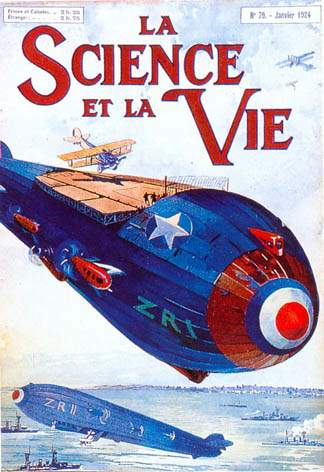
    And another, far more awkward variation, from 1924–this has little to do with the idea above though it is somewhat related:

    https://historyofideasblog.com/a/6a00d83542d51e69e2012875ea3636970c-pi

  • Cross Section of the Cockpit of a Hawker Hurricane, 1940

    JF Ptak Science Books  Quick Post 

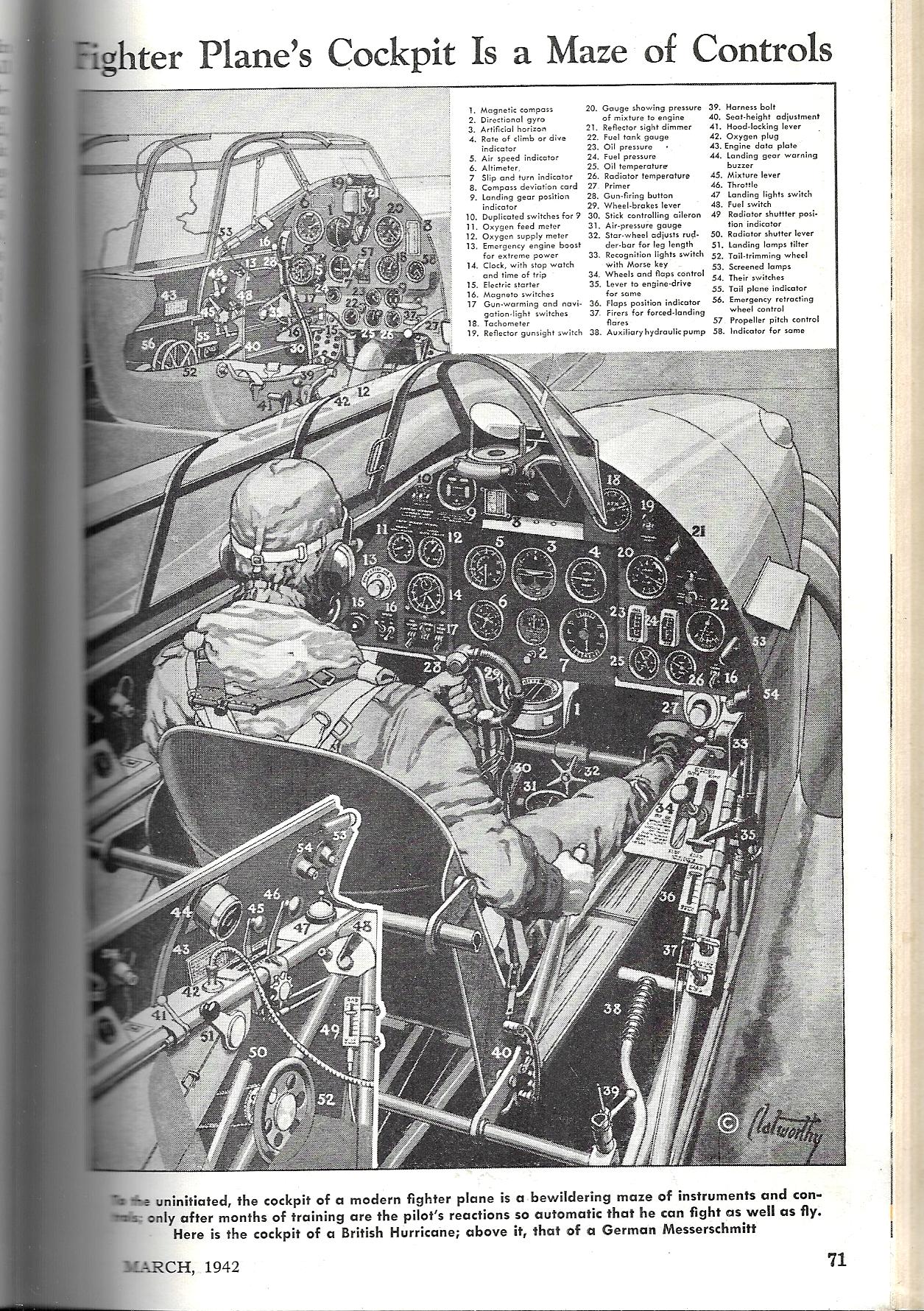
    I would say that there are perhaps 100 good, solid (mostly technical) cross sections on this blog, and to that number I’d like to add another. This one–barely a cross-section as things go but it does serve our purpose–comes via the cross-section-dependable Popular Mechanics for April 1942, and shows the cockpit controls for a British Hurricane as well as a smaller image for a German Messerschmidt. (Click and click again to greatly enlarge this image for the small print.)

    Cross section Pop Mech 1942 Hurricane aircraft

  • A Fine Diagram Controlling Time: Rail Schedules, 1874.

    JF Ptak Science Books  Quick Post

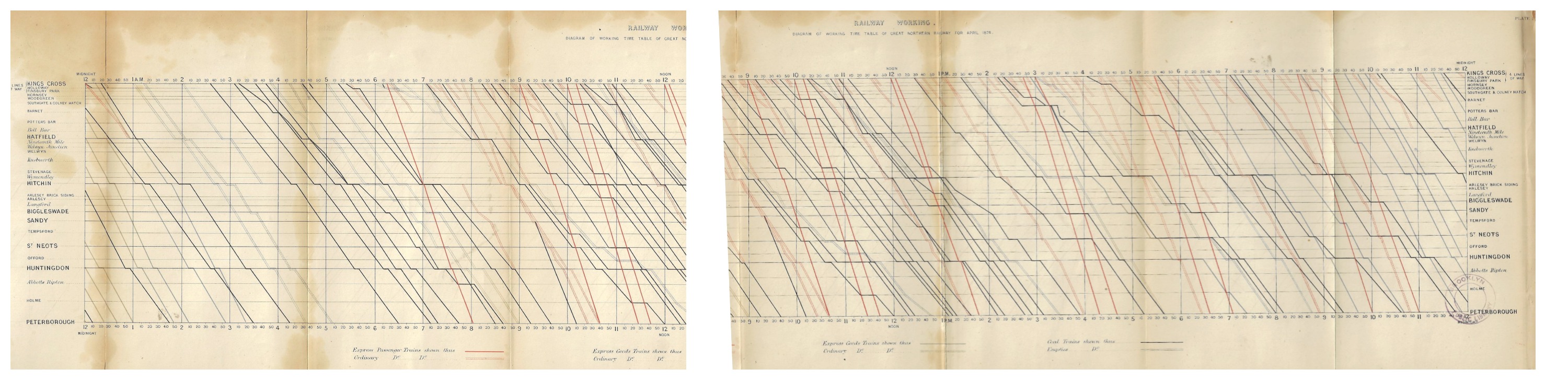
    Railway Working, Diagram of Working Time Table of Great Northern Railway from April 1874, drawn by R. Price Williams and printed by lithography by Thomas Keith, 400 King street, Covent Garden. There is a 24-hour table at top and bottom (each hour divided into 10-minute units), and a division of express and ordinary passenger and freight trains in the legend at bottom.  This lovely image of time and lines measures 7×30″, and is an illustrative chart in Minutes of Proceedings of the Institution of Civil Engineers...volume XXXVIII, Session 1873-4, part II, edited by James Forrest, and printed in London by the Institution in 1874.  Such was the way a country was run. 

    Maps subway _1_ and _2_ together

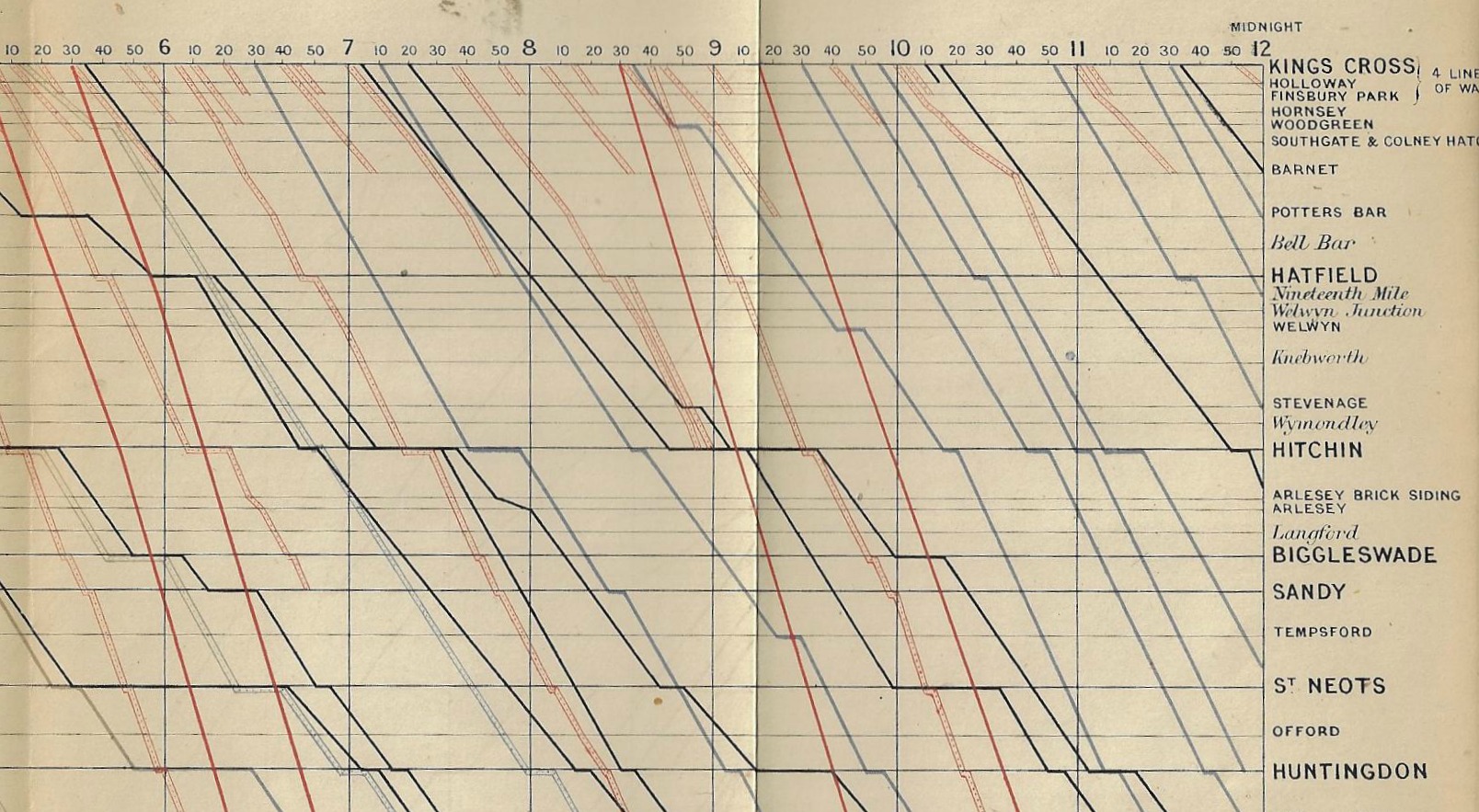
    And a detail:

    Maps subway 1874 detail

    I found an explanation of this diagram in Engineering, September 24, 1875, page 249:

    “This represents a portion namely between the hours 9 am and 2 pm of a diagrammatic time table for April 1874 of that part of the Great Northern Railway lies between King’s Cross and Peterborough the between the vertical lines indicate time, those between horizontal lines the distance between the stations while diagonal lines show the passage of the trains and by different colours the nature the trains. At 9 o clock will be seen a train leaves King’s Cross and arrives Peterborough at 10.40. The diagonal representing train is not quite continuous there is a small part drawn upon the Hitchin station line this shows the 9 o clock train reaches Hitchin at 9.45 and that it there for about three minutes. At 9.5 an train leaves King’s Cross but goes no further than Green while at 9.8 another train leaves Cross and proceeds as far as Hatfield. At 9 10 a coal leaves King’s Cross and reaches Peterborough at 1.20.  10 o clock an express train leaves King’s Cross Peterborough at 11.30 and at 10.10 another express King’s Cross reaching Peterborough at 11.45.

    And larger, for effect, but vertical:

  • Delight is Where You Find It: Wagon Axle Catalog for 1905

    JF Ptak Science Books   Post 2682

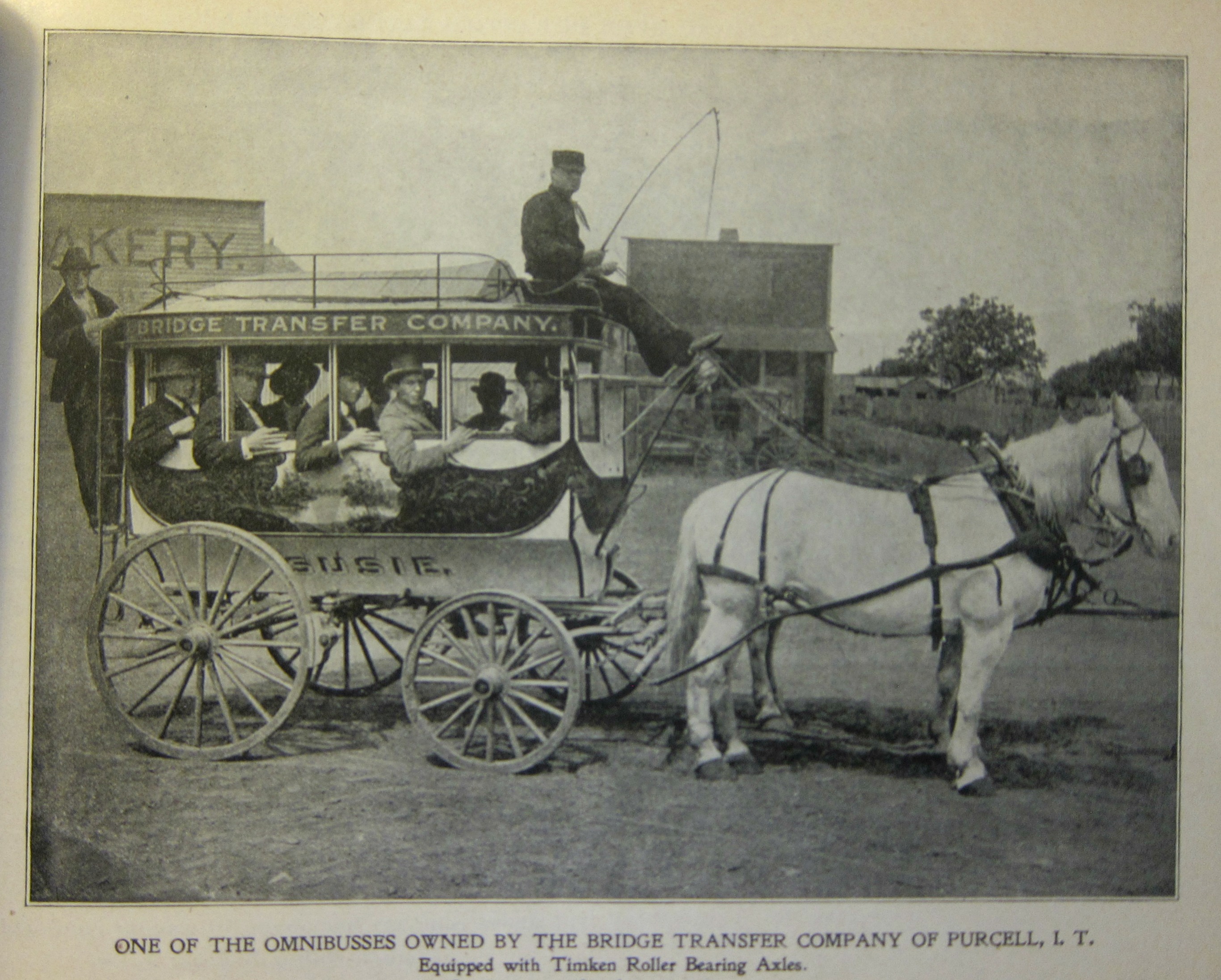
    The short story here is that less friction makes for happier conveyance and easier hauling. And evidently the founder of the Timken Roller Bearing Axle Company, Henry Timken, figured that out in the early 1890’s1, rolling his engineering insights and acumen and successful experimentation and founding his eponymous company in 1899 (and which exists as an international entity today). There’s great beauty in a fine idea, and in well-engineered parts and machinery, and no doubt the Timken axle is one of these–but what drew my attention to this catalog were the wagons and carts that benefited from the engineering. There is a superior sense of place in some of these images, an unexpected and quiet beauty found in the pages of a manufacturer’s catalog:

    Timken coaches _1_

    [Image source: Timken Roller Bearing Axle Company, Catalogue No. 5, published in Canton, Ohio, ca. 1902 (not later than January 1905).  7×9.5″,  unpaginated though 42pp long, including 9 plates of photos (some of which are above), plus 3 plates of drawings. Printed wrappers.  Provenance: Library of Congress, with their surplus stamp on the back. There are no copies of this title located in WorldCat/OCLC; there is another version, entitled “Carriage and wagon axle department, Timken Roller Bearing Axle Co., manufacturers of Timken roller bearing axles for all kinds of carriages and wagons …” ca. 1908, that is located in two locations: the Hagley Museum, and the Henry Ford Museum. I can find no other library of museum holdings.]


Recent Posts

Archives

Categories