JF Ptak Science Books
My ueber-brilliant wife, Patti Digh, has for decades been fascinated by the monstrous-great William Gaddis, and in particular, by his novel The Recognitions. It is a difficult book to feel at home in—it took me four tries to feel comfortable in this complex wristbender, but once in, the water was fine, and I finished it during a boring and largely vacant astronomy meeting in Pittsburgh years ago. It is perhaps one of the best books written by an American in the 20th century, and among the many threads that wind their way through the 950 pages, one involves
the gorgeous 15th century painter, Paolo Uccello. Uccello, in short, was one of the first Renaissance painters to (re)discover and paint using perspective, and did so magnificently. Gaddis refers cryptically, however, to the “solids in Uccello”. 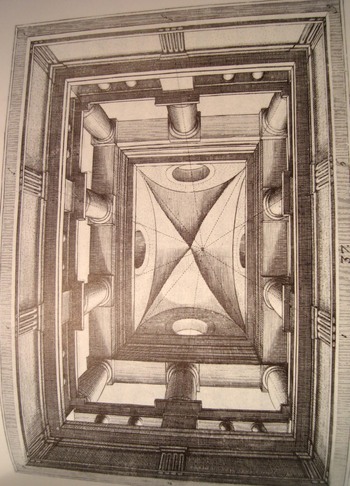
Books on perspective are some of the most beautifully illustrated works ever printed. They are full of insight and detail—a detail, the seeing of which, is a mystery (and to Uccello, mystical) beauty, a submerged, geological magnificence that is also an extraordinarily powerful tool.
I wrote two posts or so ago about the importance of Leonardo’s illustrations to Pacioli’s work on perspective, and how this was really about the first time that geometrical figures were illustrated , published, for the first time, in perspective. And of course the images were drop-dead gorgeous.
Vredeman de Vries (Perspectiva) was a 17th century Dutchman who is perhaps one of my favorites—shown here is his projection for an open loggia in which an illusionary ceiling could be painted (in the manner of Andrea Pozzo’s The Transmisson of the Divine Spirit (1688-1694) , an extraordinary painting of tremendous depth on the curved vault of S. Ignazzio in Rome). (Another example of de Vries at bottom is a simple perspective of diverse architectural forms.)
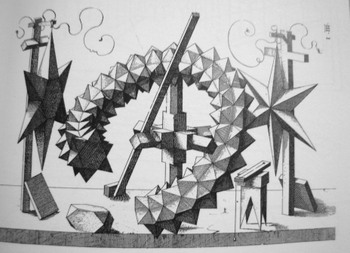 Wenzel Jamnitzer’s Perspectiva corporum regularium (1568) is a somewhat earlier work of great depth and beauty—this image is again just a “simple” arrangement of geometrical objects, but there’s really nothing very “simple” about it. The forms are difficult and arranged in a difficult presentation, and rendering them in perspective was a great achievement, and I think a wonder for the mid-16thc mind to see.
Brook Taylor’s simple, clean lines and presentation of these architectural forms from his New Principles of Linear Perspective (2nd edition, London, 1719) is another perspective miracle of the 18th century. To me the lines of perspective showing the view of the objections connected to the spare presentation of the objects themselves look completely modern to me rather than being a technical treatise from 289 years ago.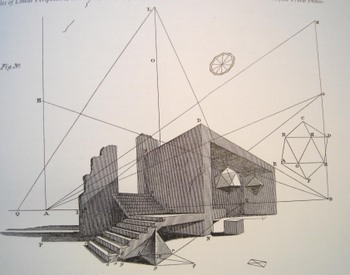 ,
,
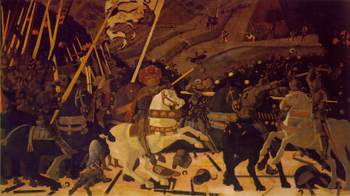
Uccello understood all of this, and painted using these techniques with enormous power. The “solids’ recognized by Gaddis (and not really discussed) are incredible to me. Looking at his painting Battle of San Romano (1457) we see Perspective in her place; when we look at, say, the rumps of the horses, we see almost no detail, just a mass of color, a solid, with spectacular plainness. What in the world was he thinking? He could certainly have painted the horse and the other solids with texture and detail, but he didn’t, and to me it seems antithetical to the painting. What in the name of all motherly things was he thinking? And who else on earth was using such huge amounts of plain solids in their paintings? I’m not aware that anyone else was, and I am relatively clueless as to why he did it, abandoning 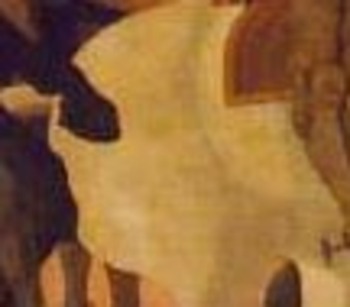 as it were the potentials of the beauty of excruciating detail that we see in these other works.
I would love to know what Uccello was thinking when he decided to create that mass of color, that solid, when there was no one else doing exactly that. But my major thanks go to Patti Digh for loving that, and to Mr. Gaddis for creating the question.

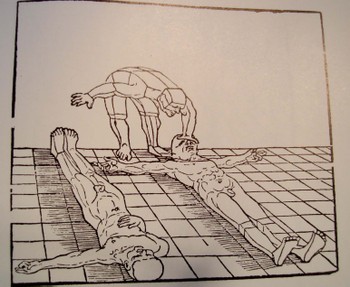
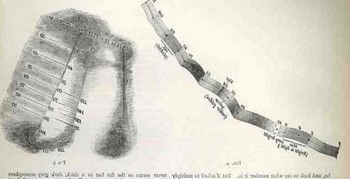
 his perspective work. Durer–so far as I can tell–created an orthographically rotating human figures in three-dimensional trapezoids, creating incredibly human-like non-human forms. To the modern eye they look like supra- or proto- or post-human, perhaps; mechanized, calculated, structural. His use of stereometry, the science of measuring volume, was adapted to this study of human form and the relationship between that and movement.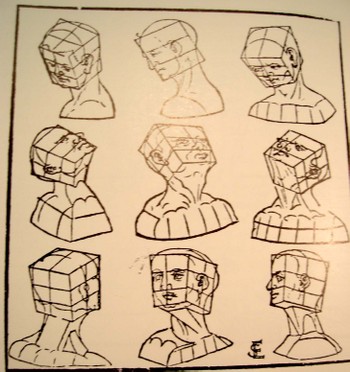
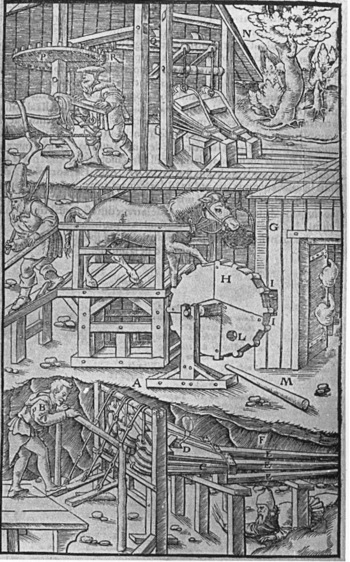 illustrations.)
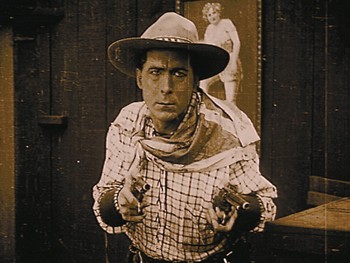
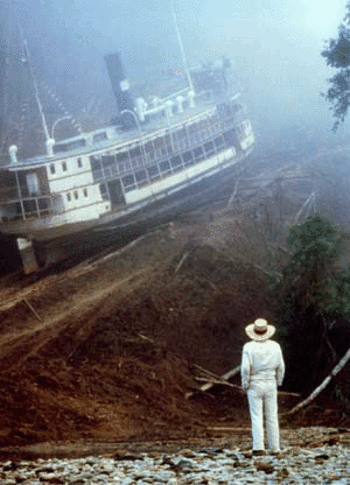 In 1982 Werner Herzog, in what may have been the culmination of a weirdly fashioned and irresistible death-wish effort, released a film that he wrote and directed: Fitzcarraldo. It is a spill-over big, magnificent film about a would-be ice-making rubber baron bringing an opera house into the trans-Andes, trying to make his way into the dense forest in a huge (320 tons) steamboat on the Amazon to stake a claim in exploiting previously un-leased lands filled with rubber trees The problem faced by Fitzcarraldo (played by the probably-slightly-insane Klaus Kinski1–just see Herzog’s 1972 Aguirre, Wrath of God and you’ll know what I mean) is that his path is blocked by unnavigable rapids–he can however reach his destination by hauling his very large ship up and over a mountain to get to a more pliant river and then to his goal. Herzog actually does this for the film–no digital anything here2,3–in what is one of the most glorious things I’ve ever seen in the movies. He really does have native people clear a path up the side of a mountain, and they DO haul this ship up and over. It is truly magnificent, especially seeing the boat moving slowly up a mountain as background to a sweating Fitz.
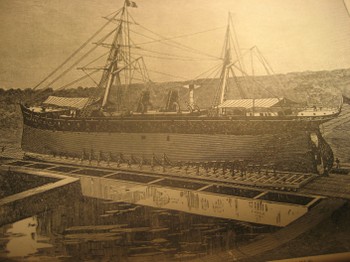
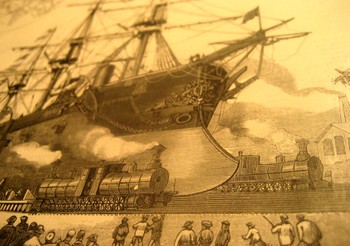
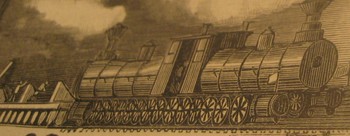
  The bigger and deeper back-story though is the effort–mainly by Elmer Corthell and James Eads–to build a combination railroad ship canal across the Tehuantepec isthmus in Nicaragua. The idea of moving across Central America rather than taking the enormously long route around the tip of South America and up again is hundreds of years old. The Corthell/Eads plan, begun in 1870’s and alive in the early ’80’s, was really the first feasible (and workable) initiative.