A Daily History of Holes, Dots, Lines, Science, History, Math, Physics, Art, the Unintentional Absurd, Architecture, Maps, Data Visualization, Blank and Missing Things, and so on. |1.6 million words, 7500 images, 4.9 million hits| Press & appearances in The Times, Le Figaro, Mensa, The Economist, The Guardian, Discovery News, Slate, Le Monde, Sci American Blogs, Le Pont, and many other places… 5000+ total posts since 2008.

  • Mondo Bizarro, Science Afflictions and the Dubious Mind—Bad Science, Part 1. NYC in Space (?!)

    JF Ptak Science Books  Post 11
    Dsc04543

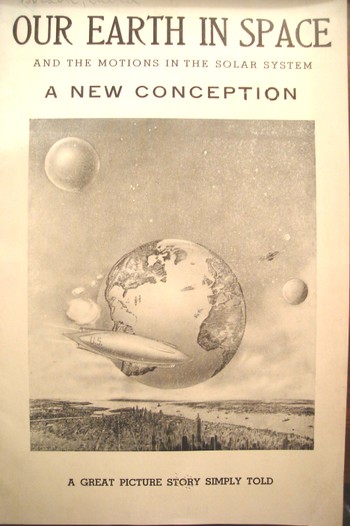
    I can hardly help myself oh my brothers, hardly contain myself from writing about some of the truly incredible, nonscience scientific works that I have collected over these last years.  One of the most interesting is the following work by David Gordon .  It isn’t so much “interesting” really as it is illustrated, where all of the interest is.  This is the only known example of the depiction of an extra-terrestrial New York City pictured with the earth in the background.  Huh?  Yes, this is the Big Apple in space—not its OWN space but THE space,  outer space—somehow, impossibly, removed to some something-or-other (actually in this case, a “bubble”) that, while not being the Moon, was something like it, though not actually a solid and without gravity, floating on a base of floating effluvia, but, well, you get the picture.  Whatever we’re floating on here (actually it is identified as the “perisohere” (don’t ask)) is very big and very very close to the home planet. 

    Mr. Gordon, sweatily ensconced in a too-thick smoking jacket while pecking out this opus delectius, self published this effort in 1941, and then unleashed it on the world, or his neighborhood, asking such self-exiling questions as “why does the earth and other heavenly bodies remain in the air and submerged”.  I can get most of that except the “submerged” part.  That’s where most of the efforts like this seem to go horribly wrong–the vestigial spark of insanity inserted into a almost-coherent thought, as in “The Yankees look like almost-contenders for 2008 if they could strengthen their pitching and adjust their over-aggressive use of middle relievers sanitary flux”.  Well, this doesn’t really apply here with Mr. Gordon, as normalcy is abandoned right at the outset, thanks to his very original cover art (and we are told on the title page that the cover art is actually “35 by 24 inches and in full colors” making it big and colorful and art brut). 

    And then of course we get to the crux of the biscuit—the removal of New York City into a peripheral bubble. 

    I don’t know why there is a rocket-propelled dirigible in the picture. 
    Dsc04544
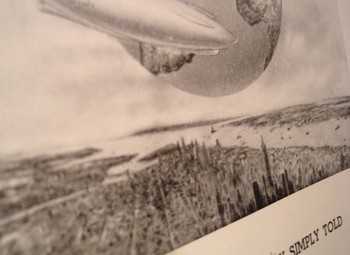
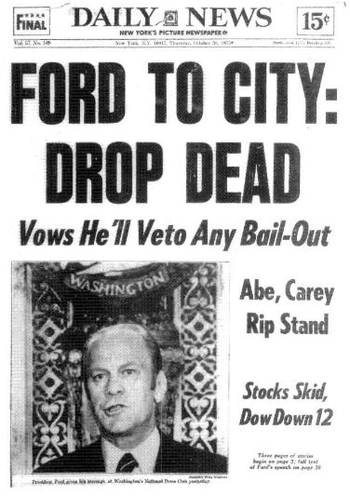
    Mr.  Gordon’s  idea would’ve been far less interesting if it wasn’t illustrated.  And it is easy to pass it by, as I almost did, because it is somewhat sci-fi mundane at first blush, until you realize that is New York in space.  (I can see the Daily News headline now as the city leaves the planet for someplace else:  “New York to World:  Drop Dead”.  This of course is a rip of one of the all-time headlines, ever, supplied by the New York Daily News when NYC appealed to the Feds for a bailout from bankruptcy in 1974.  Raisin-eyes Jerry of course said “no”, and the rest is history…)

    I know that it is hard to believe, but according to OCLC/WorldCat there are no copies of this work in any libraries, period.  I can see why.  And now it at least is rescued from the great dustbin that awaits us all…

    I just love this little pamphlet. 
    Ford_to_city The full title of this work:  “A Picture Story Explaining Our Earth in Space and the Motions in the Solar System, a New Conception, a Great Story Simply Told”, by David Gordon. 

    Also—I’ve added a close-up of the Midtown-to-Downtown area, just so you can see the Empire State Building, the Statue of Liberty, Staten Island in the distance….it is definitely NYC. 


    ·Posted by :

    ·in:

  • The Spine of Society and the Beginning of the Grid

    RobidaJF Ptak Science Books LLC  Post 12

    I’m interested to know what anyone might know about the use of
    metaphors relating large-scale societal techno advances and biological
    functions?  I have no doubt that they go back to modern-ancient times
    (say to William Gilbert (1544-1603)  and his vis electrica)—but I’m
    stopped today by seeing this paper by J. Norman Lockyer called “Social
    Electrical Nerves” (in two issues of  Nature for 14 and 28 February
    1878).  In this paper the great astronomer looks at elements of the
    “grid” as it was and seeing how the new networks of police and fire
    communications via telegraph  interacts with the existing electrical
    systems.  It seems to me an early use of  nervous system/electrical
    grid, in spite of the fact the first “electrical highways” (as Lockyer
    puts it 120 years before our own “information superhighway”) appeared
    in England 32 years earlier though apparently without these biological
    metaphors. 

    Robidatelephone_lines

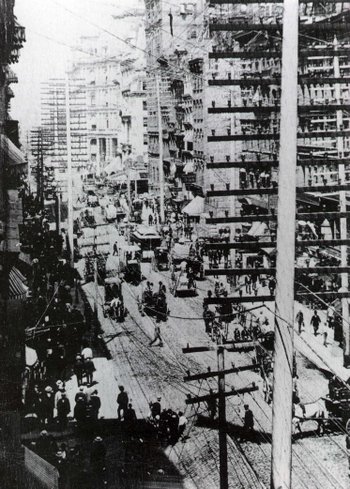
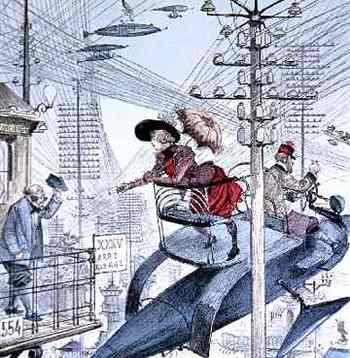
    The work pictured above is the electrically-draped world of the future,
    at least according to the vision of the wonderful Albert Robida, who
    was actually at work on these visions just at the time of the
    publication of the Lockyear paper . (Robida produced at least a trio of
    interesting and lovely and occasionally prescient works:  Le Vingtième
    Siècle
    (1883);  La Guerre au vingtième siècle (1887); and Le Vingtième
    siècle– La vie électrique
    (1890)).   Many of Robida’s visions of
    electrical connectivity seem to me to move beyond the nervous system
    metaphor and become a kind of societal “skin”—which is not terribly far
    from the truth, especially when looking at images of congested
    metropolitan centers ca. 1910, when utility poles fairly well sagged
    under 20 (!) horizontal crossbars carrying a dozen lines apiece.   At
    the very least, you knew that something or other was happening (fast
    forward to the massive ductworks of Terry Gilliam’s masterpiece,
    Brazil.  Check this out  for a
    wonderful cameo by De Niro coming to fix the neuronal duct-muck.) 

    And now that the wireless age is starting to get ridges in its
    fingernails (the “wireless” age being at least 115 years old,
    beautifully borne by Heinrich Hertz and Marconi), are our bio-electrical  metaphors giving way?

  • Seeing, Sight & Memory: Jevons, Bruno, Borges, Heller and Proust

    JF Ptak Science Books LLC  Post 12

    Can We See More or Less than We Used To Be Able To See?

    Jevons An early study of attention and perception (or “How Many Items Can it Embrace at Once?”) popped out at me while muscling my way through another year of Nature magazine for 1871.  The article was by  W. Stanley Jevons  (“The Power of Numerical Discrimination,” 1871)  who contributes an interesting and very early experimental bit on the success of the brain to correctly formulate an accurate memory when in a flash shown a number of items. (That is to say, when shown a certain group of X-number of items instantaneously and then removed, how often will the mind be able to remember the correct number upon recall–and without committing them to memory per se or counting them?) In this fascinating study Jevons records not only right/wrong answers but how “close” the remembered fit is to the original number, and in effect is a pioneering scientific effort towards understanding our abilities and limits in information processing.
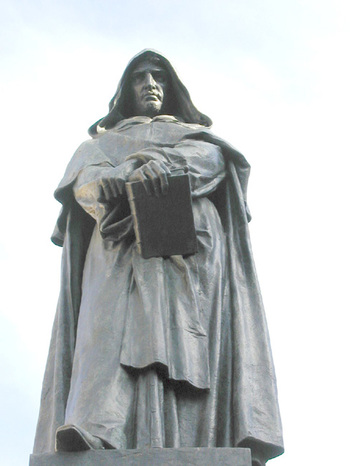
    Its important to distinguish Jevons’ experimental work on apprehension from earlier (and much earlier) philosophicalJevonsbruno_2 and semi-scientific work on memory formation and retention.  This of course goes back as far or as deep as you want to go—taking a stab at random we’ll use Simonides who while trying to organize poetry and other data in his head came upon the idea of using Mnemonics and using associative processes in art and poetry to establish his own history of memory. (I should point out that one of the early-modern experimenters in the formation of memory was Giordano Bruno  who wound up being tortured and burnt at the stake for other offense against The God while trying to formulate a truthful approach to science; evidently the memories that would be threatened by his scientific approach proved to be too much for the righteous in power, and he was removed before he could threaten corrective memory any further.) 
    It is interesting that many of the crimes of science punished by the Catholic Church during this period (1450-1650) were as much crimes against memory than they were crimes against the future—changing and challenging collective memory often proved fatal.

    Getting back to Jevons—who was a very smart guy and who applied himself to a number of fields, not the least of which was constructing a logic machine: his experiment proved to be a springboard for a host of others, some of which didn’t do Jevons justice, misreporting his finding, misrepresenting the stuffy, and so forth.  Perhaps the greatest of these was the greatest of the efforts based on his—Raymond Cattell —who for some reason stated in his very influential textbook of 1907 that humans can remember around 7 things (without counting) when the objects are flashed before their eyes.  And for a hundred years this figure stuck, even though the Jevons report issued a more complex summation, and saying, anyway, that the number was around 10. 

    And what bothered me a bit with the Jevons experiment is what people remembered when shown the objects (beans)—would his results have varied if subjects were asked how many were shiny or odd-colored or deformed or whatever rather than just a simple number, the results could’ve been more interesting.  (I don’t doubt that these issues have been taken up in the 20th century but haven’t looked).  Sometimes people are just looking in the wrong places—for example operant psychology labs tested rats via visual stimuli until it was discovered that rats were olfactory geniuses and that humans were using them wrong all along. 

    It would be interesting to know what the history is of human capacity for image formation.  Considering the growth of distractions and the enormous amount of true and trash stimuli—visual bombardment from television, outdoor advertisements, the sheer amount of  growth of human construction and interaction—have humans enhanced this spatial/memory information processing capacity?  Consider  the growth of (just) eye movements over the last few hundred years, with the visual sense being subjected (for all classes of people) to enormously and fractally-expanded print sources, television, digital communication and so on—has this expanded this neural capacity?  Has “space invaders” aided bean counting? 

    I don’t know, though I do wonder (literally) what the effect exponentially-growing mass input of (mostly junk) data  might be doing to our noggins.  Maybe the effects lean more towards dissolving privacy and reflective time—when does a person think if interruptive stuff is coming into your head at all points of the day, with the brain trying to interpret incomplete and ambiguous strings of sensory inputs? 

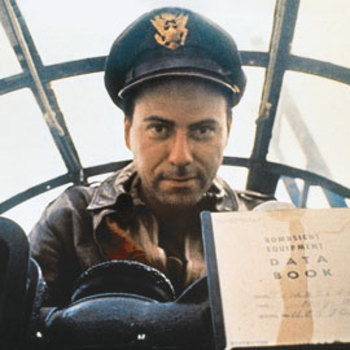
    Jevonsyossarian Seems scary to me.  Maybe memory is affected, maybe it makes it go away, shriveled because recollection is being eliminated.  Or demented like the wonderful Yossarian (his first name is John, btw) from Joe Heller’s beautiful Catch-22 who develops for himself a condition in which he remembers everything twice (whatever that means).
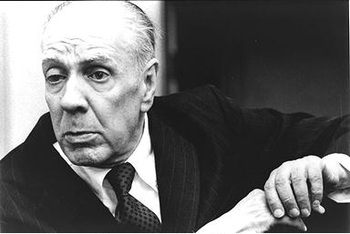
    It would be interesting to see a war of societies in which the sides were a culture that rememberJevonsborges7 nothing versus a culture that remembered everything.  The unspeakably lovely Jorge Borges wrote something touching on this in “Fumes the Memorist,” in which the humble narrator is capable of forgetting nothing, being able to recall explicitly everything within eyesight, perfectly—the problem is though that it takes a day to remember the events of another day.  What would happen in such a culture where everyone forgot nothing? 
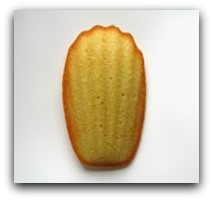
    Memory Madeline single

    And I’ve just been dealing here with visual memory, really—and as Proust makes plainly clear (and Borges and other prove), vision isn’t everything.

    ·Posted by :

    ·in:

    —
  • Roe v. Doe & Great Anonymous works: Darwin, Newton, Malthus, Paine

    JF Ptak Science Books  Post 13

    There was a brief point in Charles Darwin’s publishing life when the old (then young) man got stiffed.   Darwin’s magisterial contribution to Narrative of the Surveying Voyages of her Majesty’s Ships Adventure and Beagle between the years 1S26 and 1836…, (published in 1839) appeared in the third volume,  (by far and away the most important volume), and was issued without his name on the title page, which as it turns out was okay by the standards of the day.  The real oddness turns up in  the publisher’s ads that appeared in the later issues of those volumes in late 1839 for what would be a separately-issued volume of Darwin’s contribution (Journal of Researches into the Geology…), where there was no mention of the author’s name. (Captain Robert Fitz-Roy,  the man whose name adorned those early volumes, was the Captain of the Beagle and a man of high accomplishment and some pioneering meteorological ideas.)  
    Anonymouspaine

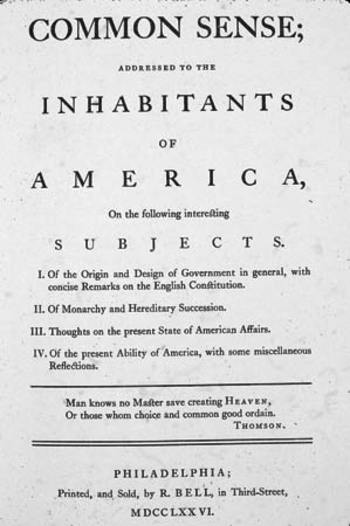
    The history of world literature ancient and modern abounds in silenced or self-silenced authors—there is even a four volume encyclopedia to help you identify the unidentified. . Political and religious work are also particularly heavily laden with unattributed or disguised efforts—the U.S. Constitution and the Federalist Papers are of course both anonymous (and of necessity), as was the most beautiful work of Voltaire.  The Declaration of Independence, on the other hand, and also of necessity, was not.  What is that  they say?  Anonymity is the best defense against the tyranny of the majority”?  It still feels a little Orwellian to see the unattributed source in the newspaper or read an anonymous editorial.   On the other hand Thomas Paine’s On Common Sense may not have made it into print if its author had been required to identify himself. 

    Art is perhaps the longest-lived area of anonymous work, the signed canvas being a relatively recent invention.  There are thousands of years of unknown hands and eyes represented in millions of works, but really we only get solid confirmation of the intellectual origin of a work through the invention of the ornament of the signature, and this just within the last 500 years.  And even after this defacement begins to appear there is still a relatively stout history of semi-anonymous works coming from painting studios doing work “in the manner of ____”.  Of course there were other considerations at play here, what with guilds and patrons and all—the artist was one person in a lengthy bureaucratic trail of aesthetic production.

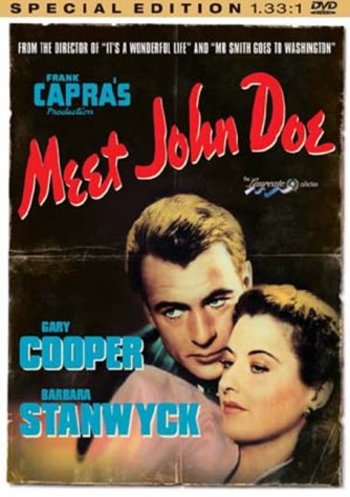
    Anonymouscooper Anonymous seems to come more into play in our present culture via the need for a place holder—when tallying and accounting the death of unknown people, for example, the name “John Doe” or “Jane Roe” is used (in the U.S.) to take up the forever empty space calling for The Departed’s name. (Our most famous “Jane Roe” is Norma McVorvey of Roe v. Wade; I think the Gary Cooper film (“Meet John Doe”) still ranks the highest for the male equivalent.)  Something has to go there in that empty space, and so it does–the placeholder name. (The practice of using such names is actually pretty old, and is practiced worldwide. See HERE  for an entertaining look at multi-cross-cultural “John Doe” equivalents.)
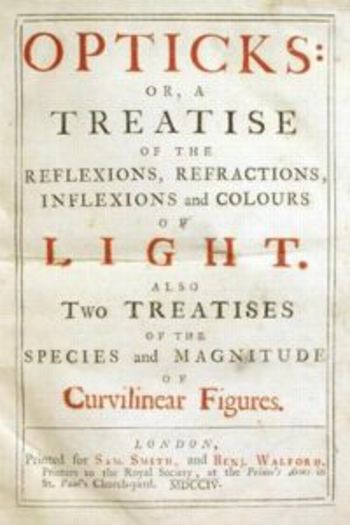
    And now that I’ve had some time to think about non-Darwin examples from the sciences, I’m a little stumped.  Robert Boyle is a good example, what with more than a dozen of his works (at least according to John Fulton’s bibliography) were published without his name carrying the title page-but these were the philosophical and political works of a scientist, and not scientific.  Same too for Pascal, who wrote his Pensees undercover—and again, not scientific but by a scientist.  Isaac Newton published his Annoymousopticks_2 Opticks without his name on the title and in fact only used his initials in the preface as his personal identifiers. 
    That leads us to a final example of Thomas Malthus, who really did publish the first printing of his massively important Essay on Population without his name—it would make an appearance soon after, though, in the second edition of this contentious work making the first edition of this great near-scientific work one of the most influential anonymously published  books of the last 250 years.   

    An unusual example of “anonymous” was Copernicus, the ultimate anonymous author of a scientific work because he intended not to publish i fearing reprisals for his challenging and revolutionary work. He waited until he was basically nearly dead to have his effort put into print, and so overcame his anonymity issue in print to adopt a biological anonymity enjoyed by the dead, his body loosened from the grip of his name so far as reprisals went.  He was free from fear of all anxiety and moral espionage at this point, and he did see the work brought to public display. with his name very boldly displayed on the title page. 

    ·Posted by :

    ·in:

  • Alonzo Church’s Great Mathematical Logic

    JF Ptak Science Books LLC  Post 2

    Church’s Mathematical Logic is offered here in a rarely seen format–namely, the one that was produced, printed and distributed by the members of the class.  At the end of the description is an insightful story told by Albert Tucker about the mechanics of producing such a work. 

    Church,  Alonzo:  Mathematical Logic, Lectures
    by
    Alonzo Church,
    PrincetonUniversity,
    October 1935-January 1936;
      Princeton:
    ,  1936.  1st edition.    124 leaves  4to.
    Original printed wrappers.  Very good condition.     $2,000.00

    This is the Library of Congress’ copy, with the original
    mimeographed LC callcard laid in. +++Lecture notes of Church’s class taken by
    six of his graduate students (Ficken, Landau, Ruja, Singleton, Steenrod, Sweer,
    Weyl) in the fall term of 1935 at the Institute for Advanced Studies at
    Princeton.

    The following is an interview between William Aspray and
    Albert Tucker on the publication (so-called) of this work, taken from the Princeton University website on the Princeton mathematics community in the 1930’s. Needless to say, Church was an enormous
    influence, changing the entire face of mathematical logic. (It should be noted
    to that A.M. Turing came to study with Church at Princeton and particualry in
    this course in the fall of 1935.)

  • Bean-counting in 4-space–a Census of Articles relating to Quantum Theory and Relativity

    JF Ptak Science Books LLC Post 3

    A census of articles relating to quantum theory and relativity.

    We offer for a casual amusement this search that we did on
    the FANTASTIC American Physical Society website section PROLA (Physical Review
    Online Archive) http://prola.aps.org/  We simply searched all years of the Physical
    Review for the appearance of the words “relativity” or “quantum” in the
    published titles and/or abstracts. It is
    curious to see how long it actually took for these articles to appear in this
    journal.  The PROLA page is endlessly interesting and a big help to whatever it is that we’re doing  here.

    RELATIVITY
    Physical Review articles with the word “relativity” in the
    title or abstract:

    2007
    (1,012)
    2006
    (971)
    2005
    (968)

    ·Posted by :

    ·in:

  • Advancing Modernity, 1965: the Enormous Footprint of the UNIVAC 490 Computer

    JF Ptak Science Books LLC  Post 6

    The State of the Art in Advanced Computing, 1965

    Six-Foot-Long Blueprint for the Installation of an UNIVAC 490 at the UNIVAC Headquarters in Herkimer, NY

    UnivacThis is a rare blueprint for the layout of the new
    UNIVAC 490 computer for installation at
    the UNIVAC Utica (NY) headquarters. What
    makes this blueprint particularly interesting is that it gives an overview for
    the placement of the entire 490 system. The central attractive feature of this blueprint is the church-like feel
    of the placement of the components, with the “control console” being roughly in
    the center of the plan. The operator
    would sit at the central console facing about 25 feet worth of Uniservos, with
    the 490 itself located 18 feet away on the left; various drums (about 20 feet
    worth) were located behind the CC as were various processors and the 1004
    (card) punch. The whole plan seems to
    incorporate something like an 18×40 foot space, *plus* five exterior rooms
    (manager, confernece, tape storage, tab room, and (my favorite, service and
    repair).

    This fills me with memories of Victorian steam whistle
    designs (lovely, ornate) and water-driven mills in
    Lowell (long and narrow, utilizing river bank and available sunlight). It is a document that speaks of its time,
    elegantly portraying the size and scope of one of the leading computers of the
    day and its placement at one of its
    maker’s principal headquarters. 

  • The First American Map Showing Elevations at Which Trees are Found

    JF Ptak Science Books LLC  Post 7

    U.S. Western Botanical Profile of Forest Tress, 1854. 

    U.S. Pacific Rail Road Explorations and Survey, War Department.  Botanical Profile Representing the Forest Trees along the Route Explored by A.W. Whipple…From Fort Smith to San Pedro….

    Published in Washington, D.C.:  1854.  Prepared by J.M. Bigelow (botanist of the Expedition), and printed by Wagner and McGuigan by lithograph in Philadelphia.  47”x21”, printed in many colors.

    (Here we see a detail of a 2×3″ section for the map for the San Francisco Mountains range.) 
    Dsc04524

    This spectacular map presents the forest trees encountered by Whipple on his expedition for the USPRR from Fort Smith (Arkansas) to San Pedro ( actually Los Angeles, California).  The profile shows the trees and their leaves at the elevations encountered—actually the trees are graphically represented by either their shape or their leaves, each of which stand no more than ¼ inch tall.   There is a key explanation to the tree symbols at bottom left identifying 42 different trees—including the Cereus Giganteus, which first identified only a few years earlier.  There are three levels of graphical representation depicting the route containing more than 250 small images of trees.  This is a charming and informative graphical display of data, and is one of the first published efforts to share this information–it certainly seems to me that this is the first representation of the elevation at which trees in the United States and territories might be found.  Humboldt’s map is certainly earlier, and there are occasional mentions of tree regions (worldwide and in general) that can be found in the atlas to accompany von Humboldt’s Kosmos, but there is certainly nothing this large and detailed and exactly.  This is just a very cool map. 

  • Things That Almost Were But Weren’t–Photography in 1839 and Television 1924

    JF Ptak Science Books  

    Here are two examples of Things That Almost Were But Weren’t:  Photography (1839) and Television (1928). The first item contains a woodcut of a heliotype (being the first image of a photograph produced by non-photographic means); the second displays the method for receiving images of radio shows but is not a television. 

    First:  The first published non-photographic image of a non-photograph or “sunpicture”) from a collection of papers on the basics of photography, published early in the birth-year of photography, 1839.  


    .

    Golding Bird’s  (1814-1854) “A Treatise on Photogenic Drawing”, published in  The Mirrour,  London, 1839, contains five1 significant and extremely early papers on the photographic process (appearing in The Mirrour numbers  945, 946, 947, 949 & 950, April 20-May 25, 1839). [A much larger, more detailed image is available here; I didn’t want to lay the book flat on the scanner to get a more detailed image of the copy here at hand.]

    Bird photograph148_edited-1

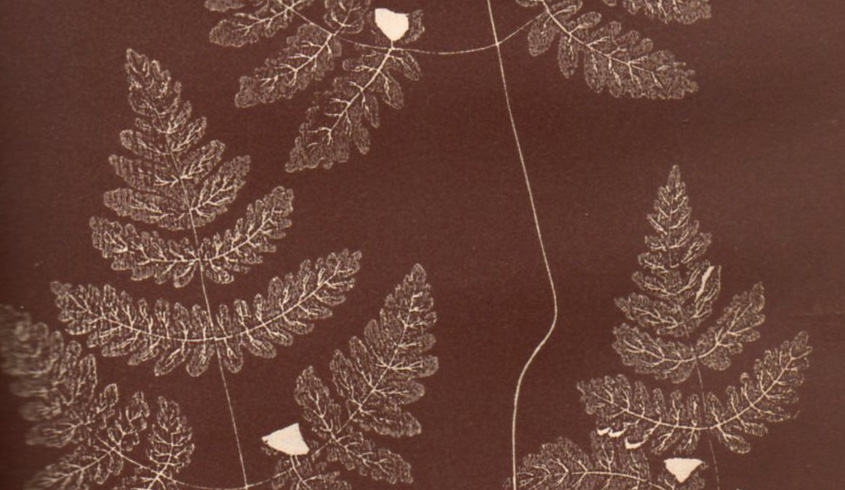
    It is page 241 (issue no. 945, Saturday April 20) that really peaked my imagination–it contains the first facsimile woodcut of a photogenic drawing, which is essentially the first publication of an image produced by any sort of photographic process. (The image is referred to as “iconic”2 by the Metropolitan Museum of Art, this via the wonder Luminous Lint blog for historical and contemporary photography, here.  The process here is the ‘sun picture”, and while not exactly considered a photograph per se, it is a photographic process, making this the first image of a non-photographic photograph.  It predates the first mass-published photograph by four years and the first (entirely) photographically illustrated book (The Pencil of Nature) by six years.  The sun picture, or heliotype, was first described in print in 1801 by both Thomas Wedgewood and Humphrey Davy, and although the process was at least 39 years old at this time there are no recorded published images produced by that process. (The woodcut is much larger than usual for The Mirrour, and is also of a unique brown/red color, and of a different hue than any other woodcut that we have seen in any of the issues of the first 45 years of this publication. I was concerned at one time that this image was a photographic process of some sort, but it isn’t, and I’m convinced that it is a woodcut–a very unusual species of woodcut for this publication, but a woodcut nevertheless.)

Recent Posts

Archives

Categories