JF Ptak Science Books LLC Post 9
A Quick Note on an Interesting Image:
Is this the First Published Illustration of the Mental Imaging of an Active Thought?
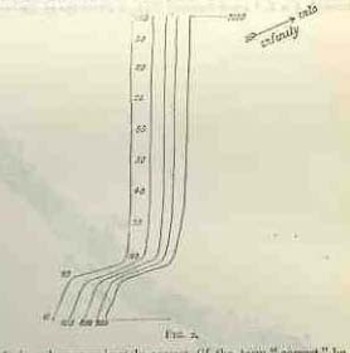
I was stumbling through my collection of Nature (A Weekly Illustrated Journal of Science, London) magazine when I found a fantastic article by Francis Galton (“Visualized Numerals”, Thursday, January 15, 1880) concerning (in one aspect) the mental visualization of the act of doing mathematics. That is to say, what images people formed in their brains as they performed mathematical functions–this was even illustrated (!)
Fascinating! Scholars have pointed to this article as perhaps the earliest scientific effort on synesthesia , but what strikes me is how he tried to describe the intimate or logical function with the visualization of the act….I think that is what makes this effort so spectacular.
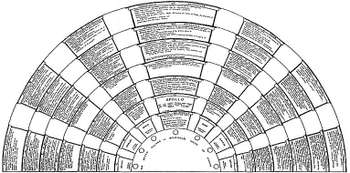
I’m not associating memory devices (like the memory palaces of Matteo Ricci or Robert Fludd’s spectacular creations from his Ars Memoriae, or the beautiful schematic of Civlio Camillo’s memory theater, for example which are more (basely speaking) 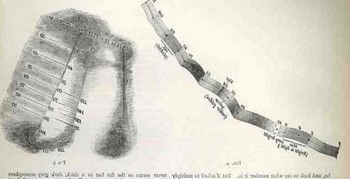
visual aids for restructuring already-completed thought patterns) with this question; l I’m not so sure that it applies. These are more issues of phylogenic memory, and concerned with memetics and semitoics rather than the actual formation of an idea.
People have certainly written on images in the mind before Galton–the question is if anyone has illustrated what they think this process looks like? I’m also not so sure if this directly relates to Aristotle’s elements/colors affirmation or Pythagoras’s numerals and colors or Scriabins music and color associations, or Cardano and his color/flavor and the planets associations….
I guess the question is—where does this image fall in the history of the illustration of abstract thought? I’m not including famous examples of the physical aspects of sight as with Descartes etc; just the image of what people see in their heads as they are formulating thoughts and ideas.
We’ll have more later. I just wanted to put something up here as people have wanted to see the Galton article and Nature (1880) is not a terribly common thing to find. 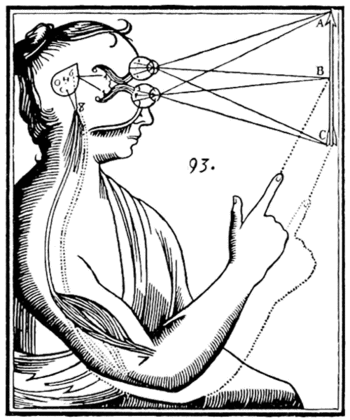
It would also be just plain wrong not to mention two things at this point—the works of Frances Yates , which is a gorgeous and insightful work on memory. And secondly, I need to acknowledge the work of Barbara Stafford (University of Chicago) who for decades has produced the most beautiful and the most interesting works on what scientific images *are*.