A Daily History of Holes, Dots, Lines, Science, History, Math, Physics, Art, the Unintentional Absurd, Architecture, Maps, Data Visualization, Blank and Missing Things, and so on. |1.6 million words, 7500 images, 4.9 million hits| Press & appearances in The Times, Le Figaro, Mensa, The Economist, The Guardian, Discovery News, Slate, Le Monde, Sci American Blogs, Le Pont, and many other places… 5000+ total posts since 2008.

  • Unusual Maps: Cartographic Displays of Comparative Distance–Supplying Great Britain in 1940

    JF Ptak Science Books LLC  Post 209

    Blogaugust_21_ww2_map_odd423 This map comes to us from The Illustrated London News, 3 August 1940, which reproduced it from an article in Fortune Magazine.  Though it looks oddly wrong from the outset, it really is pretty lucid–elegant, even–once you understand its purpose.  And the purpose of this map was to show the distances that the goods and raw materials from the British Empire (and from the possessions of France) had to travel via the then-closed Suez Canal route versus the new routes “not open to enemy interference” to Great Britain.  Countries depicted in outline show the distance via Suez while the same country depicted in shade show the new, longer, non-Suez route.  Ever stiff lipped, the Brits announced that even though some of their major natural resources are coming from these vastly removed areas, “even with the fall of France, the British Empire and its allies remain an economically self-contained and immensely powerful war unit, and still control the great part of the world production of some vital commodities…” I’m not sure why, exactly, that it was necessary to display this map to the public eye, what with England under assault in the Battle of Britain (the Nazis extending their aerial assault in preparation for Operation Sealion), the loss of France, and the nearly-there Nazi blockade of English waters.  Perhaps it was drawn to show that even though the material was coming from the same places that were now further away, they were still getting there. 

  • The Order of Life: 144 images showing the progression and systematization of life, 1849

    JF Ptak Science Books LLC  Post 210

    Blogaugust_21_order_of_life_detai_2

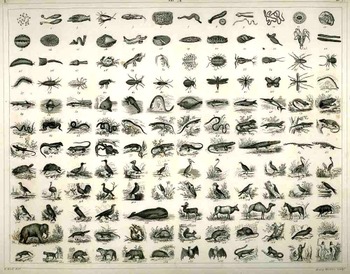
    This engraving (s small section of which is highlight from the full image below), plate I/74/B.7 (yes, an incredible but true plate number)  from Johann Georg Heck’s masterpiece, Iconographic Encyclopedia, (American edition), 1849-1852, is a 12×12 grid basically showing the progression of the orders of earthly life.  It is a result years of zoological thinking, a systemic exposition of animals created by Aristotle, Pliny, Galen, Belon, Rendeletius, Gesner, Aldrovandi, Mouffer, Linneaus, Cuvier and etc.  Most were scientists  though many repeated the fables and imagined observations of earlier, less scientifically-fortunate colleagues (like Pliny, whose fantastical assertions took root over 15 centuries).
    Blogaugust_21_order_of_life421

    This fine and minutely-detailed work packs an incredible amount of data on a sheet of paper just 8×10 inches big (or small), 145 (don’t forget Eve in the 12-square grid!) elegantly arranged and easily identified images in 80 square inches.  It is a beautiful and remarkable accomplishment, and Heck’s artists did 435 times throughout the length of the work. (I wrote a post about Heck’s illustrations of the construction of the Thames Tunnel back in June.)

    Life is arranged—here in 1849—along four division and 18 classes, from Radiata to Mollusca to Articulata to Vertebrata (ending with Adam and Eve, even though the couple is simply classified as Homo in the text, standing virtually next to Simis).  It is a classic (or should be) of scientific illustration, the net effect of which is similar to a flip book or nickelodeon–the images seem to just roll past and through the brain.   

    ·Posted by :

    ·in:

  • Classic in the History of Surgery (1833) and its Reviewer Who Hated Surgical Tools

    JF Ptak Science Books LLC Post 211

    Blogaugust_22_blasiusdet425

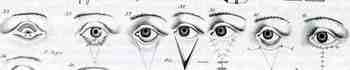
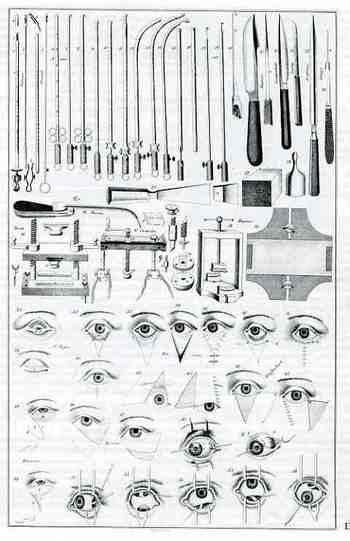
    The medical doctor and 19th century hero of modern plastic surgery, Dr. Ernst Blasius, published a remarkable work in 1833. Ajnurgische Abbildungen oder Darstettung der Blutlgen Chirurgischen Operationem, u. a. w. Akiurgicol Figures, (or Representations of the Bloody Surgical Operations, and the Instruments devised for their performance, with Illustrative Text.) was a careful, historically grounded, masterful textbook, illustrated with 50 engravings of procedures and—perhaps most famously—surgical instruments. It is considered a foundation work of the 19th century, especially in regarding to procedures to the eye, and especially for the development of modern plastic and reconstructive surgery.
    Blogaugust_22_blasius424

    As important as this book was, it received a very singular, peculiar and anonymous  review in the Edinburgh Medical and Surgical Journal, Exhibiting a Concise View of the Latest and Most important Discoveries in Medicine, Surgery, and Pharmacy (1836, volume 44, pp 539-544).  The reviewer (somehow, in ways that I cannot know or understand) found the illustrations of the instruments to be an abomination.

    Recounting that the surgeon’s “art” is a simple response to the inability to actually cure something with medical treatment—the reviewer states that the surgeon simply cuts things out.   He then makes a statement that I think is unique to my experience, saying that the gorgeous and painstaking illustrations of surgical instruments were calculated to repel the student “with an appearance both formidable and something repulsive.”  He continues: “If, however, this publication, by exhibiting instrumental surgery in its most complicated, formidable, and repulsive character, may damp the ardour of the surgical aspirant, it is also, by presenting all the various forms with which instruments have been endowed, useful in showing the surgeon the very height of the evil which he has to encounter. By placing before him such numbers and varieties of instruments, it may enable him to choose that which, upon mature consideration, seems best calculated for the proposed purpose.”   The unnamed reviewer does acknowledge the great understanding and historical grounding and command of deep literature, as well as the surgical techniques that Balsius presents in the book, and even goes so far as to describe them as “unrivaled”.  But he keeps returning to the illustrations, and particularly the images of the instruments, which he just simply cannot tolerate.  He ends the review saying that it would be a huge benefit to republish and translate the Balsius in English, and, given that opportunity, a great many of the instrument illustrations should be left out. “The explanatory descriptions, by which these illustrations are accompanied, show extensive and accurate knowledge of the literary history of operative surgery. All the operative methods and their peculiarities are carefully explained; and whoever studies this work cannot fail to understand thoroughly the merit of the different methods proposed for accomplishing each operation. This leads us to think that a republication in this country,! with a translation of the explanatory details, would be extremely useful ; and, in such circumstances, the number and variety of the instruments represented might be greatly diminished, while the anatomical figures and the views of operative processes might be retained.”

    The hatred of the surgical tools images is almost incoherent—especially since they were of such high importance, and that the book was being reviewed by a doctor for doctors and in a medical journal

    .


  • Outsider Logic: Breathtakingly Impossible Plan for Reorganizing Life in the U.S, 1936.

    JF Ptak Science Books LLC  Post 212
    Blogaugust_23_impossible_books_plum

    This pamphlet comes from our extensive Naïve Surreal collection, which is composed of (a) pamphlets that were concerned with commonplace ephemera in the past that today looks implausible or impossible, and (b) pamphlets that addressed issues of, shall we, a mostly-internal, very personal, High Imagination that may or may not have been part of the visual world.   

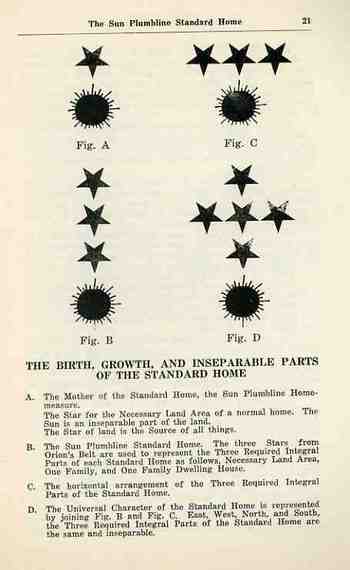
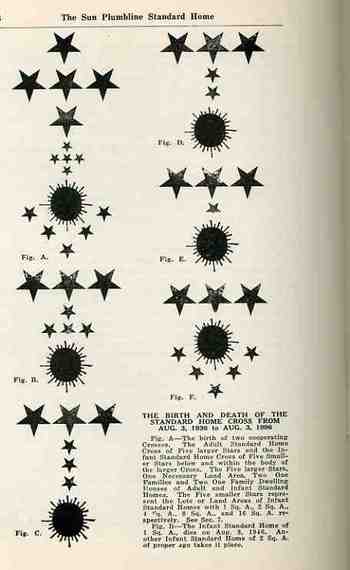
    This pamphlet, written in 1936 by Arthur Russell Groves, calls for nothing short of the reorganization of the social structure of the United States via systematic adherence to the “Coming Sun Plumbline Standard Hone via the National Constitution”–an idea which came in several parts to Mr. Groves through dreams.  The philosophy of the Sun Plumbline etc. is so spectacularly odd that it nearly defies description.  (For example, “sun plumbline” is “the absolute perfection of the Standard Home Measure  Sunspascc (not misspelled) Trip”, where “Sunspascc” was “the second name of the Tentative Standard Home Amendment, a two-fold meaning of unquestionable perfection and of the journey of life in perpetual sunlight, and consists of the first letter of the following eight words—standard, universal, normal, perpetual, abundant, self-supporting, cooperating, and creating…”  Oh dear.

    Blogaugust_23_impossible_books_pl_2

    As irresistible as this document seems, its unconnectedness is just far too demanding to allow understanding.  One good measure of this:  it defies memorization.  The pieces and bits that form this work are so logically fractured that quoting from memory would be exceptionally difficult, or hopefully so. 

    Another interesting bit about this pamphlet is that no matter where you may lose your place when reading it (and which happens often as your eyes easily slide off of the page) you have no idea of where you are, and you can pick up the reading anywhere at all.  It is a perfect example of a very interesting sub-set of books:  books whose words disappear while being read.  You can also read it backwards with little observable difference. 

    Mr. Groves was definitely, deeply engrossed in this philosophy–my guess is that he was pretty well consumed by it.  In his defense I’ve got to point out that he lovingly dedicated his work to his daughters.  He undoubtedly had little doubt in his own doubtful visions (one of which was about the letter “S”), and was certainly proud enough and sure enough to honor his daughters with the publication of his work.  So, as far out and as deeply removed as his ideas were, the bottom  line was that he was still someone’s daddy.
    Blogaugust_23_impossible_books_pl_3

    ·Posted by :

    ·in:

  • How to use the Atomic Bomb: Revisitng the Chicago Metal Lab Poll, 1945–Results of 2000+ responses

    JF Ptak Science Books LLC  Post 215

    HOW TO USE THE BOMB Poll, 1945–Results

    The results so far (August 23, 2008) from our Post re-offering the Chicago Metallurgical Lab’s poll of July 1945 shows the results from 1945 and 2008 to be quite similar.  Check the results for this day HERE.

    Overall the results are fairly similar—of course there were no controls in the 2008 poll, and it was taken by more than just the scientists at Chicago who helped build the bomb in 1945, and of course people were asked to try and place themselves with some judiciousness back into 1945.  So the results are necessarily problematic.  Even so, I’m not sure right now how to interpret them.

    The result with the greatest difference between 1945 and now was option#1—drop the bomb, drop it now, and drop it on a military target.  There were almost twice the percentage of people in ’08 who chose this than in 1945.  I’m not sure if I’m surprised by this or not—people today certainly know and probably could not put out f their mind that the Japanese didn’t surrender until days after the dropping of the Nagasaki bomb.  Wouldn’t this mean that more people would think to drop it?

    The second option, which frankly I thought would be the overwhelming choice in ’08 (the demonstration of the effectiveness of the bomb), increased somewhat by 25% to 46%.  I was thinking that this number would increase to 75%.  I would guess, though, that if the general public was given this poll (somehow) in 1945, that the overwhelming response would be option #1. After all there were millions of Americans in uniform and the threat of the invasion of Japan was tremendous.  My suspicion is that this number would be gigantic, 90% or something like that, because by this point the country was swimming in reports of terror and blood and death, and that the chance of ending it all in one or two steps would have been almost completely irresistible   remember:  no major decision-maker in the U.S. government had any reservations about the military use of the bomb.  There were private reservations on the use of the bomb among America’s top military men (Eisenhower, for one), but these men would not make the ultimate decision.
    This is a curious result that I need to think about some more.

    The results as of 23 August 2008:

    2008 poll takers=  2082 people.
    1945 poll takers=    150 people

    1. Use them in the manner that is from the military point of view most effective in bringing about prompt Japanese surrender at minimum human cost to our armed forces:  26%   (1945=15%)

    2. Give a military demonstration in Japan to be followed by renewed opportunity for surrender before full use of the weapon is employed  .  37%  (1945=46%)

    3. Give an experimental demonstration in this country, with representatives of Japan present; followed by a new opportunity for surrender before full use of the weapon is employed.  23%  (1945=26%)

    4. Withhold military use of the weapons, but make public experimental demonstration of their effectiveness. 10%  (1945=11%)

    5. Maintain as secret as possible all developments of our new weapons and refrain from using them in this war.  5%  (1945=2%)

    ·Posted by :

    ·in:

  • Longest Rivers in the World–the top 95 in miles

    JF Ptak Science Books LLC Post 216
    Africanqueen3

    Well, all I needed was a list of the lengths of 50 or so of the major rivers int he world, and I just couldn’t come up with one easily, so I threw this together this very simple list of the top 95 rivers by length.  The ironic point here is that I own quite a number of antiquarian maps which beautifully display this data–I just couldn’t find the data in a digital/manipulable form. It would be nice to have the areas drained by each and some other factors, but this is all I needed for the map store, and so I’ll share it here.  There are two lists below, the first listing the rivers by length and the second listing them alphabetically. 


    By Length (River Name, Continent, Length in Miles)

    Nile Africa 4132       
    Amazon South America 3900      
    Yangtze Asia 3430      
    Hwang Ho Asia 2093      
    Congo Africa 2900      
    Amur Asia 2802      
    Lena Asia 2653      
    Mackenzie North America 2635      
    Mekong Asia 2600      
    Niger Africa 2590       Fitzcarraldo

    Yenisey Asia 2565      
    Missouri North America 2466      
    Parana South America 2450      
    Mississippi North America 2330      
    Irtish Asia 2300      
    La Plata Paraguay South America 2300      
    Volga Europe 2293      
    Ob Asia 2260      
    Madeira South America 2060      
    Indus Asia 1980      
    Purus South America 1900      
    St. Lawrence North America 1900      
    Rio Grande North America 1885      
    Brahmaputra Asia 1800      
    Orinoco South America 1800      
    Sao Francisco South America 1800      
    Yukon North America 1800      
    Danube Europe 1770      
    Darling Australia 1750      
    Salween Asia 1730      
    Euphrates Asia 1675      
    Syr Darya Asia 1653      
    Zambezi Africa
    Tocantins South America 1640      
    Araguaia South America 1630      
    Amu Darya Asia 1628      
    Kolyma Asia 1615      
    Murray Australia 1600      
    Angara Asia 1550      
    Ganges Asia 1550      
    Pilcomayo South America 1550      
    Ural Asia 1522      
    Vilyuy Asia 1513      
    Arkansas North America 1450      
    Colorado North America 1450      
    Irrawaddy Asia 1425      
    Dnieper Europe 1420      
    Aldan Asia 1392      
    Negro South America 1305      
    Paraguay South America 1290      
    Kama Europe 1261      
    Xingu South America 1230      
    Don Europe 1224       The_bridge_on_the_river_kwai_dvd__l

    Ucayali South America 1220      
    Columbia North America 1214      
    Saskatchewan North America 1205      
    Jurua South America 1200      
    Peace North America 1195      
    Orange Africa 1155      
    Tigris Asia 1150      
    Pechora Europe 1118      
    Dvina Europe 1100      
    Tobol Asia 1093      
    Snake North America 1038      
    Uruguay South America 1025      
    Red North America 1018      
    Churchill North America 1000      
    Maranon South America 1000      
    Ohio North America 981      
    Magdelna South America 950      
    Roosevelt South America 950      
    Godavari Asia 930      
    Si Asia 930      
    Oka Europe 920      
    Canadian North America 906      
    Dnestr Europe 876      
    Brazos North America 870      
    Salado South America 870      
    Fraser North America 850      
    Parnaiba South America 850      
    Colorado North America 840      
    Rhine Europe 820      
    Narbada Asia 800      
    Athabasca North America 765      
    Donets Europe 735      
    Pecos North America 735      
    Green North America 730      
    Elbe Europe 720      
    James North America 710      
    Ottawa North America 696       Drums_across_river

    White North America 690      
    Cumberland North America 687      
    Gambia Africa 680      
    Yellowstone North America 671      
    Tennessee North America 652 

  • Empty and Missing Things 9: the Skeleton of the Statue of Liberty

    JF Ptak Science Books LLC Post 217

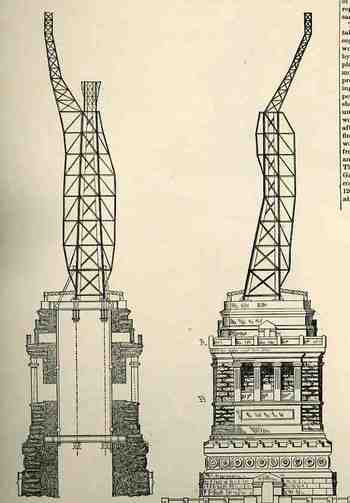
    In the continuing thread of Empty and Blank and Missing People we find perhaps the largest and heaviest of all Blank People–the superstructure of the Statue of Liberty.  This woodcut appeared in the 13 June 1885 issue of The Scientific American, and shows the empty nest for Auguste Bartholdi’s “Liberty Enlightening the World”.  For an empty thing it weighed quite a lot, over 400,000 pounds of iron plate and the awaited repousse copper skin.  It was the tallest free-standing statue in history, but since (and only recently) has been eclipsed (see below for a short list of the tallest modern statues). 

    Blogaugust_25_missing_people_libert

  • Crowds and the Press of Humanity: WWI German Prisoners, November, 1918

    JF Ptak Science Books   LLC  Post 152

    Blogcrowdsphoto_ww1249_2
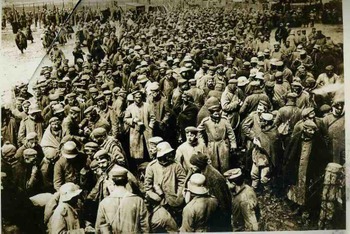
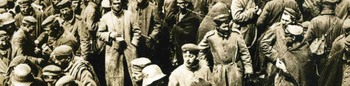
    This image comes from a collection here of First World War news service photographs,  showing German prisoners being readied for transport home, and dated 20 November 1918.  This group had evidently surrendered just before the armistice was signed, and was sent directly and instantly  to a staging area for transport back to the Fatherland.  The way that many newspapers obtained the war images that they published in their papers was via a semi-centralized pool of war images.  The newspaper would request, say, a photo of German prisoners, and would contact one of these photographic agencies—in this particular case, it was the Central News Photo Service of 26-28 Beaver Street, NYC—and purchase the rights for republication, and then print it in the newspaper along with the story.  In almost every case the photo would be accompanied by a caption mimeographed onto an attached piece of cheap paper, and in this case it reads:  “Waiting to Return Home/a photo just received showing a batch of enemy troops who surrendered just before the signing of the armistice, joyously discussing the coming of peace and the opportunity of returning home to their families.”
    Blogcrowdsphoto_ww1_detail_long251

    I seriously doubt that the copy editor could read the minds of either the photographer or the troops in the photo.  I would imagine that they were definitely joyous about going home ALIVE to their families, but when looking really closely at the picture the thing that seems to dominate the actions of the people is food.  Or cigarettes.  But mostly when looking hard at the faces in the photo, the men just look tired.
    Blogcrowdsphoto_ww1_detail_super253

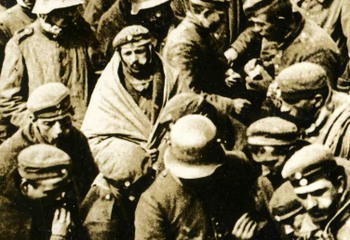
    Looking very closely at these types of images has always been fascinating; look close enough, under high magnification, and the large photo becomes composed of dozens of smaller photos.  The whole is an assemblage of vignettes, each in themselves a work of art.

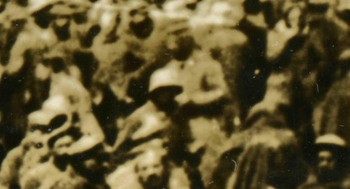
    Continuing in a more odd tone, I’m also reasonably convinced that after looking at hundreds of faces in a photo like this that you’ll find a picture of yourself.

    Blogww1_crowd258_2

    I did.  This section is a 3200 dpi scan of a 15×10 mm section, and I am undoubtedly and unquestionably the bald bearded man (one of the few people in the image without a hat) at center-bottom. 

  • Subduing Insanity with Narcotic Induced Sleep: Mental Illness Treatments in 1845

    JF Ptak Science Books Post 153
    Blogdrugs_crazy254
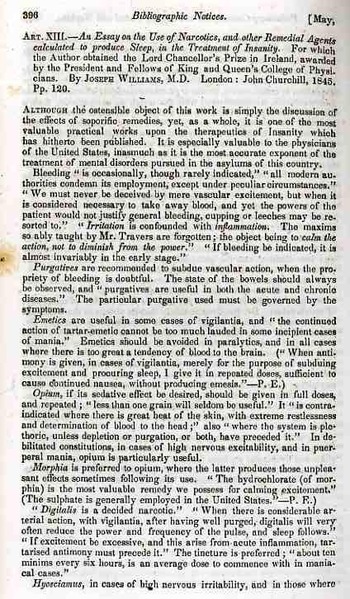
    This book review on the use of narcotics in treating the insane appeared in the New York Journal of Medicine for 1846.  The book, “An Essay on the Use of Narcotics, and other remedial Agents calculated to produce Sleep in the Treatment of Insanity….”, by Joseph Williams, M.D., and published in London in 1845.  The theory behind the sleep treatment was that the basic mechanism of insanity was “cerebral inflammation” or “excessive vascular action” in the brain—inducing deep sleep, evidently, was a good way to combat the over-active brain.

    The article itself comes at an odd time in the history of the treatment of the insane.  It came almost 40 years after the establishment of  McLean Hospital (first known as the “Asylum for the Insane,” a division of the Massachusetts General Hospital), which opened on Oct. 1, 1818, and was the first hospital dedicated to the treatment of the insane in the U.S.  It came 70 years after the great advances of Benjamin Rush, who elevated the “Mental Patient” from chains on the floor to the status of medical or nervous illness or disease.  The use of narcotics over this period seems to have surged and waned.  In 1879, in an article in the New York Times, the reputation of the Asylum for the Insane on Ward’s Island in NYC was considered—and one of the high points was that it had (largely) discontinued the use of narcotics. (There were still problems, of course, what with the asylum being overcrowded, housing 1100 in an institution meant to house 700, and where the chores and even nursing positions were staffed by the inmates, who were feed on 32 cents a day.)  As late as 1921, though, Jacob Alter Goldberg notes in his Social Aspects of the Treatment of the Insane, that there was a new, sharp increase in “toxic narcotic” treatments of the insane.  Of course, I guess one could replace “narcotic” with some sort of other misplaced treatment, like shock therapy, or Freudian mélanges, or something.  Each age must necessarily have their entry in the encyclopedia of embarrassments
    Blogdrugs_crazy255 . 

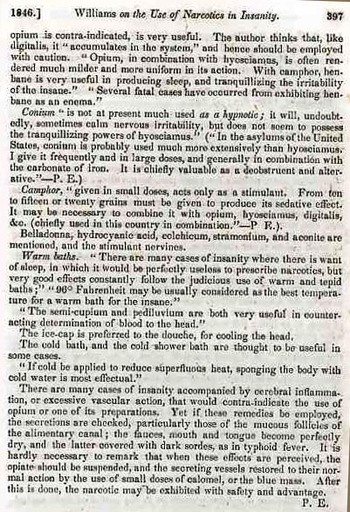
    In this article we find sleep assaulted by the use of the following:  purgatives (“to subdue vascular action when the propriety of bleeding is doubtful’), emetics, opium (to be used “in cases of high nervous excitability and in puerperal mania”), morphia (“the most valuable remedy for calming excitement”), hyosciamus (“to produce sleep, tranquilizing the irritability of the insane”).  It is weird to see that the last sentence in the description of hyosciamus reads “some fatal cases have occurred from exhibiting henbane as an enema”.  A narcotic enema?  Still to come in the review is conium (“I have used it frequently and in large doses…it is chiefly valuable as a deobstruent and alternative”, followed by camphor, Belladonna, hydrocyanic acid, colchirum, stramonium aconite, and others.  “Warm baths’ makes an appearance (“90 degrees may be considered to be the best temperature for a warm bath for the insane”), as do cold baths, and the applications of ice caps. 

    I’m not so sure about what to make of it all, the sleep treatment of insanity I mean—after all, Joseph Lister only makes his epochal pronouncements on cleanliness in the operating theatre 15 or so years after this paper, which seems today to be the most rudimentary thing that one could do in treatment in the surgical room, so treating extra blood in the brain through drug-induced sleep doesn’t seem all that far away from the realm of possibility back there in early Victorian England.

    I don’t think I’ll forget the toxic narcotic enema any time soon, though.  Or the word “deobstruent”. 
  • Simple Sublimity: Images of Disappeared Common Objects. Traffic Lights, 1936

    JF Ptak Science Books LLC  Post 154
    Blogtraffic262

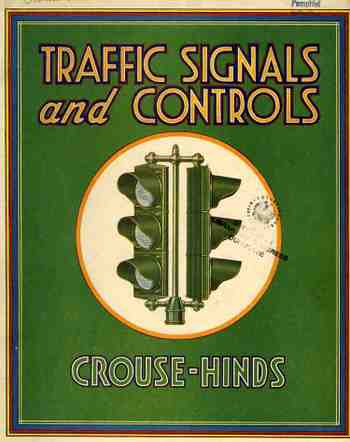
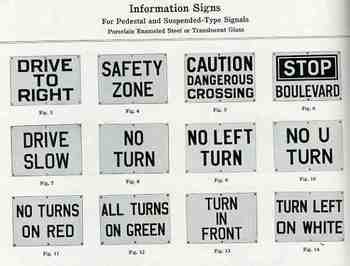
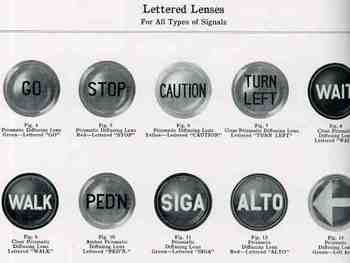
    These images are about as basic as it gets for the common, everyday, overlooked objects from the disappeared past.  They come from the Course-Linds manufacturer’s catalog for traffic lights and other control systems called, yes, Traffic Signals and Controls, published in Syracuse (NY) in 1936. It is a beautifully designed catalog—excellent illustrations laid out perfectly on their pages, with all of the data you’d ever need to order these things for your municipality. 
    Blogtraffic263

    What I find so fascinating about the images here is that they depict ubiquitous objects that today would today—given their ephemeral nature—be exceptionally difficult to find. 
    Given this catalog, today they are not.


    Blogtraffic260

    Blogtraffic259_2

  • The Mermaid–Not Exactly a Disney Creature, 1822

    JF Ptak Science Books  LLC   Post 155
    Mermaid
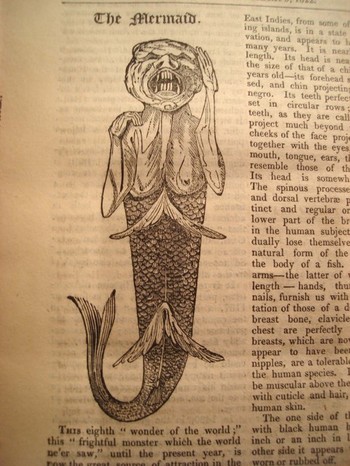
    Contrary to common belief and image saturation, the Mermaid was not
    exactly a cuddly, whimsically enchanting, luxuriously beautiful
    creature, as this woodcut from the British The MIrrour (1835) magazine
    attests.  The mermaid is old and world-wide, but in British
    storytelling, it is mostly an ominous creature, creating havoc,
    provoking doom and destruction, and perhaps even devouring ships (as
    they could be enormous in size, 150 feet and up).  The syrienic
    beauties of John Waterhouse and Frederic Leighton et al,
    with beauty and intrigue dripping from their brushes, had little to do
    with most of the legends of these creatures.  This is one of the most
    fascinating of these images that I’ve seen–in a pitched battle between
    The Kraken and this 150′ mermaid, I think that the she-demon would win.

    ·Posted by :

    ·in:

Recent Posts

Archives

Categories