A Daily History of Holes, Dots, Lines, Science, History, Math, Physics, Art, the Unintentional Absurd, Architecture, Maps, Data Visualization, Blank and Missing Things, and so on. |1.6 million words, 7500 images, 4.9 million hits| Press & appearances in The Times, Le Figaro, Mensa, The Economist, The Guardian, Discovery News, Slate, Le Monde, Sci American Blogs, Le Pont, and many other places… 5000+ total posts since 2008.

  • Maps as Propaganda: the Turning of the Tide, January 1943

    JF Ptak Science Books  Post  226

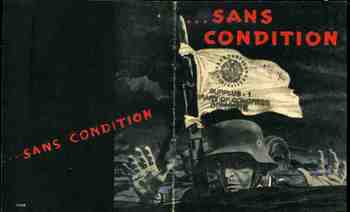
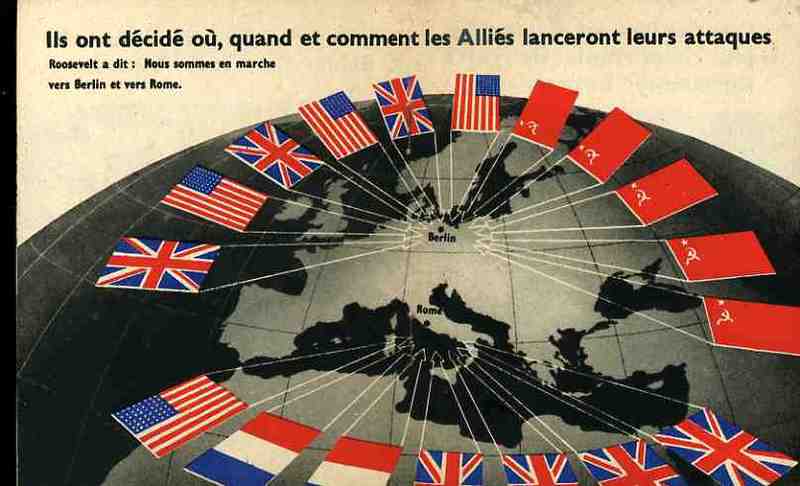
    Nazi Propaganda Map in French

    I’ve made a number of posts about Nazi propaganda maps and thought that this was perhaps time to surface something that represented an Allied effort in the use of maps in hearts & minds campaigns–in this case it was in French obviously and distributed in occupied France.  . (Note:as is the case with may of the items that I feature on this blog, the following pamphlet comes from a collection that I bought of the Library of Congress.  It was called, simply, “The Pamphlet Collection and was 90,000 items strong.  Or weak..  There was no real organizing principle save for the fact that they were all categorized in some strange way and housed in 2,400 alphabetically-arranged document boxes.  They also hadn’t been touched since about 1948.  What makes the “collection” so spectacular to me is that the majority of the pamphlets in it just don’t show up in any collections, anywhere. It seems natural to surface these things and publish them to the web where they can be either appreciated or forgotten–but at least they’ll still be available for as long as electrons move). 

    The occasion for the publication was the meeting at the Anfa Hotel in January 1943 in Casablanca (in the French Protectorate of Morocco) between Churchill, Roosevelt and De Gaulle (Stalin deciding he was too busy with the Nazi invasion to attend.  The full trio of the Americans, British and Russians would meet later in November at Teheran). The Casablanca Conference mapped out the Allied strategy for the rest of the war while trying to figure out how to help the Soviets. The map blatantly relates the closing of the collar around the shrinking neck of the Nazi nation, especially with what was seen as the impending defeat of the German forces in Russia. I suspect that the pamphlet was really published after the massive surrender of German troops at Stalingrad at the end of January–this would explain the forward motion of the red flags. The pamphlet cover calls now for the unconditional surrender of the German forces called for in Casablanca.  The text explains to the French reader that the downward spiral and defeat of Germany was inevitable, and that nothing less than complete and unconditional surrender would be acceptable. In any event the images and the map were completely understandable, even without language, calling quick and immediate attention to the new and true and positive developments in the war.

    Blogaugust30_sans_condition473


  • Garbage (Trash) (Dust)) Can Advertisement, 1911

    JF Ptak Science Books Post 227

    [Update: as of May 2015 this is still the only time I’ve seen a 100+ year-old advertisement for a trash can.]

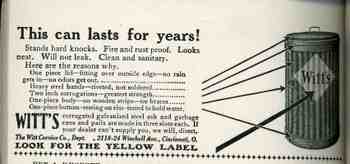
    Blogaugust30_trash471 In the many years of dealing with unusual publications and images and illustrations and such, I do not recall ever seeing an advertisement for a waste can.  And so today, here at the tail end of the summer of 2008, I stumbled upon one, tucked away in the back of the Official Catalogue and Guide of the Ohio Valley Exposition of Cincinnati, 1910.   (Actually I was browsing the ads in the pamphlet when I saw the eye-popping half-page ad for The Weir Frog Company.  It took as few moments for me to realize that they were selling railway frogs and other major-heavy hardware, but the thought of the frog farm did linger a bit…) I cannot say that trashcan tech had improved sharply between 1911 and now.  I can say that the advertisers used an awful lot of exclamatory arrows to make their point, which leads me to perhaps a wrong assumption that this trash can was cutting edge.  Or perhaps not; after all, how much can one say about it?  (Yes, there’s the patents for bomb-proof, smokeless, half-vented, lid-tethered, wheeled, semi-wheeled, clip-lidded and etc. garbage cans–actually I can count thousands of patents award to and about garbage cans.  But, basically, its pretty much the same.) See the wonderful Timeline of Garbage here.

    ·Posted by :

    ·in:

  • Atomic Bomb Exposure Effects on Pregnancy at Hiroshima and Nagasaki

    JF Ptak Science Books Post 228

    The total number of casualties at Hiroshima and Nagasaki today exceed the initial figures of  1945–people were of course dying years after the blasts due toBlogaugust_28_atomic_birt_pamph46_2 excessive exposure to ionizing radiation and other complications.  To understand the long-term affects of the use of these weapons the  National Academy of Science (under the instigation of the Truman White House) created the Atomic Bomb Casualty Committee in 1945.  Its earliest concerns were hematological, but then quickly spread into other areas such as leukemia, radiation cataracts, fertility, aging, mortality and genetics.  By 1950 there were more than 1000 Americans involved in this program, which had begun to whither by 1953 but which lasted until 1982.

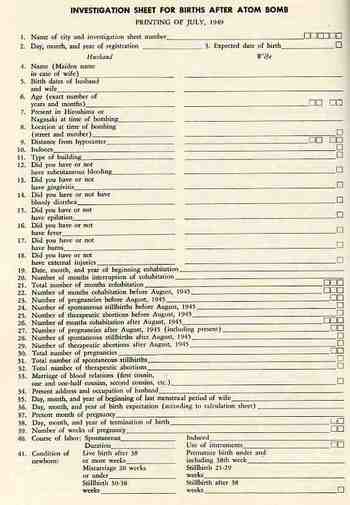
    This questionnaire comes from the ABCC and published in The Effect of Exposure to the Atomic Bombs on Pregnancy Termination in Hiroshima and Nagasaki by the prolific and important Neel and Schull) and published by the Academy in 1956. (The two would address the issue many times, and seem to have summed it up in The Children of Atomic Bomb Survivors, A Genetic Study.  Washington, D.C.: National Academy Press, 1991. The 1947 report of the ABCC may be read HERE.)

    This study addressed the question of generational radiation damage and–after 1953–whether and if so how radiation damages DNA.  The issue was whether future generations of children would express increased birth defect ratios as a result of exposure to the bomb.  This questionnaire was given every fifth lunar month to the pregnant women of Hiroshima and Nagasaki–who were made to register their pregnancies with the government–and carried on for six years.   

    ****

    Also see the following:

    Liebow, Averill.  Encounter with Disaster, A Medical Diary. New York: W.W. Norton and Company, Inc., 1970.

    Marston, Robert Q. M.D., and Fredric Solomon M.D., eds.  The Medical Implications of Nuclear War.  Washington, D.C.: National Academy Press, 1986.

    ****

    The figures for the dead and injured at Hiroshima and Nagaski, August 1945:

      Hiroshima Nagasaki
    Pre-raid population 255,000 195,000
    Dead 66,000 39,000
    Injured 69,000 25,000
    Total Casualties 135,000 64,000

    (Click on image to enlarge)

    Blogaugust_28_atomic_birt_q467  

    ·Posted by :

    ·in:

  • A Quiet Masterpiece on the Zipper, and Why it is Better to Repair a Zipper than Blow Up a Tree Stump

    JF Ptak Science Books  Post 229

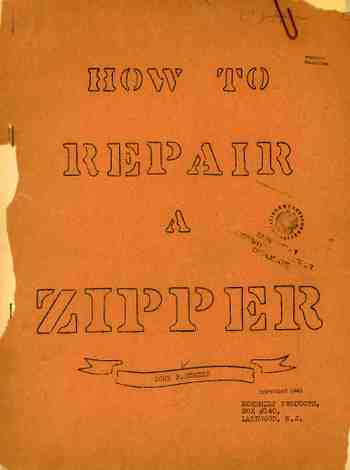
    This is an example of a quiet, naive masterpiece, and is a perfect companion to a fantastic pamphlet that I wrote about earlier this month on flagpole painting. This tall (11×8 inch) 35-page 1945 work with an impossible title has everything that you would need to know–as its title promises and delivers–to repair a zipper.  Not replace a zipper–repair it.  It is so beautiful as to want to make every engineer residing in the deepness of everyones’ soul just simply weep.  The pamphlet is simply but well illustrated and addresses 50-odd contingencies for zipper malfunction and failure, and speaks to a particular WWII mindset that that addresses problems in this very fashion. Repair rather than replace.  The bottom line here is that this is as good as any book of the history of fluxions or the making of the atomic bomb or cooking up a virus, given the parameters and limitations of its subject. 

    . 

    Blogaugust_28zipper469_2

    (I have a pamphlet somewhere that was published by Dupont that would’ve been a great cross-purpose reference, only I cannot find it. It was called Stump Blasting.  And, yes, since it was published by the DuPont Chemical Corporation it heavily sold the idea to farmers of how useful dynamite can be for just about any job.  And I don’t disagree outright, but the approach to the philosophies of problem-solving couldn’t be more different, especially contrasting the Stump Blasting pamphlet with the Stump Removal one produced by a chain manufacturer. 

    And so how does it come to pass that someone ostensibly trying to write a history of science blog that has been changed to a history of ideas blog finds himself at almost-midnight on a Sunday plugging away on a post about zipper repair and stump blasting?  (And how often to do those five words come together in a sentence? ) Simple:  its about the methodology and the approach to figuring out a problem.  On the one hand, you have a circumstance where the problem is addressed, solved and eradicated; on the other, the problem is simply eradicated without the “solved” part.  (Zippers really shouldn’t fail all that often–the guy who patented the modern zipper in 1906 said that the zipper should work 200,000 times.) Personally I think that it is better in the long run to solve the problem rather than just replace it or blow it up. Perhaps we’re just living in a BIU (“blow it up”) kind of world, but I think we could use more zipper-repair approaches to thinking.

    ·Posted by :

    ·in:

    —
  • The Birth of the “Internet” at the End of WWII: Vannevar Bush & the MEMEX, July 1945

    JF Ptak Science Books LLC  Post 190

    Dsc00022 In the midst of running the American scientific war effort (As Director
    of the Office of Scientific Research in charge of some 6000 scientists)
    and in the middle of trying to figure out the best way of dealing with
    the coming proliferation of atomic weapons, Vannevar Bush somehow found
    the time to write what many consider to be the first scientific paper
    on what would become the internet. The paper,   “As We May Think”;  was
    published in the Atlantic Monthly in July 1945.

    (It might be odd to look at it this way, but if you were a Nazi time traveler able to assassinate three people in the U.S. that would change the direction of the American effort in WWII, one would certainly be Roosevelt (who rose to the tasks of the Depression and the War  with Lincolnian sustainability), and I’m not unconvinced that one f the other two might very well be Bush–he kept the scientific agenda on course, direct, and to the point, saving time, effort and lives.  Its an interesting bit to think about….)

    Bush was doing A LOT of thinking on the organization of thought in that year.  I suspect that in trying to deal with the problems of the coming atomic arms race (beginning in the year before Trinity) and in trying to figure out how to distribute the knowledge-base that lead to the building of the bomb, that the idea of the MEMEX may very well have been the future consequence formed by his immediate concerns.

    The MEMEX (Mechanical Aid to Memory) was Bush’s breathtaking idea for a design for the organization of associative thought and memory.  It was a mechanical “aid” to memory, building “trails” of associations of ideas.  The MEMEX was another in the long line of art-of-memory attempts, from the ancients to the memory palaces and theaters of Raymond Lull and Francis Bacon and Athanasius Kircher and Giulio Camillo. What made this so appealing to the next generation of thinker on the distribution of information in the computer age was its ideas on making massive amounts of information obtainable; it was more about *thinking* about order and ability and access to information (in quantities unthinkable and by means unknowable) in 1945. 

    Looking at the future square in the face, Bush writes (on page eight of his short paper) with extraordinary perception: 

    “Wholly new forms of encyclopedias will appear, ready-made with a
    mesh of associative trails running through them, ready to be dropped
    into the memex and there amplified. The lawyer has at his touch the
    associated opinions and decisions of his whole experience, and of the
    experience of friends and authorities. The patent attorney has on call
    the millions of issued patents, with familiar trails to every point of
    his client’s interest. The physician, puzzled by its patient’s
    reactions, strikes the trail established in studying an earlier similar
    case, and runs rapidly through analogous case histories, with side
    references to the classics for the pertinent anatomy and histology. The
    chemist, struggling with the synthesis of an organic compound, has all
    the chemical literature before him in his laboratory, with trails
    following the analogies of compounds, and side trails to their physical
    and chemical behavior.

    “The historian, with a vast chronological account of a people,
    parallels it with a skip trail which stops only at the salient items,
    and can follow at any time contemporary trails which lead him all over
    civilization at a particular epoch. There is a new profession of trail
    blazers, those who find delight in the task of establishing useful
    trails through the enormous mass of the common record. The inheritance
    from the master becomes, not only his additions to the world’s record,
    but for his disciples the entire scaffolding by which they were erected.”

    Sounds pretty familiar, yes? 

    Some of the great internet developers who have recognized the
    importance of this paper by Bush include Doug Englebart, (who would
    write to Bush acknowledging the influence Bush’s article had had on his
    own work. (Zachary, 267).);  J.C.R. Liklider  (Waldrop, 2000): and Ted
    Nelson (Internet pioneer and coiner of the term hypertext and know as
    “one of the most influential contrarians in the history of the
    information age.” (Edwards, 1997)).  And of course many, many others. 

    The full text of the paper “As We May Think” is below.

  • Punctuation and its Elimination: Spongebobian Sentence-Enhancers and a Pickle for the Knowing Ones (1847)

    JF Ptak Science Books  Post 191 (expanded)

    I’ve made several posts about Blank and Missing People which seem to me—having had long exposure to images over the last 30 years—to be quite unusual in the history of popular-published prints.  This may actually be a simple corollary to a wider category of Blank Things, or Missing Things.  Like Dark Matter.  Or white, open, blank spaces on early, honest, maps. (And this may be part of another larger story on The  Spaces in Between, (a concept in German known as Zwischenraum), but that’s another story, identifying where the missing stuff might actually “be”. 

    Right now though I’d like to address blank spaces in literature.  It is surprising to me that in Google searches that “blank books” and “blank literature” and “books without words” (once you remove all of the hits for new diaries and new artists’ notepads and such) direct you to graphic novels.  This category hardly strikes me as being “blank” as the art and action more than accommodate the absence of written words.  (And by the way the graphic novel seems to be a fairly new invention—perhaps the work of Frans Masereel and Rockwell Kent in producing sequential, worldess books were among the first of their genre when they were published in the mid-1920’s?)

    Blank literature doesn’t mean hollow literature.  In one skinny example James Fenimore Cooper’s writings may be a little translucent and a little empty, but they aren’t blank. (Twain ripped Cooper on this point, cursing Cooper for using a bagful of woodsy woodsmen tricks to drive his story when he should’ve been writing, and not waiting for them to fill up the spaces of his missing narrative: “in his little box of stage properties he kept six or eight cunning devices, tricks, artifices for his savages and woodsmen to deceive and circumvent each other with, and he was never so happy as when he was working these innocent things and seeing them go…(another) favorite stage property that he pulled out of his box pretty frequently was his broken twig.  He prized his broken twig above all the rest of hi effects, and worked it hardest…”

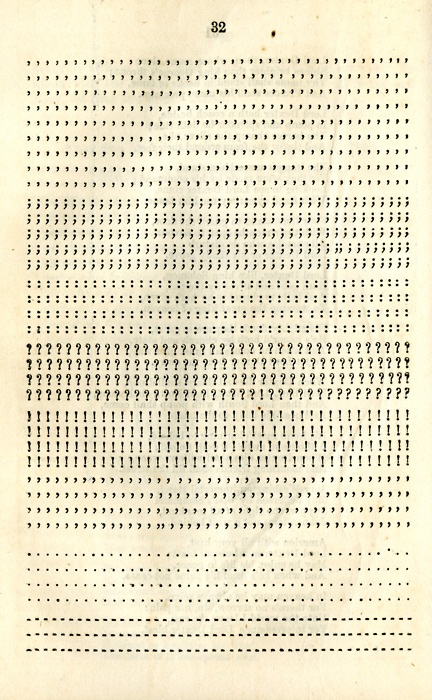
    An excruciatingly direct example of the worldess book  is a remarkable, hoaxing or perhaps just simply demented set (!) of books by Timothy Dexter (Newburyport, Massachusetts).   Dexter wrote a semi-incompressible work called A Pickle for the Knowing Ones, which followed his own logic, sentence structure, vocabulary and spelling. It was also printed and published without punctuation.  In one sentence. (A sample is found below in the continued reading section.)  I think that it is interesting in that someone did it and that it exists and that it was printed in 1802, but aside from that I find little comfort or twisty inspiration from it.  His second edition of that work though is much more interesting, not so much in that it continued ((?), I use that word loosely) the shredded intellectual threads laid out in the first edition; it also contains one page of what I think of as a blank book:  the missing punctuation marks from the first edition.   

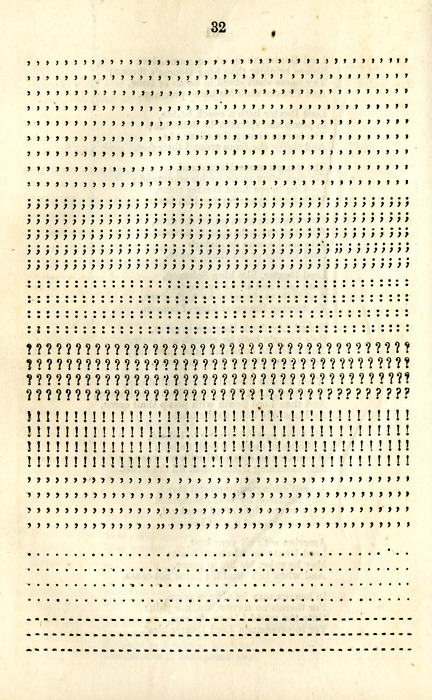
    Well, not ALL of the missing punctuation, but enough, in the mind of Dexter, to silence some of the complaints of the more faint-hearted readers of his one-sentence, non-punctuated, made-up vocabulary of the first edition.  He at least provides the punctuation–separately–in case a weak reader needed some: 
    Pickle for knowing ones

    [Image from a good treatment of Dexter at http://northofboston.org/north-of-boston-historical-figures-a-pickle-for-your-thoughts/]

    He writes “Fourder mister printer the Nowing ones complane of my book the fust edition had no stops I put A nuf here and that may peper and solt as they please.”

    That’s much in the spirit of Spongebob Squarepants and Patrick Star when they “discovered” the use of swear words and curses, which they figured had no meaning except as a sort of comfrot food to be sprinkled in conversation for flavoring–“sentence enhancers” they called them, without knowing (of course!) that their sounds were more than simple garnishes and intellectual punctuation.  

    As follows (please consult http://www.lordtimothydexter.com/the_holl_pickle.htm for a full transcription of the Dexter work–the author of the site also transcribes the Dexterian-speak into plain English, which was no doubt a labor of love): 


    ,,,,,,,,,,,,,,,, ,,,,,,,,,,,,,,,,, ,,,,,,,,,,,,,,,,, ,,,,,,,,,,,,,,,,,,, ,,,,,,,,,,,,,,,,,

    ,,,,,,,,,,,,,,,, ,,,,,,,,,,,,,,,,, ,,,,,,,,,,,,,,,,, ,,,,,,,,,,,,,,,,,,, ,,,,,,,,,,,,,,,,,

    ……………. ……………. …………….. ………………. ……………..

    ,,,,,,,,,,,,,,,, ,,,,,,,,,,,,,,,,, ,,,,,,,,,,,,,,,,, ,,,,,,,,,,,,,,,,,,, ,,,,,,,,,,,,,,,,,

    . . . . . . . . . . . . . . . . . . . . . . . . . . . . . . . . . . . . . . . . . . . . . . . . . . . . . . . . . . . .

    . . . . . . . . . . . . . . . . . . . . . . . . . . . . . . . . . . . . . . . . . . . . . . . . . . . . . . . . . . . .

    …………………………! ! ! ! ! ! ! ! ! ! ! ! ! ! ! !………………………..

    …………………………….. ! ! ! ! ! ! ! ! ! ! ! …………………………..

    …………………………………. ! ! ! ! ! ! ……………………………….

    ………………………………………!……………………………………..

    . . . . . . . . . . . . . . . . . . . . . . . . . . . . . . . . . . . . . . . . . . . . . . . . . . . . . . . . . . . .

    , , , , , , , , , , , , , , , , , , , , , , , , , , , , , , , , , , , , , , , , , , , , , , , , , , , , , , , , , , , ,

    ……………????????????????????????……………

    And on page 32 more of the “missing” punctuation is provided:

    ,,,,,,,,,,,,,,,,,,,,,,,,,,,,,,,,,,,,,, ,,,,,,,,,,,,,,,,,,,,,,,,,,,,,,,,,,,,,, ,,,,,,,,,,,,,,,,,,,,,,,,,,,,,,,,,,,,,, ,,,,,,,,,,,,,,,,,,,,,,,,,,,,,,,,,,,,,, ,,,,,,,,,,,,,,,,,,,,,,,,,,,,,,,,,,,,,, ,,,,,,,,,,,,,,,,,,,,,,,,,,,,,,,,,,,,,, ,,,,,,,,,,,,,,,,,,,,,,,,,,,,,,,,,,,,,, ,,,,,,,,,,,,,,,,,,,,,,,,,,,,,,,,,,,,,, ,,,,,,,,,,,,,,,,,,,,,,,,,,,,,,,,,,,,,, ;;;;;;;;;;;;;;;;;;;;;;;;;;;;;;;;;;;;;; ;;;;;;;;;;;;;;;;;;;;;;;;;;;;;;;;;;;;;; ;;;;;;;;;;;;;;;;;;;;;;;;;;;;;;;;;;;;;; ;;;;;;;;;;;;;;;;;;;;;;;;;;;;;;;;;;;;;; ;;;;;;;;;;;;;;;;;;;;;;;;;;;;;;;;;;;;;; :::::::::::::::::::::::::::::::::::::: :::::::::::::::::::::::::::::::::::::: :::::::::::::::::::::::::::::::::::::: :::::::::::::::::::::::::::::::::::::: ?????????????????????????????????????? ?????????????????????????????????????? ?????????????????????????????????????? ??????????????????????!??????????????? !!!!!!!!!!!!!!!!!!!!!!!!!!!!!!!!!!!!!! !!!!!!!!!!!!!!!!!!!!!!!!!!!!!!!!!!!!!! !!!!!!!!!!!!!!!!!!!!!!!!!!!!!!!!!!!!!! !!!!!!!!!!!!!!!!!!!!!!!!!!!!!!!!!!!!!! ””””””””””””””””””” ””””””””””””””””””” ””””””””””””””””””” ””””””””””””””””””” ……………………………….. ……………………………….. ……………………………….. ……………………………….. ————————————– ————————————– ————————————–


    It is a brilliantly empty book, all of the characterization present and waiting for the last bit that would make this a book:  the words.

    The depths or shallownesses of Dexter’s private insight is a mystery to me, if that mystery extended beyond an elaborate and peculiar (and deep) sense of humor.  The man was a successful if not very odd businessman, after all, so he did have some sort of regulating principle in his life–its just that this sort of dark, removed humor is so incredibly pre-modern that I’ve gotten stuck thinking about Dexter being a little deranged rather than be prescient. 
  • Atomic Bomb: Reporting on the Nagasaki Bomb in the “Manzanar Free Press”, 11 August 1945

    JF Ptak Science Books LLC Post 192
    Atomic_bomb_manzanar_2

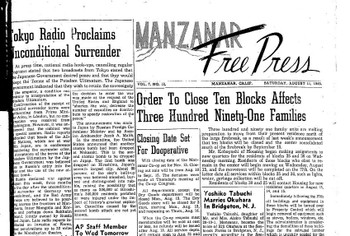
    For another project I’ve been reading through the Manzanar Free Press Newspaper (volume 7, no. 12) and came upon this slight coverage of the bombing of Nagasaki, printed 11 August 1945.  What’s unusual here is that this newspaper was published by the “internees” at the Japanese Relocation Center (officially “The Manzanar War relocation Center” and also called a  “relocation camp,” “relocation center,” “internment camp,” and “concentration camp,)  at Manzanar, California.   110,000 people of  Japanese origin (including a large percentage of American citizens) were forcibly removed and imprisoned via the U.S. Executive Order 9066, issued by President Franklin Roosevelt on 19 February 1942.   Manzanar was a semi-dead town 220 miles NE of Los Angeles, located in high desert with huge swings of temperature and unrelenting and challenging weather—semi-killed by the city of Los Angeles, which purchased the water rights to the region in 1929, forcing out the remaining inhabitants.  Manzanar had a peak population of about 11,000 before the Japanese were returned to what remained of their previous lives.

    Manzanarattention_2

    In this quick coverage, a report is made on the Japanese accepting the terms of the Potsdam “Ultimatum”, putting an end to the war.  The next part is of the reporting is very subdued, announcing the dropping of the second bomb,  theorizing that as many as 200,000-300,000 people may have perished in the bombing of Japan’s seventh largest city.  And not much more than that.  Two hundred words were I’m guessing all that was allowed by the powers-that-be at Manzanar.

    Elsewhere in this same issue is a report on the meeting of the Manzanar Boy Scout troop.  And something on the graduating class of the Manzanar High School (the high school yearbook for 1945, the last class at Manzanar, was called “Valediction”).  Familiar trappings in an unfamiliar trap.

    Manzanar is located near Lone Pine in the Owens Valley, which today suffers terrible environmental problems brought on by water-dependent LA sucking out all of the water in the region.

  • Maps as Propaganda: the Nazi’s Use of Maps in the Hearts and Minds Campaign in Occupied Holland and France, 1943

    JF Ptak Science Books  Post 193

    Nazi Maps D Propaganda1

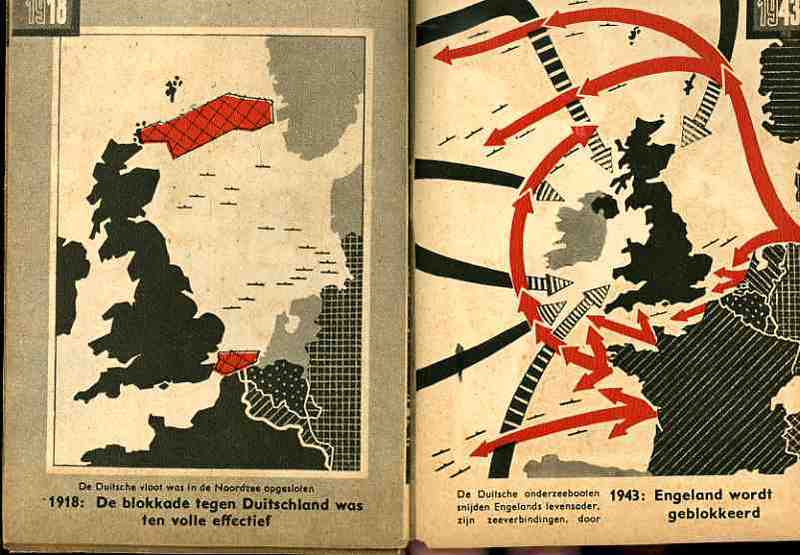
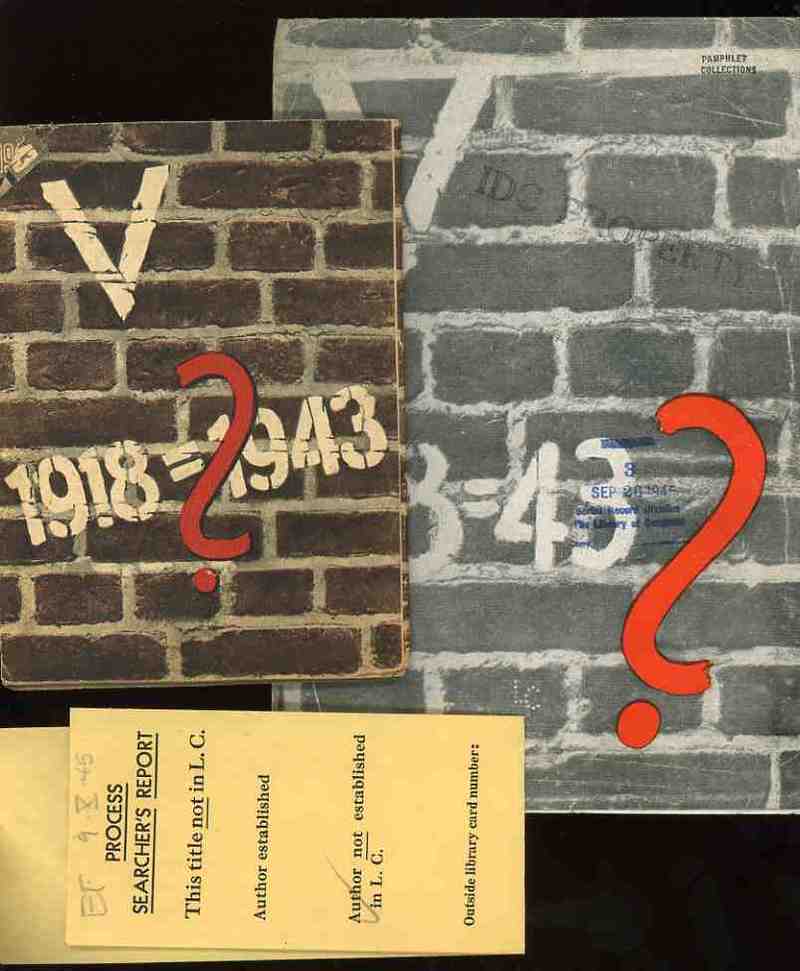
    These two, related, pamphlets were the products of the Nazi Propaganda engine and sought to affect the moral and intellectual stamina of the people in the occupied countries of the Netherlands and France in 1943.   Each stressed the enormous differences in the German state that took place in the 25 years between the end of World War I and the third year of the Nazi European part of World War II.  I’ve no idea whatsoever about the grander symbology  (if any) of these numbers associated with these two pamphlets (the Roman numeral for “5” and the 25 years of the difference and the “13” points (of the French propaganda) aside from the obvious mathematical implications.

    Nazi Maps D Propaganda2

    (The only interesting bit that I can find in the “18=43” from the French pamphlet is Luke 18:43 “Immediately the man could see again and began to follow Jesus, glorifying God. All the people saw this and gave praise to God.”. )   I find it curious that identical symbolism (?) was used for the two countries, and that the French version was simple comparative text (summarizing the differences in the two periods of time) while the Dutch version was mainly a picture book. 

    Nazi Maps D Propaganda3

    I would reprint the French version if it wasn’t so bloodily hateful.  (Suffice to say that this is so by looking at one example: in the last of the second issue of 13 points  Goebbels et alia wrapped themselves in the insulating fabric of the German “people” in the “resistance” against “Jewish saboteurs”—not the German political machine, and not the German military, but the German people, insinuating that the Nazi annihilation of the Jewish people was de facto sanctioned by the will of the German nation.  This is of course part and parcel of the fictitious and loathsome Protocols of the Elders of Zion (of which Henry Ford was a happy reader), a French work that was completely stolen and plagiarized by Imperial Russia in the early 1880’s and which, later,  Hitler used to both build his hate against the Jewish people and use (and acknowledge ) as the template for his early actions in the Nazi Party.)

    Nazi Maps D Propaganda4

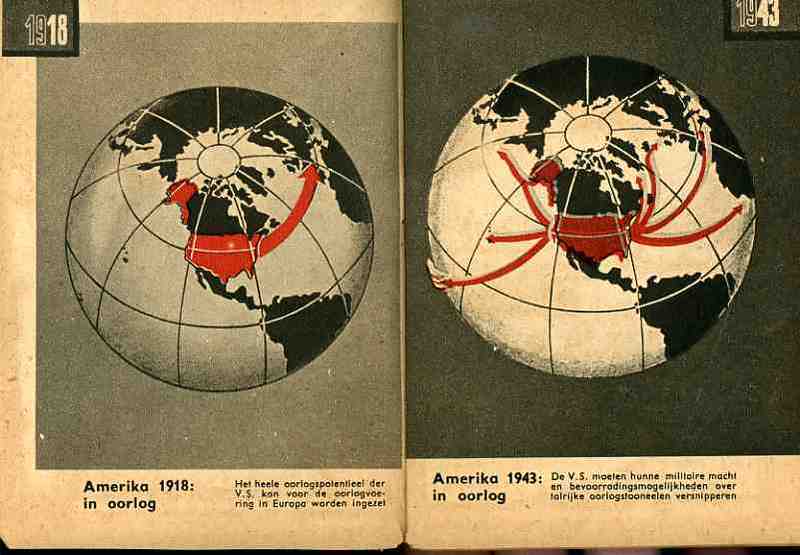
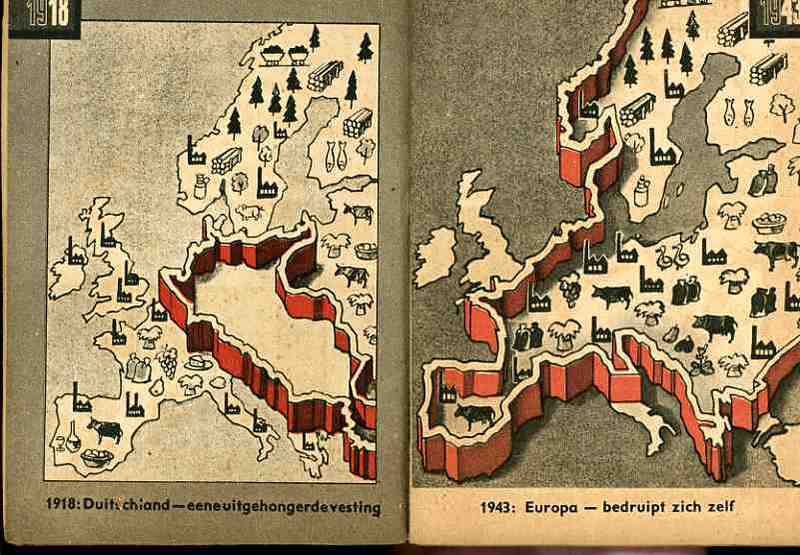
    The maps used in the Dutch publication are fairly general and issue a stark warning about the growth of Germany–and how Germany continues to grow through war.  The first that we reprint, above, tries to get the point across to the occupied people that England has more problems to deal with than would concern their attention with the Netherlands.  The second part of the first map crazily shows the attack upon England and the effectively exhausting attention it has to pay to many points of invasion.  Ditto for the second map, showing the spread of American concerns–the U.S. in 1943 would have far more to deal with in many points in a two-ocean war than to concern itself with or have the ability to think about the liberation of Europe and the Netherlands.  The last map shows the supposedly extraordinary growth in Germany’s  industrial and agricultural capacity. 

    In short, the maps tell its readers to just keep quiet, the German nation is mighty, and just wait for the end of the victorious German war.  The maps also addressed non-readers–of course the Dutch literacy rate was extremely high, but you didn’t have to be able to read the description of the map to understand its blunt message. (This makes me wonder if the maps really weren’t intended for scare tactics against children.)  As Boss Tweed once infamously reported–that he had no fear of editorials because his constituency couldn’t read–he hadn’t counted on the political cartoons of Thomas Nast–which could be understood by a non-reader–and which wound up being one of the direct causes of his exposure and downfall. 


  • Deciding to Use the Atomic Bomb: The Chicago Metallurgical Lab Poll, July, 1945

    JF Ptak Science Books LLC  Post 194

    Interested in responding to the poll yourself?  Answer the Metallurgical Lab (July 1945) Poll here--we’ll post the results next month.  

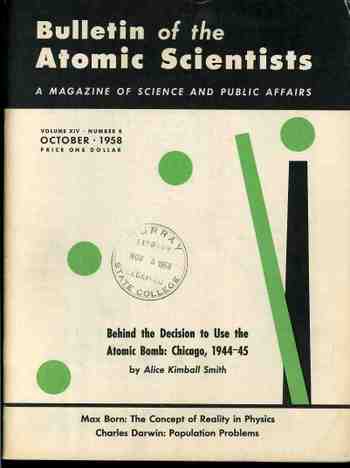
    Blogaugust_4_bas_cvr373In late June 1945, the Interim Committee (a secret, blue chip group established by Secretary of War Stimson with the approval of President Harry S. Truman to examine the problems that could result from the creation of the atomic bomb). decided what exactly to do with the weapons.  The group (also including James F. Byrnes, former US Senator soon to be Secretary of State, as President Truman’s personal representative; Ralph A. Bard, Under Secretary of the Navy; William L. Clayton, Assistant Secretary of State; Vannevar Bush, Director of the Office of Scientific Research and Development and president of the Carnegie Institution; Karl T. Compton, Chief of the Office of Field Service in the Office of Scientific Research and Development and president of Massachusetts Institute of Technology; James B. Conant, Chairman of the National Defense Research Committee and president of Harvard University; and George L. Harrison, an assistant to Stimson and president of New York Life Insurance Company) found the following:

    The opinions of our scientific colleagues on the initial use of these weapons are not unanimous: they range from the proposal of a purely technical demonstration to that of the military application best designed to induce surrender. Those who advocate a purely technical demonstration would wish to outlaw the use of atomic weapons, and have feared that if we use the weapons now our position in future negotiations will be prejudiced. Others emphasize the opportunity of saving American lives by immediate military use, and believe that such use will improve the international prospects, in that they are more concerned with the prevention of war than with the elimination of this specific weapon. We find ourselves closer to these latter views; we can propose no technical demonstration likely to bring an end to the war; we see no acceptable alternative to direct military use.

    AND

    …that the weapon be used against Japan at the earliest opportunity, that it be used without warning, and that it be used on a dual target, namely, a military installation or war plant surrounded by or adjacent to homes or other buildings most susceptible to damage.

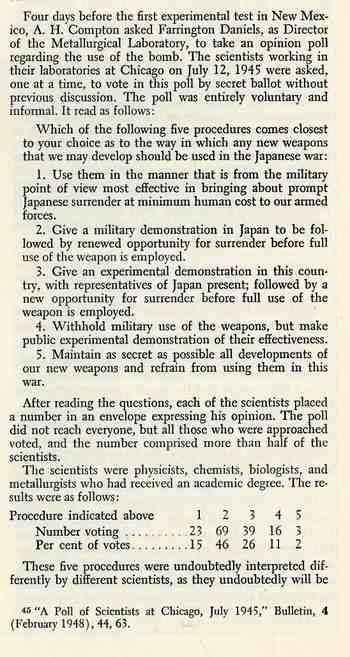
    Slightly later, in July 1945 (but before Trinity), Arthur H. Compton asked  Farrington Daniels (Director of the Metallurgical Lab section (at Chicago) of the Manhattan Project) to poll the 250 or so scientists at work under Farrington on the coming immediate use of the atomic bombs.  (The results of the poll, answered by 150 of the 250 people, were originally published as “A Poll of Scientists at Chicago, July 1945,” Bulletin of the Atomic Scientists, February 1948, 44, page 63. and again published in Compton’s own book,  Atomic Quest, in 1956. The images below come from the Bulletin of Atomic Scientists for October 1958, p 304.)

    Here are the questions and the results of the responses:

    Blogaugust_4_bas_survey374

    The results of the poll were widely interpreted, and seemed to fit the needs of whomever was stretching the statistical canvas.  On the one hand, for example, 87% of the anonymous respondents favored some sort of military use of the bombs, though just 15% of all of the scientists thought that the bombs should be dropped straight-away.  Almost half thought that the bombs were best used in demonstration to the Japanese first, followed by renewed negotiating efforts for unconditional surrender, before the bombs were employed on targets; another 26% felt that the Japanese be invited for a demonstration in the US of the weapon.  So even though 87% believed that a military use was prescribed, 72% felt that the military use was best first as a demonstration device.  2% (3 of the 150) felt that the bomb should basically be buried and not used at all.

    Compton’s response to it all and to the immediate demands presented to him on 23rd July (Washington wants to know what you think”) was hardly quintessential:  “My vote is with the majority….it seems to me that as the war stands the bomb should be used , but no more drastically than needed to bring surrender>” (Reported in Lewis Morton’s “The Decision to Use the Atomic Bomb”, Foreign Affairs, 35, January 1957, pp 334-353).

    ·Posted by :

    ·in:

  • Atomic Bomb: William Shockley and the Economics of Using the Atomic Bomb, 1945

    JF Ptak Science Books LLC Post 195   

    • Background Documents on the Control and Proliferation Issues of the Atomic Bomb
    • Vannevar Bush Group, October 1945-January 1946
    • Paper 1:  William Shockley

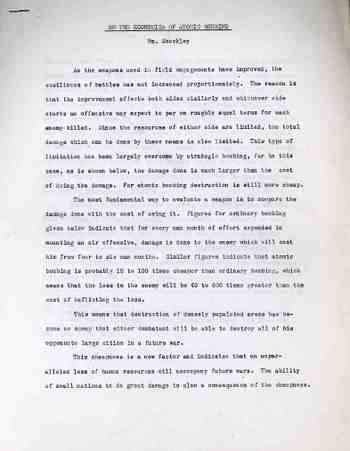
    Blogaug_6shockley_1361 (Click image to enlarge; the other four pages are located in the “Continue Reading” section, below.)
    William Shockley on the Economics of the “Atomic Bomb Art”

    This paper is one a small archive of background and draft papers and proposals by the Vannevar Bush group working on the question of the control of atomic weapons and the formalization of the American position regarding the use and control of atomic weapons, October 1945-February 1946. This archive consists of 38 documents relating to the development of U.S. atomic policy, with  contributions by President Harry Truman, Secretary of State James Byrnes, Dr. Vannevar Bush, (future AEC director) Carroll Wilson, Alger Hiss, I.I. Rabi, William Shockley, Frederick Dunn, Joseph E. Johnson, Leo Pasvolsky, Philip Morrison, Col. Nichols, William McRae, Admiral W.H.P. Blandy, George L. Harrison, and others.

    I have written elsewhere on this site about Vannevar Bush and the coming atomic/nuclear arms problem–as perhaps one of the pre-eminent scientific minds in the Roosevelt/Truman administrations, Bush and others foresaw the development of the atomic arms race in 1943, and by 1945 Bush became a  fundamental thinker and advocate on the problem. The items in this archive are low-formal background papers, drafts of proposals, informal studies, as well as mature statements of thought that would become implemented in the core of U.S. policy regarding the spread and control of atomic weapons. They are generally carbon typescripts and necessarily of extremely limited distribution, generally have no letterheads, occasionally carry the authors’ full names (although sometimes only initials are used).

    A note on William Shockley
    . The brilliant Shockley’s story is difficult and problematic: from the way in which he misused his interaction with the rest of his team at Bell Labs in the discovery of the junction transistor to his sinful racial and eugenic (and dysgenic) public persona later in life–it is a hard and long one to tell, and I’ll not try to do it here.  Suffice to say that I’m very aware of the very long shadows, and I think that other people should at least be aware of them as well, regardless of the staggering importance of “his” (with the wonderful Walter Brattain and John Bardeen) monumental discovery.  

    The William Shockley paper was written towards the end of 1945 and is on five pages and runs about 1500 words.  He begins the paper with a logical statement of the issue of the economics of conventional and atomic bombing, ending with the sentence “For atomic bombing destruction is still more cheap”.  What Shockley is getting to is the overall cost of the amount of destruction caused per square mile, and the conclusion that he draws over these five pages is the destruction caused by the atomic bomb is 1/100th the cost of conventional bombing per square mile destroyed (“atomic bombing is probably 10 to 100 times cheaper than ordinary bombing”).   

    Shockley also recognizes that the problem in the near future will be the increasing cheapness of producing atomic (and greater) weapons, and their developing accessibility to small nations.  “This cheapness is a new factor and indicates that an unparalleled loss of human resources will accompany future wars.  The ability of small nations to do great damage is also a consequence of the cheapness.”  He writes further that taking this thinking to its “logical conclusion”, that at some point in the future a single individual will be able to use this new technology to destroy the world.  The main point though that he was making in this line of thinking was the dispersion and proliferation of the new technology–that an arms race would occur, and that it would be dangerous, and that it could be very very bad.  Shockley has of course nothing to say about any of that or the implications of his finds as that was not his charge. 

    After figuring that the cost of destruction by the atomic bomb was about $600,000 per square mile (compared to $6,500,000 per square mile for conventional bombing), Shockley concludes that “since the atomic bomb art is in its infancy, we may well expect future economies of a factor of 10 in cost per square mile destroyed…”

    Shockley on the likelihood of casualties during the final invasion of
    Japan.
     

    (The following three paragraphs are taken entirely from
    CASUALTY PROJECTIONS FOR THE U.S. INVASIONS OF JAPAN, 1945-1946:
    PLANNING AND POLICY IMPLICATIONS by D. M. Giangreco in the Journal of
    Military History, 61 (July 1997): 521-82 

    “As for Dr. Shockley’s initial report to Dr. Bowles, it was not
    submitted until after Stimson had left for Potsdam. He proposed that a
    study be initiated “to determine to what extent the behavior of a
    nation in war can be predicted from the behavior of her troops in
    individual battles.” Shockley utilized the analyses of Dr. DeBakey and
    Dr. Beebe, and discussed the matter in depth with Professor Quincy
    Wright from the University of Chicago, author of the highly-respected A
    Study of War; and Colonel James McCormack, Jr., a Military Intelligence
    officer and former Rhodes Scholar who served ! in the OPD’s small but
    influential Strategic Policy Section with another former Rhodes
    Scholar, Colonel Dean Rusk. Shockley said:

    “If the study shows that the behavior of nations in all historical
    cases comparable to Japan’s has in fact been invariably consistent with
    the behavior of the troops in battle, then it means that the Japanese
    dead and ineffectives at the time of the defeat will exceed the
    corresponding number for the Germans. In other words, we shall probably
    have to kill at least 5 to 10 million Japanese. This might cost us
    between 1.7 and 4 million casualties including [between] 400,000 and
    800,000 killed.”–W. B. Shockley to Edward L. Bowles, 21 July 1945, “Proposal for
    Increasing the Scope of Casualties Studies,” Edward L. Bowles Papers,
    box 34, Library of Congress. … No accurate total of German military and civilian deaths was
    available at the time he prepared his report, but the number was
    eventually set at roughly 11,000,000. was not invaded and finished the
    war with just over 7,000,000 casualties, most of them from its armed
    services on the Asian mainland in fighting from September 1931 to
    September 1945.

    ·Posted by :

    ·in:

  • Empty, Blank and Disappeared Things 6: Skin and Sand

    JF Ptak Science Books  LLC Post 196

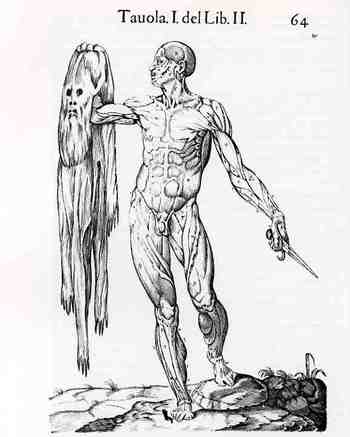
    Blogaugust_8_empyty_skin379 Continuing a thread of interesting and  odd observations of things that are empty, absent and disappeared are the following two images.  The first is from Valverde’s Historia de la compiscicion del cuerpo humano (Anatomia del corpo humano in Latrin), published in 1560,  by the artist Gaspar Becerra, who was a student of Girogo Vasari (another “V”) and thus, by extension, a grand-student of Vasari’s teacher, Michelangelo.  Valverde’s work was one of the most popular anatomical texts printed in the 16th century–second only perhaps to the great work by Vesalius (a third “V”, which is a little unusual)–though it may be an ironic understatement, as Valverde  “heavily borrowed” from his master teacher, with some of the illustrations being virtually identical.   One illustration that he definitely did not borrow from Vesari though (according to Samuel Edgerton in his masterful Pictures and Punishment, Art and Criminal Prosecution during the Florentine Rensaissance, Cornell, 1985) is this esorche figure showing the sample (a human male) standing and displaying his muscular system, holding his flayed skin in his hand. (“Esorche”  is a relatively new term for an older idea, meaning “flayed” and in the artistic sense meaning the drawing of creatures with their skin removed, was brought into use in French art circles in the mid-19th century, though Leon Battista Alberti (February 14, 1404 – April 25, 1472, a polymathic humanist renaissance man of the renaissance) at least recommended that artists draw a figure muscles outward, applying skin later.)   For our purposes the Becerra image is like very few others, so far as I can determine, with the flayed man holding his own skin, the cleaving knife in hand–the skin empty, wanting its form. 

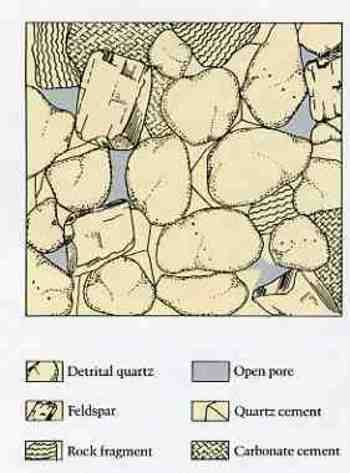
    Coming tonight directly from the beaches of the Georgia coast brings to mind a second, less “demanding”, image of emptiness.  Sitting here in a developing pile of sand which seems to come of course from everywhere and nowhere, I’m reminded of the formation of sandstone, or I guess the deformation of sandstone. What I’m thinking about are the empty bits in sandstone, illustrated below (from Sevier’s deceptively fabulous book, Sand, showing “open pores”, the unfilled blank spaces in sandstone.  I know there’s no real connection between these two (except that I do have a massive sunburn caught on the Tybee Island sands) but I just couldn’t not list them together. 

    Blogaugust_8_empyty_sand380

Recent Posts

Archives

Categories