A Daily History of Holes, Dots, Lines, Science, History, Math, Physics, Art, the Unintentional Absurd, Architecture, Maps, Data Visualization, Blank and Missing Things, and so on. |1.6 million words, 7500 images, 4.9 million hits| Press & appearances in The Times, Le Figaro, Mensa, The Economist, The Guardian, Discovery News, Slate, Le Monde, Sci American Blogs, Le Pont, and many other places… 5000+ total posts since 2008.

  • Blasting Stumps with Stump Blasting Farm Dynamite

      JF Ptak Science Books LLC  Post 386

     0-blog---Nov 21 dynamite086                                                                                                           
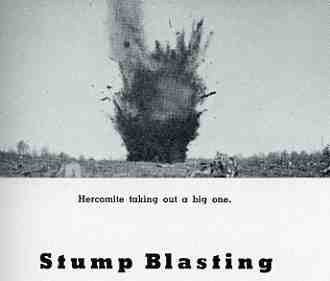
    Hercules Dynamite on the Farm (published by the Hercules Powder Company in 1943)–isn’t that a title that just begs to be read?  “Ditch Blasting, Stump Blasting, Boulder Blasting, Soil Blasting, Gully Blasting, Tree Planting, Tree Rejuvenation”–keyword:  blasting.  Actually, the tree planting and rejuvenation parts also involved blasting:  blasting was done to create the holes for planting tree; blasting was also done deep near the deepest roots of a stumpy tree to help create space for root growth. I have no idea if this was actually a good idea or not, but on the face of it, the blasting part seems to make sense.

    It is a tidy and well written account the foundations of which are terrific understatement and adverbial creationism.  We read that “success in stump blasting is a matter of ordinary care and discretion” and this pithy little sentence, “Every stump is a problem to itself.”  And: “The size of the hole depends on the size of the stump.”  Actually, aside from the extraordinary number of times that the word “stump” appears in these pages, I feel quite confident (after having sort-of read this thing) that if

    0-blog---Nov 21 dynamite089need be I could go out and blow the crap out of one, and correctly:   considering the age of the stump, the
    type of tree,the SIZE of the stump, the depth of the roots, the type of soil; I believe I
    (and by “I” I mean “all of us”) could calculate the amount of the charge, the placement (depth and
    angle) of cartridge, use of stemming and fuse, and get the stump the
    bleep outta there. There’s much much more, of course, but it is the
    stump blasting that caught my eye…and the root blasting rejuvenation
    as well 

    0-blog---Nov 21 dynamite087 

  • The Society for the Friendless and the Child Home Finding Society, 1921

    JF Ptak Science Books

     The Charities Bureau of Kansas City published this handbook in 1921 for the annual fund raising season: The Hand Book for the Campaign
    is a concise account of the principal helping-hand organizations, many
    of which have (from our seat here in the future) quite extraordinary
    names.  

    0-blog---Nov 21 social agencies090

    We find “The Rest Cottage” (“maintained as a refuge and
    rehabilitation sot for homeless and unfortunate women and girls and
    their destitute children”), the “Receiving Home for Children”, “The
    Home for Infants”, “The Orphan Home for Girls”, “The Child Welfare
    Club”, “The Children’s Hotel”, “The Whatsoever Circle”, “The Home for
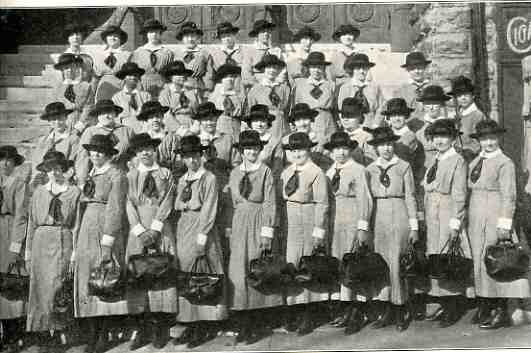
    Aged Women and the Destitute”, “The Presbyterian Home and School for Crippled Children”, “The Helping Hand Association for the Blind”, “The Girls Hotel”, “the Childrens Bureau”, “The Finding Society”, “The Home for Aged Women of the Mexican Christian Institute”, “The Hopkins receiving Home”  and of course “The Society for the Friendless” (providing aid to the “man who comes from prison”, from Lansing, Leavenworth and St. Joesph.  Actually the members of this society would receive the newly released convict as well as visit them in prison; the society reached over 13,000 men (and “girls in Industrial Schools”) between 1919 and 1921. 

    Riis4

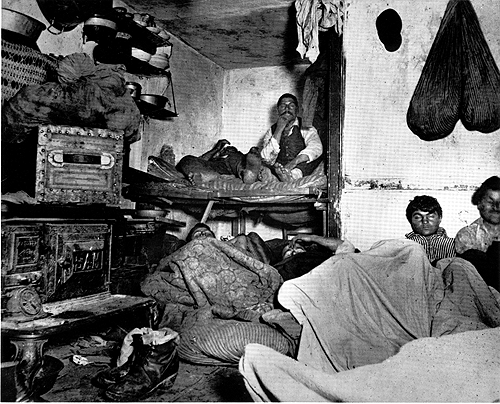
    There were dozens of these agencies that were providing help and relief to the needy in the Kansas City area in the pre-Federal-help days.  It is very interesting to see these charities divided along lines of need, rather than have them gathered together under a giant umbrella like, oh, the Department of Health and Human Services or some such agency.  Or just the Department of “Human Service”(?) on the state level of many states.  It seems more appropriate to actually specify the nature of relief rather than hide it away under a giant Orwellian blanketing cover of general services–it would be okay to be reminded that there are needs for abandoned children and destitute girls.  Perhaps it would make us all a little more aware of who needs what in this rich and capable society. It just seems to me that codifying the extreme of social need into more amorphous units like we have done in the last 50 years or so smooths the edges that people like Thomas Nast and Jacob Riis* and Charles Dickens and Virginia Woodhull and Dorothea Lange and Dorthy Day** managed to sharpen.  Sharp edges are good.
    Dorothy day

    * Jacob Riis was perhaps the first documentary photographer of the American “underclass”, putting an indisputable photographic face on the living and working conditions of the laboring poor.  A photograph of these conditions was irreproachable–it was something you could absolutrely trust, mroe so than an “artist’s representation”; like seeing a photograph from the surface of the Moon.
    ** Dorothy Day, (above), perhaps the least-known of these names, was a tremendous figure in the civil and workers rights movement and the founder of the Catholic Worker. 


    ·Posted by :

    ·in:

  • Make Poetry Pay ((?) (!))

    JF Ptak Science Books LLC  Post 389
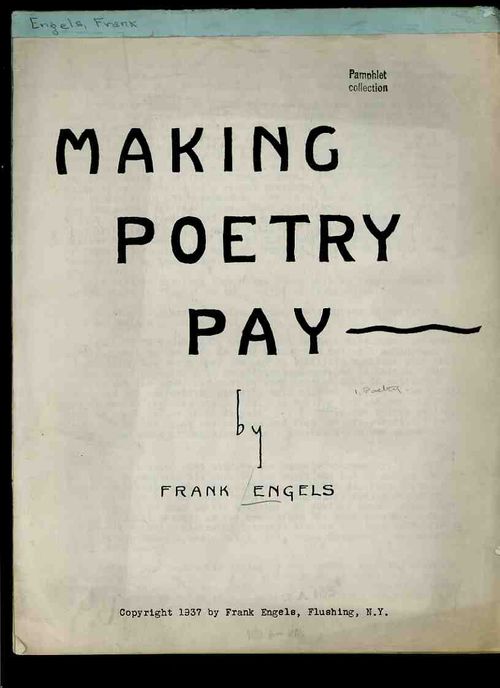
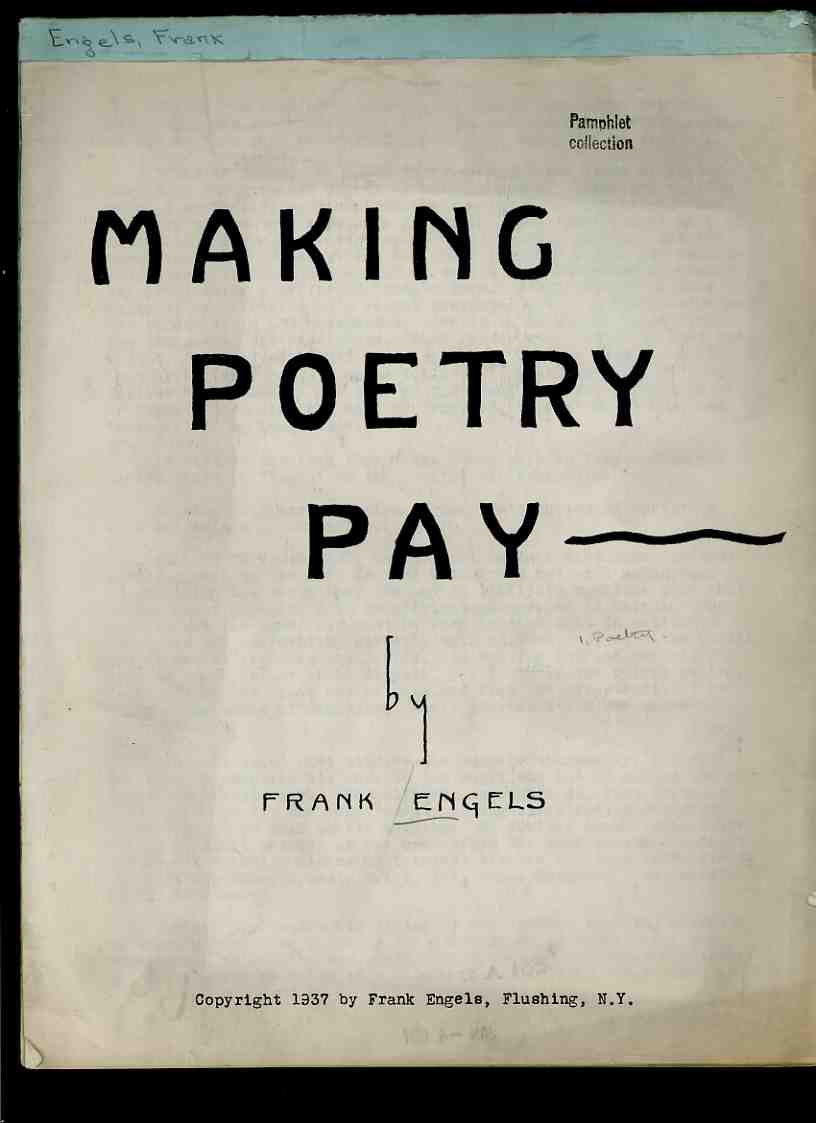
    0--blog---Nov 24--poetry124 I wasn’t sure from the cover of this exceptionally obscure work by Frank
    Engels if this was
    supposed to be (confused by the tone and the extended double tilde) declarative or interrogatory, or whether poetry was
    supposed to generate income or if you were supposed to hurt
    it/extract-exact revenge.  On opening the pamphlet, which was
    published by Mr. Engels in the beautifully-named but
    poetically-challenged Flushing, New York (home of the World’s Fair and
    Archie Bunker) in 1937, we find that it does not disappoint, and assures that all of the classes of what this thing could be are accommodated. 

    In general, though, Mr. Engels wants to let you help him make money by telling you how to make money writing poetry of all sorts and shapes, and where to sell it, and how, and by what means.  Engels tells us that “there are different schools of poetry, and each contributes something to literature”, and that the best poetry “makes vast appeals to the broadest interests of the reading population”.Poems can be short or “book-length”, and we’re bolstered by the “recent poll” taken where 62,000 readers in 252 newspapers in 39 states sent in the names of their favorite poems, and the 12-line “Trees” by Joyce KIL(L)MEr was third on the list.  So it “doesn’t take much to be a poem liked by many”, and that you “don’t have to be a Longfellow” and write a book-length poem to make money in poetry.  

    It is best to appeal to “those fields of universal human appeal:  grief, joy, hope, despair, love, simple truth, true humor”, especially when trying to sell poems to magazines. “Timelessness should be considered” we are warned, and that the poem be “neat and easily read”.  Also, avoid selling the same poem more than once to a magazine, and “avoid this unfortunate error”. 

    Next we are told to consider “selling by mail”, selling “in pamphlet and card form”.  I’m not sure what that means, though the poetic reader is told that “Boyd’s City Dispatch, 114 East 23rd Street, NYC, furnishes a list of 5,145 millionaires interested in art; they could , no doubt, furnish a list of wealthy poetry appreciators”. Oh, dear.  Mr. Engels says that “old folks” who can no longer work but whose minds and poetry are good can make money in this manner.

    Next genre for poetry sales is “greeting card verse”, which offers “opportunities for those who can turn out this sort of work”, and that the “Greeting Card editors are the friendliest editors in the publishing field”.  The sales genre for “syndicating poetry”, for the “prolific versifier”, is just so far beyond reason, such an uninhabitable planet of possible expectations. that it is beyond comment. 

    Engels approaches direct selling as a possibility for the ease of being able to produce everything at home, with “Poems of varying lengths being produceable (sic)  into a folder”. Engels explains that one of his own “little booklets” “of 14 rhymes totalling (sic) 308 lines…cost two cents a copy to print and sells for ten cents”.  Also I found the following nugget: “poems about dogs artisitically (sic)  lettered and framed can be sold direct or thru stores or agents for cents cents to a dollar, depending on size…” 

    This drags on for quite some time, even though its only three pages long.  Perhaps the best of these selling scenarios, though, is the “trailer poet”.  “There are quite a number of trailer poets, poets who live and travel in trailers, who make their livings by selling their poems…there are upwards of 300,000 trailer travelers in America as this is being written, and the prediction of trailer manufacturers is that the number will mount to millions.  Think of it,a million of more roamers whose needs, from popcorn to poems, will probably be supplied by roamers”.  Well.  I’m not terribly sure about what “roamers” are in Engels’ mind, though I’ve got a good idea that they’re dustbowlers, trying to make their way somewhere where they were not unwelcomed.  Engels reminds the reader that these people needed poetry too, and that they could be sold your poem pamphlet for 10 cents, if you had a good one to sell.  If only the “trailer people” had a penny to spare…
    ·Posted by :

    ·in:

  • On Becoming Nothing: French Collaborators in World War II

    JF Ptak Science Books LLC  Post 391

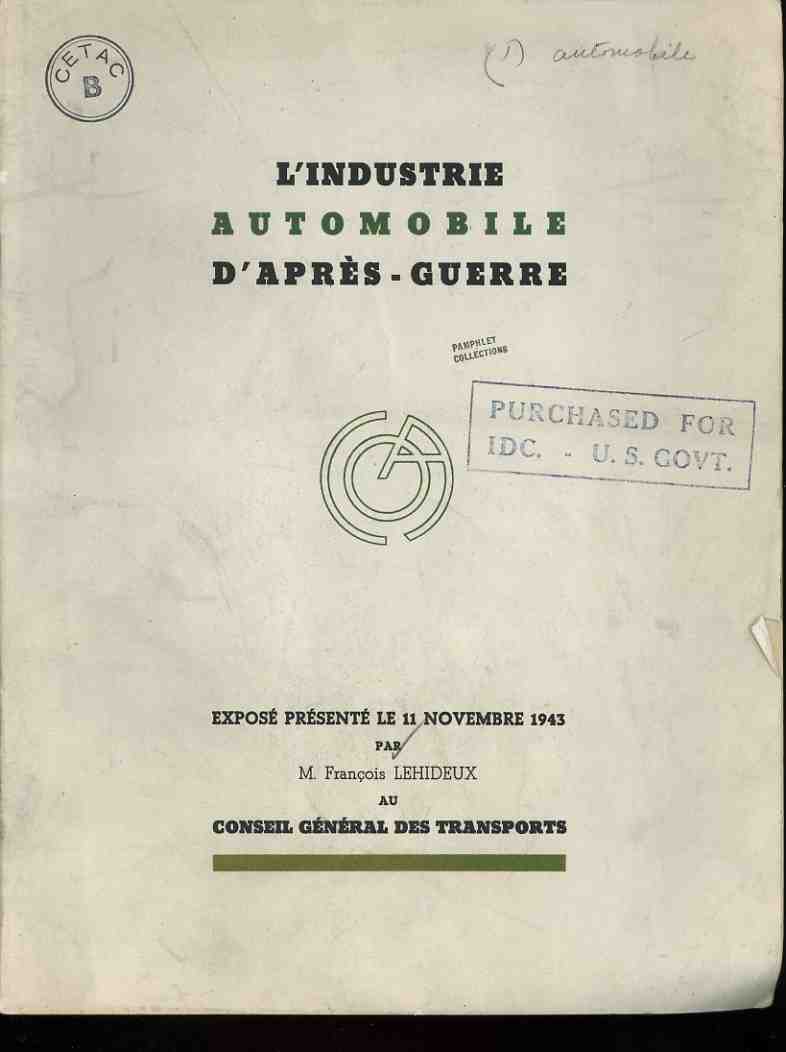
    0--blog---Nov 25 french auto125This curious pamphlet surfaced today—an “expose” on the post-war automobile industry in France; I was curious to see how soon after the war this was published, and then was momentarily shocked to see that it was published in 1943, while France was still heavily occupied by the Nazis.  And then of course I knew why there was any possibility of publishing something like this concerning a huge industry during a time of occupation (when things are normally ground to a halt):  that the French people concerned with this effort had to have been at least part of the puppet Vichy government of Marshall Petain or were  (also) Nazi collaborators.  My vote would have been both.  The author, Francois Lehideux, who died ten years ago at age 94 (1904-1998), was the head of the French automobile organization and working at the pleasure of the onerous Petain, and was in fact arrested in 1945 as a Nazi collaborator once the real French were back in power.  (Lehideux was released a year later for lack of evidence, or something along those lines, though I am sure, like O.J., that everyone knew the true story. Petain, a glorious and important military leader of WWI, a heroic and towering figure, died in senility and was buried on the prison island he was sent to after his death sentence for his traitorous behavior was commuted.  He lived to be 95.)   Lehideux lived a long and trying and no doubt prosperous life.  He was CEO of Renault (having married the founder’s niece in 1934), and then “worked” for the Vichy government (for which he received the meritorious  Order of the Francisque, as did Francois Mitterand), was imprisoned, and then when he was released went to work for another organization comfortable with the Nazis, Ford Motor Corp.  Maybe it was just old Henry–who was a fantastically bad anti-Semite and who received the highest civilian decorator from Adolf Hitler (an award he held on to)—and not the Company that was bad.  Certainly Ford was not the morally-abusive capitalist who behaved intolerably during the war, as there were plenty of those:  Occidental Petroleum, Brown Brothers Harriman (run in part by Prescott Bush (yes), who was convicted and fined under the Trading with the Enemy Act in 1943), Chase Bank, and many others.

    As Lehideux slipped closer to the grave he headed an organization that tried to rehabilitate the image of Petain; long story short, Lehideux could not leave his own sordid past alone, and while trying to cleanse himself by scrubbing up the traitorous and offal-stained Petain, was embroiled in and won a freedom-of-speech lawsuit regarding his adoration for the old dead meat-puppety pisspot. His “victory” was certainly odd and I’m sure that in his own mind his life during the war was vindicated, his role reversed to having helped France arise from the ashes.  But all that happened really was that he was told that he could write what he thought, and nothing more.  In effect he created a fourth referential gender category (as in der/die/das etc): zed.  Nothing.  I think he just became nothing in his victory.  Or nothing until he was dead, and then he was at least that, which is a step-up from nothingness; but while he lived, the man was nothing.  Except of course to the people in France who were injured or killed as a result of his compliances with the Nazis, and then he was less than nothing and should’ve become dead sooner.  But I think he made himself into less and less until he finally achieved nothingness. 


    Finding and paying attention to extremely ephemeral and dead pamphlets like this can be very stimulating, and rewarding; they can make you aware of points of view and thought that you never knew existed, and can hold nuggets to odd pathways of thinking that can only be excited by something similarly odd.  Sometimes all you need is a little piece of exposed ephemeral thread; and then all you have to do is pull it.  


    ·Posted by :

    ·in:

    —
  • “Write for Dollars and for Sense”–a Bad Twist and Worse Advice for Authors, 1939

    JF Ptak Science Books LLC   Post 392

    0--blog---Nov 25write into money126

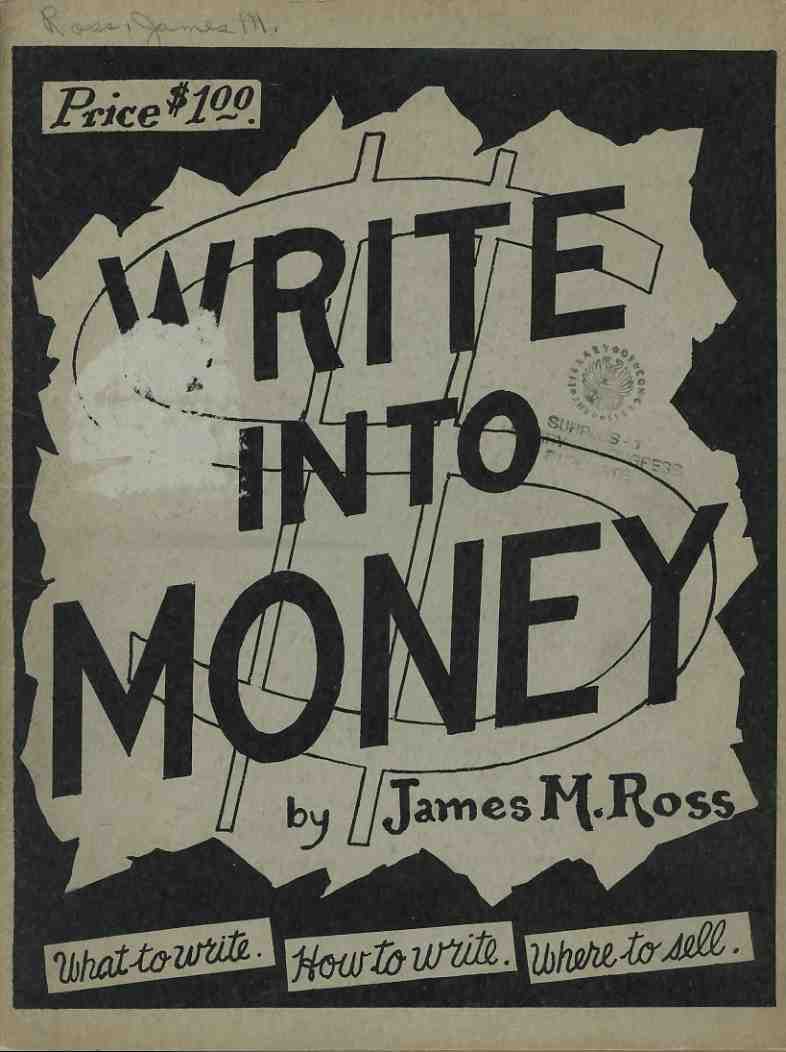
    A quickly-found pamphlet offers a rejoinder to yesterday’s post on making fistsfull of dollars selling poetry:  selling prose.  The idea is obvious, but the cover isn’t, and the ideas behind the idea of selling prose are anything but common, though they are uncommonly bad.  The very often self-referenced author of this bit, James M. Ross, writes his way towards the heart of every scribbling wanna be, offering the tines of broken plastics forks and other charitable possibilities and false hope about how and where to sell your sweaty work.  The publisher, “The House of Little Books” at 156 Fifth Avenue (a lovely 13-storey building built in 1895), brought out an oversize and skinny (and unpaginated) effort in Mr. Ross’s work, publishing the thing in 1939.  I can’t imagine that it did many people outside the author much good, though it may have made an interesting prop under-the-arm prop for the subway ride home after work. 

    Mr Ross was a writer of considerable experience–he claims, remarkably, that he was the “special correspondent” for a (listed) 50+ newspapers, plus the author of many plays and pamphlets and other tearsheets–though it really doesn’t bolster the gruelly advice that he offers to the dreaming writing reader.  Most of the advice is for selling little pieces to newspapers, or selling tips and leads to newspapers, or at least telling where reporters may find a story with the hope of reward coming at the end.  All of which doesn’t really sound like writing per se to me. Then again, the pamphlet is actually well written.   Chapter One, for example is entitled, incredibly, “Where You Live Does Not Matter”, and makes the case for fame finding the writer no matter where the writer lives.  Ross makes the case for various editors and owners of the NY Times having been small town boys–true enough, but they didn’t actually RUN their business from Chattanooga.  They moved away.  To New York City.  Ross forgets that part, and mentions a few other famous small town writers to bolster his point:  Roy Howard, Edna Ferber, Fanny Hurst, Irvin Cobb; though Edna and Fanny and Irvin didn’t stay small for long.  Ross also mentions the dramatically- and difficult-to-say-three-times-fast named Westbrook Pegler (try it!), who I think started in a small town and stayed there.  Not that there’s anything wrong with small place.  I live in Asheville NC for crying out loud, so I’m not having a poke at the small experience–its just the name of the chapter and the logic of the writer that I’m having a run at. 

    0--blog---Nov 25write into money127

    Chapter Two doesn’t get much better:  “Where is News?”.Perhaps if
    the “is” was italicized the sub might’ve made a little sense. Chapter
    Three follows close by on the heels of incredulity:  “Many Newspapers
    Pay for Tips” is a claim that I’ve not heard too often; but for Mr. Ross to make the claim that someone could make a living doing this
    stretches the truth a bit.  “As has often happened, items you telephone
    in will finally be accepted without question and your pay check will
    come along.” 

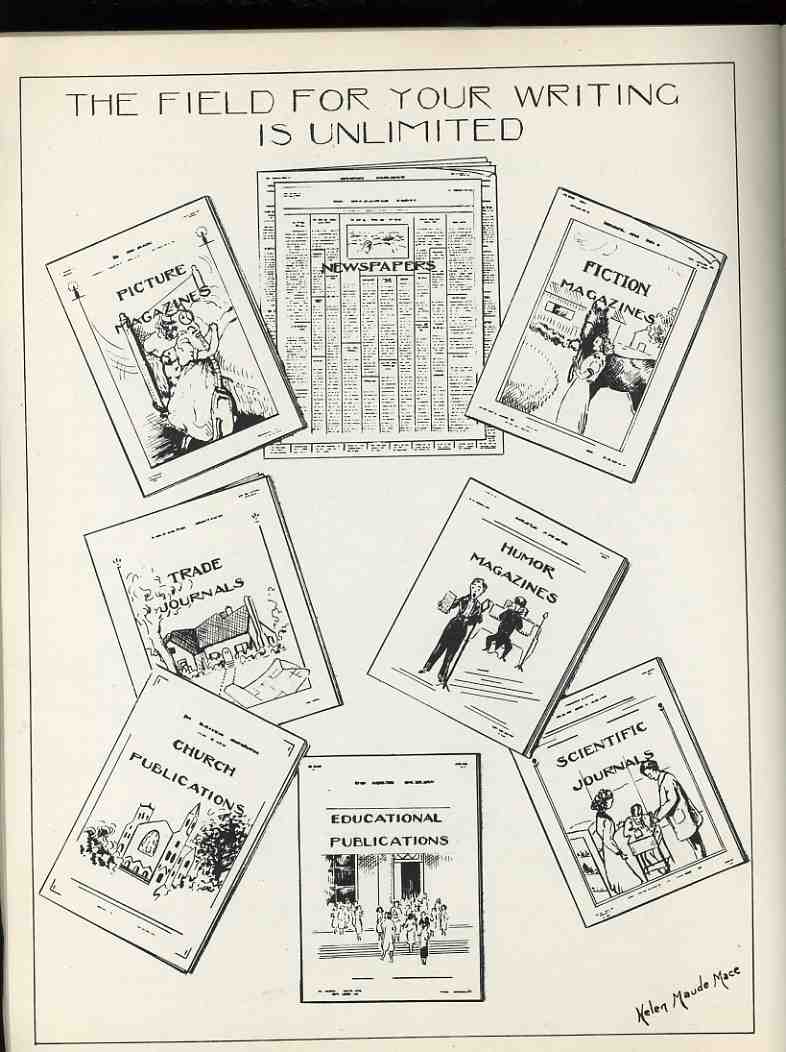
    As much as something can be tedious for only 40 pages or so, this is, and drags on for fourteen chapters, offering shamelessly and  mainly useless tidbits for the flowering reporter/tipster/writer. Ross tells us to “Keep Your Eyes Open” (Chapter Eight) for stories that you might “find on the street”, and also to expand our horizons to include writing for “myriads of church publications”.  And on and on; every one dead-data morsel that we are offered in this book takes the place of two good data points already in our head.  No doubt if you read this book a thousand times you’d have nothing at all left in your noggin.

    ·Posted by :

    ·in:

  • The $6,000 Ham Sandwich and the Ills of Labor Unions–the Republican Failure of 1936

    JF Ptak Science Books LLC  Post 393

    0--blog---Nov 26 little weird136 

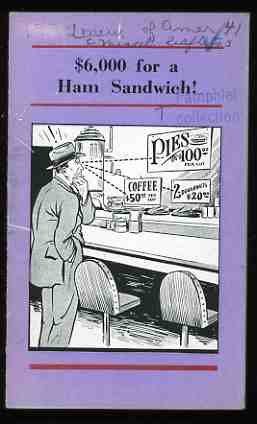
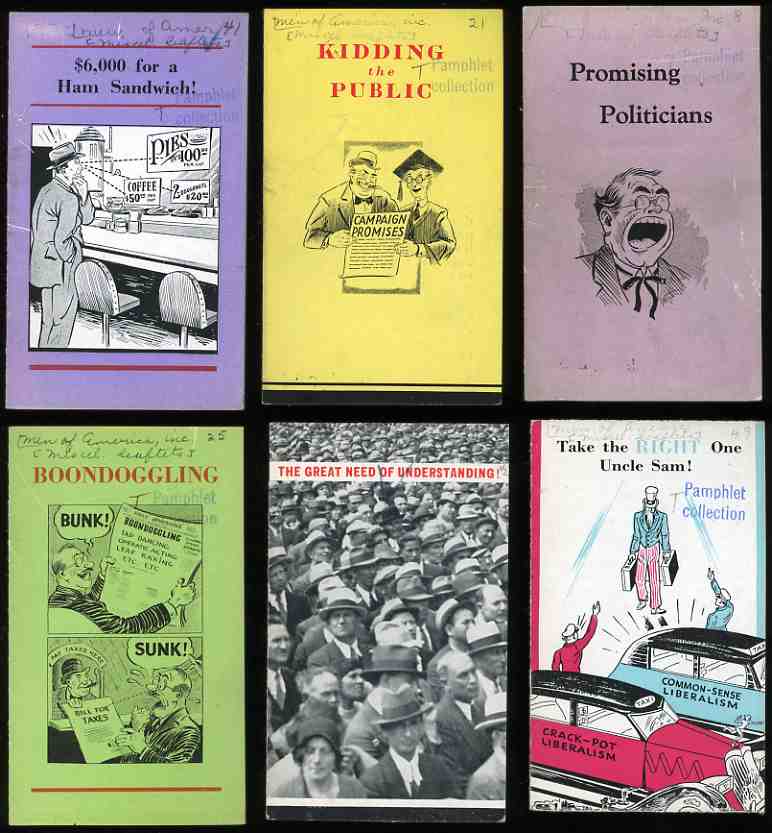
    These little (3 by 1.5 inches) pamphlets, all published in 1936 by a group called “Men of America, Inc” of Chicago,
    took a weird and dislocated aim at government (read “F.D.R.”) policies,
    supporting an anyone-but-him position for the election of 1936.  Or so
    it seems.  Its actually a little hard to discern the political needs
    and  desires of the group beyond defacing the New Deal programs and the
    vast increases in federal spending on public programs; there’s nothing
    positive that they can seem to say about advancing another platform. The little pamphlets attack the newly created broad social net of social security, and questions the efficacy of labor unions.  Allot of this sounds surprisingly like the campaign rhetoric of Alf Landon, (1897-1987) the Kansas governor (1932 and 1934), oilman, millionaire and Republican who ran against Roosevelt in the spectacularly lopsided election of 1936.  After that November Landon even lost his own shadow; Roosevelt completely and utterly defeated the republicans by an electoral landslide of 523 to 8, Landon sweeping like a cold chill wind in his victories in Maine and Vermont.  Actually to be fair Landon scored 38% or so of the popular vote, but the country wound up being almost entirely blue in the electoral map.

    I’ve included these pamphlets because of their quaint/stubby/rounded political imagery, a style once extremely popular with newspaper cartoon journalists (and baseball writers) in the 1920’s and 1930’s, and then almost completely gone (except for Gasoline Alley) by the start of the American World War II. 

    0--blog---Nov 26 little weird135

  • Swimming Soviets and the Great Patriotic War, 1939

    JF Ptak Science Books LLC  Post 395

    0--blog---Nov 26 soviet swimming134


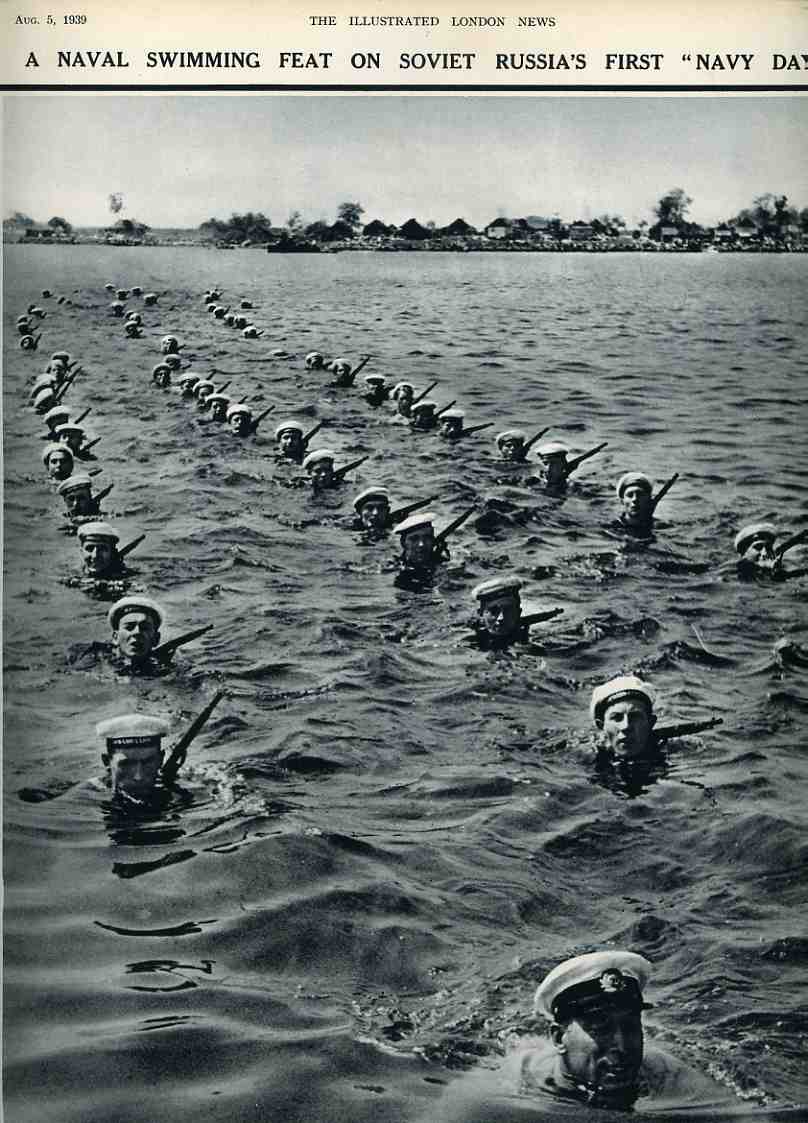
    This image of swimming Soviet sailors of the Baltic Fleet is from The Illustrated London News for August, 1939.  The sailors were “celebrating”  the first Navy Day for the Soviet Navy, and no other way was better to do this than to swim 400 meters in formation and fully clothes–with rifles on their backs with no water protection whatsoever.  Perhaps this group was just standing in 5 feet of water near the shore–I suspect not, though, because a bunch of these guys look as though they’re really struggling.  We’re about a month away from the German invasion of Poland and the official start to the bigger part of the war that went global:  Czechoslovakia and China had already experienced war for some time now. 

    0--blog---Nov 26 soviet swimming133 On November 30 the Soviets would launch their own hideous offensive, though against Finland:  the Winter War would bring international condemnation of the Soviet Union and give their new ally in Nazi Germany considerable pause.  The Red Army was decimated by the wicked Stalinist purges of the late 1930’s–as much as 50% of the senior military cadre were disappeared and executed–and the army as a whole suffered.  The early result of this action was that the Finns, though vastly out-manned and out-teched  (the Soviet forces had four times as many soldiers as the Finns, 30 times as many aircraft and 200 times as many tanks), were able to last against the Red war machine until March.  An end to hostilities agreement was reached in which Finland maintain its sovereignty and gave away 20% of its industrial base and 9% of its territory.  The Soviets achieved a phyrric victory, the Finns achieved a major success, and the Nazis figured out that perhaps rather than keep the Soviets as a weak ally they might be able to make them into a dead -state enemy (turning against them with  Operation Barbarossa).

    In any event by 1945 my suspicion is that most of these men would be dead.

    Most of the Great Patriotic War of the Soviet Union would take place on land, with Russian military war dead amounting to a staggering 65% of all Allied deaths, with something like 13 to 15 % of the entire population (totaling 168 million) of the Soviet Union being killed during the conflict.  The Soviet sailors would’ve had a better chance of survival, but not by much.

    ·Posted by :

    ·in:

  • History’s Heaviest Bad Idea: Maginot, the Million Ton Line in the Sand

    JF Ptak Science Books LLC  Post 396

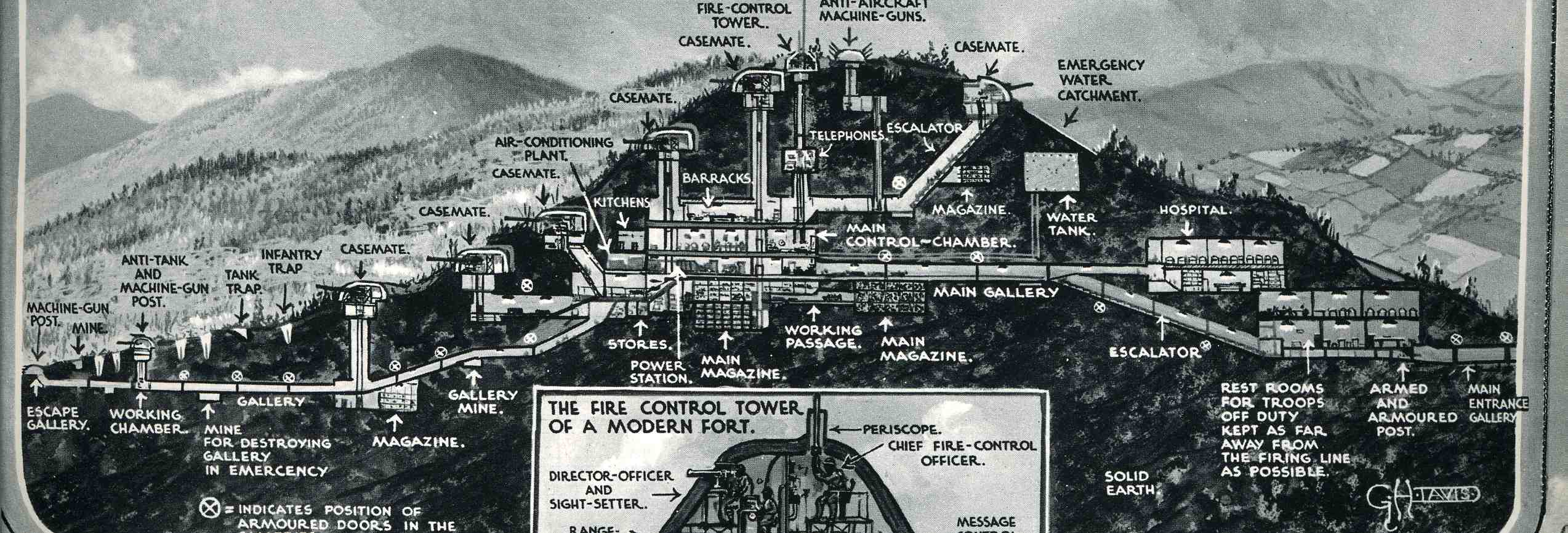
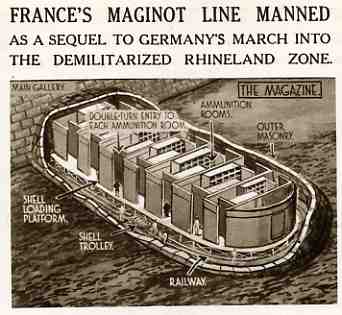
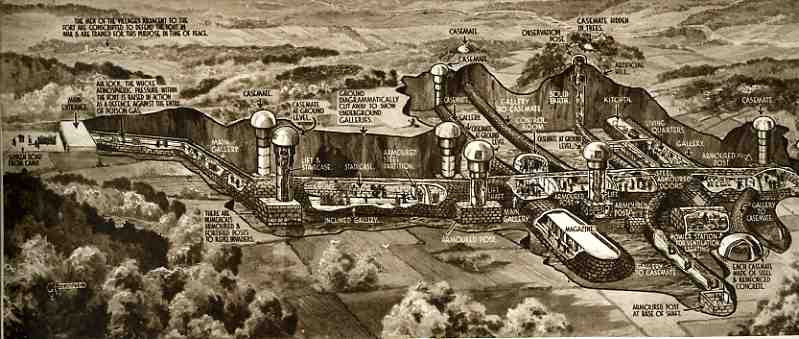
    Poor Andre Maginot–his is the name behind what must be the heaviest bad idea in history–or at least among bad ideas that can have weight.  The Ligne Maginot, or Maginot Line, was probably better referenced as the Maginot Hole, as once the advance came from the East, the “Line” was completely and totally ineffectual, and the soldiers in the miles of tunnels and fortifications became, simply, men in a hole.  The thing about the Maginot Line was that it pointed to exactly the spot where the French Army could be found; therefore, the Germans avoided it. 

    0--blog---Nov 24-maginot111 

    It is difficult to believe that when all of this concrete was being poured and tunnels being dug along the German border between Switzerland and Luxembourg between 1929 and 1936 that someone, somewhere in France wasn’t reading the Illustrirte Zeitung, watching the growth of the Luftwaffe. 

    0--blog---Nov 24-maginot112

    However, as much as that should’ve stopped this massive and insane project, it was not the airplane that buried the buried defenses–it was indeed the feared tanks.  But the Panzers of Heinz Guderin and Erwin Rommel didn’t go through the Maginot Line, they went around it, passing through the supposedly impassible  Ardennes.  Case closed.  Paris gone.

    At least someone in France should’ve been reading their Clausewitz: “If you entrench yourself behind strong fortifications you compel your enemy to seek a solution elsewhere.”

    0--blog---Nov 24-maginot109

    But the drawings are pretty.  And if you moved everything back in time 30 years the idea would’ve made more sense. 

    0--blog---Nov 24-maginot108

    ·Posted by :

    ·in:

    — —
  • “Correcting” Sight; Vision and Seeing

    JF Ptak Science Books LLC  Post 397

    0-blog---Nov 17 eyes078 

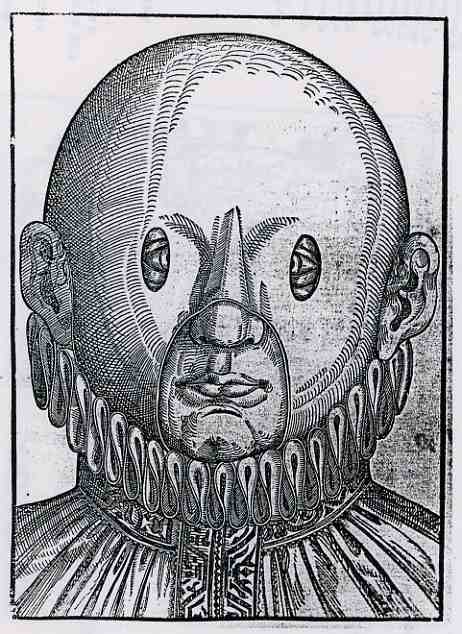
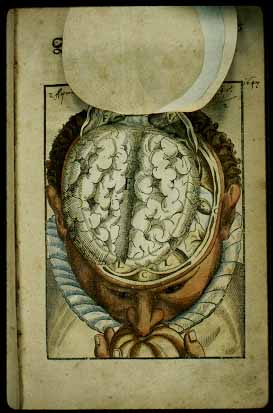
    Georg Bartisch (1535-1606) a brought-up-from-norhing-couldn’t-write-but-could-read barber-surgeon, from Dreseden, provided this spectacular illustration for his Ophthalmodouleia Das ist Augendienst (1583) (Treatment of the Eye).  As opportunistic as this image appears for imaginative interpretation, it was purely a cloth over the eyes to “help” correct strabismus (crossed eyes).   The slits in the cloth were meant to force the muscles of the eye to conform to their normal positions.

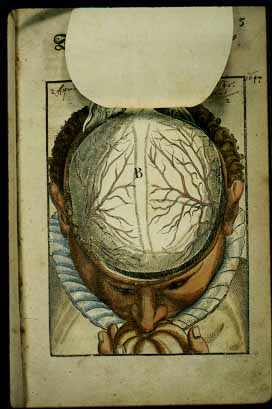
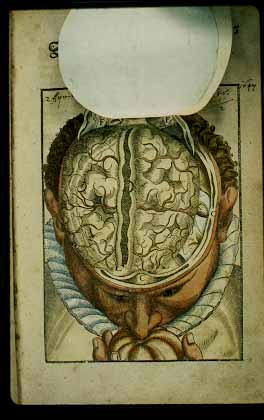
    More substantial, and more magnificent, are a series of anatomical dissections, flap-books if you will of superimposed moveable sheets of paper, showing different levels of the human body.  Finding these in 16th century books are quite rare, and I’ve included a series of six images showing the cut-aways of a dissection through the top of the head.  It is fabulous, and accurate.

    The images are all courtesy of :

    Duke University Medical Center Library
    History of Medicine Collections, Durham, NC
    Photographed by Dr. George O.D. Rosenwasser

    Flaps1

    Flaps2

    Flaps3

    Flaps4

    Flaps5


    Flaps6

    ·Posted by :

    ·in:

  • Blank and Empty Things XXV: Magnetizing Thought

    JF Ptak Science Books LLC Post 398

    0-blog---Nov 19blank083

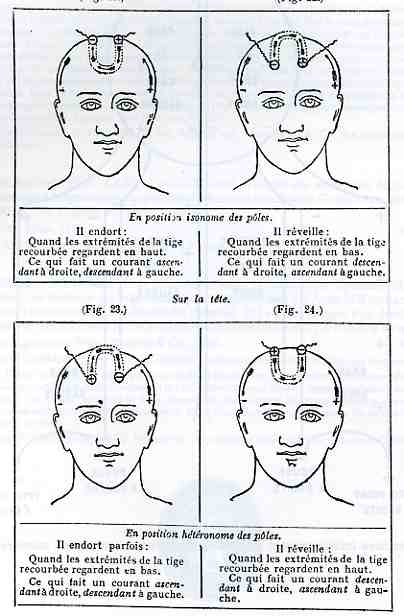
    The imagines of this “empty man” (25th in a series on Blank and Empty Things in this blog)
    is taken from one of the physio-electrical works of Auguste Forel
    (1842-1931), a eugenicist, sexologist, socialist, myrmecologist,
    neuroanatomist, shrink, social moralizer and member (at the very end)
    of the Bahai’i faith…and also a man very much taken with himself.  I
    don’t much like him.  (Outside of his racist views and semi-bizarre
    socialist theories, he managed to politically opiate a four-volume work
    on ants with vague wrappings of political theory and ant behavior. 
    Freud liked him. Case closed.)

    I’m not so sure about what exactly these diagrams were supposed to
    illustrate in the real-life of Forel’s scientific experience, and I
    don’t care that much.  What I do like is the imaginative taste it
    implies, this blank-expressioned person waiting for the electricity to
    do its work, giving him/her an idea, helping whatever currents exist
    along the hemisphere of the brain to deliver its electrical-best. 
    All-in-all, if explanation was removed, the images would perfectly
    depict a person devoid of thought; or, a person whose thought was being
    directed.  Plus a myriad of other things; base of it all though is that
    there is a fair amount of blank/empty experience going on here.

  • Wholesale and Retail: the Timelessness of Bailouts and Corporate Thievery

    JF Ptak Science Books   Post 399

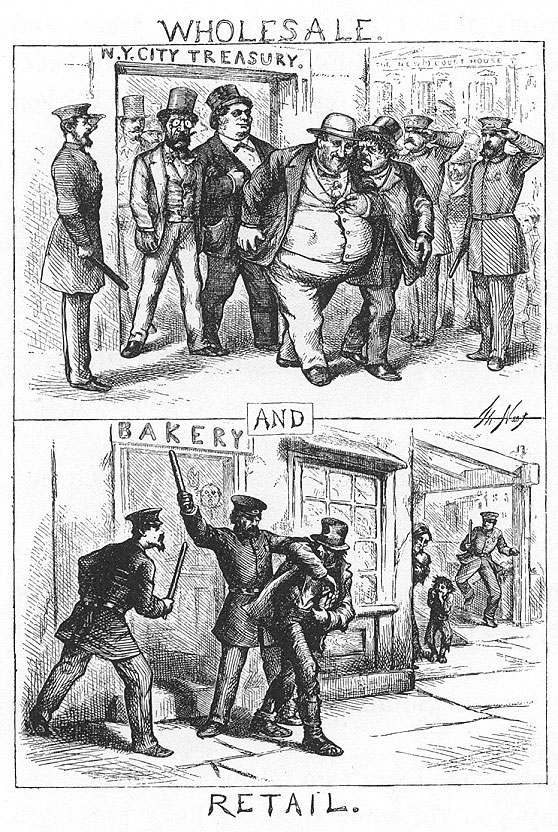
    0--blog---Nov 28 wholesale147 The largely-heroic Thomas Nast has proved–unfortunately–that his visual social commentary is timeless.  For example, this iconic 1871  image of the wholesale theft and corruption of U.S. treasury and government funds by William “Boss” Tweed and his Tammany Hall conspirators versus the swift retribution to the retail theft of the destitute man trying to provide food for his starving family can still be run today on editorial pages–except of course that no one likes to see the faces of  horrified children, their innocence and observation uncomfortably reflecting the true nature of the social situation.

    Nast addressed his audience visually–the illiterate readers didn’t need a word of English to understand these images, knowing full well who the disgusting Tweed was and of course being well familiar with the folks in the bottom half of the cartoon.

    The image is immediately understandable, and powerful.

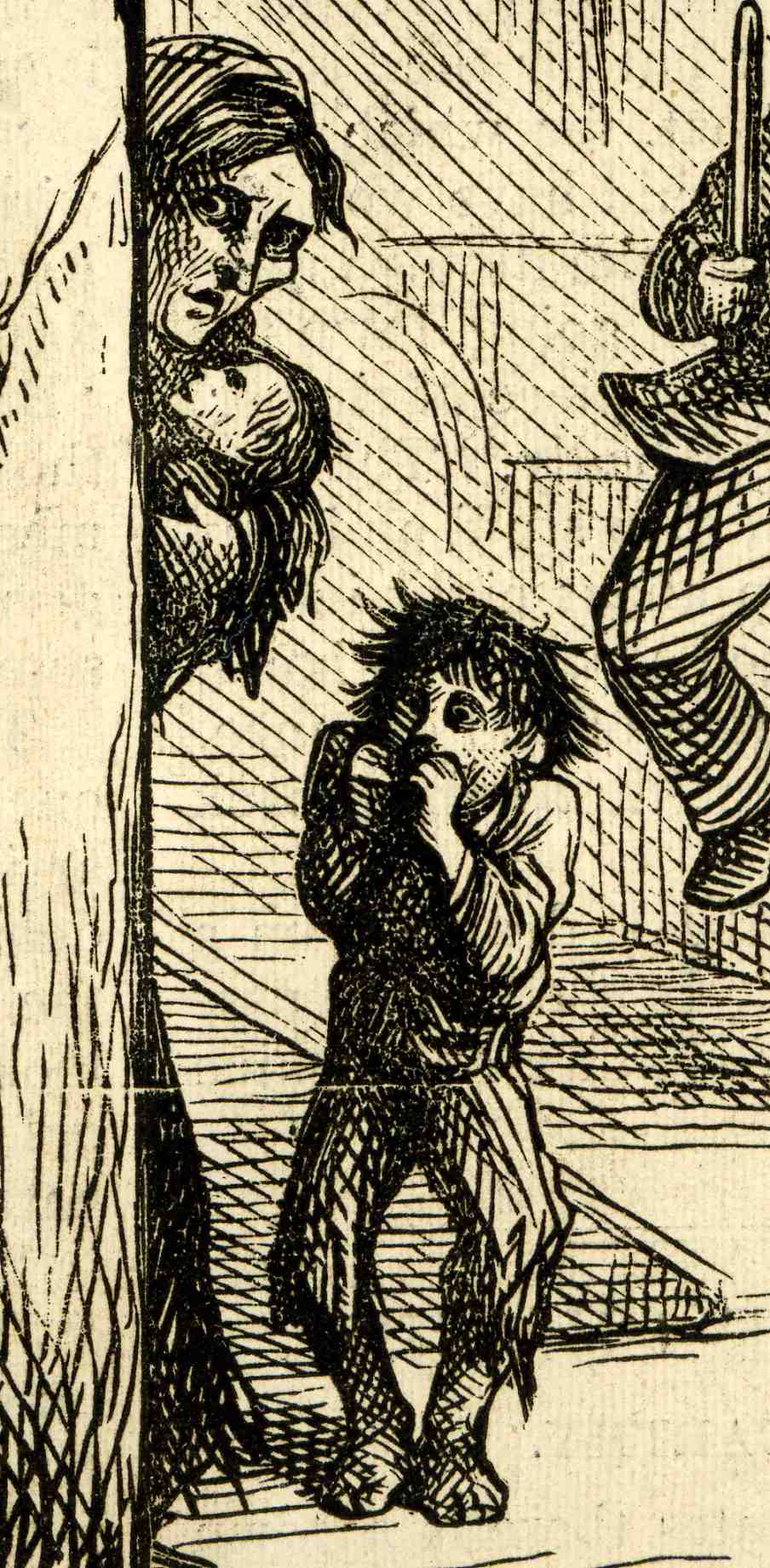
    Evermore so since Nast used terror in the face of the little child–seeing his father being beaten and arrested by at least three of NYC’s finest–to send the point home to the heart of any viewer who had one.I’m not an historian of this media, but over the decades I’ve seen many dozens of thousands of such images, and I think that I can say accurately that (at least before 1900) children are not used in such a way to make a political point. 

    The emaciated mother, the terribly-afflicted baby in her arms, the terrified sibling, all set against the jowly baker and the rotund Tweed make the image utterly heartbreaking, horrifying.

    08 Wholesale and Retail

    The faces have changed, today, and Tweed has been replaced by a host of others; the process is the same, though with different and more extravagant mechanics.  And the money is bigger. 


    I doubt that there will be much trickle down from the trillion dollar bailout that would reach today’s version of this child–we’re just not reminded as often that there are still large populations of these children who might benefit from a tiny percentage of largese from something like the AIG bequest. I’m just saying that if say one-tenth of one percent  ( .1% ) of the trillion dollars (and one trillion dollars looks like this: $1,000,000,000,000) coming down the sluice was tithed to the 10 million kids in this country who could really use some help that there would be one billion dollars more to help someone out.  I know that this will not happen, mainly because those tenths of a percent add up–why, if you take 10 of them you’d get all the way up to one percent. 

Recent Posts

Archives

Categories