JF Ptak Science Books LLC Post 393
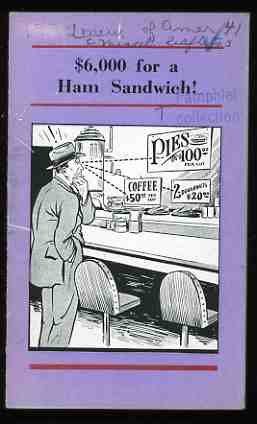
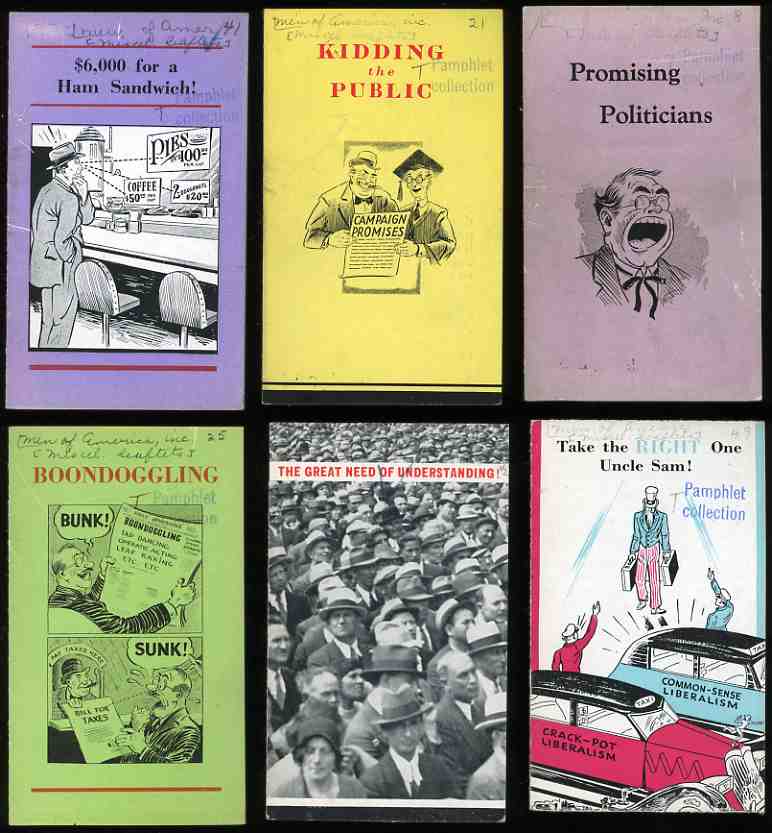
These little (3 by 1.5 inches) pamphlets, all published in 1936 by a group called “Men of America, Inc” of Chicago,
took a weird and dislocated aim at government (read “F.D.R.”) policies,
supporting an anyone-but-him position for the election of 1936. Or so
it seems. Its actually a little hard to discern the political needs
and desires of the group beyond defacing the New Deal programs and the
vast increases in federal spending on public programs; there’s nothing
positive that they can seem to say about advancing another platform. The little pamphlets attack the newly created broad social net of social security, and questions the efficacy of labor unions. Allot of this sounds surprisingly like the campaign rhetoric of Alf Landon, (1897-1987) the Kansas governor (1932 and 1934), oilman, millionaire and Republican who ran against Roosevelt in the spectacularly lopsided election of 1936. After that November Landon even lost his own shadow; Roosevelt completely and utterly defeated the republicans by an electoral landslide of 523 to 8, Landon sweeping like a cold chill wind in his victories in Maine and Vermont. Actually to be fair Landon scored 38% or so of the popular vote, but the country wound up being almost entirely blue in the electoral map.
I’ve included these pamphlets because of their quaint/stubby/rounded political imagery, a style once extremely popular with newspaper cartoon journalists (and baseball writers) in the 1920’s and 1930’s, and then almost completely gone (except for Gasoline Alley) by the start of the American World War II.