A Daily History of Holes, Dots, Lines, Science, History, Math, Physics, Art, the Unintentional Absurd, Architecture, Maps, Data Visualization, Blank and Missing Things, and so on. |1.6 million words, 7500 images, 4.9 million hits| Press & appearances in The Times, Le Figaro, Mensa, The Economist, The Guardian, Discovery News, Slate, Le Monde, Sci American Blogs, Le Pont, and many other places… 5000+ total posts since 2008.

  • Nash as the Greatest Car in the World, but not the Greatest Nash

    JF Ptak Science Books   Post 363        
    000-ebay--Nov 8 nash031

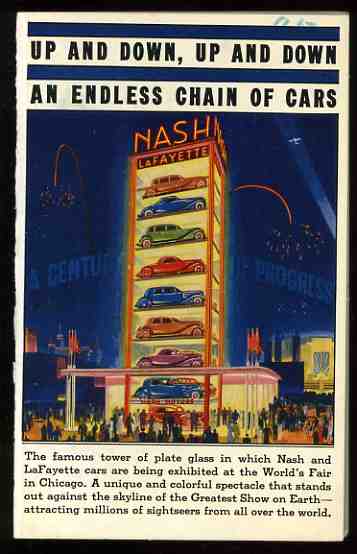
     Nash / Lafayette  Motor Car Company exhibited nine of their cars in a tower o f plate glass at the “Century of Progress” World’s Fair in Chicago in 1933/4.  The brilliantly colored cars (I guess we don’t think of them as such if we are younger than 80 and have only seen these automobiles in black and white movies) must have looked spectacular in their glass enclosure, a sight probably not too many people had ever seen before.

    000-ebay--Nov 8 nash030


    The real feature for me though in this little post-card like publication was the interior image of the Twin Ignition Nash (1934 model) that, for some reason or other, was depicted as an enormous, invasion-from-outer-space sized car better than 200 feet long.

    Nash In any event, it is a delightful image, and by god’s baggy pants, the Nash was a beautiful car.  But it wasn’t the most beautiful or the most impressive in the panoply of sui generis Nashs:  that I do believe belongs to John Forbes Nash, the 1994 Nobel Laureate (economics, and no offense intended to Charles W. Nash), mathematical genius and schizophrenic and best popularly known as the mind in Sylvia Nasser’s A Beautiful Mind (and by the four-time Oscar winning movie of the same name). 

    000-ebay--Nov 8 nash032


  • A Sea of Hats: 1915

    JF Ptak Science Books LLC  Post 364

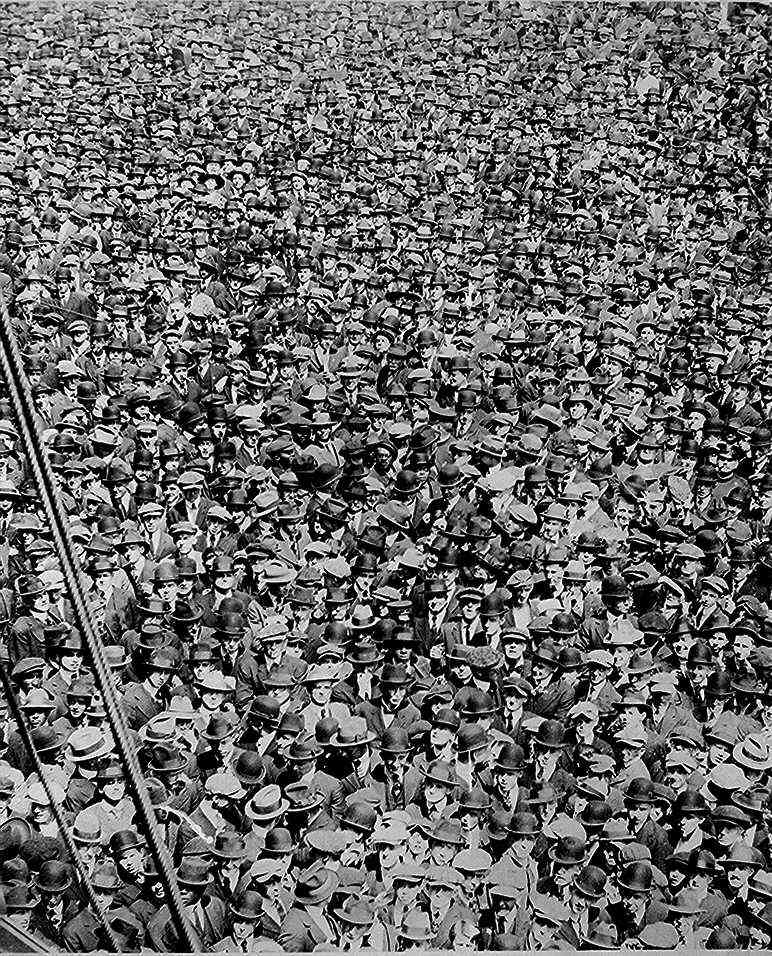
    Hatsdetail Another extraordinary image of pressed-together humans, of a human sea, a carpet of hatted men.  And believe me, every person in this image of (I’d say) approximately 5000 men has got a hat on.  There are hundreds of folks in the photo who re aware of the photographer and who are looking right at the camera, but there is only *one* person who is lifting his hat to the photographer. 

    I don’t have much to say, and I have nothing to connect the photo to (know); I just wanted to surface it before I lost it again….

    Hats

  • Kristallnacht: The Long post-WWII Lives and Forgotten Pasts of Criminal Nazis: Doctors

    JF Ptak Science Books LLC  Post 365

    Fischer
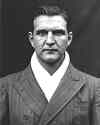
    How does it come to be that Nazi doctors who did human experimentation and were convicted at Nurnberg, released early, and go on to extended medical careers and long lives?  Case in point:  Dr. Fritz Fischer, pictured here, convicted of crimes against humanity for performing terrible experiments on human beings; sentenced, relseased early, and then went on to a new career with an important pharaceutical company  He may still yet be alive…

    On the 70th Anniversary of Kristallnacht—the night of the broken glass, Crystal Night, the night on 9/10 November 1938 that the Nazis became the major physical offensive against the Jewish people–I’m thinking about how the German institutionalization of anti-Semiotics came to be.  On that night 90 Jews were murdered, 200 Synagogues burned, and 25,000 other Jews rounded up for the first deportations to the concentration camps.
    It was also the horror of thousands of businesses and homes being completely ransacked, cudgeled, broken, by tens of thousands of Stormtroopers throughout the Reich; the beginning of the Great Terror.  (The map below shows the cities in which Synagogues were destroyed during Krstallnacht.)

    Kristallnacht map

     Part of the reason for this hatred was that Hitler desperately needed a common, routable foe as a rallying
    point for similarly-minded miscreants; another part was that there was considerable inferior work already being done on the behalf of racial-needs people. Mein Kampf was Hitler’s blueprint for returning Germany to power—a position that was not possible without the removal of the Jewish people, the group that had defeated the Reich in WWI and who would continue to do so as long as they were allowed to continue.  These ideas were not especially needed during the Halcyon days of the Weimar Republic, but come the hyperinflation and the Crash of 1929, the ideas started to look pretty good to the voting population.   The mortar for these puerile thoughts came via eugenics and racial studies that had been (basically) started in other countries—notably with the otherwise-fantastic  Sir Francis Galton in England, and then a little later with the popular but intellectually challenged Popenoe in the United States—and began to take hold in Germany by the early 1930’s.

    For example, human biologist and eugenicist  Dr. Otmar Freiherr von Verschuer (16 July 1896 – 8 August 1969) was concerned with “racial hygiene” and twin research.   He became the director of what would become the prestigious “Kaiser-Wilhelm-Institut für Anthropologie, menschliche Erblehre, und Eugenik” (KWIfA) (“Kaiser Wilhelm Institute of Anthropology, Human Heredity, and Eugenics”) in Berlin and the “Institut für Erbbiologie und Rassenhygiene” (“Institute for Genetic Biology and Racial Hygiene”), while he was on his way to forming the racial identity of the Nazi party.  Also along the way he became the benefactor and benefiter of the work of his pupil Josef Mengele—partners in one of the century’s most horrendous crimes against humanity.

    A not-terribly undercurrent and philosophical foundation to the anti-Semitic policies with the Nazis was the Law for the Prevention of Genetically Diseased Offspring (Gr. Gesetz zur Verhütung erbkranken Nachwuchses) or “Sterilization Law”.  This was a statute in Nazi Germany enacted on July 14, 1933, which allowed the compulsory sterilization of any citizen who in the opinion of a “Genetic Health Court” (Gr. Erbgesundheitsgericht) suffered from a list of alleged genetic disorders. The elaborate interpretive commentary on the law was written by three dominant figures in the racial hygiene movement: Ernst Rüdin, Arthur Gütt and the lawyer Falk Ruttke.

    ·Posted by :

    ·in:

  • Armistice Day: 11th Hour, 11th Day, 11th Month, 1918.


    JF Ptak Science Books LLC     Post 366                                                                                       

    000-ebay--Nov 8 santa tank024

    November 11, 1918 marked the end of World War I.  There were approximately 40 million casualties, including 20 million deaths and 21 million wounded, half of the deaths being civilians.  The dead and wounded were about equally distributed to the Allied and Central powers, 6 million dead and wound for Germany and 5 million for France.  The U.S., coming late into the war, lost about 170,000 killed and wounded.  There was plenty to go around. 

    There were numerous and major battles  fought right to the end by the exhausted combatants: St Mihiel (September, 1918), Meuse-Argonne (September – November, 1918), Canal du Nord (September, 1918) Vittorio Veneto (October, 1918), Second Battle of the Marne (July–August), and the  British offensive in Palestine (September 1918) to name a few.

    The end finally did come, the peace signed between Germany and the Allies at Compiegne, France, at the eleventh hour of the eleventh day of the eleventh month of 1918.  Or at least the end came to the Western Front—fighting continued across the Russian Empire and also in parts of the Ottoman Empire. 

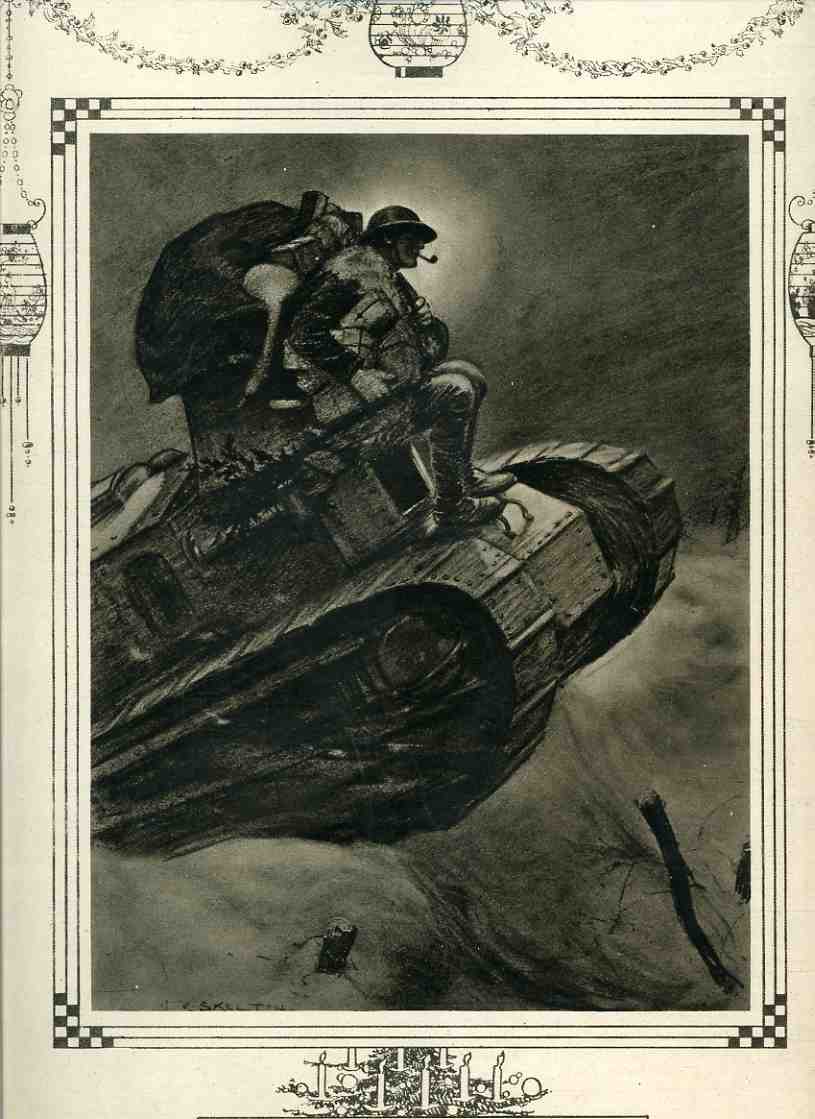
    This image of a British Tommy on a tank–in the form of Father Christmas, racing across the cold, backlit by a cold Moon—seems particularly ambidextrous to me.  Hopeful, celebratory, and mindful too of all those men who would not be returning, mindful of those who would; a curious display of what the coming holiday could mean to a hundred million people, joyful and crushing.  The tank’s canon, I see, has been removed.

    The poet Laurence Binyon (who seems to have done everything and been everywhere) wrote one of the most often quoted poems for the remembrance of the dead of WWI:

    They shall grow not old, as we that are left grow old:
    Age shall not weary them, nor the years condemn.
    At the going down of the sun and in the morning
    We will remember them. We will remember them.

    –from “The Fallen” published with “The Fourth of August” and “To Women” collectively as “The Winnowing Fan”.  These works were set to music by Edward Elgar as The spirit of England: op. 80, for tenor or soprano solo, chorus and orchestra (1917).

    I remember driving past the organization for the WWI veterans, on Duke Street, in Alexandria, Virginia,  and watching its building, and sign, get smaller and smaller over the years, until one day, the building was vacant, an old coat of paint being the outline of the organization’s removed sign.  Armistice Day had disappeared in the U.S., morphed into a general day of observation for all war veterans, in 1954, and called Memorial Day.  Honestly, I think that Veterans in general should have their own day, but a different one, and leave 11 November to commemorate the lost of WWI.

  • Working in the Crust Room: What our Grandfathers Did for Us

    JF Ptak Science Books LLC   Post 367

    The tanning industry was large and important in the United States, and stayed that way for many years, until the last few decades, anyway, when the work got farmed out to other countries and when leather was replaced by other cheaper and more toxic material. 

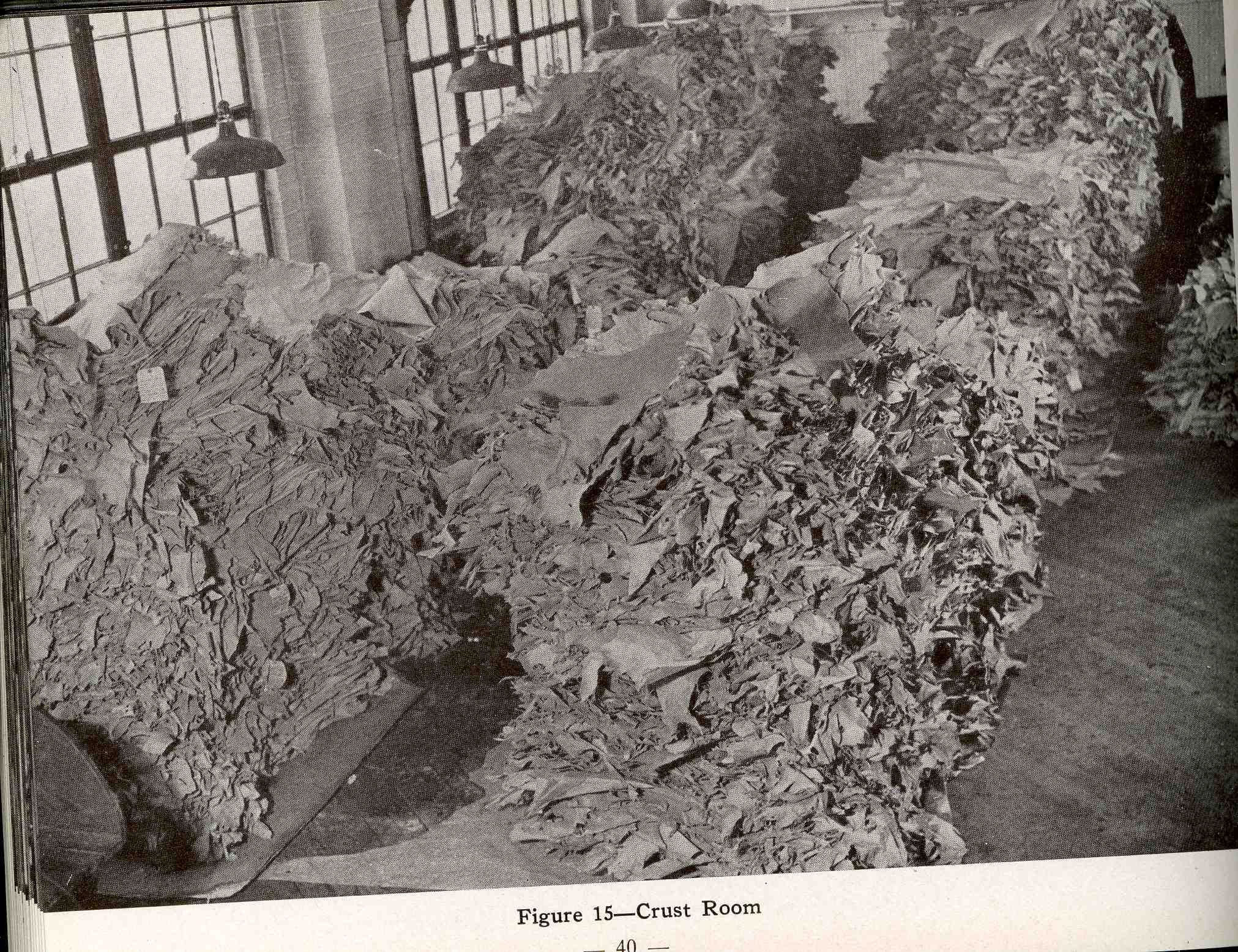
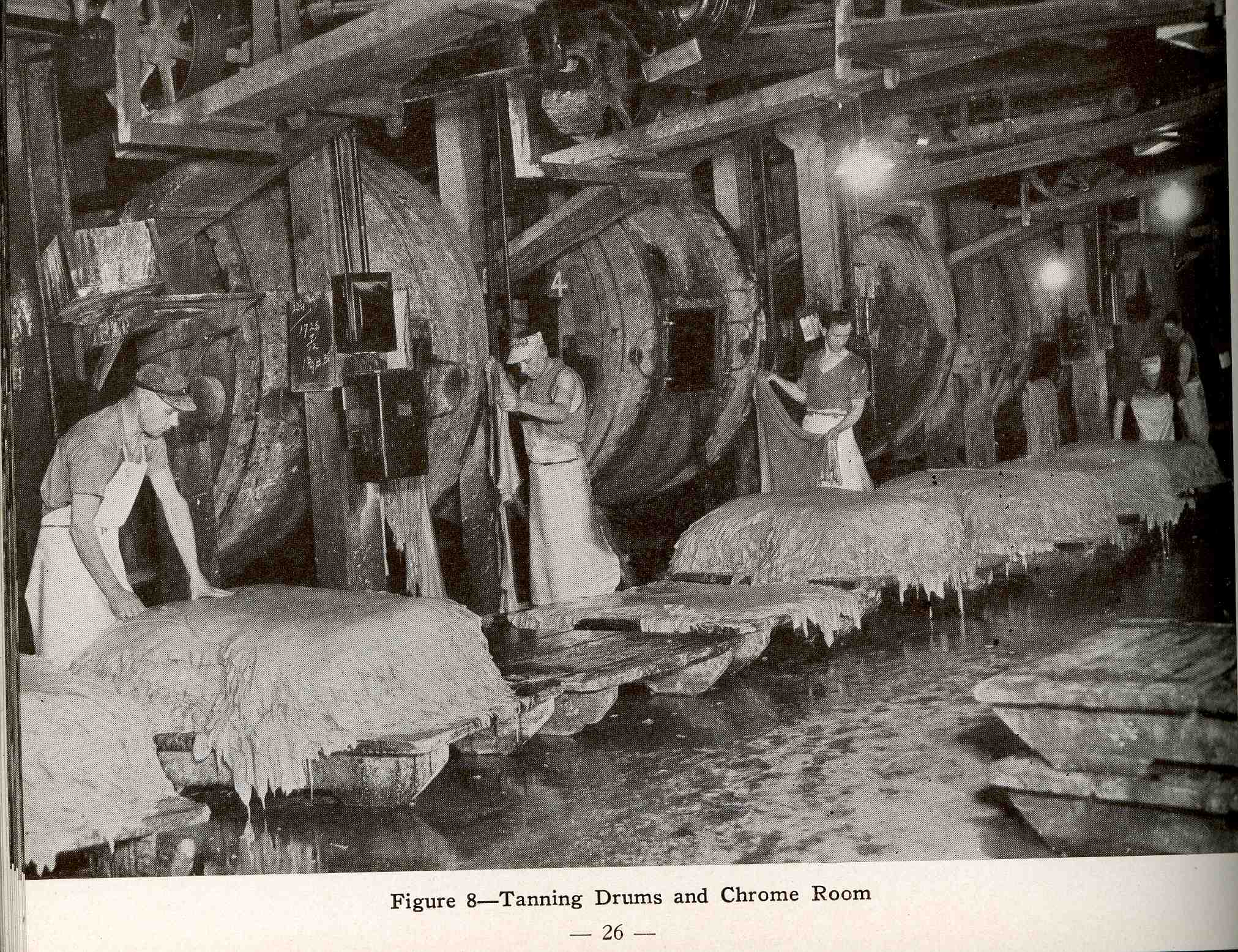
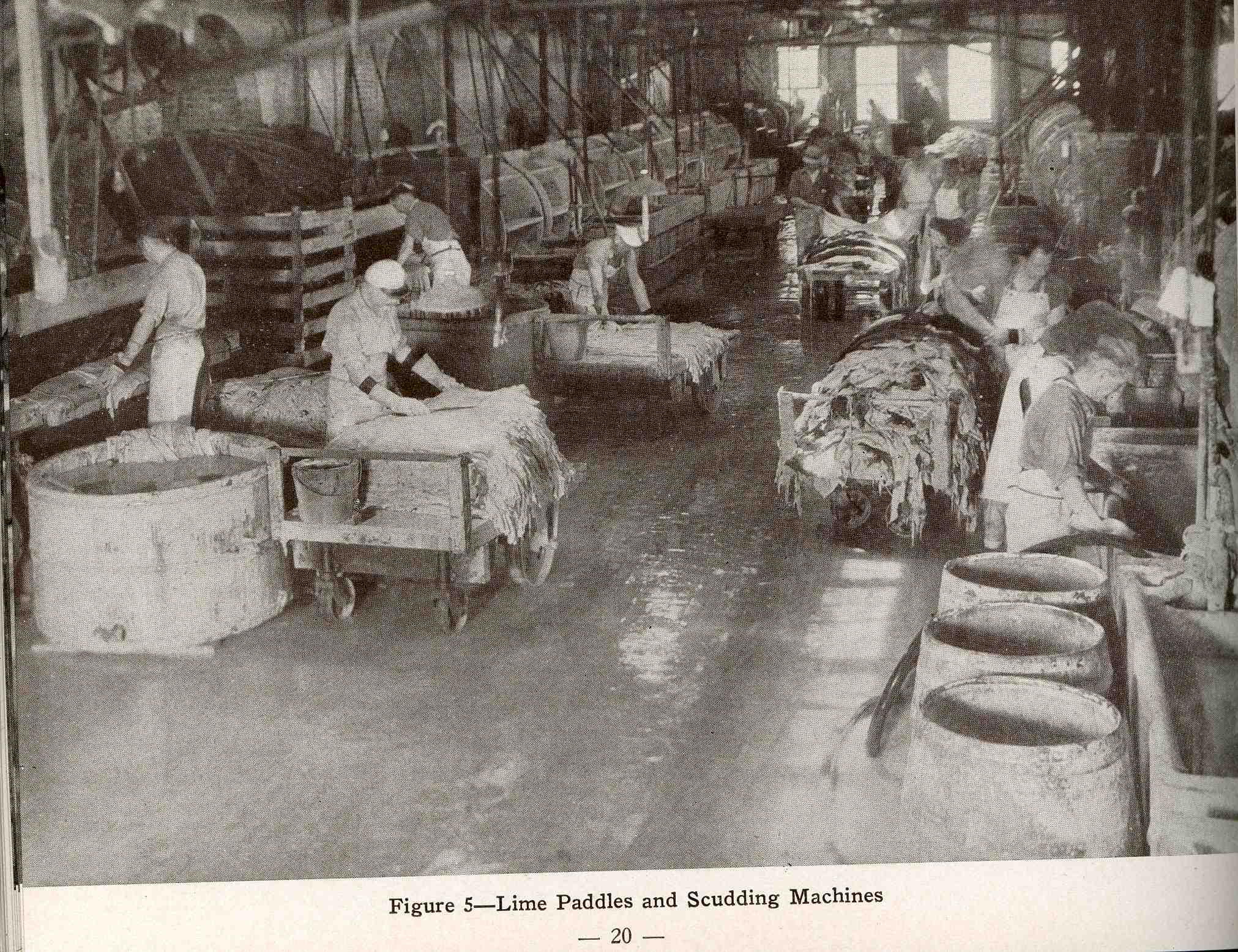
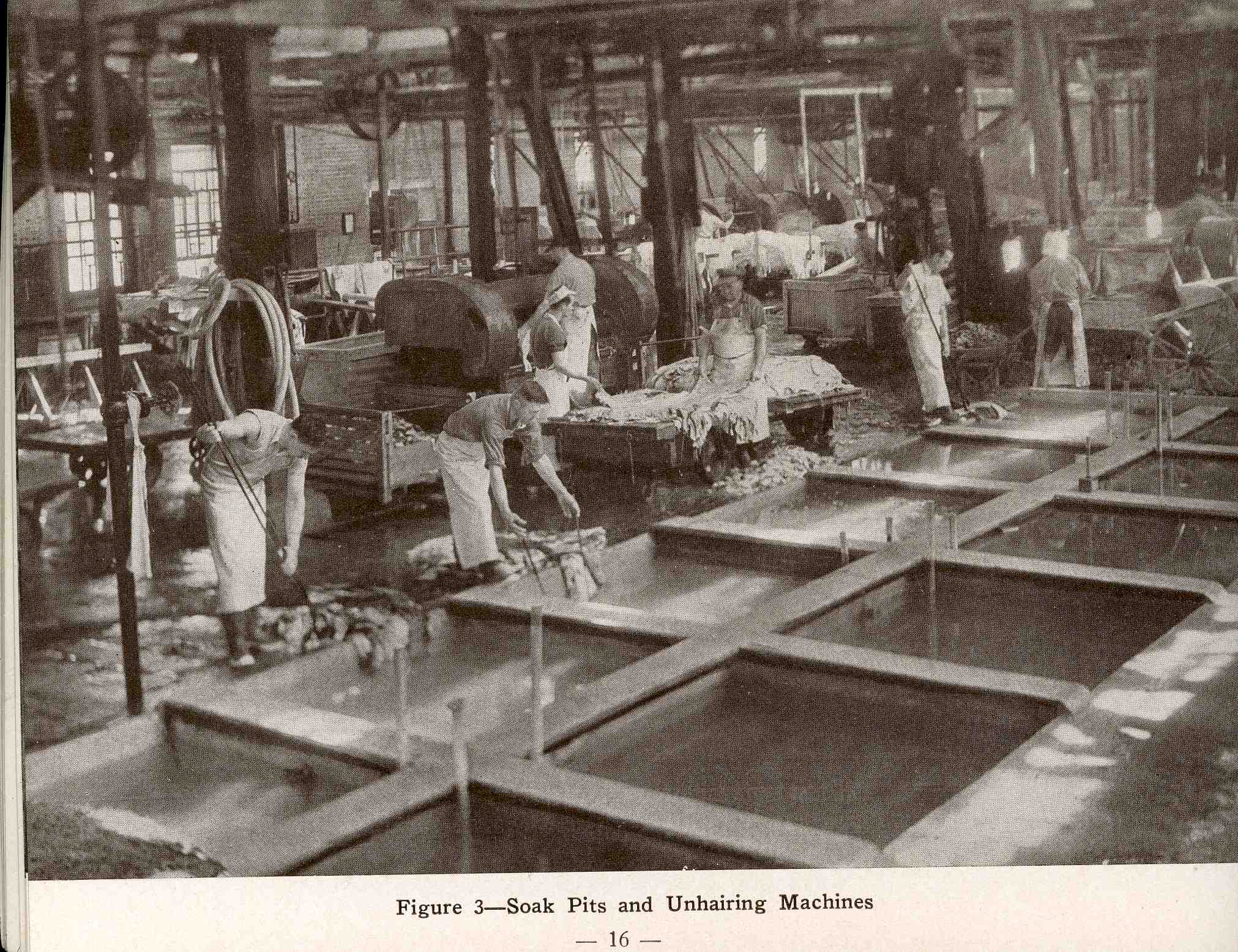
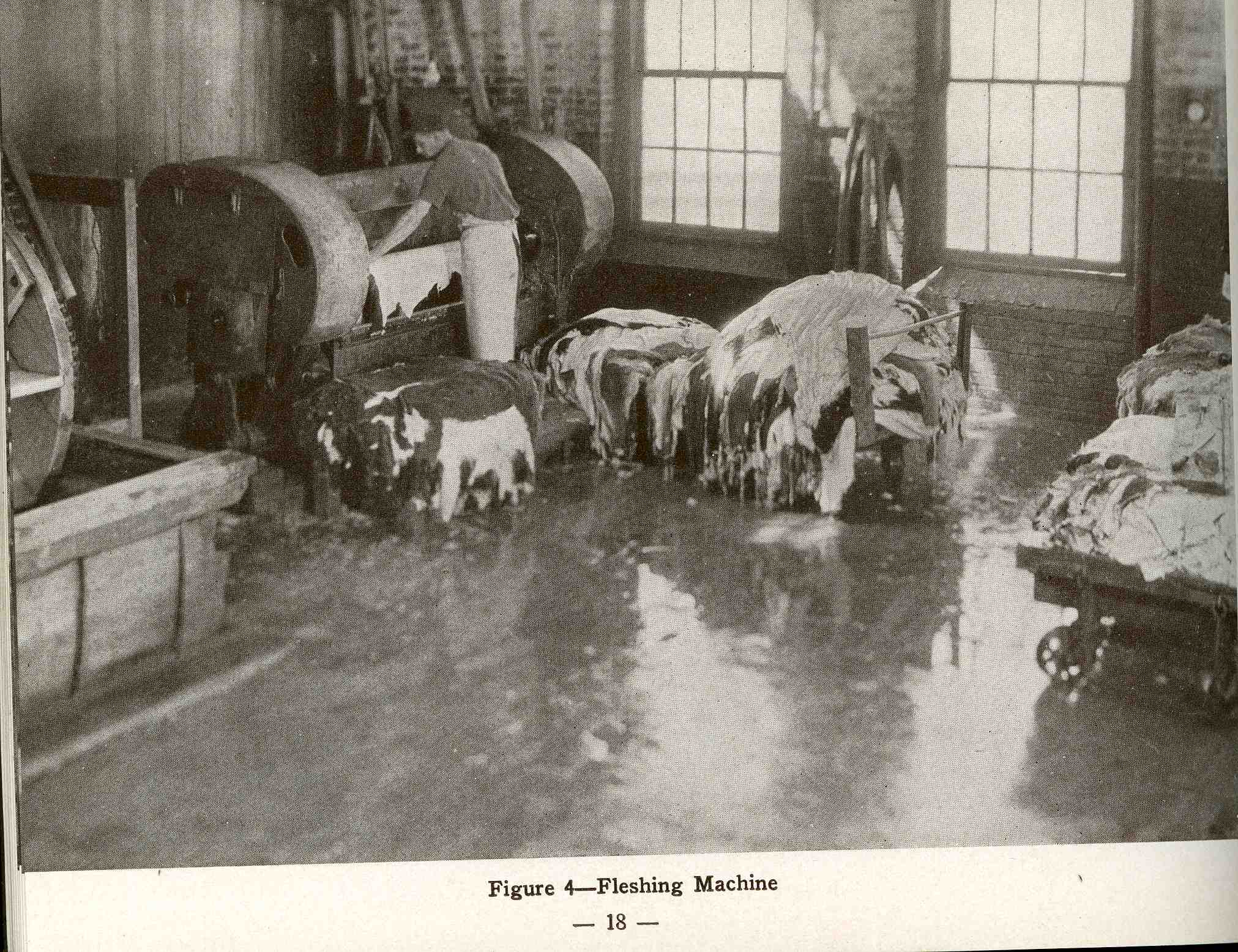
    This pamphlet–The Story of Leather, the Ohio Leather Company, and printed in 1935— is an introduction to the tanning business, and takes the reader on a tour of the plant.  Unlike many pamphlets that I have here on this variety, this one doesn’t take the camera away to wait for the workers to change into work clothing that they would never in a million years wear on the job.  The camera stays, the workers–all men–walk in front of the shutter, and the image is captured forever–or at least sort-of forever, as they are now for the first time (like the great majority of the images on this blog) offered to any/everyone on the internet. 

    The amazing thing for me is the high level, the high percentage, of unusual, intellectually-clamorous names that are given to the divisions of labor in the factory.

    The Crust Room (!), Fat Liquor, assistant tackers, hair men, stackers, seasons, trip drivers, rolling jacks, nappers, grain buffers–all relate to something having to do with pulling, treating, stretching, and such to hides, or skin.  As a matter this happened to a (claimed) 879,000,000 pounds of hide  in the U.S.  (That’s almost a billion pounds of skin, which means, I suppose, that it must be coming from at least 80,000,000 cows and sheep.  A year.)  Soaking tubs, unhairing machines (?!), scudding machines and lime paddles, chrome rooms, tanning drums, pickle paddles, fleshing machines; all telling an unpretty story.  The pictures tell the rest of the story–most of the men look hot, wet, a little dirty and befouled, with many of them working in puddles; I would’ve expected that these men would have nice leather aprons to protect them from some of the dangerous machines and chemicals, but I don’t see any at all.

    This was hard and dirty, stinking work.  It was performed by peoples’ grandfathers, providing food for the table and money for an education for their children. 

    0-blog---Nov 11 leather061

    0-blog---Nov 11 leather060

    0-blog---Nov 11 leather059

    0-blog---Nov 11 leather058

    0-blog---Nov 11 leather057

    ·Posted by :

    ·in:

  • Blank and Empty History 16: Food & Shelter Ticket for the “Waste” of Society, 1917

    JF Ptak Science Books LLC  Post 368

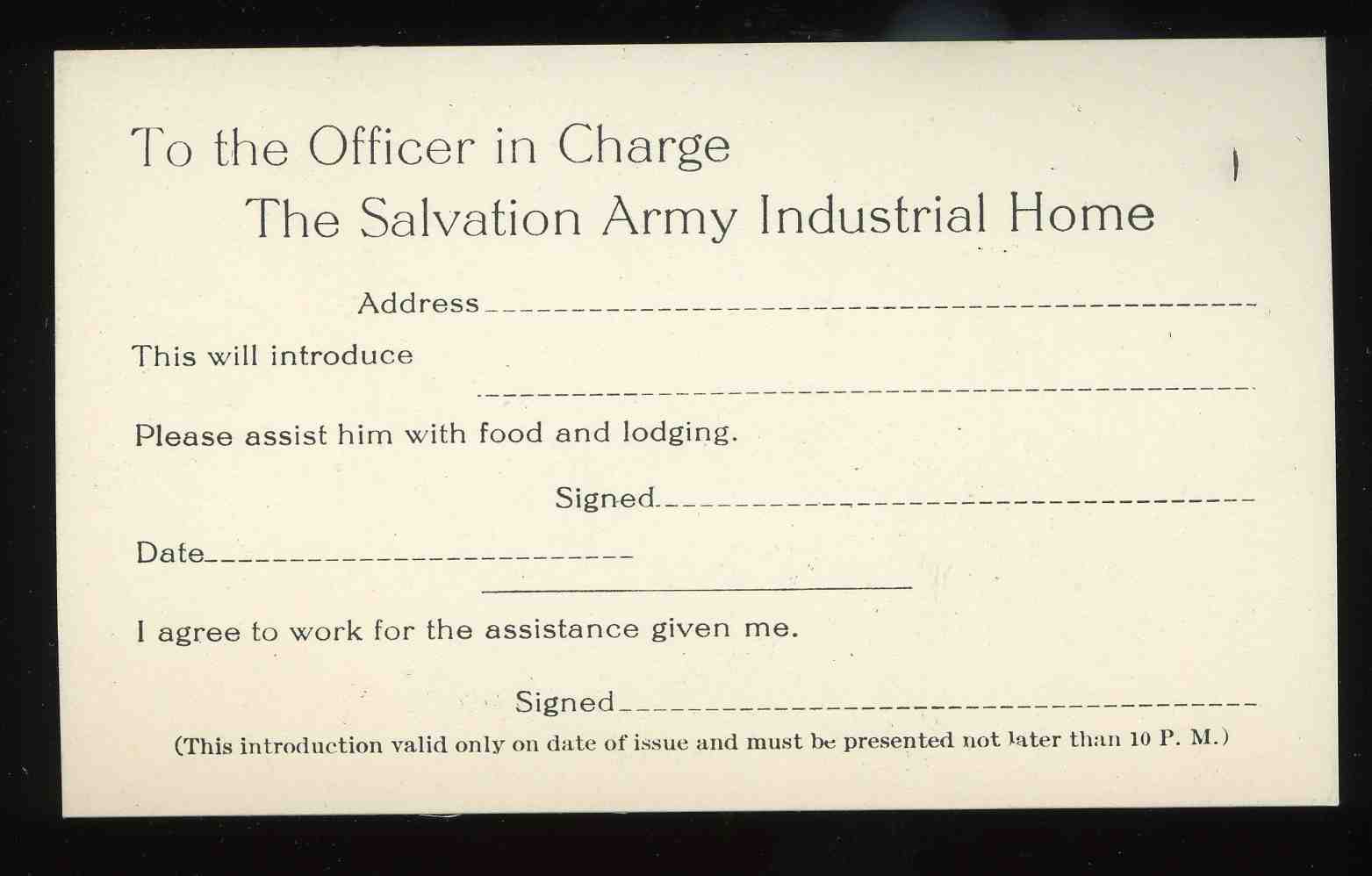
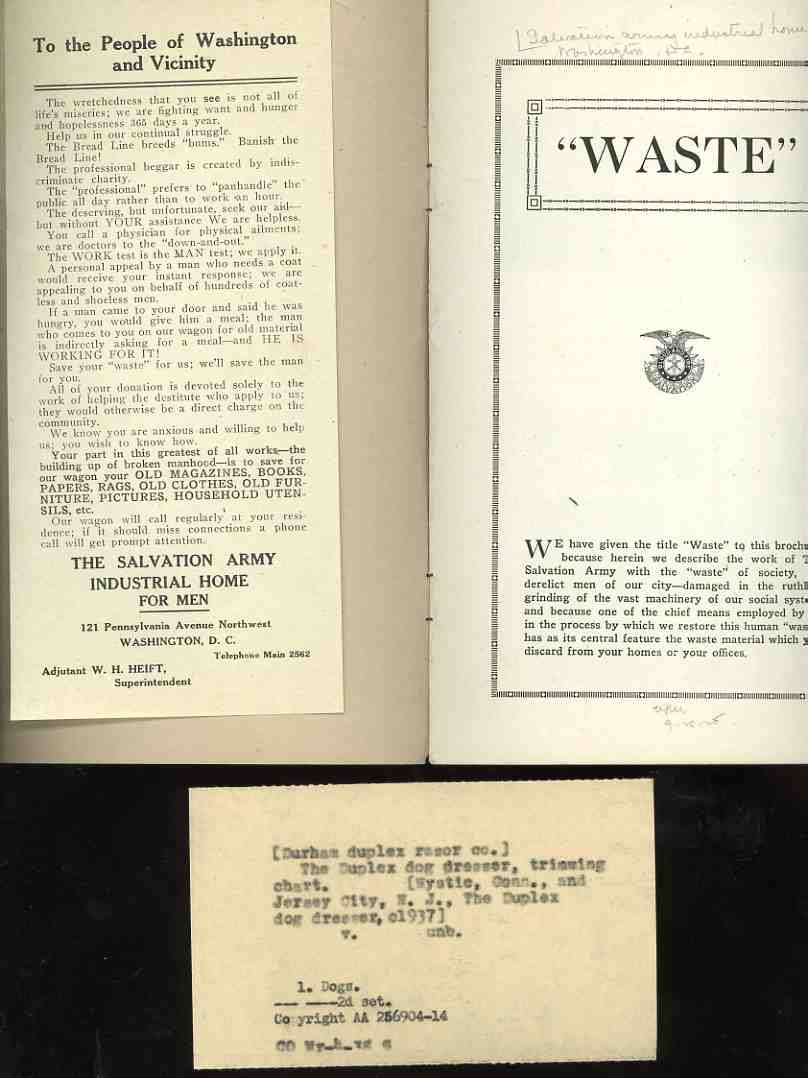
    Think what you will of the religious organization of General Booth’s Salvation Army, they really do some good albeit with a whomping hammer of the creator’s message at the end of it all.  This is the 16th in a series of posts on the History of Blank and Empty Things, an unfilled, blank ticket for the promise of a safe and warm place to sleep and a good sturdy meal.  It was a promise for some sort of hope, for attention, addressed to “the waste” of society, the specialty of the Army, “fighting want and hunger and hopelessness”, doing this via the “industrial home”, training men for work and finding them jobs.  The Salvation Army was adamantly opposed to “wanton charities”:  “the bread line breads bums; banish the Bread Line!; the professional beggar is created by indiscriminate charity…”  They took a very hard line.  On the other hand the hard line may not have worked all that well for far as filling the ranks for the soldiers of god; people certainly took advantage of the charity offered by the SA.  The financial report for the Industrial Home (in Washington DC) for 1917 showed that there were 122 meetings held, with an attendance if 4,300, with 34,921 meals supplied, and 21,215 beds made available–and only 21 “conversions”.  

    The blank admission card for the industrial home, shown below, seems to me a look at a piece of hope that may have been in the hands of a person who needed it; I can imagine staring at it, wondering what I should do with it, exactly; to take the help, or not.  In 1917, there weren’t that many options….

    0-blog---Nov 11 salvation055

    0-blog---Nov 11 salvation054

  • Inglorious Glory of the Atomic Bomb: National Geographic Society’s Mistaken Salute to Admiral William Blandy

    JF Ptak Science Books LLC  Post 369

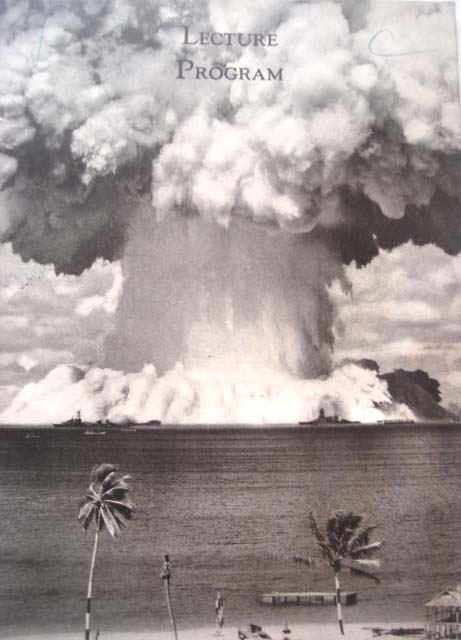
    Ballistics 132This odd graphic appeared as the entire front cover of the National Geographic Society’s Lecture Program pamphlet for 1946.  It is strange to me, the use of the photo and its cropping, its brightness–weirdly, the image seems to me to be almost “happy”.  The lead lecture for the series was Admiral William P. Blandy, who was one of the only leading military men (along with Dwight Eisenhower) to voice disapproval on the military use of the atomic bomb.  Blandy (28 June 1890 – 12 January 1954, first in his class at USNA, Chief of the Bureau of Ordnance from 1941 to 1943; then Commander, Group 1, Amphibious Force, Pacific Fleet.) went on after the war to become the Deputy Chief of Naval Operations for Special Weapons, most notably in the early periods at Operation Crossroads.  

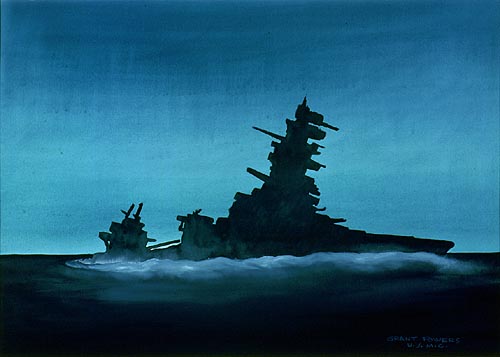
    Crossroads was the nuclear weapons tests conducted during the summer of 1946 at the Marshall Islands, and included the fourth and fifth (Able and Baker) tests of atomic bombs (the first being at Trinity, the other two at Hiroshima and Nagasaki). The picture on the front cover of the NGS pamphlet is for Test Able—the Japanese battleship Nagato (shown in the painting below, listing, 1946), the ship in command of the Japanese forces for the attack on Pearl Harbor, was one of the ships used in this blast for test purposes.  It was not sunk in the explosion, nor was it sunk immediately afterwards when charges were detonated on her sides.  The ship did eventually list and sink.

    The choice of this image for Bandy’s lecture bothers me.  He never liked the bomb, being more dissatisfied with “the breath of death” from the weapon—its radioactivity—than its immediate destructive power.  He referred to it as “a form of poison warfare”.

    Blog--bikini

    I don’t think he was much satisfied with his position.  Of his work there in the Marshalls he said:
    “The bomb will not start a chain-reaction in the water converting it all to gas and letting the ships on all the oceans drop down to the bottom. It will not blow out the bottom of the sea and let all the water run down the hole. It will not destroy gravity. I am not an atomic playboy, as one of my critics labeled me, exploding these bombs to satisfy my personal whim.”

    Just so there is no confusion:

    Ballistics 133

  • Blank and Empty Things 17—Echoes and Silences Change Places, 1929-1931

    JF Ptak Science Books LLC  Post 370

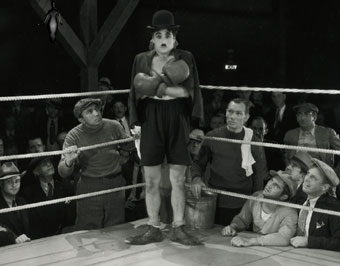
    Chaplin_City_lights_boxing
    In the American motion picture industry, the sound technician position did not exist in 1927; in about 1000 days it would be almost as important as the director.  1927 marked the first year of the synchronous, simultaneous sound-on-film motion picture, with the first commercial production appearing in 1929. Prior to this, all dialog, all sound effects, were confined to the mind of the viewer.  Two years later, sound was in, and silence (as an absolute, give) was out.  The subtitles of having sound had an overwhelming effect on the medium—not only because the actors could speak, but because they could also act within the subtitles of now being heard.  Whereas just the other day actors had to pantomime hearing different sorts of sound, or act in such a way that the audience knew that they were weeping—much had to be visually over-acted to support the lack of actually being able to hear things.  Once sound was incorporated, the dramatic range of actors advanced exponentially.  Of course there was also everything else outside of voice that could be incorporated by the director:  ticking clocks, advancing footsteps, thunder,  sirens, heartbeat, a soft wail, a chortle, an echo.  And silence could now be used to its true effect, its importance rediscovered.

    The last, true silent film came in 1931, with Charlie Chaplin’s City Lights.  Chaplin acted/directed/produced the film, which, interestingly, was not really, altogether, absolutely, a “silent” film.  The movie—which directors Stanley Kubrick and Andrei Tartofsky both selected as their fifth film in their top-ten all-time movie lists—actually used idiosyncratic and unintelligible sounds as speech in a spectacular salute to non-speech speech.  This was one smart man.
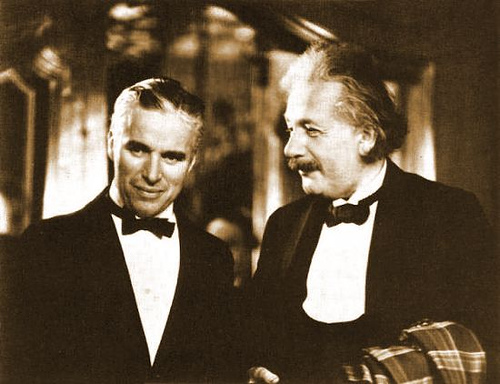
    Chaplin einstein

    The advent of sound curiously silenced the careers of some of the great silent-era actors whose voices were really just beyond reach and the range of the enjoyable.  Clara Bow bowed out as a result of her deep Brooklyn accent, as did John Gilbert for his very high-pitched voice, and many others.  Such are the few ironies that came along with this rich technical advancement, small price to pay for a piece of the future.

    (Image at right is of Chaplin and Einstein at the premier of City Lights.)

  • Blank and Empty Space: the Empty Earth, 2nd Day, Genesis XI

    JF Ptak Science Books LLC   Post 370

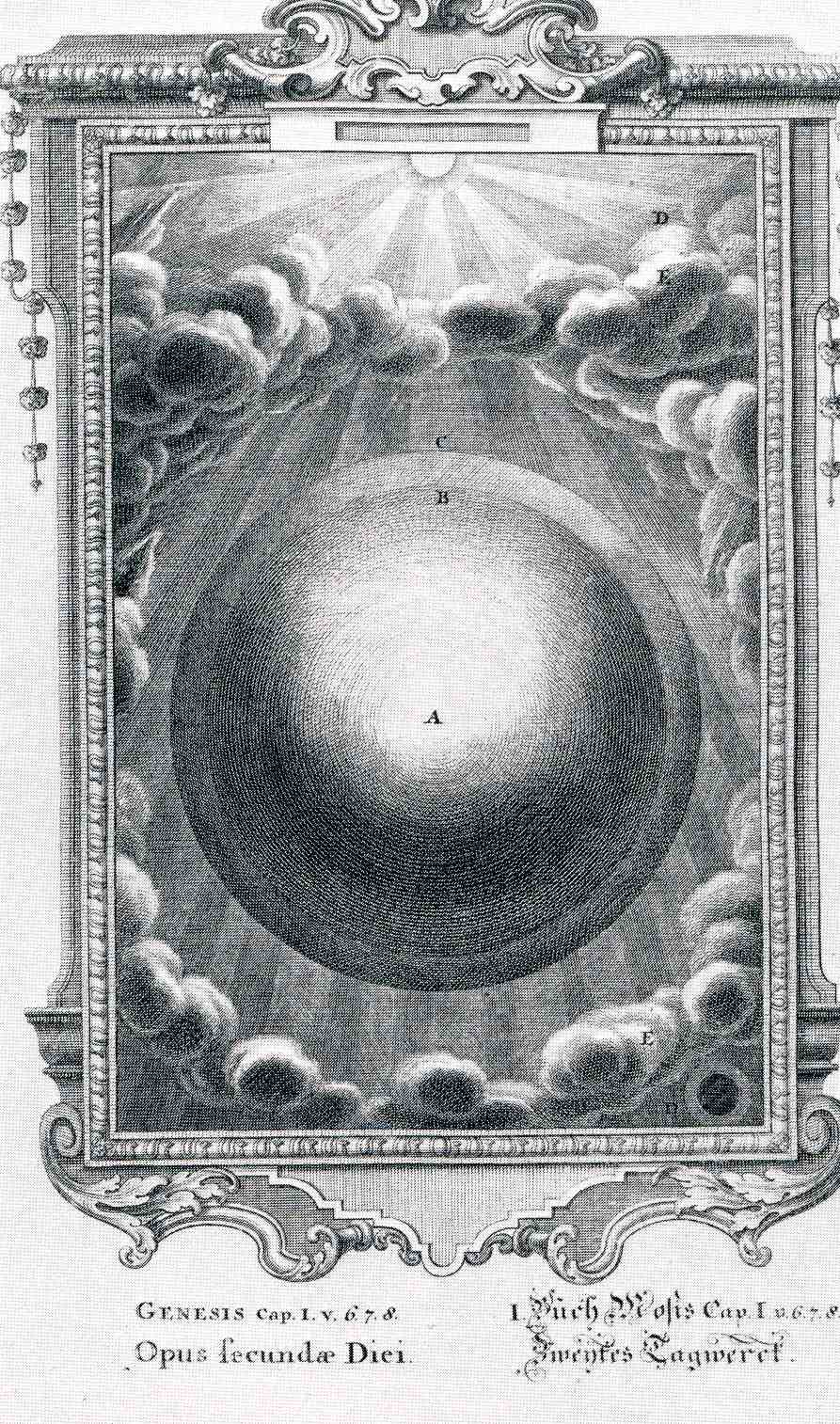
    0-blog---Nov 13 empty scheuchzer066Blank and Empty series, Part 18.

    Jean-Jacques Scheuchzer created this cold, lonely, empty picture of the creator’s handiwork on the second day of “creation”.  It is found in his Kupfer-Bibel, in welcher die Physica sacra, oder geheiligte Natur-Wissenschafft derer in heil. Schrifft vorkommenden naturlichen sachen, deutlich erklart und bewahrt, printed in Augsburg and  Ulm by  C.U. Wagner, 1731-1735. Offered in four volumes, illustrated with 758 plates, it is a magnificent work, if not altogether correct, or even near- correct, with an enormously confused pedigree, implying the wisdom and text of the Bible (and the old Testament at that) as the background for a physical history of the world.  BE that as it may, Scheuchzer was an able scientist, professor of mathematics and physics, director of libraries, and somewhere in there he became one of the founders of paleontology.  This work is a little hard for me to understand as piece of the history of science; its hard to get around the incredible ideas ensconced in deeply Baroque borders.  This sort of encyclopedic approach to knowledge—especially without the Bible part—would have to wait another 45 years ro so for the great work of Diderot.  For now, we are left here in 1735 with this picture of the empty Earth, waiting for the rest of it. 

  • Blank and Empty Space: Reference-Free Language(s), Babel

    JF Ptak Science Books LLC  Post 372

    Empty and Missing Things, Part 19. 

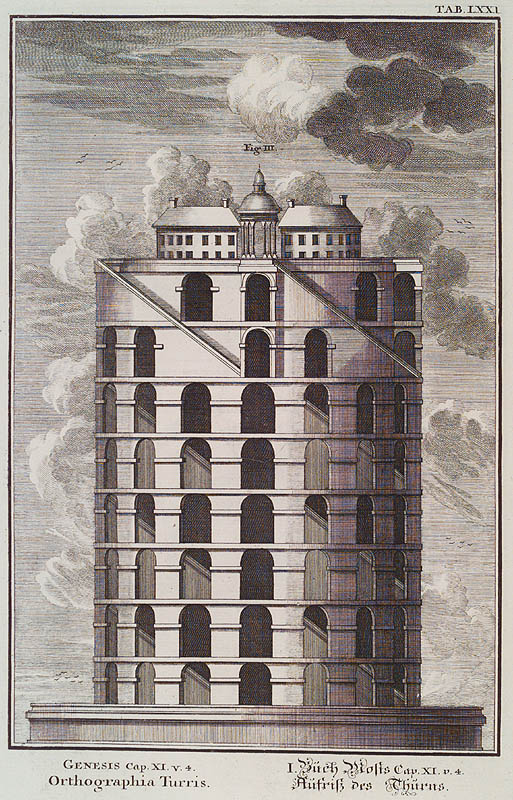
    Blog--14 nov--fantastic arch
    Returning
    to Jean-Jacques Scheuchzer’s* magical, inventive, fact-bending naive-surreal work on universal history based on the Old Testament, I’ve found these two glorious and odd images of the Tower of Babel.  The first (“Genesis Cap.XI.v.4. Orthographia Turris.Mediummetalis”) is terrific, shocking even in its abrupt construction and flat-out stumpiness, because it is one of a very small minority that shows the structure to be canonical, with a little church at top. The enormous stairway is just completely out of proportion to the purpose of the structure, the effort falling into some sort of odd advanced-child category.

    If Italo Calvin’s “Invisible Cities” or (better yet) Jorge Borges’ “The Circular Ruins” were to be illustrated, this image would fit right in.

    The other very unusual bit here, is that Scheuchzer also provides a plan for the city that was to be built around the tower–I’m pretty sure that I haven’t seen references to this before, and the Biblical references to it are no help whatsoever in determining its physical aspects.

    There are probably very few things that could be as blank or as empty as combative, competing, nonsensical and completely self-referential language or communication.  Well, except for Scheuchzer’s very empty town plan locating the tower in an urban setting–a listless place of surrounded circles of nothingness for a place in which everything is said and nothing is understood.  Ground Zero for blank


    Blog--nov 14--plan

    language.

    Notes:

    Two interesting books that I should mention that address the ideas
    of fantastic/imaginary architecture and decay are C. W. Thomsen, Visionary
    Architecture: From
    Babylon to Virtual Reality,   (Prestel, 1994) ; and  Paul Zucker, Fascination of Decay (Gregg  Press, 1968).


    *

    Kupfer-Bibel, in welcher die Physica sacra, oder geheiligte
    Natur-Wissenschafft derer in heil. Schrifft vorkommenden naturlichen
    sachen, deutlich erklart und bewahrt,
    printed in Augsburg and  Ulm
    by  C.U. Wagner, 1731-1735. Offered in four volumes, illustrated with
    758 plates, it is a magnificent work, if not altogether correct, or
    even near- correct, with an enormously confused pedigree, implying the
    wisdom and text of the Bible (and the old Testament at that) as the
    background for a physical history of the world.

  • Blank and Empty History: a Map of the Village of Missing Slaves

    JF Ptak Science Books LLC Post 373
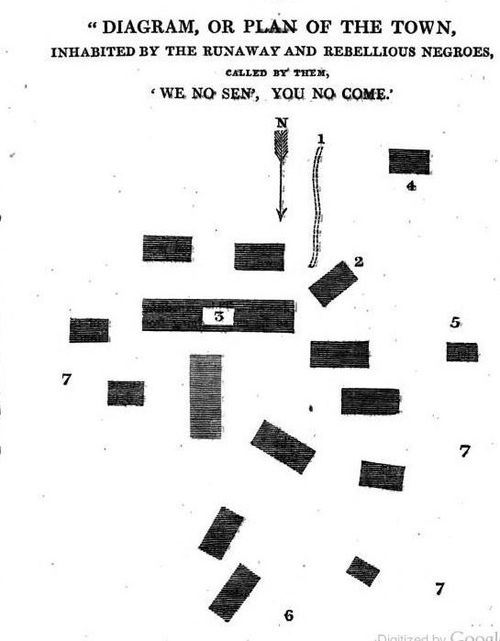
    We no sen

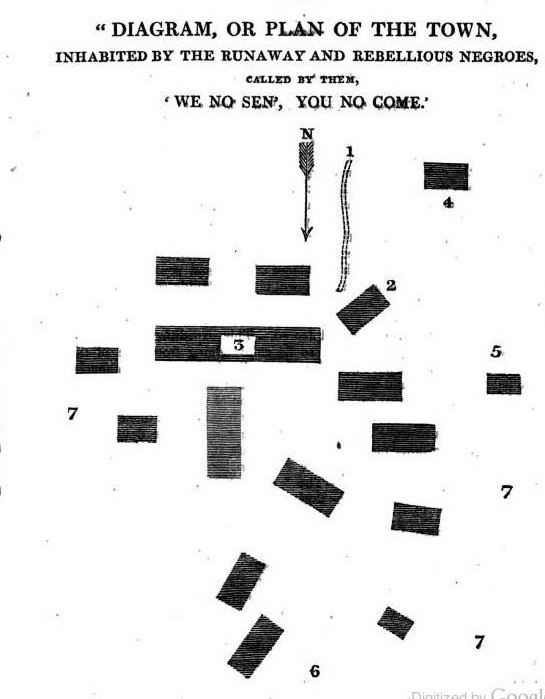
    In another (twentieth) in this blog’s series on Blank, Empty and Missing Things, I offer this map, a heartbreaking map, of an empty, abandoned village of peacefully-living runaway slaves in Jamaica, in about 1825.

    The name of the town, extraordinarily, was “We No Sen, You No Come”.  It meant, basically, that the slaves living there would not leave their town, wouldn’t seek anything from the outside, would not interact, would not interfere; in return, they didn’t want anyone visiting, coming to them. interfering in any way; just wanted to be left alone, to live.  And from the account of this supportive, understanding and sympathetic publication, that is exactly what these people had done for eleven years.

    But then something happened.  The owners of the enormous estate wanted the “banditi runaways” gone.  The slaves evidently had 200 acres under domestication, hidden in the far reaches of an enormous 100,000 acre estate.  The “hunting party” left heavily armed, accompanied by 250 troops, as well as “confidential and baggage negroes”.  (The term “baggage negroes”, as impossible as it might seem today, was a well-worn, heavily used term through the 18th and mid-19th centuries.)  They approached the small town and encountered a very slight resistance, something like a guard, and killed them.  Retreating somewhat after the initial attack, the scouting party returned, and then found the village completely empty.  (Some reports say that there was more limited fighting, with casualties on both sides; some say that there were more slaves killed.) After whatever happened happened, though, the return to the little village found it abandoned, with everything still in place.  The members of the village had “disappeared”.  Or at least I hope that they did, and didn’t get “disappeared”, men, women and children all, as in the famous Floridian “Negro Fort” case and Andy Jackson.  Perhaps these people were fortunate to actually escape. 

    Key to the numbers on the map:

    1 The track of the Militia and Maroons.
    2 House built of cedar, shingled and floored.
    3 The largest building, 70 feet long, and open in the centre.
    4 A hut.
    5 Hogsties.
    6 Wood.
    7 Provision Grounds and Coffee Piece.
    With the exception of No. 2, the houses were all wattled and thatched, the
    floors terraced.

    Two Contemporary Accounts

    From the British Slavery Record, 1825:

    “WE NO SEN’, YOU NO COME.”

    “Some years ago a number of Negroes, in Jamaica, escaped fromthe cruel bondage of their task-masters ; and, retiring into an uninhabited part of the island, built a little town, which they called, ” We no sen\ you no come.” Here they lived some years peaceably, industriously, and comfortably, upon the fruits of their labor ; having about two hundred acres of land, thickly planted with provisions, in the finest condition, with abundance of hogs and poultry. They thought that, if they kept themselves at home, ihey could not be discovered ;
    and if they did not meddle with others, others could not meddle with them. However, in the year 1825, they were discovered by the whites, who sent out an armed force against them, destroyed their  town and provision-grounds, and killed, took prisoners, or dispersed, the whole of this happy and peaceable community.”

    A less-sympathetic position appears in the Montego Bay Gazette: 

    “THE RUNAWAYS IN TRELAWNY.
    [From the Montego Bay Gazette, j “
    We have been favoured with a perusal of a letter from a respectable gentleman
    at Dromilly, who has taken the earliest opportunity of relieving the
    anxiety of the community respecting the [second] party who went after
    the runaways in Trelawny. It states, that about 4 o’clock on Monday
    evening, the party entered the town belonging to the runaways, when they
    were fired upon by them, but happily without effect. The fire was returned
    by the Militia, when two of the runaways fell, and another was taken prisoner;
    the remainder dispersed. They had about 200 acres of very fine
    provisions, in full bearing, with abundance of hogs and poultry. The Maroons
    were left in possession of the town, and the Militia returned to Dromilly,
    from whence Col. Scott proposed sending a gang of negroes to destroy
    the provisions, &c. The houses appear to be of considerable magnitude,
    are well built, shingled and floored. This expedition then, if such
    it may be called, has succeeded in so far as dislodging from one of their
    haunts a Banditti that have been for years collecting; but we fear much is
    still left to be done; and we think, that instead of destroying the provisions
    and houses at the settlement, now in possession of the Maroons, it would
    have been better to have sent troops to occupy it, and from thence to send
    out detachments to scour the woods, as there cannot be a doubt of the
    runaways having other places of retreat, and are still in possession of arms
    and ammunition ; and until they are totally routed or destroyed, the pursuit
    should not be abandoned. — The bodies of Mr. Sutherland and Mr.
    Gallimore, who were shot on the 26th ult. were found within a few yards
    of each other.
    It would appear, from a plan taken by order of Lieutenant-Colonel
    Scott, that the number of runaways is very great, or that they have been
    many years in constructing the buildings : one is 70 feet long, another
    40, and few under 25: and we again repeat, that instead of being destroyed,
    they ought to have been preserved and occupied as a military post for
    some time at least, or until the whole of the Banditti are properly accounted
    for.”

Recent Posts

Archives

Categories