A Daily History of Holes, Dots, Lines, Science, History, Math, Physics, Art, the Unintentional Absurd, Architecture, Maps, Data Visualization, Blank and Missing Things, and so on. |1.6 million words, 7500 images, 4.9 million hits| Press & appearances in The Times, Le Figaro, Mensa, The Economist, The Guardian, Discovery News, Slate, Le Monde, Sci American Blogs, Le Pont, and many other places… 5000+ total posts since 2008.

  • A History of Dots, Periods & Points, Part I: Descartes and a Year-Ending Post

    JF Ptak Science BookS   Post 450

    In closing out my first year of blogging [2008], I’d like to take an incidental look at one of our language’s most important fragments.  Like Mr. Eliot’s observations of Baudelaire being a fragmentary Dante, and like the brilliantly arranged frammenti of Piranesi, the great bits of our communication processes owe a breathy thanks to the lowly period.  A dot.  A point.  It separates to provide analysis and coherent recognition of thought. 
    0 blog dec 31 descartes330

    A simple dot.  (.)  But dots are as little or as big as you need:  there’s “Little Dot” (the cartoon character of Harvey Comics, created 1947, who was fascinated bylines and dots and dashes), “Admiral Dot”, polka dots, Mama Dots.  Dots get considerably ratcheted up in quantum dots, and then expanded beyond that with the idea of the dot as an abbreviation for the multiplication sign, both of which increase things rather than bringing them to an end, a conclusion.  The dot used after a musical note delineates that there is an increase in time by half, which would be an interesting notation to adopt in literature, if we were somehow able to magnify and increase that which would normally have been ended by the same notation.

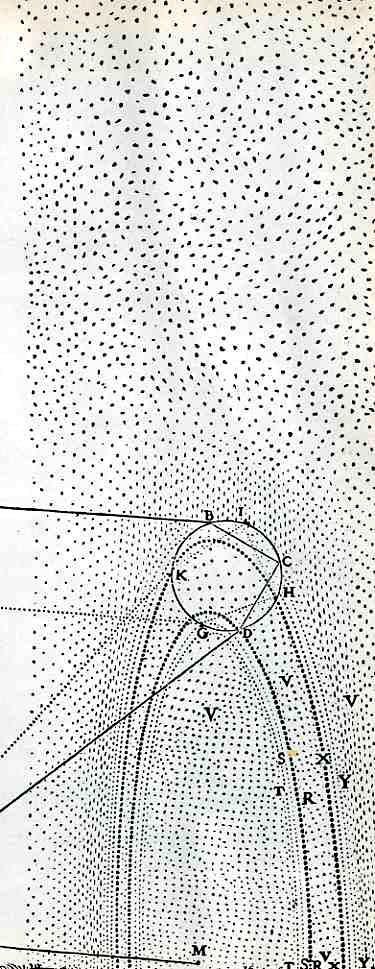
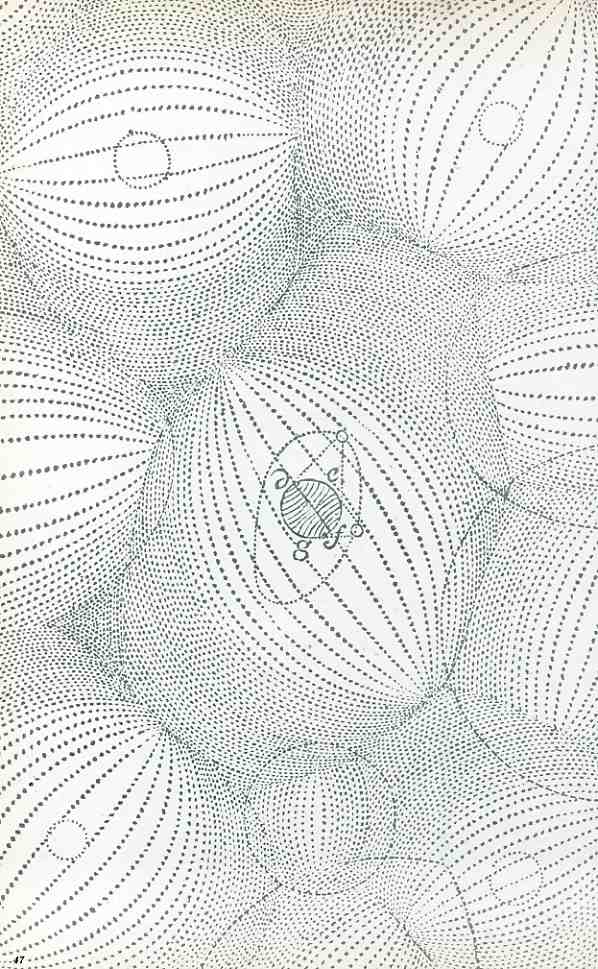
    Dots have formed the background to some of the most significant scientific illustrations of all time, like these two images, the first of which Descartes’ illustration of the decomposition of the rainbow, found in his Dioptrics, a fabulously important illustration. The second is from Descartes’ Principia Philosophiae (1684) which display his theory of vortices, accommodating an idea of physics eliminating atoms and vacuums and joining matter and space, matter being constantly deflected from moving in a straight line, moving in vortices.  Then of course there’s the fantastically appreciated advancement of Samuel Morse’s telegraphic instrument and his abbreviated transmitting alphabet (his “code”), which fascilitated the distribution of information in the 1840’s  in the same sort of way that the internet increased the flow and ease of data in the 1990’s. (Actually that’s only half correct for Morse, as his was a system of dots and dashes.)
    0 blog dec 31 descartes331


    Things get more interesting if we expand the idea of the “dot” to a “point”, as just about everything we have discussed in math for thousands of years has been based upon the idea of a “point in space”, forming the bits of the coat hanger on which the whole fabric of the heavens has been hung.  Going the other way, there’s the decimal point, which brings us to negative powers of ten, into smaller and smaller worlds, to the incomprehensibly small, showing that “nothing” probably doesn’t exist. (We’ll leave the idea of “spot” alone, tonight.)

    That’s quite a bit of expansion from a word that starts out life in Middle English as the definer of the head of a boil.

    But this year will end in about 50 minutes from now, and I wll be able to put the final keystroke to the final sentence to my final post of the year, and put it all to sleep.  And the year will end, at 12:00, precisely.  On the dot.
    ·Posted by :

    ·in:

    — —
  • Van Gogh’s People-Absent Portraits: the Empty/Blank Series, continued, part 13

    JF Ptak Science Books LLC  Post 350

    Blog--empty--vincent chair
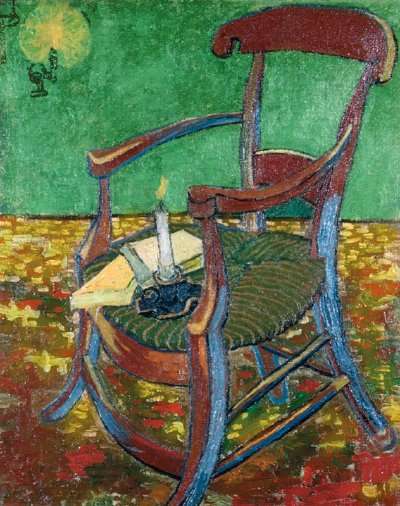
    Still another part of the developing theme of empty/vacant people/places is this consideration of Vincent van Gogh’s portraits of absent people–that is, his paintings of famously “empty” chairs that he executed in the middle of December 1888 that were more portraits of the people that they belonged to rather than images of the chairs themselves.  Vincent actually described these chairs as “empty” in his wonderful letters (this one from February 1890) to his brother Theo, “one of an empty armchair, (actually Gauguin’s chair)”.  He described the painting as an effort to represent Gauguin’s “empty place”:  “this is a study of his armchair in dark brown-red wood, the seat greenish rush, and in the place of the absent a lighted candle and modern novels”.  Blog--empty--vincent gauguin

    The quotation marks around his “empty space” were in the original and quite purposeful.  Gauguin would leave Vincent at about the time Vincent went to the hospital (committed to the hospital, that is) for one of his “spells”; the painting though was made before Gauguin actually left.  Whether this is because he, Gauguin, removed himself or because he faded away only in Vincent’s disturbed brain is just not known to me. 

    The emptiness is a replacement for the men who weren’t in their chairs–Vincent not in his simple/peasant chair, and Gauguin not in his darkish fancy chair. There are symbols galore and sailing away in both images, and much has been written on them (see for example H.R. Graetz The Symbolic Language of Vincent Van Gogh (McGraw Hill, 1963) so I won’t address them here.  I was primarily interested in these two images for the different sort of emptiness that they represented–paintings of subjects that weren’t there. 

  • Information Bombs: Dropping Stuff from Airplanes, 1911 & 1929

    JF Ptak Science Books LLC  Post 354

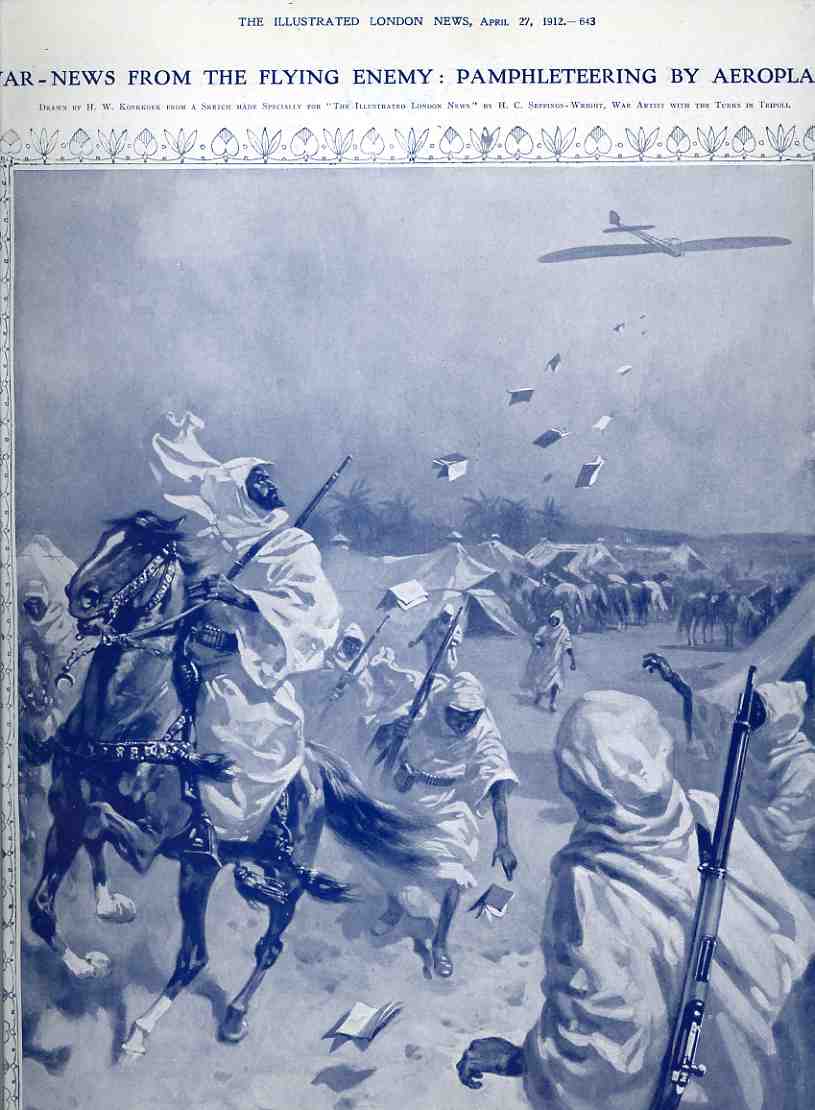
    000-ebay--Nov 1 bombing pamhlets971The “information bomb” as an idea is old, but as technology quickened over the centuries so has this particular bomb–it has gotten bigger, larger, more potent, more disasterously visible and more subtle (sometimes at the same time).  Impossibly more effective than could’ve been imagined when these two prints (below) were published; impossible to the best and most creative storytellers. It is interesting to think about how information was released quickly in points in the past, and what that form looked like; and of course what situation perpetuated the release, or “bombing”.

    But for right now I’d like to look at two situations of information bombs that were quite literally so.

    I’ve written about  Sven Lindqvist’s History of Bombing

    (published 2000) earlier in this blog, and in it he points to this image as being about the earliest use of the airplane to drop anything at all on its enemies.  In this case it happens to be pamphlets, although the bombs were soon to follow, particularly against brown-skinned people, in 1911 and 1912.  The first image is entitled “War-News from the Flying Enemy; Pamphleteering by Aeroplane–Cirularizing his enemy’s foes; an Italian Airman, who announced that Beirut had been bombarded, dropping political pamphlets to the Turks and their Arab Allies…” and appeared in The Illustrated London News for 27 April 1912.  The Italians waged a nasty war against the Turks, taking to bombing soldiers and civilians alike across all of northern Africa, setting themselves some nasty first-time records for killing civilians from the air.  In this instance, though, the airplane was dropping propaganda, trying to force the resisting Arab allies (in Tripoli) to surrender as Beirut had been bombed.  the pamphlets didn’t do the job; they were soon followed by exclamatory explosives. 

    000-ebay--Nov 1 bombing pamhlets973

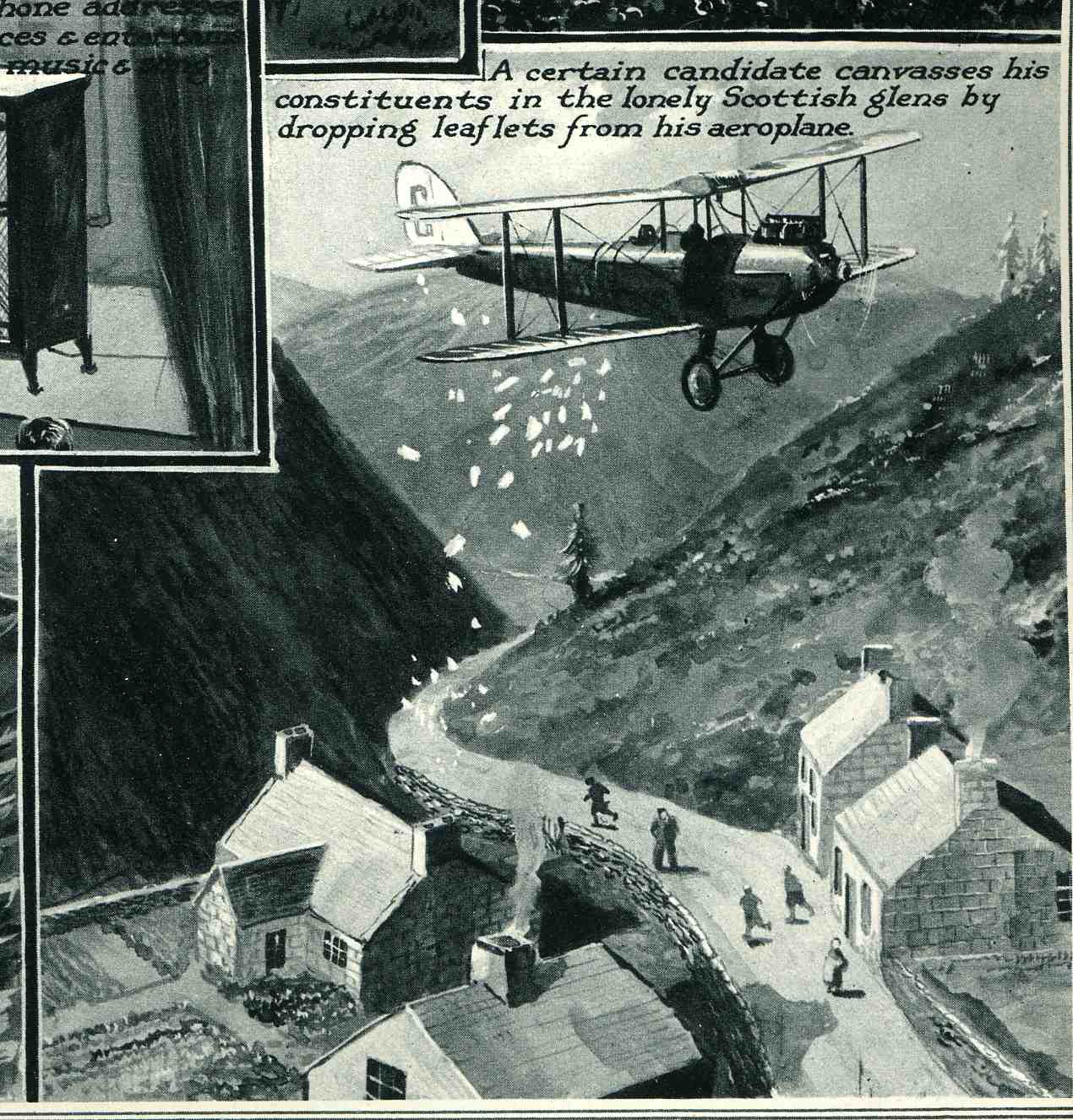
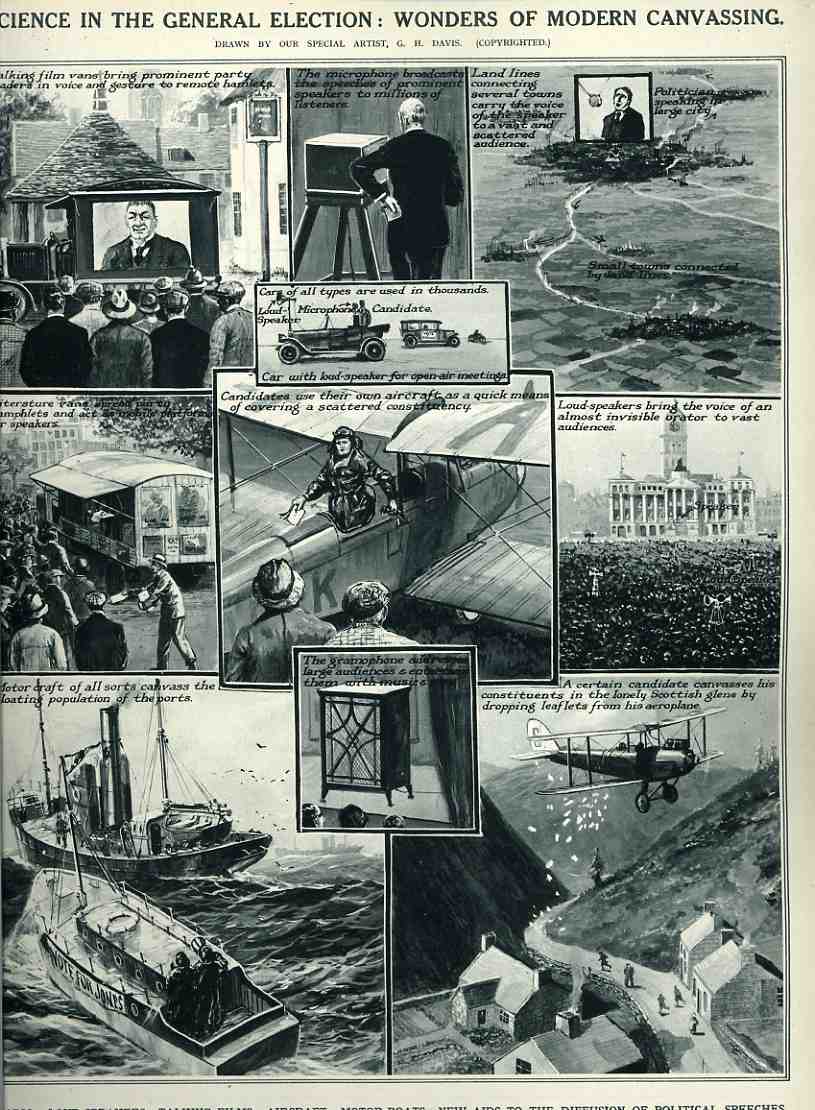
    The second image is an expansion of the first, without the explosive bit.  This one too comes from The Illustrated London News,
    25 May, 1929 (page 895),
    and was entitled “Science in the General Election; Wonders of Modern
    Canvassing” for the British election series in the spring of 1929.  The
    information bomb at that point also took the forms of “radio,
    loud-speakers, talking films; aircraft; motor boats, and the new aids
    to the diffusion of political speeches”, and that included canvassing
    constituents from the air by dropping pamphlets from an aircraft.

    In general though this would be about the limit of bombing people with information, except of course for dropping surrender tickets and propaganda leaflets on fighting forces during WWII. 

    000-ebay--Nov 1 bombing pamhlets972

  • Cartograms of the Obama Victory: What “Normal” Maps Don’t Show

    JF Ptak Science Books LLC  Post 355

    I woke up this morning feeling good for the first time in my life about the results of a presidential election here in the United States.  In my living memory, the characterizations of the occupiers of the big chair in the Oval Office have been less than fulfilling:  the ruined greatness of LBJ, the actual and interrupted possibility of evil of Richard Nixon, the tight-lipped raisin-eyed confusion of the deceptive Jerry Ford, the bittersweet and limited Jimmy Carter, the addled incompetence and intellectual insolence of master storyteller RWR, the bookmarked-thin-never-finished-book of Old School George Bush, the Falstaffian and could’ve-been-great-but-spoiled Bill Clinton (killed in the end by viciousness and republican lust), the unutterable and poisonous George Bush redux.  The people sent up to run against them have been less than illustrious in many cases:  Hubert Humphrey, Walt Mondale, John Kerry, Al Gore (though with Mr. Gore, known as “Al God” to the other kids at  National Cathedral , would’ve been  a better choice for the chair than George Bush; but then again, a warm stain would have been better too, so faint a praise is that…there is little doubt though that we’d have several trillion dollars more in the economy and wouldn’t have affected the lives of hundreds of thousands of American military families or “disrupted” the lives of millions of Iraqis.) But late last night, when Iowa went to Obama, I felt the possibility of pride and probability of accomplishment creeping into even my cynical soul-shadow.  I also have little doubt that a man of this calibre surrounded by a forceful whirlwind of readiness will also be able to attract excellent minds to the administration–something I think that was sorely lacking (for the greatest part) in the last administrations. I know absolutely that everyone else in the world was ready for Obama; I’m glad that the United States followed suit. 

    And how big a win was this?  How many people supported the Obama ticket? 

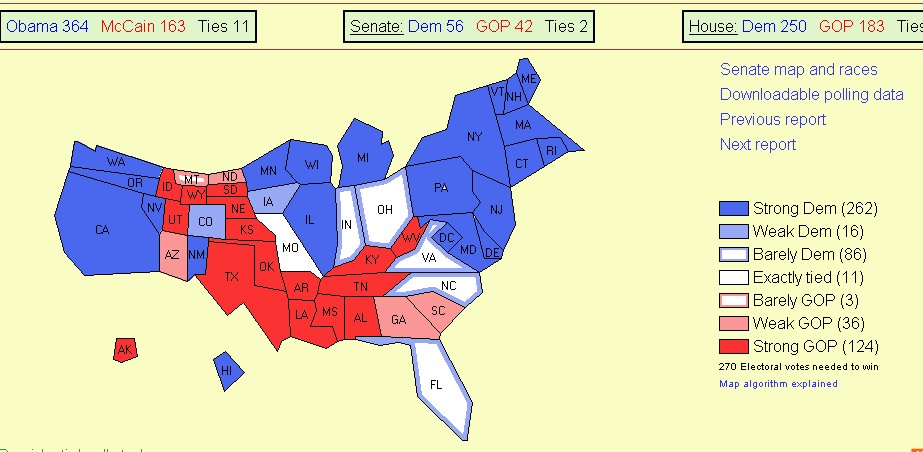
    A simple map showing results of voting by state doesn’t tell that much of the story:

    000--election--simple state map

    000-Nov 5 part 2Looks very red to me. 

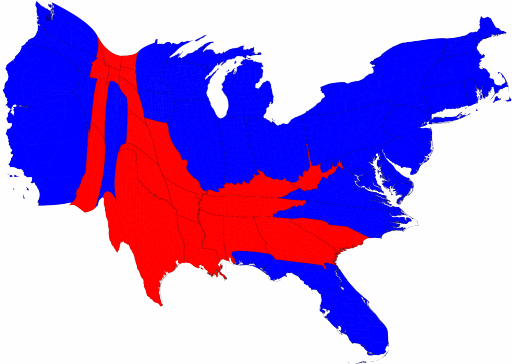
    However, when you use an electoral college cartogram (a map with a thematic variable, where the area of the map is representing something other than simple geography and a place on the globe) to display the same results the visual representation of the same data changes dramatically, we you can see (and this image can be clicked for a more detailed view):

    (The following image is from the interesting and clearly written website of Mark Newman, Department
    of Physics and Center for the Study of Complex Systems, University of
    Michigan.  He also has published a “real world” atlas of cartograms that more vigorously display quantitative information–outside of an atlas of imaginary places, this is exactly the sort of book that should be present in every classroom in the United States. ) The population cartogram from Newman’s website offers another interesting aspect of the election results, depicting a solid but relatively thin control of much of the South (inexplicably and stupidly referred to over and over again by the pundits on CNN as “the Confederacy” (!?)), along with a stubborn reed of red that extends from the northern to southern border and which pretty much follows the cattle trail of the Hat Creek Outfit from the Great American Novel Lonesome Dove (by Larry McMurtry, which is also to a lesser degree the path of the Goodnight-Loving Trail.                                                                                                      

    000-statepopredblue512

    The net result, I think, is that the Obama victory was decisive, and has a huge tailwind, a mountain of support.  It seems that there is very little doubt that the people of this country were ready for something very different than what has been here for eight long years.

  • Hero’s Stairs to Nowhere: an Intolerably Small Look at a Great and Important Book

    JF Ptak Science Books LLC  Post 356

    000-ebay--Nov 1 heron978
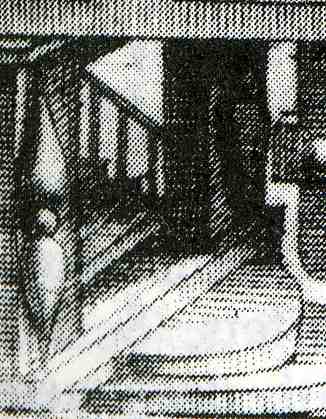
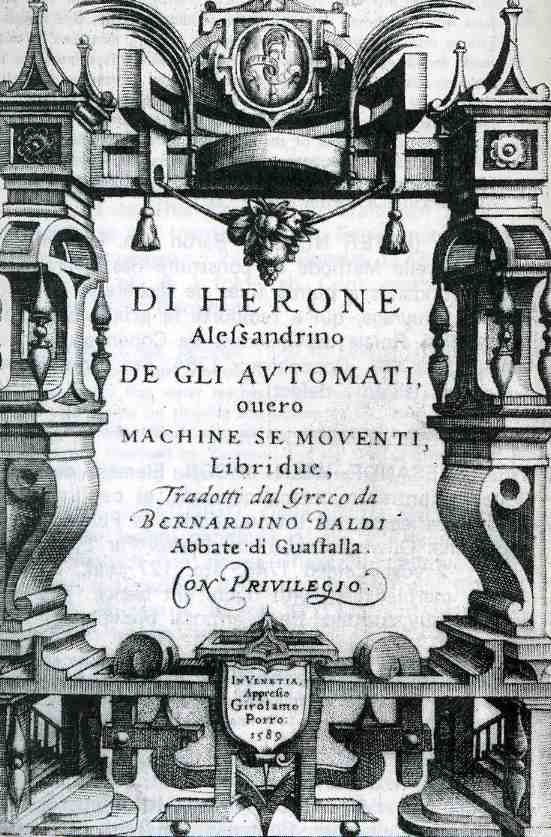
    And so here we have a gorgeous title page for the very first treatise on automata, and the thing I’m focusing on are the stairs in the bottom corners of the design, the stairs that go nowhere.  Maybe its just because of the seemingly flat effect of the perspective that they became so obvious to me, or the  subtle sense of a twisted two-and-a-half dimensions feel to it, the very Escher-y feel of complex, impossible and improbable dimensionality.  For example, the very pre-Baroque ornamentation of this very heavy title page construction seem to bounce between convex and concave, like the background and foreground change place somehow, as it the case of Escher’s trying to find a place between planes of two- and three-dimensional representation.  Although here I’m pretty sure the effect is unintentional; whereas in Escher, the effect is the aim of the art. 

    000-ebay--Nov 1 heron977

    The design and the printing of this large book was the work of the firm of Bernardino Baldi, of Venice, who published De gli avtomati oueri machine se moventi...in Venice in 1589, the original by Her/Heron of Alexandria, who lived ca. 10-70 ACE.   Hero was one of the most exalted of Greeks in the pantheon of ancient experimenters and scientists, an unparalleled inventor and producer of the earliest automatic and robotic devices. Have a look at  the illustrated link to Hero’s fabulous work called Penumatics (below).

  • An Early, Complex Picture of a Really Cold Sky: 1550

    JF Ptak Science Books LLC  Post 357

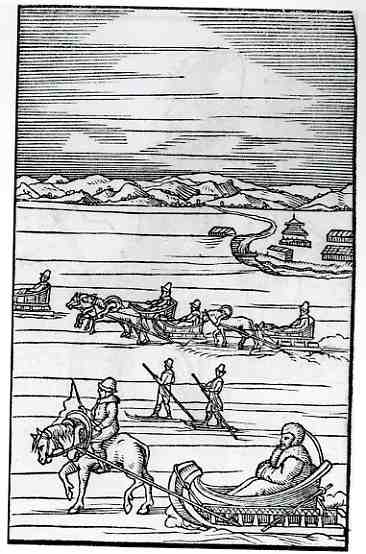
    000-ebay--Nov 4--cold994This woodcut engraving from the Italian edition of Sigismund Herberstein’s Rerum Moscoviticarum Commentarii (literally Notes on Muscovite Affairs) is a fantastic and early image of a terrifically cold scene in deep bleak Russia.  Herberstein (1486-1566) was a Cariolan/Slovene writer, explorer, ethnographer and exceptional diplomat of 69 missions who write this book full of observations of customs, village life, the military–and of course sleighing on frozen rivers and lakes.  But what exactly is going on in the sky? Is this  the aurora borealis?  Or a diffused sunset? Or are these simply clouds in an enormously dry and frigid environment?  I’m not sure precisely what we’re looking at here, but I do know that it is a very *cold* picture.

    See here for a digital version of this work. work.

  • The Detail in the Detail: 20,000 Soldiers & 1 Mule, 1918

    JF Ptak Science Books  Post 358

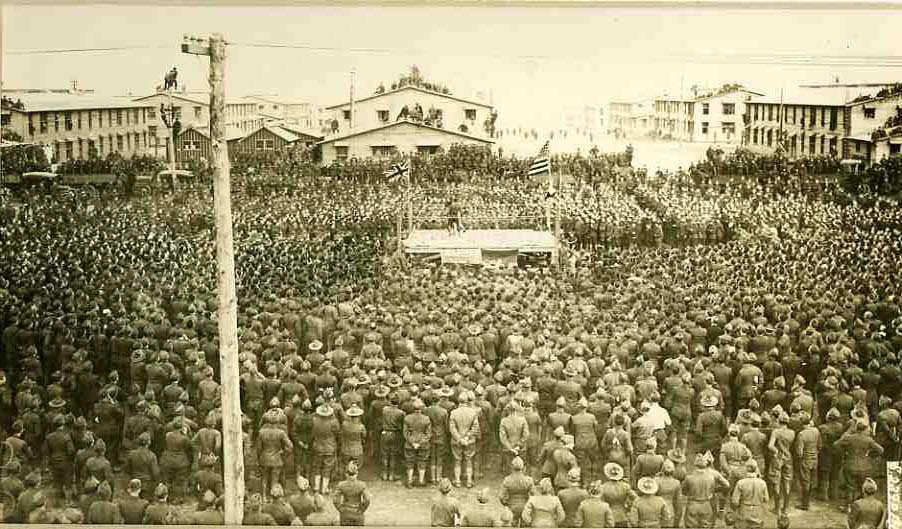
    I’ve made several posts on images of large crowds (most recently on the incredible aerial photograph of the crowd of 100,000 spectators at the Dempsey-Carpentier fight), sometimes using the crowds to put a fleshy face on an otherwise forensic statistic, and sometimes because, well, the photograph is simply beautiful or extraordinary (or both). The later is the case here with this news service photo from Underwood & Underwood (NYC), titled “Boxing Contest Viewed by Twenty Thousand Soldiers”, and published in the middle of 1918.  It depicts a fight between featherweights Hank Schroeder and Jimmy Smith, with the referee being the legendary fighter, Benny Leonard.  (The way that the news photo service worked was that if a newspaper needed a picture, say, of 

    000-ebay--Nov6 boxing crowd997


    American soldiers watching a boxing match to illustrate a story they would have contracted with a company like Underwood and Underwood who would supply the photo and the caption.)  It looks as though Schroeder (who must’ve had a hard time during the war with his name) fought and was defeated by Johnny “The Kid” Troy for the American Expeditionary Force featherweight title–which means that Schroeder may have been the champion, or perhaps not, if the title was vacant).  I couldn’t find anything out about Jimmy Smith, though I did uncover many other Smiths who were boxers in the ‘teens and ‘twenties, including Cyclone Cy, Sgt. Ray, Willie, Petey, Frankie and Buggy. 

    The text that accompanies the image states that “this was one of the most picturesque boxing tournaments ever held”, and I don’t doubt it, as the composition of the crowd, the closeness of the soldiers, and the numbers contained in such a small area, are all pretty singular factors making this an extraordinary photograph.  The fight took place at Camp Upton, ( Suffolk County, Long Island, and named for the great American western explorer and Civil War general), which at the time was still processing troops for the fight overseas. (Camp Upton would be laid to rest after the war until it was reactivated for training for WWII, eventually winding up as part of the Brookhaven National Lab grounds.)

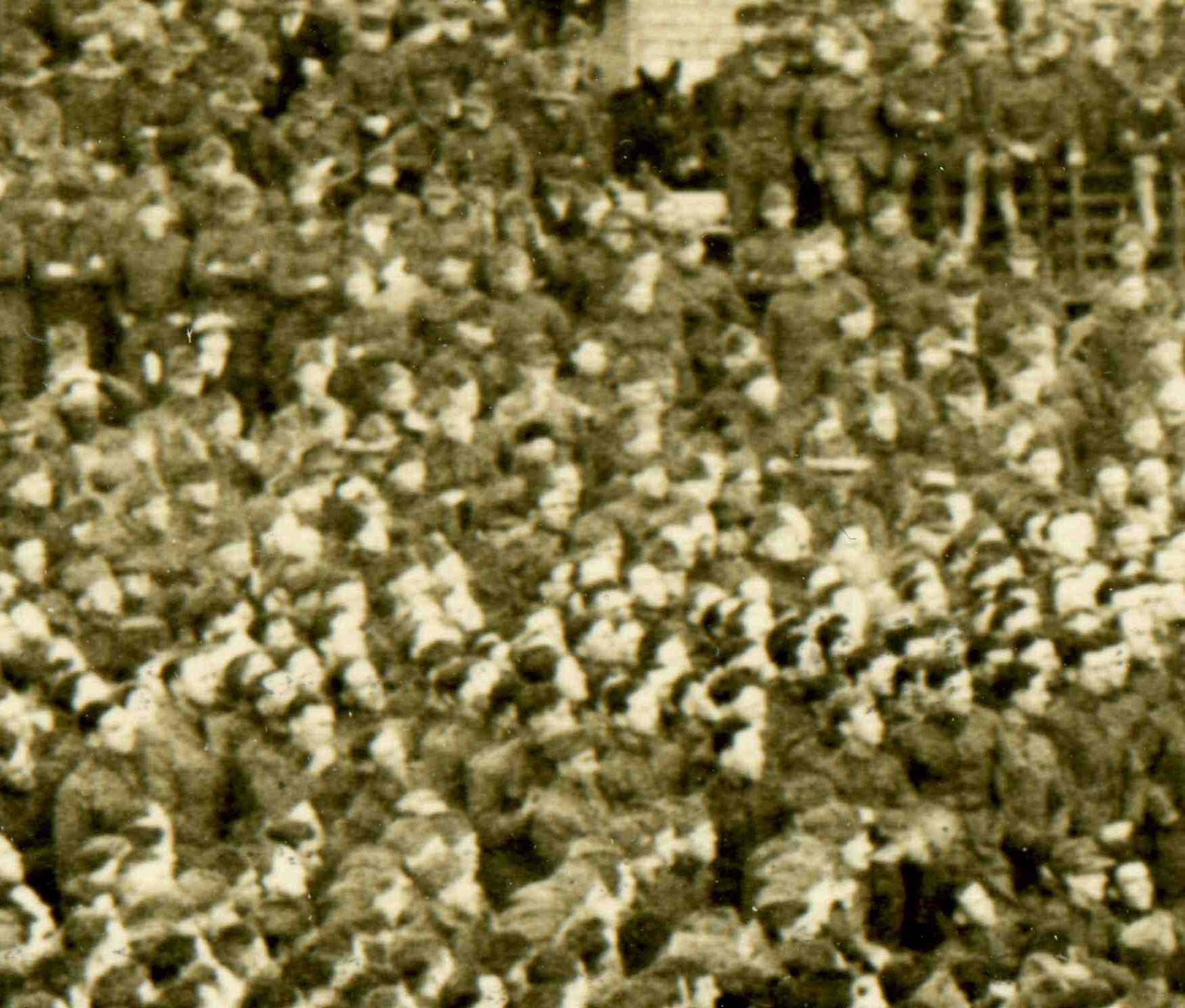
    This detail is from a 5% portion or so of the image from the middle-upper-left, and, I see, happily, includes a mule with the rest of the soldiers.
    000-ebay--Nov6 boxing crowd999

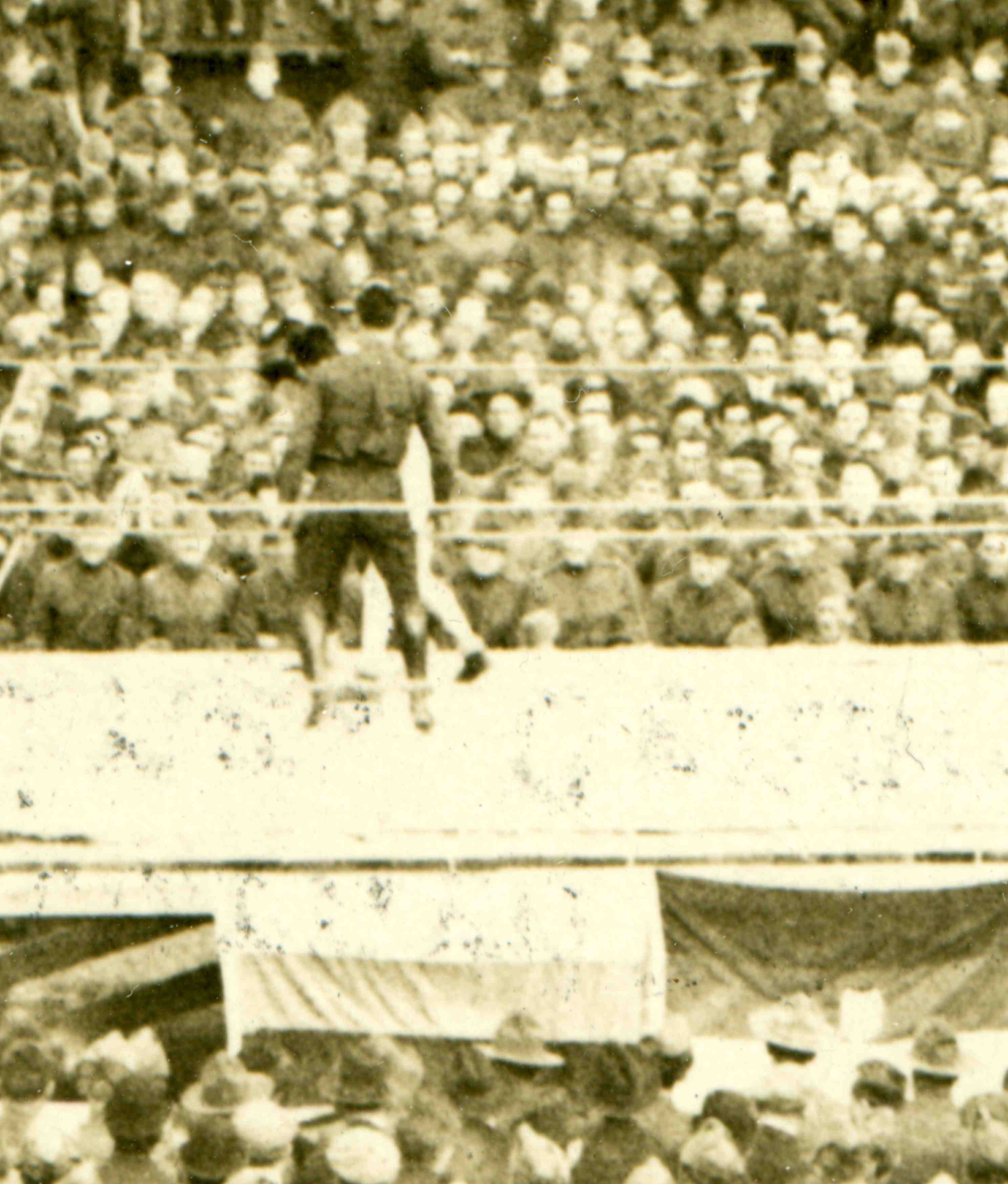
    This is a close-up of the ring itself, where we see Bennt Leonard as the ref with his back to the camera, with the two fighters mixing it up in a tight little one-man ball. I reckon that there must be 300 soldiers in the background of this tight view. 

    000-ebay--Nov6 boxing crowdXYZ002

     000-ebay--Nov6 boxing crowd999XX


  • The Towering Magnificence of the Porcupine, 1604

    JF Ptak Science Books LLC  Post 359                                            

    000-ebay--Nov 4--porcupine995

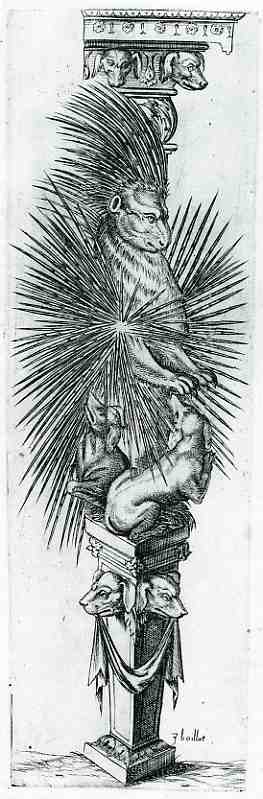
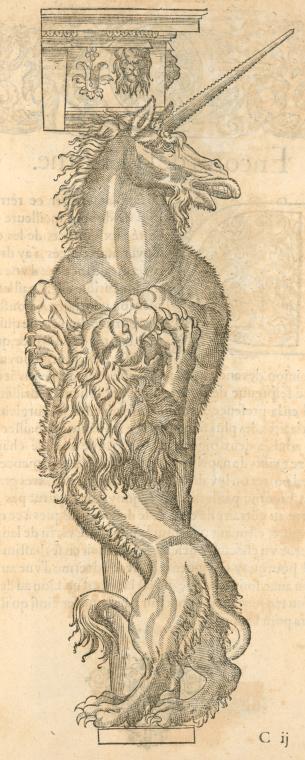
    This is perhaps the greatest monument ever erected to the porcupine–of course it may be the only monument ever erected to the porcupine, but it is undeniably monumental.  This unusual image was published in Strassburg in 1604  in Joseph Boillot’s (1546-1603) sumptuous New Termis Buch (first printed in 1592 as a Nouveaux pourtraits et figures de termes).  It is a bestiary of sorts, a very curious book, offering real and imaginary animals together in alabastered, marblized, memorialized, architectural form, with the  great hope of offering them to fellow engineers and builders for incorporation into the real world.  Or perhaps not, perhaps it was all just done in fun, an exercise, an experience, an artistic creation wrapped inside  the fundus of a great Baroque eyeball.  Unicorn


    The end result is the Boillot produced some extraordinary beasts, wrapping them in extraordinary garments, surrounded by other wonderful animals real and not, and elevated to extraordinary heights.  The powerful unicorn, draped with the vicious but subdued lion; the ass, regal, judicious, pensive, thoughtful, kept in place, or warm, by a dragon. Then of course there is the porcupine, absolutely magnificently appointed with spikes  kept by by dogs, supported at all levels by the creatures.

  • The Queen in the Coal Pit: an Unusual Photograph of Royal-Nearness

    JF Ptak Science Books LLC  Post 360

    000-ebay--Nov 7queenonacar008
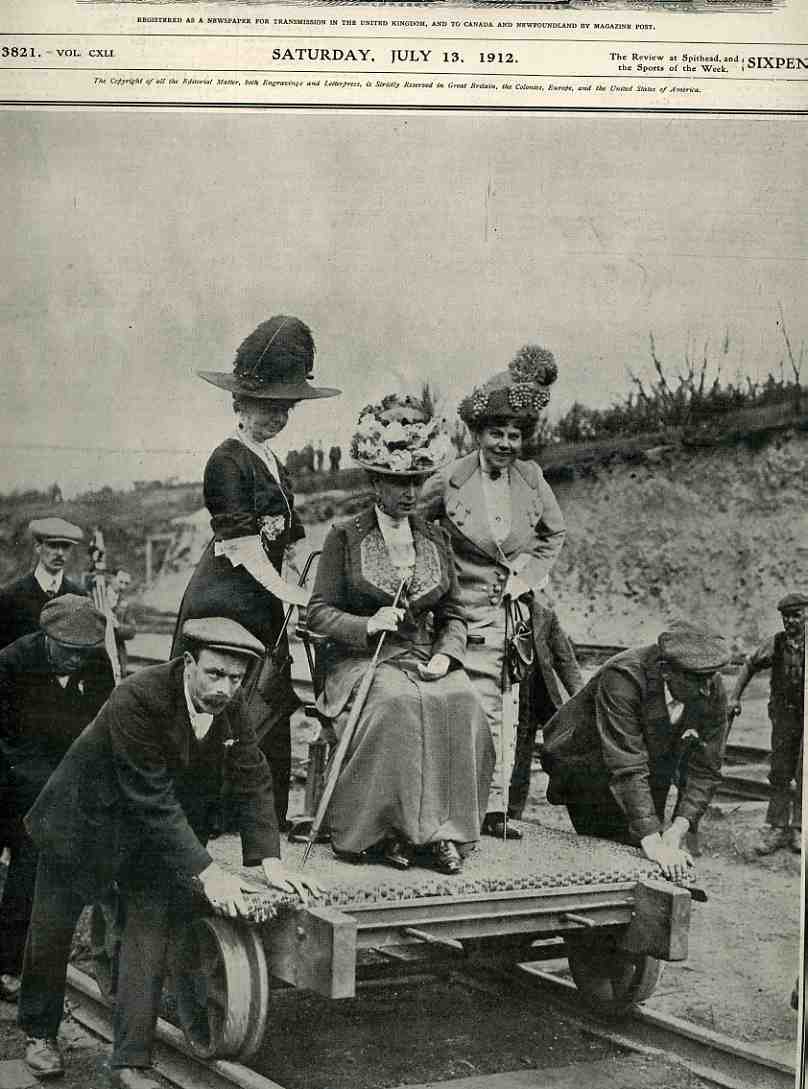
    Its not often that one sees a Queen on a side car (actually a “railway plateplayer’s trolley”)  in a coal bit, but such is the case in this photograph, showng her majesty at the Silverwood Colliery (near Rotherham), in the southern mining districts of Yorkshire.  The King and Queen attended to interests there at the coal mine “quite an hour”, before returning to finery and fuss.  Though fuss is what was made to transport the queen from point to point, her human-propelled on this car, looking not very comfortable, gripping her rapier-thin parasol with her three middle fingers.  I’m sure that the four men selected for this task (the three that we can see wearing similar boutonnieres)–their shoes spotless, their jackets pressed–were told to take it quite slow and steady, what with the queen on board.  I can’t decide what the look is, exactly, from the lead man–at the very least I don’t think that he wants to be there.  For a very busy mine there aren’t very many men in view, save for the guy on the right with the shovel; I feel pretty confident that these working fellows were kept away so as not to drift into the picture, like this guy, who would remind them of the  scrubby un-scrubbed  who made the Empire run. 000-ebay--Nov 7queenonacar009
    (Image from The Illustrated London News, 13 July, 1912)

    000-ebay--Nov 7queenonacar010

  • The Face of War: the Child-Soldier, 1918

    JF Ptak Science Books LLC  Post 361

    000-ebay--Nov 7war trench013
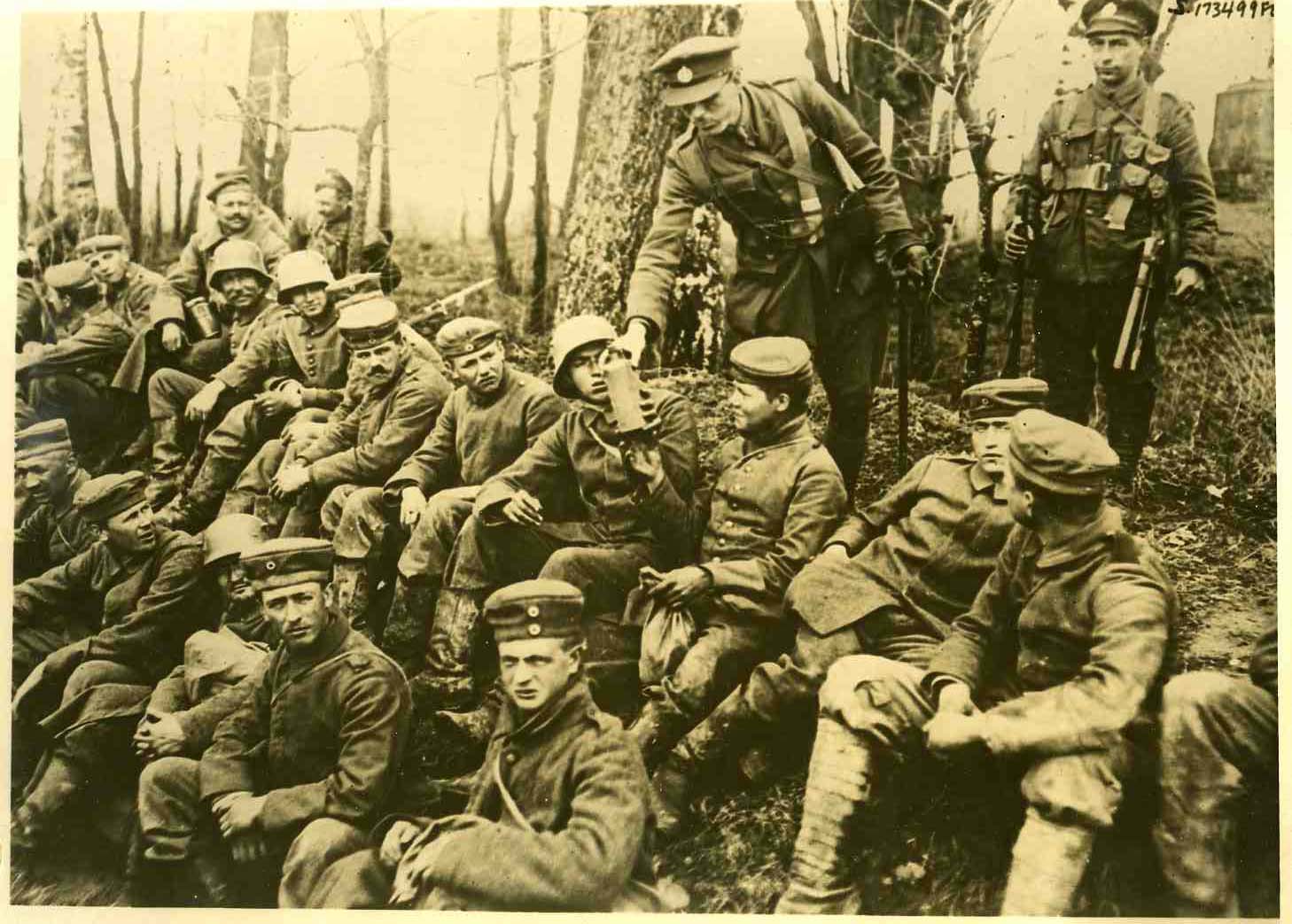
    This is a picture of a captured German soldier, somewhere in France in the middle of 1918, months away from the finale in November.  His tunic is still clean, his buttons as shiny as his baby-fat face, happy to be receiving something–a canteen?–from the British officer, an object of strict attention.  Except that the more our dour soldier to his right has his fingers around the thing and will probably take it from the boy, who looks not only young, but small.  As a matter of fact, most of these soldiers look very young, too young:  sopranos. 

    As the soon-to-be-defeated experience in every war, as the ranks of suitable, able-aged soldiers slim and shrink, the military hand grabs up whatever is available, or left.  I guess this makes sense as most folks in the industrial world didn’t debate child labor laws–with energy, anyway–until the 1920’s.  If you an work in a cotton mill at 8 or 10 or 12 years of age, why not get these workers to carry guns?  The answer is that they’re not capable, for the overwhelming majority, and would make a

    000-ebay--Nov 7war trench014
    000-ebay--Nov 7war trench012 poor soldier, possibly costing more effort and life on his own side
    than on the enemy’s.  But at the tail end of a brutal conflict like
    WWI, the grim matter is that general conscript had been gobbled up and
    fed into the grist mill that had already cost millions of lives. This
    phenomenon is not just a WWI problem, and not an old problem, either: 
    you could construct an alphabet of abusers, and apply it by century: 
    Burundi, Chad, Ivory Coats, Rwanda, Somalia, Sudan, Burma, China, Sri 
    Lanka, Columbia, the Soviet Union, the United States, all pressing
    children into the front line, or as drummer boys, powder boys, cannon
    fodder, mine-clearers, and on and on. Run out of men, and the
    13-year-old boy was next in line, the face filling out any sort of
    uniform at any point in time.

  • Uncommon Races Department: Stilts vs. Runners vs. Horses (en France, bien sur)

    JF Ptak Science Books LLC Post 362

    000-ebay--Nov 8 stiltsmen016
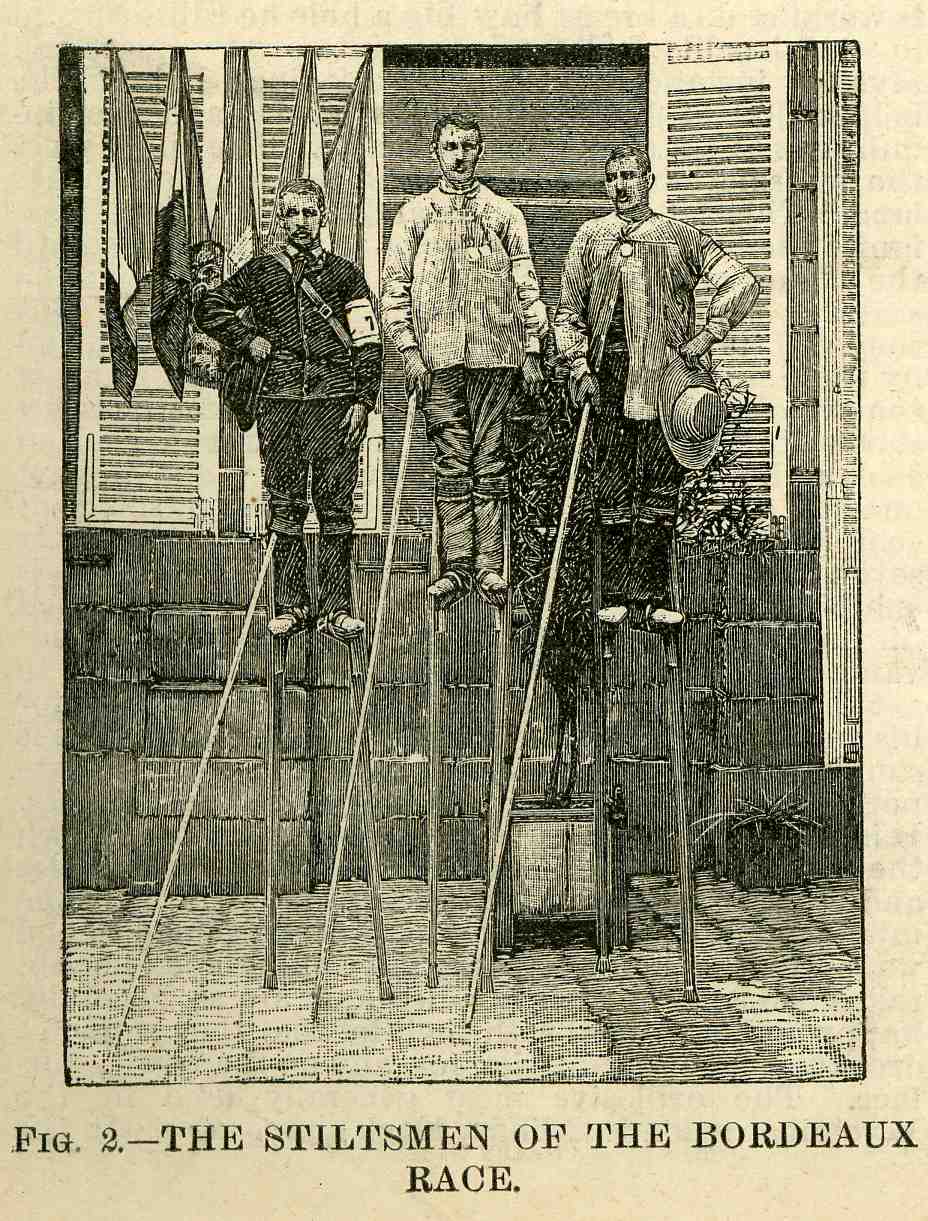
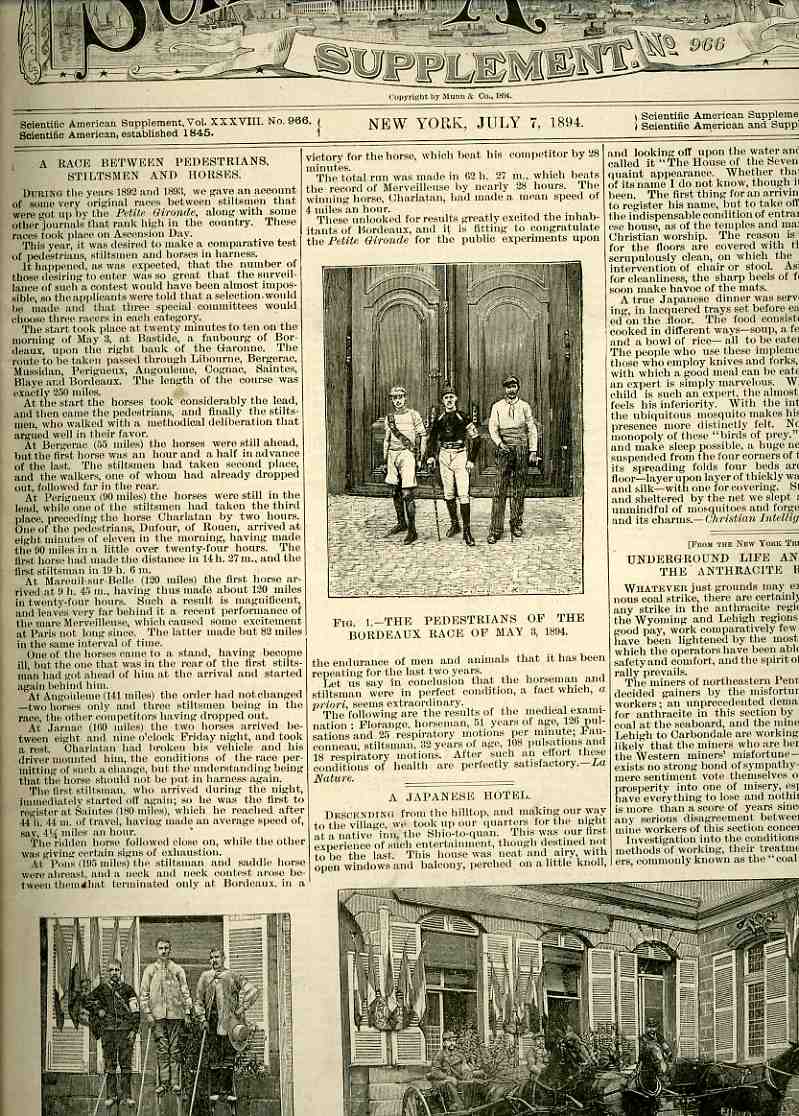
    The title for this rather unwieldy idea of a competition (from the Scientific American, Supplement for 7 July 1894) , “A Race
    Between Pedestrians, Stiltsmern and Horses” begs the question, “Why?”–or at the very least, the title of the article really should have had a
    question mark at the end, rather than being a declaration.  (This is one of those wonderful serendipitous finds–I was looking for an article deeper in this issue on the magneto for the Bell telephone; but it was this extraordinary story that wound up on the front page, under the pretty banner of the magazine.)

    As it turns out, this was an exceptionally serious race, as it was 250 miles in length–I have no idea why it should’ve been so terrifically long, but it was.  The officials were deluged with applicants; so many, in fact, that who ever was in charge decided to go with only three representative for each category.  I can imagine in my happiest state what it would have looked like trying to administer a race like this where there were hundreds of stiltsmen/runners/horse teams strung out along a 250-mile long course.

    After several preliminary reports, we read that after 141 miles that all of the pedestrian competitors had dropped away, leaving two horse teams and all of the stiltsmen.  At the 180-mile mark we learn that all were about neck-and-neck, with one of the stiltsmen completing the distance in 44 hours and 44 minutes (or about 4.5 mph). 


    000-ebay--Nov 8 stiltsmen015
    What happens next in the announcenment of the victor is that there is
    no announcenment.  In the pernicious denouement, the article states:
    “let us say in conclusion” which was hardly so, “that the horsemen and
    stiltsmen were in perfect condition, a fact which, a priori seems
    extraordinary”.  We do learn, however, about the pulse and respiration
    of the contestants (?), though we are not told if the numbers were for
    active or resting, sitting or standing etc. positions–hardly a
    satisfactory ending, especially after having to read the word
    “stiltsmen” so many times. 

    ·Posted by :

    ·in:

    —

Recent Posts

Archives

Categories