JF Ptak Science Books LLC Post 350
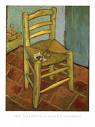
Still another part of the developing theme of empty/vacant people/places is this consideration of Vincent van Gogh’s portraits of absent people–that is, his paintings of famously “empty” chairs that he executed in the middle of December 1888 that were more portraits of the people that they belonged to rather than images of the chairs themselves. Vincent actually described these chairs as “empty” in his wonderful letters (this one from February 1890) to his brother Theo, “one of an empty armchair, (actually Gauguin’s chair)”. He described the painting as an effort to represent Gauguin’s “empty place”: “this is a study of his armchair in dark brown-red wood, the seat greenish rush, and in the place of the absent a lighted candle and modern novels”. 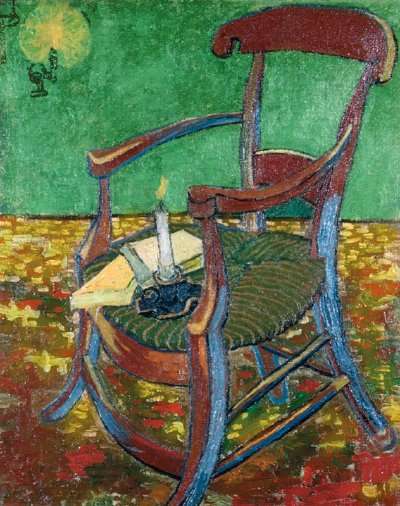
The quotation marks around his “empty space” were in the original and quite purposeful. Gauguin would leave Vincent at about the time Vincent went to the hospital (committed to the hospital, that is) for one of his “spells”; the painting though was made before Gauguin actually left. Whether this is because he, Gauguin, removed himself or because he faded away only in Vincent’s disturbed brain is just not known to me.
The emptiness is a replacement for the men who weren’t in their chairs–Vincent not in his simple/peasant chair, and Gauguin not in his darkish fancy chair. There are symbols galore and sailing away in both images, and much has been written on them (see for example H.R. Graetz The Symbolic Language of Vincent Van Gogh (McGraw Hill, 1963) so I won’t address them here. I was primarily interested in these two images for the different sort of emptiness that they represented–paintings of subjects that weren’t there.