A Daily History of Holes, Dots, Lines, Science, History, Math, Physics, Art, the Unintentional Absurd, Architecture, Maps, Data Visualization, Blank and Missing Things, and so on. |1.6 million words, 7500 images, 4.9 million hits| Press & appearances in The Times, Le Figaro, Mensa, The Economist, The Guardian, Discovery News, Slate, Le Monde, Sci American Blogs, Le Pont, and many other places… 5000+ total posts since 2008.

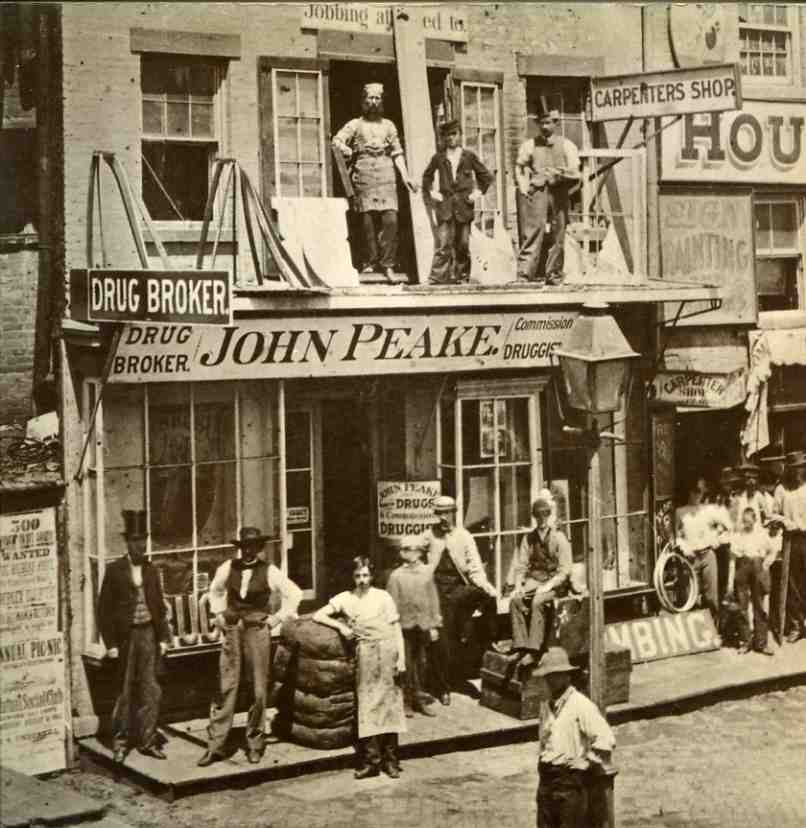
  • Found People in Windows: Hudson Street, NYC, 1865

    JF Ptak Science Books LLC  Post 438
    0 blog dec 21nyc307

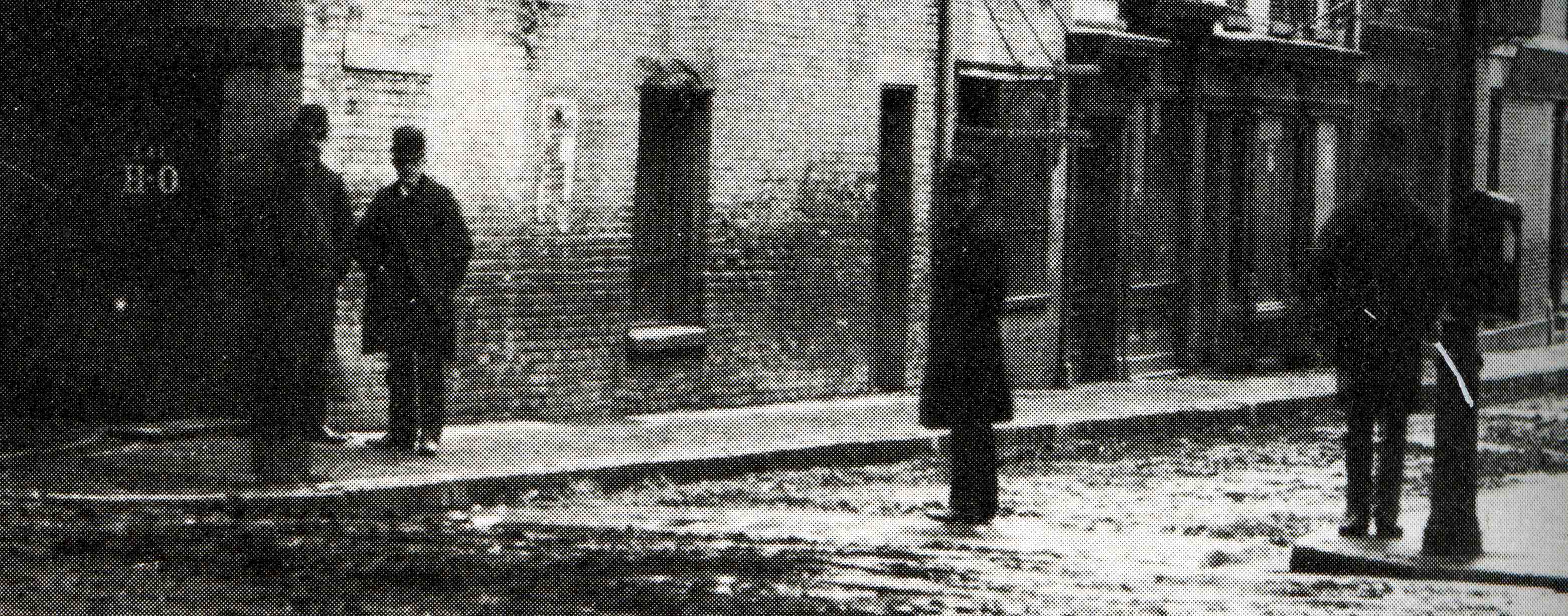
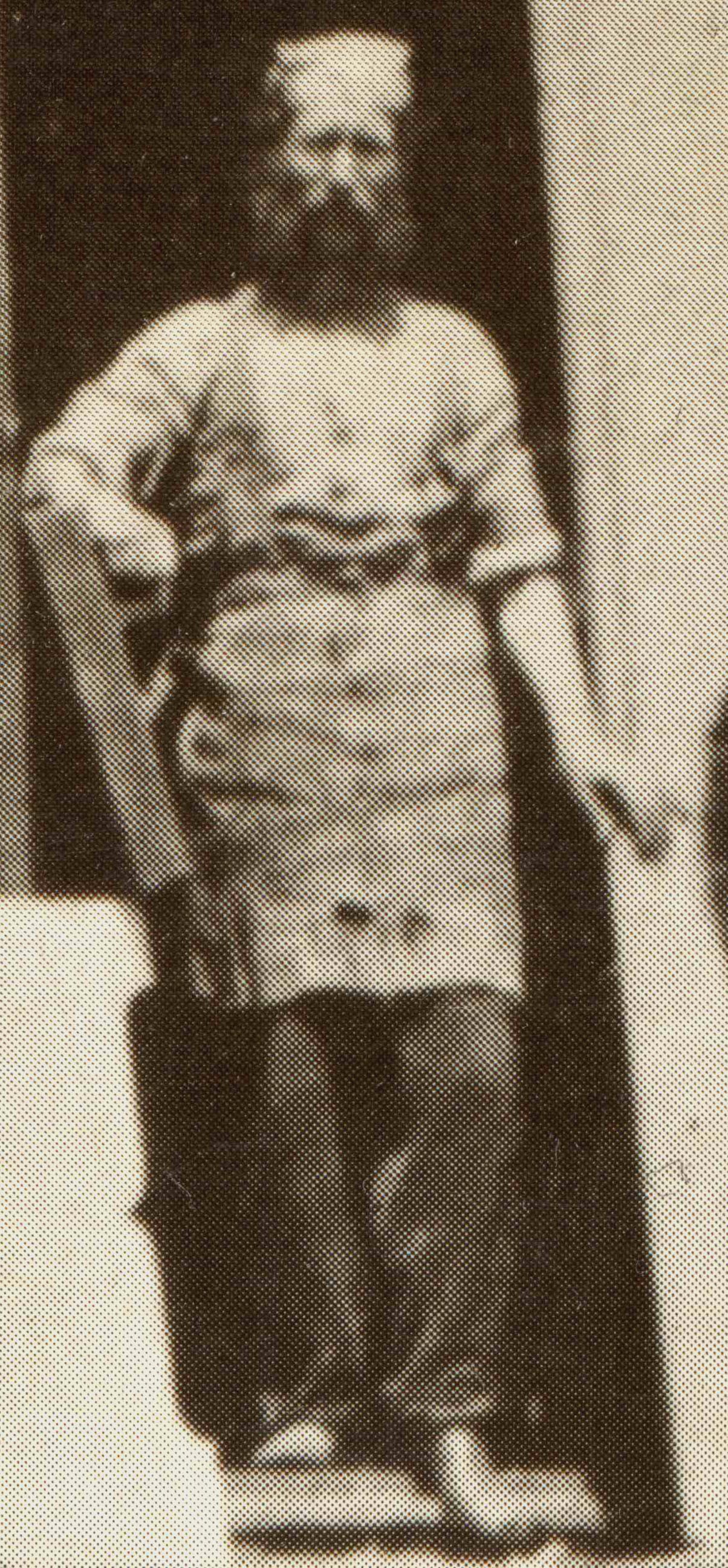
    This fine-looking, serious and imposing specimen steals the show in the photo made to exhibit the John Peake Pharmacy, from whom this carpenter rented his second-story workspace.  I have no doubt that Mr. Peake is the well-dressed fellow in the tall beaver-skinned stovepipe hat at bottom.  The photograph was made by Marcus Ormsby on :Lower Hudson Street in New York City in 1865–one of the signs to the left of the supposed Mr. Peake says something about a picnic taking place in August 1865.  The poster above that one though says something about “300 Wanted” and looks a lot like Civil War recruitment posters that I’ve seen–if it was July/August or thereabouts the war would’ve been over for months….perhaps it was an old poster, perhaps a poster for something else entirely. 

    I do like the carpenter in his working window, there above the “a” in “Peake”–he is holding a substantial planer (or moulder?) in his right hand, and wearing what looks like a union/affiliation 4-square cap.  I’m happy to see that he  is steadying himself with his left hand’s pinkey–for all of that musky confidence he  seems perfectly well in comfort keeping his whole enterprise artistically balanced with a longish-looking pinkey finger.

    The buildings in this photo–not 18th century, I don’t think, but probably thirty years old or so in 1865–are virtually covered by signage advertising what was going on inside:  the larger image shows a printer, carpenter, oil cloth merchant (“oil’d clothing”), pharmacist, paintstore, sign painter and card maker, all there and doing business in about 60 feet of street.  The interesting part of the signs is the very free use of the period “.”, which ends one-word pronouncements, proper names, and just about everything else–I like that. 

    All of this aside, this is just a gorgeous photograph offering a perfect glimpse into a workaday scene in NYC just after the end of the Civil War.
    0 blog dec 21nyc306

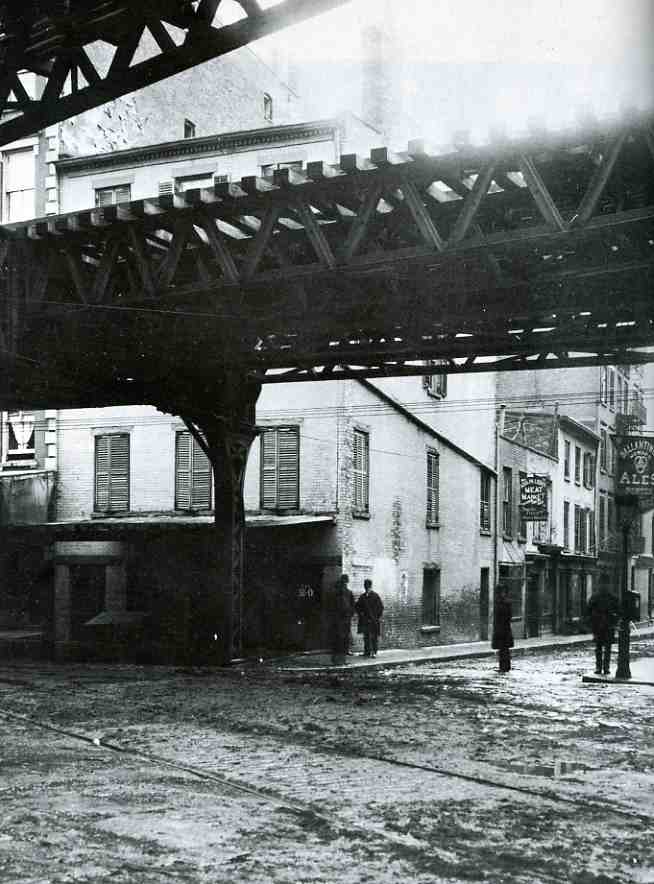
  • Found Portraits Outside and Under Els: Greenwich Street, NYC, 1893

    JF Ptak Science Books  LLC  Post 439

    0 blog dec 22 el309

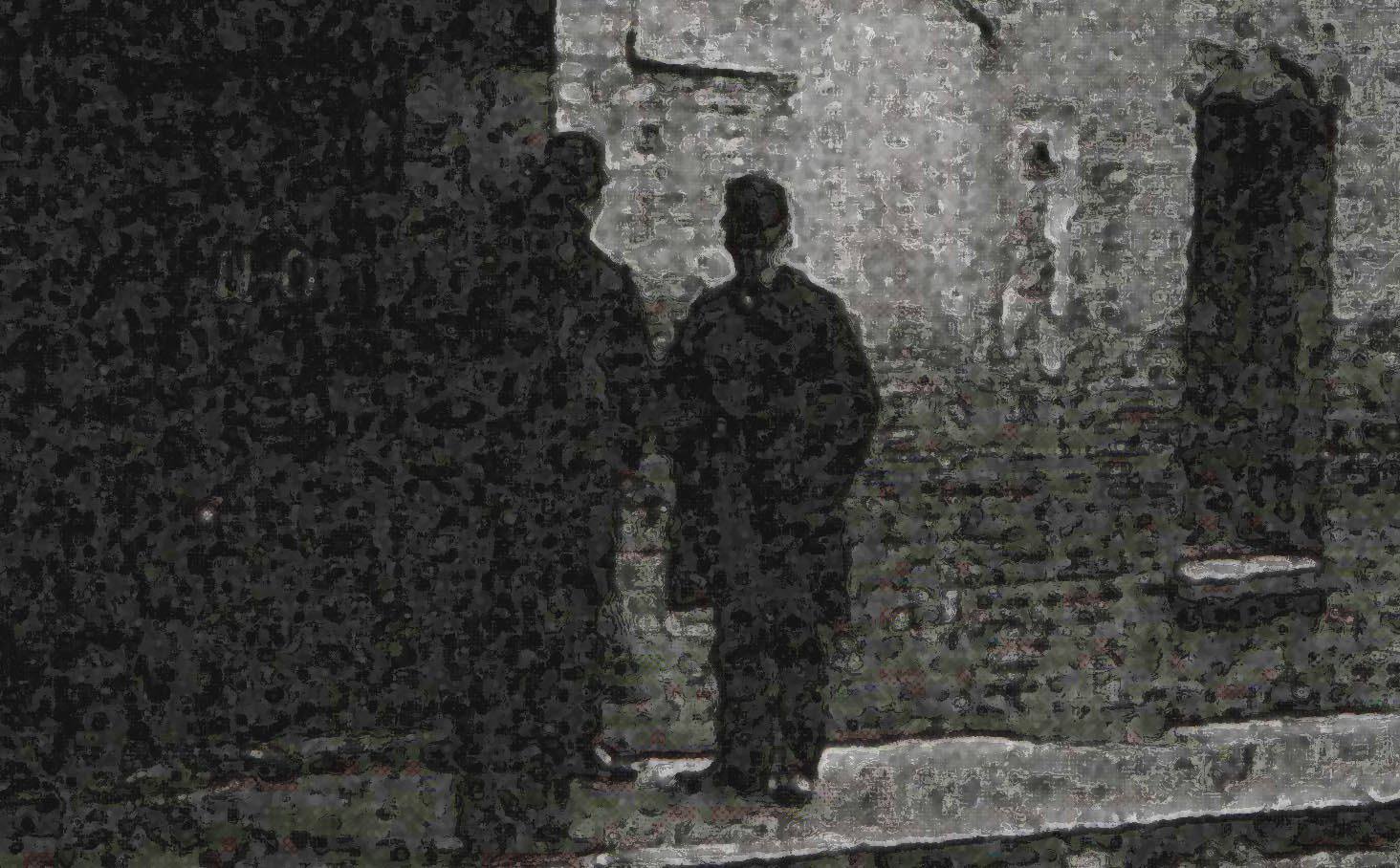
    0 blog dec 22 el311 Just another in a short series of looking hard at NYC photographs, looking for miniature scenes within small scenes within sub-scenes within the whole.  Ken Burns has made a living by wrapping this process around storytelling, I know, but that doesn’t mean that us normal folks can’t do it too.  This capture is of Greenwich and Morris Streets, made by the John S, Hall & Son firm around 1891.  Morris is a very short bugger of a street, barely five houses long, running into Washington Street (which you can’t see because of my bad cropping).  The group of men waiting for the photo to be made are patient, feet close together, all bowlers straight-on, with one man standing nearly in a puddle.  The closer you pull into these men, the more their stories seem wanting to be told. 

    0 blog dec 22 el311 artistic 2

  • A Unique Position for Brain Dissection: Estienne’s near-immortal classic (1545)

    JF Ptak Science Books LLC  Post 441

    0 blog dec 27 estienne dissection323
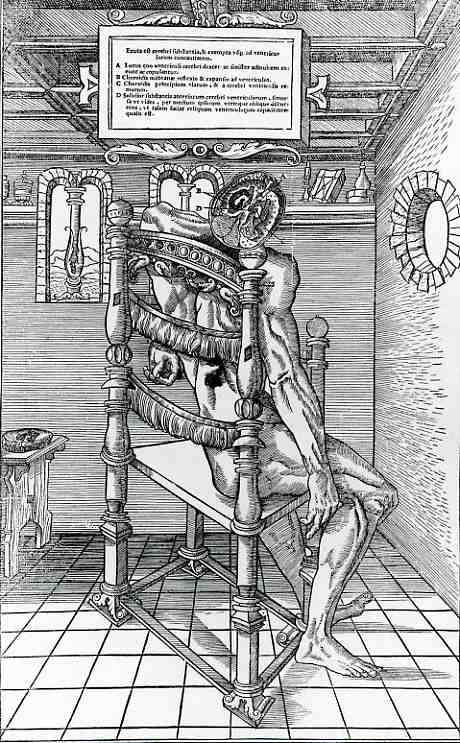
    This remarkable woodcut image comes from Charles Estienne’s (1501-1564) De Dissectione Partium corporis Humani linri tres, a 375-page opus illustrated with 62 fantastic full-page woodcuts and published in 1545  This work is surpassed I think only by the masterpiece Fabrica by Vesalius (1543)–the great standard of anatomical illustration.  Actually, historians have determined that the Estienne book was about ready to go in 1539, but due to a variety of problems, was not published until two years following his fellow-classmate’s Vesalius’ work.  Had things gone a little differently for Estienne, he would most certainly enjoy more ethereal fame than he does now, though I’m sure some of that would be diminished by the weird and exotic nature of many of his prints.  Vesalius chose a somewhat more pragmatic approach, though just about everyone would seem so compared to Estienne.  The Estienne work comes at the beginning of the wave of spectacularly illustrated early books:  Gesner’s 1553 Historiae animalium, Georg Agricola’s De re meteallica (1556), Pierre Belon’s two works on fishes (1555) and birds (1556), Jacques Dalechamps (1513-1588). Chirurgie Françoise… avec plusiers figures des instrumens necessaries pour l’operation manuelle.(1569).and  Matteo Realdo Columbo’s (ca 1510-1559). De re anatomica libri XV (1559). are notable examples of defining-efforts of this period, classics of thought to this day.  And beautiful.

    The beautiful mind here in Estienne’s effort is perhaps the most lovely of all of his illustrations–it is also the most unusual, and the most perspective-abusing.  Our subject is seated in a seemingly-normal armchair of the period, except that the posts lack arms.  The perspective is such that the chair back seems to alternate position, an apparent illusion, changing from front-to-back and back-to-front, while the chair back posts seem to also alternate heights.  Nothing else seems to quite work either:  the floor is at odds with the walls and ceiling, the window is falling inwards, and the chair (again) seems to float when you look at the ceiling.

    Be that as it may, the dissection of the brain takes place with the cadaver in the chair, the body held there with pins (one of which is seen coming through the right shoulder.  The four elements of the brain identified A to D are explained in the ornamental legend at top.  We can see the rest of the top of the head placed on the stool at left, just in case anyone was wondering.

    Again, the Estienne book was a magnificent and somewhat twisty-unusual accomplishment.  Had he published in 1539, which was a definite “maybe”, it would be Estienne who would’ve been known for introducing such things as the first time the entire human body was discussed and illustrated, and the first time that a serial dissection was presented and illustrated.  But he didn’t get the job done in ’39, and so he is not known for these things.  But almost.

    Something happened to Estienne in 1561:  after he had been appointed printer to the king of France, things went badly, and he went into bankruptcy, evidently dying in debtors prison in 1564.  fine, old, principled and somewhat-monied family or not, Estienne didn’t last long in incarceration.

    Estienne’s other works include:

    • Praedium Rusticum (1554), a collection of tracts which he had compiled from ancient writers on various branches of agriculture and which continued to be a favorite book down to the end of the 17th century
    • Dictionarium historicum ad policum (1553), the first French encyclopedia.
    • Thesaurus Ciceronianus (1557)
  • Found Images: The Great Wheel, 1895

    JF Ptak Science Books LLC  Post 442

    0 blog dec 27 great wheel320

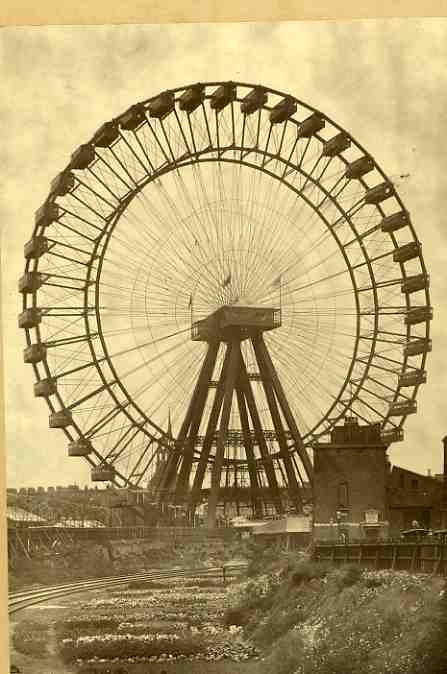
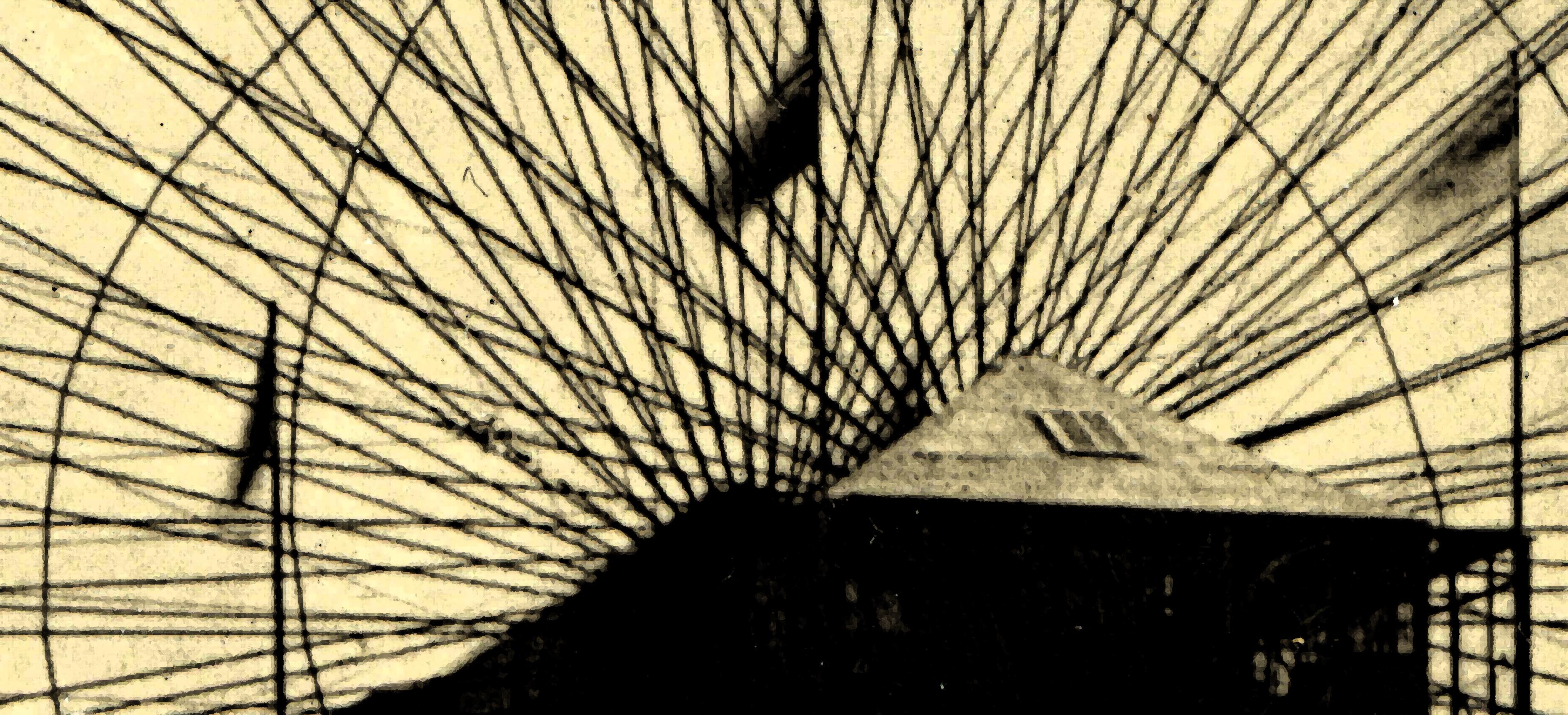
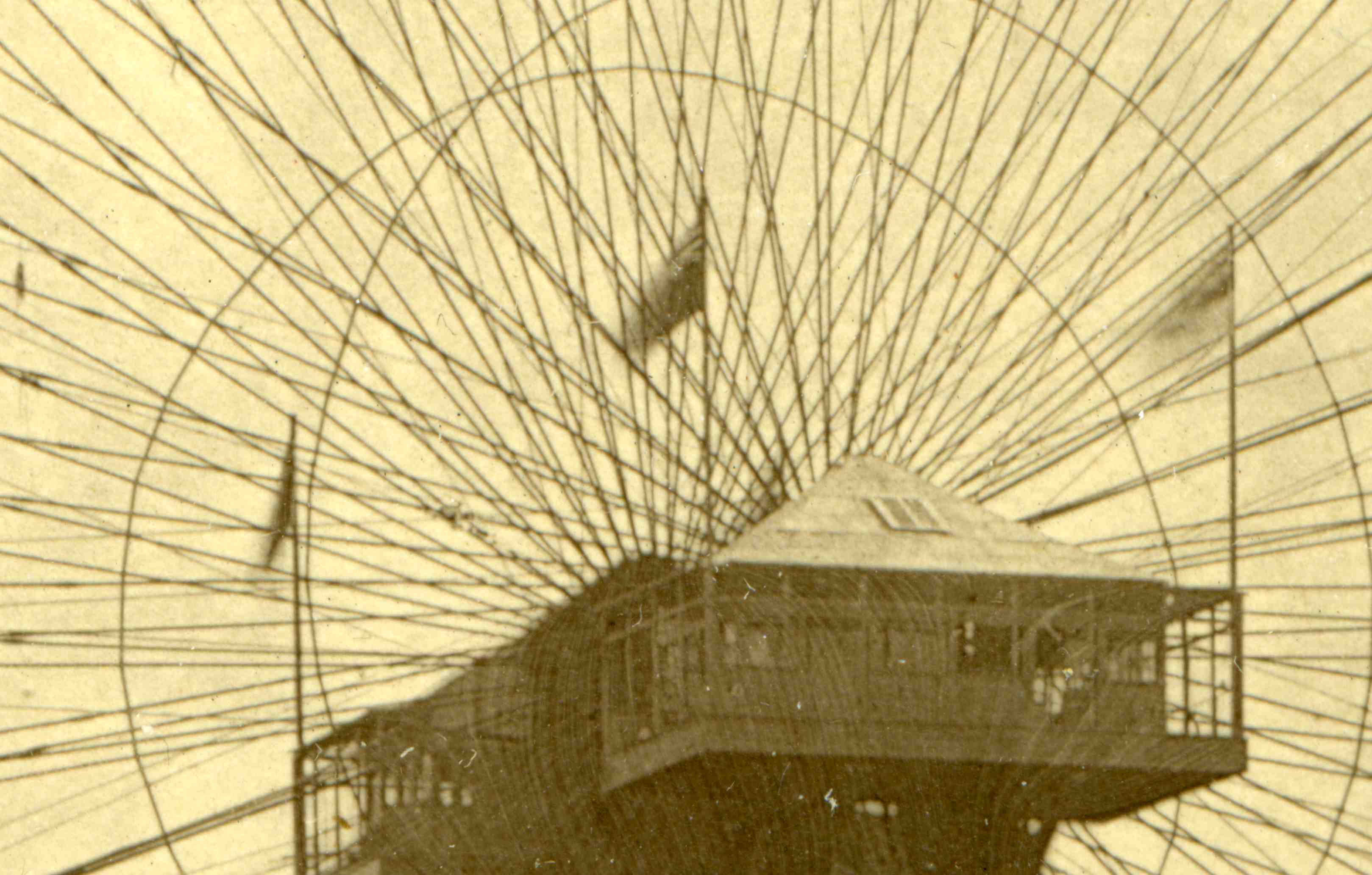
    The Great Wheel appears in Views of London, New Series, “photographed, printed and published by the London Stereoscopic & Photographic Co., Ltd., of Regent Street, London, and printed in 1896.  The “Great Wheel” was the Great Wheel at Earl’s Court, built in 1895, and was a copy of the great wheel constructed for the International Exposition at Chicago in 1893.  This enormous all-steel tension-supported wheel held 1600 people who enjoyed a twenty-minute ride once-around the 300-foot-tall structure.  It was a fantastic piece of architect.

    The photographic reproduction process for the London Views book was by Woodburytype, which is quite fine, and which also allowed for a 3200 dpi scan which allowed for some nice detail to be pulled up in enlargement. 

    0 blog dec 27 great wheel detail frescoe

    0 blog dec 27 great wheel detsil321

  • Found Images: Penny Lane and the Inexpensive Treat, London, 1896

    JF Ptak Science Books LLC   Post 443

    0 blog dec 27 strand318

    “And all the people that come and go
    Stop and say hello.”  —Penny Lane, the Beatles.

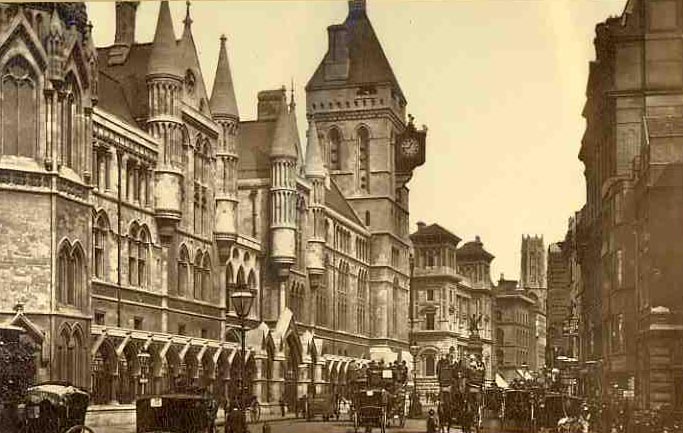
    This lovely image comes from Views of London, New Series, “photographed, printed and
    published by the London Stereoscopic & Photographic Co., Ltd., of
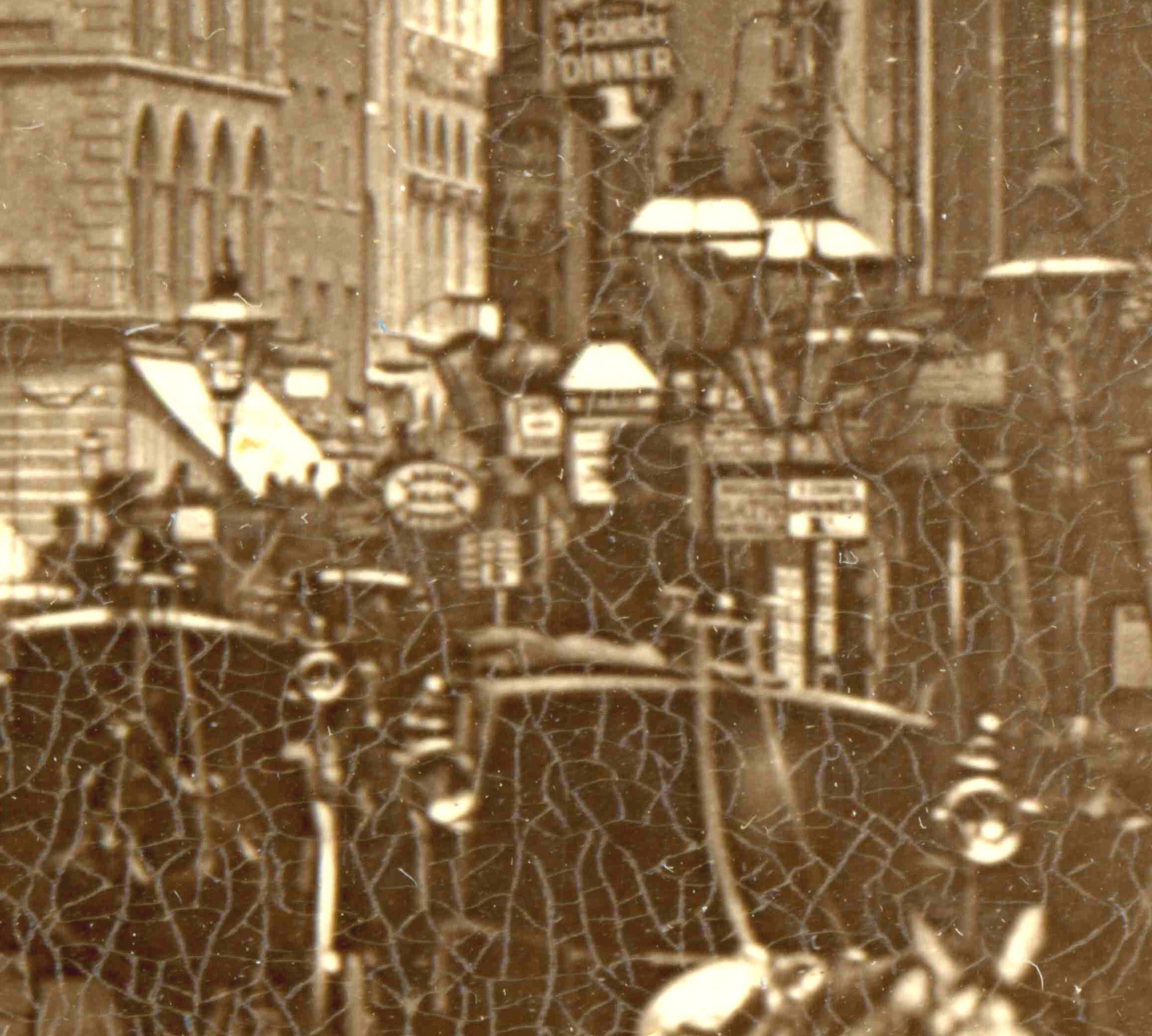
    Regent Street, London”, and printed in 1896.  It shows the street scene outside of the New Law Courts on Fleet Street–new legal chambers that were a mixture of odd Victorian tastes for the modern and Gothic, preserving the Medieval along the way.  But that’s not what I’m attracted by here–I’m interested in the little bit at the bottom-right of the image, a little slice of life of common London trying to make a a few bob off the barristers and support staffs from across the street, of all the people who would come in to say “hello”..  As you can see in the enlargement, there are a host of opportunities available for a penny:  meals, rooms, even a bath.  That’s the possibility of the hidden life of images like this–the incidental and normally invisible landscapes attached to the object of interest are far more interesting to me than the thing that the camera was pointed at. 

    0 blog dec 27 stran detaild319

  • Revelations and Beautifully-Illustrated Prophesies: Methodius, 1504

    JF Ptak Science Books LLC  Post 445

    0 blog dec 23 revelation314

    “For the uneducated the pictures are necessary for reading” (Imperitis pro lectione pictura est.)
    –from the dedication to Revelationes

    So we read in the dedication of this early illustrated work on prophesy. I love that:  “pictures are necessary for reading”.

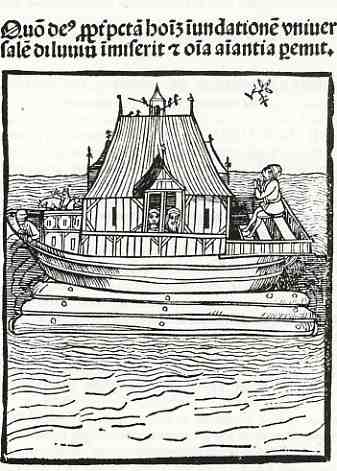
    This magnificent woodcut is one of 61 illustrations appearing in Saint Methodius, the Bishop of Tyre,  (Sebastian Brant) [Revelationes] (Methodius primum Olimpiade et postea Tyri ciuitatum episcopus, sub diocleciano Imperatore, in Calcide civitate (que nigropontuz appelatur ut diuus scribit hieronimus martyrio)) and  printed in Basel just past the turn of the sixteenth century 1504. It was the second edition of this work (the first appearing in 1496), replacing the un-illustrated first edition, making its appeal to the lesser- or unread among its readers. the author had been asked to include illustrations for the benefit of all those who could read only pictures–and for many that’s all they would need, the 61 images were easily understood and consumed.

    Neither edition though was actually written by Methodius, both being, probably, the work of Wolfgang Aitinger, a monk in Ausberg.


    Some Samples of Ancient Literature in Prophesy and Prophetic Revelations:

    Old Testament Apocalypse  Literature:

    Canonical: Isaiah xxiv.-xxvii.; xxxiii.; xxxiv.-xxxv; (Jeremiah xxxiii. 14-26?); Ezekiel ii. 8; xxxviii.-xxxix.; Joel iii. 9-17; Zech. xii—xiv; Daniel.

    Extra-canonical:– Palestinian. 200-100 B.C., Book of Noah, 1 Enoch vi.-xxxvi.; lxxii.-xi, Testaments of the Twelve Patriarchs. 100 B.C. to 1 B.C.:1 Enoch i.-v.; xxxvii.-lxxi.; xci.-civ; Testaments of the Twelve Patriarchs, i.e. T. Lev. x., xiv.-xvi., T. Jud. xxi. 6-xxiii, T. Zeb. ix., T. Dan. v. 6, 7; Psalms of Solomon. A.D. 1-100 and later:Assumption of Moses, Apocalypse of Baruch., 4 Ezra, Greek Apocalypse of Baruch, Apocalypse of Zephaniah, Apocalypse of Abraham, Prayer of Joseph, Book of Eldad and Modad, Apocalypse of Elijah. Hellenistic: 2 Enoch, Oracles of Hystaspes. Testament of Job, Testaments of the III. Patriarchs,Sibylline Oracles (excluding Christian portions).

    New Testament Apocalypse Literature:

    Canonical: Apocalypse in Mark xiii. (Matthew xxiv., Luke xxi.).2 Thessalonians ii,Revelation.

    Apocryphal: Apocalypse of Peter, Testament of Hezekiah, Testament of Abraham, Oracles of Hystaspes, Vision of Isaiah, Shepherd of Hermas. 5 Ezra 6 Ezra, Christian Sibyllines, Apocalypses of Paul, Thomas and Stephen, Apocalypses of Esdras, Paul, John, Peter, The Virgin, Sedrach, Daniel, Revelations of Bartholomew, Questions of Bartholomew.

  • Living Past an Iconographic Prime: Modernity Welcomes the Past

    JF Ptak Science Books LLC  Post 446

    Roybean
    Woodrow Call, the
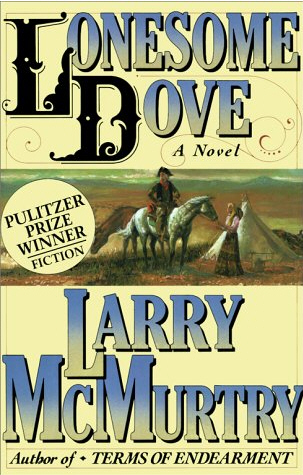
    major and surviving figure in the four volumes of Larry McMurtry’s  Great
    American Novel/tetraology,  Lonesome Dove, is in his early seventies (about 73 years) old
    when we see him in the premier volume  Streets of Laredo.  (He is born ca. 1823 and is approximately 20
    years old when he first teams up with Gus McCrae in the series’ premier installment, Dead Mans Walk (which takes
    place ca. 1843).  Although he seems to be
    an old man who is not a part of the times in which he lived, he is far from
    being without company.  It is easy to
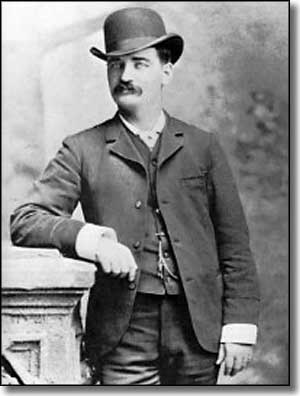
    think of frontier legends like Pat Garrett and Charles Goodnight as being a
    part of ancient modern American history—and they were, temporally, but not
    physically.  Even though Pat Garrett
    kills Billy the Kid in 1882, Garrett lives until 1908;  Charley Goodnight helps begin the concept of
    the cattle drive in Texas in 1860, and then lives another 69 years.  Bat Masterson and Wyatt Earp became famous in
    the 1870’s, and both lived until what seems to be an incongruously close
    time—the 1920’s. It just seems incredible to me that figures like this survived nearly into the lifetime of my father.

    LarryMcMurtry_LonesomeDove

    The frontier legends
    below all transcended their place in history by many decades, and brought the
    idea of a living history just a little closer to comprehension; their
    survivability brings to bear  how close
    the grand epoch of the frontier is to America, even in 2008.


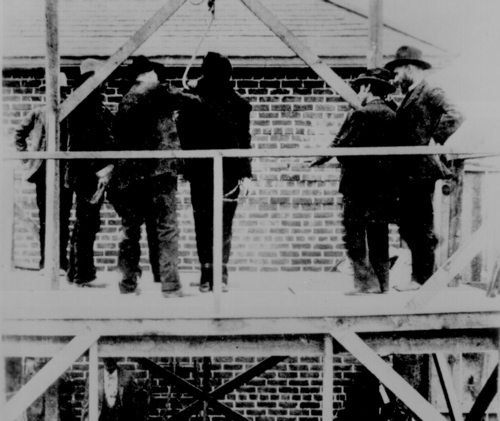
    Hanging Judge Isaac Parker, (b. 1834) dies 1896Hanging500

    Shanghai Peirce, (b. 1834), dies in 1900.

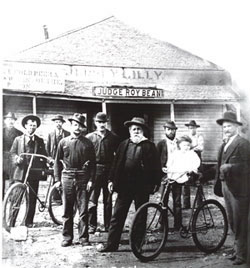
    Judge Roy Bean (b. 1825) lives until 1903

    Pat Garrett (b. 1850), dies in 1908Batmasterson1879

    Billy Dixon, 1850-1913

    George Bent (Fort), 1843-1918

    Bat Masterson, 1853-1921

    Thomas Moran, the great painter and the illuminist who
    brought the West back East before photography, lived 90 years to 1826Annie-Oakley-peerless-wing-shot
    .

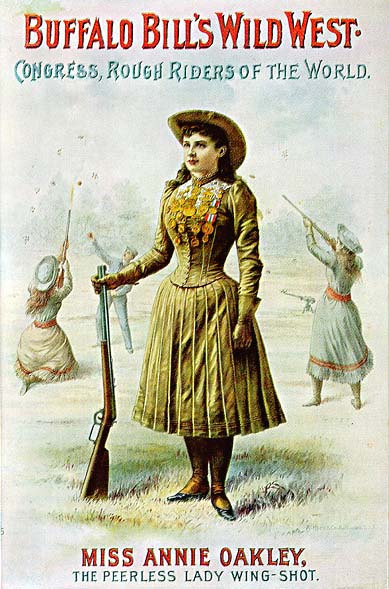
     Annie Oakley (the”peerless Lady wing-shot”), born just before the war,  height.

    Big Tree (Adoeettee) Kiowa Chief, born 1845, lives until 1929.

    Black Elk, the great chief, (“Black Elk Speaks”),
    was born in 1863 and died in 1950.

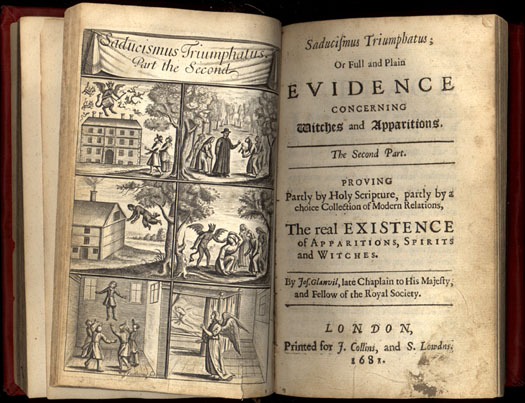
  • Elves, Fairies, Wanton Spirits, Genius, Spectres and Ghosts: Tremendous Titles in the History of Witchcraft.

    JF Ptak Science Books LLC  Post 447

    Scot
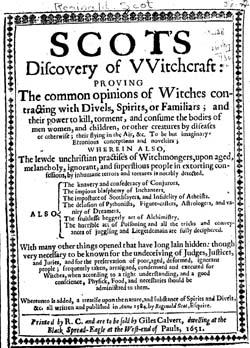
    Below are 31 titles relating to witches and witchcraft, printed in the 16th through 18th century–they all share some absolutely fabulous title constructions, elements and phrases. For example, the great work by Reginald Scot (listed first, below) contains the following phrasing IN ITS TITLE:

    “lewde dealing of witches and witchmongers 

    knaverie of conjurors
    impietie of inchanters
    follie of soothsaiers
    impudent falsehood of cousenors
    infidelitie of atheiststs
    pestilent practises of Pythonists
    curiositie of figurecasters
    vanitie of dreamers
    beggerlie art of Alcumystrie
    abomination of idolatrie, the
    horrible art of poisoning
    vertue and power of naturall magicke,
    conveiances of legierdemaine and juggling are deciphered…”

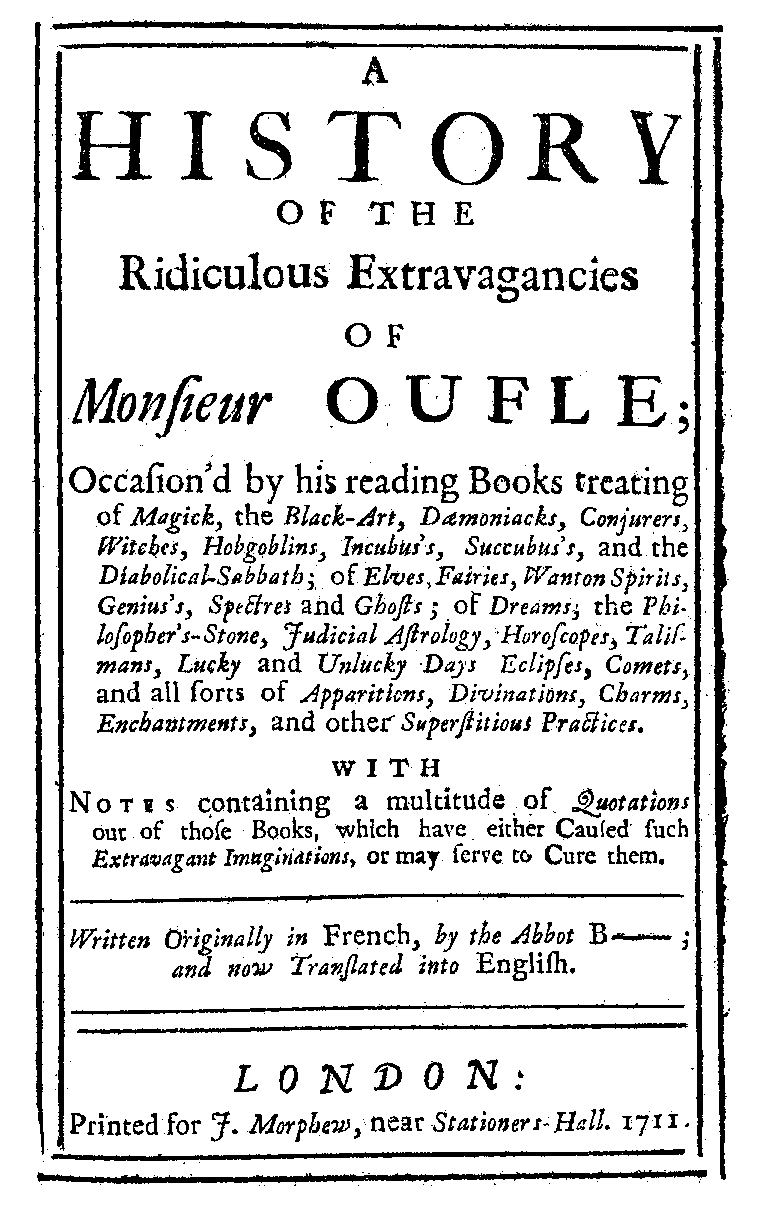
    Laurent.Bordelon’s title includes the following spectacular efforts:  “Ridiculous Extravagancies of…Magick, the Black-Art, Daemoniacks, Conjurers, Witches, Hobgoblins, Incubus’s, Succubus’s and the Diabolical-Sabbath,Elves, Fairies, Wanton Spirits, Genius’s, Spectres and Ghosts, Dreams, the Philosopher’s-Stone, Judicial Astrology, Horoscopes,Talismans, Lucky and Unlucky Days, Eclipses, Comets, and all sorts of Apparitions, Divinations, Charms, Enchantments…”

    Bordelon

    And on and on.  In my experience the titles of books on witchcraft and demonology are among the most creative and imaginatively flouncy.
    Enjoy.

    Scot, Reginald. The Discoverie of Witchcraft, Wherein the lewd dealing of witches and witchmongers is notablie detected, the knaverie of conjurors, the impietie of inchanters, the follie of soothsaiers, the impudent falsehood of cousenors, the infidelity of atheists, the pestilent practises of Pythonists, the curiositie of figurecasters, the vanitie of dreamers, the beggerlie art of Alcumystrie, The abomination of idolatrie, the horrible art of poisoning, the vertue and power of naturall magicke, and all the conveiances of legierdemaine and juggling
     are deciphered: and many other things opened, which have long been hidden, howbeit verie necessarie to be known
    , 1584. Imprinted at London, by William Brome.

    Bordelon, L. A History of the Ridiculous Extravagancies of Monsieur Oufle; Occasion’d by his reading Books treating of Magick, the Black-Art, Daemoniacks, Conjurers, Witches,  Hobgoblins, Incubus’s, Succubus’s and the Diabolical-Sabbath; of Elves, Fairies, Wanton Spirits, Genius’s, Spectres and Ghosts; of  Dreams, the Philosopher’s-Stone, Judicial Astrology, Horoscopes,
      Talismans, Lucky and Unlucky Days, Eclipses, Comets,sorts of Apparitions, Divinations, Charms, Enchantments and otherGlanvil2sm

           Superstitious Practices. With Notes containing a multitude of
           Quotations out of those Books, which have either Caused such
           Extravagant Imaginations, or may serve to Cure them. Written
           originally in French, by the Abbot B–; and now translated into
           English.
    London, Printed for J. Morphew near Stationer’s Hill,
           1711.

    ·Posted by :

    ·in:

    —
  • Blank & Missing People, XXVIII: Mustachioed Number People

    JF Ptak Science Books LLC  Post 448

    0 blog dec 29missing men326
    I have been surprised by the strength and endurance of this series on
    blank and missing people–astonished, really, that there would be so
    much that would present itself in such incidental ways.  I do not go
    out of my way to find these things, they just come to me in the course
    of daily living; perhaps if I looked for them I would see them less
    frequently.

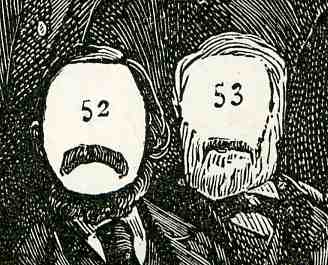
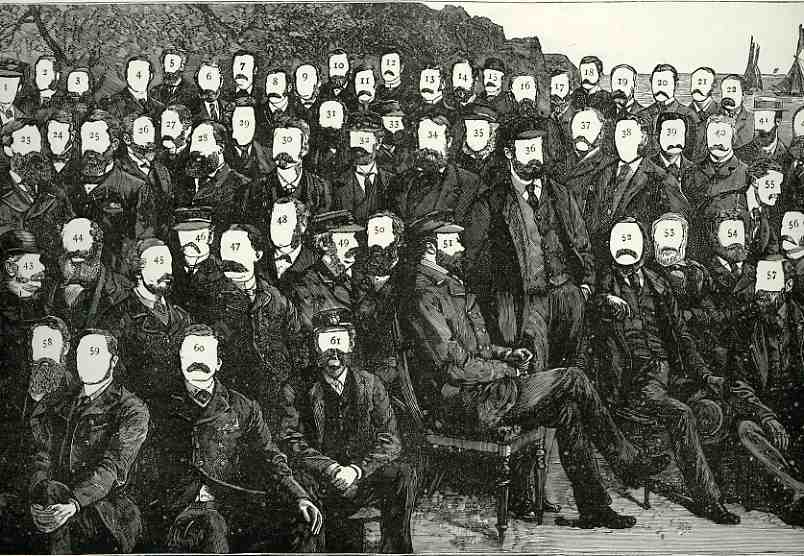
    Mr. 52 and Mr. 53 are part of a group picture of Esteemed British Yachtsmen in the 24 August 1884 issue of The Graphic magazine–it is actually a smartly-conceived thumbnail image index of a double-page photo, an easily-readable key to a complex photo.  The effect of taking it out of context, though, is remarkable, turning the index into a wood engraving of number-only-blank-faced people with facial hair attributes. 

    0 blog dec 29missing men325

    THis image a

    ·Posted by :

    ·in:

  • The Air Bridge to Nowhere: the Friendly Skies, Chicago to Moscow, 1944

    JF Ptak Science Books LLC  Post 449

    0 blog dec 29missing men327
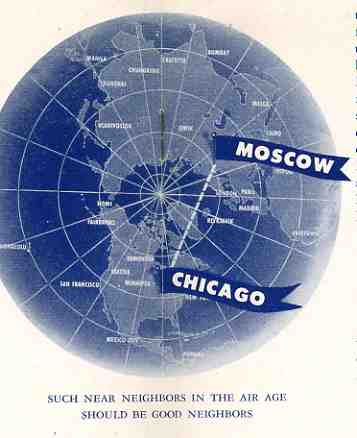
    This hopeful and terrifically unbalanced homage to wistful loveliness of the Soviet Union, The Businessman’s Stake in American-Soviet Friendship,
    by Harland Allen, was published in Chicago in 1944, and seems to me a
    small prayer for what the post-war world might bring about.  Allen
    forced the then-popular economic thought that the people dangling from
    the visor of Uncle Joe Stalin’s cap were money angels rather than
    Russian corpses, and that the air lane shown in the trans-polar map at
    right would soon be filled with American exports headed to Moscow.
    (Little did he know that in  a decade this line would be the distance
    traveled by ICBMs, or close enough to it.)  At least that seems to be
    the hope here, Stalin forcibly melted into the Big Board, the Soviet
    Union trading on the DOW as CCCP (Inc.).

    The small pamphlet
    received some spirited review support from the Northwestern University
    School of Law, the Des Moines Register and Tribune,the Society for the
    Advancement of Management, the Meadville Theological School, and Laird
    Dell Attorney at Law. And that’s about it. But these were ripe times
    for this sort of pro-Soviet thought:  after all, dozens of millions of
    Russians had been killed in the fight in the East against their former
    Nazi allies, and without all of that blood sacrifice I have no doubt
    that the war would’ve lasted for some years to come.*  The U.S. had a
    powerful ally in the Soviet Union regardless of what had happened there
    in the 1930’s and regardless of their attack on Finland and regardless
    of their Pact with Hitler–from 1942 onward they would hinder and halt
    the Nazi army and nearly ground the whole thing down to a nub, crushing
    the German capacity to fight in the west. The atomic bomb was to be
    untried until July 1945, and the outcome of the war was not yet known. 
    Love for the Soviet Union was high in the sky at this point, FDR making
    many airy and superior statements about our new ally, while the rest of
    the propaganda machine was lubed and oiled for the coming fight.  LIFE
    magazine went so far as to pronounce Lenin as “perhaps the greatest man
    of modern times” and that the NKVD was analogous to the FBI.  Even old
    anti-Soviet hawks like MacArthur publicly pronounced their admiration
    for the new regime.  (George Patton famously did not.)

    Back to
    our pamphlet: aside from some romantic vision of the Soviet Union,
    Allen maintained that the U.S. needed to deal with the CCCP because of
    its enormous army (which he did not want to annoy and fight) and its
    impending “mastery o the air”–it would be better to trade and make
    money than it would be to make war.  Allen pointed out that some of the
    problems of Americans dealing with the political system in the Soviet
    Union were inadequate reports on what he described as the country’s
    economic “principle of national planning“. .(I hardly know what
    George Orwell might’ve said about the supremely understated summation
    of the Soviet system as “national planning” and the fruitless and
    embarrassingly weak attempt at  controlling language to describe the
    monstrously repressive regime.)  He continues:  “Journalists have been
    positively fearful of open-minded reporting in Russia lest they get
    tagged–or tarred–with the familiar epithet “communist”, and then goes
    on to describe the similarities of the “two great peace-loving
    peoples”. 

    And so it goes, on and on in this pamphlet–it just
    isn’t worth going into any further than this.  The euphoric sheen of
    pro-Soviet sentiment and appreciation wore thinner as the war
    progressed, truer feelings becoming more exposed as the German army
    retreated westward, reproducing the famous Minard chart of Napoleon’s
    disappeared army in a war 130 years earlier.  The endgame for European
    real estate, fumbled badly by the dying FDR at Yalta, brought out the
    cardboard smiles between the US and the Soviet Union, relations
    strained to the point that the military employment of the atomic bomb
    was in some not-minor sense made to bridle Soviet intentions.

    But that was still two years hence for Mr. Allen, who I guess couldn’t see into the future that far, even if his work was heralded by the Des Moines Register.  He just didn’t do a very good job of withstanding the test of time, even though that test ended in 1946.

  • A Room with a View: Hornor’s Panorama of London (1821) and its Cache of Irony

    JF Ptak Science Books LLC  Post 450

    0 blog dec 30 room at the top328

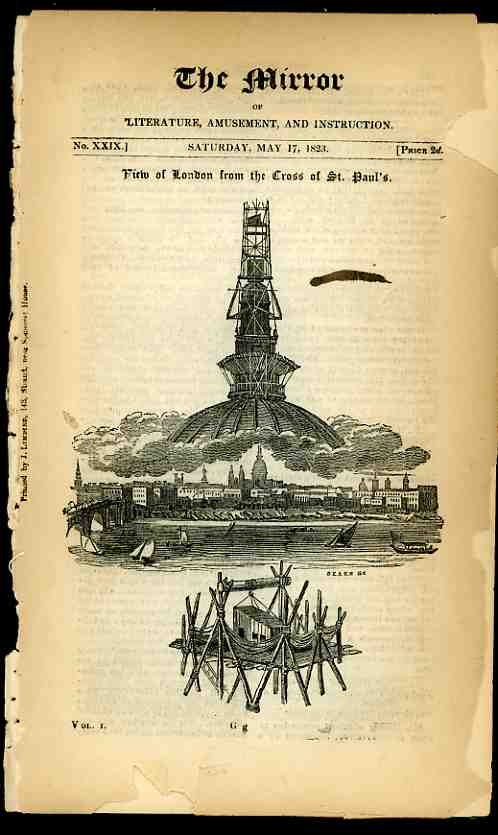
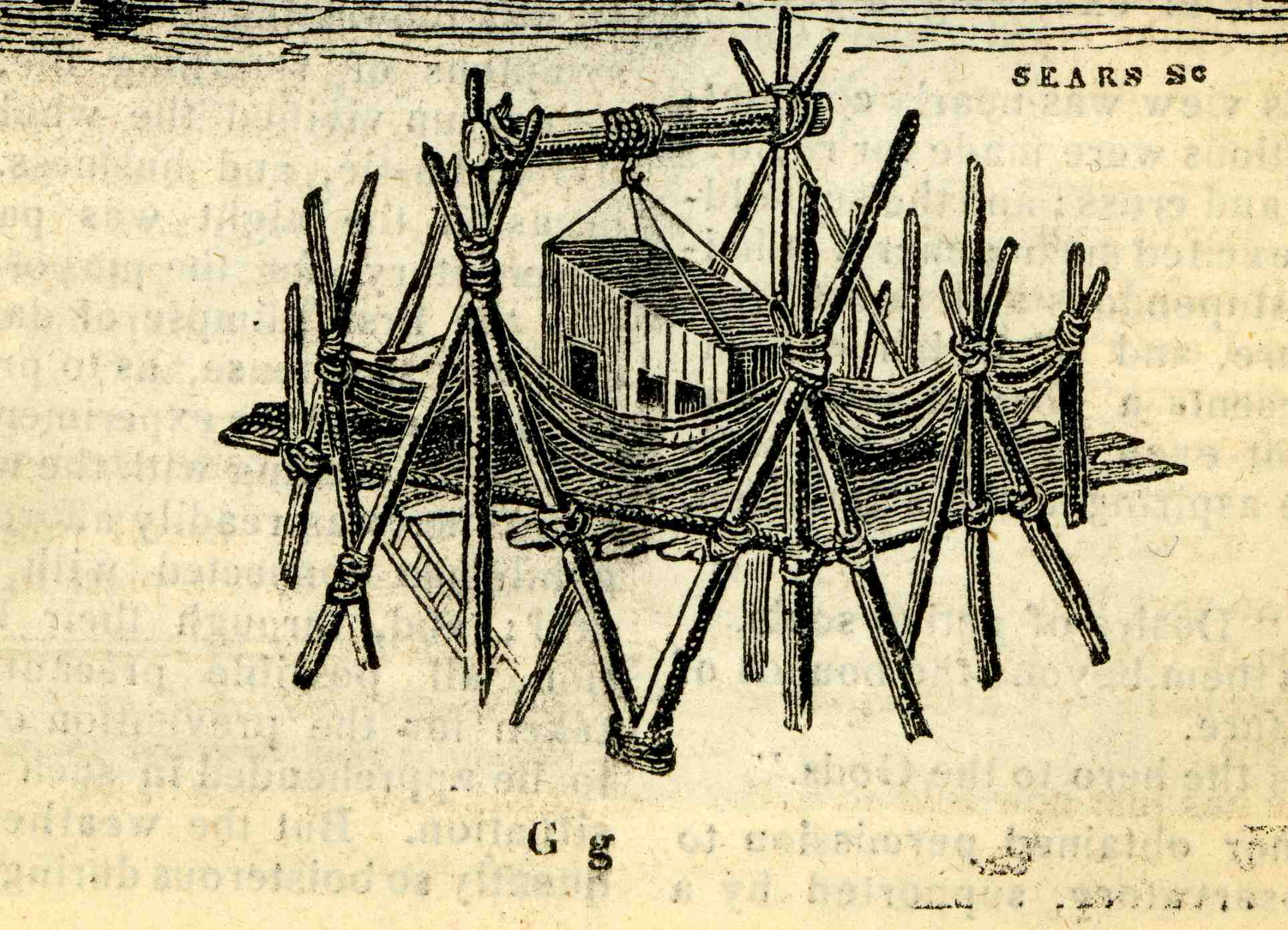
    Before satellite imagery, before airplanes, before balloons, and before photography, the only way of obtaining large-scale and factual panoramic views was to get to a good observation point and draw away.  Thomas Hornor (a surveyor and panoramist, 1785-1844) did just such a thing in 1821:  taking advantage of the cross being removed for cleaning from the top of St. Paul’s (London), he somehow convinced the powers-that-be to allow him to construct an observation post for himself in its place for  a long term, uninterrupted and altogether fabulous view of the city of London.  He set up shop up there, about 400 feet above the ground, and stayed, making minutely detailed drawings of the cityscape, working with a telescope and a great deal of reserve.  And some amount of courage–we can see from this detail of his story published in The Mirrour in 1823 that his shack was, well, not the safest-looking shack that has ever been built atop a cathedral. 

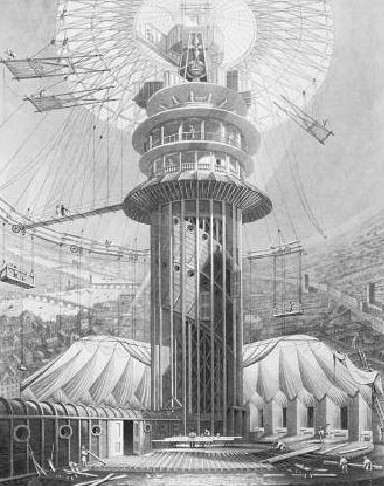
    The end result was an enormous, fantastically detailed acre-sized painting which was installed and displayed in Decimus Burton’s Colosseum. The installation was as much an artwork as the painting–it was affixed to the walls and people would view it from a multi-story observation deck in the middle of the building.  For those who didn’t want to climb the stairs to get to the viewing room,  an “ascending car” was fabricated, making the structure one of the earliest buildings to have an elevator.  There is some sort of irony in that:  people would pay to see a painting using London’s (perhaps)

    0 blog dec 30 room at the top329

    first elevator to get to the top of a small structure inside another
    structure to see a painting made from the top of a large structure of a
    scene that could be viewed for free by walking outside.  Nonetheless,
    the fantabulous painting was viewed by more than a million  people
    before moving on.

    I have a feeling that this may be an interesting category to develop (a “room with a View” that is), pursuing other rooms in other tall places. 
    For example the last little triangular window is the hole in the sky for something at the Chrysler Building in NYC.  I had heard that it was initially a bathroom that was built for the avuncular Mr. Chrysler, so that he could do his

    Hornor2

    business higher than anyone else in th world, which seems to have
    fitted his personality.  After all, he did his fair share of this
    behavior, having dumped on people of all shapes and sizes, not the
    least of whom included the architect for his spectacular
    building, William Van Alen.  He was stiffed by Chrysler because of
    mysterious and misbegotten ideas arising from old Walter’s temperamental
    and stingy belly–that dear readers takes a lot of ____, not paying the
    architect who designed the world’s tallest building and then to put his
    name on it.  

    I should mention that this little room in the Chrysler building pops up every now and then, perhaps most famously in Kurt Vonnegut’s Jailbird, where beautiful Kurt stuffs the head offices of the American Harp Company.

    Check out Stephen Oetterman’s The Panorama, a History of a Mass Medium (1997) and Bernard Comment’s The Panorama (1995).

Recent Posts

Archives

Categories