A Daily History of Holes, Dots, Lines, Science, History, Math, Physics, Art, the Unintentional Absurd, Architecture, Maps, Data Visualization, Blank and Missing Things, and so on. |1.6 million words, 7500 images, 4.9 million hits| Press & appearances in The Times, Le Figaro, Mensa, The Economist, The Guardian, Discovery News, Slate, Le Monde, Sci American Blogs, Le Pont, and many other places… 5000+ total posts since 2008.

  • Naive Combat and the Romance of Secret Death Holds: Utopiaic pre-Gore Imagery of Intentional Violence

    JF Ptak Science Books    Post 487

    0 blog jan 26 roy rogers443


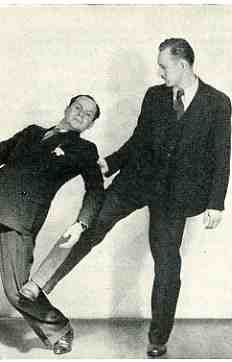
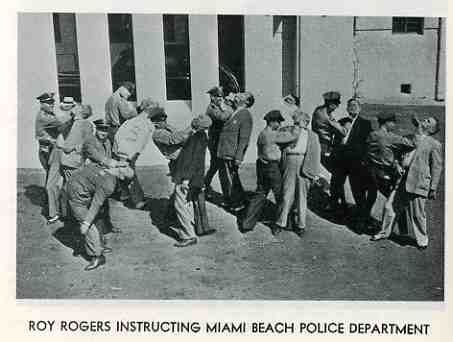
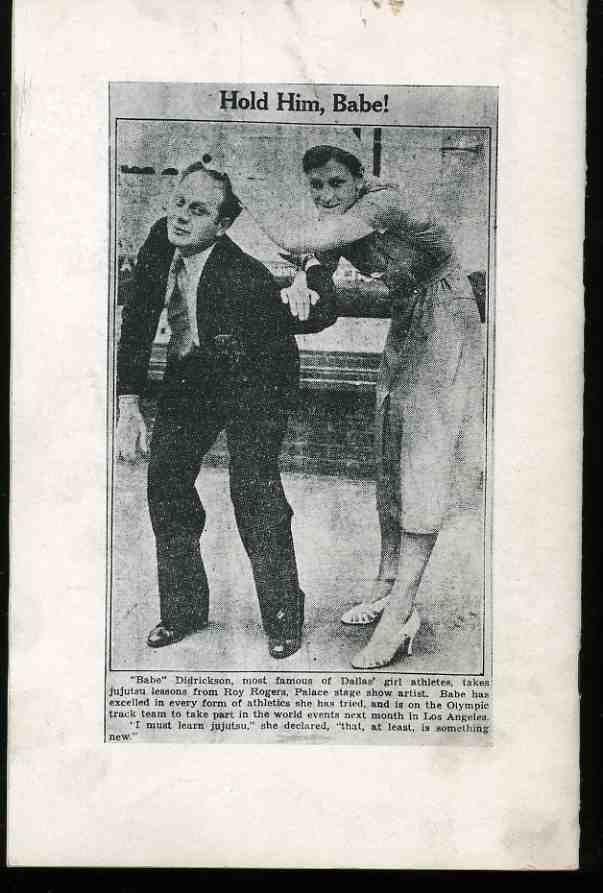
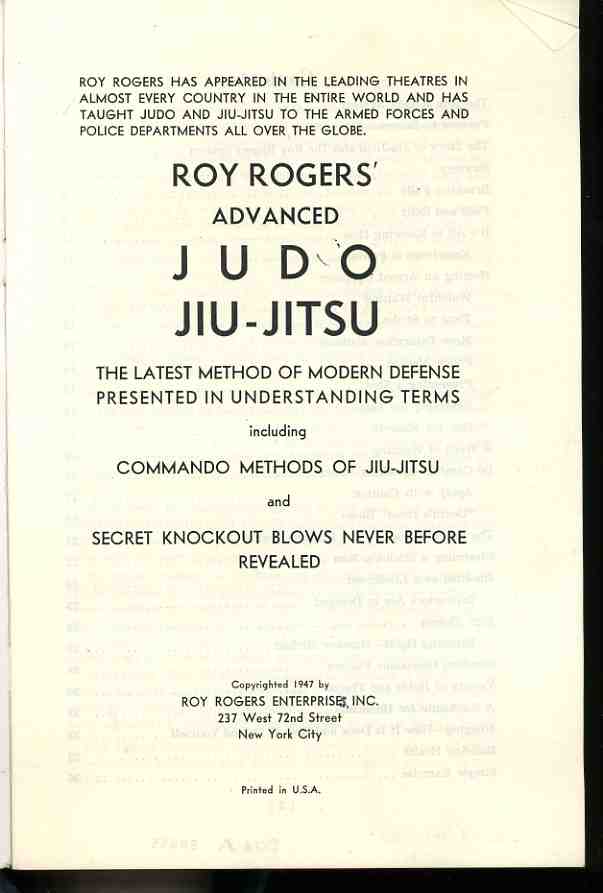
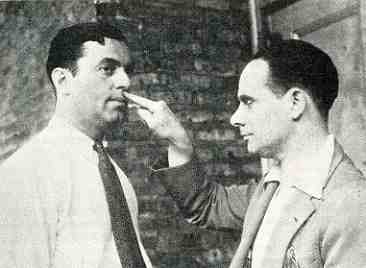
    Roy Rogers–not the singing cowboy but a black-shirted, black-suited, white-bow-tied private slickee cop–shows us here all of the secret and impossible moves from those fast-fighting sequences in those hundreds of 1930’s movies in which men would fight furiously and not lose their hats.  Or, the same guys would have no hats but would have wildly whipping grease-hair and would be knocked down with an open-fisted shot the chest, collapsing on conveniently-placed collapsing-couches.  But Mr. Rogers, who claims to have taught these methods “in leading theatres in in almost every country in the entire world” was serious about his craft, even though the images used to illustrate his serousness look naive and sweetly quaint to our 2009 eyes.  In a series of images that almost never show anyone with an open or grimacing mouth, Mr. Rogers tried to show his grasping audience the tricks of his trade, or the trade of his tricks,

    0 blog jan 26 roy rogers444


    with various methods of restraint, and head butts, and finger holds, and balance-upsetters, and, yes, even the “death” blow.  It is remarkable, really, how far things have progressed in the way of savage fighting in the last 62 years–things have gotten so ultra-modern, so (in the words of the lovely Anthony Burgess) ultra-violent, that these secret combat doings from 1947 look like baby-room wallpaper compared to the nastiness of today.  And yet teaching this stuff kept Mr. Rogers in white ties and jet-black clothing.

    0 blog jan 26 roy rogers445

    If only this sort of combat packed the modern nightmare with dread, what a better place we would wake to–for me, these are pre-gore images of violence which look strangely removed when viewing them from our post-gore world.  Blood as a result of violence in the movies of the 1930’s and 1940’s (and even into the ’50’s) was a rare commodity; blood after the late 1960’s was delivered by the buckets-full, and then by torrent. The delivery of the visual birth of administered violence is relatively new in the history of “entertainment”, and we might’ve moved a little beyond that, as well, as almost nothing is shocking anymore in our pictures of advanced and sometimes impossibly-violent violence.  I imagine that the thought of depicting violence in the movies via 2009 standards to Mr. Rogers back there in 1947 would’ve seemed as remote to him then as the possibility of a computer smaller than an automobile.  

    In any event, I find this to be a remarkable and quiet piece of Americana, capturing some of the stuff of life not normally captured. 

    0 blog jan 26 roy rogers441 0 blog jan 26 roy rogers442

    ·Posted by :

    ·in:

    —
  • First Anniversary

    January 26th  marked the end of the first year of this blog.  This has been the best writing exercise I’ve ever had–it has taught me a lot about the discipline of writing and how to arrange my bouncing thoughts.   I’ve made 488 posts public with 75 or so that are in various stages of completion or exasperation, and have written about 300k words. 

    My inspiration for all of this is found in my brilliant wife Patti Digh, who as usual is instrumental in pointing out new and interesting Things That Should Be Done, and then leads by example.  Thank you, Patti. 

    ·Posted by :

    ·in:

  • Unpublished Atomic Bomb Documents, 1945: the Proliferation of Nuclear Energy and Bombs, 1945

    JF Ptak Science Books LLC  Post 489
    0 blog jan 27 hiss446
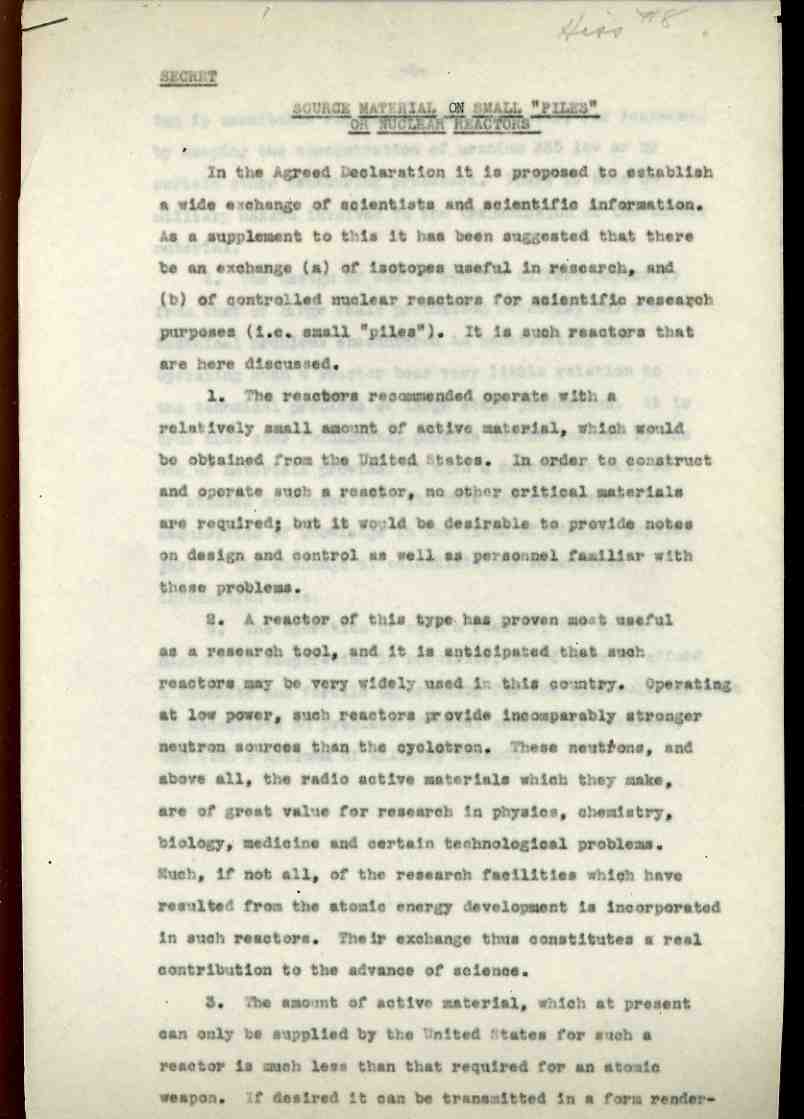
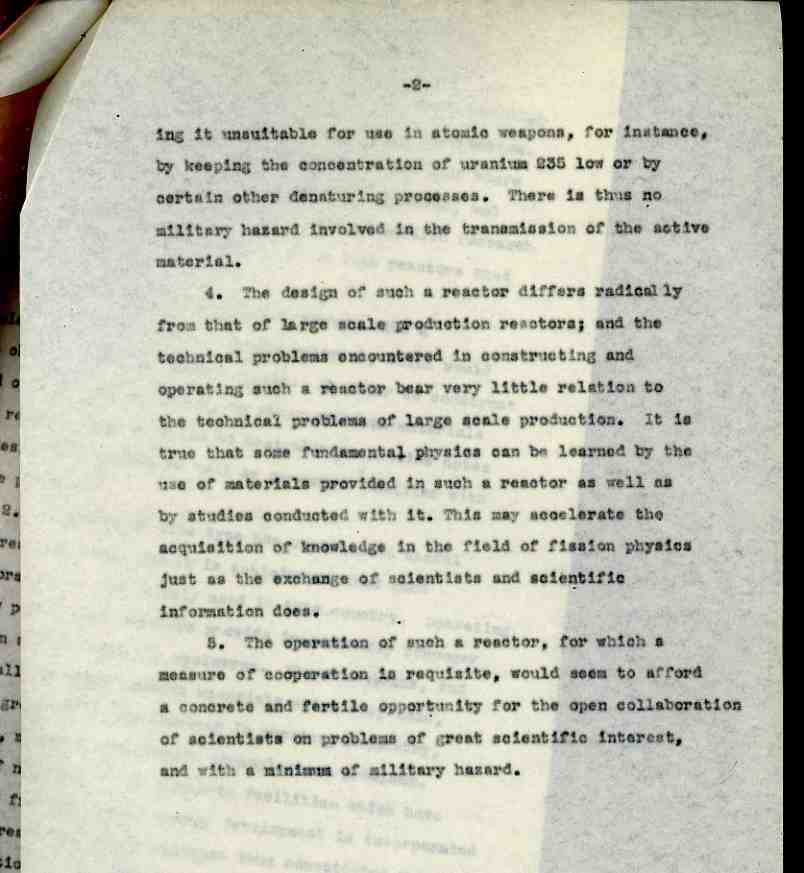
    This paper is one from a small archive of background and draft papers and
    proposals by the Vannevar Bush group working on the question of the control of
    atomic weapons and the formalization of the American position regarding the use
    and control of atomic weapons, October 1945-February 1946. This archive
    consists of 38 documents relating to the development of U.S. atomic policy,
    with  contributions by President Harry Truman, Secretary of State James Byrnes, Dr. Vannevar
    Bush, (future AEC director) Carroll Wilson, Alger
    Hiss, I.I. Rabi,
    William Shockley,
    Frederick Dunn, Joseph E. Johnson, Leo Pasvolsky, Philip Morrison, Col.
    Nichols, William McRae, Admiral W.H.P. Blandy, George L. Harrison, and
    others.

    I have written elsewhere
    on this site
    about Vannevar Bush (not related to the outgoing) and the coming atomic/nuclear arms problem–as
    perhaps one of the pre-eminent scientific minds in the Roosevelt/Truman
    administrations, Bush and others foresaw the development of the atomic arms
    race in 1943, and by 1945 Bush became a  fundamental thinker and advocate
    on the problem. The items in this archive are low-formal background papers,
    drafts of proposals, informal studies, as well as mature statements of thought
    that would become implemented in the core of U.S. policy regarding the spread
    and control of atomic weapons. They are generally carbon typescripts and
    necessarily of extremely limited distribution, generally have no letterheads,
    occasionally carry the authors’ full names (although sometimes only initials
    are used).

    The former owner of this framework, Alger Hiss (Baltimore-born, 1904-1992) is primarily known for one generation as being accused of being a Soviet spy, and by another generation (mine) for defending himself for the rest of his long life against those charges.  (As it turns out in the small-world department, during WWII Hiss lived six doors away from my Georgetown store on Volta Street–the street so-called because Alex Bell’s “Volta Bureau” was perched at its head.)  I suspect that the current generation doesn’t know his name at all–his crime belongs to another time, but the execution of his prosecution is one of those botched and troublesome things that long outlive the subject as an example of how not to do things, and also about things that just shouldn’t be done.   He was tried (twice) for espionage right after WWII and spent 44 months in Lewisburg Federal Prison from 1949 to 1952–he wasn’t convicted on espionage charges, though; he was found guilty of some relatively serious perjuries, but nothing really to convince a reasonable jury that he was a Soviet tool.  His principal accuser, Whittaker Chambers, is at best problematic element, pulling himself in many different ways through his curdled memory of Hiss’ affairs.  The post-Soviet record (according to former KGB agents’ testimonies, project VERONA and the like) of Hiss’ story are also confusing and somewhat misleading and work at odds, some of the sources confirming his existence as a spy, others offering exculpatory evidence and pointing to another man.  It seems that after everything is said and done that he was probably not guilty of the espionage charges, and that he was a victim of the forces feeding the ravenous appetite of HUAC (House Un-American Affairs Committee), a sensory-blunted beast that consumed many people through little more than fear.  (The loathsome Richard Nixon was one element of this drama–he was a young Congressman from California who used the skulls of the people he wantonly bullied and ruined to reach the lowest rungs of his political ladder to success.  Yes, the man was rotten all the way down.)
    0 blog jan 27 hiss447

    Back to the paper–in 1945, when this paper was written, Hiss was a delegate to the Yalta Conference, which was also primarily involved in the planning of postwar Europe.  The main concern of the Bush group was to create an environment in which the coming development of nuclear weapons by the Soviet Union could be at least understood–the greater goal in this work was the control of the proliferation of these weapons,m but I think that everyone involved knew that this was a hopeless issue.  To this end the group looked at different ways in which newly-created agencies in the brand-new United Nations could somehow serve as a distiller of information and also, improbably, as a policing force.  Again, it was very widely recognized by the members of the Bush group that the Soviet Union would have the Bomb in short order:  the educated guess by the members was from three years following the war, to ten (somewhere between 1948 and 1955). 

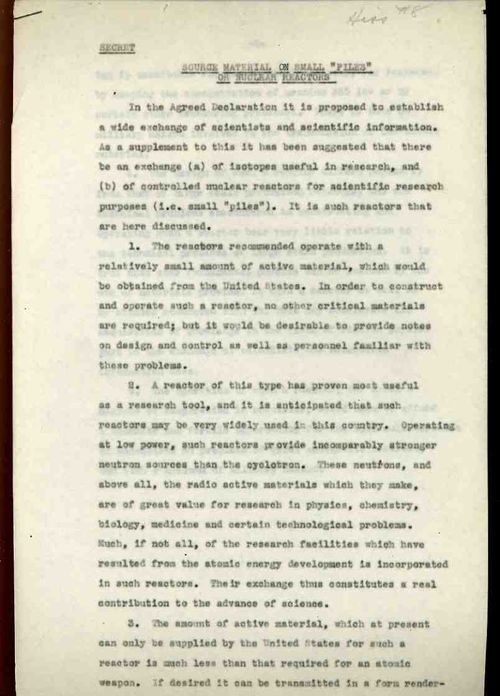
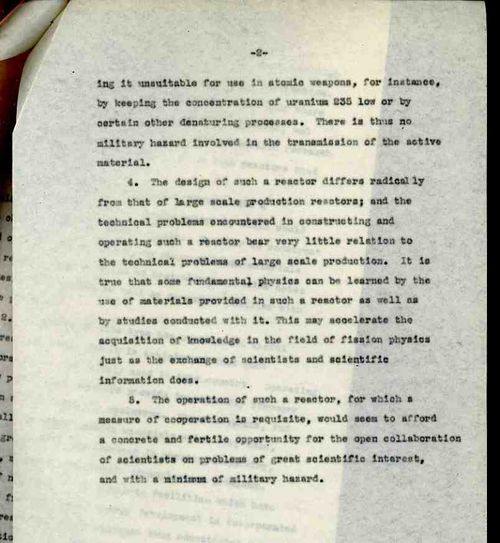
    The authorship of this paper, “Source Material on Small ‘Piles’ or Nuclear Reactors” is not acknowledged, though there are two reasonable guesses about who this might be. FIRST:  my guess is that it may be the work of Philip Morrison. This guess is good if and only if (“iff”) we limit the possible authorship to only those people in the Bush group; if not,  my bet is off.  SECOND:  if this paper was written by an ‘outside” member, then it may very well be the paper referenced in the American Philosophical Society’s Henry DeWolf  Smyth (who I’ve written about earlier) archive as an unpublished work by Smith himself–there is a paper there by the same very uncommon title, and said to have been intended for the State Department, and dated December 1945.  Hiss was working for State at the time, so this very well may be the best fit.And of course Smyth is the author of the official history of the making of the atomic bomb, Atomic Energy for Military Purposes; The Official Report on the Development of the Atomic Bomb under the Auspices of the United States Government, 1940-1945.  Smyth is definitely the best fit but for the exception of there being no others papers in this archive that were not the product of a Bush group member.  (This could be simply solved if it was possible to here the first sentence of the APS paper but I have not been able to do so. This material also doesn’t seem to be in the Smyth book, though the prime candidate for its inclusion would’ve been in chapter four, the entire text located at the excellent Atomicarchive.com site.) The odds-on favorite here though is for Smyth.  The paper is a carbon copy of the typed original; Hiss’ name (along with #8) is written in pencil at the top right; it is possible to pound your way through eight layers of onion-skinned carbon paper, but probably not much more. Hiss was probably one the bottom of the list to receive this summary–at least that’s my guess.  the paper is only two pages long so it is reproduced in full and from what I can determine for the first time. 

    For the topic it covers and for the brevity of the paper, it is a very well-written account of the military value of small nuclear reactors (or “piles”)–that is to say the author correctly identifies the military threat value for a research-grade reactor as low (“a minimum of military hazard”) while the consequences for advancing scientific knowledge as a result of the use of these reactor would be quite high.  In short this little paper outlines what would be the general opinion of teh U.S. government regarding the proliferation of small nuclear reactors, and would function in much the same way as the large Smyth report, settin gthe limits of acceptable and prohibited information and technology. 
    ·Posted by :

    ·in:

  • Very Literal (and Persuasive) Images–Christ in a Winepress

    JF Ptak Science Books LLC  Post 490

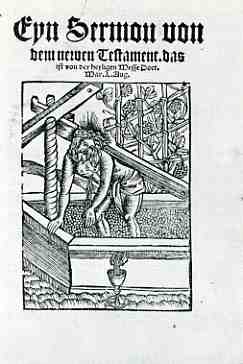
    0 blog jan 24 christ wine420Seldom are images less equivocal than this fantastic woodcut dominating the title page of Martin Luther’s Eyn Sermou von dem newen Testament das ist von der heyligen Messe…, a tallish, 14-page pamphlet printed in Leipzig in 1520.  We see the Christ of Luther (1483-1546) being pressed, crushed under the weight of the crucifix which is also a part of the wine press in which Christ stands–the screw to the press passes through the cross which applies the weight, spilling Christ’s blood which collects in a sacramental chalice.  For Luther, the covenant of Christ’s blood is everlasting, connecting his redemption to man without the need of priests.  And by 1520, Luther certainly had no need of priests.  He was filled with a reforming rage against the papal machine, becoming especially annoyed (in 1517) with the putrifing effects of the funding of the building of St. Peter’s Basilica, which bowed under the flatulent weight of Pope Leo X, who was very busy selling indulgences* from sin to those who could afford to.  So between 1517 and the publication of this pamphlet in 1520, there was the Papal indulgence issue, whose appalling nature led to Luther’s 95 theses on the door at Wittemberg; then came the Diet of Augsberg in October 1518, and then the excommunication of Luther in 1520.  A very busy three years.  

    * (from the Wiki biography on Luther)  “A Dominican monk named John Tetzel was assigned to the sale of
    indulgences in Saxony. A talented and unscrupulous salesman, Tetzel was
    willing to make any claim that improved sales. He thus promised not
    only a reduction in punishment for sin, but complete forgiveness of all
    sin and a return to the state of perfection enjoyed just after baptism.

    “He added that if one would generously purchase indulgences to speed
    the release of a deceased loved one from Purgatory, no actual
    repentance on the part of the giver was even necessary. Marketing
    genius that he was, Tetzel employed a memorable jingle to make his
    offer clear and simple:  “As soon as the coin in the coffer rings, a soul from Purgatory springs.”

  • Using Nuclear Weapons in the Vietnam War: a Perversion of Logic in a Top Secret CIA Report, 1966

    JF Ptak Science Books LLC  Post 492

    I cannot remember ever thinking about this, or reading about it, or havng any serious consideration of the use of any sort of nuclear weapons against the North Vietnamese or the Chinese at any time during the Vietnam War.  Or after it, for that matter.

    But it makes sense that the issue was discussed and analyzed and vetted, if for no other reason than to dismiss it.  And here it is, in small part, on the CIA website of declassified materials.  What makes this document so uneasy to me is that even though it addresses the issue of the war not quite being winable and the use of nuclear weapons being (basically) not acceptable and perhaps tactically irrelevant, the idea, at the end of it all, isn’t completely let go.  It wasn’t the idea that you whisper into a helium balloon and then set free–it was tethered in a final “what if” circumstance and let stand for further thought. 

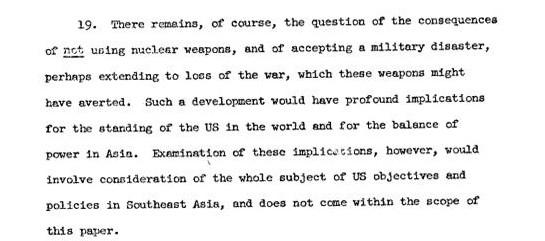
    What happens at the end though, is this:  there is a consideration for what would happen if the U.S. DID NOT use nuclear weapons, which is on page 12, section 19–it is the “aha” part of this paper and the foot-in-the-door to Armageddon.  And what the CIA report from 1966 tells us is this, overall–it doesn’t look good if the U.S. used nuclear weapons; but it also doesn’t look good, perhaps, if we didn’t.  Dr. Strangelove didn’t have anything over these guys.  Finally, these astonishing folks throw up their hands and admit that the non-use wasn’t, somehow, “within the scope of the paper”. 

    Nuke weapons Vietnam


    This is the cover sheet for the twelve-page report; click to enlarge.  The full text is below in the “continue reading section”. 
    Image of document. Alternative text version is not available.

  • Nuclear Weapons and Vietnam, Part II: Richard Nixon & Henry Kissinger

    JF Ptak Science Books Post 493

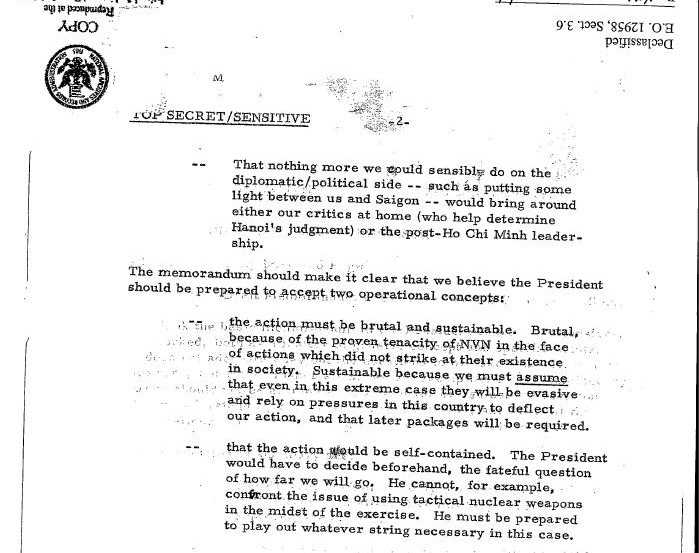
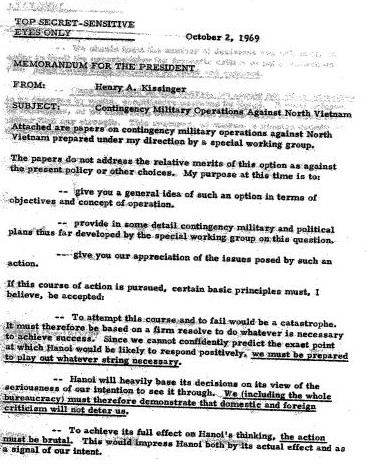
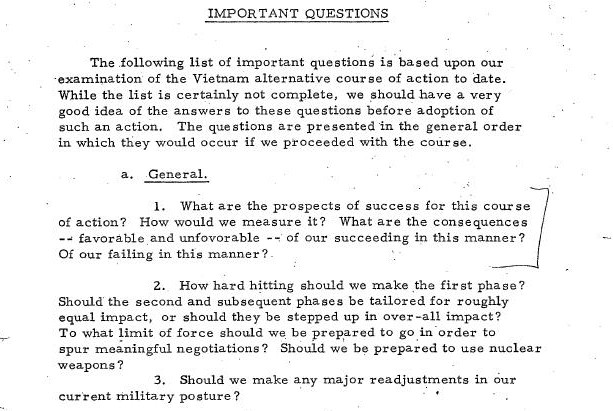
    Richard Nixon continues a post from last night on the Executive Branch and the considerations for using nuclear weapons in the Vietnam War.  Yesterday’s document related to the Johnson administration in 1966, Richard Nixon took up the issue in the first year of his failed presidency, in 1969, brainstorming the idea of first strike to end the war.  This of course was a an early decision of his on the war, before it became much more politically expedient for him (in 1971/2)  to prolong the war so that he could run for re-election to end the war in his second term–a more repugnant decision unmatched and unchallenged until he was nearly checked by the embarrassment who just left office.  As part of a study codenamed “Duck Hook” the following memorandum (Tony Lake“Memorandum from and Roger Morris, NSC Staff, to Captain [Rembrandt] Robinson, Subject: ‘Draft Memorandum to the President on Contingency Study’, 29 September 1969, Top Secret/Sensitive. Source: folder 4: VIETNAM: (General Files), Sep 69-Nov 69, box 74, National Security Council Files: Subject Files, Nixon Presidential Materials Project, National Archives.”) concerning “military expediency” was introduced into the thought pool, stating that the President should at bottom-line have considered the use of nuclear weapons against the North Vietnamese.  Melvin Laird, the Seretary of Defense at the time, thought the proposal for the tactical use of nuclear weapons to be “laughable” and completely off the table.  However, he also said that for Henry Kissinger, nothing was off the table:  “(for Kissinger) Laird recalled, “nothing was out of consideration” with respect to Vietnam; the nuclear threat was “always . . . there as an option.” That was “not my approach,” and he said that he had told Kissinger at the time, “just forget it.”(–George Washington University website, National Security Archive Electronic Briefing Book No. 195, Edited by William Burr and Jeffrey Kimball.)

    Nuclear weapons Vietnam 1969

    In typical fashion, Henry Kissinger was not necessarily “for” the use of nuclear weapons against North Vietnam, but was in favor of using massive, brutal force against military targets–he said that he had ruled out the use of a “nuclear weapon”, but had not ruled out the use of a “nuclear device”. 


    Nucelar weapons VN kissinger


    In a summary of the issue (in another of this series of Top Secret-Eyes Only declassified documents) of the bombing of North Vietnam by Kissinger and addressed to the President (though, as the editors at GWU point out, there is no evidence that this was actually read by Nixon), retains the question about the use of nuclear weapons–the editors reaching the conclusion that the documents were “implying that the matter was still up in the air or on the table”.

    Nuclear weapons Kissinger 2


  • Things That Weren’t Department: the Stalinist Take on WWII and How Nobody but the Soviets Mattered

    JF Ptak Science Books LLC  Post 494

    Sometimes things that people deem to be necessary to be just aren’t, no matter how much they are needed:  WMD, attacks in the Gulf of Tonkin, the Lone Sniper, the Protocols of the Elders of Zion, Heaven, racially-based inequalities, Virgin births, free will, intelligent design, and so on. 

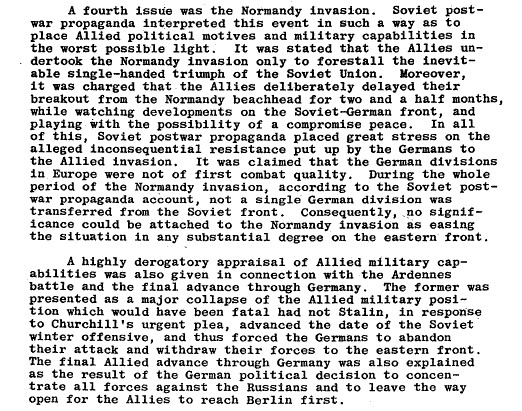
    This is part of a recently declassified CIA briefing on a 1959 Soviet history of World War II, told in only the way that a ruthlessly dogmatic entity could tell it, all found on the CIA site, with the full 61-page text Current Intelligence Staff Study; the Soviet History of World War II, (Reference Title: Caesar X-59),   here.

    There is a lot in this thinking that is entirely new to me, stuff that I’ve never thought of before, all brought about by a structured and corrupted historiographic establishment bent on controlling the past.  The CIA report discusses the ways in which the Soviet history excised the importance of all non-Soviet intervention of any kind; and, basically, that the actions of the non-Soviet Allied forces throughout the course of the war merely served to forestall the inevitable, single-handed dominance of the Soviet Union in winning World War II.  The breadth and depth of this incoherent and savagely twisted history is staggering.  For example, D-Day, the Normandy Invasion, the Invasion of Europe, did absolutely nothing, had no significant effect whatsoever on the outcome of the war–it, again, served only to lengthen the time of the war so that the Soviet Army could eventually finish it.  The Battle of the Bulge meant nothing.  The dropping of the two atomic bombs on Japan meant nothing.  The two years’ worth of supplies sent by the United States to the struggling soviet Union in 1941 and 1942 meant nothing.  Early Soviet defeats in ’41-’42 meant nothing.  The inability of the Soviet Union to determine the coming attacks from Germany in Operation Barbarossa meant nothing.  If the effect was extra-Soviet, then there was no cause–in this line of reasoning, the storytelling was so devastated that in the end, not even nothing was nothing. 

    Yes it is true that the Soviet end of the war is undertold and that the Soviet Union suffered tens of millions of soldiers and civilians killed, but their response to telling the story of the war is so far beyond wrong that it isn’t even that.  It is nothing, except of course that there are millions of people who believe it.  And in the wars of propaganda, that is a victory, and that is when nothing becomes something.

    • (Excerpt from page 11 of the CIA report)

    Soviet propaganda WWII history

    ·Posted by :

    ·in:

    —
  • Some Vintage, Interesting, Declassified CIA Reports–Nuclear War and the Coming of the Communists

    JF Ptak Science Books LLC

    Following up on a few posts over the last two days on some striking CIA reports on such topics as the tactical employment of nuclear weapons in Vietnam are the following (the links taking you to the full documents), all taken from the CIA-Freedom of Information Act website of declassified reports:

    Cia-seal
    Soviet Capabilities for Attack on the U.S. through mid-1955  

    The Strategic Value of the U.S.S.R.  the Conquest of Western Europe and theNear East
    (to Cairo) 

    1948 

    Probable developments in China,. 
    1949 

    Probable Effects Soviet Union Atomic Bomb on the Security of the United States,
    1950

    Prospects for the Defense of Indochina
    against a Chinese Communist Attack
    ,
    1950

    Prospects for Survival of the Republic of Korea,
    1948

  • Looking at Things Straight On, Part 3: Perspective Books in the 16th Century

    JF Ptak Science Books LLC  Post 496

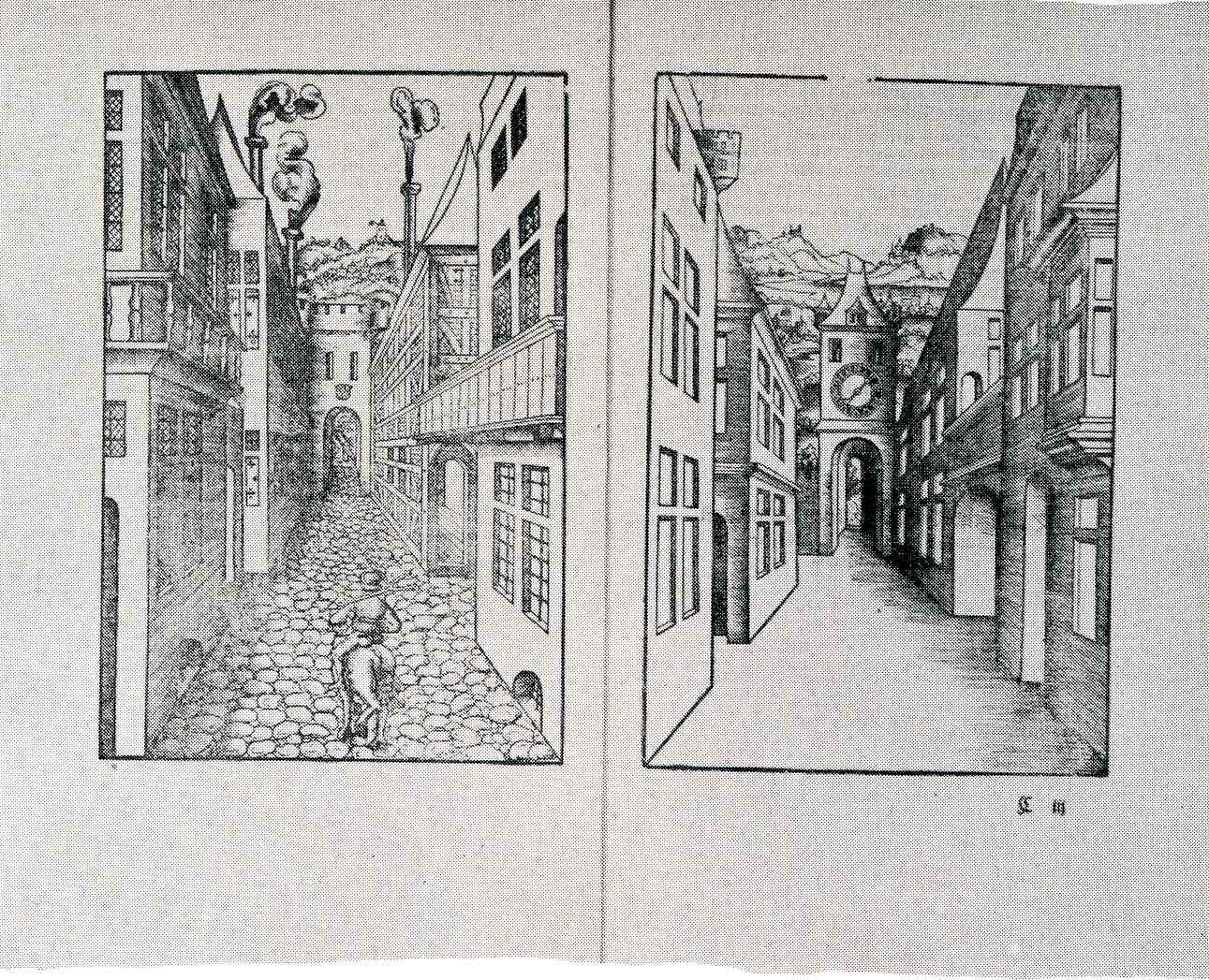
    0 blog jan 24rodler'422

    Hieronymus Rodler (who died in 1539) wrote one of the greatest books of the Renaissance on the use and care of the relatively-newly-discovered practice of perspective. Perspectiva, Eyn Schon nuetzlich buchlin und underweisung der Kunst des Messens...(Useful Booklet and Instruction in the Art of Measurement), published in Frankfurt a.M. in 1546 (as a second edition following the 1531 first). I say “newly” because Rodler wrote his book to help explain, or at least somewhat simplify, the 1525 Underweysung der Messung (Instruction in Measurement)  by Albrecht Durer, a great work of some substantial complexity and difficulty.

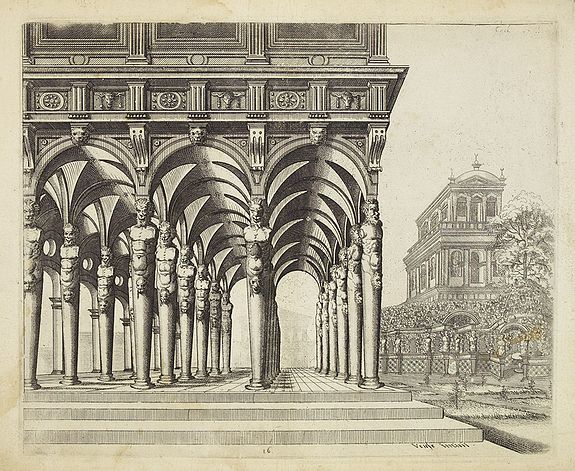
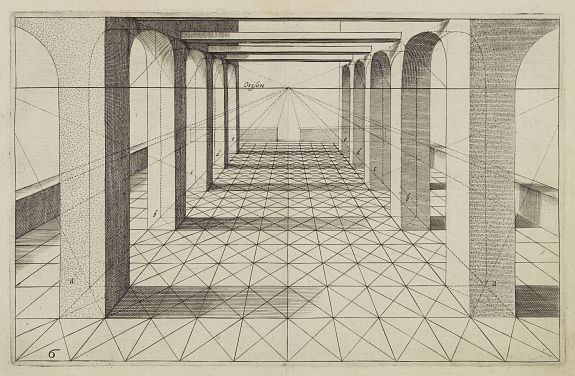
    The works of Wenzel Jamnitzer  (1564 and 1568), Heinrich Lautensack (1564) and Hans Lencker (1567), all fine examples of earlish work in perspective and al quite lovely–but it is  Hans, or Johannes Vredeman de Vries (ca.1527-1604, “The King of Architects” among the Dutch, at least), whose Perspective of 1604 rises to the greatest heights, a book filled with superb copperplate engravings of the master’s work, vanishing points into which all the lines of the engraving converge, sucked as it were into a perspective Black Hole.   That, and of course there are so many of them that look exactly at the center of a receding horizon.  (And this continues two earlier posts written along the same vein, here.)

    Perspective de vries

    In his dedication to the reader (“To the Studious Viewers of Optics”), Vredeman de Vries writes that 

    “My eyes and mind took pride
    In Sacred Optics. Thereunto allied
    was a fructifying labor,  forty years
    I plied this art devoutly, Here appears
    a doctrine worn by time. That art is famed
    For trustworthiness which trusty rules have framed…
    This art, which guides the eye and soothes the brain,
    with images, but never cheats the sight
    with lying views…”

    I have purposely not said anything about early artists (like  Uccello, Filippo Brunelleschi, Leone Alberti (Optics),  Piero della Francesca, Piero della Francesca, Federico Commandino, Jan van Eyck, Leonardo, and Serilo and Vignolla, Raphael, and so on) and the development of perspective in painting because, well, I can’t figure out how to do it in a paragraph.  But you can certainly consult fine books like Samuel Edgerton The Renaissance Rediscovery of Linear Persepctive (1975)  and Hubert Damisch The Origin of Perspective  (1994) for a bigger taste of teh issue. Me, I just wanted to look straight-on at some 16th century perspective  illustrations…

    Perspective de vries2

  • The First Book about Books about Books

    JF Ptak Science Books LLC  Post 498

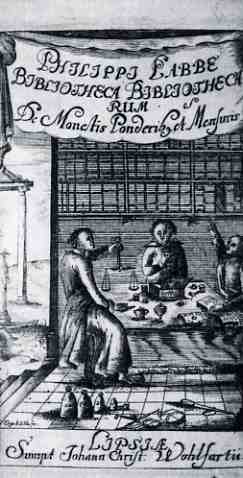
    0 blog jan 29 books488
    Phillippe Labbe (1607-1677), a contemporary of the savant’s savant, Athanasius Kircher, and was himself a prodigious polymath, produced this fantastic piece of scholarship, the Bibliotheca Bibliothecarum…accedit bibliotheca nummaria.  He was a member of the Society of Jesus, like Kircher (which whom he also shared similar birth and aeath dates, Kircher’s being 1601-1680); and was born in the town of Borges, France, which gives him an almost invisible connection to one of the 20th century’s most imaginative/flexible writers in the great blind librarian of Argentina.  This book, published in Leipzig in 1682 as the second edition of the 1662 first,  is the earliest extant work of bibliography of bibliographies (it also has a very useful work on numismatics, as we can see from the last part of the title.)  Gathering the data necessary to produce this work was a prodigious undertaking–Labbe needed to have had access to fine libraries to assemble the data, then of course he needed the brain to handle all of the disparate and erudite areas of learning, and then be smart enough to organize it all.  This was an enormous accomplishment in 1682–with the stuff that Labbe had floating around in his brain and the reasonable aspect of disseminating it, Labbe would’ve been a National Treasure to whichever country he would call “home”. 

    I haven’t seen the title page of this book for many years, and my memory of it had these three bibliophiles holding drinks in the air–but I’m wrong, unfortunately.  The scholar on the left is weighing something, the scholar o the right is pointing to a book, and I not exactly sure what scholar-middle is doing.  One thing for certain though is that these men are not drinking.  Somehow I’d’ve preferred a few rounds with all of that scholarly/scientific bric-a-brac strewn on the table, but it was not to be. 

    Some of Labbe’s selected works include:

    • Trirocinium Linguæ Græcæ etc. (1648)
    • La Géographie royale (1646)
    • De Byzantinæ historiæ scriptoribus, etc. (1648)
    • Concordia sacræ et profanæ chronologiæ annorum 5691 ab orbe condito ad hunc Christi annum 1638 (1638)
    • Bibliotheca antijanseniana (1654)
    • Bibliotheca bibliothecarum (1664)
    • Sancrosancti Oecumenici Tridentini Concilii . . . canones et decreta (1667)
    • Sacrosancta concilia ad regiam editionem exacta
  • Two Minutes to Doomsday: “Get out of Hell Free” Card, 1957. Armageddon and All That…

    JF Ptak Science Books  Post 402

    0--blog---dec 1 hell162
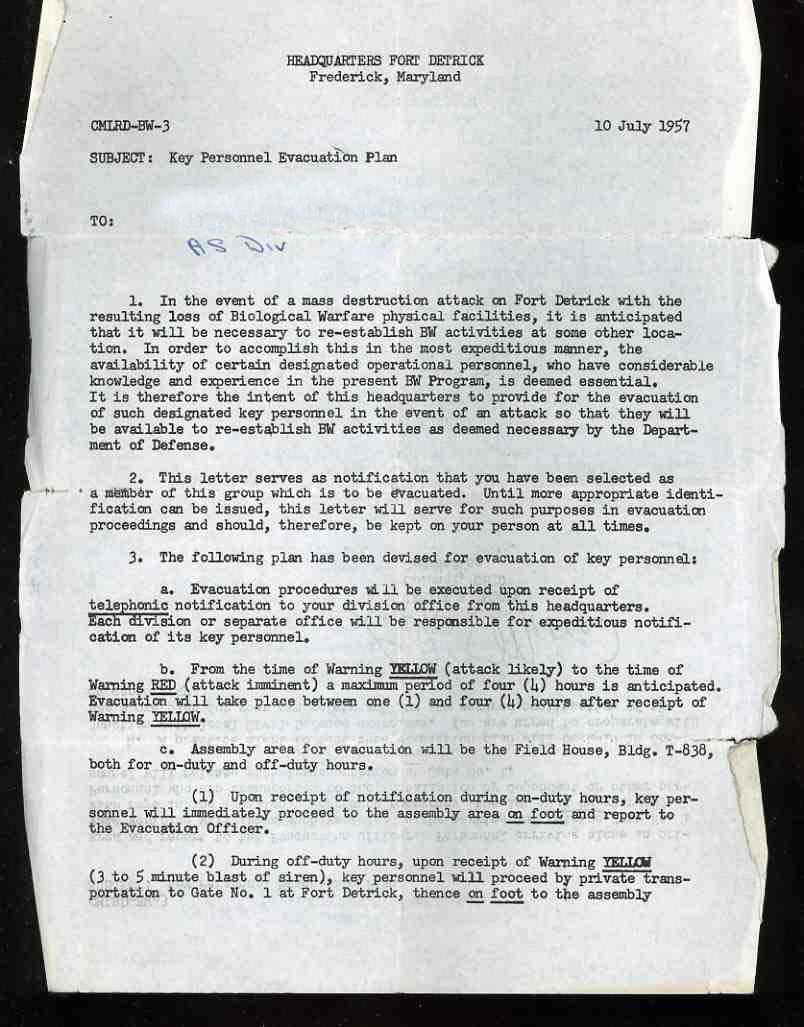
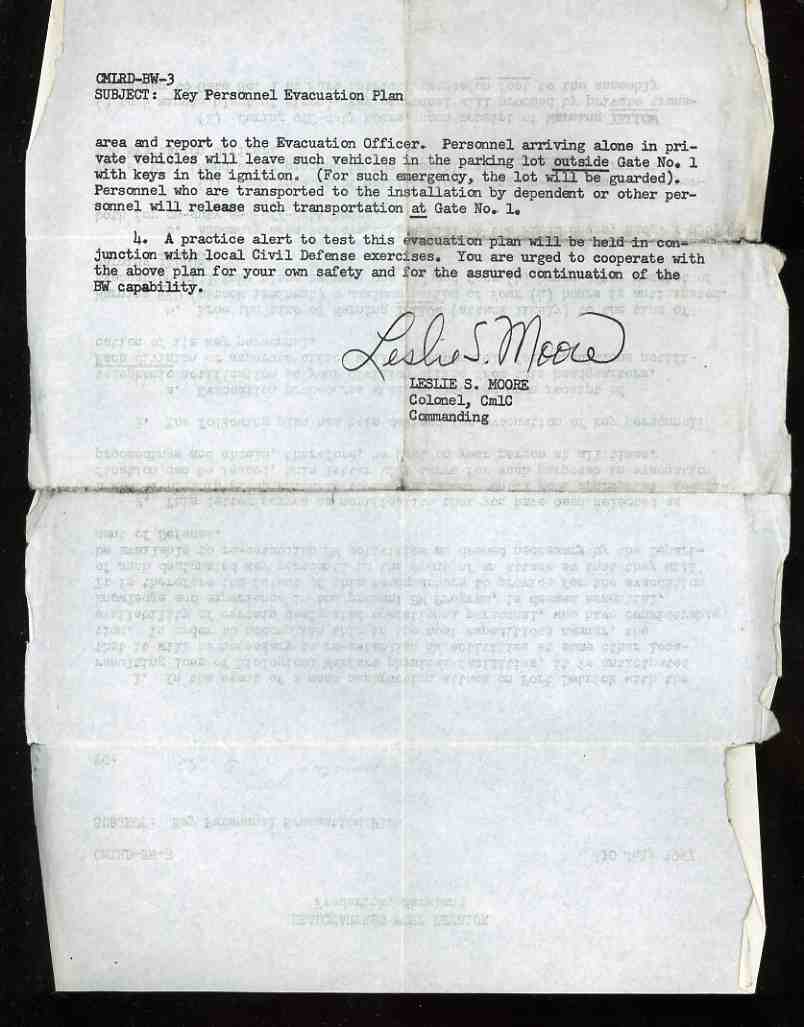
    This letter, written in 1957  by Colonel Leslie S. Moore of the U.S. Biological Weapons Program at Fort Detrick, Maryland, to a member (whose name I’ve removed) of the “A.S.”(“Atmospheric Sciences”)  division, was basically a get-out-of-hell-free card for its bearer in the case of devastating nuclear attack.

    “In the event of a mass destruction attack on Fort Detrick with the resulting loss of Biological Warfare physical facilities, it is anticipated that it will be necessary to re-establish the BW activities at some other location.”

    “In order to accomplish this in the most expeditious manner, the availability of certain designated personnel…is deemed essential.”

    The “letter serves as notification that you have been selected as a member of this group which is to be evacuated”  to get the biological weapons program up and running again.  As you can read in the clickable version of the document, there are directions about what top do and when to do it.  There is no mention of family.  My read is that this is Endgame stuff, end of civilization as we know it, and that this was the Darwinian sweep of necessary people.  Or is it Dr. Strangeloveian?  I get the two confused.

    Suffice to say that Fort Detrick, which had been established in 1943 (constructing and delivering anthrax bombs by 1944) as Camp Detrick, already had a fairly full career before it was up-named to “Fort” in 1956.  It was the recognized home/collecting node  for the American Chemical and Biological Weapons programs until Richard Nixon, of all people, disbanded that capacity at Detrick in 1969.

    0--blog---dec 1 hell163

    It is interesting to note that the person to whom this letter was addressed was actually in aerolized particle release, and at the time, in 1957, was working on Operation Large Area Concept, which simulated and studies a very large airborne attack over thousands of mile of land.  It was an obvious two-sided study about how-to and how-to react to a mass scale biological attack.

    1957 was about the height of the Cold War. According to the ticking Doomsday Clock of the venerable Bulletin of the Atomic Scientists, the minutes-to-midnight–with the stroke of midnight being the Big One, the ultimate attack, the carnal release of all nuclear power, The End–was set at about two (two minutes to midnight) from 1953 to 1960.  The clock admittedly was set very close to that mark anyway, starting out life at seven minutes to midnight in 1947, but it was probably accurate at how close we all were, our toes stuffed into  Stanley Kubrick’s Dr. Strangelove’s bitterly polished shoes, to walking (finally!) towards the explosive closing roll of the movie.

    I might have been overstating the “Get out of Hell Free” aspect of this letter.  Probably it was a “Survive Many Aspects of Hell at Not-Understandable Personal and Societal Costs” card , but it doesn’t have the snap of the former, though it is more factual.

    The letter tells the recipient to keep it on his person at all times for use in an emergency.  I don’t think you’d need to be told that twice. 

Recent Posts

Archives

Categories