A Daily History of Holes, Dots, Lines, Science, History, Math, Physics, Art, the Unintentional Absurd, Architecture, Maps, Data Visualization, Blank and Missing Things, and so on. |1.6 million words, 7500 images, 4.9 million hits| Press & appearances in The Times, Le Figaro, Mensa, The Economist, The Guardian, Discovery News, Slate, Le Monde, Sci American Blogs, Le Pont, and many other places… 5000+ total posts since 2008.

  • On a Chart of the Evolution of all Things and the Nature of the Nebulae (1925)

    JF Ptak Science Books  Quick Post

    Here’s and interesting and swerve-y chart of all of history, featured in the pages of the Scientific American for October, 1925 (pg 235). It has that certain attractiveness that is so welcomed in the artistic display of information–and it also features an old word used (I think) in both it older and newer ways. That word is “nebula”, and it appears to have been used in English1 as far back as Edmund Halley in 1718 in the sense of  “…an indistinct cloud-like, luminous object seen in the night sky, such as a cluster of distant stars, a galaxy, or a cloud of gas or dust”, the star clouds all bound within our own galaxy which was seen (until just a few years before this article) as the entire universe. Things began to shift to the impossibly large in the Great Debate (1920-1923) period (between Shapley and Curtis) on whether the nebulae were “local” (Shapley) or extragalactic2 (Curtis). There were early people who believed in the nebulae being outside our galaxy (like Kant) but the empirical evidence didn’t present until the 20’s, mostly in the work of Edwin Hubble. He would find that variable stars in Andromeda were an order of magnitude further away than the greatest dist ant of the furthest star in the Milky Way, and so determined that Andromedia was a galaxy unto itself, and not within our own. (His results on these investigations were published popularly though they were printed in a professional journal until 19293.) Hubble did publish on the great new vastness in another paper in 19294. 

    And so “nebula” in this Sci Am article seems to have a foot in both “worlds” (sorry!) so to speak.  And that’s interesting. 
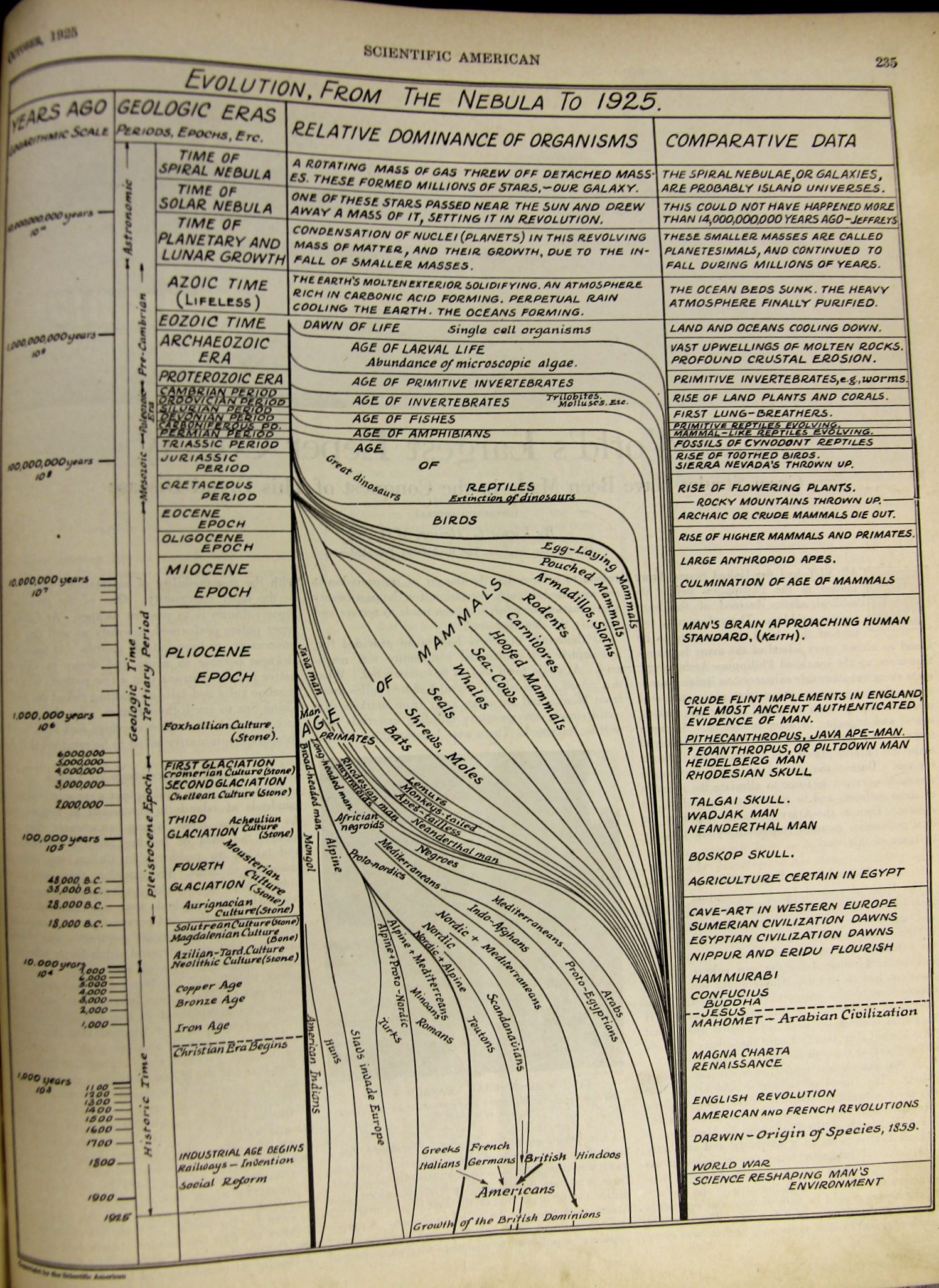
    Evolution chart

    Notes:

    1.  From the Oxford English Dictionary, defining “nebula”:

    • “Originally: an indistinct cloud-like, luminous object seen in the night sky, such as a cluster of distant stars, a galaxy, or a cloud of gas or dust. Now (usually): spec. a mass of gas or dust within a galaxy, typically visible either as a luminous patch or as a dark silhouette against a brighter background. Cf. nubecula n. 1b.dumb-bell, emission, planetary, reflection, ring, spiral nebula: see the first element.”
    • 1718   E. Halley in Philos. Trans. 1717–19 (Royal Soc.) 30 723   The slowness of its motion made us at that time conclude that it had none, and that it was rather a Nebula than a Comet
    • 1781   Gentleman’s Mag. 51 526   This..nebula was discovered March 23, 1779.
    • 1802   W. Herschel in Philos. Trans. (Royal Soc.) 92 499   A stellar nebula..may be a real cluster of stars.
    • 1841   D. Brewster Martyrs of Sci. i. ii. 31   Upon directing his telescope to nebulæ and clusters of stars.
    • 1873   J. W. Dawson Story Earth & Man i. 8   The spectroscope has..shown that some nebulæ are actually gaseous.
    • 1891   Internat. Ann. Anthonys Photogr. Bull. 363   His primary object was to use it for nebula photography.
    • 1924   H. Dingle Mod. Astrophysics xvi. 302   A dark nebula is really dark, and not merely too faint for its light to be seen on account of its great distance from us.
    • 1930   R. H. Baker Astron. xi. 465   Modern investigations have shown that nebulae, as distinguished from ordinary star-clusters, fall into two classes having entirely different characteristics, namely, the galactic nebulae and the extra-galactic nebulae.
    • 1971   D. W. Sciama Mod. Cosmol. iii. 39   In this way he [sc. E. P. Hubble] obtained a distance of 800,000 light-years for the Andromeda nebula, and similar values for other spiral nebulae. Now that these nebulae are well established as stellar systems outside our own, we shall henceforth call them galaxies.

    2. Again, the definition of “extra-galactic” from the OED: “extra-gaˈlactic adj. Astronomy outside the galaxy or Milky-way.

    • 1851   J. P. Nichol Archit. Heavens (ed. 9) 110   An extra-galactic phenomenon.
    • 1870   R. A. Proctor Other Worlds than Ours xi. 264   The scattered stars of very low magnitudes in the extragalactic heavens.

    3.  Hubble, Edwin, “A spiral nebula as a stellar system, Messier 31”. The Astrophysical Journal. 69: 103, 1929. This is the same year of his revolutionary red shift paper, “A relation between distance and radial velocity among extra-galactic nebulae”. PNAS. 15 (3): 168–173. 

    4. Hubble, Edwin (December 1926). “Extragalactic nebulae”. Astrophysical Journal. 64 (64): 321–369.
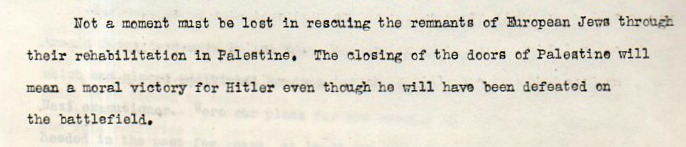
     

  • “Why Must the Agony of the Jewish People be Prolonged? (1944) An episode in the Abandonment of the Jews in WWII

    JF Ptak Science Books    

    Goldstein _1_543 detail

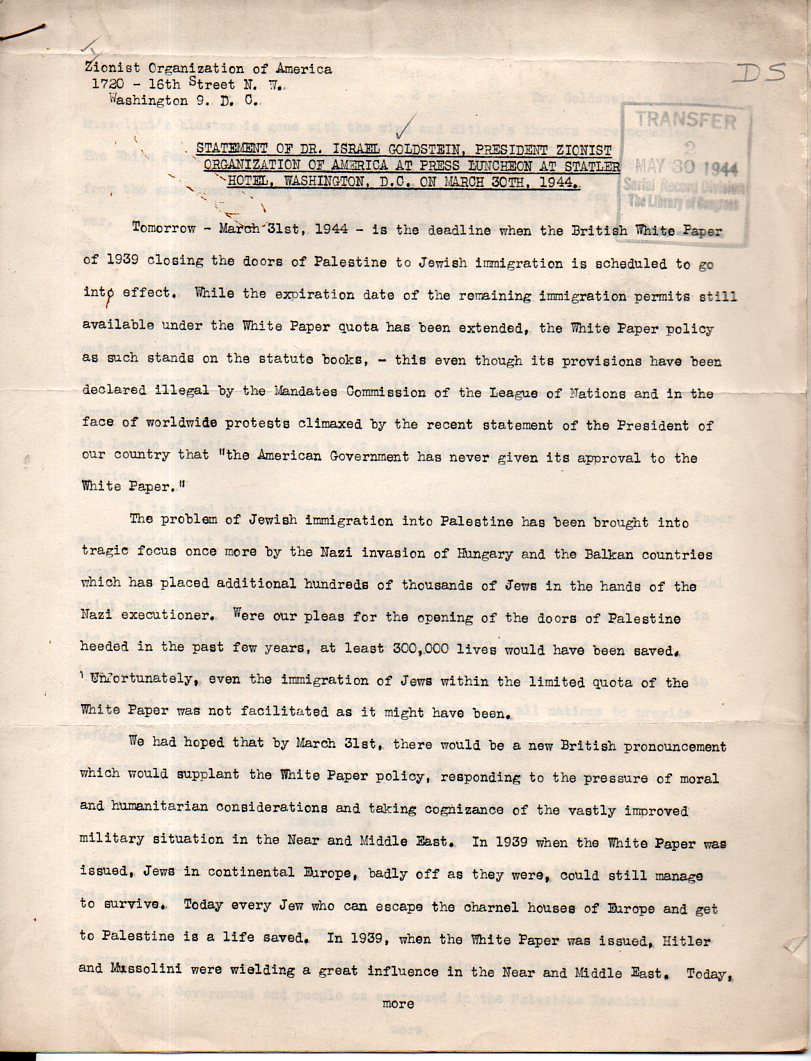
    This quote is from a speech by (Rabi) Israel Goldstein1 as head of the Zionist Organization of America appeal and was made in 19442 addressing the British White Paper of 1939 on Palestine and allowing Jews to immigrate to escape “the hands of the Nazi executioner” in Europe. Among many other things the White Paper limited Jewish immigration to 75,000 for 5 years (1939-1944) with limits of further immigration to be determined by the Arab majority. “Were our pleas for the opening of the doors of Palestine headed in the past few years, at least 300,000 lives would have been saved. Unfortunately, even the immigration of Jews within the limited quota of the White Paper was not facilitated as it might have been” wrote Goldstein. 

    There is a long and complicated history to the White Paper but suffice to say that while millions of Jews were being slaughtered in Europe the restrictive White Paper remained in place, which meant that the haven for escape to Palestine was largely closed relative to the numbers of people needing to be saved, and that at the end of the war there were still 3000+ visas that hadn’t yet been granted. Goldstein makes the case for the extreme peripheral usefulness of the Paper in 1939, but in 1944 when the Axis influence in the Middle East was  extremely minor adhering to the white Paper was a tragedy: “if the White Paper was unwise and unworthy then, it is more shameful and baseless now”3.

    The Provisional Council of Israel’s first constitutional act [in 1948] was a Proclamation that “All legislation resulting from the British Government’s White Paper of May, 1939, will at midnight tonight become null and void.”–Wiki on the White Paper of 1939. 

    Goldstein hoped for a change in the policy–there would be none. 

    I’ve reprinted the speech below.

    Notes:

    1.  Israel Goldstein (June 18, 1896 – 1986) was an influential Jewish leader in the U.S. and worldwide as a Rabi (and head of the New York Board of Rabis), head of the Jewish National Fund (elected in 1933), head of the Zionist Organization of America (elected 1943), and one of the founders of Brandeis University.  The full text of the publication–which was printed sometime between March 30, 1944 and May 30, 1944–is included below.  I can find no mention of the communication online.  

    2.  The speech was printed in 1944 and evidently is very uncommon: (Israel Goldstein), Statement of Dr. Israel Goldstein, President Zionist Organization of America, at Press Luncheon at Statler Hotel, Washington, D.C., on March the 30th, 1944.  Offset printed by the Zionist Organization of America, 1720 16th St, NW, Washington DC. 11″x8.5″, 4 leaves. 

    3. Goldstein wrote in his memoirs that the rules and restrictions of the White Paper on Jewish immigration were being “rigidly and brutally enforced”. —My World as a Jew: The Memoirs of Israel Goldstein, Volume 2, pg 47.

    [“Like another black curtain about to be rolled down upon the last hope of escape, the White Paper of 1939 ominously threatens to close all further migration to Palestine,”–Judge Morris Rothenburg, Jewish Telegraphic Agency, http://www.jta.org/1943/09/13/archive/dr-israel-goldstein-elected-president-of-zionist-organization-of-america]

    Goldstein _1_540

    ·Posted by :

    ·in:

  • A Great Panoramic Photo of Battlefield Action, WWI (1918)

    JF Ptak Science Books   Quick Post

    WWI Photos Big Pano075

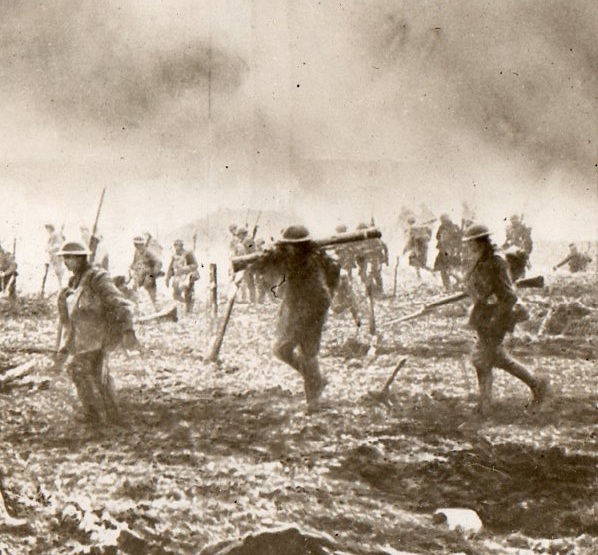
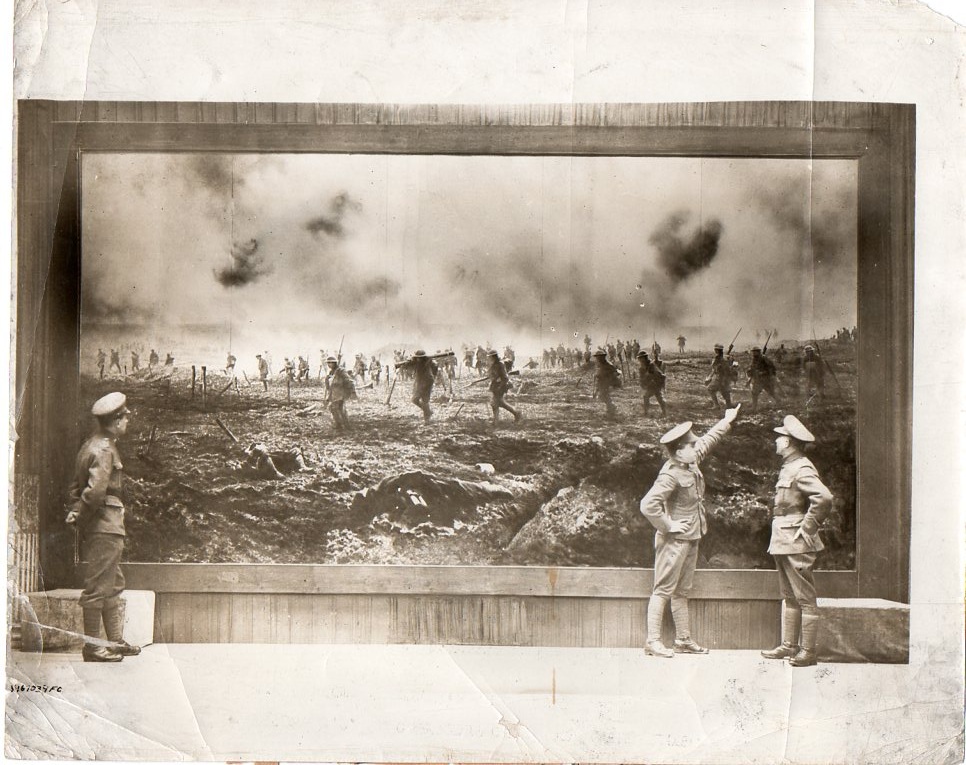
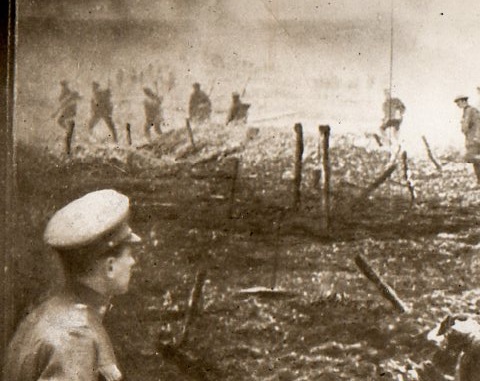
    I recall, I think, that this was the largest photograph of war printed during World War I, looking to be something on the order of 8 x 16 feet or so.  This photo of the photo was printed by Underwood & Underwood, and stamped “British Official Photograph”, and printed at some time in 1918.  It seems that this is an actual battle scene, which was a very uncommon thing among war photographs for the Great War–more so for this group of photographs (News Photo Service)  produced by pool photographers for equal distribution among subscribing newspapers and periodicals. Actual combat photos distributed by the News Photo Service agencies were not a high priority, unless they depicted routed or retreating or being-defeated Germans–it was not a popularly-distributed subject, mainly for propagandist purposes.

    WWI Photos Big Pano074

    I expect that this photo would’ve given the view a you-are-there effect, as the main characters in the composition were about life-sized–an attempt of slice-of-life experience.  There is a surprising amount of foreground in this picture, though.

    WWI Photos Big Pano076


    ·Posted by :

    ·in:

  • Finger Prints by Wire (1921)

    JF Ptak Science Books  Quick Post

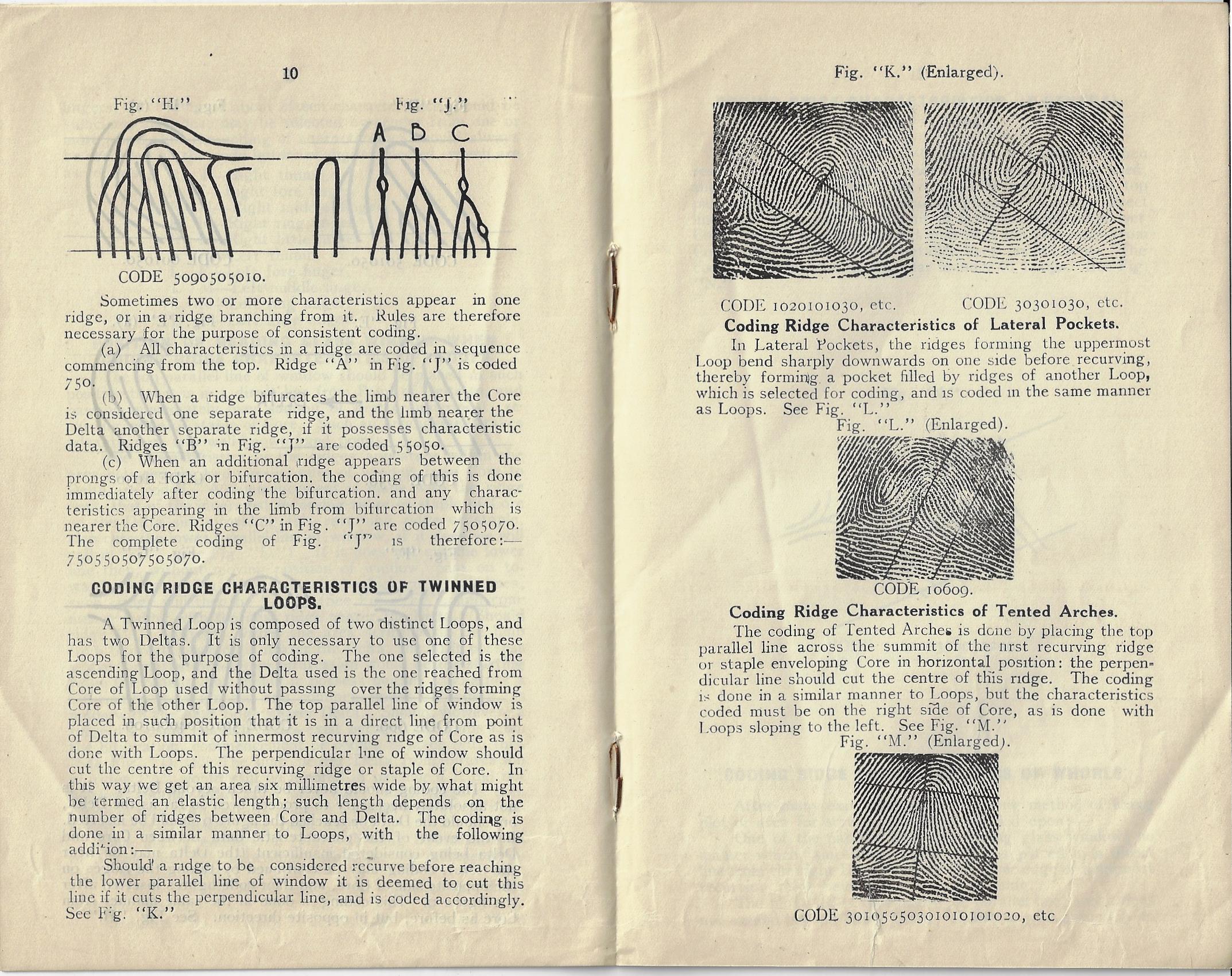
    The use of finger prints in identification is fairly old, used in Asia and India long before it became a popular practice in the West.  Also it seems that finger prints as forensic instruments occurs in literature before it occurred in actual police work. Mark Twain uses finger prints as essential legal elements (as well as comic relief) in his novels Life on the Mississippi (1893) and Puddn’head Wilson (1894), no doubt inspired by Francis Galton’s pioneering work on the subject (Finger Prints, published in 1892). Conan Doyle takes things a step further and describes the forging of finger prints, which I think was a brilliant idea.  All of this takes place before finger prints were more or less firmly established as an identifying tool, as the first conviction based on finger print evidence did not occur (in Great Britain) until 1902, while its weight in the conviction of murderers wasn’t felt until a first conviction was made using them in 1905 (and then 1910 in the U.S.). 

    Finger prints _1_

    Which brings us to these fascinating images of finger prints and their enumeration and transmission by wire,  which was the brainchild of the foremost finger print expert in the U.K., Detective Chief Inspector Charles Stockley Collins1 (M.B.E.), chief of the Finger Print Bureau at the New Scotland Yard.  I cannot determine how long in advance of this publication that he employed the idea of transmitting finger print data by telegraph, but it seems to be an excellent idea, sending important information relatively instantly over distances to help in conducting criminal investigation. It may be that this idea–far in advance of modern transmission practices, even though Arthur Korn’s first “facsimile” images were made as early as 1902–was seen at the time as both fantastic and obvious, the second impression coming almost immediately on the heals of the first, like one of those terrific ideas that seemed “obvious” once it was first stated.

    Notes:

    1. Charles Stockley Collins. A Telegraphic Code for Finger-Print Formulae and a System for Sub-Classification of Single Digit Impressions. Published at the Office of the Police Chronicle, London, (1921).  9×6″, 17pp, with two plates and 15 illustrations/drawings in text. Provenance: Library of Congress, with their rubber stamp surplus/duplicate on the front cover. There are only two copies of this work located in WorldCat/OCLC (Cornell and the British Museum); for all of what Mr. Collins accomplished, this seems to be his only publication outside of journals. 

  • Business-end of German Artillery (1918)

    JF Ptak Science Books  Quick Post

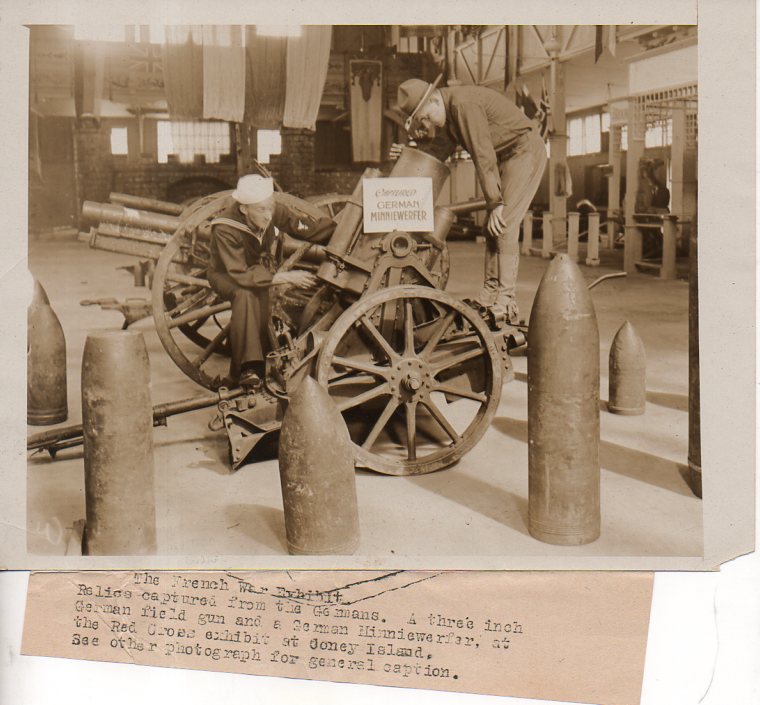
    The American soldier in this new service photo is having a good hard look at the business end of a captured German Minenwerfer (“mine launcher”, which was a short-range mortar), .a three-inch field gun used to devastating effects throughout the war.  We are told via the supplied typed caption that the display was installed on Coney Island (Brooklyn) as part of a Red Cross fund-raising exhibit. WWI Photo Captured German artilleryh177

    ·Posted by :

    ·in:

  • Christmas Mail, 1917

    JF Ptak Science Books  Quick Post

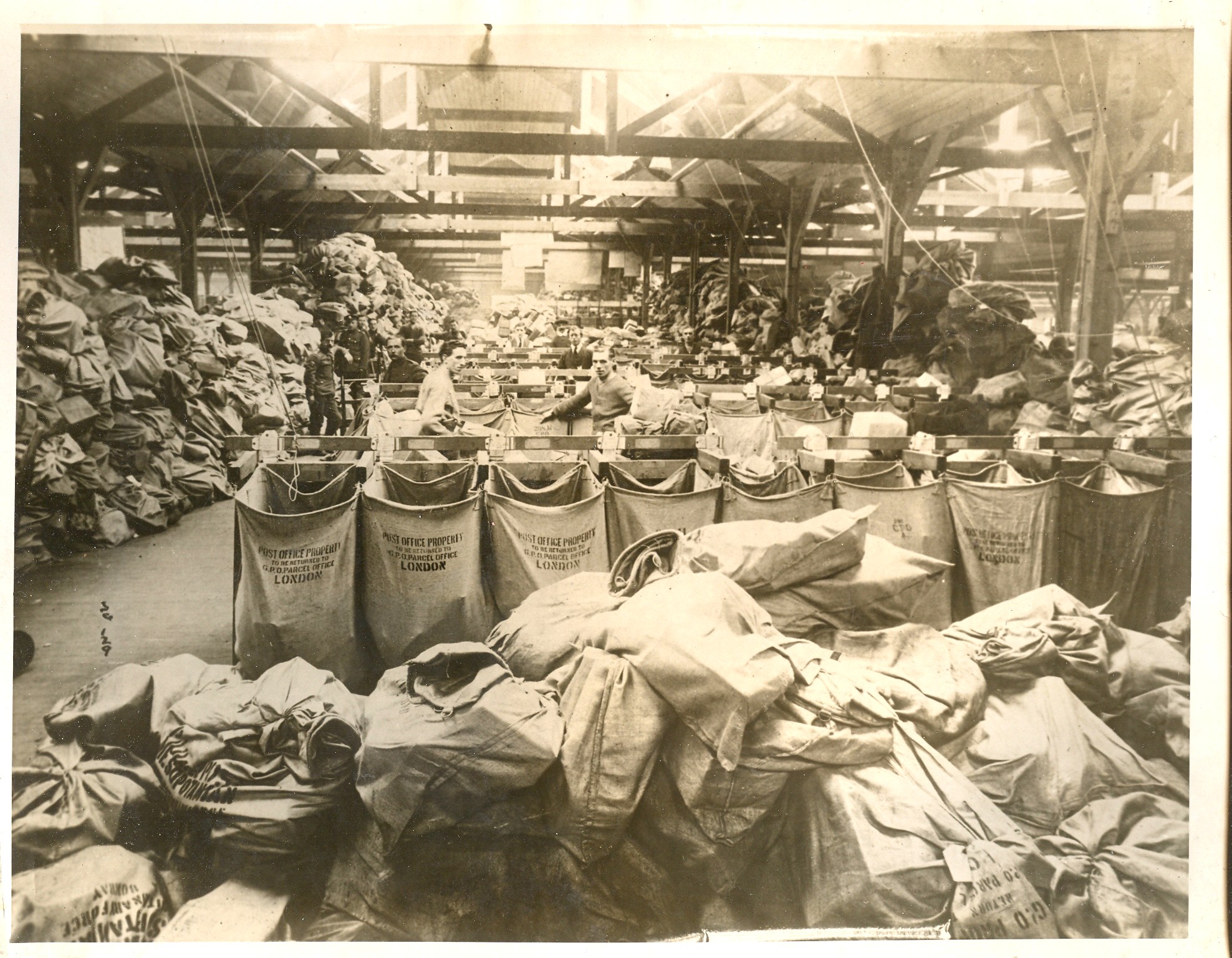
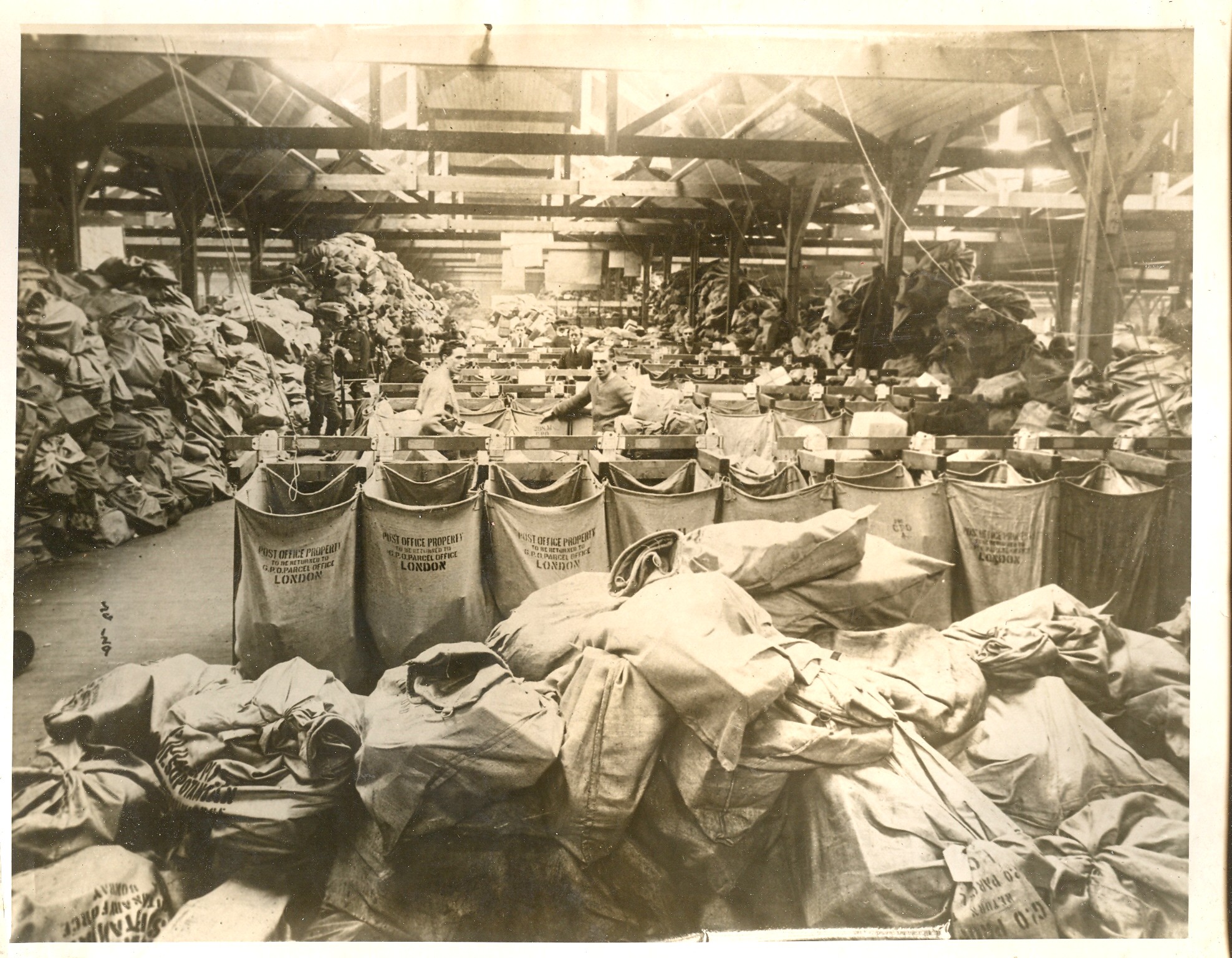
    This is the U.S. Army mail depot at Regents Park, London, braced for and under siege by  Christmastime mail in 1917. It strikes me that there may be a million items in this photo–at this time in the war there were something like 35 million people in the services for all countries dedicated to the war effort, which is approximately half the number that served in total.  If these letters in this picture were bodies, I reckon that there would be five more rooms like this necessary to tell the visual picture of the war dead and wounded.  This aside, I initially focused on the guy in the rear with the white shirt and tie, standing there pretty much overwhelmed by the task of moving all of that stuff…and perhaps with the idea that much of the mound would wind up being undeliverable because the recipient was killed.  I wonder if that mail was returned, or not?

    WWI Photo Christmas Mail


    WWI photo Xmas mail

    ·Posted by :

    ·in:

  • On the Beauty of Antique Art Made by Children

    JF Ptak Science Books  Post 2785

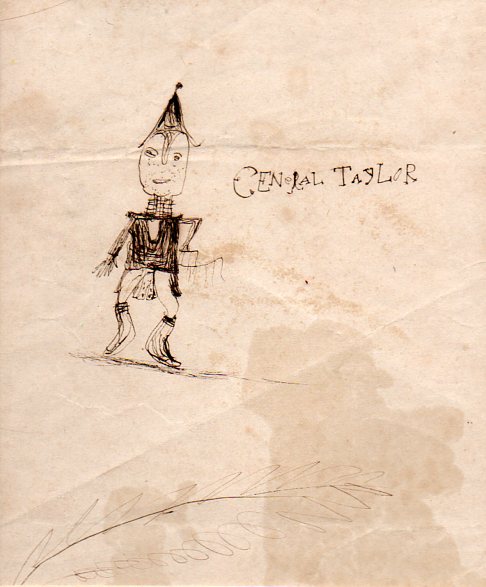
    Children's art--3846
    Among my favorite places in Washington, D.C.–a place where I lived for 29 years–are its cemeteries; in particular Rock Creek Cemetery, but more specifically, Congressional Cemetery.  Congressional is a big place, tucked away, sort of, away in Southeast D.C.–that is if you can tuck away a 30-acre piece of land. Congressional is an odd place, filled with many interesting people; its filled with their actual remains, and also their memories. There are many folks who have been interred in spirit in the cemetery, in cenotaphs; there are also many who have been laid to rest their temporarily, in the Public Vault, until conditions (in the old days) improved to have their remains received in their final resting place. 

    Children's art--2845
    Among those in the temporary funeneral housing were JQ Adams, William Henry Harrison, Dolley Madison, and Zachary Taylor. It may be one of the great vaults in the history of our country, a small place holding great people.

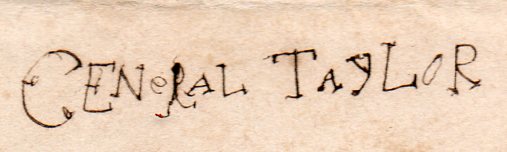
    President Taylor.  General Taylor.  That’s why I’m here right now.  He’s the subject of these magnificent efforts by an unnamed child.  The boy, or girl, drew these images on the back of a section of map that was printed in about 1845-1850, just about at the time that Taylor was at his greatest height–a general, a famous military leader, about to become president of the United States without ever having been elected to any office.  He was a gigantic figure at the time, and no doubt occupied some piece of mind of the artist who rendered him, The General.

    I came to collecting childrens’ art in a roundabout way–not so much “collecting” per se as in “finding” them.  They’re difficult things to locate.

    First of all, materials were scarce.  Paper, pencils, ink–these were not common things for kids to own in the 19th century, especially more in the middle and early parts of the century.  These items were expensive, especially if you were a kid in a working-class family who didn’t have much of anything at all, anyway. In addition to a real crunch, a severity of absence, of the basic materials, the art that was made had to survive the artist’s own hands.  And then it needed to survive being culled from family clutter for a generation. And another. And another. And another. And four more.  150 years of parents clearing out the clutter is a lot to survive. 

    And so there doesn’t seem to be much left.

    I find them in flyleaves of old textbooks and such.  Its not as though there is are websites devoted to such things–at least not until now.

    And so I’m selling two of the three portraits of The General that I own.  I’m keeping one.  They just feel superb, to me.

    If you’re interested in owning one, visit the blog bookstore.

    The artwork of children is a gorgeous thing, even when the children are not your own.  Its not that there is a sense of a certain charm, or charms–the words are just too weak. The vocabulary is more in the realms of the work being sublime, far more so than anything else.

    ·Posted by :

    ·in:

  • The Mountain Spirit, 1917

    JF Ptak Science Books  Quick Post

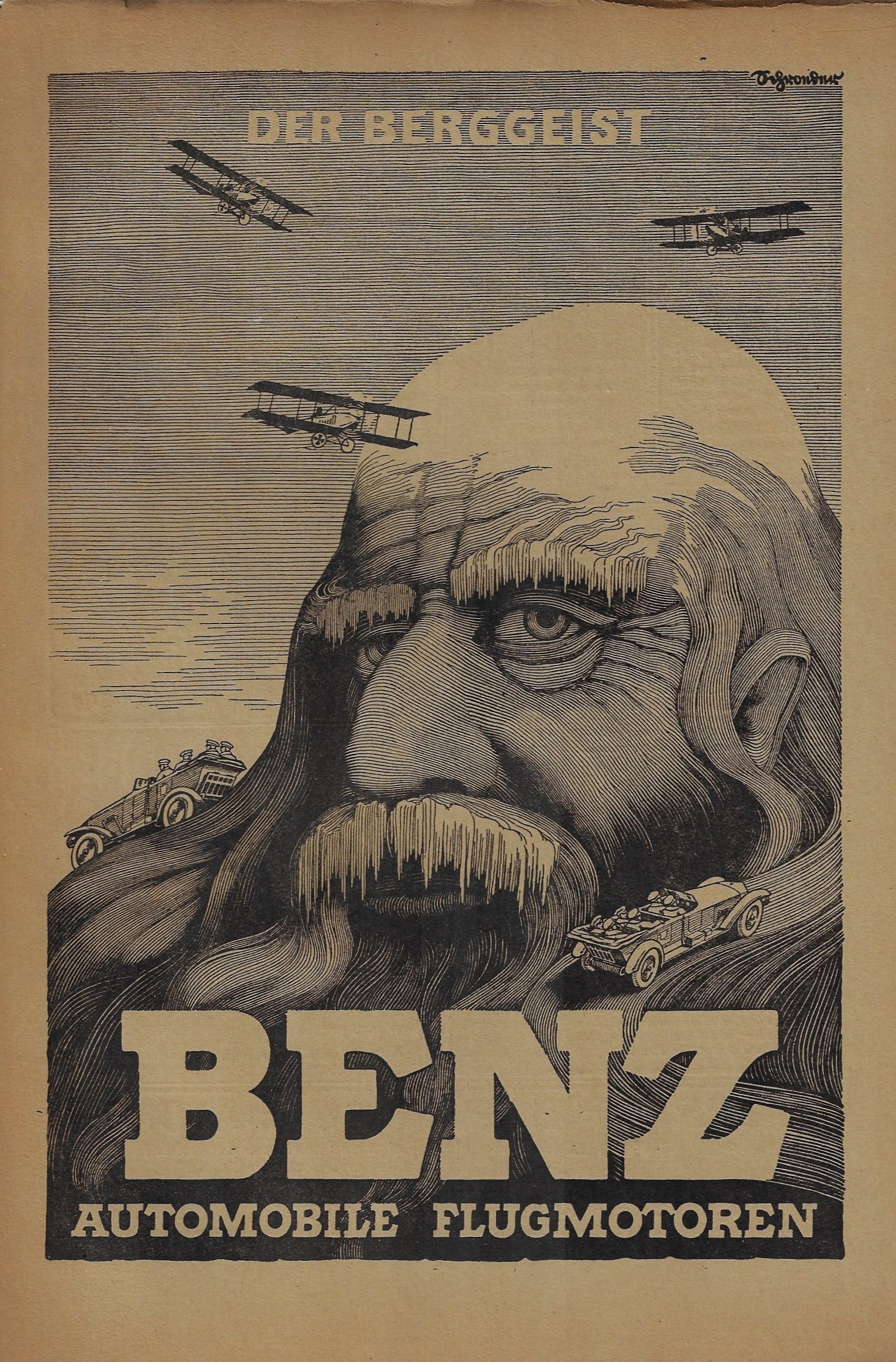
    This is a minor but very compelling addition to the “History of Lines” series on this blog–an advertisement for Daimler-Benz, reminding people that they not only made automobiles, but also were making contributions to the war effort in the design and production of aircraft engines. The work is labeled “Der Berggeist”, which is “Mountain Spirit”, which in German (and Swiss) folklore is depicted as an old man with a white beard, and then sometimes too (evidently) as a giant, and Mountain Monk, who lived in the mountains and in the mines of mountains. There’s a reference to the Berggeist in the 1980 edition of The German Legends of the Brothers Grimm, vol I, page 317.  We see that the Benz cars and aircraft are making their ways easily around the Mountain Spirit, who at times is depicted as a difficult and contentious entity. 

    [The ad appeared in Die Kunst, Monatshefte fuer Freie und Angewandte Kunst, Munchen, October, 1917.]

    Ads Benz 1917 Mountain HEad

    ·Posted by :

    ·in:

  • Filling Stuff In, Part VII: MIT Computer Summer School and Junior G-Men

    JF Ptak Science Books   Quick Post  [Part of a series on the History of Blank, Empty and Missing Things.]

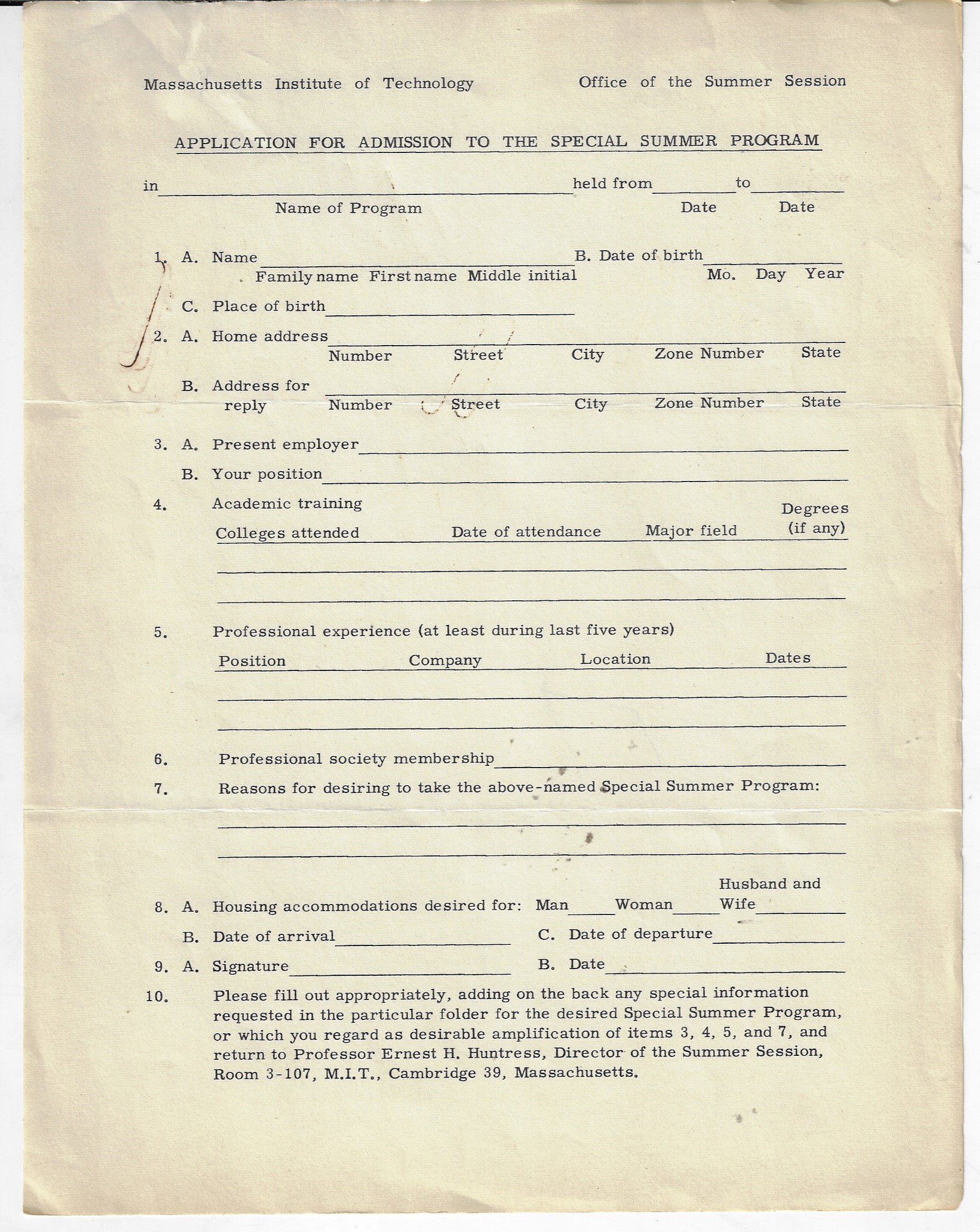
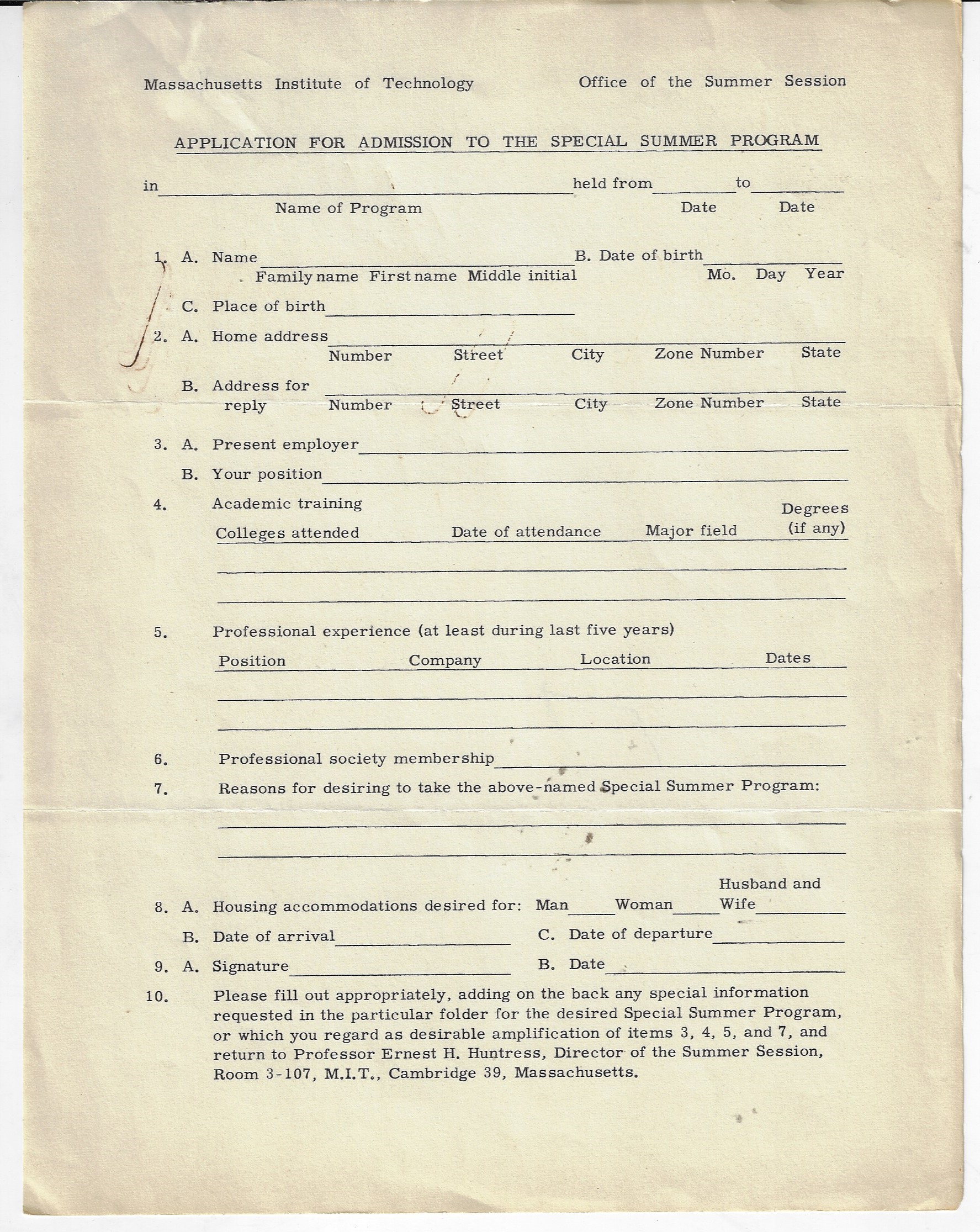
    Compsci MIT Summer Program MIT _1_

    There’s something captivating about found bits of ephemera that ask you to fill something out–it can be a questionnaire, or an application for being a floor salesperson or a radio technician, or a form for a watchman on a destroyer, or a sign-up for joining the Hitler Youth or the Women’s section of the K.K.K. They can be amusing, benign, and even potentially deadly. The one I found today is much more mundane and in that way offers more subtle challenges and provocations–it is a simple form for attending a MIT 1953 computer conference on the applications of the digital computer. 

    Of course 1953 is pretty early in the history of modern digital computers, sort of like post-incunabula to the opening years of the 1940s–till, there’s not much to fill out on the form.

     There’s actually more to be filled out (and with more exacting  questions) to join the “Junior G-Men of America” (“a Juvenile Police Organization”) club. This  1936 document was meant for kids, or advanced kids, and asked some pretty creepy and too-detail questions of its potential members, including whether or not the applicant would expect to be paid if injured in the line of duty.  (The Junior G-Men organization became very popular, with all manner of toys and badges and guns and so on, with radio series and movie spin-offs, though it seems not have made it much into the 1950s.)

  • Submarine Cross Sections

    JF Ptak Science Books   Quick Post

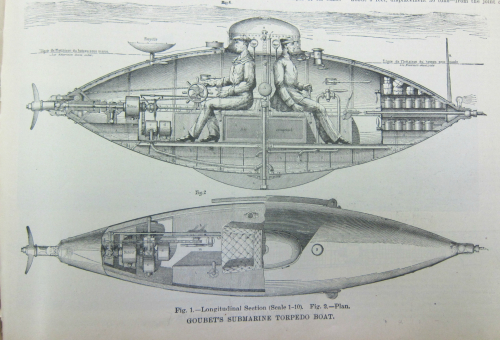
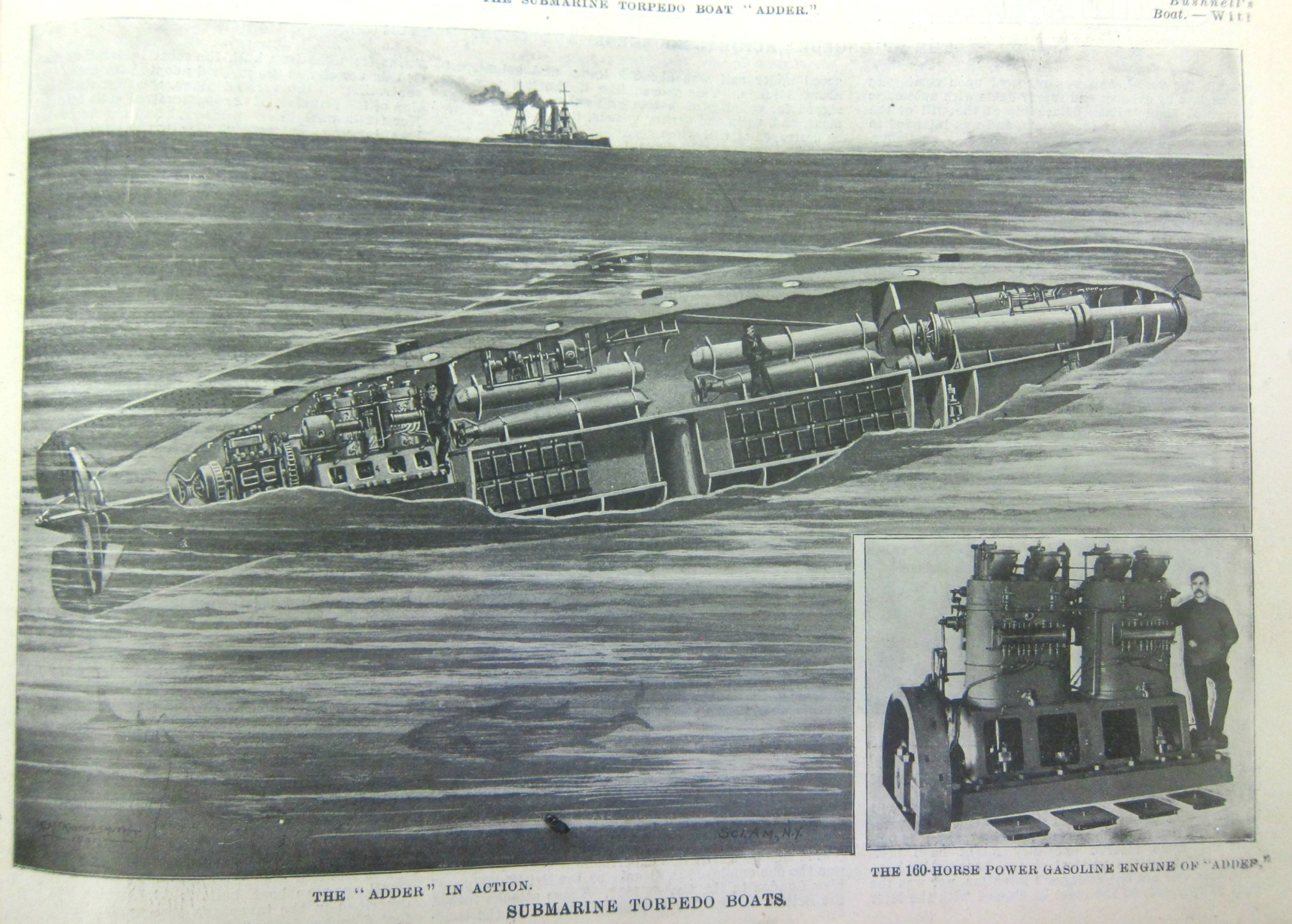
    This is a simple post adding to the collection of cross-section and cutaway images on this blog (see  https://historyofideasblog.com/thesciencebookstore/crosssections/ ). All of the images below are found in the February 15, 1903 edition of Scientific American Supplement: 

    Subnarine 4

    Subnarine 4

  • A First Alphabet of Missing “Firsts” in Art

    JF Ptak Science Books   Quick Post

    Keeping track of the first time something appears in a reproduced form is an interesting and perhaps useful exercise…well, it is at least diverting and occasionally helpful in connecting a few other disparate bits. I’ve wondered about some of this throughout the course of the blog, like the first time the Sun appears with a smiling face, and the first appearance in print of the spectrum of a star other than the Sun, or the first appearance of a portrait of Einstein (or Newton, or Goedel, or Feynman, or FDR), and so on.

    Sitting in the airport parting lot and waiting on the arrival of a plane (and after seeing a very unexpected flyby of a number of Sikorsky Super Stallions) I thought about what might be unusual objects and when it was that they first appeared in art, and organized them alphabetically. For example, when did an Adding machine of any sort make an appearance in a work of art? A Barking dog? A Crutch or cane, and then a broken crutch or cane?  A Dinosaur? (Or dead horse?)  An Eclipse? A Fork? (Also the representation of human Frailty?) A Girl, a House on Fire, an Incision, a Jail?  When does a Kitchen appear (though this may be one of the easiest to answer)? Where do we find the first Library depicted in art, or the first Microscope? When does the first Nighttime scene appear? How about the first image in art displaying the law of Octaves, or Pi, or a Quagmire, or a Ripple in a stream? And when does the first Stirrup show up, and the first Signature of an artist, or the first Toothless Smile? And what about leafless Trees, and Underwater scenes? When do we see the first Visions or dreams enter the artistic landscape, or the first Wire, or Yawn, or the number Zero? 

    So there you have it. If you have any answers to these questions, please do share, as I don’t have the answers (though I have some guesses, or approximations of a time period).  Probably there are some quickish responses for the first signed artwork, and the first appearances of the fork, and stirrup, and microscope. We’ll see. 

Recent Posts

Archives

Categories