A Daily History of Holes, Dots, Lines, Science, History, Math, Physics, Art, the Unintentional Absurd, Architecture, Maps, Data Visualization, Blank and Missing Things, and so on. |1.6 million words, 7500 images, 4.9 million hits| Press & appearances in The Times, Le Figaro, Mensa, The Economist, The Guardian, Discovery News, Slate, Le Monde, Sci American Blogs, Le Pont, and many other places… 5000+ total posts since 2008.

  • The Young Communist League is at Your Service

    JF Ptak Science Books  Quick Post

    Books cover young communistThis dapper young man with the sharply snapped salute is a Communist, and as he tells you, he’s at your service.  But the Young Communist League (of the United States) in the 1920’s–when this pamphlet was printed–was a semi-underground organization with few members who wanted to serve you and which was also “devoted to the interests of all young people and is dedicated to the revolutionary cause of the working class of our country, the transformation of the United States through mass democratic struggle into a socialist society”. 

    So the YCL service venture may have been more helpful to someone with Communism in mind than anything else.  It did have a diffident bit of patriotism in the design of the pamphlet’s covers, but they wanted a United States that wasn’t the United States that very many other people wanted. 

    Perhaps the October Revolution wasn’t what the people of Russia wanted, either. They certainly wanted their freedom from Tsarist rule, but the revolution orchestrated in the name of freedom was hardly that. Significant American thinkers and writers on the plight of the people in Russia at the end of the 19th century–including George Kennan, author of the still very readable and absorbing Siberia and the Exile System (1891)–pretty much jumped off of the bandwagon by WWI.  I can understand a haphazard interest in the Communist Party and the idea of socialism in the United States in the 1920’s and even the support of the still relatively new Soviet Union, but this was a period in which the member in the cascade of three-letter acronyms of Communist political affiliates and parties had a weak draw.  Interest in them picked up in the United States in the 1930’s, though this was also the period during which the atrocities of the monster Stalin were being discussed.  I’m not sure why this popularity grew in the light of these revelations–I just don’t know the history.  (Even though this was supposed to be Stalin’s quote but wasn’t, it fits quite well: “death of one man is a tragedy, death of a million is a statistic”–as a murderer of millions of people, he was very well versed in statistics of genocidal sadism.)  

    In any event, I simply liked the public face that the YCL engraved for themselves–it looks much like any other face you’d see in any other magazine hawking coats or cigarettes or Dunlop tires.  A face like any other.  
    ______
    Notes
    Kennan wrote in 1923: “The Russian leopard has not changed its spots… The new Bolshevik constitution … leaves all power just where it has been for the last five years–in the hands of a small group of self-appointed bureaucrats which the people can neither remove nor control.”
    ·Posted by :

    ·in:

  • Photographic Incunabulum, 1839-1841

    JF Ptak Science Books 

    “Photogenic Drawing” followed by “Photogenic Drawings”1 The first paper gives an account (taken from the London Mechanical Magazine), occupying pp 263-4, of the Daguerre process; the second, pp 264-5, gives an account of the Fox Talbot method as it first appeared in the British Association/Athenaeum.

    These I believe are among the earliest of U.S. journal references for  two of the earliest photographic processes—the Fox Talbot method was much different from the Daguerre though much less known and certainly underappreciated as it was arguably the superior.

    • “This early period of photography cannot be passed over without mention of the name of Henry Fox Talbot of England He was a man of many sided scientific character and an independent investigator in the photographic field prior to Daguerre’s discovery and therefore not inspired by it to investigation. In 1839 January 31st he read a paper before the Royal Society entitled “Some Account of the Art of Photogenic Drawing etc” embodying a practical process on paper based on the abandoned process of Wedgewood and Davy which he improved and also completed by fixing the pictures although imperfectly…”–, JFI, Dec 1899, vol 148, p 4 11.

    Then, in the September issue of 1839 come the following three contributions: “Invention of Photogenic Drawings”, p.208, from Mechanic’s Magazine; “Light Drawn Pictures”, pp 208-9, Mechanic’s Magazine;“The Daguerrotype Explained”, pp 209-210 (“A.D.B.”, Alexander Dallas Bache).

    And then, a month later in the November issue, comes a Daguerre: “Practical description of the Process called the Daguerreotype, which consists of the spontaneous reproductions of the images of natural objects, in the Camera Obscura…”

    ·Posted by :

    ·in:

  • Artistic Display of Information: an Uncommon Display of Lengths of Rivers (1874)

    JF Ptak Science Books  Quick Post

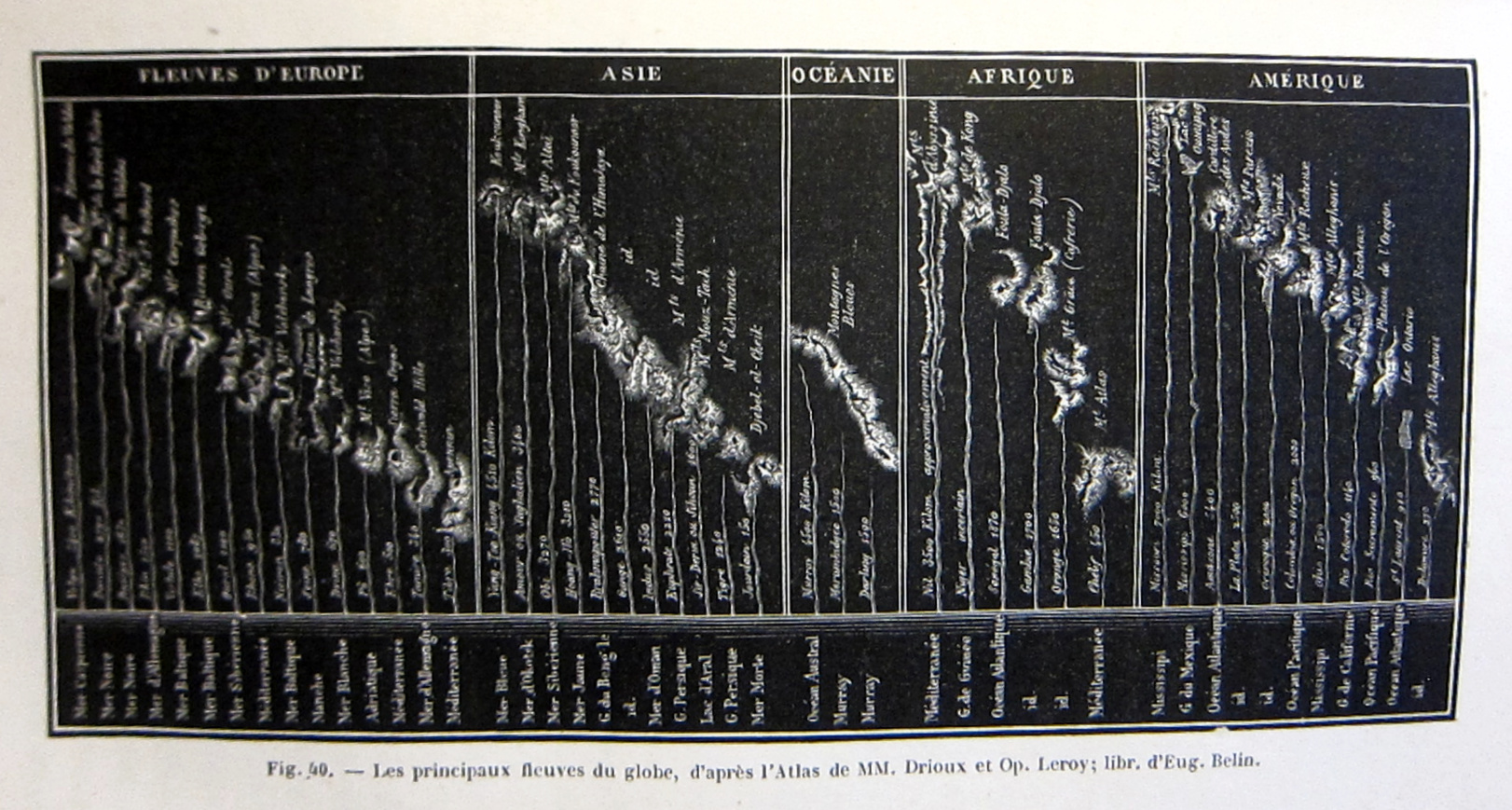
    There have been a number of posts on this blog showing the comparative lengths of rivers and heights of mountain very artistically displayed–beautifully so, sometimes. I found this unusual example in an unexpected place–Rambosson’s Histoire des Astres… (Paris 1874) in its section on the Earth. I’ve never noticed it before, though the caption tells us that its source is from a relatively common-ish atlas by Drioux and Leroy, Atlas Universel de Geographie, which went through many editions. In any  event, I thought I’d share it here, as I can’t seem to locate it in the original:

    Rivers of the world

  • Found Poetry in the Table of Contents of an Astronomy Book, 1874

    JF Ptak Science Books  Post 2783

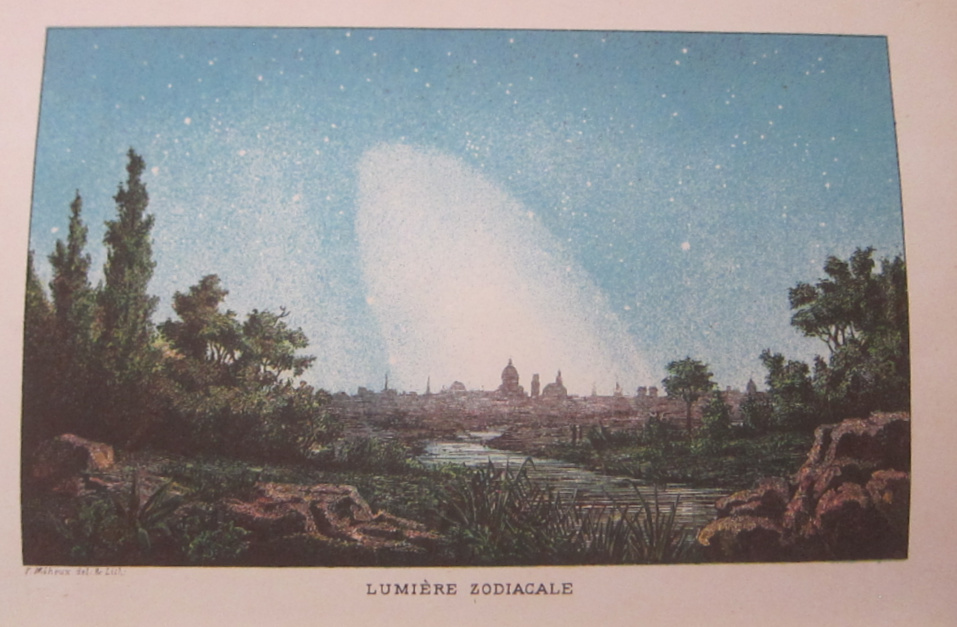
    Lumiere Zodiacale


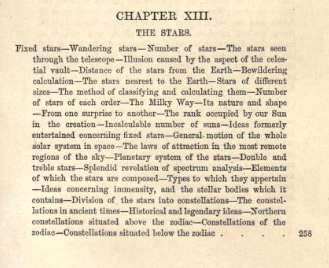
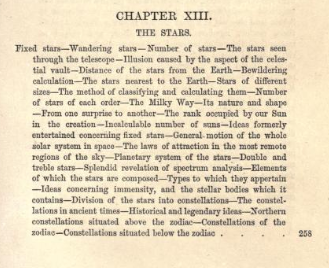
    Found poetry the starsI’ve written a number of posts on poetry found in unusual places: title pages of antiquarian books, technical manuals, unruly translations of commonplace literature, and so on. Here’s another, found in the table of contents for chapter 13 of a translation of Jean-Pierer’s Rambosson’s Histoire des Astres, Astronomie pour Tous. The edition I’m working from here is the illustrated edition of Paris, (1874) with its table of contents printed after the index at the rear of the text; the English translation’s table appears up front, and is pretty much the same as the French original (though the French sounds better).  I’ve got to say that there are some beautiful illustrations in this volume, not the least of which is a bright cross section of the Earth–it has exaggerated surface features out of scale to the rest of the planet to make a point in the text. (If this scale was correct then Vesuvius would be 500 miles in height.)

    So, the poetized chapter contents (and the original, at left):

    THE STARS. 
    
    Fixed stars, Wandering stars, Number of stars;
    The stars seen 
    through the telescope, Illusion,
    caused by the aspect of the celestial vault.
     
    Distance of the stars from the Earth,
    Bewildering calculation.
    The stars nearest to the Earth, Stars of different 
    sizes 
    The method of classifying and calculating them;
    Number of stars of each order.
    The Milky Way, Its nature and shape from one surprise to another. The rank occupied by our Sun in the creation Incalculable number of suns, Ideas formerly entertained concerning fixed stars, General-motion of the whole solar system in space.
    The laws of attraction in the most remote regions of the sky, Planetary system of the stars, Double and treble stars. Splendid revelation of spectrum analysis, Elements of which the stars are composed; Types to which they appertain Ideas concerning immensity, and the stellar bodies which it contains.
    Division of the stars into constellations the constellations in ancient times, Historical and legendary ideas Northern constellations situated above the zodiac Constellations of the zodiac, Constellations situated below the zodiac ....

    --Full text in English available from the Internet Archive: https://archive.org/stream/astronomy00rambiala/astronomy00rambiala_djvu.txt

    ·Posted by :

    ·in:

  • Ships in the Skyline, Part 11 (1904 and 1908)

    JF Ptak Science Books  Quick Post

    SHips in skyline collage

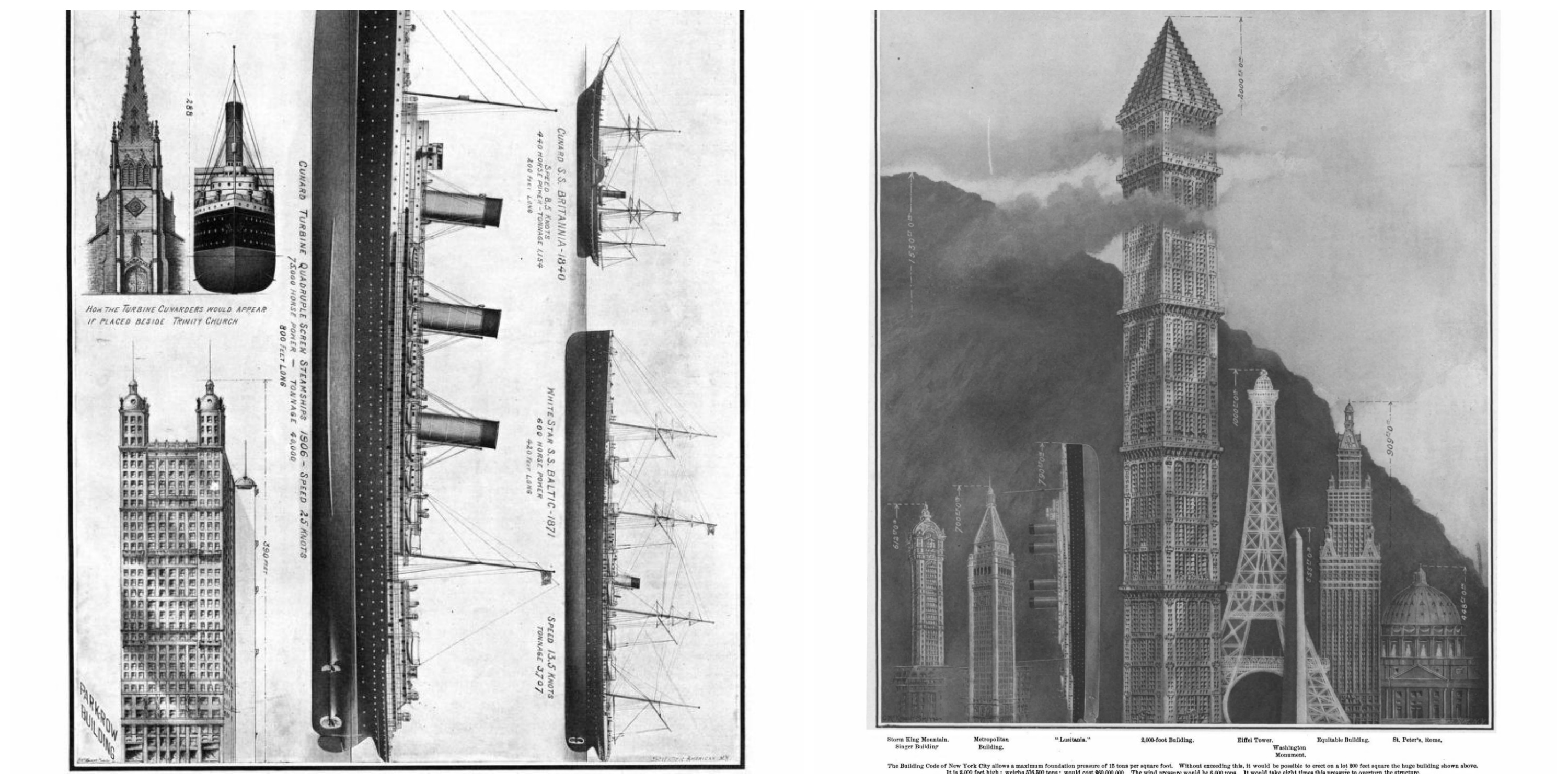
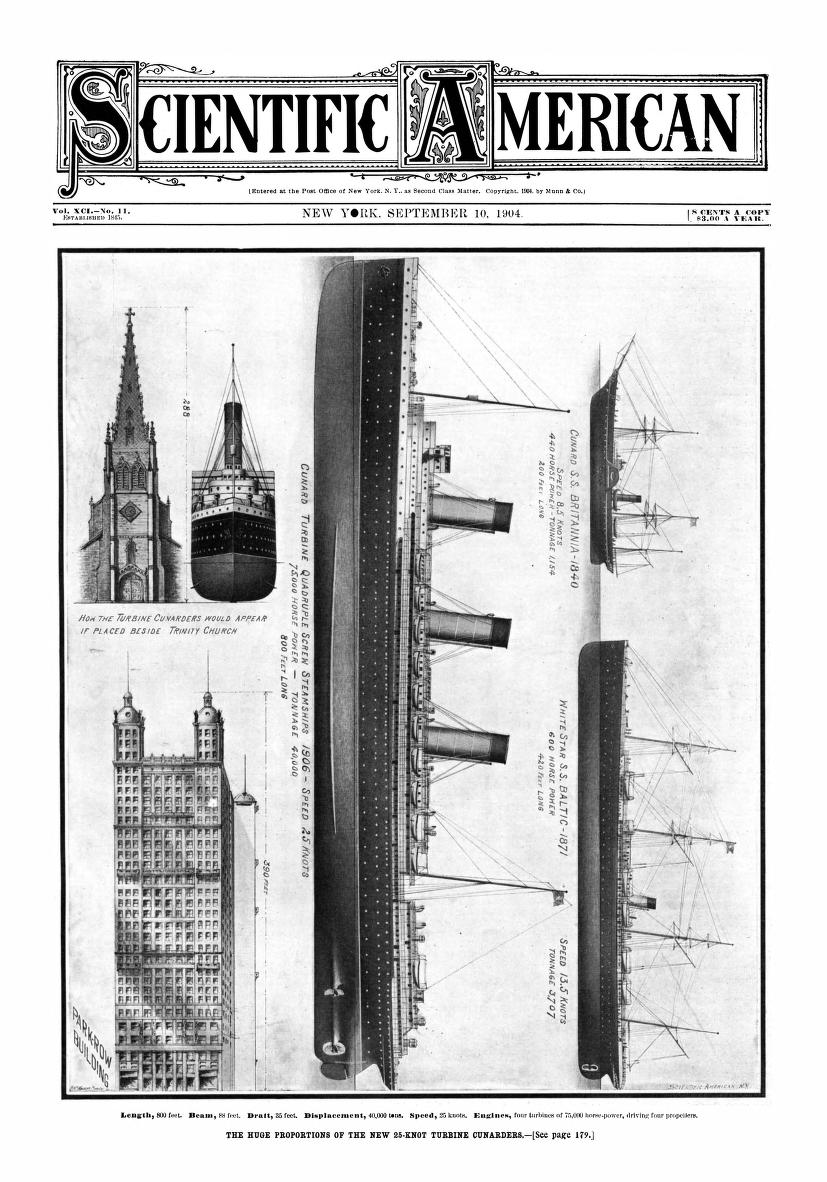
    In the continuing series of information presentation comparing new and relatively unknown objects to the very well known there is a subseries where the imagery uses ships as the new or the known, and they are usually presented in a city skyline or against a building. In the following two examples the first (Scientific American, September 1904) shows the new 800′ Turbine Cunard placed against Trinity Church and then, standing on end, impressively displayed alongside the 380′ Park Row Building, which at the time and until 1908 was the world’s tallest building. That means that the beautiful steel skyscraper designed by R.H. Robertson was not quite half the length of the new ocean liner, which also had the benefit of moving at 25-knots through the ocean whereas the Park Row, well, didn’t. In any event, it is a pretty interesting image.

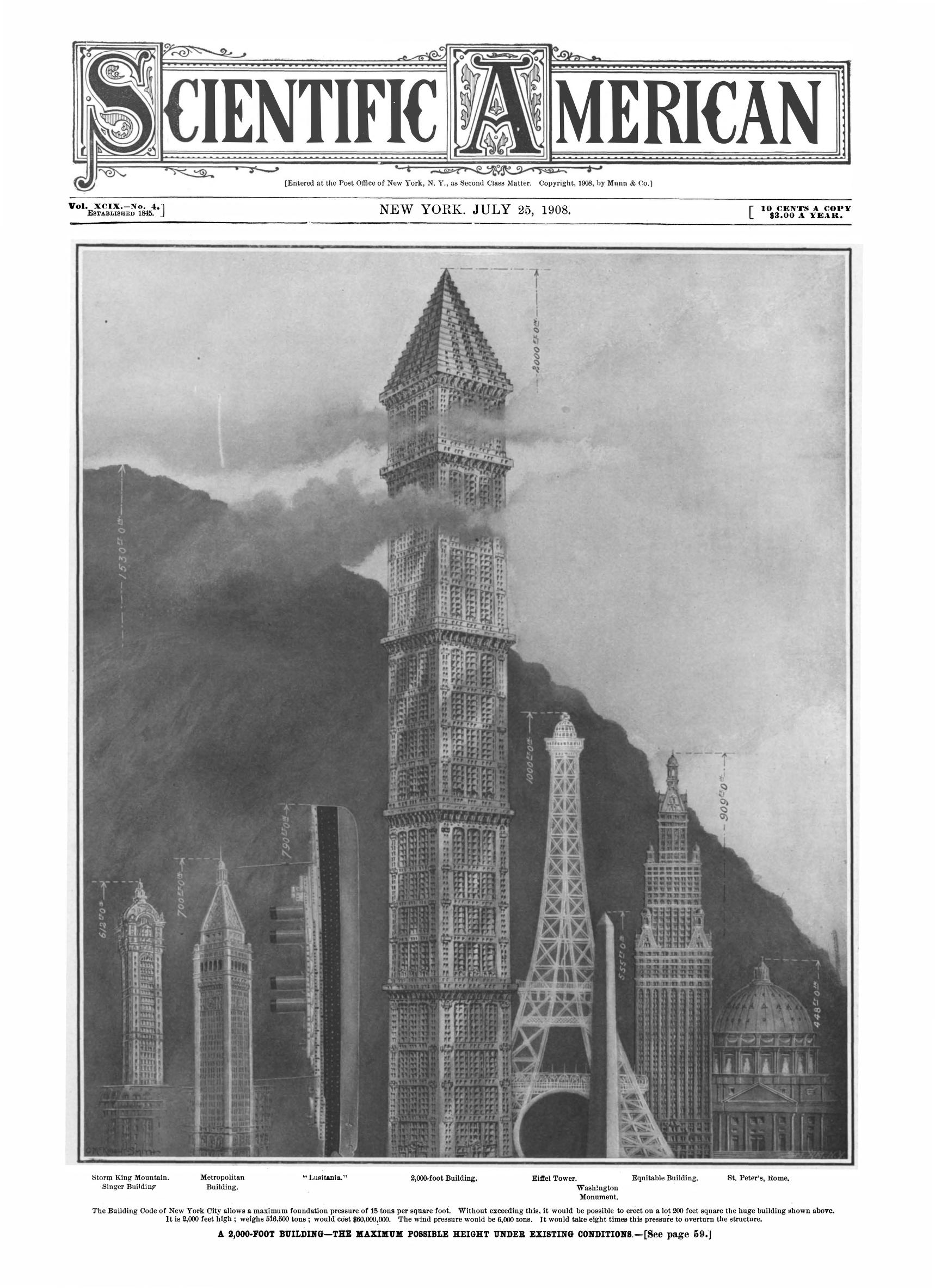
    The second (Sci Am 25 July 1908), compares what was thought to be the limits in the height of the still relatively new introduction of the skyscraper, which according to NYC building regulations listed the maximum foundation pressure at 15 tons per square foot. The editors of the Sci Am reckoned that you could build a 2,000′ tall structure under those conditions, and then compared this great beast to other tall buildings, plus the 790′ Luisitania, which was a very effective display. 

    Sci Am 1904 Sept Ships in Skyline

    Sci Am 1909 Ships in SKyline  2000 foot bldg

  • Two Interesting Papers on Mars–Disappearing Continents and Re-Filling Canals. AND a Bit on the Origin of “Martian”.

    JF Ptak Science Books   Post 2783

    I came upon these three papers while doing some research on the bookstore part of this blog and thought to share them here. Three papers touching different and unusual aspects of Mars.

    The first belongs to Henri Jules A. Perrotin (1845-1904 and with Louis Thollon, 1829-1887), “Observation des canaux de Mars; “Lettre de M. Perrotin à M. Faye.” found in Comptes rendus1. Perrotin’s (mostly remembered I think because of his excellent use of the Cornu apparatus in establishing the best speed of light numbers until Michelson) communication establishes that the great canals (“canaux”) he observed and reported to the Academy in 1886 were still there, as expected and as hoped for and celebrated by Schiaparelli. There were also three other rather significant observational findings:

    • First, a continent had disappeared. “Clearly visible two years ago, it no longer exists today” he wrote ( “Nettement visible, il y a deux ans, il n’existe plus aujourd’hui.”). A flood, “or something else” (“Cette inondation ou autre chose…”) could well be a periodic occurrence that did away with the land mass.
    • Second, there is a new arrival of a canal 20-degrees in size just north of the disappeared/extinct continent (“…au nord du continent disparu…”).
    • Third, there was a sort of canal that suddenly appeared on the North Pole ice cap, connecting the two seas on either side of the pole. (“…sur la tache blanche du pôle nord, d’une sorte de canal qui semble relier, en ligne droite, à travers les glaces polaires, deux mers voisines du pôle”).

    ·Posted by :

    ·in:

  • Mozart and NYC: the Hudson River Tunnel und die Zauberflote’s Königin der Nacht

    JF Ptak Science Books   Quick Post

    Sci Am 1903 Hudson River tunnel

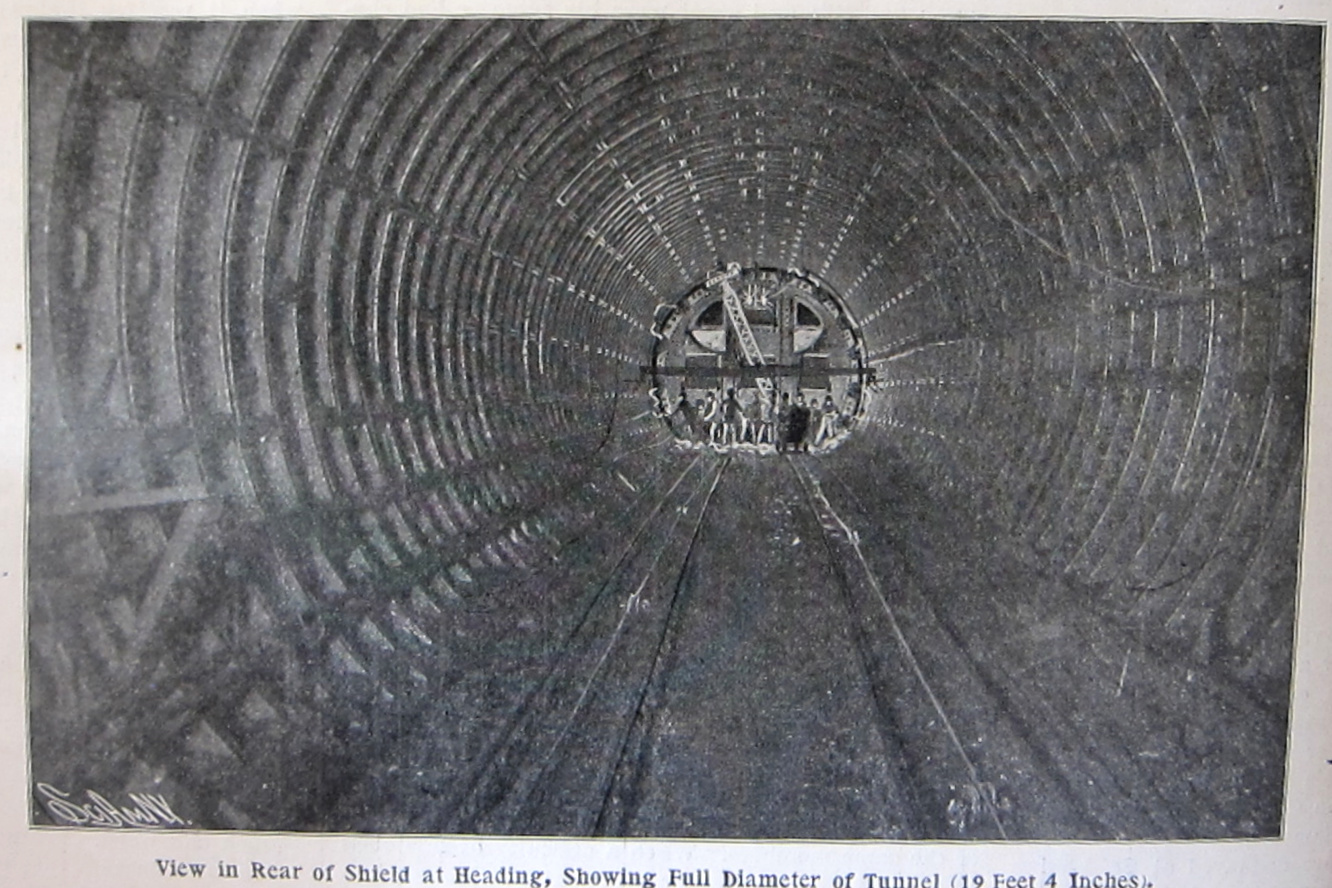
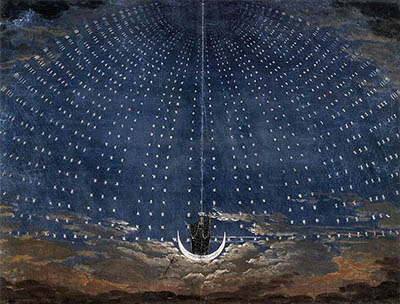
    This photographic view of the 19′ tunnel section of the Hudson River tunnel reminds me a little bit—I mean, it reminds me in a sparkly sense—of the 1815 stage set by Karl Friedrich Schinkel (1781-1841) for Mozart’s Magic Flute (from the original gouache, measuring 463 x 616 mm, and part of the collection of the Staatliche Museen, Berlin). Again, its just the initial reaction to the perspective pulled up the Schinkel more than anything else, except maybe for a non-existent underground image from Jan Vredeman de Vries’ book on perspective. That said, the set design I’m thinking of features the arrival of the Queen of the Night/Königin der Nacht, so perhaps this association isn’t too meshuga…excepting the ripped-to-shreds lust for revenge that the Queen of the Night sings about, which hasn’t much to do with digging a tunnel. 

    (And just in case you’ve never seen Amadeus by Milos Forman, you should, if for nothing more than watching M conduct the Queen of the Night aria.) Also, I’m writing this note at the tail end of the day of Beethoven’s 248nd birthday, and Mozart (although he would conduct the premier of the opera) wouldn’t live out the year of his opera. I don’t know what that has to do with anything, though it almost does. 

    Mozart_magic_flute

    Source for the Friedrich Schinkel image: https://www.wga.hu/support/viewer_m/z.html

    ·Posted by :

    ·in:

  • A Small World of Rubber Bands and Erasers (1903)

    JF Ptak Science Books   Quick Post

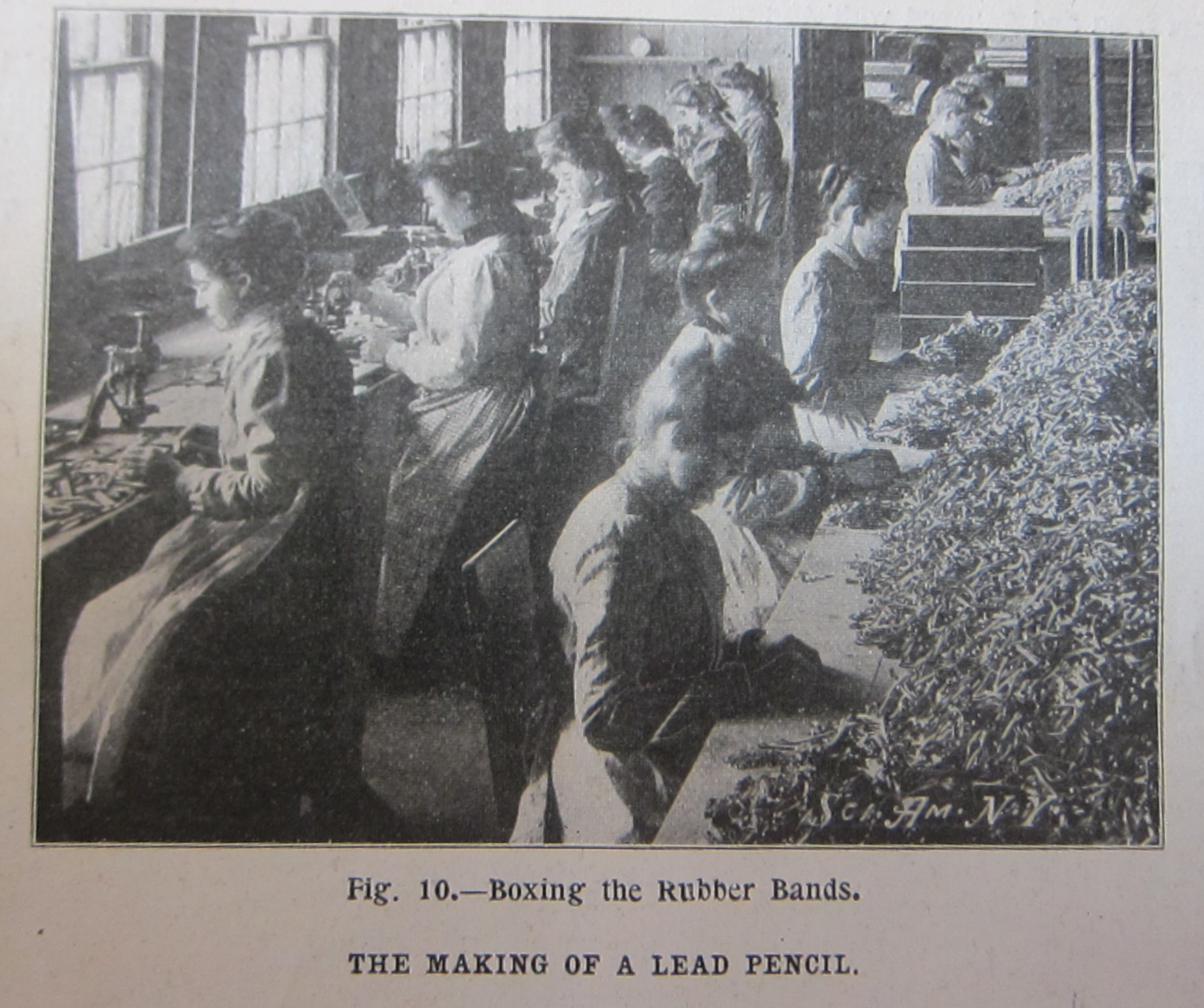
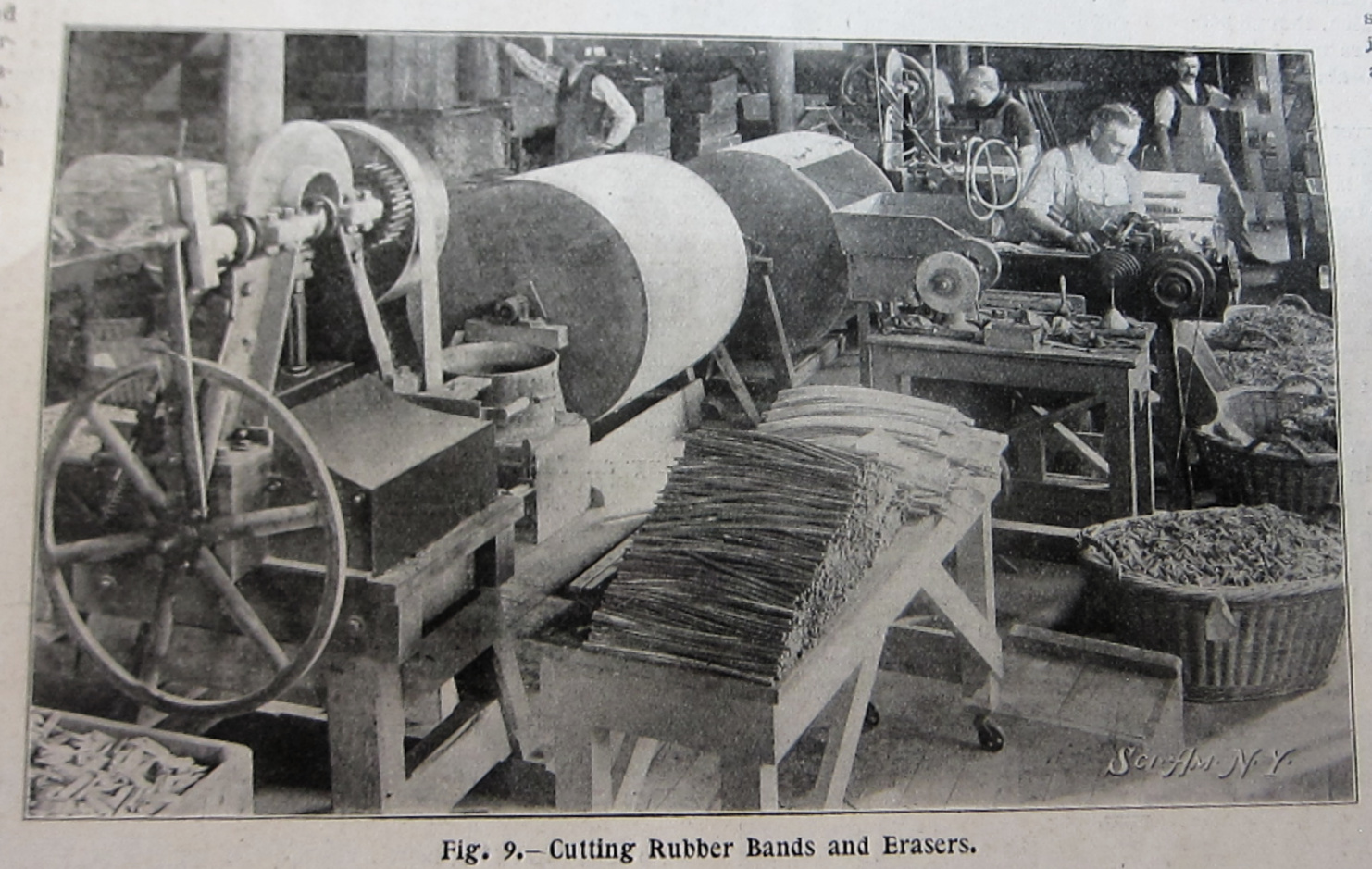
    Back in the days of burgeoning human-machine interfaces there were many industries employing some automation and independent machine operating assembly lines, though there were many more in 1903 that were not. This pictures struck me for the number of people working on what looks like an endless mountain of little tasks combined to make a little product, though there was nothing “little” about the labor that went into it all. In this case, it is a “lead” pencil and rubber band manufacturing establishment, and appears in a rather lengthy article in Scientific American for August 22, 1903. The machines seem to be run by hand, though there were a number of steps int eh process that were hand-done, including gluing the graphite into the pencil, polishing the wood, stamping the pencil, and applying the metal tips for the eraser (called “ferrules” which I hadn’t known about before) and the erasers themselves. An offshoot of the eraser here was the production of rubber bands, and as we can see below the work of sorting and boxing them was dauntingly accomplished by hand.  I wonder what the working conditions were like, and if any precautions were taken with the graphite dust that must’ve been misty here and there in the factory…

    Sci AM 1903 rubber bands _2_

    Here’s the rubber being prepared for both pencil and rubber bands:

    Sci Am 1903 Pencil rubber bands

  • Pigeon Heroes of WWI

    JF Ptak Science Books   Quick Post

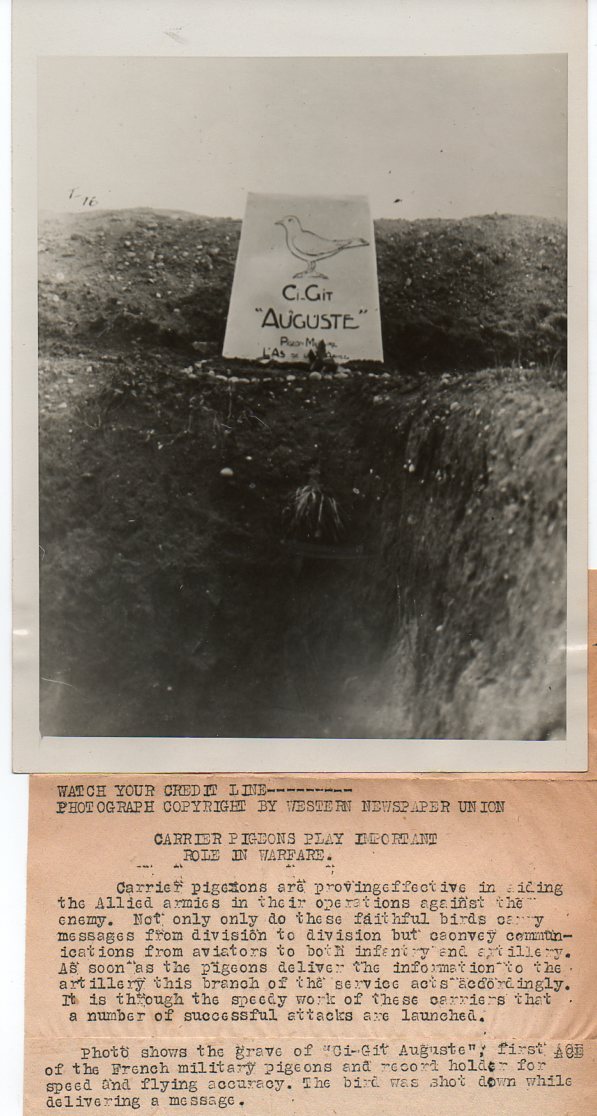
    Here’s a series of three photographs relating to carrier pigeons in WWI.  The first is a magnificent photograph of a memorial to a carrier pigeon named Auguste, a famous flyer who evidently performed invaluable services time after time, a bird of splendid behavior whose actions no doubt saved the lives of many soldiers, and who was shot down by German troops in commission of an assignment.  Auguste’s comrades constructed this makeshift memorial in the trenches for the heroic animal.

    WWI--pigeon714

    And another photograph that told the story of the pigeon in very plain  language:

    ·Posted by :

    ·in:

  • A Good Survey of 1950’s Computer Science

    JF Ptak Science Books   Quick Post

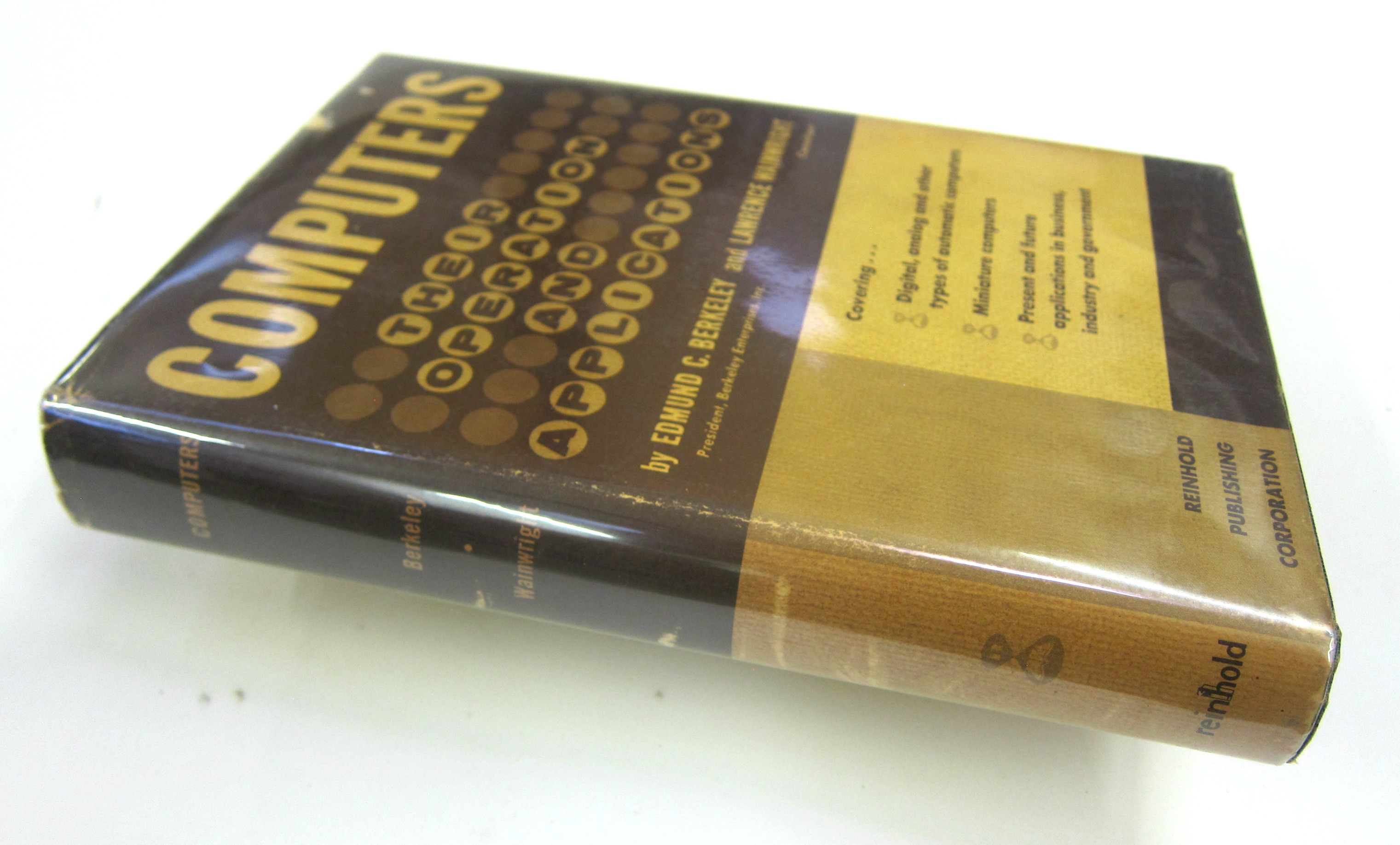
    Computer book berkeley COmputers 1956Edmund C. Berkeley and Lawrence Wainwright’s Computers, their Operation and Applications is a comprehensive, well-documented, and pretty-well referenced early-ish work in the field by one of the busiest men (Berkeley) in the computer field from 1948 (when he wrote Giant Brains or Machines that Think) to 1958. (Berkeley in many ways is like Gil Hodges of the Brooklyn Dodgers—one of the most productive  participant in his field for a decade but not in the HOF not so greatly acknowledged. even after long periods of major contributions. The difference is that Hodges has his champions; not so much for Berkeley.)

    The book’s chapters/sections include: Machines that Handle Information; Automatic Digital Computing Machines; Automatic Analog Machines; Other Types of Automatic Computing Machines; Miniature Computers and their Use in Training; Some Large-Scale Automatic Digital Computers; Applications of Automatic Computing Machines, followed by a good 24pp glossary “of terms and expressions”. The digital computer section is pretty nice, and includes at the end a five-page list of 200 or so digital computers; ditto that for a list of automatic computers.

    The “Miniature computers” section includes a long (pp 174-210) treatment of the history and main features of Berkeley’s own 1950 machine, “Simon”–certainly it is the longest piece I’ve seen dedicated to this machine outside of Berkeley’s series of articles on it in Radio-Electronics magazine in 1951. Some consider Simon to be the first personal computer, but the 39-lb machine had very little functionality outside of a demonstration device. That said, Simon was expanded in the interim, and those modifications are described here. There’s also a 15pp section on the Bush Differential Analyzer (“MIT II”),  6pp on the Harmonic Analyzer; 15pp on UNIVAC I, 8pp IBM 700 series, and 6pp ERA 1103. 

    Notes:

    1. . Reinhold Publishing Co., 1956. First edition. (8), 366pp, illustrated.

    ·Posted by :

    ·in:

  • A First Book about Books about Books

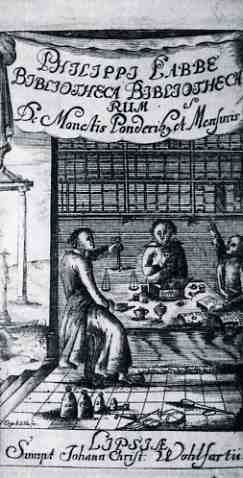
    Bibliography of bibliographiesPhillippe Labbe (1607-1677), a contemporary of the savant’s savant, Athanasius Kircher, and who was himself a prodigious polymath, produced this fantastic piece of scholarship, the Bibliotheca Bibliothecarum…accedit bibliotheca nummaria.  He was a member of the Society of Jesus, like Kircher (which whom he also shared similar birth and aeath dates, Kircher’s being 1601-1680); and was born in the town of Borges, France, which gives him an almost invisible connection to one of the 20th century’s most imaginative/flexible writers in the great blind librarian of Argentina.  This book, published in Leipzig in 1682 as the second edition of the 1662 first,  is the earliest extant work of bibliography of bibliographies (it also has a very useful work on numismatics, as we can see from the last part of the title.)  Gathering the data necessary to produce this work was a prodigious undertaking–Labbe needed to have had access to fine libraries to assemble the data, then of course he needed the brain to handle all of the disparate and erudite areas of learning, and then be smart enough to organize it all.  This was an enormous accomplishment in 1682–with the stuff that Labbe had floating around in his brain and the reasonable aspect of disseminating it, Labbe would’ve been a National Treasure to whichever country he would call “home”. 

    I haven’t seen the title page of this book for many years, and my memory of it had these three bibliophiles holding drinks in the air–but I’m wrong, unfortunately.  The scholar on the left is weighing something, the scholar o the right is pointing to a book, and I not exactly sure what scholar-middle is doing.  One thing for certain though is that these men are not drinking.  Somehow I’d’ve preferred a few rounds with all of that scholarly/scientific bric-a-brac strewn on the table, but it was not to be. 

    Some of Labbe’s selected works include:

    • Trirocinium Linguæ Græcæ etc. (1648)
    • La Géographie royale (1646)
    • De Byzantinæ historiæ scriptoribus, etc. (1648)
    • Concordia sacræ et profanæ chronologiæ annorum 5691 ab orbe condito ad hunc Christi annum 1638 (1638)
    • Bibliotheca antijanseniana (1654)
    • Bibliotheca bibliothecarum (1664)
    • Sancrosancti Oecumenici Tridentini Concilii . . . canones et decreta (1667)
    • Sacrosancta concilia ad regiam editionem exacta

    ·Posted by :

    ·in:

Recent Posts

Archives

Categories