A Daily History of Holes, Dots, Lines, Science, History, Math, Physics, Art, the Unintentional Absurd, Architecture, Maps, Data Visualization, Blank and Missing Things, and so on. |1.6 million words, 7500 images, 4.9 million hits| Press & appearances in The Times, Le Figaro, Mensa, The Economist, The Guardian, Discovery News, Slate, Le Monde, Sci American Blogs, Le Pont, and many other places… 5000+ total posts since 2008.

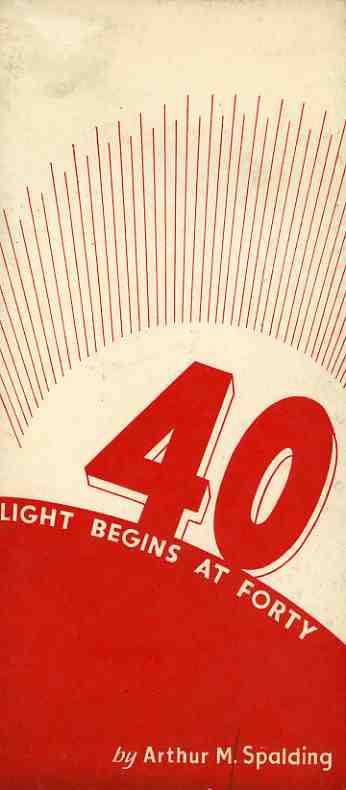
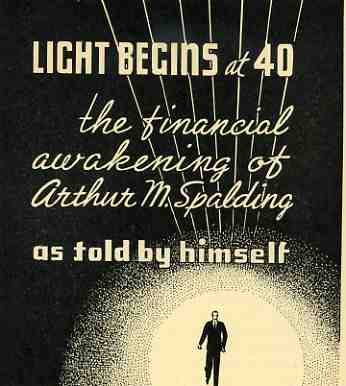
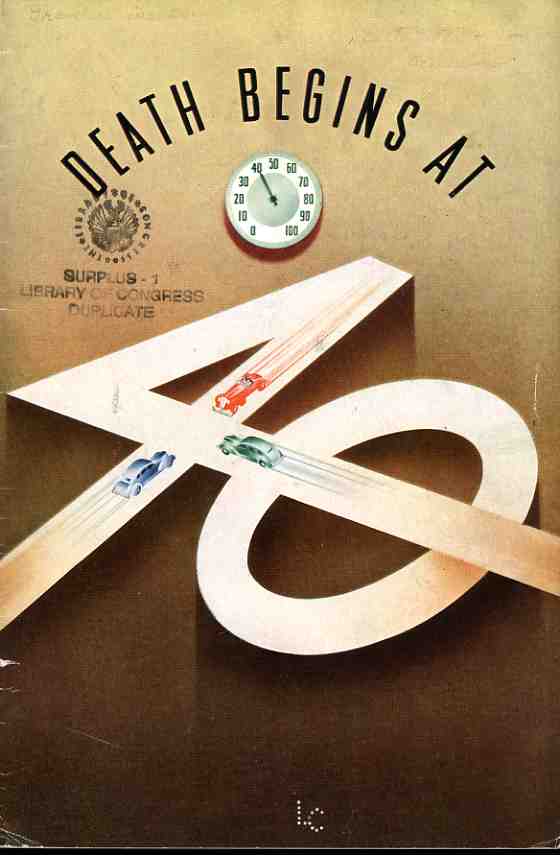
  • The Alpha and Omega of “40”

    JF Ptak Science Books LLC  Post 453

    0 blog jan 02 40342
    Perhaps this is more the Alpher and Omeger of the concept of 40, but, then, one never knows about these things, even when they’re pronounced in the manner of  Mr. Eugene Krabs (a  Spongebob reference; Mr. Krabs tends to put “er” at the end of words ending in “a”, like “spatuler”).  

    0 blog jan 02 40343
    Ah, well. 

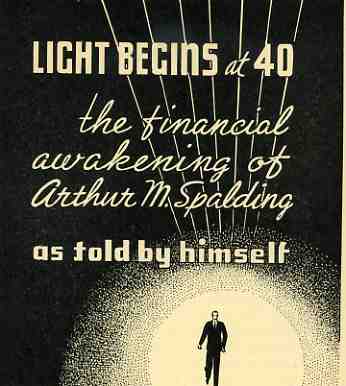
    The warnings of death AND light beginning at 40 seems to be a little contradictory, a little bit of singularity happening at a place  that I left behind 12 years ago. But all these beautifully designed pamphlets are yelling about is traffic speed and life insurance:  traffic deaths start piling up at 40 m.p.h. and men (not women) should start buying life insurance then because their big earnings years “come to light”.

    These pamphlets are both part of my Naive Surreal Collection–works that seem commonplace and standard when they were published but whose context is decidedly antiquarian and semi-existent in 2009.  Often the best part of these pamphlets are their covers, though they can all be mined for the forgotten social ephemera that lurks just beneath their surface.  But in these cases it is really just the incredibly arcane messages in the artwork that I find most interesting. 

    0 blog jan 02 40344

    ·Posted by :

    ·in:

    —
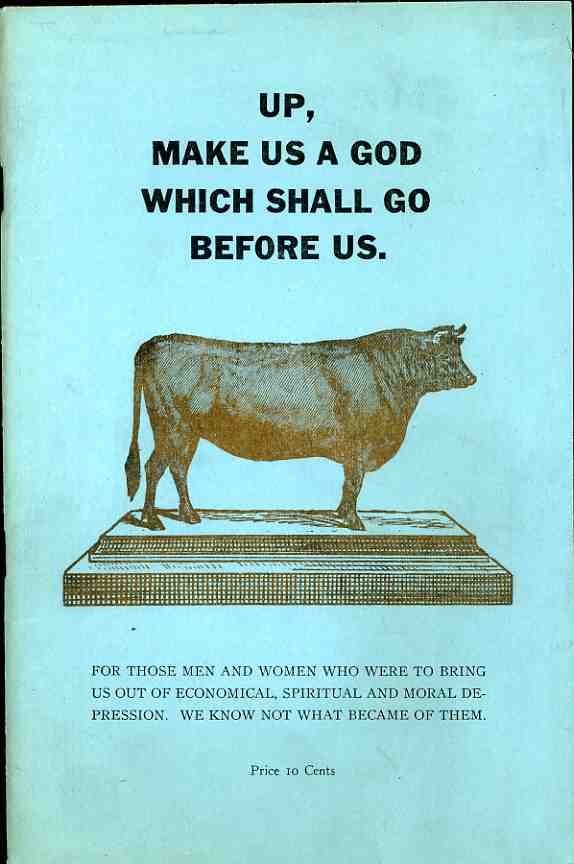
  • Fantastic and Inscrutable Titles: God and the Asylum of Ignorance. (Nazis by any other name…)

    JF Ptak Science Books LLC Post 454

    0 blog jan 02 Up341 Asa Turian, the author of this 1938 Outsider Logic pamphlet, was sort of steeped, in a light way, in gathering quotes from the moderns and the ancients–in the end, none of them seem to help. Ultimately he seems to me to create some new vocabulary to repackage the NSDAP, which even in 1938 was still gathering frothy American pro-Bund crowds at Madison Square Garden. (The scion of American Olympic sports and head of the International Olympic Committee, the  Nazi/racist Avery Brundage*, spoke to a crowd of 20,000+ American Bundists at The Garden in 1938, finding little fault with the Nazis.  He went on to a long and  distinct career– some of which in deep furtherance of his political ideologies–as did thousands of other pro-Nazis.)  The title is taken from Exodus 32:1 and is a plea, very late in the Depression, from Turian to find some sort of Moses to lead the United States out of the despairing economic situation.  He notes that although many people were talking about the depression, no one was talking  (like Mark Twain’s complaint about people discussing the weather) about what to do about it.  Which is odd because FDR had been hammering away at it for six years by the time this pamphlet was written.  No matter for Turian, who doesn’t bother mentioning Roosevelt.

    After quoting many, Turian suggests that the way out of the Depression was via a light Dictatorship (“an alternative between Democracy and Dictatorship by means of the separation of Government and Industry”) that defies simple explanation.  Half-way through this Bush-IQ-thin text the Democracy part of this partnership slips away, saying simply that “we must maintain our present form of Government and resort to Dictatorship as well”.  I think that the way this plays out is that a combination of democracy and dictatorship is just a dictatorship.  Industry is divided from government, and then  would be further divided “between Capital and Labor” and then “running it on a partnership basis” governed by the Corporate Dictatorship. He further suggests getting rid of money and putting the entire economy on a 100-billion (the unit of measurement not explained) “bartership basis”.  I have no idea how this barter would work overseas, as international trade doesn’t come up at all in Turian’s economic homage to liberation logic, though there is a lot of discussion of “state controllership” and “the status of the corporation dictatorship”.   There are some other societal revolutions that come and go, but the biggest of them all was the establishment of some sort of economico-religico tripartate God/Mammon/Something Else oracle to lead us away from all bad economic temptation.  Wow.   I’m not sure exactly what the author was getting at, but if you take away the barter bit, it sounds quite a bit like Nazism in different terminology.  I guess this just goes to show you that you can Reality-Compromised and still come up with either (a) your own version of Nazism or (b) a paint-by-numbers Nazi who changes the colors but not the numbers. 

    *I’d like to discuss Brundage more fully at some point.  For now, let’s just say that he was a man without quality.   It was Brundage who sold out Jim Thorpe in a rant against professionalism in the Olympics but who said nothing about the Olympic industry and paid Olympians in the Soviet Bloc.  It was Brundage who disqualified and exiled Tommie Smith and John Carlos in Mexico ’68 for their giving the Black Power salute but who said nothing at all about the Nazi salute in his highly cherished 1936 Berlin games.  And it was Brundage who cluster fucked the 1972 Munich Olympics–in ways too numerous to go into here–and who allowed the games to continue after a one day interruption following the murder of 11 Israeli athletes by the Black September Palestinian terrorist group.  Brundage, as President of the IOC, spoke at the ceremony the day the Olympics restarted, and unbelievably equated the massacre of the Israelis with the boycott of the racist all-white Rhodesian team: (the bold is mine, just in case):
    “The Games of the XXth Olympiad have been subject to two savage attacks. We lost the Rhodesian
    battle against naked political blackmail. I am sure that the public
    will agree that we cannot allow a handful of terrorists to destroy this
    nucleus of international cooperation and goodwill we have in the
    Olympic movement. The Games must go on….”

    Why the man wasn’t struck by lightning on the spot and turned into carbon sizzle is a sacred mystery. I am sure that a copy of the Protocols of the Elders of Zion must’ve been on his library shelf. Or half-shelf.

    The man was utterly shameful, and yet was the leading American for the Olympics for almost thirty years.

    ·Posted by :

    ·in:

    —
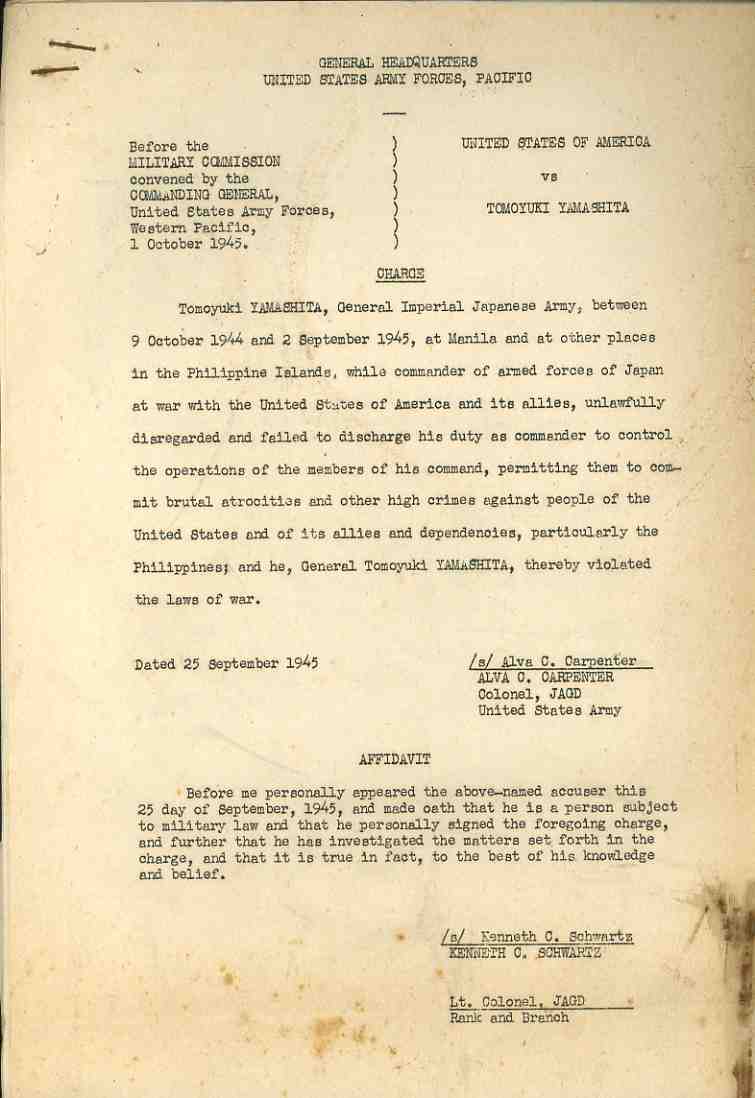
  • Ethnic Cleansing, the Philippines and Singapore and General Yamashita, 1942-1945

    JF Ptak Science Books LLC  Post 455

    0 blog jan 03 JAPP345 This is a rare offset printing of the statement of charges
    and “outline of particulars” against the Japanese Imperial Army General Tomoyuki
    Yamashita (1885-1946), a man accused of war crimes against humanity.  After he was captured 2 September 1945,
    General Yamashita was arraigned principally for failing to control his troops,
    segments of which had acted brutally in their treatment of residents of
    captured Singapore and
    against British Empire soldiers. He was
    charged with “unlawfully disregarding and failing to discharge his duty as a
    commander to control the acts of members of his command by permitting them to
    commit war crimes.”  This was in
    direct violation the doctrine of “command responsibility” which was established
    by the Hague Conventions IV (1907) and X
    (1907)
    ,
    and—after in re
    Yamashita
    —would also become known as the “Yamashita standard”, in which courts
    clearly accepted that “a commander’s actual knowledge of unlawful actions is
    sufficient to impose individual criminal responsibility”. Yamashita would be
    found guilty by the U.S. Military Tribunal and was sentenced to death, for “vengeful
    actions are widespread offences and there is no effective attempt by a
    commander to discover and control the criminal acts, such a commander may be
    held responsible, even criminally liable.” 
    It was a death sentence for a crime of omission. (As early as the 6thcentury BCE, Sun Tzu,
    in his Art of War, stipulated that it was a commander’s duty to ensure that his
    subordinates conducted themselves in a civilized manner during an armed
    conflict.)

    Getting back to the war: 
    after Yamashita captured Singapore in February 1942, accepting the
    surrender of General Arthur Percival and 100,000+ British Army soldiers, a
    steel wind policy was instituted, with thousands of people—soldiers and
    civilians—finding their end at the point of Japanese soldiers’ bayonets. 

    Chief among the atrocities was the Sook Ching movement, a
    concerted, pervasive and prolonged ethnic cleansing of Singapore of
    anti-Japanese “undesirable” elements. 
    Among these groups were included (and this list is taken from a rather
    good contribution to the dubious Wikipedia):

    In short, it didn’t take all that much to be considered for
    elimination, and a long and frozen fear and ruthless hearts-and-minds- campaign
    was instituted which lasted until the Philippines were finally liberated.  And it was for the Japanese actions in the Philippines, and then principally in Manila, that General Yamashita was tried, despite the effects
    of his long and terrible reach across South East Asia

    Most
    of the British and Australian prisoners incarcerated in Singapore’s Changi Prison would never
    make it out.  Other segments of the POWs
    would be transported on hell ships for forced slave labor throughout the
    Japanese Empire.  The Siam-Burma death
    railroad (surfaced in the Pierre Boullee novel The Bridge on the River Kwai) received other portions of these
    POWs; on that 258-mile railroad upwards of 180,000 Asian slave laborers and
    60,000 Allied POWs were put to work in horrific and desperate conditions—90,000
    of the Asian and 16,000 of the Allied would be killed during the construction
    (though many estimates are markedly higher than this).  The Sandakan
    airstrip in North Borneo was another death receptacle
    of these POWs:  3,600 Indonesian slave
    laborers and 2,300 Allied POWs were set to work here—only 6 Allied POWs
    (Australian escapees) survived. 

    In re Yamashita focused
    on the Philippines and the battleground that it was turned into by Yamashita, costing the civilian
    population more than 100,000 lives. Tomoyuki Yamashita was hanged on 23
    February 1946 at Los Banos Prison Camp, 30 miles south of the city in which he
    caused so much misery. 

    ·Posted by :

    ·in:

  • American Cities at the End of the World: a List of Nuclear Targets, 1953

    JF Ptak Science Books LLC  Post 456

    0 blog jan 05 target346

    “Those who control the present control the future. Those who
    control the future control the past.” –George Orwell, Nineteen Eighty-Four

    “Political language — and with variations this is true of
    all political parties, from Conservatives to Anarchists — is designed to make
    lies sound truthful and murder respectable, and to give an appearance of
    solidity to pure wind”. –George Orwell, Nineteen Eighty-Four 

    “Logic: The art of thinking and reasoning in strict
    accordance
    with the limitations and incapacities of the human
    misunderstanding.”—Ambrose Bierce, Devil’s Dictionary

     Making the unthinkable thinkable was the de facto aim of
    this pamphlet.  It described the complete
    vulnerability of any nation in total “atomic war”, yet proceeded to advise the
    population of the United
    States
    to proceed as actors in a drama that
    could have variant endings.  And so began
    the concept of the winnable, survivable nuclear holocaust, a petulant and
    terrifically arrogant attempt to control the language in which the idea of
    nuclear war would be discussed with a government-made language. 

     This simple (1953) pamphlet was a product of the Federal
    Civil Defense Administration and was a public document, though it replaced the
    edition of 1952, which was a “restricted document”.  (We are also warned that if we have this
    earlier document that we are to burn it, even though the information contained “as
    no longer of a classified nature”.)  It
    outlined the cities and regions in the United States that would be the
    subject of an attack.  “City” is
    redefined here as a “Target Area for Civil Defense Purposes”, and then
    redefined in terms of a greater population as a “Critical Target Area for Civil
    Defense Purposes”.  There were 193 such “areas”
    defined, of which 70 were “critical targets” encompassing a population of 67
    million.  (I hate to say it, but if you
    were to map the “critical” zones it would look much like the Blue State map of 2008.)

    I am surprised to see that my own little city, Asheville
    (N.C.), makes the list for a “target area”, somehow, as one of the four cities
    mentioned for North Carolina.  I have no idea why, except that it is the
    seat of a sort-of populous county–there
    was nothing here of interest to the Soviets. 
    On the other hand there are two cities specified forNew
    Mexico, both of which are 70 miles or so east of the Los Alamos installation. 

    The unnamed author(s) warn the reader that the 100+ million
    people specified in the two major attack areas was open to a greater blanket
    attack than described, what with the number of warheads available and all—everyone
    was subject to being bombed.  Also, the
    whole issue of chemical and biological weapons was not addressed:  ‘therefore, the resources of the entire
    country outside the listed target areas, as well as within them, must be
    mobilized for civilian defense”.

    The only mobilization for defense was that against fear–there really wasn’t anything else worth talking about.

  • Thinking the Unthinkable Department: Moving DC to the Rocky Mountains. Or Idaho. 1952

    JF Ptak Science Books Post 457

    Blog--untinkable tp
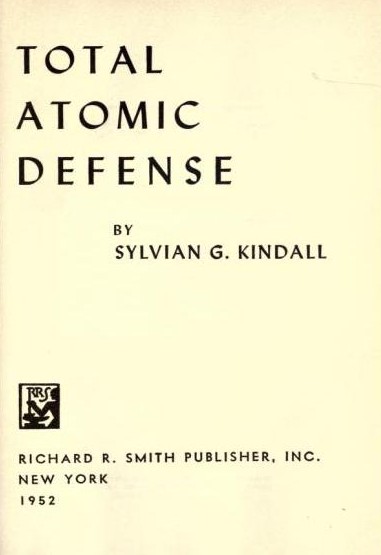
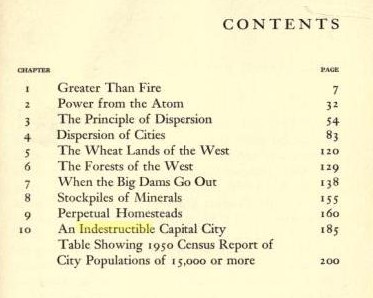
    Sylvian Kindall’s Total Atomic Defense (published by a very severly right-wing publisher in 1952) is one of a series of books made for a deceived American population, offering the general reader both fear and hope, often from the same, exact source. But Kindall has a  somewhat diffident approach, offering his belief that the country and its population can largely  survive an all-out nuclear war–intact.  Of course the “intactness” is dependent upon massive internal change of the social and industrial fabric of the country, which would have to transform in ways as to make it largely unidentifiable from that which we would quickly recognize.  A quick look at the table of contents tells the story in miniature, with the exception of the solution to the problem, which was generally to build underground.  (The neutron bomb would soon complicate this solution.)  Suffice to say that Dr. Strangelove would approve of the publication of such a work though would hardly believe in any of it for himself. 
    Blog--unthinkable

  • A History of Dots, Part II: the Dot Cipher, 1810

    JF Ptak Science Books LLC  Post 458

    0 blog dec 31 dot cipher335

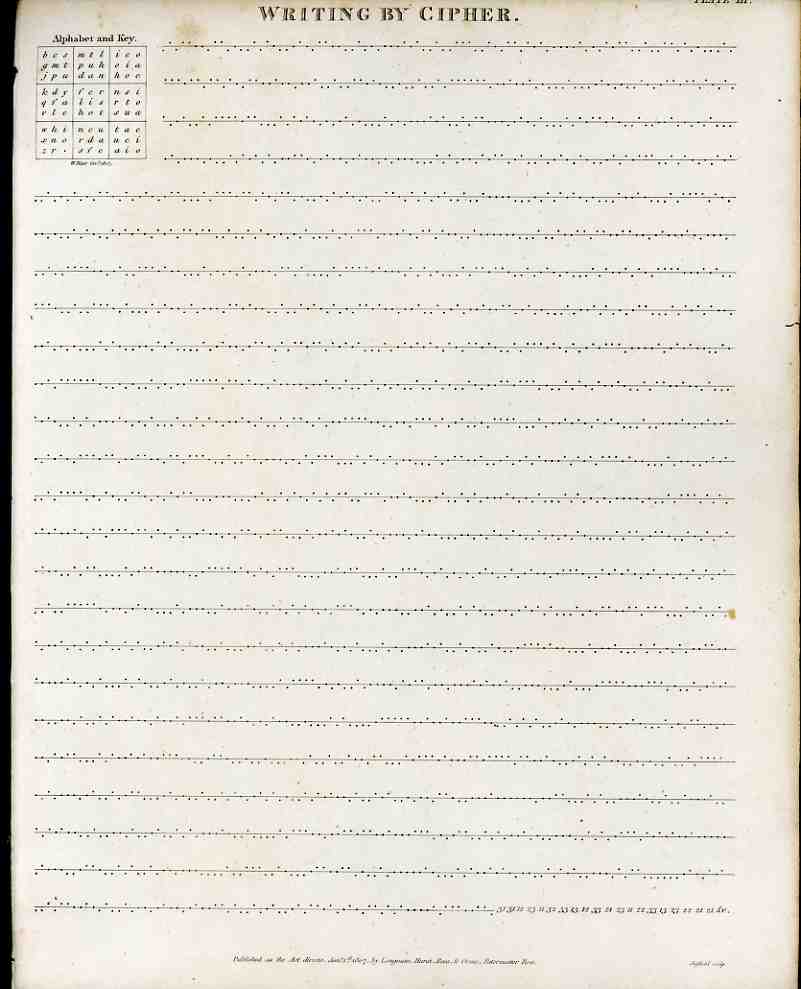
    This is
    the second in a series on the History of the Dot.  This engraving of the ingenious and very
    once-upon-a-time difficult-to-break cipher appeared in the mammoth (45-volume) Cyclopædia
    ,
    or The New Cyclopaedia, or, Universal Dictionary of the Arts and Sciences, edited by Abraham Rees (1743-1825).  The
    book was published between 1802 and 1820, and was the work of 100 contributors,
    who generally wrote monograph-length entries, as the completed effort ran close
    to 40 million words.  I’ve particularly enjoyed
    the illustrations—some of which have become iconic—and especially the fine and
    deep engraving of Wilson Lowry. 

    The engraving, “Writing by Cipher”,
    employs dots placed above, on and below a line, representing the numbers 1,2
    and 3, respectively, which in turn form one of four numbers which are letters;
    a key would then be transmitted to reference the letters formed by the dots to
    the alphabet.  It was a tough bugger to
    break, and survived most of the 19th century without being
    broken. 

  • Celebrating a Good Idea that Sounds Silly: Concrete Ships

    0 blog jan 06 concrete ship361
    JF Ptak Science Books LLC  Post 459

    0 blog jan 06 concrete ship362

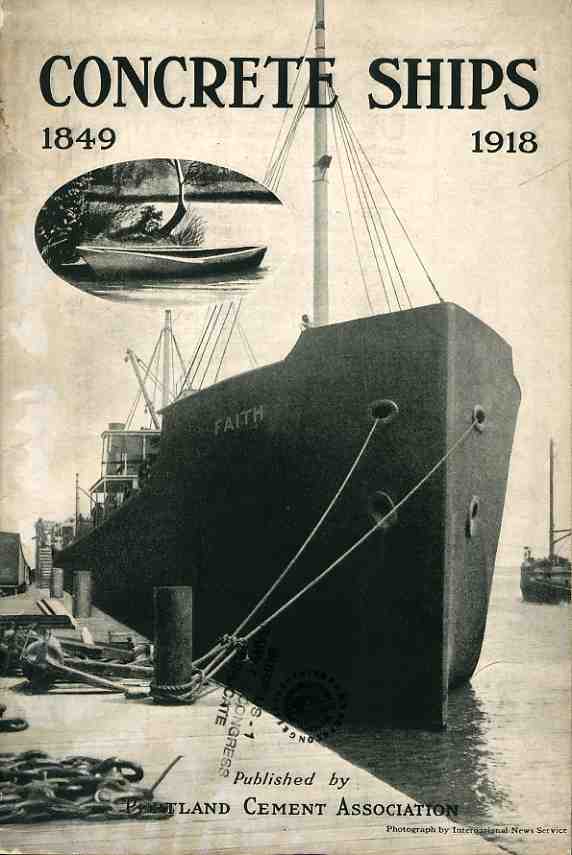
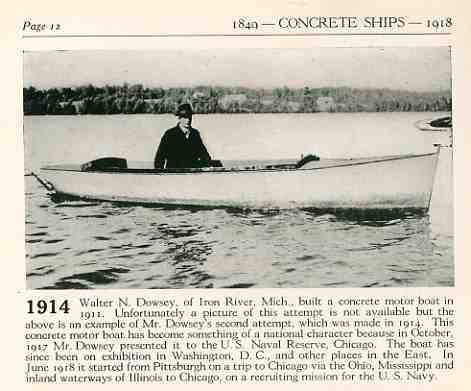
    This 1919 pamphlet’s title certainly sound more odd than the concept it describes:  concrete boats have been around for a long time, (160 years at least), and they make a lot more sense than a quick-think would give them (lumbering, unstoppable, heavy prep trucks come to mind).  For boats over 25 feet long, it is probably the easiest and cheapest material to employ, and it doesn’t need weatherproofing.  And, as an interesting website dedicated to concrete boats (ferro-boats) observes, a 30-foot 8-ton displacement ship made of either wood or concrete will weigh the same, which means that the very first image that comes into our heads when you say “concrete ship” is just wrong. 

    It looks like the French were the first to come up with the idea in about 1848, patenting the most winning methods of construction in 1855.  Since then there have been 12,000 or so of these 25-ft+ ships built, including a 130′ yacht and a 120′ British sub.  This method of construction certainly saw its time, especially during wartime, when steel production was in high demand.

    Please note:  posts over the next seven days or so will be somewhat truncated; I’m moving my store so time is a little scarce. Thanks for bearing with me.

  • The Poem-amatic Fist Microscope and the Production of Art

    JF Ptak Science Books LLC   Post 460

    “If I read a book and it makes my whole body so cold no fire can
    warm me, I know that is poetry. If I feel physically as if the top of my
    head were taken off, I know that is poetry. These are the only ways I
    know it. Is there any other way?”
    ––Emily Dickinson

    “Like a piece of ice on a hot stove, the poem must ride on its own
    melting.”
    ––Robert Frost

    I want to say right in the beginning that I mean no disrespect in any form in addressing the “found” nature of poetry in the larger landscape of the written word–a sort of Poetry Brut, awaiting discovery.   And the discovery is made rather simply, and randomly;  take your fist, clench it, and then open it to about the size of a dime so that you can see all the way across the interior of the fist,your eye placed at the “objective” made by the joined thumb and index finger. Get out a book, then press your eye against this “lens”, placing it about a foot above a printed page.  Force your eye to bring the words into focus–if you were glasses for reading you may not need them for this exercise–I don’t.  You can adjust the “focus” by making the opposite lens (formed by the pinky) a little smaller.  You’ve made a simple pinhole eyeglass with your hand.  Now bring your new optical tool to bear on a paragraph and record what you are allowed to see, recording each bit on a new line (as in a “standard” poetic format.  The results may be interesting!

    My two examples are below:  the first is from Paul Klee’s Diaries (and entry for 1916), and the second from Richard Allestreel’s The Ladies Calling (an instructional for women printed in 1673).  Of course the Klee was already clsoe enough to poetry as it was, and teh Allestreel not far behind that; but the words rearranged give them an entirely new feeling, their messages both plainer and more hidden. 

    This is a useless exercise in almost every way, though it was fun to do it, and it did help to point out some of the more-poetic aspects of these two works.  But poetry isn’t just putting prose into a new printed format, nor is prose poetry writ bigger.   But it was a little fun.    

    Example 1:
    From Paul Klee’s Diaries, Trip to Tunisia,  16 April 1916, chapter 2:

    In the evening, through the streets.  A café decorated with pictures. Beautiful watercolors.  We ransacked the place buying.  A street scene around a mouse. Finally someone killed it with a shoe. We landed at a sidewalk café.  An evening of colors s tender as they were clear…

    And then Dissected and Rearranged with the Fist Microscope:

    In the evening, through the streets
    a café decorated with pictures
    Beautiful watercolors, we ransacked
    the place buying a street scene around a mouse.
    Finally someone killed it
    with a shoe.
    We landed at a sidewalk café,
    an evening of colors
    as tender as they were clear

    Example 2
    The Ladies Calling
    attributed to Richard Allestreel Oxford: Printed at the Theater, 1673
    Part II Section III:  On Widows (opening paragraph)

    “Now those Remains are of three sorts, his body his memory, and his children. The most proper expession of her love to the first, is in giving it an honorable Enterrment; I mean not such as may vye with the Poland extravagance (of which ’tis observed that two or three neer succeeding funeralls ruin the family) but prudently proportion’d to his quality & fortune, so that her zeal to his Corps may not injure a nobler relique of him, his Children. And this decency is a much better instance of her kindness, then all those Tragical Furies wherwith som. Women seem transported towards their dead Husbands, those frantick Embraces and caresses of a Carcass, which betray a little too much the sensuality of their Love. And it is somthing observable, that those vehement Passions quickly exhaust themselvs, and by a kind of Sympathetic Efficacy as the Body (on which their affection was fixt) moulders, so does that also, nay often it attends not those lesurely degrees of dissolution, but by a more precipitate motion seems rather to vanish then consume”

    And then Dissected and Rearranged with the Fist Microscope:

    Now those Remains are his body his memory,
    his children. The most proper expession of her love to the first,
    is in giving it an honorable Enterrment;
    I mean not such as the Poland extravagance
    prudently proportion’d to his quality & fortune,
    may not injure a nobler relique of him, his Children.
     And this decency is a much better instance of her kindness,
     then all those Tragical Furies
    Women seem transported towards their dead Husbands,
    those frantick Embraces and caresses of a Carcass,
    which betray a little too much
    the sensuality of their Love.
    somthing observable, that those vehement Passions
     quickly exhaust themselvs,
    and by a kind of Sympathetic Efficacy as the Body (on which their affection was fixt) moulders, so does that also,
     nay often it attends not those lesurely degrees of dissolution,
    but by a more precipitate motion
    seems rather to vanish then consume.

    Yes I am joking.  Mostly.

    ·Posted by :

    ·in:

  • The 18th Century Bible on Dutch Canal and Dam Construction: Tileman Horst Theatrum Machinarum, 1737

    JF Ptak Science Books LLC  Post 461

    0 blog jan 08 horst368

    Tileman van der Horst and Jan Schenk produced the Theatrum Machinarium
    Univesale
    *, one of the most celebrated works on the construction of all those
    elements so necessary to keeping life dry in Amsterdam 9the place of the book’s
    publication).  It was perhaps the most
    important work then produced on dikes, sluices, dams, weirs, canals and
    swing-bridges, the very elements of existence in Holland.  Jan Schenck was the engraver of this work,
    which may also be the most accurate and the most sumptuously illustrated book
    of its type in Holland in the 18th century—the technical aspects of the
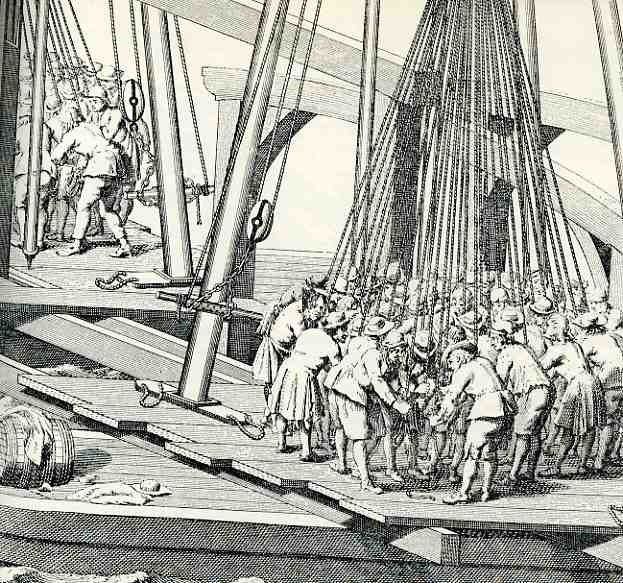
    rendering was just superb. In the image (which is a detail of a detail of a
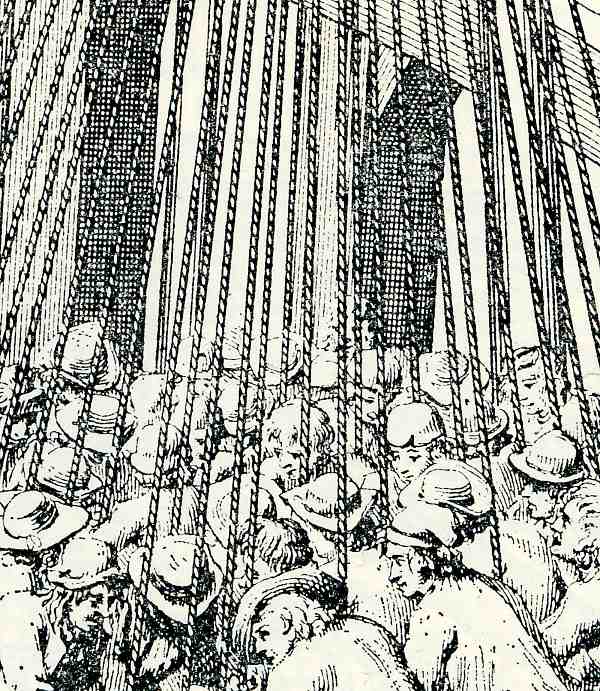
    larger folding plate) I reproduced at left and below we see that Schenk and Horst weren’t kidding around in their treatise:  what we see here is the elevation for a plan
    showing the laying-in of pilings for a larger structure.  This is still tricky business today in Amsterdam, given the soil
    structures on which the city is built, some of these pilings go down hundreds
    of feet.  This group of about fifty men
    is certainly struggling with something big; but just how big it is I do not
    know.  (They do look rather well-dressed
    for being about to muck around in the foundation area of a structure.) And this
    draws my attention to the planks on which they all stand; the boards seem just
    enormous, looking to be two feet wide and several inches thick, and long.  I’d be very curious to know where this lumber
    was coming from, as I feel it certainly wasn’t local.

    0 blog jan 08 horst367
    *Theatrum Machinarum Universale.. of
    Keurige Verzameling van .. Waterwerken, Schutsluizen, waterkeringen, ophaal- en
    draaibruggen
    . Printed in Amsterdam., by Petrus Schenk en Zoon, 1757-74.  Illustrated with 50 engravings on 47 partly folding plates.

  • Dead Letter Department #1: LIFE Magazine Subscription from 1940

    JF Ptak Science Books LLC 

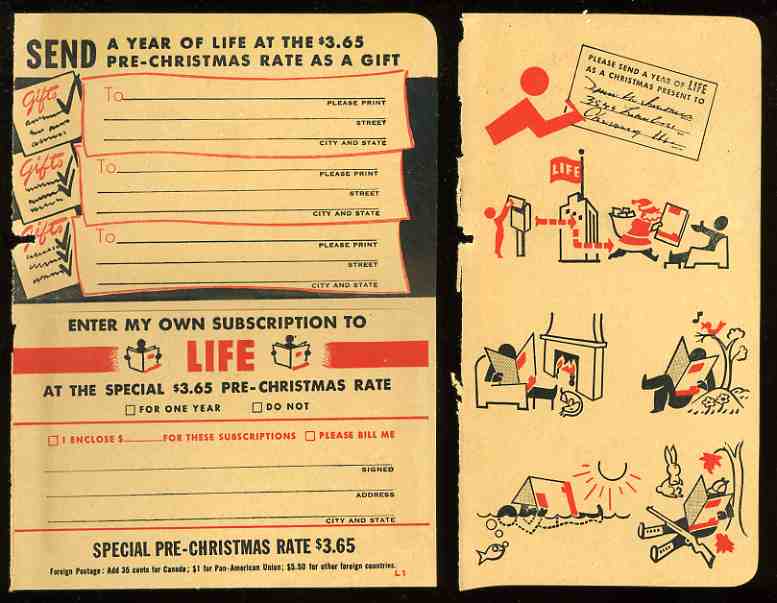
    0 blog jan 09 dead letter369
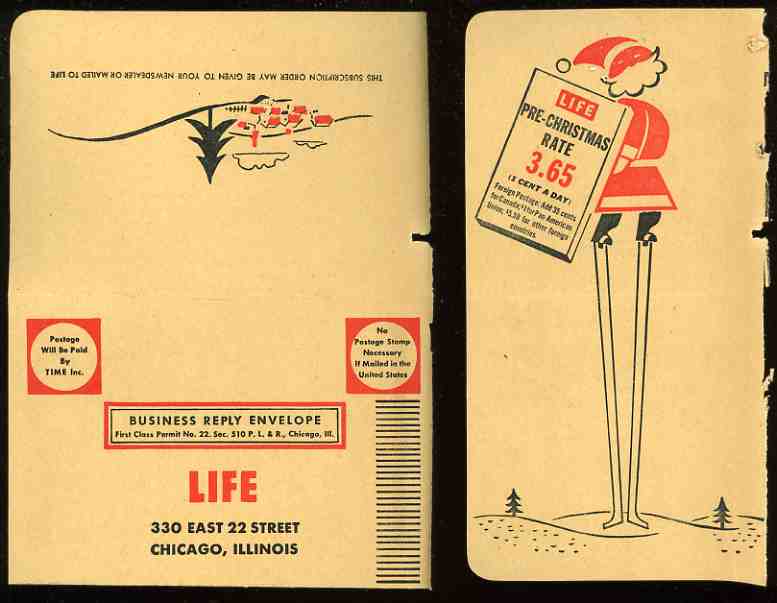
    It seems to me as though I have quite a few of these old subscription or mail-back forms from the 1930’s, ’40’s and 1950’s.  In the spirit of Don Novello (aka Father Guido Sarducci) I thought that I’d start sending some of these little buggers back out, just to see what happens with them on the other end.  I have my doubts that there are very many pieces of antique mail making their way through the labyrinth of the U.S. Postal System, so perhaps it will give some of those folks in blue a little something to talk about.  Or not.  And so I put my $3.65 in the little envelope for a year’s subscription to the fine LIFE magazine–if I could get into the Wayback machine, I’d enjoy 52 issues of LIFE in 1940 for just a few dollars.  Unfortuantely LIFE stopped being a weekly in 1972 and then sputtered along as a much-changed monthly for several decades until it completely left the track in 2007. 

    0 blog jan 09 dead letter370
    It was an interesting magazine to be sure, though not without its
    problems.  For example, I looked through every page of LIFE from 1939
    to 1945 and my impression was that there wasn’t all that much war
    reporting in the thing until everything heated up (including America, finally) in
    mid-1942. (And by “very much” I mean, well, that I just expected more in the magazine about the World War than I was seeing, space being taken up by nonsense and Liliputian interests rather than the global conflict.) Up to that point there seems to have been far more non-war
    words/images than war-related. Even in 1942 there was more adveritising
    using men-in-uniform than there were actual stories depicting fighting
    men.  Things changed quite a bit in the magazine as the war became more
    “real” for the U.S. in 1943; still, the reporting didn’t come close to
    that of the London-based Illustrated London News, where the war was
    real since 1940.  This is hardly scientific, only an impression, but
    having looked at the entire war coverage in LIFE and Illus London News I am left with a lingering impression of a remarkable difference between the two (similar) magazines.  More still for the Illustrirte
    Zeitung
    (Leipzig), but that’s another story.  Still the use of
    men-in-uniform to sell cigarettes or steel or whatever is pretty
    bothersome to me–there was a lot of that going on in LIFE, not so much
    at all in ILN, and almost none in the Illustrite Zeitung.

    ·Posted by :

    ·in:

  • Did Teeth Exist in the Renaissance? Art and the Toothy Smile, 1300-1600

    JF Ptak Science Books LLC  Post 463
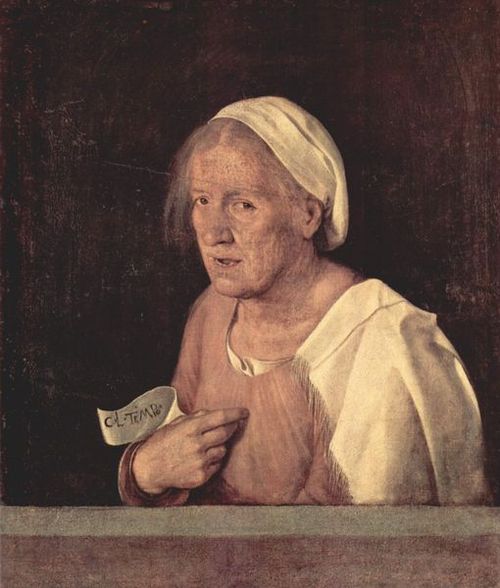
    Blog--teeth giorgione
    Did teeth exist in the Renaissance?  Well, while breezing through a bunch of art monographs for that period, it struck me that the tooth wasn’t making its way from the artists’ palettes to the canvas.  Not only that, it also occurred to me for the first time that people—in the large part—weren’t even opening their mouths.  I don’t know how that escaped me; perhaps it is because there are other more interesting things to look at in paintings and consider—even looking at the found flora or table settings is far more useful and interesting than choppers.  Oh yes, and there’s all that color and perspective stuff too.

    But in looking at Big Names in the early and late Renaissance I wasn’t finding teeth.  Fra Filippo Lippi’s “Vision of St. Bernard”, the “Madonna and Child with Angels”, the “adoration of the Magi”, feature subjects with not a single tooth.  Paintings by (earlier) Masaccio have the same result, as does Benozzo Gozzoli.  Pollaioulo’s features numerous saints with very tightly closed mouths, as does Ghirlandaio’s massive fresco of the “Life of St. John the Baptist”, straight-lipped all. Piero de Franscesco (‘Baptism of Christ”), Domenico Veneziaio “Madanno and Child with Saints”, Pietro Perugino (“Lamentations over the Dead Christ”), the beautiful Fra Angelico (“Descent from the Cross”, 1453) Lorenzo di Credi (“Adoration of the Shepherds”0, and on and on, vast canvases filled with people with nothing but lip.  Even the lamentations of the group in Raphael’s “Entombment” are done with nothing but closed mouths, teeth hidden even under the vast experimentation in pigment and paint of the quattrocento and cinquecento.  Earlier works, as in Giottos’ “Betrayal of Christ” (1305), the “Lamentations over the Dead Christ” (ca. 1305), the “Nativity” and soon there exist barely a parted lip, just as in Simone Martini’s “St. Louis of Toulousse” (1317). 

    What comes first to mind though in all of this, apart from very straight mouths, are the very famous closed mouth portraits of Leonardo (“Mona Lisa” and one that I used to see all the time, “Ginevra de Benci”).

    It wasn’t as though tooth health wasn’t unknown in the Medieval or Renaissance periods.  For example, we have the following recipes for tooth and mouth (and breath) care, beginning with Trotula’s  wine rinse and herbal chew found in his 11th century On Women’s Cosmetics (book 3); Hildegarde of Bingen’s water rinse  (Physica, 1158); Gilbertus Anglicus’ 11th century wine washes and tooth rubbing recipe; the Rosemary charcoal tooth rub found in Bankes’ Herbal (1525); Gervase Markham’s (,The English Housewife 1615) sage tooth whitening scrub (using an abrasive of salt, chlorophyll of herbs freshen the breath, and sage is a somewhat astringent/antiseptic); and Plat’s anise, caraway, fennel “comfits” in  Delightes for Ladies (1602), just to name a few. (A very interesting website testing these notions can be found HERE.)  That said, it doesn’t mean that people actually took care of their teeth, and that, maybe, people simply had really bad teeth.  On the other hand, the unsmiling folks presented in this artwork were being shown in created or mythological or supposed scenarios anyway, so the artist could have as easily granted a good smile as not.

    The more I looked around a few of the first monographs, the less I saw of teeth—how is this possible?  Were teeth so unimportant to the painters?

    It took another dozen or so books to start to even out the dental playing field, although the math of teeth versus non-teeth was still 20:1 in my coca cola-driven search.  I was determined to keep the thing to under an hour of poking around, so this is hardly an academic consideration.  But, all in all, it is curious how few toothsome smiles/grimaces are found in these hundreds and hundreds of images.

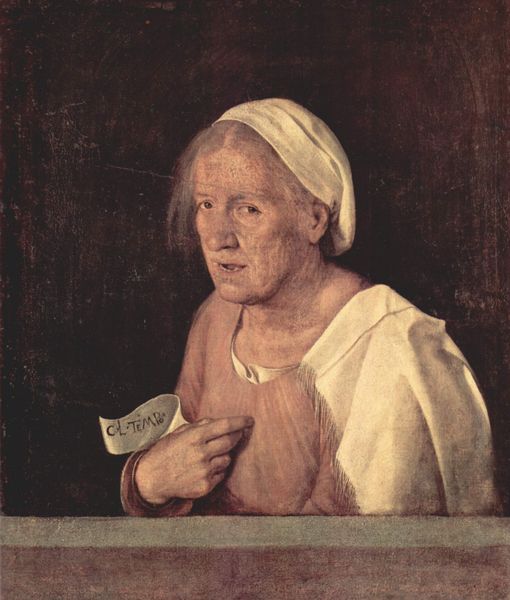
    I did find a very exposed, realistic portrait painted by Giogione  (Giorgio Barbarelli da Castelfranco) of “La Vecchia”, (“The Old Woman”), who holds a rolled paper with the words “Col tempo”, translated as “with age”,  written on the paper.  Her smile is like a skyline more than anything else and is beautifully realistic.  There’s also Lucas van Leyden, Pisanello’s “Saint George” fresco, a number of later Mantegnas, some Leonardos, Beccafumi, and of course a whole lot of big and usually broken teeth in the Bruegels and Caracci.   

    All in all, I guess that observations on teeth in paintings of the Renaissance doesn’t really contribute anything to anything, and is probably just a real old-fashioned mud-caked wheel-spinner.  Thinking about it though does make me think about the Encyclopedia of  Stuff that I’ve Missed and Don’t (and Will Never) Know; but it does make for some good practice in looking for something that I don’t know I’m looking for.

    NOTE:

    The most elegant explanation for not smiling has come to me from my friend and my wife’s business partner, Seattle-based artist/director/writer David Robinson.  I asked him his opinion of the issue and he immediately said that the lack of smiles was caused by the same reason that early photographic portraits generally show unsmiling, Lincoln-lipped people:  the smile was too hard to hold for a long period of time.  In photography, the exposure was long and the person who didn’t keep their same smile for a period of a minute or more chanced the ruining of the portrait.  David says that this principle could be applied to models not having the stamina to hold a smile for a long period of time for the artist.  This is an explanation that I can live with:  short, sweet, simple. And probably correct. 
Recent Posts

Archives

Categories