A Daily History of Holes, Dots, Lines, Science, History, Math, Physics, Art, the Unintentional Absurd, Architecture, Maps, Data Visualization, Blank and Missing Things, and so on. |1.6 million words, 7500 images, 4.9 million hits| Press & appearances in The Times, Le Figaro, Mensa, The Economist, The Guardian, Discovery News, Slate, Le Monde, Sci American Blogs, Le Pont, and many other places… 5000+ total posts since 2008.

  • The Loneliness of Being Wright(s): not Reporting the First Flight.

    JF Ptak Science Books LLC  Post 774  Blog Bookstore
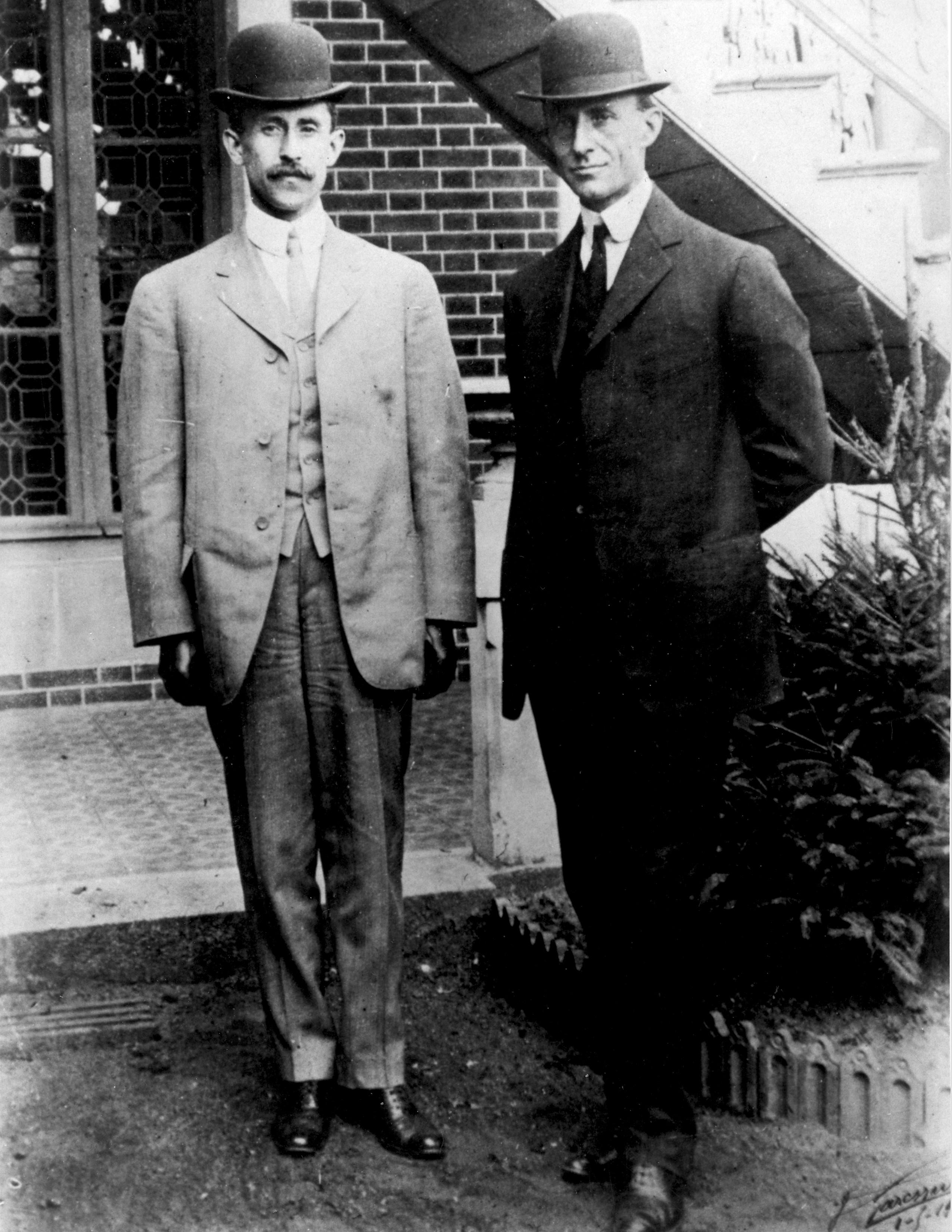
    Wright_brothers_orville_wilbur

    Reading through the 1903/04 volumes of the NYC-based Popular Science Monthly I was
    struck, again*, by the lack of reporting (and the oddness of reporting when
    done) on the Wright Brothers’ first powered flight in December 1903.  The editors gave a page of coverage to the
    Samuel P. Langley failed aerodrome flight of November in the December
    issue. 

    Langley at the time was the secretary of the Smithsonian Institution, and one of America’s
    leading scientists who had a strong side interest in aerodynamics if not
    aviation.  Swimming in private funds,
    some money from the Smithsonian and $50k from the War Department, Langley set out trying to produce a flyer which—in its two
    attempts at flight from a raft in the Potomac in
    November—wound up broken and soggy in the river, following a “flight” straight
    from its launcher into the water.  The
    article actually took Langley to task on two fronts:  first, it made
    absolutely certain that readers understood that his powered plane didn’t fly;
    and second, that he might well prove to be a damaging embarrassment to the
    Smithsonian and American science by proceeding with his experiments. (The Langley aerodrome is pictured just below.)
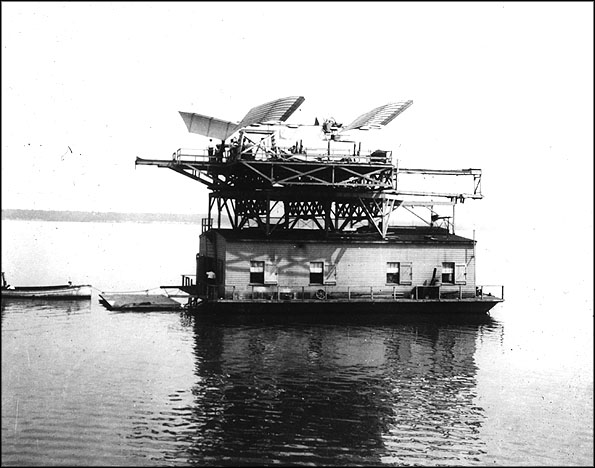
    Langley aerodrom

    The Wright’s first powered flight took place at Kill Devil
    Hills along the North Carolina coast in
    December, 1903, just weeks after the appearance of the Langley article.  They were somewhat reticent and droll in reporting
    their accomplishment; more so, people seemed simply not to believe them (see
    below for some further reading).  Still,
    though, there was no real mention of the Wright’s flight in Popular Science
    Monthly
    through April.  Oddly, the Smithsonian’s
    website reports that one of the first mentions of the flight was in the March
    (1904) issue of this journal, but they are mostly mistaken.  There is an article in that number by the
    Octave Chanute, a great figure in the history of early aviation, who writes in
    general about the progress of flight.  In
    the section on ‘flying machines” Chanute devotes one paragraph of his eight
    page article to the Wrights, and the main emphasis here is that other aviators
    should follow the Wrights’ example of careful preparation before actually
    hoping aboard a plane to fly:  its was
    the training that was emphasized. There isn’t actually any mention whatsoever regarding
    their powered flight, although engines and propellers are discussed somewhat. Of
    the 480 pages remaining in the journal after the December issue, this one
    paragraph was the only room that could be found for talking about the Wrights,
    and then not talking about their great achievement.


    Of course there were many people who didn’t believe the
    Wright story—there was scant photographic evidence and only five eyewitnesses,
    and for years afterwards the Wright had a problem with officially authenticating
    their flight as the great First Flight. 
    But I’m a little puzzled by the Chanute coverage, as he was a pretty
    diplomatic and sharing person, and proved to be particularly supportive of the
    Wrights in general (visiting them at Kill Devil at certain points in 1901,1902
    and 1903).  The brothers understood
    intellectual propriety and credited Chanute when credit was due (particularly
    in the cases of truss design and stacked wings).  So it is puzzling to me when it seems as
    though Chanute may have gone out of his way to not mention the flight.  This is especially true if you read between
    the lines of the next paragraph. Chanute writes: “Now that an initial success
    has been achieved with a flying machine, we can discern the use of such an
    apparatus, and also some of its limitations”. 
    To me, after having written seven pages on flying history, to refer to a
    singular “initial success” makes sense only if he was referring to the Wrights’
    December flight. (I don’t think that he could’ve been referring to the Langley test, as the aerodrome simply fell into the Potomac, the structure of the plane overwhelmed by the thrust,
    the power of the engine, and movement in general—the plane just broke up and
    was flung into the water.)  To me, the
    invisibility of the unmentioned flight is glaringly visible.  But this was pretty much in the realm of
    standard reception for the Wrights for most of the rest of the decade—I am
    still struck though with the rush away from announcing the flight that almost
    everyone seemed to take in 1904. 


    (It is interesting to note Chanute’s vision for the airplane
    in his closing paragraph, where he envisions military uses for aircraft, though
    these were limited to scouting and observation with not a whiff of tactical
    employment.  Also there is the
    possibility of mail delivery (“in some cases”) and the rescue of people in
    trouble in restricted-access areas.  On
    the other hand, the just-failed Langley had a much broader and deeper
    appreciation for what he saw as the impending future of the airplane, saying ‘the
    great universal highway overhead is soon to be opened”, which was directly
    contrary to Chanute, who couldn’t see aircraft being used for simple
    transportation.  Actually Langley’s vision was
    taken to task in that earlier article in the Popular Science Monthly, the editor writing that “Dr. Langley seems
    to claim too much” in regards to the future of flight, and that “he should be
    careful not to do anything that could lend itself to an interpretation that will
    bring injury to the scientific work of the government or country”.  It is certain that with at least this one
    (very popular, widely circulated) science magazine, one couldn’t be too
    stinking careful about what one did or thought or said regarding flight—and in
    the case of the Wrights, one could say hardly anything at all. 


    * For three other of my posts
    on this issue of publicity and the Wrights, see:

    –The Unbearable Wrightness of Being:  the Wright Brothers Introduce Europe to FlyingThe Casual Treatment of the Wright Brothers

    –The Department of Great Understatement:  the Wright Brothers, 1903.

    —The Casual Treatment of the Wright Brothers in the Scientific American


    For the interesting conclusion (and summary) of Chanute’s
    Progress in Flying Machines of see here.
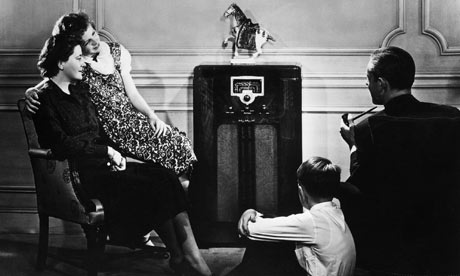

  • History of Dis-Inventing Sex, 1: 1930’s American Radio

    JF Ptak Science Books LLC  Post 775 Blog Bookstore

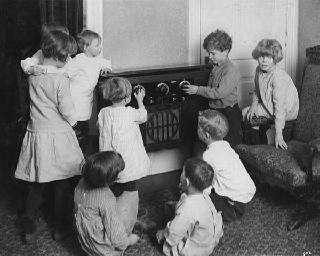
    Radio--family listening

    (Also part of the Blank and Missing Things series: Sex)

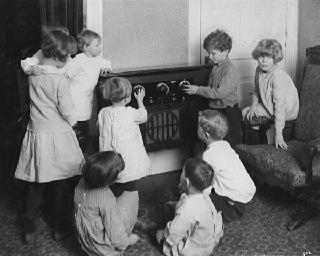
    The classes in the Western world for the most part enjoyed
    their own social amusements:  the rich
    had opera, theater, concert halls; the working poor and associated classes had
    burlesque, minstrel and variety shows.  The
    invention of the motion picture began to draw a common thread between these two
    classes, a place where anyone from anywhere could enjoy themselves for a nickel
    (or whatever).  Commercial radio came
    into being in the late 1920’s, growing enormously in the 1930’s and ‘40’s
    before encountering its mortal enemy of television in the early 1950’s.  Since radio was free (minus the cost of brain
    rot from listening to the underwriters who commercials were interrupted by the
    stuff people wanted to listen to) it became for those decades a superb democratizer
    of American entertainment and (to some degree) culture. 


    Radio_kids

    Opera, vaudeville, minstrel shows, theater and so on enjoyed
    their own segments of saucy visions and rakish stories, with sex certainly not being
    necessarily prohibited.  This was absolutely
    not the case with radio, which in the 1930’s and ‘40’s held strict standards
    against suggestive behavior that might hint of sexual meanings.  There was plenty of sotto voce sexual innuendo to be found, but you really had to look
    for it and pay attention.  The feeling
    among the broadcasters was that since radio was being invited into the very
    homes of its listeners that there was a deeper responsibility to keep the shows
    clean and relatively wholesome. And so sex took a holiday.

    Its not that movies and television in the 1950’s were
    rampant Decameron (with all of its semi-comic/tragic half eroticism)  or Caligula spas, but
    they certainly “showed” more skin than radio from that period ever talked about
    or alluded to, even if the first TV married couples beds weren’t pushed
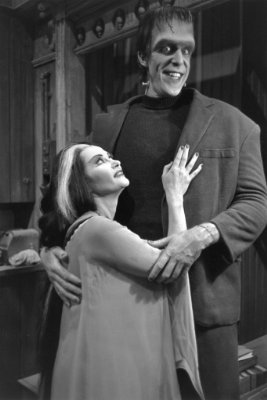
    together until  the Munsters shared a big double in the 1960’s.

    (No,
    the Ricardo’s never did push their twin beds together; it really was  the mores-bending Munsters, who are  pictured below. Perhaps the great “first” of a couple sharing the same bed needed to remove the human aspect of the reaching act, placing the responsibility in the attached-hands of a Frankenstein’s monster-like character and his bride.  This happened too with tv’s first interracial kiss–between Capt. Kirk and his communications officer, can’t remember her name–making the encounter between humans of incredible accomplishment and remove, and of course set centuries in the future.)

    Munsters

    Be that as it may, Lee DeForest (1873-1961), the inventor of the audion
    which made the whole industry possible (after Hertz and Marconi) complained in
    1947 of the enormous silliness and suggestive nature of the new medium.  He loftily wrote about what could’ve been “a potent instrumentality for culture, fine music, and the uplifting of American mass inteliigence” but instead was a ‘laughing stock”, the medium addressed to what he thought was the average national intelligence of a thirteen year old.  Maybe he was right, and the man simply couldn’t stand it.  61 additional years would’ve made the De Forest explode–but then again, he was already close to that hearing saxophone players; who knows what the man would’ve thought of cable television.  But the one thing he really couldn’t compalin about with radio was eroticism or sexual conduct, because that really wasn’t there. 

  • Mechanical Calculating Pencil, 1876

    JF Ptak Science Books LLC  Post 703  Blog Bookstore

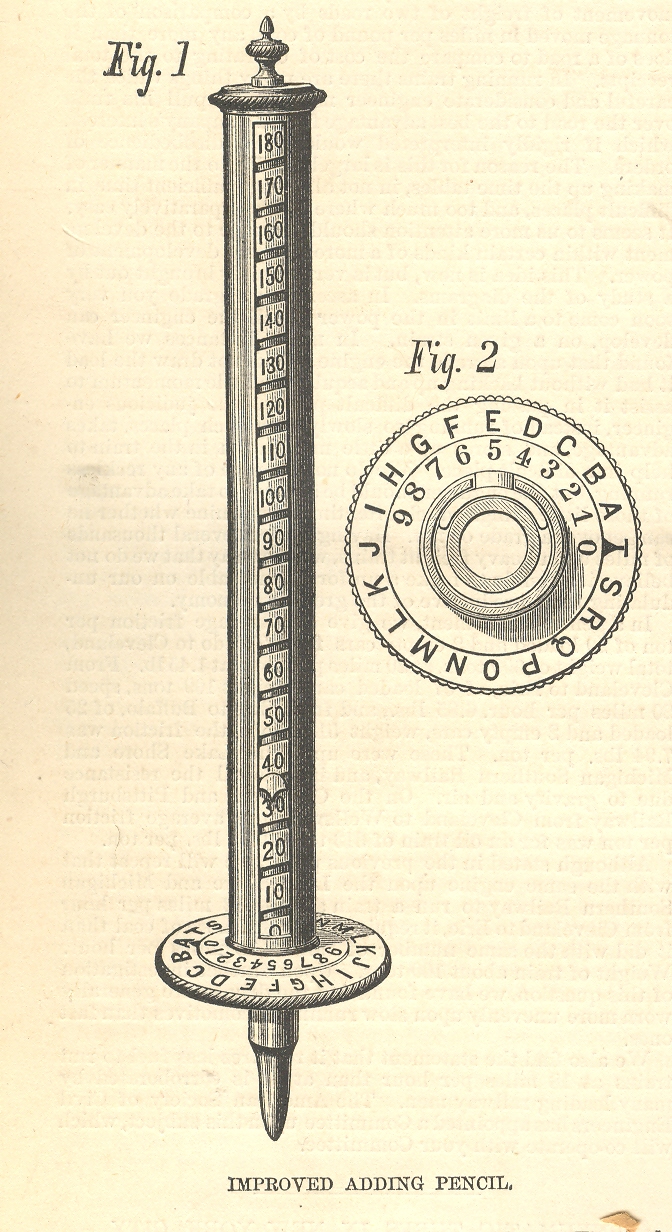
    ==Blog July 27=calculating pencil I’ve seen a number of unusual calculating machines, but this one–patented by Marshall Smith in 1876) seems one of the smallest, and efficient–if not limited–varities.  It is the second edition so-to-speak of a  mechanical, graphite pencil, operating this time without rotors or any other internal mechanical devices.  It was evidently a big seller–hosted in part, so it seems, by The Scientific American itself–having sold some 5,000 units.

    ·Posted by :

    ·in:

  • Fundamentals of Irony in Bombing: Tybee Island, 1862 and the French in Damascus, 1925

    JF Ptak Science Books LLC  Post 704  Blog Bookstore

    [on vacation, Tybee Island, Georgia]

     I have a hard time remembering the correct version of this twisty tale—are we in a post-irony age or the post-ironic irony age?  Is a double-irony an irony at all?  Actually I think that instead of our society having moved into a post-irony stage, it seems that the apparent lack of irony seems only so because all we have is irony, which of course is ironic.  Which may be an illustrative answer to my second question;  a double-irony is indeed a bigger irony, not a smaller (or null) one.  

    This came to mind vacationing with my family; actually, it came while building a sand castle at the lip of the advancing tide, building it up as the water tore it down.  That’s the fun of it, even with my six-year old: watching things get made and watching them get unmade, as the getting-unmade part will tell you a whole heck of a lot about the successes and failures of what went into the thing’s making.

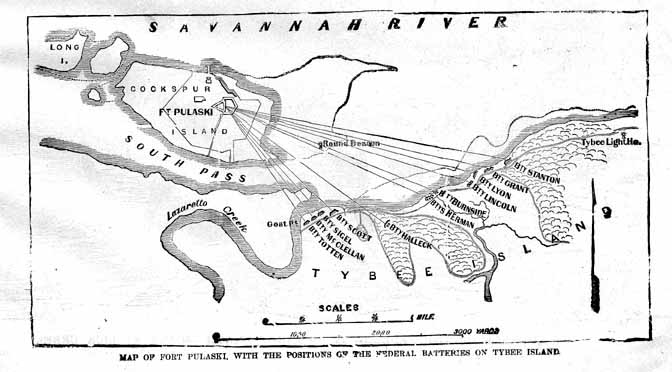
    Watching the walls of the fort tumble reminded me of the real-life version of this event, something that happened about two miles away and 147 years ago.   For Pulaski  was built on the Savannah River to protect the approaches to Savannah and Charleston from the angry reaches of the Spanish and British; in 1862, it was in the hands of the Confederates, and was being used to protect Savannah from the very government that built it.    

    ==blog==august 2==tybee

    Even while under the direct commander of General R.E. Lee, thing did not go well for Fort Pulaski and the garrison within.  At the end of 1861, the CSA was getting ready for an extended siege of the fort as the Union forces found victories north and south of it.  They withdrew their forces from Tybee and threw them into the fort, leaving the Union army a free and insatiable hand to get their hand ready on the other side of the Savannah pass.  That said, that’s what pretty much happened:  Union forces dragged their cannons through the surf and across the sand, getting them in place around newly-built batteries.  This all happened at night so that the Confederates in the fort couldn’t see what was going on, what with all of the evening’s doings camouflaged once the sun came up.  (This was still possible at t he time, to keep a secret like this in almost plain view, only a mile away from where the opposing cannons were aimed. The guys in the fort were pretty much cut off from everyone and everything, with only the occasional courier being able to make it through.  The garrison was, after all, equipped with enough provisions to last through a siege of 8 months or so.)   What happened, finally, was that with the Union cannon in place, the assault began.  And instead of a siege lasting for two seasons, it ran about two days.  The difference was in the new cannons that were being used the boys in blue—the rifled cannon was brought to play against the massive walls of the fort, and the masonry didn’t stand a chance against the new technology, which as it turns out was first displayed to the world in this battle.  And so the ironies:  a fort that was built to protect the United States from foreign invaders was used to protect the Confederate States from the United States; and the fort fell not to a sea-based barrage but a land-based one.  And after all of this, even though the Pulaski fell in April 1862, Savannah wasn’t captured by the union until December 1864.  

    An encyclopedia could no doubt be written on nothing but the ironies of bombing.  And for another example of this I turn to the French, who can supply more than their share, per capita, pound-for-pound, and percentage of GDP, whatever.  No, not the French return to Indochina in 1945 (after having done business with the occupying Japanese forces for the entire war) and their resurgent colonialism as practiced against the Vietnamese, or the heinous practices against the Algerians just prior to that country’s independence:  it is their bombing practices in Damascus. Not the Syrian bombings of 1945 (which also included many other places like Aleppo, Hama and etc.) but the French civilian bombings of Damascus in 1925.  For it was in that year that the League of Nations found that the French really weren’t bombing and killing civilians indiscriminately when they were doing so; they were, ironically, bombing themselves, and so their actions were not illegal.  (It was problematic, identifying “civilians”, as the League didn’t necessarily grant the same sort of “humanness” to all human, finding categories for barbarians and savages.  It was acceptable to bomb those later two categories, but not the first.) So the French sought to subdue a rebellion against their oppressive rule in that country, identifying the Muslim population centers in Damascus as probable hotbeds of activities for the “bandits” that were causing them their problems.  October 18, 1925 is when this particular outrage occurred; the Syrians protested, and the League considered.  And that was about the size of the story for the Syrians, because as it turns out, the French were just maintaining an order that for them was a simple police action; civilians populations could not be bombed in the eyes of international law, if the bombing was being done to a foreign people; since the French were there and occupying the country, they were conducting a police action, and in a sense were merely bombing themselves, loosening them from the barriers of whatever international law could be applied to their actions by the League of Nations. 

    So there is hardly any shortage of bombing ironies, as we can see here with the null-irony of the French bombing themselves while killing Muslim civilians.  When you start looking for irony, sometimes that’s all you can see. 

    ·Posted by :

    ·in:

    —
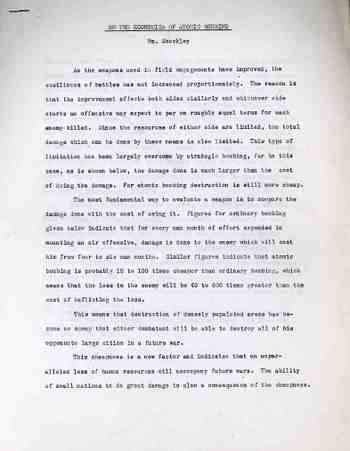
  • Atomic Bomb: William Shockley and the Economics of Using the Atomic Bomb, 1945

    JF Ptak Science Books LLC  REPOST from 6 August 2008  Blog Bookstore

    This is a reposting of  apost from last year, one of a continuing series on the development, use and control of atomic and nuclear weapons. 

    Atomic Bomb: William Shockley and the Economics of Using the Atomic Bomb, 1945

    JF Ptak Science Books LLC Post 195   

    • Background Documents on the Control and Proliferation Issues of the Atomic Bomb
    • Vannevar Bush Group, October 1945-January 1946
    • Paper 1:  William Shockley

    Blogaug_6shockley_1361 (Click image to enlarge; the other four pages are located in the “Continue Reading” section, below.)
    William Shockley on the Economics of the “Atomic Bomb Art”

    This paper is one a small archive of background and draft papers and
    proposals by the Vannevar Bush group working on the question of the
    control of atomic weapons and the formalization of the American
    position regarding the use and control of atomic weapons, October
    1945-February 1946. This archive consists of 38 documents relating to
    the development of U.S. atomic policy, with  contributions by President
    Harry Truman, Secretary of State James Byrnes, Dr. Vannevar Bush, (future AEC director) Carroll Wilson, Alger Hiss, I.I. Rabi, William Shockley, Frederick Dunn, Joseph E. Johnson, Leo Pasvolsky, Philip Morrison, Col. Nichols, William McRae, Admiral W.H.P. Blandy, George L. Harrison, and others.

    CONTINUE READING

    ·Posted by :

    ·in:

  • Deciding to Use the Atomic Bomb: The Chicago Metallurgical Lab Poll, July, 1945

    JF Ptak Science Books LLC  REPOST  Blog Bookstore

    Interested in responding to the poll yourself?  Answer the Metallurgical Lab (July 1945) Poll here-–the results are immediately available.

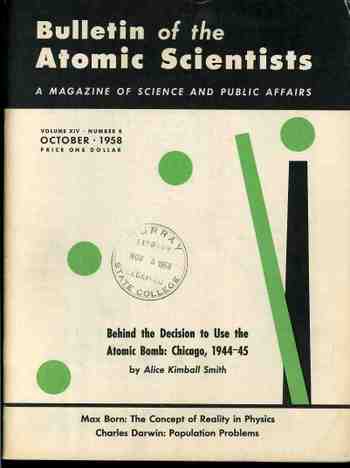
    Blogaugust_4_bas_cvr373In
    late June 1945, the Interim Committee (a secret, blue chip group
    established by Secretary of War Stimson with the approval of President
    Harry S. Truman to examine the problems that could result from the
    creation of the atomic bomb). decided what exactly to do with the
    weapons.  The group (also including James F. Byrnes, former US Senator
    soon to be Secretary of State, as President Truman’s personal
    representative; Ralph A. Bard, Under Secretary of the Navy; William L.
    Clayton, Assistant Secretary of State; Vannevar Bush, Director of the
    Office of Scientific Research and Development and president of the
    Carnegie Institution; Karl T. Compton, Chief of the Office of Field
    Service in the Office of Scientific Research and Development and
    president of Massachusetts Institute of Technology; James B. Conant,
    Chairman of the National Defense Research Committee and president of
    Harvard University; and George L. Harrison, an assistant to Stimson and
    president of New York Life Insurance Company) found the following:

    The
    opinions of our scientific colleagues on the initial use of these
    weapons are not unanimous: they range from the proposal of a purely
    technical demonstration to that of the military application best
    designed to induce surrender. Those who advocate a purely technical
    demonstration would wish to outlaw the use of atomic weapons, and have
    feared that if we use the weapons now our position in future
    negotiations will be prejudiced. Others emphasize the opportunity of
    saving American lives by immediate military use, and believe that such
    use will improve the international prospects, in that they are more
    concerned with the prevention of war than with the elimination of this
    specific weapon. We find ourselves closer to these latter views; we can
    propose no technical demonstration likely to bring an end to the war;
    we see no acceptable alternative to direct military use.

    AND

    …that the weapon be used against Japan at the
    earliest opportunity, that it be used without warning, and that it be
    used on a dual target, namely, a military installation or war plant
    surrounded by or adjacent to homes or other buildings most susceptible
    to damage.

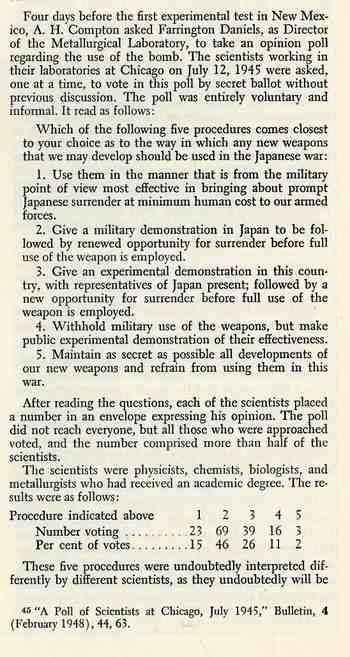
    Slightly later, in July 1945 (but before Trinity), Arthur H. Compton
    asked  Farrington Daniels (Director of the Metallurgical Lab section
    (at Chicago) of the Manhattan Project) to poll the 250 or so scientists
    at work under Farrington on the coming immediate use of the atomic
    bombs.  (The results of the poll, answered by 150 of the 250 people,
    were originally published as “A Poll of Scientists at Chicago, July
    1945,” Bulletin of the Atomic Scientists, February 1948, 44, page 63. and again published in Compton’s own book,  Atomic Quest, in 1956. The images below come from the Bulletin of Atomic Scientists for October 1958, p 304.)

    Here are the questions and the results of the responses:

    Blogaugust_4_bas_survey374

    The results of the poll were widely interpreted, and seemed to fit
    the needs of whomever was stretching the statistical canvas.  On the
    one hand, for example, 87% of the anonymous respondents favored some
    sort of military use of the bombs, though just 15% of all of the
    scientists thought that the bombs should be dropped straight-away. 
    Almost half thought that the bombs were best used in demonstration to
    the Japanese first, followed by renewed negotiating efforts for
    unconditional surrender, before the bombs were employed on targets;
    another 26% felt that the Japanese be invited for a demonstration in
    the US of the weapon.  So even though 87% believed that a military use
    was prescribed, 72% felt that the military use was best first as a
    demonstration device.  2% (3 of the 150) felt that the bomb should
    basically be buried and not used at all.

    Compton’s response to it all and to the immediate demands presented
    to him on 23rd July (Washington wants to know what you think”) was
    hardly quintessential:  “My vote is with the majority….it seems to me
    that as the war stands the bomb should be used , but no more
    drastically than needed to bring surrender>” (Reported in Lewis
    Morton’s “The Decision to Use the Atomic Bomb”, Foreign Affairs, 35, January 1957, pp 334-353).

    ·Posted by :

    ·in:

  • Bubble Cosmology: J.J. Grandville and a Soapy, Watery “Little Bang”, 1844

    JF Ptak Science Books LLC  Post 705  Blog Bookstore

    Finding the Big Bang in a bowl of soapy water.

    ==Blog August 5=primum

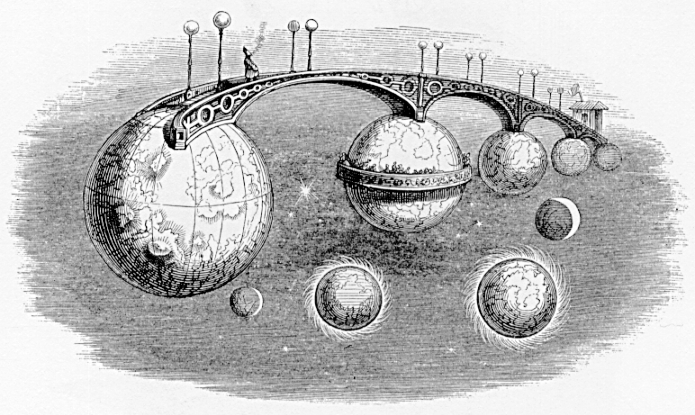
    Last year I wrote a little aboutJ.J.Grandville’s interplanetary
    bridge connecting some of the planets (and including a balcony constructed of Saturn’s
    ring [sic] in an early Victorian Grad Tour solar system walkabout.  Grandville (the pseudonym of Jean Ignace Isidore Gérard,
    born in 1803 and staggering too quickly out of life in 1847) was an extraordinary
    talent working somewhat out and ahead of his time; he had superb visions of the
    future, and of the past, and most of them were fantastic and fanciful, though
    not without some very stinging social commentary.  He has been called a proto-Surrealist and I’d
    have to agree, though for me he had a larger production of social commentary in
    his work than any of the “real” Surrealists of the 20th
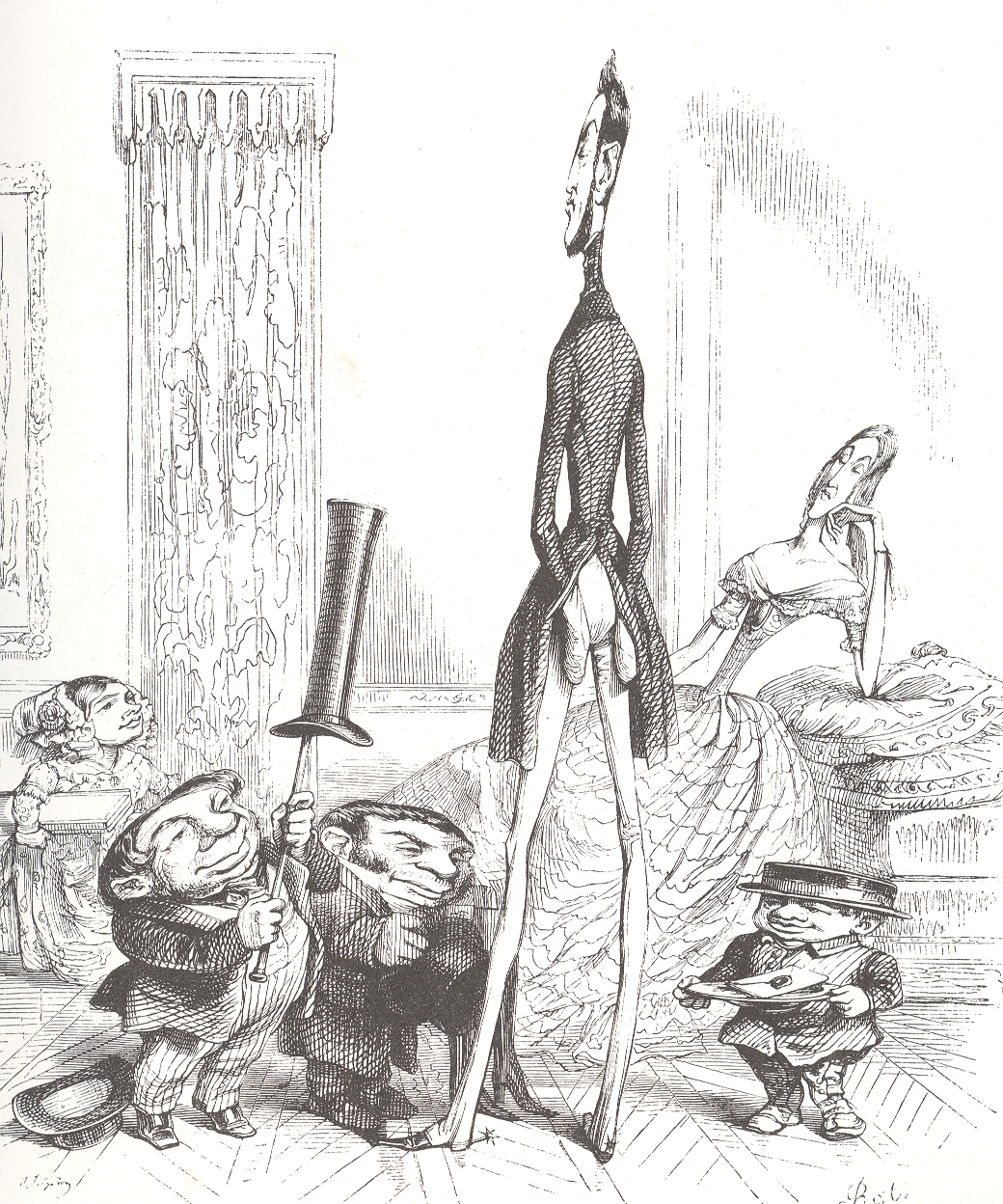
    century.  For example, in his Un Autre
    Monde
    (“Another World”) he depicts people’s 
    social stature literally—the taller and thinner, the more socially important;
    the shorter and stouter, the more disposable/replaceable; the images are funny,
    convincing and wincingly penetrative.

    Grandville-large

    This being said, I have a special interest in the
    astronomically-based images that he produced, and so far as I can tell, there
    weren’t many of them in his vast output. 
    In chapter 25 (“The Mysteries of Infinity”) of Un Autre Monde
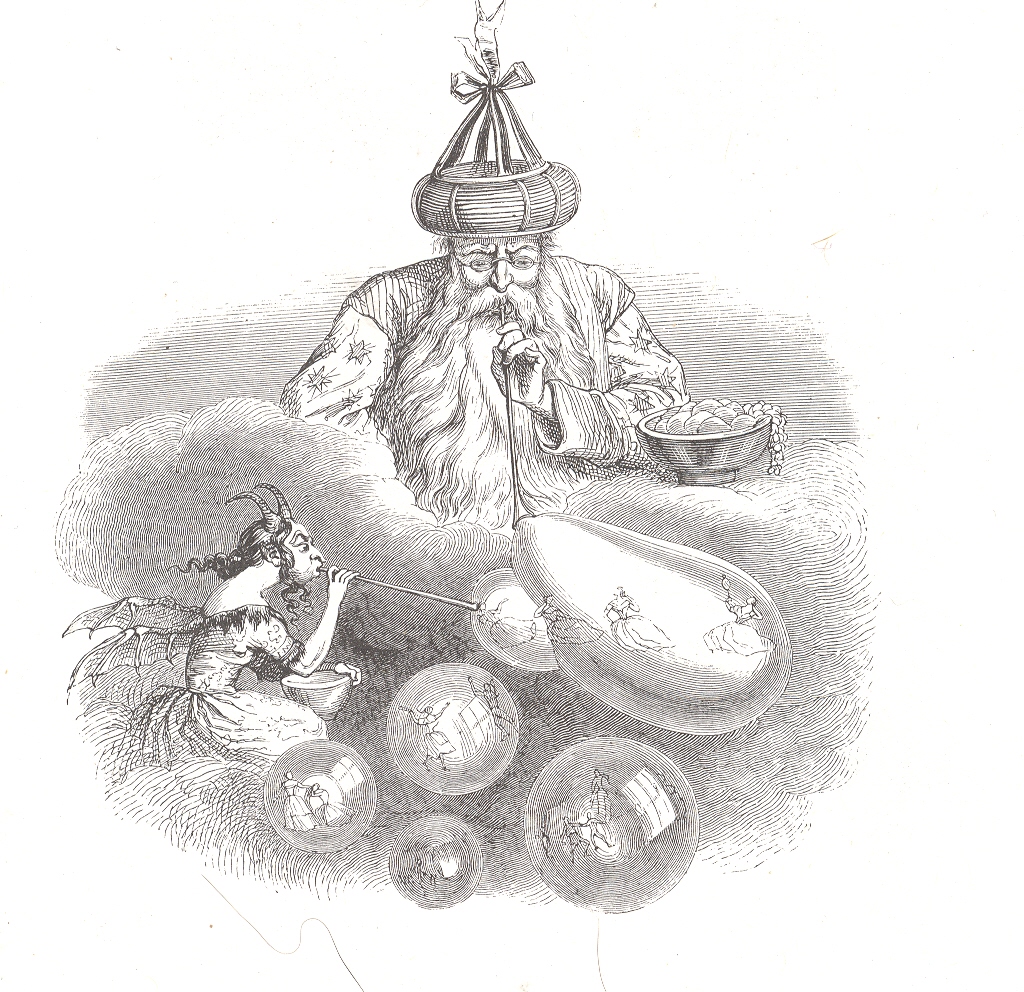
    Grandville rolls out the great maker of the universe, the Primum Mobile, the
    Motive Force, the First Mover.   The old scamp was busy and on display for Grandville’s character Hahbble, who
    floats around in the cosmos, and comes face-to-face with what in the end is
    Einstein’s dice thrower, as much as the great physicist didn’t want him to be,
    nor is he subtle (Raffiniert ist der Herr Gott,  aber boshaft ist er nicht!)  The malicious (“boshaft”) part would be
    supplied by someone else looking intent and dangerous, while the great maker turns out to
    be a magician who is happily creating the matter of all stuff by making it all out of
    bubbles.

    (I feel relatively certain that Grandville is the first artist to propose the
    bubble theory of cosmology, and he is among a select and restrictive minority
    who allocated such a seemingly meaningless activity with the creation of creation.  I like its playful nature, though I wonder if
    his approach was seen as a deep mockery and perhaps heretically insulting to
    the religco-forces that helped and plagued the 19th century. Mostly it seems he was left behind int he appreciation part of acknowledgment, glory faded before his eyes; his work wasn’t necessarily prized during his lifetime, and
    he had his share of brutal reviews for his great adventures.  Paul St. Victor, art critic, wrote that
    Grandville “wanted to dance on the clouds in leaden shoes”and “tried to get to
    heaven on a bus”.  That’s a tough go. Death did bring him some fame as M. Grandville slept with the worms; publishers used his illustrations mostly without gratuity to any estate, the images showing up all over the place through the end of the 19th century.  His cuts were used again and again,the blocks being progressively degrade until the fineness of Grandville’s eye and incision were lost to overuse–it is easy to see the difference in crispness and clarity between the early printngs of his pictures with the later ones, his sharp edges getting rounded by greed and use and time.3)

    I imagine this magician to be “almost” infinitely large and
    small (what does “almost” infinitely mean?) , blowing bubbles on a large galaxy
    scale, the bubbles containing other 
    galaxies; or smaller yet, other solar systems; and smaller yet, other
    planets.  And taking it down to the other
    extreme, he could be sub-atomic, blowing bubbles of existence and shaping the bumpies
    of quantum foam in spacetime, letting loose the primordial bits that would
    become molecules that would or would not rise from the unpretty Dirac sea,
    living just on the other side of measureable in space and time, shaving
    barely-measureable slivers away from Planck length1 and Planck time2.  Or maybe the old man is putting the white
    into Schwarzchild wormholes. 

     Maybe he’s just blowing the bubbles of possibility and
    chance, and his unacknowledged accomplice is injecting the mote in god’s eye.

    Notes:

    1. The Planck length 1.616 x 10 -35 (meters) which is the
    smallest measureable space in the universe (comprised of Planck’s constant, the
    gravitational constant and the speed of light) which in turn leads to

    2.  Planck
    time, which is the amount of time it takes for light to traverse one Planck
    length in a vacuum,  5.39 x 10 -44 seconds),
    which is basically the smallest measureable unit of time, or for time that
    would mean anything. 

    3.  While ill with his own fatal bit, he composed
    his own epitaph;  Here Lies Grandville;
    he loved everything, made everything live, speak and walk, but could not make a
    way for himself”. 

    There’s actually quite 
    a nice turn of phrase in the wiki article on Grandville—quite nice,
    really—which I include here:  “Though the
    designs of Grandville are occasionally unnatural and absurd, they usually
    display keen analysis of character and marvelous inventive ingenuity, and his
    humour is always tempered and refined by delicacy of sentiment and a vein of
    sober thoughtfulness.” He evidently lived a hard-ish life, not the least of which
    were the deaths of his wife and two children in the early 1840’s.  

     Some of Grandville’s other interesting works include:

    Les petites miseres de la vie humaine (The Petty Sorrows of
    Human Life) 1843

    Un Autre Monde  1844

    Cent Proverbes  1845

    Jerome paturot 1846

    Les Fleurs animees (The Personified Flowers) 1847

      ==Blog August 5=tall

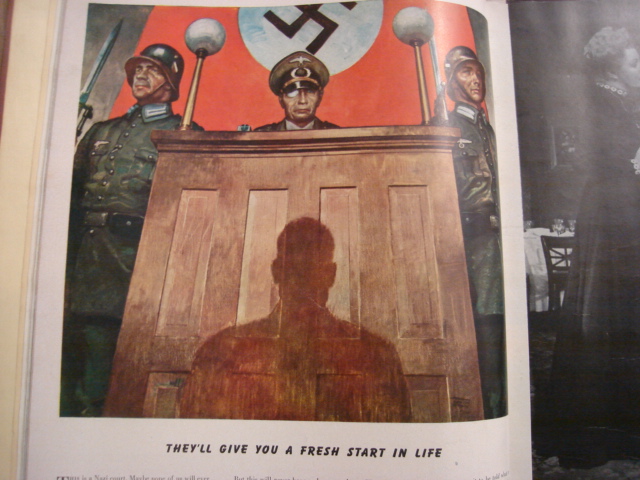
  • Anti-Nazi Propaganda and the Triumph of Nazism in the U.S., 1943

    JF Ptak Science Books LLC  Post 706 

    This striking image appeared in LIFE  magazine for 4 January 1943 as an appeal from American Locomotive for the American people to be aware of what might be expected of them in the very near future if the war did not go as planned.  It is doubtful that this ever could have happened, even if the tide of combat had not turned against the Germans by this point–the enormous sucking sound began in the war in the East as 90,000+ German soldiers surrendered at Stalingrad at about this

    Crowds 004 time in January, the fate of the Nazi regime had been decided at Potsdam, the war in the Pacific (Guadalcanal, Midway) was going the way of the Allies, and the invasion of North Africa was well underway, the noose beg

    inning to tighten on Axis Europe.  This is a little fast-and-loose on the history of the war, but I think it generally accurate to say that no Nazi flags would be displayed in American courtrooms.  The other, last nail in this coffin was the beginn

    ing of the Manhattan Project in June 1942, an undertaking which would lead to ultimate domination.  I think it safe to say too that there was no way that any other country (or alliance) could have produced the necessary (and terrific) amounts of energy, plus large manpower, plus expertise, plus the ability to maintain the massive project (all in s

    ecret)–it was all simply too much. Had the Nazis been more successful in Europe and less adventurous in the East, and was somehow able to conquer it all (and this removing the U.S. from the equation), well perhaps then it could have been possible for Germany to develop the bomb.  on the third hand, given the rest of the development in the American war as dynamic, the U.S. would’ve bombed Germany (and etc.) with atomic weapons before they could have developed anything on their own.  all of this is trivial rumblings to be sure–I just wanted to survey the possibility of the Nazi overthrow of America.  The U.S. would’ve been too terribly much for anyone, especially given the experiment in the desert. 

    ·Posted by :

    ·in:

    —
  • A History of Goodbye, Part I: “Goodbye” in Book Titles

    JF Ptak Science Books LLC  Post 707  Blog Bookstore 

    Nil sapientiae odiosius acumine nimio

    (“Nothing
    is more hateful to wisdom than excessive cleverness”), said by Poe in his “The
    Purloined Letter” to be from Seneca1.

    ===blog august 5==mirrour

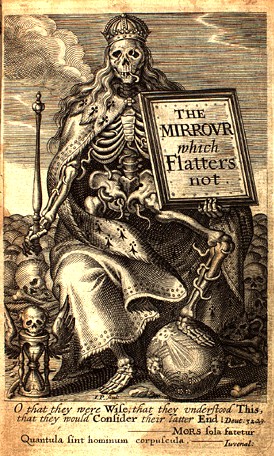
    Several posts ago I made reference to Jean Puget de la
    Serre’s wonderfully semi-vicious book The Mirrour Which Flatters Not (1639).   Serre was hardly an oasis of negativity in
    the early Enlightenment, writing as he was on matters epically moral—I must
    admit that I was attracted to the title of this condemning and biting book, and
    frontispiece illustration, which features a royal skeleton wormily seated  in a field of skulls holding the mirror that awaits us all. But as it turns out—ironically, too, perhaps—in
    the long parting salvo that seems to have been the crux of his book’s biscuit,
    Serre’s translator, Thomas Cary, is one of the earliest English writers to use
    the word “goodbye”.  Why this was done, I
    haven’t the foggiest notion—I do know that writers claim that this is a
    contraction of the parting salutation of “god be with you”, but that’s all I know on the subject. 

    But it did cause me to think about the word “goodbye” and the whole concept of parting from something, or someone, and of change, and adventure , of something happening, flux, introducing or diminishing chaos.  If it is anything at all, the idea of “goodbye” will probably not lead to boredom; ennui is a definite some-percentage possibility,  but it is a direct promise of change for good or for ill or for nil.

    And the best place I thought to start of looking at Goodbye is at the beginning,  in the titles of books, where “Goodbye” or “Good-bye” makes infrequent appearances. 

    There are titles that say
    Goodbye
    to people:  Mr. Chips,
    Columbus, Picasso, Sister Disco, Mickey Mouse, Judge Lynch, Descartes. And Goodbye… to places: Berlin, Europe, Los Angeles, New York, Venice, Earth.

    They are of varying qualities.  This is definitely judging a book by its
    title, but I think I’d rather read Death
    in Venice
    more so than Goodbye to
    Venice
    , which sounds like it might be a Weekly Reader version of 
    Mr. Mann’s big/little write. 

    And of course Goodbye…
    to things, not too many of which sound very appealing:  Hangovers, Weight, Love, Sanity, Health,
    Life.  These are the books invisibly clamoring for
    space and life at the 25-cent table at the library sale as they wait their turn to say “hello” to recycling.

    Then there are the Goodbye…
    titles that are Not Terribly Categorizable:  Goodbye Girl, Say Goodbye, and of course Never Say Goodbye, and the lovely Goodbye Blue Monday (the rest of the
    title of Vonnegut’s Breakfast of
    Champions…
    ).  The Long Goodbye has always sounded languid and steamy and
    the-ice-is-all-melted-y to me.  Hello Goodbye just can’t seem to make up
    its mind. So far as I can tell there are no books simply entitled Goodbye, nor has anything ever been on
    bookseller shelves called Get Out,
    though there is a book called Go Away. Hello Goodbye either can’t make up its mind or is welcoming Goodbye, which may or may not be a broken logical circuit.

    The playing field gets very wide for book titles (and
    everything else) when “goodbye” gets more expanded, less demanding, more diplomatic,
    like, say , with Farewell My Lovely.

    But that’s another story. 
    And so for this bit on the History of Goodbye, I use Mr. Graves, and say
    Goodbye to All That. 

    Footnote

    1. Evidently, it is not.  By the
    way, for all of the great amusement and entertainment taken from this great and
    wise short story, Poe received a payment of $12 in 1845.

    ·Posted by :

    ·in:

  • Reporting Hiroshima in American Japanese Internment Camp Newspaper, 11 August 1945

    JF Ptak Science Books LLC         Post 708 (Continuing #192)   Blog Bookstore
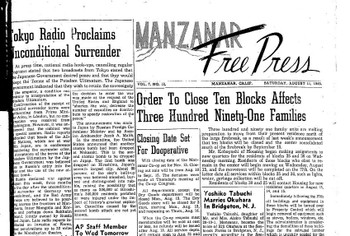
    Atomic_bomb_manzanar_2

    For another project I’ve been reading through the Manzanar Free Press Newspaper
    (volume 7, no. 12) and came upon this slight coverage of the bombing of
    Nagasaki, printed 11 August 1945.  What’s unusual here is that this
    newspaper was published by the “internees” at the Japanese Relocation
    Center (officially “The Manzanar War Relocation Center” and also called
    a  “relocation camp,” “relocation center,” “internment camp,” and
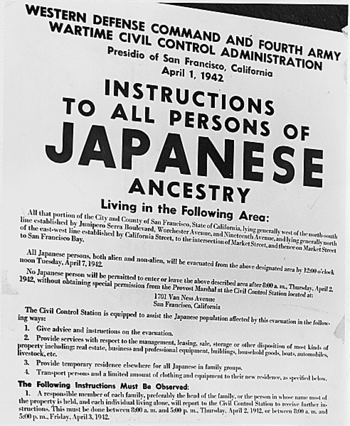
    “concentration camp”,)  at Manzanar, California.   110,000 people of 
    Japanese origin (including a large percentage of American citizens)
    were forcibly removed and imprisoned via the U.S. Executive Order 9066,
    issued by President Franklin Roosevelt on 19 February 1942.   Manzanar
    was a semi-dead town 220 miles NE of Los Angeles, located in high
    desert with huge swings of temperature and unrelenting and challenging
    weather—semi-killed by the city of Los Angeles, which purchased the
    water rights to the region in 1929, forcing out the remaining
    inhabitants.  Manzanar had a peak population of about 11,000 before the
    Japanese were returned to what remained of their previous lives.

    Manzanarattention_2

    In this quick coverage, a report is made on the Japanese
    accepting the terms of the Potsdam Ultimatum, putting an end to the
    war.  The next part is of the reporting is very subdued, announcing the
    dropping of the second bomb,  theorizing that as many as
    200,000-300,000 people may have perished in the bombing of Japan’s
    seventh largest city.  And not much more than that.  Two hundred words
    were I’m guessing all that was allowed by the powers-that-be at
    Manzanar.

    Elsewhere in this same issue is a report on the meeting of the
    Manzanar Boy Scout troop.  And something on the graduating class of the
    Manzanar High School (the high school yearbook for 1945, the last class
    at Manzanar, was called “Valediction”).  Familiar trappings in an
    unfamiliar trap.

    Manzanar is located near Lone Pine in the Owens Valley, which today
    suffers terrible environmental problems brought on by water-dependent
    LA sucking out all of the water in the region.

    ·Posted by :

    ·in:

  • Estimating Casualties in the Invasion of Japan, July/August 1945

    JF Ptak Science Books LLC  Post 709 Blog Bookstore

    It is interesting to visit William Shockley again (after having seen his
    work on the economics of the atomic bomb here), this time weighing in on the
    prospects of an atomic bomb-less WWII Pacific endgame. 
    The results are not pretty, and weigh the number of casualties as seen
    in past invasions of widely-interpreted type. 
    Shockley describes his work in a letter (21 July 1945, “Proposal
    for Increasing the Scope of Casualties Studies”)  to Edward L. Bowles, an MIT Radlab guy who was
    brought to D.C. in 1942 to help develop RADAR. 
    The content is summarized in the following three paragraphs taken in
    their entirety from CASUALTY
    PROJECTIONS FOR THE U.S. INVASIONS OF JAPAN, 1945-1946: PLANNING AND POLICY
    IMPLICATIONS

    by D. M. Giangreco in the Journal of Military History, 61
    (July 1997). pages 521-82

    “As for Dr. Shockley’s initial report to Dr. Bowles, it was not submitted
    until after Stimson had left for Potsdam.
    He proposed that a study be initiated “to determine to what extent the
    behavior of a nation in war can be predicted from the behavior of her troops in
    individual battles.” Shockley utilized the analyses of Dr. DeBakey and Dr.
    Beebe, and discussed the matter in depth with Professor Quincy Wright from the University of Chicago, author of the highly-respected A
    Study of War
    ; and Colonel James McCormack, Jr., a Military Intelligence
    officer and former Rhodes Scholar who served in the OPD’s small but influential
    Strategic Policy Section with another former Rhodes Scholar, Colonel Dean Rusk.
    Shockley said:

    “If the study shows that the behavior of nations in all historical
    cases comparable to Japan’s has in fact been invariably consistent with the
    behavior of the troops in battle, then it means that the Japanese dead and
    ineffectives at the time of the defeat will exceed the corresponding number for
    the Germans. In other words, we shall probably have to kill at least 5 to 10
    million Japanese. This might cost us between 1.7 and 4 million casualties
    including [between] 400,000 and 800,000 killed.”

    “W. B. Shockley to Edward L. Bowles, 21 July 1945,
    “Proposal for Increasing the Scope of Casualties Studies,” Edward L.
    Bowles Papers, box 34, Library of Congress. Attached: “Historical Study of
    Casualties,” by Quincy Wright. Dr. Shockley extrapolated these numbers from earlier analyses
    summarized in Health and others compiled by the Military Intelligence Division
    from field reports. No accurate total of German military and civilian deaths
    was available at the time he prepared his report, but the number was eventually
    set at roughly 11,000,000. Japan was not invaded and finished the war with just over 7,000,000 casualties, most
    of them from its armed services on the Asian mainland in fighting from
    September 1931 to September 1945.”

    The War Department was very busy trying to figure out the
    American casualties for the final invasion of Japan.  In one famous paper, Memorandum for the Chief of Staff: Amplifying Details on Planners’
    Paper for Presentation to the President
    . (17/18  June 1945). prepared by General Hull,
    estimates for American casualties invading Kyushu (on the way to the mainland) were
    based somewhat on the very recent experiences at Okinawa.
    Kyushu was the site of an enormous Japanese military build-up in a final
    preparation for the defense of the homeland—there were more than six times the
    number of soldiers here than at Okinawa, totaling some 550,000.  By August 8, today, the American casualties
    at Okinawa were about 49,000.  There would still be a very long and bloody
    war to wage had not the Empire of Japan finally surrendered four days after the
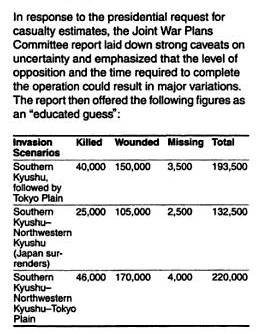
    use of the second atomic weapon at Nagasaki.  Estimates are as follows (this taken from
    Douglas MacEachin, The Final Months of
    the War with Japan : US  Signal Detection, Invasion Planning and the
    Atomic Bomb Decision
    , CIA, 1999):

    ===blog--atomic bomb--invasion tokyp

    MacEachin continues:

    “In an apparent effort to close or narrow the gap between
    presenting no casualty figures at all and presenting numbers that the Joint
    Planning Staff was unwilling to use with the President, the Army’s Director of
    Operations, Maj. Gen. J. E. Hull, asked his staff for casualty figures for
    operations on Okinawa, Iwo Jima, Leyte and Luzon (both in the Philippines), and
    “overall figures on MacArthur’s operations to date.” He said these
    could be used as background at the upcoming meeting with the President, whom Hull described as “very much disturbed over losses on
    Okinawa.” Hull then incorporated the following casualty
    figures into a summary of the longer report that had been prepared for the
    President’s meeting.

    Islands Invaded Earlier US

    Killed/Wounded/MIA

    Japanese Killed/Prisoners
    (Not including wounded) Ratio (US to Japanese)
    Leyte    17,000  78,000 1:4.6
    Luzon    31,000 156,000 1:5
    Iwo Jima   20,000 25,000 1:1.25

    Okinawa   34,000(ground) 7,700(Navy) 81,000 (Not a final count) 1:2”

    And so what on earth are we left with, really? 200,000+ American  and 2 million Japanese casualties, plus untold destruction, in an atom bombless attack on the Empire. This is not part of an argument about using the bomb–there wasn’t an argument to be made at virtually any high-level command structure about not using the bomb militarily…it just wasn’t on the table.  (There were people who–like Eisenhower–were appalled with the military use of the weapon, but they weren’t part of the groups whose charge was to figure out the bomb’s deployment.) I’m just trying to illustrate the effects of war had there been no bomb at all, or if the impossible decision was made not to use it.  As it was, the bomb existed, it was used with virtually no hesitation, twice, and it brought the war to a close.  It must be remembered that even after Nagasaki, it still took the Japanese command three more days to decide to surrender, with the final acceptance occuring three days after that, on 15 August.  

    ·Posted by :

    ·in:

Recent Posts

Archives

Categories