A Daily History of Holes, Dots, Lines, Science, History, Math, Physics, Art, the Unintentional Absurd, Architecture, Maps, Data Visualization, Blank and Missing Things, and so on. |1.6 million words, 7500 images, 4.9 million hits| Press & appearances in The Times, Le Figaro, Mensa, The Economist, The Guardian, Discovery News, Slate, Le Monde, Sci American Blogs, Le Pont, and many other places… 5000+ total posts since 2008.

  • What Goes into Making Human Robot Girls, 1941

    JF Ptak Science Books LLC  Post 907

    [See the follow-up post “First Thing to Do is to Find Some Men”; How to Get a Boy-date, 1941]

    An
    old friend of mine, Dr. Sam Koslov, was  brilliant, accomplished and polymathic, with
    great senses of wonder, inquisitiveness and humor.  He spent many years in research and as a
    long-time editor at Johns Hopkins APL.  He was a delightful and serious man, though
    one of the projects he worked on sounded much more like squeaky scifi than pure
    sci. That was Project Pandora, and science fiction it definitely wasn’t—it was
    an attempt at a form of control over human behavior via low level microwave radiation1. 

    This
    came to mind as I was leading through some very low level, high impact behavior
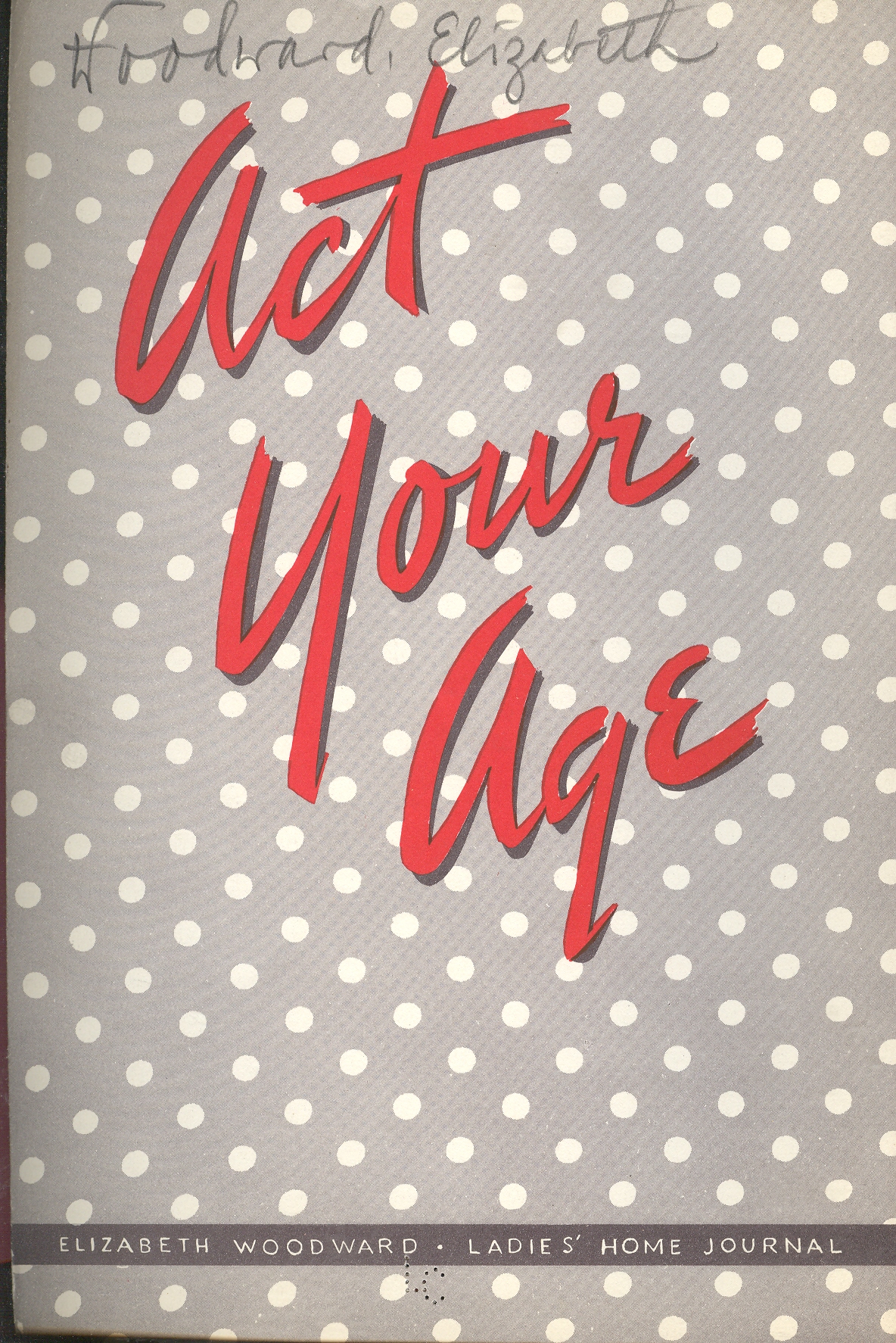
    control exhibited in a series of social engineering pamphlets published by the Ladies’ Home Journal in the early 1940’s. Blog jan 12 girlz--if i were a man It is heartbreaking, really, to think of people
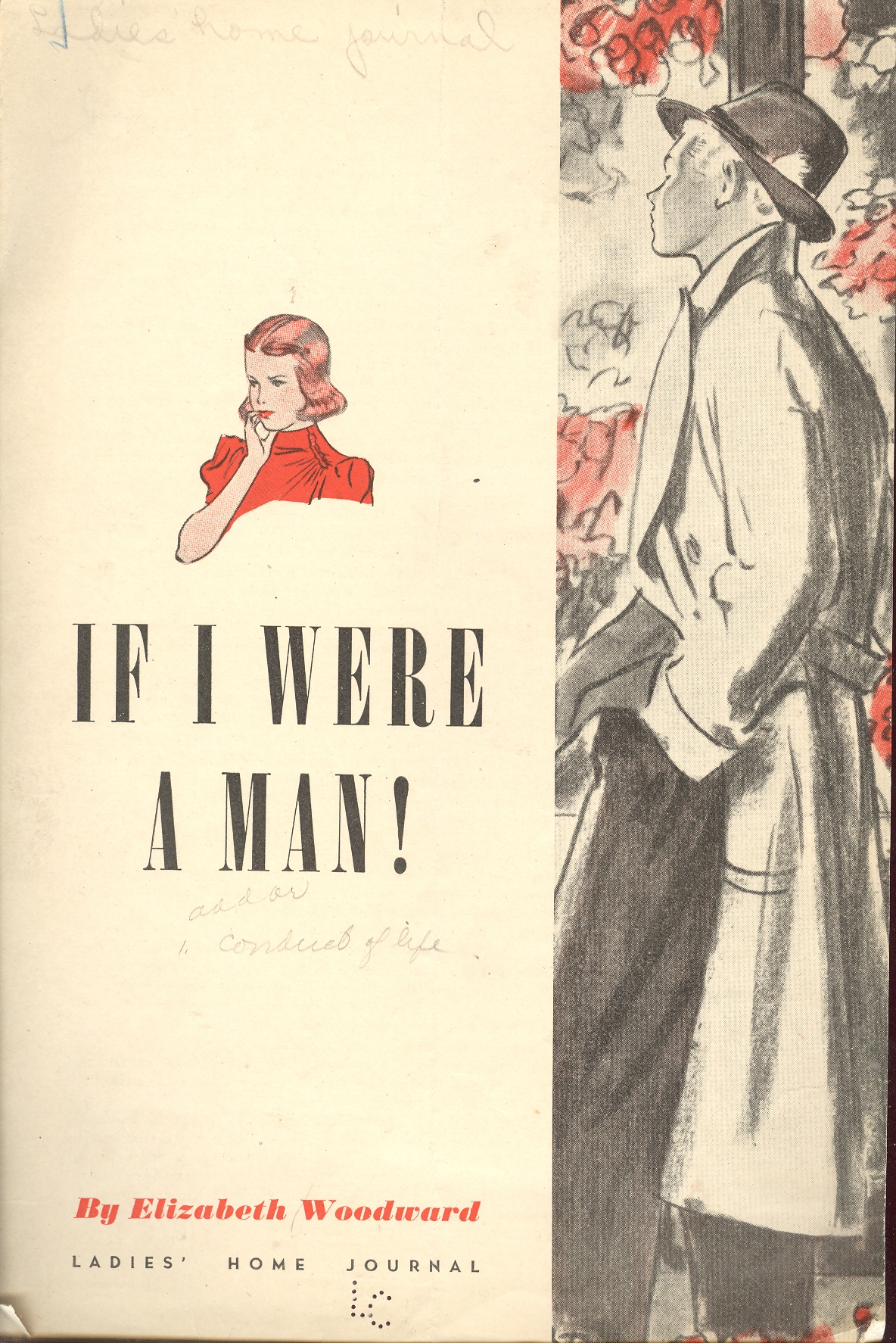
    like my mother reading these things and being inundated by cultural architecture
    that left little to the imagination.  It
    seems so terrifically outrageous in 2010; and of course it makes me wonder
    about what things that seem so de rigueur
    today will be the Ladies’ Home
    Embarrassments
    of 2050Blog jan 12 girlz--ggnetlman preffered . 

    Granted, nobody’s corneas were being shaken loose via this method, but the effect of the sentiments of control in these pamphlets still seem eye-poppingly
    strangulating.  I’ve included only a few
    examples here, but there are at least a hundred others to choose from.
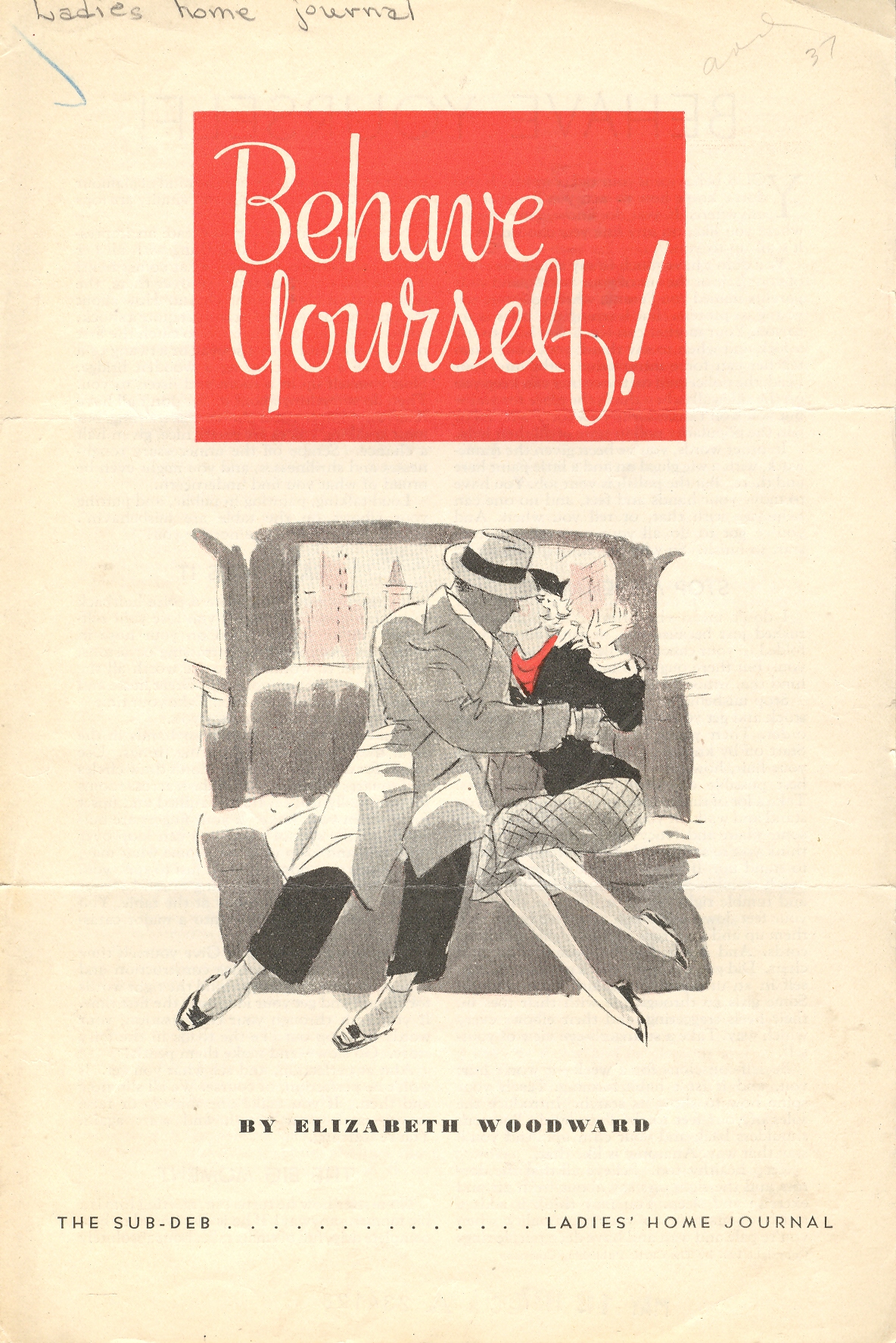
    Blog jan 12 girlz--behave yourself

    Perhaps
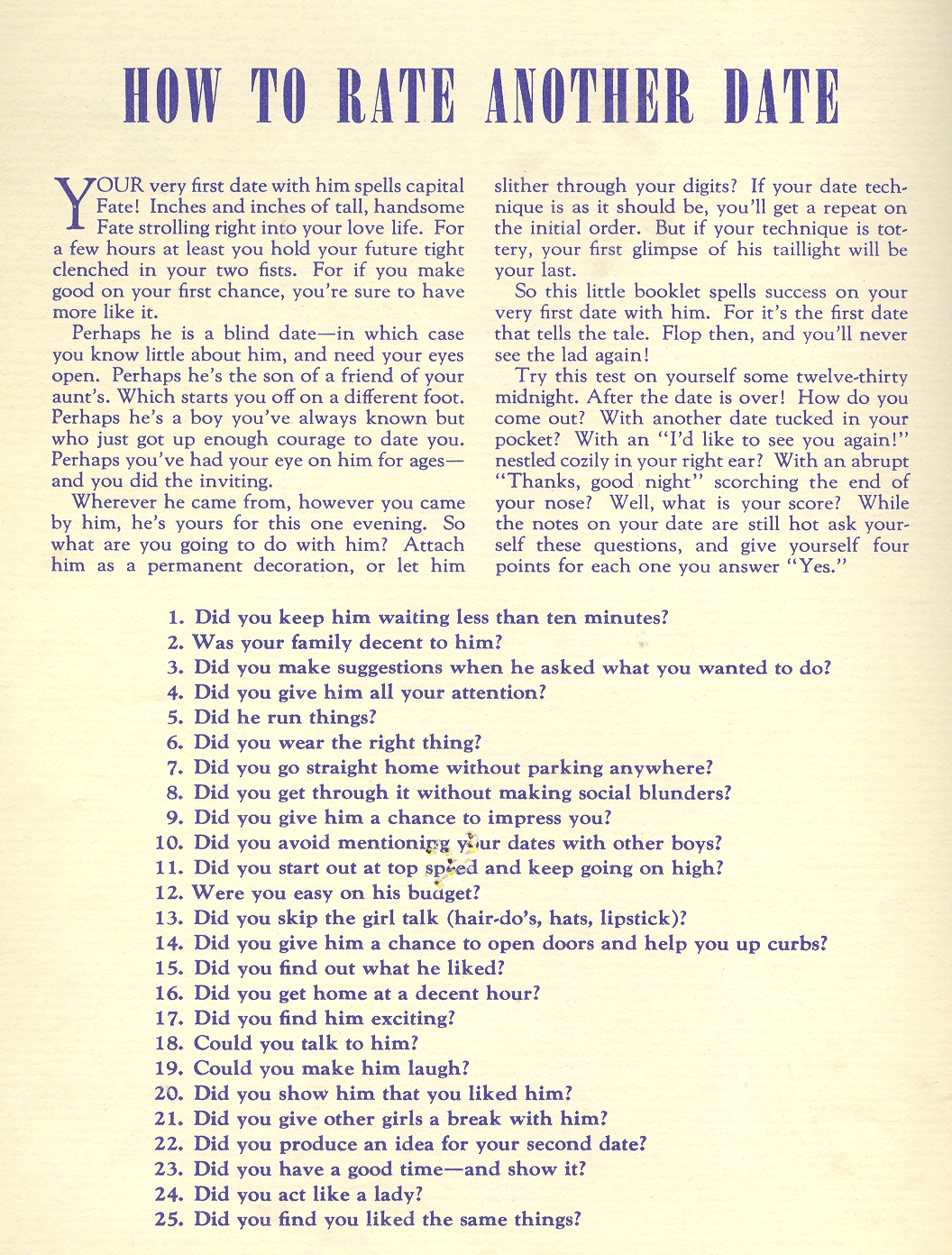
    it was the Date-Rate pamphlet that caused most of my teeth to fall out—it is
    sheer and painful, offering virtually nothing to the young women reading it and
    practicing its morality play but gender obedience and servility.Blog jan 12 girlz--rate a date
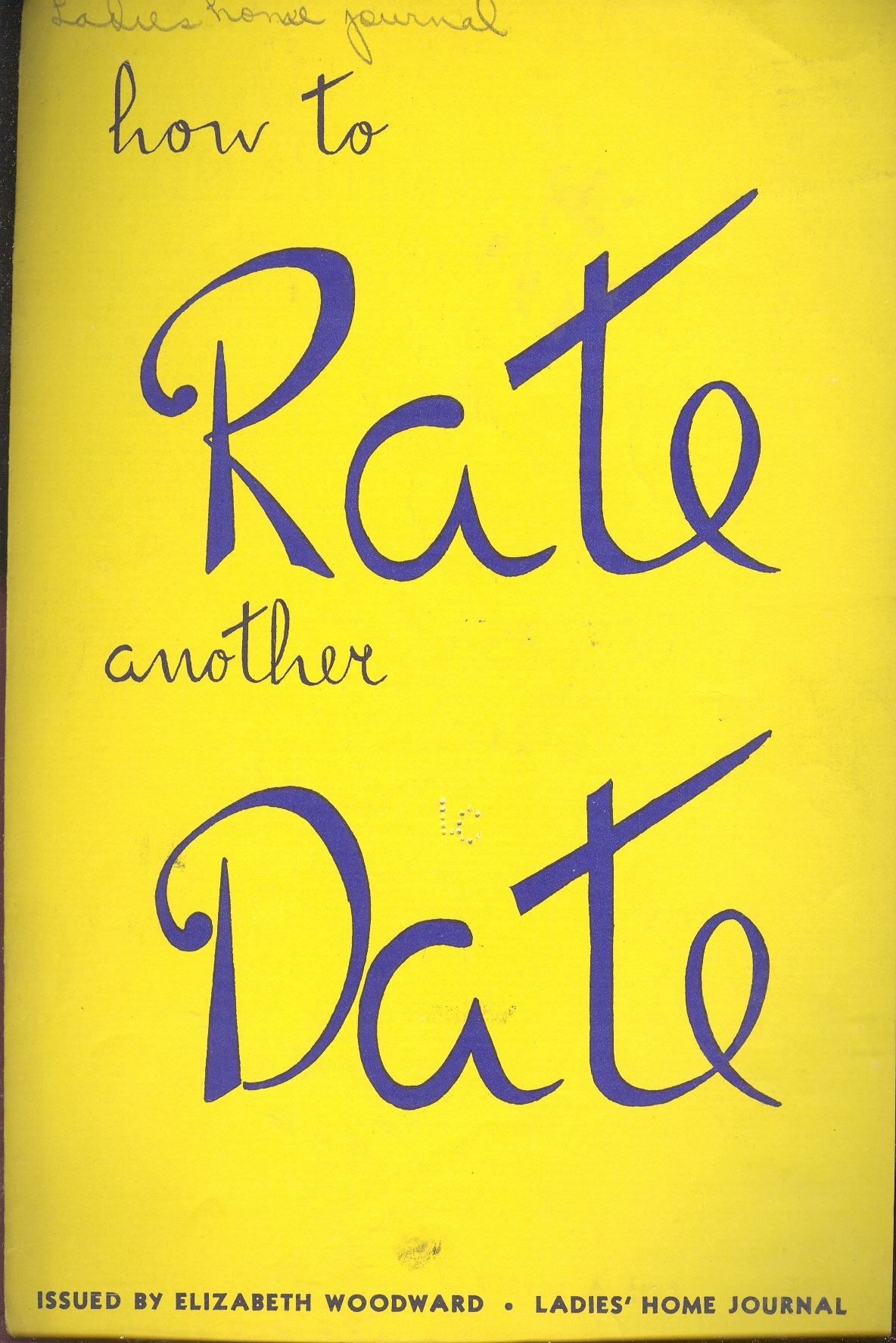
    “Did you give
    him all your attention?” “Did he run things?” “Did you give him a chance to
    impress you?” “Could you make him laugh?” 
    It isn’t until the final rating question (#25) that we get to something that
    opened the possibility of a two-way interest in the relationship, but only
    barely: “Did you find you liked the same things?”  Its sad, really. 
    Blog jan 13 RAE DATE txt

    When I read some of this to my 17-year-old
    daughter, she just looked at me with an open mouth and eyebrow furrows:  it was simply beyond listening to, for her,
    and certainly not anywhere near worthy of a response. 
    Blog jan 12 girlz--do boys like you 

    Of course this is just the tip of the tip of the tippity tip of the iceberg on the control of social thought and the keeping of the male-dominated social order, and its only one part of a very wide spectrum of overall codifications, much of which seem pretty much left to history within two generations.  
    Blog jan 13 do boys girl like u

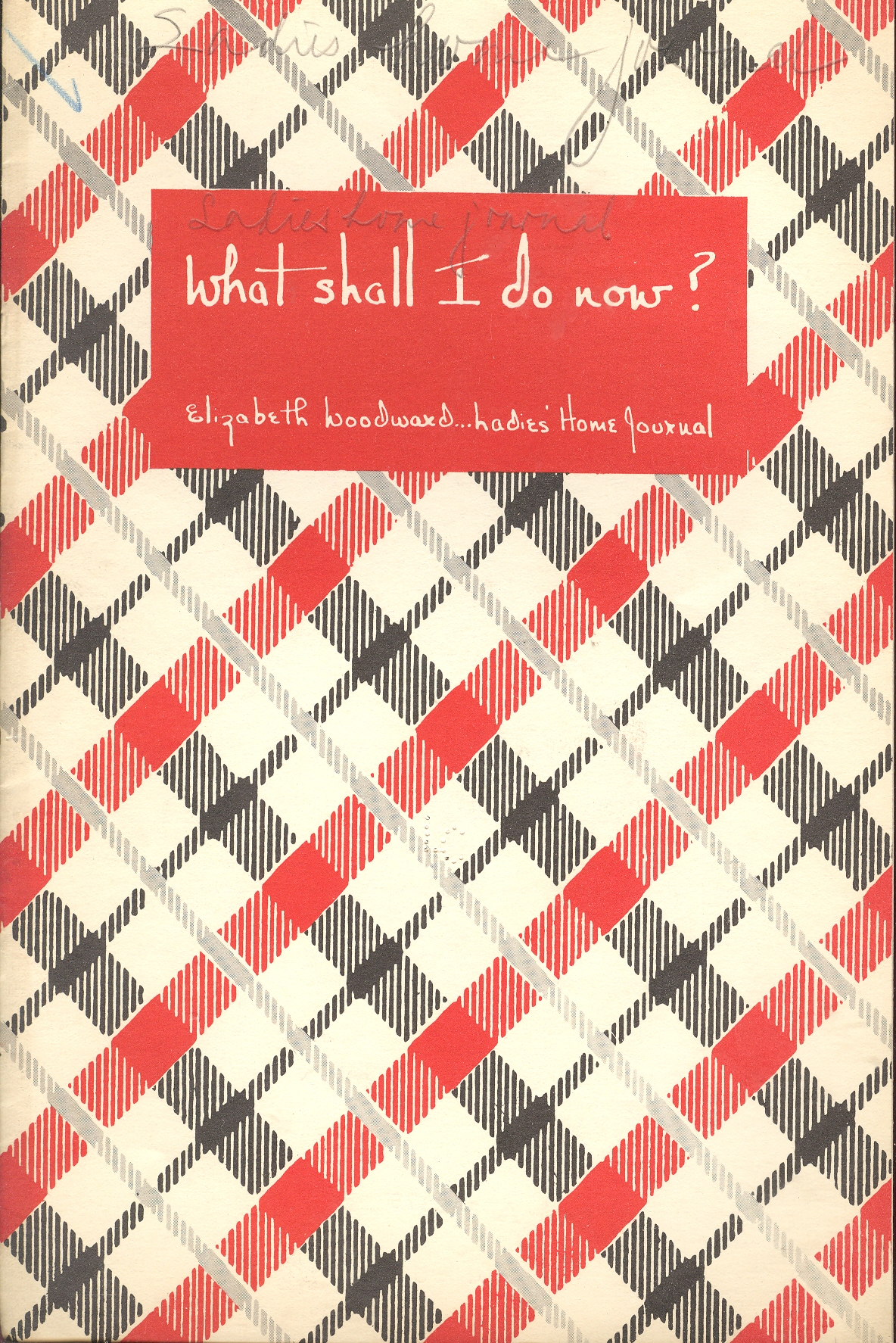
    Blog jan 12 girlz--whAT shall

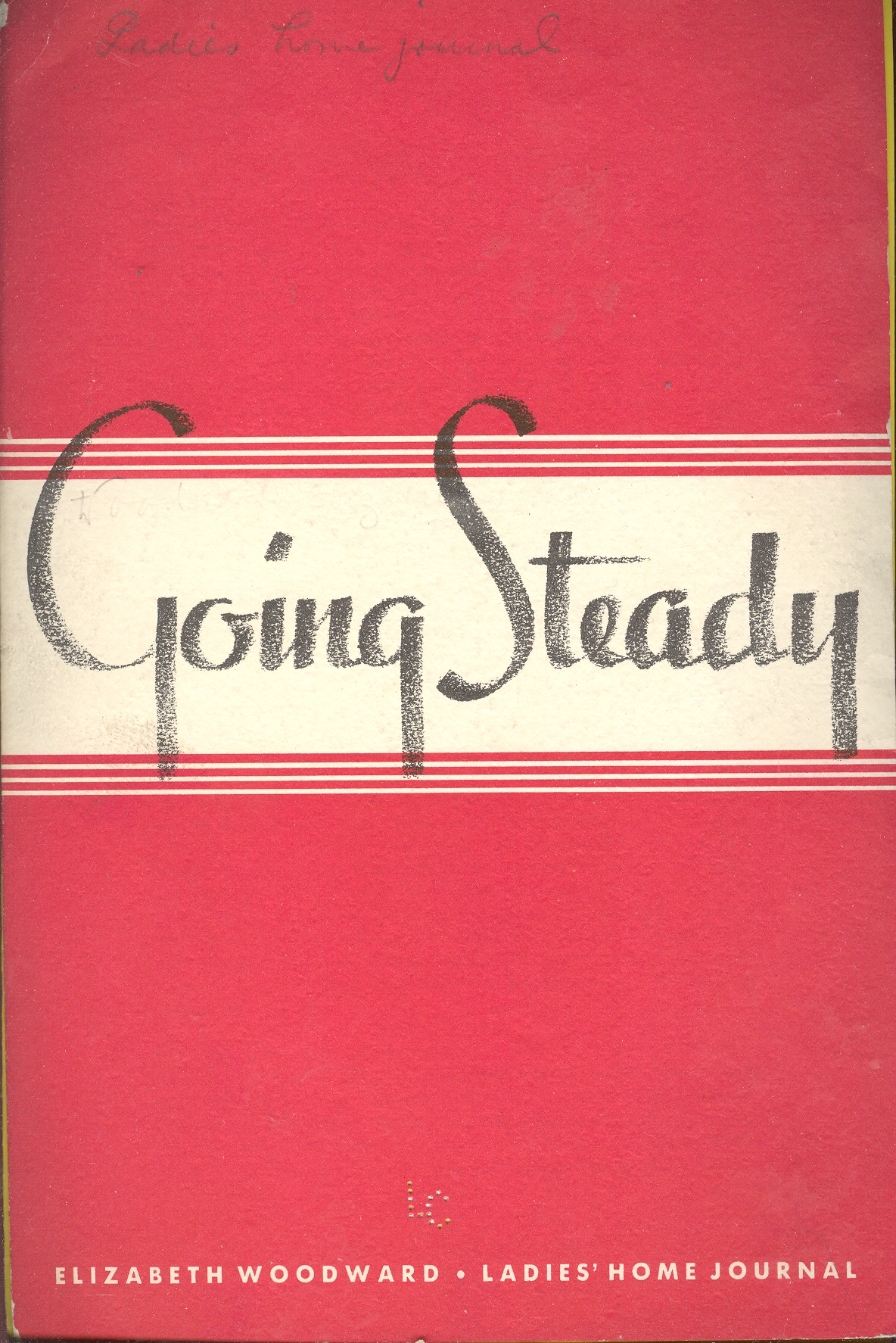
    Blog jan 12 girlz--going steady

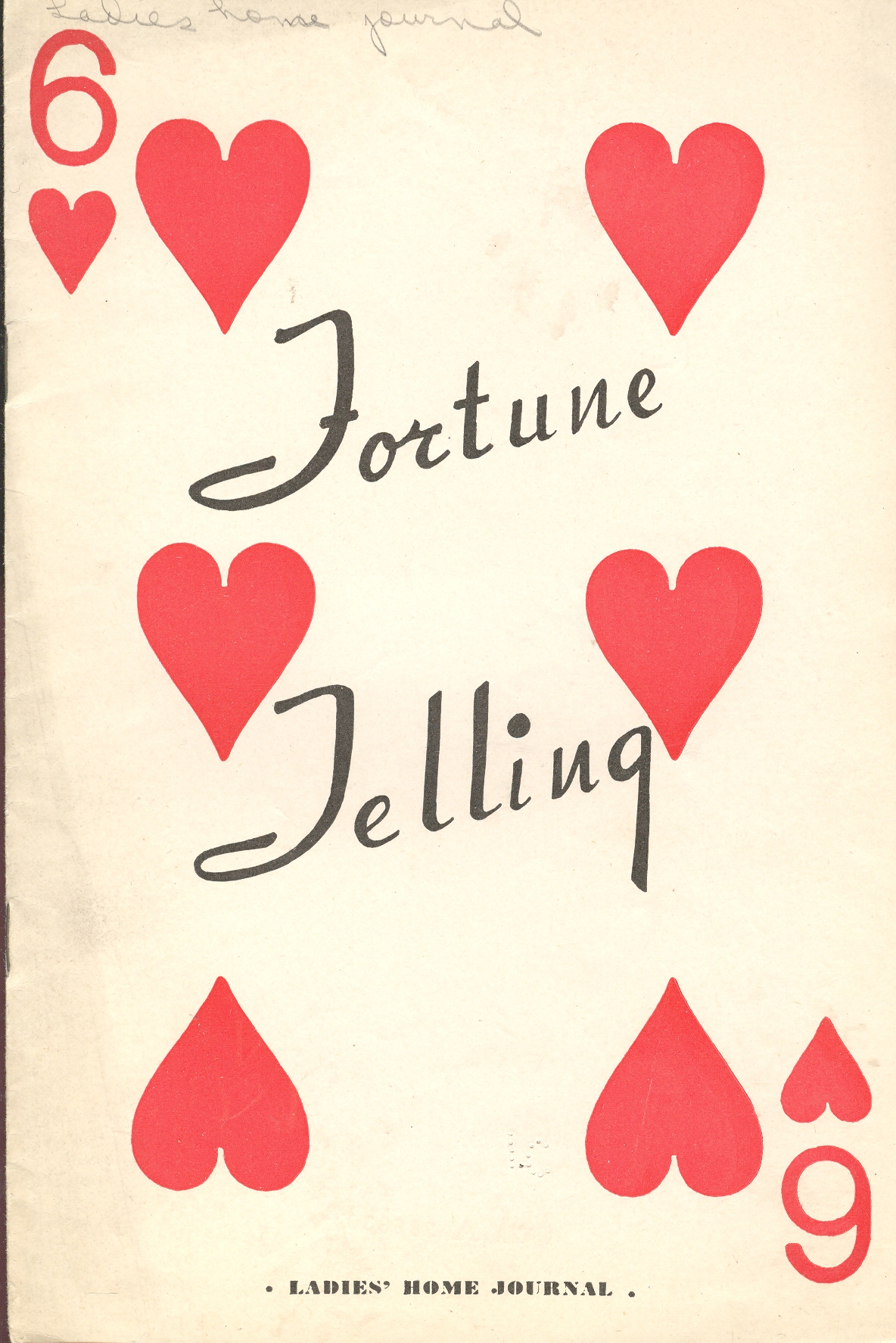
    Blog jan 12 girlz--fortune telling  

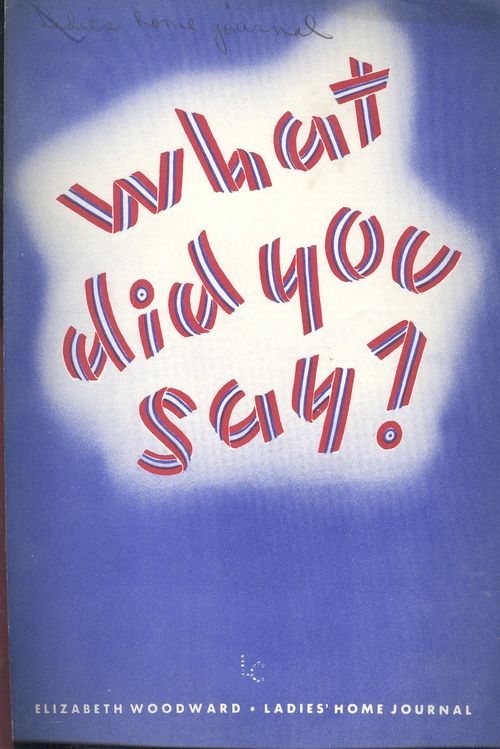
    Blog jan 12 girlz--awhat did you say

    Blog jan 12 girlz--act yer age

  • History of Holes 12: Caves in mid-Renaissance Art

    JF Ptak Science Books LLC  Post 909

    “When [the soul] is firmly fixed on the domain where
    truth and reality shine resplendent it apprehends and knows them and appears to
    possess reason, but when it inclines to that region which is mingled with
    darkness, the world of becoming and
    passing away
    , it opines only and its edge is blunted, and it shifts its
    opinions hither and thither, and again seems as if it lacked reason.”  Plato, The Republic book. VI, 508d

    Cave--osservanza

    Plato
    dipped deep into the myth/metaphor/parable/analogy/allegory of the cave,
    contrasting it with the allegory of the sun, discussing the pursuit of
    knowledge real and not-so.

    I
    like the idea of the half-displayed, semi-schematic, fade-away disposition of
    the cave and how painters dealt with them and their hidden contents in early Renaissance
    art.

    Its
    difficult to show a cave, a dark hole (occurring in all rock types and
    topographic situations, btw) that really hadn’t been dealt with scientifically
    yet—even if humans had been using them one way or another for thousands of
    years. 

    I’ve
    noticed these images time in and time out, and I’ve not really saved them, or
    at least I haven’t segregated the odd etched or engraved images, though they
    are all here somewhere, so I can add to this post from time to time.  The image that I’ll use tonight comes from
    Harvard’s Fogg Museum and is the work of the Master of
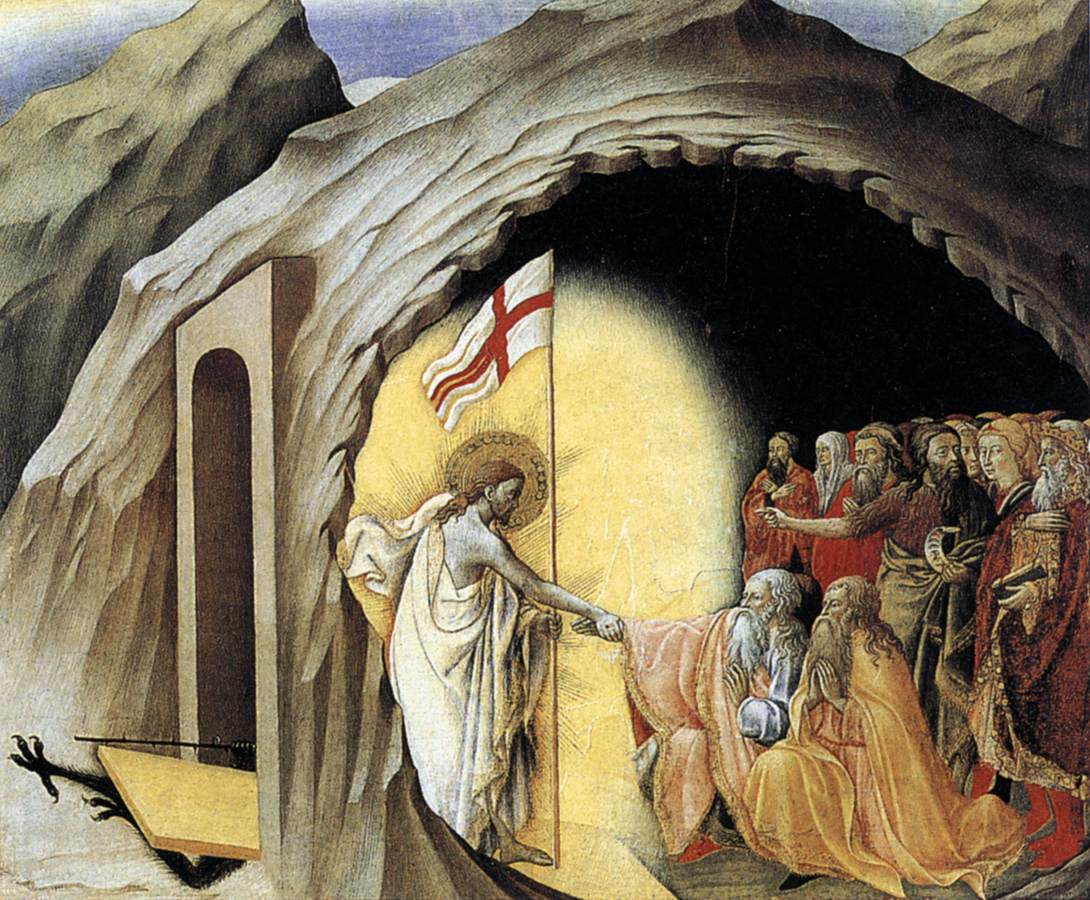
    Osservanza (Sienese school, fl 1430-1450, manuscript illustrator).  It is a popular image, “Christ in Limbo”,
    though of the others working in this genre we see Christ generally at the
    entrance to a tomb/cave-like place, standing just outside of the doorway (as with Mantegna, Durer, Pacher, Fra Angelico and others). The Master of Osservanza gives us an
    exquisite cutaway view of the cave of limbo, showing both the outside and the
    inside, which is an uncommon and beautiful perspective.

    I should add that the tearingly odd “Saint
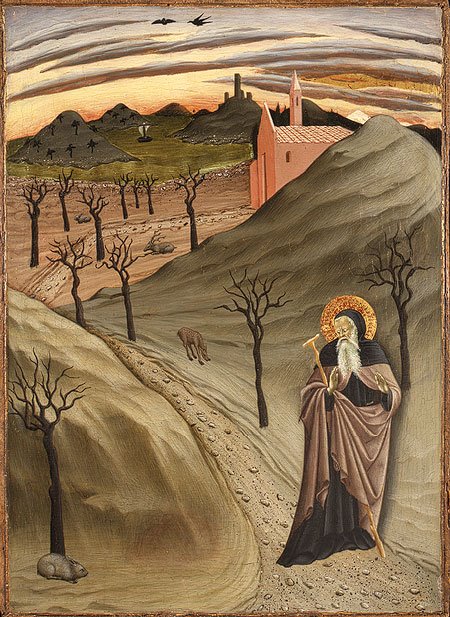
    Anthony Abbot Tempted by a Heap of Gold”, also painted by the Master of Osservanza (ca. 1435) depicts the least-likely-of-all-saints-to-be-tempted-by-gold reacting in horror to, well, nothing.  Nothing at all. We see him reacting to what used to be there, but which for some reason was removed, painted-over at some dim point in the dusty past, for reasons that I do not know.  (And so the painting could easily move into my Blank and Empty Things series.) But the desert landscape is so sparse and the sky so surreal with bent clouds that it is easy today to overlook the gold entirely. 

    St. anthony

    [I know there’s SO much more to this business with the caves–I just wanted to get this post started before it all went down the thought-hole.]

  • Missing Pieces of Women: Pope Joan & the Proper Popular Girl of “The Ladies’ Home Journal”

    JF Ptak Science Books LLC  Post 910Pope joan weltknronik

    Listening
    to these dreadful stories this morning on NPR about the Vatican’s relations
    with the Roman Jewish community and the abortive WWII papacy of Pope Pius XII—the
    papacy of blank and missing compassion—I thought about the missing Papacy of
    Pope Joan.  Whether or not she existed is
    a question of debate; whether she was a pope or not is perhaps even less
    debatable.  What seems not impossible
    though is the ability of a large institution like the Catholic Church to make
    the entire issue of unwanted history or legacy to go away. 

    The
    historicity of this papacy is long and shows the murkiness of the earliest
    writers on Joan. She was supposed to have served as pope between Leo IV and
    Benedict III around the year 850.  The
    fuller versions of her history turn up in the 14th century, although
    the earliest mentions of a female bishop of Rome go back to the 9th
    century—Joan remains unnamed though until the 13th century when
    Martin of Opava’s Chronicon Pontificum et Imperatorum1(referring to
    Joan as “John Anglicus” or “John of Mainz”) does so for the first time.

    Joan apocJoan
    escapes the Middle Ages with a little flair, but doesn’t do so well in the
    Renaissance.  As a Missing Piece in the
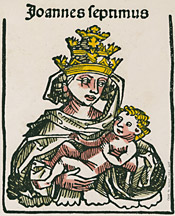
    history of the Papacy she turns up not-so-well represented:  for example, she is seen here looking good
    but turning up bad overall as the Whore of Babylon2.  She was treated as a disgrace, and impostor,
    someone who demeaned the Catholic institution by her sex and deception, though
    god knows that the history of the papacy is filled with horror stories3 that
    far exceed the reach of mere deception.

    So
    I was thinking about the piecing-together of the Pope Joan jigsaw and
    remembered an actual “womanly” jigsaw that could actually be pieced
    together.  This bit came together as a
    result of a post I did here just two days ago (What Goes Into Making Human Robot Girls, 1941), and was one of a series of
    intolerably heavy eight-page pamphlets cementing the structure of female social
    intercourse at the hands of the magazine The
    Ladies’ Home Journal
    . 

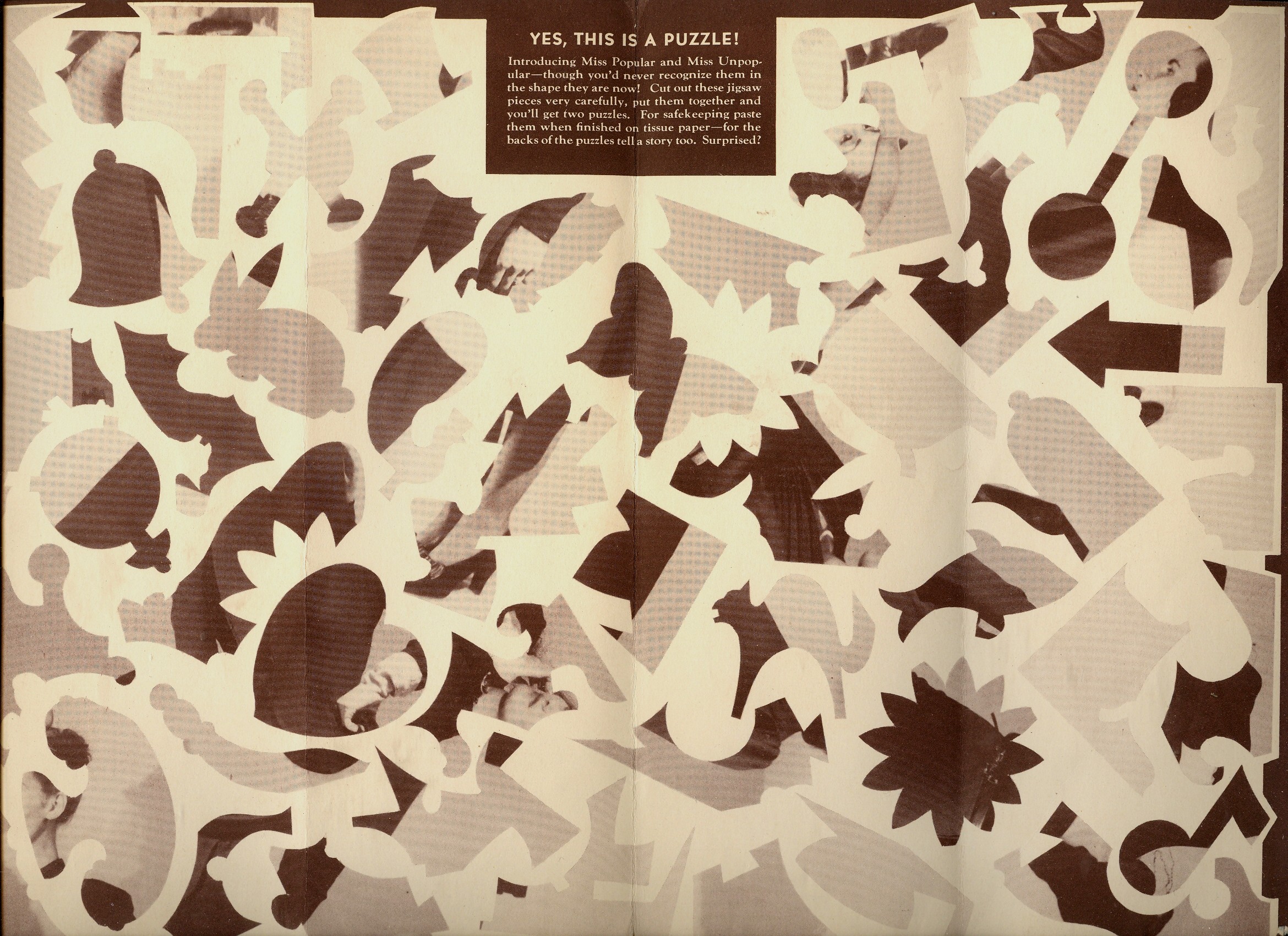
    Blog jan 13 Puzzle cvr

    One of these
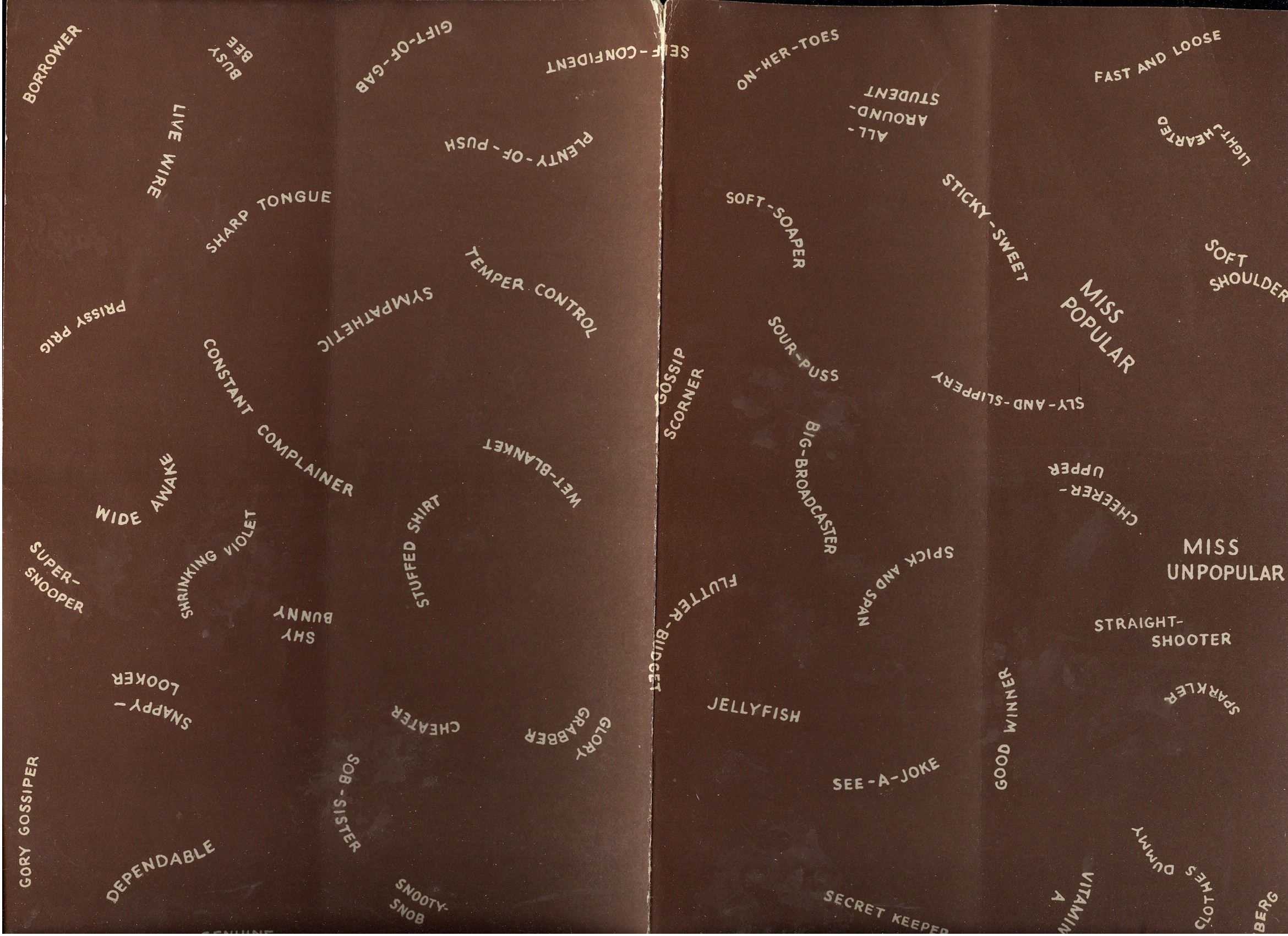
    publications—hardly a pamphlet per se, just a folded 11×8 inch sheet of heavy
    stock—came without a title, presenting itself as a puzzle. The puzzle pieces
    are parts of two women, “Miss Popular” and “Miss Unpopular”: the reader was to
    take the publication, cut out the pieces, and reassemble them into hidden role
    models, with phrases describing each on the back of each puzzle piece, all done
    without the slightest possible understanding of metaphor or irony.

    Miss
    Popular phrases/descriptors
    : live wire, plenty of push, wide awake, snappy
    looker, dependable, genuine, secret keeper, on-her-toes, spick and span, light
    hearted, all-around-student, straight-shooter, gossip scorner, sympathetic,
    cheerer-upper, sparkler.

    Blog jan 13 Puzzle pzl

    Miss
    Unpopular’s phrases/descriptors
    : glory grabber, sour puss, cheater, sob-sister,
    snooty-snob, wet-blanket, borrower, prissy prig, sharp tongue, gory gossiper,
    clothes dummy, iceberg, sly and slippery, jellyfish, sticky-sweet, soft soaper
    (?) and of course fast and loose.

    And
    so girls—or young women—picking up this publication in 1941 were expected to
    cut this thing up and piece together the proper (paper) role model using the
    reinforcing traits of meager acceptance printed on the back of the puzzle
    piece. And poor Pope Joan, whether she was real or not, whether she was
    imagined or sunk purposefully away into the Pandora’s sisters’ boxes of forced
    forgetfulness—it really doesn’t matter—is just another woman or part of woman’s
    puzzle whose blank or missing piece has been extruded, forced into a form more
    friendly to a world less friendly to women. 

    Notes

    1.According
    to the Chronicon:  “John Anglicus,
    born at Mainz,
    was Pope for two years, seven months and four days, and died in Rome, after which there
    was a vacancy in
    the Papacy
    of one month…” [See continued reading section below for more]

    2.
    Babylon was the
    representation of the seat of evil on the Earth.  From the “Book of Revelation” (17:3–4):
    “And I saw a woman sitting on a scarlet beast, full of names of blasphemy
    with seven heads and ten horns. The woman was garbed in purple and scarlet, and
    gilded with gold, gems, and pearls, and bearing a golden goblet in her hand
    full of abominations and filthiness of her fornication.”

    3.
    Borgia and the Medicis not being the least of the story: see E.R. Chamberlin’s The Bad Popes, (1969)

  • When a Compliment is Not: Newton and Hooke and the “Shoulders of Giants”

    JF Ptak Science Books LLC  Post 912

    I
    was tooling looking for vision quotes and came upon this by Samuel Taylor
    Coleridge (an unusual stomping ground for me) from The Friend (published in 1828):

    “The dwarf sees farther
    than the giant, when he has the giant’s shoulder to mount on.
    “

    This
    made me think of the over-quoted sentiment quoted again by Isaac Newton

    “What Descartes did was a good step. You have added
    much several ways, and especially in taking the colours of thin plates into
    philosophical consideration. If I have seen a little further it is by standing
    on the shoulders of Giants.
    “

    Newton wrote this in a
    letter (5 February 1676) to the immensely creative workhorse Robert Hooke1.  He was a tireless, relentless observer and
    experimenter, who lost little effort in a stranded idea and pursued interesting
    and problematic questions relentlessly.  More than others too he chased
    his won glory—minor but long and insistent—the years of which wore thin on many
    people in the scientific community.  But there were many characteristics
    of the man that made him not quite so lovable and endearing—not that Newton was
    any of those things, as he was not, but if you are going to be a secondary luminary
    to a super nova you’ve got to have something else going for you that the other
    man doesn’t have—sharing, helpful, greatly generous—to get you into the long
    pre-dusty pages of history. Also it would’ve helped if Hooke chose his battles
    with a little more aplomb and ingenuity—the war which began in 1672 with Newton
    went very badly for Hooke and followed him to the grave (and far beyond). 
    Newton and Hooke had many disputes—most notably
    in optics—basically because Hooke pursed Newton
    (among many others) for expropriating his ideas.  Hooke was over the line on this and probably
    pushed the point too far—Newton
    was enormously annoyed by this and other Hooke contacts and wasted no effort in
    trying to pay Hooke back the favor over the years.  Newton
    was famously sharp and could fashion that intelligence and wit into a terrifically
    nasty tool against those who bothered him.

    And
    so back to the “shoulders” letter. This always struck me as a bit too
    melodramatic for a Newton,
    and also a little too congratulatory for a field that he basically owned,
    especially since he was a towering egoist (and not without cause).  But he did pay Descatres (“des Cartes” in the
    original) a compliment; though I could not at all think of Newton referring to the dreaded Hooke as one
    of the giants’ shoulders he was standing upon. 
    Newton’s
    reference to “giants” might also have been a swipe at Hooke’s physical stature,
    which was terribly slight, small and crooked. 
    SO I think that Newton
    was referring to Descartes, and decidedly not Hooke.

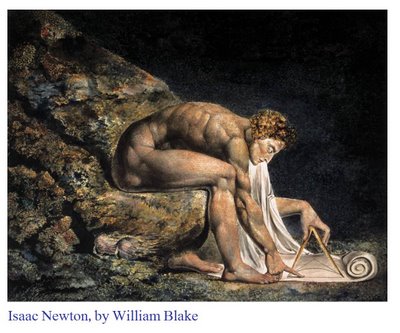
    Blake_Newton

    So
    this semi-ubiquitous scientific laudatory quote is perhaps not quite so.  Kinda like the very well known painting by
    William Blake featuring Newton
    as a naked geometer, figuring out the world, a color-tone praise of the great
    physicist.  Or perhaps not.  Blake I think simply didn’t like Newton, didn’t
    care for the scientist taking away the mystery of the world that Blake loved so
    much—especially in regards to color, which Blake needed to stay interpretative
    and mysterious.  Newton took part of that away, and I think
    Blake exercised a little payback in his artwork. 

    It
    seems to me that if one looked at the “shoulder” quote and the Blake artwork as
    works that were insults and not praises, they can be easily seen that way.  Its all a matter of perspective.

    Notes

    1.
    The 28-year old Hooke published the results in a gorgeous and revolutionary
    book, Micrographia (a lovely e-text edition appears at Gutenberg, here)
    in 1665, which became an instant best seller and highly praised and valued.
    (Samuel Pepys, perhaps among the shiniest stars whose imprimatur was like a
    royal blessing, said the book (was) “the most ingenious book that I ever
    read in my life.”) There is no telling what the people of the mid-17th
    century thought of seeing such incredible discoveries in the little
    semi-invisible stuff that made up their normal, daily lives.  The only
    thing that somewhat equates to this would be if the first images of the Hubble
    were those of Earth-bound objects whose detail had previously been
    unknown.  Hooke’s observations and drawings of things like the common flea
    were just an astonishment—that such a creature of “low order” could have such
    intricate detail and design was a complete revelation.  The drawings of
    the fly’s eye, too, was an inescapable wonder, an incredible object to consider
    as having any detail pre-microscope, and then revealed to have
    unimaginable design and elegance. 

  • A Mile-High Pile of Wood–Graphical Display of Quantitative Data.

    JF Ptak Science Books LLC  Post 913

    Continuing
    a long, developing thread on the graphical display of quantitative data–and
    especially that which uses man-made objects for comparison—is this interesting
    bit from a Romanian mining publication from 1933.

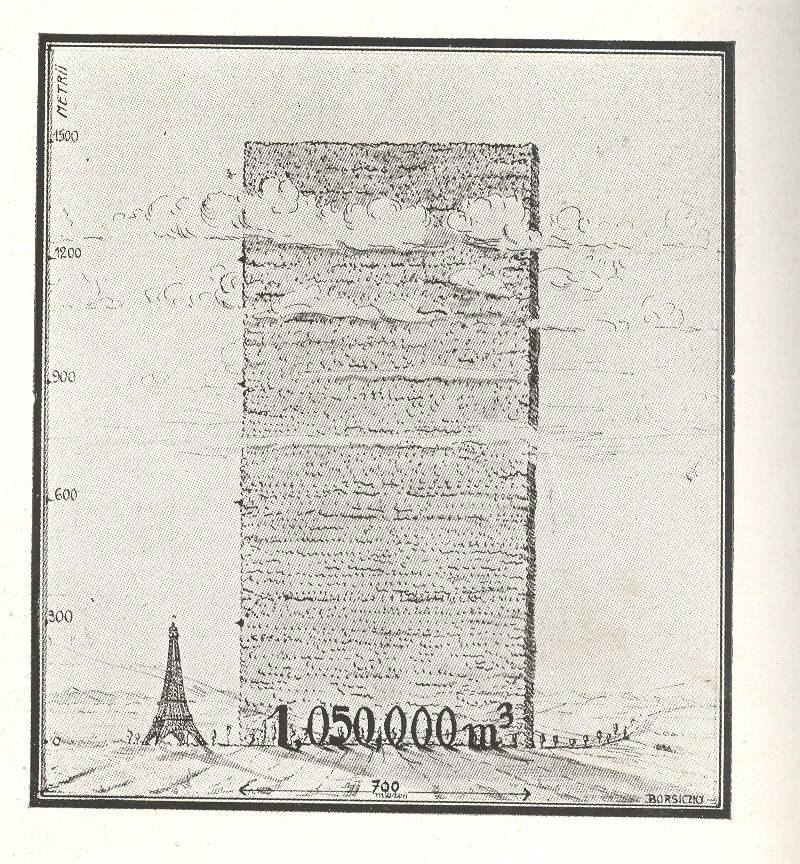
    The
    huge mound next to the Eiffel Tower shows the consumption of wood in Romania over a
    ten year period, a stack of wood 700  metres long and 1500 metres high.  Evidently this wall has only the most rudimentary depth of a metre, as the legend reads that the volume of the woodpile is 1,050,000 metres cubed, which is the same as its square area.  So somebody missed something, here, though the artist did supply some nice shadowing.

    Blog jan 17 wood

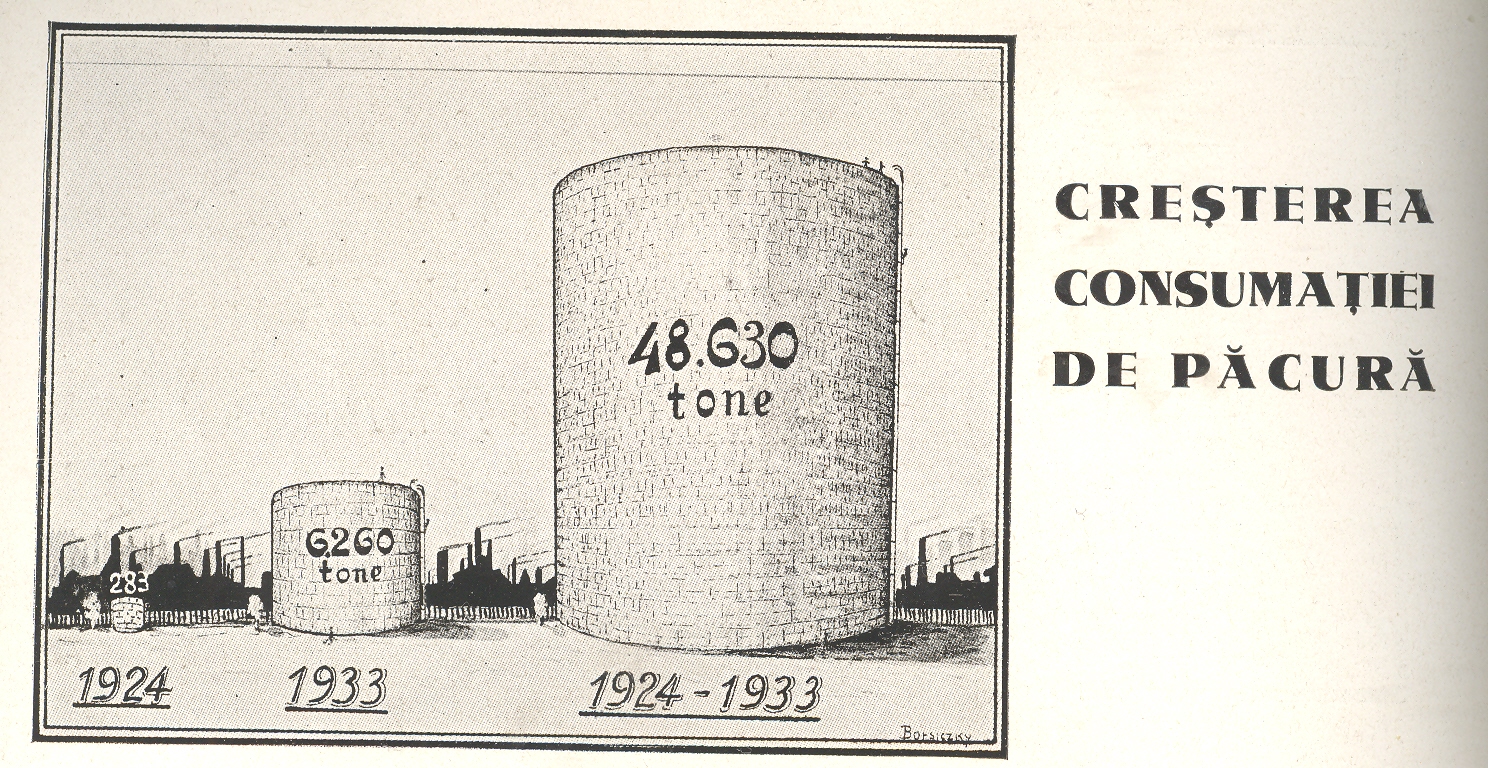
    Just
    above it appeared this comparison for the amount of oil consumed over the same
    ten year period

    Blog jan 17 oil

    I’m
    not sure why this comparison was being made. 
    This does come in the interwar period which saw a great expansion in
    Romanian territory and a vast modernization effort following the country’s devastating
    experience in WWI. Maybe it was illustrating modernization from wood-burning power/heating sources to oil-based. I really don’t know–I just liked the Eiffel Tower being dwarfed by a massively tall and impossibly skinny woodpile.

  • Red Sky in the Renassiance: the Reverse of Geometry

    JF Ptak Science Books LLC  Post 913

    What
    if our eyes worked in the “opposite” way? 
    What if we somehow broadcast the lines of reality from our eyes1 rather
    than receive photonic emissions from the physical world, that we didn’t specify
    the wavelength and frequency of light, and that somehow electromagnetic rumblings
    in the “visual range” didn’t apply to our sense of sight?

    Blog jan 17 francke

    This
    would certainly make for an interesting  existence
    if somehow the elements around us weren’t necessarily so.  Perhaps this is sort of replacement reality
    is just what has been going on in the entire history of humans, altering the
    landscape to make it more suitable for our existence, a long history of
    painting the physical landscape with something more “suitable”, an
    individualized creation. 

    This
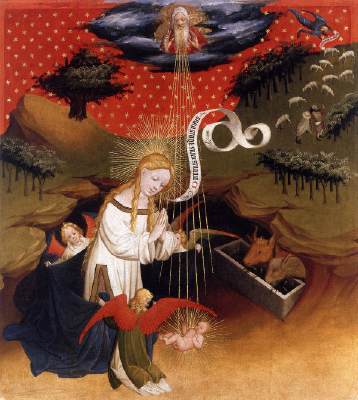
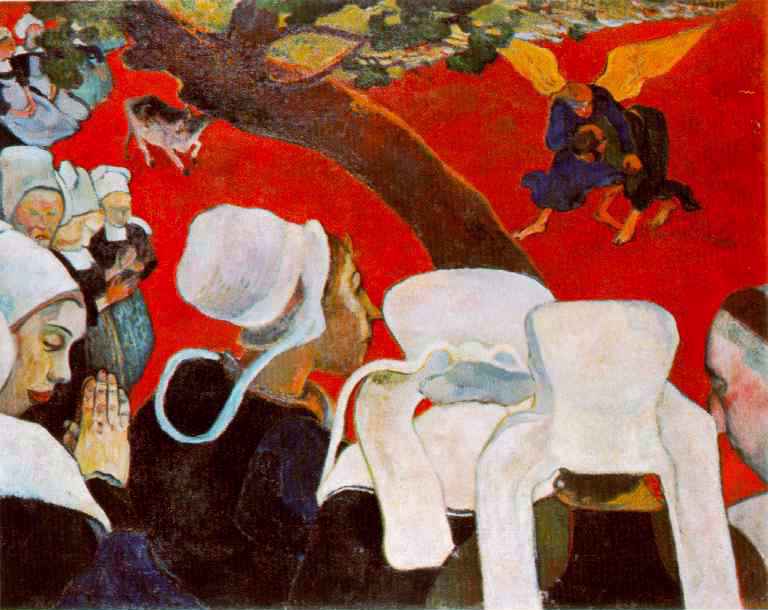
    all came up wondering about this fantastic sky, produced 475 years before
    non-representational art and 455 years before Gauguin started applying big blankets of red2 :  it seems to me
    in a distant impression that it is a representation of vision that is more a projector
    than a camera..  The end result of this
    emission and wayward thought is the fabulous red sky in the painting Nativity by Master Francke3 (ca.
    1424-1436) is a fantastic red sky with lustrous stars.

    The
    painting is otherwise filled with the common reliables of Renaissance iconography
    concerning the nativity:  the place of “birth”
    (a stable or barn-like building, also sometimes appearing as a classical ruin
    or cave), a flock of sheep, a stand of trees, and the watch sensate gazes of the near by
    beasts.  Mary is ecstatic in the same ways
    that Joseph is usually not—to me, he usually seems pretty detached from the
    whole deal, lost in another space.  The
    baby Christ is again just a little man (and not a baby) laying there on the barren
    ground.  [I’ve wondered about Joseph’s
    detachment:  perhaps the whole scene is
    nothing but mysterious, a complexity far removed from his reach and
    understanding, a notion of an act that is so phenomenal that there is no
    retrievable reaction for it, and so he looks away.  Later on in the history of Mary and Joseph,
    and deep into the 19th century when the Immaculate Conception—that is,
    the sexless conception of Mary the mother of Christ which she would later accomplish
    for her own baby—the issue of Joseph’s own virginity comes up, mounting the
    confusion no doubt in Joseph’s already-full head.]

    But
    back to the sky:  certainly skies and
    backgrounds of pure gold and blue painted by the masters in Sienna
    and Florence
    abound during this time, but red is quite unusual.  The sky is accented by the terrific red of
    the wings of the angels and more softly so in the hair of the (long-fingered) Madonna. 

    There
    is also the issue of the hole in the sky, revealing the large-handed Creator with glimpses
    of the alternate, higher, existence visible in the background, a taste of the
    alpha (or omega?) part of the long arch of Earth-borne humanity.

    Notes

    1.The discussion of optics and vision is one of the most spectacular conversations ever held in the history of science and philosophy (along with “time”, “motion” and “the void”.  I think that Leonardo would’ve come closest in relatively-modern times to understanding vision if he had the real capacity of dissecting the eye (which in spite of many approaches to experiment) would always go flat, leaving him with an unsatisfying mess.

    In Aristotle’s Physics (Book II, Part II) we find the following fascinating thought:

    “Similar evidence is supplied by the more physical of the branches of mathematics, such
    as optics, harmonics, and astronomy. These are in a way the reverse of geometry. While
    geometry investigates physical lines but not qua physical, optics investigates
    mathematical lines, but qua physical not qua mathematical”

    A classical position of the emission theory of optics is stated by Hero in his Definitions:

    “Optics does not deal with physical questions and does not study whether given rays
    flowing out from the eyes go forth to the boundaries of objects or whether images that are
    detached go forth from corporeal objects [and] enter the eye along a rectilinear path or
    whether the intervening air is stretched or contracted by the ray-like pneuma from the
    eye. It is only concerned whether, at each reception (of an image) the right direction of
    movement or tension is maintained as well as the requirement that the convergence to a
    point occurs at an angle when objects are seen that are larger or smaller than the eye.”

    (My thanks to Dr. Kim Veltman for these quotes from her Continuity and Discovery in Optics and Astronomy, Studies on Leonardo da Vinci http://www.sumscorp.com/books/contin/title.html)

    2. I had Gauguin’s 1888 “After the Sermon/Jacob Wrestling the Angel” in mind for an example of this.

    Gauguin.sermon

    3. Master Francke active (c. 1424 –
    36 ), Nativity, in the Kunsthalle, Hamburg; oil on oak,
    39×35 inches.
    Hamburg, Kunsthalle. “German painter who worked in Hamburg, where in 1424 he painted a huge altarpiece for the company of merchants who traded with England, the so-called ‘Englandfahrer Altar’, originally placed in their chapel in the Johanniskirche (remnants in Hamburg, Kunsthalle). When closed, the double-winged altarpiece displayed four scenes from the life of S. Thomas Becket, the patron saint of the company, above four scenes from the life of the Virgin (e.g. Nativity;).
    Opened, the altarpiece showed scenes from the Passion of Christ.
    Francke was a leader of the northern German version of International
    Gothic
    . He had close links with French book illumination (he may
    have worked in
    Paris for some time) and the
    paintings of the
    Rhineland, especially those
    of
    Conrad van Soest
    , though it is not known where he received his training.”

    Other Nativity scenes as follows:

    ·Posted by :

    ·in:

    — — —
  • “The First Thing is to Find Some Men” How to Get a Boy-Date, 1941

    JF Ptak Science Books LLC  Post 914

    [Continuing the posts “What Makes Human Robot Girls, 1941” and The Missing Pieces of Women, Pope Joan and the Proper Girl]

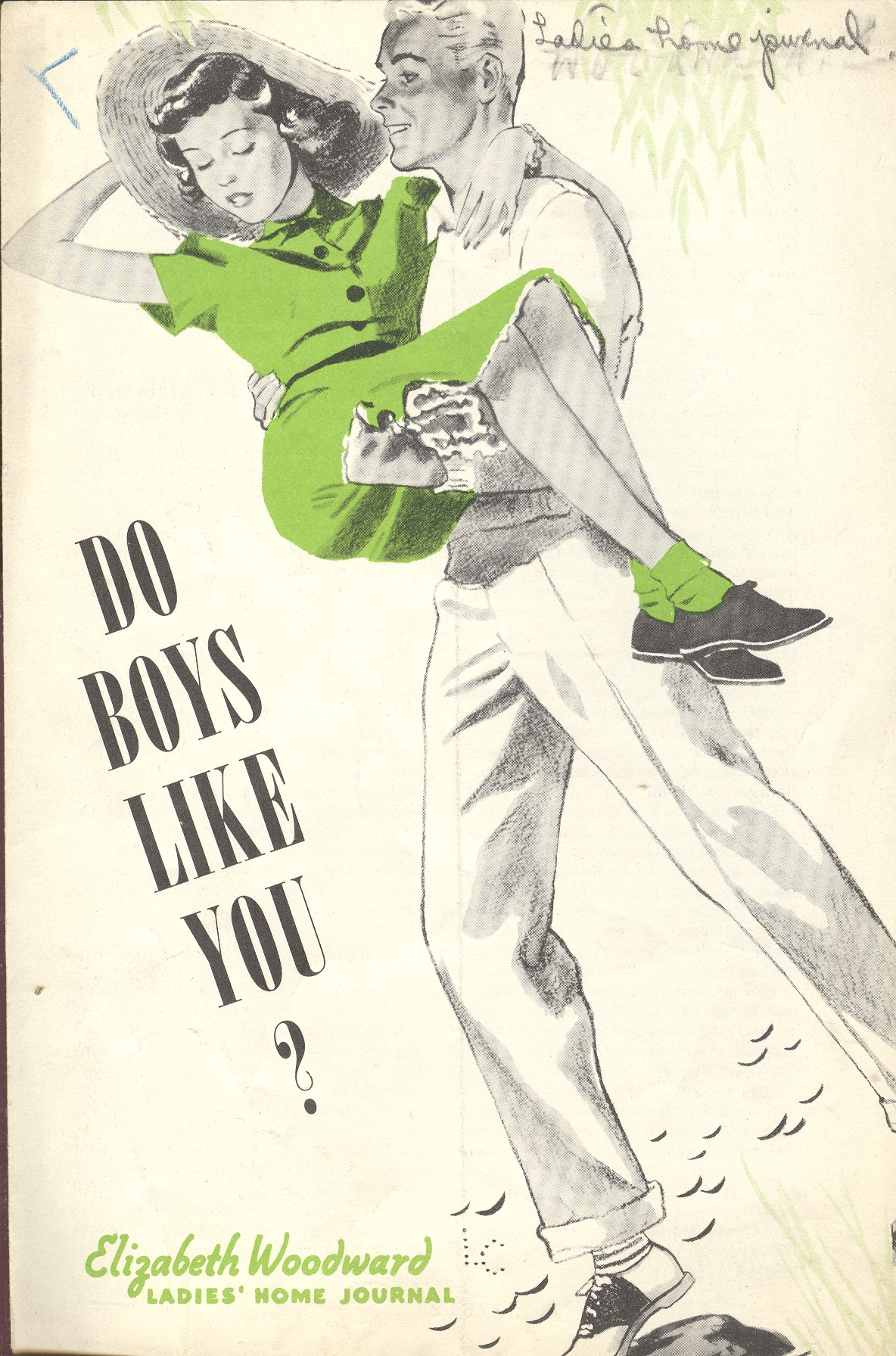
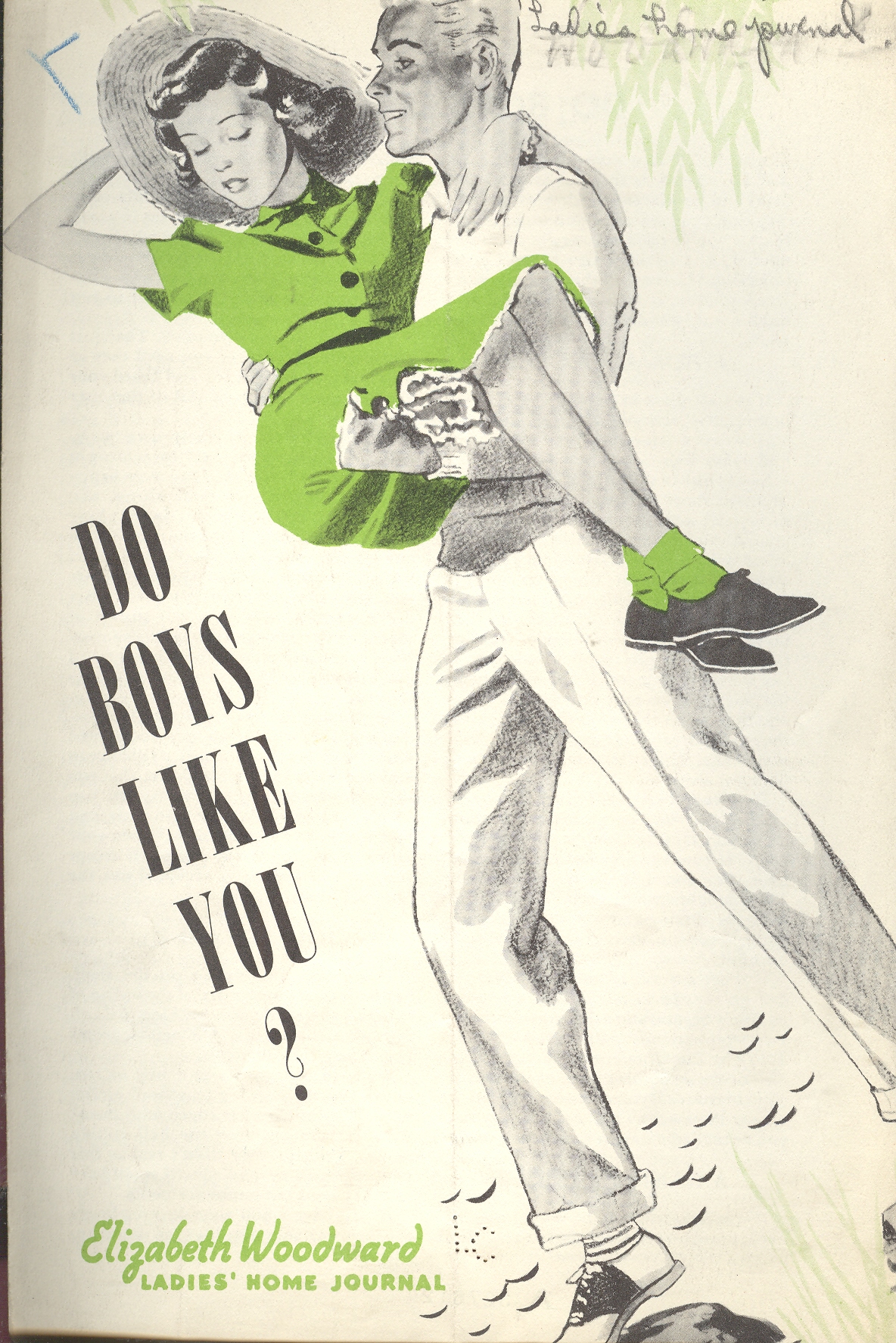
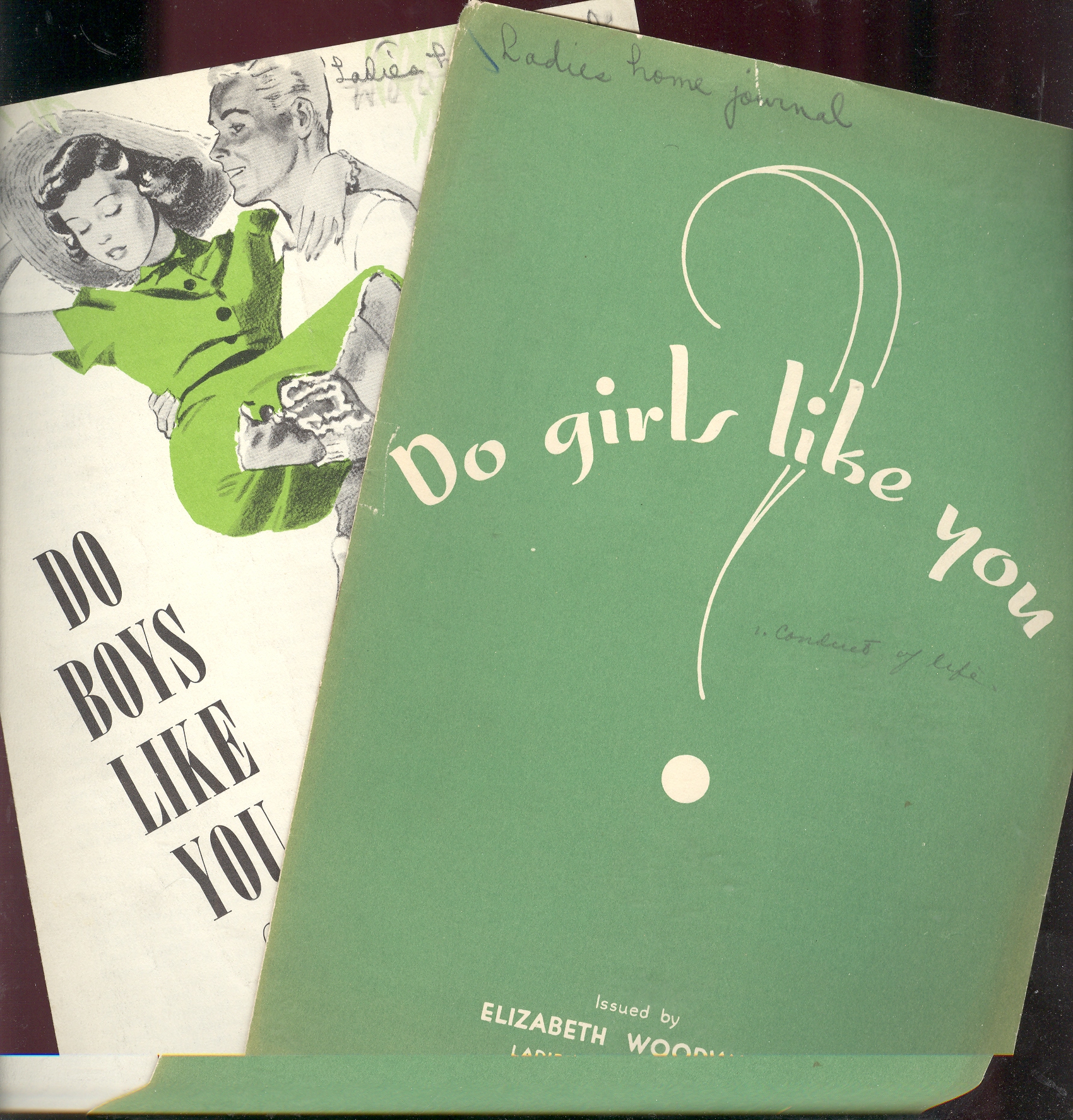
    Do Boys Like You? is
    the name-of-the-game for girls, evidently (“set out to make yourself worthy of a boy’s
    affection.  Just one boy—any boy…”),
    brought to you as a part of a long, continuing series by Elizabeth Woodward in
    the Ladies’ Home Journal in the early
    1940’s. Blog jan 20 boys like you

    This installment is about getting a boy for a date, and how to make
    oneself getable and datable and boy-friendly, all while maintaining the
    thinnest veneer of self-acknowledgment (“be adaptable as a chameleon”) as possible while staying true to “yourself”.  It is a cocktail of overall old-lady sense
    and deep ruffled bows writ by the hand of gender entrapment and not-so-subtle
    subjugation. Let’s get to it with some of the more archaeologically-interesting
    statements of this social-norms-establishing pamphlet:

    Paragraph: (Intro):

    “Do boys like you, or don’t they? Its as easy as that!  Either you have dates and go places with lots
    of boys, or they don’t pay any attention to you at all.”

    Paragraph: “A Female World”

    “…the first thing is to find some men.” (Which is odd
    because “men” is used only one other time beyond this reference—its all boys
    and nothing but boys.)

    “Short of throwing yourself on their (boys’) mercy, see if
    you can’t wrangle an introduction out of the girls who do know boys…”

    “Your parents could invite their friends over for dinner and
    ask them to bring along their son. And you do a good job on him!” (I’m not sure
    what that “job” is.)

    “They (boys) can’t find you if you’re packed away in a mob
    of females.”

    Paragraph: “A Rank Outsider” (on being the new girl in a
    community):

    “The girls have things under control and they don’t want any
    interference from you.”

    “You might know more than they do, and you just might talk
    down your pug nose at them.”

    “…you’d better get accustomed to traveling alone…”

    “Give them every chance to find out that you aren’t high
    hat, that you like the same things they do, that you aren’t out to sniggle
    their men away…”

    “When they (the girls) accept you, the boys will too…”

    Paragraph: “an Old Story”

    “(Boys) are so used to looking at you that they think of you
    as furniture.You’ve got to be new!”

    “If you’re fat and pudgy, make yourself lean, sleek and
    smart.”

    Paragraph “Take it Easy”

    “…its going to take practice to make boys like you. Take it
    easy. Set out to make yourself worthy of a boy’s affection.  Just one boy—any boy…”

    Paragraph “A Few Gentle Hints” (Seems that we’ve gone way beyond this by now.)

    “Don’t run around with girls who are dud.”

    “Don’t go in pairs with a girl who is overwhelmingly popular…Better
    pick a girl who will give you an even break.”

    “Don’t languish for some local ‘hero’ who is sought after by
    all the girls in town.  He may be
    good-but he’s far out of reach…”

    “Don’t pick on a lad who has never had a date with a girl.”

    “Don’t be careless or sloppy when you’re talking with boys…”

    “Don’t expect (or even hope) that every boy you meet will
    ask you for a date.”

    And (not quite) lastly, but should’ve been:

    “Don’t go around thinking about boys constantly.”

    But lastly thus:

    “Act as though you are having fun. Be alive, gay and enthusiastic. Be interested in what’s going on. Be sweet, tactful, and adaptable as a chameleon. Have definite likes and dislikes, but don’t be so rigid
    that you are stubborn, opinionated and difficult to get long with. Be carefree,
    casual, easy, willing to play and fun to play with. And don’t be shy about
    liking the boys.

    THEN THE BOYS WILL LIKE YOU! [Emphasis in the original.]

    My poor mother would’ve been reading this…

    (Thanks to Jeff Donlan for pointing out that the chap on the
    cover carrying the girl away has joined the fabric of her skirt to (1)  hold
    onto and steady her and (2) make sure her skirt doesn’t fly up and out and is not actually touching her thigh…)

  • When Civilians Aren’t Civilians: Blowing Up Bomb-Proof Cities, 1927-1934.

    JF Ptak Science Books LLC  Post 915

    We’re a few days past the 95th anniversary of the
    first aerial bombing of a city, the first in the long and unhappy calculus of
    eliminating things and people in civilized settings  by dropping high explosives (and etc.) on them
    from the air. 19 January 1915 saw the first bombs dropped from an airship
    during WWI, two German Zeppelins lighting up Great Yarmouth, Sheringham and
    King’s Lynn in the U.K.—the
    physical and strategic outcomes were minimal; the psychological and
    intellectual aspects were not.

    Blog jan 21 bomb rproof 1927 attack The effectiveness and temerity of bombing escalated
    exponentially–virally by the end of WWII. Aerial bombing’s future
    effectiveness and devastating potential was recognized by the early 1920’s, particularly
     in the form of the Hague Conference
    (1924), where the bombing of cities and civilians was theoretically controlled,
    if not outlawed.  Blog jan 21 bomb rproof 1927 attack det

    Of course the definitions of “bombing” and “cities” and “civilians”
    and “non-combatants” were very loosely writ and were completely open to
    (completely) wide interpretation in practice, and were especially liable to
    racist necessities. I should also add that the concepts of “defended” and “undefended”
    cities were—somehow—nebulous. Blog jan 21 bomb rproof 1927 gas cleaner

    An encyclopedia could no doubt be written on nothing but the
    these awful bits of bombing.  And for another example of this I turn to
    the French, who can supply more than their share, per capita, pound-for-pound,
    to this equation. No, not the French return to Indochina in 1945 (after having
    done business with the occupying Japanese forces for the entire war) and their
    resurgent colonialism as practiced against the Vietnamese, or the heinous
    practices against the Algerians just prior to that country’s
    independence:  it is their bombing practices in Damascus. Not the Syrian bombings of 1945
    (which also included many other places like Aleppo,
    Hama and etc.) but the French civilian bombings
    of Damascus in
    1925.  For it was in that year that the League of Nations found that the
    French really weren’t bombing and killing civilians indiscriminately when they
    were doing so; they were, ironically, bombing themselves, and so their actions
    were not illegal.  (It was problematic, identifying “civilians”, as the
    League didn’t necessarily grant the same sort of “humanness” to all human,
    finding categories for barbarians and savages.  It was acceptable to bomb
    those later two categories, but not the first.) So the French sought to subdue
    a rebellion against their oppressive rule in that country, identifying the
    Muslim population centers in Damascus
    as probable hotbeds of activities for the “bandits” that were causing them
    their problems.  October 18, 1925 is when this particular outrage
    occurred; the Syrians protested, and the League considered.

    Blog jan 21 bomb rproof 1935

    And that was
    about the size of the story for the Syrians, because as it turns out, the
    French were just maintaining an order that for them was a simple police action;
    civilians populations could not be bombed in the eyes of international law, if
    the bombing was being done to a foreign people; since the French were there and
    occupying the country, they were conducting a police action, and in a sense
    were merely bombing themselves, loosening them from the barriers of whatever
    international law could be applied to their actions by the League of Nations. 
     Blog jan 21 bomb rproof 1935 detail

    These are just a few examples from the French; there are
    plenty more for other countries for every decade, every year.  (The Brits in Teheran in 1924, the Italians
    at Harar in 1935, Franco/Luftwaffe in Guernica
    in 1937, the Japanese against Shanghai/Beijing/Tianjin (etc.) in 1937, and on
    and on.)

     Blog jan 21 bomb rproof 1927 pt 2

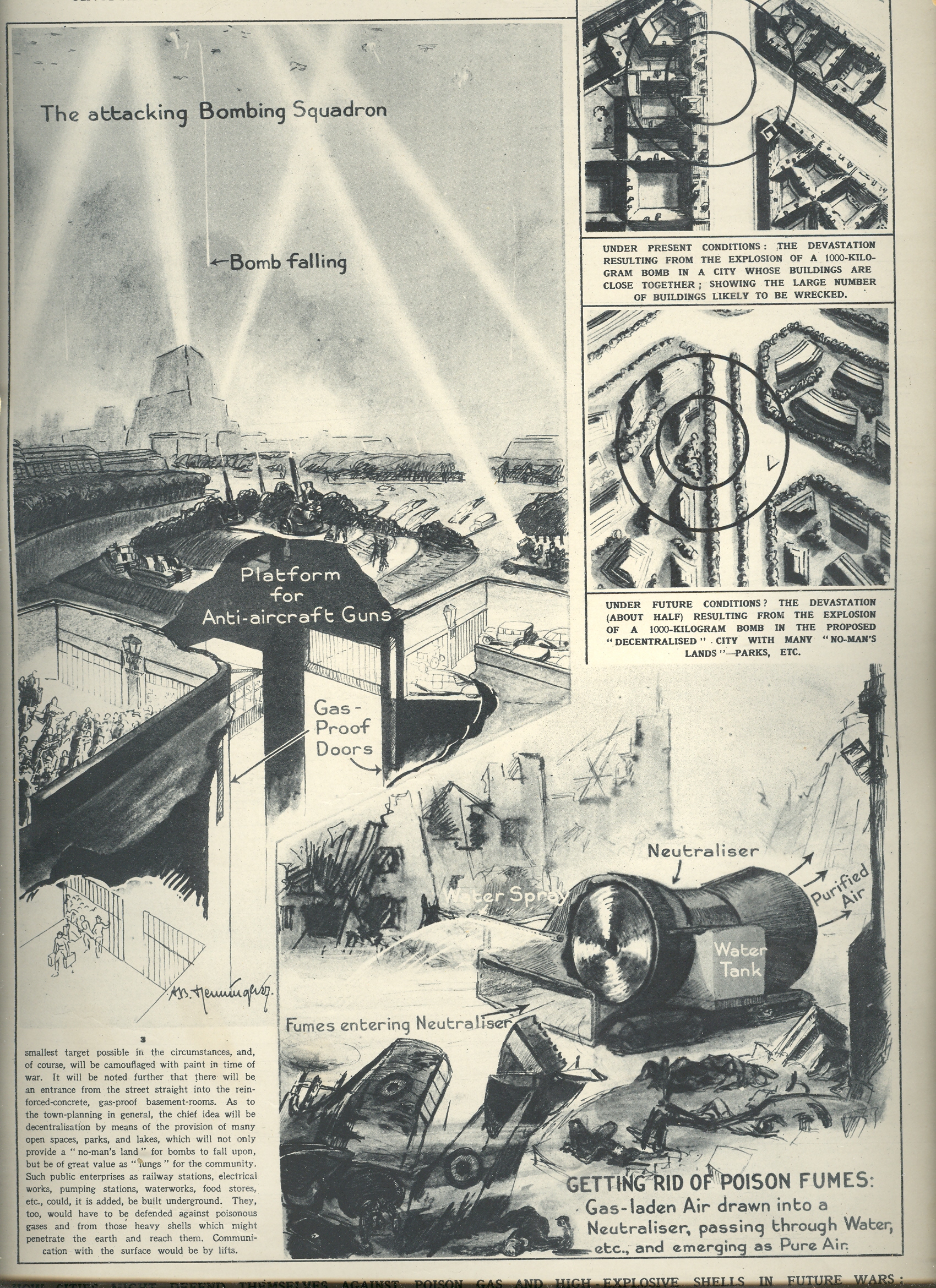
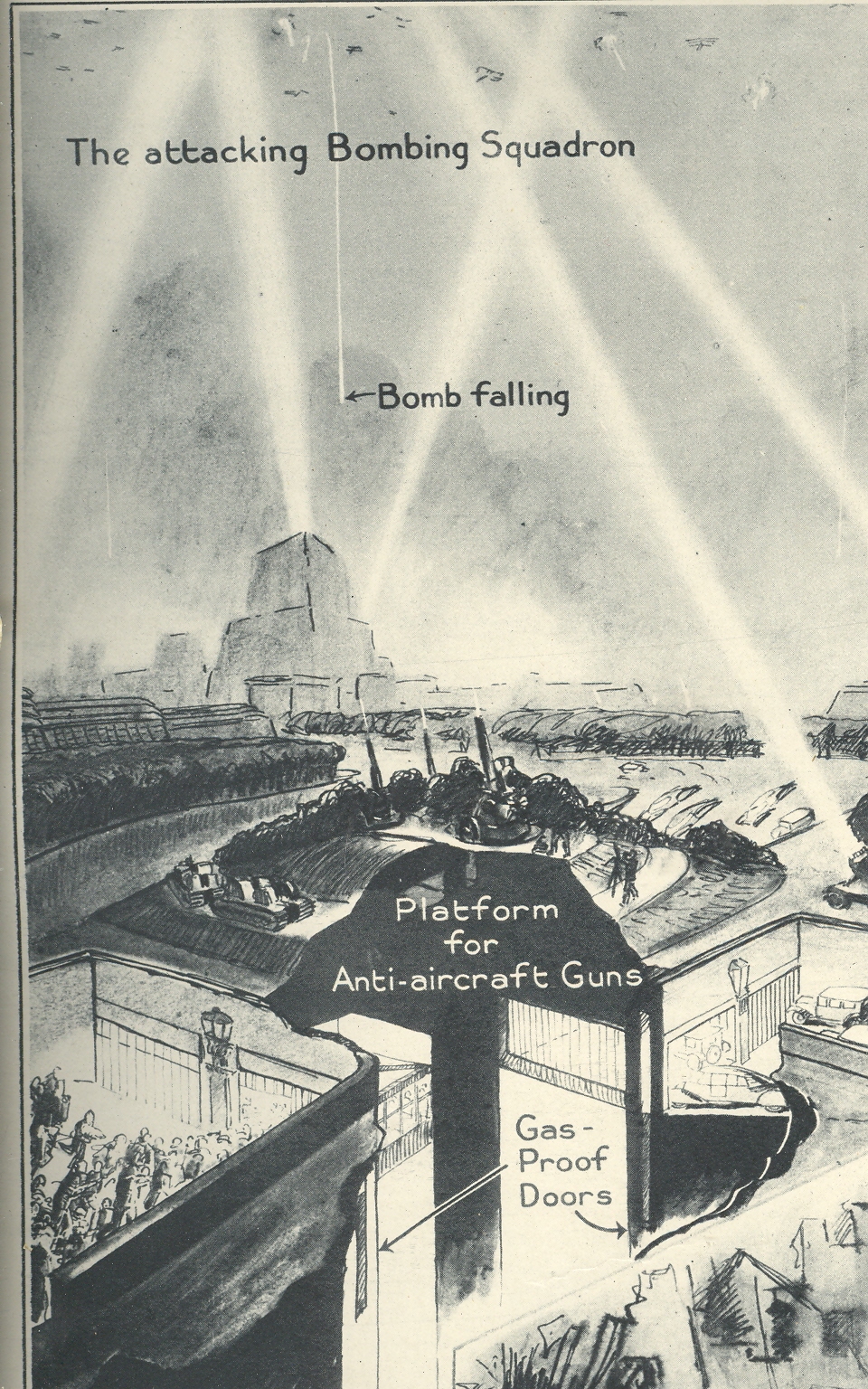
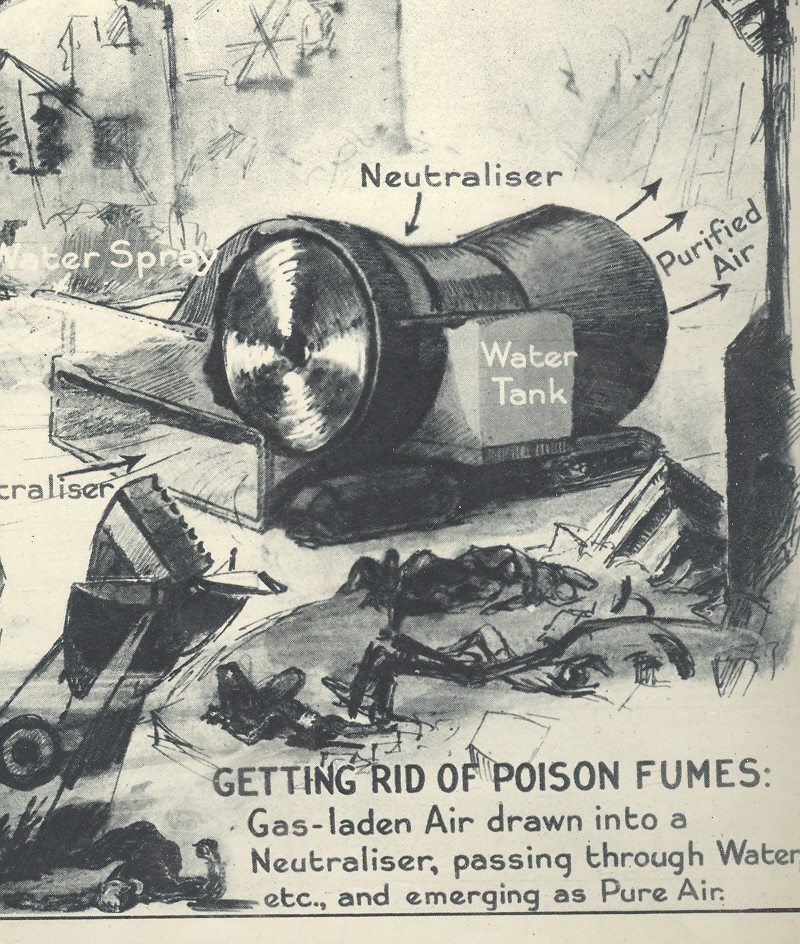
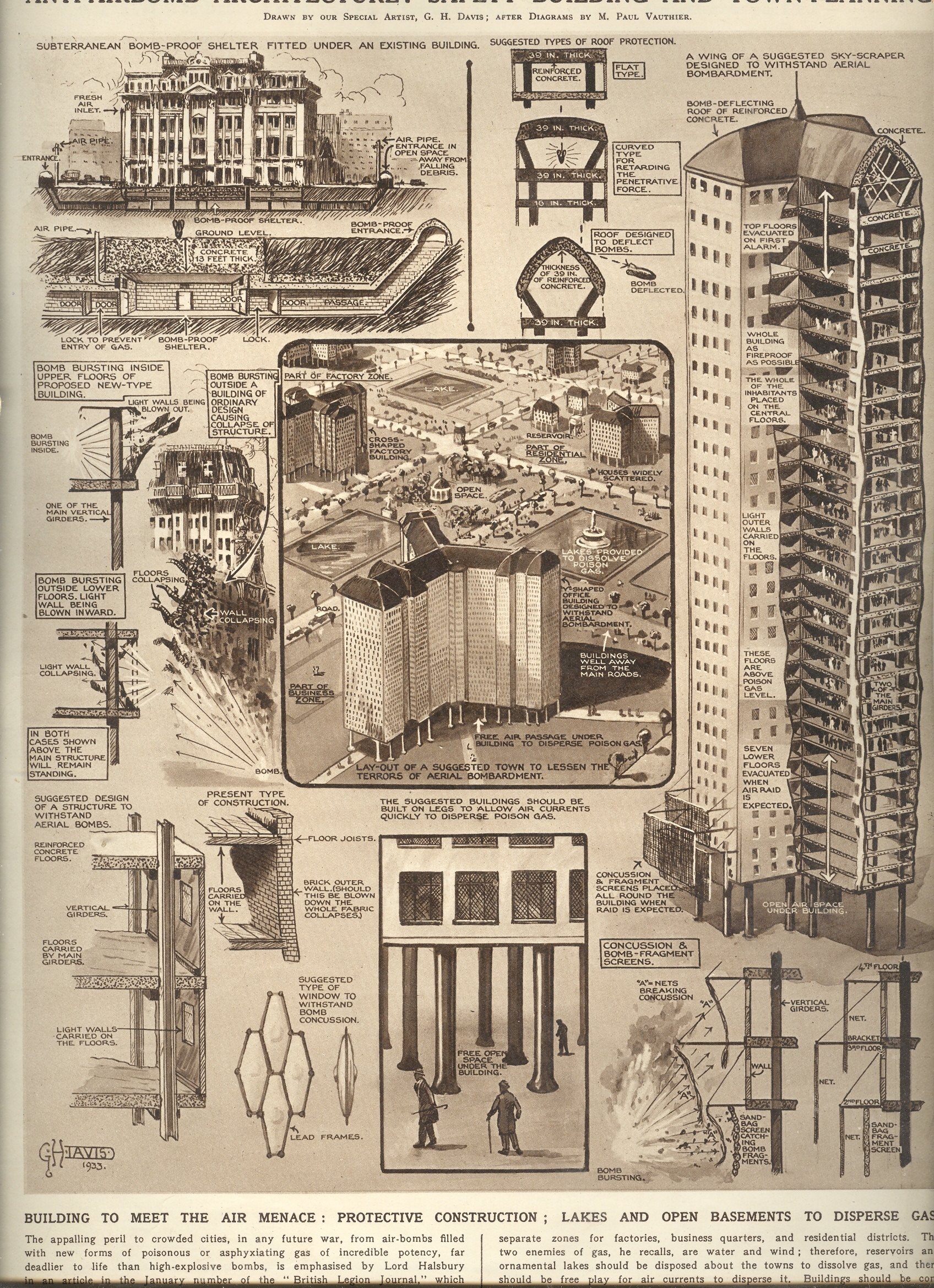
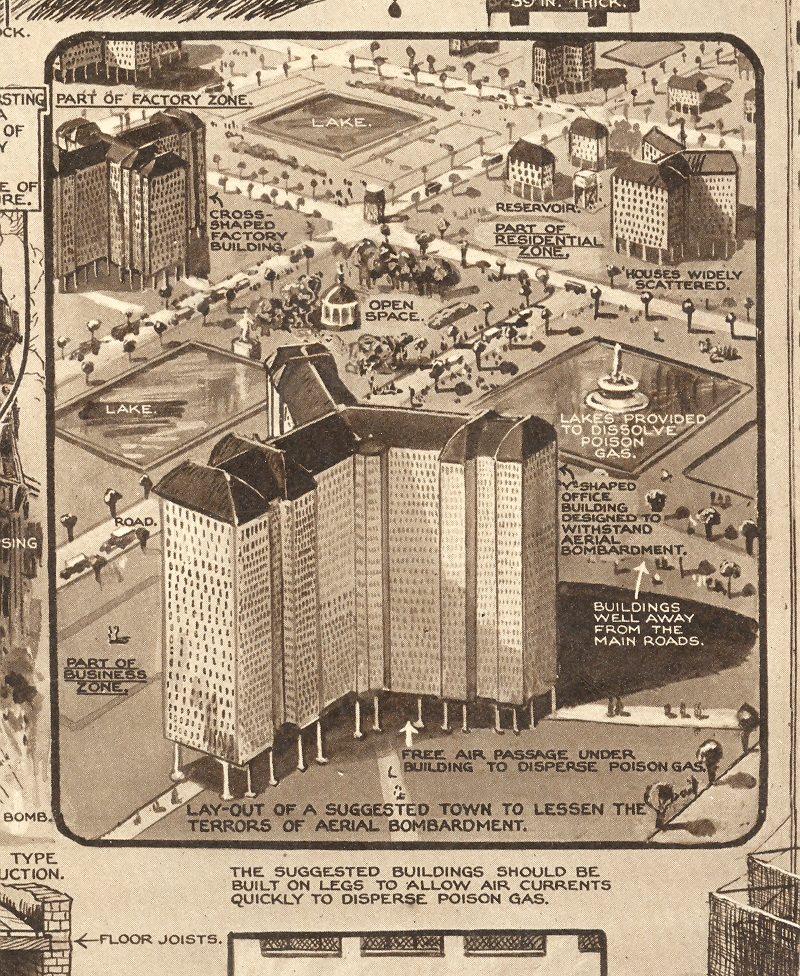
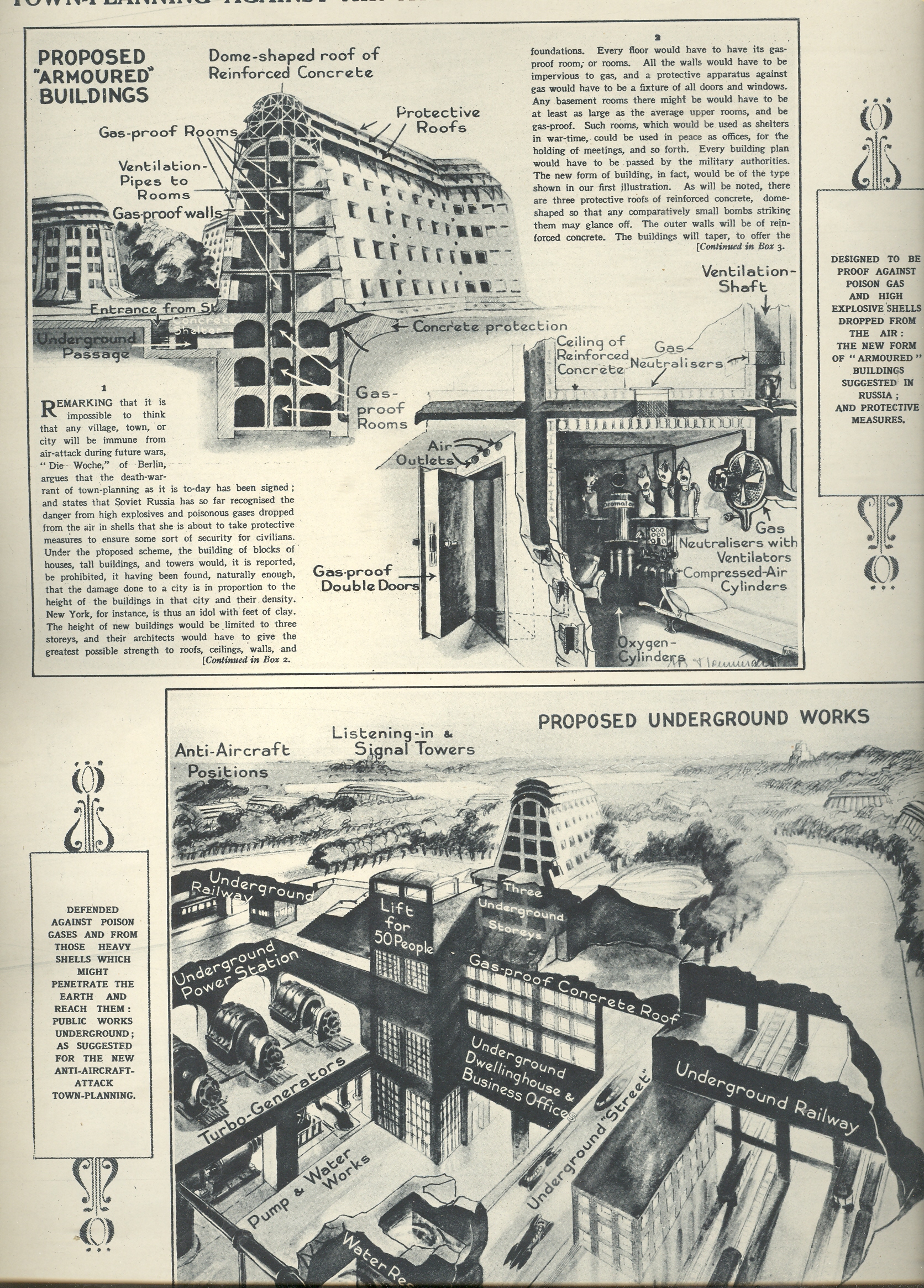
    The Big Fear of bombing from the air and the need to protect
    the populations of cities led to all sorts of anti-bomb/bomb-proof
    architectural plans, most not very good and not very practical.  Such is the price of trying to make your
    people happy.  I happen to have

    a few in
    my files, which are seen above  and below. (The top images were printed in the Illustrated London News in 134; the bottom in 1927.) The results of the plans were no doubt intended to pursue a common belief that cities could be constructed to be bomb-proof, that the future that national leaders were dragging their subjects into wasn’t necessarily as dire as the possibilities of aerial bombings hinted things might be.  Of course the resulting buildings would be massive and impossibly expensive; the prospect for underground cities (and roads!) was just a non-starter.  And these future-views would all be obsolete in less than 15 years what with the development of enormous firepower.  And I’m not talking atomic.  


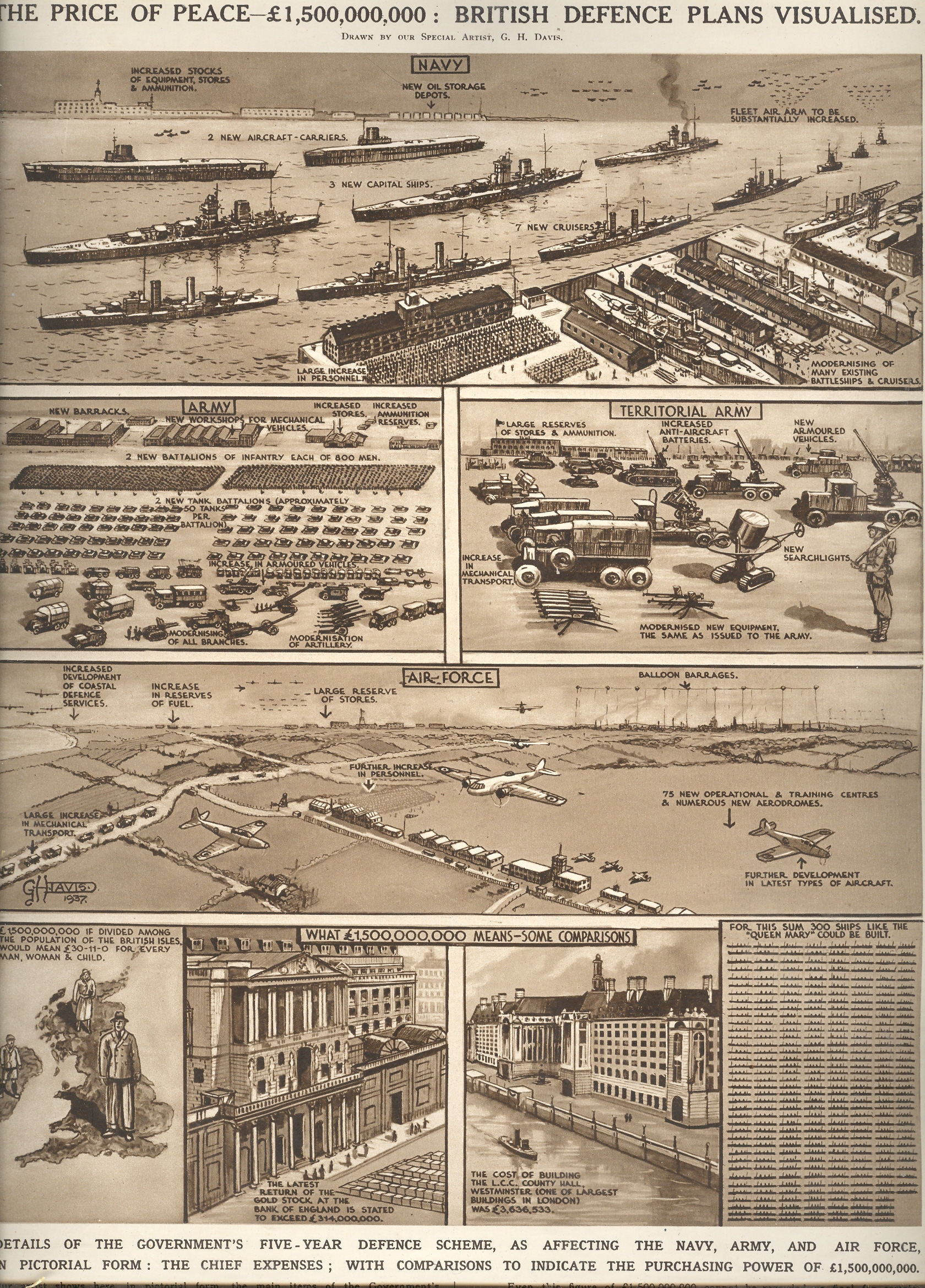
  • What 1.5 Billion Pounds Bought the Military in 1938: Finding a Gem Inside a Great Graphic

    JF Ptak Science Books LLC  Post 916Blog jan 22 Brit Mil overview

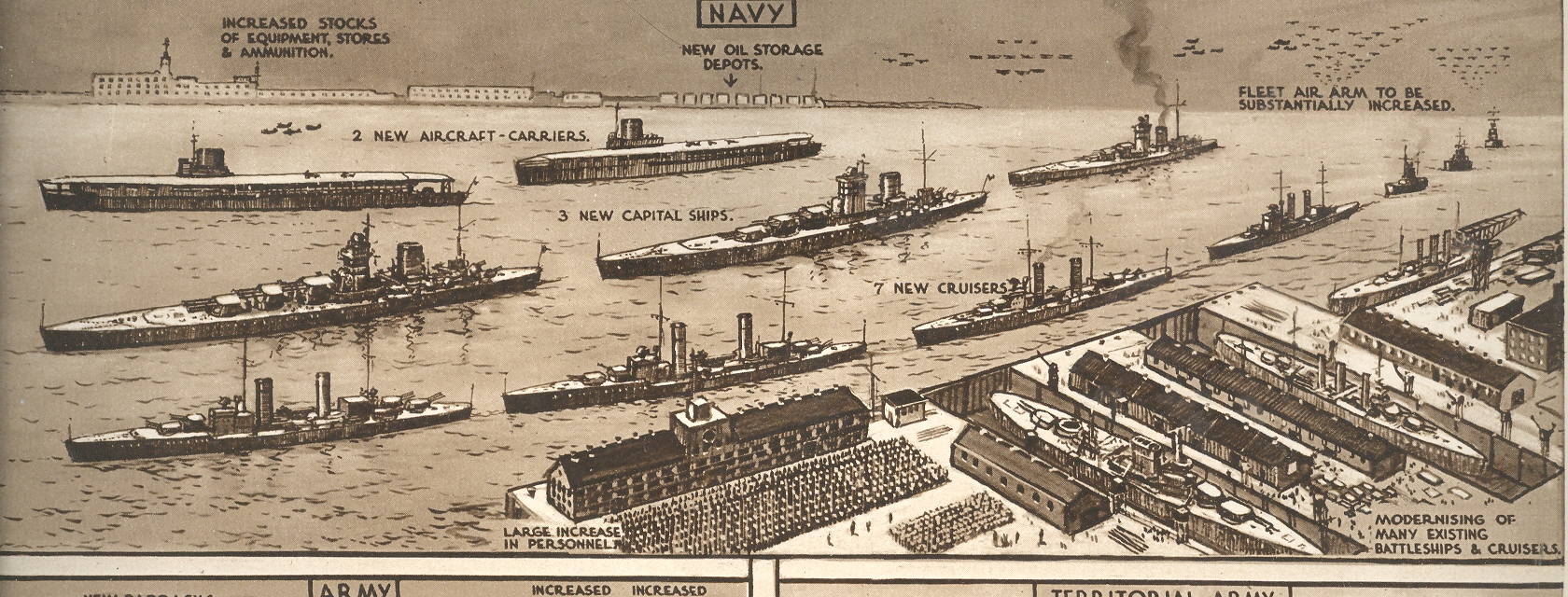
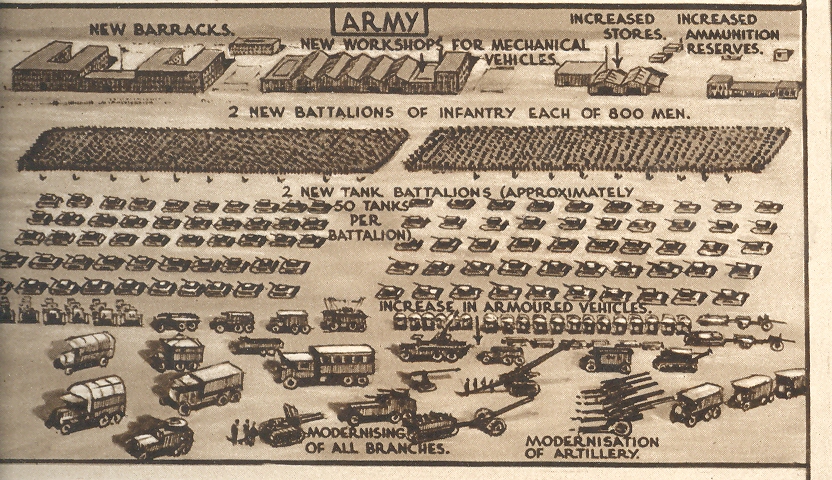
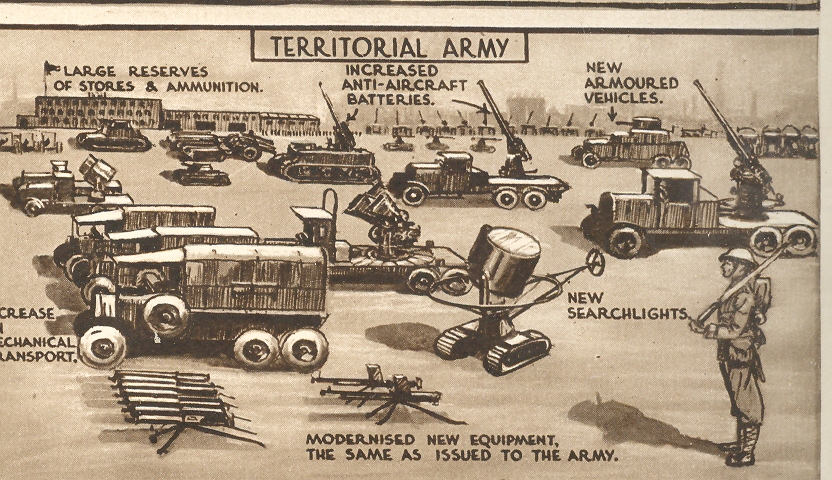
    The Illustrated London News for 27 February 1937 hosted a brilliantly designed graphic illustrating the ways in  which the British War department could/should spend 1.5 billion pounds (or about $100 billion in 2009 dollars, sort of) over a five-year period as the price of keeping the peace.  Of course they wouldn’t make it but a quarter of that distance as Austria fell to Czechoslovakia which fell to Poland and the end.  The full-page pictorial effort is to the right:

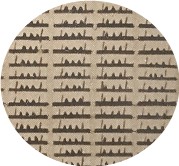
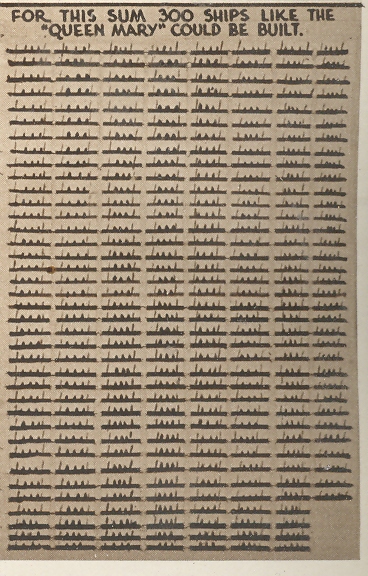
    Nestled in the corner of this page–at about 2×1 inches–is this lovely little graphic, showing that 1.5 bil could purchase 300 Queen Marys, which this delightful little design showed to great effect, and a hidden gem inside of a gem. First is a detail of this detail,

    Blog jan 22 Brit Mil bot right det 

    Followed by the full smidgen of the overall page of comparisons and analogies:

    Blog jan 22 Brit Mil bot right

    Then there’s the semi-standard presentation of what the Navy could purchase:

    Blog jan 22 Brit Mil top

    And then the Army:

    Blog jan 22 Brit Mil middle l

    And of course the Territorial Army:

    Blog jan 22 Brit Mil middle r

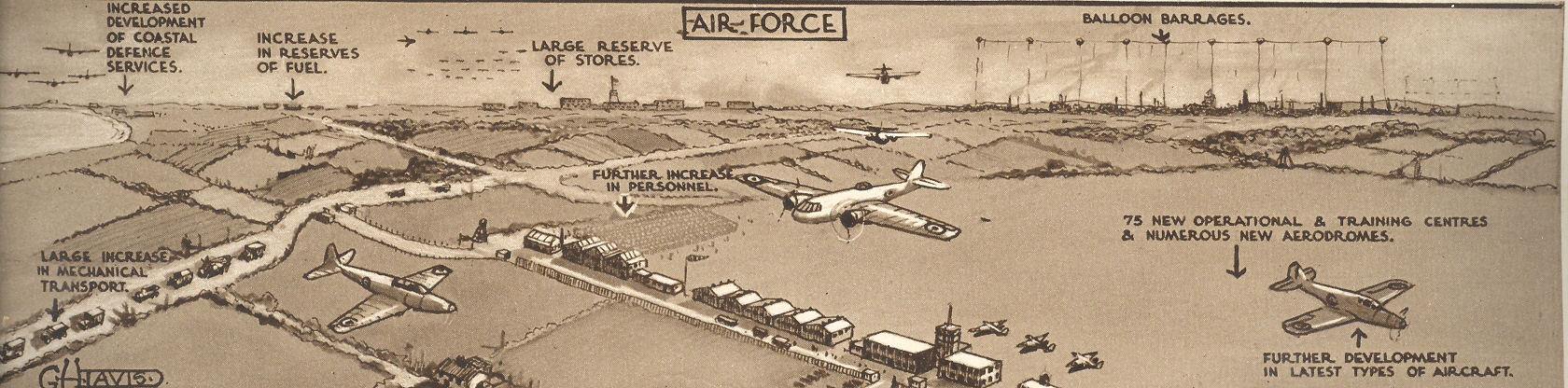
    And the Air Force (which if you look closely includes a balloon barrage  facility at upper right):

    Blog jan 22 Brit Mil middle bot

    By far the most interesting to me is the hidden gemoid of Queen Marys, all produced by the fabulous G.H. Davies, who did many hundreds of such images and sectional cutaways and plans and technical drawings for the ILN over a 25-year period.  M.r Davies may well be my favorite technical artist of this period.

  • Missing Things Making Holes: Soviet Bread-not-Bombs in Finland, 1940

    JF Ptak Science Books LLC   Post 917

    [This post is a hybrid category bridging “Blank and Empty
    Things” and “A History of Holes”—it is really an entry for blank and missing
    things making holes]

    1.  The Soviet Union’s foreign minister Molotov1 wanted to make it very clear
    to the rest of the world that his country was not bombing civilian targets in Finland during
    the winter war of 1939/1940.

    Blog jan 23 bomb

    2.  Molotov insisted that targets that were being bombed near
    Finnish cities were actually airbases.

    2.1   Also, since the
    complaining FDR was over 4000 miles away there was no way that he could “see”
    what was being bombed.

    3.  If there were civilian targets that looked as though they
    were being bombed, then

        3.1   they weren’t being bombed; and

        3.2   if anything at all was going on the Union of
    Soviet Socialist Republics was  dropping
    bread on the town’s/city’s starving inhabitants.

    4.   So far as
    undefended, non-military targets were concerned, the Soviet
    Union
    redefined “bomb” as “bread”.

    5.   Therefore, what
    we’re seeing in this image above are not bombs, but bread; that, or the houses
    were airbases, which would turn the bread back into bombs.

    Molotov insisted that no civilians were direct targets of
    Soviet bombing campaigns in Finland.  Also, if there were people being killed in
    these bombing raids they would necessarily and by definition be aircraft
    workers or air bases support staff or other military personnel.  

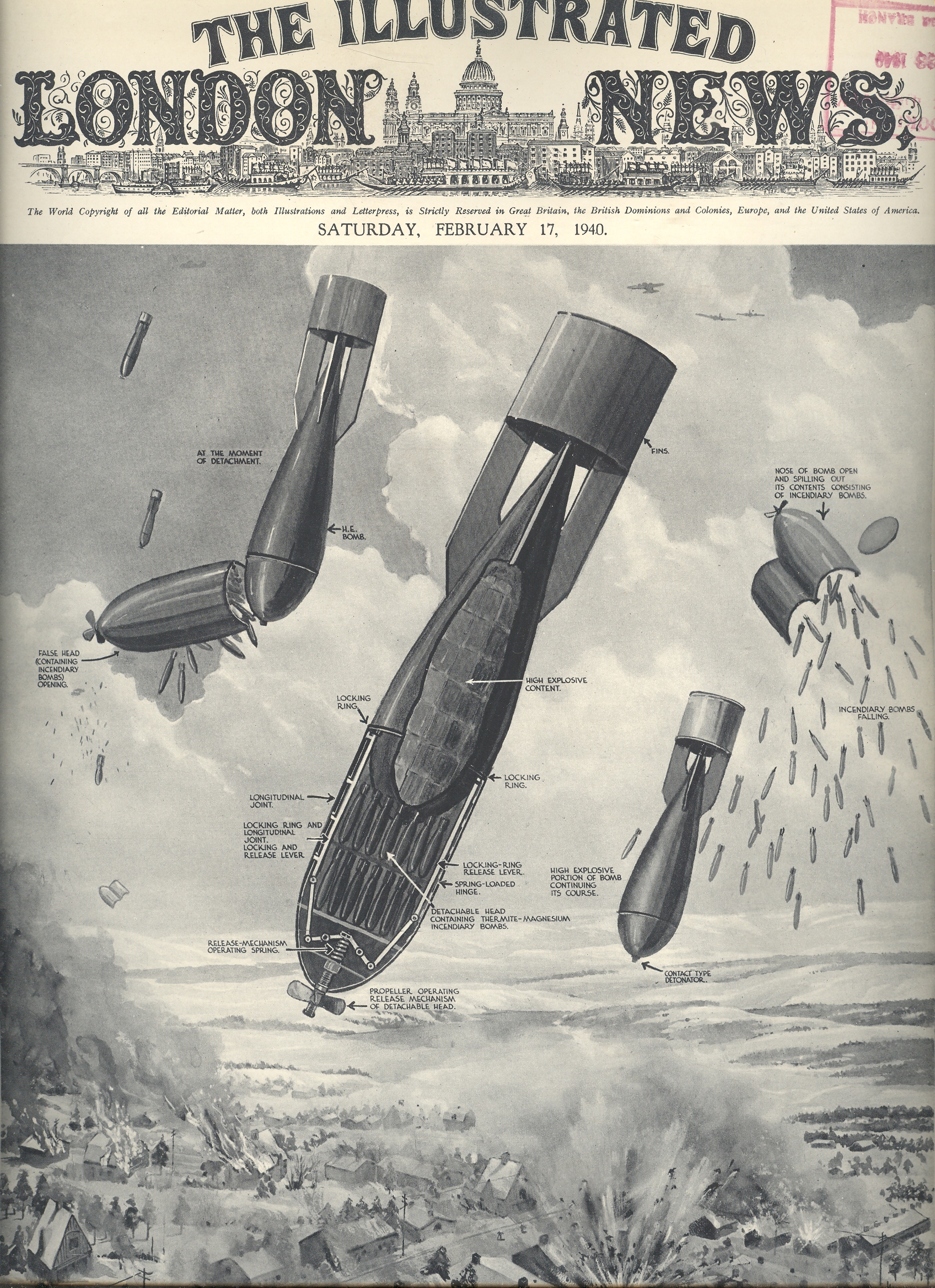
    This strikingly designed image is from the 17 February 1940
    issue of The Illustrated London News;
    the design is by G.H. Davies, the phenomenal ILN draftsman, and elegantly (and forcefully) depicts the innards
    of the bomb and its effect on its target.

    It is a spectacular and brilliant presentation of the
    new(ish) Soviet hybrid terror bomb that was being used in the non-existent
    attacks on Finnish cities.  [The 5’ bomb
    was made to be deployed in two sections: 
    the front end of the bomb inside the false nose cone contains dozens of
    incendiary bombs, released by a revolutions-generated cap propeller, which fall
    away from the main section of the bomb, which contains a high explosive.]

    Since the non-existent bombs that were not being used against
    non-military installations and were actually bread, the Finns gave the weapons
    the nickname of “Molotov’s Breadbaskets”.

    This was just a down-right nasty bomb, and the illustration
    shows it falling on and destroying a quiet town with no visible military
    advantage. The town not being bombed was called Sortavala, which—after numerous Soviet
    attacks in December 1939—was in actuality destroyed by Soviet air power on 2
    February 1940.

    The man ultimately responsible for this campaign and the
    murder of millions of his own countrymen through means of induced starvation,
    disappearances and ruthless killings—Joseph Stalin—was post mortem dispatched
    in much the same manner as the reasoning listed above.  Stalin was ignored to the point of
    non-existence, de-Stalinized and  left
    entirely out of the 50-volume second edition of the Great Soviet Encyclopedia2  published just a few years after his 1953
    death. Stalin executed his brutal and long-time political compatriot Lavrentii Beria, (1899 – 1953)
    right before his own death, ordering that people who owned the GSE to physically cut out the
    Beria entry
    . It is unfortunate that Stalin could not have been denied his
    existence 30 years earlier.

    Molotov, on the other hand, in spite of his enormous sins
    against humanity (as principle architect of the Great Terror, the extermination
    of millions of Ukranians, and etc.) was finally removed from government
    following Khrushchev’s de-Stalinization campaigns (i.e. by 1962)  and managed to live out the rest of his life
    alive, not dying until 1986 at the age of 96.

    (The “Molotov Cocktail” by the way was not named for him by
    Soviet soldiers or freedom fighters or whatever fighting for the USSR—it was
    named for the petrol bomb used by Finnish soldiers and civilians fighting
    against the Soviets invading their country  in 1939/11940 and again in 1943/4)

    Notes

    1. In 1940 Molotov was the foreign minister of the Soviet Union, and had just completed negotiating the
    Non-Aggression pact with Nazi Germany. 
    This gave the USSR free range for its relations (read “occupy/annex”)
    Estonia, Bessarabia, Latvia and the Ukranian/Belorussian-occupied section of
    Poland (to the Curzon Line), and to also conduct its war with Finland.  The fierce Finns never lost their
    independence, though they did lose a part of their country. 

    2. The GSE had a somewhat complicated publishing history,
    winding up with 65 volumes over its two editions, constructed with very
    questionable state-controlled X-Ray communist vision spectacles. There is so much in these volumes that is wrong/sanitized/fiction that I have no idea how a non-specialist might be able to use the thing.

  • Missing “Dots” and Not Seeing the Discovery of Platelets, 1842

    JF Ptak Science Books LLC  Post 918

    {This post continues some new and unusual cross-categories in this blog, like Missing Things Making Holes; Bombs as Breads.  Today’s bit combines the “Blank, Empty and Missing Things” with “The History of Dots” categories.]

     blog 13 donne703Alfred
    Donne (1801-1878), physician, experimenter, microscopist and
    photographer, is best known for things other than what he should
    probably be best known for:  his discovery of the third element of the
    blood, platelets.  Donne had a wonderful vision, and was among the very
    first on the scene to write about and employ the spectacular invention
    of the daguerreotype in chemistry and microscopy.  As a matter of fact,
    Donne, along with his collaborator Leon Foucault,  produced the very
    first engraved images of photomicrographs for his cytology paper of
    1840. (He was also the first to use electricity in producing a medical
    illustration, and was among the first modern physicians to write on the
    great efficacy of mothers using their own milk in breast feeding their
    children.)  The discovery of platelets paper of 18421–preceding two
    other works published in the same year–does indeed identify the new
    object, but actually fails to make a methodological examination of the
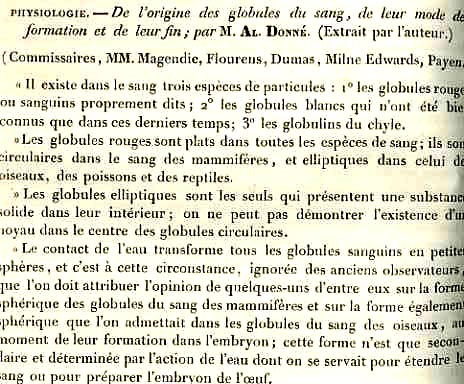
    new body, calling the new units “globulins du chyle” (or small globules, derived
    from plasma).  He also fails to make a drawing of what he saw; so, the
    combination of these two important elements asked the reader to accept
    his findings on faith, the tools of reproduction of his observations
    not being present. 

    And so we remember Donne for some other significant
    things, and less so for his lightly-interpreted and un-illustrated, and missing, “dots”.

    Notes
    1.Donne, Alfred. De l’origine des globules du sang, de leur mode de formation et de leur fin. Comptes rendus de l’Académie des Sciences, Paris, 1842, 14: 366-168. 

    (Overall the history of the
    discovery of platelets is complicated: 
    Leewenhoek (1675) and Henson (1782)  were the first to fully describe the “undefined”
    particles of the blood; Donne’s work was then more fully described by Beale in
    1850, and then again (identified as “small corpuscles” by Zimmerman in 1860 and
    then again by Schultze in 1874 and Laptschinski (also in 1874). William Osler
    then enters the scene in 1880, followed by Giulio Bizzozzero who was the
    first, in the years 1881 -1882, to establish central role of platelets
    not only in physiological haemostasis, but also in thrombosis.  Anyway it is a longish and not-clear-to-me
    history.)

Recent Posts

Archives

Categories