A Daily History of Holes, Dots, Lines, Science, History, Math, Physics, Art, the Unintentional Absurd, Architecture, Maps, Data Visualization, Blank and Missing Things, and so on. |1.6 million words, 7500 images, 4.9 million hits| Press & appearances in The Times, Le Figaro, Mensa, The Economist, The Guardian, Discovery News, Slate, Le Monde, Sci American Blogs, Le Pont, and many other places… 5000+ total posts since 2008.

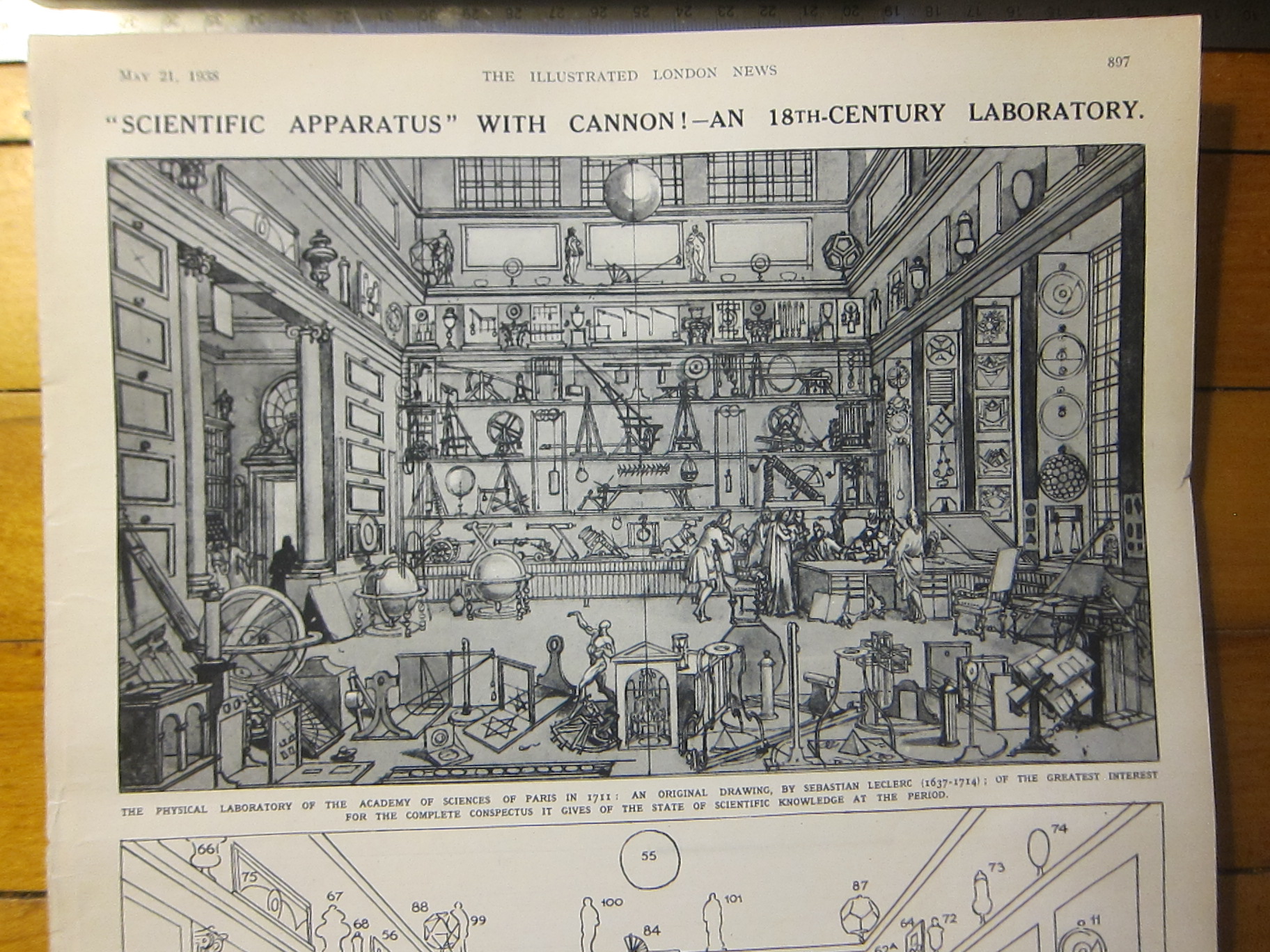
  • Scientific Instrument Display (1711, with Key)

    JF Ptak Science Books  Quick Post

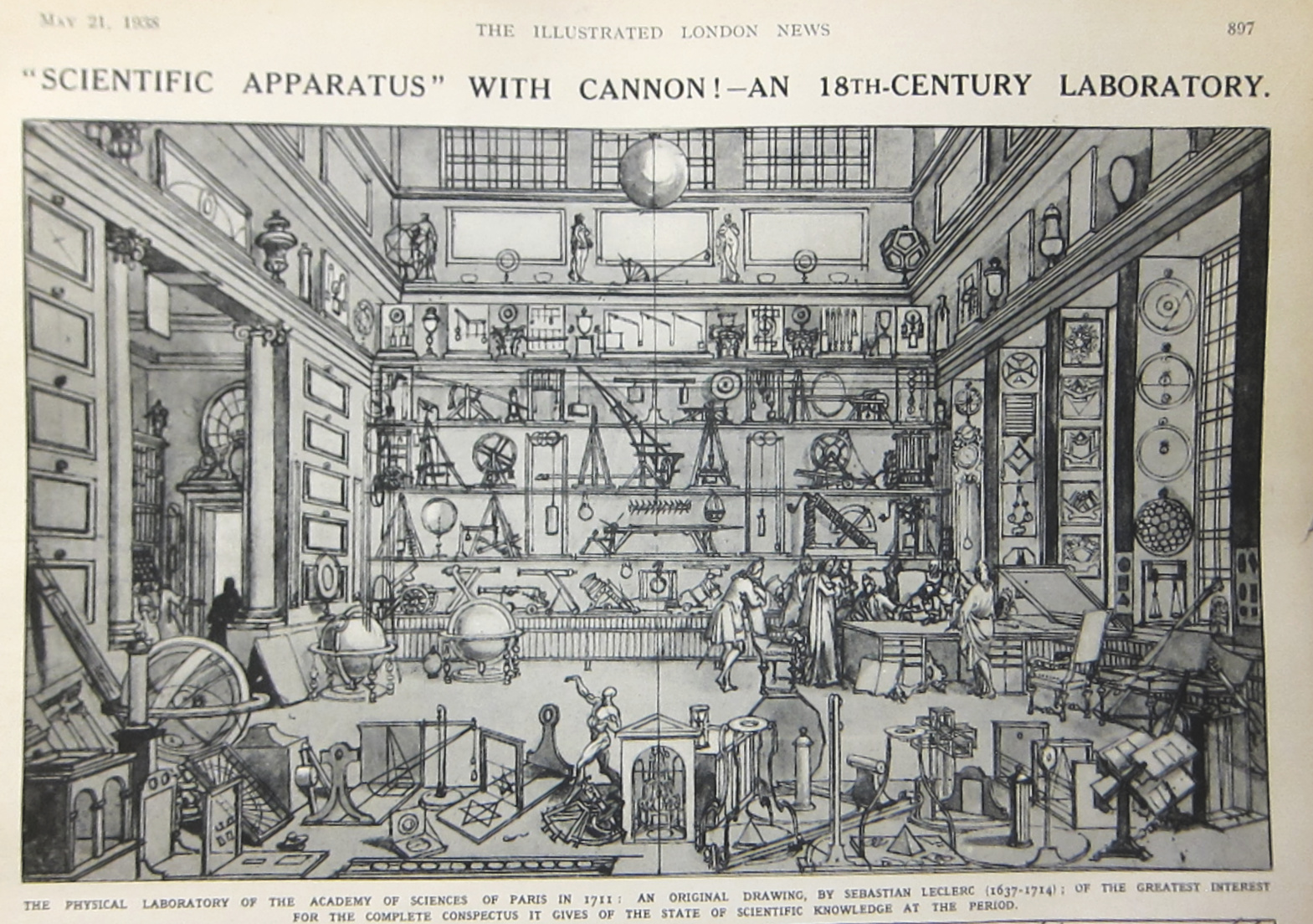
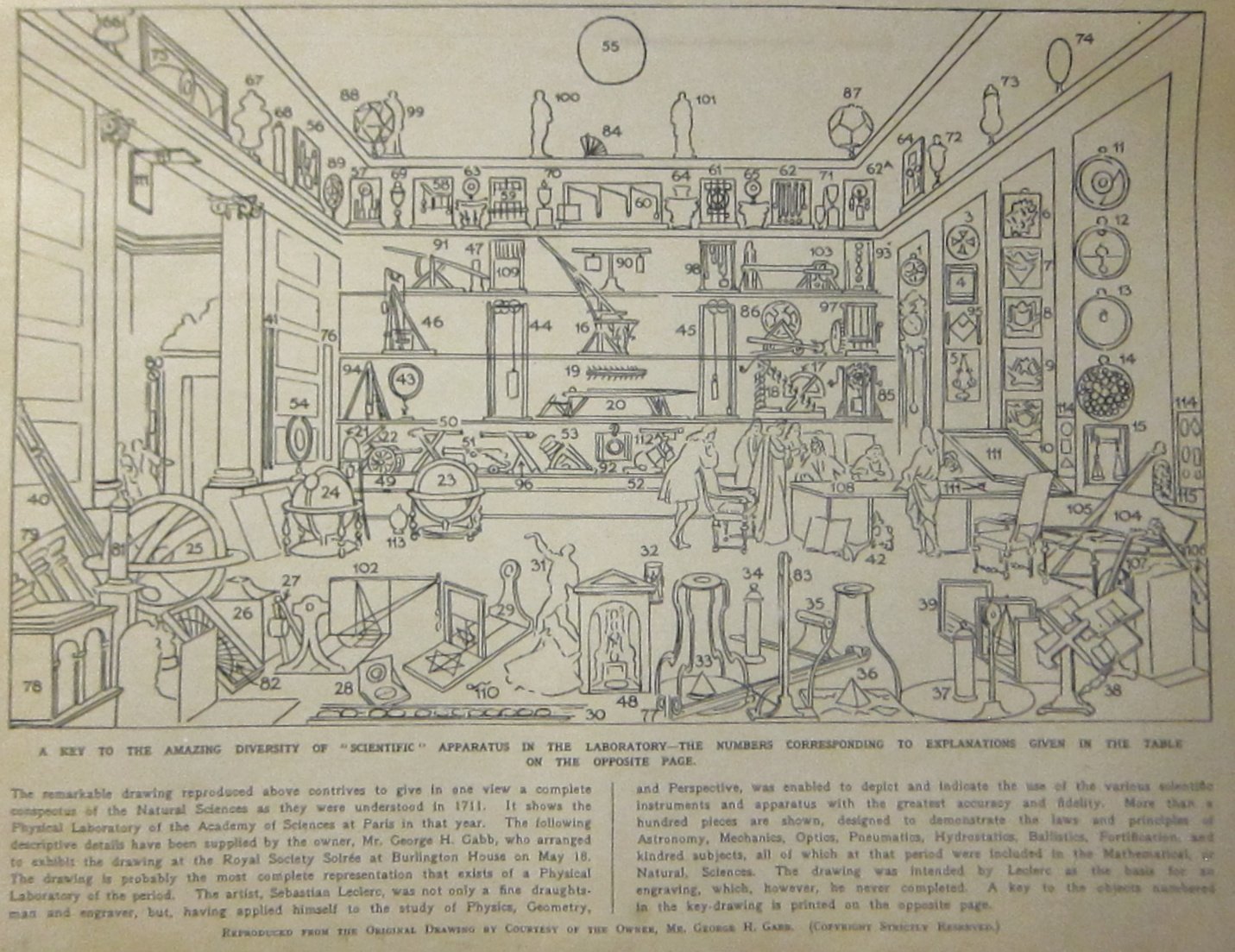
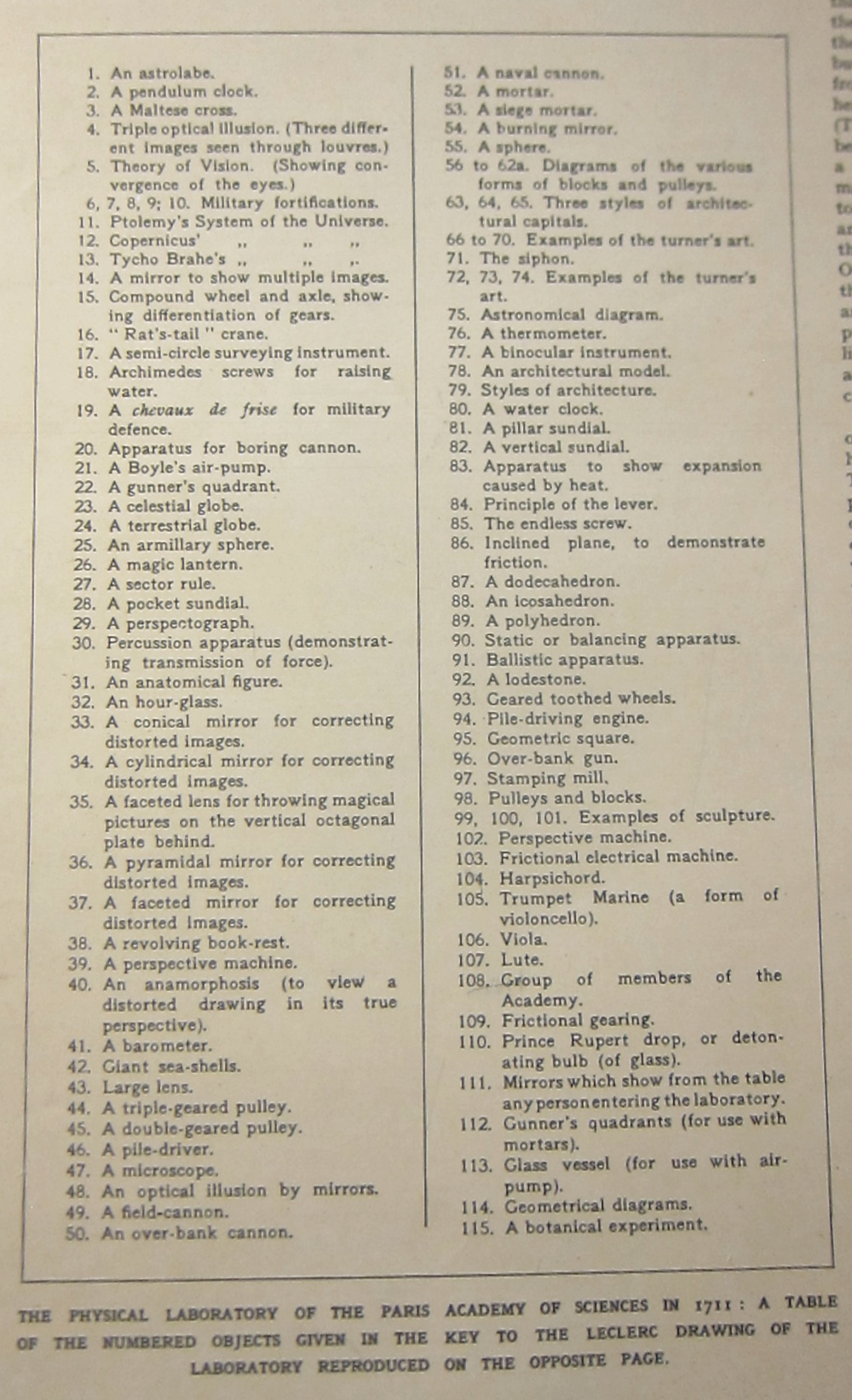
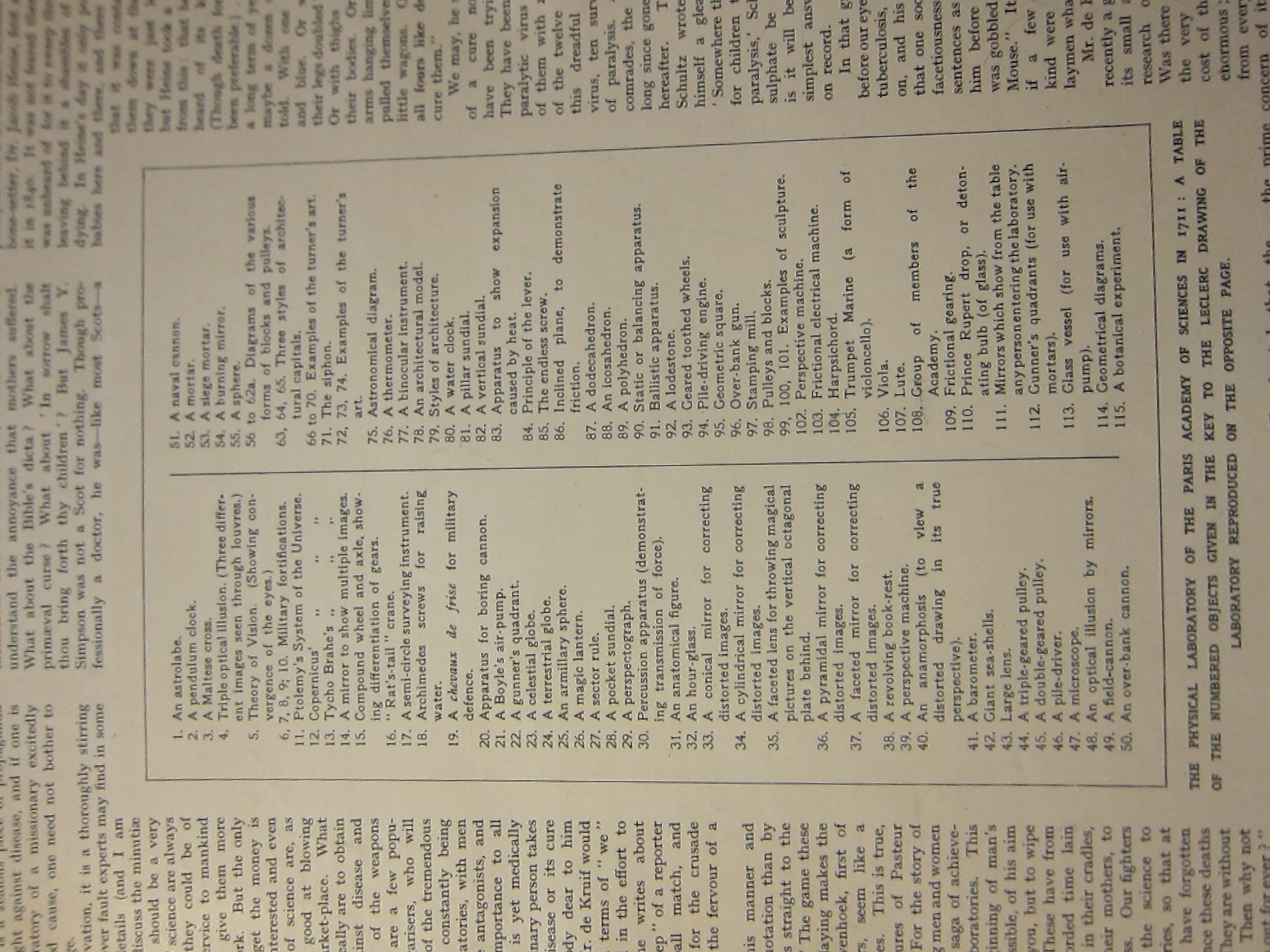
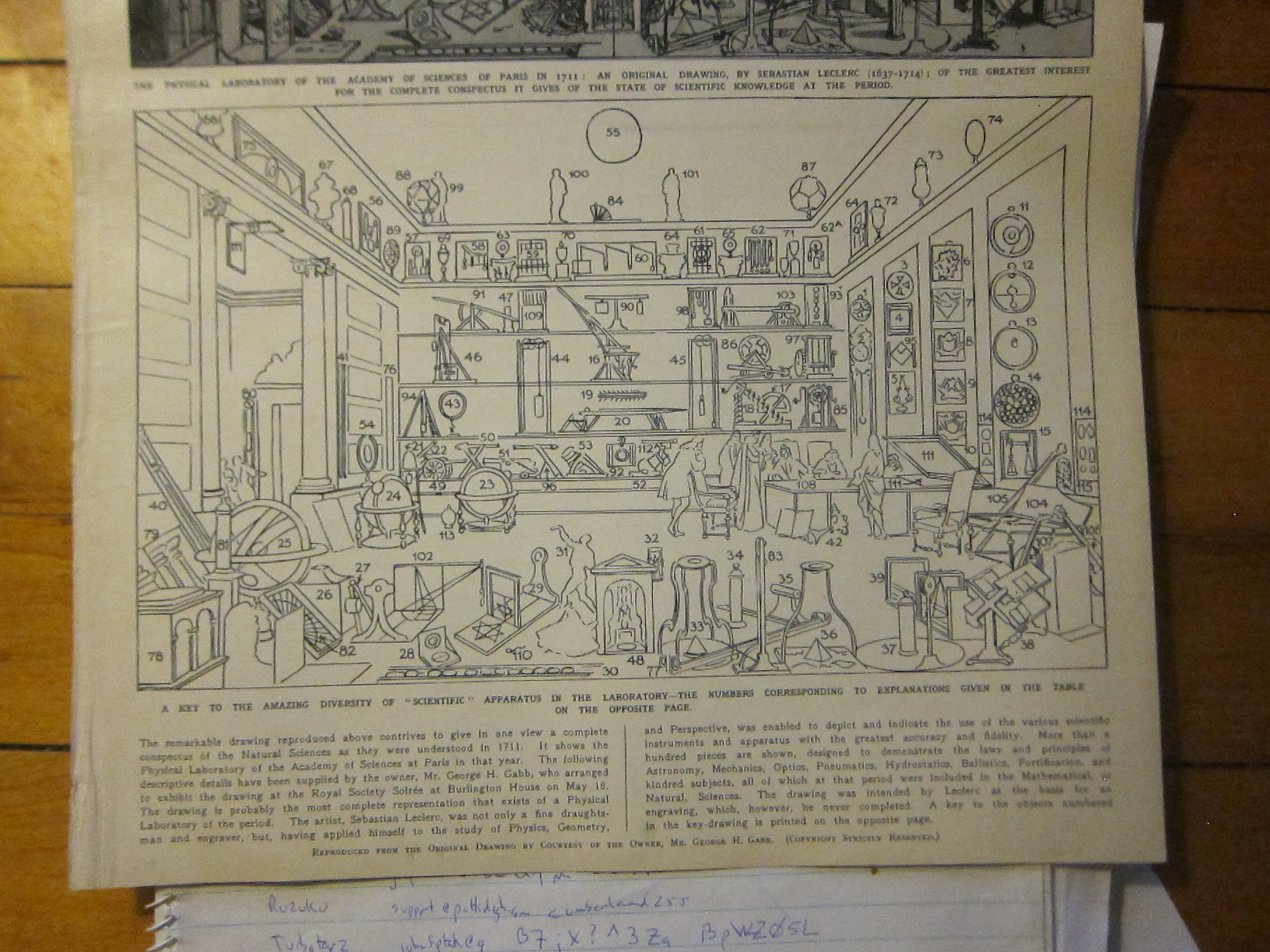
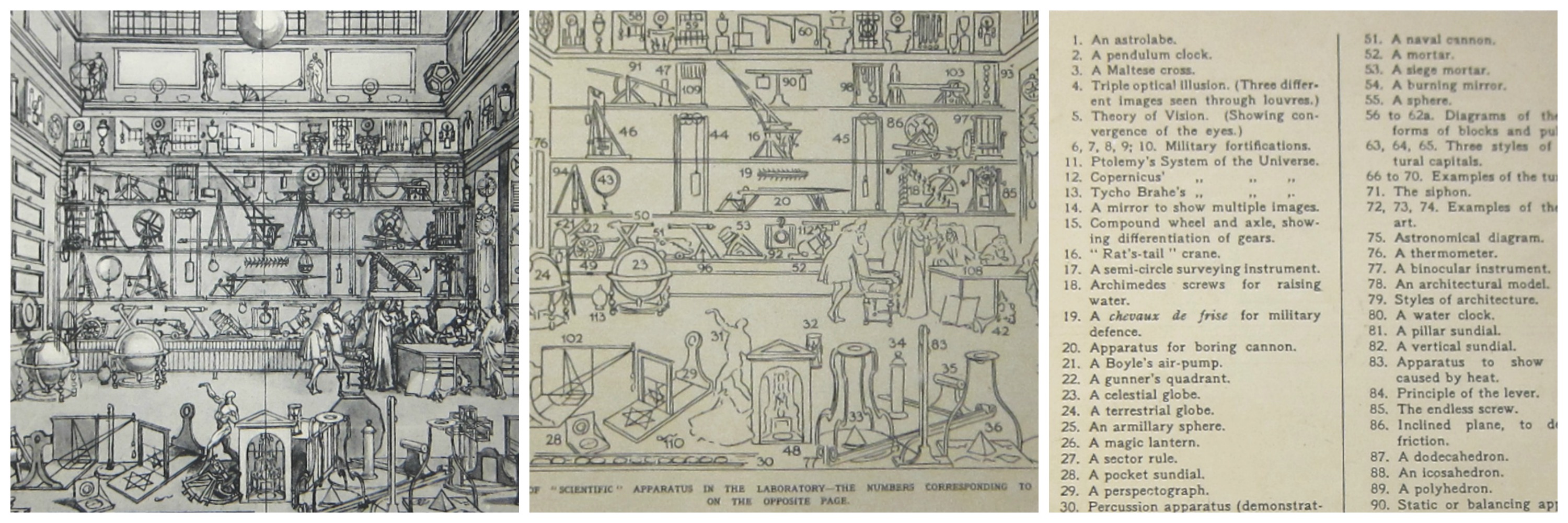
    This interesting image appeared in the Illustrated London News for 21 May 1938 (p 897) and it shows “the Physical Laboratory of the Academy of Sciences in Paris” in 1711, rendered by Sebastian Leclerc (1637-1714).  The nice thing here is that is comes with a key and explanation for the 115 (!) displayed instruments. For some reason the editor decided to put scientific instruments in quotation marks, as if to differentiate those instruments from 1711 from the modern standard of 1938 as not being worthy of the title when compared to modern instrumentation. Its an unfortunate display of evaluating and judging the achievements of one period in relation to those of a particular present without regard to context and the capacity of what came before.  Apart from the unfortunate title, these are useful images:

    Physical Lab collage


    Physical lab view 1938
    Physical lab view 1938

    Physical Lab legend


    ·Posted by :

    ·in:

  • On the Speeds of Things (1883)

    JF Ptak Science Books  Quick Post

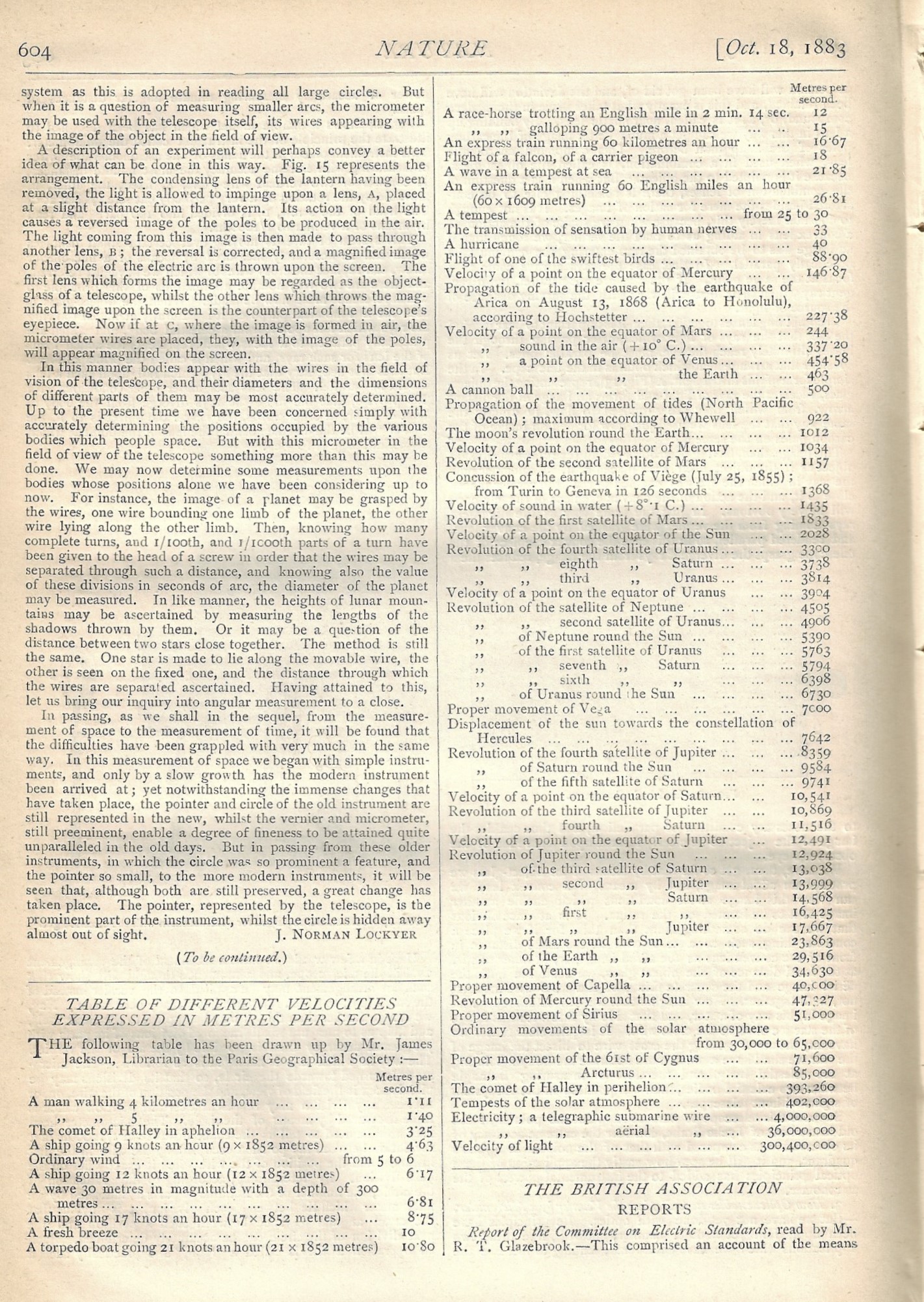
    Here’s an interesting collection of bits that I just came across in the October 18, 1883 issue of Nature, showing the speed of things.  Some of the examples are quite charming, showing the velocities for an “ordinary wind”, a “fresh breeze”, “a race horse trotting an English mile”, “flight of a falcon”, “flight of one of the swiftest birds”,  and “a tempest”; others show the speeds of things that are quite antique, like the velocity of “a cannon ball”, and “an express train travelling at 60 kph”. Then of course we get into the high velocity astronomical examples, all brought to a close by the speed of light. I like the list, and so I share it here:

    Nature 1883 veocity of stuff


  • The Occassionally Poet Nature of the Names of the Dunkirk Small Boat Fleet (1940)

    JF Ptak Science Books   Quick Post

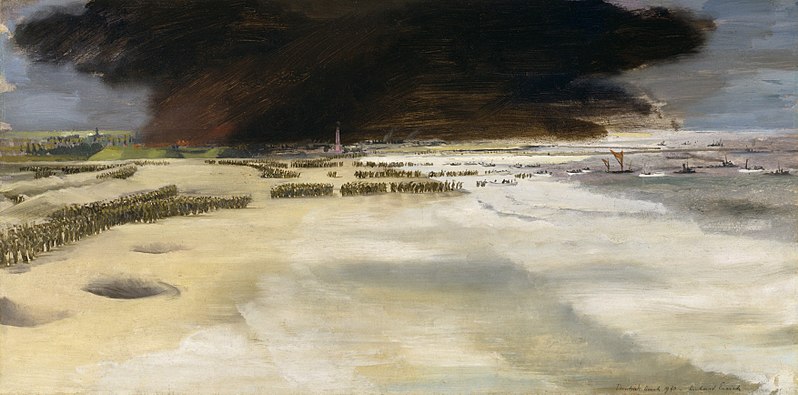
    I don’t know why, but I think that I’ve never looked at any lists of the boats and small ships used in Operation Dynamo, the rescue/evacuation efforts of Britain to relieve the surrounded forces at Dunkirk. All together there were about 850 boats/ships put into service for the 28 May-4 June 1940 action—more than 200 were lost, though through this extraordinary effort more than 330,000 troops were saved from capture or annihilation, taking them from the beaches and harbor and mole, though there were something on the order of 70,000 troops who were killed there. Additionally one must never forget that something like 40,000 French troops stayed behind to protect the very considerable front at Dunkirk, which ranged from that city to Nieuport, some 25 miles long and 10 miles deep.

    Dunkirk beaches 1940

    • “Dunkirk Beaches, 1940”, Richard Ernst Eurich. From Wikicommons, from the original at the Imperial War Museum. 

    In any event the great retreat and resurrection from Dunkirk is told in many places and I’m not going to tell it here—I’m just stopping by to have a look at some of the names of the boats that made way from Ramsgate in those eight days. Some of the names are straight-away prophetic or specifically appropriate (like the Inspiration and Endeavour); others have a longer and deep connection (Papillon, New Britannica); some are antithetical (Lazy Days, Omega) while others are simply charming (Pug, Jeff ).  I simply wanted to reflect on these names of heroic boats, with heroic crews, performing heroic duties, and saving heroic soldiers who would be able to go on and stand to an heroic fight. 

    Following list of boats taken from a much longer list at the website for the Association of Dunkirk Little Ships, here: http://www.adls.org.uk/t1/:

    Abdy Beauclerk, Aberdonia, Alusia, Aquabelle

    Beatrice Maud, Bessie, Bluebird of Chelsea, Bounty, Brown Owl;


    ·Posted by :

    ·in:

  • POWs in WWI (1916-1918)

    JF Ptak Science Books  Post 2789

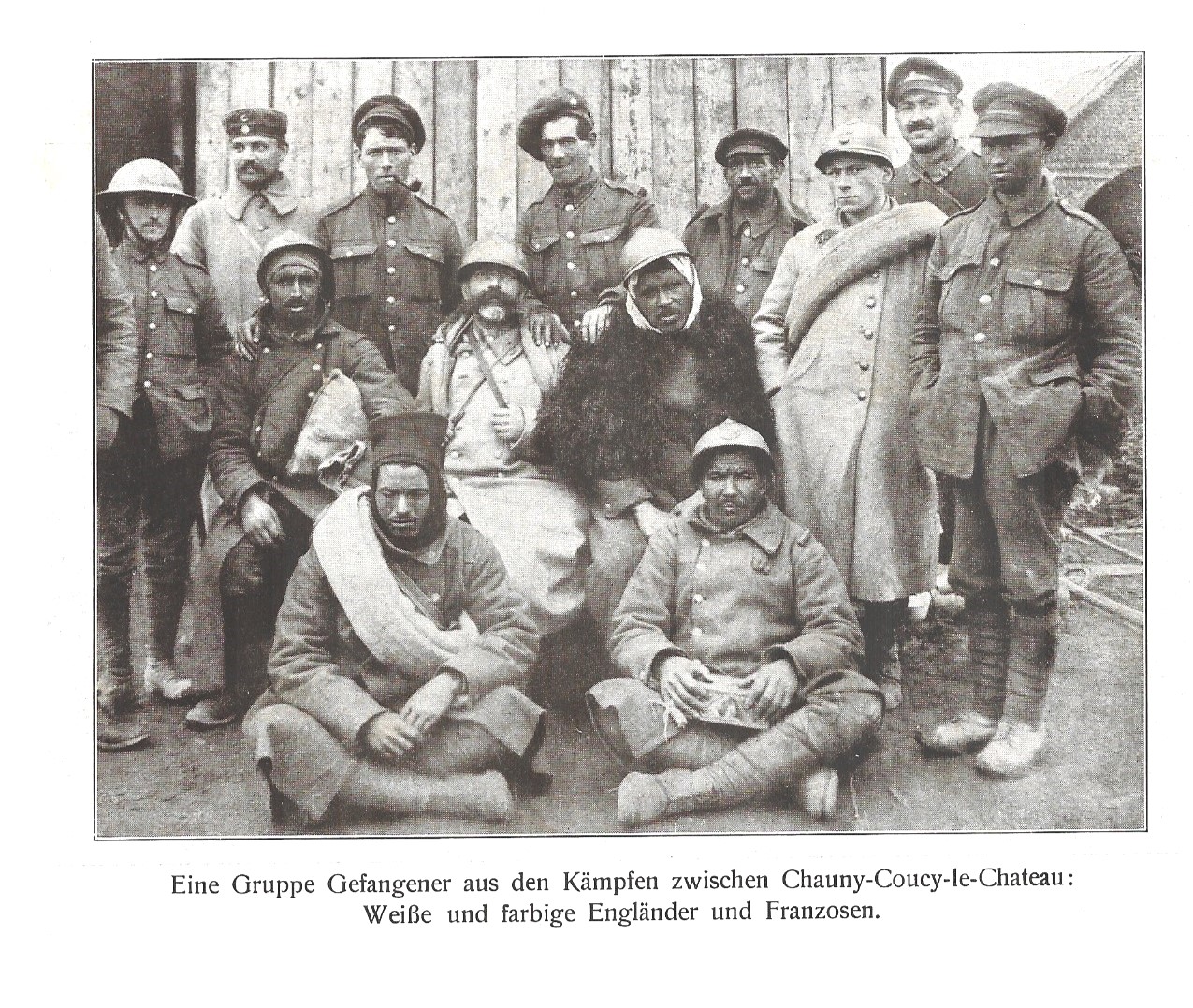
    This extraordinary photograph shows prisoners of war taken by the German army near Chauny-Coucy-le-Chateau and published in the unblinking photographic history of WWI by Hermann Rex called Der Weltkrieg in Seiner Rauhen Wirklichtkeit (printed by Herman Rutz in Oberammergau eight years after the end of the war). It is unusual to my experience to see a work like this with such an unofficial character to it. During the War the U.S. population was mostly given approved photos of the conflict, passed through censors and for the large part made by photographic pools (with ready-made captions for publication). The German side of photos in the popular press seems to me to have been grittier–this is hardly an academic appraisal, though I have leafed through every page of the war years for several journals like The Illustrated London News and Illustrirte Zeitung (Leipzig), and that is the general sense that I take away with me. The work by Herr Rex is about 600pp long, and if you work your way through the whole thing in an hour, it is a somewhat exhausting experience. Unlike most work that was done during the war, this book has a definite you-are-there quality to it, and is in many parts aggressively observational.

    The 13 soldiers were British and French including several French Colonial soldiers (differentiated by Rex as “weisse und farbige “)–they represent  .0000016% of the 8,000,000 prisoners taken on all sides during the course of the war):

    WWI Photos Rex prisoner

    Also, here’s the very striking cover for this book–its one you won’t soon forget:

    WWI Rex cover (1)

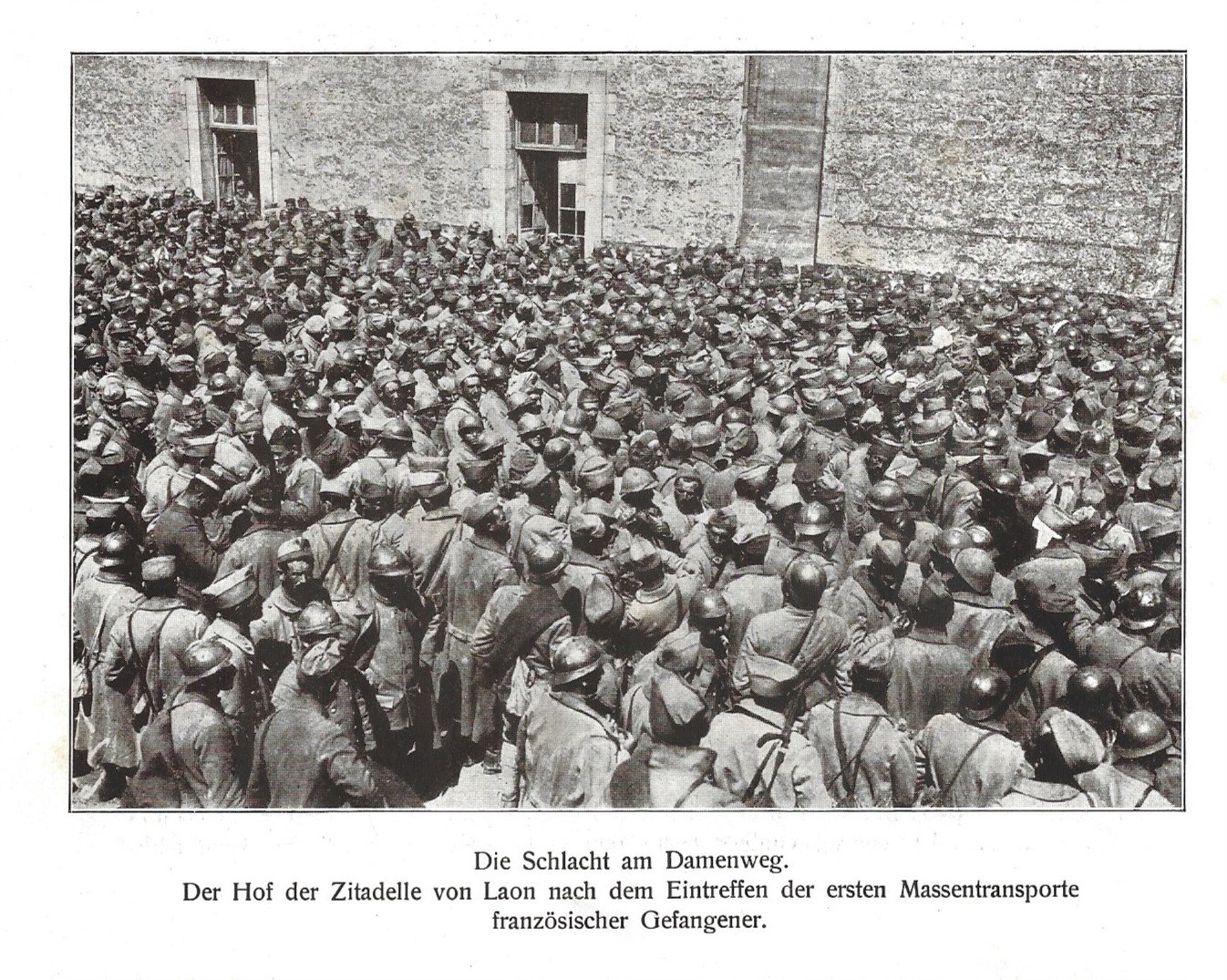
    Another image from the same source shows the movement of a large number of French prisoners–another photo of dense humanity:

    WWI Photos rex prisoners mass French

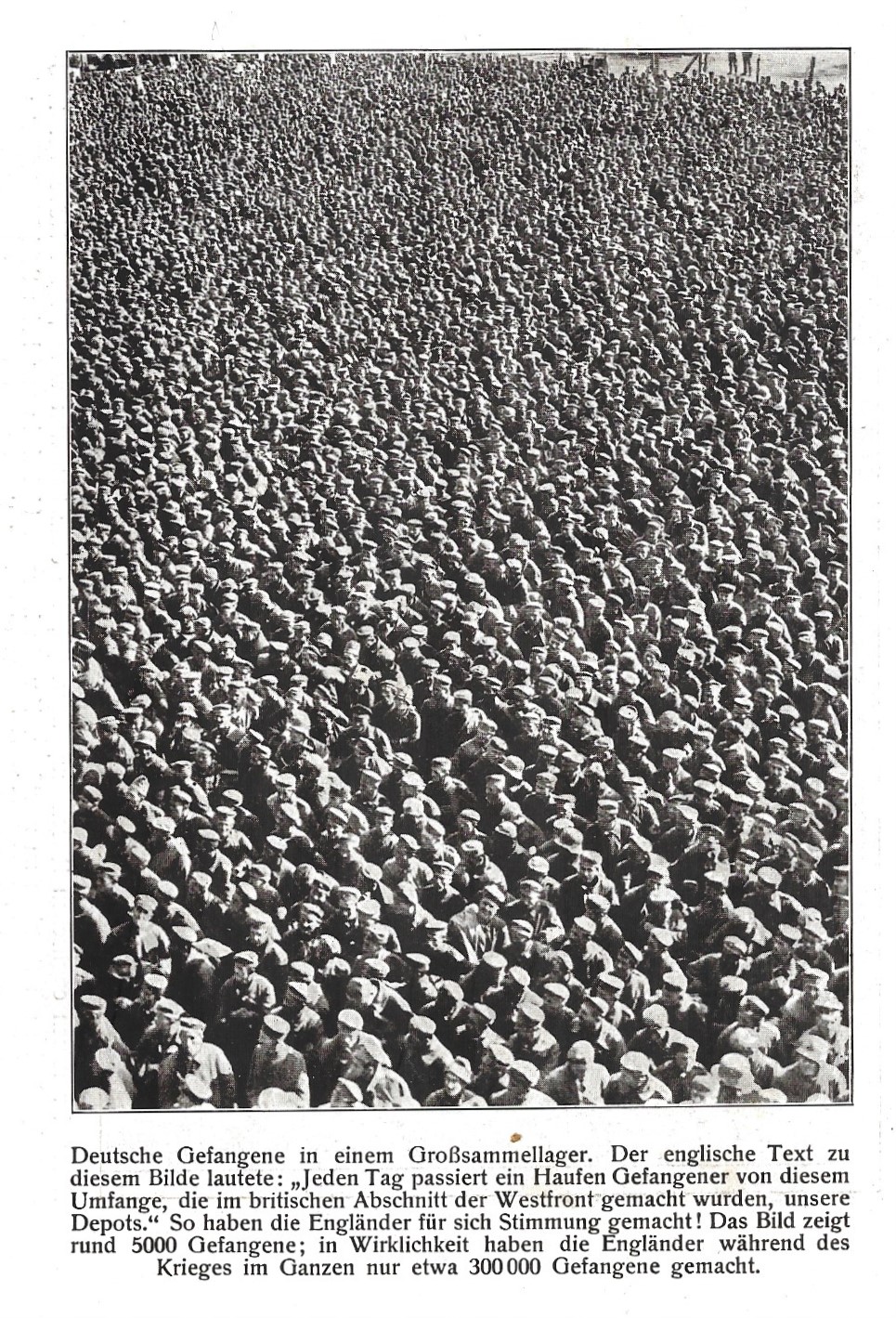
    And this extraordinary photo showing 5,000 German prisoners (or .000625% of the total number of POWs 1914-1918): 

    WWI Photos Rex German prisoners

    This is not a war-as-glorious sort of book, though I’m not so sure that it is necessarily/overtly an anti-war Johnny Got his Gun book, either; at least not so much as Ernst Friedrich’s definitely anti-war book Krieg dem Krieg! (“War Against War!”) that appeared on the 10th anniversary of the beginning of the war and which was badly received by Weimar officialdom. The 200 or so photos in the Friedrich book are exactly those that would never have been published during the war, especially in the ending sequence that shows very disturbing facial wounds. The overall effect of Rex’s book–not nearly at the same level of Friedrich’s–is very effective, and definitely does not fill you with the spirit to sit down and wrap up your leggings to join your comrades in a trench. 

    ·Posted by :

    ·in:

    —
  • Lines and Trenches (1916)

    JF Ptak Science Books   Quick Post in the History of Lines series

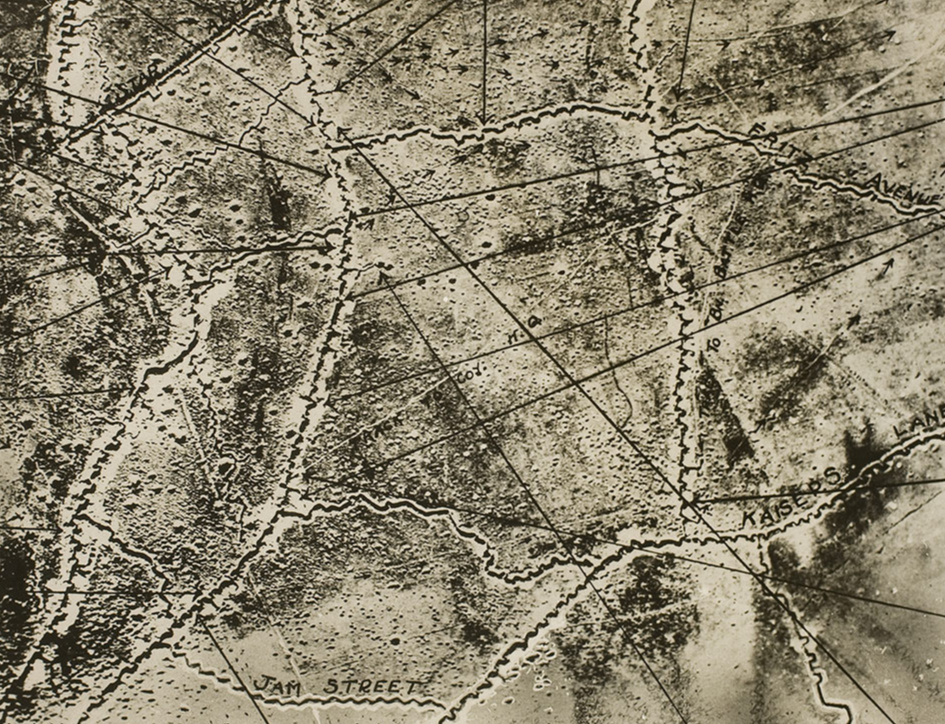
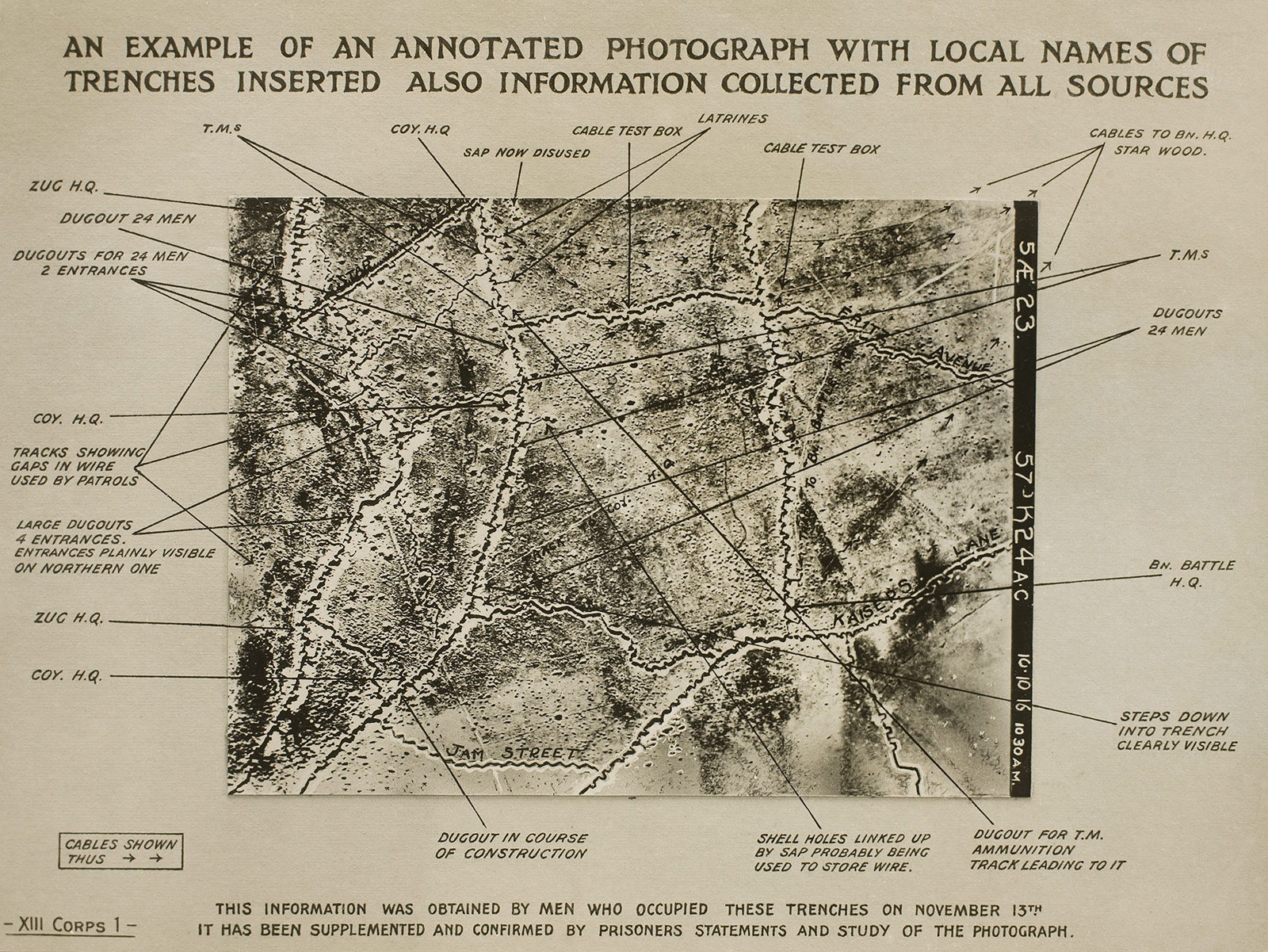
    I’ve just found an interesting example of a photo reconnaissance display of trenches with an interpretation of installations and trench names. It is interesting in and of itself, of course, but I was drawn to it because of the zig-zagged lines of the trenches explained with criss-crossed straight lines. The trenches went off at hard angles rather than long straight lines for several reasons, all for defensive purposes: first, they could offer places to use for fire cover if the trench was overrun by enemy forces, and secondly as a dispersal agent for the effects of bomb blasts within a trench.

    The photo “An Example of an Annotated Photograph with Local Names of Trenches Inserted. An example of an annotated photograph with local names of trenches inserted also information collected from all sources” is a silver gelatin print from the George Eastman Museum. The first image below is a detail from the overall image, used here just to show the accumulation of lines. The full image follows, showing dugouts, latrines, cables, ammo dumps, linked bomb craters, and gaps in the barbed wire enabling patrols to come and go without becoming hopelessly tangled in the sharp steel. 

    WWI trench names _3_

    Source of image: Art Blart https://artblart.com/tag/photographs-and-transition/  

    And the full image:

    WWI trench names _2_

    Notes: 

    Two good reference tools on names and naming practices of trenches:

    Peter Chasseaud, Topography of Armageddon: A British Trench Map Atlas of the Western Front 1914-1918

    _____. Rats Alley: Trench Names of the Western Front, 1914-1918.  Gazetteer of British trench names, as well as an appreciation of the naming practices and names of German and French trenches.

  • The Battlefields of WWI in U.S. Land Based Context

    JF Ptak Science Books  Quick Post

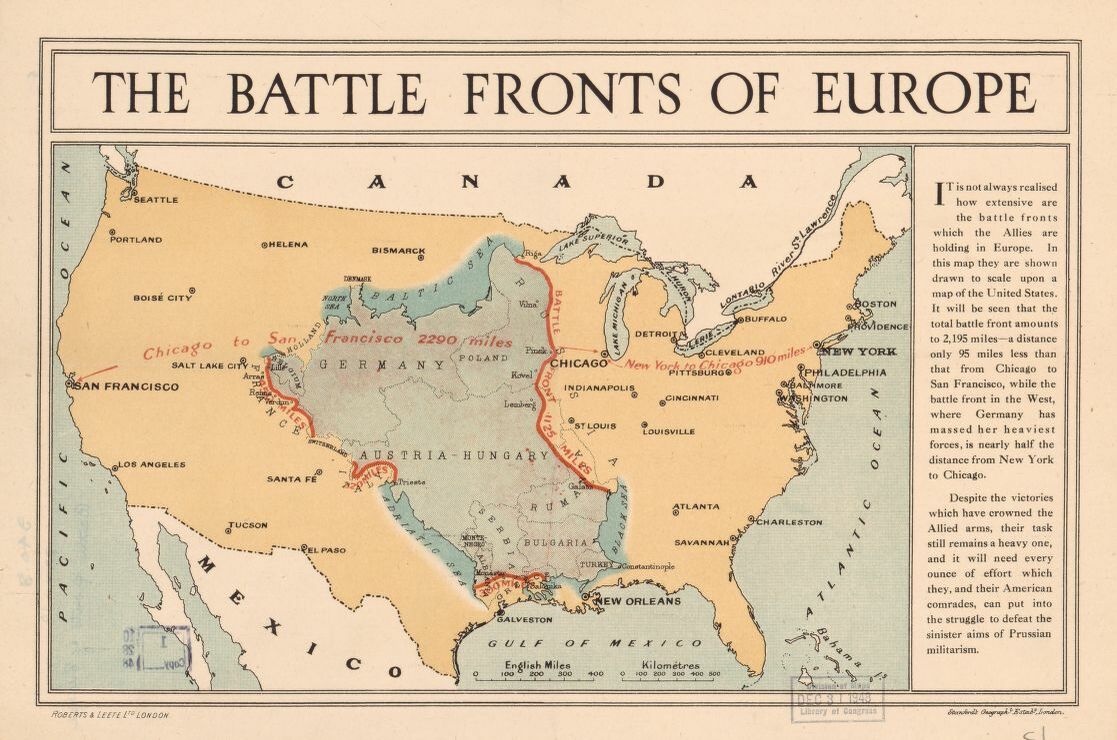
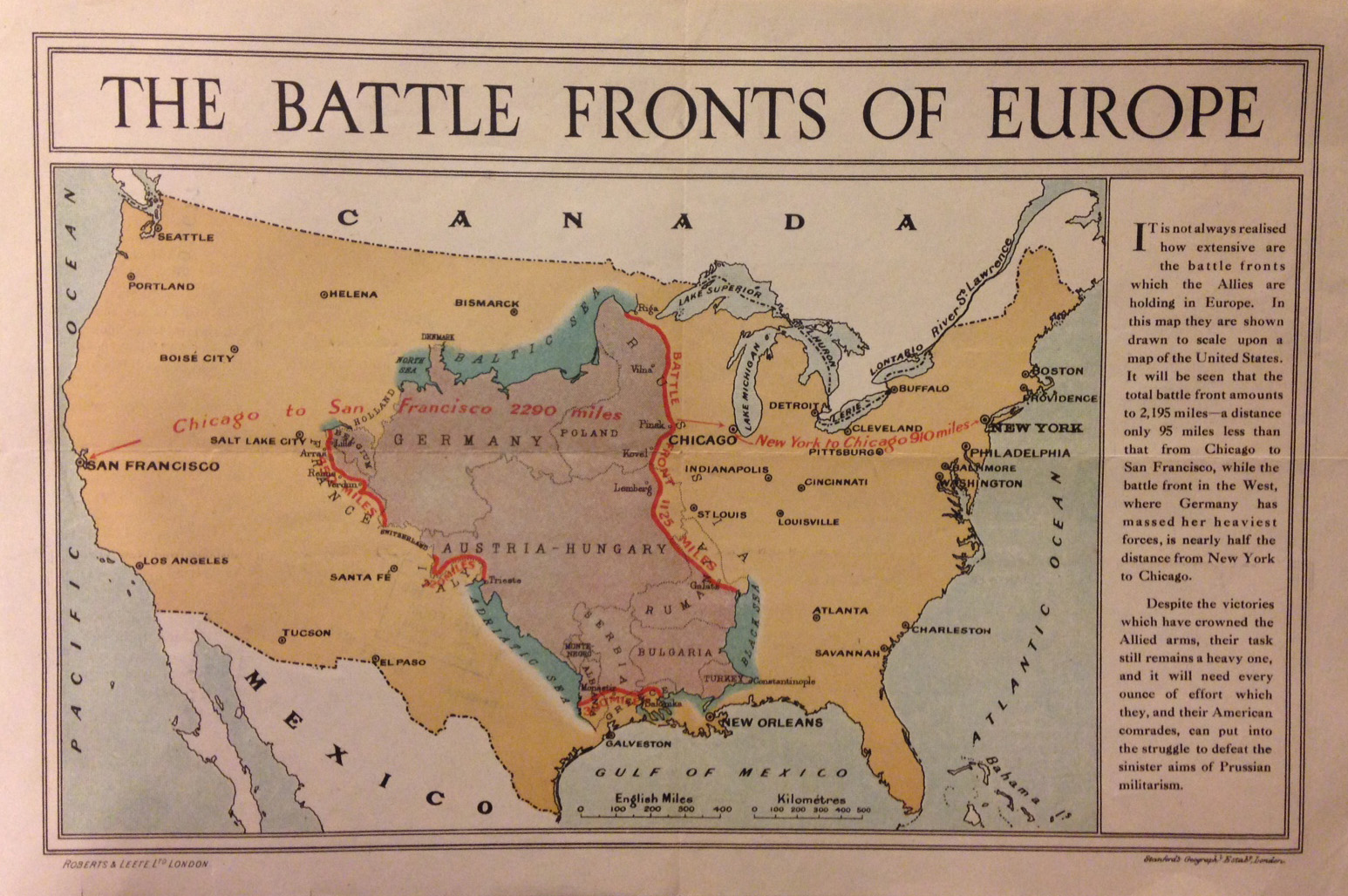
    The battle fronts of Europe (by Stanford’s Geographical Establishment, printed ca. 1917) is a useful contextualization of the major battlefields of Europe placed within a map of the U.S., showing the relative distances and differences in relation to a geography that Western Hemisphere folks might better understand. Much of the fighting was taking place in an area about the size of the middle third of the United States, which I am certain gave many readers back then (and probably now) some pause and insight. As you can see, the areas of action work their way from the Baltic across the upper Eastern Front, crossing Austria-Hungary, Romania, Bulgaria and a bit of Turkey, then west to the Adriatic and north along the Austria-Hungarian border to the Western Front of France and Germany and Belgium, all fit correct and proper into the land from the Mississippi into the Great Plains. There were about 95 million people alive in the U.S. at that point, and I’ll guess that maybe 20% lived in this Battle Front swath–that means that the dead and wounded from the war would be at least equal to the entire population of the U.S. covered by the battleground map. 

    WWI Map battlefronts LC _2_[Click to enlarge and clarify.]

    “London : Stanford’s Geographl. Estabt., [1917 or 1918]. London : Roberts & Leete Ltd, [1917 or 1918].”

    Source: Library of Congress,  https://tile.loc.gov/image-services/iiif/service:gmd:gmd5:g5701:g5701s:ct007679/full/pct:25/0/default.jpg

  • The Cost of Convict(ions) 1826

    JF Ptak Science Books  Quick Post

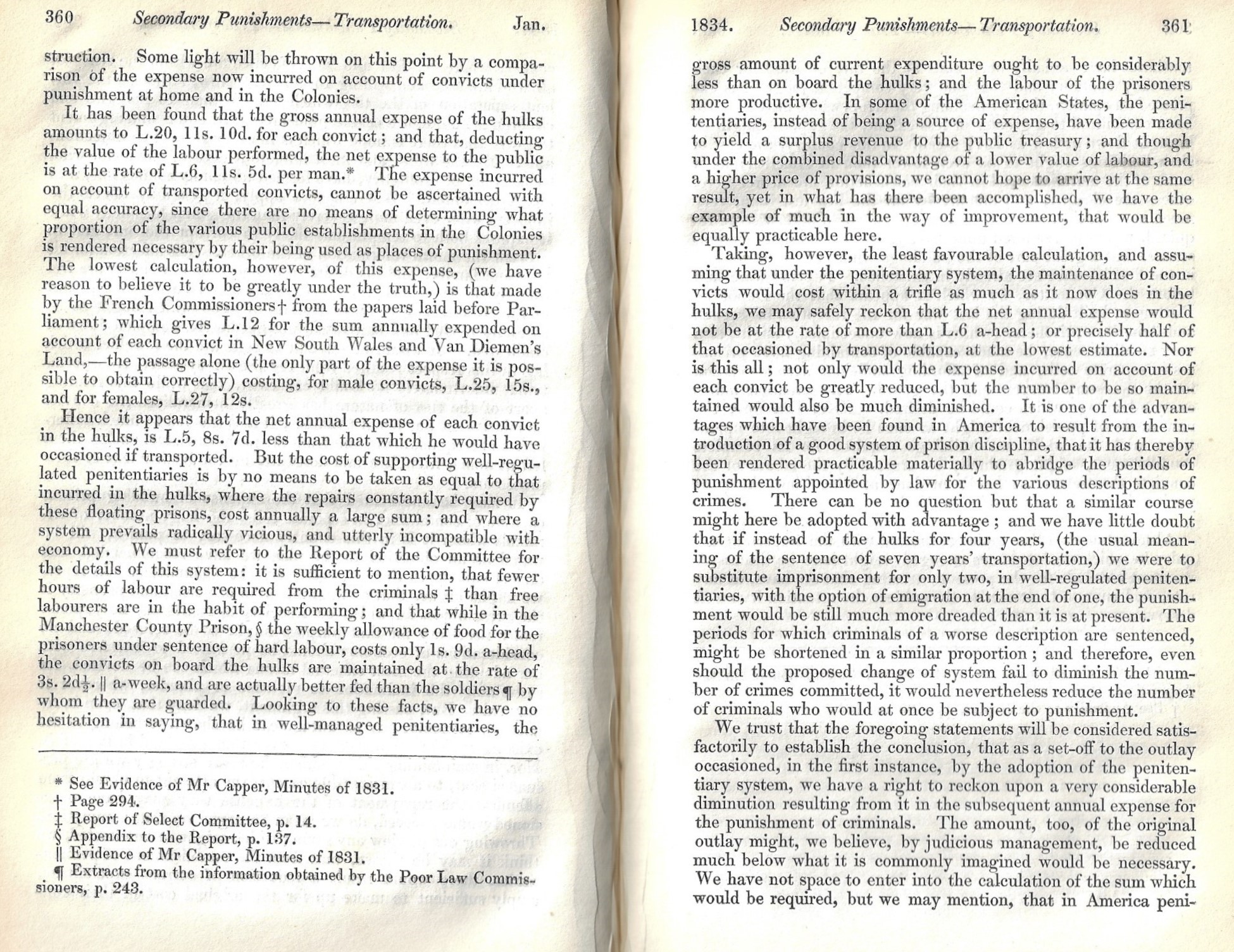
    I found the following bits of information while grazing through a volume of the Edinburgh Review for 18261–I don’t really have a place for this to go, so I thought to share it as-is, the article striking some keen interest for me. 

    What the writer seems to be saying here is that if there was greater discipline in British prisons as in America there would be a net loss of convict time served and thus a savings per crime.  Rather than pay for four years of some sort of punishment and discipline that if done correctly (more aggressively) the effort could be accomplished in only two, “the punishment would be still much more dreaded than it is at present”.  “It has been found that the gross annual expense of the hulks2 amounts to L.2o,  less work done by the convict to a net cost of “L.6, 11s. 5d. per man.”

    There was also the option of spending a year in prison after which you could opt out for the remained by being transported to Australia, which has the added cost of 25-pounds per male prisoner (27 for females) for the cost of passage alone, plus 12 pounds annual expense per convict.

    Should the number of crimes not fall as a result of the new punishment system, the writer believes that the number of criminals imprisoned would because of reduced sentences with a higher concentration of penal threat (whatever that might be). The bottom line seems to be the bottom line in this report.  
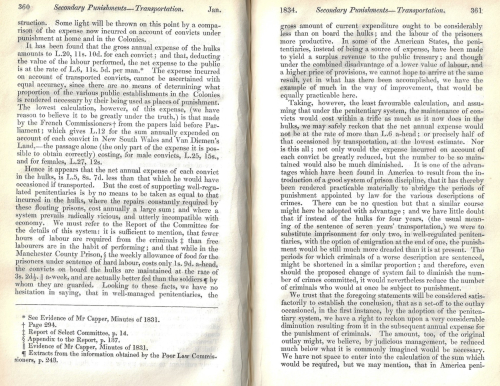
    Convict cost

    Notes

    1.  The source: “Appendice stir les Colonies Penales, ct de Notes statistiques. Par MM. G. de Beaumont et A. de Tocqueville. SJ.”, with “Thoughts on Secondary Punishments, in a Letter to Earl Grey. By Richard Whately, D.D., Archbishop of Dublin” and with  “Reports from the Select Committee on Secondary Punishments, together with the Minutes of Evidence, and an Appendix of Papers,” . .pp 336-362. This is mostly it seems a discussion of “transportation” to Australia and the relative cost of convict-keeping there vs. “the hulks”.  

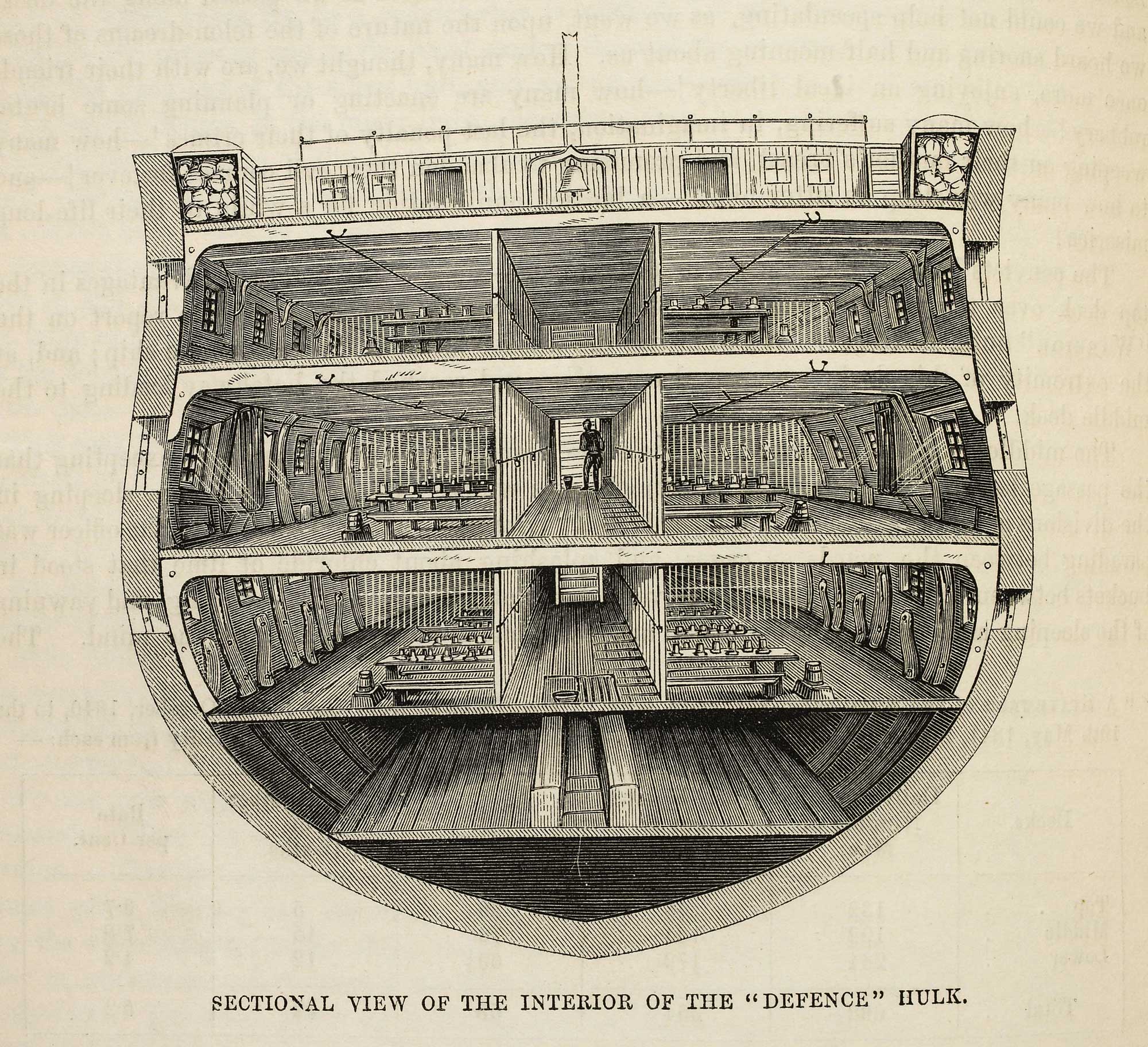
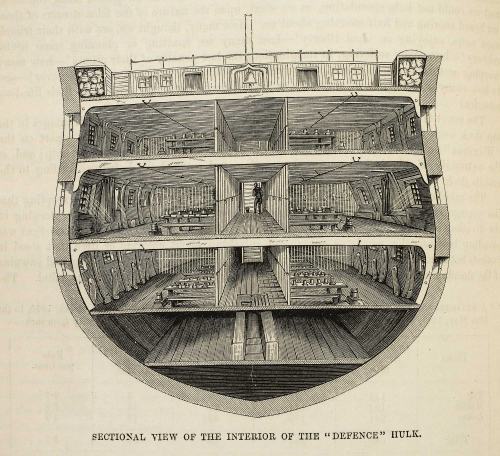
    2.  Even though the following reference is from much later than the narrative above, the image does give a good idea of one of the “hulks”–it appears in Henry Mayhew’s The Criminal Prisons of London, printed in 1862. It is found on the British Library site, along with a three-minute reading of what life was like in the hulk, which was a decommissioned ship, stripped down, and made to hold x-number of prisoners. Comfort was not a concern. 
    Hulk

    Source:  http://www.bl.uk/learning/timeline/item102904.html
      

    ·Posted by :

    ·in:

  • Colossal, Super Colossal, and Mega Colossal: The “Terrible Seismical Manifestation at Java” (1883)

    JF Ptak Science Books  Quick Post

    I came to this terrible majesty/rex tremendae of words browsing an 1883 volume of Nature, landing on two articles on the Krakatoa eruption of 26-7 August 1883. The editors were just then coming to grips with what scant information came their way, though they knew  that what they were trying to present to their readers was a very major event.  There was little to prepare them for what they would understand the eruption to be, no doubt filling themselves with images of dread (Quantus tremor est futurus, “what horror invades the mind”, calling again–sorry!–on Mozart’s Requiem for the appropriate language).

    The eruption is well known and the subject of innumerable stories and papers, so I’ll not get into that. I do want to look at the expansive and changling vocabulary describing these events, though. The way eruptions are categorized in modern times for relative description and is the Volcanic Explosivity Index (the VEI). a logarithmic scale which runs 0-8. The basis of categorizing the terrific nature of the eruption is made in terms of the volume of ejecta, the plume height, length of eruption, and that sort. I find the defining terms of type of eruption to be very entertaining, with eruptions being described as (level VFI 0) effusive, (1) gentle, (2) explosive, (3) catastrophic, (4) cataclysmic, (5) peroxysmic, (6) colossal, and of course (7) super-colossal, and (8) mega-colossal. (Just a quick note: “colossal” appears in the OED by 1664; “supercolossal” as an unhyphenated word appears by 1875; and “mega-colossal” just doesn’t appear.)

    Krakatoa was a VFI-6, a peroxysmic event with 10 km3 of ejecta, which is 1 billion meters3, or 1 trillion litres, or 264 billion gallons (which would weigh in at 1.8 trillion pounds, or about the equivalent of 17,819.7 Titanics), or about 10 times the ejecta of the 1980 Mt. St. Helen’s eruption. These are very messy approximations as ejecta is varied, but it does give you an idea of the magnitude of what was going on.  

    ·Posted by :

    ·in:

  • Admission Form to Institutions for the “Feebleminded” (1920)

    JF Ptak Science Books  Quick Post  (Part of the series on Blank, Empty, and Missing Things)

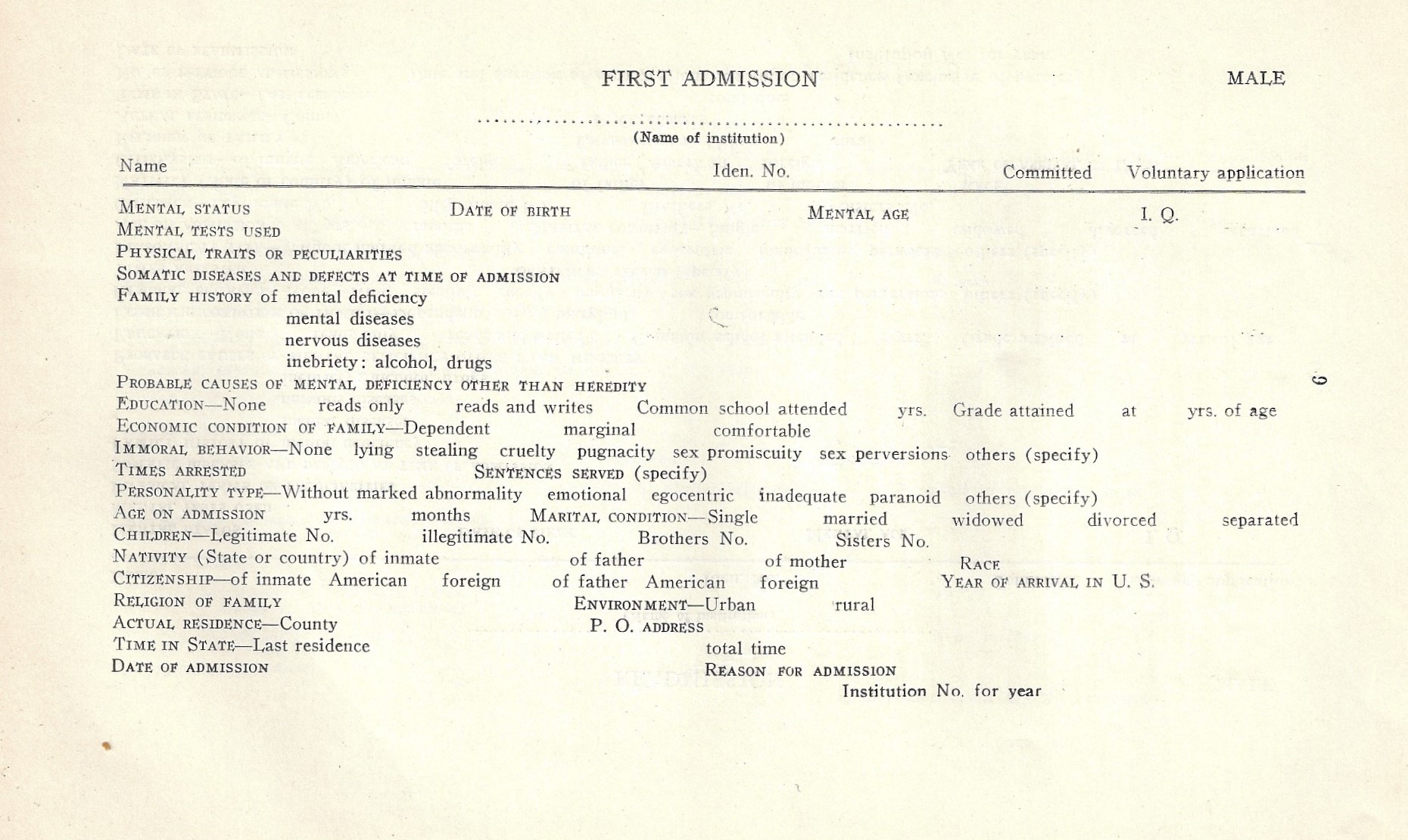
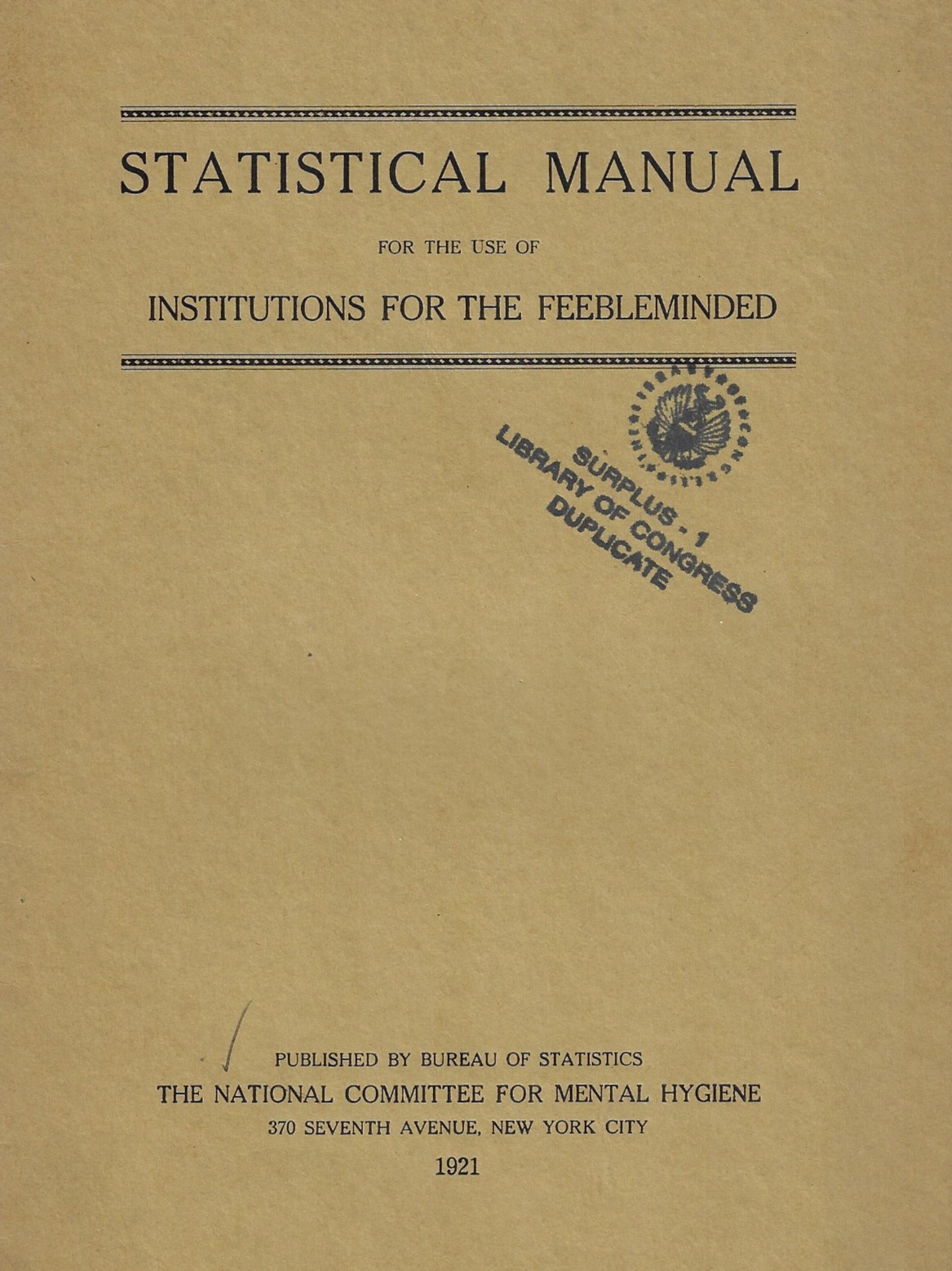
    The following form is one of six1 presented in a 1921 publication2 on institutions for the “feebleminded3“.  It was published by the National Committee for Mental Hygiene (370 Seventh Ave, NYC) and states that the forms represent a marked improvement in collecting and standardizing mental health data. Many of the terms are narrowly defined (or as narrowly as could be in a 40-page document), though when you consider the time in which it was accomplished this does seem to represent step forward in the creation of uniform statistics for people being treated for various sorts of mental diseases. 

    The “mental status” criteria to choose from includes “idiot, imbecile, or moron” while personality type classification included “emotional”, egocentric”, “inadequate”, “paranoid”, and “others to be specified”.  It is interesting to note that “egocentric” “includes those who are “egotistic, selfish, individualistic, superficial, and shallow in their moral feelings, inconsiderate of others, unappreciative, etc.” which could have included a lot of people, then as now. 

    Admission form mental hospital


    I should point out that the most discriminatory remarks for identifying the nationalities is in regards to Jewish people. For example, this guideline (based on the U.S. 1920 census guidelines) is offered to the admissions people:

    • “ENGLISH. Care must be given to exclude Hebrew who are born in England…”

    And this for “Hebrew”:

    • “HEBREW. No difficulty will be experienced in identifying Hebrews and they should be so classified without regard to the country from which they come.”

    Notes:

    1. The other forms are for readmission, parole, death, discharge, and transfer. 
    2.  The cover for this work:

    Admission form mental hospital

    3.  “Feebleminded” appears as a compound word in the OED, making an appearance as far back as 1534 in the Tyndale Bible, ” Comforte the feble mynded.”. The other uses of feeble-____ seem to all appear after that, including Feeble-bodied, -eyed, -framed, -hearted, and -winged. 


  • An Episode in the History of Manure: “To barren ground with toyle large meanour add.”

    JF Ptak Science Books  Quick Post

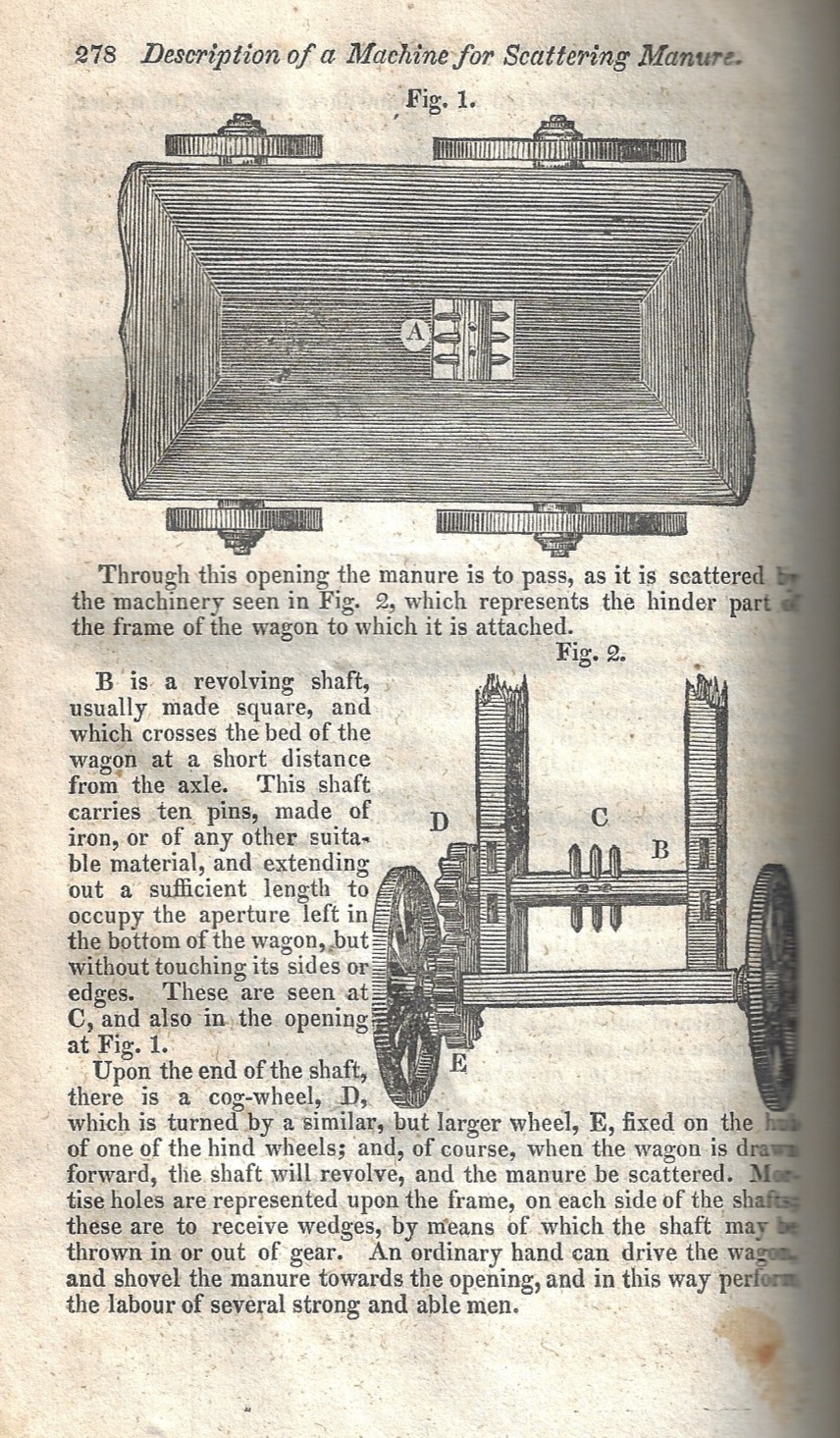
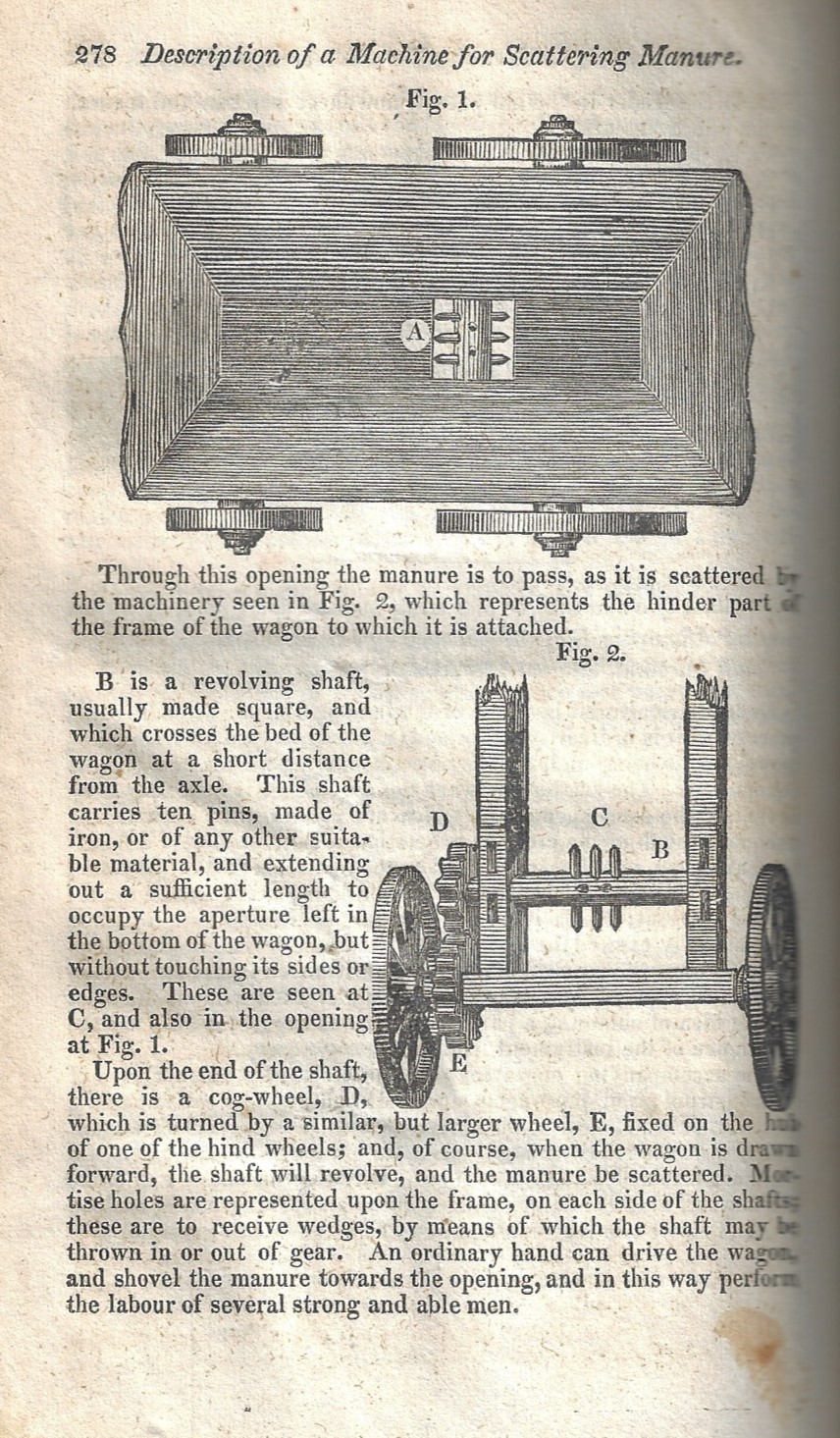
    Franklin Institute 1829 Manure spreaderOf the many things that can be said about manure you can’t say but can say about its chemical replacement is that it is made from fossil fuels and sucks good stuff from the soil and ultimately makes the farmland it is fertilizing unfarmable. That’s what popped into my head when I bumped into this woodcut of a manure spreader while farming something else in the 1829 volume of The Journal of the Franklin Institute. It’s a relatively simple improvement to a necessary and laborious job–adding the spreader made the application of manure far easier than have it slide through a jamable sluice in the bottom of a wagon, and certainly a lot easier and more thorough than spreading it by hand. 

    And just for the fun of it I checked out “manure” int he OED, where it makes appearances in English beginning in the mid 16th century, and for the hundreds of years the word has been around it has a complicated spelling history (manoure, maynor, maynure, menar, menor,  menore, meynor,  maner, meanor,  meanour, manure, mainure,  manier, manner, mayner,  meanure, menure; maner,  mannor,  mainer,  manna, manner, mannur, manor, manuer; manar, pre-maner, mannor, mannour,  mannur,  manuire, manure,  manour, mainer; U.S. regional (southern) manyo). Here are two examples of early usage that have some poetic sense to them:

    • 1664   J. Evelyn Sylva (1679) 10.   “To barren ground with toyle large meanour add.”
    • 1697   Dryden tr. Virgil Georgics ii, in tr. Virgil Wks. 85.   “In depth of Earth secure Thy cover’d Plants, and dung with hot Manure”.

    The term “Manure spreader” according to the OED comes into use around 1884, 55 years after this report–except of course this is called a manure “scatterer” which seems to imply less confidence than a “spreader:, though that may have come about due to the modesty of the inventor. 

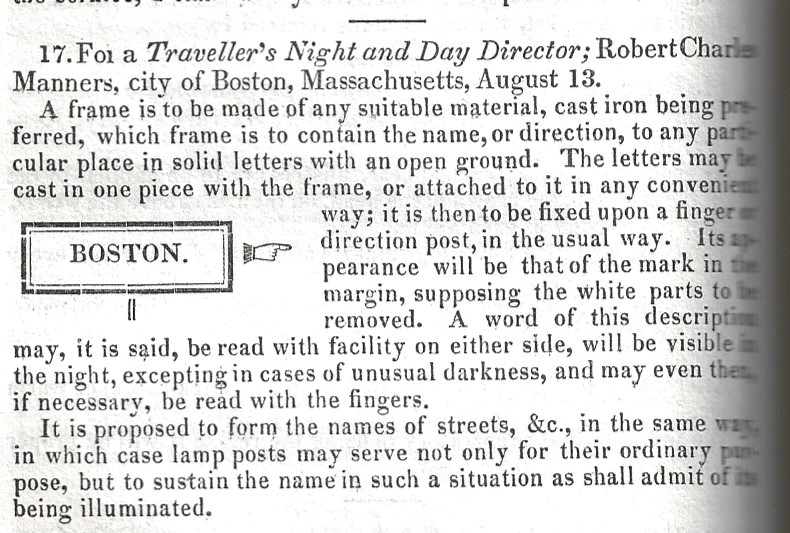
  • A Sign Visible in the Dark, 1834

    JF Ptak Science Books   Quick Post

    JFI 1834 Sign I found this fine little notice buried in the patent reports for the 1834 volume of Journal of the Franklin Institute. The turn in the road on road signs here was to paint the destination in black on a field of white, accompanied by a pointing hand. The sign then would “be visible at night, excepting in cases of unusual darkness, and may even then, if necessary,  be read with the fingers”.  My word. Interesting that this attempt is made so early in the game for coach roads–the same cannot be said for roads for automobiles, where it took into the 1920s and 1930s to invent the dividing lines in the center of the road to define lanes and put in shoulder lines (respectively). 


    ·Posted by :

    ·in:

Recent Posts

Archives

Categories