A Daily History of Holes, Dots, Lines, Science, History, Math, Physics, Art, the Unintentional Absurd, Architecture, Maps, Data Visualization, Blank and Missing Things, and so on. |1.6 million words, 7500 images, 4.9 million hits| Press & appearances in The Times, Le Figaro, Mensa, The Economist, The Guardian, Discovery News, Slate, Le Monde, Sci American Blogs, Le Pont, and many other places… 5000+ total posts since 2008.

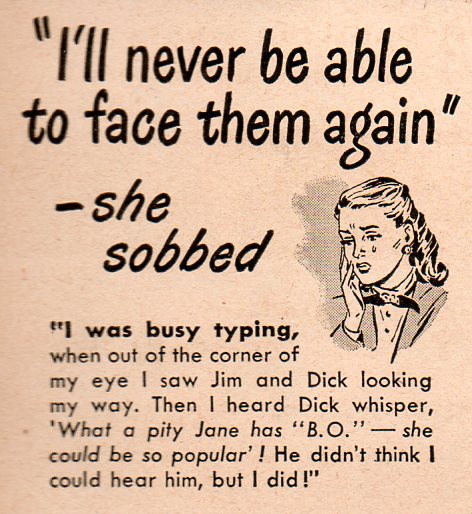
  • Found Comix: Female Trouble, 1947 (“When Tears of Shame Smell!”)

    JF Ptak Science Books Post 1062

    Female Trouble---Whispered BO 1b147

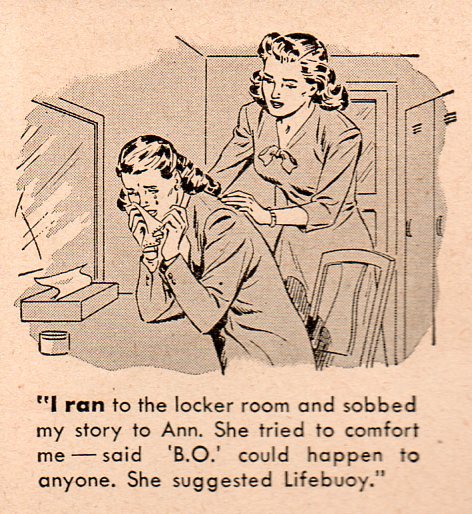
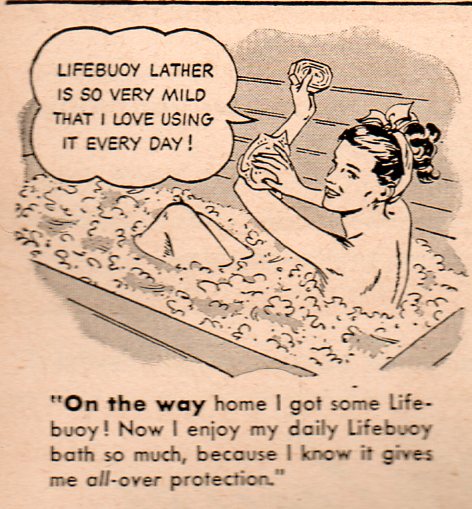
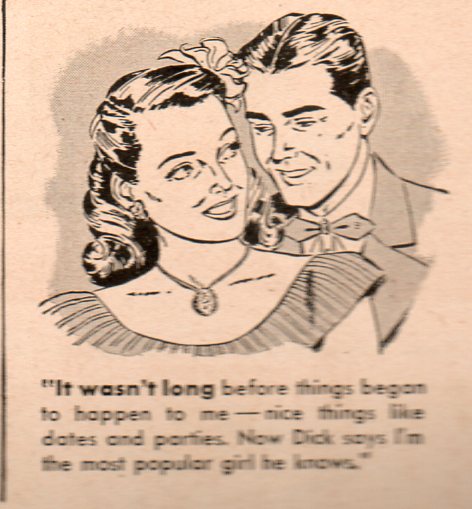
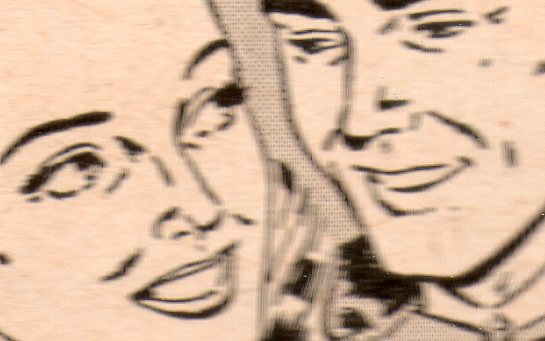
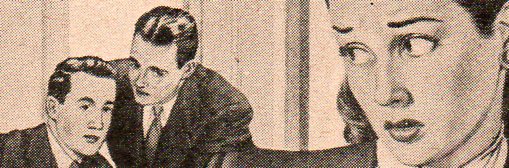
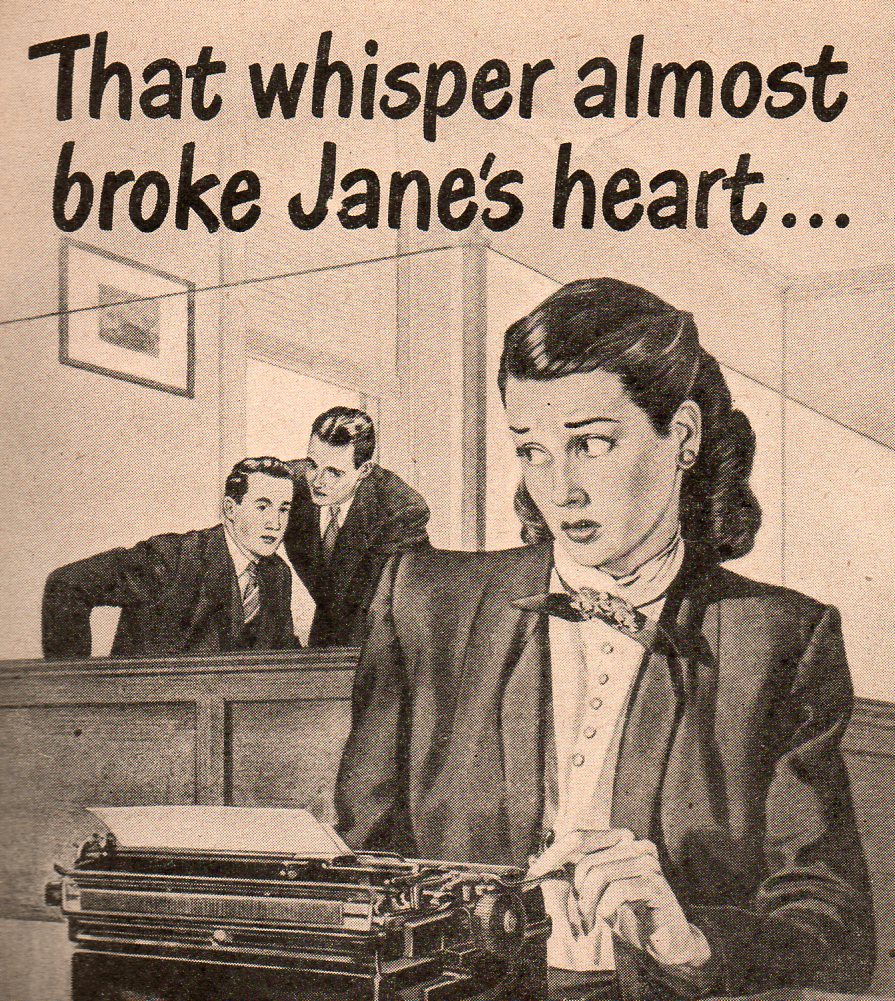
    I’ve posted a few found comix elsewhere on this blog (for example, this magnificent Italian contribution on surviving fire bombs, here), and I guess that I should have been paying more attention to these other bits of comix-driven advertisement marginalia that flits in and out of the pages of mass market weekly journals–they turn out to be pretty interesting and revealing entities.   In today’s case it is LIFE magazine for 9 June 1947, and if subtle, rueful self-awareness images like this were an automobile, this submission would be a jaguar.  It is the blatant story of a private and personal life ruined by whispers of BO, where a woman named Jane is paralyzed by the sly look and not-so-silent pronouncement of sniffy displeasure by a man named Dick.  The woman would scrub up and then somehow land that self-same Dick in the end with her newly perfumed Lifebuoy body, but only after filling bathtubs with her BO-laden tears.  But what a terrible story to tell about such a fragile existence extinguished, all to sell a bar of soap through a comic book tale on the edges of the back pages of a picture magazine.


    Female Trouble---Whispered BO 1146
    Female Trouble---Whispered BO 2148


    Female Trouble---Whispered BO 3149
    Female Trouble---Whispered BO 4150 

    Female Trouble---Whispered BO 5151
    Female Trouble---Whispered BO 5 b152

  • Jigsaw Puzzle Girl/Women of Popularity and Unpopularity

    JF Ptak Science Books   Post 1062

    A little while ago I wrote a post called What
    Goes Into Making Human Robot Girls, 1941
    , which was a look at one of  a series
    of
    intolerably heavy eight-page pamphlets cementing the structure of female
    social
    intercourse at the hands of the magazine The
    Ladies’ Home Journal
    . 

    Blog jan 13 Puzzle cvr

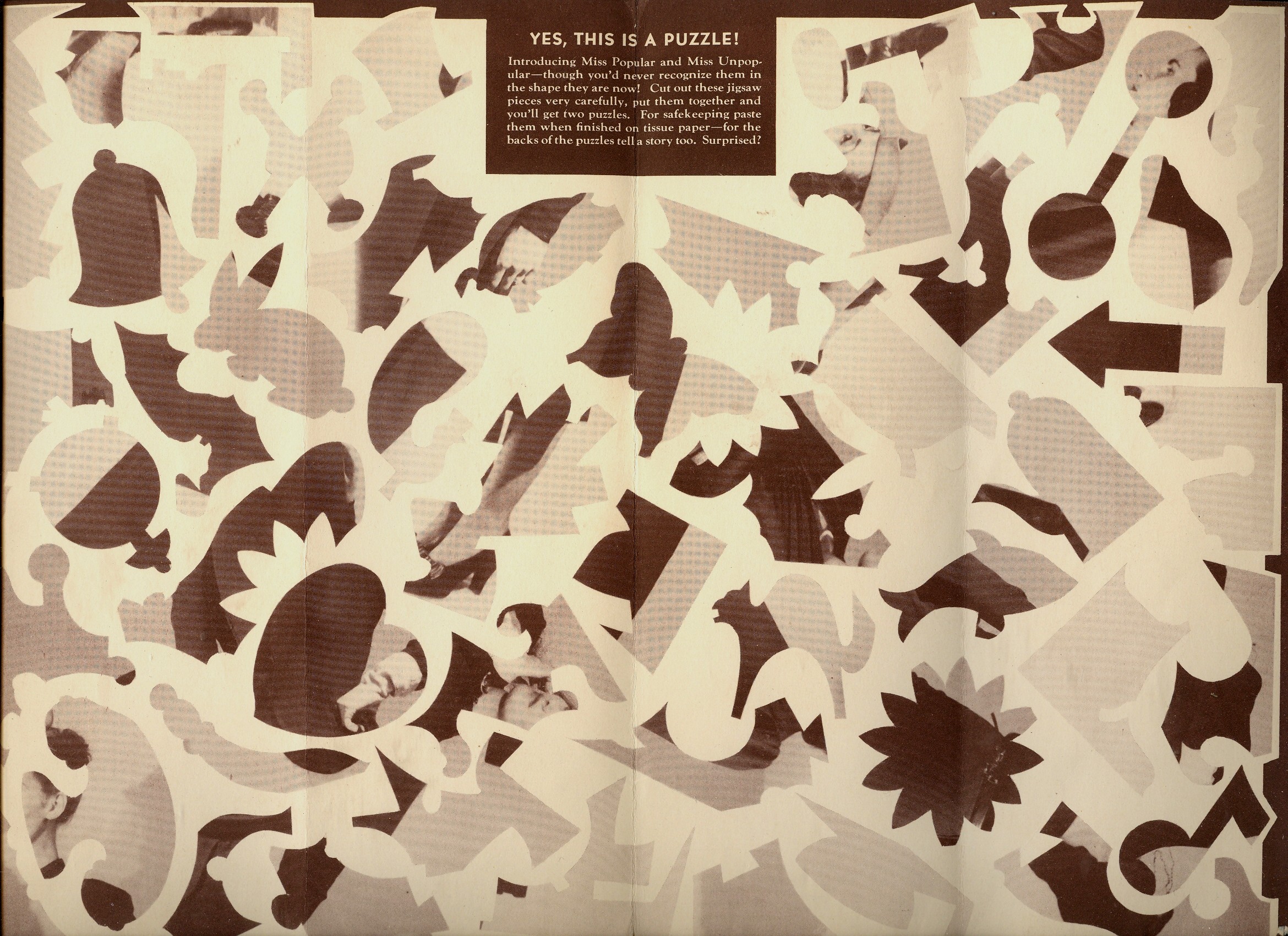
    Continuing on this thread of “constructing” females come this publication—hardly a pamphlet per se, just a folded 11×8 inch
    sheet of heavy
    stock—from that same series.  It was offered without a title, presenting itself as a do-it-yourself cut-out  puzzle. The puzzle
    pieces
    are parts of two women, “Miss Popular” and “Miss Unpopular”: the reader
    was to
    take the publication, cut out the pieces, and reassemble them into
    hidden role
    models, with phrases describing each on the back of each puzzle piece,
    all done with the with lost irony and  questionable metaphor.

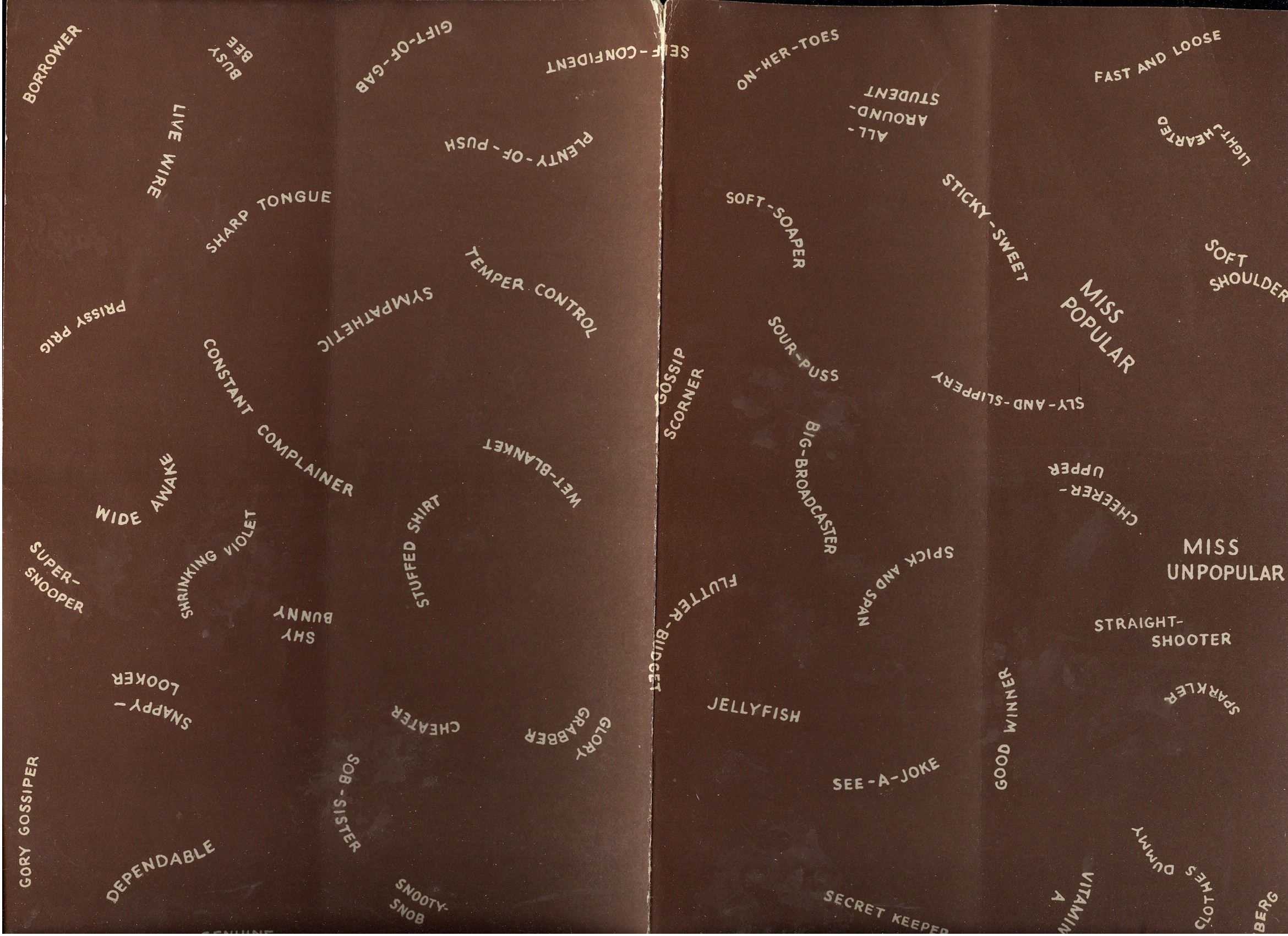
    The twisted printing makes the description conform to the puzzle piece on the other side of the paper.  The descriptions for the Popular Girl are as follows:

    live wire, plenty of push, wide
    awake, snappy
    looker, dependable, genuine, secret keeper, on-her-toes, spick and span,
    light
    hearted, all-around-student, straight-shooter, gossip scorner,
    sympathetic,
    cheerer-upper, sparkle
    r.

    Blog jan 13 Puzzle pzl

    Miss
    Unpopular’s
    phrases/descriptors
    :

    glory grabber, sour puss,
    cheater, sob-sister,
    snooty-snob, wet-blanket, borrower, prissy prig, sharp tongue, gory
    gossiper,
    clothes dummy, iceberg, sly and slippery, jellyfish, sticky-sweet, soft
    soaper

    (?) and, of course, fast and loose.

    And
    so girls—or young women—picking up this publication in 1941 were
    expected to
    cut this thing up and piece together the proper (paper) role model using
    the
    reinforcing traits of meager acceptance printed on the back of the
    puzzle
    piece. Once together Miss Popular and Unpopular look pretty much the same, though in general Miss Unpopular seems a little darker than necessary, scorched I guess with her selfish sins. 

    And so double-click for a big image, save it to your desktop, print out and cut up your own Popularity Girl.  Or not.

  • The Medical History of Curing Cancer with Limburger Cheese, Glycerin and Alcohol.

    JF Ptak Science Books    Post 1064

    “The bees were made of sugar and honey, and so made them sting so sweet…” Billy “Craggy” Muffle singing on the French Broad River , 1935.

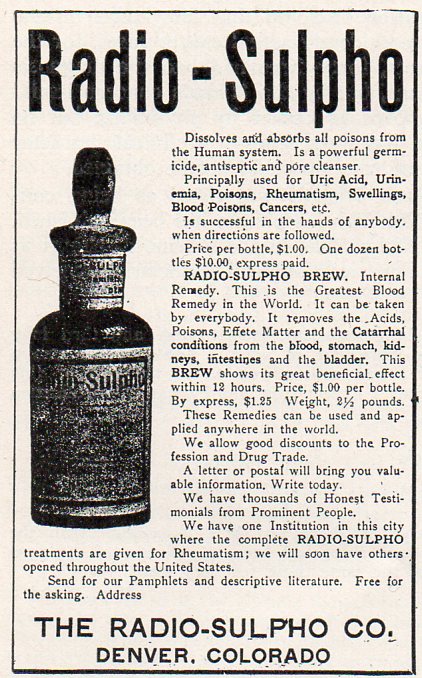
    Punched into the New York Times for 24 October 1909 was this weird Sunday filler on page 11:  “LIMBURGER AS CANCER CURE.; Denver Chemist Says That Cheese May Conquer Leprosy, Too.”  It was a true story, the quackery produced by the Radio-Sulpho Company by Philip Schush, Jr., a man who preyed on sick people and who is now dead and probably in some Hell.  Schush couldn’t leave well enough alone, claiming that his valueless concoction could smite leprosy as well–evidently his range wasn’t wide enough and needed something more, something extra, to fatten his pillow for his fetid night’s sleep.  Somehow Schush chose leprosy.

    Quackery--radio155 The article comes from a time when the American Medical Association was working in a new alliance with the Food and Drug Administration and the U.S. Post Office to identify worthless and fraudulent products like this and to protect consumers from vulture companies like Schush’s.  This was a new practice with Federal teeth for enforcement, and the amount of quackery it exposed in the medical field was staggering—which I guess is the case when you shine a bright light on anything for the first time, like discovering teeming cold  life at the bottom of the sea. 

    The temerity of so many of these products was astonishing—it seems that absolutely anything could be said, and fortunes would be made, the little-regulated market of medical cures had an enormous population of the sick and frightened to pull form, people who would supply their own truths and beliefs where there was none.

    The Radio-Sulpho Company is a prime example:  Schush claimed that cancer was caused by germs in vaccines, and that by applying a Limburger cheese poultice to the affected area and drinking his concoctions (“the greatest internal remedy in the world”, which were mainly sulphuretted hydrogen and water) every twelve hours, the cancer would be cured. For a steep $25 a month (“and upwards”) the Radio-Sulpho Company would take care of business, “cancer of the womb and breast (were) the is simplest, easiest and quickest cures made”.  Schush Jr. would also come out to treat you personally with his nostrums for $100 a day—but would visit “the white race only”. He died under mysterious circumstances in 1911—some say murder and some say a heart attack (though a heart attack caused by a bullet would’ve been more in line with what the man deserved).

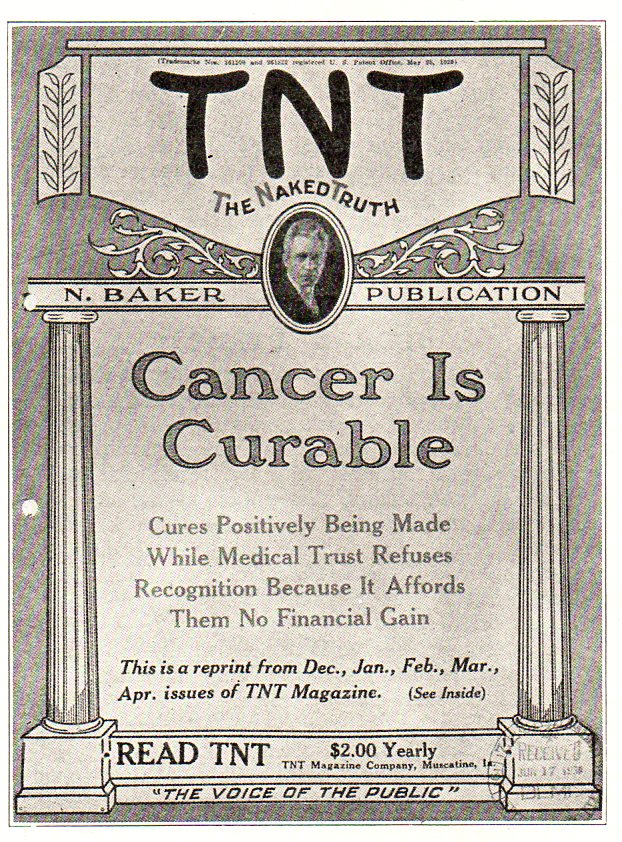
    Another example of extruded quackery is the continuing downward spiral of Muscatine, Iowa’s Norman Baker, whose long line of fraudulent products attracted the attention of The AMA early on, and whose exploits lead to longer and harsher judgment under the law. He treated cancer sufferers in his own hospital at a cost of $1000 (in the 19-teens), treating “external” cancers with a cure of arsenic powders (which had been stolen from another quack, Harry M. Hossey) and internal cancers with glycerine..  He abetted his “cancer is conquered” claims with his magazine TNT (The Naked Truth) and his radio station, KTNT. 
    Quackery--tnt157

    There were hundreds of others:  S.R. Chamlee (Chamley) promised a unique and infallible cure of cancer that amounted to 90% water, “benefited” with strychnine and saccharine.  G.M. Curry (Lebanon, Ohio) claims to have discovered the germ of cancer (ca. 1910) which was cured with his elixir of water, sugar and opium.
    Other cancer cures used plaster applications (at the Gast Sanatorium, Columbus, Ohio); sugar water (“B.H. Green’s Wild Woods Cancer Preparation and Female Tonic”, Bessemer, Alabama); “radium oil” (James Harris, Tulsa, Oklahoma);chiropractic (David Hestand, Sherman, Texas; “liquid laboratory products” (a mixture of water an d zinc chloride (Indianapolis Cancer Hospital); “cancerine tablets” (95% sugar and 4%’inorganic material’, Johnson Remedy Company); “blood Purifier (20% alcohol, 25% sugar, plus glycerine and licorice, the Johnson Remedy Company).  Koch’s Synthetic Anti-toxin (Detroit), William F. Koch) involved “secret remedies” for a starting point of $200 which according to the AMA “was a gruesome spectacle causing a large number of deaths”, the Journal of the A.M.A.); the Lamotte Caner Institute in the U.P. didn’t actually cause people’s deaths but led them to their ultimate cancer-y demise by treaty their illness with bark; L.T. Leach’s “Healing Oils” were widely used at one point by tens of thousands of cancer victims, the remedy containing nothing but cottonwood oil; the “Drs. Mixer”, a cancer cure business run in Hastings, Michigan by C.W. Mixer and other assorted non-medical relatives, sold various products containing mostly alcohol and glycerine, plus “Cancer Paste”, which was nothing but petroleum jelly,  “Cancer Salve”, which was made of Vaseline and lanolin, plus powdered opium, and an anti-cancer soap, “Cleanoine Soap Powder”, which was made of borax and animal thyroid.

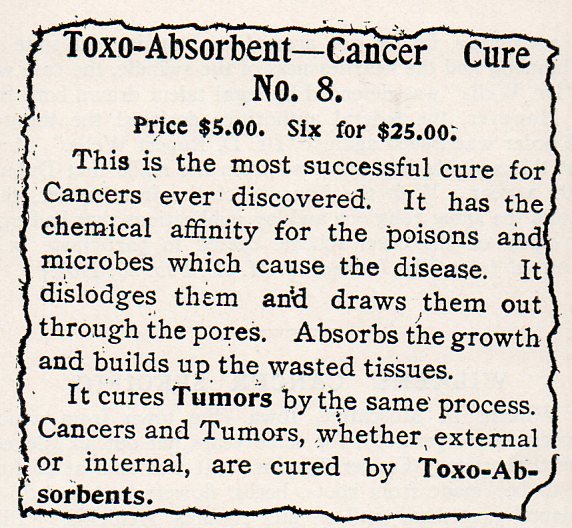
    Quackery--toxic156 These cures range wide and deep, a huge trough of wasted hope—its just tough to see the end of the list. 
    But one last one:  the Toxo-Absorbant Company of Rochester, N.Y., run by Frederick Welles Warner, who claimed an assortment of cancer cures whose “chemical affinities…draws (cancer) out through the pores” of the skin. For $10 (in 1910 money, which was considerable) he would send one treatment which consisted of (1) a  “Toxo-Absorbant Pack”, being a cloth that was to be placed on the affected area (containing a powdery mixture of nothing but clay, pulverized earth and charcoal), “Cancer and Tumor Tablets” (made of milk sugar) and “Cancer Ointment” , which was a topical made of Vaseline and oil of tar. 

    When finally restrained by the A.M.A. and prohibited from selling his stuff through the mail by the U.S. Post Office, Warner’s  defense for his worthless products was not that they were actually curing cancer and that he was being defamed, but that the laws restricting their sale did not pertain to him because he was selling his products before the laws existed.  This was a surprisingly common approach to legal defense in many cases that I have read, and of course did not hold—otherwise, for example, cigarette manufacturers would have been immune from any sort of regulation. The history of medicine is plagued with this sort of deception, but perhaps the period 1880-1930 was the highest stage of this kind of fraudulent-medicine capitalism, if for no other reason than the newly-established and semi-monied working classes could actually afford to buy the stuff.  

    I’m not sure what sort of weight will be brought to bear on our own medical practices a hundred years from now–copper bracelets, shoe magnets (for example) and other obvious modern quack stuff will certainly make it to the condemned list, but I also wonder about stuff like cosmetic plastic surgery.  And then of course there’s Dr. Freud….

    ·Posted by :

    ·in:

    —
  • Power of Words: On Naming Women

    JF Ptak Science Books   Post 1066

    In the river of names, of all things, babies and wives are given their’s by fathers and husbands–and the wives are solitary cases of having a name already given them taken away to take the husband’s.   In the early- and mid-twentieth century and before, women leaving their parent’s home with a husband followed the custom of leaving at least half of their social identity behind, and in many cases, all of their name disappeared as they became “Mrs. John F. Someone”, burying women further into unrecoverable social and legal anonymity.   In earlier times this burial was literal–if you take a walk in a mid-19th century cemetery (and earlier) you will see some amount of smaller headstone(s) next to a larger simply reading “His Wife, Elizabeth” and some simply, in high tragedy, “His Wife”.  Like burying property, the woman in death remains an asset.  

    Having a woman follow a custom of taking her husband’s name in marriage is an old practice in the United States, and a successful one (for centuries) of helping to keep woman as a subjugated class, and for at least maintaining a control of sorts on women’s individuality.

    And so far as I know this practice was a custom–I’m not aware of any state laws requiring a wife to take her husband’s name. (Just in a way as “the Pirate’s Code”, as Capt Jack Sparrow pointed out, “was more a guideline than a set of rules”.)  This was one of the great unspoken non-issues of the suffragist movement in the 19th century.  I think that the idea was too dicey and radical even for the far-liberals.  But not all:  Lucy Stone kept her name in marriage, and Elizabeth Cady Stanton so elegantly wrote about in the radical feminist magazine The Revolution in 1869 (see below).   But there were few others–the convention was perhaps too difficult and deep to deal with at the same time as  addressing the less-problematic issue of women voting.  The issue was left to the late 20th century top begin to deal with in any real way. 

    So the control of an entire class of people is aided by the power of words–or a word, the husband’s name.  This sort of control happens all of the time, at every level, every day.   Take “spill” for example.  There’s nothing that I can think of in English that is suitable to describe exactly what continues to happen with every passing second with the BP Gulf Coast event horizon debacle.  I am certain that BP is relieved that we don’t have twelves different classifications for the idea of “spill” as, say, a language for a culture which lives in perpetual snow conditions would have  twenty words for different types of snow.  No matter how much someone tries to explain what 100,000,000 gallons of oil looks like, calling it a “spill” in every breath lessens the impact of the event and the data. 

    If you call something by a name right or wrong enough times, that is  what it becomes.  This is a standard advertising ploy, as the great American psychologist and inventor of behaviorism John B. Watson more or less discovered when he began work with the J. Walter Thompson agency–it didn’t matter what the cigarette tasted like (hot toxic smoke and fumes from a burning plant inhaled into the lungs), so long as people remembered that they were told it was”good”. 

    This is also the way stereotyping functions, as well as the Big Lie.  With women, the naming process helped to subvert an individuality that suffered terribly in the courts for some time–in addition to giving up her name, a married woman (in many states) gave up much else, including the right to own her own income, the right to contest a divorce, and the right to have any say in the disposition of her children in the case of a suit for divorce brought by the husband.  Naming things does have great power. 

    Notes:

    From Ann Russo and Cheris Kramarae, The Radical Women’s Press of the 1850’s (sometimes the desired quote doesn’t come up in this window; if you see just the cover of the book, advance to page 168 for the articles “Lucy Stone” and “Can a Married Woman Have a Name?“):

  • Thinking about the History of Pockets and Pocketbooks

    JF Ptak Science Books   Post 1067

    I’ve known about this photo for a long time—a picture of a
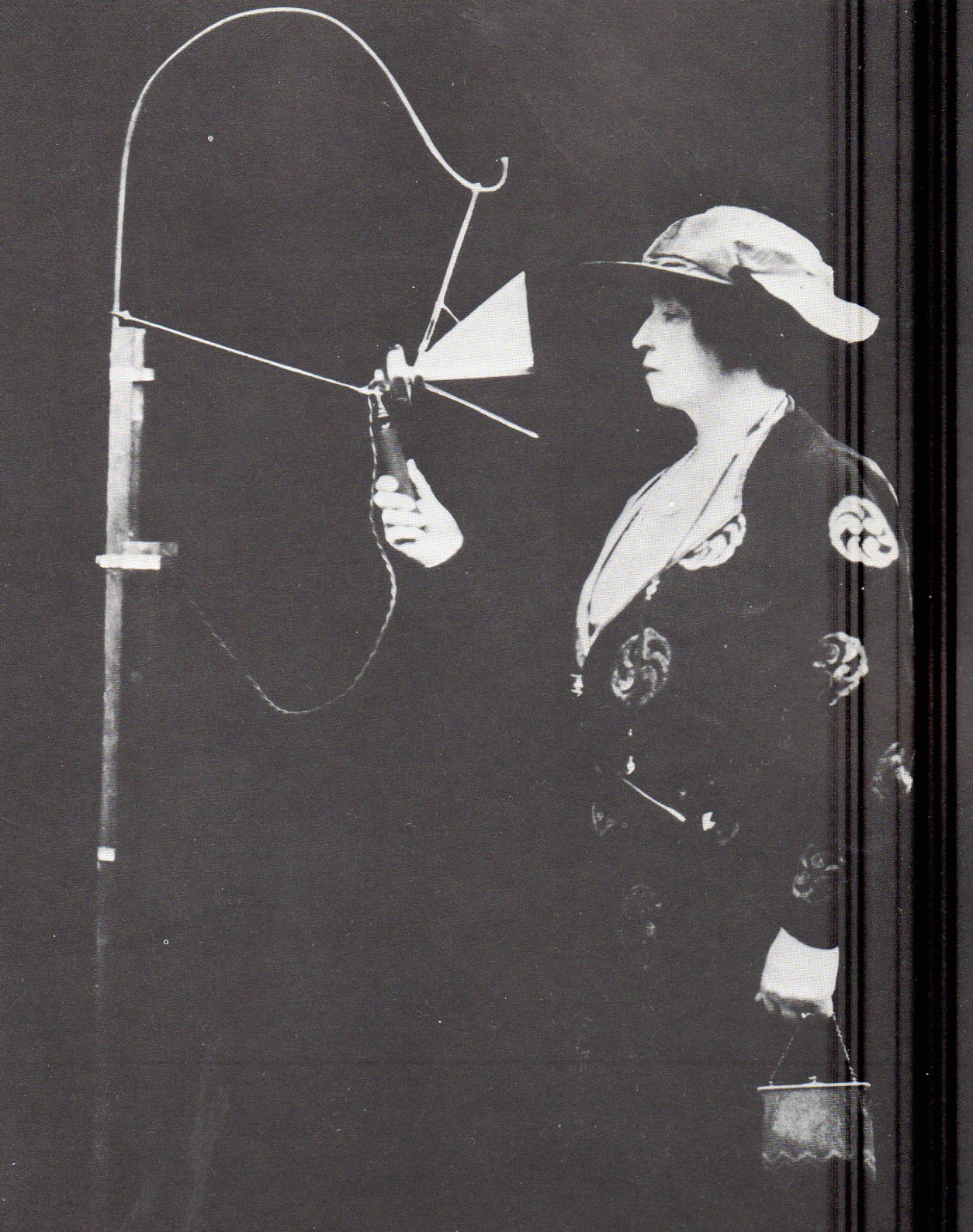
    willed, powerful woman stepping up to an (early, interesting)  microphone to perform:  that would be Dame Nellie Melba, the prima donna from Australia, singing at the Chelmsford Marconi works on 15 June 1920 in the first-ever-advertised broadcast entertainment.   Weirdly, 
    what has always struck me about this is the handbag. The pocketbook.  Why didn’t she put it down to sing? 


    Pocketbook161

    Its not a big question, really, especially if you look at
    the pocketbook as just a pocket that you hold—an irony in itself, a displayed
    thing holding concealed things.

    The pocket, or handbag, or purse or pouch goes back a long
    way, thousands of years.  But for this
    scant view of the history of the pocketbook the action begins in the 14th
    century or so, when pouches with drawstrings were used to haul this and that,
    attached to the exterior girdle of the clothing of men and women alike.  These exterior pockets were switched to the
    interior in the 16th and 17th century (or so) given the
    new and voluminous articles and layers of clothing that were in fashion—there
    was so much material that the girdle or belt could be worn under the clothing
    with the pouches attached to them there. 
    Of course if you didn’t have a lot of clothing to wear—like these guys
    in Brueghel’s “Two Elders” , you’d be
    wearing your pouches still on the outside, this in the manner of K Street bike
    messengers. 

    And so by the end of the 18 th c fashion was flayed with the
    curse and rumor of revolution—people wore less layered and puffy clothing, and the
    pouches returned again, though aided in a short while by the invention of what we  know and recognize today as the modern
    pocket.  The pocket would at first be a
    simple slit in the clothing to get to the hanging, girdle/belted dangling
    pocket, and then after Something Happened the pouch would be attached to the slit.
    Voila.

    The pocketbook that we think of today came into being in the
    mid/late 19th century—just a few decades really before this photo
    was made—and that article of necessity hasn’t looked back since.  It seems to me that the pocketbook of the 19th
    century might’ve been an advertising platform too for marketing marriagability—the
    bags were often finely decorated/embroidered, which would show in effect a
    particular domesticity skill.  And then
    of course the bags just held stuff, too. 
    It would be interesting to see a collection of the preserved contents of
    handbooks by the decade for 150 years or so—just the contents spilled into a
    bag and preserved, a version of “the Things They Carried With Them”. 

    I have no idea about the evolution of the interior pockets
    of pockets in pocketbooks.

  • A Taxidermological Satirist Adventurer and PsychoBon-Vivant: a few Paragraphs in the History of Boredom

    JF Ptak Science Books   Post 1068

    In the 19th century, when the rich were insane, they were simply eccentric; when the poor were insane, they were crazy.  Luckily for Charles Waterton (1782-1865), he inherited a large estate and could insulate himself from legal scrutiny and indulge his whims and interests.  Waterton would make a problematic biography, his life filled with front-line environmentalism, exploration, taxidermy, and natural history interests wrapped around a solid steel stake of bizarre personal behavior.  Money was his greatest curative, an elixir of great depth and more understanding than Dr. Freud could ever muster. But ultimately I think that with all of this behavior masked a terminal boredom–Mr. Waterton was both bored and boring.
    Waterton

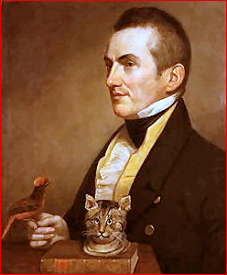
    Waterton wrote three volumes of Essays on Natural History and the best-selling Wanderings in South America1, turned his estate into what amounted to be the first nature preserve, talked to bugs, barked like a dog, tried to fly from his outhouse, left his gloves at the top of St. Peter’s, and on and on.  His portrait by Charles Wilson Peale shows him with a sharp eye, weird hair, and a cat head as his buddy on a book. 

    Later in life he had a bitter dispute with JJ Audubon–this was mostly a one-sided affair, Waterton seeing mostly invisible complaints with the great ornithologist’s work.  Audubon rarely responded to Waterton’s very public and in-print diatribes, ending only when Waterton left England for New Zealand in 18392. 

    The man did form a considerable collection of natural history specimens and medical oddities. 

    Perhaps the most interesting thing for me to take away from Mr. Waterton are the subject headings of the biography written for him by his long-time fried, Dr. Charles Hobson, (Charles Waterton, his Home, Habits and Handiwork3), published in the first edition a year after Waterton’s death (and somehow reaching a second edition three decades later).  The book is a very tough go from where I sit, and my main interest is just in the sub headings for the book’s chapters.  For example, how could one resist the story of such an odd man when presented with chapters like these:

    “Mr. Waterton recounts a conversation with a Man representing himself Skilled in Egg Gathering at Filey ….. “

    “Remarkable Willow, from the Stump of which have sprung Twelve Stems, designated by Mr. Waterton “The Twelve Apostles,” and one detrimentally influenced by a Storm being named “Judas ”

    “Securing of Pike by the Bow and Arrow a favourite Amusement of the Squire”

    “Mr. Waterton “fairly floored” by Mr. Salvin’s .clever Imitation of a Pig”

    “The Ape Searching the Squire’s head reminds him of a Cambridge anecdote”

    “Special immunity in the female sex from death by lightning” (which is a loose, semi-statistical discovery of challenged means)

    But once you open the book and make your way through Hobson’s unusual prose, the book becomes almost instantly resistible.  And so my interest in Waterton wanes down to almost nothing–he seems like an interesting guy, but not so much so that it eclipses all of the egomaniacal stuff that went along with him. He seems to be made of the stuff that excludes friendship, and that leaves me out–and with which Waterton would have had no problem.

    ____

    Notes.

    1.  The book has not been out of print since it first appeared 170 years ago.  It is filled with adventures high and low, some of which are real, some not.  Adventuring in Guiana in the first third of the 19th century was an exotic affair–much more so than could really be imagined in general today–and so the book was a best seller. 

    2. That’s okay–the arguments defaming Audubon came to nothing, and Waterton was generally wrong in the main points if not no-wrong in a few minor ones.  I don’t know what his problem was with Audubon and his great work, but it really doesn’t matter. Audubon described one of Waterton’s missives to him as a “scrubby letter”, and I’m pretty sure it must’ve been so.

    3.  The book is available on Google to be read in its full majesty here. I’d say “pass” to the general reader, but if you’re in the exhibits/museum world, I’m sorry to say that it is probably a must-read.

    There’s much more that I left out about this man, but I just can’t do any more:

    “Charles
    Waterton,”
    from the Catholic Encyclopedia

    The
    Charles Waterton Home Page

    Wanderings
    in South America,
    by Charles Waterton

    A nice chapter appears on Waterton in Lynn Barber’s The Heyday of Natural History, 1820-1870 (1980).

    And a very nice appreciation of the man (with a much more useful stuff about his history) from the Pyromaniac blog.

  • World War II Propaganda–What We are Fighting For: Czechoslovakia, 1943

    JF Ptak Science Books   Post 1069

    “In this war, we know, books are weapons”–Franklin Roosevelt, 1943. 

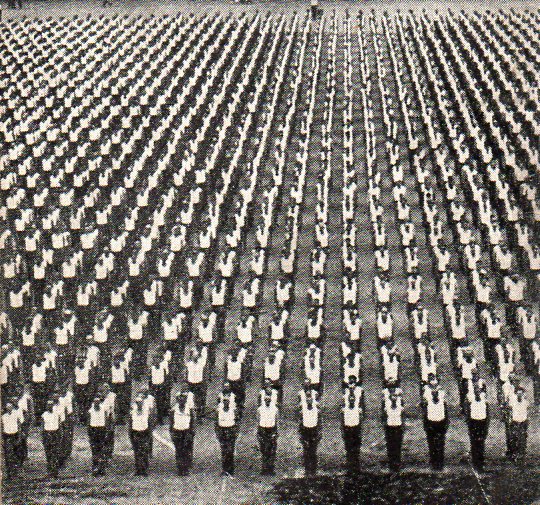
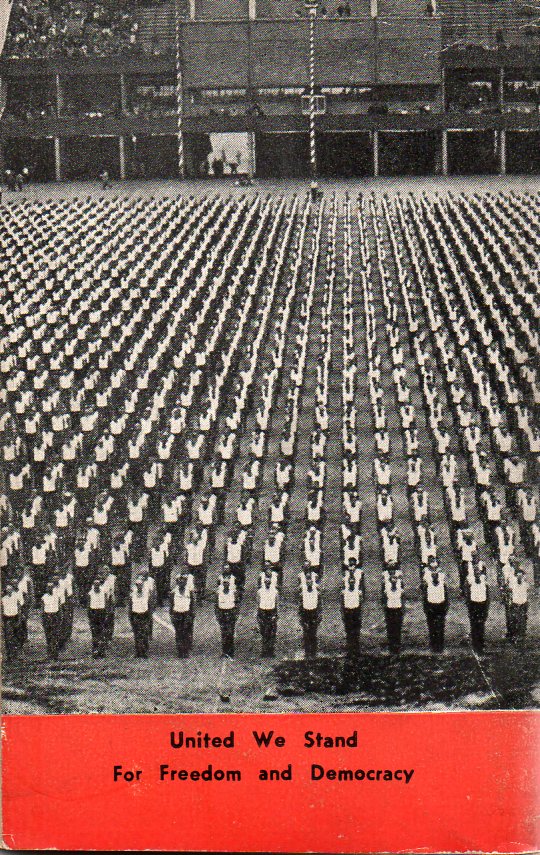
    This image composes the back cover of a very small (3 inches tall)
    pamphlet, Unknown Country, published by the Inter-Allied
    Publications in New York City in 1943.  Its intention was to give a
    background and some sort of name, a little understanding, to what was
    Czechoslovakia, for the general reading public of the United States. By
    1943 the pamphlet may have been a long time in coming, the Nazis
    bullying the Western powers with threat of war if it didn’t get its way
    in stealing most of the country back in 1938–an enormous debacle, the
    only decent thing of it being the necessary disgrace of Neville
    Chamberlain and the coming to the Prime Ministership of Winston
    Churchill. The business of the division of Czechoslovakia and the
    killing of the country through the later months of 1938 is a dark and
    sorry tale, too long to tell here properly.

    Crowd 2165
    The Unknown Country was heavy with
    democracy, the extremely limited successes of interwar
    Czechoslovakia,and the resistance movement–plus of course lots of
    pre-war history–all to provide some sort of recognition for this place
    in the news, an attempt to create a sense of “ownership” about what was
    happening there, a familiarity that would perhaps make Americans
    responsive to war news from far away in places that they had never herd
    of before.

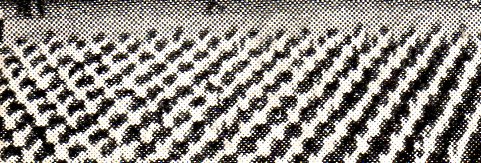
    Crowd 3166

    Crowd164

    One thing largely missing from this 94-page pocket pamphlet
    deals with
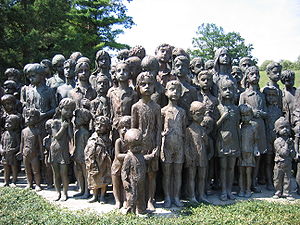
    another sort of crowd–the dead crowds of Lidice.  This was the
    town that was used as part of the 1942 reprisals against the Czech
    people as their punishment for the murder of Reinhard Heydrich: 
    and what happened there is that the town and all of its people were
    killed.  Even dead people were killed, dug up, exploded, dynamited.  The
    town was set on fire, exploded and then bulldozed.  The people there
    were murdered on the spot or sent to concentration camps to be murdered
    there.  Lidice was world-famous by 1943, but for some reason it was
    missing (save for a brief mention) from this pamphlet.  I wonder why.

    Here’s a sculpture dedicated to some of the murdered children of
    Lidice:

    Lidice

    ·Posted by :

    ·in:

  • The Theory of Multiple Creations: a Modest Proposal for Creationists

    JF Ptak  Science Books   Post 1070

    For a little while I was collecting antique maps featuring the location of Eden–almost none of the maps showed Eden in the same place, and as a matter of fact, the Garden’s location was quite dynamic through the history of its cartographic representation.  The it occurred to me that instead of these maps being mostly incorrect or inaccurate or widely interpreted, perhaps they were all correct. 

    Dante_primum_mobile It seems that one problem in the encyclopedia of problems that comprise the entirety of creation scienze is the distribution of the races–a difficult thing to achieve in an excruciatingly short period of geological time and from one location.  There were some 18th century thinkers (like Candolle, for example) who solved problems like this sort of population distribution and sporadic speciation with concepts of multiple points of origin.

    If there were multiple Edens then perhaps the issue of population differences over impossibly short periods of time would make the entire Eden idea less logically compromised.

    If this was the case, why stop here?  Why not an idea of multiple creations, occurring over periods of unspecified time and in unspecified ways and numbers?  Then we could have some very interesting philosophical issues of creation magnitudes, durations, locations, and of course size.  Perhaps there were micro/mini .025 second creations occurring spontaneously over the course of time.  Perhaps an “essential creation” which gave birth to regional and minor creations.  Perhaps there is an as-yet geological strata that could be specified in terms of layers of past creations rather than simple geological explanations.  Astrophysical theories could be bolstered by Multiple Creation Theory (MCT), identifying Dark Matter as vestigaliana of creations large and small.

    I mean, if you’re going to believe in Creationism and creation scienze and intelligent design, why stop there?  If you’re going to believe in a simple, single creation theory, how much more intellectually burdensome would it be to believe in more-than-one creations?                
    I wonder if there is a Lobachevskian or Bolyiaian approach to this issue, a creation version of non-Euclidean geometry?
                           
    In for a penny, in for a pound, I say.

    ·Posted by :

    ·in:

  • Atomurbia: Responding to Atomic Threat by Moving Everyone Everywhere. 1946

    JF Ptak Science Books LLC  Post 1018

    “It is probably not worth putting (all) railways under ground.”  Ed Teller, 1947

    [See also our 50+-part Atomic & Nuclear Bomb series here]

    There is a universe of alternate universes constructed of nothing but the dim bits of bad thinking that is the very DNA of the history of bad ideas.  In those realms there are bad ideas that are bad, bad ideas that are toweringly bad, and bad ideas that are so bad that they’re not even bad as they transcend communication capacities of badness.  The idea I’m writing about today lives at that unspeakably-bad level.

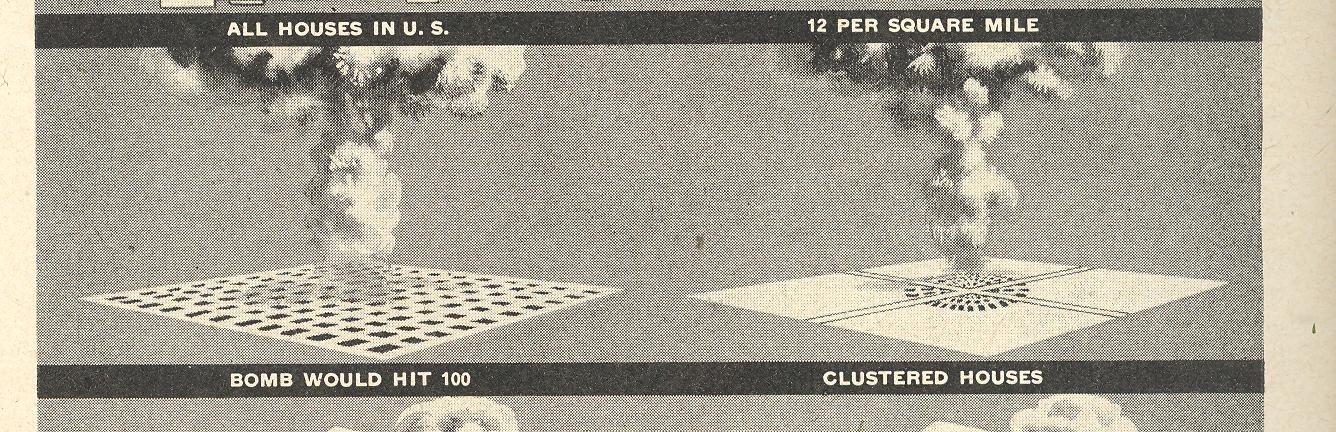
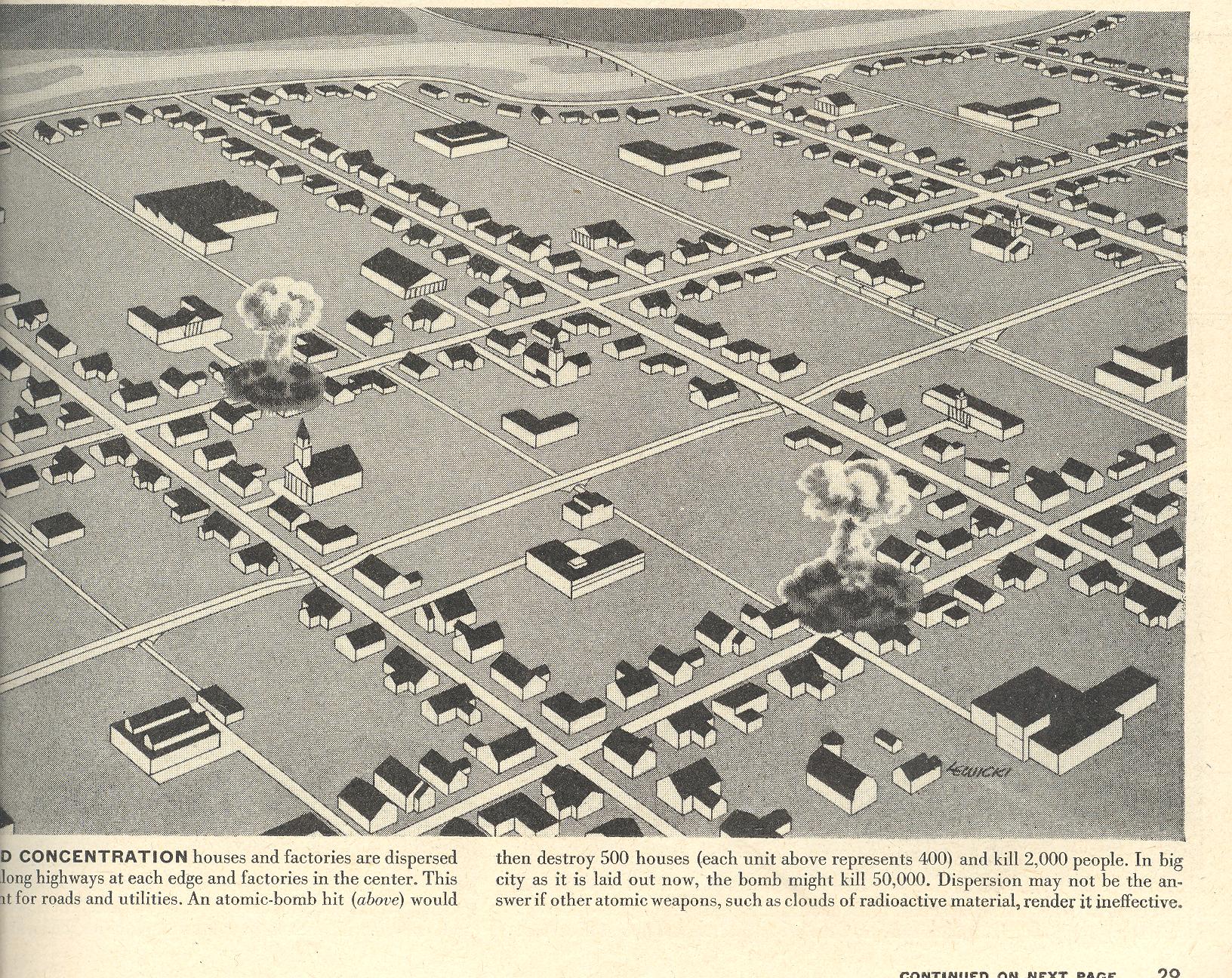
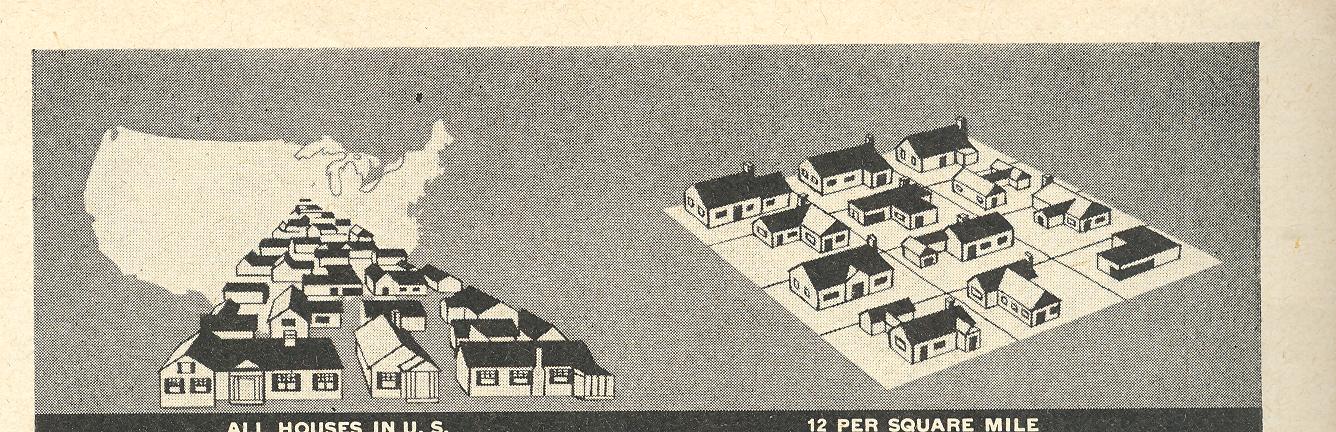
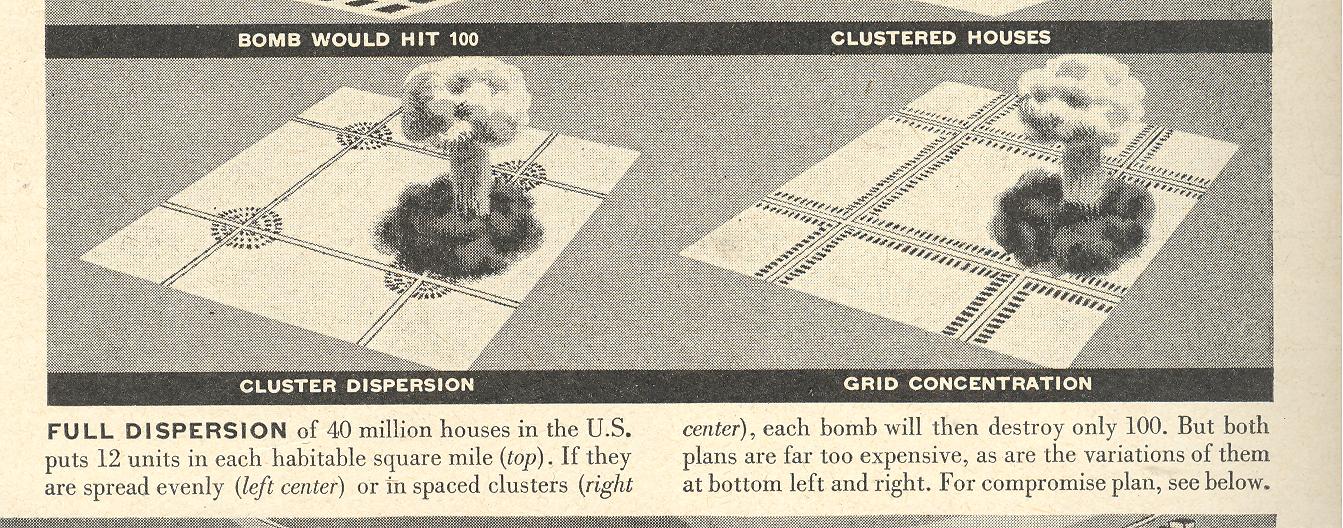
    And that bad idea is this: relocating and dispersing the entire population of the United States into a geometric grid-work covering all parts of the country, emptying all American cities into a vast nothingness of exurban Atomburbs. 
    1-may 3-atomic 2

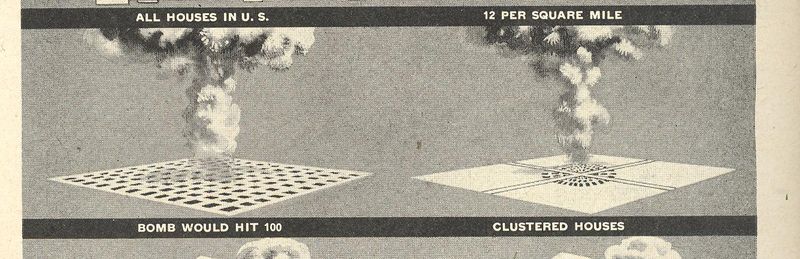
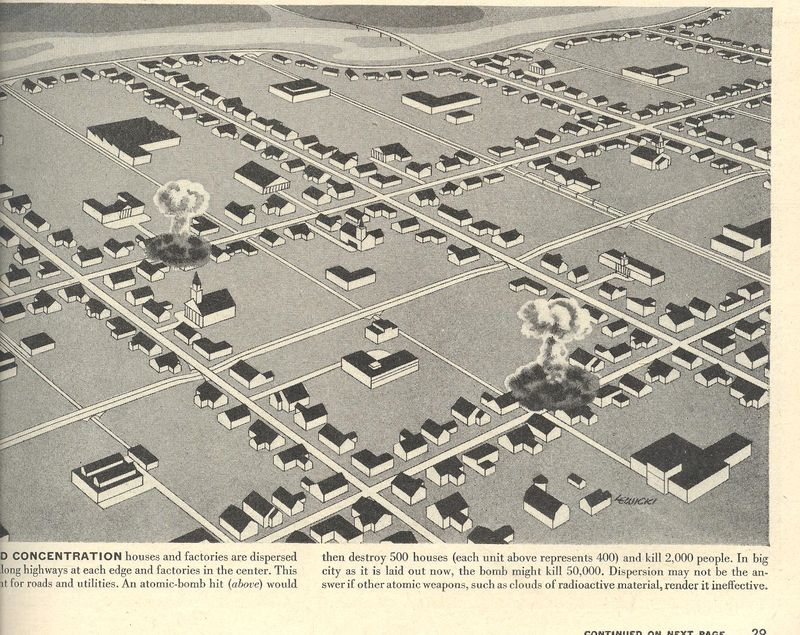
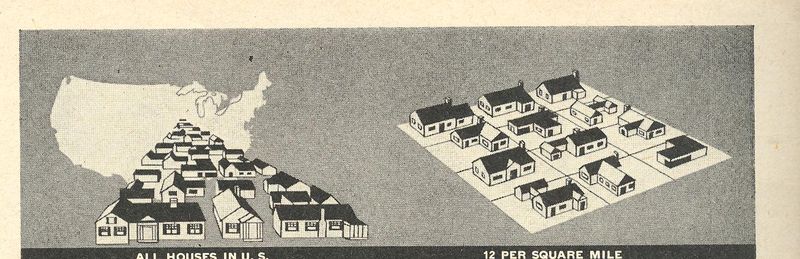
    There.  I said it.  Unfortunately, the thoughtfully blank idea was “real” and  was worked out by three smart guys, the result published in the Bulletin of Atomic Scientists in 19461.  The kernel of the proposition was republished for the masses in LIFE magazine in (15 June) 1947, complete with maps which stand on their own as being spectacular and peculiar examples of visual propaganda.         

    Listen: the crux of the issue was to remove everyone from any American city with a population greater than 50,000 people and place them in newly-built communities set out across the country’s landscape (mostly) like a chess board, the towns existing on all of the connecting lines. [As weird as this sounds, the great Norbert Wiener came up with a similarly astounding, untouchable idea using circles.]. The authors proposed to build 20,000,000 new homes, relocate industry (preferably underground), reallocate and redistribute energy supplies and natural resources, and recreate the very fabric of social and economic life in America.  
    1-may 3-atomic 4
    The governor of this thinking was the coming arms race and the American susceptibility to clouds laced with Soviet atomic weapons–and worse.[The calculations for destruction being used here were for the Hiroshima atomic bomb; in 1952 the U.S. would detonate the first hydrogen bomb, followed by the Soviets the next year.  These bombs would be measuring explosive force in terms of hundreds of thousands–and then dozens of millions–of pounds of explosives.]  How does this idea get thunk in a group and not abandoned?  And then how does it manage to be published by a a reputable organization?  These are smart men, these authors, and I just cannot think of how they could’ve come to these conclusions–though Teller, who was part of the genius flotilla of superb and essential Hungarian scientists, was undoubtedly mentally affected by his supernova hawkishness. I didn’t know this about Marshak, and I really am not very familiar with Klein.  They were all University of Chicago, and the Bulletin was originally published as the Bulletin of the Atomic Scientists of Chicago. 

    There are deeper, more disturbingly anti-spectacular ideas laced through the short article, some of which are so soaringly and diligently insane that it is difficult to address them.  For example, the authors suggest that the “ribbon cities” wouldn’t necessarily have to be “laid out in exactly straight lines” and that the lines could be adapted to the terrain.
    1-may 3-atomic 1

    Even though the authors propose moving and rehousing 20 million people (and so on), this was not what they really wanted to do.

    They wanted to put everything in lines and underground. 

    “We shall have to forgo elaborate schemes of underground cities” because of expense, they write.  And what of the cost, as long as we’re at it?  Somehow a figure of 200 billion is floated around–200b in 1947 dollars, which is 5 trillion in 2010 dollars (or so), which really doesn’t seem to be a figure that is in any way near to what an undertaking of this magnitude would cost.  (The odd thing about this figure is that $200 billion is about the same percentage for a single year of 1950 GDP as the $5 trillion is of the 2010 GDP.) [It seems unfair to take things out of context like this, but, well, it isn’t–the entire article is filled with almost nothing but these statements.  In a way I’m doing the authors a service by taking things out of context so that the entirety of their madness isn’t revealed as the ugly road-kill thinking it is.]

    Of course, g_d knows where all of this building material was going to come from.  Or the people who would actually do the work.  Were there 3 million construction/building folks in the 1950 census?  I don’t think so.

    And so in spite of the overwhelmingly underestimated cost, and the rerouting of the infrastructure of the entire country, and moving everyone in the country, and building 20 million houses, and finding the material to do so, and finding the workers to build them all and reconstruct all of the infrastructure and build all industry underground and have the tools to do it all with, the authors felt as though the whole thing could be pulled off in 10 years.

    Someone, somewhere, was certainly going to be working late.
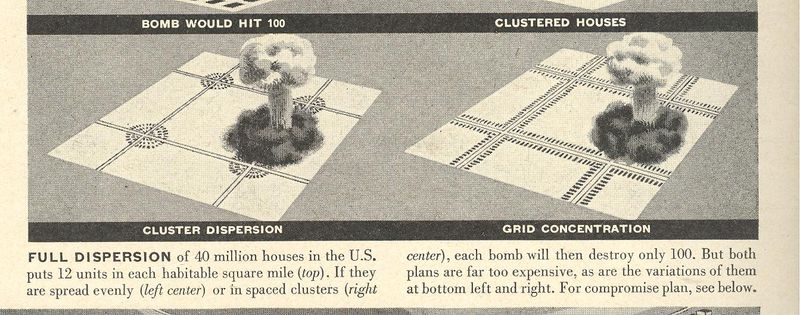
    1-may 3-atomic 3

    And so the interesting part of this thought-tragedy for me is–what is the equivalent idea of this going on right now?  I know there is one, and there will be a new one tomorrow. 

    Notes
    1.. Jacob Marshak, Edward Teller, and Lawrence R. Klein. “Dispersal of Cities and Industries.” Bulletin of the Atomic Scientists 1, April 15, 1946, 13.

    See also:
    “Naked City.” Time. Nov. 28, 1949, 66. Also at.  Also see .The City Under the Bomb.. Time, Oct. 12, 1950

    Charles Grutzner. “City folks‘ fear of bombs aids boom in rural realty.. “ New York Times. August 27, 1950, 1.

    Michael Ray Fitzgerald.  Sitcoms and Suburbia. The Role of Network Television in the Deurbanization of the U.S., 1949-1991.
                   
    Molella, Arthur P. “The City as Communications Net: Norbert Wiener, the Atomic Bomb, and Urban Dispersal” Technology and Culture – Volume 45, Number 4, October 2004, pp. 764-777


  • Made-Found Art–Childhood Crayons

    These are not only a child’s crayons, but my wife Patti Digh’s childhood crayons, crayons from when she was a little girl, crayons used by her 5-year-old chubby-fingered self, working away at her art-filled world..  Saved for years by her mother, Patti’s crayons now live here at home in a very tall chemistry beaker.  Our younger daughter, Tess, wondered today why nobody used those crayons saying that we should use them to make something “interesting”.  And so we did. The crayons are art in themselves, collectively and individually–the closer you look at each one of these beauties, the more you see that they hold their own histories of color.

    Patti crayons
    Patti crayons big detail 2
    Patti crayons massive detail

    ·Posted by :

    ·in:

  • Nazi Capes and Collaborators, 1944

    JF Ptak Science Books LLC  Post 1019

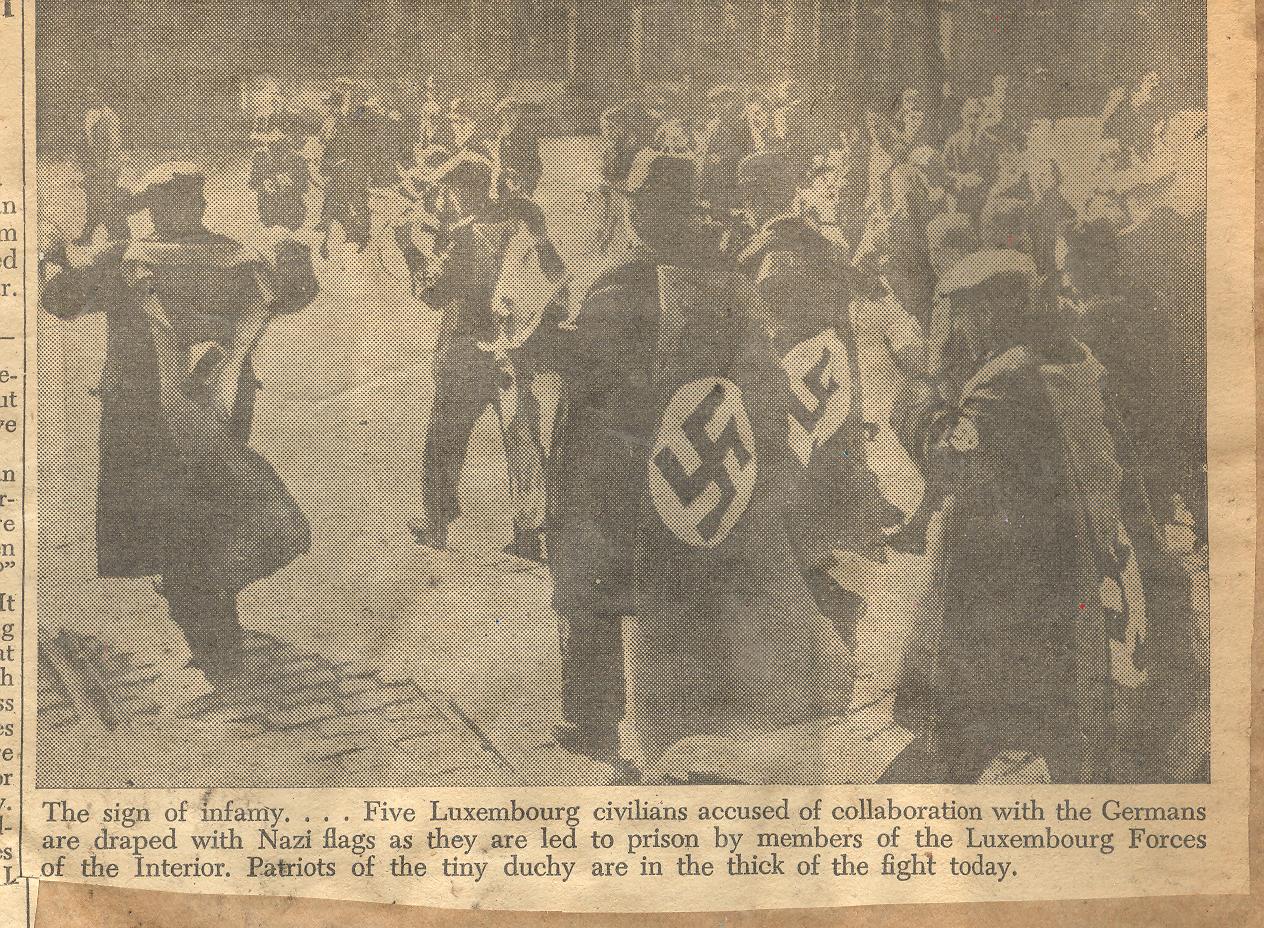
    For the next little bit I am going to try to have one word or phrase per post be unique to a  Google search–today’s is “Nazi Capes”. (Yesterday was “Atomurbia”, created over coffee.)  Frankly I’m a little surprised that it doesn’t come up–thank goodness for small favors of not having stores selling Nazi capes or some porn site featuring nazi-caped “dancers”,  and so on. 

    The Allied  advanced towards Berlin in 1944/45 liberated Nazi-occupied towns and cities and countries.  The populations of course reacted immediately to those among them who facilitated the Nazi control of their communities.  The collaborators were traitors, and were treated accordingly.

    1--May 4 nazi cape
    Fernand de Brinon, Marshall Petain, Karl Linnas, William Joyce (Lord
    Haw=Haw), Ezra Pound, 
    the Ustaise (a Croatian fascist anti-Yugoslavian movement doubly doomed
    post-war) are a sample of some of the major names in the history of Nazi sympathizers/collaborators who would be judged and adjudicated.  There were many
    others who survived this legal (and extra-legal) process–like Charles
    Lindbergh and Henry Ford and Errol Flynn and (the IOC’s) Avery
    Brundage–without much damage to themselves. (To be a little more
    accurate, Charles Lindbergh was an America Firster with fascist
    sympathies and unquiet anti-Semitic opinions–he did renounce his
    admirations for Nazi Germany once America had been attacked on 7
    December 1941. Country first in times of war for Lindbergh, though his
    sympathies remained relatively intact for the 750 days of WWII being
    fought in Europe without the United States.)    There is also a large
    population of Nazis (like Wernher von Braun, whose rockets killed
    thousands on the ground in England and thousands more of the slaves who
    worked for him at “home”) whose expertise was deemed necessary to
    national security and who were settled in the U.S. to help form the new
    fight against the Soviet Union.  But that’s another story entirely.  

    There were many thousands of collaborators at society’s entry-level who
    were dealt with locally–some were brought into the justice system,
    though many didn’t make it quite that far.  In many cases, people well
    known to have added and assisted the Nazis in their occupation were
    immediately found and dealt with upon liberation.

    This photo-from the archives of the PM Magazine reporter and European
    bureau chief Alexander Uhl, shows the arrest of Luxembourgian
    collaborators, each made to wear a Nazi flag like a cape, the swastika
    no doubt searing its way into the backs of each of these people.  I
    don’t know where they were being marched to or whether that march lasted
    very long. Perhaps it ended in a field at the end of the street;
    perhaps not.  In any event, they were on their way to justice, whether
    or not justice found them in a courtroom or a ditch is lost to history.
    (The vast majority of collaborators arrested and brought into the
    justice system in Luxembourg were sentenced to prison terms–of the 2000
    arrested, nine were executed.) In any event I’ve never seen a picture
    like this before, and am passing it along.

    1--May 4 nazi cape det

    ·Posted by :

    ·in:

    —

Recent Posts

Archives

Categories