A Daily History of Holes, Dots, Lines, Science, History, Math, Physics, Art, the Unintentional Absurd, Architecture, Maps, Data Visualization, Blank and Missing Things, and so on. |1.6 million words, 7500 images, 4.9 million hits| Press & appearances in The Times, Le Figaro, Mensa, The Economist, The Guardian, Discovery News, Slate, Le Monde, Sci American Blogs, Le Pont, and many other places… 5000+ total posts since 2008.

  • Triple Sci-Fi Negatives: Man-Tossing Giant Woman from the inside of Mother’s Wedding Ring (!) 1921

    JF Ptak Science Books   Post 1117

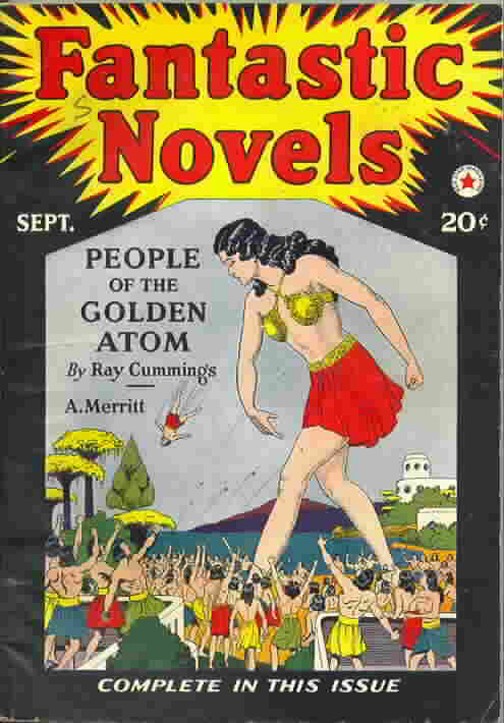
    There are times when even things that are made to look extraordinary and plainly, outrageously identifiable as what they are, simply aren’t–and sometimes they’re not even close.  For example, this cover of Fantastic Novels (1921?) seems to tell a straightforward story, but as it turns out the giant is giant but one living within a world in an atom of a gold wedding ring.

    Man throwing

    Author Ray Cummings (1887-1957) found a nice writing niche for himself in his fictional discovery of a drug that could make people as small as atoms and then, once inside the microworld, could be made as immense as micro-mountains.  The Girl in the Golden Atom was one of a five-part trilogy(?)1 and so far as I can tell, Cummings used the hell out of his original idea.  The prose reads like it is punctuated with invisible periods every fifth word2–evidently Cummings was so very busy writing 750 books and short stories that it  left him little time to edit or, maybe, think.

    Briefly and perhaps wrongly put, what I think that happens in this story  is this–four guys in a 1919 club do sumpin’, the chemist among them figures sumpin’ out and finds a micro world inside the atoms of his mother’s golden wedding ring where he falls in love with a chick  there and goes to visit her himself3; the shrunken chemist finds himself in the middle of a war and grows himself to gigantic proportions in microworld to help out his girlfriend’s people.  Or something like that. I don’t feel a need to understand this one. All I want is the cover art. 

    Personally, I’d rather be a giant rather than be miniaturized to somehow fight for my existence in the microscopical world.  Sure, finding sources of energy if you were 500 feet tall or whatever is going to be a problem; finding whatever problematic but less so. But at least nothing is going to try and eat/crush/liquidate you in the micro-world, where food is the least of your problems.  Color me in big.

    As I said, all my interest here is in the Frank R. Paul cover art.  I find very few images where giant women are throwing tiny men taken from a sea of tiny men into the far horizon. 
    ______   
    Notes.

    1. The other four parts of the five-part trilogy are The Princess of the Atom, The Man Who Mastered Time, The Shadow Girl and The Exile of Time)
    2. Here’s a sample of the writing:
    “Many things they threw,” Lylda [a giant woman]  answered. “But I was so big,” she smiled a little sad, twisted smile. “What they could do was as nothing. And
    because of that they fear and hate us so; yet never have I seen such
    fearless things as those they did. Death to the giants was their only
    cry. And I could have killed them–hundreds, thousands–yet never could
    I have made them stop while yet they were alive.”

    She was speaking to a character named Big Business Man. Makes my teeth fall out.

    3. Sounds like a lot of therapy source material


  • New York City: Attacked by Tentacled Flying Saucers, Giant Flying Snakes, Glaciers, and Mining Missile Space Aliens, 1929-1941

    JF Ptak Science Books   Post   1118

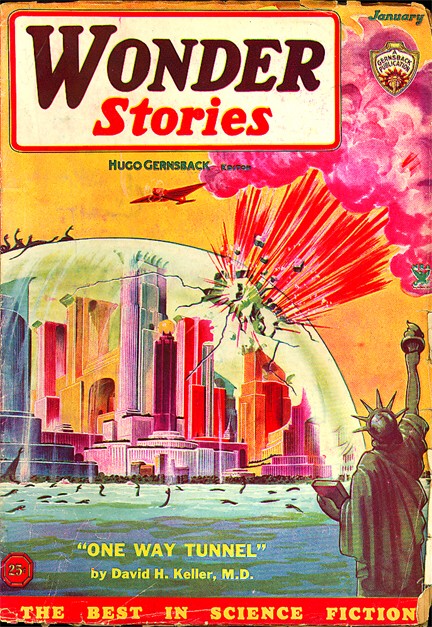
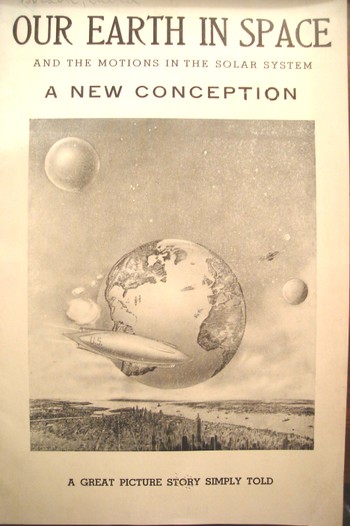
    This is a simple, non-analytical image dump for some in a continuing series on images of New York City in fantastical and improbable situations–there’s artwork that show the city being consumed by glaciers, drowned by the tide, ripped from the Earth and flung into the sun, floating in the sea, floating in space, sunken, and of course simply attacked by any number of different things, though most of those weren’t real.  There is of course the great unknown classic that I stumbled across–the duplicate NYC on a duplicate Earth orbiting the Earth ((?!) and pictured at the end of this post). I doubt that there’s enough for a dictionary of disasters, though there’s plenty for a Doomsday Book.

    For example the first image for this post shows a domed New York City–and in this scifi sub-classic,  like other major cities of the United States, NYC was suffering a catastrophic attack by winged snake monsters.  I don’t know why  the dome is exploding because the snakes don’t appear to be armed.

    NYC attacked

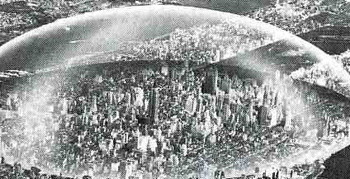
    This does remind me of an image from the mind of Buckminster Fuller, who
    came up with an extraordinarily bad idea to protect NYC against
    thermonuclear weapons. (Fuller’s dome appears here.)

    Big_archfuller_detail141 

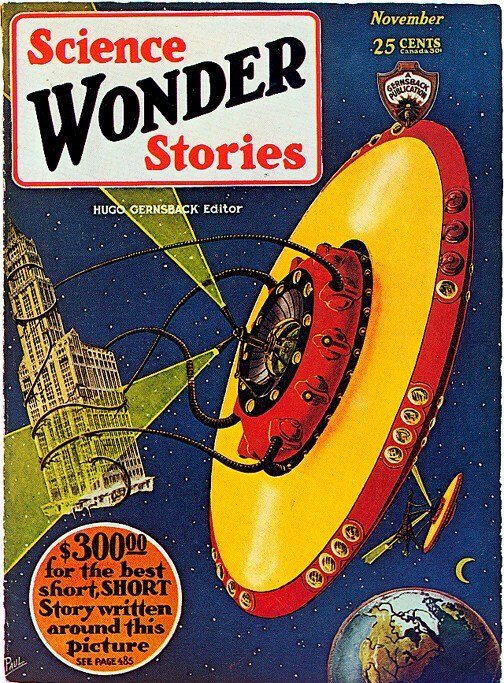
    Then there’s this magnificent cover for November, 1929, featuring a tentacled flying saucer removing the Woolworth Building into outer space (as well as the Eiffel Tower by another brethern craft (the Earth appearing again, as nearly usual, without cloud cover):

    Woolworth

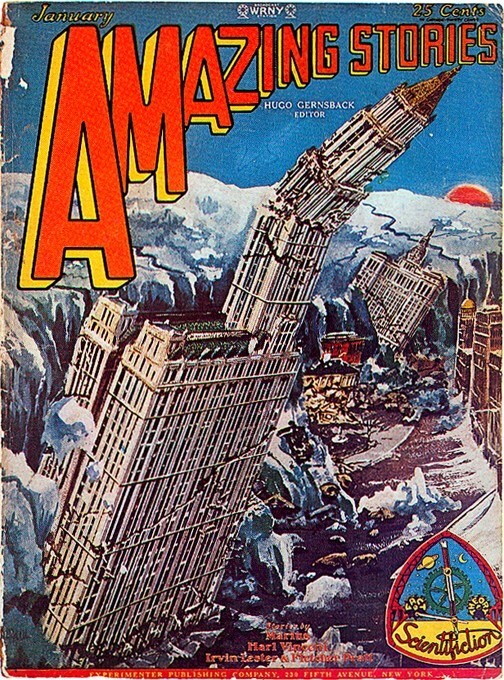
    And yet another destroyed Woolworth Building, this from January 1929, featuring an enormous glacier attacking the City:

    NYC destroyed--woolworth

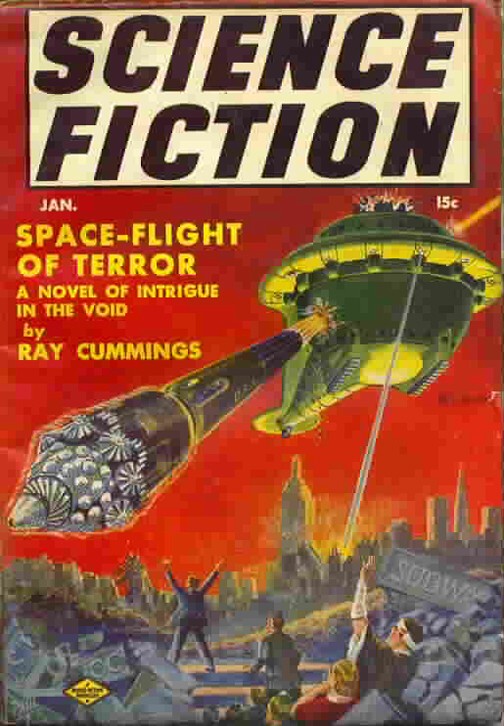
    And this vision of a decimated NYC, coming at the hands of giant hovering mining/missile space aliens:

    NEw York City in Ruins

    And of course, the duplicate NYC on Extra Earth:

    Dsc04543

  • Strange Things in the Sky Department: Floating Airports

    JF Ptak Science Books  Post 1119Strange things--Floating airport

    I’ve written several posts here about floating an airport in the NYC narrows, as well as airports constructed over hundreds of acres of Midtown rooftops, hundreds of small landing strips crossing the Atlantic, innumerable planes and dirigibles with lad fields on/in them, and covering the Thames at Big Ben. (See here for some of these stories.) But I’ve not seen a floating or hovering anti-gravity airport until now. 

    The question for me would be–why, if you have somehow mastered gravity enough to float a large piece of concrete tonnage like an airport in the sky, why, oh why, are you still using airplanes? 

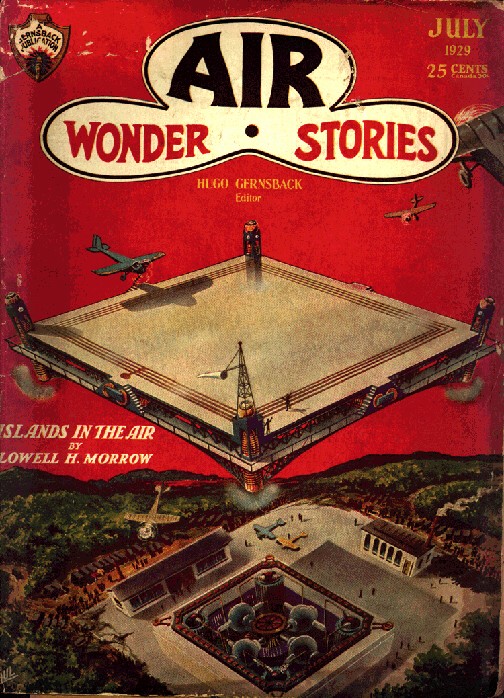
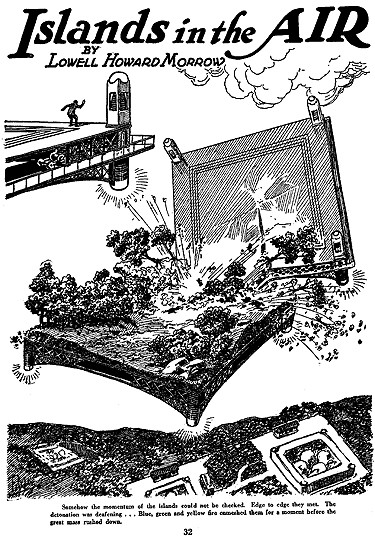
    The answer doesn’t matter, here, only the art does.Actually, the writing doesn’t matter, either; just check out the excerpt below.)   This again a piece of delicious imagination by Frank R. Pauil created  for the July 1929 issue of Air Wonder Stories.   The drawing below must be among the first of its kind to depict a collision between two anti-gravity floating/hovering airports. (!)

    Notes:

    The excerpt:

    “The Professor stared blankly a moment, then rushed away to the office. We followed breathlessly.

    The outer door had been forced, its lock being broken, but beyond
    this no damage had been done so far as we could discover. Anxiously we
    ran over the papers–not a print was missing….”

    It might have been more interesting if the thief had stolen all of the “e’s” from those papers.  There are 9,500 more words in this story, but I can’t make ir any further than this…

    And also this:

    Paul3.5C

  • Strange Things in the Sky Department: Tetrahedra, Horse & Steamship Balloons, Swimming Pools & Exploding Moons.

    JF Ptak Science Books  Post 1120

    Rounding out the image dump from yesterday are these additions to the developing category “Strange Things in the Sky”.  The odd things in today’s issue include floating tetrahedra, an exploding Moon, a hovering anti-gravity Dr. Seuss pool, a Russian rocket pioneer’s enormous apartment building-like dirigible, and a steamship balloon.

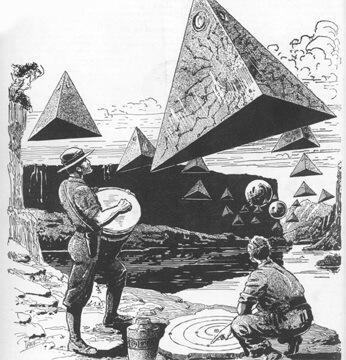
    The first, without any explanation and offered as a pure art form, is this illustration by Frank R. Paul for Wonder Stories of November 1931.


    Strange things in sky--tetra

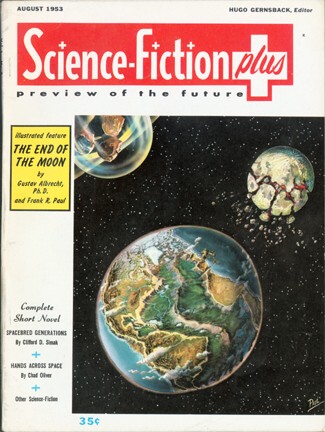
    Next, another Paul cover for Science Fiction Plus for August 1953, illustrating a story where the Moon explodes

    Moon exploded

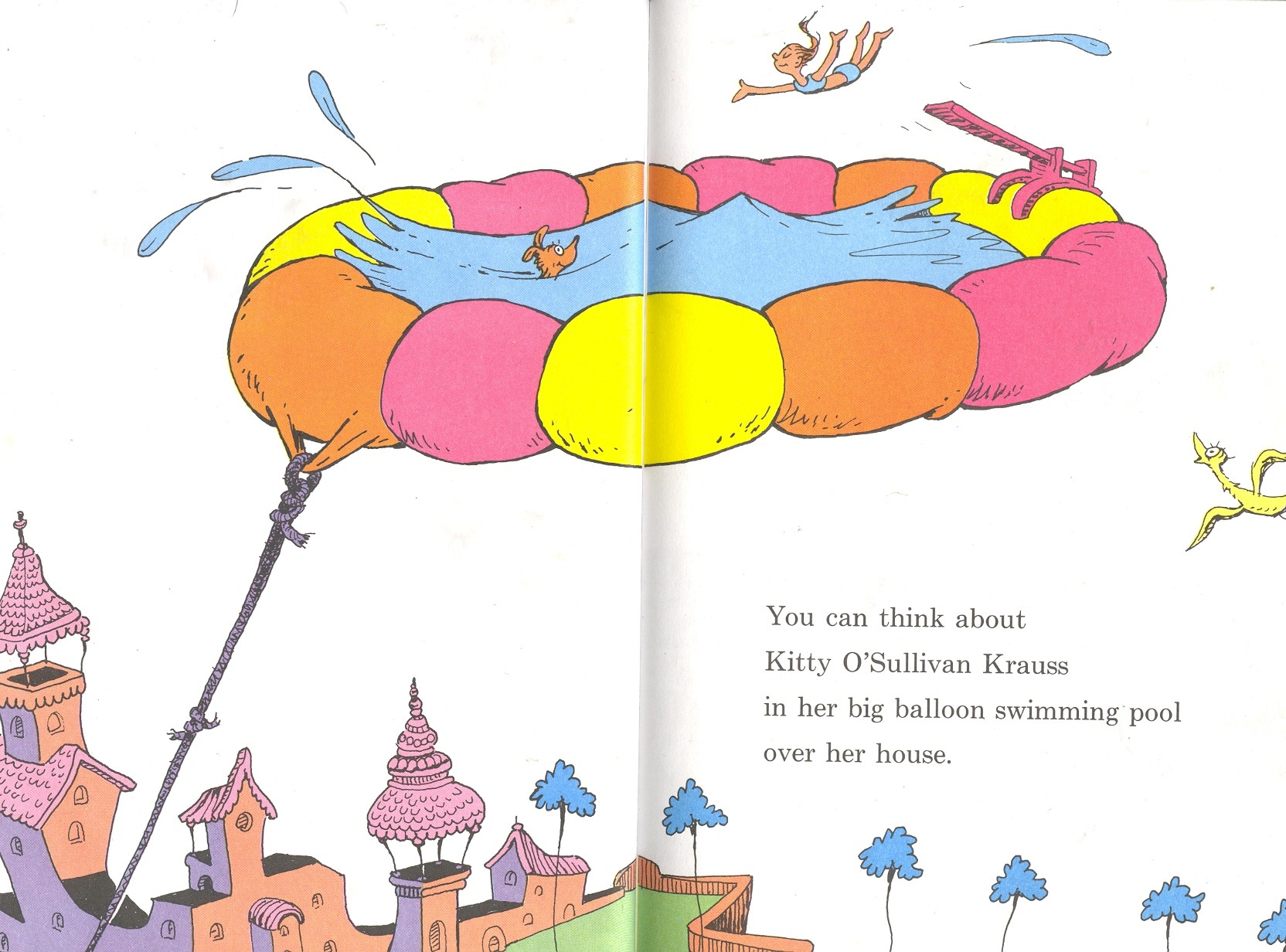
    Other strangeness in the sky is  Dr. Seuss’ swimming balloon pool from his Oh, the Thinks you can Think. .  I’ve seen some interesting
    images of balloons and dirigibles taken as serious efforts that reminded me of
    that double-page spread by the good Doctor.

    Blog jan 2 seuss


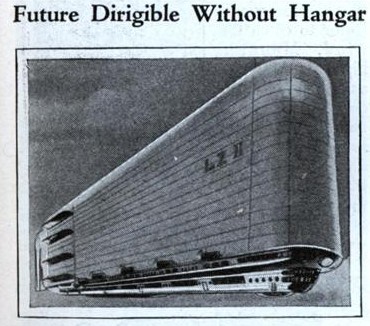
    Blog jan 2 tsilo dirig  

    This may have been the Omega end
    of bad ideas in the career of Zilkowsky, who is better known by the other
    spelling of his name, Konstantin
    Eduardovich Tsiolkovsky (1857-1835), a Russian misanthrope and space pioneering
    genius who wrote more than 500 works on rocketry and exploration including what
    is arguably the first tech word ever done in the field (in 1903,
    The
    Exploration of Cosmic Space by Means of Reaction Devices
    ). Tsiolkovsky somehow lasted through purges
    and Stalinist tirades, while few of his colleagues did—many mysteriously
    disappeared, while others went to prison and disappeared there.  (Stalin’s crude and insatiable blood lust,
    perhaps the worst of the century, knew no bounds, not even to the scientists
    who could conceivably hand him reigns of rocket/missile-propelled power.)  Anyway, Tsiolkovsky’s dirigible was composed
    of a collapsible metal so that the aircraft could form its own hangar when “docked”.  I don’t know where to begin with this one…

    Blog jan 2 lowe

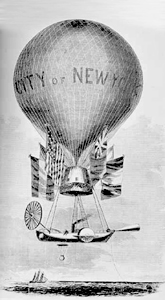
    The next entry is the ship-balloon of Thaddeus Lowe
    (1832-1913) One of Lowe’s great contributions in the
    history of ballooning was providing aerial reconnaissance via (panoramic)
    photographs to the Union army on Confederate army positions—particularly the
    Rebel positions at Richmond (1864) and Fredericksburg (1862). (He had a wide
    span of professional interests and wound up living the high life in L.A. in a half-acre
    home.)  This 130-foot diameter monster
    with a steam-ship escape pod (named The
    City of New York
    and then renamed The
    Great Western
    after the city couldn’t supply enough gas to get the thing
    inflated) was intended to be a transatlantic traveler.  Ready to try this fantastic adventure in
    1860, ready to take charge, ready to begin a very problematic trip across the
    Atlantic in a balloon, Lowe, seemingly ready, had his balloon ripped apart
    while waiting for launching by a chance and not-horrible wind.  Lucky for Lowe and the Union Army, this didn’t
    happen over the ocean somewhere out of reach, and the North’s important info-gatherer
    did not sink like a stone in the cold dark sea. 
    (I’m very cynical that the 100-foot-long, bulbously heavy steam-powered “life
    boat” would’ve landed right-side-up and softly enough to have been of any use
    save for providing some floaty bits that survivors from the balloon could’ve
    clung to for a while before being consumed by King Neptune.  

    Blogsept19_horses_in_flight607

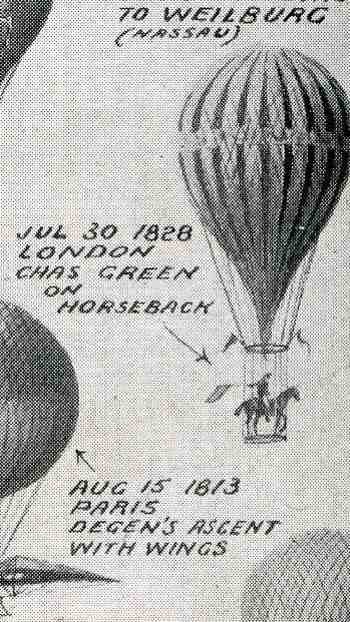
    Lastly for today is this lovely history
    of balloon and aeroplane flight published in The Illustrated London News
    for 3 July 1909, called “The Evolution of the Great War-ships of the
    Air:  Balloons, Non-Dirigible and Dirigible, and Aeroplanes, from the
    Seventeenth Century to the Twentieth Century”.  It is more fully explained here in an earlier post I made to this blog, laboring the point that 8% of the 60 air vehicles involved a horse. 

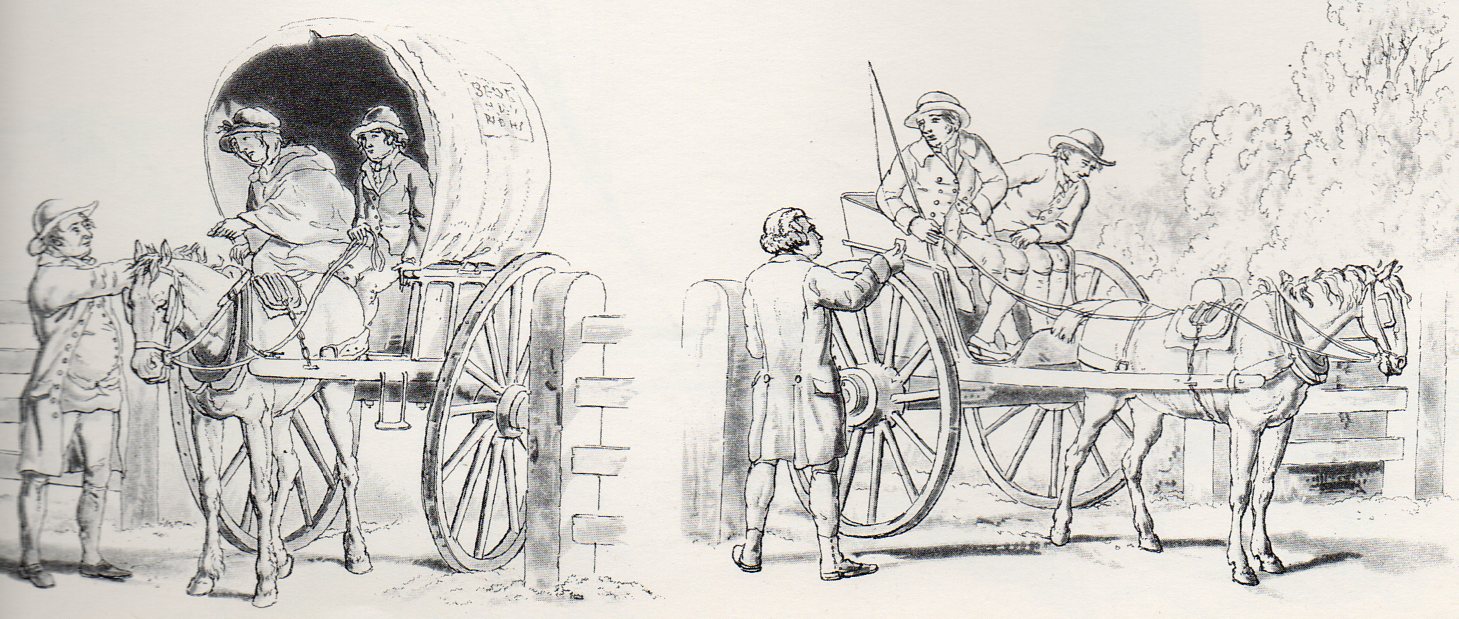
  • The Revolutionary Importance of the Non-Cookie Toll House

    JF Ptak Science Books   Post 1121    

    Toll House339
    I think that in a way the introduction of the toll house was as a significant a development in the history of the industrial revolution as the toilet.  Without the toilet, you can’t really have a concentrated population to run industries–or at least without making everyone sick because of unsanitary and pestilential conditions. If you create the possibilities for having industries that employed 100 or so people, and had a bunch of them in a city setting, it wouldn’t much matter if you didn’t have the people to run them, and you can’t have the people far-flung and living apart if there’s no way for them to get to their work.  Concentrated living called for lots of innovation, and perhaps the most important of those was how to get rid of human waste. 

    Without good roads you can’t get your produced goods to a market outside of the one you’re in, isolating chances for growth and development.  If you have a good serviceable, dependable road to transport your stuff, then you have an expanded market; that means you can sell more, produce more, and theoretically charge less, which means you expand your consumer base, and on and on.  But that means you have to be able t depend on your road.  And a good road needs to be paid for.  And one of the chief ways of funding these early roads was by a toll, which called for a toll house and a little gate.  And a person to collect the money.  Merchants figured out very quickly that it was much cheaper to pay a toll to use a good road than it was to use a bad road for free and have to depend on the graces that it be maintained; and since the graces weren’t kind, there would be all sorts of repairs necessary because of the poor road: harnesses, wheels, wagons, horses, and the like, not to mention food and such that could spoil along the way, or goods damaged in transport. 

    This all comes up from looking at a curious book by WH. Pyne1, who provided a thousand or so images of “picturesque” (meaning “working or laboring) life that could be used by artists to populate more general images of landscapes or cityscapes or seascapes.  I’ll address this in a later post. It was several small pictures of toll houses that caused this thinking about the industrial revolution….pictures of things intended for gentle artists who may never have seen such sights in their life, and who might need to fit a curious little image of a gate-keep in their picture of some prosaic cow-filled landscape.

    In the 17th and 18th centuries the introduction of serviceable roads over old trails and bad roads that connected towns wound up expanding markets for farmers and cottage industries, lowering prices because of easier availability of the product, and creating more consumers.  And so on.

    I realize that this might very well be a “turtles all the way down” argument, but since I’ve already named one turtle in a post here, I might as well name two. 

    Notes
    1. William Henry Pane (1769-1843), Picturesque groups for the embellishment of landscape : in a series of above one thousand subjects : comprising the most interesting accessories to rural and domestic scenery, shipping and craft, rural sports, pastimes and occupations, naval, military and civil employments, implements of trade, commerce and agriculture, etc. , the whole forming an encyclopaedia of illustration of the arts, agriculture, manufactures, &c. of Great Britain  Publisher: London (Bedford Street, Covent Garden) : M.A. Nattali, 1845.

  • A Domesday Book for Missing and Blank People

    JF Ptak Science Books   Post 1122

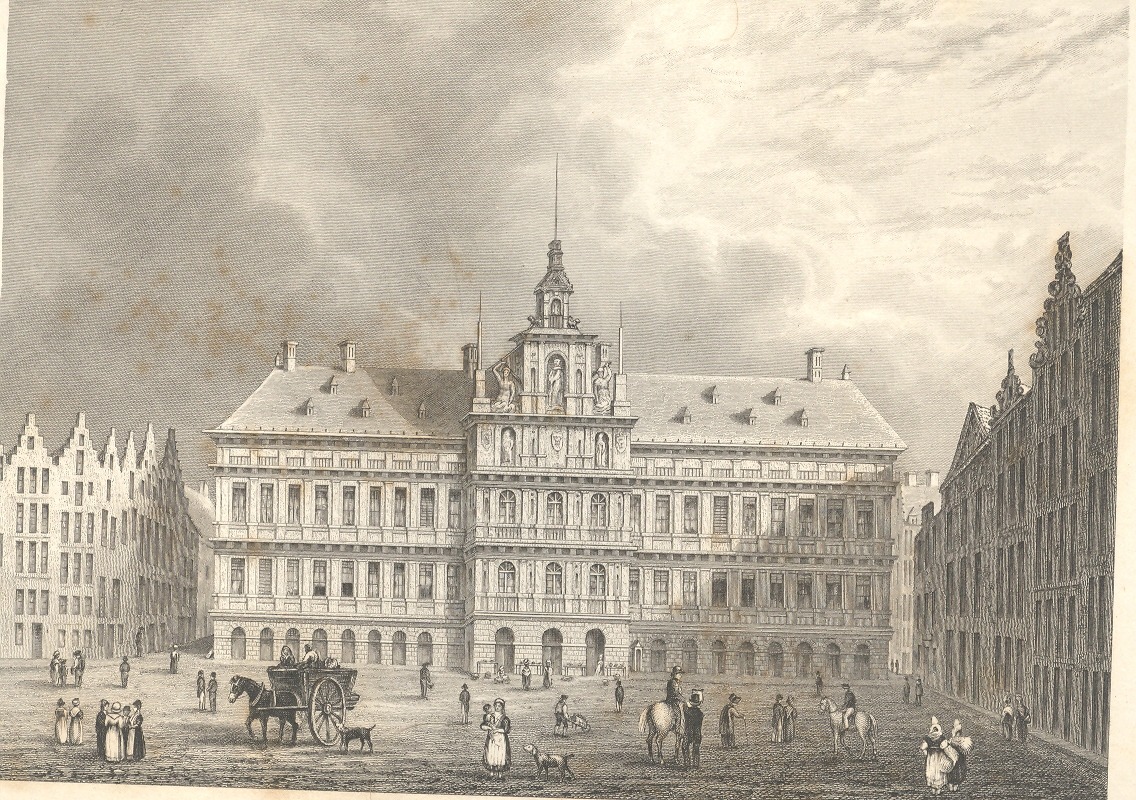
    I’ve long been interested in the added, extra stuff found in the foregrounds and empty places of artwork, the eclectic extraiana, the not-necessary pieces, the microworlds of antiquarian visual anthropology. (See here for example, an earlier post in this blog, “Hidden Children, Found Art and Social Vignettes Inside Art”.)  In towns views and architectural studies, where the primary interest is geography and, well, architecture, people are sometimes added to literally flesh out the bank spots, and to add a point of reference and perspective for the viewer.   In many circumstances these added bits turn out to be extremely interesting insights into everyday street life for the period of the artwork, also including societal exuda and discarded people, the social “rejects”, the underclass, the classless, the workers, the laborers, people.  That would be most fo the population of a place. 

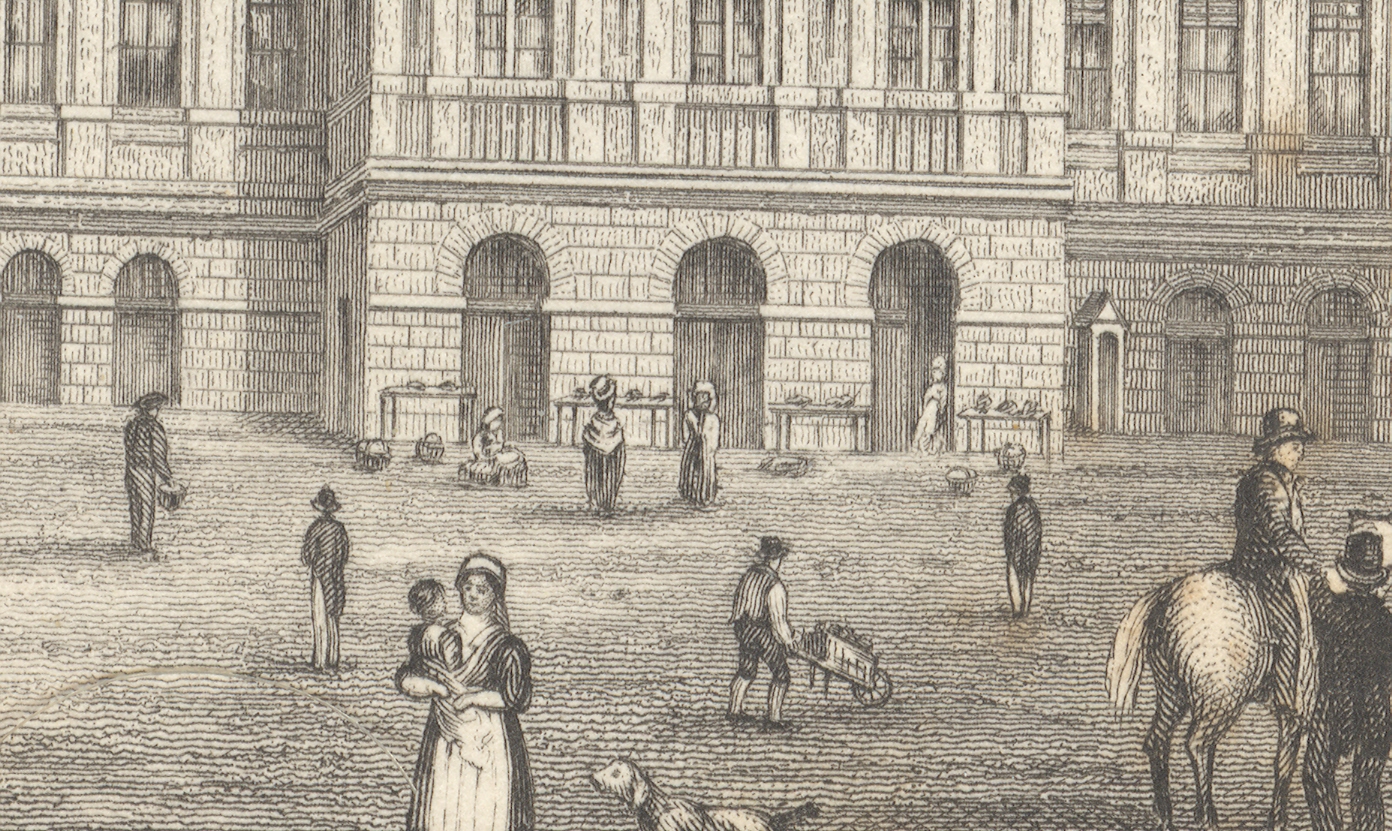
    For example in this application of the imaginary forensic arts microscope, we see this series of pictures of a standard view of the town hall of Antwerp; but what we see advancing under magnification is a very interesting set of occupations displayed in absolutely minute detail (seen in more detail in this earlier post, from which I quote below).

    First, the majority of the engraved image, followed by a close-up of the center of the building (the three doorways), and then by a closer view still of doorway three:
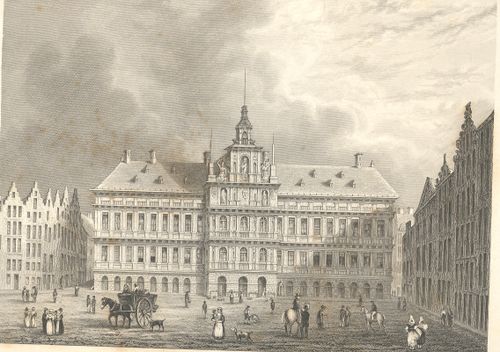
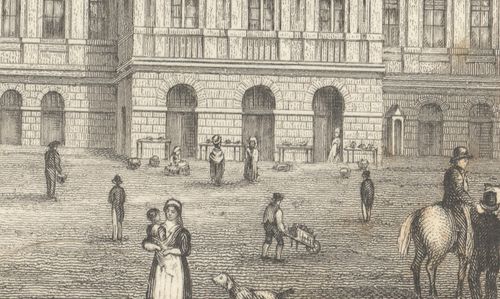
    +++looking closely

    +++looking closely detail

    The
    truly interesting bit here is barely observable in the original; but,
    under magnification, we see a very rich and minuscule “engraved
    photograph” of a slice of daily commerce and street life in Antwerp.  If
    you look at the central entrance to the town hall you can see three
    main (and large) doorways, and if you look clos+++looking closely detail2er still, you’ll see something leaning against the portal at right.
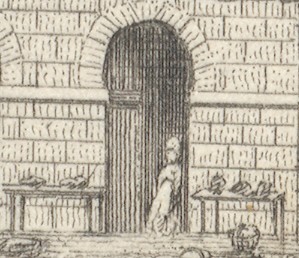
    Extraordinarily, what the artist snuck into the original is a tiny
    (2mm) figure watching over several tables of her (fruits?/vegetables?)
    ware, waiting for a customer. There doesn’t seem to be much interest in
    her stuff, currently, and she has allowed herself a little relaxation,
    leaning against the doorway.  I’ve found this sort of extremely minor
    subject matter and its ephemeral connection to the larger work at hand
    to be just fascinating.  I wonder why such detail would be added–why
    would the artist, or engraver, take such care and interest in such minor
    visions.  Perhaps this is just what was at hand on the days the artist
    fleshed out his work; perhaps it was the work of the engraver, alone,
    incising yet another semi-boring architectural image; desperate for a
    little artistic activity, adding some interesting, almost-invisible
    touches, here and there.  Perhaps no one would ever really notice them,
    but whoever was responsible for adding such incredible,
    extra-dimensional details would certainly enjoy knowing they were there,
    recognized or not.

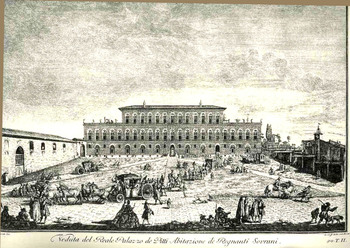
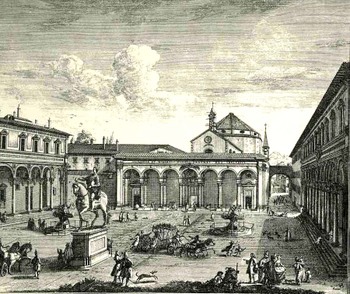
    Here’s another example (seen in an earlier post here) from Giuseppe Zocchi (1711-1767) who was commissioned by he Marchise
    Andre Gerini at mid century to record the greatest of Florentine
    landmarks.  The plaza scene offers a great view for all sorts of people, and the artist/engraver take great advantage of the possibilities:
    Bloglooking_closely_b124

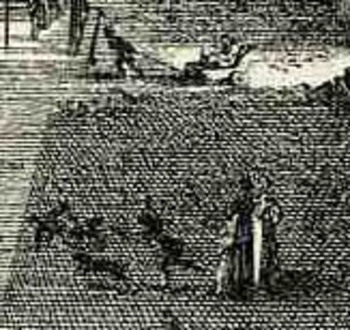
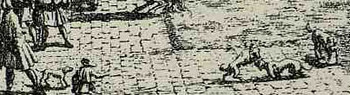
    Among the many people populating the image we find folks interested in a dogfight:
    Bloglooking_closely_b_dog_fight


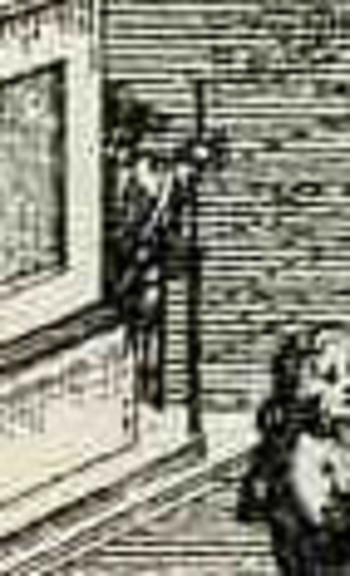
    Another image by Zocchi, Veduta della Piazza della SS Nunziata Statua Equeftre di Ferdinando Primo, Fonti, e Loggie Lateral, shows more good work with the possibilities of ephemeral populations, where among the many details we see an invalid being pulled in a small cart, and a half-obscured  man with a staff leaning against the back of the monument.  And of course there’s much more–you just need a little magnification to see the human element of the artwork. 
    Bloglooking_closely_1_96123

    Bloglooking_closely_1__carriage_2


    Bloglooking_closely_1__man_cane

    There was a class of illustrator that drew on their surroundings, or
    what they saw on their walks, or from their window–the incidental
    people in their artwork were people that they saw, who meant something
    or other to them, who formed an impression in their brains.  There were
    other artists who were perhaps not quite so fortunate in their daily
    lives to come into contact with a variety of people like this–perhaps
    they were sheltered, perhaps they were privileged and of a class that
    would not put them into contact with ordinary people. 

    Perhaps it was this class of artist who need William Pyne’s great-ish
    1845 work, Picturesque groups for the
    embellishment of landscape…1
      It was a work of clip art for its day, really, showing,
    detailing, the attitudes and occupations of working people.  It was a
    book filled with the people who might ordinarily have gone missing from
    the work of the artists needing their images displayed in their brains
    by someone else’s labor; a book filled with figures to plug-up the blank
    spaces, round out that unkind bits that called out for a human touch.

    Interestingly, it shows people at their professions but more often than
    not , it doesn’t actually show people working–its more like people
    readying themselves for work, getting materials ready, sharpening
    things, ordering.   It is impressive nonetheless for its found,
    pre-photography snapshots of working life in England in the 1830’s.  It
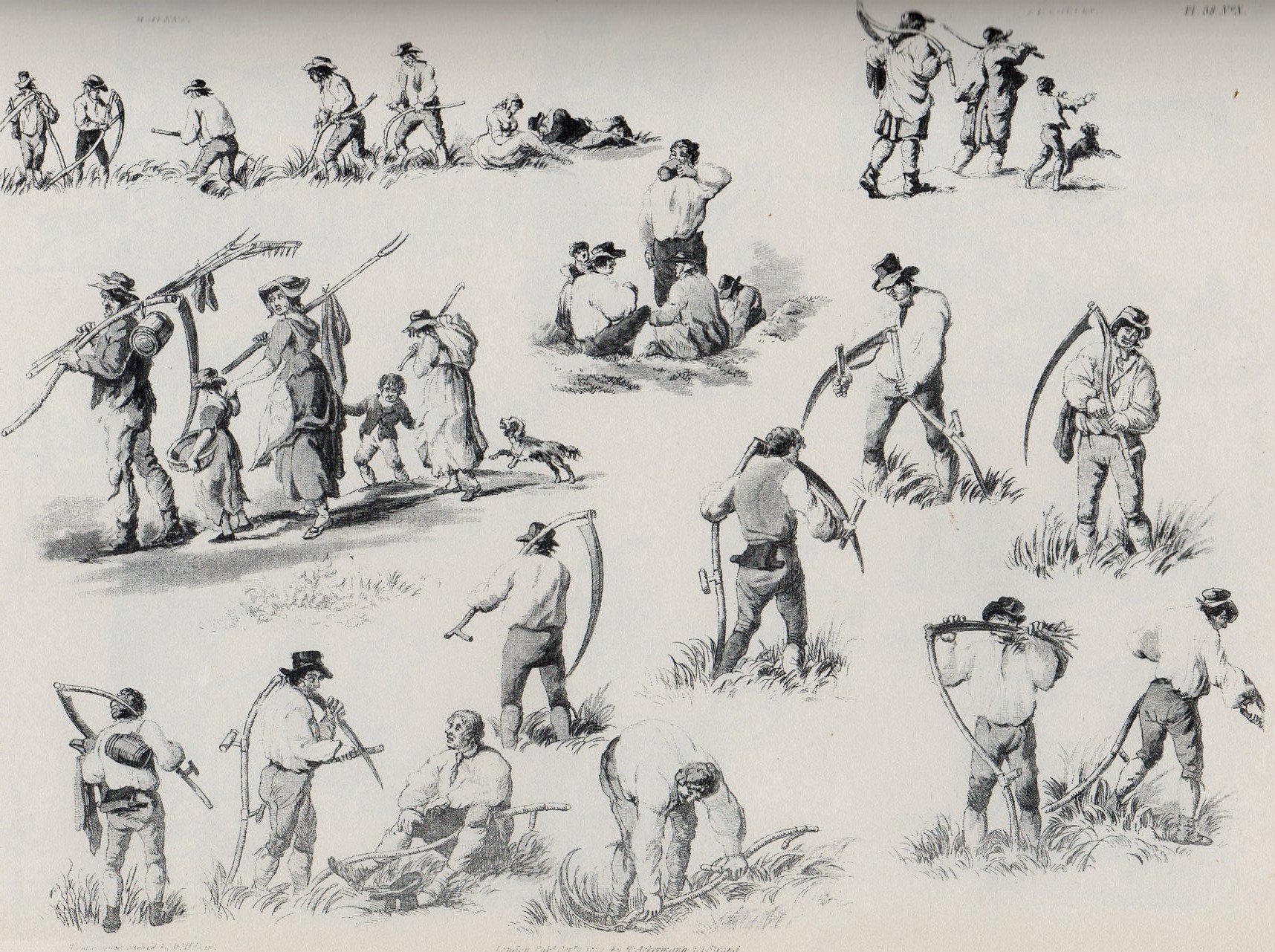
    shows potters, leather dressers, gravel diggers, itinerant mowers,
    hay-makers, gleaners, paviers, shepherds, fishermen, knife grinders,
    quarrymen, foresters, woodmen,  basket-makers, coopers, horse rollers,
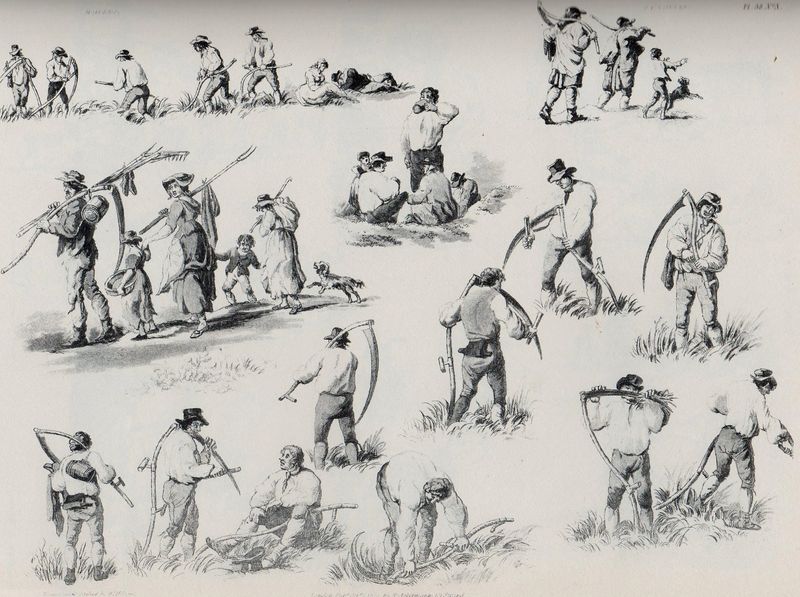
    cider-makers;  and images of boats, barrels, gypsies, games, county fairs, and on and on. For example, here’s the multi-image engraving for “itinerant mowers”:
    Mowers340
    Perhaps it was only a practice-book of images for people who wanted to
    practice–if so, it wasn’t a book for just anyone, as (so far as I can
    determine) it would’ve cost a working person week’s worth of labor to
    purchase it.    And there are certainly pictures of people doing unusual
    and rare things even for 1843–like sailors washing sails,
    maybe–actions that were not commonly seen.  And it also placed people
    in attitudes of unusual poses, so some people may have looked at the
    book with an eye for artistic anatomy.  But by and large, to me, it
    looks like a missing persons book.  

    Notes:

    1. William Henry Pane (1769-1843), Picturesque groups for the
    embellishment of landscape : in a series of above one thousand subjects :
    comprising the most interesting accessories to rural and domestic
    scenery, shipping and craft, rural sports, pastimes and occupations,
    naval, military and civil employments, implements of trade, commerce and
    agriculture, etc. , the whole forming an encyclopaedia of illustration
    of the arts, agriculture, manufactures, &c. of Great Britain 
    Publisher: London (Bedford Street, Covent Garden) : M.A. Nattali, 1845.
  • Duchamp, the Empty Value of Words, and Bra Dreams 1955

    JF Ptak Science Books   Post 1072

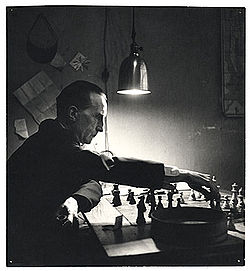
    There is absolutely no chance for a word ever to express anything. As soon as we start  putting ourDuchamp thoughts into words and sentences, everything goes wrong.– Marcel Duchamp

    Which is worth more, wind or stone?  They’re both priceless.  Alexksie Kruchenyh

    This is one of the defining Duchamp quotes for me, the thing that most closely gets at what he was trying to do in his art.  Ultimately I think that he didn’t care about words to define the result of what he was thinking about–or what his art represented.  Or the outcome of a chess game.  To me he was all about the process of getting there, the results not mattering all that much–and certainly not a description of the result.  

    Or perhaps not.  My opinion on Duchamp is that the whole deal for him was a performance, whether he was writing about or discussing or making art, the most important issue was the movement associated with trying to move from place to place.  The destination itself didn’t matter. The message was the thinking, and so identifying it as the same for everyone when the process was so individualized was senseless for him, the message a dynamic thing communicated with images.
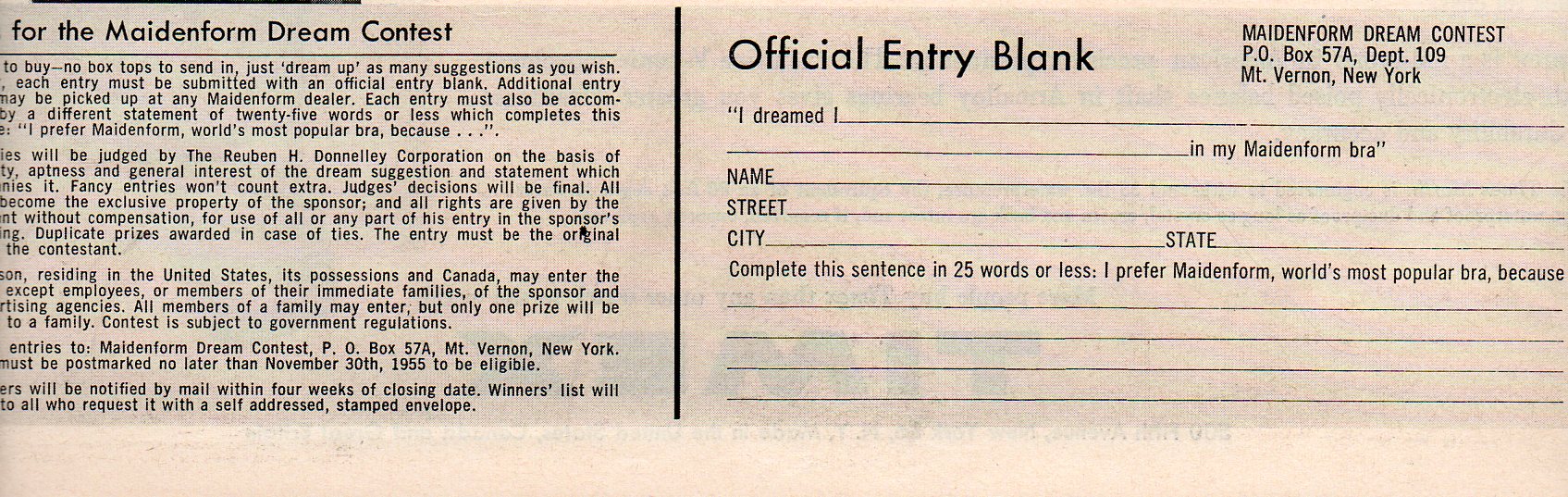
    Bras maidenform171
    When trying to use this Duchampian interpretative tool with this odd combination of words and images in this 1955 LIFE magazine ad I still come up a little short on  what was going on.  Maidenform was looking for dreams that women had in Maidenform bras, paying $13,000 for three juicy/saucy/odd samples.  The manikin-like pose, the expressionless face, and the few bits of clothing this woman is modeling apply some sort of robotism on which  rocket-y wire-circled bosoms are encased in a steely industrialism.  On the other hand the bra maker wanted women to share their bra-encrusted dreams.  The central interest is of course making money on bra sales, but underneath that I’m not sure what I come away with as the message in the images outside the obvious peek-inside-the-machine stuff. 
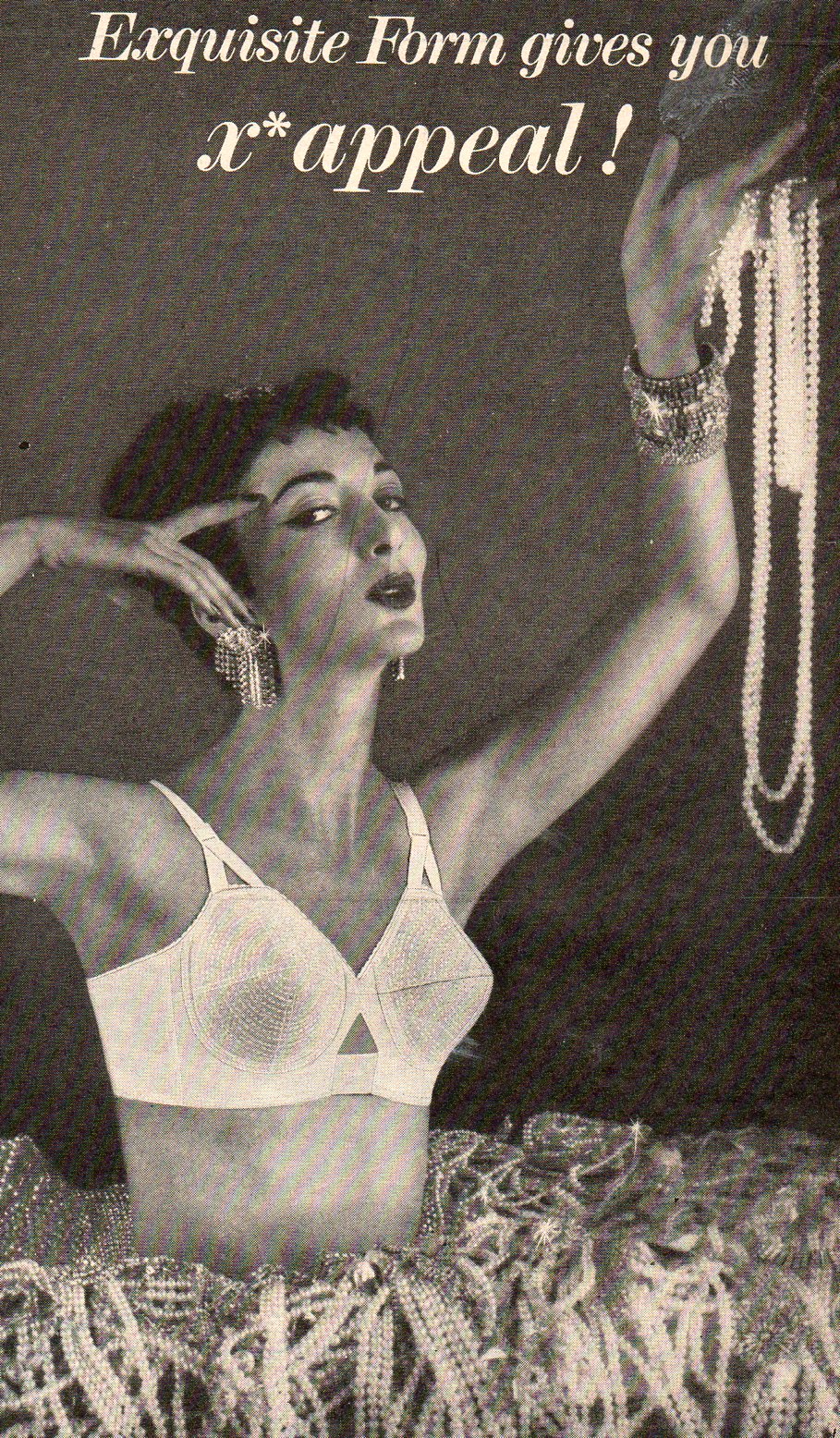
    Bras maidenform form173

    A little further in the magazine and we find an ad from Exquisite Form (“brassieres give you X* appeal”) that gets to a simpler message instantly.  The instantaneous is lacking in the Maidenform ad, but the inescapability isn’t.

    Bras pearls170

  • History of Dots 27: Killing Bacteria–Human Experimentation with Conscientious Objectors, 1955

    JF Ptak Science Books  1073

    Medical and scientific experimentation on humans has a long and painful history.  In the early days it seemed much more acceptable to perform tests on people while they were alive more so than to cut up and autopsy their bodies when they were dead. 

    Human experimentation174

    William Beaumont–the “father of gastric physiology” –was also perhaps a very early leader in the field of bioethics.  Beaumont’s most famous series of experiments1 were performed on a living subject, but only with the patient’s full knowledge of the procedure and consent (and also with te ability to terminate the procedures).  (Part of the defense of the Nazi concentration camp doctor-monsters brought Beaumont into their courtroom as an example of early American compliance to their bestialities, but purposely failed to mention the pertinent rights of Beaumont’s patients, whereas their thousands and thousands of human subjects were in concentration camps and were treated without regard to any moral, ethical or humanitarian consequences.)  Claude Bernard–one of the 19th century’s leading experimental medical researchers and physiologists–reported in his monumental 1865  Study of Experimental Medicine… that a physician must  “… perform an experiment on man whenever it can save his life, cure him or gain him some personal benefit.”  Hopkins’ great William Osler (in 1907)  was entirely on board with the Bernard appraisal of the duties of the physician, saying that any new procedure or pharmaceutical must be used on humans before general release.         

    Then of course three’s the other side of the coin: the STD experimentation in the infamous Tuskegee case (1932), the widespread studies of the U.S. Army’s Chemical Warfare Service, the Cornell Medical School’s wincingly bad study that gave the name to the placebo effect, th e1942 Chicago malaria studies on inmates, the long series of atomic and nuclear weapons tests with passive involvement of sailors and soldiers, and on and on, back into dim history. (The experiments by the Nazi doctors and their Japanese Unit 731 counterparts  deserve their own categories.)

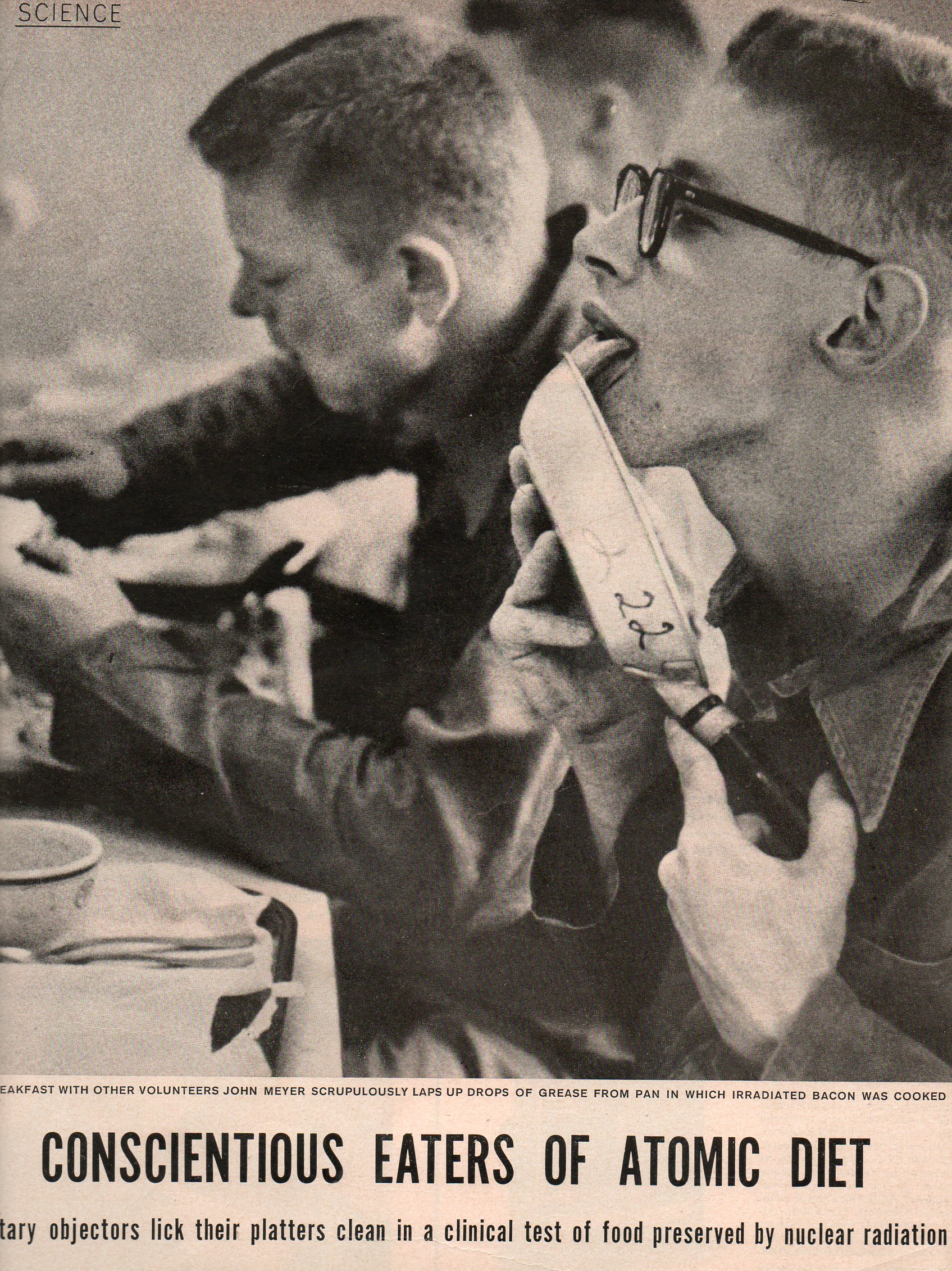
    This photo from Life magazine on the story (“Conscientious Eaters of an Atomic Diet”) of 1955 must be among the most wholesome general cover stories in the history of the idea of human experimentation.  These young conscientious objectors2 declared (for whatever reason, ethic, moral or religious) their inability to serve in the armed forces, and were sent to a different task to replace military service.  Their exchange would be to test the effects of nuclear radiation on food products. (This was the process of using radiation to kill bacteria and insects and whatever other living badie in food that might cause disease or illness of cause the food to spoil.  The long-term result for the military could be enormous, allowing for more inexpensive and less difficult ways to keep food for longer periods of time for troops, and could also keep troops healthier by eliminating certain food-borne illness that could spread from one person to another.)

    Still, what was being asked of these young men was far beyond the “debt” implied by their CO status. The effects of this sort of exposure were still not well known, and these men were absolutely being place in harm’s way, and for the cameras of Life.  The ideas of “Radiation sickness” and “Acute Radiation Syndrome”–created by the two atomic bombs detonated in Japan in August 1945–were only about ten years old at the point where these young men were licking the irradiated grease form their plates. (As a matter of fact there was no immediate medical research team in place to study the biological effects of the bombs in those two cities; after a few weeks and by the end of August there was a organization in place, headed by Colonel Ashly Oughterson.) These men weren’t going to suffer any radiation poisoning from the process (the ionizing radiation used by irradiators “was not strong enough to
    disintegrate the nucleus of even one atom of a food molecule”) , but the effects of irradiating food at this point were still not known.

    Notes:

    1. Published in his 1838 Experiments and Observations on the Gastric Juice, and the Physiology of Digestion.

    2. The business of conscientious objection to military service is milennia old; in the United States it goes back easily to the Revolutionary War.  It becomes a little less defined in the Civil War, where a CO or anyone else faced with military service could purchase a stay of service for $300 or provide someone in his place.   (In the CSA the same could be done but for a little more–$500.)    The whole business got considerably tightened up by WWI, and in WWII–when there was a spike in declarations by Cos–the code for declaration of objection to military service was considerably clarified, though not making it any less painful experience for the CO to endure.      In 1948 the worldwide  issue of the right to “conscience” was addressed by the United Nations General Assembly  in Article 18 of the Universal Declaration of Human Rights, part of which reads:  “Everyone has the right to freedom of thought, conscience and religion; this right includes freedom to change his religion or belief, and freedom…”
         
    During WWII the CO declaration form/questionnaire DSS 47 asked these ten questions:

    1. Describe the nature of your belief which is the basis of your claim.
    2. Explain how, when, and from whom or from what source you received the training and acquired the belief which is the basis of your claim.
    3. Give the name and present address of the individual upon whom you rely most for religious guidance.
    4. Under what circumstances, if any, do you believe in the use of force?
    5. Describe the actions and behavior in your life which in your opinion most conspicuously demonstrate the consistency and depth of your religious convictions.
    6. Have you ever given public expression, written or oral, to the views herein expressed as the basis for your claim made above? If so, specify when and where.
    7. Have you ever been a member of any military organization or establishment? If so, state the name and address of same and give reasons why you became a member.
    8. Are you a member of a religious sect or organization?
    9. Describe carefully the creed or official statements of said religious sect or organization as it relates to participation in war.
    10. Describe your relationships with and activities in all organizations with which you are or have been affiliated other than religious or military.

    For human experimentation, see also:

    Hoerni B. [Medical ethics. Evolution century after century] Hist Sci Med. 2003 Jul-Sep;37(3):331-8.

    Lyon J. Experimenting with humans. Part I: History and context. Second Opin. 1987;6:63-89

    Numbers RL. William Beaumont and the ethics of human experimentation.  J Hist Biol. 1979 Spring;12(1):113-35.

    For more on radiation studies at Hiroshima and Nagasaki:

    Archives: Atomic Bomb Casualty Commission. Issues in Science
    and Technology. Spring 1997. FindArticles.com. 21 Apr. 2008. http://findarticles.com/p/articles/mi_qa3622/is_199704/ai_n8759128.

    Atomic bombings of Hiroshima and Nagasaki. (2008, Apr 19). In Wikipedia,
    The Free Encyclopedia
    . 21 Apr. 2008.

    ABCC Collection at John P.
    McGovern Historical Collections and Research Center (Houston
    Academy of Medicine-Texas Medical Center Library
    ).

    Radiation
    Effects Research Foundation
    Home website in English and Japanese

  • History of Dots #28: Cellular, Topical and Astronomical (1512-1888)

    JF Ptak Science Books  Post 1074


    Dots--koch175 This is  the 28th installment in the history of dots series, looking at dots big and small, existent and non-existent, cute and level, individuals and groups.  This selection looks at some dots on the micro/cellular level, the tactile visible level and the astronomical level. 

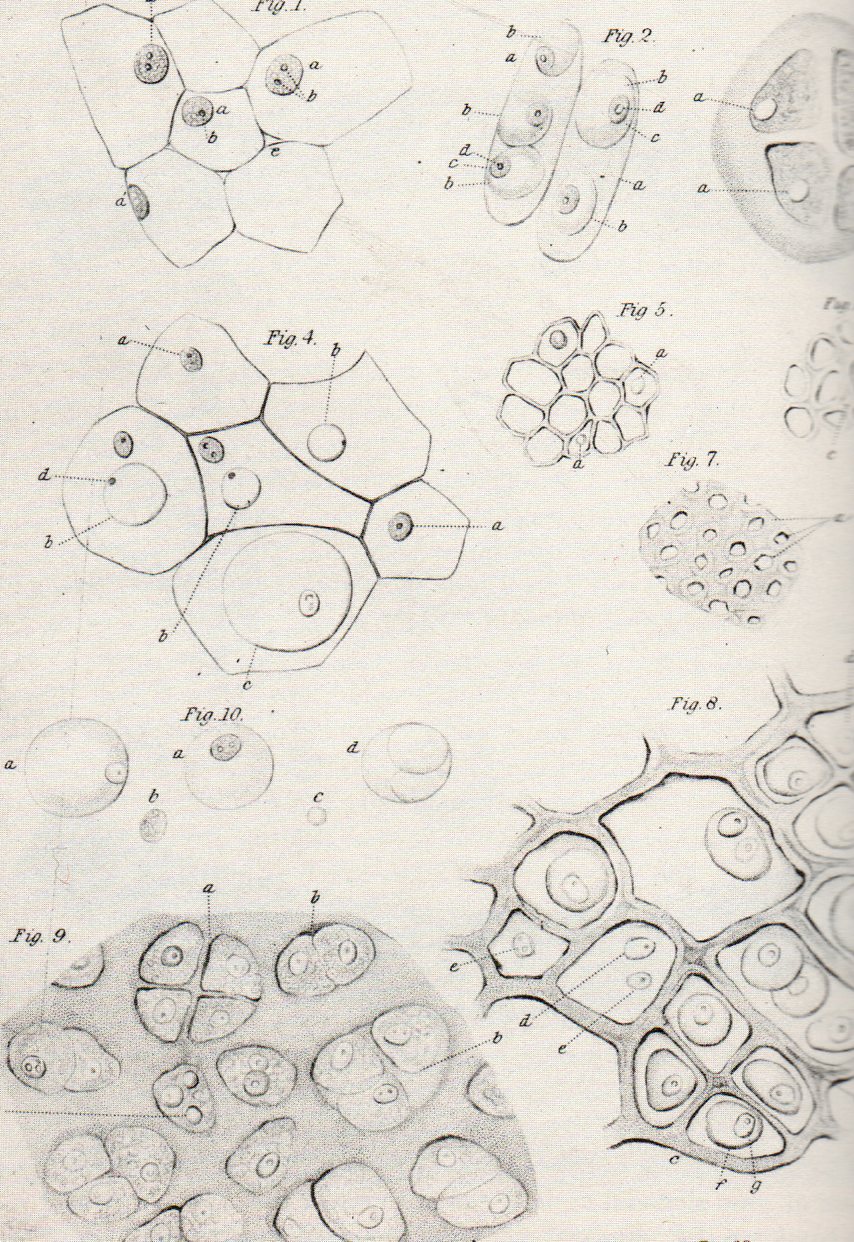
    Theodor Schwann (1810-1882) entered his contribution to the history of dots with his Mikroskopische Untersuchungen ueber die Uebereisnstimmung in der Struktur und dem Wachstum der Thiere und Pflanzen1 published in 1839, the same year as the announcement of the invention of photography by Daguerre.  Schwann–a young experimenter and theorist and former pupil of the great physiologist Joahannes Peter Mueller– generalized Matthias Schleiden’s general and evolutionary-necessary idea of cell-formation2 and developed it into an overall theory for the basis of life. 

    Dots--schleiden178

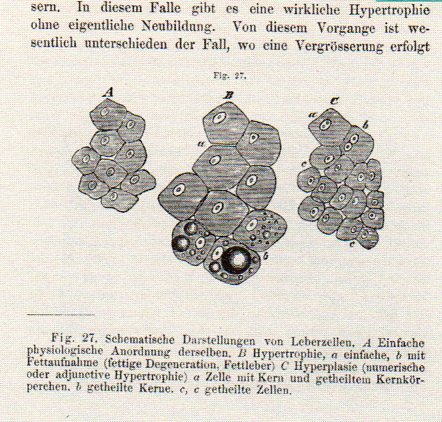
    Rudolf Virchow (1821-1902) looked at cellular dots and determined (with enormous interest) that they were very significantly altered with the introduction of disease.  These images from his Die Cellularpathologie (published in 1858)–a major work which basically founded the field of cellular pathology and introduced a rigorous new approach to scientific medicine–show the differences between normal and abnormal liver cells after having been subjected to disease. 

    Dots--kelendar176

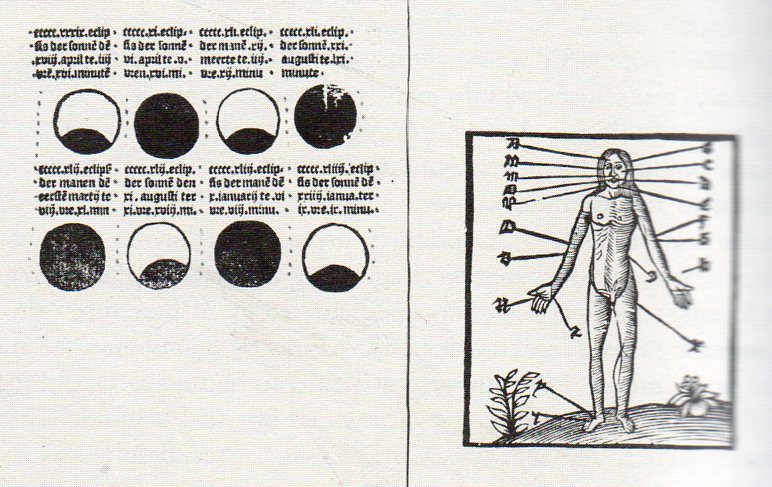
    A less-necessary but much larger dot that filled in the spaces of medical service to humanity is found in Der scaepherder Kalengier (“The Shepherd’s Calendar”), a beautifully-designed book printed in 1512.  The book was an encyclopedic compendium of contemporary medicine, but it also contained s little less than that, having a section of zodiacal dots and semi-dots in relations to principal points on the body that could be used for bloodletting. 
    Dots--jenner177
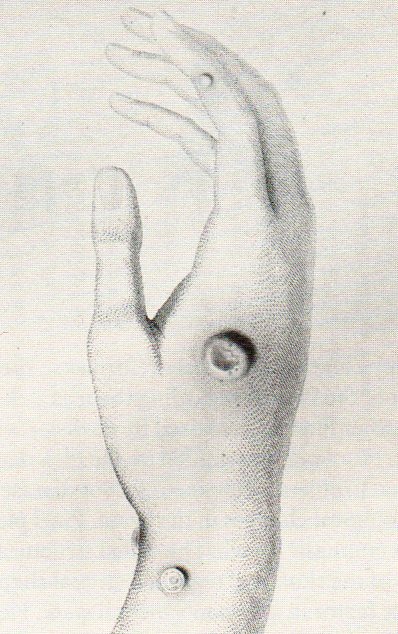
    Between the images of the sun/moon and the cell fit the dots of cowpox blisters on the hand and fingers of Sarah Nelmes, famously and inspirationally observed and understood by the Edward Jenner (1749-1823)3.  He extracted fluid from the blistered hand of Sarah the milkmaid and injected them into a very young “assistant” named James Phipps–essentially it was human experimentation carried out by a country doctor far removed from the culture of London, but who had a brilliant idea.  He continued extracting the injecting the pus from the blister until it came one day that Jenner tried the efficacy of his anti-small-pox innoculations with the real thing, exposing the boy to the dreaded disease.  Phipps did get sick but recovered in a few days4, documenting the revolutionary idea of Jenner and taking a great step forward in the treatment of disease. (It took years, by the way, for Jenner’s discovery to be recognized by the medical elite, whose opinion of Jenner was low given his simple medical life as a country doctor.)

    Notes

    1.  An English edition was published in London in 1847 under the title Microscopical Researches into the Accordance in the Structure and Growth of Animals and Plants
    2. For example, a plant is a community of cells and the cell is the essential unit of the individual plant.

    3. Famously reported in his 1798 publication An inquiry into the causes and effects of the Variolae Vaccinae, a disease discovered in some of the western counties of England, particularly Gloucestershire, and known by the name of the cow-pox.
    4. Described by Jenner so: “On the seventh day he complained of uneasiness in the axilla, and on the ninth he became a little chilly, lost his appetite, and had a slight head-ache…..” but on the 10th day he was perfectly well….    In order to ascertain whether the boy, after feeling so slight an affection of the system from Cow-pox virus, was secure from the contagion of the Small-pox, he was inoculated the 1st of July following with variolous matter (Small-pox matter, ed.) immediately taken from a pustule……No disease followed…. Several months afterwards, he was again inoculated with variolous matter, but no sensible effect was produced on the constitution.”


  • Gliders, Flight & Photography in the 1850’s & 1860’s

    JF Ptak Science Books  Post 1075

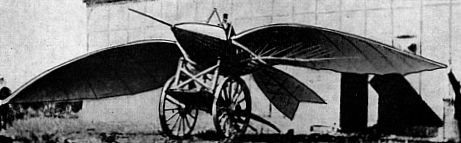
    The field of “photographic firsts” has always been interesting to me–the first photograph of the Moon, the first of a person the first portrait, the first color photo, the first engraving of a photographic image, and so on–and so I came to wonder about the first photograph of an airplane, or aircraft.  What I found was this monster, built by Jean-Marie le Bris, evidently the first image ever made via photography of a fixed-wing aircraft:

    Esterno--first photo

    The photograph (made in 1857, 18 years after the invention of photography) looks very reworked and strains the imagination some, but it shows the glider of Jean-Marie le Bris, who actually achieved gliding flight in the aircraft.  I am sure that the glider used those enormous wheels for land transportation and were not an integral part of the craft. 


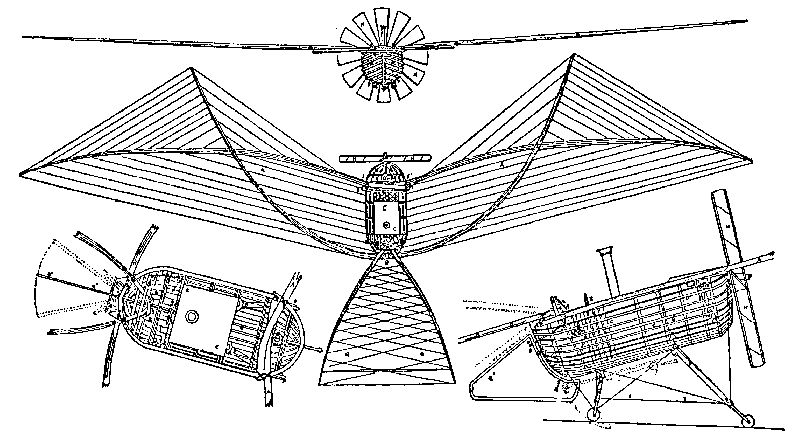
    Esterno--1857dutem

    It was in that same year that Felix du Temple and his brother constructed and flew a small, steam-powered monoplane aircraft model (schematics above), which looked like a bird from the plan perspective and a beetle from the elevation.  The view of the model head-on seems remarkable to me, showing very little in the way of profile.  

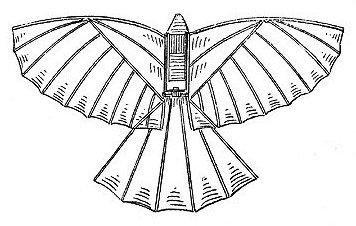
    Ferdinand d’Esterno produced a lovely design of a possible aircraft in his 1867 pamphlet, Du Vol de Oiseaux (“Onthe Flight of Birds”) , a glider that looked manageable and full of possibility, all based on his relentless study of the flight of birds.  Esterno reasoned that all of the heavier birds excelled in soaring flight, and since this was the case, there was hope for man to fly as well. 

    Esterno_Soaring_Machine

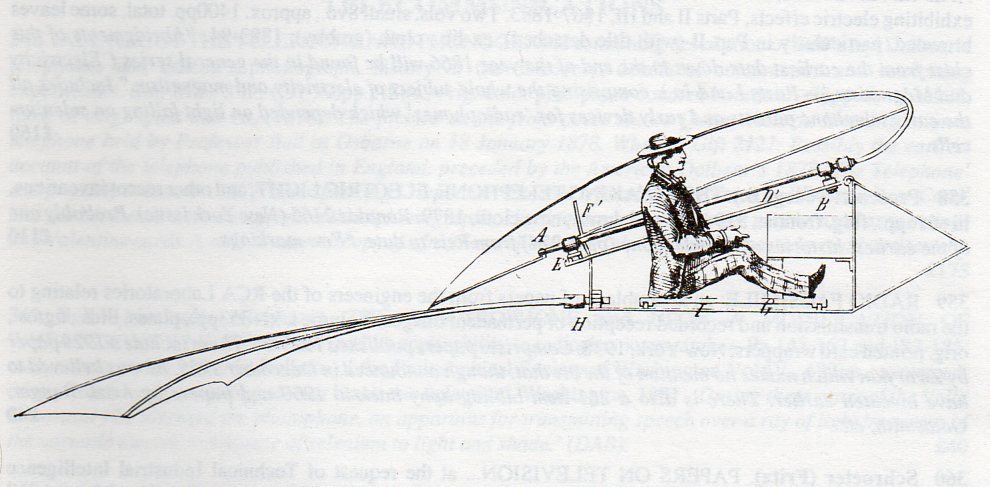
    Esterno’s glider was interestingly outfitted with a movable seat for the pilot–something that would be able to change the center of gravity, the flier’s chair connected to the very broad tail section–controlling a rather elegant, rather light-for-its-era (330 pounds) craft with 215 square feet of wing surface.  (See Flymachines.org for a nice description of this and other early aircraft.)  I think what I like most about the Esterno machine–an idea that never progressed beyond the drawing stage–is its compactness and lovely lines, especially as we can see in the cross-section below:

    Esterno--schematic179

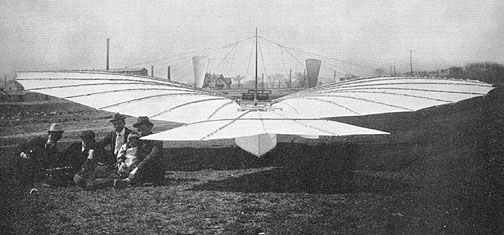
    As the author(s) of Flymachine.org and other sites and books have pointed out, though Esterno’s plans never got out beyond the pages of his pamphlet, he did have an influence on other later fliers, most notably Gustave Whitehead (1874-1927) and the Wright Brothers.  It was whitehead’s work which from my perspective most closely resembles Esterno’s as we can see below in this ca. 1901 photograph, the greatest difference of course being the two engine-driven propellers.

    Esterno

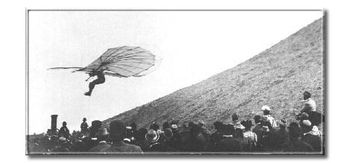
    But it was Otto Lilienthal who was one of the most important figures in the development of
    flight in the nineteenth century, making the first heavier than air
    gliding flights in what looked quite a bit like bird wings.  (Wilbur Wright said of him; “Of all the men who attacked the flying problem in
    the 19th century, Otto Lilienthal was easily the most important. … It
    is true that attempts at gliding had been made hundreds of years before
    him, and that in the nineteenth century, Cayley, Spencer, Wenham,
    Mouillard, and many others were reported to have made feeble attempts to
    glide, but their failures were so complete that nothing of value
    resulted” as found in  The Aero Club of America Bulletin, September 1912, and
    also in the article on Lilenthal in Wiki.)   )  He would die in 1896 in
    a gliding accident, falling to a crumpled death.  We see him in a more successful moment in this fantastic photo:

    Esterno--lilienthal

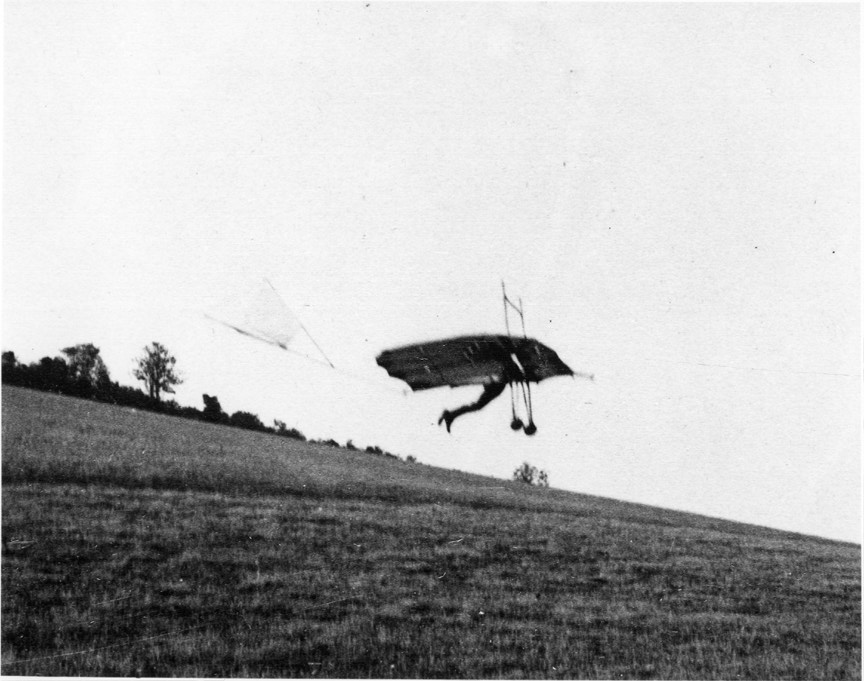
    Lilienthal also influenced the English aviator Percy Pilcher (1866-1899) whose four interesting gliders ( named theBat,
    the Beetle, the Gull, and the Hawk) led to his engine powered glider–a design left not completed due to Pilcher’s own fatal gliding accident in 1899.

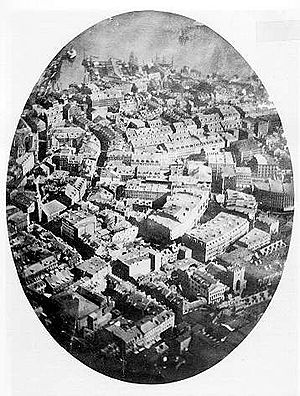
    But getting back to photographic “firsts” and aviation, the earliest surviving aerial photograph was made by James Wallace Black (1825–1896) whose tethered balloon image of Boston (below) is a splendid 160-year-old image of the city; the first first in this category actually belongs to Gaspard-Félix Tournachon (more popularly known as “Nadar”) but that work hasn’t survived.

    Boston 2

  • Human Weapons: Torpedo-Driven Torpedoes, 1944/45

    JF Ptak Science Books   Post 1076

    Torpedo bomb 3182

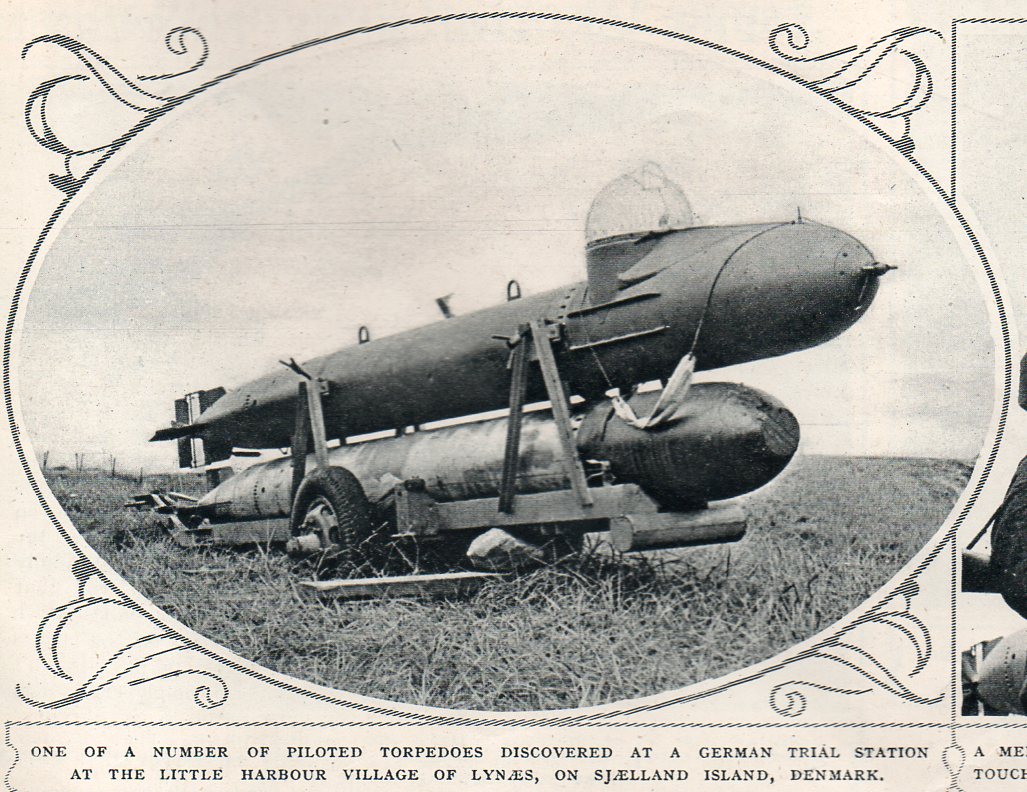
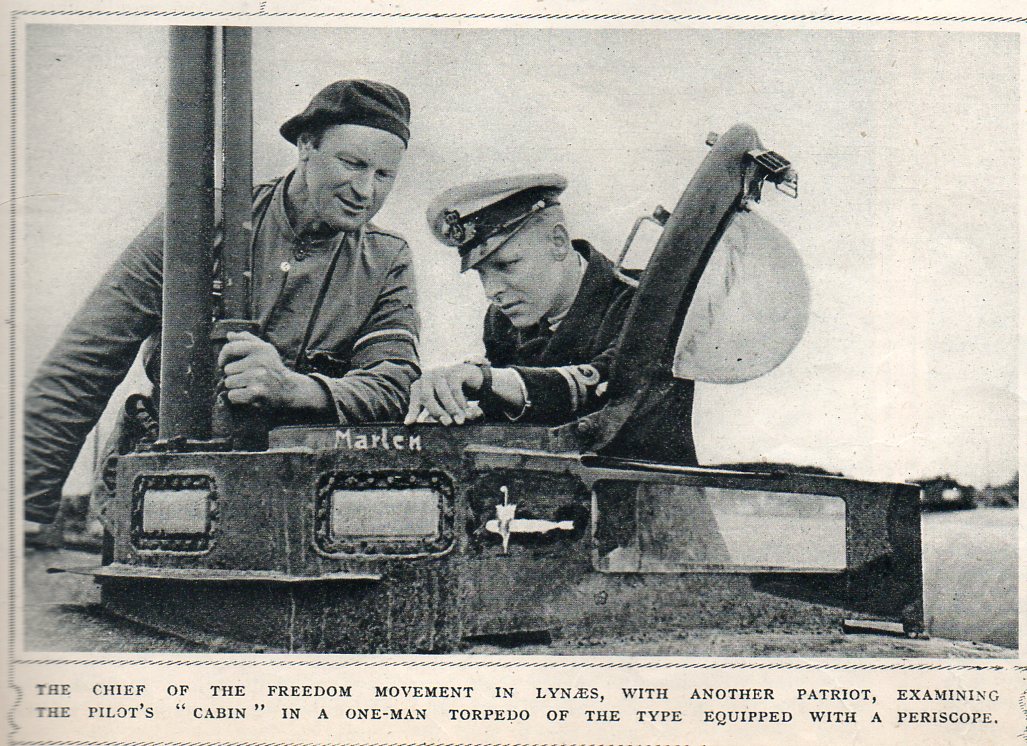
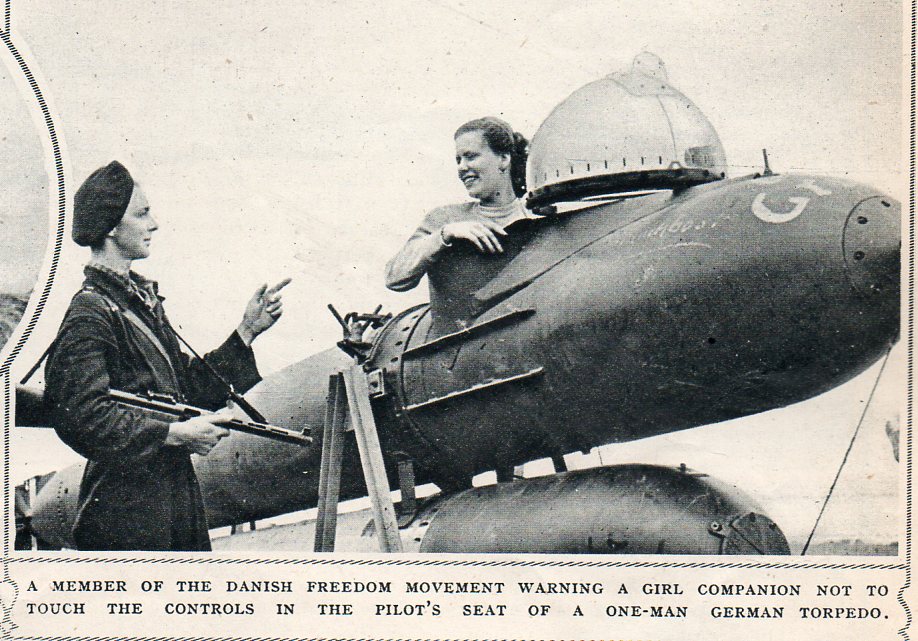
    These are some interesting images of a German 1944/5 human-guided torpedo known as the Marten.  It was an interesting idea, built on hundreds of  years of previous thinking along these lines–a one- or two-person submersible boat.  The Marten took this another step, attaching a 21-inch torpedo to the body of the boat.  The idea could’ve been a tide-turner had these things been anywhere near functional, but the fact of the matter was that they were poor sea craft and ineffectual at delivery their weapon.  

    Torpedo bomb 1180

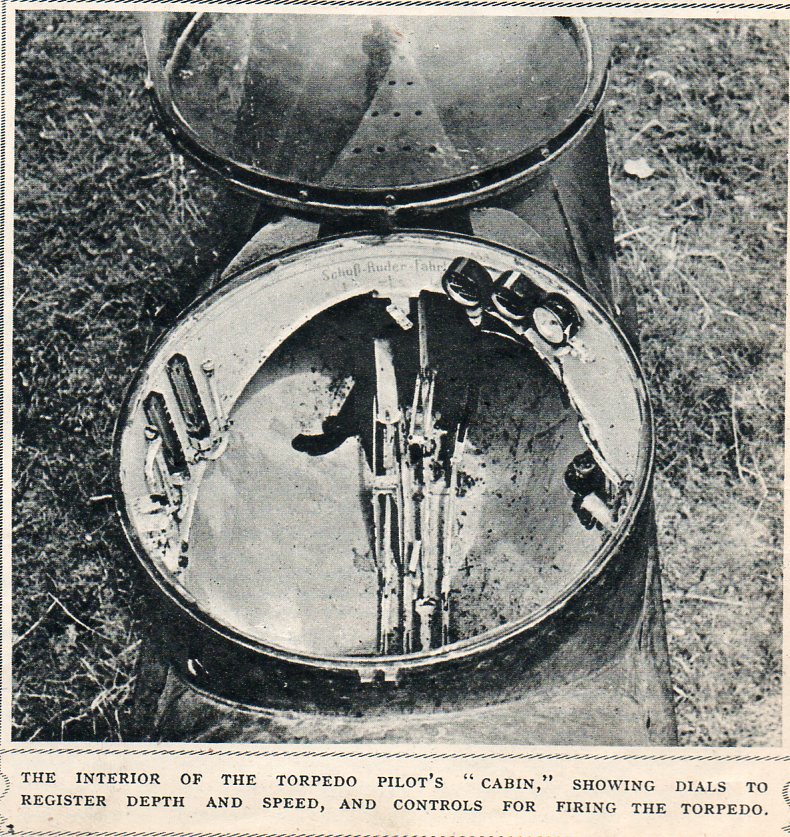
    The Marten was an improved version of a slightly earlier boat called the Neger.  It made 3 knots on a good day and had a range of 30 nautical miles.  It was difficult to maneuver, evidently took the pilot’s full attention, and when submerged could stay underwater for 30 minutes and did not have a periscope. So after all of this, the captain would release the torpedo, and then steam away at low speed.  Evidently of the 300 produced only a relatively few found targets*   

    Torpedo bomb 2181

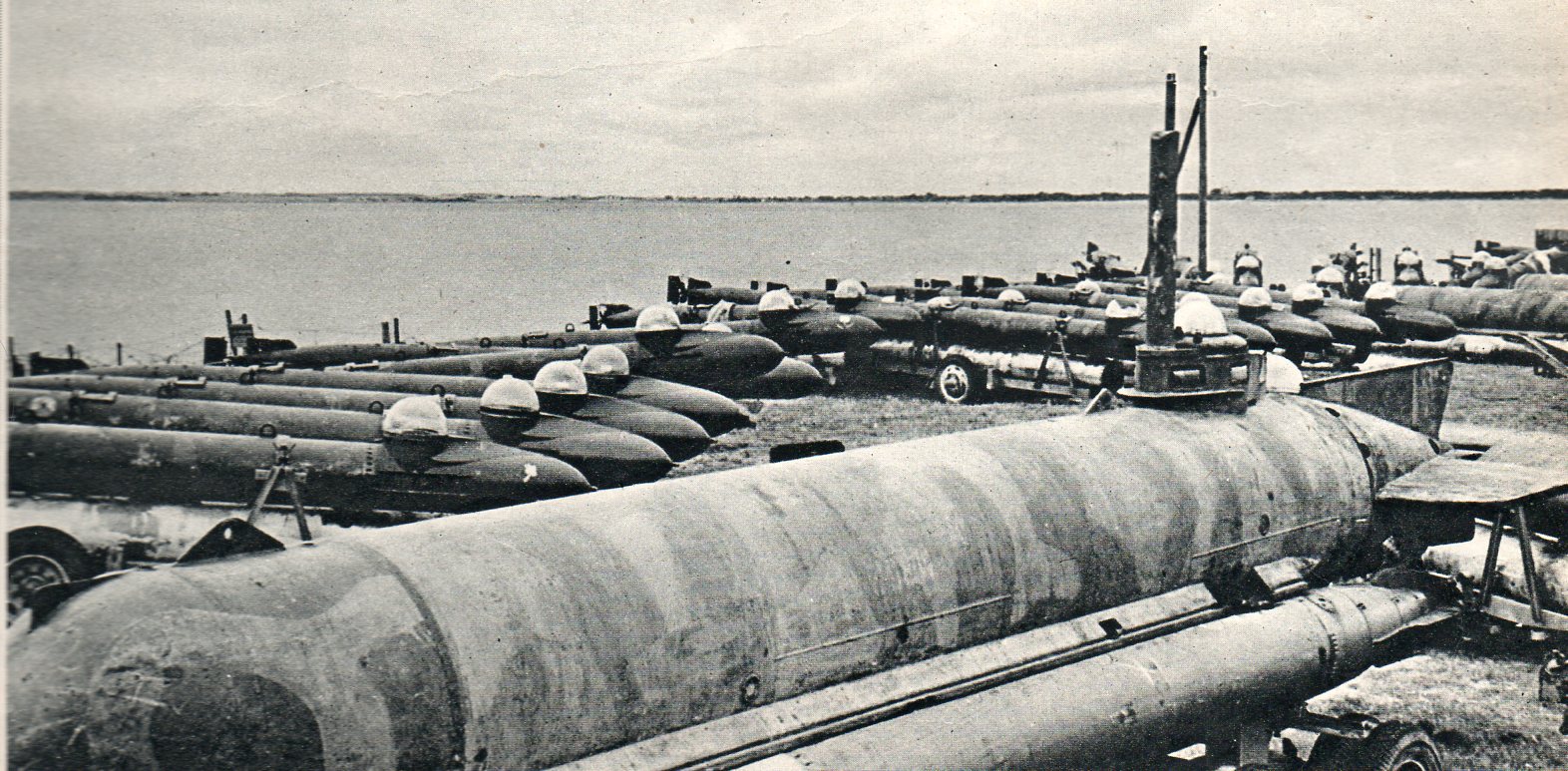
    This photo spread from The Illustrated London News of 11 August 1945 shows the disposition of about 10% of that force, on dry land on the small village of Lynes, Denmark.

    These aren’t on the order of my next post–on the human weapon–but it is getting close.  The German Navy did, after all, expect the pilot of the craft to survive. 

    Torpedo bomb 4183

    *There were many missions by these boats–most famous among them launched against British ships during the D-Day invasion on 5/6 June 1944–but overall they were rarely effective in a strategic sense.  I in no way mean to lessen the sacrifice of the sailors who were killed by the torpedo-launched torpedoes.

    Torpedo bomb 5184


    ·Posted by :

    ·in:

Recent Posts

Archives

Categories