A Daily History of Holes, Dots, Lines, Science, History, Math, Physics, Art, the Unintentional Absurd, Architecture, Maps, Data Visualization, Blank and Missing Things, and so on. |1.6 million words, 7500 images, 4.9 million hits| Press & appearances in The Times, Le Figaro, Mensa, The Economist, The Guardian, Discovery News, Slate, Le Monde, Sci American Blogs, Le Pont, and many other places… 5000+ total posts since 2008.

  • Note on the History of Eating: the Quiet Magnificence of the Soda Fountain

    JF Ptak Science Books   Post 1162
    A soda fountain banner 497
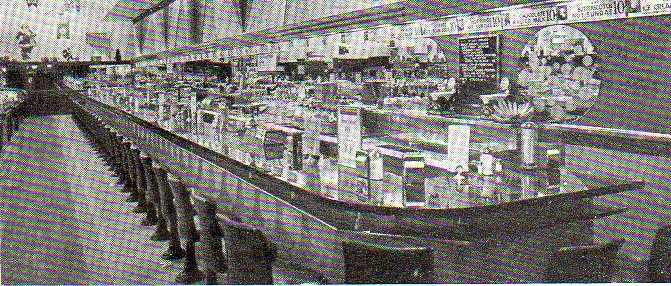
    In the U.S. perhaps there have been few things of soft luzury so reachable to so many than the soda fountain.  For a small fraction of a daily persistence-existence income, a person could go into one of these restaurants and enjoy a cup of coffee and a donut.  Not only that, the soda fountain was approachable to younger people, including A soda fountain cvr486 teenagers–perhaps the first time in this country when children and adults could indpendently visit a social place (that did not include organized religion) for paid entertainment, a sure sign if any indicating the growth of a real middle class, realish dispersal of capital* and a real sense of leisrure time. 
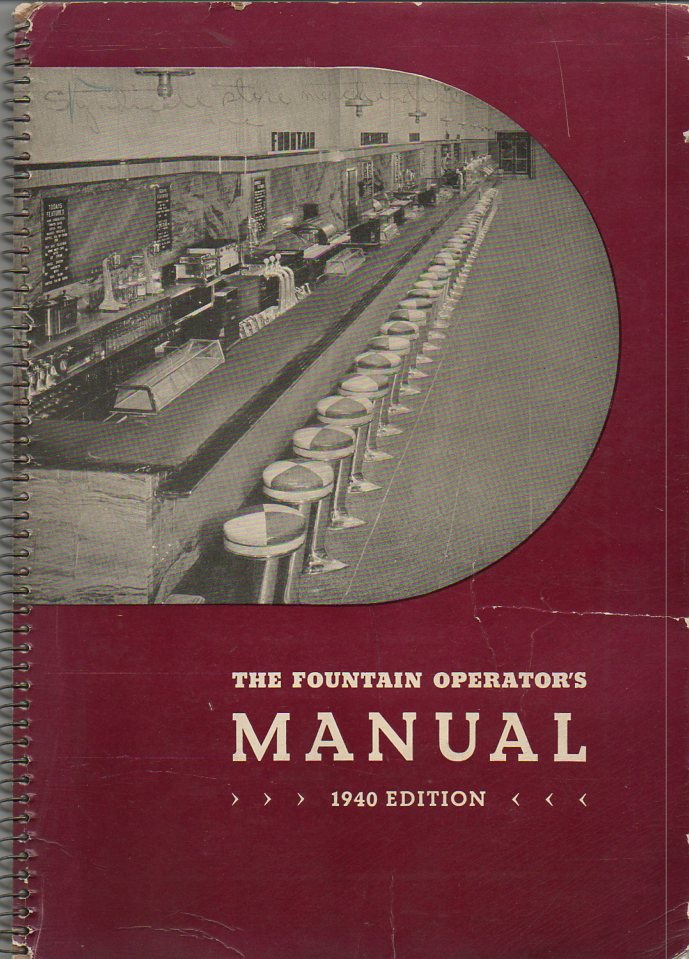
    For a while in the 30’s and 40’s and 50’s the soda fountain occupied what might have been a real keystone position in the panoply of American entertainment.  It seemed to be everywhere, in every city and town, in reality and in the imagination–it made a big appearance in literature and art and in the movies, a staple of average in the average American’s life.

    Of course there were taverns and saloons and wayside inns and restaurants, but these institutions were different, more removed from the population of “everyone” that the soda fountain drew on, and in.  Even the idea of the “leisure time” that it took to enjoy such a place, a place in public that involved consuming products for money, an entertainment, was still sort of new.  For example the idea of travel for the sake of leisure and entertainment was virtually unknown in the U.S. in  he 18th century, and only started somewhat in the 1830’s/40’s, but even then under the guise of movement for hygiene or health benefits, taking the water (as in spas and hot baths, hyrdotherapy) and–a little later on–the airs. Vacation as we know it today would have still be almost entirely unfamiliar to Americans at the late 19th century and even into the early ‘teens of the twentieth.  Mass production and inventions like the automoble (and a decent income) really gave birth to the idea of leisure time, which would’ve preceded the soda fountain by a decade or two. 
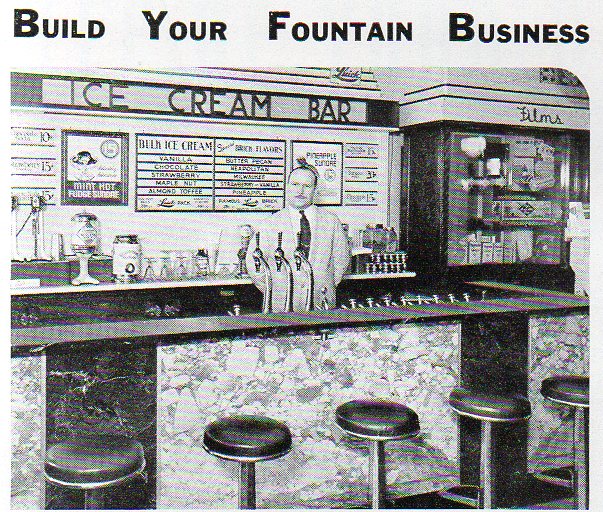
    A soda fountain man stand496

    Somehow, I can’t help but thinking about Henry James and the Soda Fountain. No doubt due to the remarkable Larry McMurtry’s Walter Benjamin at the Dairy Queen, though what I’m thinking about is different, about what  the brahmin James would’ve thought about the new development had he been around to see it. .  Mostly this idea comes from James’ obervations on NYC after his return from being abroad for decades, seeing the city in the Gilded Age unseen for so many years, and thinking of it all in terms of being “wasteful”, putting him a in a funny category that would include folks like Thorstein Veblen and T.S. Eliot.  Whereas I’m sure the later two (especially with Mr. Eliot) would see the development of such an affordable bit like the soda fountain as a Wasteland, I have a feeling that James would appreciate it as the small haven for new social activity that it was, if only he could have seen one (as he died in 1916).  (I’m only slightly familiar with James, but this sentiment seems right to me, coming from the man who never wrote a bad sentence (or so Mr. McMurtry has sorta said). I think that he would have enjoyed its appearance.  For others.)
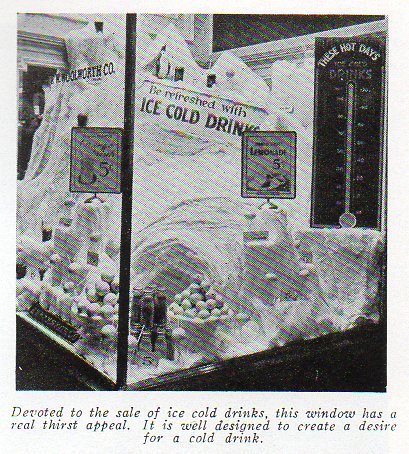
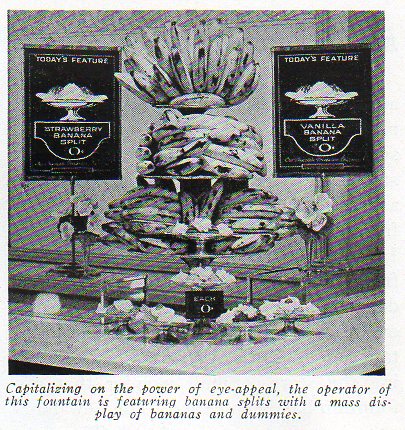
    A soda fountain display a490
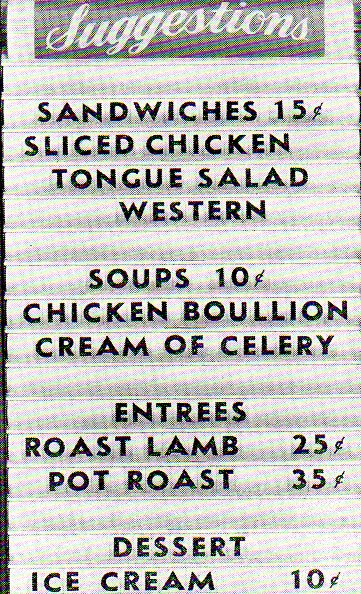
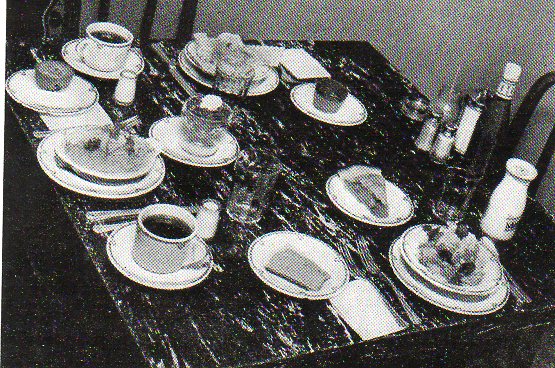
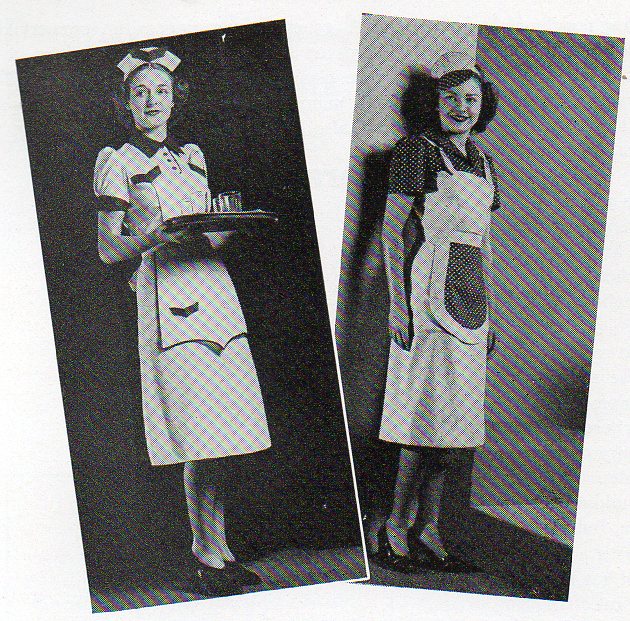
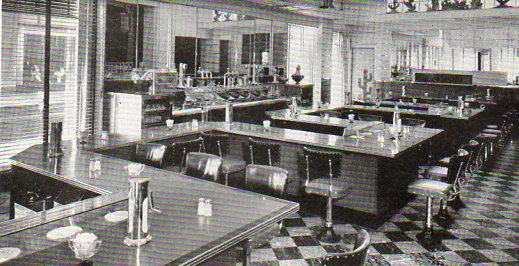
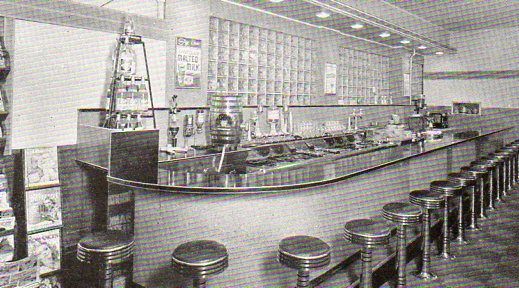
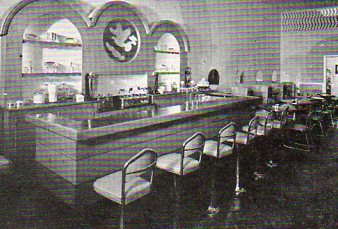
    All of this came about from reading a bit of the pamphlet (pictured above) the Fountain Operator’s Manual (1940), a lovely and crisply written how-to for folks interested in operating their own soda fountain (and the source for all of these images).  It contains advice on set-up, menus, figuring cost of foods, the beast preparations for the least amont of expense, trreatment of customers, advertisemet, and the like.  It couldn’t be edited out to anything finer than what it is–a simply refreshing, highly commendable job of writing.  And through it all it builds such an anticipation of want, and paints such a glorious picture of life in a soda fountain, that I wish I could be in one, right now.  Even if that “now” was 1940.
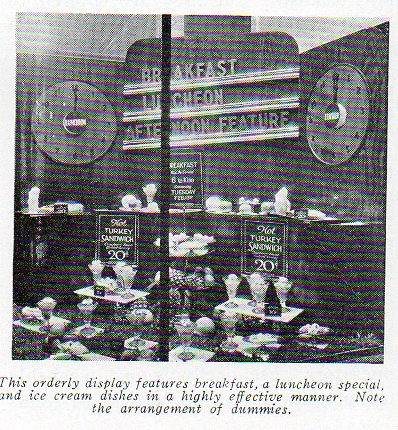
    A soda fountain display b491

    Notes

    * I’m just talking about little “c” capital here; I don’t mean at all that there was a significant distribution of wealth from the  top 1% or 5% or 10% to the other classes.  Just that there was a middle class, and that there was such a new thing as bona fide leisure time that reached so far down that non- or semi-working kids could go out and pay for food at a restautrant alongside adults. 

    A soda fountain ladies495

    A soda fountain menu492

      A soda fountain display c493

      A soda fountain setting494
    A soda fountain uniforms499

    A soda fountain view 1487
    A soda fountain view 2488
    A soda fountain view 3489

  • The Speed of History–a Note on Change in Aviation, 1905-1915

    JF Ptak Science Books   Post 1163

    Being at the airport yesterday to watch the glorious EAA B-17f take off and land (and to see our 7- year-old climb through it and the Blackhawk that suddenly appeared) put me in mind of the extraordinary advances in flying in the earliest history of heavier-than-air flight.  I picked up a volume of The Illustrated London News for 1909 to check out the popular reporting of the aeroplane and as usual got a very sharp reminder of how fast everything happened in the 1905-1915 period.
    Cody flight503

    In the earliest stages of the development of heavier-than-air flight (powered and not, 1848-1906) there were major innovations and essential experiments from a dozen countries:  England, the U.S., Poland, France, South Africa, Russia, Germany, New Zealand, Australia, Brazil, Romania, Sweden, Norway and  Denmark.  Even with all o f this directed work, the methods weren’t necessarily made public or when so were not well distributed, with many of the aviation/engineers working in obscurity and without contact with their peers.  (Examples of the major players in the history of heavier-than-air early flight include John Stringfellow, England, 1848; George Cayley, England, 1853;  Matias Perez, Cuba, 1856; Jean-Marie Le Bris, France, 1856; Jan Wnek, Poland, 1866; Goodman Household, South Africa, 1871;  Félix du Temple de la Croix, France, 1874; Victor Tatin, France, 1874; John Joseph Montgomery, US, 1883; Alexander Feodorovich Mozhaiski, Russia, 1884; Clément Ader, France,1890;  Otto Lilienthal, Germany, 1891; Lawrence Hargrave, Australia, 1894;  Hiram Stevens Maxim, United Kingdom, 1894; Shivkar Bapuji Talpade, India, 1895; Samuel Pierpont Langley, US, 1896; Octave Chanute, US, 1896; Carl Rickard Nyberg, Sweden, 1897; Gustave Whitehead, US, 1899; Percy Pilcher, U.K. 1899;  Augustus Moore Herring, US, 1899; Wilhelm Kress, 1901; Orville & Wilbur Wright, US, 1902;  Richard Pearse, New Zealand, 1903;  Karl Jatho, Germany, 1903;  Orville & Wilbur Wright, US, December 17, 1903 (finally for the first recorded controlled, powered, sustained heavier than air flight);  Orville & Wilbur Wright, US, 1904 (in the Wright II, making the first turn, and then later in September making the first circle); Horatio Phillips, UK, 1904; John Joseph Montgomery and Daniel Maloney, US 1905; Wilbur Wright, US, October 5, 1905 (circular flight of 24 miles in 39 minutes); Traian Vuia, Romania, 1906; Alberto Santos-Dumont, Brazil, 1906.)

    By 1909 there were many dozens of different aircraft flying around, just about but not quite getting to the sophisticated stage.  In just a few short years, by 1915, there would be an enormous increase in the capacity and numbers of airplanes –pushed along of course by the needs of war. Which is a little odd as some of te earliest fliers’ ideas and planes  were rejected by the military establishment.  The Wright fliers for example were not at first a welcomed idea to the U.S. Army (for numerous reasons, the Army saying “no” in 1905 but renewing their interest in 1907 and finally buying the plane in 1909) ; nor were the Brits interested in continuing funding for Samuel Cody (from Birdville, Texas) , pulling support for him just a few months after he had succeeded in flying the first British-built airplane in Great Britain (the British Army Aeroplane 1B).  That of course would all change in just a few years with the guns of August.

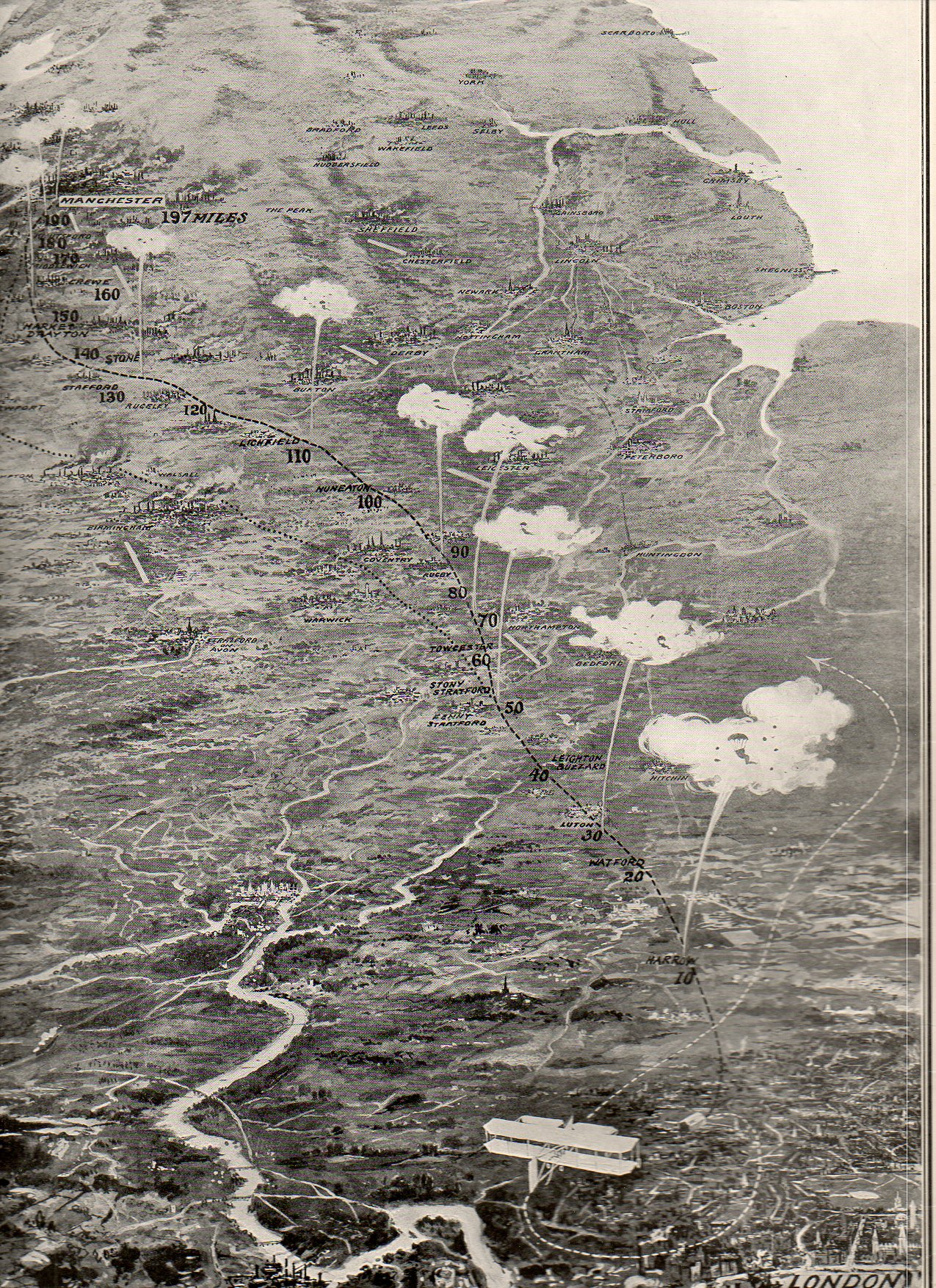
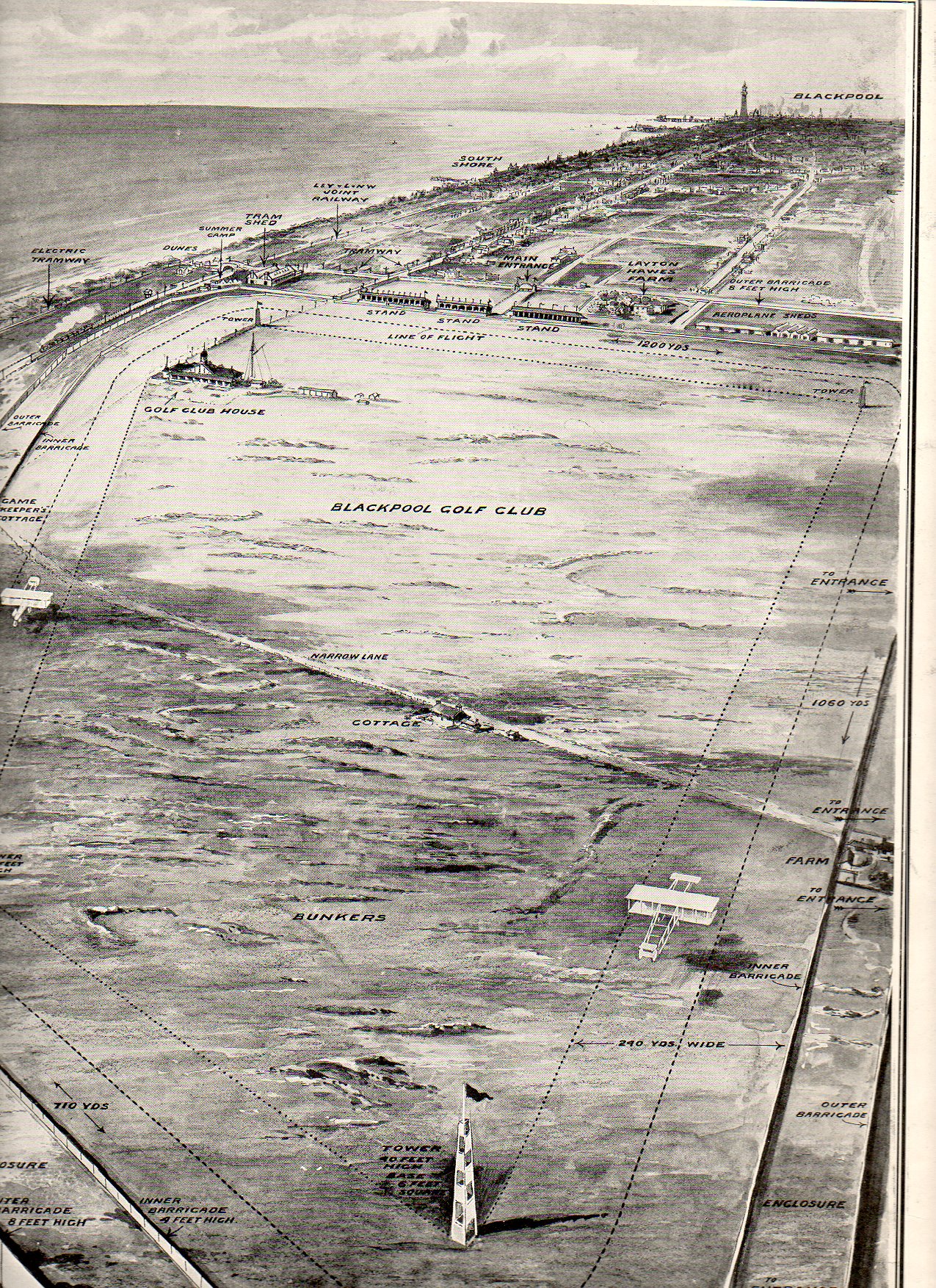
    Seeing this plan (above) for Samuel Cody’s flight from London to Manchester would’ve been a breathtaking achievement, had he made it.  The event had the trappings of An Enormous Situation, with smoke bombs and 450′-long white cloths to show him the way.  As particularly thrilling as this event was in 1909 it would be overshadowed in short order. In perspective, it was only six years earlier that the Wrights engaged in the first powered heavier than air flight.

    In 1903 the Wrights flew 121 feet; in just six years, Louis Bleriot would fly across the English Channel (on 25 July 1909); six years later Alcock and Brown would make the first transatlantic flight.  In  1911 Cal Rodger (11 De3cember1911) made the first American transconteintal flight (completed over the course of 50 days, with 3 days 10 hours in actual flying time).  11 Years later Jimmy Doolittle flew from Florida to California in just 21 (with one stop for refueling); the next year would see the record for transcontinental flight broken with a nonstop effort of 26 hours; in 1930 the time would go down to 12 hours and by 1945 the time was an extraordinary 5 hours 17 minutes.  (The retiring Blackbird flew the length of the country in 1990 in 64 minutes.)
                   
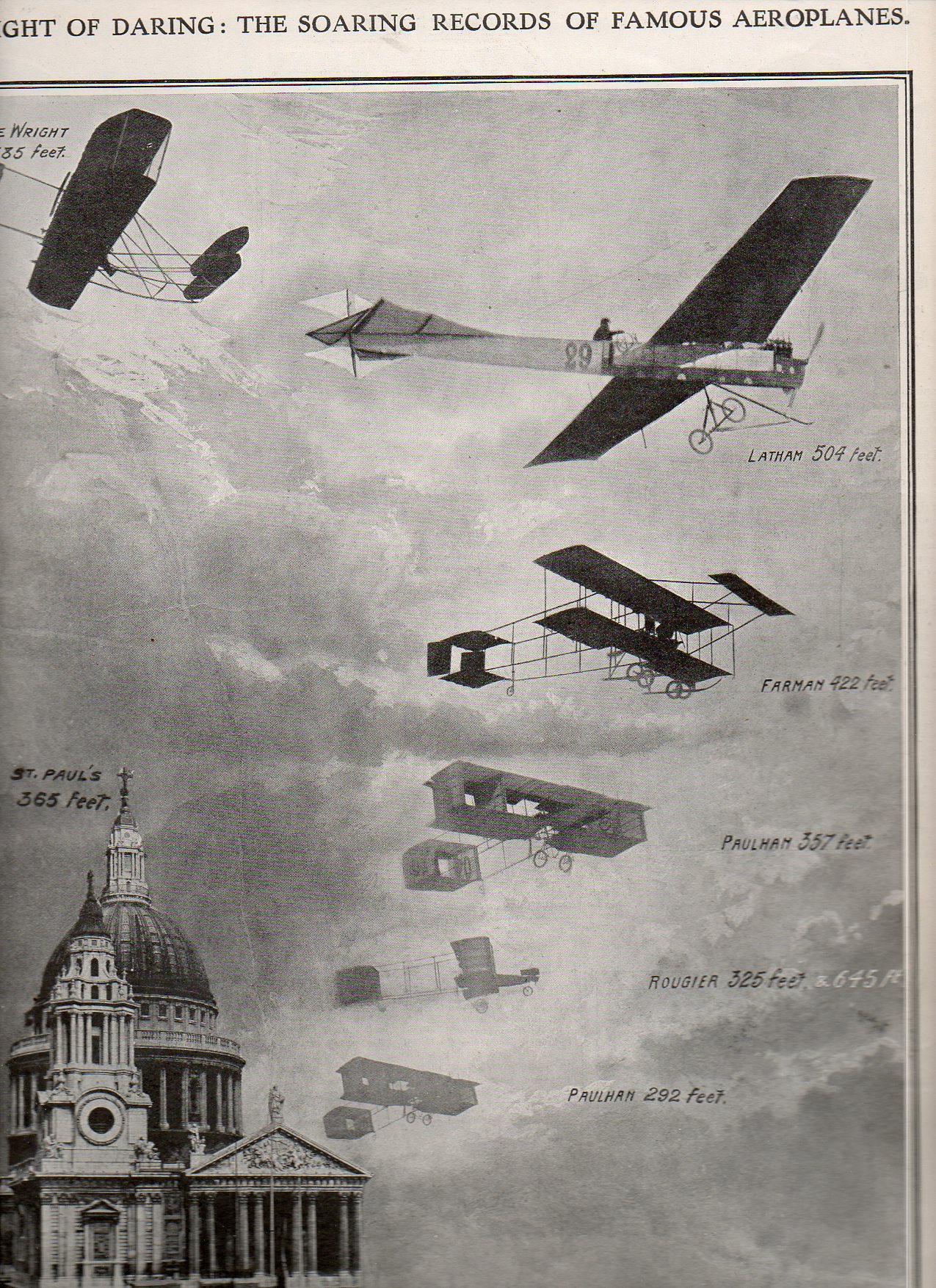
    The next image showing the altitude records for aviation in 1909 is just as phenomenal. The record at this point still stood with the Wrights at 585 feet, less than double the height of St. Paul’s.  It was a huge achievement, the other contenders coming to within hundreds of feet of their accomplishment but not quite doing enough to become the new world record holders,.  Ion just the next year improvements in the quality of aircraft and engines and control made it possible fo r Louis Paulhan to achieve 3,018 feet in January 1910,   Walter Brookins top climb to  a record of 4,603 feet (7 July 1910), and Ralph Johnsonte to 8,471 on 20 October 1910.  .  It must have bene a shocking development to have seen aeronautics to advance so quickly, breaking the old altitude record by a more than an order of magnitude in one year.  The speed record is a more difficult matter, but after recording speed records in the 30/40mp range in the 1903-1909 period, it broke to 66 mph 1910, 134 mph in 1914 and over 300 mph by 1928.  The difference in aviation in those 25 years is similar to that between the computing now and that of 1985 (and certainly 1979).
    Cody flight  Hieght sof flight aerodrome505

    I’m just saying that it is good to remember the enormity of change that took place in that early period of 1906-1919 or thereabouts–they were simply revolutionary developments that must’ve appeared  to the folks of those times.   
    Cody flight  Blackpool aerodrome504

    Notes:

    Cody was one of the most colorful figures in the history of early aviation in the U.K.  Born in 1867 and self-styled after Colonel William F. Cody, he was an inate adventurer and experiential bon vivant, who loved what he did and made sure that everyone else knew it, if nothing else. All that aside, he was a significant figure, important in the development of flight in England, and he died young for his pursuit. He appeared in the LA Times of 14 September 1907 (page 14) saying that the future of war would be in the air, and that the airship would “effect commerce as well as war”.  

  • One Upmanship–a Brief on the History of Ladders

    JF Ptak Science Books   Post 1165  Ladder jacob bath

    One morning Tim was rather full
    His head felt heavy which made him shake
    He fell off the ladder and he broke his skull
    And they carried him home, his corpse to wake
    Rolled him up in a nice, clean sheet
    laid him out upon the bed
    With a bottle of whiskey at his feet
    And a barrel of porter at his head–Tim Finnegan’s Wake, ca. 1850’s. 

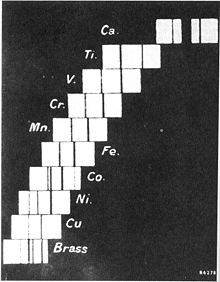
    The whole pursuit of ladders here today comes from looking at something described as a ladder but really isn’t one: Henry Moseley’s famous “ladder diagram” from a 1913 paper establishing the important Moseley’s Law (establishing the atomic number as a measurable experimental quantity). A more concrete ladder-like diagram is found (beginning about 1885) is the diagram used for displaying readouts from electrocardiograms.  On the other hand, the ladder from which Tim Finnegan fell in the 19th century Irish ballad (from which Mr. Joyce drew his inspiration for his last book from 1939, dropping the possessive apostrophe) was a real ladder, but neot necessarily nuts-and-bolts real.

    There are of course monster ladders–like the ones that reach 1300′ high inside transmission towers.  There were long ladders that reached up the sides of massive funnels of ocean-going ships, and short ones leading to the cockpits of fighter planes. There’s a very short ladder that reached down only eight feet or so, but that one was on the side of the LEM of the Apollo 11, and the LEM was on the Moon, which may be our furthest-away ladder. There were other 19th century versions of far-away ladders–these belonged to some of the early aeronauts and their balloons, some of which held some very large passenger cabins, some of which had two storeys, complete with ladders.

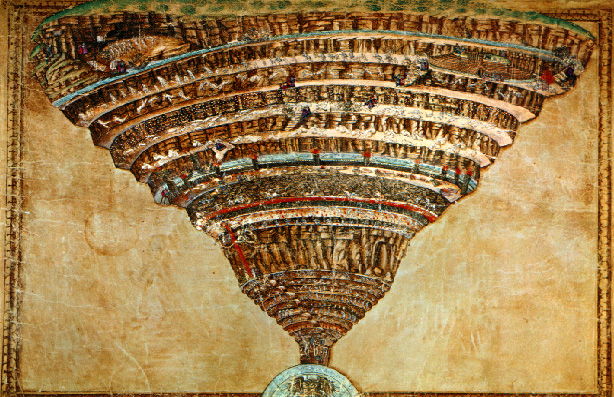
    The most famous of all ladders is probably Jacob’s ladder, an account of the patriarch’s dream of entering Heaven as found in Book of Genesis (28:11–19).  On the other hand, the image painted by Sandro Botticelli, led the other way, south, deep south, to Hell.  William Blake chose to represent another more beneficent ladder, again leading the aspirant to Heaven. And speaking of painters, the elder Brueghel included ladders in minor appearances in a number of his paintings (like “Big Fish Eat Little Fish”, and Hunters in the Snow”).

    William Shakespeare wrote of a gentleman’s knowledge of rope ladders, which of course could be found all over masted ships throughout history–and indeed the ladder stretches all the way back in human history, reaching back to cave paintings that dat from the 11th century BCE. 

    There are plenty of metaphorical ladders like “climbing the corporate ladder”, or hope for glory and success and victory in simple Chutes and Ladders.  And then of course, what better way to end a short look at ladders than with lovely lovely Ludwig (the other one):

    “My propositions are elucidatory in this way: he who understands me finally recognizes them as senseless, when he has climbed out through them, on them, over them. (He must so to speak throw away the ladder, after he has climbed up on it.) He must surmount these propositions; then he sees the world rightly.” –Ludwig Wittgenstein, Tractatus Logico-Philosophicus, 6.54

    Moseley’s Ladder:

    Ladder moseley

    Botticelli’s Hell:

    Ladder botticelli hell


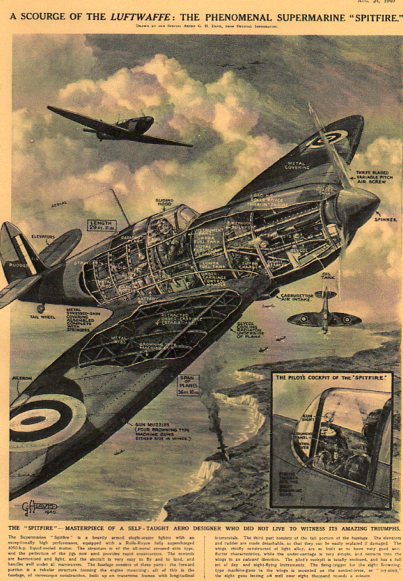
  • WWII Aircraft Cross Sections–Spitfire, Hurricane, Beaufighter, Lancaster (!) and Stirling.

    JF Ptak Science Books    Post 1165

    Here are some fabulous examples of technological cross sections from the collection here–this part concenrtrating on some of the British WWII aricraft.  The drawings are just superb, and you can easily get lost in them, following the geogrpahy of engineering detail from one logical place to the next. All of these images were published in The Illustrated London News and appeared 1940-1943.

    X-Sect  SPitfire507

    And the detail (sorry for that–the originals are much larger than the scanning bed would allow…)

  • Catechizing the Sky–Writing on the Stars

    JF Ptak Science Books  Post  1166

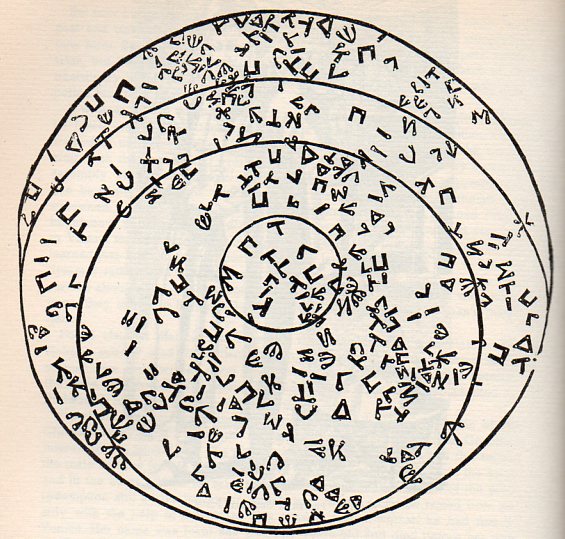
    Working on the next installment of cosmological images [and also a continuation of the series on writing systems] I put together a series on naming the stars, ideas providing the mechanics for naming the celestial kingdom, applying an alphabet for relative discussions of the heavens.  The most provocative of them all, I think, belonged to Guillaume Postel (1510-1581), a scholar who took flight in his imagination and who  established a world system which for him created  a harmony between all things that existed and the maker of the universe, and which basically was an attempt to move far past any identification system to a catechize the stars. Postel’s was a communication system between man and the beyond, not a coordinate system.  He incised the stars in his vault of heaven with Hebrew letters which would be the keys to understanding all things–and at the basis of all of this was his conception of a world unified religion which incorporated Christian ideas and values and to which all other religions would transpire. 

    Alphabet--stars  hebrew519

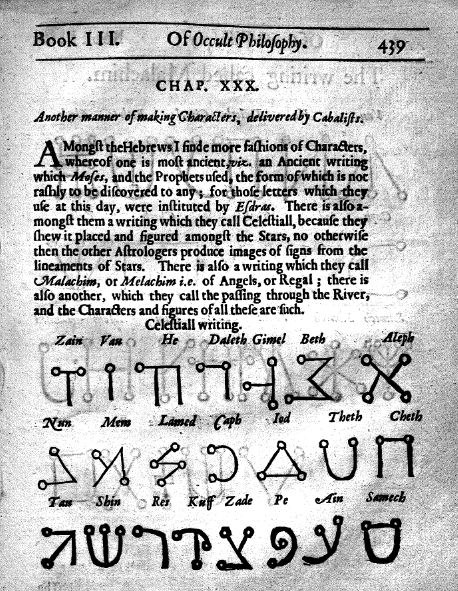
    There were numerous other attempts to establish divine alphabets, though none so far as I know were inscribed directly on the stars intended to serve as a means of transferring information and insight.  The extraordinarily accomplished (Renaissance man of the Renaissance, physician, astrologer, botanist, occultist, and general fill-in for whatever discipline needed help) Paracelsus’ Alphabet of the Magi also used Hebrew letters supplemented with magical alphabets for divination purposes, though not on the stars.  Heinrich Cornelius Agrippa (an astrologer/magician/theologian/occultist, 1486-1535) in the early 16th century came close to the Postel idea with his Angelic Alphabet, though this was used to communicate with angels and again was not incised on the stars themselves.  John Dee’s (a man of many and high accomplishments, a mathematician, occultist, astronomer, astrologer, alchemist and divine, 1527-1608) angelic alphabet was somewhat similar to Agrippa’s; his “Enochian” language used to communicate with angels.
    Alphabet--celestial

    Letters and numbers were of course used on stars but in general were used to identify the magnitude and position of stars in the constellations.  Johann Bayer (1572-1625) applied Greek letters to stars according to their relative luminosity in his revolutionar Uranometia (published in 1603).  John Flamsteed (1646-1719, and who was “The King’s Astronomical Observator” and  the first British Astronomer Royal)would come a little later and use an arabic numeral and Greek letter system, which would give the relative luminosity as well as the star’s position from the western-most edge of its constellation. 
                                       
    But it was this image by Postel which is the most astonishing, really, attempting as it did to read the heavens and the works of God without ever having to actually see the Creator (a thing most impossible, as stated in Exodus 33:20).

    ·Posted by :

    ·in:

    — — —
  • A Shadow for a Mask–the Pivot Person in the Execuiton of the Lincoln Conspirators

    JF Ptak Science Books   Post 1166

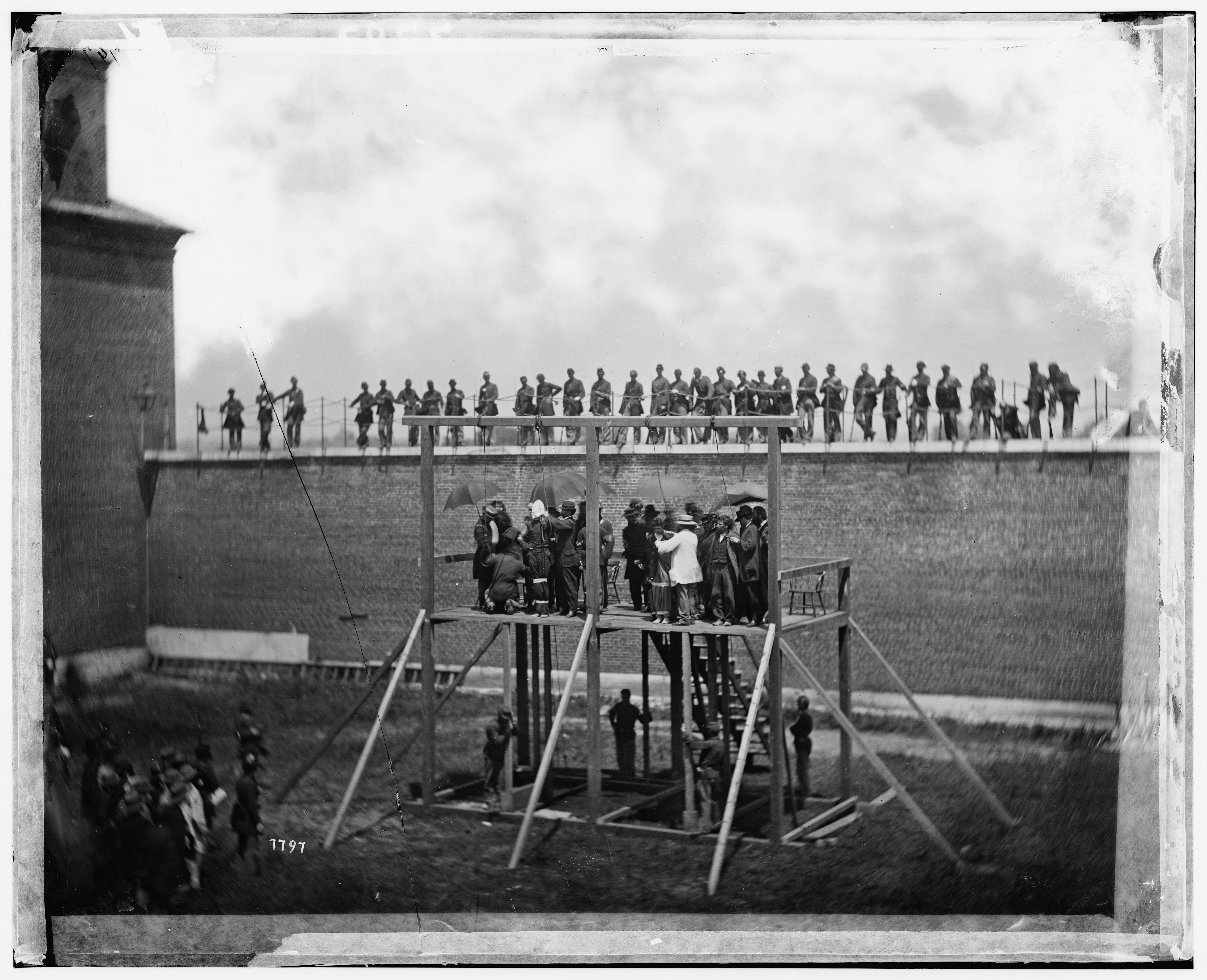
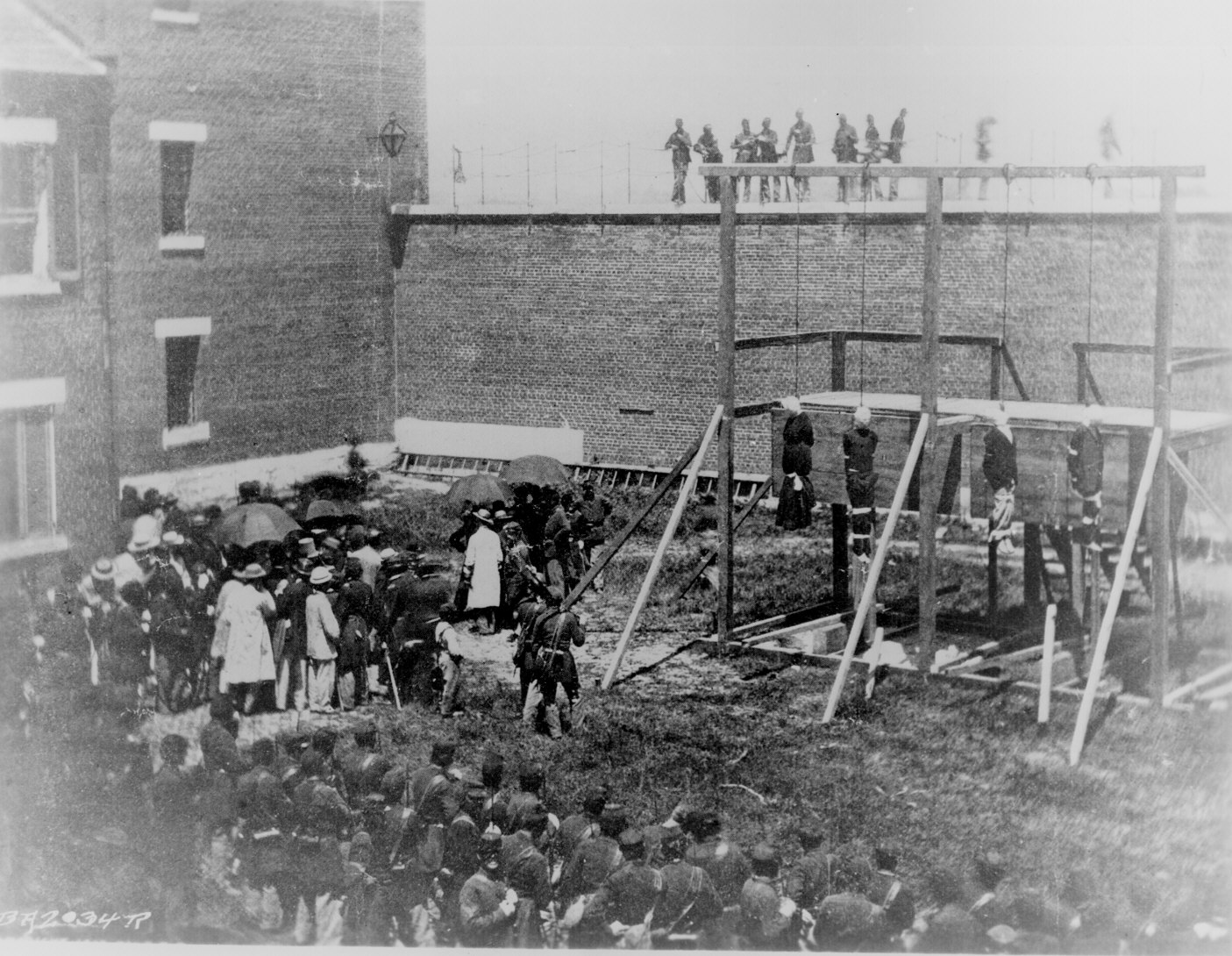
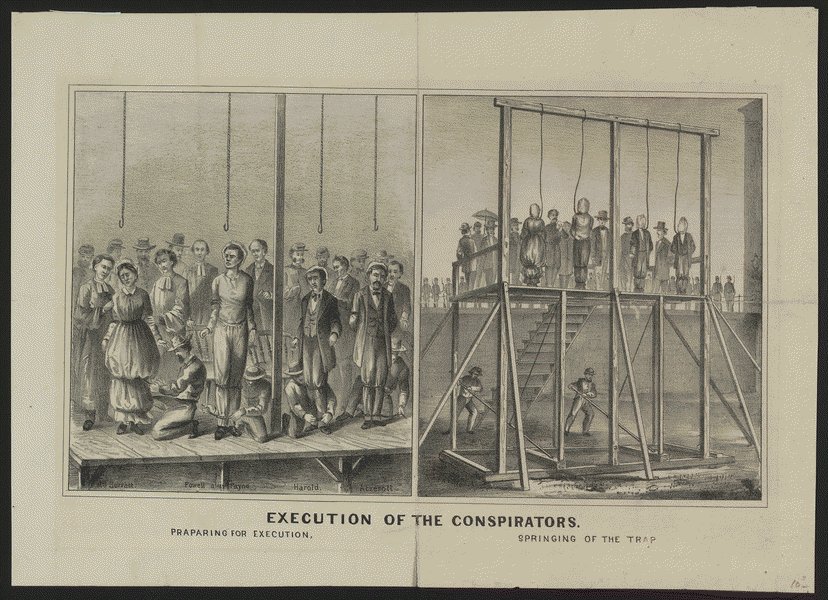
    On a hot 7 July, 1865, photographer Matthew Brady was the only photographer present at the old Washington Penitentiary to make images of the execution of the Lincoln assassination conspirators  Mary Surratt, Lewis Powell, George Atzerodt and  David Herold.  All of these stories of the assassination are best told elsewhere–in many other elsewheres, a story that is legion–but I can’t seem to find anything about one special, particular  person captured in two of the series of these photos.

    Lincoln conspirators

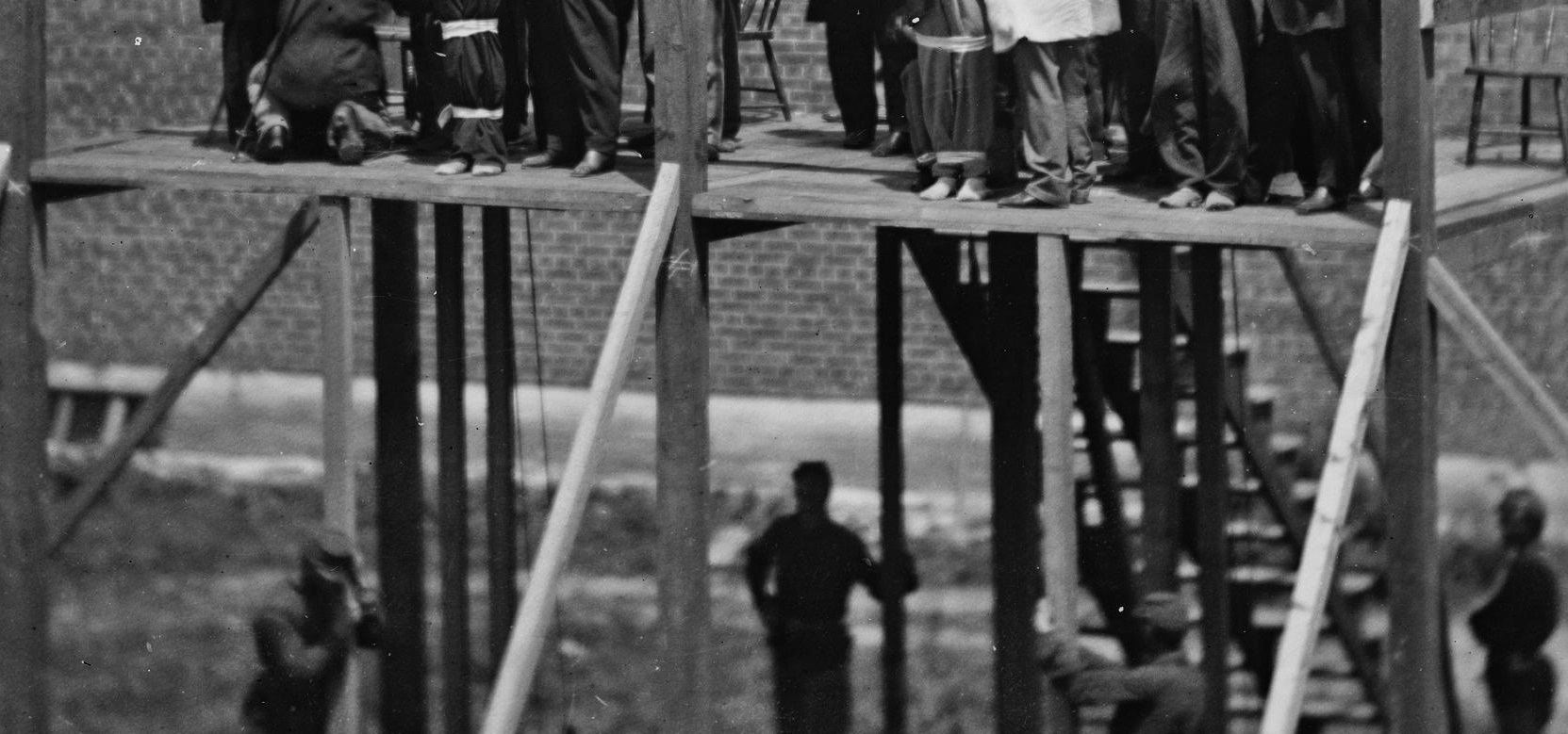
    If you look closely at the first photograph, there is a man leaning against a pole that is directly under the first condemned conspirator, Mary Surratt.  That pole, a substantial 6x6x10′ or something like that, is the only thing that is holding the trapdoor closed on which Surratt stands.  Actually, I think that two conspirators occupy one trapdoor–there is a second pole just to the right, another man standing nearby.

    Lincoln conspirators detail

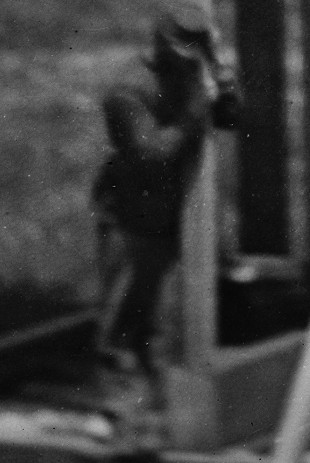
    I guess the execution was at high noon.  The shadows seem to be falling straight down, our man–standing just out of the reach of the shadow of the gallows–has his face obscured by the shadow of the brim of his cap. Like a mask.

    Gardner execution detail man pole jpg 

    What was that first man doing, exactly?  He seems to be in a  nonchalant attitude, given his position and circumstance, as well as the crowds and significance of the event. Why was he leaning on the pole?  Was this just the last part of a long morning?  Was the pole not terribly secure? Was he bored?  Was he overcome?

     He was surrounded on all sides, and he was hearing the boots-on-wood above him, the conversations in the preparations of the nooses, the shuffling of the shackled feet of the condemned, and perhaps the last words of the people waiting now for the last noose to be fitted over the last man.  At that point, an order would be given, and our man–who was now positioned behind the gibbet–would simply push another long pole against the bottom of the supporting pole, dislodging it, and allowing the trapdoor to open, the conspirators dropping to their deaths with broken necks. Or I hope for their sake that their necks were broken–by the looks of the position of one of the nooses, its in a bad spot so far as assuring a quick death is concerned.  Maybe the noose’s position was changed after this picture was made  Maybe not.  What did our man do after pushing the beam out of position?  He would’ve been very close to the action, within a few feet.

    I wonder what the trapdoor pole pushers do afterwards?  What were their jobs?  From the looks of the last picture, someone put the beams in order, placing them alongside the execution structured, tidied up. 

    Where did the man go?  Since they were the few folks right at the base of the scaffold, right there where the mandrake were supposed to grow, did these men wind up with th job of cutting the bodies free from their ropes and burying them?  Someone did it. I wonder what that someone thought as they returned home, or to the barracks, and st down to dinner.  What did they see in their dinner plate?

    Civil-war-201

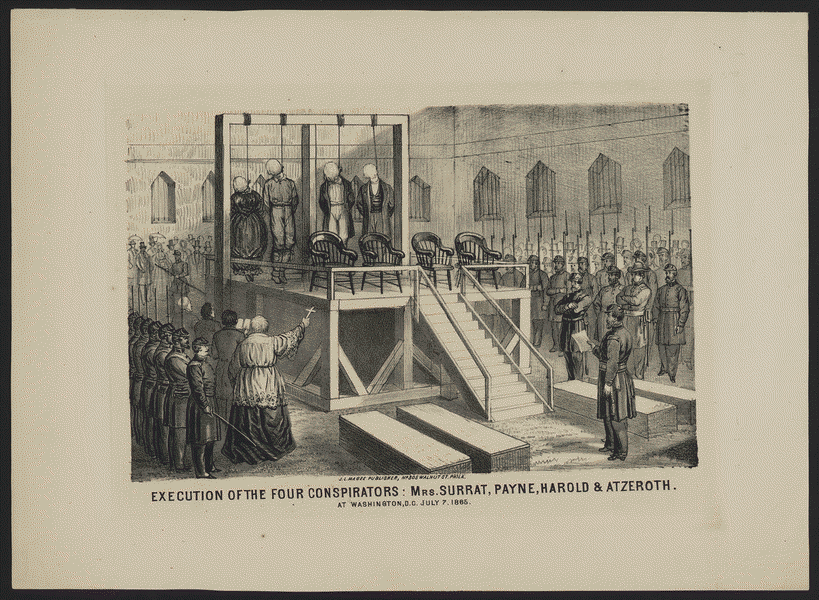
     This contemporary print of the scene gets little correct, though the chairs for the conspirators are about right.  The scaffolding is much nicer than in the original, and the place looks certainly far less austere than the penitentiary. The awful thing here is the actual, physical manner of the hanging–the attitudes depicted here  would have been even more bestial,  the lack of a trapdoor suggesting that the were all dropped or raised a few inches and basically strangled to death.  Also in the real scene of the execution there were four coffins for the condemned nearby–except that three of them were piled one on top of the other.  I’m not sure why they were stacked. It seems to me that they were within the visual range of the conspirators.

    Lincoln conspirators

    The next contemporary print gets a little more of the reality of the scene correct, both mechanically and emotionally, and shows how our own character of interest did his job. The actual hanging part–the ropes and the nooses–is again wrong, suggesting strangling more than hanging.

    Lincoln execution 2

    The pictures raise far more questions to me than anything else, as witnessed by my personal record use of the question mark in this post. . 

    [Sources: photographs courtesy of the U.S. National Archives; prints, courtesy of the Stern Collection, U.S. Library of Congress.]


    ·Posted by :

    ·in:

    —
  • German Propaganda, 1929–a Call to Militarization

    JF Ptka Science Books  Post 1168

    [One of a long series of posts on propaganda–enter this term in the search box at left to see the listing.]

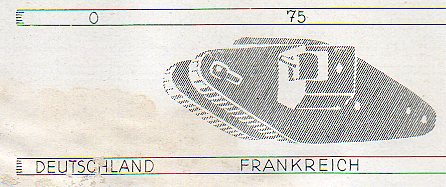
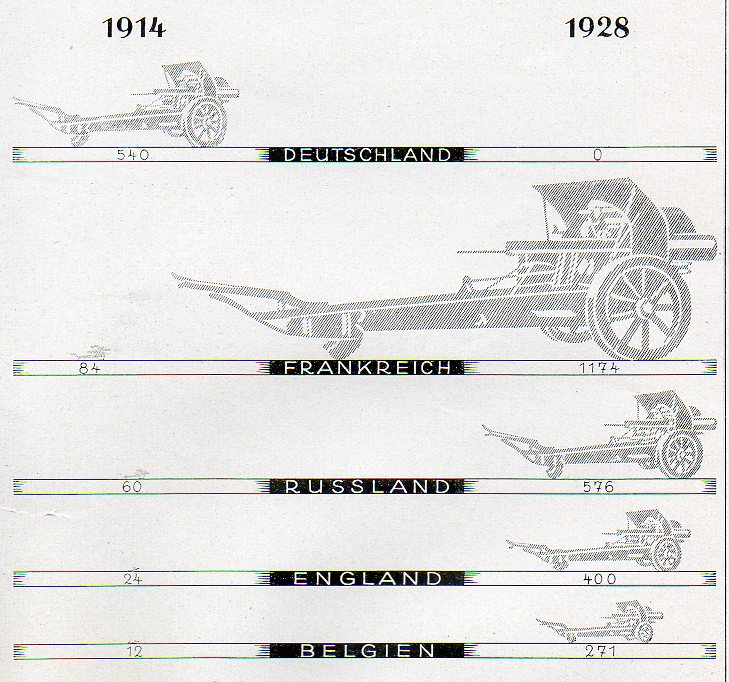
    Germany  1928 tanks det526

    Germany  1928 tanks525
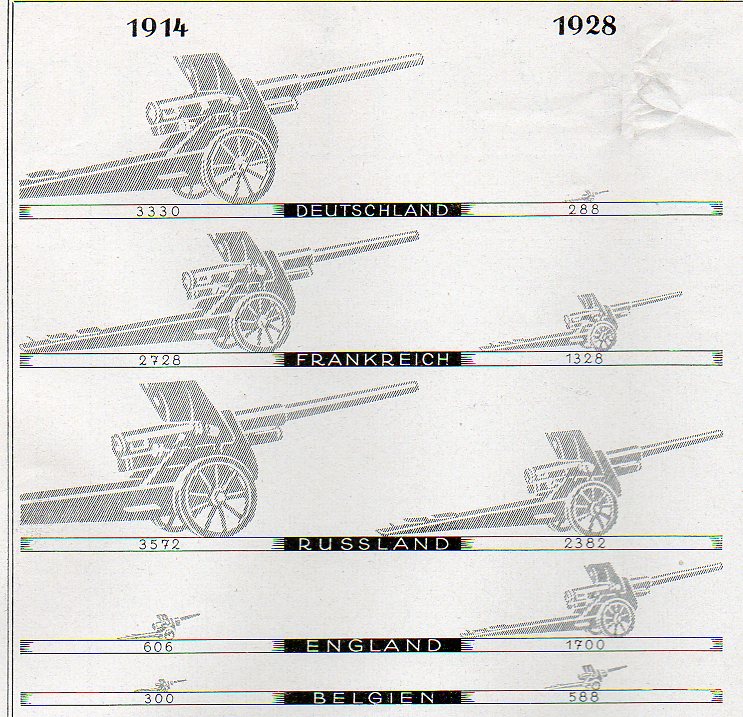
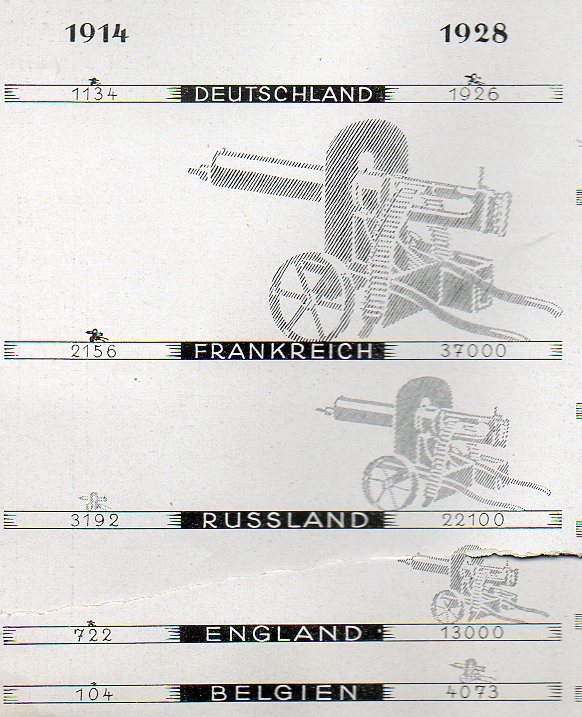
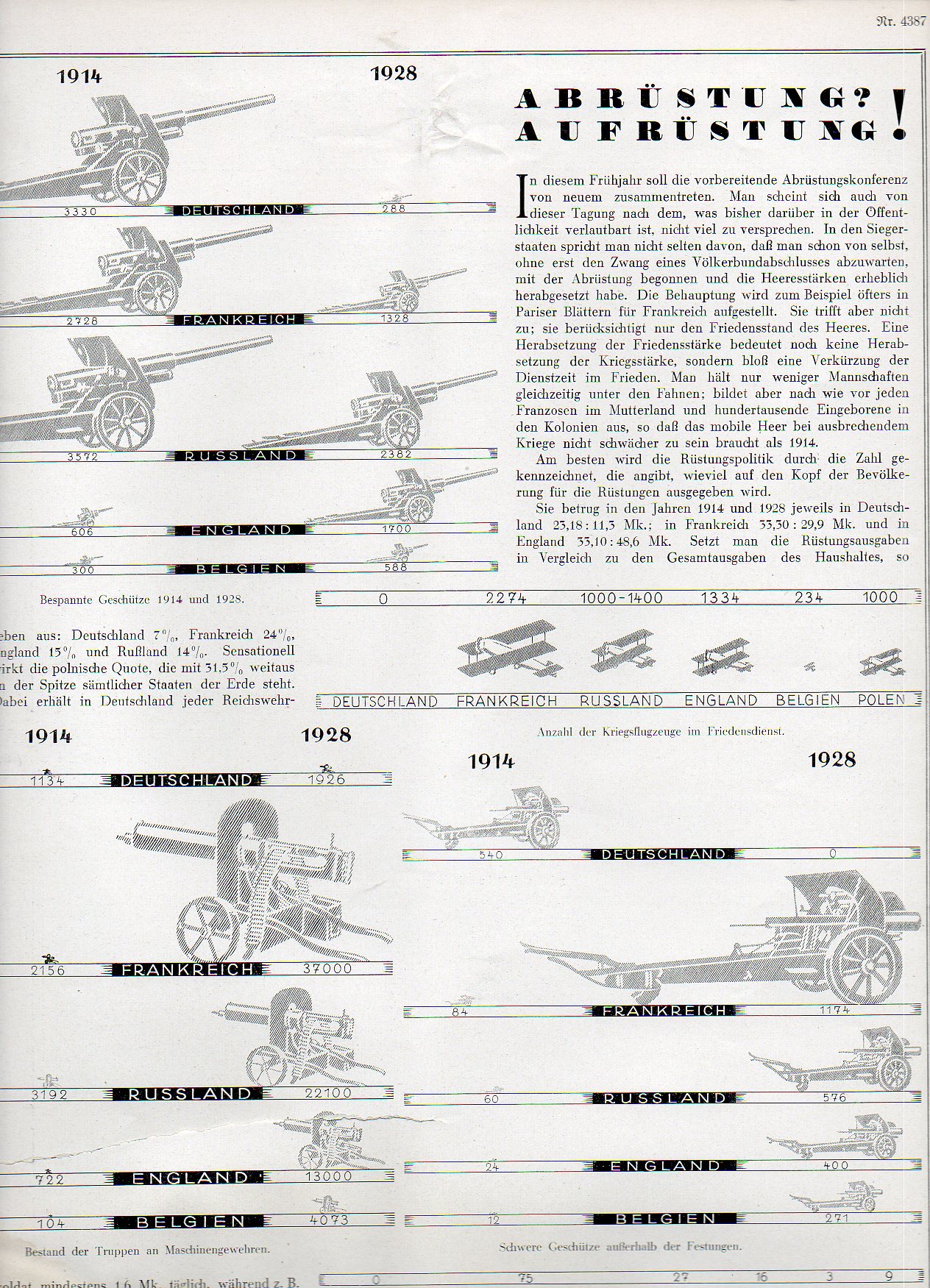
    In my “reading” of the Illustrirte Zeitung (Leipzig) I found this full-page illustrative representation of data (11 April 1929), one of the earliest propoagandist pieces (to my mind) in that magazine, showing the state–and great height–of militaristic weakeness in Germany, one of the lowest points that it reached in the breathing space between the two wars. It was really a picture of nothingness, a mention of the lost possibilities, and also what needed to be done–it was an early call to attention, to arms, to the reconsider of the Paris agreement, of doing “something”. Four years later the rearming business would be kicking into action, six years and five months later, the Second World War would start in earnest.

    Germany  1928  airforce523
    “Abruestung? Aufruestung!” is the name of the article-ette (roughly shouting Disarmament? ARMAMENT!, or Disarm? ARM!), basically stating that enough was enough, and that now was the time to start the process of having a military again.

    Every Germany (basically) would’ve known these facts, but seeing the representations of their zero-strength force of planes and tanks would’ve been an enormous blow.  And it was intended to be so.

    Germany  1928  cannons521
    Germany  1928  machine guns522
    Germany  1928 canon 2524
    Germany  1928520


  • The Kryha Cipher Machine. 1929 [Quick Post]

    JF Ptak Science Books  Post 1169

    [I wrote an earlier post on this blog on ciphers here: Books of Shadows—”Trithemius, Bacon, Porta, & Falconer vs. a Make-Believe Derrida on How to Make Something Unintelligible. Secret Writing and Ciphers”.]

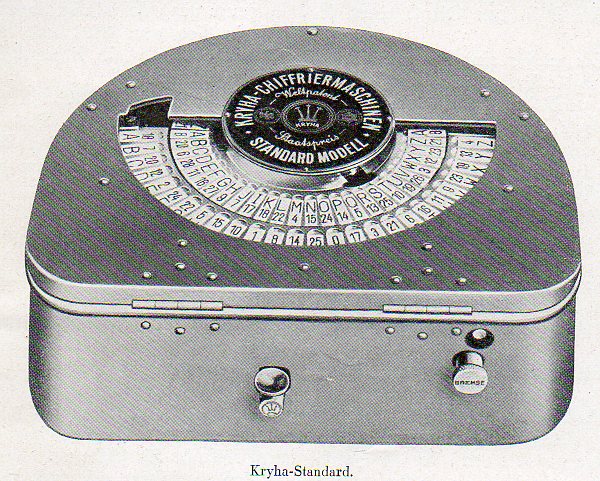
    The Kryha ciphering/enciphering machine was invented by Ukranian Alexander Kryha (d. 1955) and was capable of coding about 350 characters a minute.  It was used to enforce secrecy in business transactions, and was used in conjunction with (at least) Siemens telegraphic equipment.  I found these images (except for the patent drawings) of the Kryha machines in several issues of the Illustrirte Zeitung (Leipzig) for 1929, all of which are unusual and evidently not findable as good copies online–and so I’m simply reposting them here.

    Kryha big527

    Kryha  529


  • Phantom in the Opera: Questions about Darwin and Einstein and Music

    JF Ptak  Science Books   Post 1170

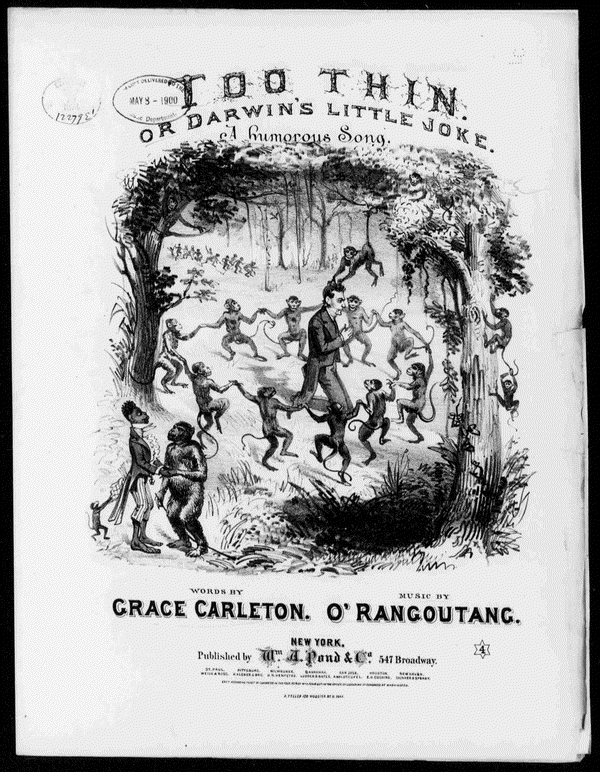
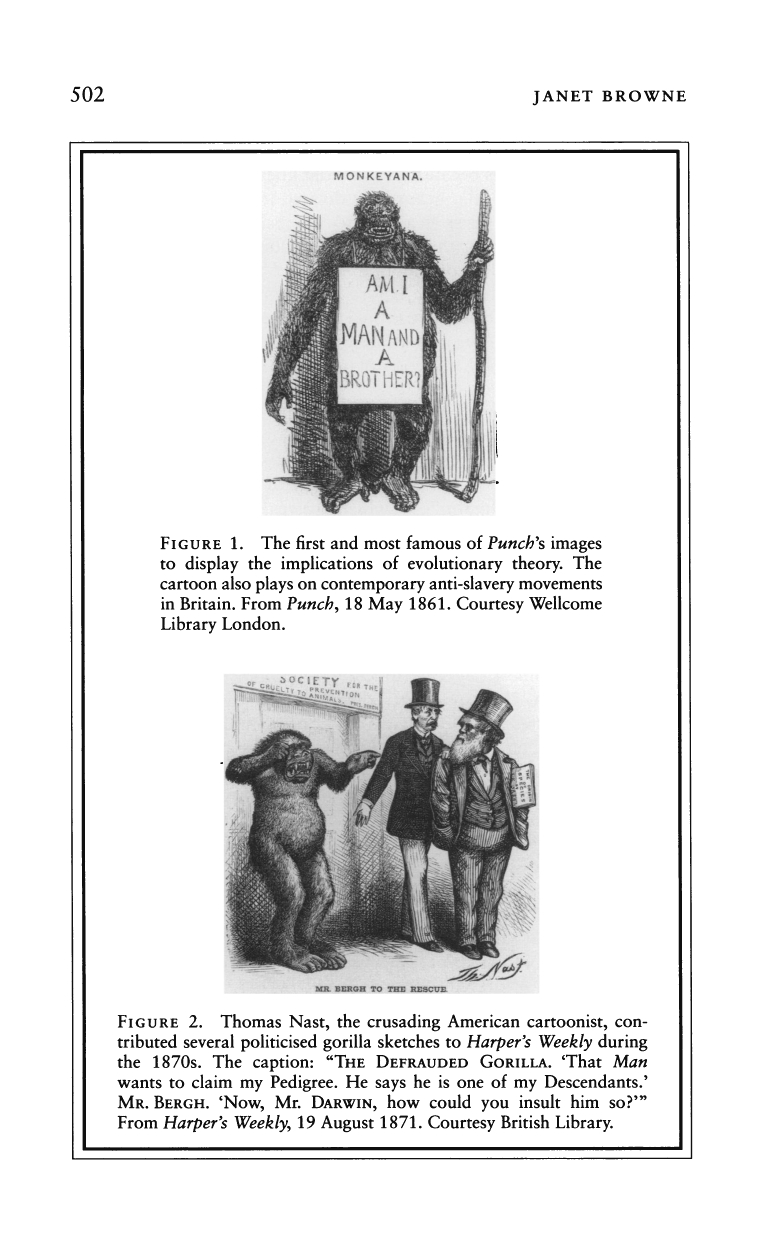
    There are unending missing pieces for me in the works of the greats (literal “phantoms” in the Latin phrase for their collected works, “opera”), one of which came bubbling up reading the excellent piece by Michael Barton (Dispersal of Darwin blog) on Darwin in caricature.  It  put me in mind of Darwin and music, or, really, Darwin caricature in music In the 19th century.  There doesn’t seem to be much to it, at least for the old stuff–there’s plenty of modern music, but it seems that there aren’t very many old notes.  There is this example that I found at the Library of Congress site, though:

    “Too thin; or, Darwin’s little joke by O’Rangoutang”published in New York by William A. Pond, 1874, which came 13 years after the appearance of the first Darwin caricature (in London’s Punch magazine, 14 May 1861, seen below).

       Darwin sheet music

    This does bring up an interesting issue for me, though it is one frankly that I do not understand, about the relationship between Darwin and music. It is also somewhat related to an interest in Einstein and music, though for different reasons.  With Einstein, it has bothered me a bit that he was seemingly uninterested in any of the new forms of music that appeared in the revolutionary period of 1895-1925.  And, for that matter, Einstein’s artistic tastes were also quite classical and conservative.  Given the enormous changes in the fields of music and art and literature, and that all entered revolutionary periods during this time, and that Einstein brought his own revolution to bear on the world during the same period,  it is a little odd to me that his tastes were so restricted by an earlier time. 

    The issue with Darwin’s relationship to music is different, the tone-deaf Darwin applying his interest in music to the theory of sexual selection in animals and (perhaps) humans.  This idea seems to have first made an appearance in a posthumously-published 1844  (“The Essay of 1844″) work in Francis Darwin’s Foundations of the Origin of Species, published in 1903, but more specifically in his Descent of Man (1871):
               
    “The capacity and love for singing or music, though not a sexual character in man, must not here be passed over. Although the sounds emitted by animals of all kinds serve many purposes, a strong case can be made out, that the vocal organs were primarily used and perfected in relation to the propagation of the species. ” (Darwin, C. (1871) The Descent of Man . John Murray: London p. 587)

    “All these facts with respect to music and impassioned speech become intelligible to a certain extent, if we may assume that musical tones and rhythm were used by our half-human ancestors, during the season of courtship, when animals of all kinds are excited not only by love, but by the strong passions of jealousy, rivalry, and triumph. From the deeply-laid principle of inherited associations, musical notes in this case would be likely to call up vaguely and indefinitely the strong emotions of a long-past age. As we have every reason to suppose that articulate speech is one of the latest, as it certainly is the highest, of the arts acquired by man, and as the instinctive power of producing musical notes and rhythms is developed low down in the animal series, it would be altogether opposed to the principle of evolution, if we were to admit that man’s musical capacity has been developed from the tones used in impassioned speech. We must suppose that the rhythms and cadences or oratory are derived from previously developed musical powers. We can thus understand how it is that music, dancing, song, and poetry are such very ancient arts. We must go even further than this, and, as remarked in a former chapter, believe that musical sounds afforded one of the bases for the development of language.” (Darwin, C. (1871) The Descent of Man . John Murray: London p. 593)       

    As I said, I’m not sure at all about where music lives in the works of Darwin, or, for that matter, where it lived in his head.  It is interesting that music may play some role in the history of humans and animals, though it seems that Darwin had a distanced relationship with music itself.  He would certainly listen–his wife was an excellent player–though it seems as though Darwin didn’t have a musical sinew in his body.  I’m not saying that you have to be able to “bend” a soccer strike like Beckham in order to explain it; I’m just curious about the great man’s relationship to music.  I’m afraid I haven’t anything more than questions on this.

    Two interesting items for consideration:

    Charles Kivy, Charles Darwin and Music, Journal of the American Musicological Society
    Vol. 12, No. 1 (Spring, 1959), pp. 42-48
    Darwin in caricature: A study in the popularisation and dissemination of evolution
    Author: Browne, J. PROCEEDINGS OF THE AMERICAN PHILOSOPHICAL SOCIETY 12/2001 Volume 145 Issue 4 Pages 496 – 509
      

    And the first caricature (I think) from the London Punch

    Darwin punch 18 may 1861

  • A Note on American Two-Way Border Wars

    JF Ptak Science Books  Post 1171

    Porosity  is a measure of spaces-in-between, voids in a material’s total volume.  Some things certainly have visible porous elements, like a cotton shirt or netting, and others–like rocks and soil–don’t.  Other elements are measurable but less visible and experimental than fluid flow though still experiential,  like truth and falsity, or the concepts of good and evil, good taste and bad, love, generosity, felicity.  Ideas like “god” are very porous, as are the prospects of salvation and redemption, and (getting into) heaven and hell. 
                               
    Skin is also porous because it is composed of, well, pores. We don’t think of things like skin being permeable, as it holds in the vast amounts of liquids that make up the majority of the human body (for example).  Football has porous defenses, a necessary design to the process of the game, because years of 0-0 games just won’t work so well as paid entertainment.  Poromechanics in real and abstract bits is all a matter of degree.  And direction.         
    http://blog.selfportrait.net/blog/wp-content/uploads/2010/07/frances-flora-palmer-for-currier-and-ives-across-the-continent-westward-the-course-of-empire-makes-its-way-1868.jpg
    The American border is fairly well porous–much less now than it used to be of course.  There’s 3,987 miles of border (excluding Alaska) with Canada, and another 1969 miles between the U.S. and Mexico (1241 of those shared with Texas), so there’s a lot of room for room–for people trying to get into the country.  The flow of people through/over the borders weren’t always gong one-way–the expansion of the country is a history of the mythic pioneer/settler moving into space contiguous  to property that was owned by the U.S.  (Actually, it wasn’t all contiguous, adventurers and “explorers and entrepreneurs and filibusterers reaching far and wide.)  It would be interesting to know how many miles of variable borders within the U.S. we have slipped through over the last few centuries–my offhand guess is that it is an order of magnitude greater than what we have right now.

    Before we constructed massive walls and armed our borders, before we started to erase the incised sentiments on the base of the Statue of Liberty, the border wars of the United States were being fought going the other way ‘round.  The borders of the country were extended in many different ways, not the least of which were what we would call “pioneers”–plus of course politicians and the military, all deeply at work in establishiung the sactions of expansion.

    For example, in the 1800-1850 period, there were 21 major attempts to access foreign properties to become part of the United States.  Ten of these were attempts made to purchase the land outright–only Louisiana (and that is a gigantic “only” was wholly successful, with Sonoma being half-successful.  Five of  the other cases– East Florida, West Florida, Texas, New Mexico  and Alta California–came to us via wartime acquisition.  Attempts to buy and bully Mexico for Baja didn’t work; Yucatan and Cuba escape our proposals for annexation and purchase as well, while Chihuahua resisted purchase, invasion and annexation. 

    All of this excludes Indian lands, of course, a list of the tribes involved in the 709 seizures1 can be found in the continued reading section, below.  (That’s the number of “transactions” for the 110 year history between 1784 and 1894, which extends beyond the 1800-1850 slice of our expansionist pie; there were still a hundred or so motions against the Indians during this time, not to mention the dreadful Southern Removals of the Five Civilized Tribes as well as the disastrous removals in Indiana.)

    Conquest and purchase has been the name of the game in moving the Americans through our borders, an exercise of great regularity and incredibly high return.  Again putting aside the Indian question, had we not pushed up against the owners of these lands in the first place and absorbed them in the second, instead of having California, Utah and Texas we may well have had the Republics of California and Texas and the entity of Dereret, not to mention a wide swath of the southwest (including New Mexico, Nevada and part of Colorado) reaching up nearly to SLC that still belong to Mexico.

    And what it all boils down to after the borders have been passed through and moved forward, again, are the people that wind up staying–pioneers, farmers. The log cabin came to symbolize this spirit in the 19th century, a picture of progressive civilization and stability, of spirit, of achieving Manifest Destiny.  In my own collection of images of log cabins (prior to the Civil War), there are very few of these structures that show people in or near them.  More often than not, the pictures are silent; every now and then, there is a woman in the doorway or inside looking through a window–a symbol of innocense and felicity. There are images with the log cabin in the background, the foreground filled with pulled stumps and men plowing the fields (with and without horses) I don’t own a single image that shows a man with a gun.  (I’ve not done a survey on this issue, but that’s my overall impression over the years.) A subtle message I think was definitely being sent.
     
    Even the name “America” proved to be exceptionally porous.  At one point it stood to include North and South America, and then  it changed to exclude South and Central, and then Canada, and then Mexico–it really only related to the United States during the period of greatest nation building.

    This is just an interesting thing to think about now when we discuss closing our borders–those lines had to get to those positions somehow over the last 500-odd years.

    Notes:

    1. Indian Land Cessions in the United States,1784-1894, United States Serial Set, Number 4015; this is the  second part of the two-part Eighteenth Annual Report of the Bureau of American Ethnology to the Secretary of the Smithsonian Institution, 1896-1897.  “The Schedule of Indian Land Cessions subtitle notes that it indicates the number and location of each cession by or reservation for the Indian tribes from the organization of the Federal Government to and including 1894, together with descriptions of the tracts so ceded or reserved, the date of the treaty, law or executive order governing the same, the name of the tribe or tribes affected thereby, and historical data and references bearing thereon.”

    Sometimes just seeing hte extent of a list of names gives you a much greater appreciation for the numbers involvewd than the sheer number itself:
    Acoma Pueblo
    Alabama
    Alsea et al
    Apache
    Apache (Eastern bands)
    Apache (Jicarilla bands).
    Apache (southern).
    Apache (Southern).
    Apache (Western bands)

  • Thinking Deep about St. Paul’s and the Eiffel Tower–Presenting the Depths of the Oceans in Plaster and Steel,1910

    JF Ptak Science Books   Post 1173

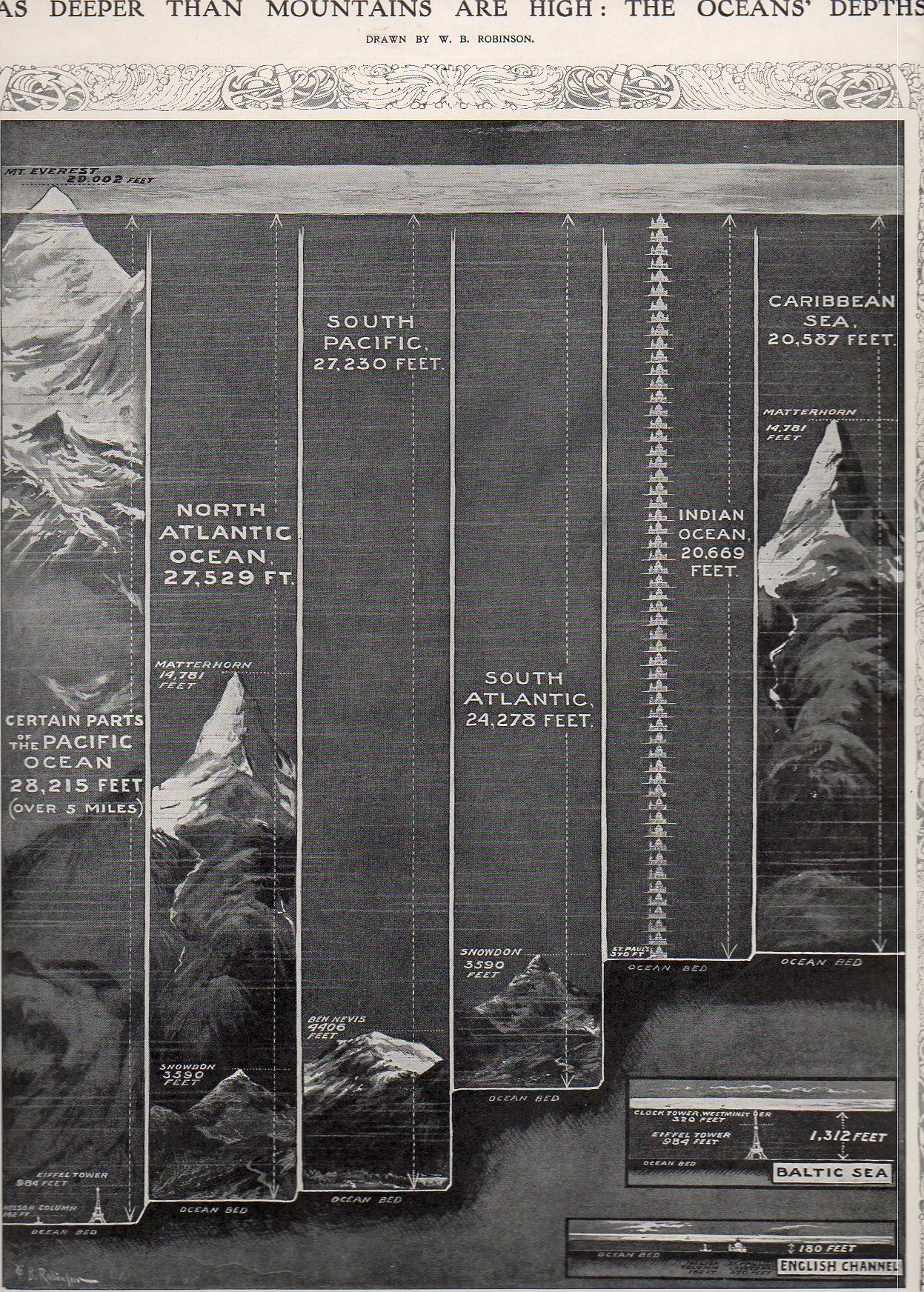
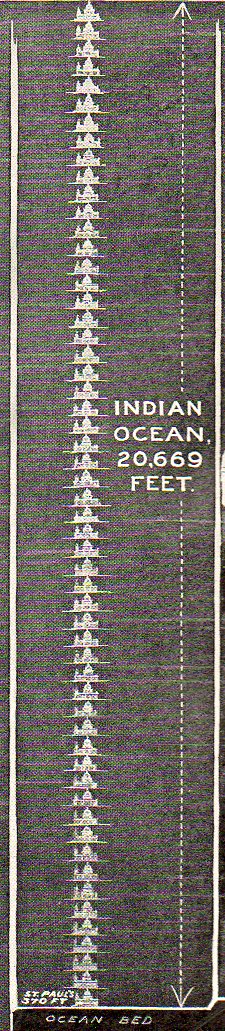
    Although maps showing the depths of the oceans existed from about the mid-19th century (through the pioneering work of the American father of oceanography, Virginia’s Matthew Fontaine Maury1) few casual readers would have ever seen a more approachable representation of information than what appeared in the Illustrated London News for 8 October 1910. Although Maury’s maps are elegant, they didn’t receive nearly as wide a distribution as this ILN image–also they weren’t nearly quite as relational as the 1910 version.

    Sea depths533

    Granted, the 1910 comparison chart only displays one statistic–the supposed greatest dept of five oceans, two seas and the English channel–it does so in such a way as to make those numbers immediately approachable to any reader, which is always an issue in relating scientific information to the general reader.

    Sea depths ist pauls537 {One of the standard unit of measurement for the purpose of this display was St. Paul’s Cathedral.]


     What W.B. Robinson presented was a way of looking at an invisible entity through very visible means–comparing depth to the heights of things that everybody in 1910 knew: the Eiffel Tower (relatively newly constructed out of 18,000 prefabricated highly-engineered pieces) and St. Paul’s Cathedral. So rather than stating that the Pacific Ocean is 28,000 feet deep, Robinson chose to replace feet with Nelson’s Column–174 of them. Or 29 Eiffel Towers. The 20,000-foot deep Indian Ocean was actually 56 St. Paul’s deep, while the Baltic Sea was deep enough to not quite cover one Eiffel Tower with one Westminster Bell Tower on top (ha!); and the English Channel at its deepest wouldn’t quite cover St. Paul’s.

    This is really the way to display data in my book, especially to kids.  This is one of the few ways of making the information accessible and understandable across almost all age ranges. 

    Notes:
    1.  Actually the work goes back a century before Maury with Buache, who produced this map of the English Channel in 1737–the data points are veyr numerous, but this is the very first time that such information was available on a map.

    Sea depths idouth pacific536 Sea depths indian535


    NOAA Photo Library Image - map00004

    And Maury again with this first map of an oceanic basin, published in 1853:

    NOAA Photo Library Image - map00001

     And in 1752, Philippe Buache produced this fantastic and first-of-its-kind map for the depths of the English Channel:

    NOAA Photo Library Image - map00186

    Here’s an extraordinary cross sectrion of a part of the ocean floor produced in 1857 by the HMS Cyclops in preparation for laying the Atlantic Cable:

    NOAA Photo Library Image - map00010


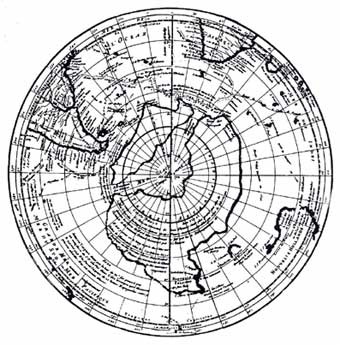
    Its also interesting to note here Buache’s work on this map of Antarctica, published in 1737.  Buache put together all of the known (to him) information about the mass in the South, bits taken from other maps, and accumulated them into what was the best-possible guess on what was down there in the Antiopode.  Pretty good detective work given the amount of material that he could work with.


Recent Posts

Archives

Categories