A Daily History of Holes, Dots, Lines, Science, History, Math, Physics, Art, the Unintentional Absurd, Architecture, Maps, Data Visualization, Blank and Missing Things, and so on. |1.6 million words, 7500 images, 4.9 million hits| Press & appearances in The Times, Le Figaro, Mensa, The Economist, The Guardian, Discovery News, Slate, Le Monde, Sci American Blogs, Le Pont, and many other places… 5000+ total posts since 2008.

  • Found Art: Artwork on the Walls of Environments in Comic Books (Spaceship Art 1951)

    JF Ptak Science Books  Quick Post

    It seems to me that comic books have a place, sort of, in my work in the history of science and culture. They were issued and purchased in huge numbers, in the millions and tens of millions, and no doubt were perhaps one of the most significant ports of entry to national/mass culture in the pre-digital era for kids and beyond. How else is a relatively-unfiltered national theme going to reach a child in 1951? There’s early t.v., some radio, maybe newspapers (with daily and Sunday comics)…and not much else, outside of comic books. So it may be interesting when it was that a first or early appearance and introduction of a major idea is delivered to a young reading world–like the first mentions of concentration camps (which appear in comic books long before they appear in school textbooks), the first use of the atomic bomb and its effects on Hiroshima, and that sort of thing. (Some of these offhand pursuits resulted in very unusual finds, like one that I reported on for what must certainly be about one of the first appearances anywhere of “E=mc2″ in this exact form appearing in a comic book in 1945–and this where it was being written on a chalkboard by Einstein, making it also perhaps the earliest visual connection of E with the equation together in print before Einstein first writes using the exact equation in 1946…that sounds like all sorts of wrong and a bit goofy, and there’s a lot of the use of “perhaps”, but the story seems to be accurate.)

    Anyway, maybe there’s something useful in these found bits, and maybe not. I’m addressing this today because of another found bit and perhaps a new and probably very shrt and shallow category: artwork found on the walls in comic books.  I must say I’ve never thought of the issue until half-a-coffee ago, when I spotted a framed artwork in the study of  a space detective in the first issue of, of course, Space Detective #1, 1951. The space detective in question is The Avenger, helped along by his aide etc. Tina, and secretary Dot, as they solve crimes on Earth, Venus, and Mars–in this first adventure they are going after Mars bandit Maag, which led them to another adventure in stopping Venusian opium trade. Anyway it is all a very long way from Sam Spade (sooo close to “Sam Space, Earth Detective”) and Picard’s interplanetary-though-still-in-San-Francisco Dixon Hill.  

    In any event, here it is, the art:
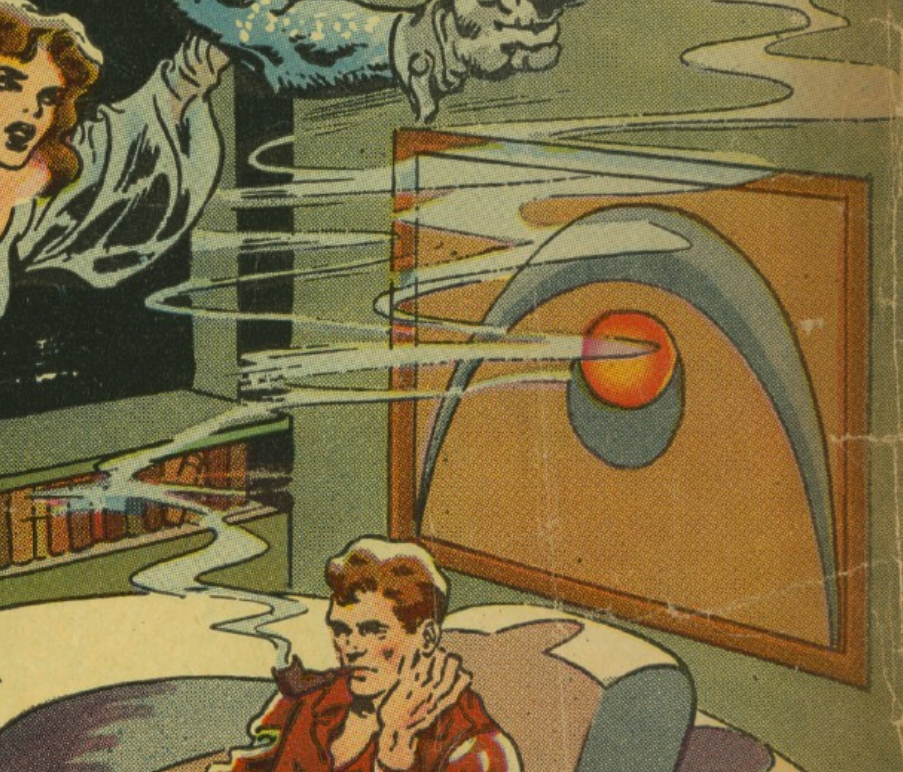
    Artwork in comics--Opium Smugglers of Venus  Space detective #1 1951

    (Image found at the extremely useful and massive Digital Comic Museum https://digitalcomicmuseum.com/preview/index.php?did=10240&page=3)

    It seems like an awfully slow bus to Abilene to get us to this point, talking about a forgotten little splotch on two forgotten pages of a forgotten comic book from 1951, but as I said, artwork in ephemeral mass publications like this have never been on my radar (and probably with just cause) though perhaps they went unnoticed because they just didn’t appear? Hard for me to say as I am not a comic book person outside of looking for specific odd things, but my initial reaction to seeing the art must’ve rubbed up against some unconscious collected memories to show itself as being unusual, so maybe there’s a little bit of “there” there.  
     

    ·Posted by :

    ·in:

  • When the Words Feel Like the Bad Paper They’re Written On–Trashing Frederick Douglass (1895)

    JF Ptak Science Books  

    1895 was a great big year in science–there were major contributions by Cantor, Poincare, Ramsay, and Perrin, among others, though the biggest of them all was the semi-accidental discovery by Roentgen of X-rays, a monument in the pursuit of further/deeper.

    My own little 1895 discovery last night may be a well-established bit but was unknown to me, and it proved to be the opposite of further/deeper. I was trying to squeeze some life out of what looked like a pamphlet as dry and brittle as the bad newsprint it was made of:  History of the General Assembly of North Carolina, January 9-March 15, 1895, Inclusive (printed by E.M. Uzzell in Raleigh, 1895), which sounds just flat-out anti-interesting (especially with the very specialized time period).  It turns out that the 160-page work is written in a easy, journalismo sub-Menckian way, with a nod to humor here and there and a dose of familiarity, a good narrative style that was useful and breezy.

    And as I hunted for some sparkly point in the daily comings and goings of the legislature, I ran right into the dark void.

    The hole was a short report, “The Douglass Infamy”, which was an infamy of its own. Over the few pages of the article/review it discussed the  “humiliation of the white people of the south” caused by the General Assembly of the legislature choosing to suspend and adjourn their meeting out of respect  for Frederick Douglass, who had suddenly died during the session. The author referred to the action as “an offense against the dignity and sentiments of this proud State” (“State” is capitalized, “Negro” is not),  Douglass to as “the miscegentionist” straight-away after condemning the act of respect due the man, and was an “…author of many malignant and untruthful aspersions on the whites”,  and referred to his as “an inferior race, incapable of civilization except for that under the whites”.  Closing down the government was a “humiliation to white people” and disgusted some legislators to the point where they denied that the action had taken place. I think this was because it elevated Douglass to a level of equality, which just would not do: “The whites of North Carolina…regard any approach by the Negro to social equality with…abhorence [sic]”. 

    The was a significant amount of hateful nonsense in this entry, railing against Douglass, who in their view wrote terrible untruths about white people and who was “also guilty of miscegenation”, having married a white woman.  

    “Thoughtful Democrats who have looked beyond the present moment and who have preferred to bear such party ills as they had, if such there were, rather than fly to others they knew not of, predicted that the fusion with Republicans of any considerable number of those who were formerly Democrats meant Republican domination, and that Republican domination meant, in one form or another, negro [sic] domination. The Douglas incident reveals the animus of that party and is a menace of its aims. (After the official declaration of the Fusionists, the General Assembly did not adjourn in honor of the birthday of Robert E. Lee, a legal holiday, but did adjourn out of respect for the memory of Frederick Douglas.)”

    Finding this article was not surprising, really, though it was unexpected to some degree; there were a few other bits in the pamphlet similar to this, so the article did not stand alone. The part that is so amazing is that it the “Douglass Infamy” was just part and parcel of a documentary and interpretive  report on the action of the state legislature for a few months in 1895; and yet, there was this hateful business, taking up as much space and brain waves as noting that it was a cloudy day.  

    ·Posted by :

    ·in:

    — —
  • Found-Art Sci-Art: Fractalian Wing of a Borges Library?

    JF Ptak Science Books   Quick Post

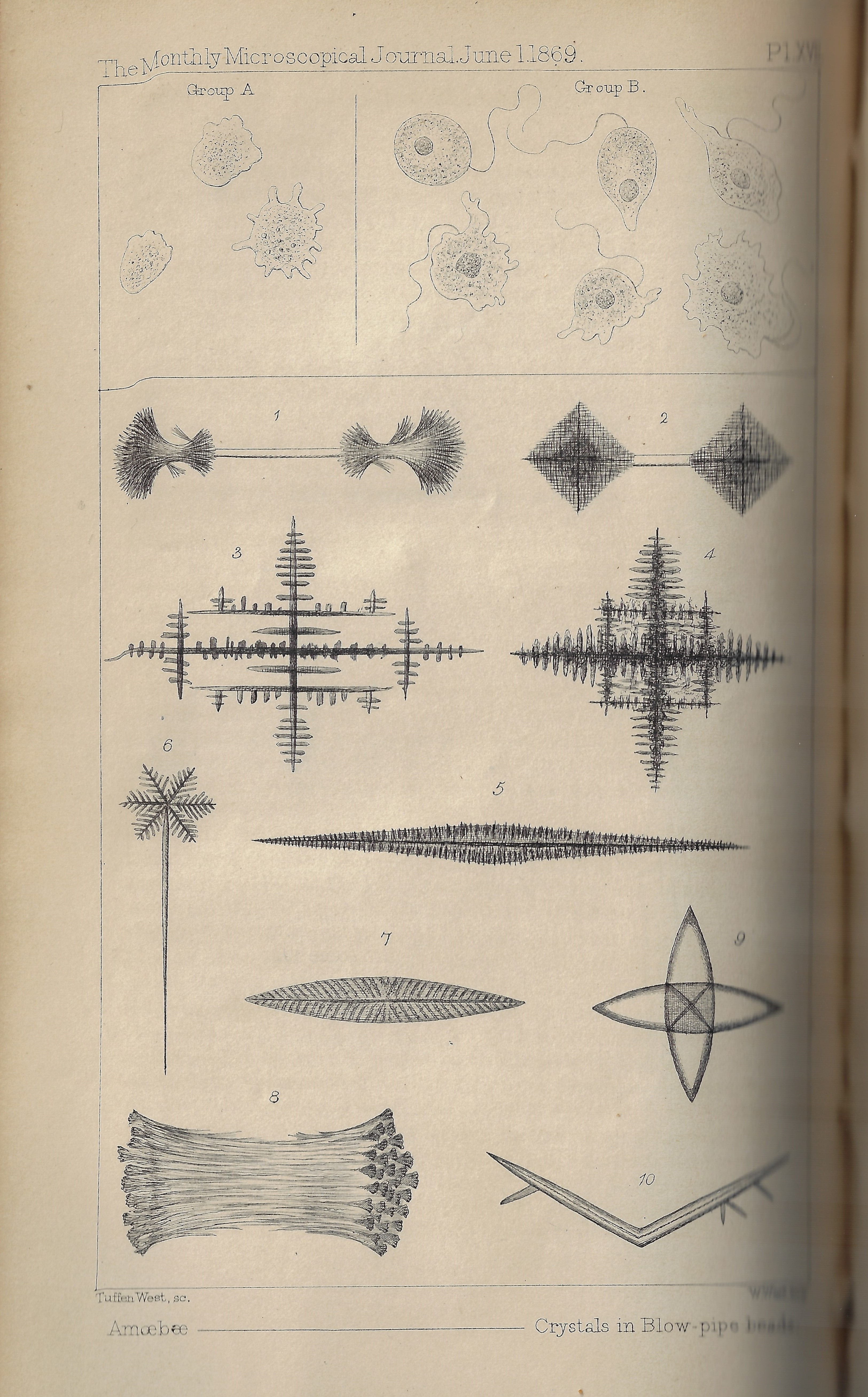
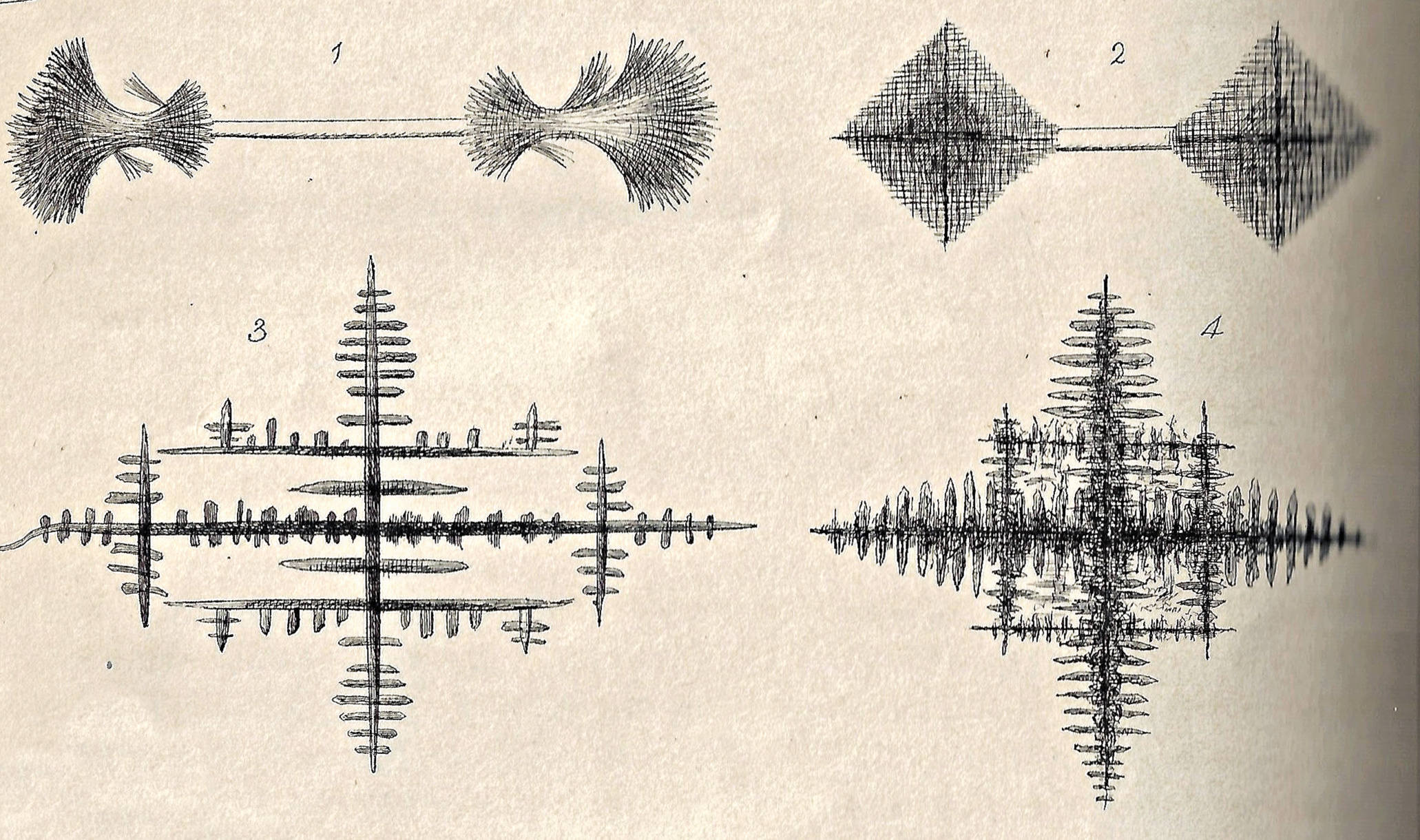
    The title for the source of this image–“On Crystals Enclosed in Blow-Pipe Beads”–is nearly as lyrical as the image itself, and obscurely residing in The Monthly Microscopical Journal, volume 1, published in London in 1869.  What is unusual in this instance (at least for my experience) is that the author, H.C. Sorby, takes a moment to remark on the “extreme beauty”, which is generally not the case, a mention regarding beauty seldom appearing. Removing a part from the whole (seen below) the crystals challenge the imagination, and if you take a moment it is possible to see that crystal #4 is one small fractal-like section of the tip of one linear crystal section of #3, which in tern is a small part of #2, which again is a micro-section of #1. 


    Found art microscopical monthly 1869.jpg copy

    Full image, following, with each of the individual crystals displayed:

    ·Posted by :

    ·in:

  • Outsider Logic: The Healing Properties of Color (1930)

    JF Ptak Science Books  Quick Post    Part of the Outsider Logic series

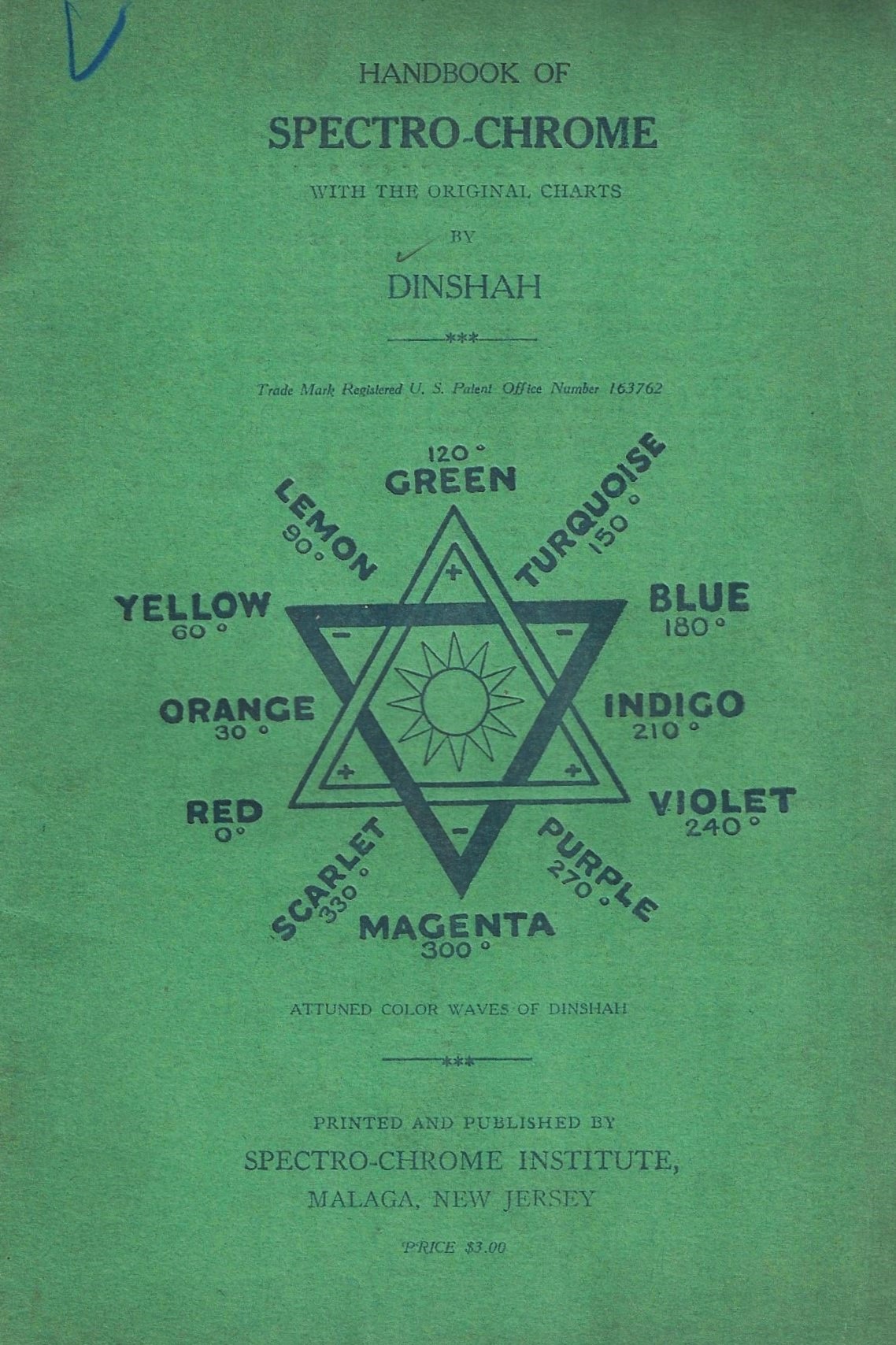
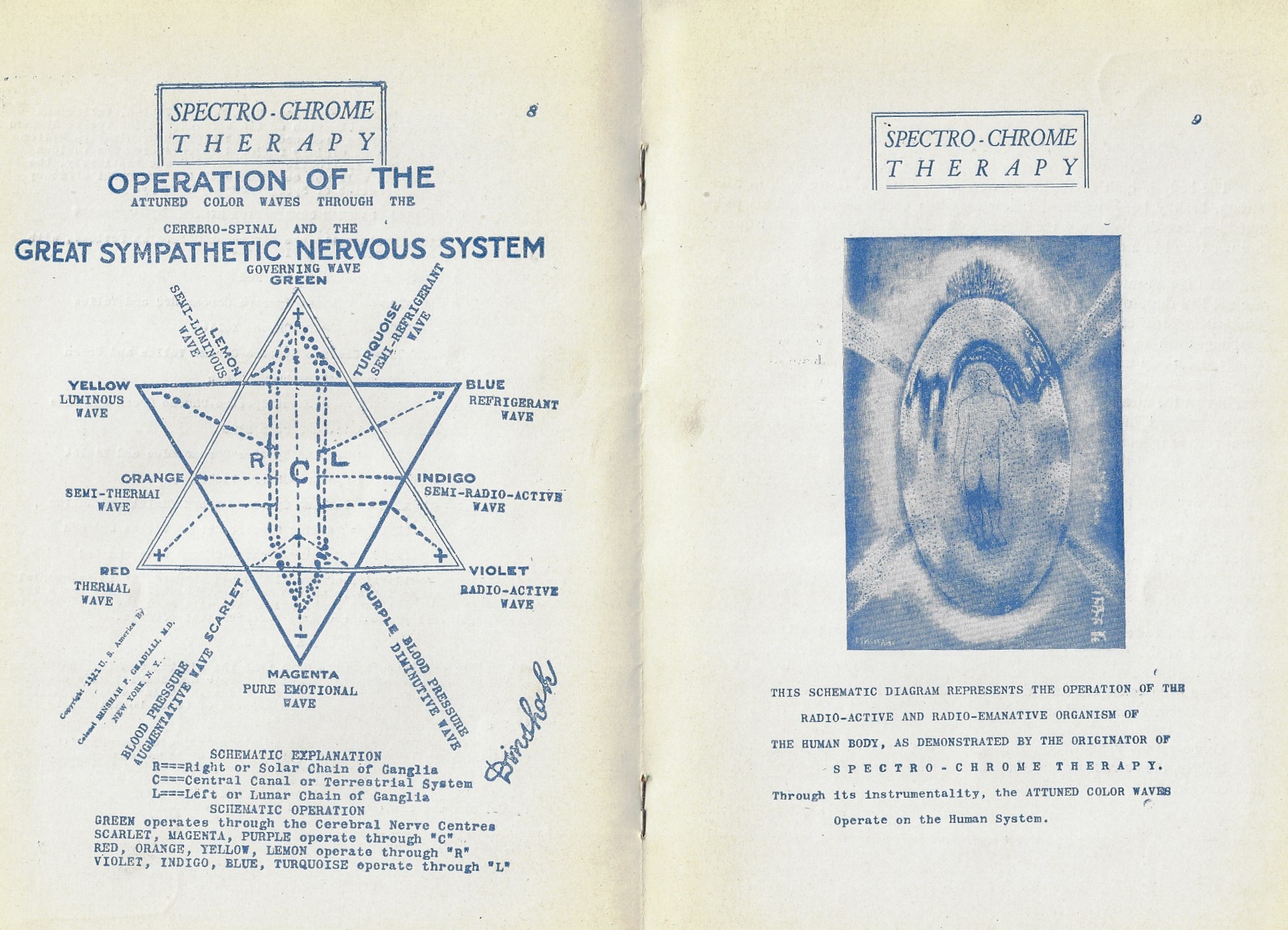
    Spectro-chrome _1_ cover 1930Aha. Here we have a curious piece of multiple fakery of color combinations presented in blue-and-white. It was written by Col. Dinshah P. Ghadiali in 1930 in support of his system of projecting color on people to cure them of an encyclopedia of ills which all happen to be color-induced from color “disturbances”. In short, Ghadiali (who claimed to be “M.D, M.E., D.C., Ph.D., LL.D, &c.”) insisted that, for example,  the body consisted of oxygen, hydrogen, nitrogen, and carbon, which were “colored” blue. Red, green, and yellow, somehow. Sicknesses were imbalances of the color of the components of the body, and the “spectro-chrome” system would project the deficient light and who-knows-what-else to do impossibly mysterious nothing and everything to everything and nothing. The one thing Dinshah was successful at was selling his very expensive projector (for $90 to $650 dollars)–diligent enough in his promotion and his key to cancer and scrofula that he sold a million dollars worth of his worthless trickery.

    Maybe he believed in this tripe, and maybe not. I include a couple of examples of the artwork of the author to include in my series on Outsider Logic:

    Spectro-chrome _2_

    ·Posted by :

    ·in:

  • Chicago Underground: the Hard Contrast of Work Underground and the Harsh Light of David Lynch (1943)

    JF Ptak Science Books  Quick Post

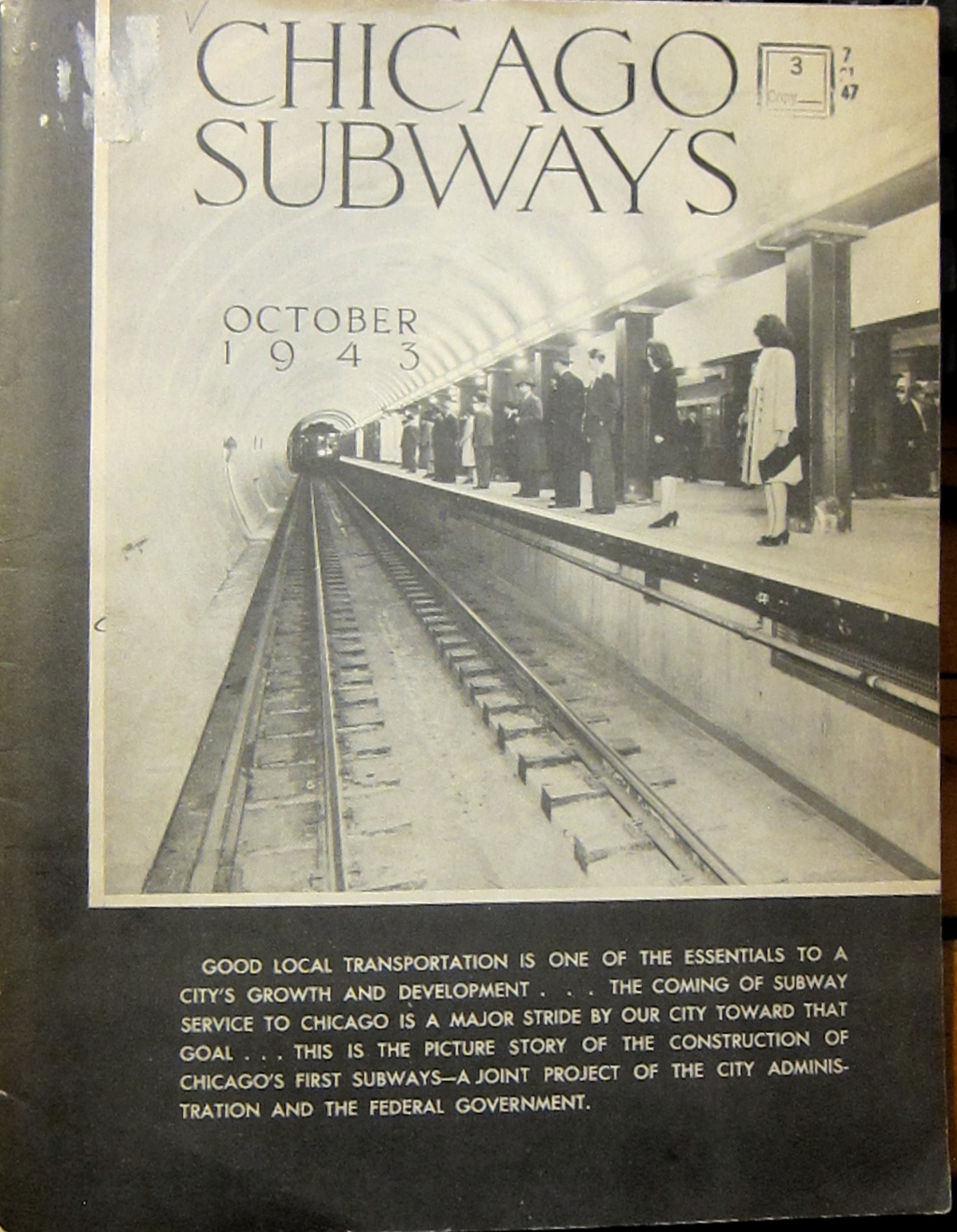
    Chicago subways 1943 coverRight at the start here I’d like to say I know nothing about the Chicago subway system–I would however like to share this little gem on it that I just found. The pamphlet looks unexceptional except for the date, which caught my attention because it is the month/year that the subway opened. The pamphlet also looks like it is a serial of some sort, but it isn’t–it just has a bad title. When I checked it out in WorldCat I was surprised to find that I couldn’t find it, even after a few adventurous searches, thinking that I was just asking the wrong questions of the enormous database…but the results held, and for some reason, the pamphlet just isn’t recorded in being in the many thousands of libraries using WorldCat. It is slim–only 31 pages long–but once you get beyond the first few pages of laudatory photos for the movers and shakers the work takes on a semi-documentary air, with some compelling images, which were another surprise. (The big exception to this flavor was the cover which features some very-regularly-spaced riders waiting for the train, giving the whole image a pod-people feeling.)  

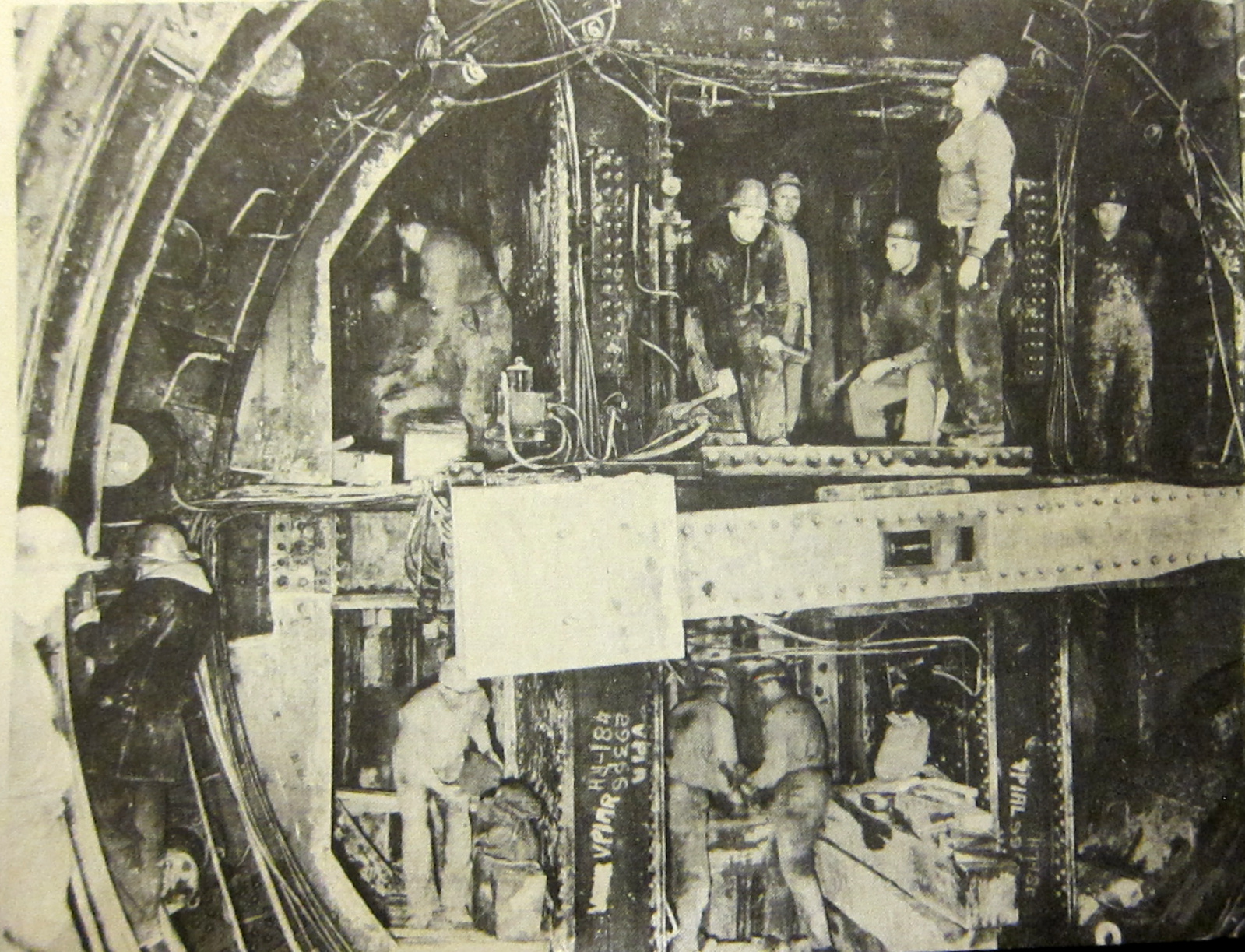
    The photos of the workers show a familiar scene of men working in the cramp quarters of caissons and tunnels, not that much changed in a hundred years:


    Chicago Subways in tunnel _1_

    ·Posted by :

    ·in:

    —
  • On Displays of Humor, Joke-Making, and Shame in Dogs (1875)

    JF Ptak Science Books  Quick Post  

    George J. Romanes1, “Sense of Humour and Reason in Animals” (from Nature, volume 12, 1875, p 66) [With a few added annotations]

    “IN the recently published edition of the Descent of Man there is some additional matter concerning the above subjects, and as the following illustrative cases fell under my own observation, I think it is worth while to publish them as supplementary to those adduced by Mr. Darwin.

    Several years ago I used to watch carefully the young Orang Outang at the Zoological Gardens, and I am quite sure that she manifested a sense of the ludicrous. One example will suffice. Her feeding tin was of a somewhat peculiar shape, and when it was empty she used sometimes used invert it on her head. The tin then presented a comical resemblance to a bonnet, and as its wearer would generally favour the spectators with a broad grin at the lime of putting it on, she never failed to raise a laugh from them. Her success in this respect was evidently attended with no small gratification on her part.

    I once had a Skye terrier2 which, like all of his kind, was very intelligent. When in good humour he had several tricks, which I know to have been self-taught, and the sole object of which was evidently to excite laughter. For instance, while lying upon one side and violently grinning,* he would hold one leg in his mouth. Under such circumstances nothing pleased him  much as having his joke duly appreciated, while if no notice was taken of him he would become sulky. On the oilier hand, nothing that could happen displeased him so much as being laughed at when he did not intend to be ridiculous.

    Mr. Darwin says:—’Several observers have stated that monkeys certainly dislike being laughed at’ (p. 71)3. There can be little or no doubt that this is true of monkeys; but I never knew of a really good case among dogs save this one, and here the signs of dislike were un-equivocal. To give one instance. He used to be very fond of catching flies upon the window-panes, and if ridiculed when un-successful, was evidently much annoyed. On one occasion, in order to see what he would do, I purposely laughed immoderately every time he failed. It so happened that lie did so several times in succession—partly, I believe, in consequence of my laughing—and eventually he became so distressed that he positively pretended  to catch the fly, going through all the appropriate actions with his lips and tongue, and afterwards rubbing the ground with his neck as if to kill the victim : he then looked up at me with a triumphant air of success. So well was the whole process simulated, that I should have been quite deceived, had I not seen that the fly was still upon the window. Accordingly I drew his attention to that fact, as well as to the absence of anything upon the floor; and when he saw that his hypocrisy had been detected, he slunk away under some furniture, evidently very much ashamed of himself.”

    Notes:

    Romanes (1848-1894) was an interesting man, an evolutionary biologist and physiologist, and one of the founders of comparative psychology who wrote broadly on the intelligence and emotions of animals and the connections of animal intelligence and that of humans. He also was the first to use the term of “anthropomorphism”. He was a good and life-long friend of Darwin, and spent the years between Darwin’s death (1882) and his own defending and arguing Darwin’s ideas.

    Skye Terrier. I had to look this up, so aI reproduce the info from the American Kennel Club: “Long, low, and level, this unique earthdog is among the AKC’s most distinctive-looking breeds. Skyes stand 9 or 10 inches high and feature a long, flat-lying coat and peekaboo hairdo. They’re known for big, feathery ears that stand up like bat wings, but Skyes can also have “drop ears,” which lie flat against the large, long head. Beneath the profuse coat are short, muscular legs and a deep chest. When seen in profile, these elegant but substantial terriers are twice as long as they are high.”

    Darwin, Charles. The Descent of Man, and Selection in Relation to Sex, first printed in 1871.

    The note in Nature says “p.71”, but actually appears on page 42. Page 70 begins the interesting second half of a chapter on “Comparison of the Mental Powers of Man and the Lower Animals  the difference in mental power between the highest ape and the lowest savage, immense…” which could have led to the confusion. In any event, the quote:

    “Most of the more complex emotions are common to the higher animals and ourselves. Every one has seen  how jealous a dog is of his master’s affection, if lavished on any other creature; and I have observed the same fact with monkeys. This shews that animals not only love, but have the desire to be loved. Animals manifestly feel emulation. They love approbation or praise; and a dog carrying a basket for his master exhibits in a high degree self-complacency or pride. There can, I think, be no doubt that a dog feels shame, as distinct from fear, and something very like modesty when begging too often for food. A great dog scorns the snarling of a little dog, and this may be called magnanimity. Several observers have stated that monkeys certainly dislike being laughed at; and they sometimes invent imaginary offences. In the Zoological Gardens I saw a baboon who always got into a furious rage when his keeper took out a letter or book and read it aloud to him; and his rage was so violent that, as I witnessed on one occasion, he bit his own leg till the blood flowed.”

    ·Posted by :

    ·in:

    — —
  • “The Earth a Vast Bombshell” (1854)

    JF Ptak Science Books  Quick Post

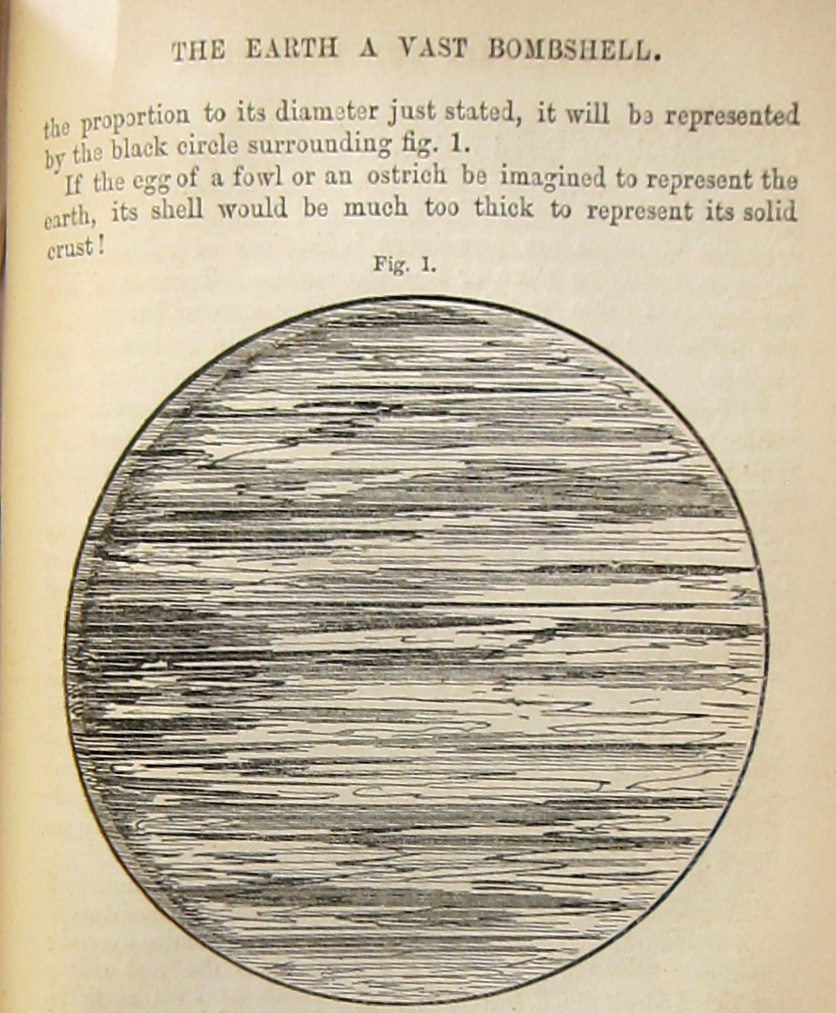
    What a great running title this is: “The Earth a vast bombshell”!  It appears in a section on earthquakes and volcanoes in a popular series by Dionysius Lardner’s The Museum of Science and Art (vols III & IV). Lardner reaches this conclusion after reasoning that if the increase in temperature of the earth increases as it seems to that at the dept of 40 miles the Earth would have a temperature of 40000, increasing 1 degree fir every fifty feet of depth, “or 1000 per mile”.  And so at these temperatures it must be so that most of the interior of the Earth would be “liquid fire” which “must extend to the very centre of the globe…”

    The accompanying picture shows a cross section of the Earth, “the thickness of its shell being in the proportion…will be represented by a black line”, everything else being the lake of fire. 

    “It is no rhetorical exaggeration, then, to affirm that the globe we live on is a stupendous by very thin bombshell charged with liquid fire!”

    Earth a vast bombshell 1854

    • “As cast into the lake of fire and brimstone, where the beast and the false prophet are, and shall be tormented day and night for ever and ever.” –Revelation 20:10
    • “Then Death and Hades were cast into the lake of fire.”—Revelation 20:10-14

    “Love is a burning thing, And it makes a fiery ring, Bound by wild desire, I fell in to a ring of fire.

    I fell in to a burning ring of fire, I went down, down, down

    And the flames went higher

    And it burns, burns, burns

    The ring of fire

    The ring of fire.”–Johnny Cash, “Ring of Fire”. 


    ·Posted by :

    ·in:

  • Circles Great and Small, 1892

    JF Ptak Science Books   Quick Post

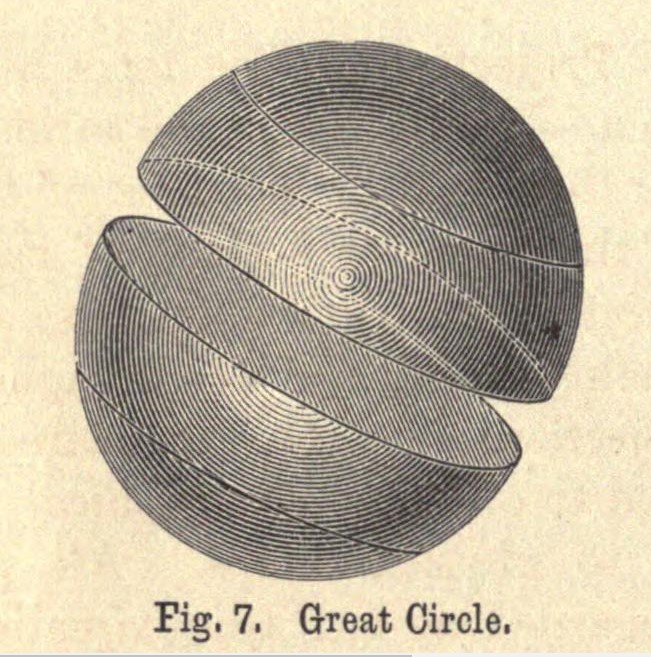
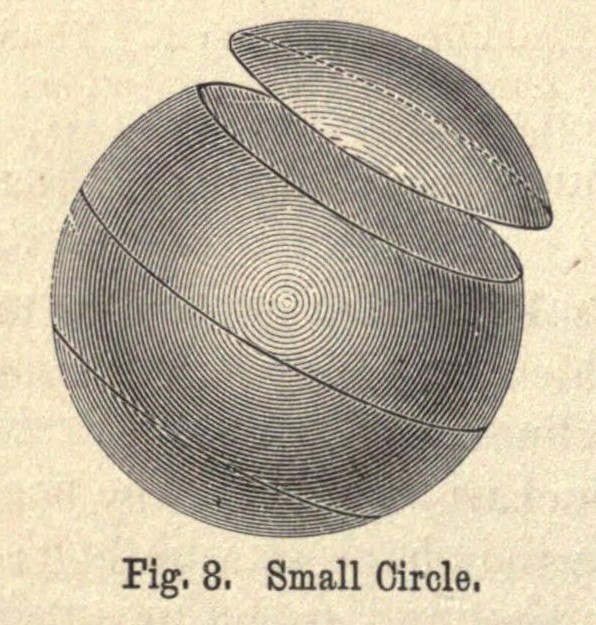
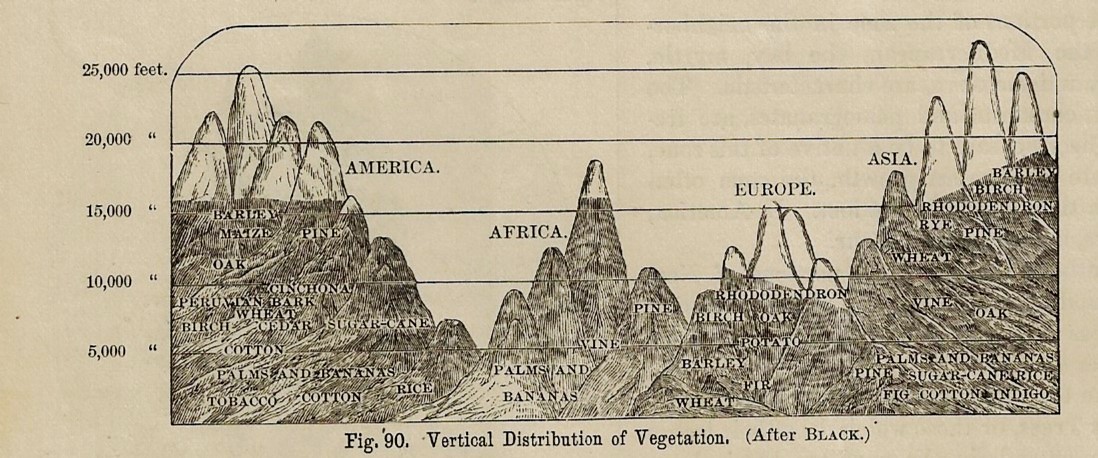
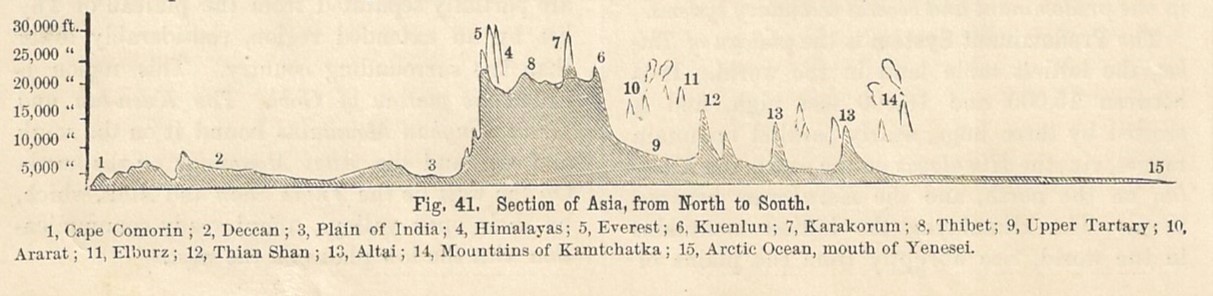
    I found these lovely illustrations in a grade-school books by Edwin James Houston, The Elements of Physical Geography, for the Use of Schools, Academies, and Colleges, printed in 1892. The first  two images are found-Abstracts and appear in the section on globe construction; the other two are cross sections showing the relative heights at which vegetation is found, followed by another cross section showing the heights of mountains. All are quite small in the original, no larger than 2″ x 4″–they are lovely when enlarged, especially the “Great Circle”.  

    Mountains great circle Houston 1892


    Circle small


    Mountain cross section Houston _2_


    Mountain cross section Houston _2_

  • Comparative Mapping of the Great Fires of the U.S. (1932)

    JF Ptak Science Books  Quick Post

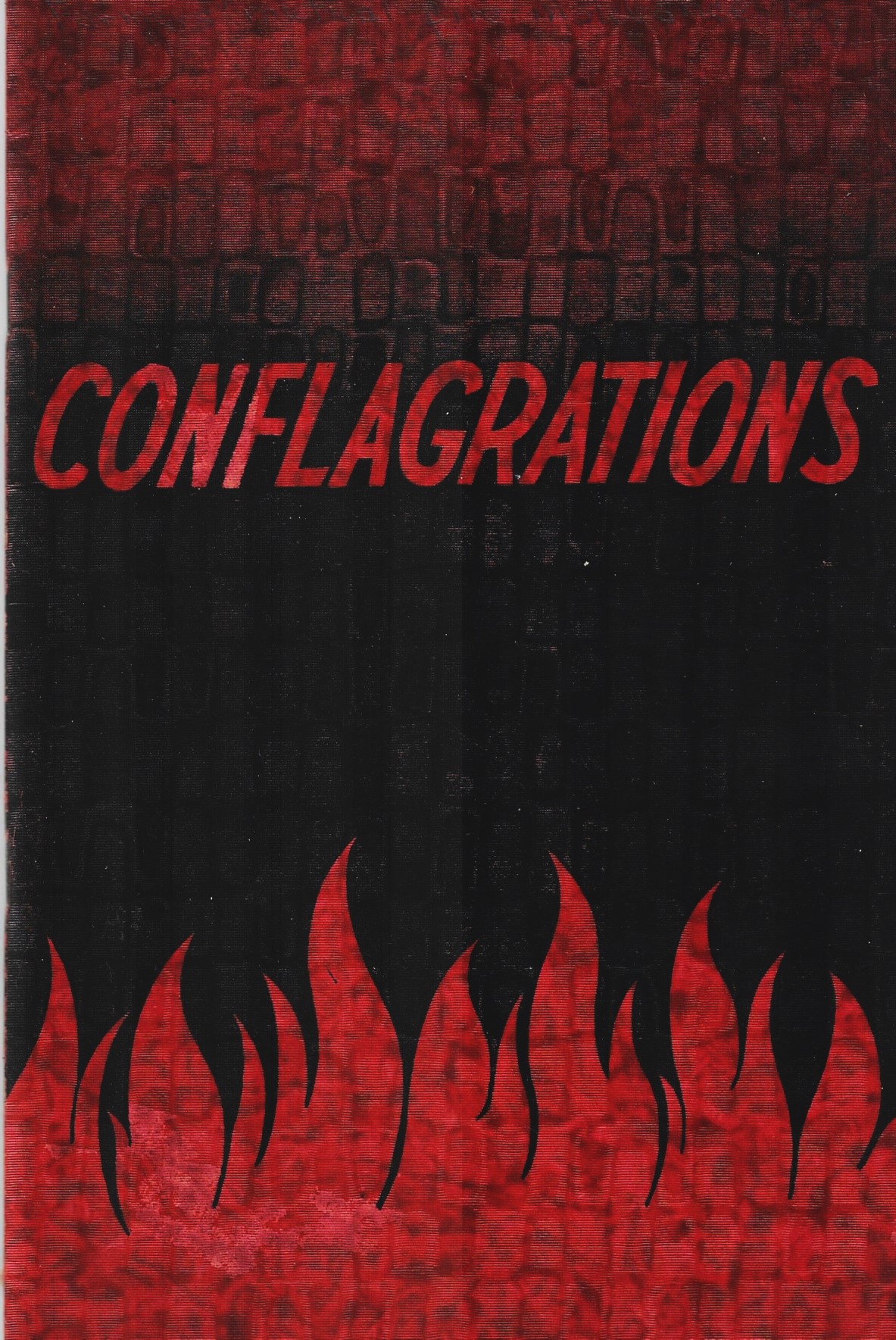
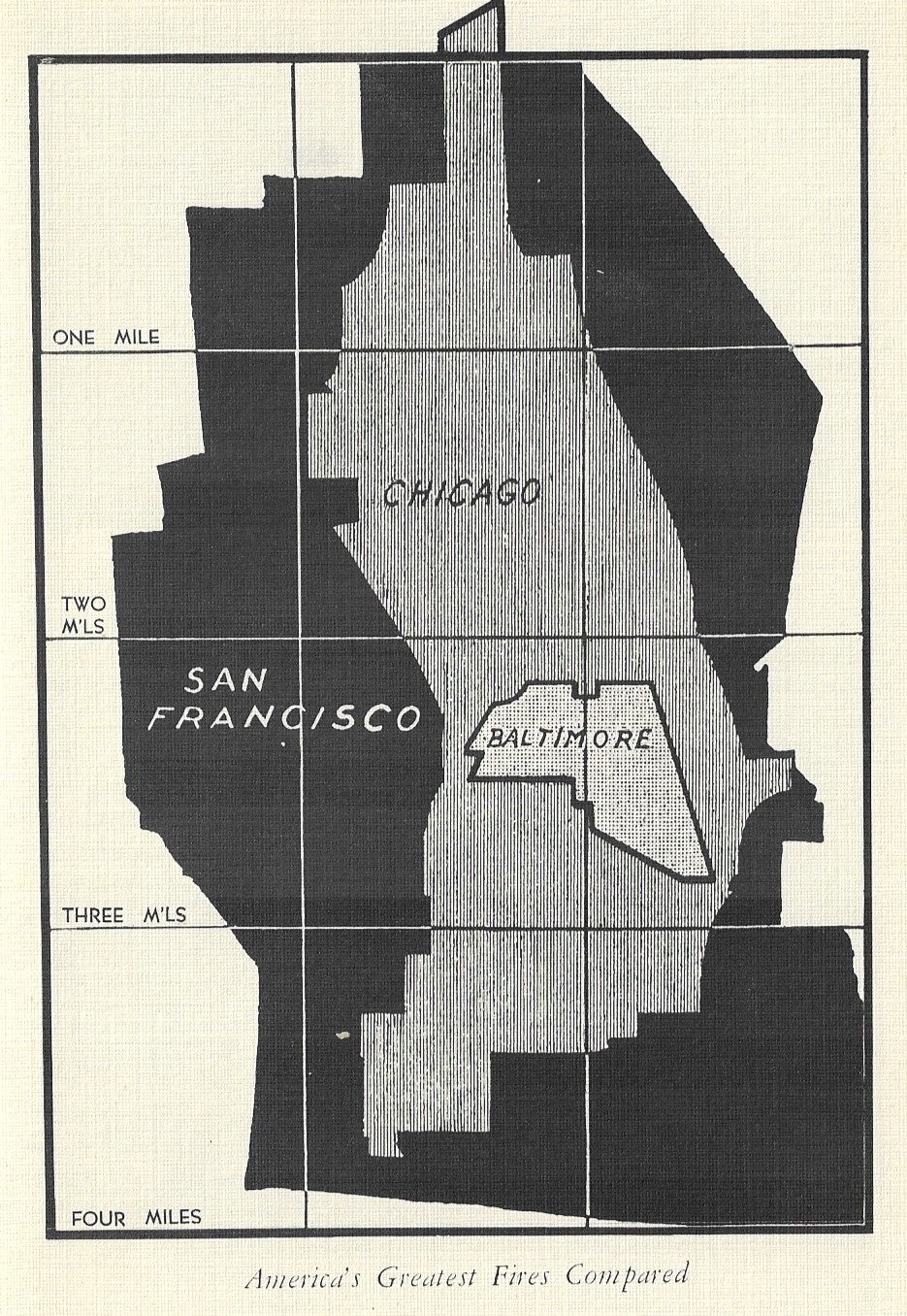
    Yes, this is a great cover, and it belongs to the designers for the National Fire Protection Association, who I guess were trying to, um, emphasize the terrible nature of The Big Fire in the course of its mission to sell fire insurance, which of course is a good and necessary thing. The pamphlet (printed in 1936) details some of the biggest fires in U.S. history, Salem, Ma.; Paris, Tx. (two); Nashua, N.H.; Coney Island, Brooklyn; Crisfield, Md.; New Straitsville, Oh.; and of course the big ones in Boston, Atlanta, Chicago, Baltimore, and San Francisco. Of particular interest in this pamphlet is the comparative sizes of the three greatest fires, reproduced below. 

    Books covers conflagrations _2_

    Books covers conflagration

  • Big and Heavy–Cover Design for Industrial Pamphlets, 1932-1941

    JF Ptak Science Books Quick Post

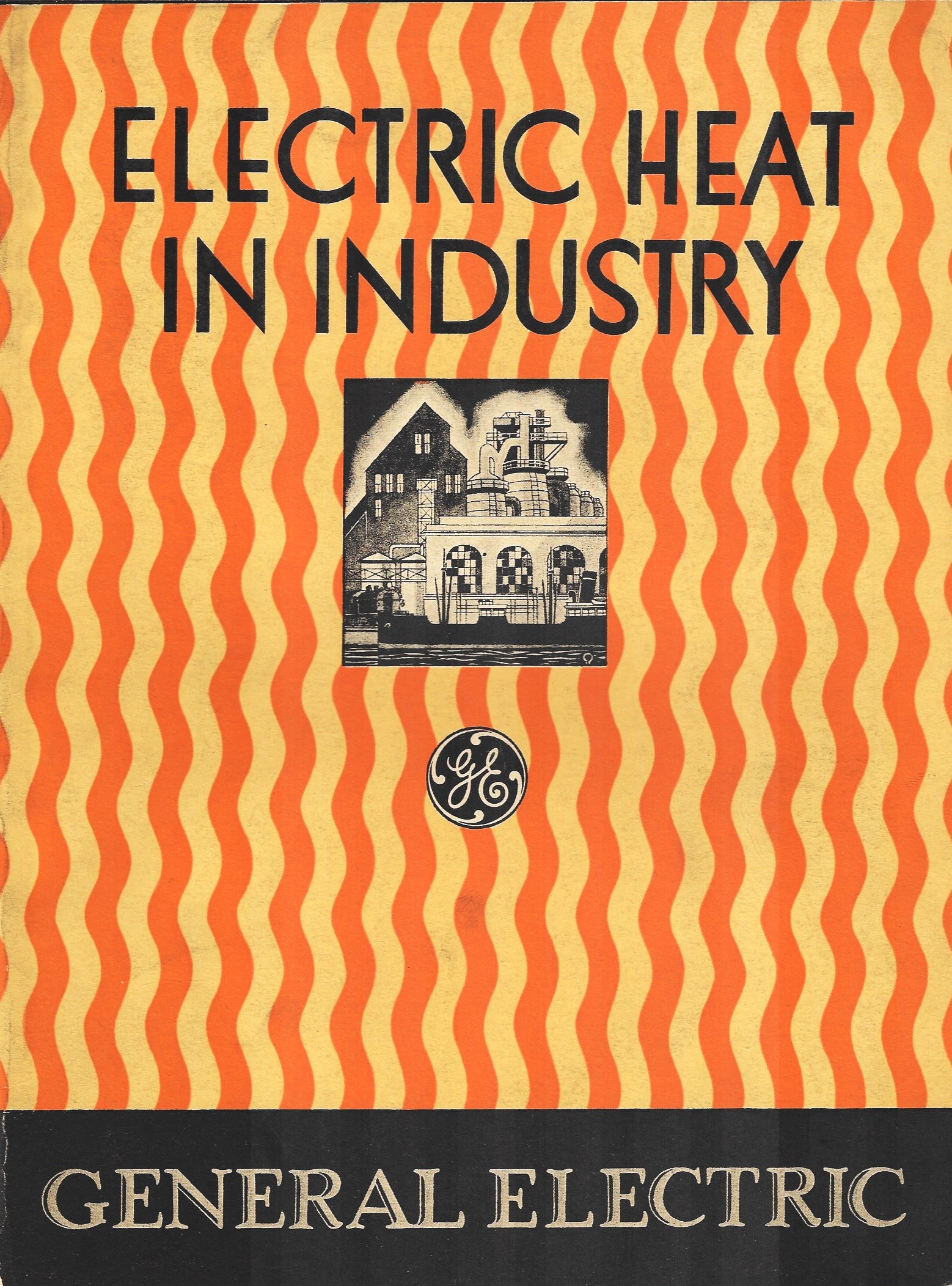
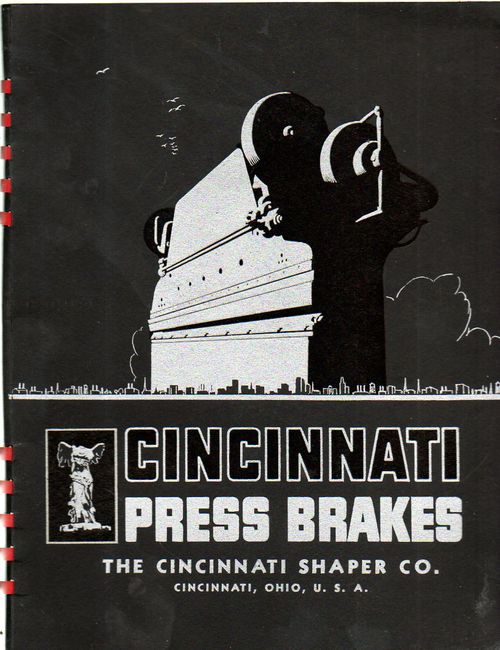
    I’ve not made a study of this, but it seems to me that of the industrial-related pamphlets and manufacturer catalogs and such that I have here the majority of their covers show as big/heavy/bulky. Perhaps this is just a function of what my mind tells my brain to tell my eyes what to see, which is possible. In any event, the selection of what I’ve dealt with here on the blog over the years bears out the Heavy hypothesis.  

    Books covers industrial cvr _1_

    (1941)


    Books covers industrial cover _5_

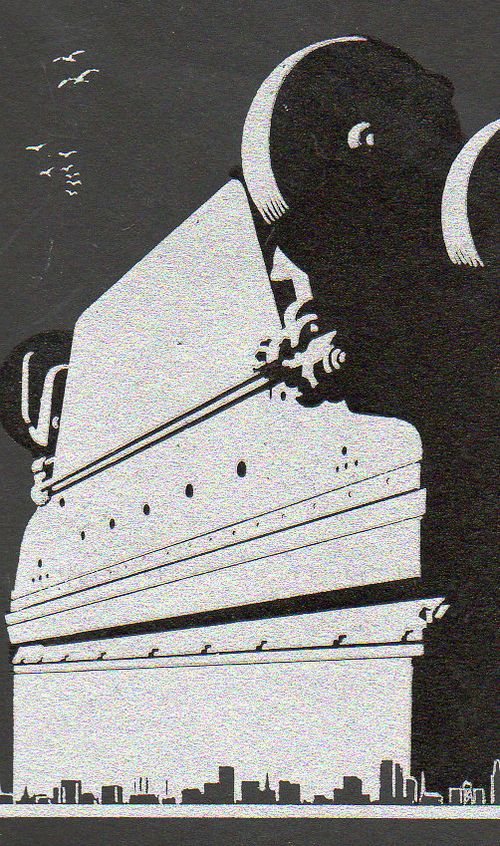
    This imagery bears out remarkably well in this catalog for press brakes from 1935, with an overwhelming image of the machinery, which, when you look at it in a certain way, takes on an athropomorphic and/or utterly massive gecko-like facial persona:
    Books covers cincinnati

    (1935)

    Books covers cincinnati

    ·Posted by :

    ·in:

  • Dark Lightning? (1899)

    JF Ptak Science Books   Quick Post

    Nature 1899 Dark Lightning _2_


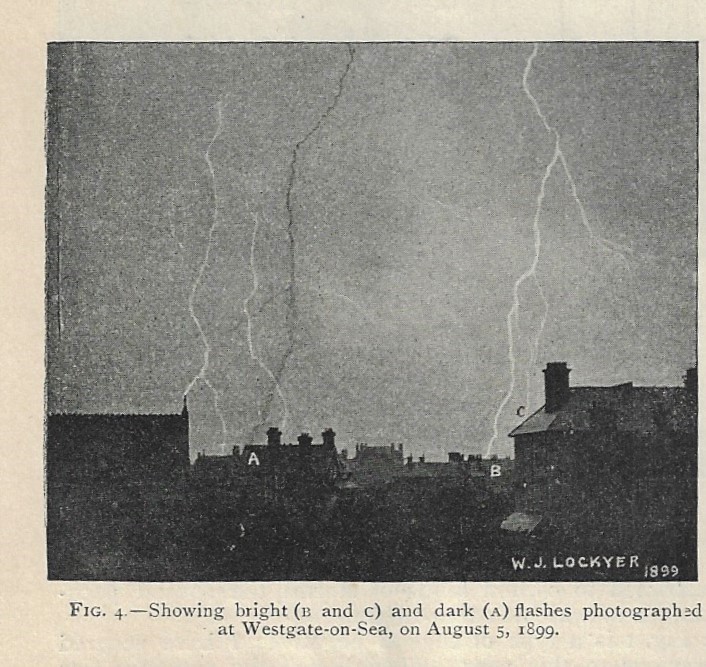
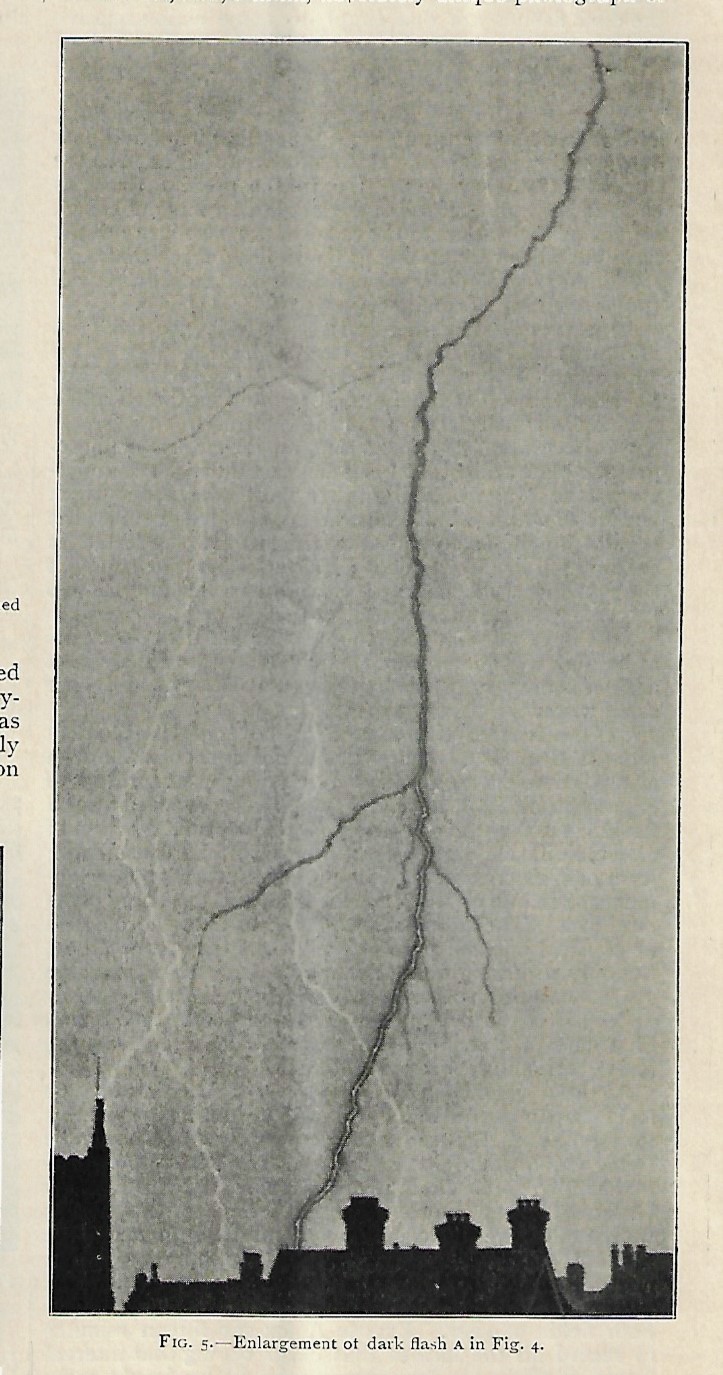
    William Lockyer experimented with photography and lightning to test an explanation of the apparent appearance of “dark lightning”–it is an interesting go and a great phrase that sounds like the name of a Marvel superhero. (William J.S. Locker, Dark Lightning Flashes”, in Nature, vol 60, no. 1563, pp 570-574 in the weekly issue of pp 565-588.) His evidence supports the hypothesis that the phenomenon had a photographic/chemistry cause rather than a physical one. The images he produced back there at the turn of the century were remarkable and beautiful. 

    From the paper:

    “IS there such a phenomenon as dark lightning? This is a question that has often been raised, and as yet no satisfactory answer has been given. If dark flashes do really occur, then they should probably be both seen and photographed, and the former, one would think, would be the more simple way of recording them.”

    “If the lens of the camera be covered the moment after a flash has occurred the developed image will always come out bright, feebly or strongly, according to
    circumstances. If, however, the plate be exposed after a flash has acted upon it, either to the continued action of a feeble diffused light or to the powerful glare arising from one or more subsequent flashes, then on development the image of the original flash will probably come out black. The effect is therefore not a meteorological or physical one, but purely chemical. It can be obtained, not only with a lightning flash, but also with a machine spark, or even with an ordinary flame. It is merely necessary that the plate should be exposed to the action of a certain amount of light after it has received the impression and before development.”


    Nature 1899 Dark Lightning _2_

    ·Posted by :

    ·in:

    —

Recent Posts

Archives

Categories