A Daily History of Holes, Dots, Lines, Science, History, Math, Physics, Art, the Unintentional Absurd, Architecture, Maps, Data Visualization, Blank and Missing Things, and so on. |1.6 million words, 7500 images, 4.9 million hits| Press & appearances in The Times, Le Figaro, Mensa, The Economist, The Guardian, Discovery News, Slate, Le Monde, Sci American Blogs, Le Pont, and many other places… 5000+ total posts since 2008.

  • The Beauty of the Nuts-and-Bolts of Bolts and Nuts (1864)

    JF Ptak Science Books  Quick Post 

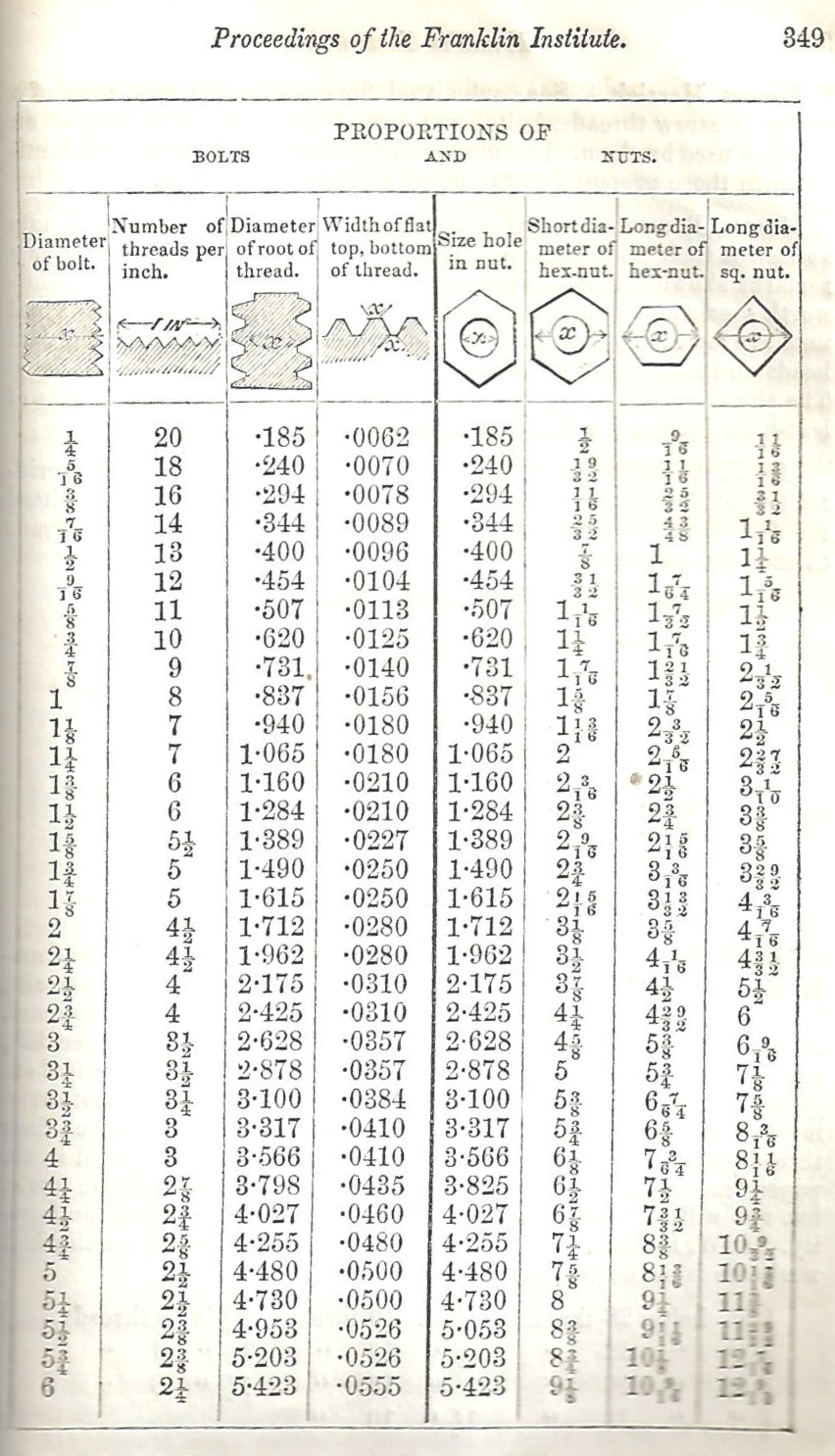
    JFI 1864 bolts (1)So, at first glance, this chart may look like a simple statement of nut and bolts specs. The importance of this chart is its commonplace appearance, and the overt statements about what all of these size and parameters should be, establishing a common denominator, a standard. Even though nuts and bolts had been around for at least 400 years when this chart appeared in the Journal of the Franklin Institute in 1864 (and threaded bolts and screws long before that), the idea of standardization of this hardware really hadn’t taken place until Joseph Whitworth gave the idea life in 1841. The nut and bolt industry was well underway, except that for X manufacturers there could be X-number of varieties of nut and bolt sizes from one location to another (near or far), which made things difficult for the end-user, as they could basically be using a proprietary design with their hardware. Standardization made it possible to buy a certain size nut in one country and mate it with the necessary bolt from another country (etc.) with the capacity of knowing that one will fit the other, which is a big deal. In any event, here’s a table of a U.S. attempt to codify those dimensions. 

            [See: W.R. Wilson,  The History of the Nut and Bolt Industry in America, 1905.]


  • Found Art: Tunnels of Wind and Water

    JF Ptak Science Books  Quick Post

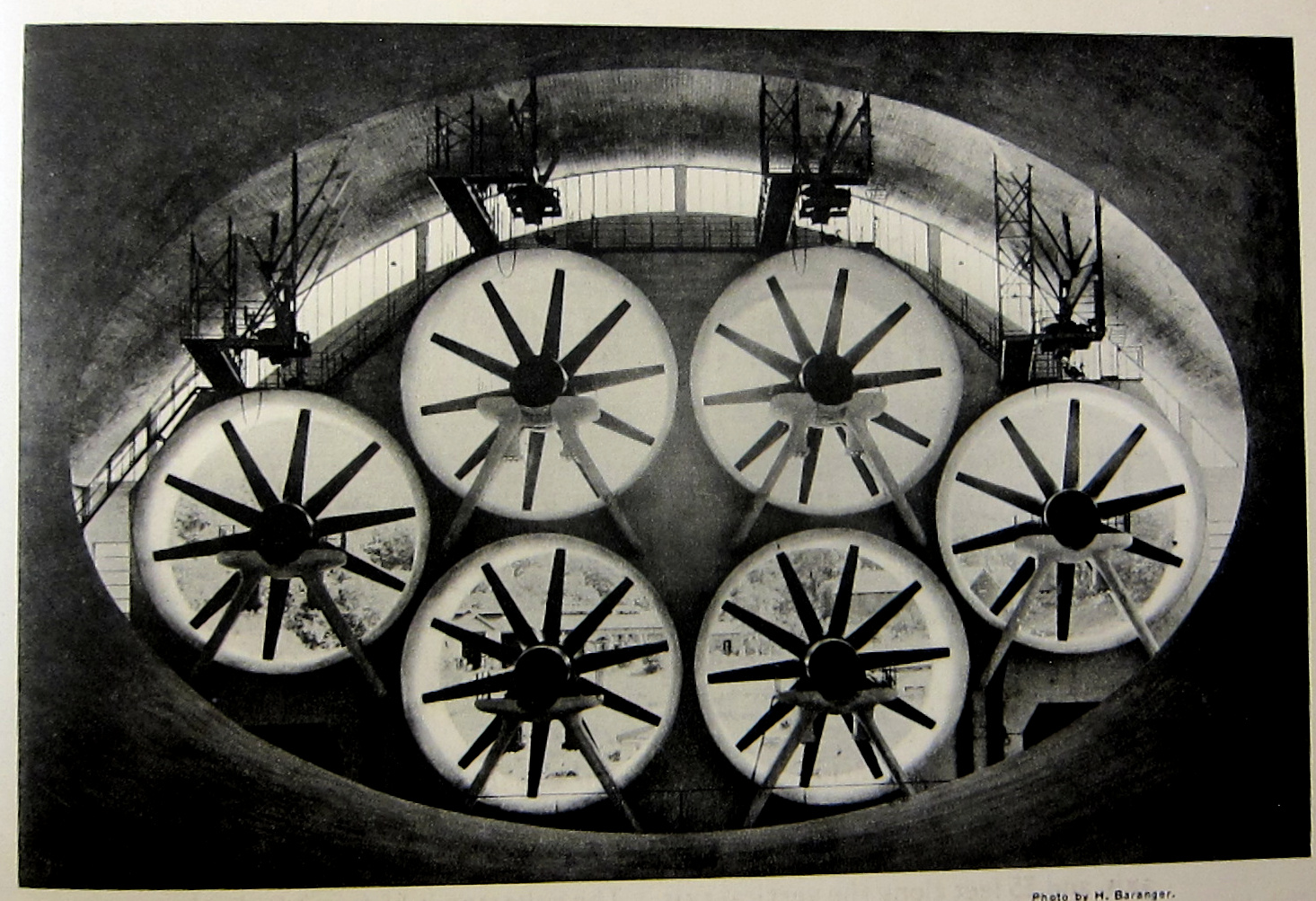
    This addition to the Found Art category (sub-cat of the Found-Dadaist thread) comes today from Creations Techniques Francaises (“French Engineering Achievements”, 1935), which is a pretty straightforward semi-propagandist/glowy work with two gems tucked inside. The first is a lovely image of the business-end of an aeronautical wind tunnel designed by Le Marec for full-sized aircraft at Chalais-Meudon, an elliptical structure 81’x55′:

    Books French tech wind tunnel

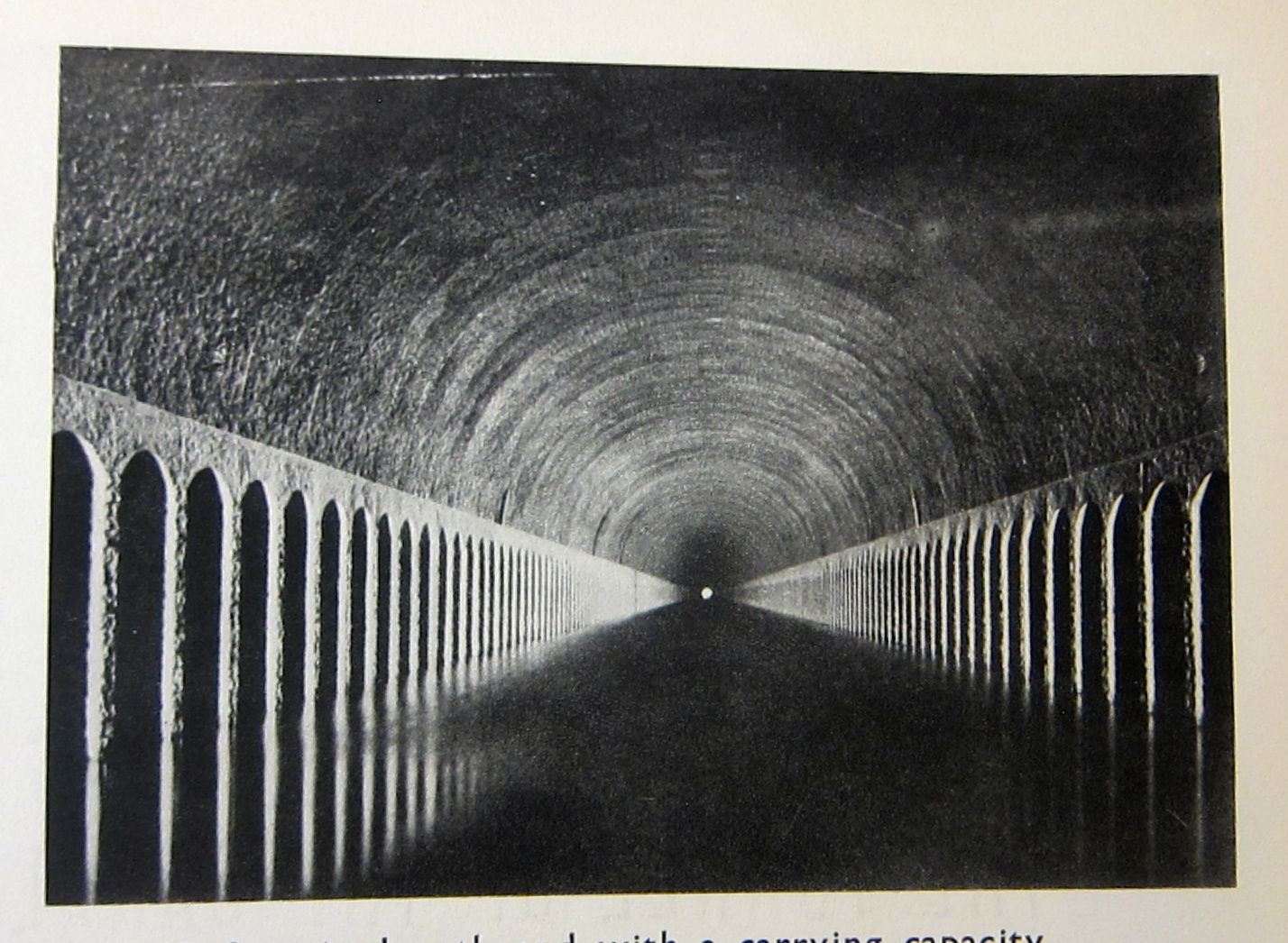
    The other tunnel is found a few pages later in the Rove Canal/Canal du Rove (opened in 1927), which is 4.6 miles long and 72′ wide, which at the time was the longest underground canal in the world. The picture below is an image made at one end of the tunnel, the point of light in the distance is the other end, 4.6 miles away:

    Books French tech wind tunnel

    ·Posted by :

    ·in:

  • The Dimming of the Harsh Light and the Beauty of Manual Work

    JF Ptak Science Books  Quick Post

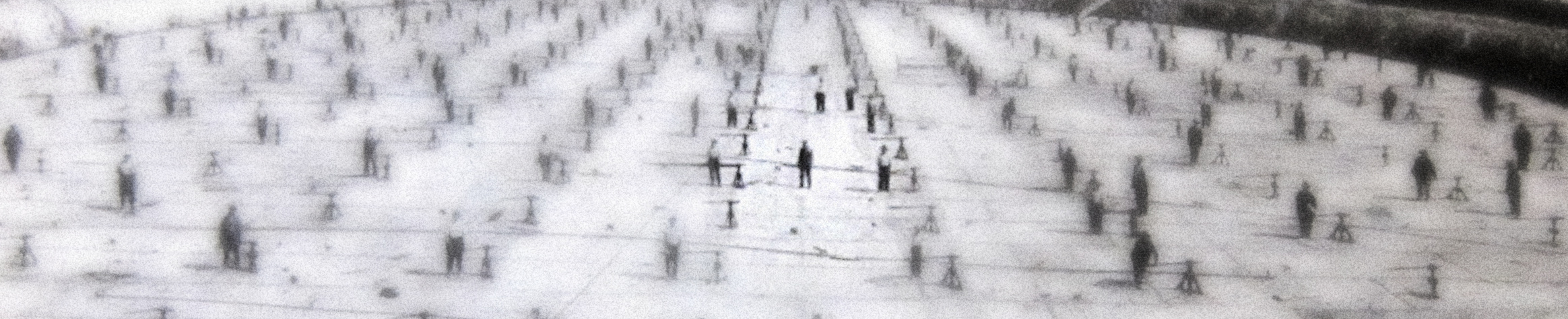
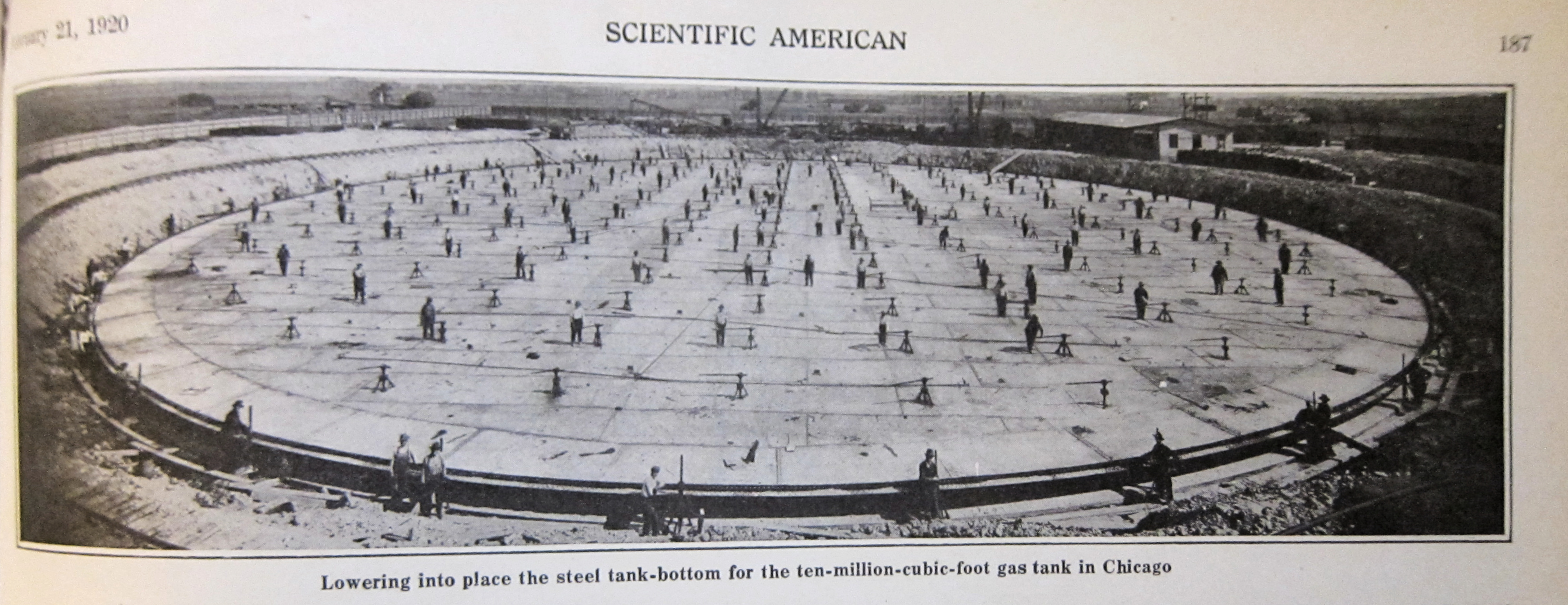
    This slightly altered detail is from the central perspective of a photo of workers completing the base for a 10 million cubic foot gas tank1 in Chicago, and appeared in the Scientific American on 23 January 1920. It is a great photo of the beginnings of a considerable project, and the full image (below) stands on its own as a visual accommodation of a segmented space soon to be occupied by something enormous. That said, the guy in the middle of it all caught my attention in all of this. Was he a standard laborer out of position amidst the 200-odd other people there as the shot was being made, wondering where it was he was supposed to be? Or was that a foreman, or somebody else with the freedom to walk around as the great mass fell into position to take care of the job at hand? 

    Notes

    1. It was a big tank: 10,000,000 cu ft is about 75,000,000 gallons, weighing in at about half-a-billion pounds, which is a lot. By spacing out the guys on the perimeter of the base I make it that the circumference of the structure was about 400′. 

    Sci Am 1920 tank base man


    Sci AM 1920 tank base

  • “Not like Soldiers, but like Devils” (1915)

    JF Ptak Science Books   Quick Posts

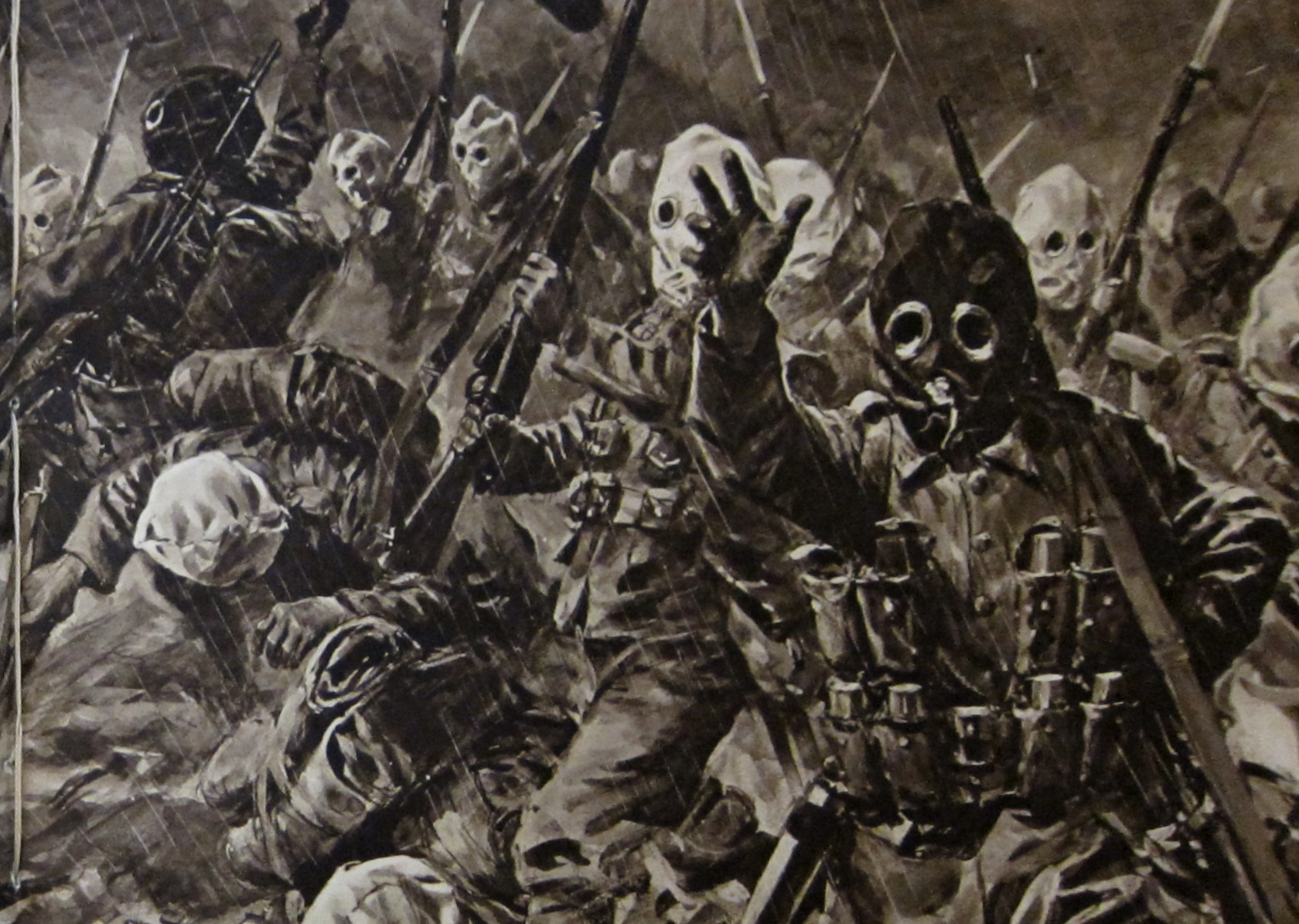
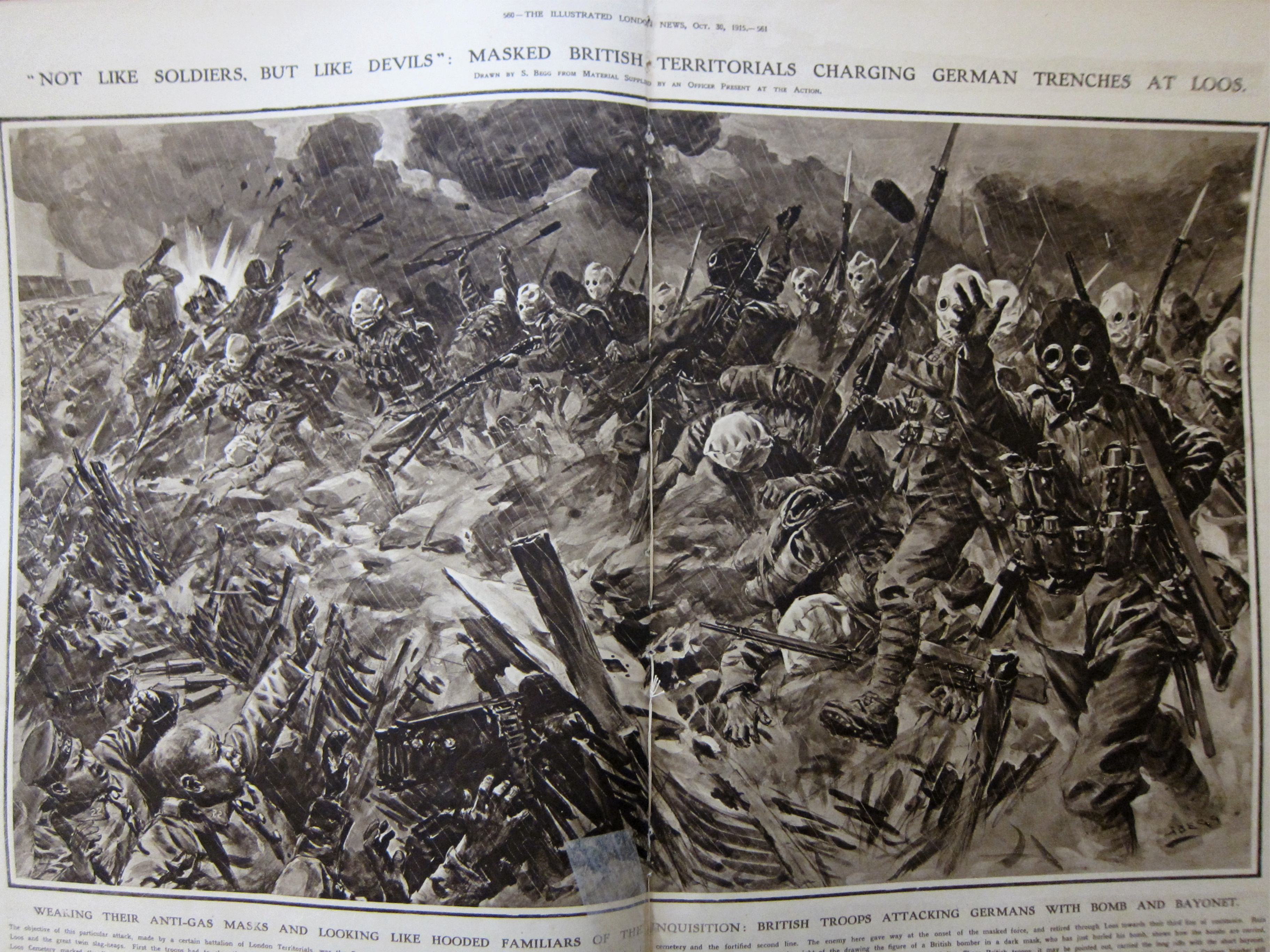
    I’ve looked through all of the issues of the very-popular magazine, the Illustrated London News, for the First World War and I think that the image below is one of the most harrowing of all of the early images of combat that I’ve seen. The artist, S. Begg, depicts a charge by British units on a German trench during the Battle of Loos (25-September–8 October, 1915) in what was ultimately a losing campaign for the British, costing them 59,000 casualties to the German 26,000.  “Not like Soldiers, but like Devils” is the title of the work, and shows British “Territorials” (evidently a volunteer force used to supplement the professional soldiers) attacking a German line with drawn bayonets and hurled grenades–a lot of grenades. For some reason the main figure in front is throwing a grenade with his rifle shouldered, unlike virtually everyone else. The Brits are wearing gas masks in the charge, no doubt expecting a gas response from the Germans–at some point during this battle the British employ their own gas warfare weapons for the first time in the war.  

    ILN 1915Masked Brit Terr _detail_

    The full scene:


    ILN 1915 Masked British Territorials

    ·Posted by :

    ·in:

  • A Shadowy, Watery Window into Early Flight (1907)

    JF Ptak Science Books  Quick Post

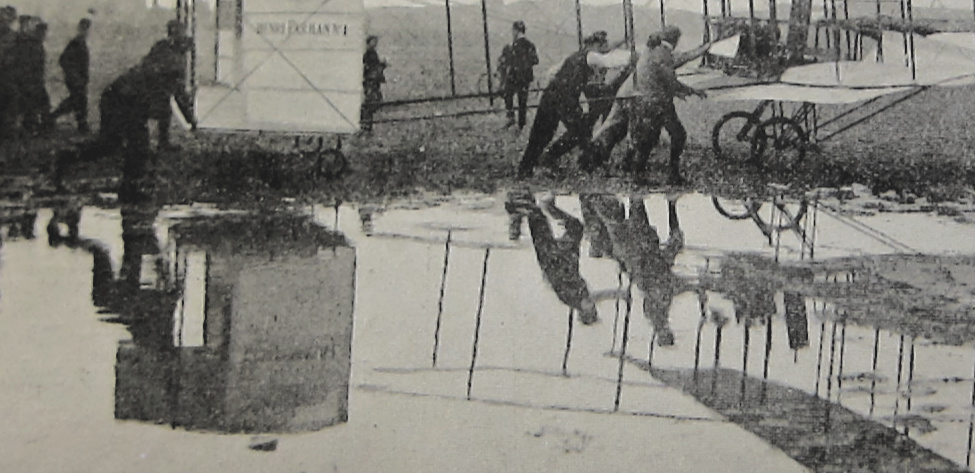
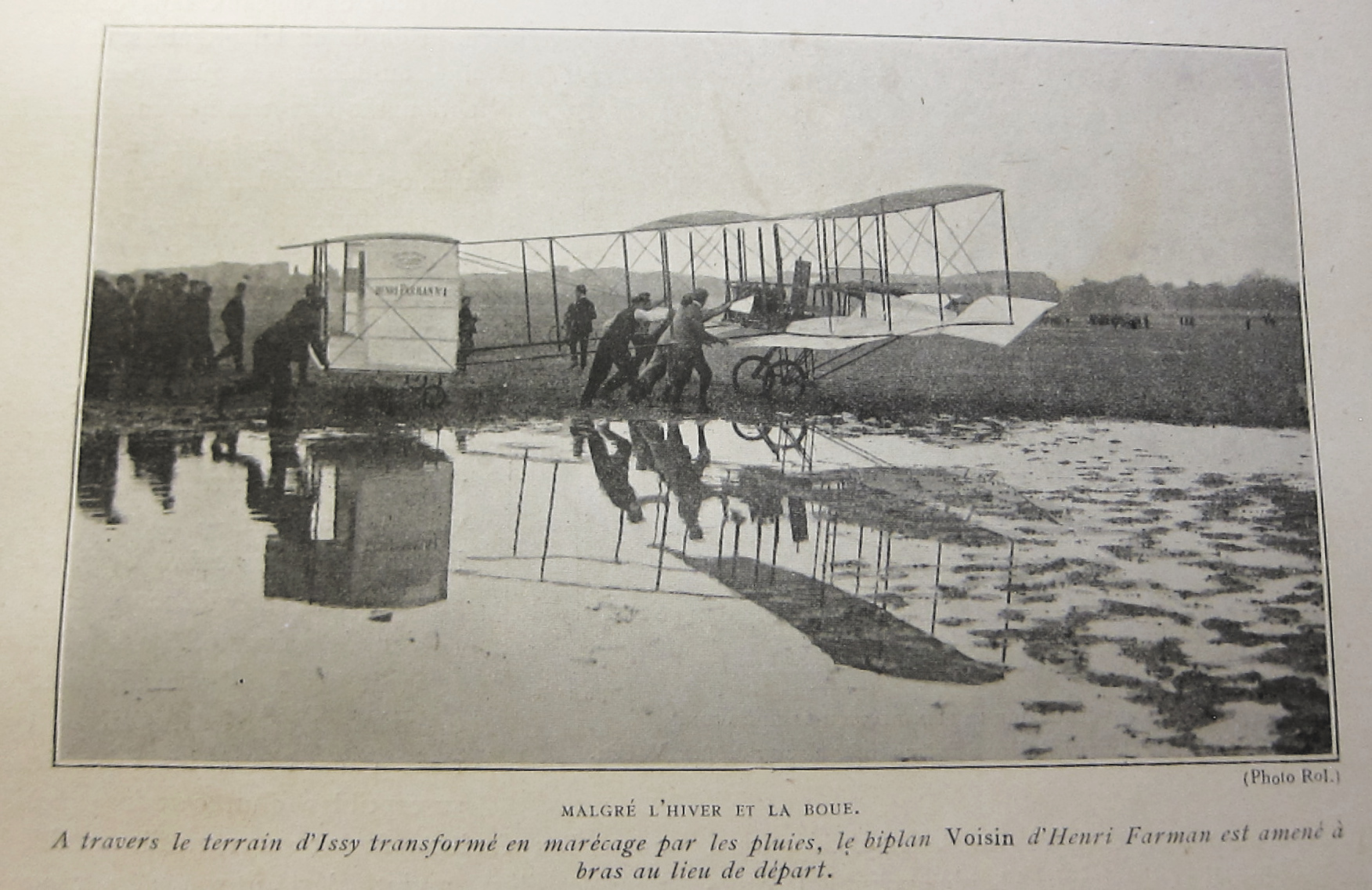
    It seeped into recognition that the photo below is remarkable to my experience for showing an early airplane being pushed through a puddle–marsh, actually–prior to flight, and we can see its progress and its helpers in a  reflection in the water. Now it is easy to find an aircraft with pontoons made for a watery environment, but the other, well, it seems to be remarkable to me. The photo  is from Henry de la Vaux’s  heavy and highly illustrated Le Triomphe de la Navigation Aerienne, Aeroplanes, Dirigiables Spheriques, printed in Paris in 1911, and shows the Euro-famous Henri Farman’s Voisin aeroplane across an inundated section of the fields at Issy.  Farman used this aircraft (made by Gabriel and Charles Voisin of Aeroplanes Voisin, founded 1905) in March 1907 and “… flew the first successful powered aircraft designed by aeronautical engineer… to make the first heavier-than-air flight lasting more than a minute in Europe, and also to make the first full circle”. (Wikipedia) And yet for that the thing that attracts me to this photo, found serendipitiously while flipping through the pages of the big book, was were the reflection of the underside of the plane in the mirror surface of the wet field. Simple, and unusual.  

    Triumph of the air Voisin Farman detail

    And the full image:

    Triumph of the air Voisin Farman

    ·Posted by :

    ·in:

  • A Beautiful Apocalypse (1508)

    JF Ptak Science Books  Quick Post

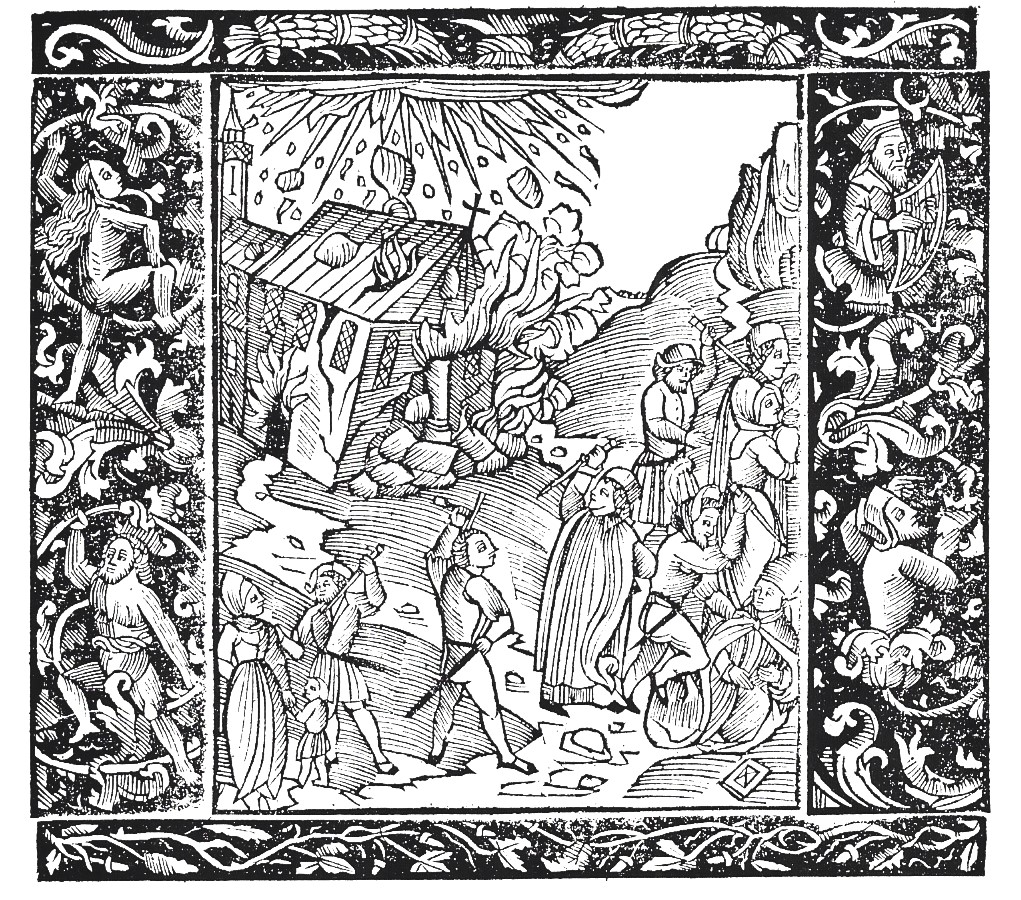
    This vision of The Apocalypse doesn’t look overwhelmingly apocalpse-y, to me, but the message was put across to the viewer that something bad was happening, what with the hail and brimstone and lightning and fire being visited upon the dissolving church in the background and the murdered clergy in the foreground. The woodcut appeared in Joseph Gruenbeck’s Speculum naturalis coelestis & propheticae visionis, printed in Nuremberg in October 1508, being a short (18 leaves) prognostication on the fate of humankind and its wicked ways. It is a very orderly fall from grace, but a fall nevertheless, and the reader no doubt was reminded of the waiting ring of fire. 

    Apocalypse beautiful

  • A Remedial Introduction to “Politics” for Newly-Enfranchised Women in the U.K. (1918)

    JF Ptak Science Books Quick Post

    Books covers to women voters detail

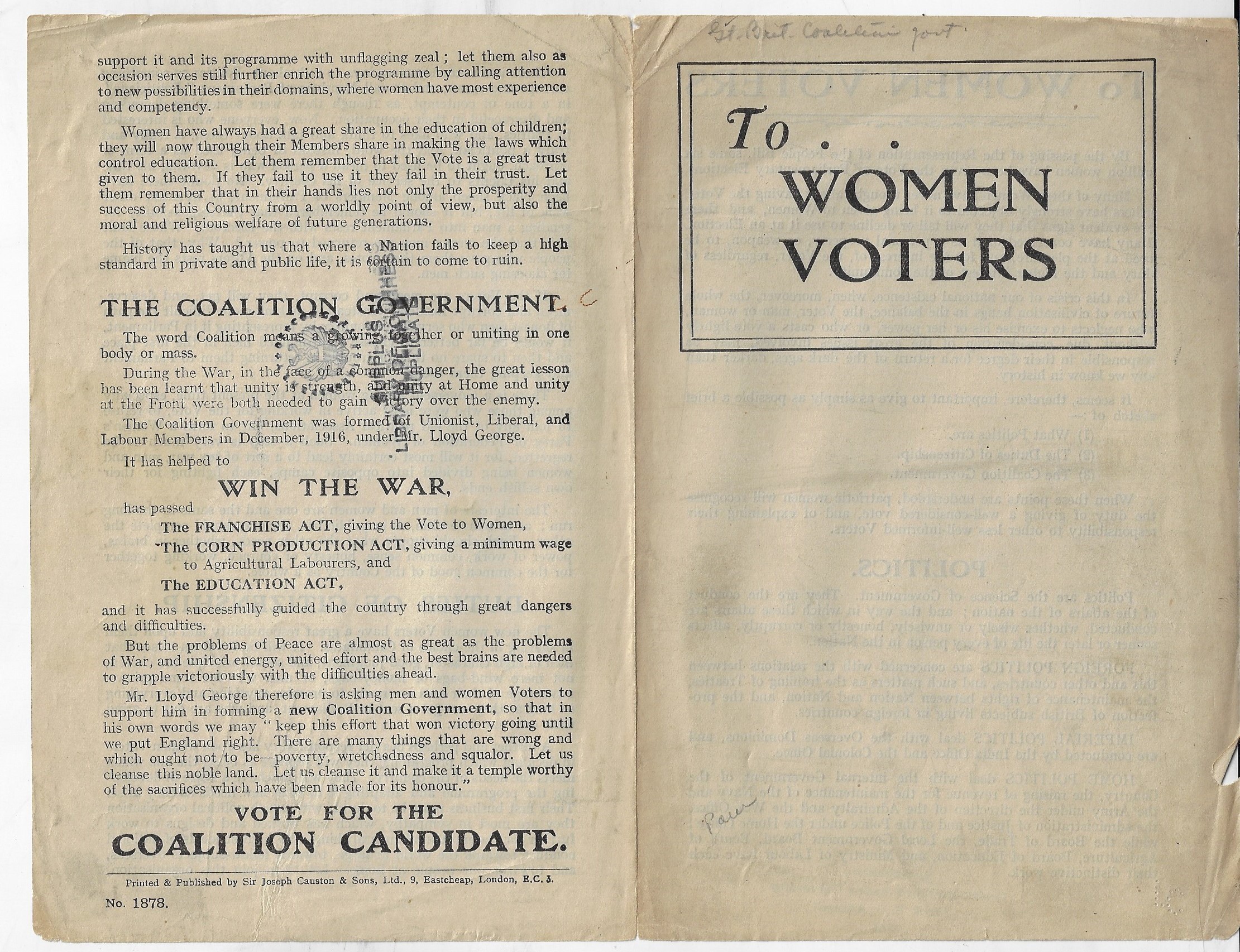
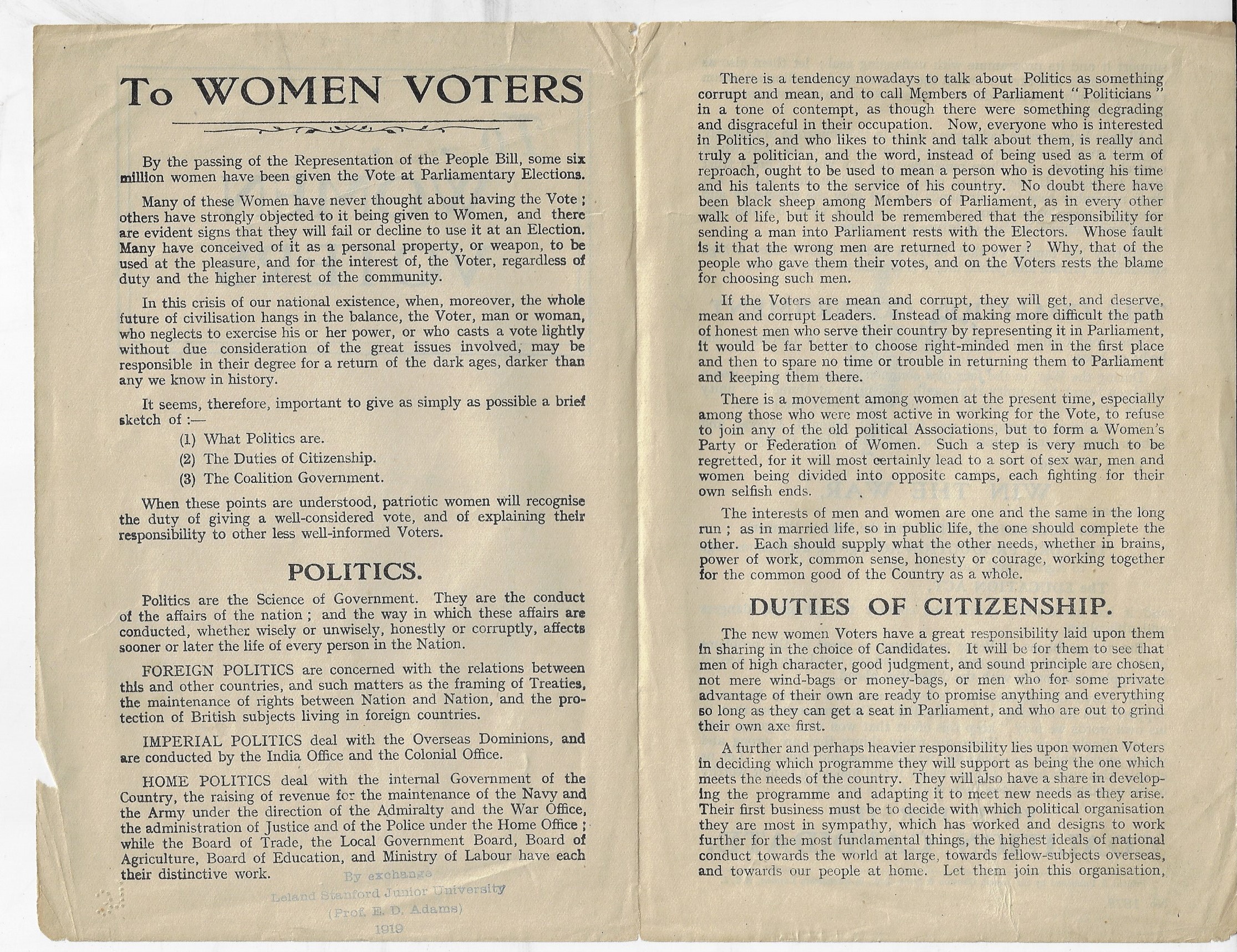
    To Women Voters1—a short and thin-lipped tearsheet printed by Sir Joseph Causton (viz Midsomer!) of London–was printed in 1918 for the Lloyd George U.K. Coalition Government.  (The coalition government of Lloyd George lasted until 1922 when it was replaced by that of Bonar Law.) It was printed in response to the Representation of the People Act of 19182, which enfranchised a certain set of women to the vote. This pamphlet was a very remedial introduction to the most basic ideas of government,  defining the subjects of “Politics”, “Duties of Citizenship”, and the “Coalition Government”, mostly in the service of having the women who could vote and would do so to vote for the Lloyd George ministry. The writer made a brittle assumption that women knew nothing about government and politics, and proceeded accordingly.

    I’ve reprinted the pamphlet below. 

    Notes:

    1.  8.5” x 5.5”, 4pp (one sheet folded in half).  Provenance: from the collection of Prof. E.D. Adams to Leland Stanford Jr University, and then the Library of Congress. The LC surplus stamp is on back cover, while the small Stanford stamp is at the bottom of page 2.  

    2. “The Representation of the People Act 1918 widened suffrage by abolishing practically all property qualifications for men and by enfranchising women over 30 who met minimum property qualifications. The enfranchisement of this latter group was accepted as recognition of the contribution made by women defence workers. However, women were still not politically equal to men (who could vote from the age of 21); full electoral equality was achieved in Ireland in 1922, but did not occur in Britain until the Representation of the People (Equal Franchise) Act 1928.”–Wikipedia

    Books covers to women voters

    Books covers women voters inside

    ·Posted by :

    ·in:

    —
  • 10,000 Windows Filled with Cigarettes (1938)

    JF Ptak Science Books   Quick Post

    American tobacco _3_

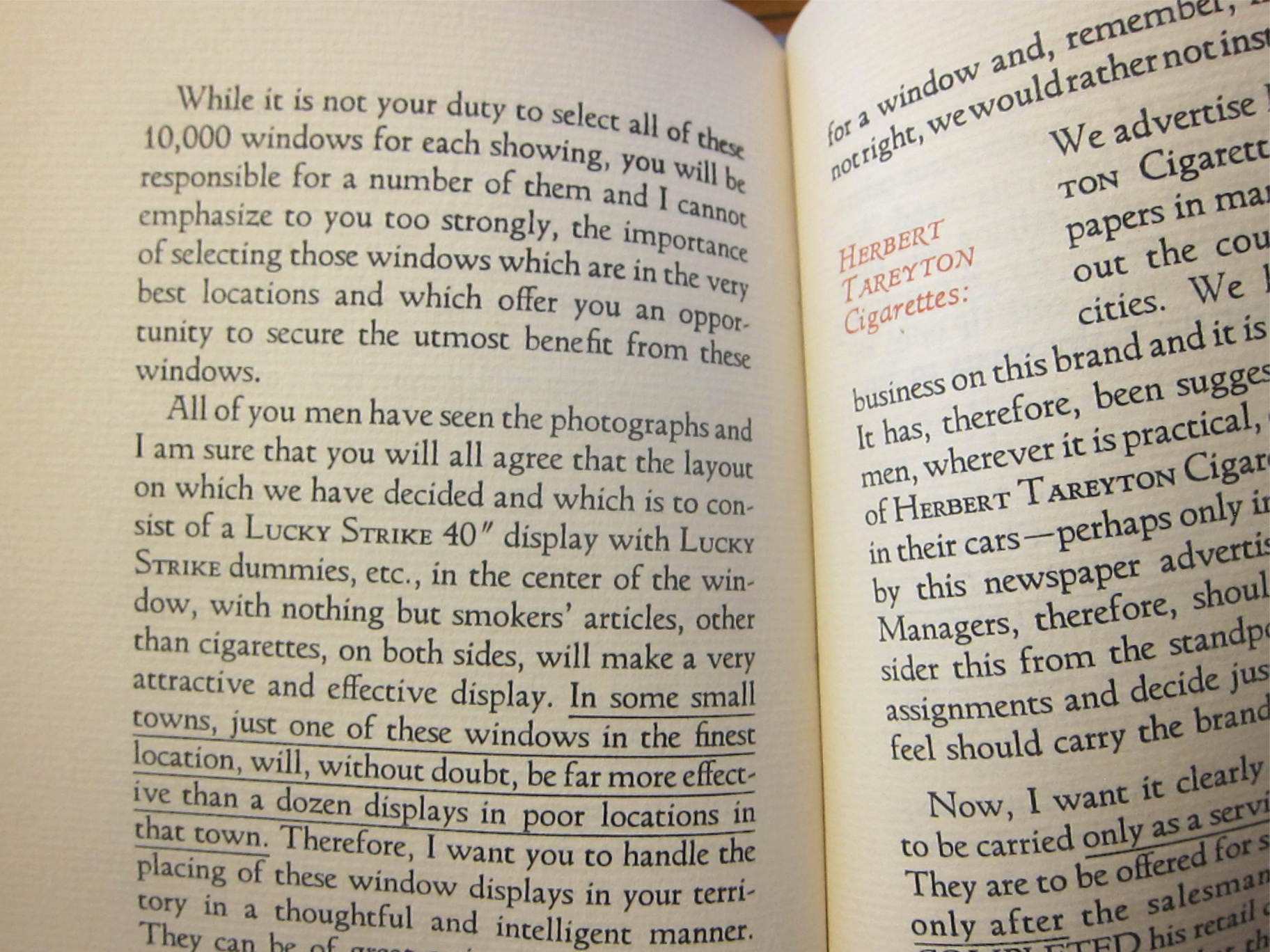
    Vincent Riggio (1878-1960) was a classic rags-to-riches story: Sicilian-born, lower East Side, quit school to work, opened barber shop on 117th, etc., and by 1947 was one of the highest paid execs in the country at $484k/yr., heading up sales for the American Tobacco Company.(Its hard to translate this wealth, even after fiddling with CPI—at the time though 30 million of the 39 million families in the US Census for 1950 made less than $5k/yr.)

    Anyway Riggio wrote a Christmastime book1 in 1938 on “Sales Organization” for the ATC, a piece of boosterism and a how-to for sales of cigarettes and the beauty they represented. One part that stopped me was the instruction on filling “10,000” windows in high-traffic areas with ciggie displays.  There were 93 cities in the US with 100k or more population in 1930 (105 in 1940, 50 in 1910, and 68 in 1920) so even if the windows concentrated on the big cities that’s 100 big windows (think classic giant window displays busy intersection) per each of the 100 cities. That’s in addition to massive amount of print ads and radio/sporting event sponsorships. (And remember the print ads used movie stars, doctors, lawyers, Santa, sports figures, and so on, plus the combination of the cigarette with the possibility of expressive manhood AND sexual allure.) These folks got their message across, which was too bad. 

    And for the record ATC was founded in 1890 by Buck Duke, and was one of the original 12 companies2 comprising the first index for the Dow Jones averages (1896). ATC was busted3 in 1911 as a monopoly, after which it became a simple oligopoly.

    Notes:

    1. Riggio, Vincent. American Tobacco Company, Sales Organization. Printed by ATC on fine laid paper. 7”x5”, 61pp. Embossed cloth.  I can’t find this in WorldCat/OCLC.  

    2. The twelve companies included American Cotton Oil, American Sugar, American Tobacco, Chicago Gas, Distilling & Cattle Feeding, General Electric, Laclede Gas, National Lead, North American, Tennessee Coal & Iron, U.S. Leather preferred, and U.S. Rubber.

    3. United States v. American Tobacco Company, 221 U.S. 106 (1911), “…which held that the combination in this case is one in restraint of trade and an attempt to monopolize the business of tobacco in interstate commerce within the prohibitions of the Sherman Antitrust Act of 1890.”–Wikipedia

  • Churchill and the Conservatives Abandoned–an anti-Labour Pamphlet of 1946

    JF Ptak Science Books  Quick Post

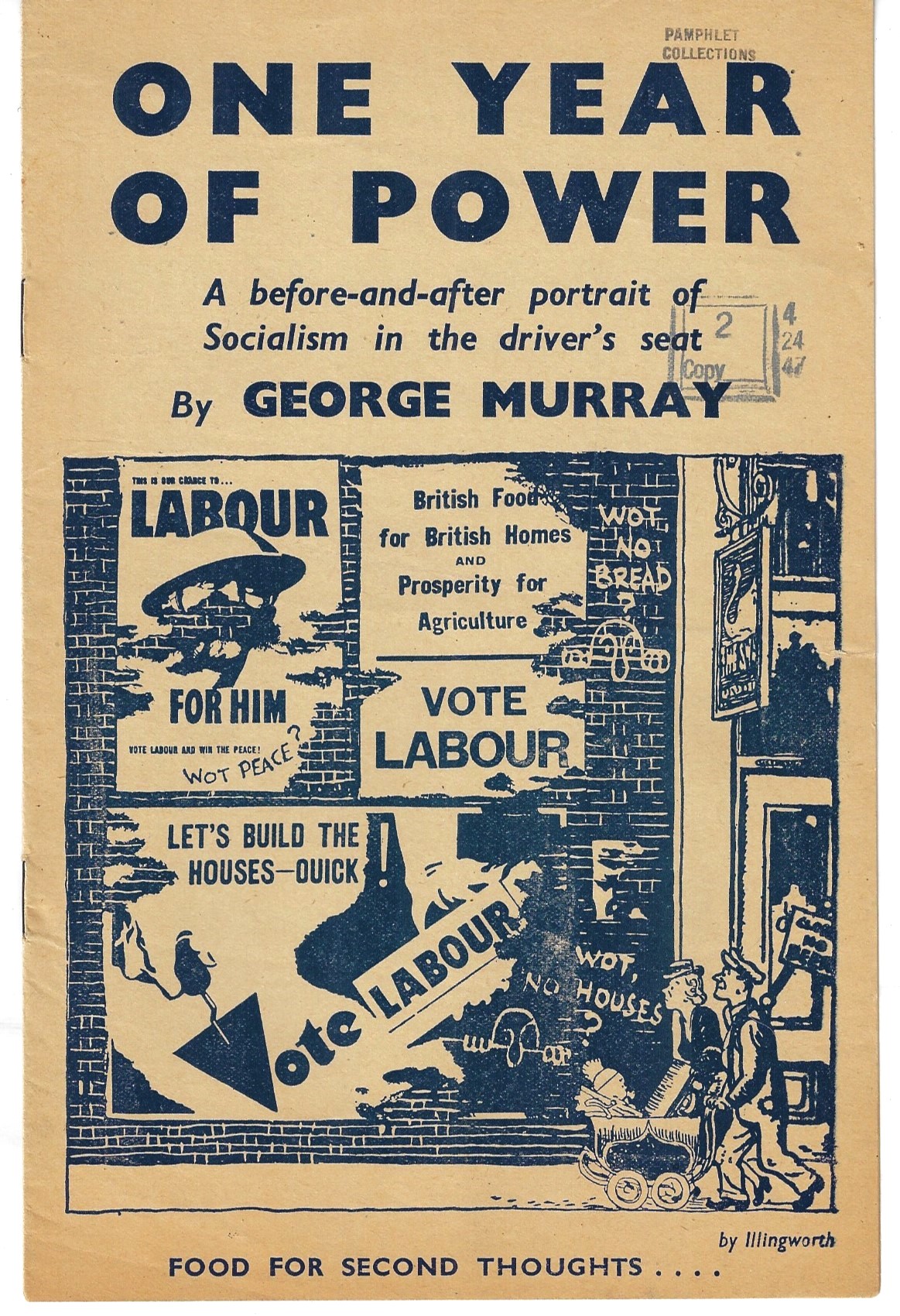
    Books covers one year of powerEven though Churchill was enormously popular in the public mind (well over 80% approval rate in 1945…I guess the question would have been what was up with the remained who disapproved?) the Conservatives and Churchill with them were utterly swept away from power in the general election of the summer of ’45, in the heights of victory in Europe and before the war in the Pacific was not yet ended. Clement Attlee was in charge as head of Labour—he was very skilled and competent and accomplished, though these characters were not manifest in his public persona, hardly a Churchill who shone through and through. It all made sense, in its way, though it was a shocking turn of the screw in the U.S. That’s not to say that the Conservatives weren’t shocked, though at least there was an understanding on that turn of affairs came to be. I doubt that was the case in D.C.

    In any event, this pamphlet shows the vestiges of political posters for the ’45 election a year or so later, promises that in their future looked not-so-good what with rationing still going on, a problematic economy, housing issues, battle weariness, and so on. The pamphlet was written by the Conservatives who tried to remind voters that Labour’s labour has been lost, and one should return the privilege of government to the Conservatives. That wouldn’t happen for almost another 10 years, when they and Churchill made their return in 1955.

    The cover is very striking, and makes a clear point.

    (It seems this is a rare pamphlet–I can find only one copy accounted for in WorldCat/OCLC, and that in the British Library.)

    ·Posted by :

    ·in:

    —
  • “Separate Cinema”–100 All-Black Movies for Rent, 1944

    JF Ptak Science Books Quick Post

    Negro Movies _1_.jpg copy

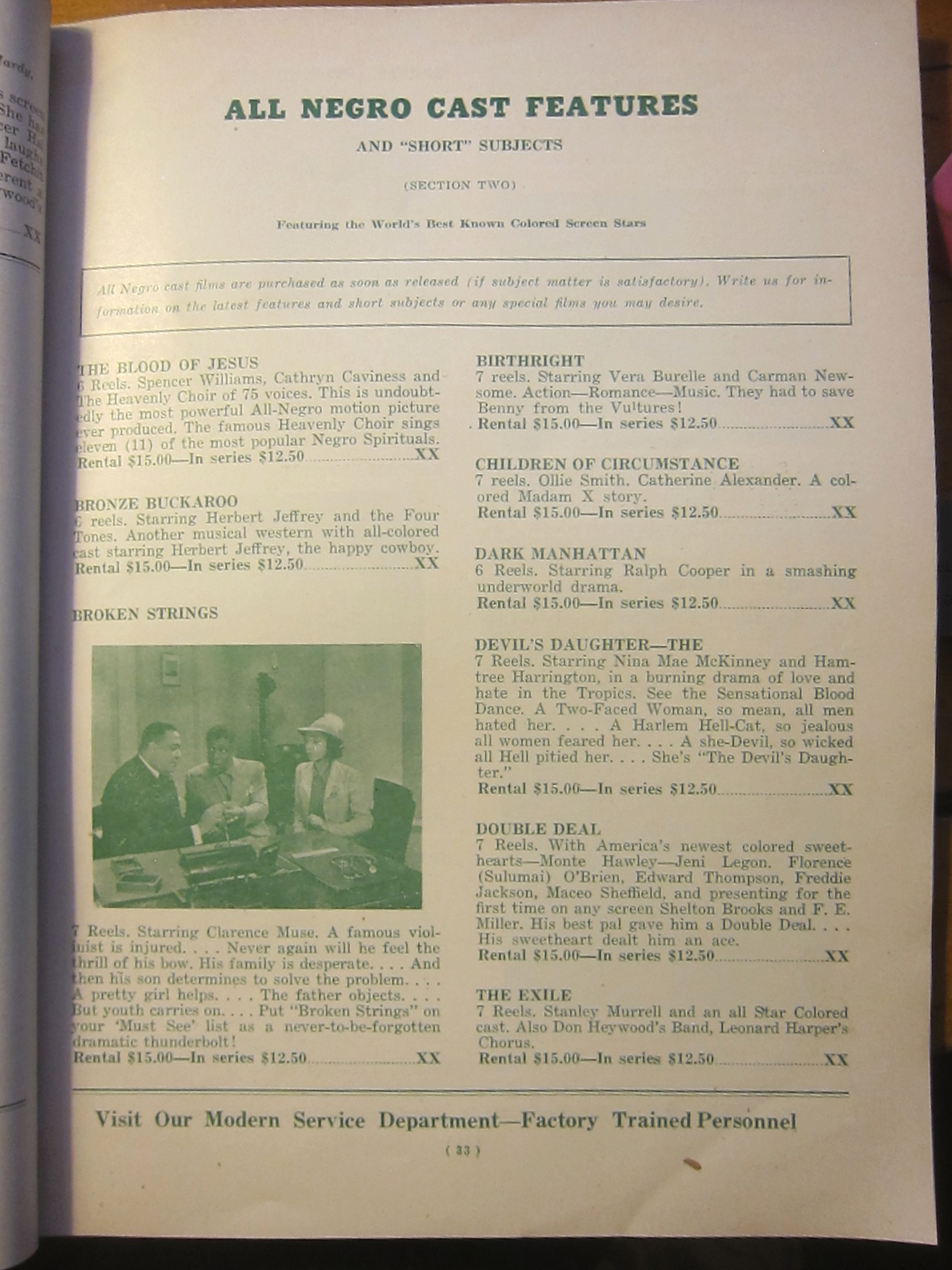
    This is well outside what I usually write about here, but I could not resist sharing this interesting find.  “All Negro Cast Features” is a five-page section in a 150pp film distributor catalog from 1944, listing 100 all-Black movies for rent. I know very little about this genre of film-making, but in checking out some sites dedicated to the subject I found that only about a third of the hundred were mentioned—which of course sparks curiosity and interest.  

     [See the wonderful “Separate Cinema” site from whom I borrowed the phrase in the title to this quick post at http://www.separatecinema.com/exhibits_vintageyears.html (with posters!); also the IMDb/Afro-Centric Film Collaborative “Definitive List of  Black Movies from the 40’s, 50’s, 60’s, 70’s,” which as it turns out lists only 32 films from the 1940s.]

    The “All Negro” offerings (no films in the catalog are dated) included 37 features ranging from 1931-1944, with ten in the 1930’s and three in the 1940’s. Only 12 of these are referenced in full on the Separate Cinema site, with four others tangentially mentioned and dated. There are then two pages  of shorter, movies including: Short Subjects (14 films), “1-Reel All-Negro Cast Subjects (16 films), “Features with Prominent Negroes…” (4 films), “Cabin Kid Comedies” (8 1-reel films), “Musicals” (9 1-reel), “Joe Louis Fights” (9 1&2-reel films), and “Spice of Your Program” (3 2-reels).

    Some of the descriptions for the feature films are spare, some not, though even the quick descriptions of some of these movies are captivating–for example, for Harlem is Heaven (1932), the entry reads “Bill Robinson, the dark cloud of joy with Eubie Blake’s orchestra”.  On the other hand, the description for Marching On reads “the picture that leaves you gasping” without any reference to it being one of the very few films dealing with African American military life during WWII.  

    In any event someone out there in Interwebtubelandia may find this list useful or supplementary.

    All of the images of the text are expandable:


    Negro movies _5_

    ·Posted by :

    ·in:

  • Geronimo Finally Defeated: of Miles, miles, and the Sun (1886)

    JF Ptak Science Books  (Expanding on an earlier post from 2011.)

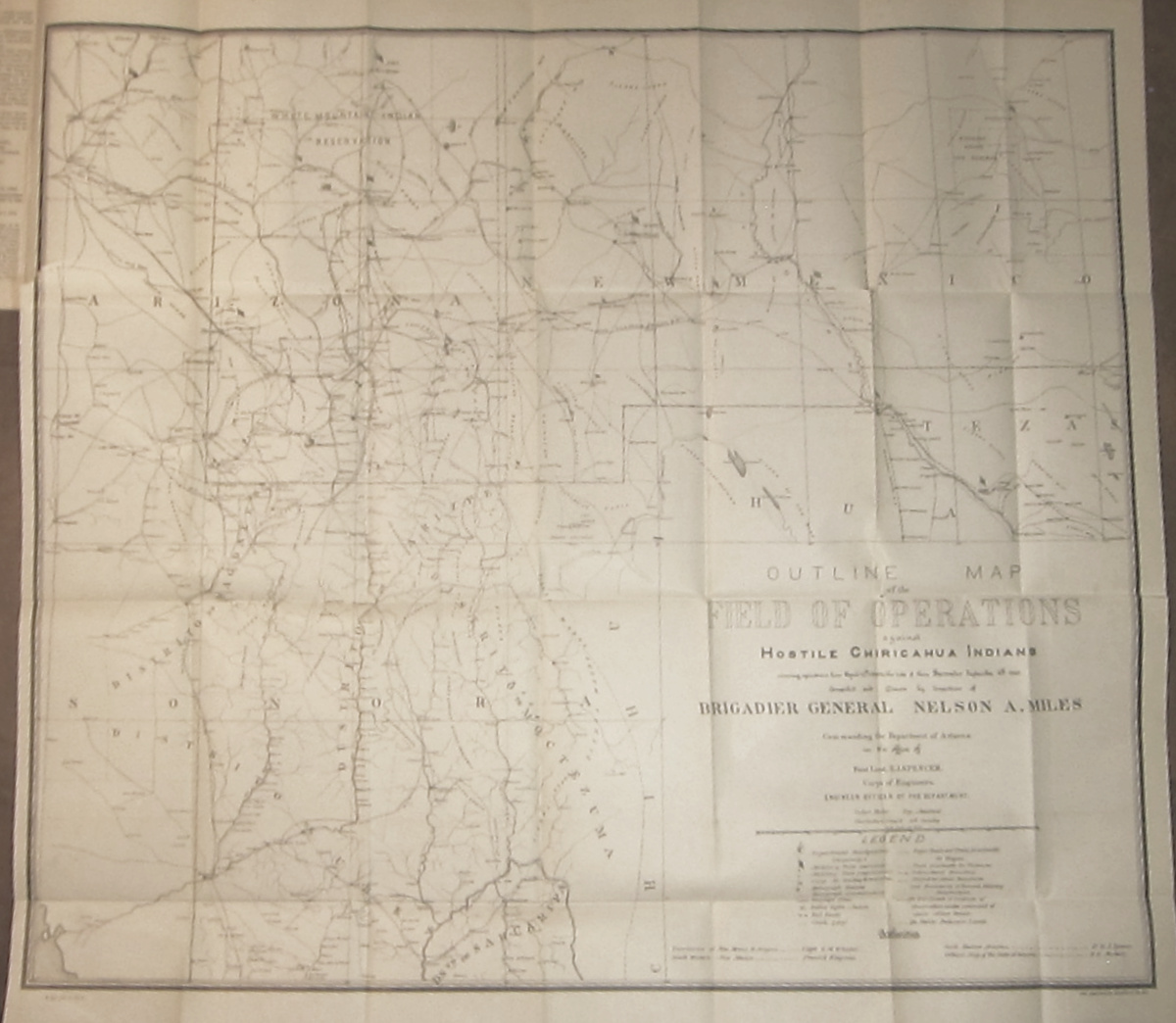
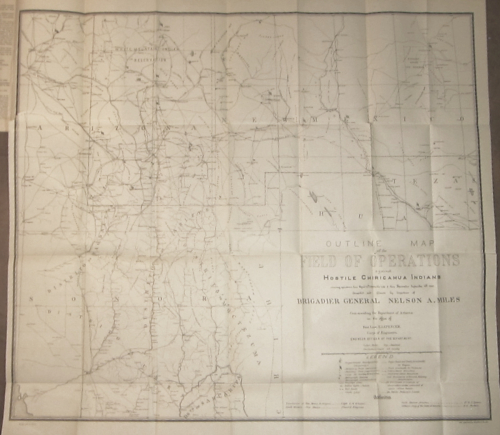
    The Chiricahuan Apache leader and chief, Geronimo (1829-1909), famously led a progressively diminishing band  through the  Apache Wars of the 1850’s-1880’s.  For thirty  years of so he quirted the U.S. Cavalry, darting here and there in great exploits and famous escapes, evading the armies of the United States and Mexico.  In the end, by 1886, there were just dozens who were following him, including women and children, and the elderly, ragged, tired, hungry, and pretty much, finally, beaten. A graphic display of this end is found in this terrific map:
    Geronimo _1_ full
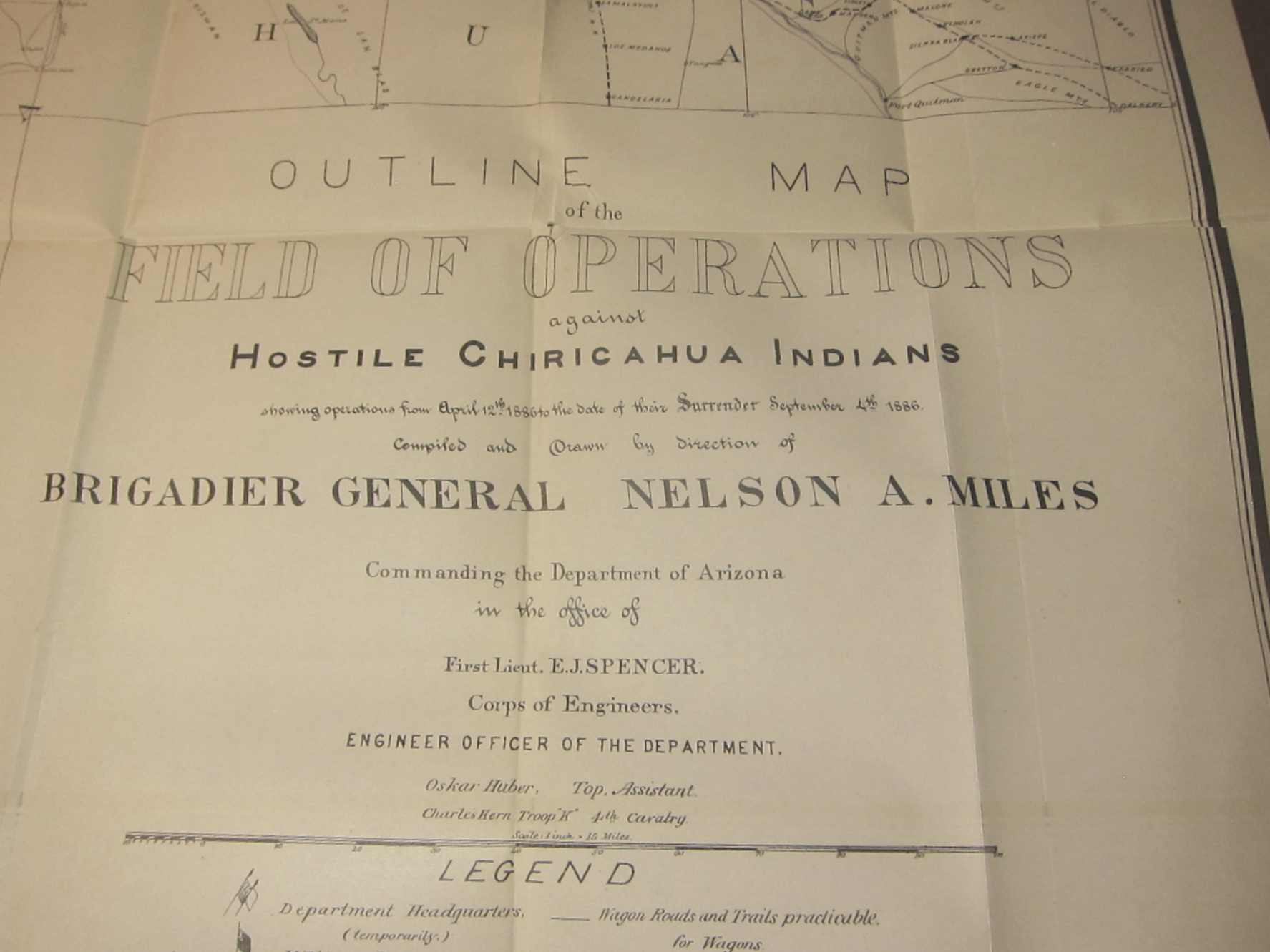
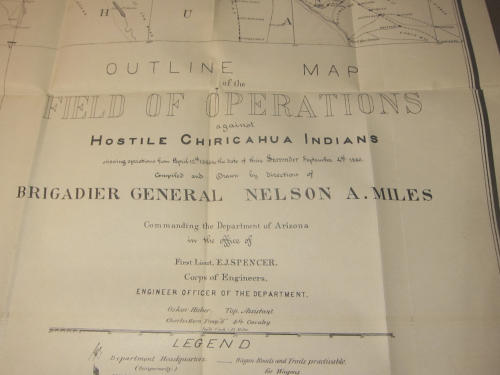
    Outline Map of the Field of Operations against Hostile Chiricahuan Indians showing operations from April 12th, 1886 to the date of their Surrender 4th, 1886, which is a large, 29×25-inch folding black and white map lithographed by the American Graphic Company.1  [It covers all of Arizona and New Mexico south of 34 degrees N, from Phoenix on the west to not quite Roswell on the east, northern Sonora to well below Hermosillo, and extreme west Texas, and locates at least 40 army forts, camps and posts, as well as innumerable railroad whistle stops, ranches, and water holes…and of course locations of heliographic stations.]

    .
    Geronimo _2_

    I think what finally did Geronimo in were the miles of pursuit and the sun. 

    The sun got to him via the heliographic communication network established by Major W.J, Volkman under the direction of General Nelson Miles (the other “miles” of this equation of defeat), which allowed the pursuing American army to communicate instantaneously over great distances, over hundreds of miles, without the need for runners or men or horseback or cutable telegraph wires or time  The heliograph is an ancient instrument, used for more than two thousand years–in this case, they were very highly polished mirrors that reflected brilliant signals between stations, getting their light source from the sun. It allowed the army an enormous advantage, and one that finally caught up to Geronimo.

    The “miles” were just those, the thousands of miles Geronimo was tracked and retracked over that very difficult terrain in the southeastern part of Arizona and into northern Mexico, sharp mountains, endless badlands, caves, heat, height, cold….very difficult. (I’ve been there on treks.. .its tough land.)

    The capitalized “Miles” was the surname of General Nelson A. Miles who sent out  with Lt. Col. George F. Crook to track down and capture Geronimo–and they almost did, again, in late March, 1886, when Geronimo presumably surrendered, but then fled to Mexico. After another five months and 1,600 miles, Miles came upon Geronimo om in Sonoran mountain camp, and induced him for the final time in September, 1886, at Skeleton Canyon, Arizona.

    The details of the capture and surrender are told in many places by many others–I just wanted to surface the role of the sun in the capture of Geronimo.

    The old man was shipped east,  never to see Arizona again. He died after being thrown from his horse and contracting pneumonia as a result of being unable to help himself to safety through a long cold night, died in a bed as a prisoner in Ft. Sill, Oklahoma.
Recent Posts

Archives

Categories