A Daily History of Holes, Dots, Lines, Science, History, Math, Physics, Art, the Unintentional Absurd, Architecture, Maps, Data Visualization, Blank and Missing Things, and so on. |1.6 million words, 7500 images, 4.9 million hits| Press & appearances in The Times, Le Figaro, Mensa, The Economist, The Guardian, Discovery News, Slate, Le Monde, Sci American Blogs, Le Pont, and many other places… 5000+ total posts since 2008.

  • Daily Dose of Dr. Odd: Proto-Surrealist and/or Absurdist Images of Artists by J.J. Grandville, 1844

    JF Ptak Science Books   Quick Post

    I’ve remarked on this blog several times on the work of the fabulist proto-surrealist (etc.) J.J. Grandville (for example, here), and today I’d like to return again to his soaring Un Autre Monde (published in 1844) for the work he did in satirizing conventions by reversing their orders, presenting common entities in their “opposite”position. (Perhaps “opposite” is a too far-reaching word, perhaps “contrary” is more appropriate in these cases–for now, either will do.)

    photo

  • Daily Dose of Dr. Odd: Patent Drawings of Mazes and Puzzle Games

    JF Ptak Science Books   Quick Post

    I’ve been indulging a new category of this blog–the Daily Dose of Dr. Odd–with more than a single daily post.  It is an effective and easy way to post some of the many images that I see daily that in general wouldn’t be posted.  The following images are from the U.S. Patent and Trademark Office via Google Patents, and show several lovely applications of mazes, many of which remind me of some 18th century garden designs. 

    ·Posted by :

    ·in:

  • Mathematical Sticks & Unmagic

    JF Ptak Science Books  Quick Post

    Just a quick post here on patented mathematical tools using long wooden planks in a sliding frenzy to find displayable answers for 19th century schoolchildren and their addition problems.  I know a good set of Napier’s bone could come in very handy (appearing much earlier on than these instruments), but I’m just not sure what kids could learn from using these tools–like any other calculating device, early or late, they have a questionable quidity so far as appreciating the essence of numbers is concerned.   That said, the drawing for the Meyers’ machine is beautiful, and could no doubt lead to a number of short, noir-y stories.

    Source:  Google Patents, here.

  • A Short Note on Anonymous Art in the Renaissance

    JF Ptak Science Books    Quick Post  [Part of the series on Blank, Empty and Missing Things]

    There was an anonymous painter,

    in an anonymous room,

    painting an anonymous woman,

    in an anonymous gloom…--By Anonymous

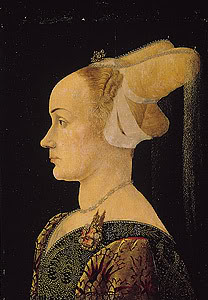
    I wondered about when it was that anonymous portraits appeared.  Not just depictions of people in large battle scenes, or some unidentified spectator of some miraculous something, or wardens of the unknown in some sort of religious icon,  but single subjects seated for a singular purpose of having their likeness rendered.  And at the end of that process, the sitter would be anonymous–not their names-lost-to-history-anonymous after having the title of the painting lost to time, but always-and-forever anonymous.  It seemed to me a luxury for a painter to paint for the sake of painting, that they would paint perhaps for pleasure or for practice, as the practice of purchasing anonymous portraits was not one of high popularity.

    File:Florentine 1475 NG of Victoria.jpg Anonymous portrait of an anonymous woman, ca. 1475

  • A Note on Historically Important Hyphens, Appeared and Disappeared: Space-Time and Czecho-Slovakia

    JF Ptak Science Books   Post 1833   (Part of a series on the History of Lines)

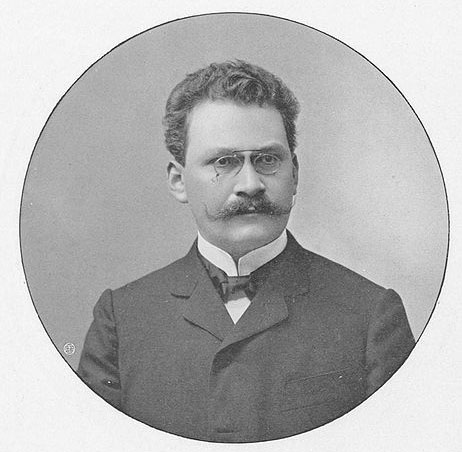
    Minkowski raum-zeitHyphens ( – ) are very old in the history of printing, going back to the lucky Johannes Gutenberg–and much further back than that in practice,  appearing as a gull wing mark to Greek grammarians, though it doesn’t appear as a word, or at least so according to the OED, until 1608. But what I’d like to talk about right now in this blog’s first and probably only hyphenic post is the joining of two words to make a bigger/better word, not an adverb-adjective bit, or a syllabification usage, or as a prefix (anti-, non-, co-, pre- and so on), and definitely not as a way to hide a letter or part of a word (as in “G-d” or “the V- word”). 

    MinkowskiIt might be argued that Hermann Minkowski (1864-1909, Ph.D. under F. von Lindemann at Konigsberg at age 21 and a brilliant thinker who died tragically young of appendicitis)  created one of the most significant/important hyphenated words in the history of hyphenated words. This came about on his paper on the work of former student Albert Einstein’s 1905 STR, a significant contribution to that field and one which helped develop the path to the theory of general relativity in 1916.  The paper (1907/8) was “Die Grundgleichungen für die elektromagnetischen Vorgänge in bewegten Körpern“, published in Nachrichten von der Gesellschaft der Wissenschaften zu Göttingen, Mathematisch-Physikalische Klasse, pp:53–111 (and translated here as”The Fundamental Equations for Electromagnetic Processes in Moving Bodies”, and translated by  Megh Nad Sah), and it was here (on page 63, section five, see above) that the two words were linked for what6 I think was the first time. (The general idea goes back quite some distance, and is very nicely reviewed by R.C. Archibald in 1914 in his article “Time as a fourth dimension” in the Bulletin of the American Mathematical Society, volume 20, page 149, who records that it goes back at least to Jean d’Alembert in 1754 and Joseph Louis Lagrange in his Theory of Analytic Functions (first edition of 1797 and a second in 1813, writing that “One may view mechanics as a geometry of four dimensions, and mechanical analysis as an extension of geometric analysis”), and to Immanuel Kant and William R. Hamilton’s quaternions, and others.)  I am not sure when the term is collapsed (“Space and time”, “Space Time”, “Space-Time”, “Spacetime”, Spacetimes”), but John Wheeler does away with the hyphen in his Spacetime Physics in 1963, though I’m sure the disappearance and conjunctions take place long before that (though Schroedinger was using it in 1950)..  J.A. Isenberg refers to a different set of hyphens for this idea in his 1980 article  “Wheeler-Einstein-Mach Spacetimes”, which appeared in Physical Review (D), 24 (2), 251-256, and which frames another aspect of the, making use of the plural which had appeared some time before.

    Now, on the other end of the spectrum comes a story from the Velvet Revolution of Czechoslovakia–it is another very quick rendition of a complicated history, like the above, but it will serve the purpose as a section in the History of Lines. The Revolution was coincident with the collapse of the Warsaw Pact governments coming with the demise of the USSR, and occurred in November and December 1989. Following the state’s first free, democratic elections, it was faced with what to call itself.  Czechoslovakia, Czecho-Slovakia, Czech-Slovakia–it was a severe issue illustrating the concerns of the Czech and Slovaks, not the least of which was the language identifying whether the sign connecting the two words was a “hyphen” or a “dash”.  There were language and cultural barriers, and what finally happened was that Czechoslovakia ceased to exist, giving way to two states on 1 July, 1993:  the Czech Republic and Slovakia.  The hyphen issue was of course just indicative of much more complex concerns, but minor mirrors like this–and, say, the different names that each side gave to the revolution, the Czechs preferring “Velvet” and the Slovaks using “Gentile”)–and so it all ended in what is referred to as the “Velvet Divorce”.

    ·Posted by :

    ·in:

  • Children at Work, 1934, an Appeal by the Great Dorothy Kenyon

    JF Ptak Science Books    Post 1834

    “There is work that profits children, and there is work that brings profit only to employers. The object of employing children is not to train them, but to get high profits from their work.” –Lewis Hine, 1908

    Children work584

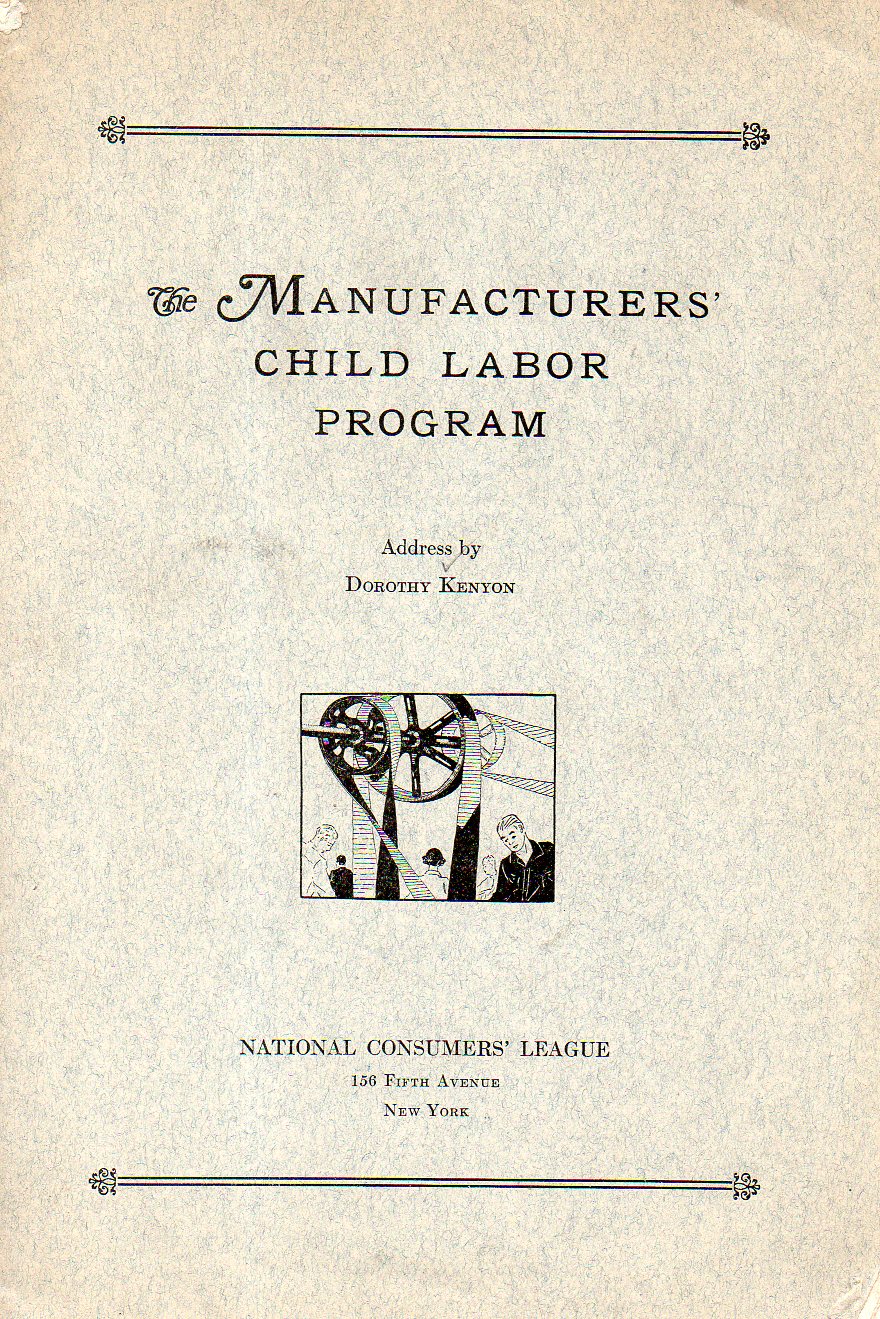
    Children work583This is an appraisal of the working conditions of children in 1934–a third of the way through the century, thirty years before the ‘sixties, not horribly long ago, not of a Dickensian era, not even a Sinclair-Lewis-ian one.  Recent.  The author, Dorothy Kenyon–1888-1972, a feminist, civil rights lawyer, judge, maverick, speaker, activist, and all around force of nature who stood strong and firm and tall while being accused of Commie blather by Joe McCarthy–made  a very strong case for people to take a close look at the still-dismal conditions of child labor in the U.S.

    Exposing the conditions of children, young child, hard at work in 40-75 hour a week jobs may belong to the documentarian photographer Lewis Hine (1874-1940), whose long series of images made between 1908-1917 (and working for the National Child Labor Committee) depicted the varied working conditions of some of the 2 million kids under the age of 16 working in the U.S.  He made photographs, and photographs to this generation of American newspaper and magazine reader were still relatively new-ish, half-tones coming into wide use only in the 1890’s, making short work of speculation.

    Hine–who gives us the quote to lead this short post–was a school teacher and sociologist  who was extremely aware of the plight of the children around him–well, children, and immigrants, and laborers; people without voices, or representation, poor working people.  He was a pioneering photographer whose images of these classes of people were revolutionary, a tremendously important documentarian of a societal symptom that was pretty much misdiagnosed, or at least was chosen as something to not be seen.  That was hard to do when you had actual photographs of the grim situation. 

    ·Posted by :

    ·in:

  • Women in Sports–Early and Vintage Photographs

    JF Ptak Science Books   Quick Post

     I’ve scouted some interesting photographic images of women in sports from the fine New York Public Library Digital Collections (here). They’re mostly from the ‘twenties, though there are some earlier imges from the 1890’s, as well as some later ones from the 1939 World’s Fair. Enjoy.

    Sports - Boxing - Women in Trylon and Perisphere sweaters boxing
  • 36 Great Anatomies, 1390-1899: Great Image Base from the NLM

    JF Ptak Science Books   Post 1835

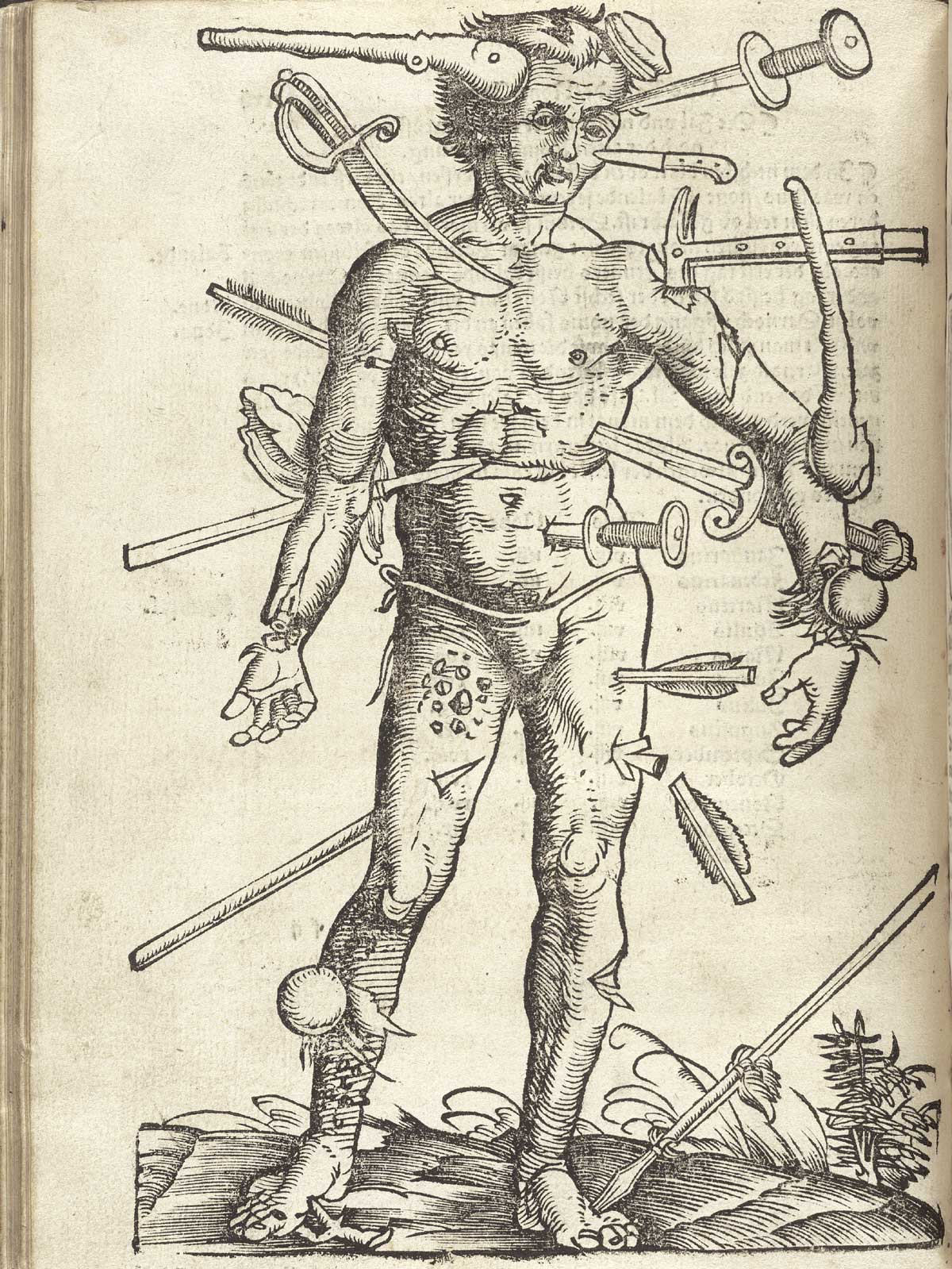
    This table is pulled directly from the National Library of Medicine pages for anatomies on the web–all I did was place the records in a table so that they could be listed chronologically.  The references in the first left-hand column are clickable and will take you directly to the images of the work at the NLM site.  This is just a sampling of anatomies, though it may prove to be highly useful for folks in the science and the arts.  Enjoy. 

    Medical gersdorff_p21v[Image: Hans Gersdorff, Feldtbůch der Wundartzney : newlich getruckt und gebessert, published in 1528.]

    Chronological list.

  • Images of Shadows in Storytelling

    JF Ptak Science Books   Post 1836

    ‘There is seldom in shadow a mystery less hidden”–Ombra Nichts Schatten, The Non-Mystery of the Shadow, London, 1842

    Shadows have long played havoc in the imagination, for good and for evil, for elucidation and of mystery–they have hidden nothing and everything, and displayed as little as possible and as much as can be imagined. A simple shadow in a hole had proved the circumference of the Earth twenty centuries ago, and before that the Earth’s shadow on the face of the Moon showed us to be a sphere; the shadow allowed us to measure the heights of mountains on the Moon before we could do so (accurately) on Earth; we measure shadows in X-rays, and follow the trails of subatomic particles, and on and on.  Shadows are particularly interesting in story telling, whether they be suggested  aurally or in text, or of course in illustration: 
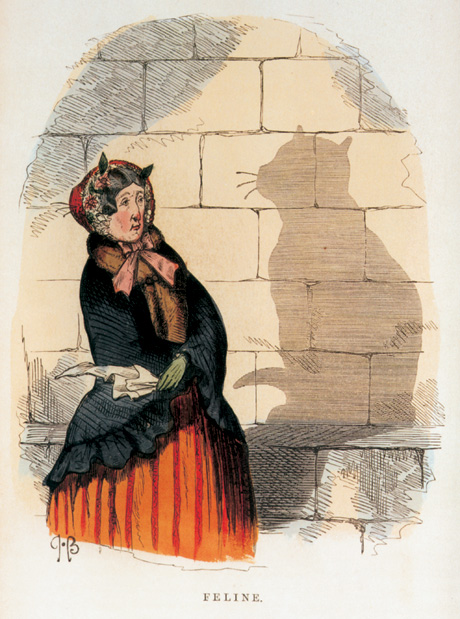
    Chalres H. Bennet, Shadow and Substance, London 1860.

    A superior example of shadow-art is seen in Indonesian shadow puppet theatre, “Wayang Kulit”, where the shadows of Javanese-Indonesian characters are projected onto a cloth screen by a strong light from behind.

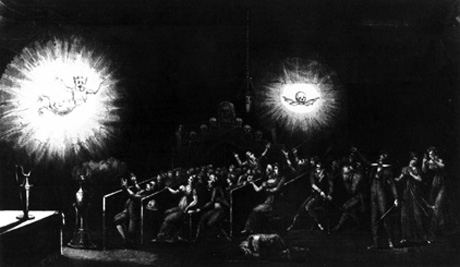
    Audiences were bathed in direct and brilliant light while being swamped in shadow in the early 19th century as part of an early form of non-cinema cinema, as we see here in the frontispiece from Robertson’s Mémoires récréatifs, which depicts a phantasmagoria of lantern projections:
     

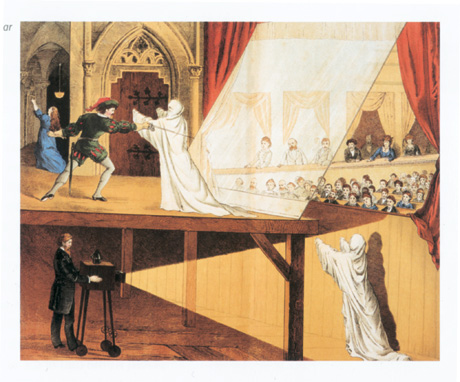
    And more forthright illusions as seen in this engraving showing the spectre “Dr. Pepper’s Ghost,” from Theodor Eckardt, Die Physik in Bildern Eßlingen, 1881:
     

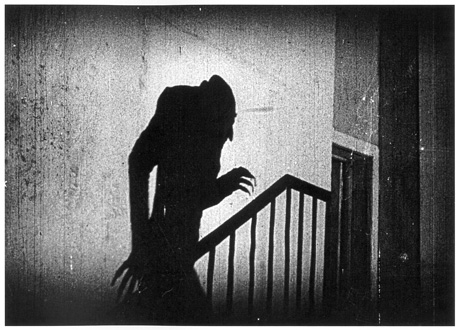
    The shadow may have been invented in cinema by the German Expressionists, with  Friedrich Wilhelm Murnau’s Nosferatu (1919) as a shining example:
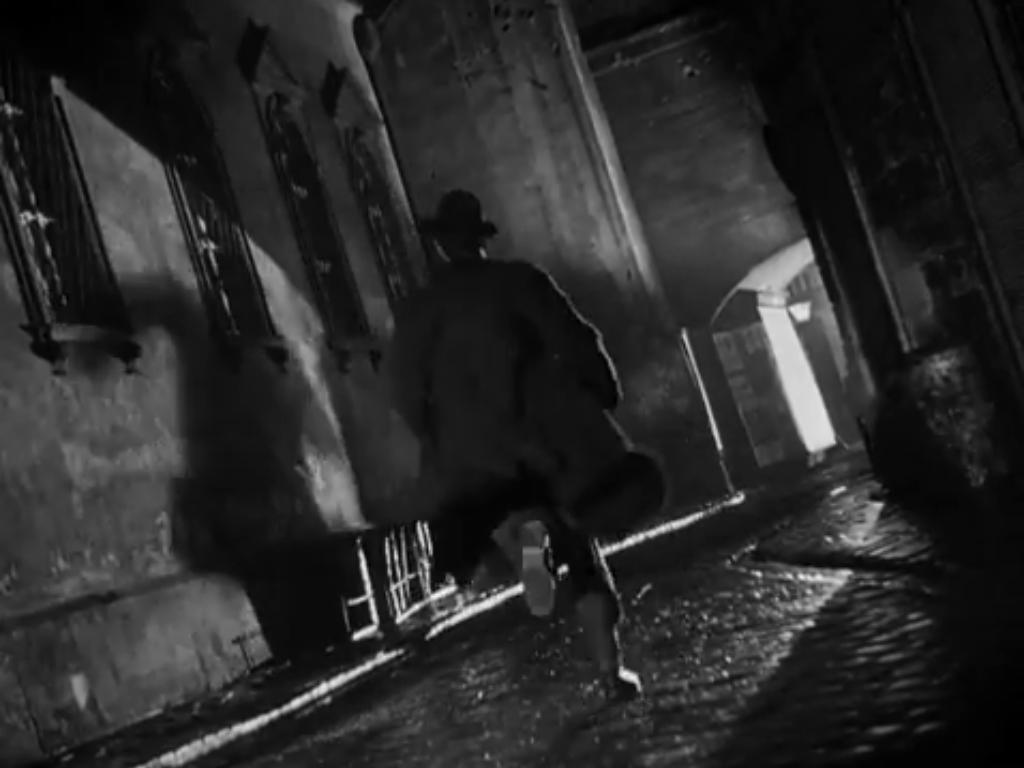
    And of course the shadow is used with great effect in the  very black-and-white and no-gray-tones Film Noir world, particularly in the hands of a master like Mr. Welles in films like The Third Man:
    And in Fritz Lang’s diabolically-bad M, earlier, in 1931 (featuring an impossible shadow in the movie still below):

    Thank heaven for little girls... or would that be hell?


    Shadow has been used to given questionable dimensionality in addition to giving perspective to dimensions that we are familiar with:


    And the artificial shadow made for the geographical clock dial to tell the story of passing time:

    And also for shadow puzzle toys:


    And on and on, deep into the night…


  • Quantum Mechanics: Chronological and Not-Critical Bibliography

    JF Ptak Science Books    Post 1837

    Chronological Bibliography of Quantum Mechanics

    This is a handy and interesting 329-entry timeline of QM placed in chronological order from the article noted below.  I guess it would be easy to start the list with Planck if you wanted to give it a firm footing somewhere, though the history of quantum mechanics goes into development stages long before the 1900 Planck paper.  Be that as it may, this is just a quick exercise, and if an idea was formed or a lost memory found via a quick look at this list, then it is good enough for me.

    References used in “From the origin of quantum concepts to the establishment of quantum mechanics”, by M A El’yashevich, in Soviet Physics USPEKHI, 1977, 20 (8), 656–682.

    SOURCE:  http://www.turpion.org/php/reference.phtml?journal_id=pu&paper_id=5456&volume=20&issue=8&type=xrf


    REFERENCES

    [1] M. Planck, Über irreversible Strahlungsvorgänge, Ann. d. Phys., 1 (1900), 60–122, M. Planck, Trudy 191–233)

    ·Posted by :

    ·in:

    —
  • Chronology of Milestone Events in Particle Physics, 1896-1958

    JF Ptak Science Books   Post 1838

    The data and research and linkage below are taken entirely from the Chronology of Milestone Events of Particle Physics, streamlined and adapted and made a little more accessible (for me) for a fast browse–I’ve had no hand in assembling this data, just re-arranging it. 

    The links are quite valuable–the scientist’s biography is clickable on the name, and the article is reproduced from the original in the pdf. 

    BECQUEREL 1896B 
    Evidence for spontaneous radioactivity effect.  PDF  

    BECQUEREL 1896C 
    Confirmation of the effect of spontaneous radioactivity.   PDF

    BECQUEREL 1896F 
    Uranium radioactivity established.   PDF  

    THOMSON 1897 
    Discovery of the electron, the first elementary particle.   PDF  

    ·Posted by :

    ·in:

Recent Posts

Archives

Categories