A Daily History of Holes, Dots, Lines, Science, History, Math, Physics, Art, the Unintentional Absurd, Architecture, Maps, Data Visualization, Blank and Missing Things, and so on. |1.6 million words, 7500 images, 4.9 million hits| Press & appearances in The Times, Le Figaro, Mensa, The Economist, The Guardian, Discovery News, Slate, Le Monde, Sci American Blogs, Le Pont, and many other places… 5000+ total posts since 2008.
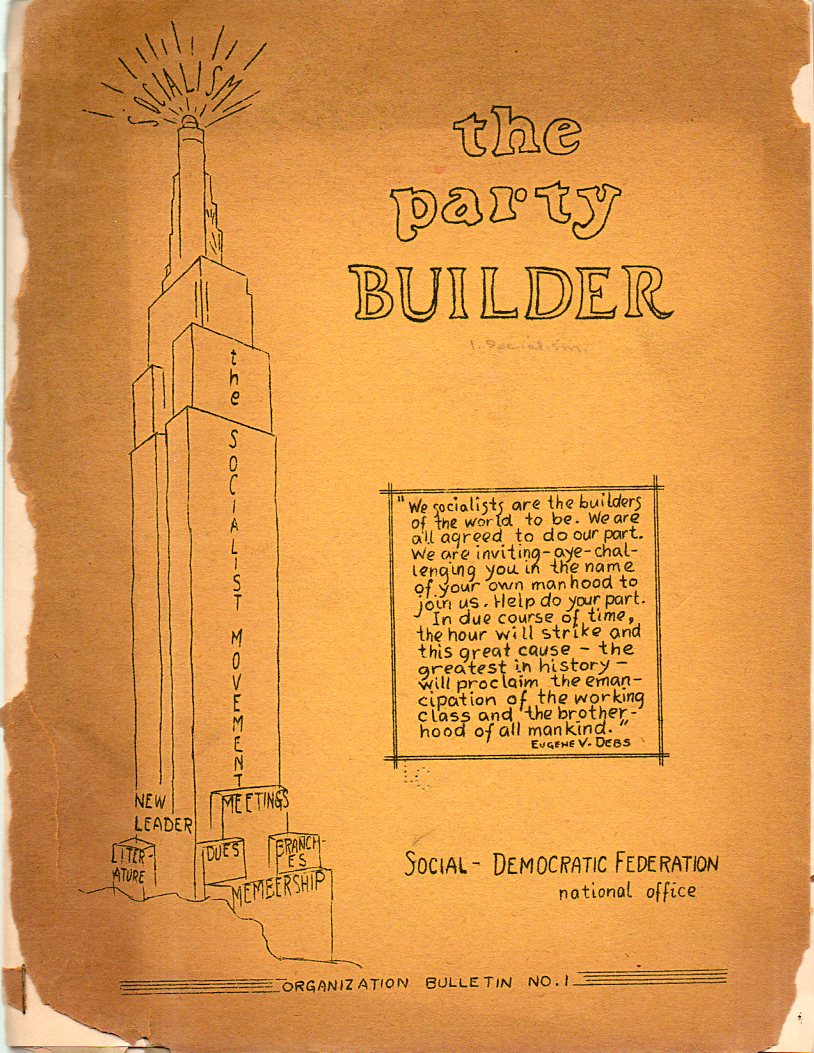
The Part Builder, Organization Bulletin No.1 published inn 1938 by the Social-Democratic Federation’s “national office”, is an odd, semi-Outsider kind of publication, a skinny ingenuous cluster of littleness and naivete and homemade hope. “Socialism” is a beacon of something (light or radio/television waves?) at the top of the Empire State Builind-like structure of the formation of the movement, as we can see in the quick-crude drawing on the left side of the pamphlet’s cover.
Maybe it an odd thing to use the new Empire State Building as a symbol for the movement, maybe not–the SDF was a splinter group that cleaved itself away from the Socialist Party in 1936 because it seems that the SP was too revolutionary/pro-Communist for the old line folks who formed the SDP. So maybe the building stood for something that the Communists and parties didn’t–I don’t know, and I’ve never been very good in following the histories of smallish political parties down their rabbit holes of formulations and re-constitutions and inter-tribal micro-warfare, so I really have no great insight into the symbolism. And perhaps given the rudimentary nature of the publication, maybe the symbolism went only so far as it was a thing that the artist/illustrator could actually sort-of draw.
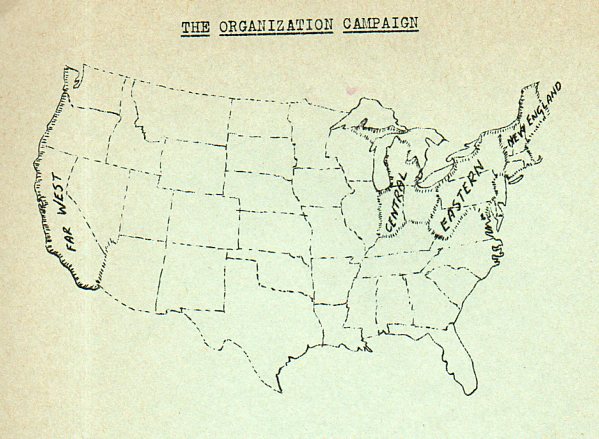
The main object of interest in this sad little pamphlet though was the U.S. map that appears on page two–it is striking in its way, a silent stab at making claim to potential SDF members in a very quietly outlined American map. The regional labels are so small and tentative, and the vast inner ocean of undefined America is so, well, vast, that the map seems more one of timidity than anything else, a whispered revolution.
I’m looking for post #2000–this isn’t it. It is however Quick Post #450 or so, which means that we’re closing in on 2,500 overall posts in this blog since 2008. But there should be something with a little more flavor than baby tanning for #2000.
This is a good/appropriate installment for the Daily Dose from Doctor Odd series. As ideas go, it is not a very good one–but it is not among the Dantean 9th-level-worst. If we classify bad ideas on a six-point Major-Minor scale, from MajorMajor to Major to MinorMajor and then to MajorMinor and then Minor and finally MinorMinor, this one would probably rank at the MinorMajor level. Or maybe even a full Major. It is a bad idea. (An example, by the way, of a full MajorMajor bad idea would be the electropunk centrifugal birthing patent machine, described earlier on this blog, here. Okay, here’s another: on draining the Mediterranean Sea, here.)
There are less invasive ways of ensuring that the correct baby is delivered to the correct parent(s) than tanning the baby’s name onto their body–which doesn’t of course take into account the instances where the baby’s skin is too dark or whatever to be tanned. But the idea of subject a brand-new baby to a tanning lamp as its welcome to the world seems a bit–what?–horrible. Exposure to ultraviolet rays that will cause a six-month brand sounds like it might stir up the melanosome pot to cause damage to organs other than the skin, that it could have been a real assault on the DNA. Also, that metal object on the table looks a lot like a clamp–I hope it wasn’t.
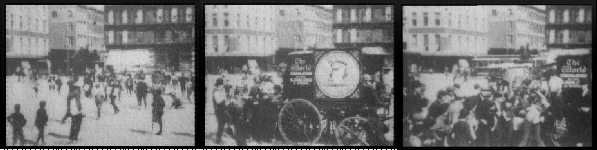
This is a 53-second insight into one of the primary interfaces of the American news industry and the user–the interface being a mode of distribution–in this case, the paperboy. The film’s source is the American Memory Project at the Library of Congress, and is the creation of the American Mutoscope and Biograph Company in 1903. It is filmed in New York City (the LC description guessing that it is Union Square) and shows the delivery wagon for the New York World approaching a drop-off point for the new dailies. (The World, 1860-1931, was published by Joseph Pulitzer at the time that this movie was made.) It is quickly swarmed by the paperboys (along with a few men); the carriage is stopped, and a man begins tossing bundles of the folded paper into the crowd. There is chaos, and confusion; there is shoving, grabbing, pushing, and fighting. Towards the end of the film the boys stand by to watch two other boys in a true fight. It is a visualization of an unpretty memory of youthful competition for the chance to make a few nickels and who wind up being point-men for an enormous news agnecy which must have had little regard for their being. What a weak thing this is.
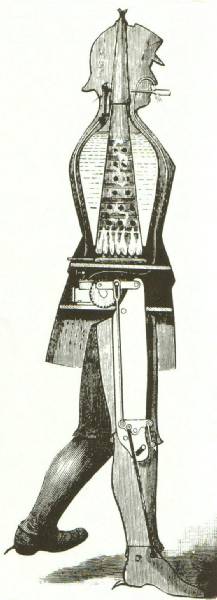
In 1893 George Moore unrolled his papers and derived this wonderful mechanical man, a gas-fired steam-boiler-driven, half-horsepower, six-foot tall 5-mph dromedary. It was made of “heavy tin”, had spikes on its heels for added traction, a fire-funnel surrounded by water and connected in some way to a small but powerful motor. The exhaust of course would exit through the nostrils. Or, in another version, the exhaust would come out via the machine’s cigar.
Earlier than this very striking machine came the 7’9″ steam man proposed by Zadick P. Deddrick. The patent for the invention was granted in 1868, and was made to haul a rockaway carriage, the machine dressed as a man so as to not frighten horses int he street. http://www.davidbuckley.net/DB/HistoryMakers/1868DederickSteamMan.htm
[This is numbered post 2,000–a number that does not include another 500 or so “Quick Posts”–written for this blog since beginning in February 2008.]
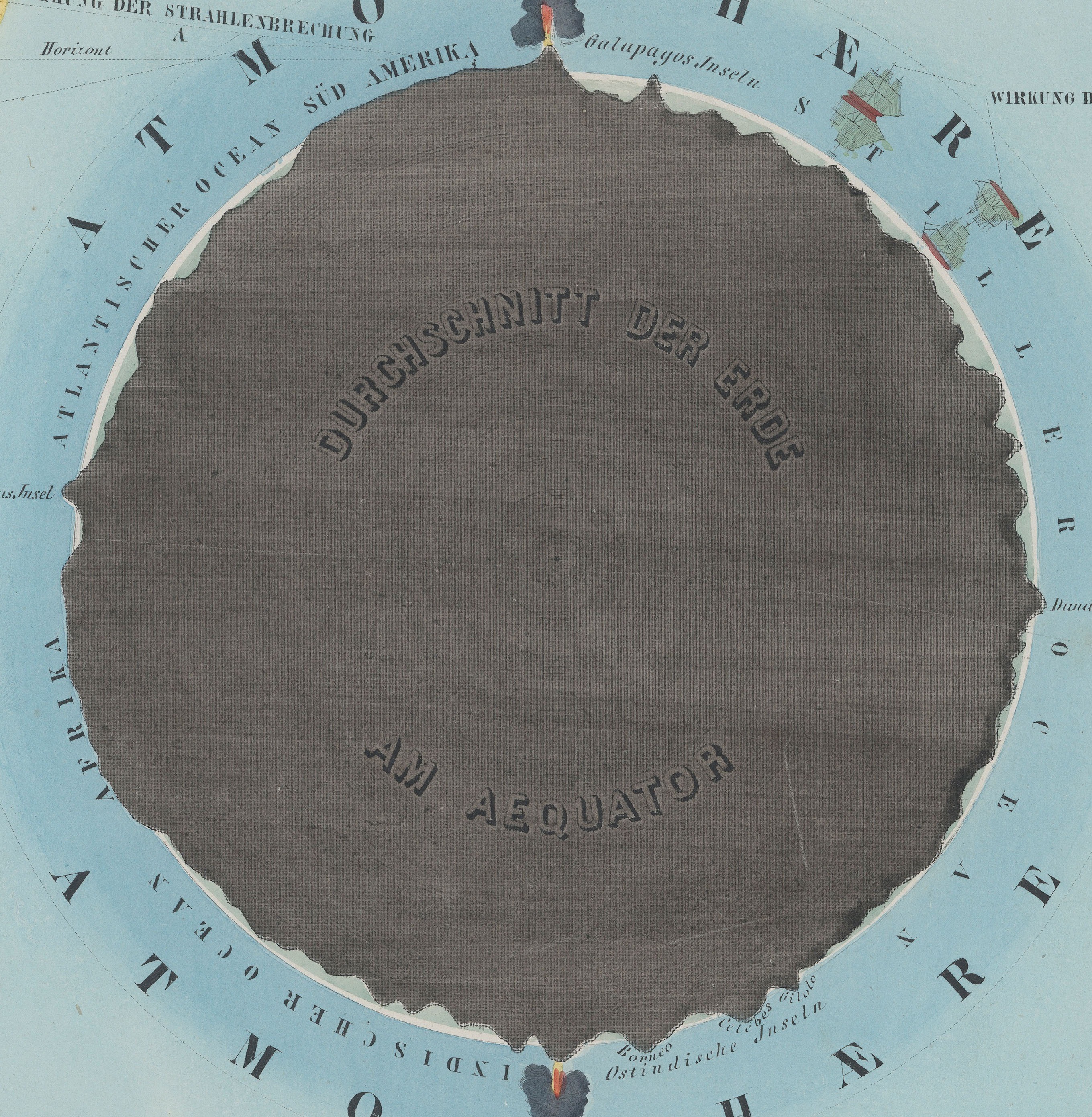
“Der Erde und Ihre Atmosphare” from Astronomischer Bilderatlas, by Ludwig
Preyssinger, published in 1853 (with 12 engraved plates1, following the
first edition of 1840, which had 10 plates). Source: found at Michael Stoll’s flickr set, a superior and large image, here.]
Our older daughter Emma asked that question years ago, when she was six or seven. It was a great question, and one of those questions, really, that only kids can come up with. It is also reminiscent of Ruth Krauss and Maurice Sendak’s A Hole is to Dig, a classic work published in 1952 with these sorts of question/responses, a kid-cratic method of inquiry and answer, that is possible generally only with a younger and fluid mind. (“What is a hole? A hole is when you step in it you go down” and “a hole is to dig” and so on.)
People from long ago certainly knew that clouds were not nearly as high as the Sun and Moon and stars, but how high could they be? How high was the sky? How thick was the envelope of air around the Earth? Exploratory balloon ascents could help that question along, but only somewhat: heights attained in the first 80 years or so of ballooning reached 43,000 feet. (The question of ballooning and the limits of the atmosphere comes up early, as we can see with Jane C. Webb Loudon, the author of the anonymously-published The Mummy!: Or a Tale of the Twenty-Second Century in 1827, interestingly published nine years after Mary Shelley’s Frankenstein: “… and the hampers are filled with elastic plugs for our ears and noses, and tubes and barrels of common air, for us to breathe when we get beyond the atmosphere of the earth.”) In 1803, the record stood at 24,000; in 1835, 26,000; in 1862, 39,000; the record of 43,000 feet was reached in 1927, and at a great cost. On the other hand, more than half of the atmosphere exists at 3 miles above the Earth, and 70% of it is at 5 miles and under; at 22 miles exists about 99% of the atmosphere, and at 62 miles the atmosphere is so thin that it is a virtual vacuum, and is basically negligible. (The exosphere reaches out though to about to about 6,200 miles, but that’s where free moving particles are able to escape the Earth’s gravity and get swept away by the solar wind.)
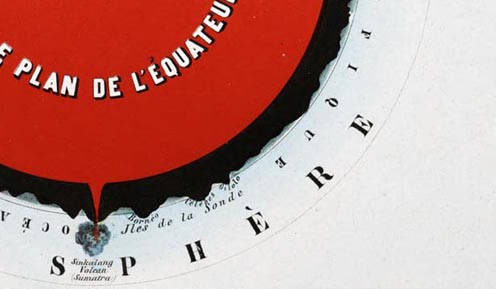
Herr Preyssinger was trying to exhibit this atmospheric density in his illustration #10 to his beautiful astronomical atlas. (I should add here that Preyssinger’s work is a very uncommon production, made so that several of the engraved plates coul dbe held up to a solitary light source in a dark room and be illuminated cut-outs in the paper which also had transparent material on the verso to difuse the light…very smart.) His illustration for the atmosphere was very effective, and was set against a plan of the earth made at the equator. I’ve also included the same plate #10 from a French edition of the same work made slightly later, though the interior of this Earth is colored in a brilliant red.
So when the engraving above was printed in 1862, the balloon ascension record stood at about 5 miles, getting humans to above 70% of the ocean of air.
Relative to humans getting high above the ground, the atmosphere is high; relative to just about everything else–like the 99% at 22 miles compared to the 7,900 or so miles of the Earth’s diameter, the atmosphere is but a thin slip. IF we reached that distance down into the Earth, we would just be touching the outer mantle.
Fromt the French edition, printed in 1862, here. French explanation (Astronomie Populaire ou Description des Corps
Celestes, Astronomie Populaire en Tableux Transparents...., published in
1862) of plate X, here.
Notes:
1. Twelve plates, as follows: Die Central-Sonne und die Ansicht von der Fixsternwelt; Himmelskarte; Darstellung des Sonnensystems; Vergleichende Darstellung der Grösse der Planeten; Die Sonne und verschiedene Erscheinungen derselben; Der Mond durch das Fernrohr gesehen; Transparente Darstellung der Mondsphasen; Finsternisse; Ansicht von den Jahreszeiten; Die Erde und ihre Atomsphäre; Kometen und Aerolithen.
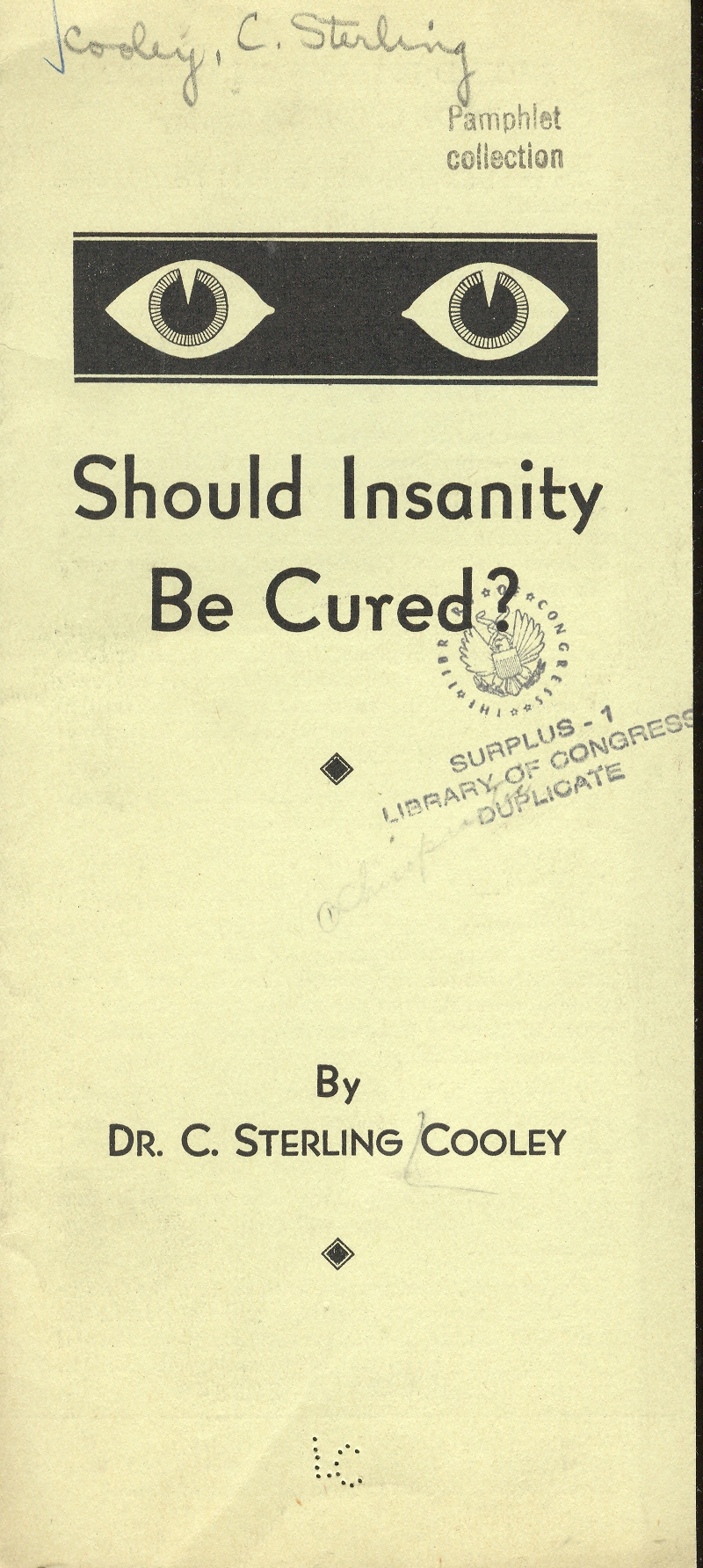
Dr. C. Sterling Cooly wrote an incredibly-titled pamphlet of
slim means called Should Insanity be Cured? How could anyone proceed further than this?Dr. Cooley wasn’t a eugenic apologist, nor
was he an accountant for a life insurance firm—he was advocating a drugless
cure for all different sorts of “insanity”, which was a term he doesn’t really
stop to identify and classify, which of course is deeply problematic.
Or it is so until you hear how one can treat the insane via
his new drugless method: chiropractic.I didn’t see that
one coming.“An insane mind is a sick
brain, a sick body is an insane body” writes Dr. Cooley with leading
confidence, claiming that chiropractic can release “the power within…marvels of
healing are performed not only in mental cases but in virtually ALL forms of
disease”.That’s a lot to live up to in
theory, let alone in practice.
Dr. Cooley was evidently a deeply important founder father of modern chiropractic, with a 50-year career in the area (1908-1957), and who was also very prolific–this is one work that he probably shoud’ve edited out of the publishing phase.
I don’t know why the eyes are so very prominently featured–except I guess to enhance some understanding of the subject area,
I’ve pulled up the first two dozen pieces of baseball sheet music from the American Memory Project at the Library of Congress. Please follow this link to full images and descriptions at the Library site, where there are more than a hundred others.
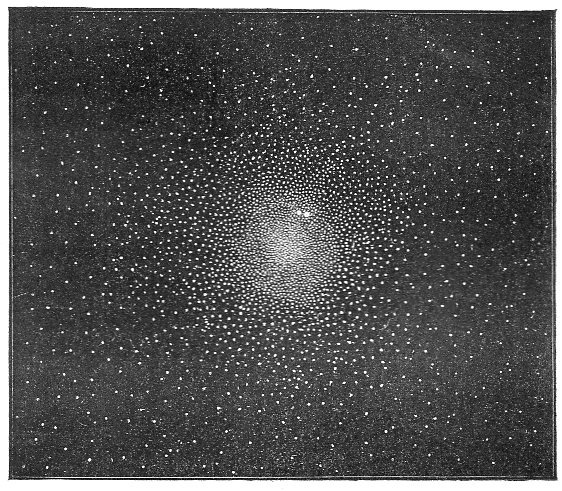
This beautiful engraving appeared in Amedee Guillemin’s Le Ciel: notions d’astronomie a l’usage des
gens du monde et de la jeunesse, which was published
by Librairie de L. Hachette and Company, and printed in 1865 (the
images from which are available here). There are many striking images in this book, and I’ve chosen this one because it has a certain deep depth to it, and relays a complexity and distinctness to something that is generally imaged as being less so, being a massive star cluster and all. The “Amas du Toucan”, known now more familiarly as 47 Toucanae or 47 Tuc (NGC 104), is a bright element in the southern sky, a huge clsuter 120 light years wide and 16,700 light years from Earth, visible to the naked eye in the constellation Toucan (created by Petrus Plancius in 1598 or so). And here it is, in a little 9×8 cm engraving with hundreds of white points as stars, made after an engraving of Sir William Herschel (1738-1822, a German-born Engloish astronomer who–with his sister Caroline and brother John–spent decades observing and recroding stars, double stars, clusters and nebulae).
47 Tuc was first catalogued as not-a-star by Abbe Nicolas Louis de Lacaille (1713-1762), a French astronomer who found it too be too fuzzy to be a single star, and who produced a 10,000 (Southern) star catalog, Coelum Australe Stelliferum, which was published in 1762, and which also introduced 14 new constellations. 47 Tuc made another quck appearance in the great Catalogue des Nébuleuses et des Amas d’Étoiles (“Catalogue of Nebulae and Star Clusters”), a superb and meticulous work by Charles Messier, and published in 1771.
The Guillemin work is simply a lovely and elegant thing–one of many accomplishments in a beautiful and relatively simple book.
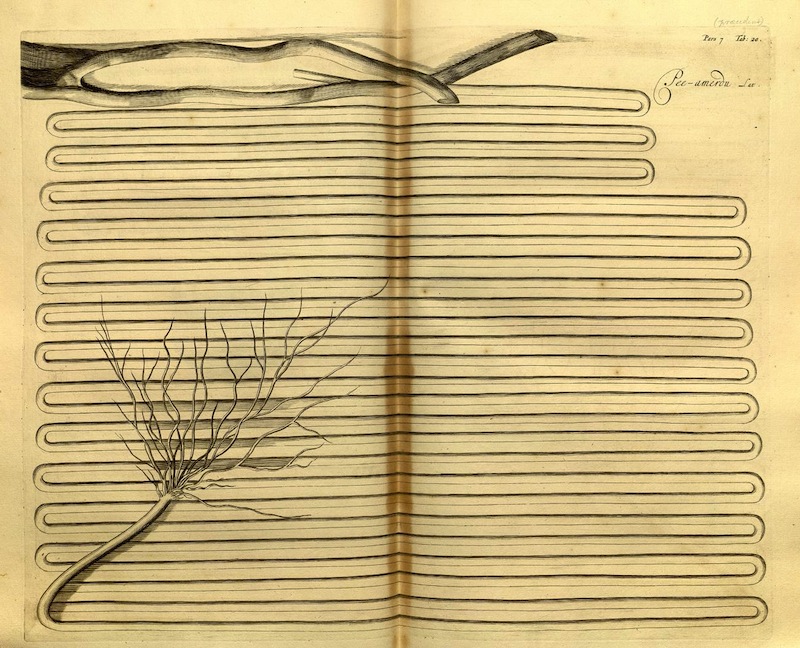
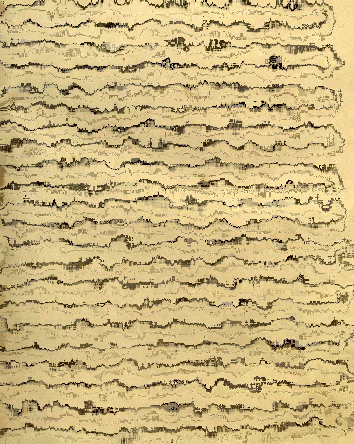
I wanted to share this magnficient image, illustrating the Hortus Malabaricus (“Garden of Malabar:) and found at the great Public Domain Review site, here.
There are many more images in this work, and the PDR links to many more still, but I’ve picked this one probably for all the wrong reasons, selecting it from the graphic aspect, the differentiation of space, the long line. There is a category for The History of Lines on this blog, but it seems that there aren’t many contributions to it, mainly because just about every other thing could classify as such. But this image is certainly remarkable enough to make the category.
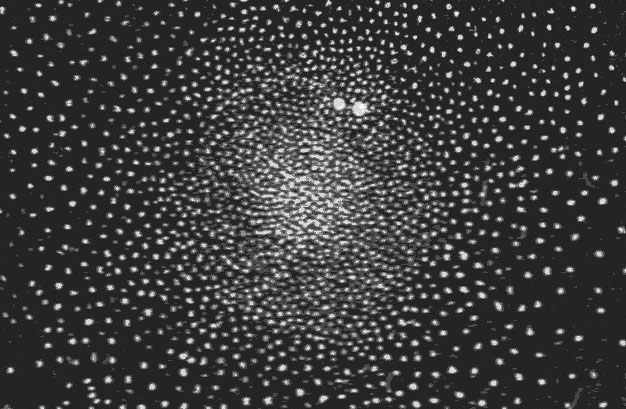
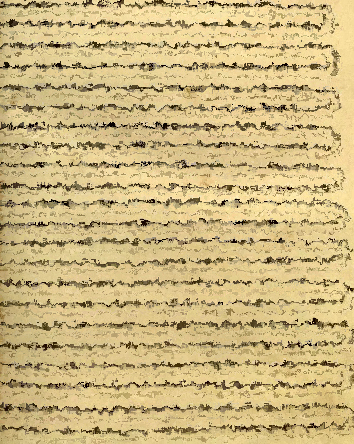
Also, it is a quick four-step process in photoshop to render these lines and their botanical aspect/origin into a star cluster via a progression in the spatter filter. A twist here and a simple turn there could render them the opposite way, from sky above to mud below, going from the star cluster to geology, as in the form of agates, and particualrly the more “living/anthropomorphized” agates of the great/greatly-problematic Fr. Athanasius Kircher.
Step 1 (original detail):
Step two:
Step three:
Step four:
And Fr. Kircher’s agates, which appear from simply heigtening the smoothing application of the splatter in step four, rendering the star cluster so:
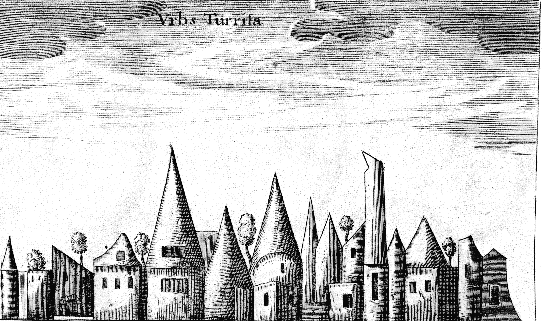
When Kircher looked closely enough at his agates, he saw hidden objects: sometimes a Madonna, other times animals, and still others–and perhaps more famously–town skylines encased in the rock, as with this example from his Mundus Subterraneus (an undefined edition but ca. 1660):
If you looked close enough at the agate-ified Malabar engraving you’ll be able to find a town–and just about anything else.
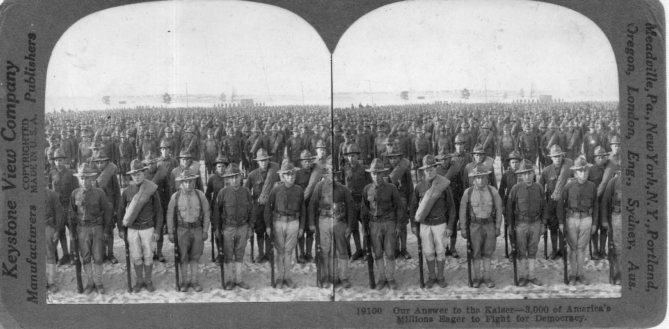
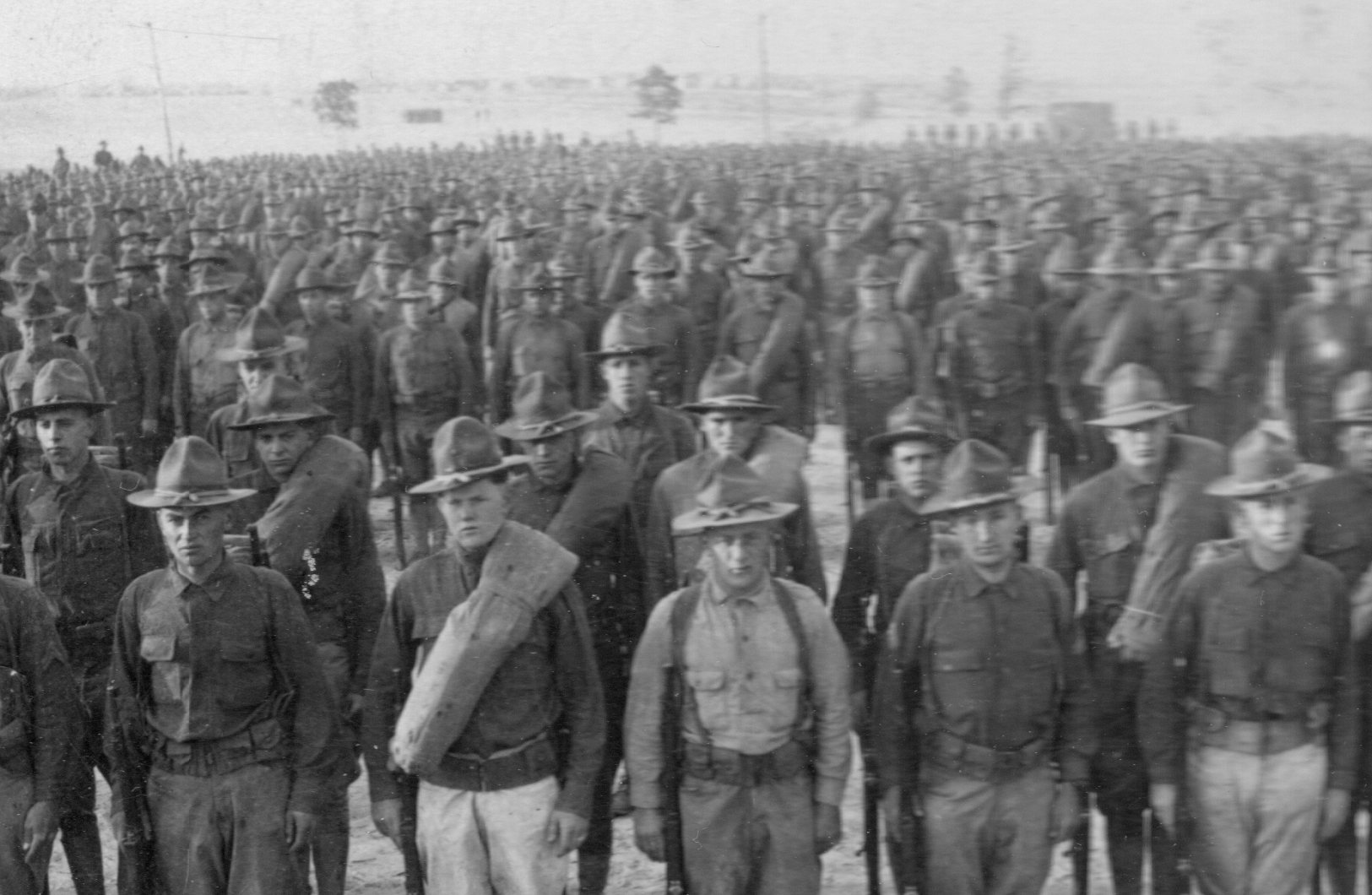
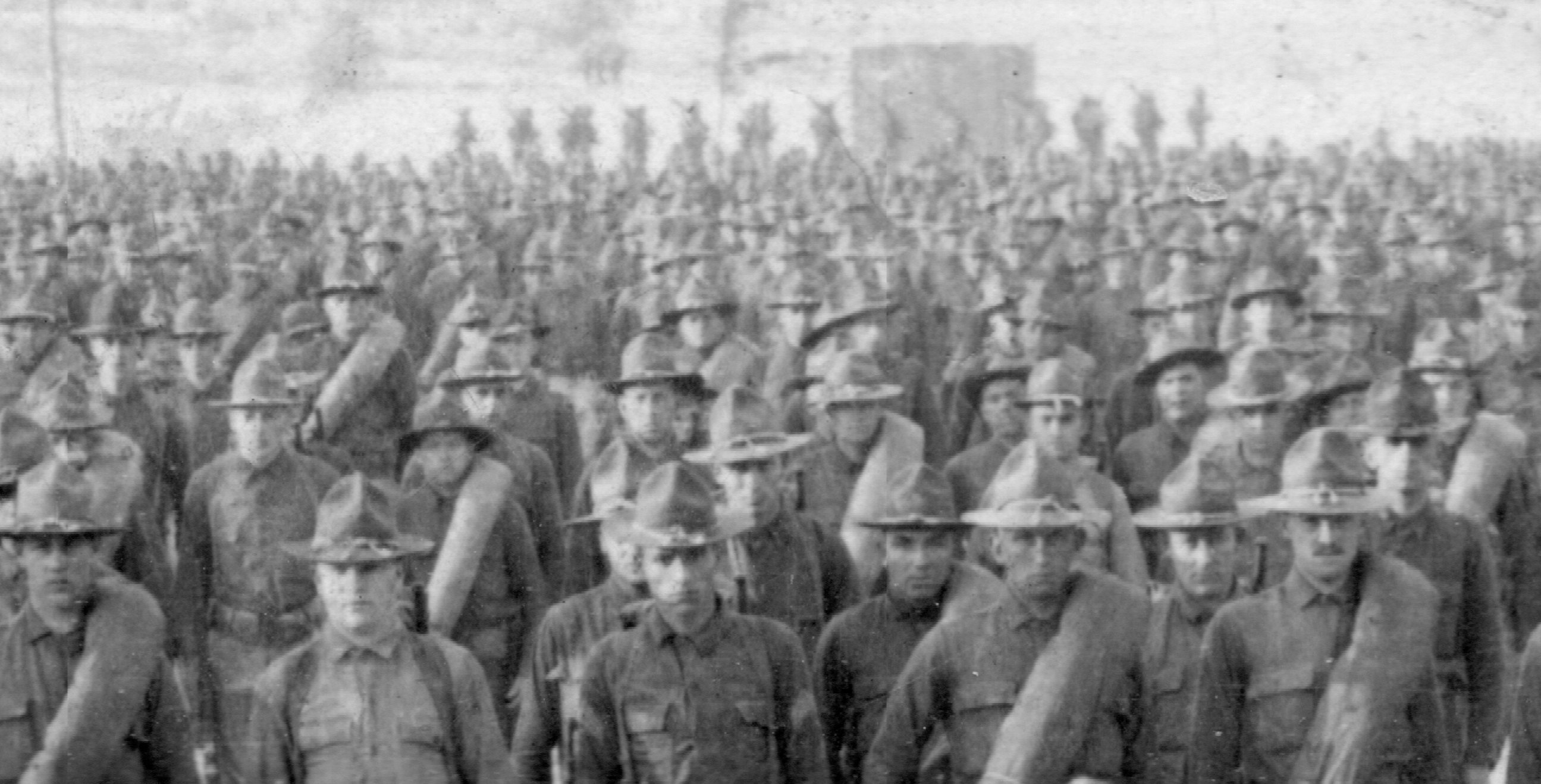
In this stereographic photograph of a group of 3,000 U.S. soldiers (prepared to fight in Europe in WWI, ca. 1917/1918), there is a smaller contingent in two rows, in front, consierably removed from the rest of the formation. This is difficult to see in the first image. However, with a more concentrated view and deeper scan, this is a little more evident, below:
This view still shows the first row of soldiers; that more-distant third row differentiation is much more defined here–the depth of the mass of the formation is starting to really come into focus. The next image shows the heads of the men in the second row, but mostly concentrates on that third row, and beyond:
The final view is just above the heads of the sldiers in the third rank, and more clearly shows the those men in the rear of the formation, including that final rank, which is a profile of men marching. This enlargement represents a section in the original photograph that measures less than 10x6mm–60 square millimeters of great density, complexity, insight, and beauty.
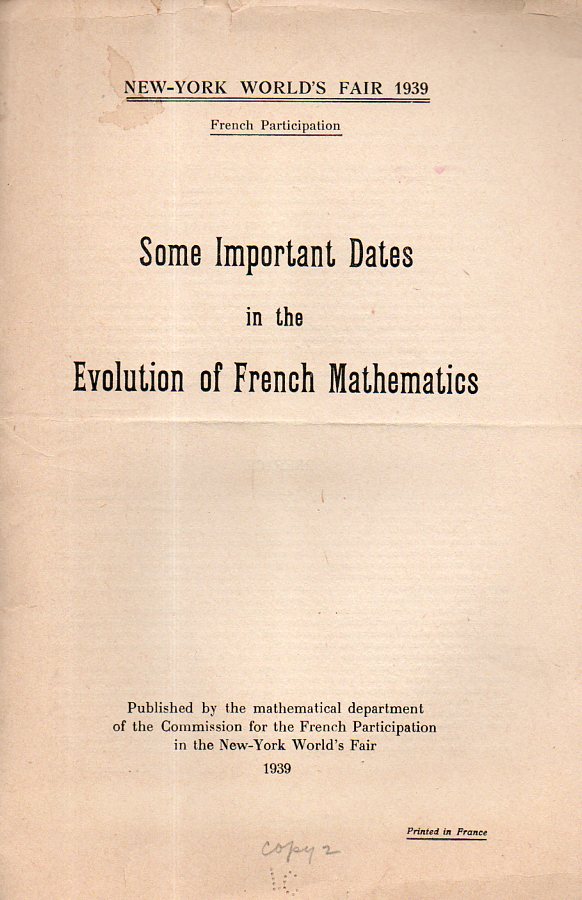
This interesting, unusual, and scarce publication was printed for the New York World’s Fair, 1939, as part of the French pavilion. It is only seven pages long, but its a useful seven pages, and very seldom seen.
 The Part Builder, Organization Bulletin No.1 published inn 1938 by the Social-Democratic Federation’s “national office”, is an odd, semi-Outsider kind of publication, a skinny ingenuous cluster of littleness and naivete and homemade hope. “Socialism” is a beacon of something (light or radio/television waves?) at the top of the Empire State Builind-like structure of the formation of the movement, as we can see in the quick-crude drawing on the left side of the pamphlet’s cover.



![Base ball rag [sheet music]](http://lcweb2.loc.gov/natlib/ihas/service/encyclopedia/200033322/0001t.jpg)