JF Ptak Science Books Post 2003 
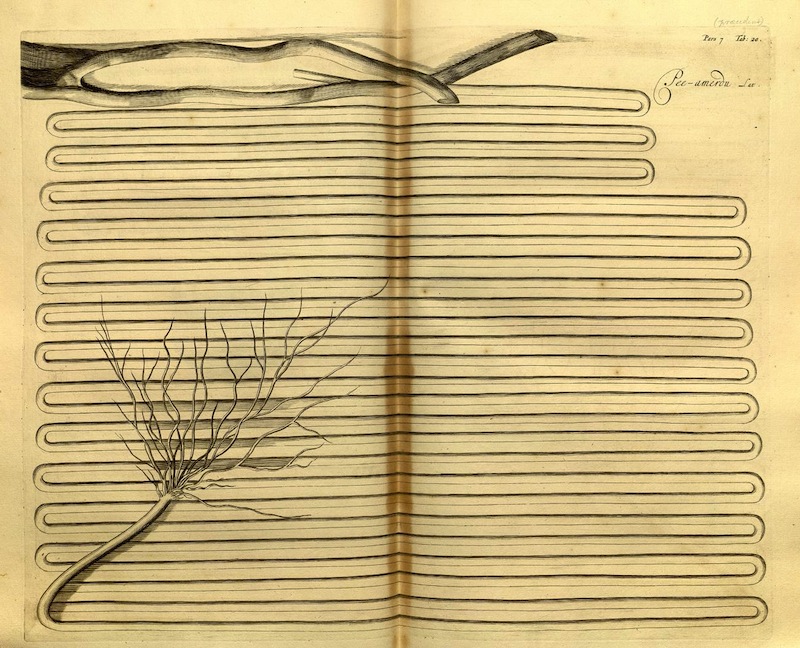
I wanted to share this magnficient image, illustrating the Hortus Malabaricus (“Garden of Malabar:) and found at the great Public Domain Review site, here.
There are many more images in this work, and the PDR links to many more still, but I’ve picked this one probably for all the wrong reasons, selecting it from the graphic aspect, the differentiation of space, the long line. There is a category for The History of Lines on this blog, but it seems that there aren’t many contributions to it, mainly because just about every other thing could classify as such. But this image is certainly remarkable enough to make the category.
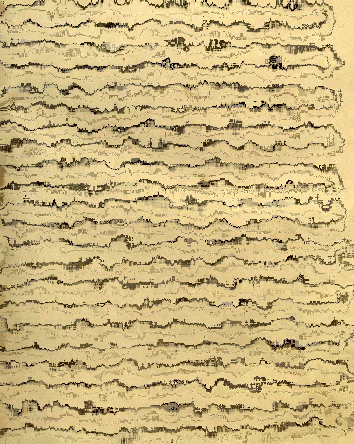
Also, it is a quick four-step process in photoshop to render these lines and their botanical aspect/origin into a star cluster via a progression in the spatter filter. A twist here and a simple turn there could render them the opposite way, from sky above to mud below, going from the star cluster to geology, as in the form of agates, and particualrly the more “living/anthropomorphized” agates of the great/greatly-problematic Fr. Athanasius Kircher.
Step 1 (original detail):

Step two:

Step three:
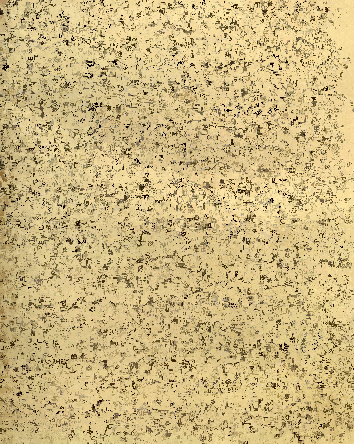 Step four:

And Fr. Kircher’s agates, which appear from simply heigtening the smoothing application of the splatter in step four, rendering the star cluster so:
When Kircher looked closely enough at his agates, he saw hidden objects: sometimes a Madonna, other times animals, and still others–and perhaps more famously–town skylines encased in the rock, as with this example from his Mundus Subterraneus (an undefined edition but ca. 1660):
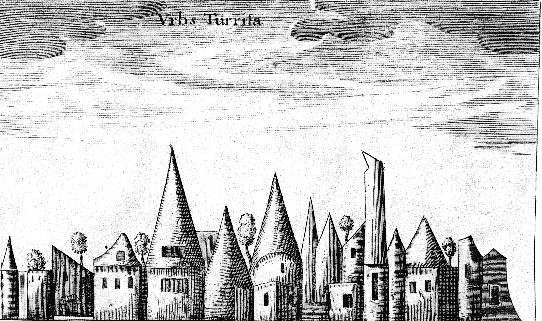
If you looked close enough at the agate-ified Malabar engraving you’ll be able to find a town–and just about anything else.