A Daily History of Holes, Dots, Lines, Science, History, Math, Physics, Art, the Unintentional Absurd, Architecture, Maps, Data Visualization, Blank and Missing Things, and so on. |1.6 million words, 7500 images, 4.9 million hits| Press & appearances in The Times, Le Figaro, Mensa, The Economist, The Guardian, Discovery News, Slate, Le Monde, Sci American Blogs, Le Pont, and many other places… 5000+ total posts since 2008.

  • Statistical Atlases and the Artful Display of Massive Data

    JF Ptak Science Books   Quick Post   

    Follow Me on Pinterest


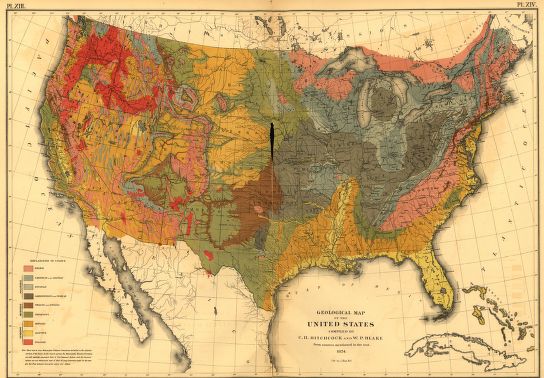
    Statistical Atlas 1870 geo map[Geological map of the U.S. from the 1870 U.S. Statistical Atlas, here.]

    Even though I have used (and owned) these atlases over a long time I’ve never collected them together in any of the 2600+ entries (2036 longer posts and 500+ Quick Posts)  that I have made to this blog.  So today I include links for the atlases in their entirety, as found on the sumptuous site of the Library of Congress. The books are interesting, fascinating, captivating, and beautiful.

  • Europa Agonistes: Maps of States of Agitation

    JF PtakScience Books  Quick Post 


    Follow Me on Pinterest


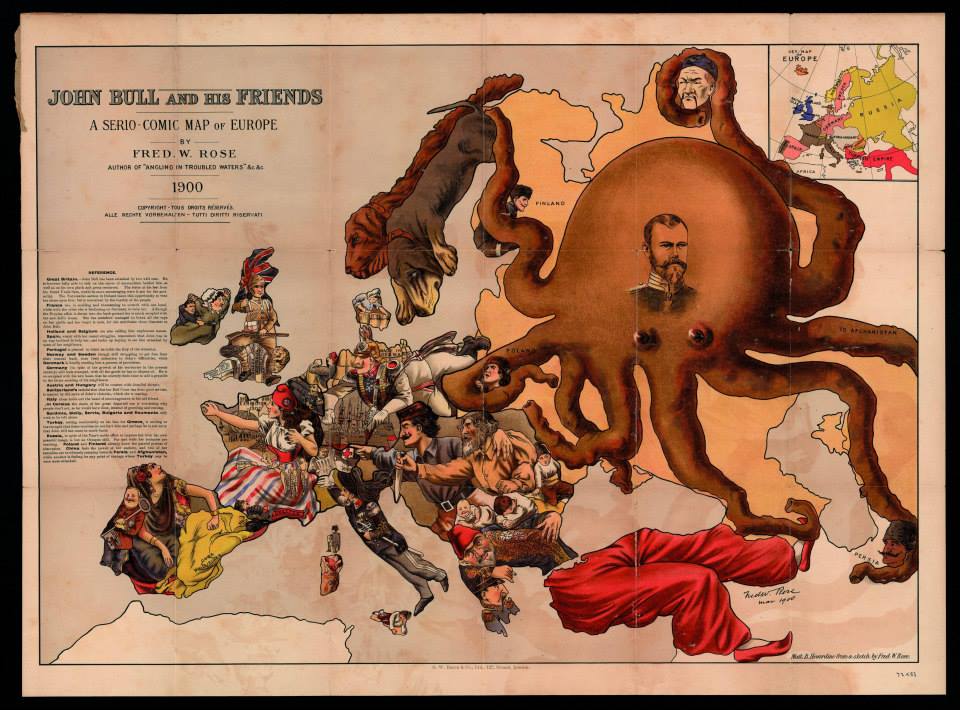
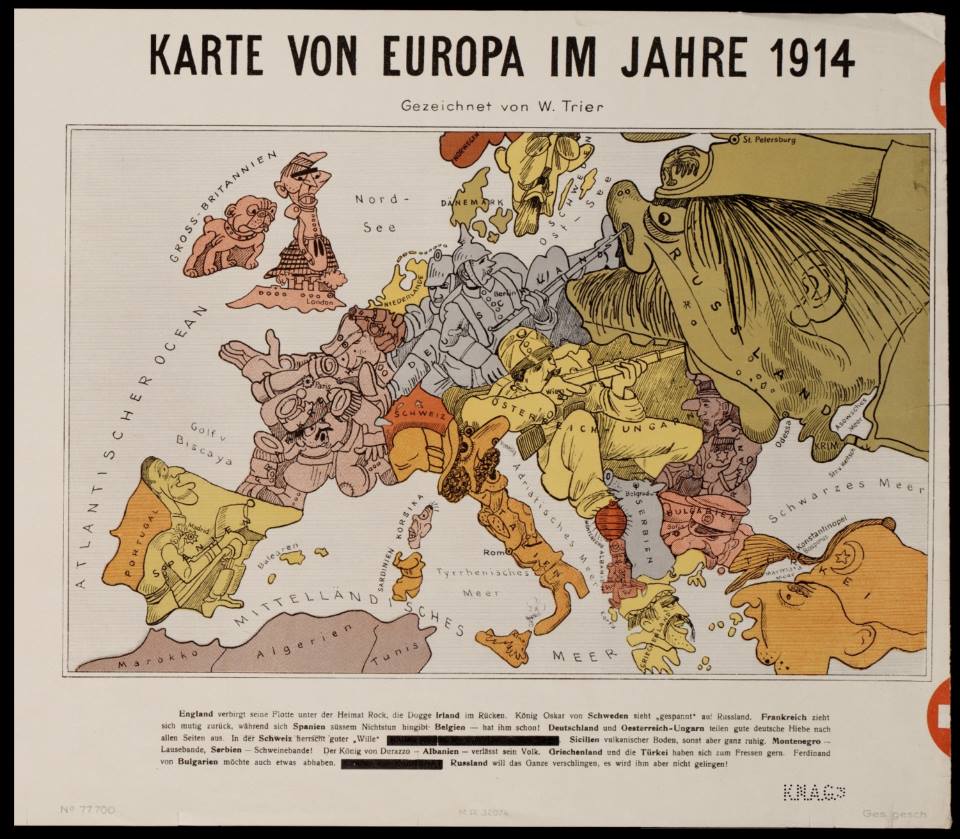
    I’ve collected a dozen maps here showing an animorphization of battlefield Europa over a period of about 40 years, from the Franco-Prussian War to the beginning of WWI.  They are biting and vicious, and no one seem to receive this bitter sword more savagely than the Russians.  The maps basically need no commentary, so I won’t contribute any.  (Thanks to Mark Dylan Sieber‘s Les Curiosites de Cartes, whose Twitter feed started this interest.)

    Europa c

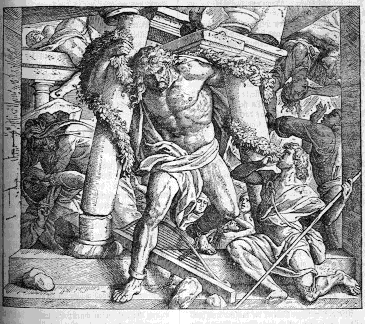
    Thou art become (O worst imprisonment!)
    The Dungeon of thy self; thy soul
    (Which men enjoying sight oft without cause complain)
    Imprisoned now indeed,
    In real darkness of the body dwells,
    Shut up from outward light
    To incorporate with gloomy night
    For inward light alas
    Puts forth no visual beam
    (–John Milton, lines 155–163, Samson Agoniste, published with Paradise Regain’d, 1671)
    Samson


    Europa e


  • Eugenics, War, and Stupid Stuff

    JF Ptak Science Books  Quick Post

    This paper, “The Eugenic and Social Influence of the War” by Prof. J.A. Lindsay, published in The Eugenics Review in October 1918, ends with the words that I will begin this post with:

    “There is some soul of goodness in things evil,

    Would men observingly distil it out”

    It is a paper that seems a logical extension of something from somewhere, and some of the points are common sensical–but the it is published in this eugenics thing, which pretty much dooms it to eugenics and itself. The qualities of some of his opinions are sometimes of lofty incredulity:

    “The loss of life in war is  a question not only of quantity, but of quality.”

    “War, for obvious reasons, tends to depress the birth rate.”

    “A remarkable and unexpected result of the war has been a decided decline in the rate of suicide.”

    “A very unexpected feature of war-time has been the decline of insanity.”

    “Perhaps the most fundamental gain from the war will be interest in education, and the larger measure of attention devoted to it.”

    Somehow here at the end of a war in which since 100 million people were killed or wounded Prof Lindsay seems to have written a piece on that great conflict without being somewhat cognizant of the human value of such loss.

    And that, as they say, is that.

    Full text is located here, at the U.S. National Library of Medicine.

    G.K. Chesterton,. Eugenics and Other Evils, here.


  • Baby Raffle of Paris, 1912

    JF Ptak Science Books  Post 2039

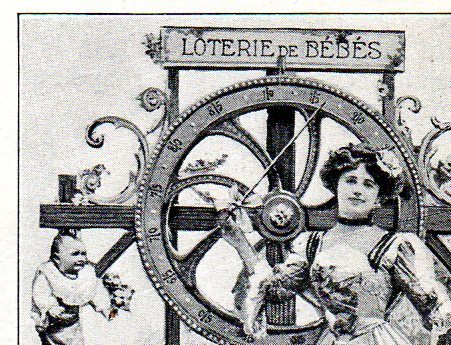
    In the history of raffles and lotteries, tontines and lottos, few would rank so high in the Department of Forbidden Weirdness as this 1912 Parisian lottery of babies.

    Baby raffle351
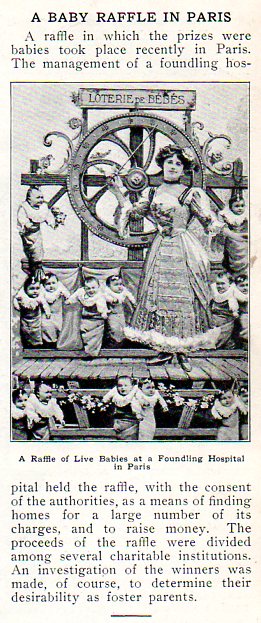
    This image is a detail from the following photograph that appeared in Popular Mechanics for January 1912, and in spite of how this reads and in spite of it being a real-and-true story, it is still difficult for readers in the 21st century to appreciate as a news article rather than a piece of dark fiction:

    Baby raffle350Now the story of the deep history of child abuse and abandonment and infanticide is thousands of years old, and the issue of the rightness of abandoning newborns to the street as a condoned and necessary social activity to ensure the plasticity and survival of a society has been argued by Aristotle and Quintilian  and Pliny the Elder. The movements to provide public institutions to help save the exposed and deserted children really didn’t begin in earnest until the 17th and 18th centuries–that is with Louis XIII and Louis XIV in France and with the creation of the Foundling Hospital in London in 1741.  It is with the creation of these early orphanages that abandoned babies are saved as babies, and although these children would be trained early on to be mechanics’-helpers and domestics at relatively young ages (early ‘teens), they were not subjected to being sent to workhouses as very young children as in the older practices–or being left to die lying in the streets by exposure to the cold or hunger or being trampled underfoot. 

    So.  In comparison with some bitter early histories of the want of tenderness int he care of children, and keeping in mind the great leap forward in the creation of the foundling hospitals and what they represented in the face of not having anywhere for unwanted and impossible babies to go, the idea of the lottery for cute babies in 1912 doesn’t look so bad when placed in its historical context. 

    It is still a very uncomfortable idea and idea, this sort of placement of babies–but with the terrible history of infanticide and exposure not too dimly removed from this time, the lottery seems far less horrible than its antiquarian components. 

  • History of Lines: Lines of Sight

    JF Ptak Science Books   Quick Post   History of Lines 

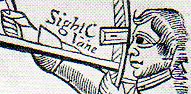
    These are particularly fine and relatively early printed images depicting a specific kind of line of sight–this one, a positioning, rather than a line of sight in fire control, or radial velocity, EM radiation or acoustics wave propagation, or targeting…this instrument was used to establish an imaginary line in perceived objects. 

    Sextant 237This is a detail from Andrew Wakley’s  The mariner’s compass rectified : containing tables, shewing the true hour of the day, the sun being upon any point of the compass ; with the true time of the rising and setting of the sun and stars, and the points of the compass upon which they rise and set … With the description and use of those instruments most in use in the art of navigation. Also a table of the latitudes and longitudes of places, published in 1763 and reprinted many times after that. (Full text is available from Google books and also from the Haithi Trust which offers a text version of the book as well.)

  • Deep Depth: the DepthScraper or Deadscraper of 1931?

    JF Ptak Science Books Quick Post  Part of the History of Holes series

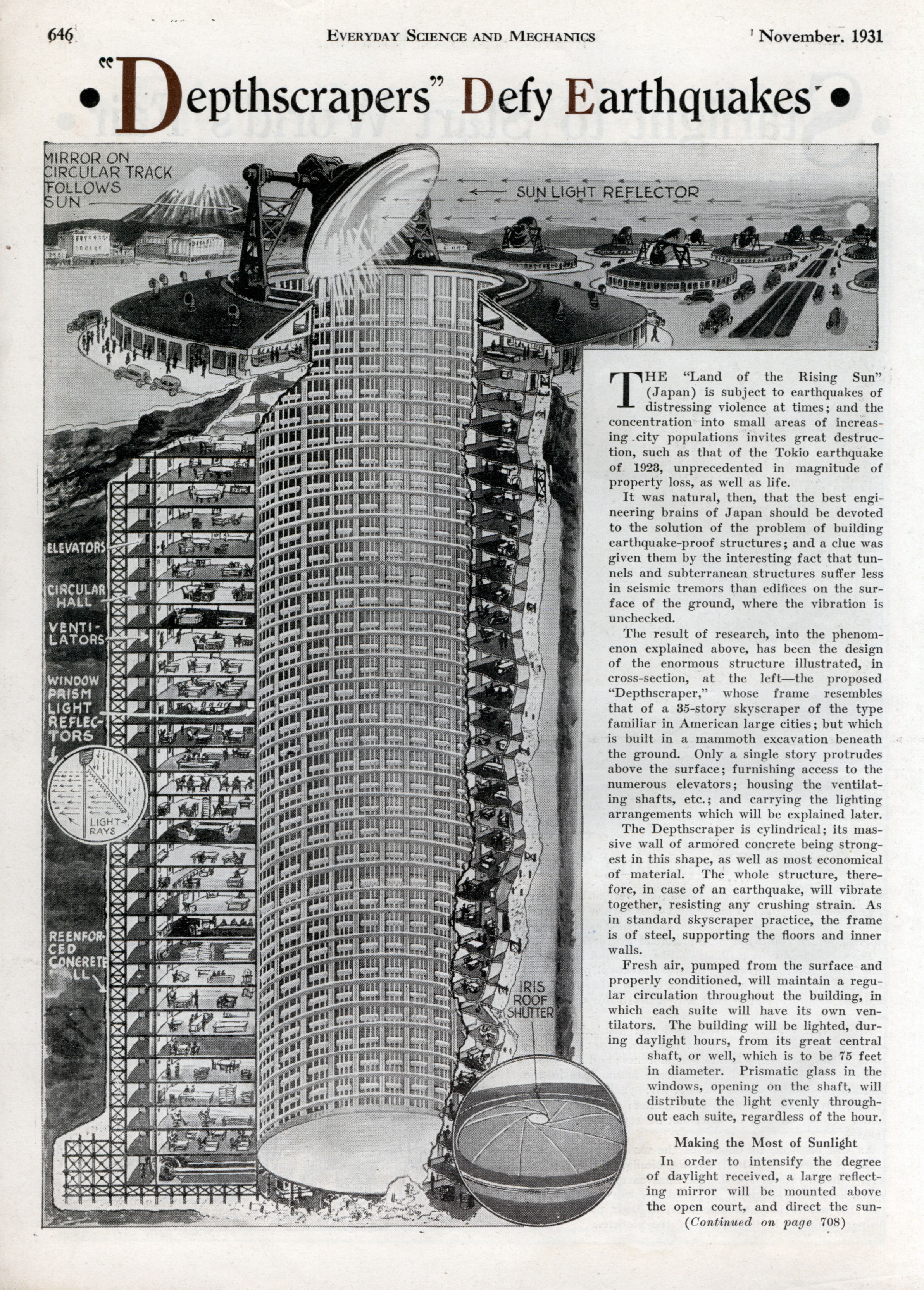
    I’m more interested in how this hole was dug and how it got filled up again than in what is filling it.  I estimate the “filled” aspect of this reverse-and-inside-out-upside-down monastery to be about 25,000,000 cubic feet, or about two-thirds of the volume of the Empire State Building (which was just being constructed when this article was published).  The 40-storey building would about 500′ low, and the surrounding supporting structures seem to make the whole of it at least 75′ in diameter–finished.  That makes for a big hole in the digging of the thing, substantially multiples the volume of the Empire State Building removed in order to achieve the construction needs.  That is a lot of dirt.

    Underground depthscraperAnd so how do we remove the dirt/rock from the 450′ level of a 75′-wide hole in 1931?  I doubt that  it is being hauled out by crane systems, and the hole is certainly wider than 75′ at  the bottom.  I guess these questions could only be answered with the information on what the material is that these folks would be working with.  But suffice to say–it would be a big project.

    Also:  I don’t know why this structure would be “earthquake proof”, though that is the impetus behind the construction of this monster–the Japanese architects who dreamed this building still had the 140,000 deaths of the 1923 Great Kantō earthquake fresh in their minds.  The building looks like it has the capacity to sustain major damage in an earthquake, making it perhaps a flaming and inescapable tomb. It would certainly make a neat if not inexpensive cemetery.

    [Image source: Popular Mechanics, 1931, from the great Modern Mechanix site–http://blog.modernmechanix.com/depthscrapers-defy-earthquakes/]


  • Spacetime Singularities and Gravitational Collapse: Skeleton Lists of Major Publications

    Here are two useful sets of biblographic references to publication on black holes.  Mostly it is cobbled together, except for part two (the chronological part) which is taken from the University of London, Queen Mary College, School of Mathematical Sciences site and streamlined a bit for quick reference. 

    (1) Spacetime Singularities and Gravitational Collapse

    (Alphabetical)

    H. Bateman, The transformation of coordinates which can be used to transform one physical problem into another, Proc. London Math. Soc. 8 (1910), 469-488.

    E. Cartan, Sur les espaces conformes généralisés et l’Univers optique, C. R. Acad. Sci. Paris 174 (1922), 857-859.

    E. Cartan, Sur les variétés à connexion affine et la théorie de la relativité généralisée I; I (suite); II, Ann. Sci. École Norm. Sup. 40 (1923), 325-412; 41 (1924), 1-25; 42 (1925), 17-88.
    1983. 

    ·Posted by :

    ·in:

  • An Alphabet Defining the Letters of the Alphabet

    JF Ptak Science Books   Post 2040

    The energy of Dr. Johnson must have been heroic–had to have been.  In addition to all of his other work, he sat down and wrote a dictionary–the first of its kind for the English language: A Dictionary of the English Language, which was printed in 1755.

    Samuel johnson2
    I’ve collected what he had to say about the letters of the alphabet, which is in itself a small and remarkable thing of sweep and brevity.  He sites the “labial” P, the “canine “R”, the unhappy hissing of S, the “note of aspiration” in H, and so on, in a forceful march to recording the language.  His book is a work of high beauty. 

    All of the material below comes from the JohnsonDictionaryOnline site, here.

    ~ A ~

    A, The first letter of the European alphabets, has, in the English language, three different sounds, which may be termed the broad, open, and slender.

    The broad sound resembling that of the German a is found, in many of our monosyllables, as all, wall, malt, falt; in which a is pronounced as au in cause, or aw in law. Many of these words were anciently written with au, as sault, waulk; which happens to be still retained in fault. This
    was probably the ancient sound of the Saxons, since it is almost uniformly preserved in the rustic pronunciation, and the Northern dialects, as maun for man, haund for hand.


    ·Posted by :

    ·in:

  • Isolated Crowds & People in Crowded Isolation

    JF Ptak Science Books  Quick Post  Daily Dose from Dr. Odd

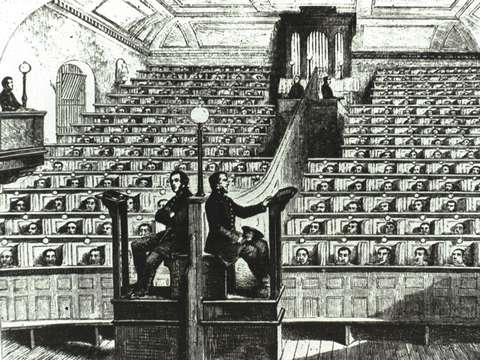
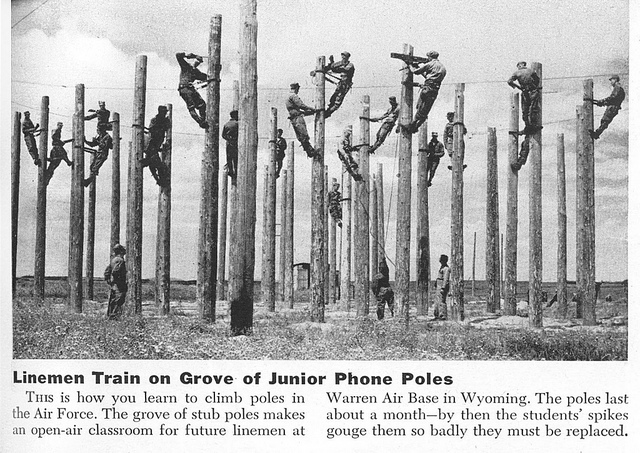
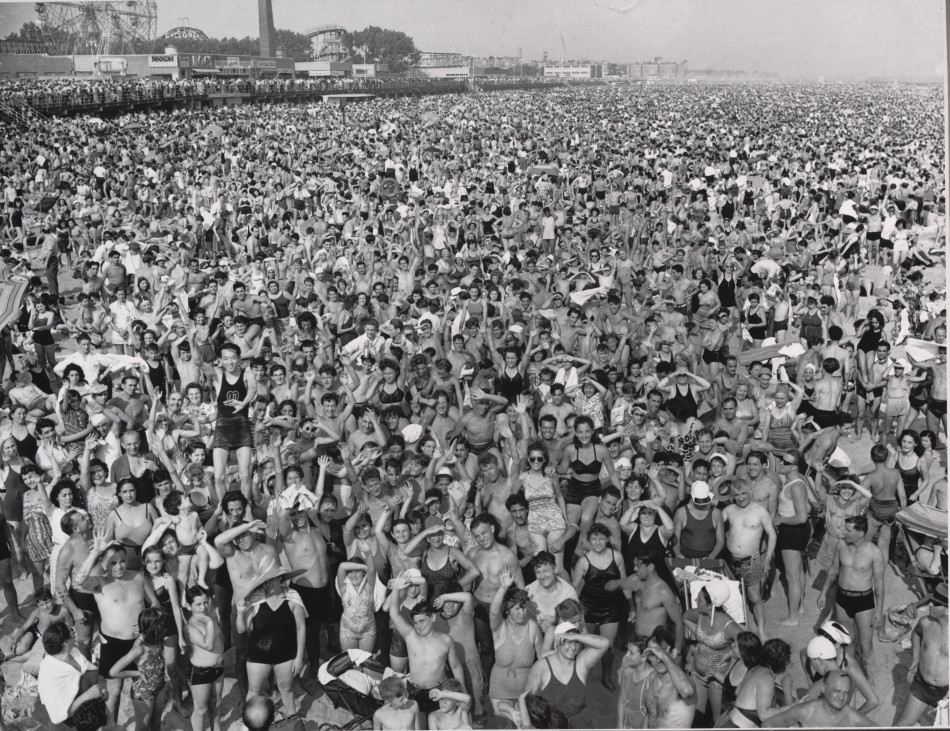
    There are crowds and then there are crowds, crowds that are big and filled with people, and then crowds that are filled, but somehow strangely not with people even though they are there–large groups of isolated people.  These photos show up now and again, as they did today–I gathered four examples, below.

    Isolated crowds

    [Student nurses, Roosevelt Hospital, New York City, 1938. Found at the Pinterest collection of Christian-Paul North, here]


    Crowd isolated prison
     This image is of a church or social service at Pentonville Prison in 1855. 

    Crowded and lonely

    Lonely hatted man in a very large crowd on Coney Island, Brooklyn, U.S.A, as captured by Weegee, ca. 1950.  Weegee_-_Coney_Island-big (The Hat Man is at the extreme bottom right corner.)


  • ThinkPunk–Monster Engineering and Ships in Tunnels, on Bridges, and Along Rail Lines

    JF Ptak Science Books    Post 2041

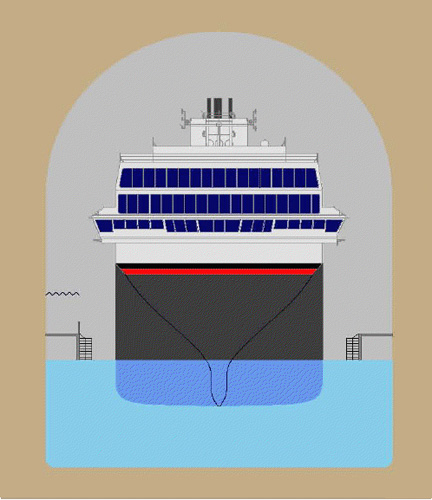
    Full and massive and creative engineering dreams are the stuff of rich possibilities and the created demands of the created future.  Sometimes they lead to the wonderful and essential, and sometimes they don’t–pieces of these ideas may go places and lead full lives, but the overall big picture may have been just a little (or a lot) too big.  The later may be the case for these ideas below–they include outlines for a trans-Atlantic ship tunnel (1927), the Cotherell/Eads 130-mile overland railway transport for transit across the Tehuantepec isthmus in Nicaragua, monumental masonry bridges supporting a car in which a battleship was driven, and others. 

    Ship tunnel

    [Cross-section of the Atlantic Tunnel, found in Luigi Motta, Il tunnel sottomarino, published in Milan in 1927, and found while reading in the magnificent Dictionary of Imaginary Places by Alberto Mangule and Gianni Gudalupi/]

    This is the story of a mostly-submarine adventure, due to the work of  a French engineer named Adrien Geant, who constructed a mostly-floating 4,700 km tunnel connecting Europe to America.  Problems ensue and the tunnel fails, the resulting adventure of the survivors taking them to Atlanteja, which was a lost city constructed by the survivors of the lost city of Atlantis.  Anyway, it is an interesting story of engineering, as the ideas behind the design of the tunnel were pretty good.  The book was written by Luigi Motta (1881-1955), a man of active mind who wrote over 100 adventure/sci-fi stories.

  • Daily Dose from Dr. Odd: Landing an Airplane by Backing Up

    JF Ptak Science Books  Quick Post   Daily Dose from Dr. Odd series


    Follow Me on Pinterest

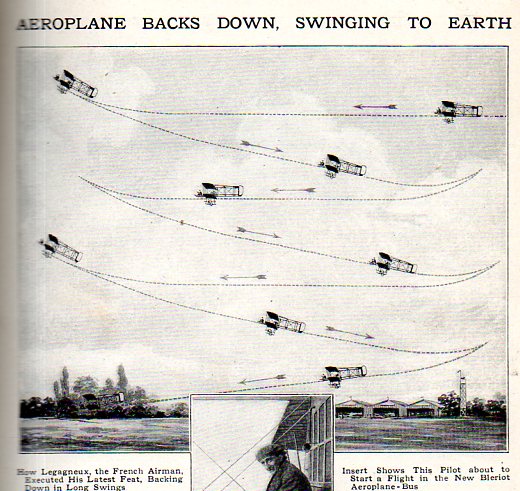
     There is no official “Well, I’ll be Damned Department” on this blog but if there was one this small discovery would certainly be an excellent candidate.  I don’t know enough about the aerodynamics of first-decade powered flight aircraft, but it seems as though this could be an alternative way of landing.  It seems not to be the desired way to bring in your plane, though, looking way more problematic than is necessary.  That said, I’ve never seen flight instructions like this before. 

    Aeroplane backup356
    [Source:  the ever-fascinating Popular Mechanics, February 1912, page 373.]

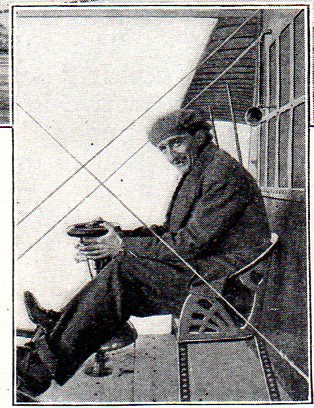
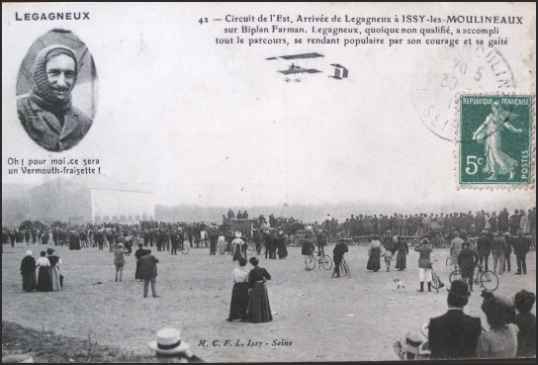
    Aeroplane backup357This is the pilot, Georges Legagneux (1882-1914), happily at the minimal controls.  Another image, courtesy of Early Aviators, of the pilot in action: 

    Aeroplane legagneux
    Legagneux would die pursuing his passion in 1912. 

Recent Posts

Archives

Categories