A Daily History of Holes, Dots, Lines, Science, History, Math, Physics, Art, the Unintentional Absurd, Architecture, Maps, Data Visualization, Blank and Missing Things, and so on. |1.6 million words, 7500 images, 4.9 million hits| Press & appearances in The Times, Le Figaro, Mensa, The Economist, The Guardian, Discovery News, Slate, Le Monde, Sci American Blogs, Le Pont, and many other places… 5000+ total posts since 2008.

  • A Census of Everything Bartleby Said (“Who Never Spoke but to Answer”)

    JF Ptak Science Books    Post 2043    
    Follow Me on Pinterest

    [This post is included in the History of Blank, Empty and Missing Things series.]

    “Bartleby the Scrivener, a Tale of Wall Street”, is a well-known, much-loved and magical/dark short story written by Herman Melville in 1853 (in two installments in Putnam’s Magazine). For a major figure in the history of American literature, Mr. Bartleby has generated a lot of scholarship, in spite of the briefness of the piece, and the very scant information we have from Bartleby himself.  He never lets us into his mind, himself, and we have just the barest glimpse into what drives him through his spoken words–we find out what we know of him through his self-appointed-friend and employer, who writes:

      “I now recalled all the
    quiet mysteries which I had noted in the man. I remembered that he
    never spoke but to answer; that though at intervals he had
    considerable time to himself, yet I had never seen him reading—no,
    not even a newspaper; that for long periods he would stand looking
    out, at his pale window behind the screen, upon the dead brick wall;
    I was quite sure he never visited any refectory or eating house;
    while his pale face clearly indicated that he never drank beer like
    Turkey, or tea and coffee even, like other men; that he never went
    any where in particular that I could learn; never went out for a
    walk, unless indeed that was the case at present; that he had
    declined telling who he was, or whence he came, or whether he had any
    relatives in the world; that though so thin and pale, he never
    complained of ill health. And more than all, I remembered a certain
    unconscious air of pallid—how shall I call it?—of pallid
    haughtiness, say, or rather an austere reserve about him, which had
    positively awed me into my tame compliance with his eccentricities,
    when I had feared to ask him to do the slightest incidental thing for
    me, even though I might know, from his long-continued motionlessness,
    that behind his screen he must be standing in one of those dead-wall
    reveries of his.”

    For all of his influence, Bartleby spoke only 32 times, and used 246 words, only 55 of them are unique carriers–the the rest are repetitions, especially in the first half of the story, and then particularly with the use of the word ‘prefer” in the famous “I would prefer not” and “I prefer not” phrases. (I looked at this earlier in this blog in the post “A Census of “Prefer” in Bartleby.)

    IT would be an interesting exercise to write in the spirit of Bartleby and use only those words that he spoke in the story. To paraphrase Mark Twain, “if I had more time I would have written a shorter letter”–it would take a bit of an effort to turn out a good story using just these words; after all, Dr. Seuss used 236 to produce A Cat in the Hat (and brilliantly so). 

    The Different Words Spoken by Bartleby:

  • History of Blank, Missing and Empty Things, Part 66: The Response to Hope

    JF Ptak Science Books  Post 2045  Part of the series, a History of Blank, Empty and Missing Things

     
    Follow Me on Pinterest

    Outsider Hauck DETAIL

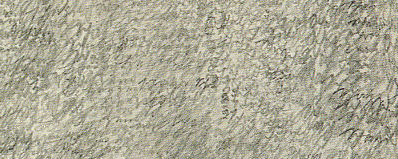
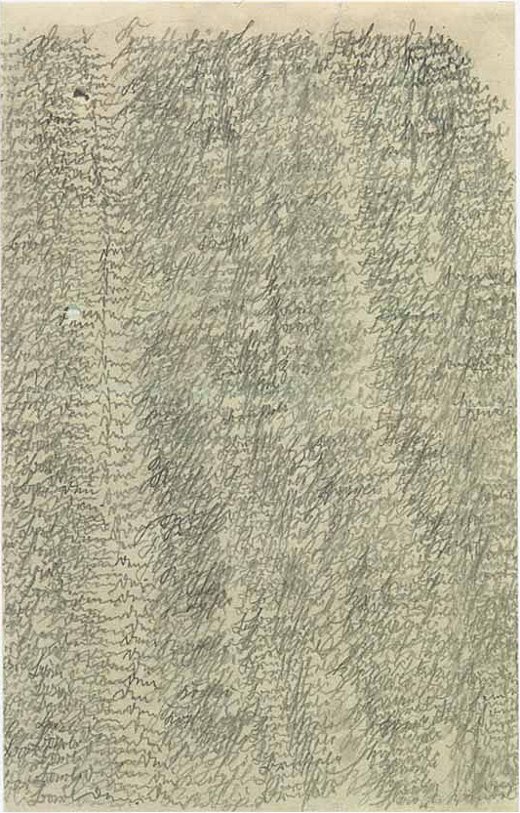
    This is a detail from an image of great hope lost.  Here’s the full picture, one of many, one of hundreds similar to it:

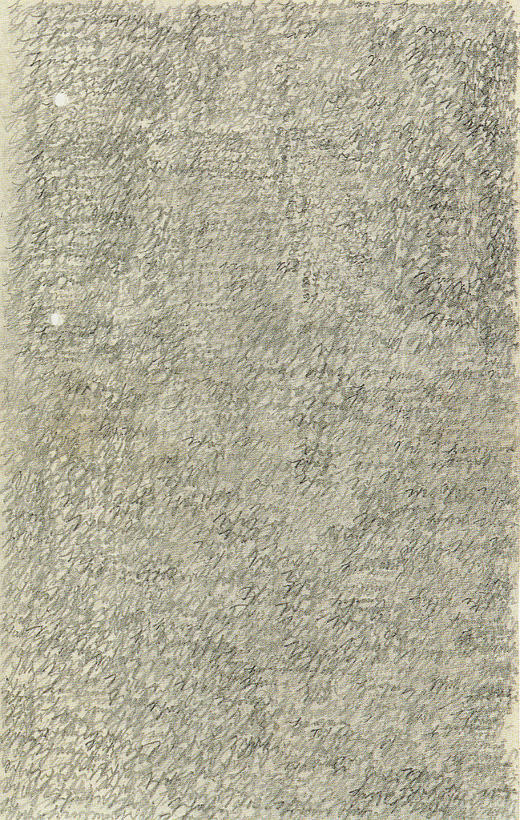
    Outsider HauckThis
    is a letter from a woman named Emma Hauck (1878-1920), a “pateint”, a committed
    person, in an asylum for the “fatally” insane; a schizophrenic, an
    incurable who simply wanted to go home. She was not insane enough to not 
    know where she was, not insane enough to not want to get out, not insane
    enough to know that she was in desperate straights, not insane enough
    to try to get some help.  Emma Hauck wrote letters to her husband,
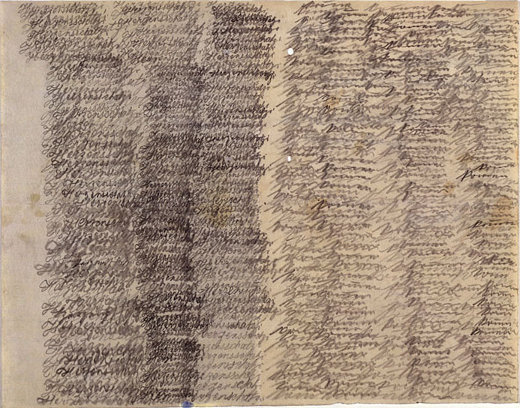
    Michael (father of her two children) after her second and last commitment, beginning in 1909.  Mostly the letters were composed of single words (like “kommen,
    kommen”, “come/come”) or simple phrases (“Herzensschatzi komm” or “sweetheart/come”)
    written concisely and tightly, over and over again, layers of
    kommen/kommen, so many that there is a geology of letters, though there
    is no geologist.

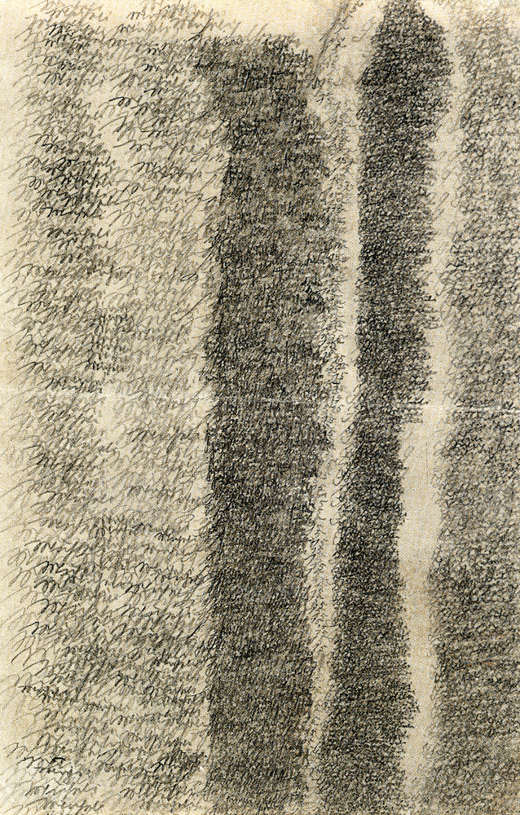
    Outsider hauck 2
    The images appear in the book and collection of psychiatrist and art historian Hans Prinzhorn (1886-1933), in his Bildnerei der Geisteskranken: ein Beitrag zur Psychologie und Psychopathologie der Gestaltung1,
    which was published in Berlin in 1922.  Prinzhorn was among the first
    in his profession to study the art of the insane, and to use it in
    diagnosis.  In the meantime, over dozens of years, he accummulated a
    collection of thousands of works of art (many coming when he was an
    assistant to Karl Wilmanns at the psychiatric hospital of the University of Heidelberg), most of which are housed today in the Sammlung Prnzhorn (UniversitätsKlinikum Heidelberg, here).

    Emma Hauck’s letters were never sent. I think it is unclear whether they were not sent because the institution in which she was confined did not mail them, or if she simply did not actually try to send them.

    A very distrubing short experimental film was made by the Brothers Quay in the U.K. featuring Hauk’s letters (complicated and viscerakized by a very grating Stockhausen soundtrack), which is located here.

    Notes:

    1.  The English translation of this work:  Hans Prinzhorn, Artistry of the mentally ill: a contribution to the psychology and psychopathology of configuration,
    translated by Eric von Brockdorff from the second German edition, with
    an introduction by James L. Foy, (Wien, New York: Springer-Verlag),
    1995. 

    Outsider hauck 3

    Outsider hauck 4

  • The Finnegan’s Wake of the 15th Century

    JF Ptak Science Books  
    Follow Me on Pinterest

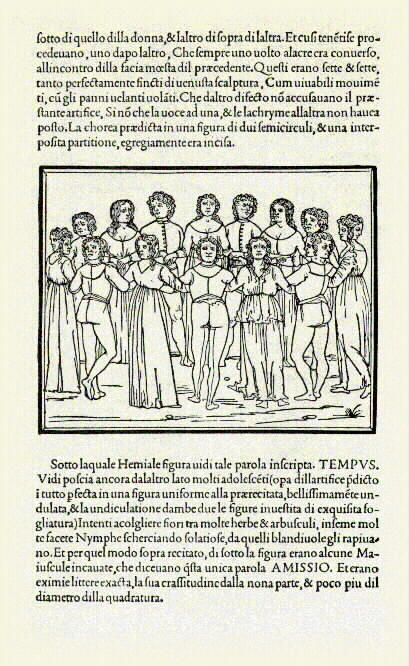
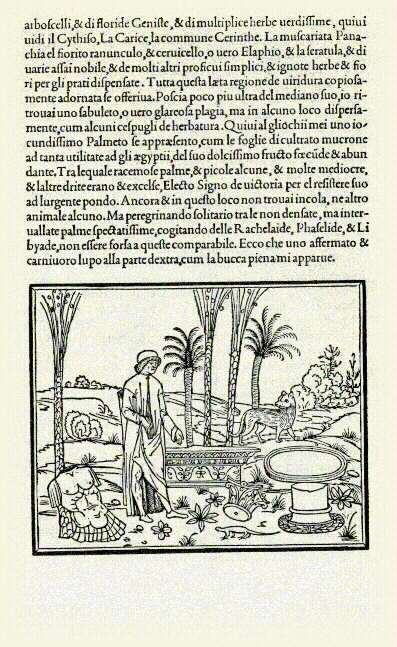
    The Hypnerotomachia Poliphili (The Strife of Love in a Dream)
    by Francesco Colonna was the greatest achievement by the greatest printer of
    the Renaissance (Aldus Manutius in Venice), a
    spectacular combination of story and type and design and illustration; an
    imaginative, secular Humanist self-romance like no other printed to that
    time.  ) See the entire text HERE.)

    Blog may 30 philo

    Hypnerotomachia means “the strife of love in a
    dream”, and the reference to Poliphili refers to the narrator of the
    story, Poliphilo, telling of the love affair between Polia and Poliphilo—the
    master text of the whole story though is a description of ancient art and
    architecture,  all told in a wonderful
    ”macaronic mélange” of Italian and Latin, and which were the “exact accounts” seen
    in Poliphilo’s dreams about Polia.. It is a 
    modernist book for being printed in the last year of the 15th
    century (1499), and stands for vitality and grace and superb design, and
    according to George Painter was the Finnegan’s
    Wake
    of the fifteenth century.  Painter
    continues, and writing that “Gutenberg’s forty-two line Bible of 1455 and the Hypnerotomachia of 1499 confront one
    another from opposite ends of the incunable period with equal and contrasting
    pre-eminence.  The Gutenberg Bible is somberly and sternly German, Gothic, Christian
    and mediaeval; the Hypnerotomachia is
    radiantly and graciously Italian, classic, pagan and renascent. These are two
    supreme masterpieces of the art of printing, and stand at the two poles of
    human endeavor and desire! “(Cited by Alan Thomas, Fine Books, 1967, pp 71-4).

    Blog may 30 poliphilo dreams Martin Lowry in his The
    World of Aldus Manututus
     (Ithaca, New York, 1979) makes another
    interesting statement on this masterpiece: “(Hypnerotomachia) was a linguistic and literary debauch, choked with
    recondite imagery, erudite periphrases, and exotic verbiage: a work so bizarre
    that many critics have felt a certain uneasiness at Aldus’ agreeing to print
    it.”


    It is truly an astonishing accomplishment, and its significance in the design of type and of the book really cannot be underestimated.  As E.P. Goldsmidt stated (in The Printed Book of the Renaissance, 1950, p. 52): “In the North an astonishing proportion of all Renaissance ornament and accessory design can clearly be proved to derive from Colonna…”

    The book is summarized here and below:

    ·Posted by :

    ·in:

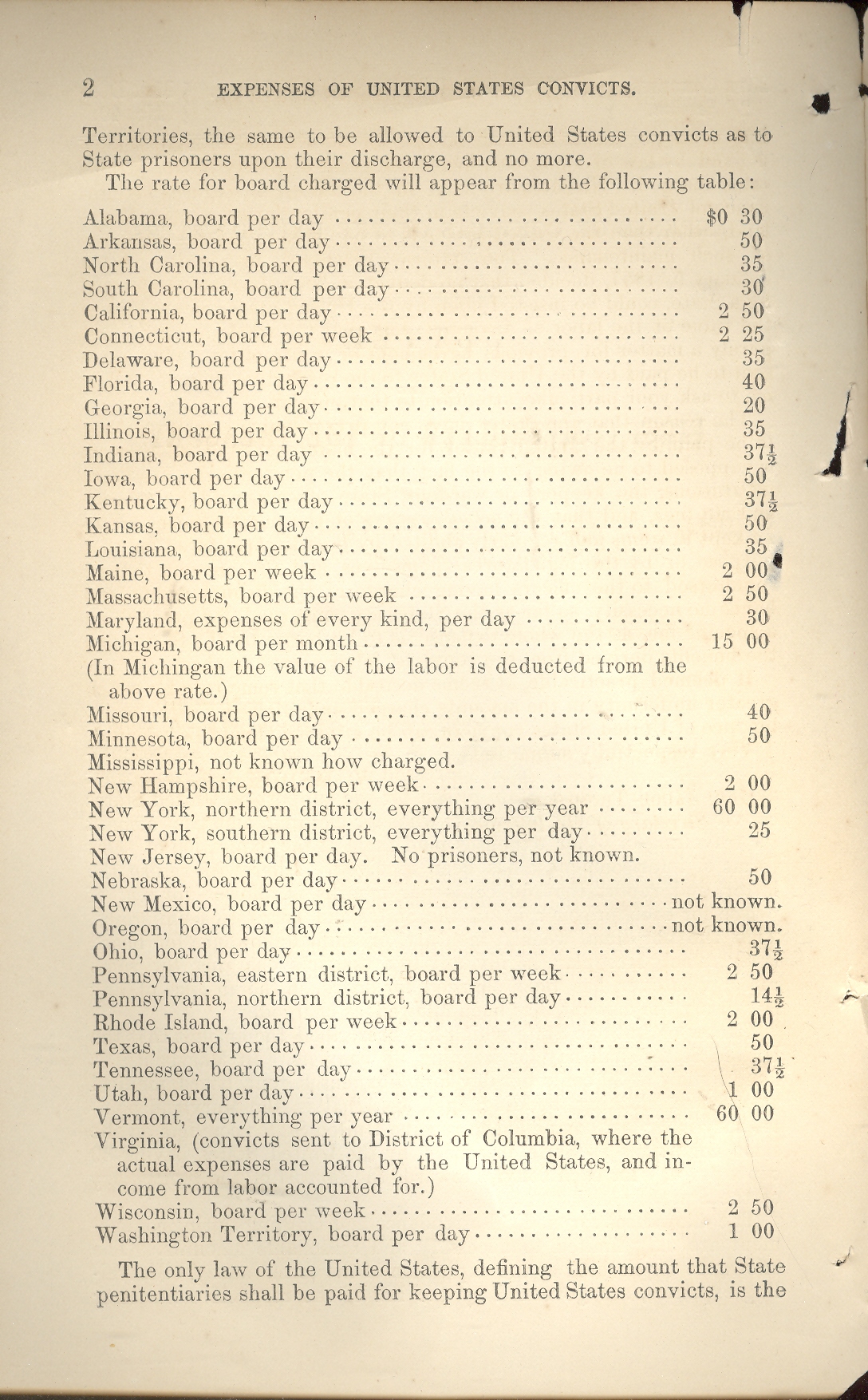
  • The Costs of Keeping U.S. Convicts, 1859

    JF Ptak Science Books  Post 2047   Blog Bookstore 
     
    Follow Me on Pinterest


    Blog--May 23--convict The fossil record is generally one of the richest and most
    compelling histories of the development of life on earth, a far-reaching,
    cumulative record of extraordinary importance. 
    There are the other, occasional, fossils that stand only by themselves,
    and seem to have almost no use in the current time, living almost entirely
    within themselves. The following statics seem to fall into that category—they
    seem to be only a tombstone for an era, providing nothing except to tell the story
    of what happened, existing only for that purpose, with no compelling
    utilization for anything outside understand a small piece of life for the year
    the stats were gathered. 

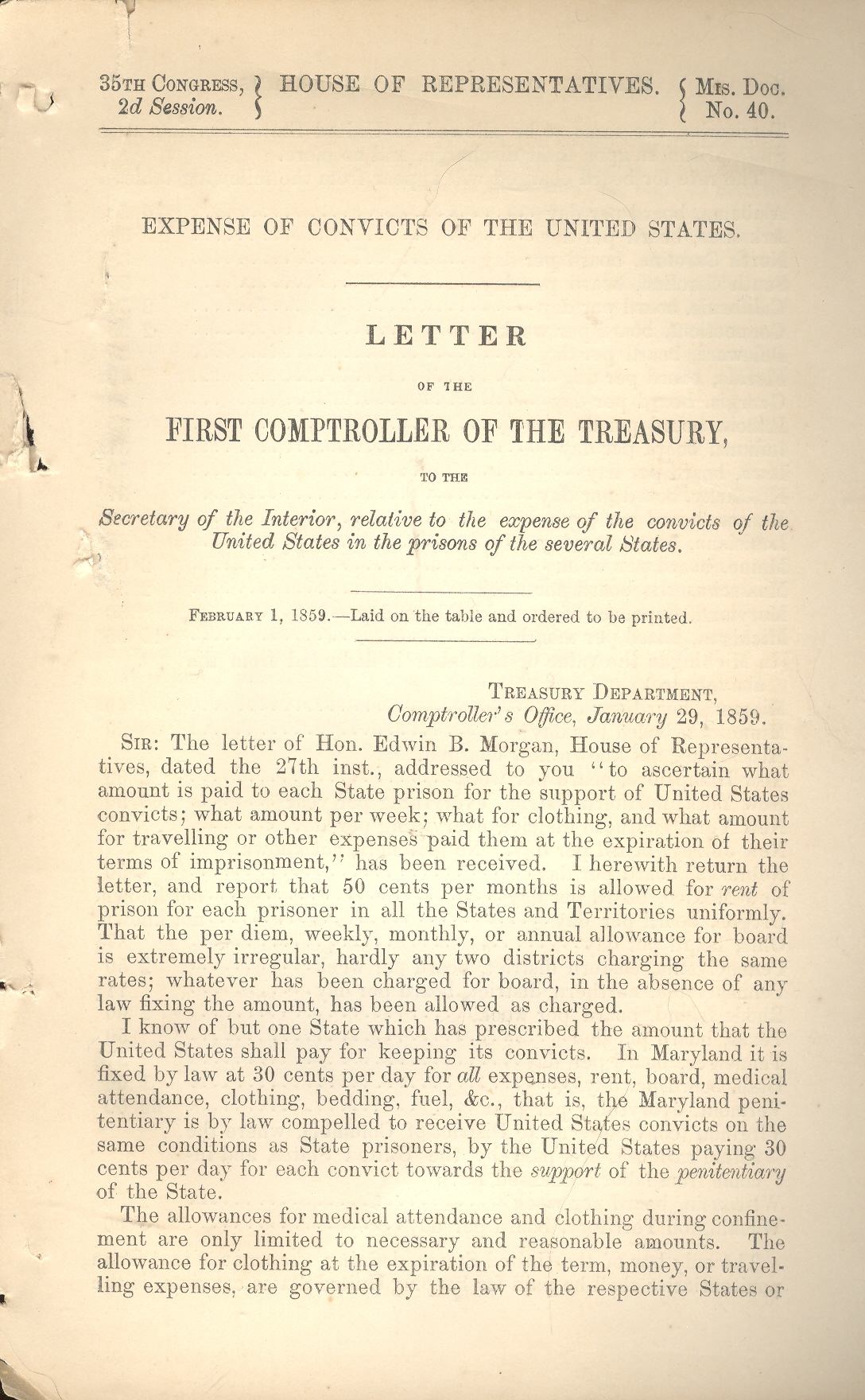
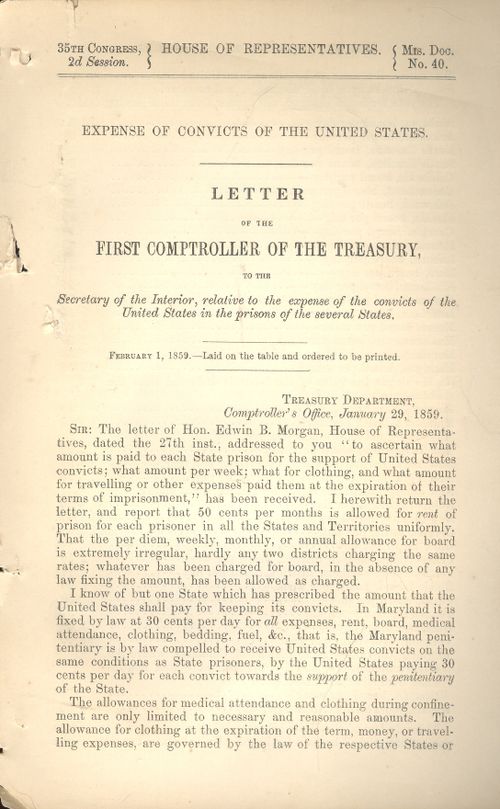
    The cause for this sentiment was found in a government
    publication called Expense of Convicts of the United States  (Letter from the
    Comptroller of the Treasury…)
    , 1 February 1859).  The following comes in the first paragraph:

    “I….report that 50 cents per months is allowed for rent of
    prison for each prisoner in all the States and Territories uniformly.”

    What this means is that the U.S. Treasury would pay 50 cents
    to the state for keeping a federal prisoner. 
    That is 50 cents per month, or about 1.7 cents per day. And that was
    also for rent of the cell, exclusive of all else, each state furnishing the
    government with the added cost, separately.

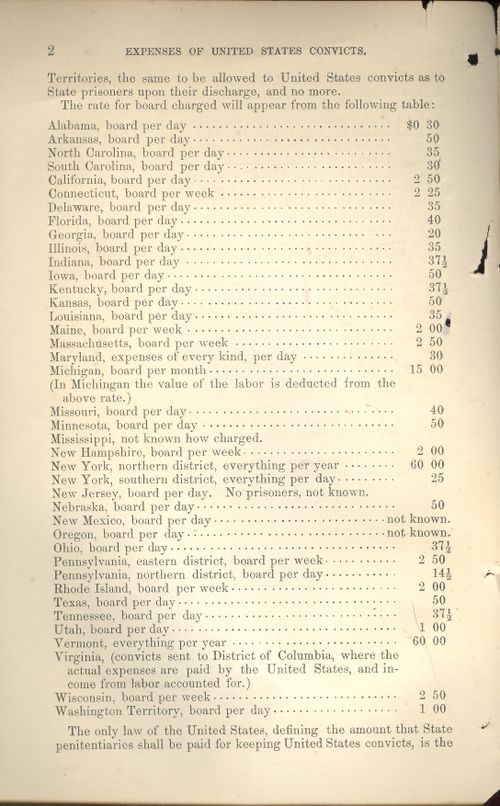
    Evidently the only state in the country that prescribed an
    exact amount for keeping a federal prisoner in a state institution was
    Maryland, “which received 30 cents per day for all expenses, rent, board, medical attendance, clothing, bedding,
    fuel, and etc” (italics in the original). 
    The rest of the states and territories had diverging and different
    expenses, from the southern district of New York at 25 cents a day for board,
    and ranging up to about 50 cents per day in  Michigan. Vermont charged an extra 60 dollars a year, in addition to the 6 bucks that they would
    get for the rent of a Vermont
    cell, to keep a prisoner—all expenses included—for one year, or about 18 cents
    per day, total. 

    Unfortunately I don’t have the stats of how many federal
    prisoner there were in 1859, so I don’t know how much of a percentage of the
    budget was occupied by prison expenses. 
    But what I do know is that even with tossing around the CPI with
    multiplier effects and so on the figures translate in no way to keeping a
    person in prison today.   The cost of
    housing someone in prison per year is around $35,000 a year, or $100 or so a
    day.  Adjusting the 1860 dollar via CPI
    for 2009 makes that dollar worth about 25 dollars today, which would be a
    doubling and a doubling again of keeping someone in prison. 

    I’m not so sure that those figures tell us much about what
    we pay, today. 

    Next, I was having a breeze through The Prison System of the United States by S.J. Barrows
    (Commissioner of Prisons for the U.S.) which was published in Washington  in 1900.  One particularly interesting
    section was the publication’s solitary statistical table, “Appendix A”, which
    detailed the crimes of the 625 men incarcerated in the state of Michigan  in 1900.  Well over half of all those in prison were
    there for larceny and burglary, while about 12% were in the big house for
    violent crimes.  (Evidently 95% of this
    number were literate and 70% could “cipher” (that is, produce basic arithmetical
    skills)).  The total crime list (such as
    it was) includes the following:

    Capital crimes (murder in the first and second degree) and
    manslaughter, along with murderous assault comprised about 1% of the total
    prison population.  Other violent crimes
    included assault with intent to do great bodily harm, rape, attempted rape,
    rape and assault composed another 3%. Further assaults were classified under
    (a) with intent to do great harm;  and
    then as assault on a female under 14 years; and on a female under 16 years  There were also the sexual assaults:  taking indecent liberties with female; with
    male child;  unlawful and carnal
    knowledge of a young child;   inducing female to enter house of ill fame.  These last two categories included about 5%
    of the prisoners.  Set aside form these
    were the crimes of adultery, abduction, incest and sodomy, which included
    another 3%.  So it seems that the violent
    offenders in prison in  Michigan 
    in 1900 totaled out at 12% or so. 

    Burglary and larceny were the  largest categories, being subdivided into (a)
    burglary accompanied by actual assault; (b) larceny; (c) larceny from a
    dwelling;  (d) larceny from a shop in daytime; (e) attempting larceny from
    the person; (f) entering a church in daytime to steal; (g) breaking and
    entering a store in daytime;   (h) breaking and entering a store in
    nighttime;(I)  breaking and entering a
    dwelling in daytime; (j)  breaking and
    entering a dwelling;  (k) breaking and
    entering a railroad car.

    Then there were a few largely vacant offenses:  Resisting an officer; Uttering and publishing
    a forged note, breaking out of prison, perjury, arson, false pretense, and
    malicious destruction of personal property, all combing for less than 2% of the
    jailed population.
    Blog--May 23--convict 001

    The vast majority of prisoners in Michigan were imprisoned for non-violent
    crimes.  The federal fathers, in the
    meantime, recognized that people in prison shouldn’t be idle while paying their
    debts to society, and should fill their time with work that would occupy the
    prisoner and bring some income into the prison system:

    “The moment we apply to the convict a
    different system of economics because he is in prison we go astray. When we
    subject to analysis the plans proposed for abolishing the competition of
    convict labor we find them based on false principles or expecting results not
    to be realized. The wiser way for the peace of society and the interest of the
    State is to place prison industries on the same ground as free industries, and
    defend that.
    It is also said in opposition to the contract system that
    contractors do not pay as much for the labor of convicts as free laborers
    command.”

    In 2005 the federal offenses for which people are incarcerated include: Drug
    Offenses 59.6%; Robbery 9.8%;  Property
    Offenses 5.5%;  Extortion, Fraud, Bribery
    6.8% ; Violent Offenses 2.7% ; Firearms, Explosives, Arson 8.6% ; White Collar
    1.0%; Immigration 2.8%;  Courts or
    Corrections 0.8%;  National Security
    0.1%;  Continuing Criminal Enterprise
    0.8%;  Miscellaneous 1.5% .  54% of prisoner in state custody for the same
    time were incarcerated for violent crimes, with drug offenses coming in at 20%
    and property crimes at 19%.  The racial
    breakdown of prisoners in the U.S. is another tragedy: of the prison population
    in toto of 2.3 million in 2008 there
    were 4,777 black male inmates per 100,000 black males held in state and federal
    prisons and local jails, compared to 1,760 Hispanic male inmates per 100,000
    Hispanic males and 727 white male inmates per 100,000 white males—that means
    that the black incarceration rate was double and then double and then
    half-doubled again that of whites.  What
    this also means is that there were more blacks in jail cells than in college
    dorm rooms in 2008.

    I’m not sure that any amount of creative statistical mathemartistry could bring these figures to life for some sort of practical application in 2009, the present situation in the prisons being so immense and pervasive.  Numbers and assorted data from the past usually have the capacity to help us see where we are today; as I said earlier, I think that these fossils are simply that:  dead.


    ·Posted by :

    ·in:

  • On the Universality of Stuff: Language and John Wilkins, 1668

    JF Ptak Science Books  

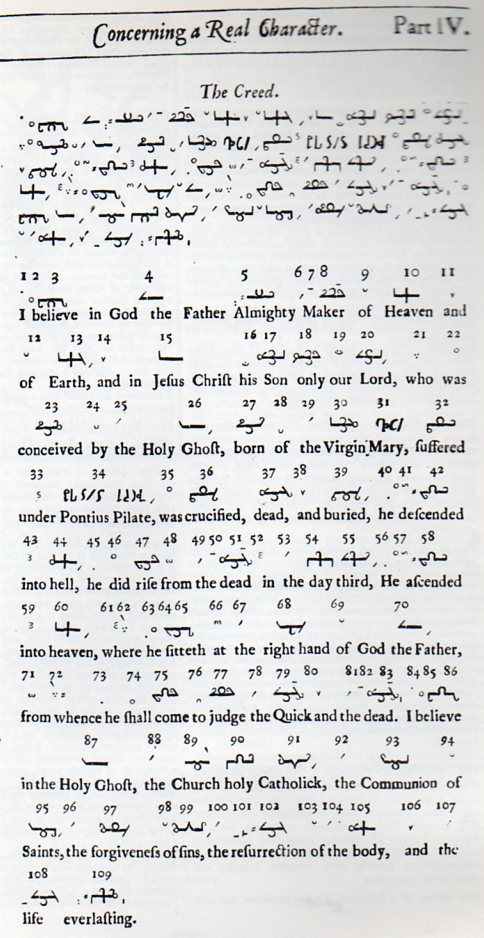
    John Wilkins’ construction of a new, theoretical language, a visual semantics of idea that was to be read and not spoken, a new international language to communicate thought, seems straight from the heart of the great Jorge Luis Borges.  And in fact, Wilkins does come from Borges, in a way–as part of a story Borges wrote in 1942, a fantastical semi-non-fictional account of Wilkins’ fabulous effort1.

    Wilkins was a 17th century figure with a sort-of 20th century idea, but even advanced to this point in time, and with actual mathematical and linguistic tools at his disposal, his work is still better as a sci-fi movie backdrop than anything else–not that there’s anything wrong with that.  The book of his in question, An Essay towards a Real Character, and a Philosophical Language, was published in London in 1668, and was an very interesting, Aristotelian non-standard approach to construct a universally understood language composed of characters which were in a way axiomatic of a developing system of genera, a taxonomy of ideas, that were somehow, fantastically, capable of expressing the foundations and flights of human thinking. 

    Borges’ presented Wilkins in a very Borgesian way in his  “The Analytical Language of John Wilkins“, mixing fact with creative fancy, exhibiting Real Character as though it was being re-discovered and studied by living academics. 

    Wilkins631

    It reminds me somewhat of other massive buit not-quite-nowhere-near-there efforts by people like Oliver Byrne and his color-coded approach to Euclid (1847), J.H. Woodger with his Axomatic Methods in Biology (1937), and Clark Hull’s Principles of Behavior (1944). Fascinating ideas, constructed with big brains, but which ultimately produce a product which more deeply confuses and obscures the subject matter it set out to explain–and which don’t really work, anyway.  But they are beautiful things int heir own right–Byrne’s work in particular also happened to be one of the most beautiful books produced in the 19th century–assemblies of bits and pieces that are occasionally magnificent but whose final destination was of course The Twilight Zone.

    They were in some way a Search for a Perfect Language (as in the work by Umberto Eco); they sought to step deeply outside themselves in an effort to grasp a higher knowledge, perhaps not much too unlike Isaac Newton and his  deep experimentation in alchemy, looking for the massive truths that were handed down to the few selected ancient ones.  They are beautiful things with a lot of very good thinking–they just weren’t right. 

    Notes:

    1.  “The Analytical Language of John Wilkins“, 1942, in which Borges presents an imaginary intellectual archaeologist assessing the work, comparing it in particular to the imaginary encyclopedia Celestial Emporium of Benevolent Knowledge.

    “He divided the universe into forty categories or genera, these being further subdivided into differences, which were subdivided into species. He assigned to each genus a monosyllable of two letters; to each difference, a consonant; to each species, a vowel. For example: de, which means an element; deb, the first of the elements, fire; deba, a part of the element fire, a flame. In a similar language invented by Letellier (1850) a means animal; ab, mammal; abo, carnivore; aboj, feline; aboje, cat; abi, herbivore; abiv, horse; etc. In the language of Bonifacio Sotos Ochando (1845) imaba means building; imaca, harem; imafe, hospital; imafo, pesthouse; imari, house; imaru, country house; imedo, post; imede, pillar; imego, floor; imela, ceiling; imogo, window; bire, bookbinder; birer, bookbinding. (This last list belongs to a book printed in Buenos Aires in 1886, the Curso de Lengua Universal, by Dr. Pedro Mata.)”–Jorge Luis Borges

    Borges described Wilkins’ taxonomy as follows, dividing it into 14 categories (compared to the original Wilkins list of 40):

    Those that belong to the emperor; Embalmed ones; Those that are trained; Suckling pigs; Mermaids; Fabulous ones; Stray dogs; Those that are included in this classification; Those that tremble as if they were mad; Innumerable ones; Those drawn with a very fine camel hair brush; Et cetera; Those that have just broken the flower vase; Those that, at a distance, resemble flies.

    ·Posted by :

    ·in:

  • Circular Calculators: 19th Century Patent Diagrams

    JF Ptak Science Books   Quick Post 

    Follow Me on Pinterest


    ·Posted by :

    ·in:

    —
  • Marcel Duchamp & Chess & Video

    JF Ptak Science Books  Quick Post

    All chess players are artists.–M. Duchamp

    Duchmap stopped painting at a certain point in the 1920’s, which was fairly early on in his life, but he didn’t stop making art. 

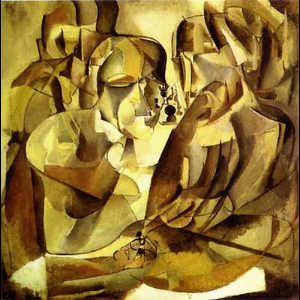
    Duchamp chess

    [“Portrait de joueurs d’échecs” Marcel Duchamp, 1911]

    Dreams that Money Can Buy is a 1947 film by surrealist/dadaist Hans Richter (1888-1976, a 1912 member of the Blaue Reiter) that includes many artists. This is a Duchamp’s fragment, with music by John Cage. (As a matter of fact, Richter claims to have made the first abstract film in Rhythmus 21 in 1921 and also made the interesting  8 x 8: A Chess Sonata in 8 Movements in 1957.)

    ·Posted by :

    ·in:

  • Soviet Book and Dustjacket Design

    JF Ptak Science Books  Post 2051  
     
    Follow Me on Pinterest
     

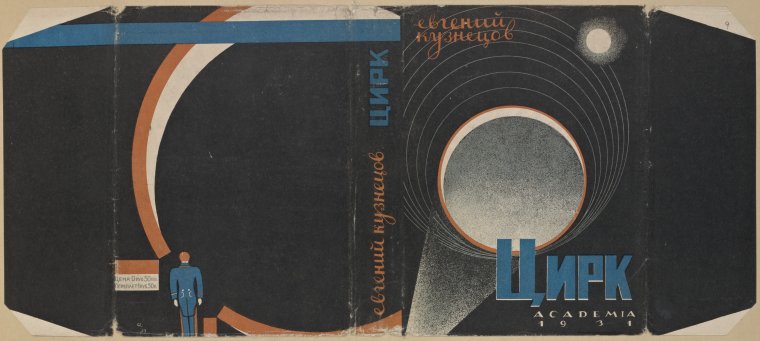
    Russian dj art

    [Kuznetsov, E. Tsirk. [Circus.] Moscow: Academia, 1931; Cover design by N. Akimov.; 8 v., [655] leaves of plates : col. ill. ; 32 x 57 cm.]

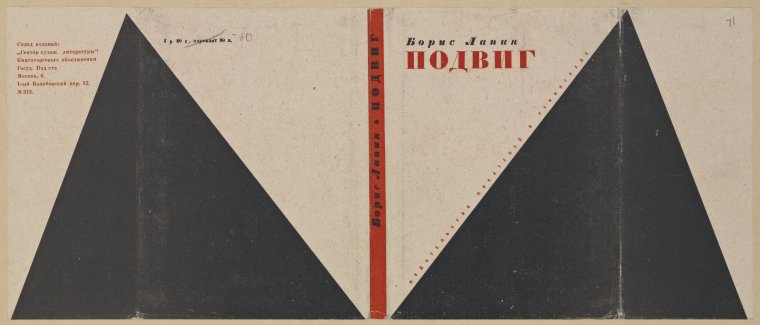
    I found this dustjacket art of Soviet-era books (all from the 1930’s save one)  in the New York Public Library collections (here)
    and was struck by the geometrical objects in many of the designs. They
    have a sense of warmth to me, somehow, like softer work coming from the
    tail end of the Constructivist period, having elements of Dada but
    really just having some of the hard edge of Constructivism without the
    scorching/awakening images that might have been embedded in the
    geometrical design. 

    Russian dj triangle

    Lapin, Boris Matveevich. Podvig. [A Heroic Exploit.] Leningrad: Izd-vo Pisatelei v Leningrade, 1934. Cover design by S. Iudovin.

    ·Posted by :

    ·in:

    —
  • City Plans and Snowflakes, 1842

    JF Ptak Science Books  Quick Post  
     
    Follow Me on Pinterest


    (Jean Baptiste) Amedee Couder wrote L’Architecture et l’industrie comme moyen de perfection sociale, which was published in Paris (by Brockhaus et Avenarius) in 1842. (Its actually a fairly scarce book, with only two copies found in the WorldCat directory.) I was surprised by this lovely plan among its slim 52 pages–it reminds me of a snowflake. (See also Snowflakes and Fort Construction, which appeared earlier on this blog, here.)

    Projet d’un palais des Arts et de l’industrie.  18×14 inches. 

    L'Architecture et l'industrie comme moyen de perfection sociale, par Amédée Couder. Plus bas dans la page de titre (n° 12.474) :

    [(Please not that the image below is from http://gallica.bnf.fr/ark:/12148/btv1b530065524–I’ve used their digital image rather than my own because my copy is folded in quarters and is too large and too-attached-to-the-book to get a decent image of it.]


  • A Fine Calculating Machine by Bollee, 1889

    JF Ptak Science Books  Quick Post

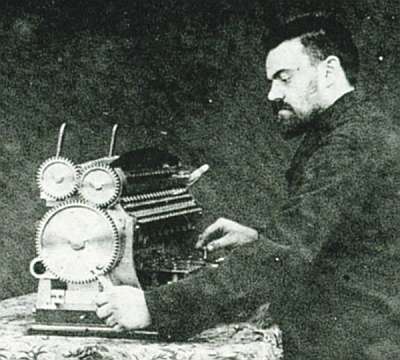
    Bollee
    [Source: http://www.rechnerlexikon.de/artikel/Bild:Bollee-mit-Maschine-CNAM1990.jpg]

    This was a surprise, finding M. Bollee’s article (Sur une nouvelle machine a calculer) in this 1889 Comptes Rendus, pecking around in that big 10-pound volume looking for something else.  It was very easy to miss if you weren’t looking for it, just a few pages long in a 1000-page book.  But there it was, nestled comfortably in pp 737-739.  It these few pages Bollee describes his machine and with particular reference to his innovative approach to direct multipilication–a fine addition (ha!) to the long line of contributions by Babbage and Clement, Scheutz, Wiberg and Grant and Hamann. 

    Notes:

    Léon Bollée: “Sur une nouvelle machine a calculer”, in Comptes Rendus de l’Academie Sciences (Paris), volume 109, 1889, pp. 737-9.

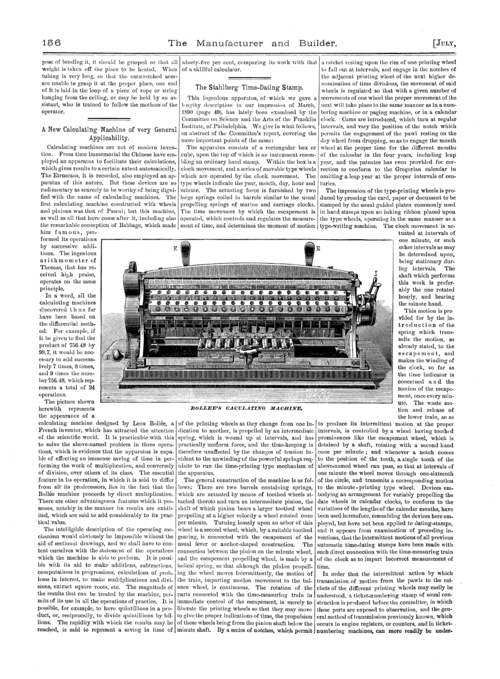
    An image of the machine from The Manufacturer and Builder:

    Bollee

    See:  the Making of America, http://digital.library.cornell.edu/cgi/t/text/pageviewer-idx?c=manu;cc=manu;rgn=full%20text;idno=manu0022-7;didno=manu0022-7;view=image;seq=0162;node=manu0022-7%3A21


  • Biblio-Morality on One Piece of Paper, 1688

    JF Ptak Science Books   Quick Post   Books with Unusual Title Pages seriesFollow Me on Pinterest

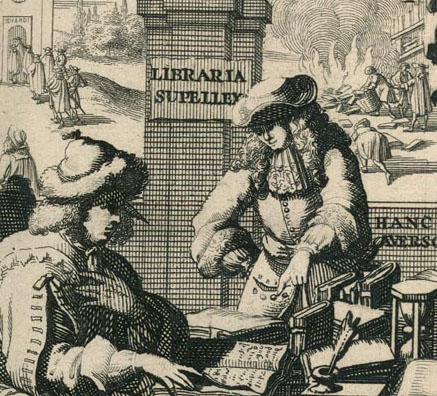
    Temporary_image_edited-1
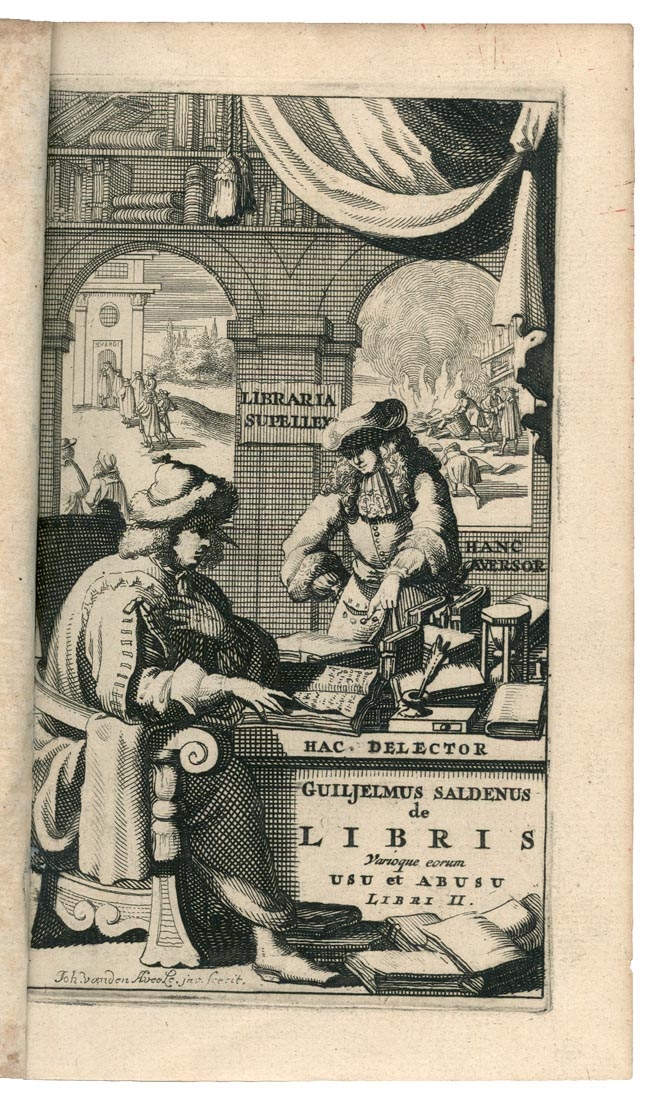
    The allegorical frontispiece of Gulielmus Saldenus’ De libris variorum usu & abuso, (printed in Amsterdam in 1688) is a good outline for what this (little) book is contains–about being good and being bad–and extending that to the treatment of books.  The main image is of a bookseller and a customer; through the windows we see the pious headed to chapel, on left; and at right, a good-sized book-burning, which is a fairly rare thing to see on a decorated beginning-of-a-book illustration.  The allegory is fairly complete, and seems as though it could not be less not-subtle than it is.

    [Source:  Bibliopolis website, for the history of the printing of the Dutch book, here.]


Recent Posts

Archives

Categories