A Daily History of Holes, Dots, Lines, Science, History, Math, Physics, Art, the Unintentional Absurd, Architecture, Maps, Data Visualization, Blank and Missing Things, and so on. |1.6 million words, 7500 images, 4.9 million hits| Press & appearances in The Times, Le Figaro, Mensa, The Economist, The Guardian, Discovery News, Slate, Le Monde, Sci American Blogs, Le Pont, and many other places… 5000+ total posts since 2008.

  • Napkins of the Apocalypse

    JF Ptak Science Books  Post   Post 2084    History of Holes series  
    Follow Me on Pinterest


    …and don’t forget the DDT.

    Nothing quite sells like the smell of fear–or the sound of it.  In 1961, about the scariest sound was the air raid siren, which is what opens this record album, If the Bomb Falls.  At what was probably the highest height of the Cold War, with schoolchildren taught to “duck and cover” under their wooden school desks to protect themselves from a massive nuclear fireball, and in which thousands of families constructed their own fallout shelters, the Tops record company decided to fan the flames of public fear by producing a this-is-what-it-takes to survive effort.
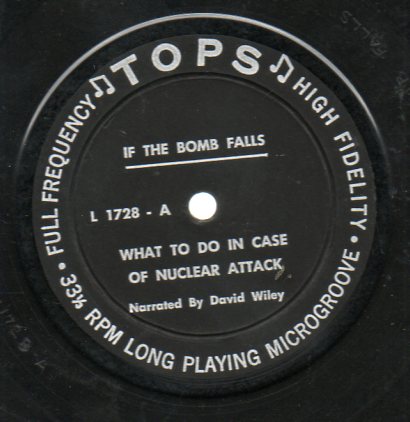
    Bomb falls488
    For the most part, Tops was a low rent label, producing stuff that sounded like (‘sound alikes”) a current hit, and by indulging in ‘exotic” music like its Voodoo hit.  If the Bomb Falls answered its own fear-stoked questions with not-very-good responses.  That’s where the napkins come in–among other things, the album suggests that you keep a two-week supply of napins on hand, in addition to general-purpose paper towels and the like.  Also:  batteries, just in case the power goes out, and DDT, which went unexplained. And: be aware that in the fallout shelter there will be a period of unusual closeness at hand, testing your privacy.

    There is of course a lot of pertinent information survival information on the record, though it comes with very padded edges, and with very little flavor for what radiation is all about, and what it will do.  Plus all of that wicked winged death stuff that was waiting for you outside the bunker. 

    But this is what was done, at the time, to prevent general panic in the though of nuclear attack–stuff like this offered their own bits of religiosity, with the promise of possible islands of heaven here and there, heavens buried in your backyard or scooped out the side of your basement.  Like any belief system, it was based in, well belief–and belief doesn’t take that much firming-up once somebody believes in it.  Things will work out if you believe they will; science and logic take the background in cases of a staggering hope of survival based upon belief (and instructions from micrgoove vinyl). 

    In the end, what you are left with in the event of nuclear holocaust is what is in the middle of this record:

    Bomb falls490

    Other Tops producers included these lovelies (source of which is here):



  • The World’s First Cookbook of Toast, 1937

    JF Ptak Science Books   Quick Post   Daily Dose from Dr. Odd  
    Follow Me on Pinterest 


    Toast493
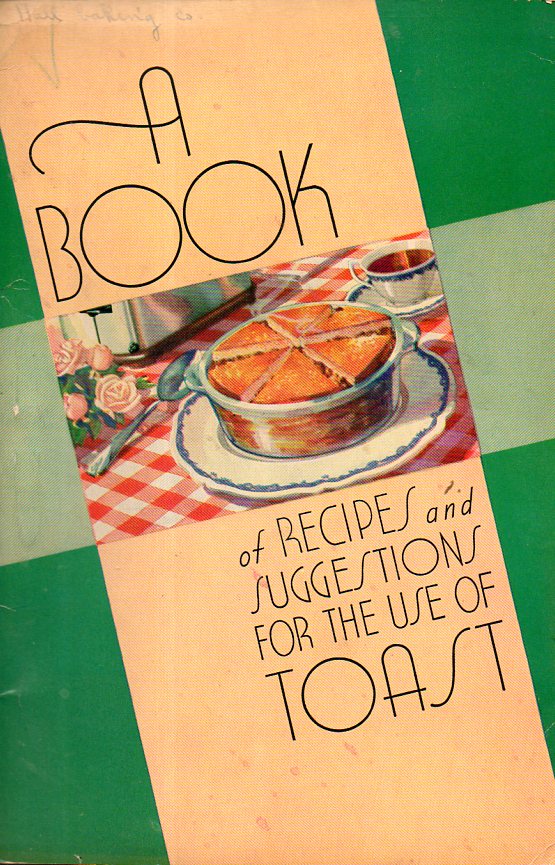
    I’m not so sure that this is “odd”–it is certainly unusual, and unusual in an interesting, surprising, and constructive way.  A Book of Recipes and Suggestions for the Use of Toast at first glance stretches the idea of necessity, and maybe it still does, but at the end of the day this is a very nicely designed, considered and encyclopedic end-all treatment of toast.  It states on the title that it is “the first exclusive Toast Recipe Book ever published”, and I’ll take it at its word. Happily.

    So, we have recipes for the Cinnamon: cinnamon toast,  honey, marmalade, jam (!), maple, pineapple, marshmallow orange, super-toast griddle cakes, super toast waffles.  the French Toasts: raisin, milk, prune, orange, banana, eggs royal, and French toasted bacon. Then there’s eggs in bread cakes, meat pies, deviled rarebit a la toast, tuna a la super-toast, shrimp Louisiana toast, sausage toast rolls, super-toast meat pies, toasted super cheese rings, super toast hash, crown frankfurter roasted toast, eggs benedict on super-toast, cannibal toast rarebit waffles, and so on.  That’s about a quarter of the recipes, and it seems about 300% more toast recipes than I’ve ever heard of before.  Probably more. 

    Toast.


    ·Posted by :

    ·in:

  • Fine Portrait of James Clerk Maxwell

    JF Ptak Science Books   Quick Post

    “…the most profound and the most fruitful that physics has experienced since the time of Newton.”–Einstein on Maxwell

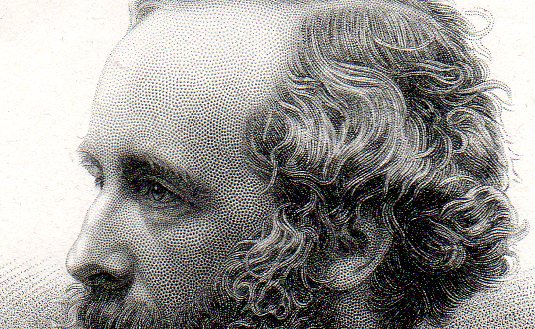
    James Clerk Maxwell (1831-1879), only 48 when he died, was one of the supreme science minds of modern history, a giant among giants, a scientist who performed the second-greatest unification of physics after Newton. 

    Maxwell508

    Source: “Scientific Worthies, XVIII–James Clerk Maxwell.”  In: Nature, 27 October 1881, the weekly issue on page 601 (though a single page the article runs a tight 1500 words) with the fine steel engraved portrait of Maxwell and the article occupying pp 601-602.

    [The original is offered for sale here.]

    The published works of James Clerk Maxwell, from the Maxwell Foundation, here along with a chronological arrangement, here.  His last will and testament, here. Internet Archive collection o fMaxwell’s online works, here. And lastly a short biography from Wolfram Research, here.

    ·Posted by :

    ·in:

  • Bathroom Buddha Mistletoe Urinal–the Most-Missing Piece of Modern Art?

    JF Ptak Science Books    Post 2085    Blank, Empty & Missing Things series  
    Follow Me on Pinterest

    “All in all, the creative act is not performed by the artist alone..
    the spectator brings the work in contact with the external world by
    deciphering and interpreting its inner qualifications and thus adds his
    contribution to the creative act.” (Marcel Duchamp)

    I guess to this quote you could replace “spectator” with just about anything else, including the object that is the art.

    This ten-minute missive came from a post a few days ago (Napkins of the Apocalypse) where I located the ultimate end of the American civil defense experience during the Cold War–in the spindle hole of a survival LP issued by a trashy-thready record label in 1962. I wondered if the hopes/dream/prayers of that episodic horrorshow belonged more in the Blank/Missing/Empty or the Holes series of this blog…and where that dark hole fit.

    Duchamp_fountain
    [Image source:  Stephen Hicks]

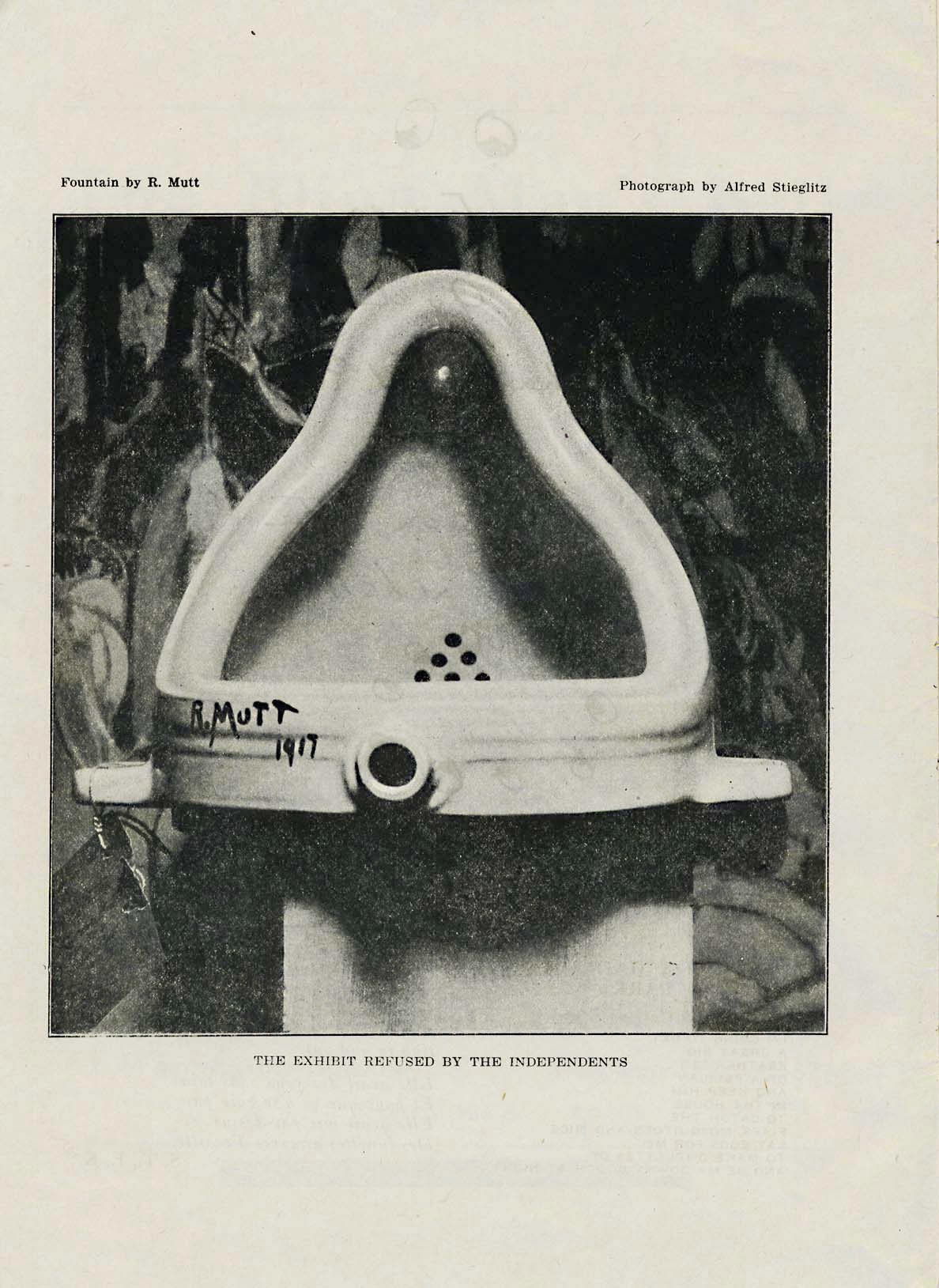
    The hole re-appeared this morning while doing the dishes, the drain in the sink sparking a vision of “FiVah” (or “Five A”, anti-art’s anti-anti-artist) Marcel Duchamp and his iconic found art sculpture “Fountain”.  It is of course the most famous urinal in the history of urination (I can’t speak to famous urinals in non-urinating history) which Duchamp signed “R.Mutt” in 1917 to make it his own.  Art.

    There are many missing qualities to this artwork that allows it to slide right into this blog’s Blank, Empty and Missing Things series, not the least of which is that the first “Fountain” went missing almost immediately.  It was rejected from a major show of Duchamp’s colleagues, and left a footprint of itself with a blank exhibition card dispaly, nonchalantly photographed in front of a Marsden Hartley painting.  It was a shocking piece of art that lead and still leads to debate on what is art and what is not, especially so far as “original” artwork is concerned. 

    “Fountain” has/had a number of questions about originality–as a concept it was certainly original, in the use of found object as a piece of sculptural art, and of course in its own self, being a urinal and all.  Then there’s the question of this original idea being so but being hosted in a stock/standard item that was hardly an original construction–it was a simple porcelain object from an assembly line production.  that said, even though this was not original when it came to replacing the lost not-original original it proved to be very difficult, at least it was back then in the nineteen-teens. 

    The urinal that replaced the missing urinal was not quite right, and so was not the not-original original replacing the not-original non-art that was a great original idea. 

    “Fountain” reminded people of a Buddha; it was hung in various unusual places and its iterations shown in exhibitions far-and-wide, including a very early Dada exhibit where one of them was hung from the ceiling of the gallery with a piece of Mistletoe attached, perhaps in a Duchampian way telling people to “kiss off”. 

    So this great instigator and Jimmy-Hoffa-of-Artworks was missing on many levels–it was a mass-produced private work that was censored by its artist’s peers, and original piece of art that wasn’t itself original and that went missing almost as soon as it was created.

    It has everything in nothing going for it. 

    ·Posted by :

    ·in:

  • SunPunk, 1888

    JF Ptak Science Books   Quick Post

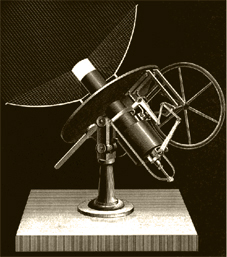
    Ericsson2[This image appears in his “The Sun Motor”, in Nature for August 1888.]

    A while ago I thought about an alphabet of variegated -punkisms since SteamPunk didn’t seem quite enough for things punky. (That post, Beginning an Alphabet of Science Fiction -punkism is here, though it didn’t get much leg.)  In addition to that alphabet there’s also FuturePunk, ElectroPunk, and AirPunk, among others–but tonight I’d like to introduce SunPunk to this mix.  There’s a possibility for a lot of indirect steam from SunPunk, and in this instance there is a lot of metal. the other thing, however, is that it was real.

    The work (above) is that of the very versatile John Ericsson (1803-1889), who among other things perfected the modern screw propeller and designed the USS Monitor (and who also has one of those Mystery Monuments in D.C.).  Ericsson was fascinated by the possibilities of solar power, and worked on the problem for 25 years, right up until his death.  The metallic bed of his creation would hold 100 sqft of mirrors “presented at right angles to the sun, at noon, int he latitude of New York, during summer, develops a mechanical energy reaching 1,850,000 footpounds per square hour”, which was enough to run a good engine.

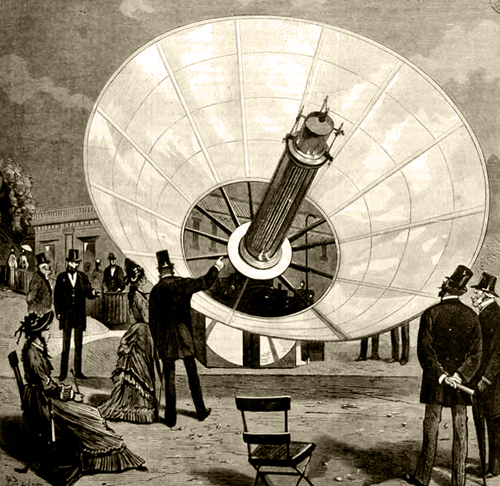
    Now the idea for using the Sun as a machine is ancient, with references and details appearing in the works of Euclid, and Archimedes, and Hero of Alexandria, though the first practical construction of one (outside of a solar oven and such) is relatively recent, by Augustin Mouchot in 1860.  Actually, Mouchot exhibited an incredible sun machine (his Sun Concentrator) in 1869:

    Mouchot2[Source: Land Art Generator Initiative, here.]

    His engine was indeed a beautiful thing, and it does have the elements of severe AirPunk, but I think it doesn’t have that certain weightiness of the Ericsson engine.


    ·Posted by :

    ·in:

  • A Note on Mr. Venn and his Diagrams

    JF Ptak Science Books
     

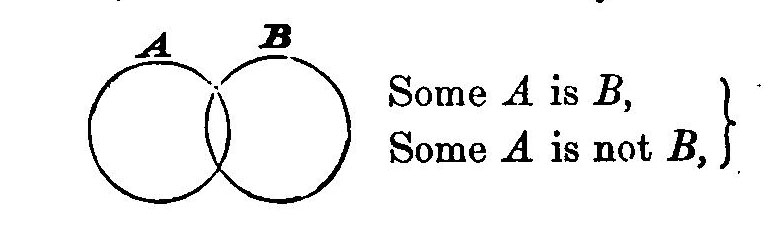
    It seems so unlikely that the Venn diagrams took so long to appear, that it hadn’t been Aristotle’s Diagrams, or Cartesian Diagrams; rather, these elegant creations–about a different way to represent propositions by diagrams– belong to Mr. Venn’s invention in 1880. Mostly. It was in that year that these famous more fully-developed diagrams first appeared in a paper entitled “On the Diagrammatic and Mechanical Representation of Propositions and Reasonings“ in the Philosophical Magazine and Journal of Science.  They seem so beautiful, and so simple, and so powerful, and so elegant. So necessary.  And so why-did-they-take-so-long-to-appear, so obvious.  In a way, they are in that category of The Great Obvious Invention, in a similar vein to Mr. Luke Howard first classifying the names of clouds  in 1803.  Sometimes things are not obvious until they are.  


    Venn diagram
    [Source: Internet Archives, John Venn, Symbolic Logic, 1881, full text.]


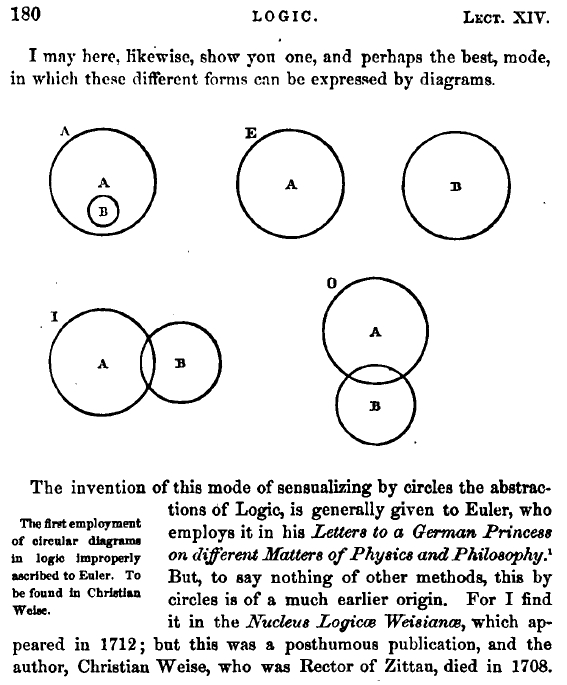
    Well, almost.  The diagrams did mostly make an appearance earlier–though not in the Venn form–in the work of Christian Weise (d. 1708) and then in that of Leonhard Euler (1707-1783), that according to the great William Rowan Hamilton, explained in his work Metaphysics and Logic (1858-1860). But the final form seems to be that of Venn.  

    Hamilton’s work appears so:

    Euler diagram


    They also appeared in the Proceedings of the Cambridge Philosophical Society, volume 4, 1880, in his article “On the employment of geometrical diagrams for the sensible representation of logical propositions” in which he discusses the history of the diagrams, including the Hamilton history.  Venn also includes this beautiful logic template of Bolzano:

    I found a wonderful book review of Venn’s book Symbolic Logic that appeared the following year, appearing in the journal Nature on 14 July 1881, and reviewed by the inimitable W. Stanley Jevons (which is reproduced below).

    ·Posted by :

    ·in:

  • Good, Early Review of Some of the Fine Work of Claude Shannon

    JF Ptak Science Books   Quick Post

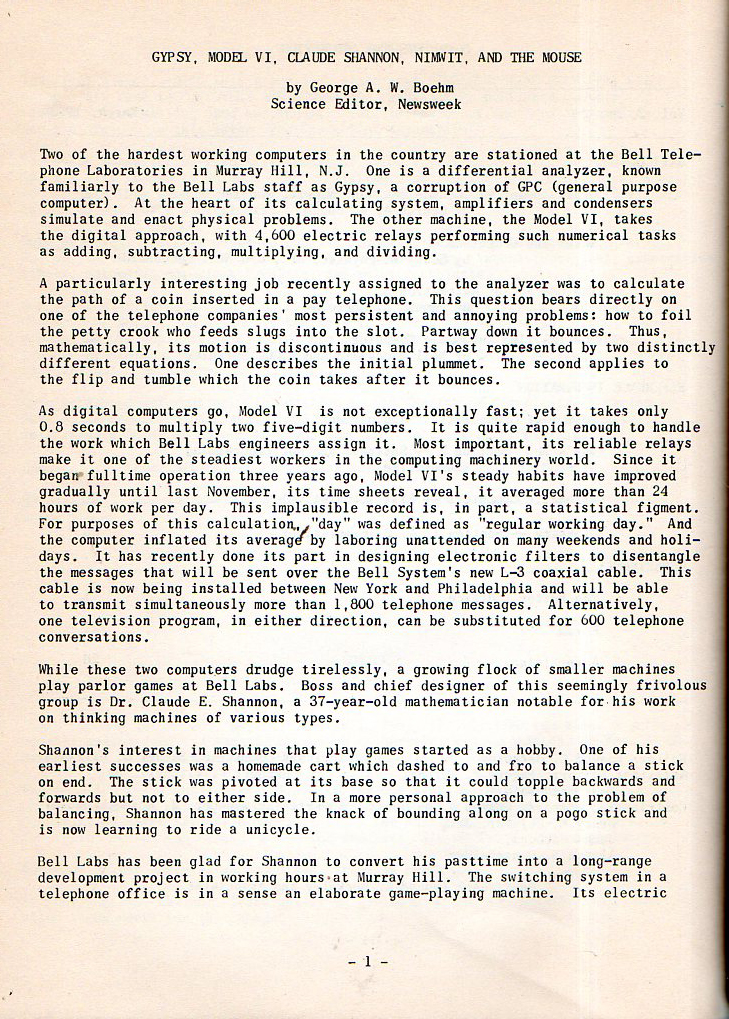
    I just read an interesting “review” of sorts of the mechanical and electronic automation/robotic work of the great Claude Shannon–it was in George Boehm’s  “Gypsy, Model VI, Claude Shannon, Nimwit, and the Mouse” and published in Computers and Automation, volume 2, number 2, March 1953.  Shannon (1916-2001) is widely seen as being the “father of information theory” though it might be more accurate to refer to him as the ‘father of the information age”. 

    Shannon basically established the foundation of the digital circuits in his 1937 A Symbolic Analysis of Relay
    and Switching Circuits,
    which was also one of those great dreams-come-true parts of graduate school, when your masters’ thesis is actually a very important work–this was the case for Shannon, who actually did it with this paper at the age of 21. In the midst of a brilliant young career he also produced (in 1948) another great landmark,  A Mathematical Theory of
    Communication
    , which is the pioneering paper on information theory and which was so brilliantly composed that its framework is still in place after 65 years. A year later came Communication Theory
    of Secrecy Systems,
    a work which established cryptography as a science more than a system. And on and on. 

    I like that Shannon was born in Petosky, Michigan, up there on the choppy Little Traverse, and all of those big-pebble Petosky fossil/stones.

    The Boehm article is very insider-y semi-offhand but solid review of some of the gadgetry and robotic work of Claude Shannon–it is only four pages but it is four good pages, which I reproduced below.  Enjoy. [The original is actually available for sale at the blog’s bookstore, here.]

    Shannon512

    ·Posted by :

    ·in:

  • Quantum Mechanics and Physics Timelines

    JF Ptak Science Books  Quick Post   Reference Tool series

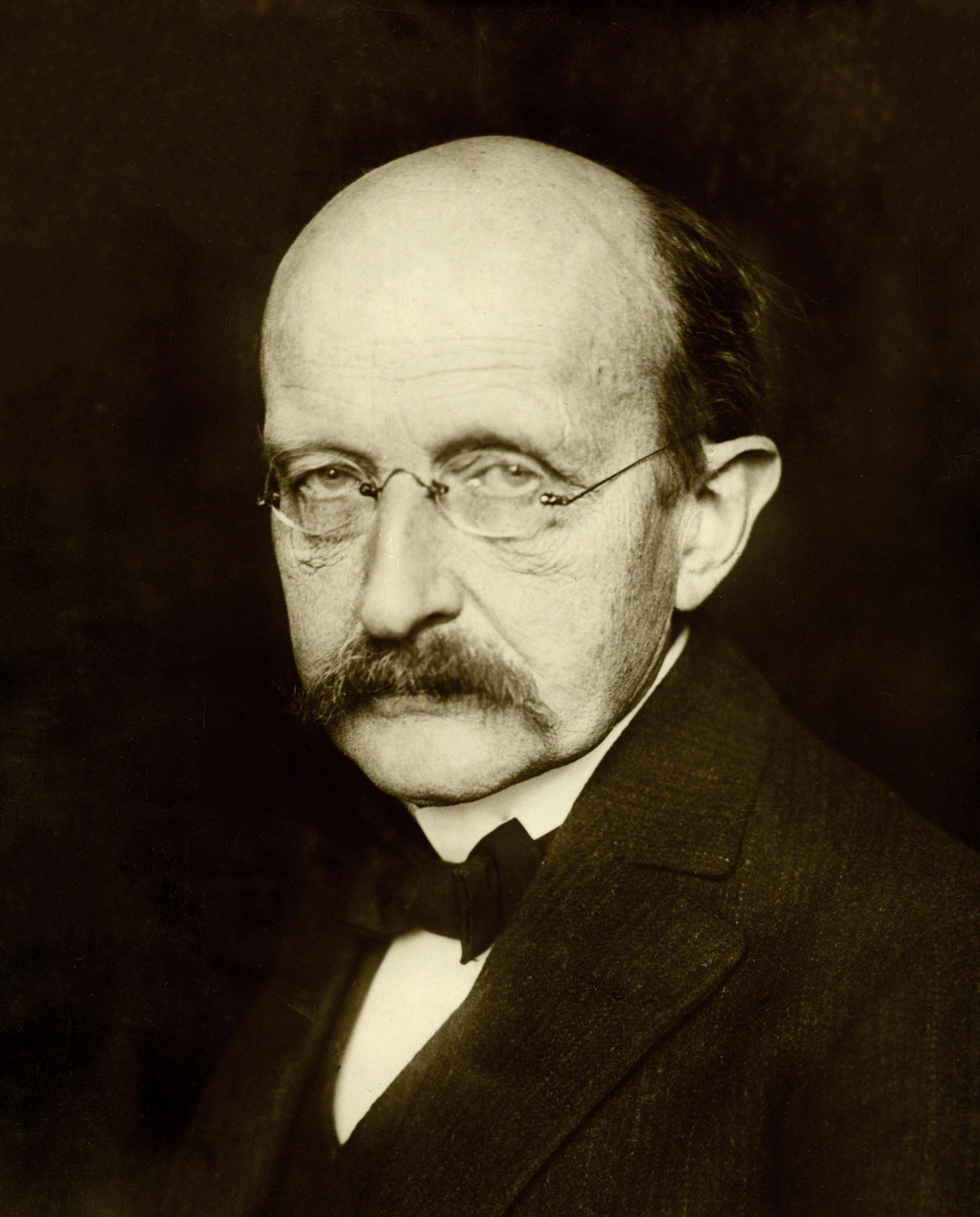
    Max_Planck_1933 det
    [Max Planck, 1933]

    Quantum Mechanics Chronologies

    • Quantum Theory Timeline  //  Particle Adventure  About 50 entries, no bibliographic data ; simple introductory timeline.  http://www.particleadventure.org/other/history/quantumt.html  .
    • Timeline of Quantum Mechanics  Probably 150 entries and 77 bibliographic notes including links to the original articles.  Pretty nice.  The “History of QM” wiki entry is fairly basic. (Wiki) http://en.wikipedia.org/wiki/Timeline_of_quantum_mechanics
    • Good introductory timeline from Northwestern U along with annotation (1814-1927) http://faculty.wcas.northwestern.edu/~infocom/Ideas/quantum_timeline.html
    • AlphaCenturi Quantum Timeline  Short timeline but picks up James Franck in 1914.  http://www.alpcentauri.info/quantum_mechanics_timeline.html
    • TimeRime. Kind of a short, splashy presentation with only a dozen dates or so. http://timerime.com/en/timeline/138786/Quantum+Theory/
    • Chronology of Quantum Mechanics, Molecular, Atomic, Nuclear, and Particle Physics http://www.3rd1000.com/chronology/chrono3.htm

    And this, a chronology of general physics, with a good selection in QM: 

    • Big but incomplete, which means you’ll have to get the book itself:  Chronology of Science by Lisa Rezende.  Google book, here.


    Max_Planck_1933

    ·Posted by :

    ·in:

    —
  • A Few More Trees in the Display of Information

    JF Ptak Science Books   Quick Post


    Tree_of_life_by_Haeckel det
    I’d like to add the few images below to a developing thread on the use of trees in diagrammatic displays of information as seen earlier on this blog in the following posts:

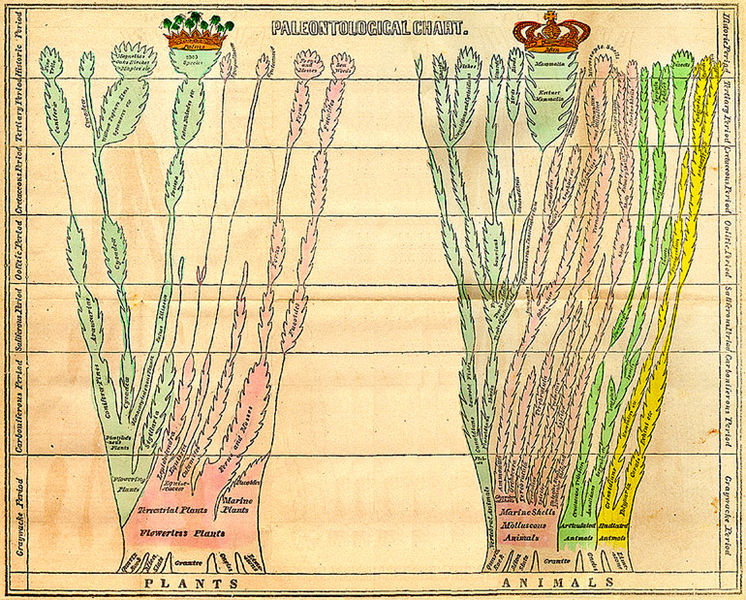
    This is a distinctive utilization, featuring a king and queen versions of the tree/plant display, this by Edward Hitchcock (1763-1864) in his Elementary Geology, published in 1840, and showing paleontological chart of trees andplants:

    Tree--edward Hitchcock
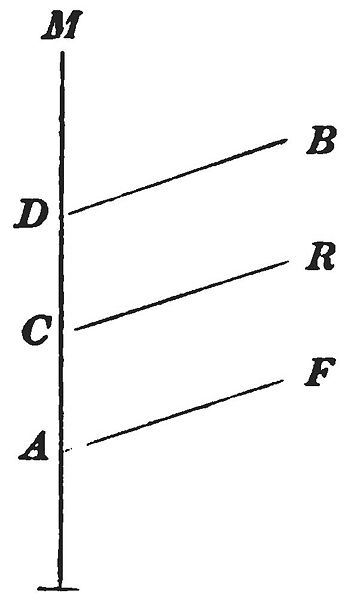
    At about the same time came this outline for a tree diagram, (of embryonic development), from Robert Chambers, Vestiges of the Natural History of Creation, printed in 1844, and which shows a model of development where fish (F),
    reptiles (R), and birds (B) represent branches from a path leading to
    mammals (M):

    Vestiges_dev_diag
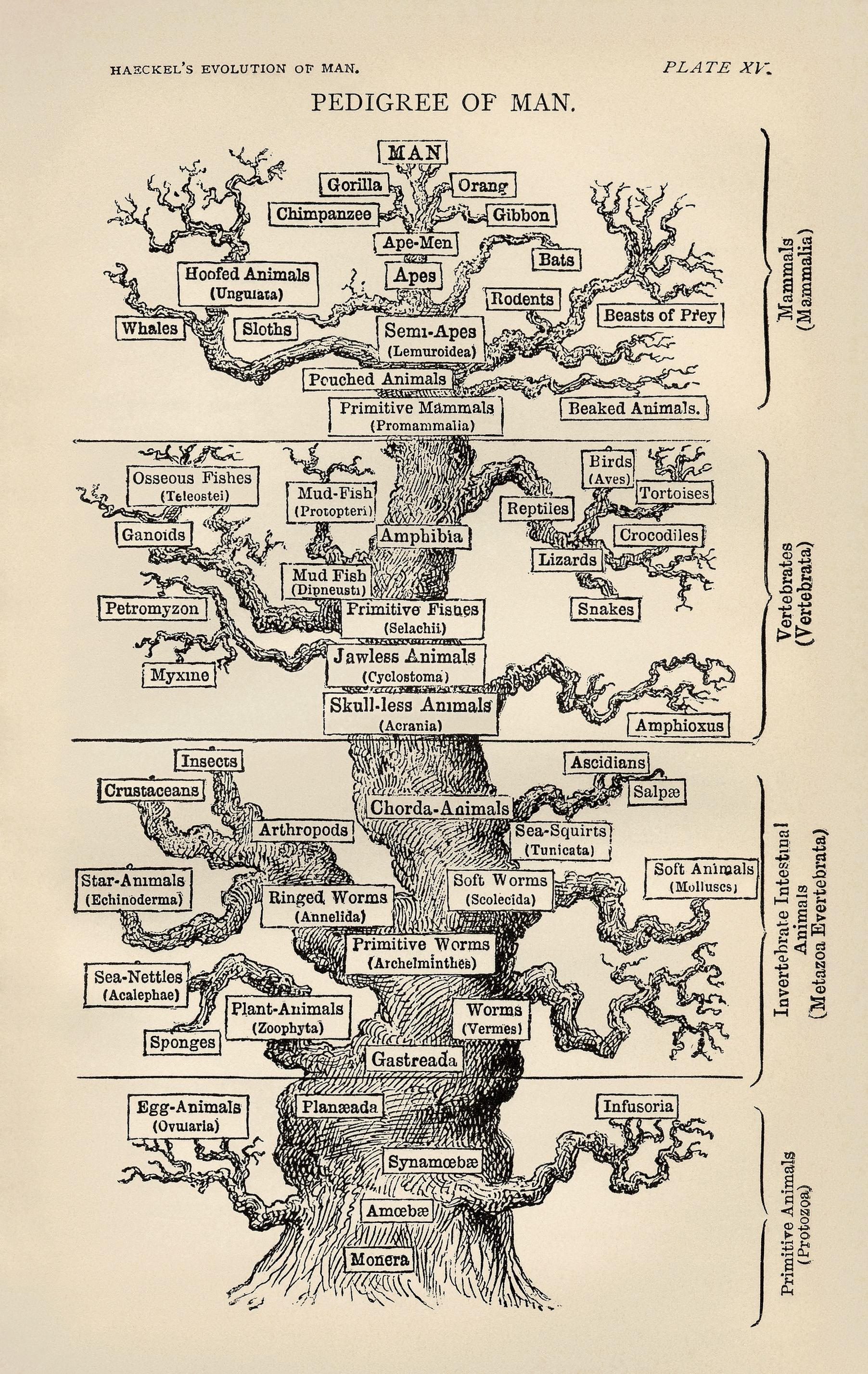
    And somehow in the different representations of the tree of life by Ernst Haeckel I failed to include these three very famous renderings, the first made for an English-language edition of his Evolution of Man, which appeared in 1879:

    Tree_of_life_by_Haeckel
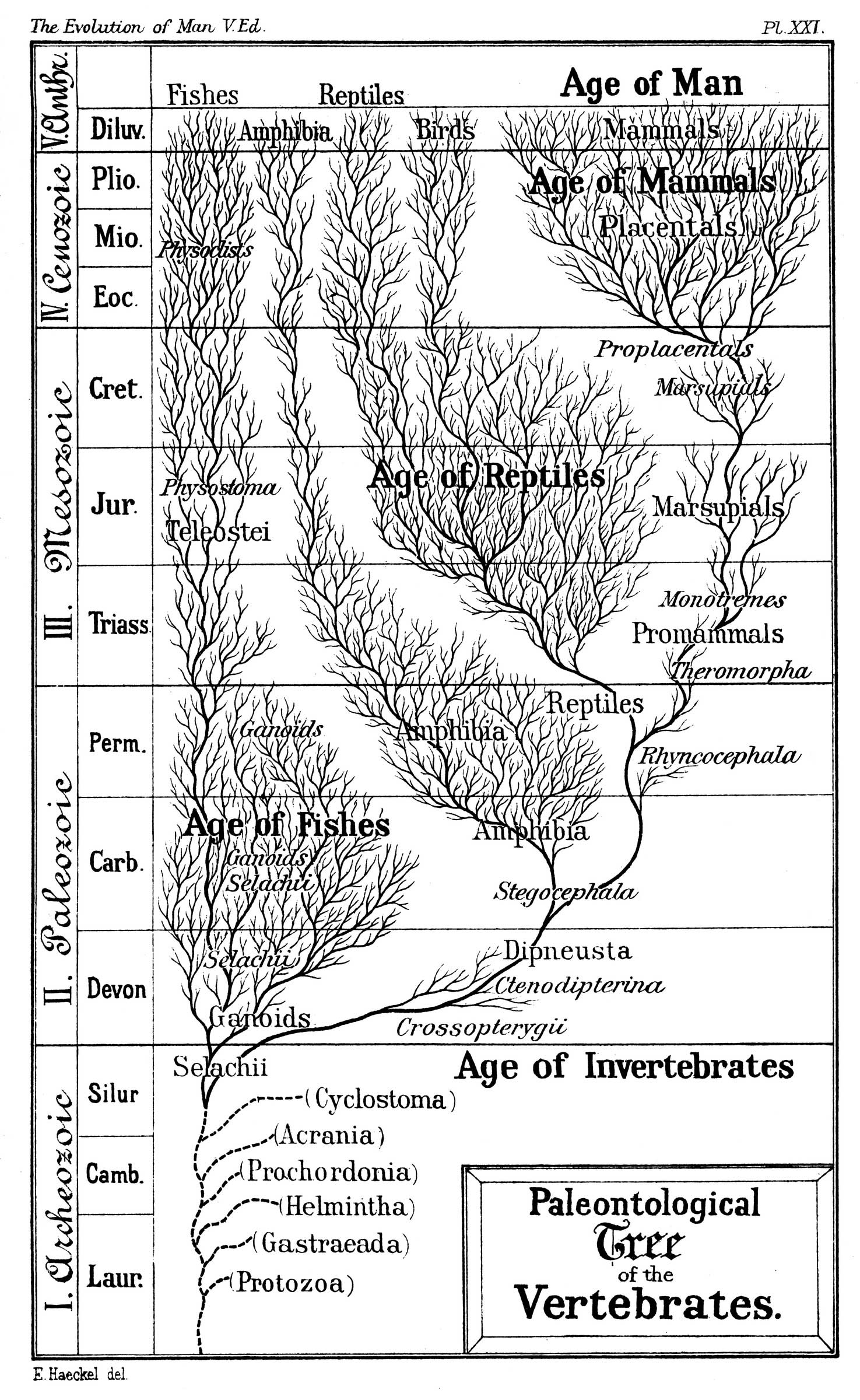
    And this version, which appeared in the fifth edition of his Evolution of Man, printed in London in 1910:

    Age-of-Man-wiki

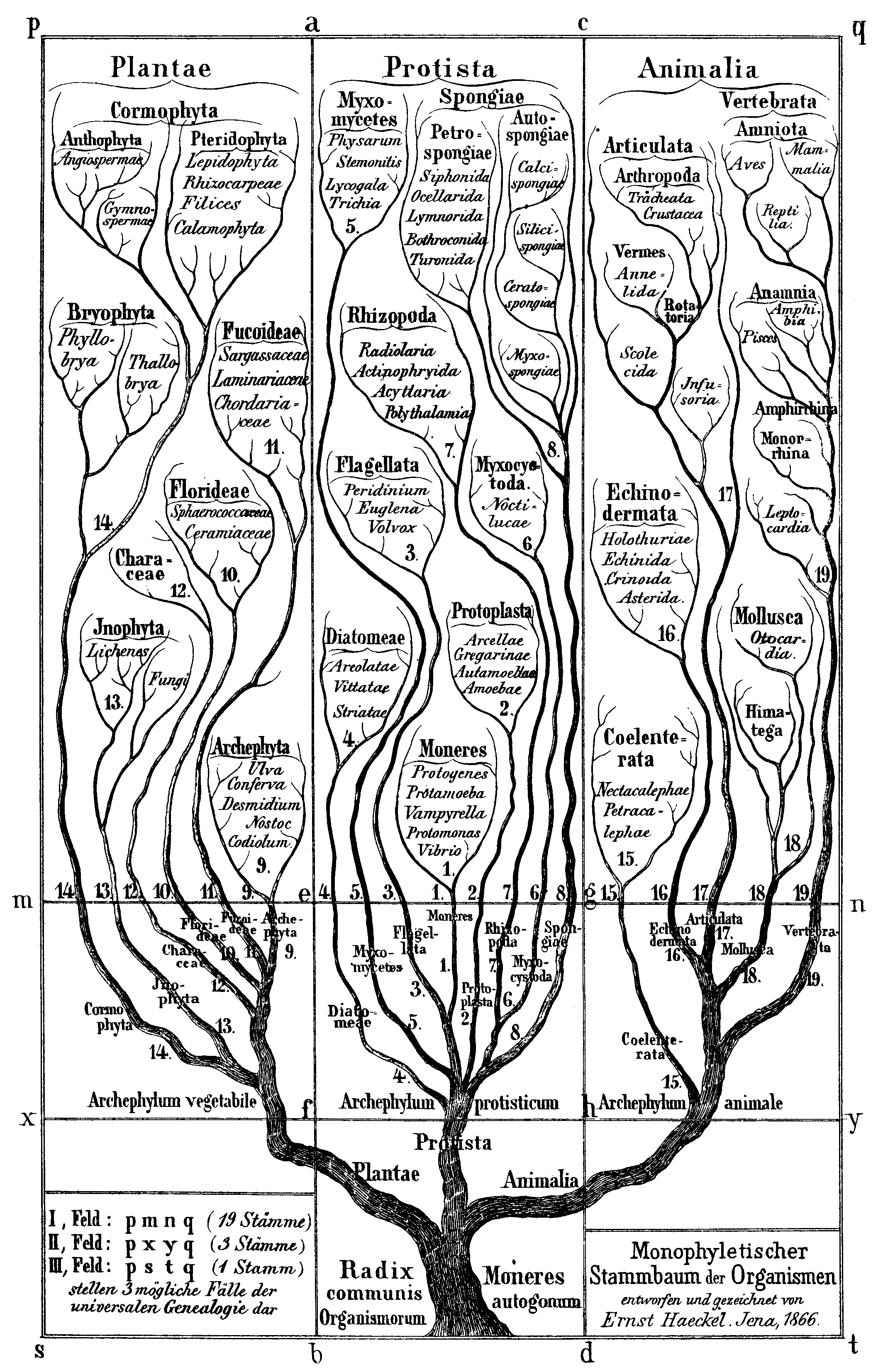
    And yet another, this one much earlier, in 1866:

    Haeckel_arbol_bn

  • Imaginary New York City Landscapes from CON-ED, 1938

    JF Ptak Science Books  Quick Post  

    Follow Me on Pinterest

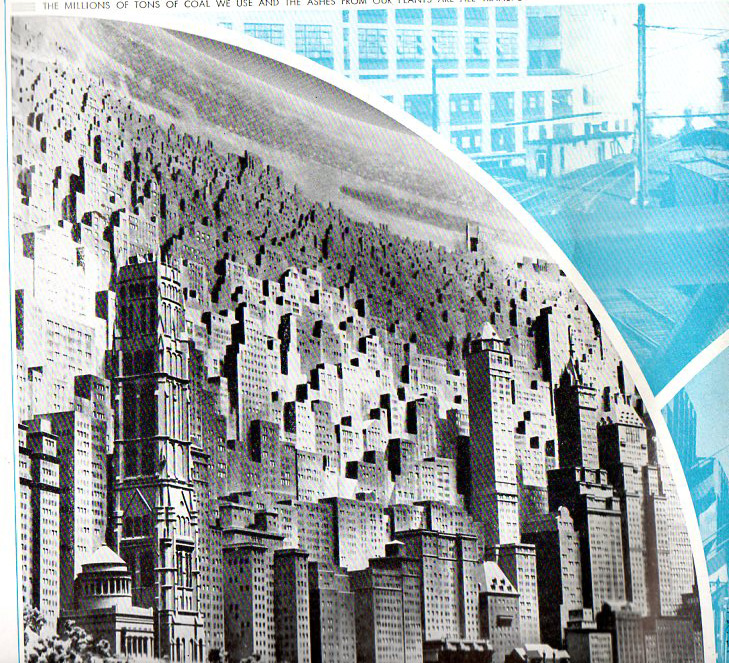
    These lovely images are found in a long, shining and slightly darkroom-smelling The City of Light, which was a pamphlet made for the Consolidated Edison exhibition at the New York City World’s Fair of 1939.  Con Ed I think just wanted to get the point across that they saw into the future and were getting ready for it, NYC being stuffed to the gills with buildings and each window stuffed and outlined in Con Ed-supplied electric light.  The vision is vaguely threatening to me, though, the buildings in a stadium-seating arrangement that is unsettling, like they’re part of our robot-overlord future–someone or something must be living in those room filled with Con Ed light, though…

    Nyc544

  • On the History of Wide Things: Cars, 1941

    JF Ptak Science Books     Post 2086

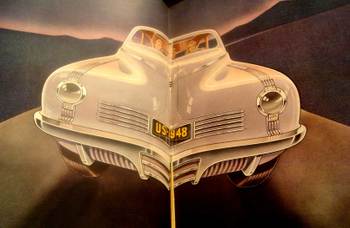
    Chrysler Motors was really on a hayride when their New Worlds in Engineering (1941) booklet hit the presses in 1940. From about 1930 to 1940 they produced about 8 million automobiles—more than a million in 1939 alone. 

    Blogwide1948

    Their cars got bigger, heavier, and of course, wider–on a course with the rest of the American automobile industry to secure their shiney spot in the Manifest Destiny of Wide. This ultra-wide model (above) was a bit of a peek into what the future might hold for the automotive company—the license plate says “1948”, and the car is definitely, defiantly, prodigiously, wide.  Those three heads peeping up above the dash really are sitting in a front seat front seat that looks as though it still held room for one more.  The razor-cheeked platinum blonde behind the wheel look as though her pencil fingers were just able to wrap around what looks to be a gigantic steering wheel.  –the two women actually look like they have the situation under control, while the eyebrow-arched male passenger looks to have something on his mind.  Perhaps his 1948-future self was thinking about the sweepingly sleek “Chrysler Royale”, which is not only wide but also very long, though it unfortunately has not dated license plate out front to give him any hope of when he might be able to expect to see this futurmobile.

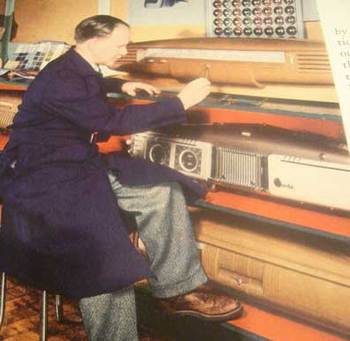
    Blogwidedetail48 In this picture (below) we get another glimpse of the wide future over the shoulder of a Chrysler designer.  Still another look-at-wide is this fellow in the purple smock from the art and design department who was molding new instrument display panels in clay—they seem long enough for this man to lay out in fron of and still have plenty of room left over.
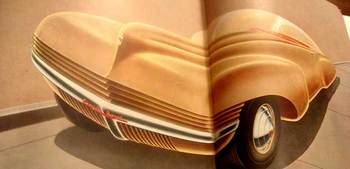
    Blogwidefuture It seems to me that all of these cars are wider than the widest of the wide production vehicles, including the unstoppably wide North African dune vehicle, the Unimog 5000, which measured in at 247 cm for its 2002 model. 
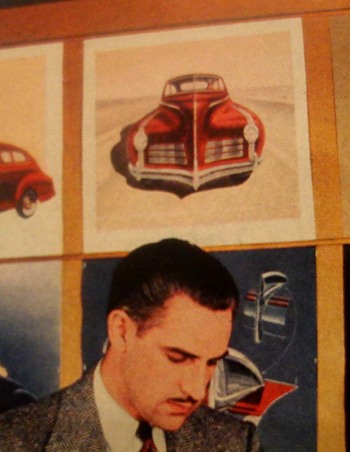
    I’m not sure where the roads were that these wide cars were going to travel on—but since they were future cars I guess they were all going just one way, so two-way streets could become one-ways, double-wide…
    Dsc00018

    [“Tomorrow department” is taken from the Chrysler Corp’s  “Chrysler Junior Craftsmen” department for the 11-16 year old sons of Chrysler employees, and which was nicknamed the “Tomorrow Department”. ]

    Blogwidedash

    ·Posted by :

    ·in:

Recent Posts

Archives

Categories