A Daily History of Holes, Dots, Lines, Science, History, Math, Physics, Art, the Unintentional Absurd, Architecture, Maps, Data Visualization, Blank and Missing Things, and so on. |1.6 million words, 7500 images, 4.9 million hits| Press & appearances in The Times, Le Figaro, Mensa, The Economist, The Guardian, Discovery News, Slate, Le Monde, Sci American Blogs, Le Pont, and many other places… 5000+ total posts since 2008.

  • Found Perspective Art (1868)

    JF Ptak Science Books  Quick Post

    Johannes Vredeman de Vries (ca.1527-1604, “The King of Architects” among the Dutch, at least), in his dedication to the reader (“To the Studious Viewers of Optics”) in his great classic on perspective writes:

    Vredman“My eyes and mind took pride
    In Sacred Optics. Thereunto allied
    was a fructifying labor,  forty years
    I plied this art devoutly, Here appears
    a doctrine worn by time. That art is famed
    For trustworthiness which trusty rules have framed…
    This art, which guides the eye and soothes the brain,
    with images, but never cheats the sight
    with lying views…”

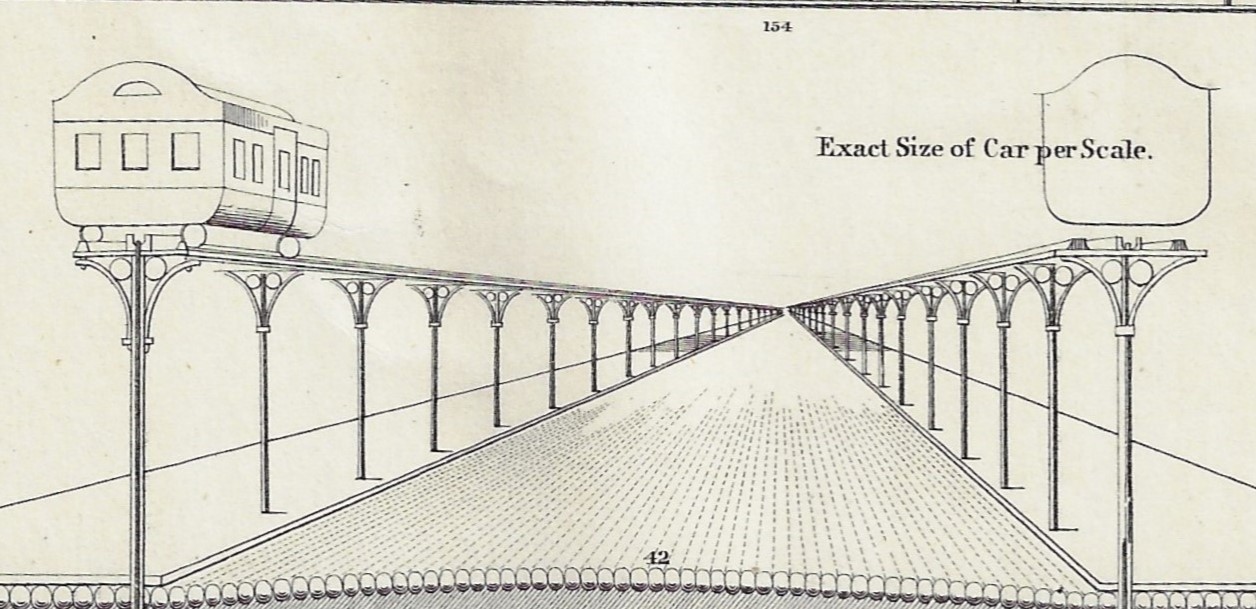
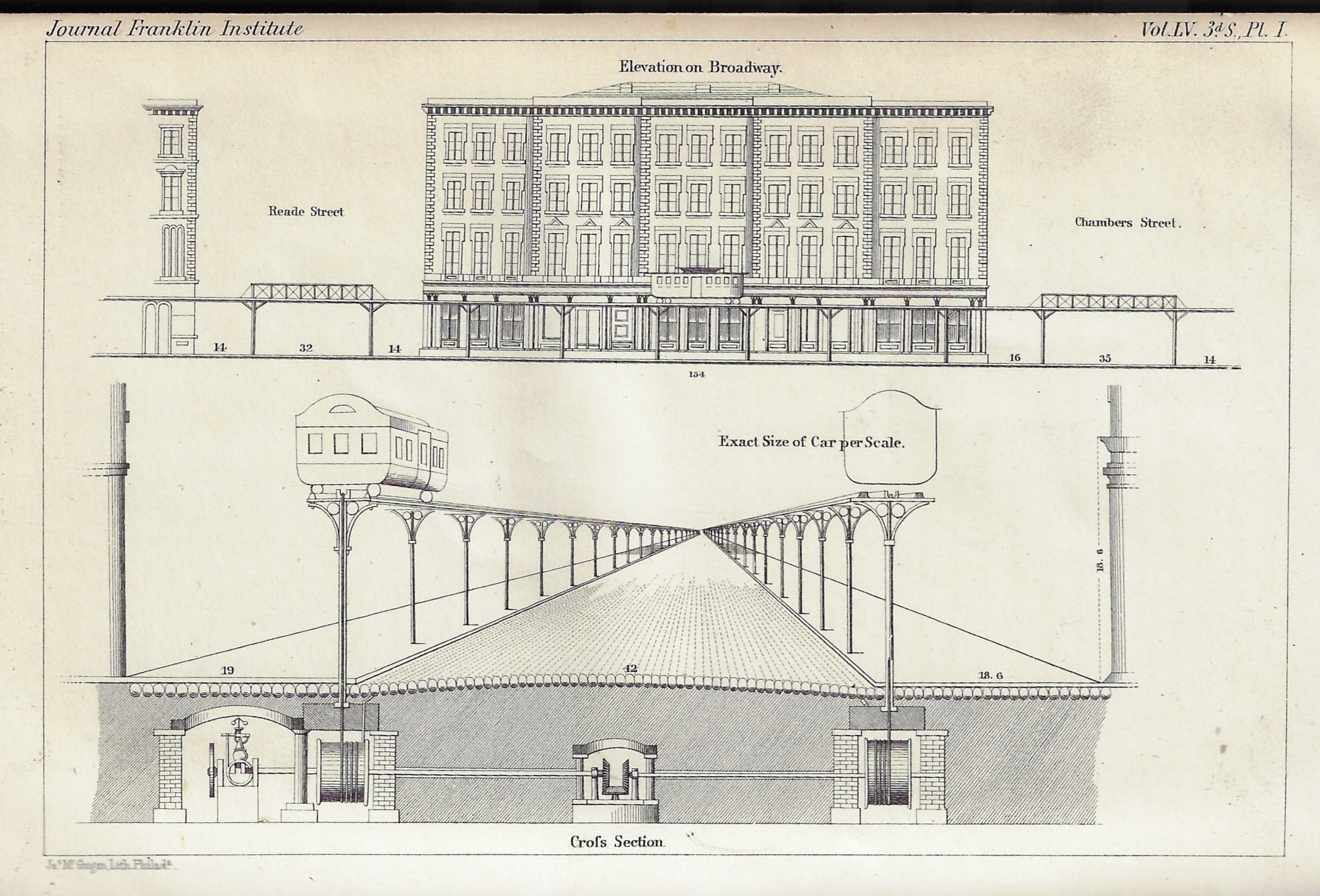
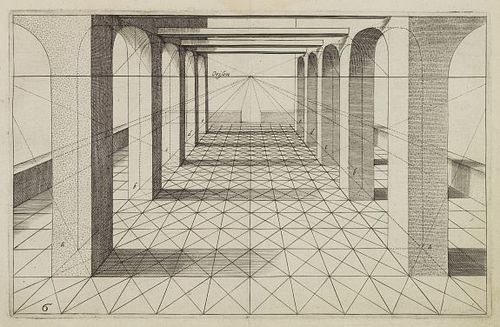
    Anyway, it was he who popped into mind when I came across this noteworthy image in the 1868 volume of Journal of the Franklin Institute.  It is a lovely piece of Found Art, the perspective part of which looks to be not so correct, the vanishing point appearing on a horizon only 500′ away. But no matter, I may be wrong, and the point of all of this is the “found art” aspect, which I think is very strong, and lovely. 

    JFI 1868 railway vanishing point _2_

    [Detail] The image appears in “West Side and Yonkers Elevated Patent Railway” and comes right after a long and heavy mathematical treatment on transferring power on belts and pulleys.  

    JFI 1868 railwaY vanishing point


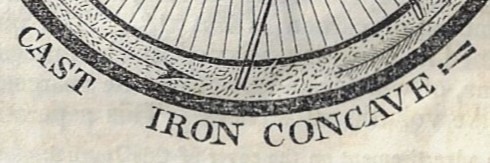
  • Found WordArt in Milling Machines: An Improved Smut Machine with Cast Iron Concave (1851).

    JF Ptak Science Books   Quick Post

    He said we were turning lunchtime into a 42nd street smut shop. —OED, [1977, Zigzag Apr. 28/3]

    “Smut” is best appreciated when it’s unexpected smut. And that’s what this smut is in this post, the smut found in the 1851 volume of the Journal of the Franklin Institute, italicized in a running page header:

    JFI 1851 SMut MAchine _1_

    After the initial surprise of seeing it, you pretty much remember that “smut” has a number of definitions outside of the ones that you’d remember. (Like walking along 42nd St in Manhattan to get to the library, though as a young teen back in 1969 you really didn’t see any exposed smut, though you could sure smell it when the smut-palaces that peddled the stuff had their doors wide open for a summer breeze that sucked the stale smutty putrefaction of smutty smut air onto the sidewalk—so I think I smelled smut before I actually saw any. Thanks, Deuce!)

    The real point is that “smut” has a number of meanings before we get to Forty Second Street: plant fungus (“A smutted grain”), a type of coal, soot, and so forth. There is one definition—of a “smut” being a tiny insect–from the Oxford English Dictionary where the quotation of its use is sort of a beautiful terror/horror stand-alone, and it comes from the New York Daily News (of course!) in 1899:  “A trout..grubs in the weeds, chases larvæ, and revels in almost invisible smuts.”–Daily News 28 Dec. 6/4  

    Then there are the extended employments of “smut” that are stumpy and poetic, the  “compounds of smut” as indexed by the OED (which is a memorable phrase all on its own):  smut bag, smut corn, smut fungus, smut mill, smut machine, smut spore, smut book, smut-note; smut shop, smut-hunting, and etc.

    So like a limited version of the Seussian turtles-all-the-way-down concept of language/cosmology, “smut” can handle at least a few feet of this endless tower of word towers. 

    JFI 1851 Smut machine _3_

    ·Posted by :

    ·in:

  • Bridges Never Built: the Hudson River Bridge (Midtown) 1896

    JF Ptak Science Books   Quick Post

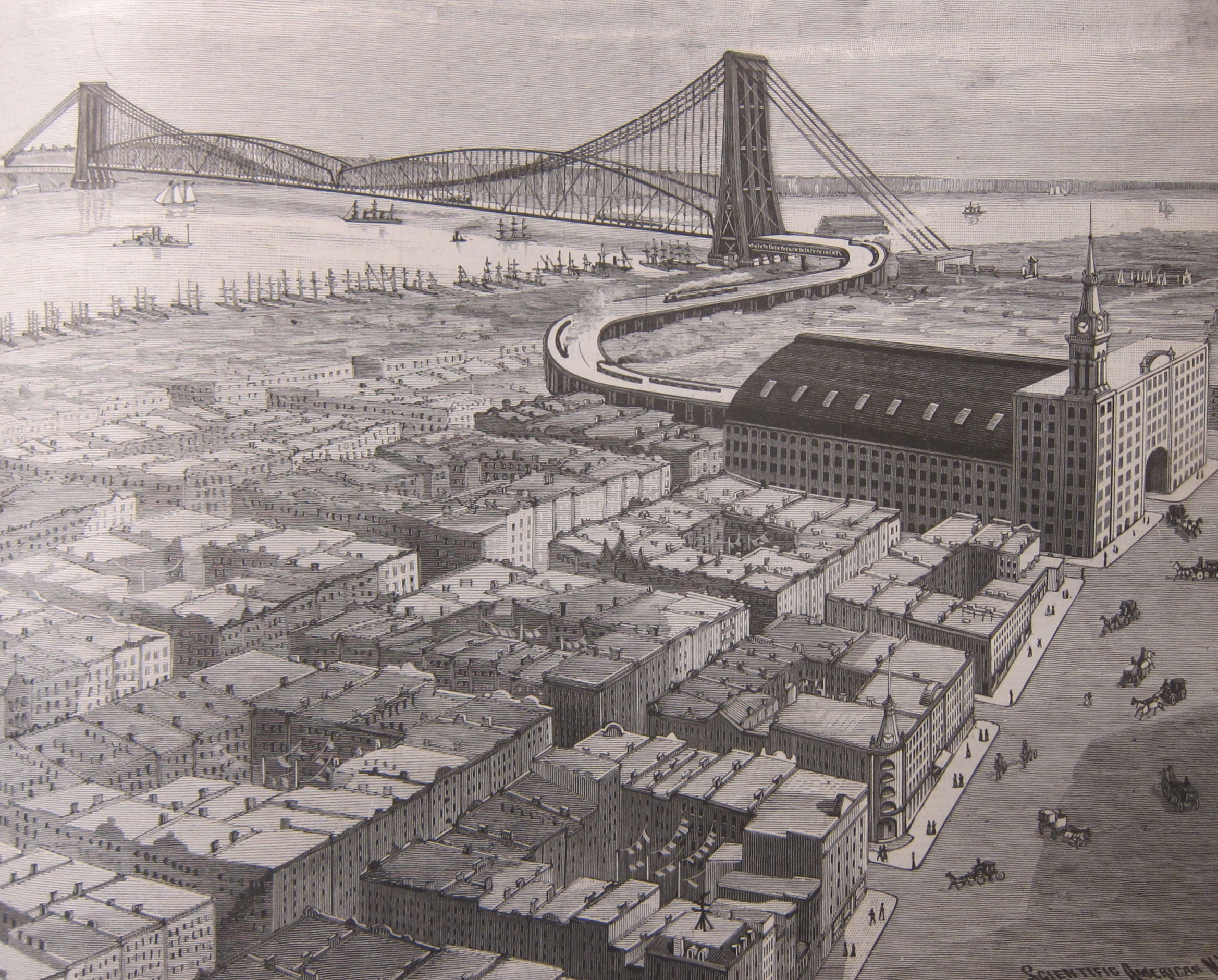
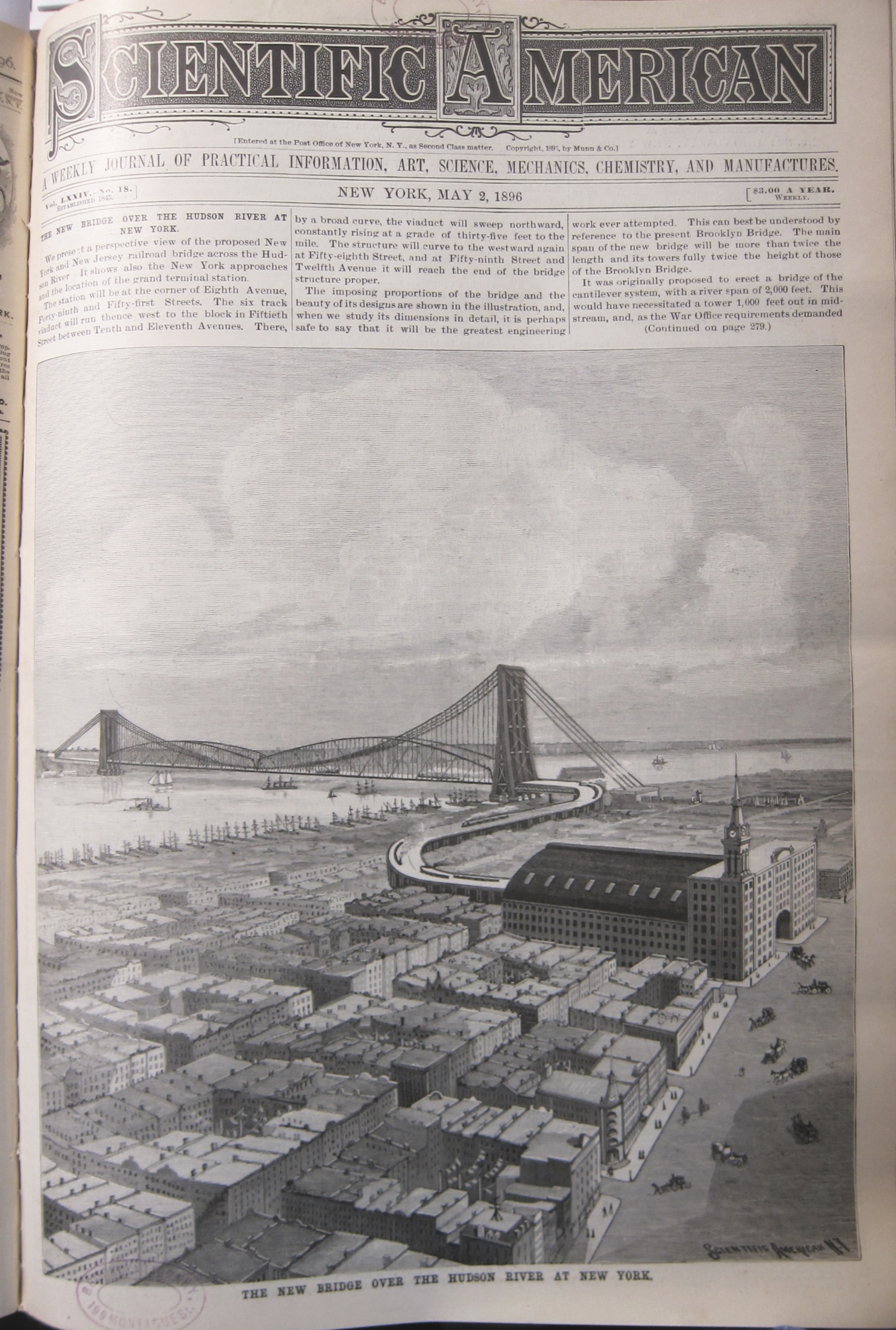
    This beauty appears in the pages of Scientific American for 1896, and discusses a proposal for a bridge to connect Manhattan to Jersey, and to do so spectacularly. The plan was for the bridge to be twice as tall and twice as long as the Brooklyn Bridge, making it “one of the greatest feats of engineering” ever.  The terminal and approaches would’ve been an issue in a few decades later had it been built, as they occupied a fair piece of land from about 59th/11th & 12th and 51st/8th, plus the ramping for six-rails-wide railway access.  The time would come for a bridge in 1929 when the work on the existing Hudson River Bridge (now known as the George Washington Bridge) would be built further north in Washington heights. In any event, this 1896 bridge was quite lovely.  

    SciAm 1896 Hudson River Bridge


    SciAm 1896 Hudson River Bridge

    ·Posted by :

    ·in:

  • The Biggest Big Wheels (1896)

    JF Ptak Science Books  Quick Post

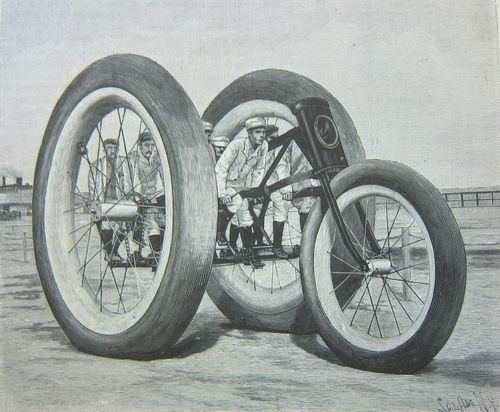
    Even Scientific American–the 1896 source of this small article on this big bike–was impressed with the virtuoso nature of bigness in this invention, stating in the open paragraph that “in this age of big things one is always prepared for the construction of a mammoth engines, ships, buildings…” but this practice was “invaded by the bicycle world”. The trike was “colossal–no other word can describer it–” at 17′ long, powered by eight people (four per rear wheel), with a 6′-diameter front wheel and 11′-diameter (!) rear wheels (with 1/2-inch diameter spokes)  and weighed in at 3000 pounds. It was a beast. The function evidently did not follow form, as there was no discernible use for it except to be displayed during parades and other social events. 

    Sci Am 1896 giant trike

    ·Posted by :

    ·in:

  • A Map of Japanese Intentions for Conquest Extending to Hawaii–1933

    JF Ptak Science Books  Post 2812

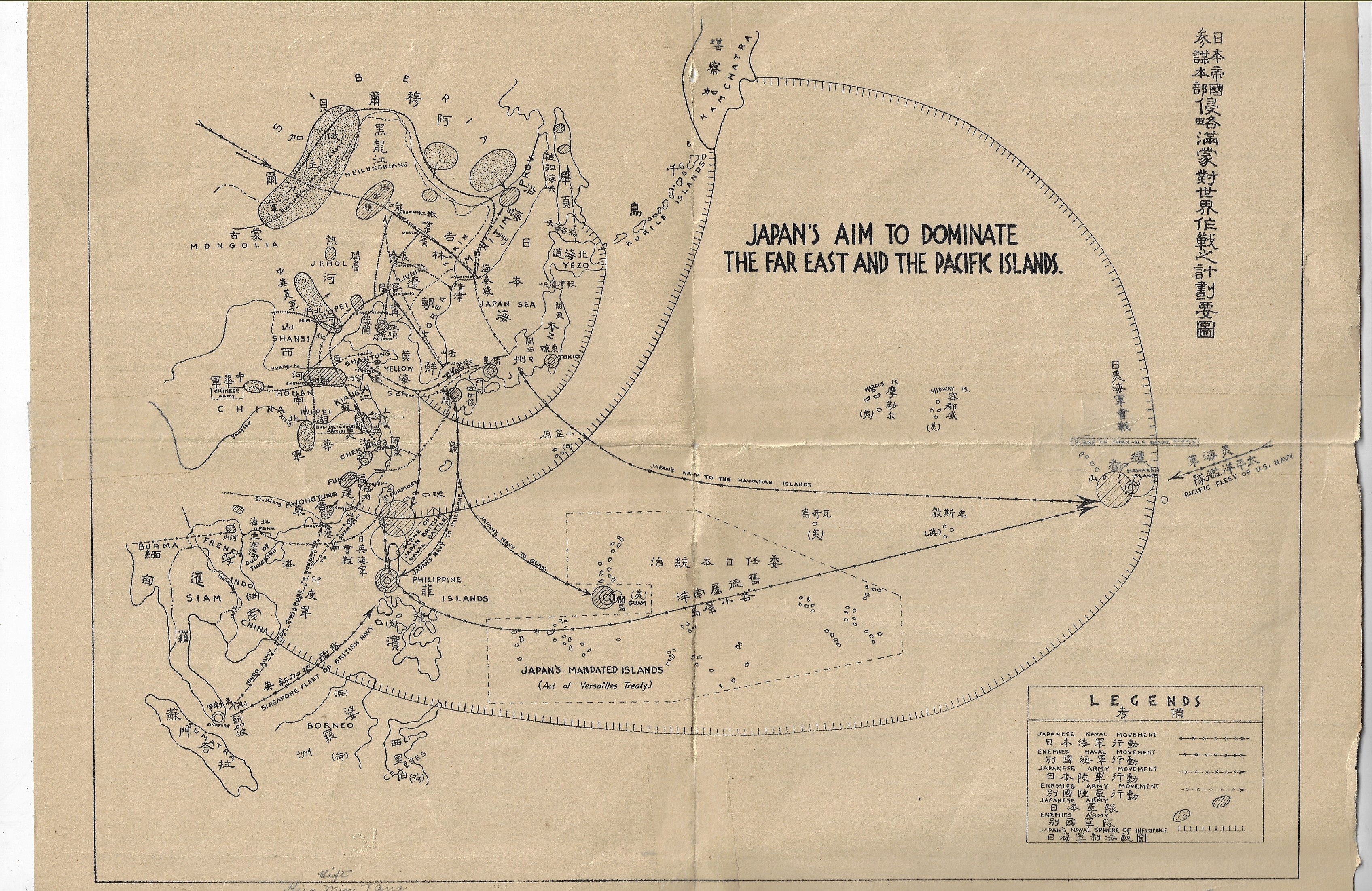
    I do not unfortunately have much information on this very interesting (and to me unexpected) map, nor do I know very much about the history of Japanese militarism and planning 1925-1935–I do though want to at least post/share it for interested parties. As you can see, the expected sphere of influence to be maintained by the Japanese in the near future extended to Pearl Harbor, Manchuria, and as far south as the northern Celebes.  What is remarkable is that this map was published no later than 1933. If you read the text of the pamphlet (below) you will note that was seen that Japan planned on world domination ten years hence (ca. 1943). The map:

    Maps Japan conquest map

    A Plan of Japan’s Proposed Military and Naval Conquest as Revealed in the Strategic Map appears no later than 1933. The single-sheet folded pamphlet contains two pages of text along with the middle two sheets of the map, “Japan’s Aim to Dominate the Far East and Pacific Islands”. The document was part of a very large collection I bought of the Library of Congress, and according to the pencil notes on the pamphlet it was sent to the L.C. by the “Kuo Min Tang” on May 13, 1933.  (It was curious to see the KMT referred to as though it was someone’s name, rather than a political party begun in the People’s Republic of China in 1894.)

    This is a piece of anti-Japanese propaganda coming from the KMT, and it is published by the Chinese National Salvation Publicity Bureau (844 Stockton Street, which looks today like it is the Sun Yat-Sen Memorial Hall) in San Francisco,  After all, the Japanese had been savaging around in China on and off since the First Sino-Japanese War at the end of the century, and then again heating things up in the early ‘thirties with the Japanese-instigated the Shanghai War and the invasion of Manchuria–the Chinese no doubt were seeking allies wherever they could them.  

    There are a lot of lines of conquest on this map, encompassing nearly all of South East Asia.  The largest sphere of “influence” extends all the way to the Hawaiian Islands, where the Japanese would take the islands by a “naval battle” with the U.S.  

    I’ve checked WorldCat for other copies and found only one mention–same thing for the internet.  

  • A Map of Prostitution AND “Negro” as a Nationality (1913)

    JF Ptak Science Books  Post 2813
    There were two big surprises in this 1913 work1 on prostitution in Portland, Oregon–I mean, aside from the normal “surprises” and “unexpecteds”one expects from an early 20th c study on the sex trade. (If someone wanted to do a version of The Deuce as Portlandia Nights 1913 this report would be atomic material.) The book runs 200 pages and for the time is filled with unusual social history, snapshot observations, interviews, police involvement, data of all shapes and sizes, and that sort. The book is fairly comprehensive–all things considered–and the efforts are distributed to the following sections: “A Report on the Social Evil, as affecting places of public resort and accommodation; hotels, apartment houses, rooming and lodging houses”, pp 4-81; “On the Legal and Police Aspects of the Social Evil”, pp 81-122; “A Report on the Juvenile Aspect”, pp 123-164; “Report on the Economic Aspect”, pp 165-202; “Report on a Segregated District”, pp 203-216.) Overall it is a survey of the grand scheme of prostitution (the “Social Menace”) in Portland as it existed in one section of the city (Irving Street-Hall Street-23rd St-Harbor line). It investigated 547 buildings/rooming houses and found 98 to be “moral”, 431 to be “immoral”, and a balance of 98 falling into a gray-ish “doubtful” category. 

    • This post is based on a copy of this report that I have here–there is something online text at Hathi that has a slightly different title but looks to be the same that you can enjoy here: https://catalog.hathitrust.org/Record/100641247

    The report surfaces some fascinating info: for example, there is a section on interviews with proprietors of the erstwhile hardly-vanilla hotels, which includes a number of very colorful quotes, including one “madame” from a bawdy house on Sixth Street, who claimed “Portland is the best town on the coast for a sporting woman to make money in.” Other madams agree! There are interviews with “sources of vice” (“grills, chauffeurs, pool rooms, messenger boys newsboys…”), police, civil service, hotel folk, that sort..  A good standard example of a description of one of the bawdy houses reads: “Hotel [unnamed and with no street address identified] Taylor Street. Shabby place of 46 rooms. Run by man and woman, who occupy front rooms, one of which the woman uses as a parlor, the other as a bed room for immoral business. Three prostitutes work for management, paying one-half of their earnings from bed money. Liquor sold.”

    The “study of the docket”  is a listing of occupations of prostitutes, arrests, charges, fines, and wages paid the prostitute; there is a section on “testimony” in which the sex worker tells her story, and another section on the general living conditions in the bawdy houses. The last section in the publication deals with “segregation”, though the type of segregation here has nothing to do with race, and simply means that there would be a set-aside space for sex businesses in Portland.

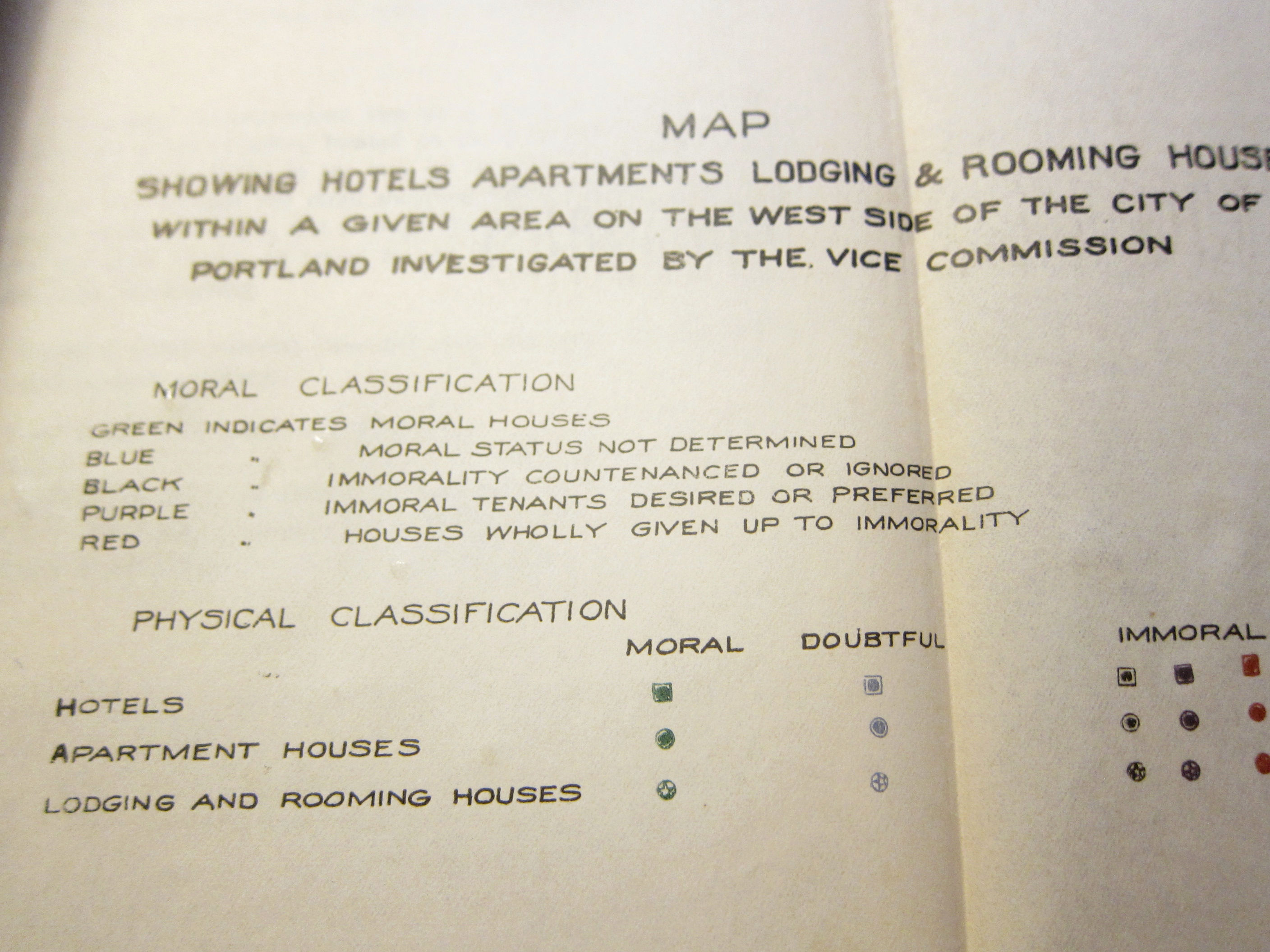
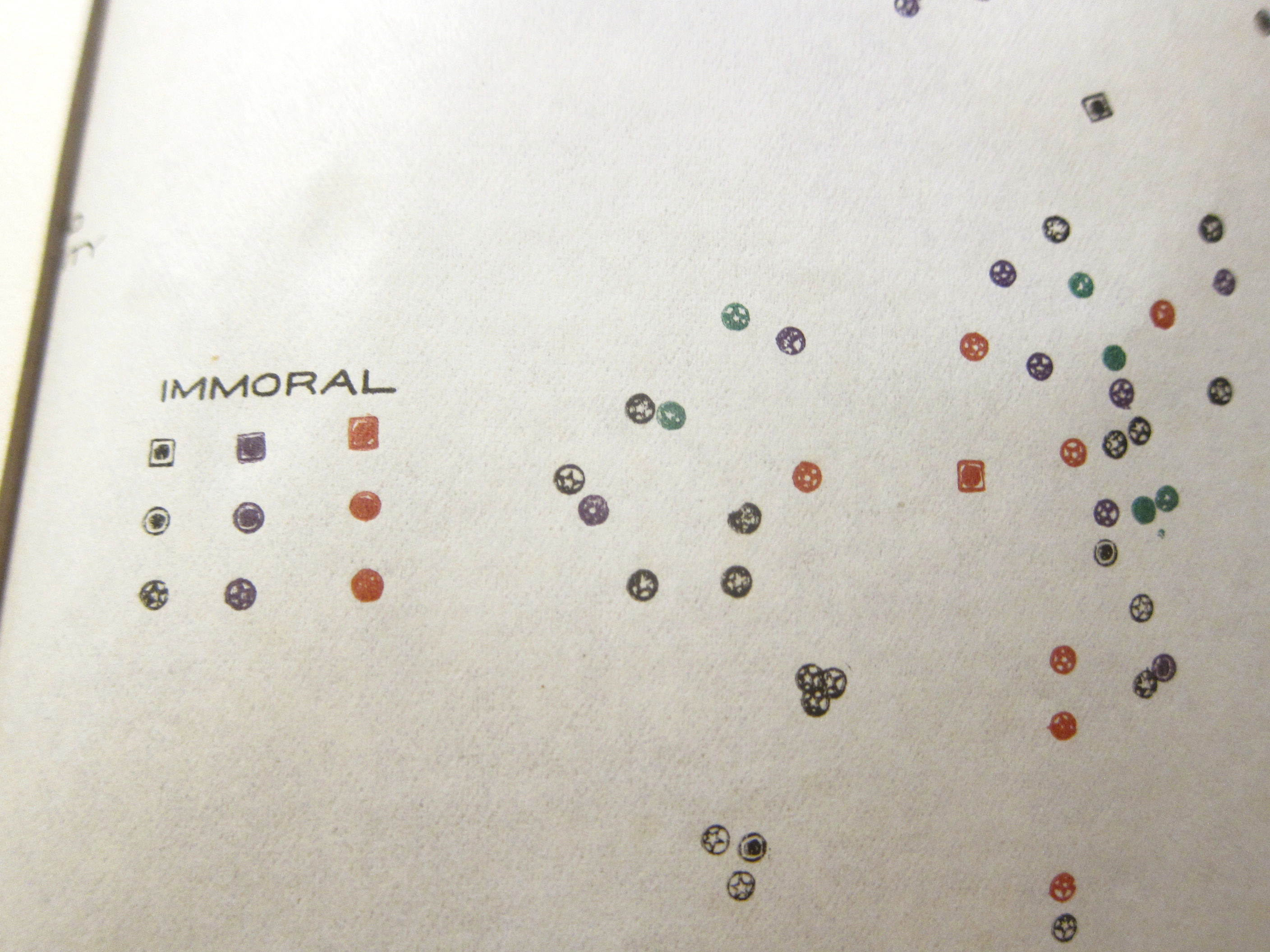
    So, the first surprise: there is also a very daring and fascinating map in the first section of the report which identifies hundreds of the Social Evils establishments. They are classified top-to-bottom in the following way: “Moral houses”, followed by “Moral status not determined” and then steeping into “immortality countenanced or ignored”, to “immoral tenants desired or preferred”, and then finally to “house wholly given up to immorality”. The odd thing about the map is that it seems to be overlay, meaning that the details of the actual geographical part of the map are left out and there is no underlying map on which this skeleton map is laid (as published). The map isn’t quite a “map” as much as it shows approximate vicinities and coagulations of these establishments in relation to one another and confined to that one particular part of Portland. I guess that leaving out the exact addresses was a preventative measure to squash the possible plans of some enterprising people to use a detailed map as a Guidebook to Portland Houses of Ill Repute.  

    Portland Vice Map
    Portland Vice Map

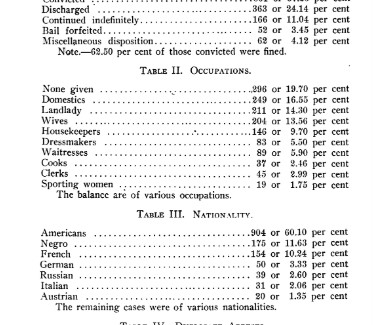
    The second major unexpected surprise: on page 96 there is a listing of nationalities of prostitutes arrested—in the accompanying table the leading nationality is “American” followed by “Negro” and then “German”…which seems to me that U.S. Citizenship is being denied to African Americans on the basis of race, and that, evidently, “Negroes” are not American citizens. And according to the law in the state of Oregon in 1913, “Negroes” were not even allowed to migrate to the state, stated as such right in the Oregon constitution—a law that was not addressed and eliminated until 1924. I suspect that African Americans were illegally in the state and thus, somehow, had their rights of citizenship in the USA stripped away. Or perhaps this was the work of a racist editor, or author, or someone;; one person, one small group, that instigated this classification. Or maybe it was someone ignorant who just go the whole thing wrong and which was subsequently missed by the editor. I don’t know. All I can say about this is that this is the first time I’ve seen African Americans introduced in a statistic post-1865 as citizens of the U.S. who were deemed to be not so. 

    Negro Nationality

    Notes:

    1. Talbot, Henry Russell. Report of the Portland Vice Commission to the Mayor and City Council of the City of Portland, Oregon.. Portland, 1913. 9”x 6”, 216pp. Original stiff wrappers. Provenance: Library of Congress via the Washington DC Public Library.   


  • “What’s Left of the Jews?” (July 26, 1945)

    JF Ptak Science Books   Quick Post

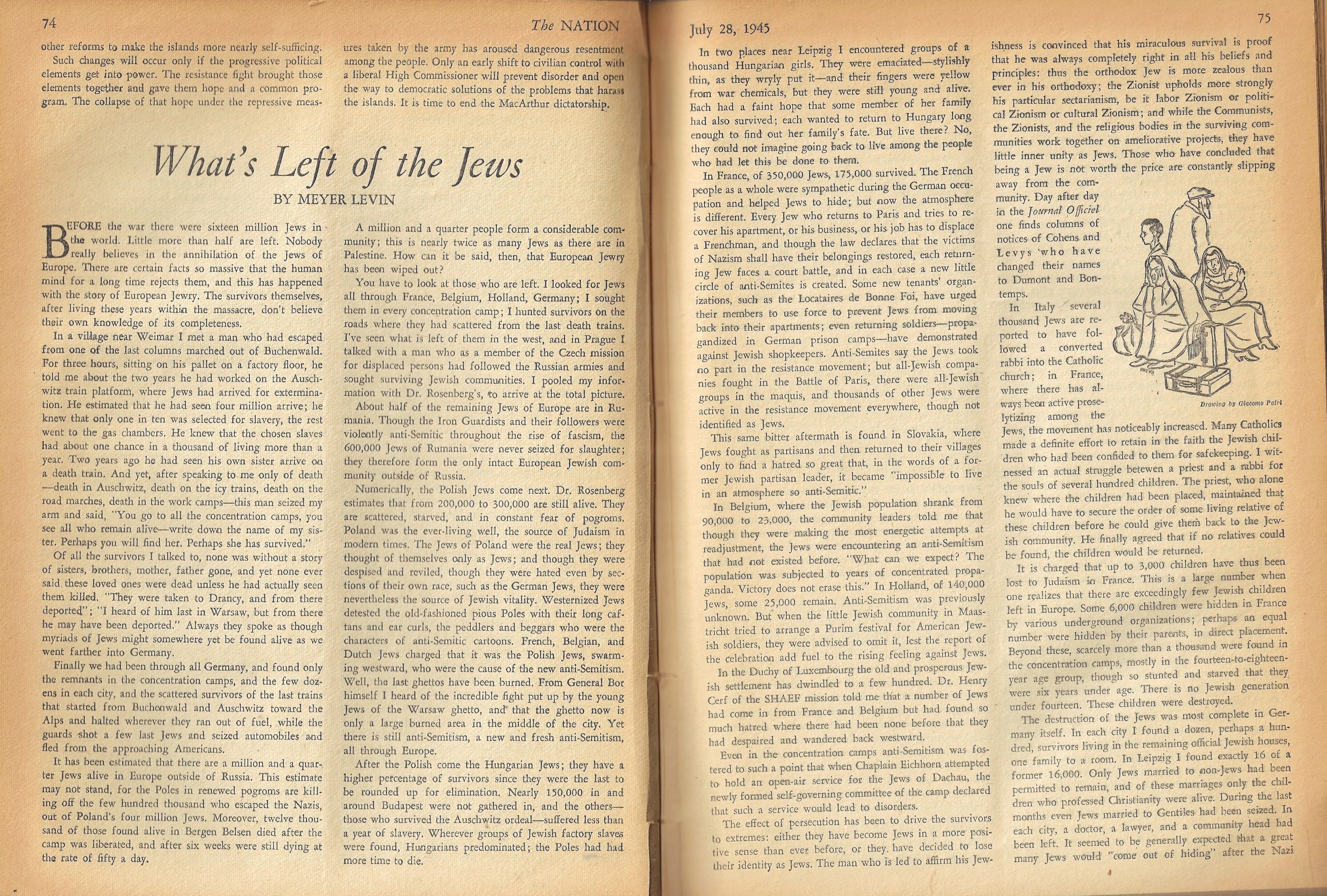
    Meyer Levin (1905-1981, journalist, editor of Esquire from 1933-39, and author of numerous books and articles) encountered and confronted the Holocaust in-person at the end of WWII in Europe and wrote about it in the pages of The Nation. His article, “What’s Left of the Jews”, bluntly confronts the millions of murdered Jews, and then locates where the remaining populations were. And then he discusses the improbable and incredible rise in anti-Semitism that survivors faced. His piece was published July 28, 1945, two months after VE Day.  I reprint the article below.

    Levin writes:

    “Before the war there were sixteen million Jews in the world. Little more than half are left. Nobody really believes in the annihilation of the Jews of Europe. There are certain facts so massive that the human mind for a long time rejects them, and this has happened with the story of European Jewry. The survivors themselves, after living these years within the massacre, don’t believe their own knowledge of its completeness…”

    Nation July 26 1945 whats left of jews

    ·Posted by :

    ·in:

  • High Realism in Anatomical Art: the Skull (1872)

    JF Ptak Science Books   Quick Post

     Anatomy--braun--

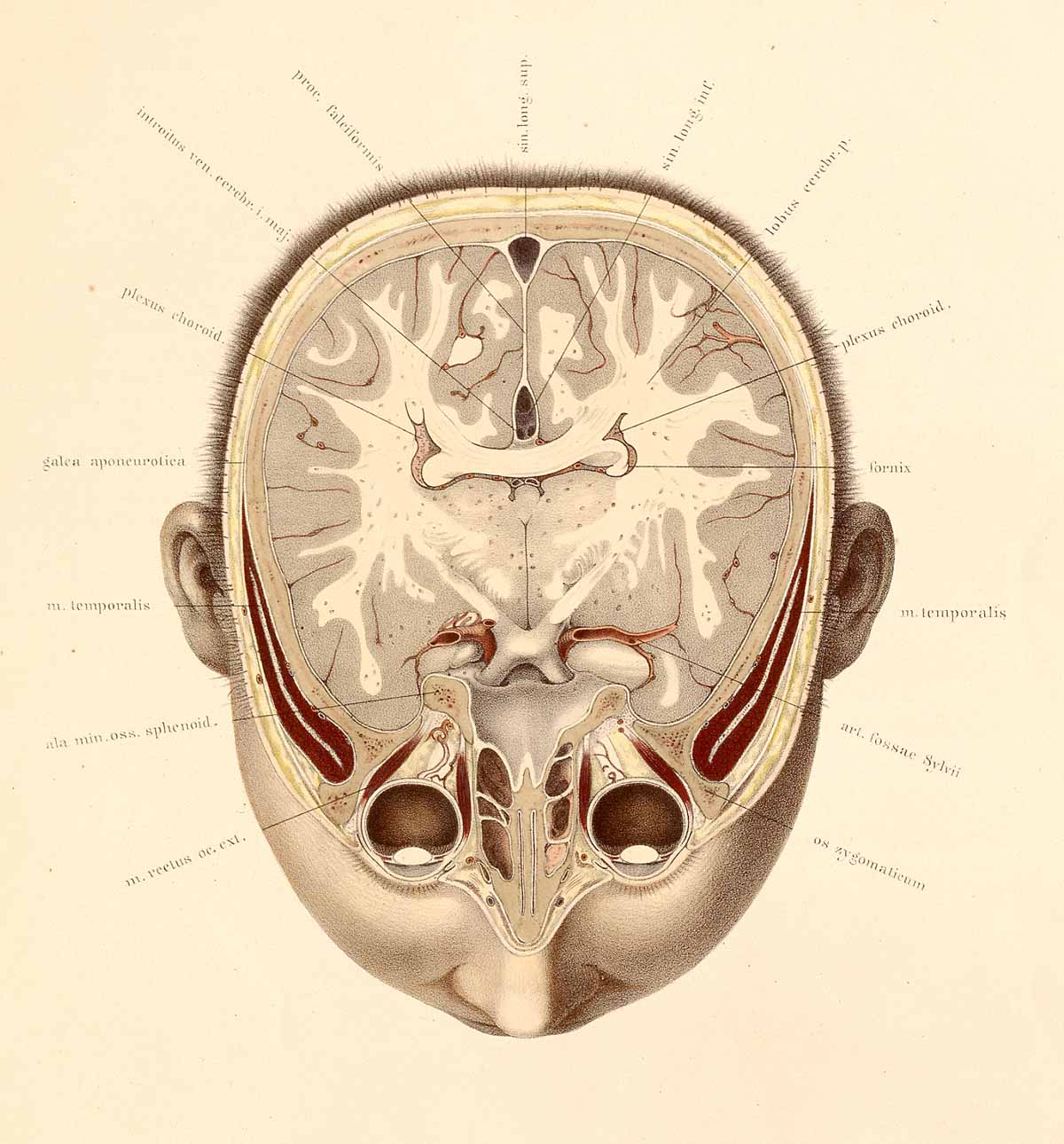
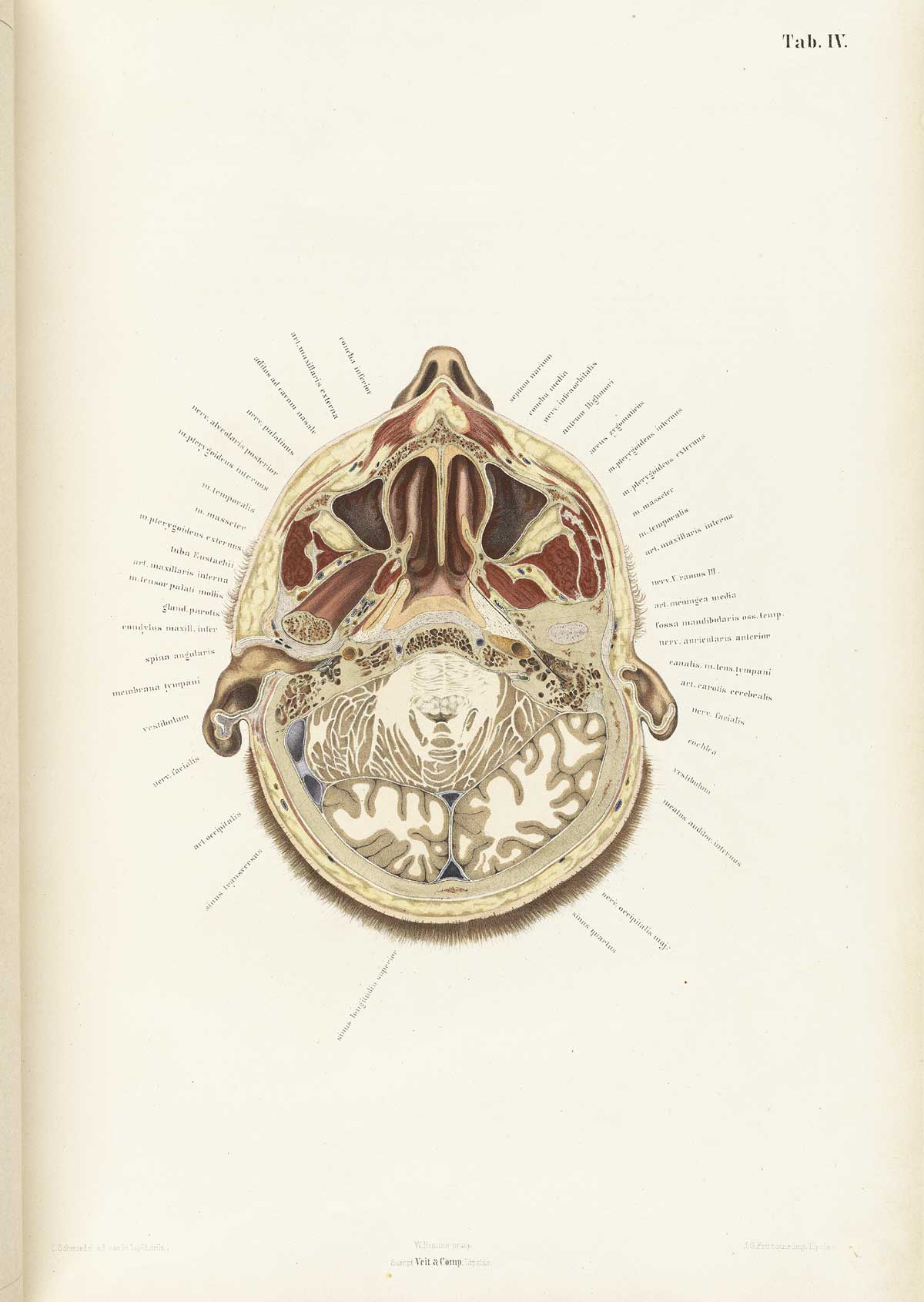
    The collaborative work of anatomist Wilhelm Braune (1831-1892) and artist C. Schmiedel (fl. mid-1800s) produced a singular work,  Topographisch-anatomischer atlas nach durchschnitten an gefrorenen cadavern…(published in Leipzig in 1872), which was an outstanding example of high-realism in the art of anatomy. This book is pretty much right-to-business, with no extraneous bits as had appeared in anatomies for centuries. And even though these practices had pretty much expired by the first quarter of the 19th century, Braune/Schmiedel was ever more so detailed and simple–their design was fabulous, and their detail light and exceptional. 


    Anatomy braune04[Source: National Library of Medicine.]

    They also made use of sliced frozen sections of cadavers, which seems to give their work that crystalline touch.  The first image looks at the brain from top-to-bottom, while the second reverses the view, which is in itself somewhat unusual, even in 1872. 

  • Robot-Art of the Future and Far-Sighted Art of the Past

    JF Ptak Science Books   Post 2813

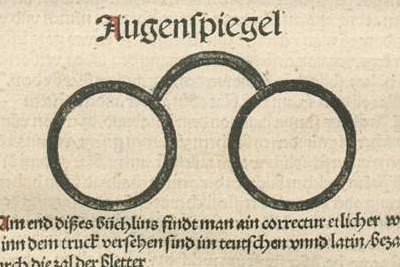
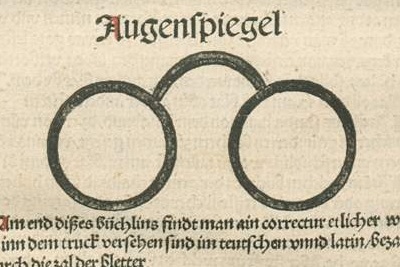
    Eyeglasses-detail[Johannes Reuchlin, Augenspiegel...1511]

    What happened to art in the period before Impressionism that was made by people who needed glasses and didn’t or couldn’t wear them?  The answer is obvious because, I think, nothing quite like that exists in galleries or public collections:  people who painted but had poor vision were probably/simply told that they couldn’t paint.  If a far-sighted person without corrective specs attempted to paint a sunset over a forest, and painted it exactly  as they saw it, and were doing this in 1787, there work undoubtedly would have been rejected as utterly failing in realism.  On the other hand, the result of their work may have been beautiful collections of forms and colors capturing the essence of the forest and the sunset, but they would have been 50 years shy of the JMW Turner time, and 70 years or whatever shy of the Impressionists.  

    A person with poor or disturbed vision who tried to paint during this time would have been roundly scooted out of the palace of correct painting, though they could have been inspirations to generations of Barnett Newmans and Jasper Johns and Clyfford Stills and Wassily Kandinskys.

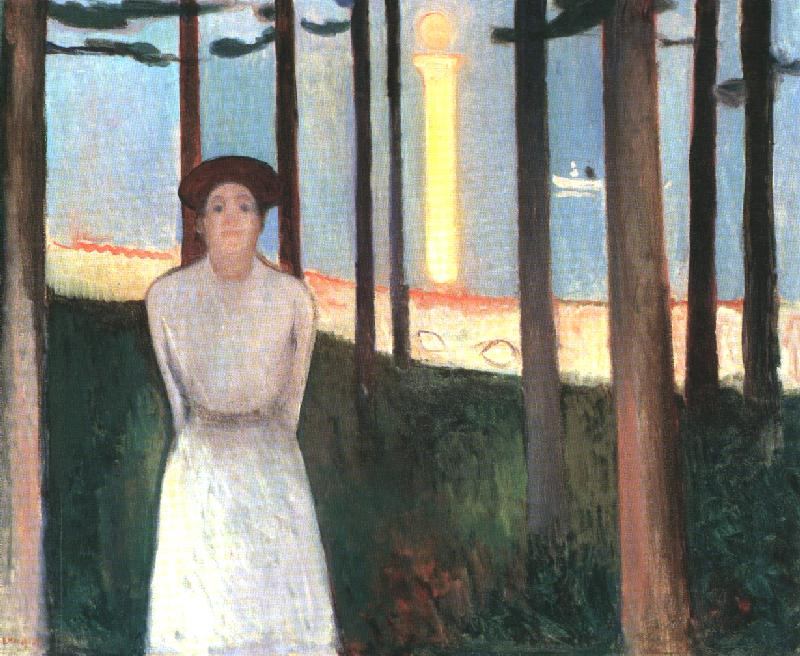
    All this said, does something like Edvard Munch’s The Voice (1893) start to look a little “different” if you imagine a far-sighted artist at work without their glasses?
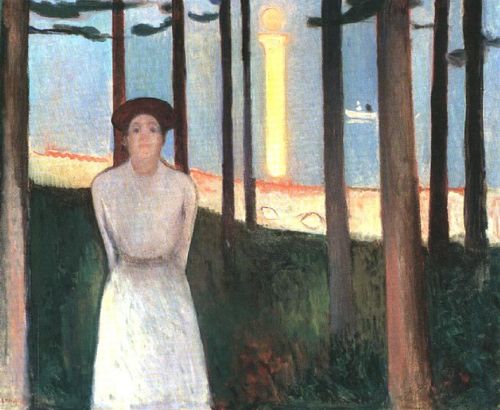
    Munch--the-voice-1893

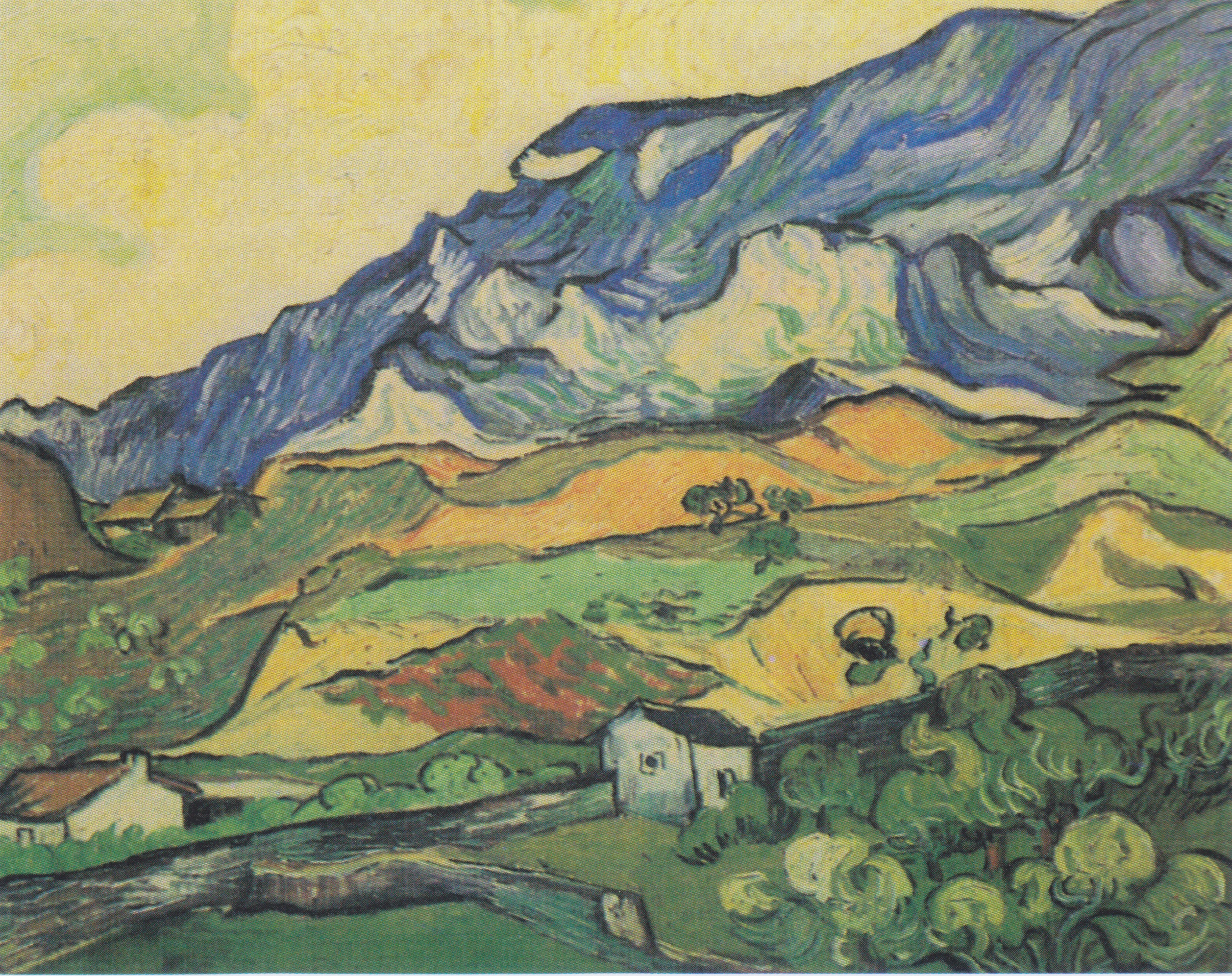
    Or a vision-impaired person producing Les Alpilles (1890) instead of a visionary Van Gogh?
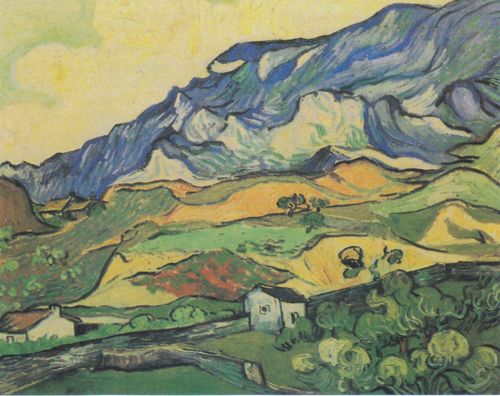
    Van_Gogh_-_'Les_Alpilles',_Berglandschaft_bei_Saint-Rémy

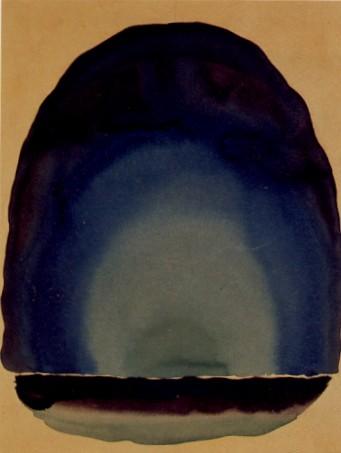
    Or a macular degenerating issue producing a painting like Georgia Okeefe’s Light Coming on the Plains III (1917)?
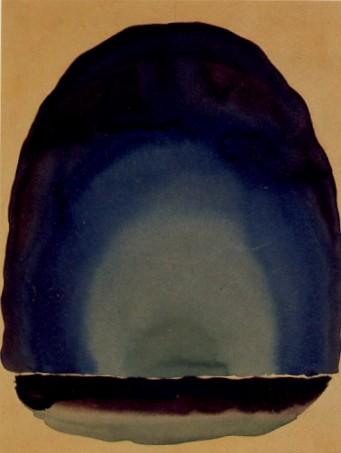
      Okeeffe_light_coming_up_on_the_plains_iii

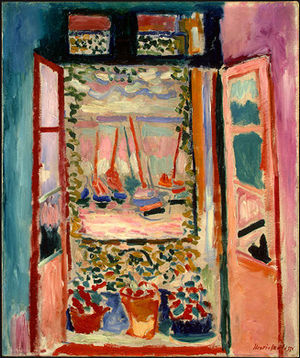
    Or a half-blind artist painting Matisse’s The Open Window, Collioure (1905), simply painting exactly what they saw?  
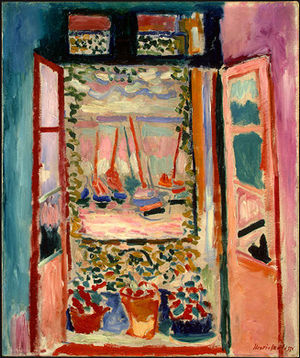
    Matisse
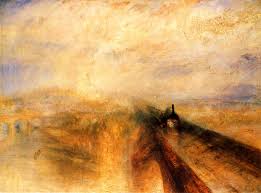
    I don’t think of revolutionary artworks in terms of their common ophthalmologic varieties–I just wanted to make a point about what happened to all of that artwork that was no doubt produced by people with impaired vision before the Impressionists and Fauves and non-representational artists came into being.  I wonder if those who received J.M.W. Turner (as with, say, Rain, Steam, Speed–the Great Western Railway, 1844) so badly so early on in his career and so early in the History of Disappearing Details wondered whether he had a visual issue, or not?  Turner rain steam speed
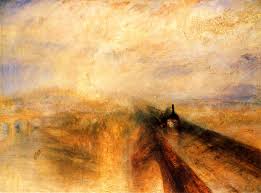
    And in a way, similar to the probably non-existent vision-challenged art of the past is the Robot art of the future–or at least the robot art of what was described by P.K. Hoenich in his article “Robot-Art, the Hopeful Monster” that appeared in two part in the unlikely journal Cybernetica in 1963 and 1964.  It was with high hopes that I started reading this article wanting the author to address robots-making-art in the future.  After all, my friend George Widener, who is a fabulously gifted artist,  directs some of his fantastically involved calculating/numerical artworks to the interests of his robot-collectors of the future–given this case, why (if the robots are collecting) wouldn’t they also produce art themselves?  And why, if given the legions and multitudes of robots of the future couldn’t they produce every recorded piece of art that has ever existed and then insinuate development and trends and institution and all of the other gifts of the singularity and produce all of the works of art that will ever be produced?

    Well, Hoenich turns out to be describing “robots” of a very different sort, whether he uses the term “monster” in his title or not.  He was broadly addressing a style of art that is produced by externally-controlled structures (mostly), and his particular brand was a mobile-like device with art bits whose movement was powered by the wind…and also used found spectra and sunlight.  It was not what I was hoping for, the vision of robots-at-the-easels/keyboard/whatever remaining unfulfilled. 

    Still it was an interesting read, mostly in laying Hoenich in a continuum of similar artists whose “robots” were the wind (as for example with a Calder) or Nicolas Schoeffer (with spectacular luminodynamics) or Mohly-Nagy (with a combo of light and movement) or Arp (with chance painting) and maybe even Pollock. I guess even Duchamp could be included in a category like this if you considered his work to be governed by selective, found chance, a sort of choice-chance, for his Readymades. 

    So in a way these artworks were made by “robots” insofar as they were produced by not-exactly the artist but with external assistance.

    “Squinting with Art” perhaps could have been the title of this post–squinting at your landscape to see it with semi-non-representational vision, and squinting at the titles of other works to make their possibility more appealing to what you ‘d like to see. 
  • Christmas Mail, December 1917

    JF Ptak Science Books  Quick Post

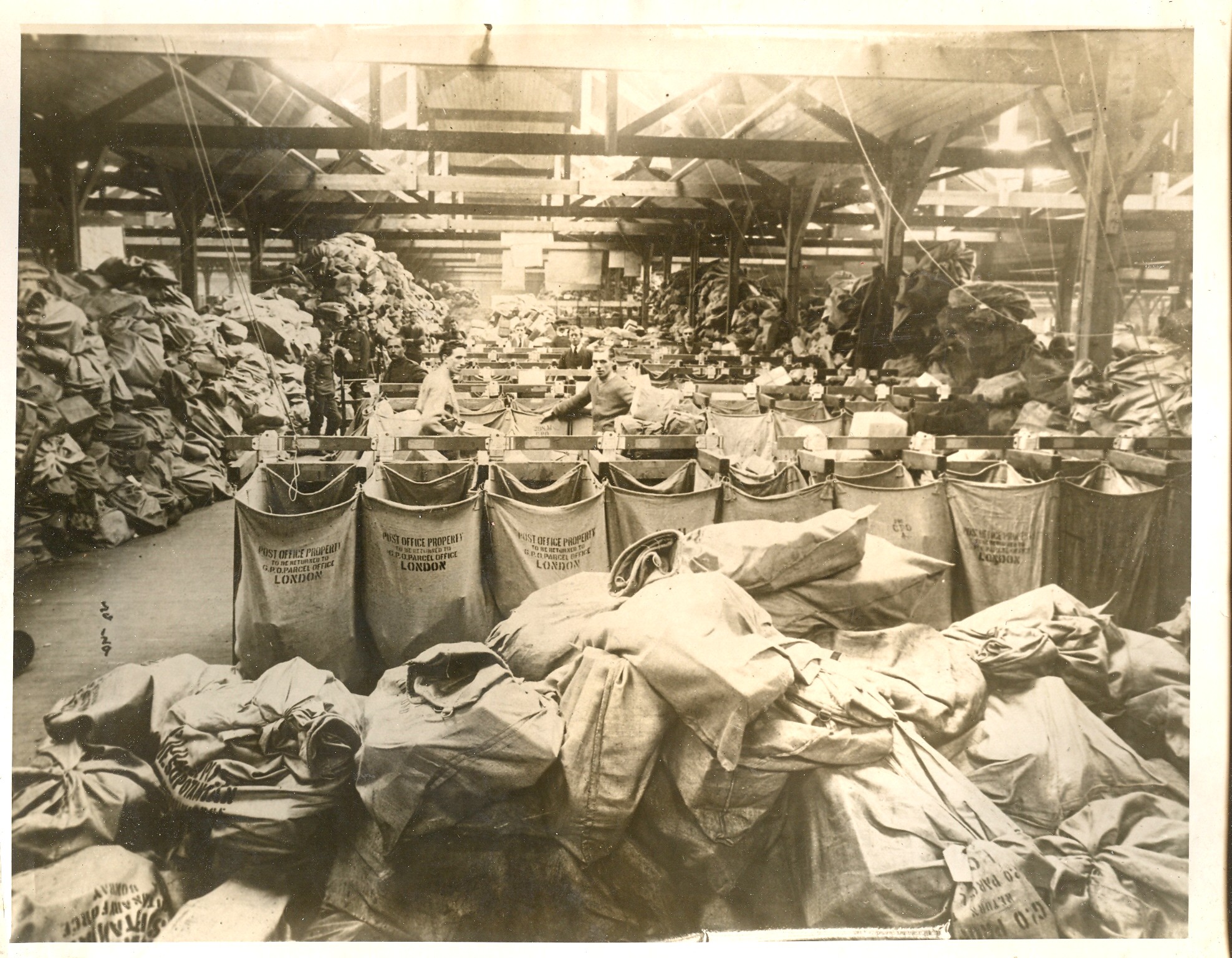
    This is the U.S. Army mail depot at Regents Park, London, braced for and under siege by  Christmastime mail in 1917. It strikes me that there may be a million items in this photo–at this time in the war there were something like 35 million people in the services for all countries dedicated to the war effort, which is approximately half the number that served in total.  If these letters in this picture were bodies, I reckon that there would be five more rooms like this necessary to tell the visual picture of the war dead and wounded.  This aside, I initially focused on the guy in the rear with the white shirt and tie, standing there pretty much overwhelmed by the task of moving all of that stuff…and perhaps with the idea that much of the mound would wind up being undeliverable because the recipient was killed.  I wonder if that mail was returned, or not?

    WWI photo Xmas mail

    ·Posted by :

    ·in:

    —
  • A Lovely and Lonely Plainness, by Margaret Bourke-White

    JF Ptak Science Books  Post 2814

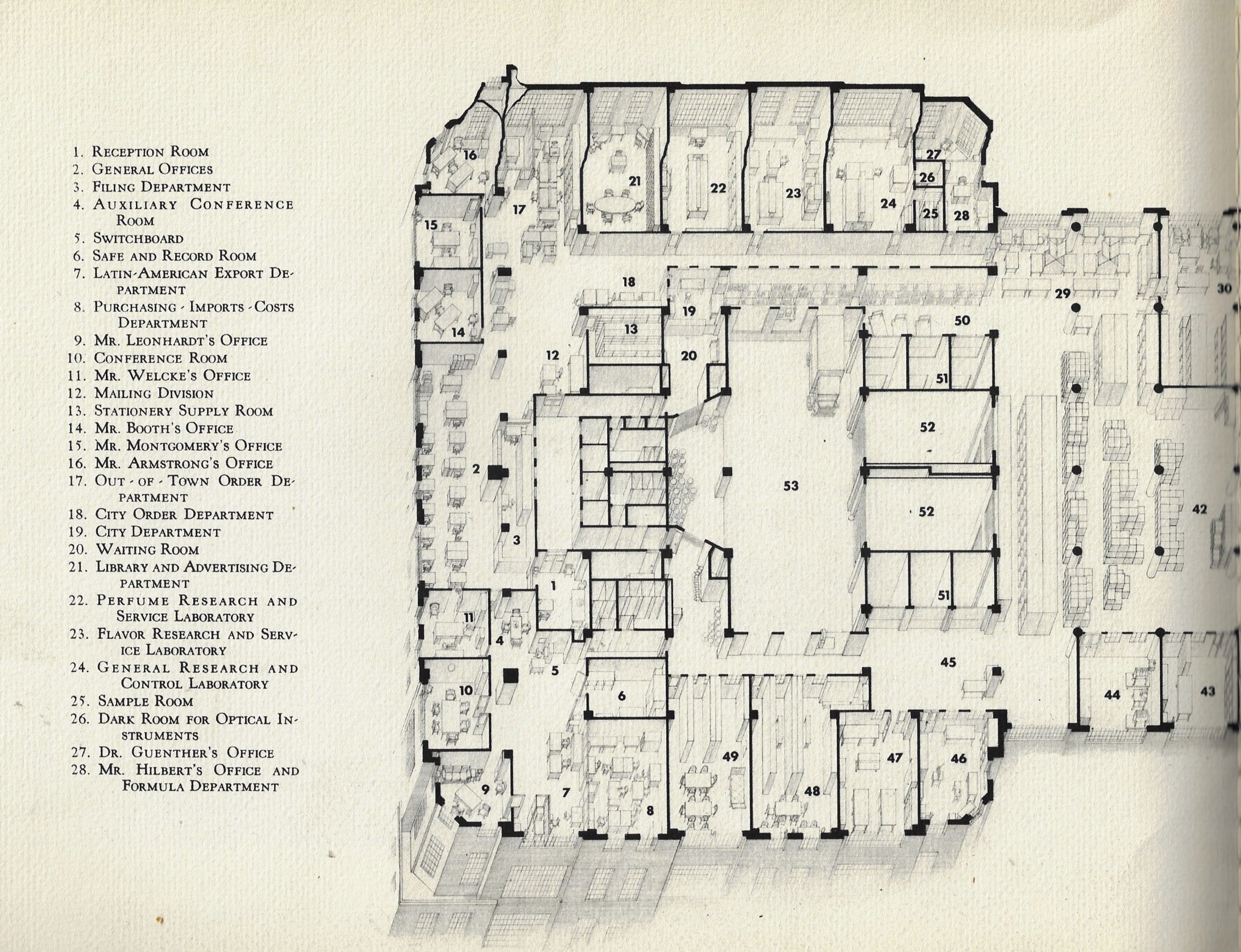
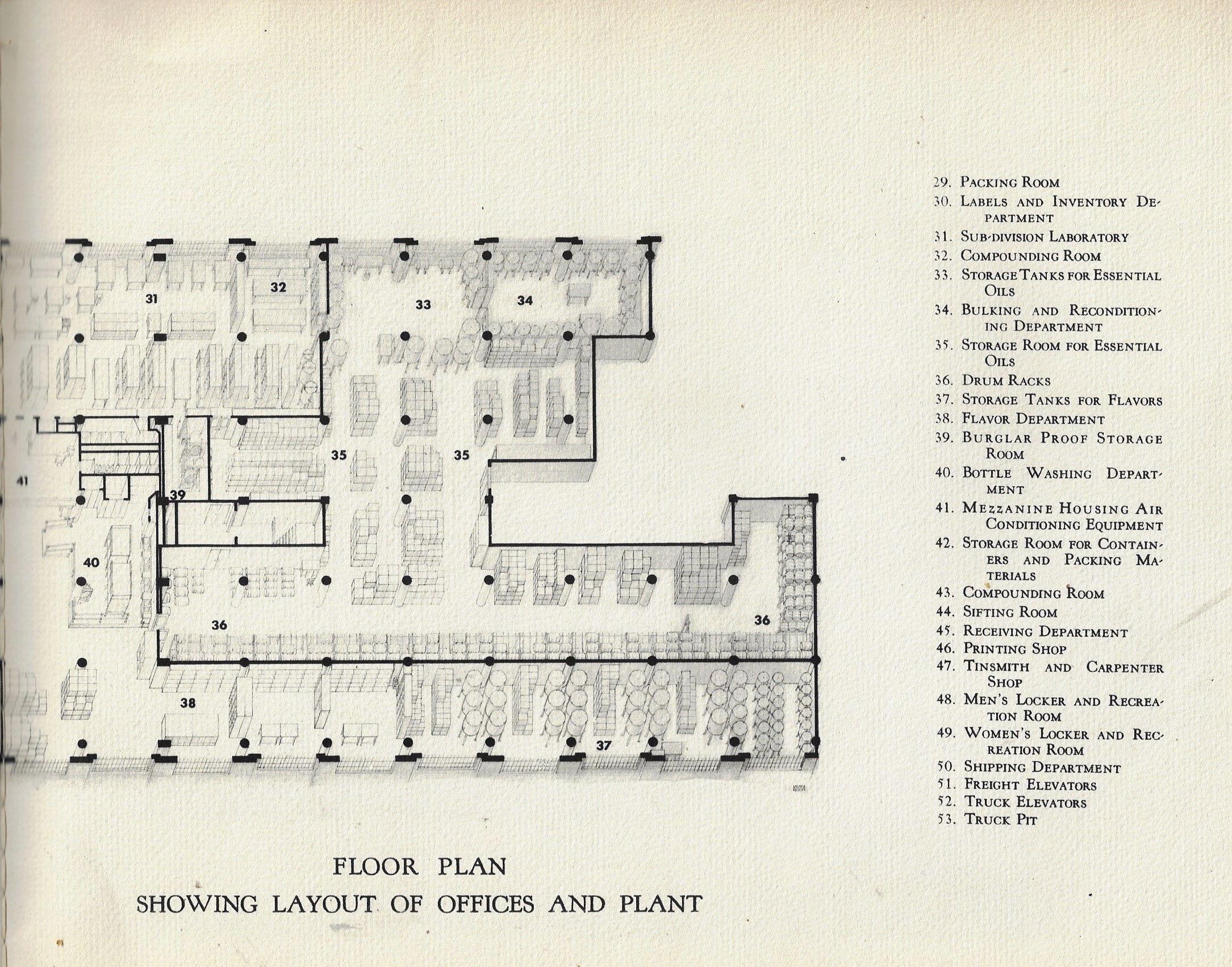
    I happened upon some photographs by the great Margaret Bourke-White yesterday in a most unexpected place–an upper-end oversize pamphlet advertising the perfume and oils business of Fritzsche Brothers of NYC. No disrespect to Fritzsche–which was in its 65th year of business–but it was a surprise to see the work of a pioneering and iconic photographer like Bourke-White in such a relatively common setting. Of course photographers need to pay the bills, too, and I’m sure that Bourke-White was well paid for her ultra-competent and accomplished business and industrial assignments. She was probably very well paid considering that she already had a national audience, being the first photographer for the new Fortune magazine, with her photo essays appearing there beginning in 1930. 

    The Fritzsche pamphlet was published in 1937, just a year or so before she made her first LIFE magazine cover.  She had a tremendous run between 1935-1950, and seemed to be everywhere, seeing everything. She was the first U.S. war photo-correspondent covering WWII and Korea; she was at concentration camps in 1945 and with Stalin in 1944 and Gandhi in 1949, and was a superb documentarian of the human experience during the Great Depression–even her first assignment at Fortune found her making photographs of the bank vault at the First National Bank of Boston coincidentally on the evening of Black Tuesday, 1929. 

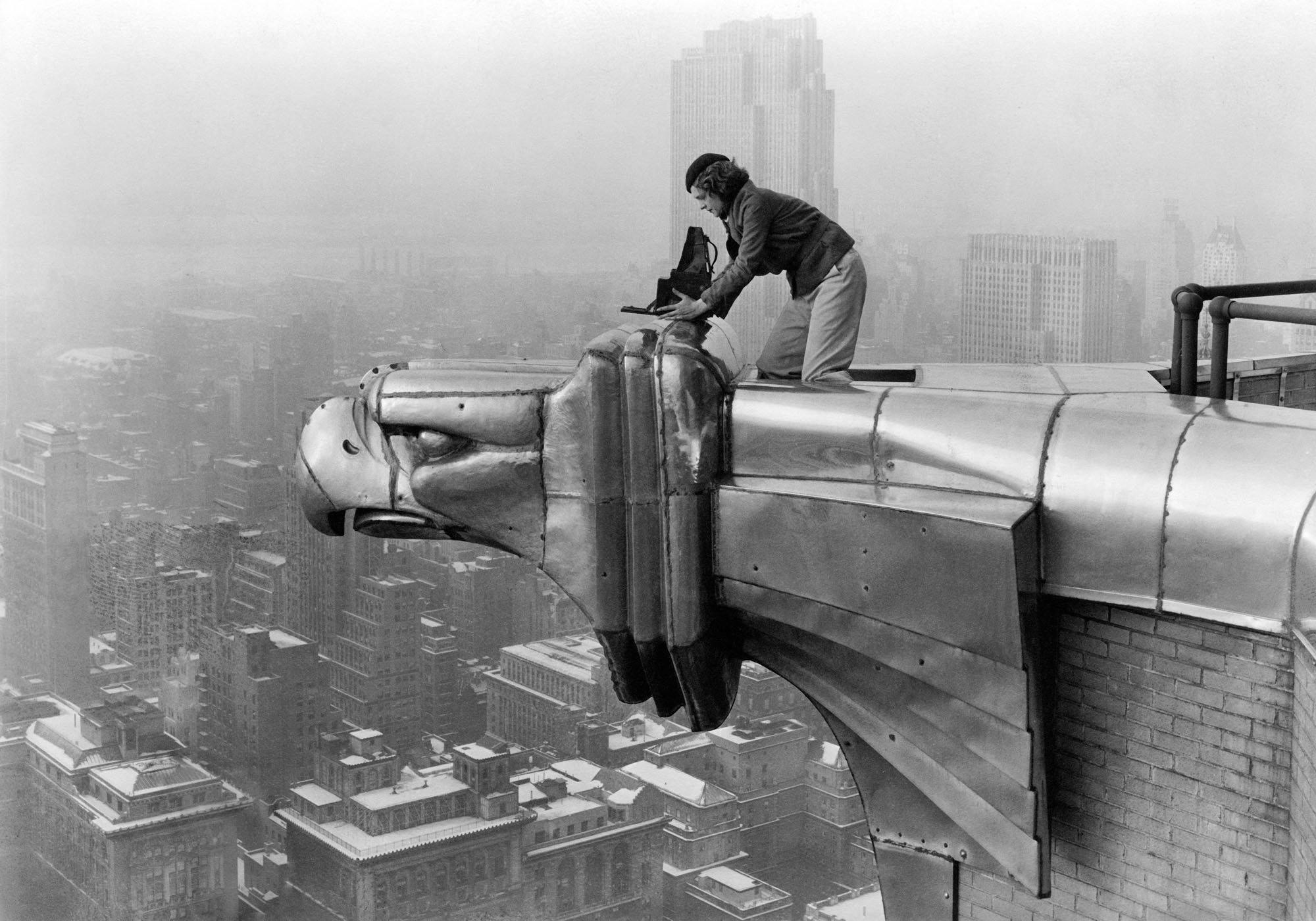
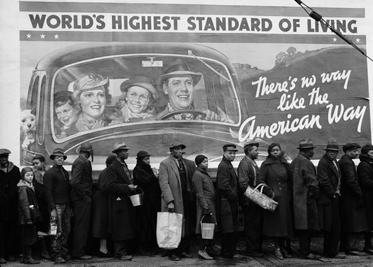
    Here’s a photo of Bourke-White at work (from her first-photographer-at-Fortune-magazine days). and one of her most recognizable works made during the Great Depression:

    Bourke-white _1_ atlantic

    Bourke-White _2_ Kentucky flood wikicommons


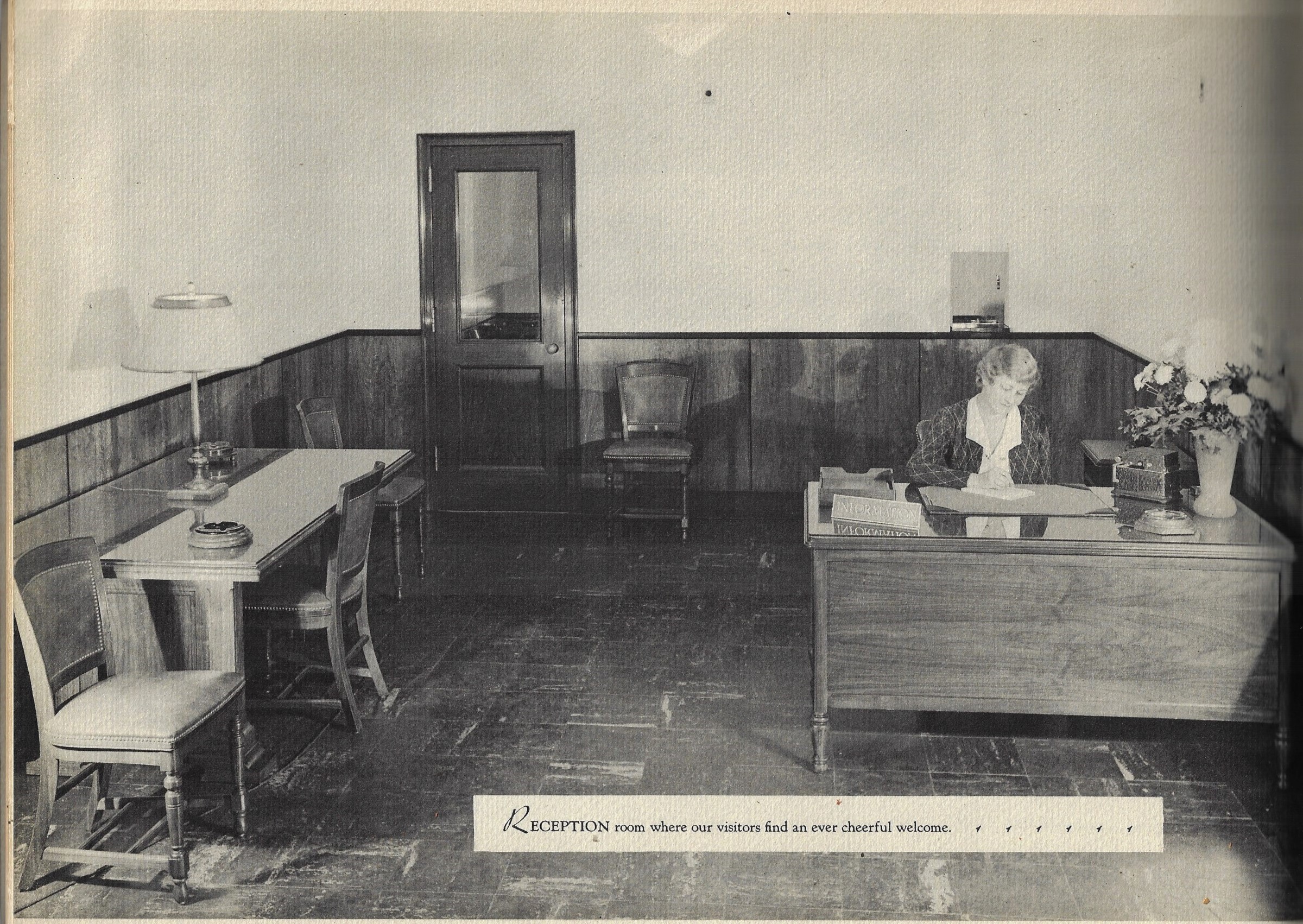
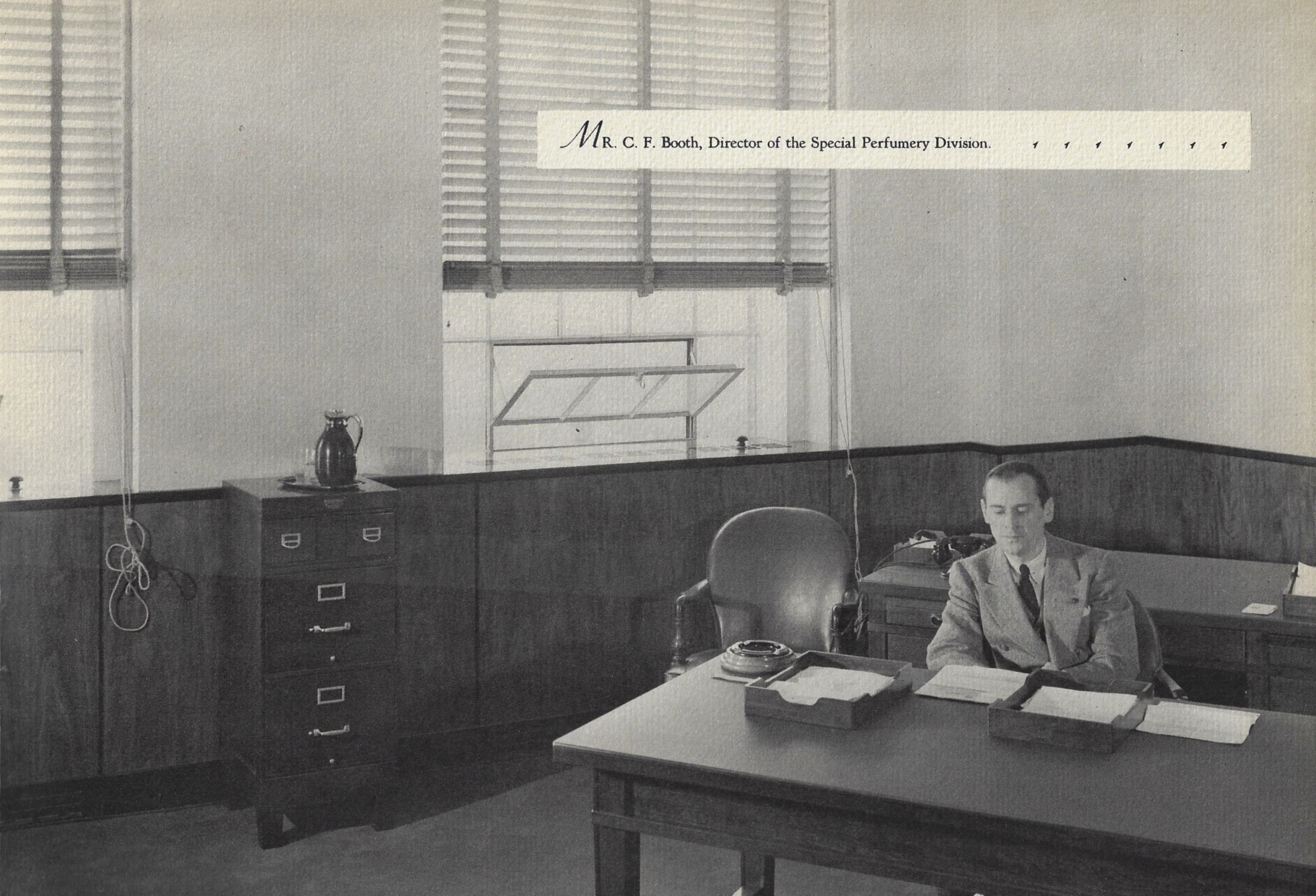
    And then here she was in the relatively bland pages of the Fritzsche promo, making images of reception areas, loading docs, labs, a library, some VP studiously at work at a small desks…however when you look closely at the rooms she was working in you can appreciate that it was a difficult assignment, and that lighting was a problem, though it was one that she solved.  The odd thing is that everything in these photos is sort of the same, that a general blankness/blandness has taken over, all of the people with similar expressions, and then something else…that in this very large collection of offices there’s absolutely noting on the walls except for an occasional clock here and there. Other than that exception, there are no wall decorations. Given that the company is chemically decorating the air around people, it strikes me as a little odd that the physical surroundings was such a collection of nothing.  Here’s the reception area as an example of the environment’s assertive blandness:

    Fritzsche _3_

    There are 22 such photos of hollow spartanness, well-lighted. And very tidy.

    Here’s another:

    Fritzsche _4_

    The blank walls become even more oppressive when you consider the number of walls in the place: 

    Fritzsche _2_

    Fritzsche brothers _1_


    I guess Bourke-White did as well as could be done with what there was…


Recent Posts

Archives

Categories