A Daily History of Holes, Dots, Lines, Science, History, Math, Physics, Art, the Unintentional Absurd, Architecture, Maps, Data Visualization, Blank and Missing Things, and so on. |1.6 million words, 7500 images, 4.9 million hits| Press & appearances in The Times, Le Figaro, Mensa, The Economist, The Guardian, Discovery News, Slate, Le Monde, Sci American Blogs, Le Pont, and many other places… 5000+ total posts since 2008.

  • The Pulpy Flying TubePunk of TomorrowLand

    JF Ptak Science Books   Post 2166

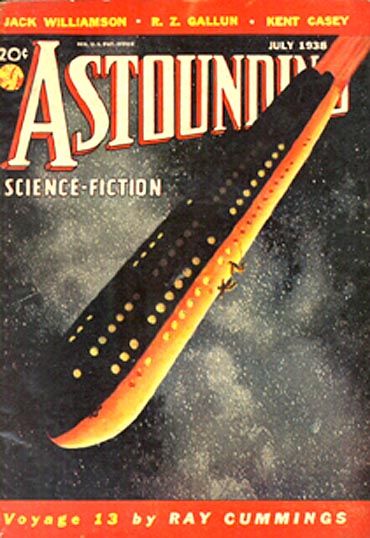
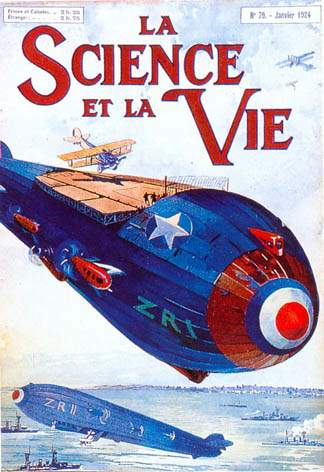
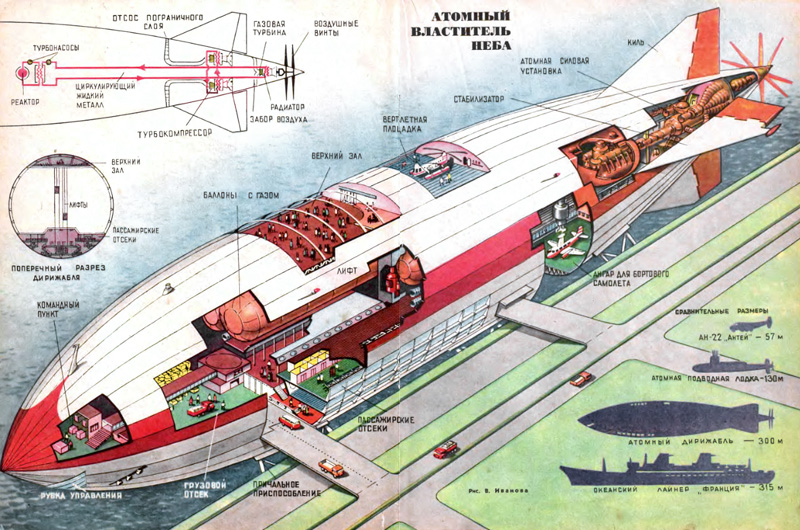
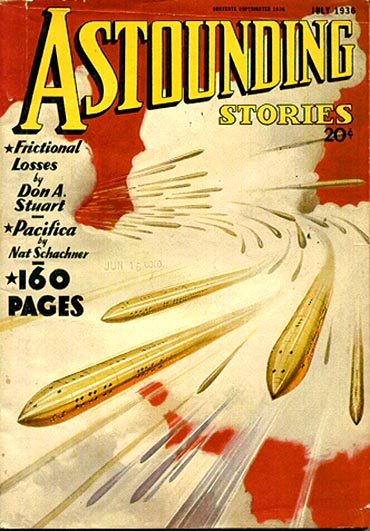
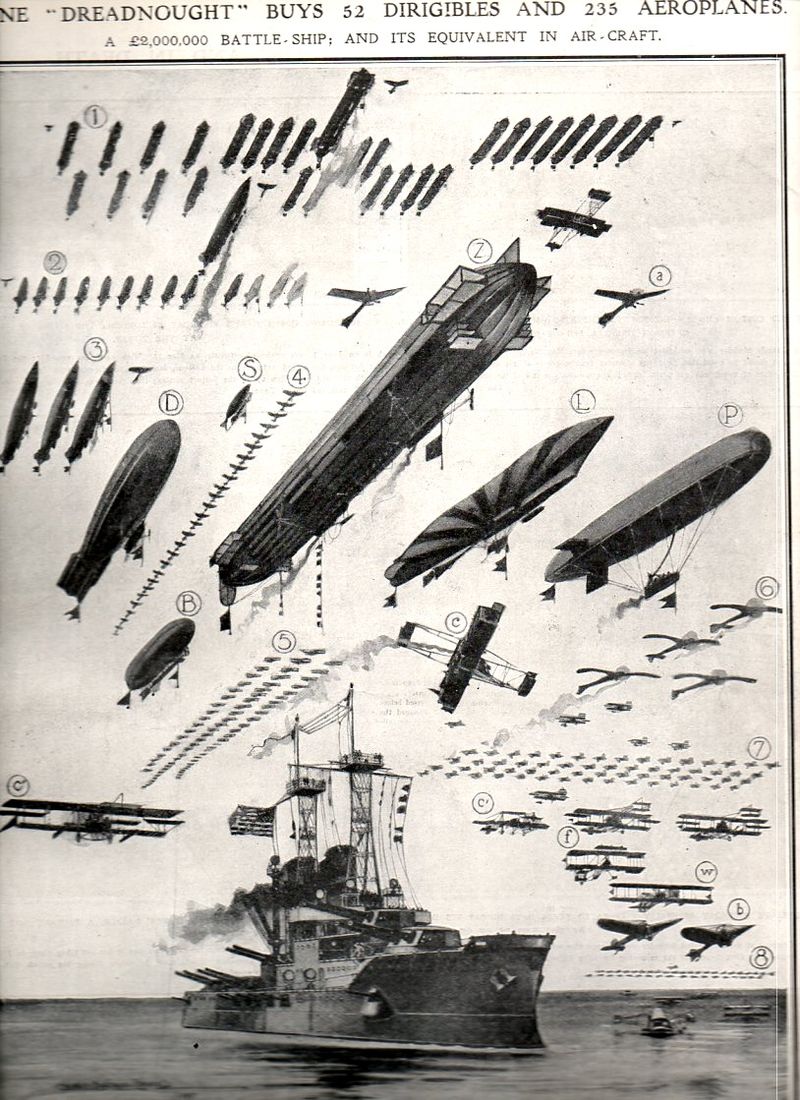
    Following this blog’s series on the History of Holes and the History of Dots will be a new series:  the History of Tubes, the first note of which is on the flying tubes of TomorrowWorld. Today’s installment is a simple picture post:

    http://www.dailygalaxy.com/photos/uncategorized/2007/07/17/science_fiction_science_fact.jpg
    [Source: http://www.dailygalaxy.com/photos/uncategorized/2007/07/17/science_fiction_science_fact.jpg] 

    [34754tutfgjdgdf.jpg]
     
    [Source: http://lh6.ggpht.com/_hVOW2U7K4-M/ST2rP9fpFfI/AAAAAAAAugY/u95RIMSHH9g/s1600/34754tutfgjdgdf.jpg] 
     

    http://androvillans.files.wordpress.com/2011/04/b2-astounding_science_fiction_1938071.jpg

    [Source:”http://androvillans.files.wordpress.com/2011/ 4/b2-astounding_science_fiction_1938071.jpg]

     
    https://historyofideasblog.com/a/6a00d83542d51e69e2012875ea3636970c-pi
     
     
    https://historyofideasblog.com/a/6a00d83542d51e69e2014e8870b10b970d-800wi

    [Source: http://static.flickr.com/100/258214584_3ce3697ab2.jpg] 


    [Source:http://static.flickr.com/59/188844208_60a18e94d7.jpg]

    [tow_1940summer.jpg]

    [Source:http://lh5.ggpht.com/abramsv/R4fcwUKUlTI/AAAAAAAADBI/Xu7s8ESZMyM/s1600/tow_1940summer.jpg]


    https://historyofideasblog.com/a/6a00d83542d51e69e20147e33be223970b-800wi


  • Tik-Tok of the Intertube // How Many Triangles are in the Web?

    JF Ptak Science Books   Quick Post

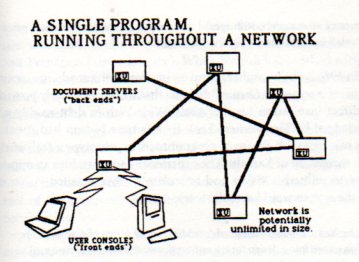
    Ted Nelson had a lot of ideas about computers, though not that many are remembered today, in spite of a bunch of them being pretty smart. (He coined the words “hypertext” and maybe “hyperlink”, for example.)  In any event there’s this little diagram of the possibilities of his “world wide network”, which I think no doubt is one of the earliest “maps” of the yet-to-exist internet. 

    Nelson dreams065

    [Picture source:  Ted Nelson, Dream Machines (1974) via Alex Wright, Glut, Mastering Information Through the Ages (2007), p 215.] 

    It is also interesting to see that the frontis illustration for his book uses Tik-tok, a metal/machine character from a series of books by (Oz) L. Frank Baum, this one Tik-tok of Oz (1914).

  • The Benevolent Aid and Burial Society (1937)

    JF Ptak Science Books  Post 2167

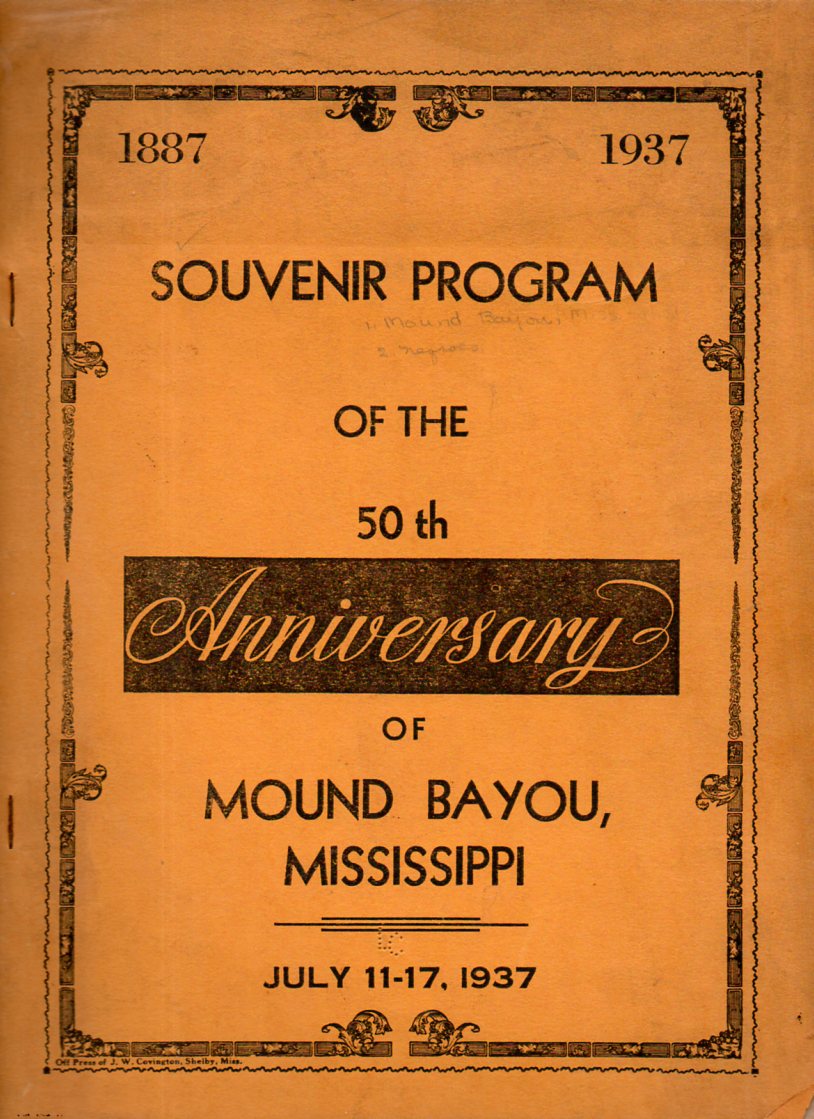
    There is something terribly American, full of hope, and trust, and celebration in this anniversary celebration pamphlet for the city of Mound Bayou, Mississippi–an African American town founded in 1887.  The Souvenir Program, for the 50th anniversary of the establishment of the town (July 11-17, 1937), is filled with town history, and advertisements, and photographs. 

    Mound bayou619

    [Souvenir Program of the 50th Anniversary of Mound Bayou, Mississippi, July 11-17, 1937.  Shelby, Miss. : Press of J.W. Covington,   12×9 inches, 59pp, illustrations, with articles, and numerous local ads.  This was formerly part of the Library of Congress Pamphlet Collection, coming to the library form the White House (so marked on the back of the cover, stamped “By Transfer/the White House/August 17, 1937”).]  

    Isaiah T. Montgomery was one of the founders of Mound Bayou, clearing out the bottomlands in the wilderness of northwest Mississippi, the town being populated by Freedmen.  But here at the time of the anniversary, in 1937, with the failure of cotton prices and the Depression being at its height or depth, the majority of the people living in Mound Bayou were sharecroppers, with most property lost.

    Mound bayou617

    ·Posted by :

    ·in:

  • The Square Root of Beautiful

    JF Ptak Science Books  Post 2367

    309 193

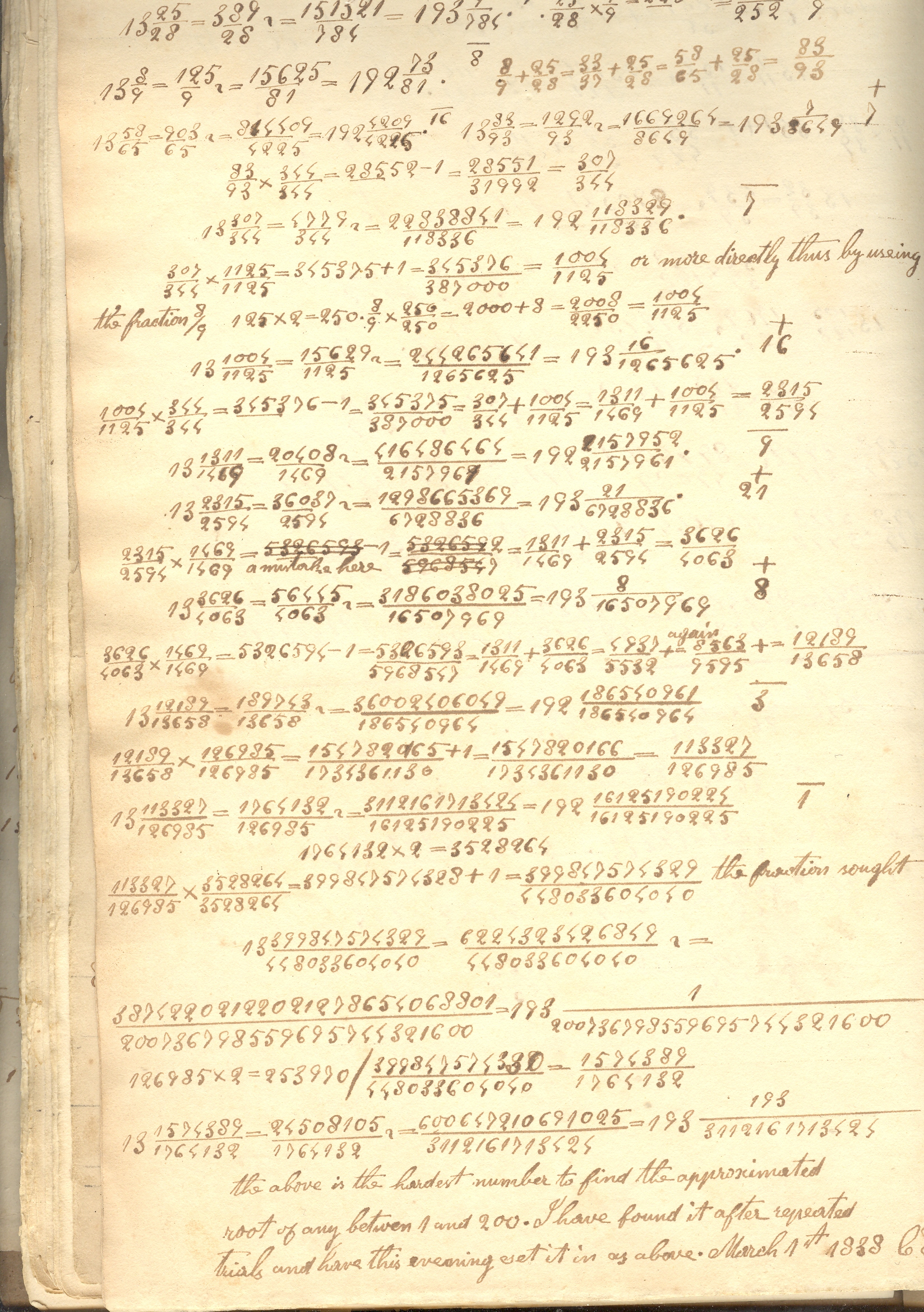
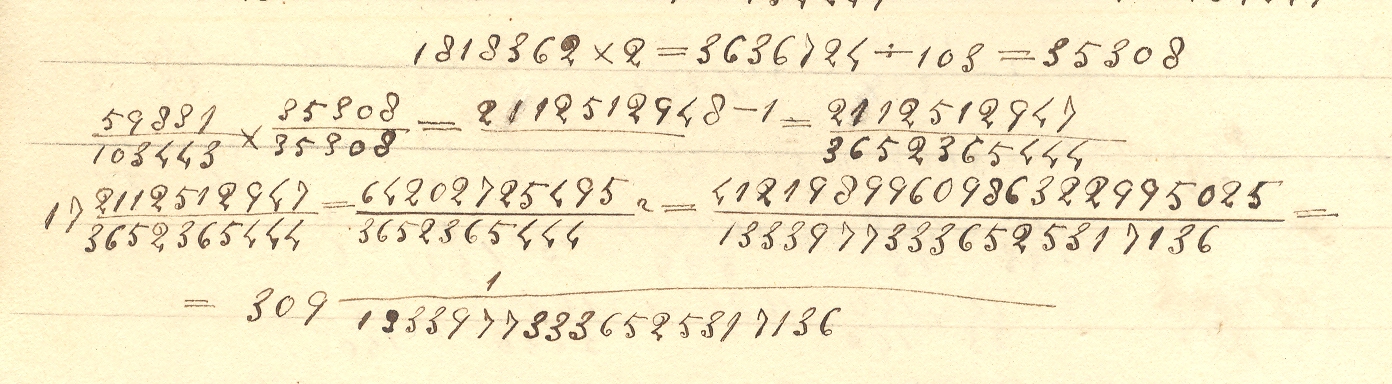
    The author of this manuscript, Charles Fisher, took a solitary pleasure in calculating the square roots of numbers from 2  to 589, not bothering to write down the 24 perfect squares to 576.  (The sqrt being r2 = x for every non-negative real number x.) From the few bits that I have checked the man seems to have done a good job back there in the 1830’s. 

    I cannot determine where this book was written or who Mr. Fisher was, though it is possible that he was a (Baptist) Minister from the few short textual notes that pop up here and there.  

    His work is pretty elegant.  Take for example his solution (and proof) for the square root (hereafter sqrt(x)) 309,

    309 det

    which the calculator living under this page says is 17.578395831246947    Mr. Fisher’s answer is 17 10/17 = 799/17=89401/989=309 100/989, and after some more involved arithmetic comes t the lovely proof number of   

    4121989960986322995025 /13339773336525317136 or

    309.00000000000000000007496379247

    Which is getting pretty close.  

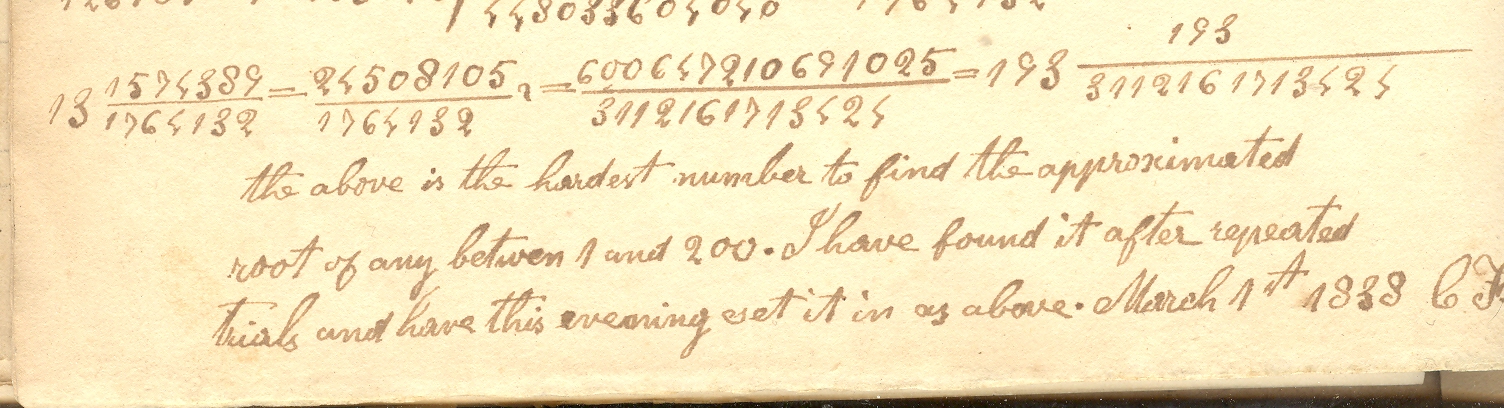
    The only note that Mr. Fisher makes on his calculations is for the sqrt(193), which he notes as “the hardest number to find the approximate root of any between 1 and 200. I have found it after repeated trials and have this evening wrote it in as above. March 1st, 1833. CF.”

    309 193 det

    ·Posted by :

    ·in:

  • Rising to a Higher State of Misery: Books Read by Frankenstein’s “Monster”

    JF Ptak Science Books   Post 2169

    Did I request thee, Maker, from my clay
    To mould Me man? Did I solicit thee
    From darkness to promote me? John Milton, Paradise Lost (X.743–5)

    The animated human created by Victor Frankenstein in 20-year-old Mary Shelley’s anonymously published Frankenstein, or the Modern Prometheus was a far more intelligent being than was ever portrayed in the many movies that made the novel famous in the 20th century. “Frankenstein” refers to Dr. Victor, not the creation, who refers to himself as the Adam of his maker’s labors (and then later as Victor’s Fallen Angel), while elsewhere in the book he is called “it”, as well as “being”, “creature”, “daemon”, “Fiend, “monster”, “vile insect” and “wretch”,  among other adjectival variants. 

    Frankenstein2[Illustration by Theodor von Holst for the 1831 edition of Shelley’s book.]

    “Remember that I am thy creature; I ought to be thy Adam, but I am rather the fallen angel, whom thou drivest from joy for no misdeed. Everywhere I see bliss, from which I alone am irrevocably excluded. I was benevolent and good; misery made me a fiend. Make me happy, and I shall again be virtuous.”

    Mostly the creation is referred to as a “monster”–the word being used 35 times, mostly in reference to Victor’s animated man.

    It is difficult to refer to the creation as a “monster” once you get to know him a little—he is exceptionally smart, teaching himself to read, and then reading difficult and complex works with deep understanding, which is hardly something that is expected from what Boris Karloff gave to us.


  • The String of Empire

    JF Ptak Science Books    

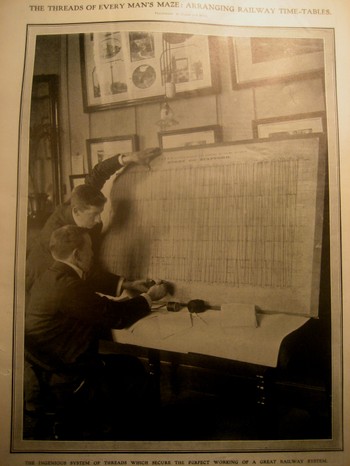
    String_big_board It is astonishing sometimes to think about how much was accomplished with so little.  This photograph, found in the 6 June 1908 issue of the Illustrated London News, entitled “The Threads of Every Man’s Maze:  Arranging Railway Time-Tables” (sub-titled “the ingenious system of threads which secure the perfect working of a great railway system”) is just such a case in point of wonder.  Each section of the board represents one hour, top to bottom; these are further subdivided by thinner lines representing 5-minute intervals; the horizontal lines representing the distances between stations.  And the guys in the foreground are keeping the whole thing up-to-minute, using string and tacks, running the rails of Great Britain.

    This was the British Empire at about its loftiest heights, with a spectacular internal railroading system, kept all in line and on time and correct with the help of heavy thumbs.  Can you think of a better way to display all of this complex data (with 1910 technology)  in real-time so that it is all intelligible–and to be so instantly?  I can’t.  This was just sheer, simple, brilliance.

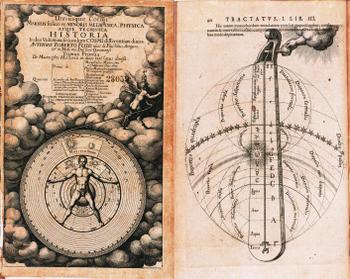
    (I know, I know, this is actually “thread”, but so it goes.)  If you elongated and strengthened this concept just a bit you’d come up with rope and wire, and chains–the most simple metallic form of which was used by surveyors for hundreds of years to help map our earth.  And I won’t even get close to the String Theory stuff here, or stringed instruments–but if I did, I would want to talk a little about perhaps the ultimate string/cosmology image in the history of science, which would be Robert Fludd and his fantastical thought-experiment  called “Monochordum mundi”. from his Utriusque cosmi maioris scilicet et minoris metaphysica, physica atque technica historia, printed in 1617.

    Robert_flood Fludd makes an elaborate and beautiful stab at understanding the deepest aspects of an imagined supramusical relationship between the order and rationality and mathematical aspects of music and the functioning of the universe—based on sound itself.  These ideas come up time and time again, most visually pleasing in Fludd, but most dramatically argued by Johannes (Harmonicae Mundi, “Music of the Spheres”) Kepler.  But Fludd trumps with god’s graphical intervention.

    The hand of god makes an appearance here as it adjusts the magic monochord of creation–a Pythagorean monochord of two octaves which are then divided into harmonic intervals.  But god’s hand is definitely there, doing some sort of adjustment (or perhaps even holding the slipping peg in place?), which is actually a little bit late in the history of the mechanical universe being turned by the hand of the creator, with the hand actually depicted doing the job.  In general the hand stopped making appearances by this point in the history of science, but did manage to linger on in the work of Fludd.

    ·Posted by :

    ·in:

  • Mr. Mencken, Unterrified Jeffersonism, and the Anarchist

    JF Ptak Science Books    Quick Post

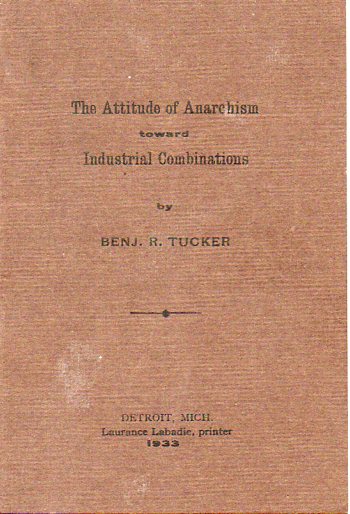
    Tucker mencken605

    The long-spirit anarchist (and “Unterrified Jeffersonian”) Benjamin R. Tucker (1854-1939) wrote  “The Attitude of Anarchism toward Industrial Combination” in 1926, but we see it here printed in Detroit (by Lawrence Labadie) in 1933.

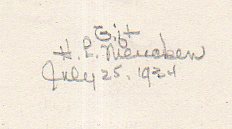
    It is interesting to see on the inside of this tiny pamphlet that the anarchist Tucker’s work was sent to H.L. Mencken, as a gift from the printer.  It wouldn’t stay long in Mr. Mencken’s possession, as he sent it (along with a number of other works by Tucker that I can’t lay my hands on at the moment) to the Library of Congress in July 1934 (and coming into my possession as part of a purchase of “the Pamphlet Collection” 65 years later.).  I’m  not so sure about what Mr. Mencken would have thought of most of it, only that he didn’t keep it for long.  Despite what might seem to be his “Tory Anarchism” and general oppositionist stances, left and right, whatever they might have meant at the time, it looks like he received the pamphlet and sent it on its merry way to join its brethren in Mr. Jefferson’s library. 

    The full text of the pamphlet in an earlier version is found here.

    Tucker mencken607


    ·Posted by :

    ·in:

  • A Classic Depression-era Photo Printed on 180-Year-Old-Paper

    JF Ptak Science Books   Post 2170

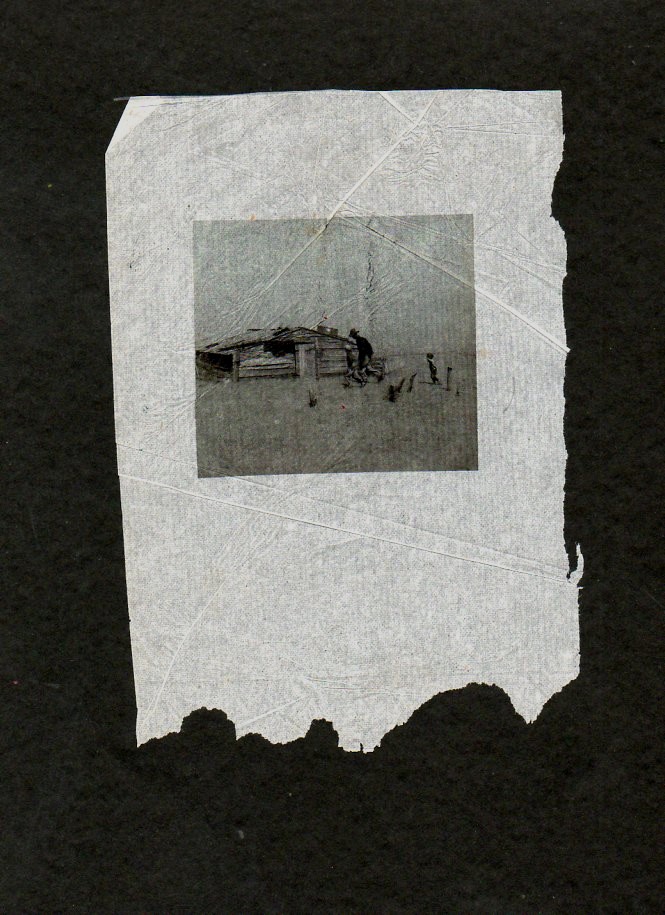
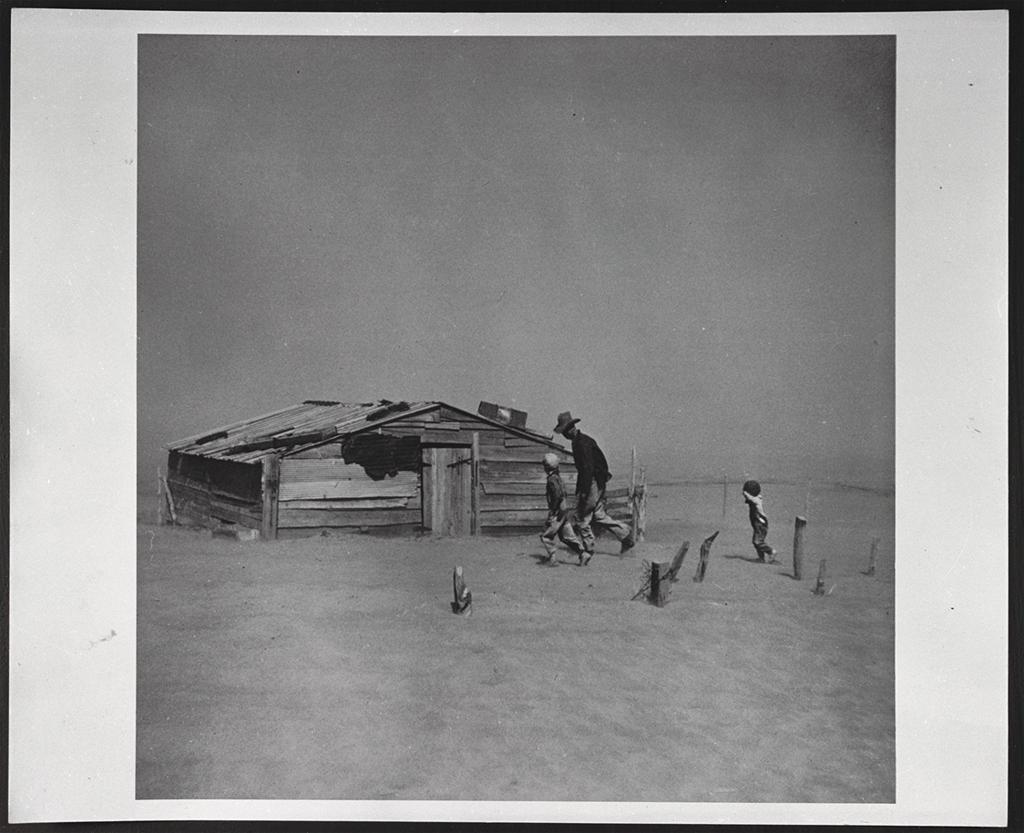
    I’ve experimented a little in presenting photographic images on a slightly different medium, and the results are interesting,  Take for example Arthur Rothstein’s classic 1936 “Father and Son” (actually, the “son” should be a plural, as there are two little kids rushing in the photo): I’ve used a 25 meg file and printed (lasered) rather small on a piece of antique tissue-guard paper–the paper, from 1830, is fantastically light, yet very strong for its remarkable thinness. The result of the modern, small Rothstein printed on the 180-year-old paper looks “believable” in its own odd way.

    The manipulated-printed effort:

    Rothstein--maniulated886

    And the instantly recognized original:

    Rothstein full image

  • On the Possible Delusion of the Inhumanity of Poison Gas, 1921

    JF Ptak Science Books   Post 2171

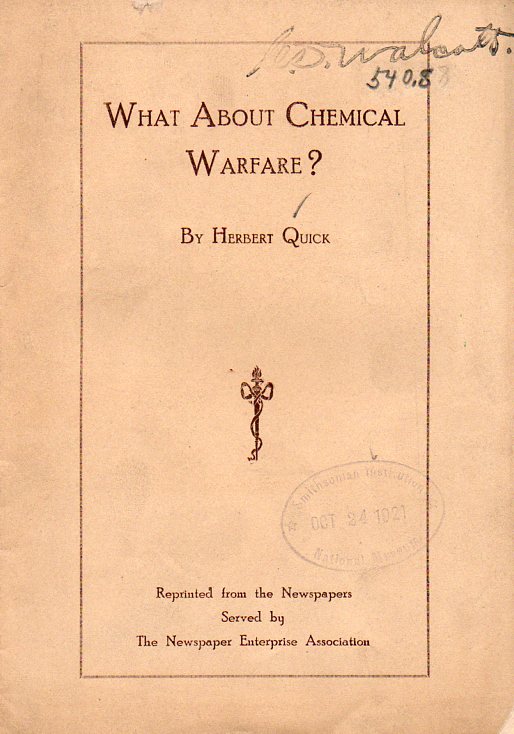
    Herbert Quick did a fair amount of thinking about the military use of poison gas, and it winds up, in the final analysis, thinking that it was tolerable.  What About Chemical Warfare? (published by the Newspaper Enterprises Association in 1921) is certainly a possible title for a Duck-and-Cover A-Bomb or You and Your Hormones kind of film.   But Mr. Quick took the slow boat around his issue, thinking about it a little long and out loud, before coming to his final conclusion in the chapter titled “Gas Warfare Cheapest and Most Effective Arm of Defense”.

    Air raid885

    He points out the enormous impact in the war effort that relatively small chemical corps played in WWI–something on the order of hundreths of one percent of all serving soldiers were employed in the combined chemical corps, saying “how small a body to produce such great results!” Which is true, assuming that by “great” he meant ‘widespread’, though it is unclear exactly what he was talking about.

    Nr. Quick does make a case for poison gas being not so inhuman as presented by most civilized people, pointing out both its high quick-death rate and survivability/recovery rates, which seems to be giving/taking at the same time. No matter:  “But woe to the army or nation that does not keep up with the times.  The Angel of Death will breathe in their faces” he writes. 

    The author also warns that though Germany was “stripped” of her war-making capacities, he thought it was not so of the industries necessary to produce poison gas. He points out that Germany can produce these munitions in secret, and that if any “militaristic nation conquers the world in the future”, it will be through the use of the poison gas it developed in secret. 

    Defense was also important:  “in the absence of efficient defense worked out beforehand, our great cities might be wiped out with gas bombs dropped from aircraft”.  Mr. Quick believes that protecting cities is possible, writing simply “preparation will prevent such a crisis”.  Indeed.  Unfortunately no ideas about this defensive posture were forthcoming, though he did bring himself around to writing about gas as a defensive tool.  Against looters. And rioters. And snipers.  “Gas puts the sniper in the power of his enemy” Quick writes, using the Marine action in Vera Cruz, Mexico, as a good example of where gas (“gas grenades”) would have come in handy.

    The bottom line is of course the bottom line, practically stating that poison gas as a weapon was indisputably more cost-conscious than anything else, by far, each dollar spent on chemical warfare being worth “from three to five hundred for the army”.  Poison gas services Quick says should be pursued, because “gas warfare cannot be stopped until all war is stopped”.

    Gas warfare “gives the educated, intelligent nations the advantages over the people of lower civilizations”.

    “When both sides are prepared it is much less inhumane than war with bullets and high explosives; but it means horrible annihilation to the army which is unprepared.”

    It is an interesting exercise to replace “poison gas” with other types of weapons, just to see how it reads.

    Mr. Quick was up and down in his treatment of poison gas and war, though almost entirely down.  One thing he didn’t see, that no one saw, really, was the use of a particular gas that was used to destroy millions of people, and which was developed quite in the open in Germany for many years, used for killing rats.  The Nazis simply used it instead on people.  No one saw Zyklon-B coming, and no one could have, even when they did.

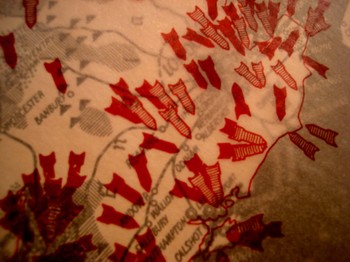
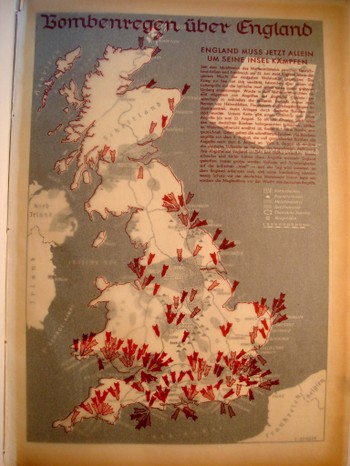
  • Bombing Britain–Maps of the Attack Against the U.K. from the German Side, 1940

    JF Ptak Science Books  (an earlier post edited and expanded)

    Dsc04742_2
    It is essential to look at objects from alternative angles, especially in science, in order to determine the correctness, or fitness, of a finding, or opinion.  Even when consolidating data or evidence regarding the confirmation of an established bit,  you may very well find other strands of loose data that could help illuminate even a well established or iconic societal “given”.

    That the war was not going well for the Allies in September 1940 is an understatement—and the chief allies at this point excluded the United States, happily now recovering from the Depression, and still a full 14 months away from entering the war. 

    Dsc04739

    What is very weird to me is that after having looked at every issue of LIFE magazine at least three times  from the start to the end of World War II, that there are more advertisements using war images than there are images of the war itself.  This actually continues into the spring of 1942, when LIFE got really busy, the war got really messy, and people started really dying.  And frankly even the coverage of Pearl Harbor in no way lived up to what I thought the coverage of a photo-magazine like LIFE would be. This is not a scientific study.  It just strikes me as odd, or propagandizing, that there should be such relatively scant, or undervalued, coverage of the fighting when sanitized images of that same fighting were being used to sell socks and shaving cream and cigarettes and such.  I understand the power of hearts-and-minds campaigns, but this seemed so amateurish, boorish even, that it just didn’t approach the level of a psychological ploy to pacify an American public that had virtually no interest in attending the European Theatre. 

  • Cold, Cramped, in a Ditch and Under Fire: France, 1918

    JF Ptak Science Books   An earlier post (#1308) expanded
    WWI photo--trench note detail047

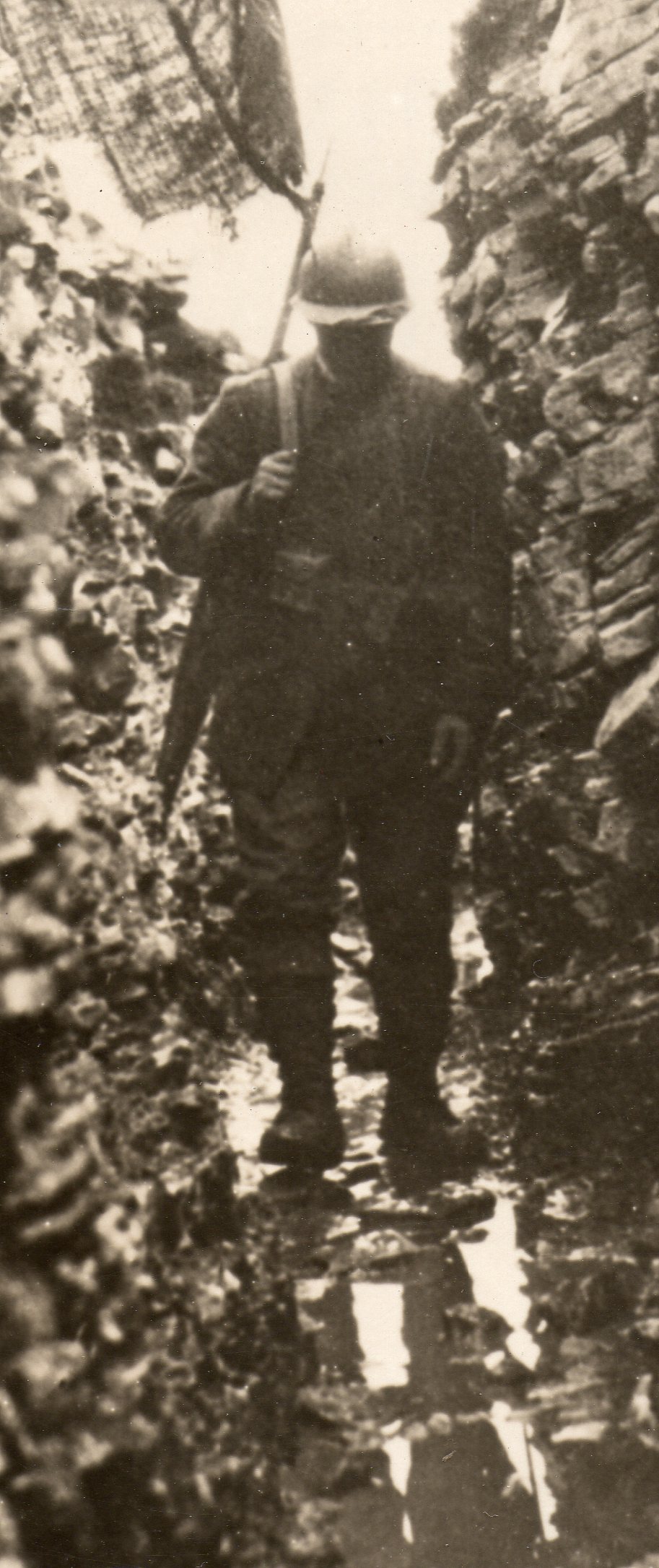
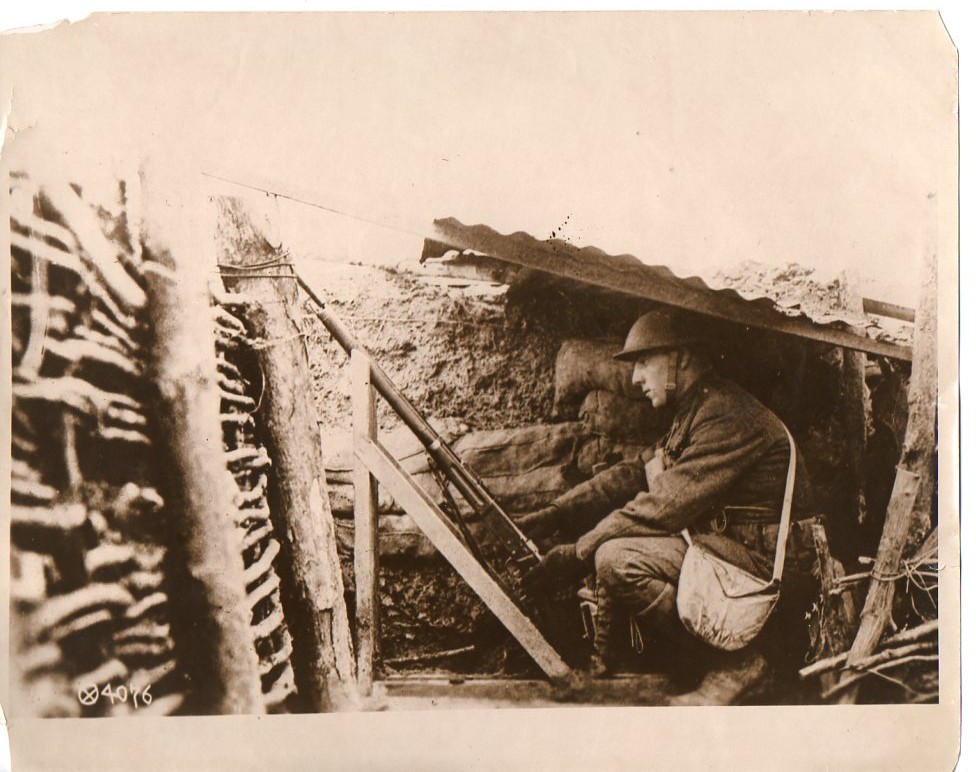
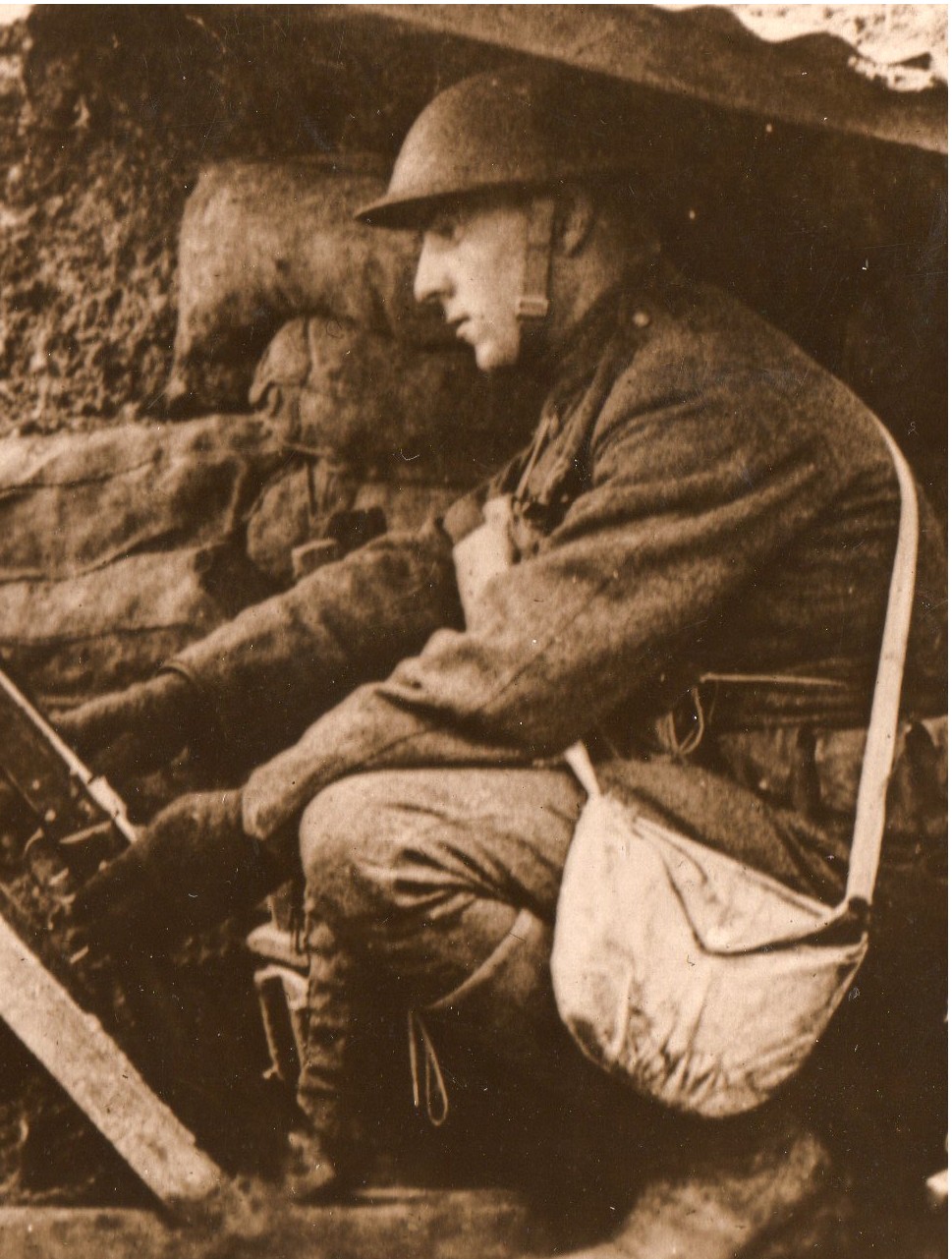
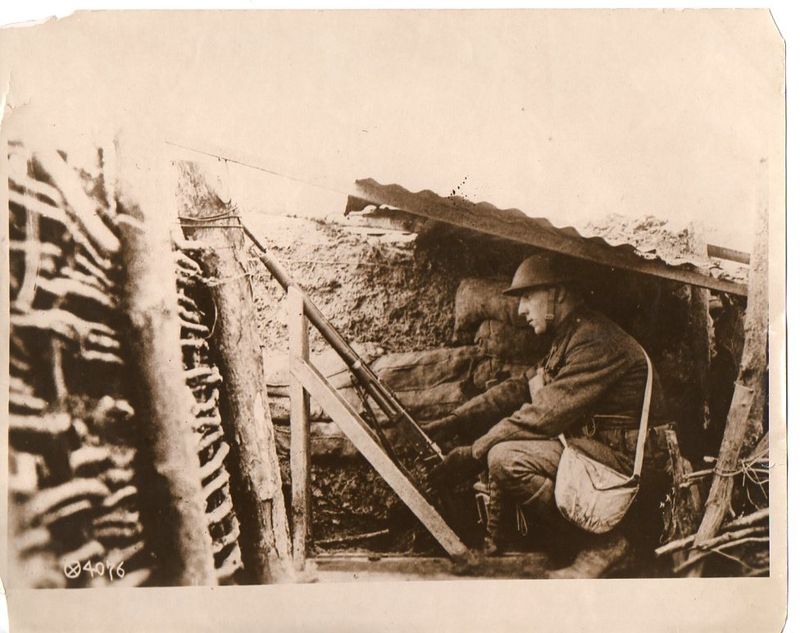
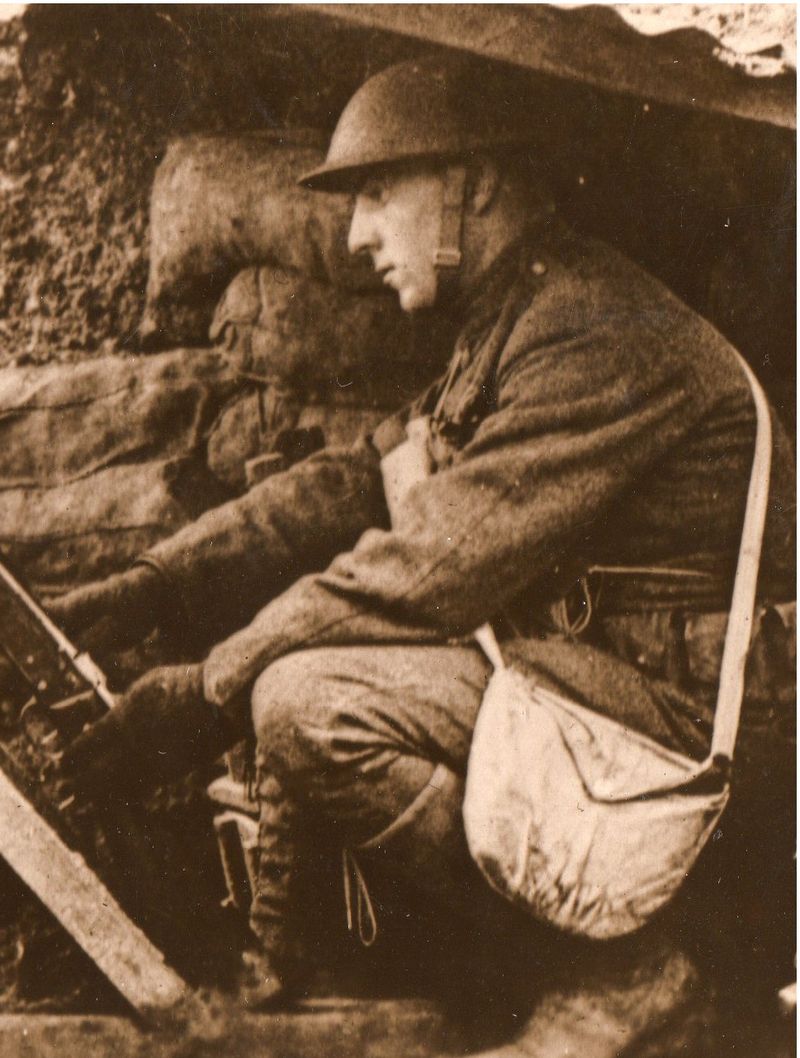
    If I was in a time machine, stepping back through a wormhole and into another segment of another reality, one of the places I’d least want to step into would be a cramped, cold, wet, dirty and dangerous place.  Like this American soldier, waiting for a German attack to begin so that he could launch a warning flare to the rest of the soldiers, hunkered down in a cold wet place in the front line along the Lorraine section in France, mid-way through 1918 and almost all-the-way-through WWI.  

    And even though this soldier looks far too clean, and his uniform far too spotless and pressed-ish, and his calf-skin gloves too calf-skinny, and his duffle too unmarred, and his helmet chinstrap too perfect for this man to actually have been fighting, the sensation of cold/bad/dangerous still gets through the whitewash.
    World War I photos--Cold in trench306

    There are of course much worse places to be, but I think if I limited my time travel to include what I would be on the other end–a U.S. soldier–one of the places at te top of te list would be a generic trench in the front line of a battle late in the fighting in WWI.  Sitting there, watchful, waiting for the advance of thousands of German troops, charging over a ruined and sulfurous landscape, waiting for the ruination to begin as it churned its way through  No Man’s Land.  Of course it could be worse–one could be going “over the top”, charging across the Desolate Place towards a line of thousands of entrenched soldiers all of whom were trying to kill. you. 
    World War I photos--Cold in trench307

    Or of course you could be in a blue coat marching in a straight line towards a series of long lines of men in red coats, everyone getting ready to get close enough to discharge an 69-calibre (or thereabouts) ball across an open plane of hundreds of feet into the ranks of the opponent.  Or being in a Marine uniform in Tarawa, in the Gilberts, in November 1943. Or being in Butternut, crossing the Emmitsburg Road on the way up Cemetery Ridge on 3 July, or being in any uniform whatsoever at Antietam.

    The places and times get worse I think once you allow yourself to be any other solider in any other uniform.  A French soldier, for example, sitting in a similar spot in the same battle along a front line as our American Doughboy, above, would’ve been worse.  A Belgian soldier virtually anywhere also would have fared worse, statistically, than just about anyone else in WWI.  Being a newly-minted soldier wearing the uniform of the Soviet Socialist Republics in the Summer of 1941 would probably have been half-a-death-sentence.  Of course the list goes on, and on. 

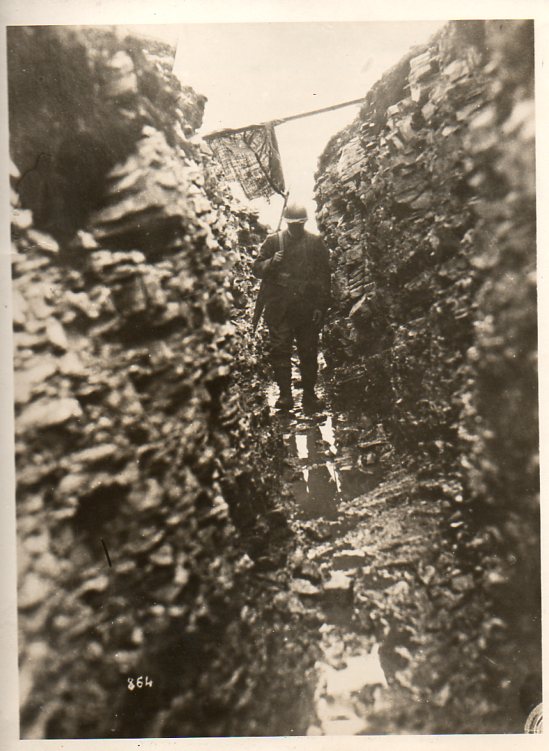
    Perhaps one of the worst inventions in the history of warfare was The Trench. Millions of men were wounded or met their ends while defending one, or attacking one, or being in-between two of them.  Hundreds of thousands of troops spent months charging back and forth between opposing lines, the ground over which they fought made uninhabitable for almost any form of life. Cold, wet, bad.
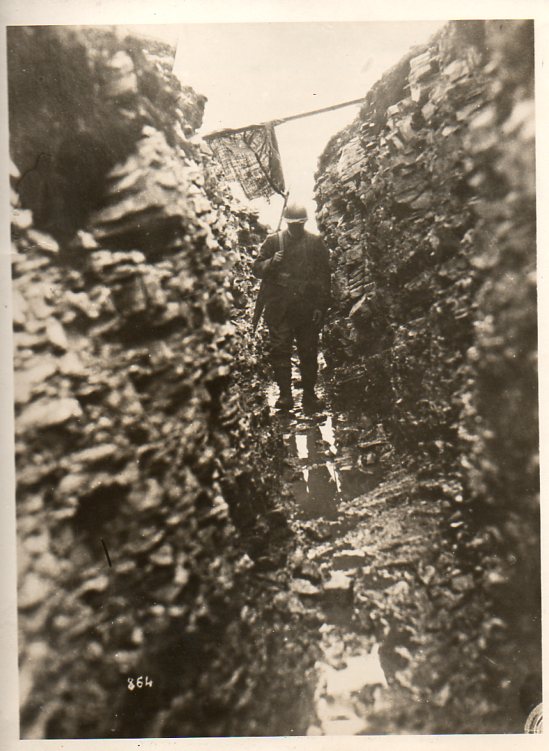
    WWI photo--trench045
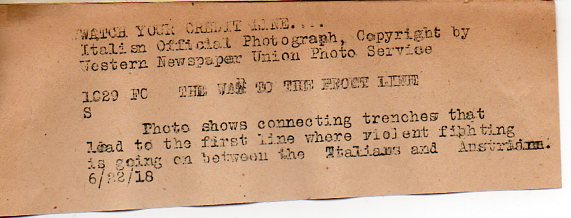
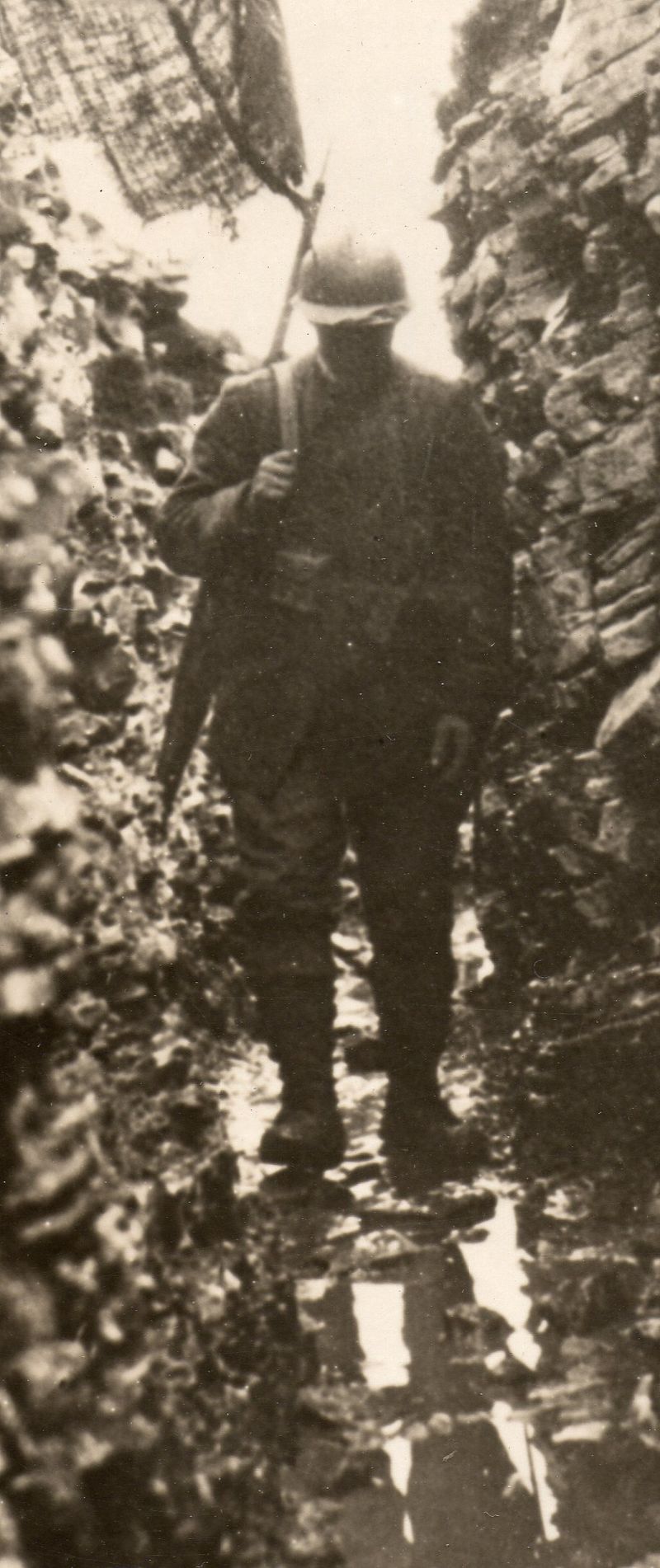
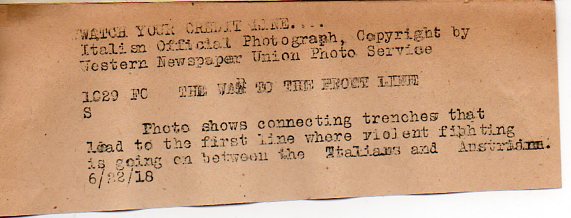
    Here’s another original photograph made by the Western Newspaper Union Photo Service, as a “British Official Photograph”  (with the “British” part penciled out and replaced by an unknown hand, “Italian”),  The photo agency supplied a caption for the image (that was supposed to have been used by the newspaper or magazine that published the picture) as follows:
    WWI photo--trench note046

    And the detail:

    WWI photo--trench note detail047


    ·Posted by :

    ·in:

    —

Recent Posts

Archives

Categories