A Daily History of Holes, Dots, Lines, Science, History, Math, Physics, Art, the Unintentional Absurd, Architecture, Maps, Data Visualization, Blank and Missing Things, and so on. |1.6 million words, 7500 images, 4.9 million hits| Press & appearances in The Times, Le Figaro, Mensa, The Economist, The Guardian, Discovery News, Slate, Le Monde, Sci American Blogs, Le Pont, and many other places… 5000+ total posts since 2008.

  • An Addition to the Series on Early Mechanical People

    JF Ptak Science Books   Quick Post

    Frankenstein


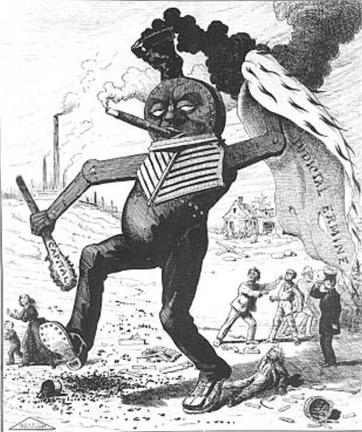
    I found this nice addition to a series of posts that I’ve made on this blog on early (pre-1930) mechanical people and robots. Here’s a selection of some of the other finds in this area on this site: 


    A Few Mechanical Men: Antique Anthropomorphic SteamPunk

    An Early Robotic Steam-Driven Society-Scrubber

    Robot-Man, 1915

    An Acrobatic Non-Semi-Robot, 1876

    An Edenless World: the First (?) Metalic Woman Robot

    Robot Roundup

    There are many others–just pop in “robot” in the Google search for this site and have at it.  I wanted to get this posted here before I lost it.  Again.  

    ·Posted by :

    ·in:

  • A Rosey-Checked, Ice-Blue-Eyed Man with a Too-Small Hat, ca. 1875

    JF Ptak Science Books   Quick Post

    Hat Man013

    Hat Man014

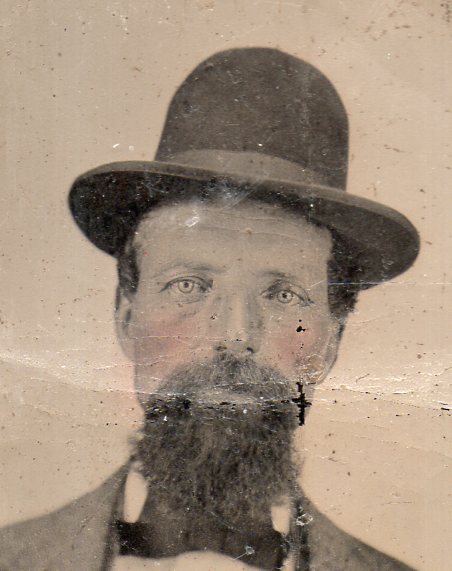
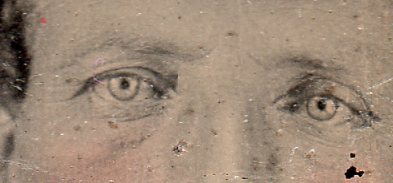
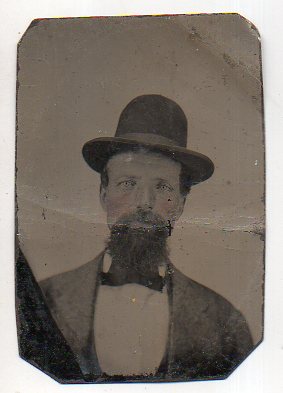
    Both images are details from this lovely tintype, a piece of photographic Americana I picked up in an antique store, found while looking for odd bits like it to construct an imaginary mug book for people who committed imaginary crimes, crimes against teh imagination.  But not this man–he held his imagination in his little hat, a hat too small for his head.  The original is really rather small, only about an inch tall, but for all of its minor dimensions it has major visual attractions.  

    Hat Man012

    ·Posted by :

    ·in:

  • Very Early Paper on Four-Dimensional Space (1885)

    JF Ptak Science Books   Quick Post

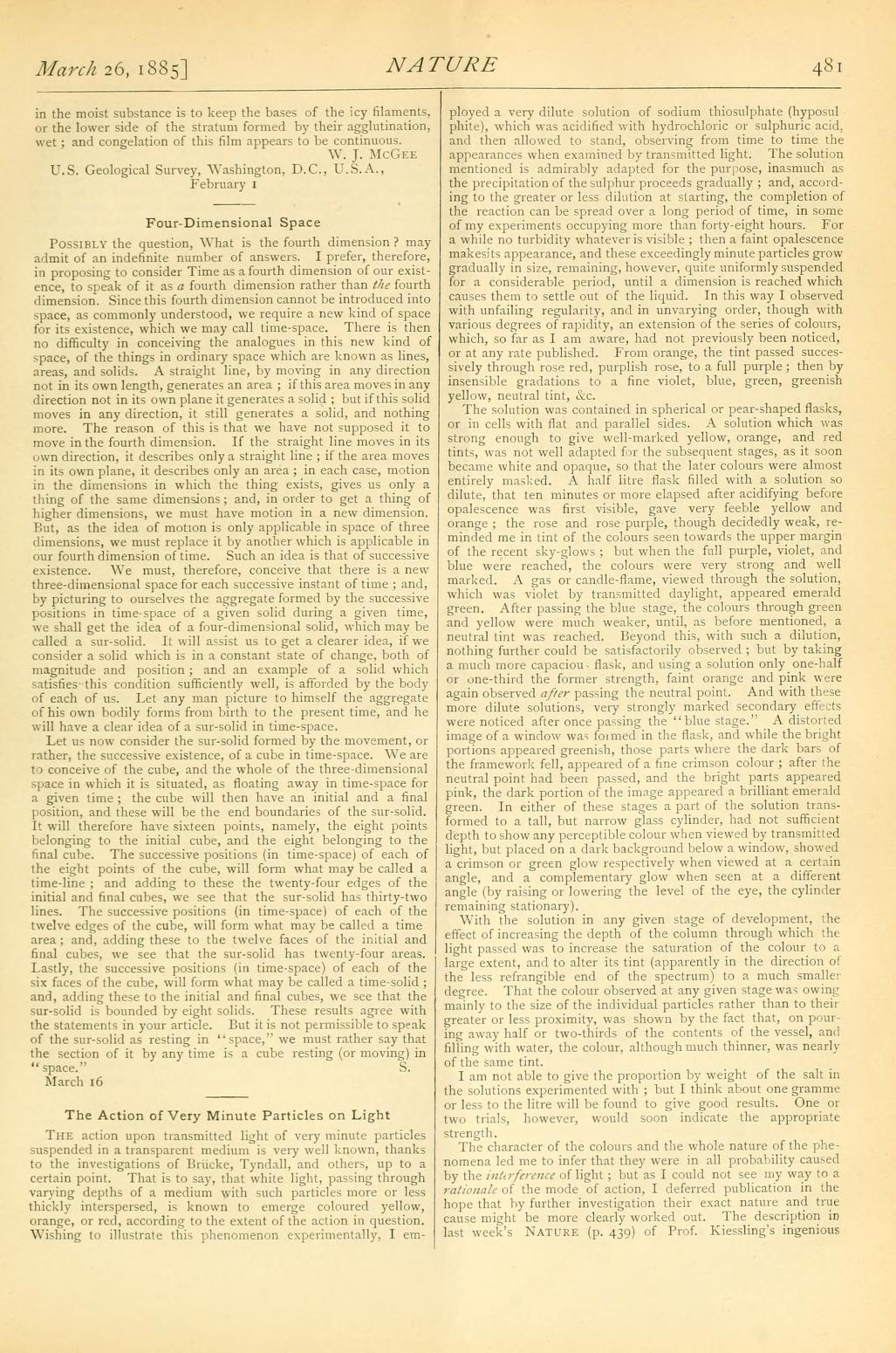
    Not only is this a very early article approaching the subject of space-time, appearing in Nature in 1885 (volume 31, issue 804, page 481), but it is also the most probable source for H.G. Wells’ earliest inspirational source for thinking that would result in such classics as The Time Machine. (See here for an earlier post in this blog for a review of Well’s book in Nature.)  I bumped into it recently on a graze through the endlessly interesting early-ish volumes of this great journal. 

    Four Dimensional Space

    And there were certainly many who came before Wells on the subject of the fourth dimension (though not many on the subject of time as the fourth dimension):  R.C. Archibald wrote on d’Alembert’s (1754) use of time as a fourth dimension (in the Bulletin of the American Mathematical Society for May 1914); Cayley’s “Analytical Geometry of n-Dimensions (Cambridge Mathematical Journal, 1843);  Grassmann’s Die Lineale aus Dehnungslehre (1844); Riemann’s 1854 effort on curved space (translated in 1873 for Nature by W. Kingdom Clifford); Beltrami’s introduction of the pseudosphere in 1868;  J.J. Sylvester (again in Nature for 30 December 1869); Hermann von Helmholtz and his curvature for three-dimensional spaces, and others.  Also,  according to Linda Dalrymple Henderson in her The Fourth Dimension and Non-Euclidean Geometry in Modern Art (Princeton, 1983) in Appendix B there were only a few other efforts before this Nature article. (Some of these include Halsted, “The New Ideas about Space”, in Popular Science Monthly, July 1877; Hinton’s “What is the Fourth Dimension?”, Dublin University Magazine, 1880; Lane “Transcendental Geometry” Popular Science Monthly, August 1882; and Fullerton, “On Space of Four Dimensions” the Journal of Speculative Philosophy, April 1894.)

    Text version: 

    Four-Dimensional Space, by Anonymous.

    From:  Nature, volume 31, issue 804, page 481.  

    ·Posted by :

    ·in:

  • Astronomy Board Games, 1661 & 1804

    JF Ptak Science Books  Post 2205 

    Astronomy game 1661

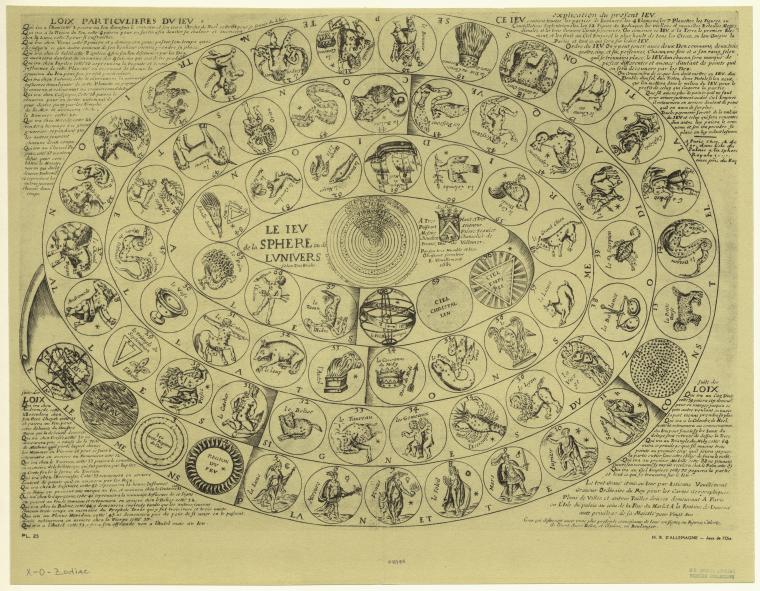
    This beautiful object is Le jeu de la sphere ou de l’univers selon Tyco Brahe  [The game of the (celestial) sphere, or the universe according…] and was printed in 1661, and was an educational toy for the advancement of kids young and old. It was played with a spinner and took the players on a tour of the universe, compiled in 4 elements, 7 planets, the constellations of the Northern hemisphere, the Zodiac, then constellations of the Southern hemisphere, and then the Empyrean. Presumably after playing at the game for some time the players would know something at least through familiarity.  

    Source;  NYPL Digital Collections, here.

    A listing of the stops areound the baord: 

     1) Earth ; Case 2) Water ; 3) the three Regions of the air;  4)  Region of Fire ; 5) the Moon ; 6) Mercury ; 7) Venus ;  8) the Sun ;  9) March ; 10)  Jupiter ; 11) Saturn ; 12)  the firmament ; 13)  the Little Dipper ;  14)  the Dragon ; 15) Cepheus ; 16) Cassiopeia ;  17) the Camel ;18) the Great Bear ; 19) La Teste in Cheveleure Berenice ; 20) The Bouvier ;  21) Hercules Crown of the North ; 22 ) The Serpent ; 23 )  Antinois ; 24)  Sting Eagle ;25)  the Liré sign; 26)  the Dolphin Horse ; 27)  the Pegasus Horse ; Case . 28)  Andromeda ; Case . 29 ) The Triangle of the North the Abelles ; Case . 30) : Perseus ; Case . 31)  the hide ;32)  the Aries ; 33) Taurus ; 34)  the Gemini ;  the Escreuisse ; 36) Lyon ;37) the Virgin  38)  Libra ; 39) : Scorpio ;  40): the Sagittarius ; 41) Capricorn ; ) : the VerseEau ;  43)  Pisces ; 44) : the Balene ;  45) : the Eridau River ; 46) : Orion ; 47) : the Unicorn ;48)  Little Escreuisse Canucule or small dog ;  49) the Hydra of the North Raven ; 50) : Vase ;  51) the Centaur ;52)  the wolf ;  53)  the Altar ; 54) Crown Midy Dard du Midi ;  55) : the Poisson ‘s Gruc ; 56)  the Phenix ; 57)  the Hare ; 58)  Canis Major ; 59) Rooster Turkey ;  60) : the Dove ; 61) : L’Arche Christmas ;  62) : the Dorado Cloud the Hirondele ;  63) The Cameleon Fly ; 64 ) The Triangle Midy Bee Indiene ;  65) the Peacock ; 66) Indian ;  67)  the Tocan the Hidre Southward ; 68)  Premiere Mobille ; 69) Sky Christallin ; 70) : Sky Empyrean.

    Earlier in this blog appeared a similar and later game: 

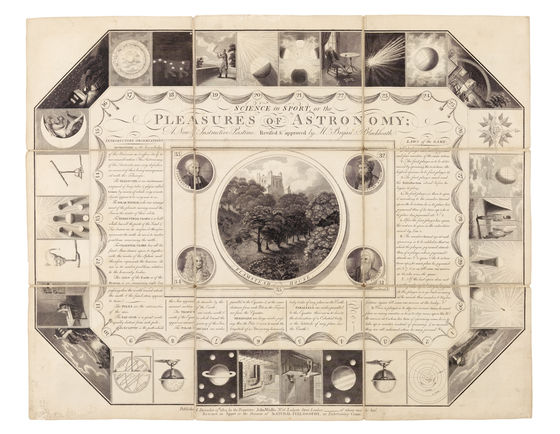
    –-“Whoever first arrives here is to take the title of Astronomer Royal‘”–end point of the game The Pleasures of Astronomy

    Astronomy board gameI’m not sure how early the earliest board game featuring a scientific game might be, but I do know that this one–Science in Sport, or the Pleasures of Astronomy; A New & Instructive Pastime. Revised & approved by Mrs. Bryan; Blackheath–seems to be very advanced for its age.  Made in 1804 by John Wallis on London, the game such as it is isn’t very “game-y”–the gaming aspect of it isn’t very interesting or involved–mostly the mostly-representative aspect so the game is to just expose the young players to select aspects of the history of astronomy. As a pedagogical tool, the game probably works pretty nicely. 

    The game board, or the course of the game, is relatively standard, though the subject matter is not. The object was to arrive at Flamsteed House1, and by the course of victory the young player would become acquainted with elements of morals, ethics, natural philosophy (although Wallis did in fact produce a very similar game for that topic alone) plus of course some basics of astronomy. 

    Notes:

    1. “Flamsteed House, the original Observatory building at Greenwich, was designed by Sir Christopher Wren and Robert Hooke and built in 1675-76.”  See here for more information.

  • Pluto in the History of Lines (1945)

    JF Ptak Science Books   Post 2206   History of Lines series

    The path of existence of the non-planet planet Pluto along with the rest of its Solar System friends can be nicely plotted out for visual ease on a  series of mostly-concentric orbital lines.  Pluto’s line is the longest, taking about 248 years to complete its orbit traveling at about 10,600 mph, which means that in a year’s 8760 hours that it moves very close to the equivalent along its path as the Earth’s distance from the Sun, which is an odd bit of trivial.  In any event, it is a long line.

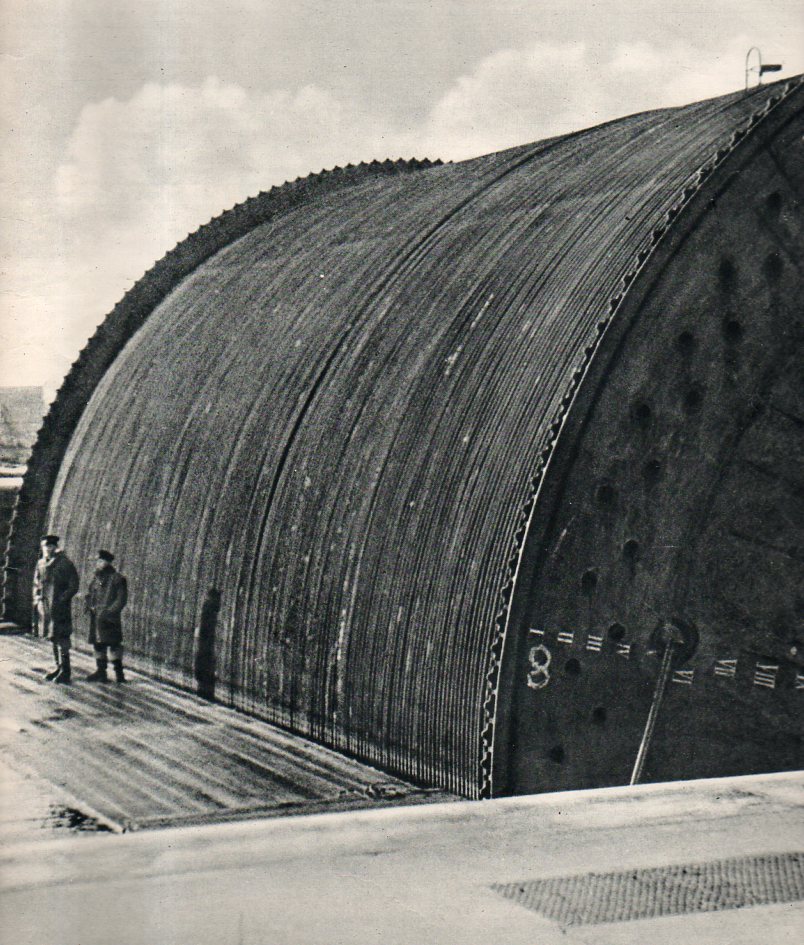
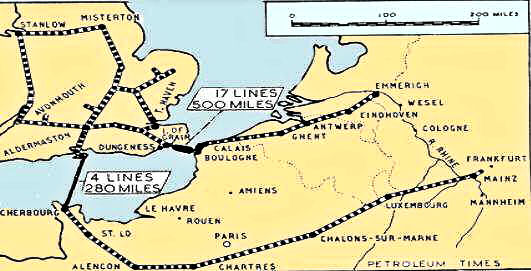
    There was another line/Pluto point of interest that takes us much closer to home, and much more near in time and space.  Project PLUTO (Pipe Line Under The Ocean) was a vast, integral, and magnificent engineering undertaken by the British government to surrepticiously and safely deliver petroleum to the Allied forces in Europe during WWII.  It reached through England and across the Channel in two places (code-named Bambi and Dumbo), via pipelines laid under the sea, and supplied armies in France, Belgium, Luxembourg, Holland, and Germany (as far as Mainz). 

    PLUTO016

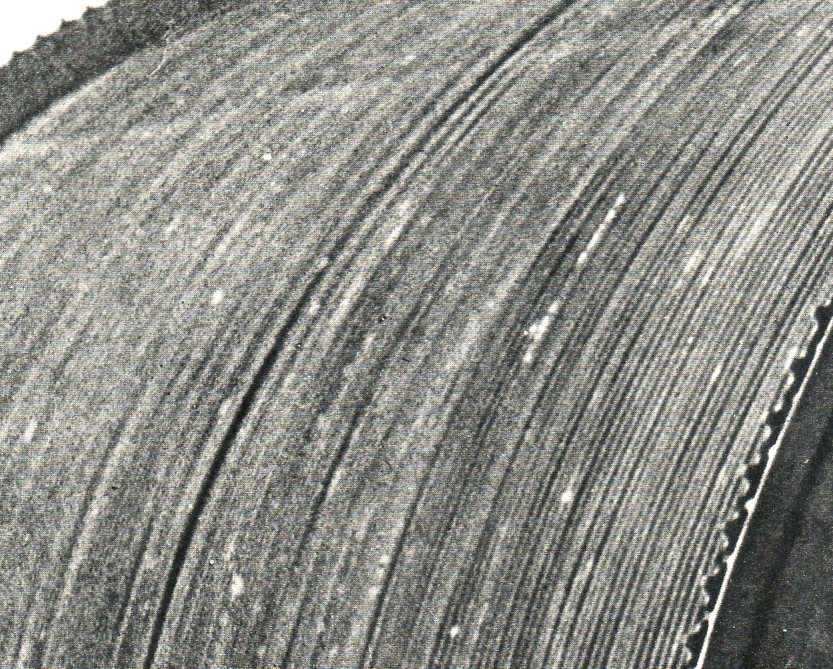
     [This is a detail of one of the vast bobbins that were hauled across the sea, unspooling many hundreds of miles of pipe in several lines.] This is what it looked liek apart from a detail image:

    PLUTO015

     Of course getting fuel to your troops in advanced positions is a major undertaking–not being able to do so would kill an army (just such a thing arguably happened with the Afrika Corps).  Fuel could of course be trucked in in drums, and sent across the water in ships–but that doesn’t come close to the fantastic efficacy of having a pipeline.  And this is just what Pluto was–an extraordinary idea made real, with enormous positive consequences.  

    PLUTONetwork

    Map source, here

    And the 1945 Newsreel:

    ·Posted by :

    ·in:

  • History of Lines–the Extent of Birds, 1862

    JF Ptak Science Books    Post 2207

    World lines020

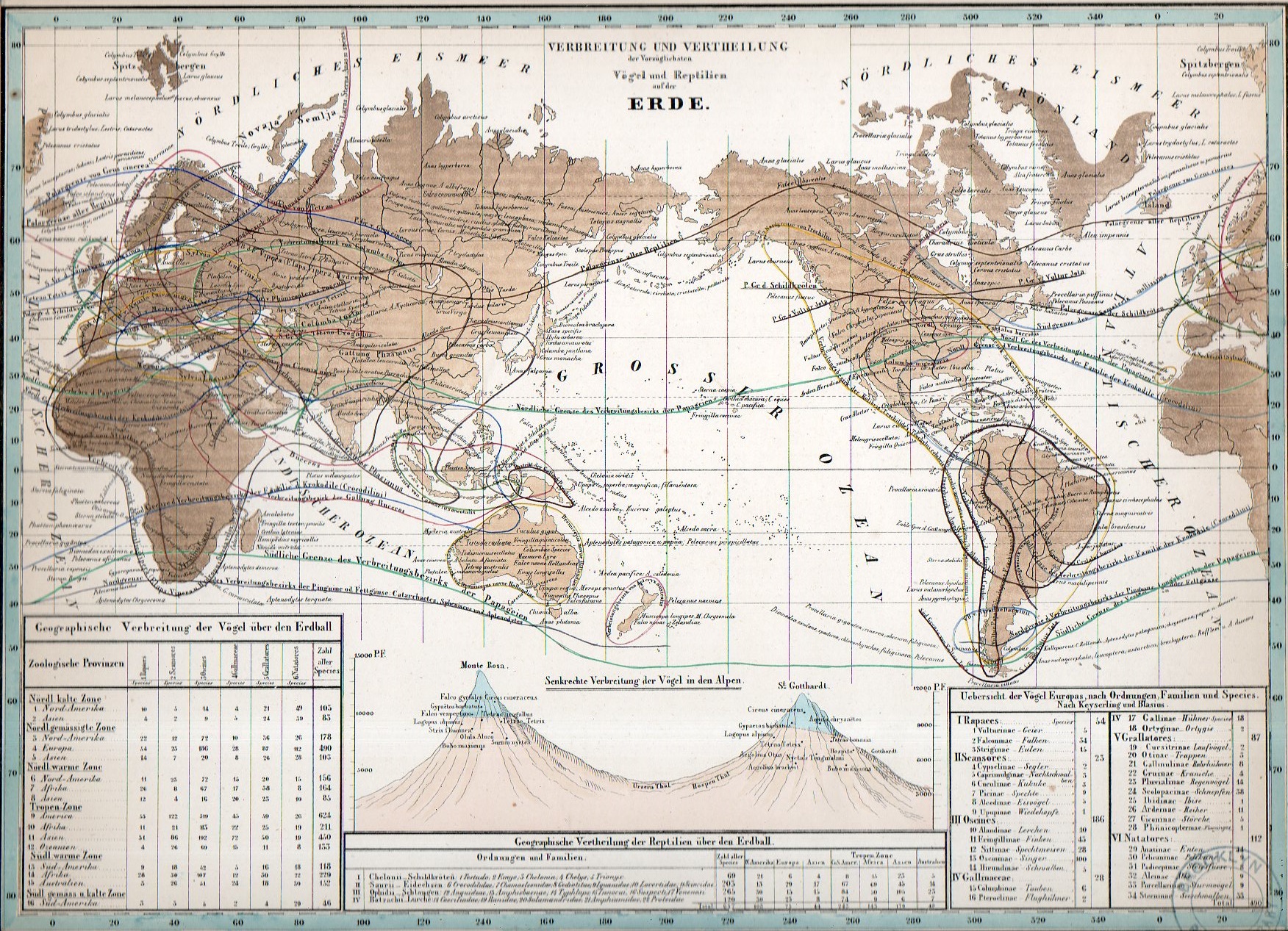
    There are many places and objects named for the German Alexander von Humboldt (1769-1859)–even so in the United States–a recognition and honor paid to a great observer and cataloger of things, the first biogeographer, the scientific traveler’s traveler, the man who Charles Darwin called the greatest scientific traveler ever.1  von Humboldt amidst much else also wrote–at the end of his life–a book that began as a composition of lectures that he gave in the 1840’s, developing into a monumental work called Kosmos, a General Survey of Physical Phenomena of the Universe, which was published from 1845 until three years after his death in 1862.  He meant what he said in the title, and tried to arrange all of the stuff of nature into a comprehensible and logical whole, gathered across five volumes.  It is a brilliant masterwork of vision and orderliness, and from what I’ve read it is like walking into a 3-D library of what was known of much of hte scientific world of the mid-19th century, the very structure and organization of the book being a scientific achievement.  

    There was a sixth volume to the work, an atlas, that is one of the crowning achievements of the 19th century for the display of scientific data.  It is about half-again as tall as the standard-sized text and twice as wide, so the book isn’t very big, and the maps are all single-page–but for as relatively small as they are there is a ton of information in them, more so when you realize what must have had to go into the collection of the data to begin with.  

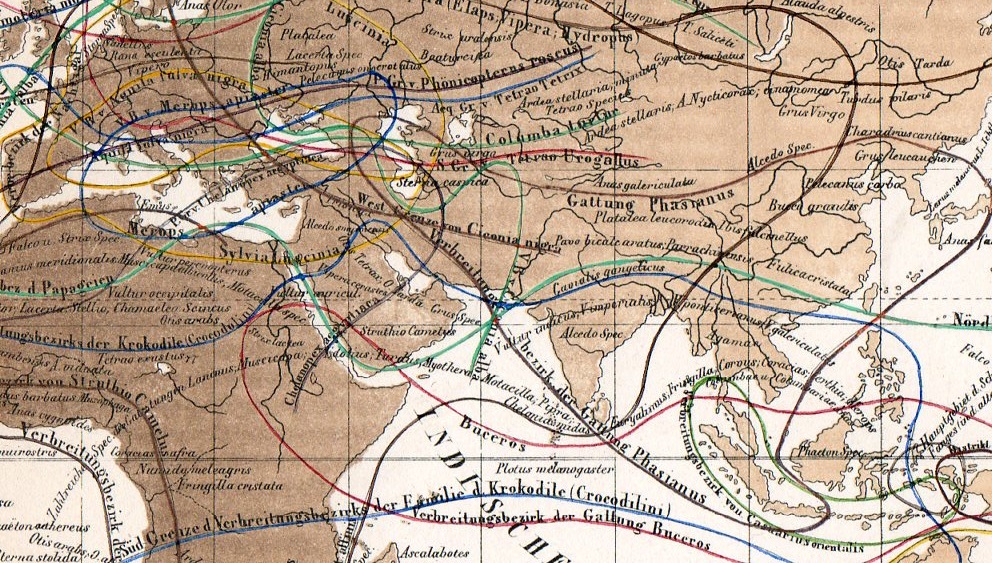
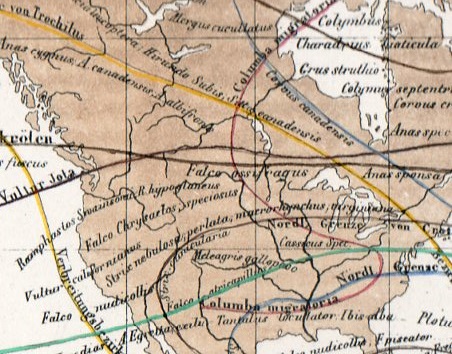
    I was very taken with this first representative because of its flowing lines (that show the range and occurrence of bird and reptiles) that make it a separate thing of beauty…had I the capacity to remove everything from this map save for the natural history lines, it would stand as an interesting work of very-pre-non-represnetational art.  I’m certain that the folks of the 1860’s poured over this and other maps in Kosmos, as well of course as the text themselves–this may have been among the first atlases to display some of its data in this way, and would’ve been fascinating. (Kosmos was actually a very popular work, the first volume selling out in a few months…it was a very popular book.)

    World lines017

    World lines018

    Notes:

    1. Found in the Darwin Correspondence Project » Letter 13277 — Darwin, C. R. to Hooker, J. D., 6 Aug 1881, just before Darwin’s death.

    You can purchase this map–my store has this and another 25 or so original maps from this atlas for sale. Send me an email and I’ll send you descriptions…

    Kopsmos--geological

  • A Beautiful Confusion

    JF Ptak Science Books   Quick Post

    Time Germany 2

    [Image source: Bibliodyssey, 19th Century Infographics]

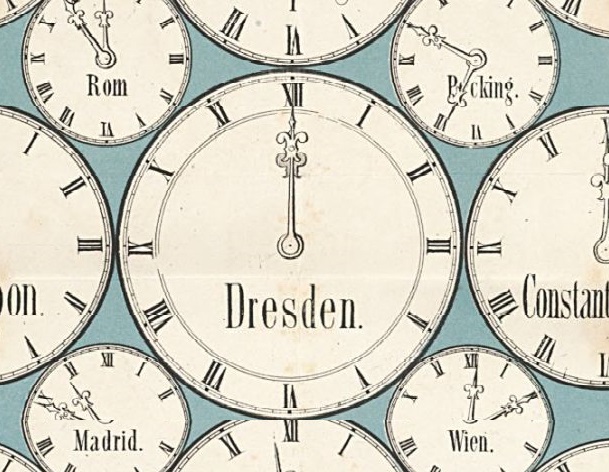
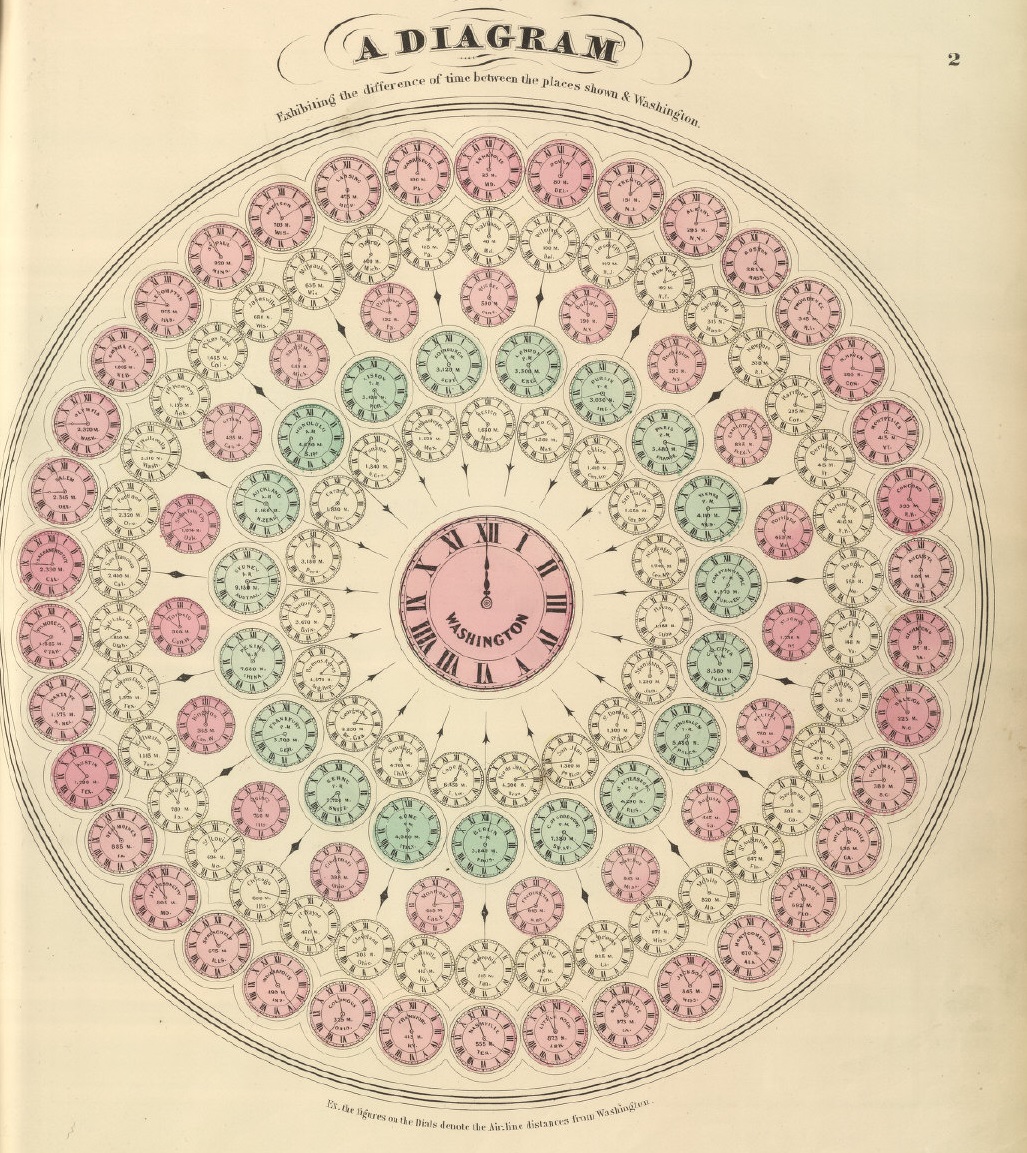
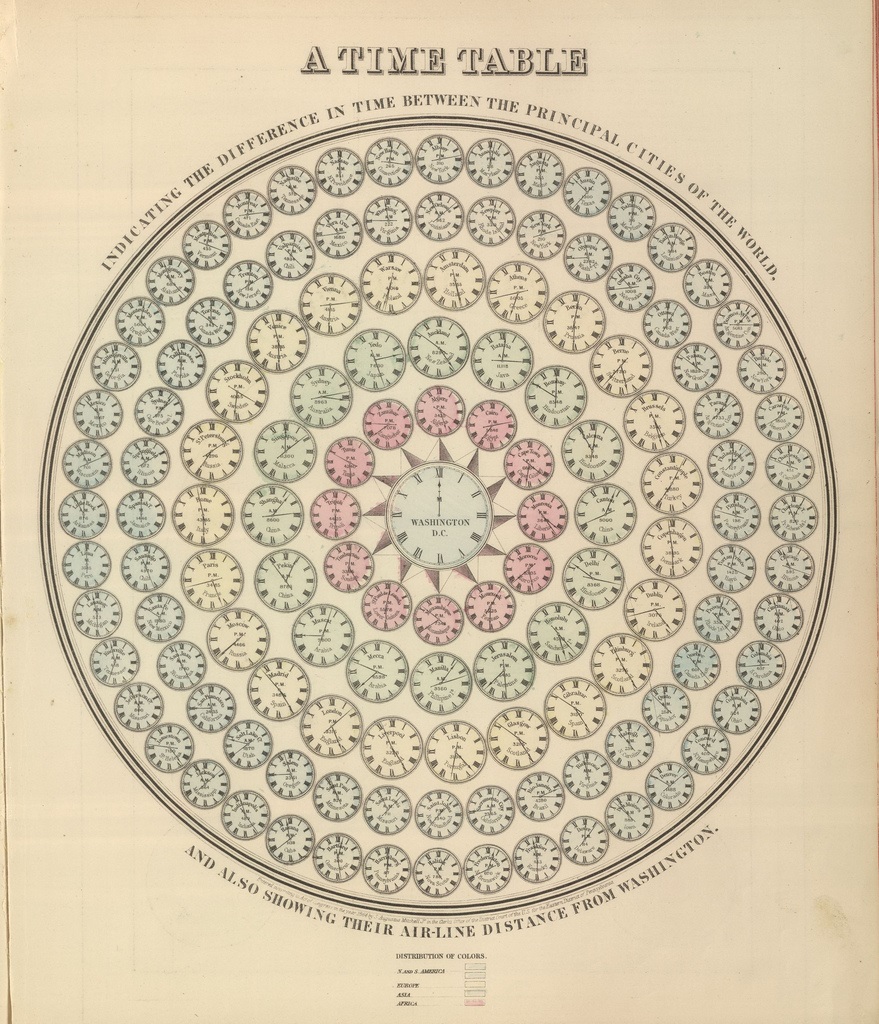
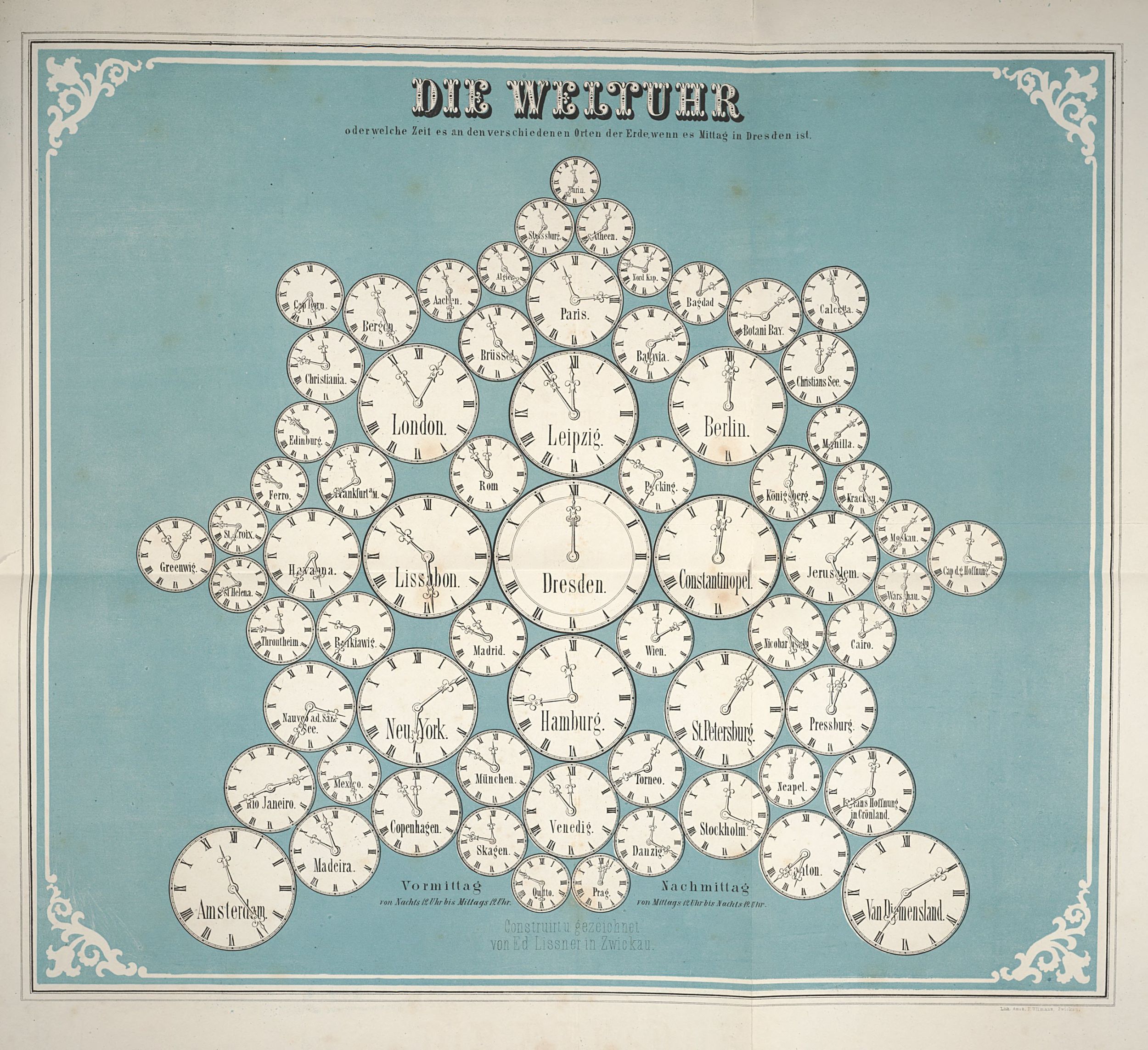
    Reckoning time from city to city before the adoption of Standard Time (1883/4) was a difficult and confusing process.  Local time was local, and usually dominated by a central timepiece located in a public area, as in a church steeple or town hall.  The problem is is that the foundation for this timekeeping–the zenith of the sun during the day–would be different from area to area. That’s not so bad when communication over periods of days was involved, bu tit was very noticeable to train travelers who would find their home-reckoned pocket watches to be not-quite-right when moving hundreds of miles over the course of a day.

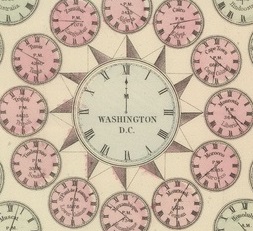
    And that’s where these charts come in.  They were made before the institution of a standardized system for keeping time worldwide, and so the “Dresden Time” of new was actually equal to about 10:48 in Madrid or 12:02 in Vienna.  In the U.S. in the 1870’s there were hundreds of time zones (whittled down somewhat to 100 towards the end of that era) which made it a bit of a nightmare for maintaining railroad schedules.  Sanford Fleming fixed all of that (the end of a long line of people who attempted standardized systems) in 1884, and did away with the need for these beautiful but confusing time arrangements.  

    On the other hand the displayed results for dealing with the pre-standardized chrono-confusions are beautiful things…

    4574g(1)

    Image Source:  Johnson’s New Illustrated Family Atlas of the World, (1874). Source: David Rumsey Map Collection, here


    Time table 2


    Time table

    Time Germany

    [Source: Bibliodyssey, 19th Century Infographics]


  • Thrice Fortified is He Who Fights for Right

    JF Ptak Science Books  Quick Posts

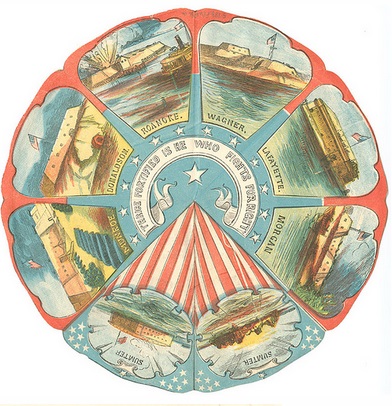
    These interesting rondelles (or “pies” as they are referred to on the Library of Philadelphia site, the home of these objects) are visually arresting images. The two examples below depict eight views of famous (Union) forts, and the second shoes the cycle of a Union recruit (“History of The Soldier Lad Folded in What He Best Loves, The Stars and Stripes, Red, White, and Blue”) and his progress through the war.  

    Civil War Pie--forts

  • Strange Things in the Sky Department: Feathers

    JF Ptak Science Books    Strange Things in the Sky Department  Post 2209

    In the 30 or so posts I’ve made in this department I have yet to deal with anything having to deal with birds. This is understandable since they’re the ones who have been up in the air for 200+ million years (or at least late Jurassic), while humans have been in the air for only about .0001% of that time in our controlled falling.  

    Feathers detail

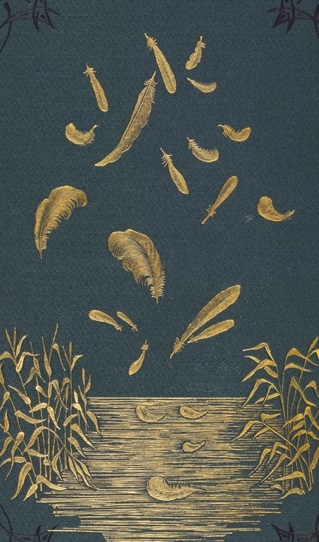
    But it still struck me as odd, these feathers in the air, and very uncommon to my decades+ experience of Looking At Pictures. They are simply a gilt-stamped decoration in a book cover, a piece of arresting design, for an ornithological journal (see below)–still, it is an unusual image, in-context or not. 

    I imagine that if you were resting on this little body of water from the journal cover and one of those feathers happened to fall on you that it would be quite the experience.  But there was a time when receiving a feather meant something far worse than an unusual natural history experience. That was the other thing about this unusual book cover decoration–it reminded me of a piece I read a few years ago (found again!) by Francis Beckett of The Guardian who tells a very difficult story about his grandfather receiving a white feather from a complete stranger on the street during WWI.  The brief story here is that his grandfather tried to enlist in 1914 but was not accepted because of poor eyesight and also being the father of three girls; but, while out and about in 1916 he was handed a white feather from a woman on the street, a complete stranger–that feather at the time being a symbol for cowardice.  Evidently the grandfather went the next day to enlist, and after millions of deaths the eyesight/children issue two years earlier was no longer an issue–he was accepted,  and fought for two years before being killed in 1918.  Beckett’s grandmother held the white feather woman responsible for her husband’s death.  

    The feather has meant many things to many cultures for thousands of years, and nearly all of it was good:  ascension, lightness of being, virtue, glory, flight, and so on, mostly having to do with cosmic connectivity.  On the other hand using the white feather for taking flight from duty and cowardice was a devastating thing.  


    ·Posted by :

    ·in:

  • “What the Frog’s Eye Tells the Frog’s Brain” and Walter Pitts

    JF Ptak Science Books  Post 2210

    I was walking around a 1959 issue of the Proceedings of the Institute of Radio Engineers I found this fantastic article by the great Walter Pitts.  What was Mr. Pitts and a frog’s brain article doing here?  Well, it all makes sense, really, and I was very happy to unexpectedly find Pitts here when I was looking for something else.  Walter Pitts (1923-1969) is one of those very important but now somewhat faded names in the history of American science.  He was a brilliant young man turned into a brilliant mature one, a logician/cognitive psychologist who corresponded with Russell on the Principia at age 15 and who went on to develop (with Warren McCulloch) some of the fundamental ideas in what would be known as neural networks.  The work was really much more far reaching, touching work in the fields of artificial intelligence, cybernetics, neuroscience(s), philosophy, cognitive sciences and of course computer science.

    https://historyofideasblog.com/a/6a00d83542d51e69e201156f67025e970c-piPitts was a genius I’m sure,  a sort of Matt Damon-type character from the movie Good Will Hunting1. He was offered a chance to study with Russell in the U.K. at 15, but refused and wound up running away from home to go to the University of Chicago to listen to Russell lecture, and where he stay on, finding another great logician, Rudolf Carnap (then at Chicago) and offering him critiques on his new work.  Pitts would blow like the wind in and out of Carnap’s office, the logician spending months trying to find out who and where Pitts was–and what he was was a homeless teenage boy.  Once found, Carnap got Pitts a low-level maintenance job.  I’m not sure what Pitts was doing before he switched ships and jumped (still homeless) to MIT in 1942, where he was introduced and was impressive to the not-to-be-impressed Norbert Wiener, and where he also met Warren McCulloch, with whom he would work on the Leinbizian idea of the nervous system as a sort of universal computer, publishing their outstanding “A Logical Calculus of Ideas Immanent in Nervous Activity” in September 1943.2

    Right before this paper–which is considered to be a founding effort in the field of neural networks–Pitts published three other papers of interest in this same area (and in the same journal)–all published when he was 19 years old. “Some observation on the simple neuron circuit”,    “The linear theory of neuron networks: The static problem”, and “Some Observations on the Simple Neuron Circuit” were all efforts leading up to his paper with McCulloch one year later.   Impressive work, especially for a 17-year-old, and particularly for a new, high entry point journal published by the University of Chicago, entertaining the logical structure of neural nets as coded circuitry, a new way of looking at the mechanistic view of philosophy of mind. 

    Things however really didn’t go well for Pitts: he was fiercely, probably tragically “shy” or demanding of his own attention, exceptionally modest, and with very few personal relationships.  Just a few years later, a rift developed between the wife of Norbert Wiener and McCulloch, and was of such vehemence that anyone maintaining a friendship with McCulloch would be shunned by Mrs. (and therefore, necessarily in this case, Dr. )Wiener.  And thus Pitts remained friends with McCulloch and lost contact with just about everyone else, making his working/contributing life quite difficult.  Little is known about what happens to Pitts in the 1960’s, but it wasn’t good, and he wound up dead, featuring symptoms indicative of severe alcohol abuse, in 1969.  He was 46, and his best work was already 25 years old. 

    _______

    Notes:

    1. We read in this  wonderful account of Pitts from Neil R. Smalheiser’s  appreciation, Walter Pitts ( found in: Perspectives in Biology and Medicine – Volume 43, Number 2, Winter 2000, pp. 217-226):
    [Introduction ] “The movie Forrest Gump made the point that the greatest, most heroic Americans are people of extraordinary character who flicker briefly into public consciousness and are quickly forgotten. Walter Pitts was pivotal in establishing the revolutionary notion of the brain as a computer, which was seminal in the development of computer design, cybernetics, artificial intelligence, and theoretical neuroscience. He was also a participant in a large number of key advances in 20th-century science. Yet while his contemporaries Alan Turing, Ludwig Wittgenstein, and John von Neumann entered the pantheon of fame, Pitts remains a shadowy folk hero. Stories about Pitts have circulated among the cognescenti for years, but almost nothing has been written about him. Here, I have collected reminiscences from his friends and associates to provide a unique insight into a remarkable life; if some exaggerations and embellishments have crept in, they only underscore the basic truth that Pitts was a man with Gumption ability…”

    2. Warren McCulloch remembers Pitts in this way:  “In 1941 I presented my notions on the flow of information through ranks of neurons to Rashevsky’s seminar in the Committee on Mathematical Biology of the University of Chicago and met Walter Pitts who then was about seventeen years old.  He was working on a mathematical theory of learning and I was much impressed.  He was interested in problems of circularity, how to handle regenerative nervous activity in closed loops. …   For two years Walter and I worked on these problems whose solution depended upon modular mathematics of which I knew nothing, but Walter did. “ (McCulloch, 1989, pp. 35-36, cf. McCulloch, 1965a, pp. 9-10).
     

    ·Posted by :

    ·in:

  • Fun with Physics: Listening to a Spoon, 1880

    JF Ptak Science Books   Quick Post   Unintentional Absurd & Found Surreal Division 

    String telephone027

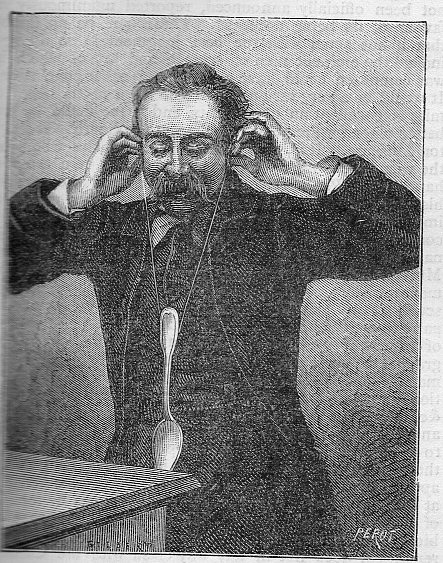
    This is one of a series of images from six-part article in Nature in 1880 called “Physics without Apparatus”.  It is actually a fun series in a Victorian-science-high jinx sort of way, and this image is a little more fun than most, especially removed from their context. In-context, this gentleman is experiencing teh sound of church bells by bumping the spoon suspended from his ears on hempen lines lightly against the table’s edge; out-of-context, it looks like…

    ·Posted by :

    ·in:

Recent Posts

Archives

Categories