JF Ptak Science Books Quick Post
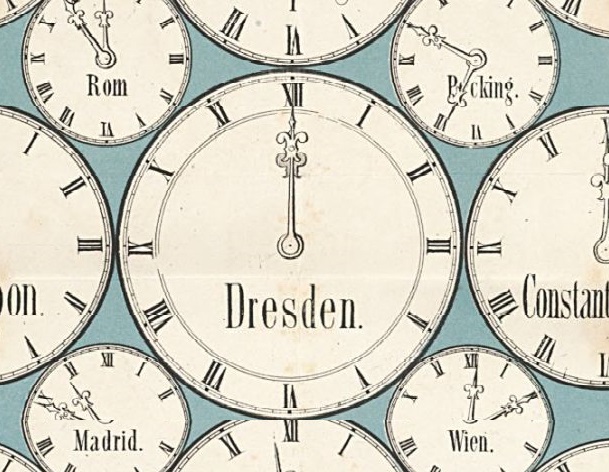
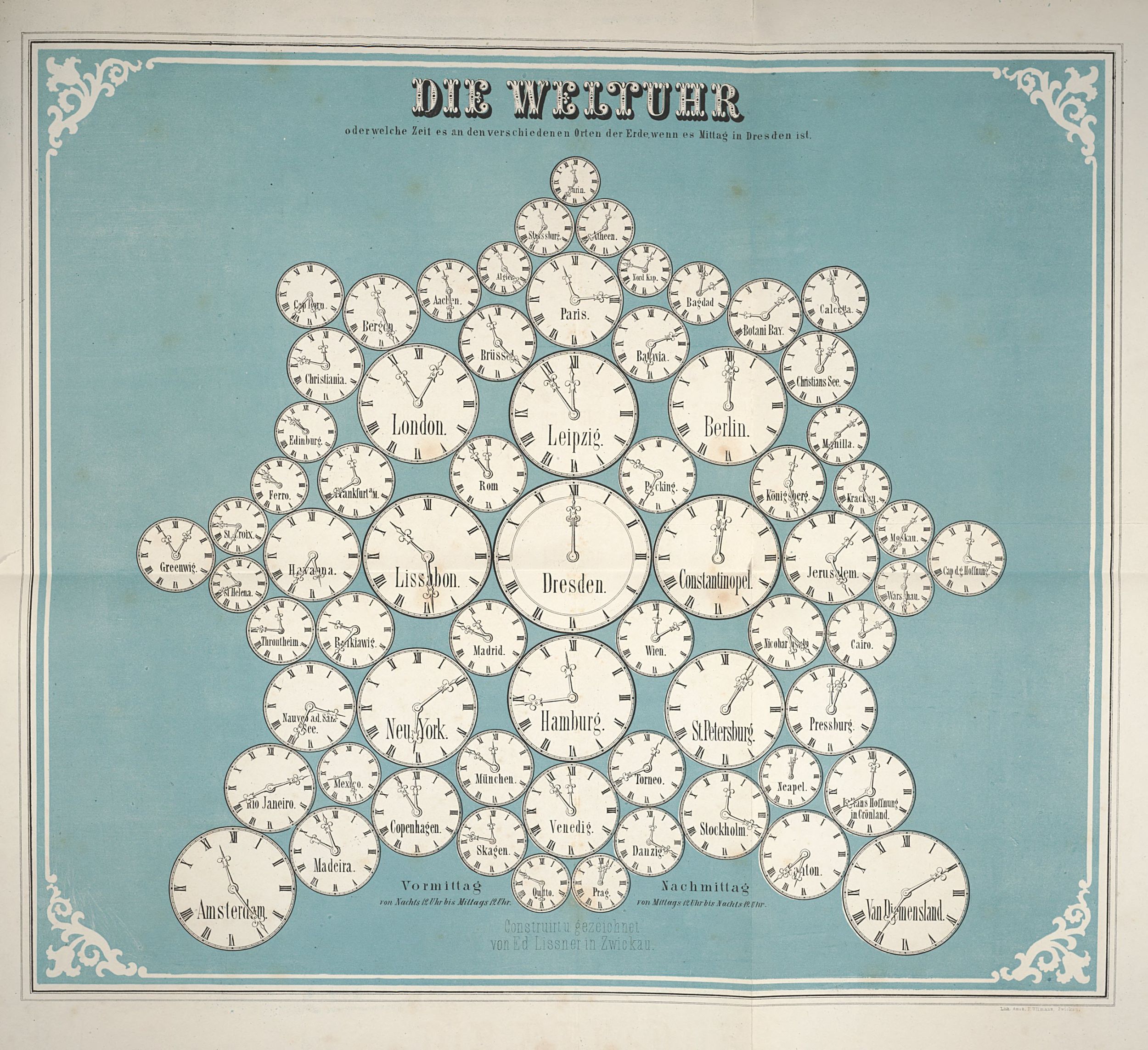
[Image source: Bibliodyssey, 19th Century Infographics]
Reckoning time from city to city before the adoption of Standard Time (1883/4) was a difficult and confusing process. Local time was local, and usually dominated by a central timepiece located in a public area, as in a church steeple or town hall. The problem is is that the foundation for this timekeeping–the zenith of the sun during the day–would be different from area to area. That’s not so bad when communication over periods of days was involved, bu tit was very noticeable to train travelers who would find their home-reckoned pocket watches to be not-quite-right when moving hundreds of miles over the course of a day.
And that’s where these charts come in. They were made before the institution of a standardized system for keeping time worldwide, and so the “Dresden Time” of new was actually equal to about 10:48 in Madrid or 12:02 in Vienna. In the U.S. in the 1870’s there were hundreds of time zones (whittled down somewhat to 100 towards the end of that era) which made it a bit of a nightmare for maintaining railroad schedules. Sanford Fleming fixed all of that (the end of a long line of people who attempted standardized systems) in 1884, and did away with the need for these beautiful but confusing time arrangements.
On the other hand the displayed results for dealing with the pre-standardized chrono-confusions are beautiful things…
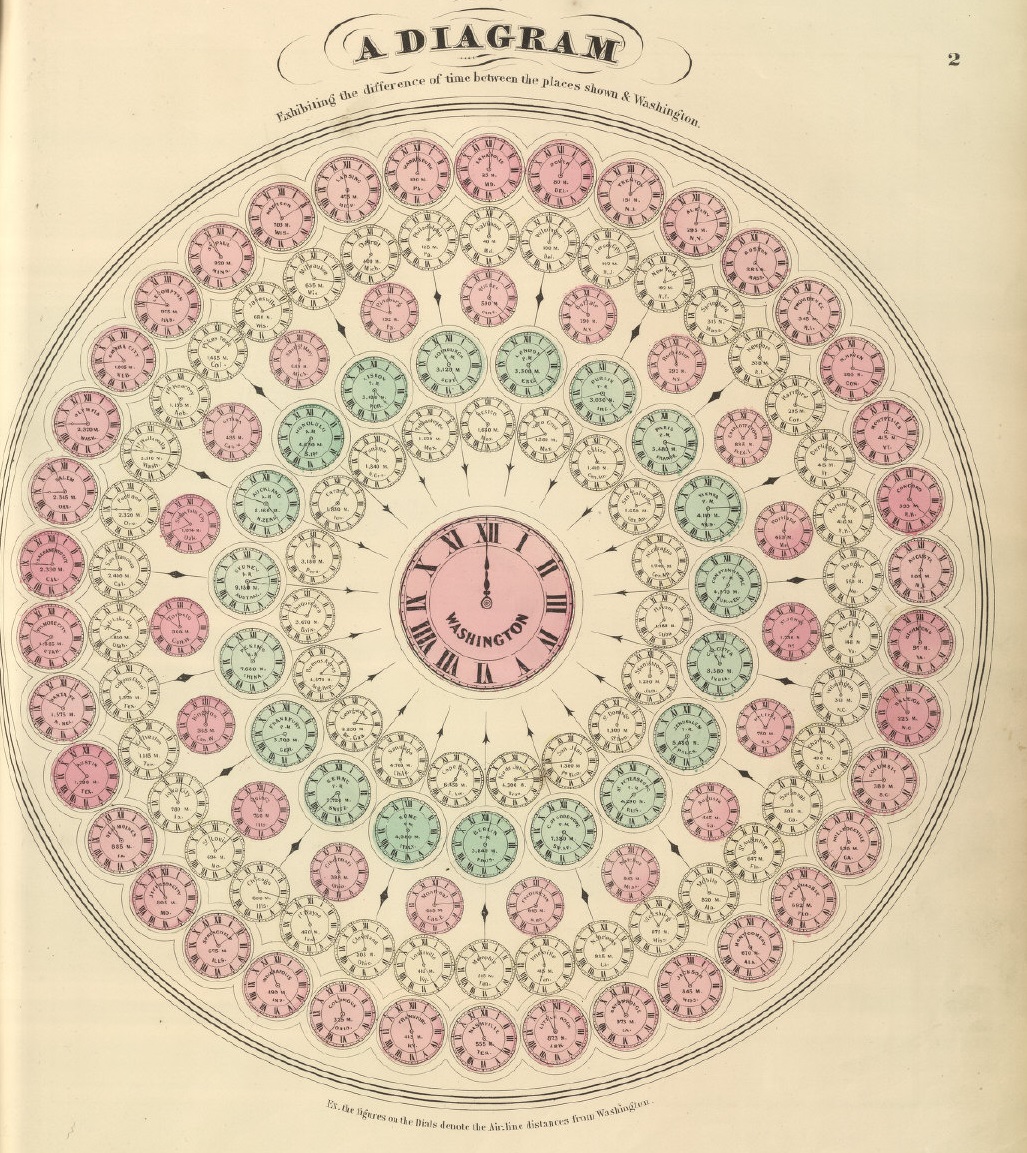
Image Source: Johnson’s New Illustrated Family Atlas of the World, (1874). Source: David Rumsey Map Collection, here
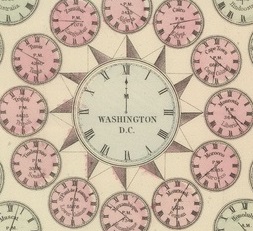
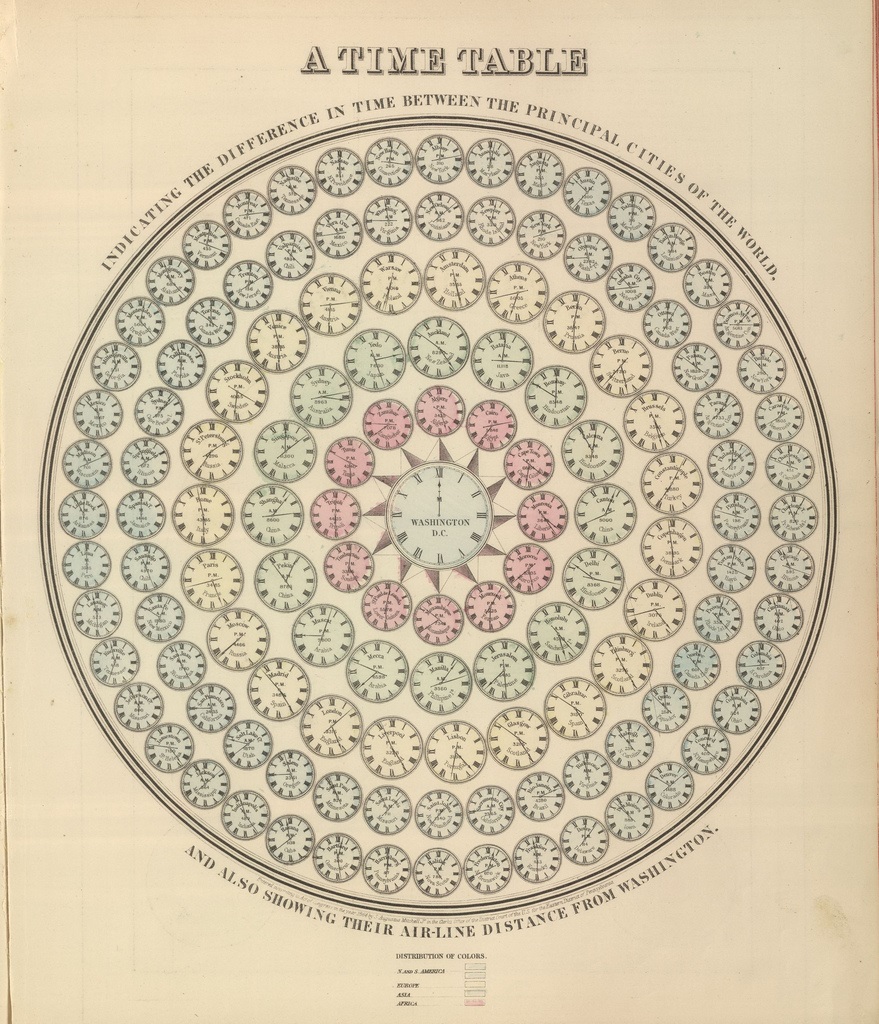
[Source: Bibliodyssey, 19th Century Infographics]