JF Ptak Science Books Post 2815
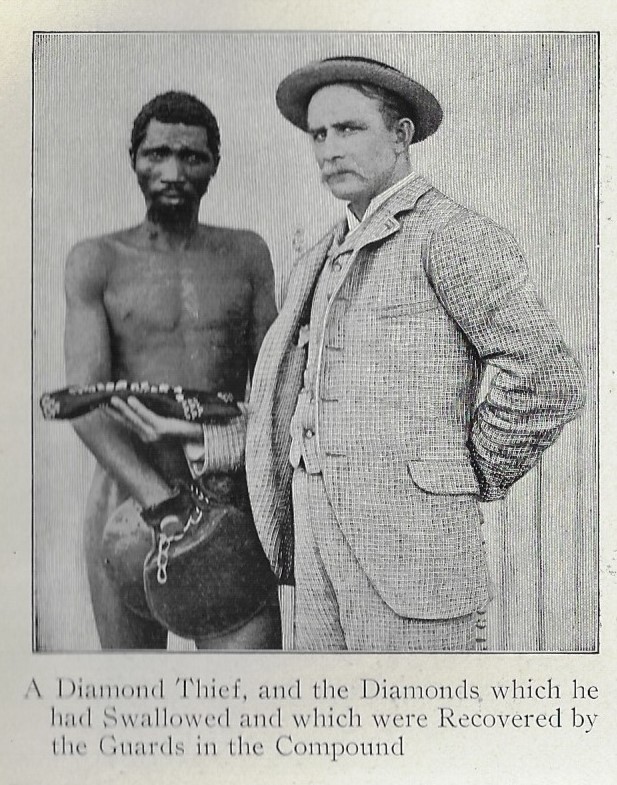 I uncovered a little cache of National Geographic magazines from 1900-1915, and picked out the 1906 volume to have a look at what I hoped for would be photo coverage of the San Francisco earthquake. There’s a good and very strikingly-illustrated article to be found there, but what got my real attention was the article “The Diamond Mines of South Africa”. Actually it was one photograph that grabbed me away from the rest of the book—an image of a diamond miner who was caught stealing diamonds from the mine, extracted during his shift. It is a singularly sad photo—the man’s face is pained and troubled, standing there behind a mine official, naked, and wearing gigantic baseball mitt type gloves with a heavy chain.
Here are a few questions that sprang to mind: Who were the workers? How did they steal” How did the company catch them? How did the company prevent such theft?
In this case the theft occurred in one of the De Beers mining facilities in South Africa. Although De Beers used convict labor, at this camp the workers were there of their own free will (I guess), joining the company to work for periods of about three months.
- “To enter the service of the company, each applicant must sign a written con tract binding himself to live in the com pound and work continuously and faith fully for a period of at least three months or longer if he so desires. At the expiration of a contract the applicant may leave if he chooses or his contract may be renewed indefinitely. Some of the natives in De Beers compound have been employed continuously for ten years or more in the service of the company,…”
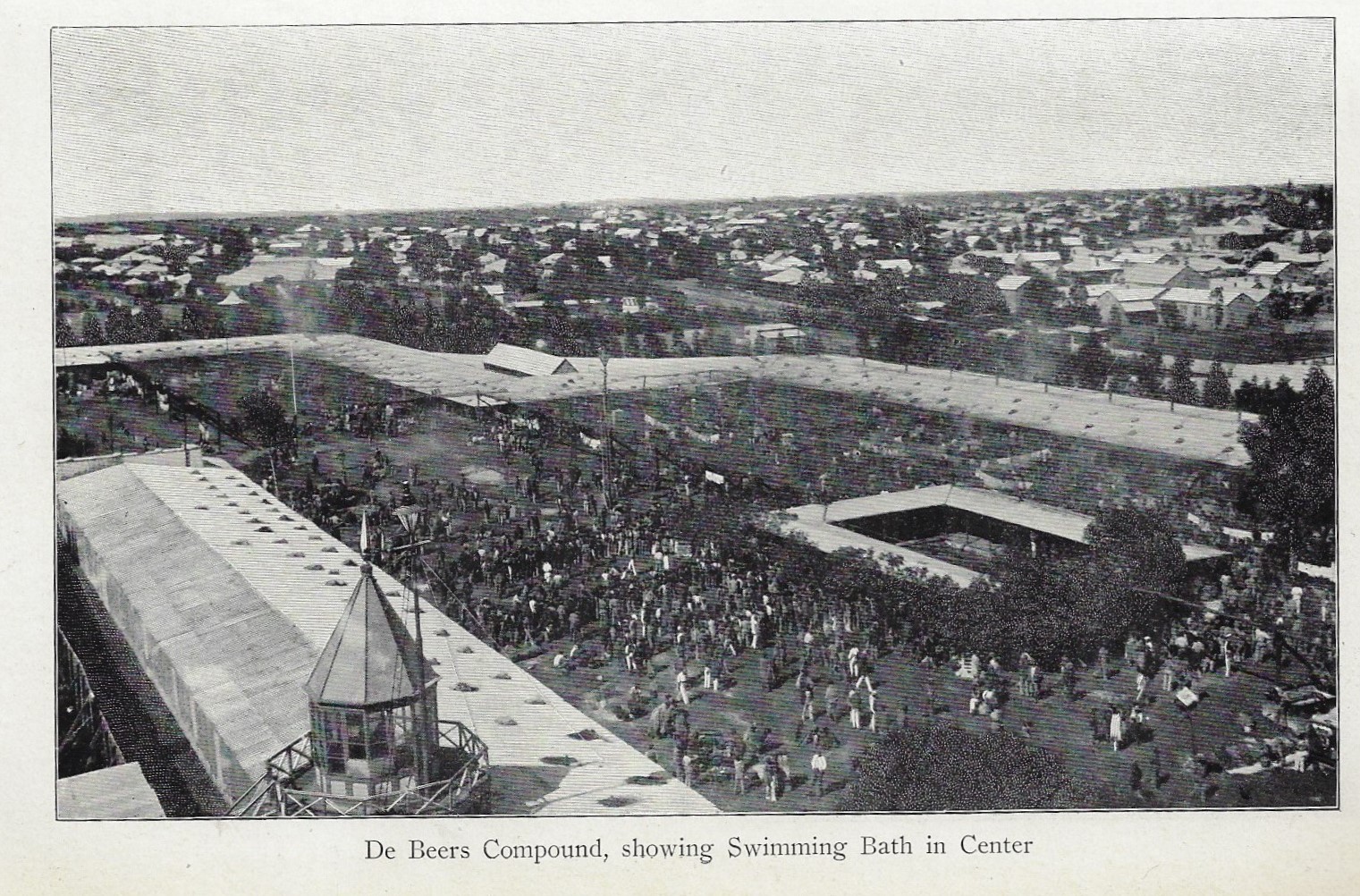 Once the contract was signed, the agreement was strictly enforced,and the lifestyle of all who worked at the mind seemed to become of one solid mass, the workers held there life inmates. It looks as though every aspect of their lives was regulated, not the least of which involved travel outside the compound or interacting with any outsiders—this to prevent the theft and exchange of diamonds.
The article describe the general layouts of the compounds housing the diamond workers: there were 17 in the diamond fields, 12 owned by De Beer. The largest belonged to De Beer: it was 4 acres and held 3,000 workers, who were contained in the area by 10′ tall corrugated iron fences; they slept 20-25 to a 25’x30′ room. 3K people on 4 acres is a huge number: